Marrakesh. Guéliz: the new city.
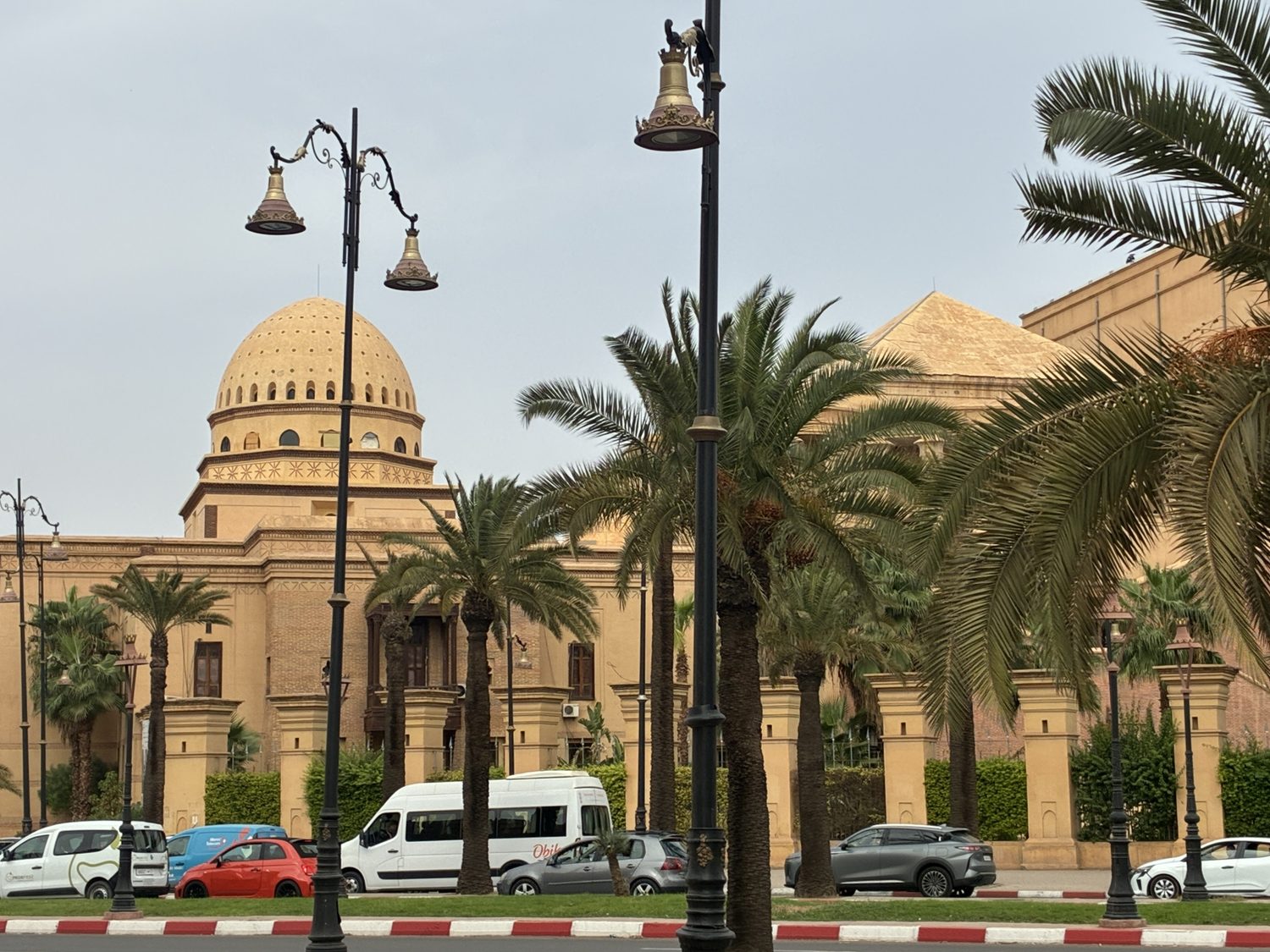
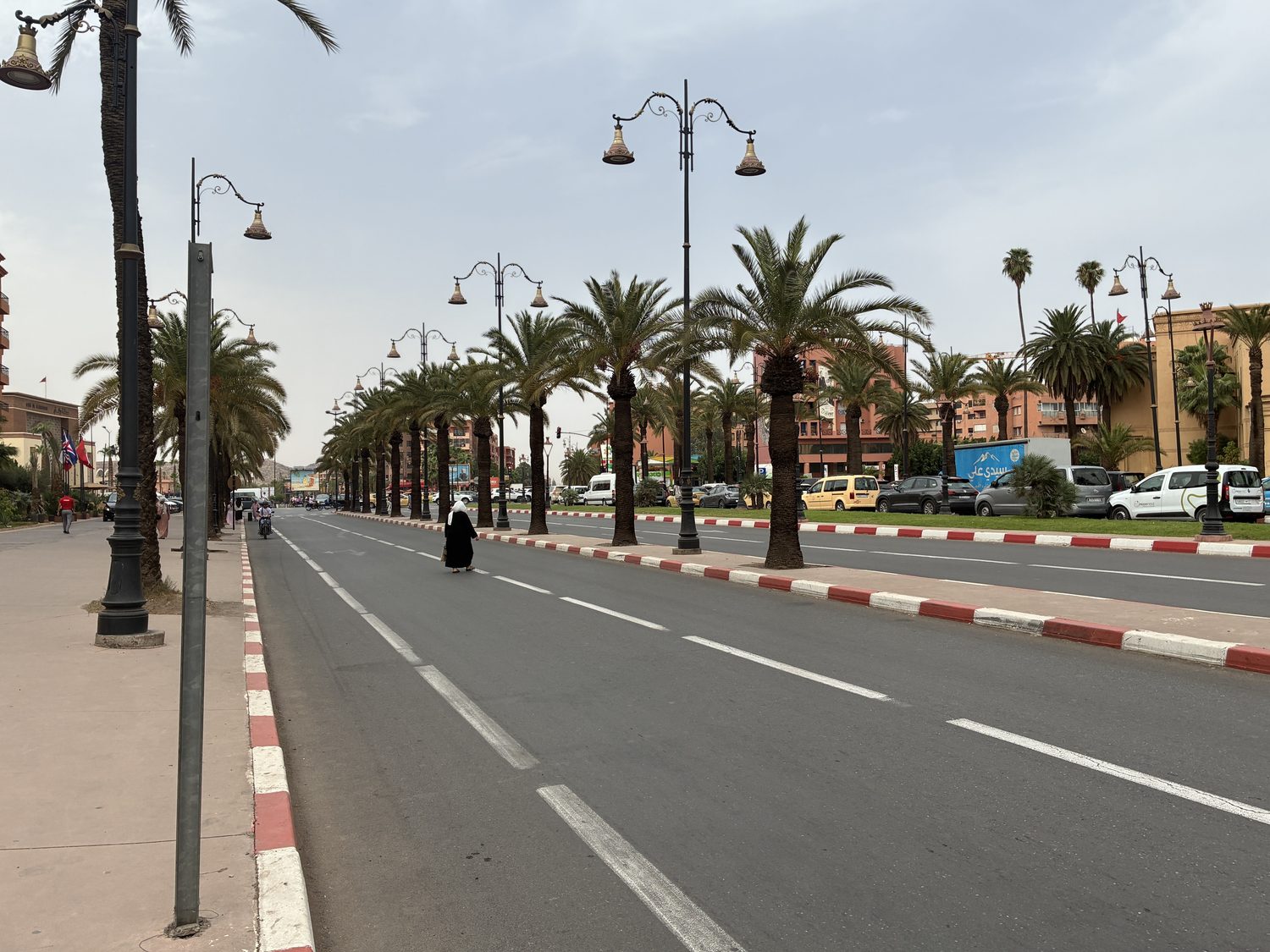
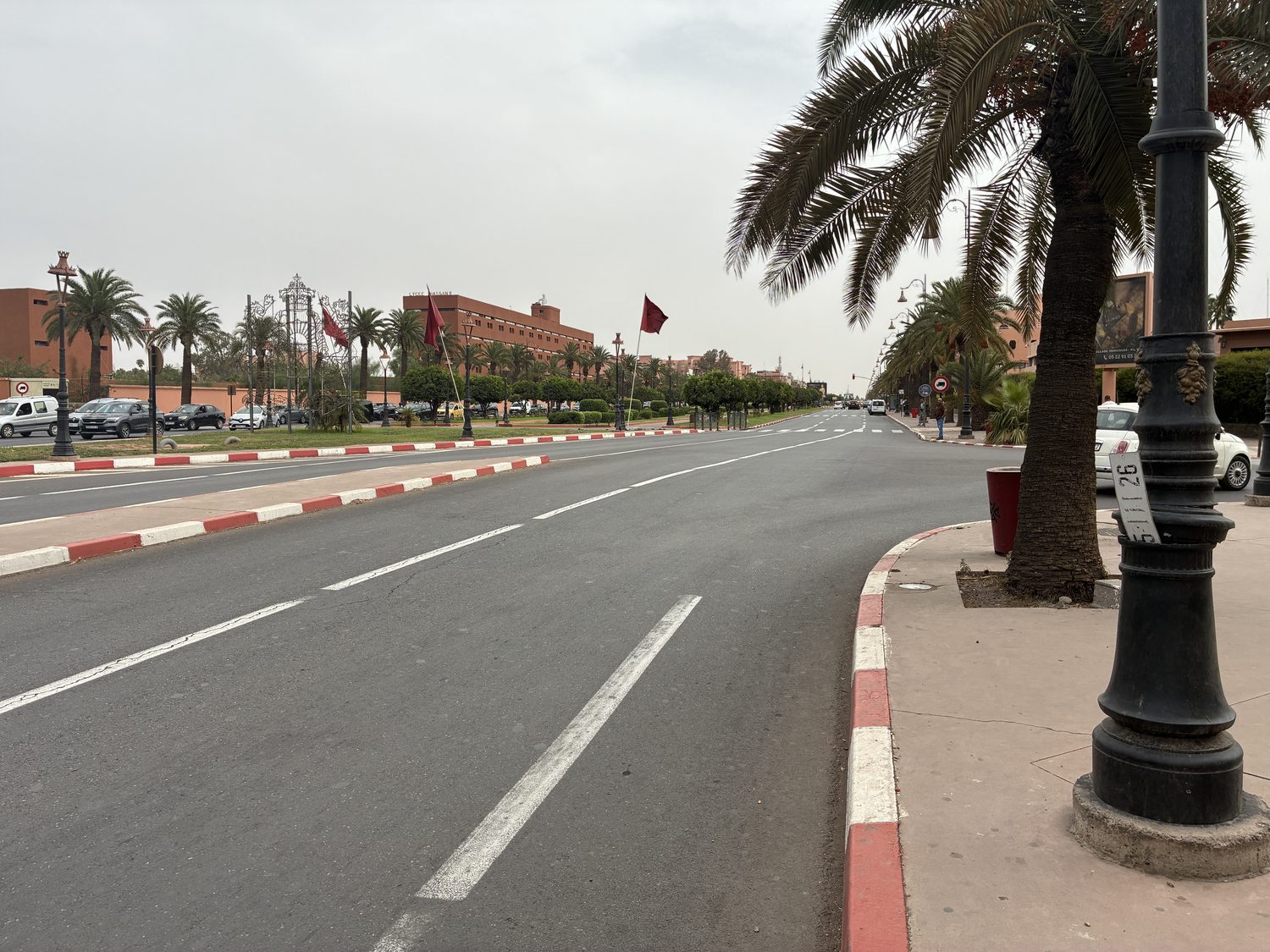
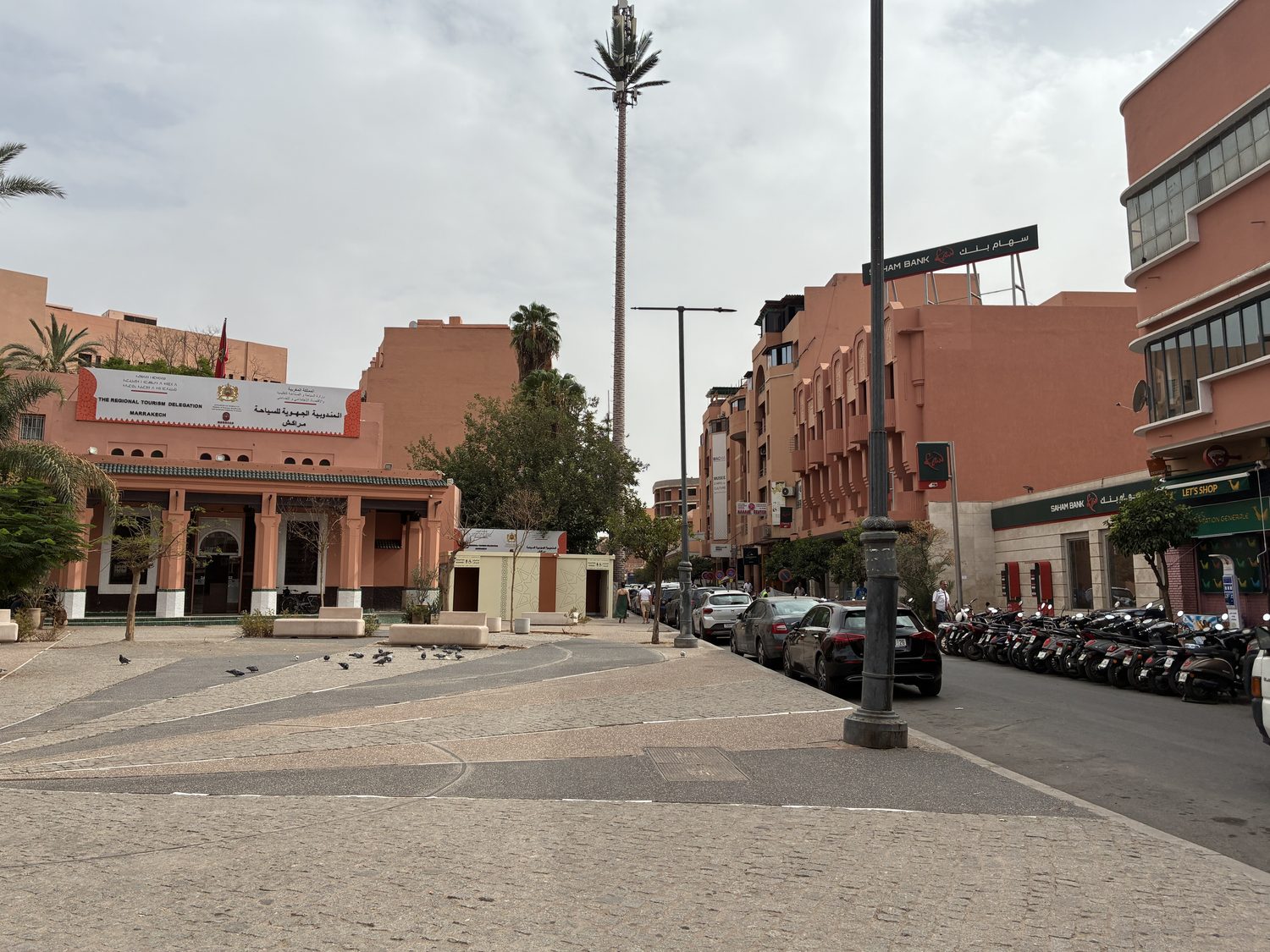
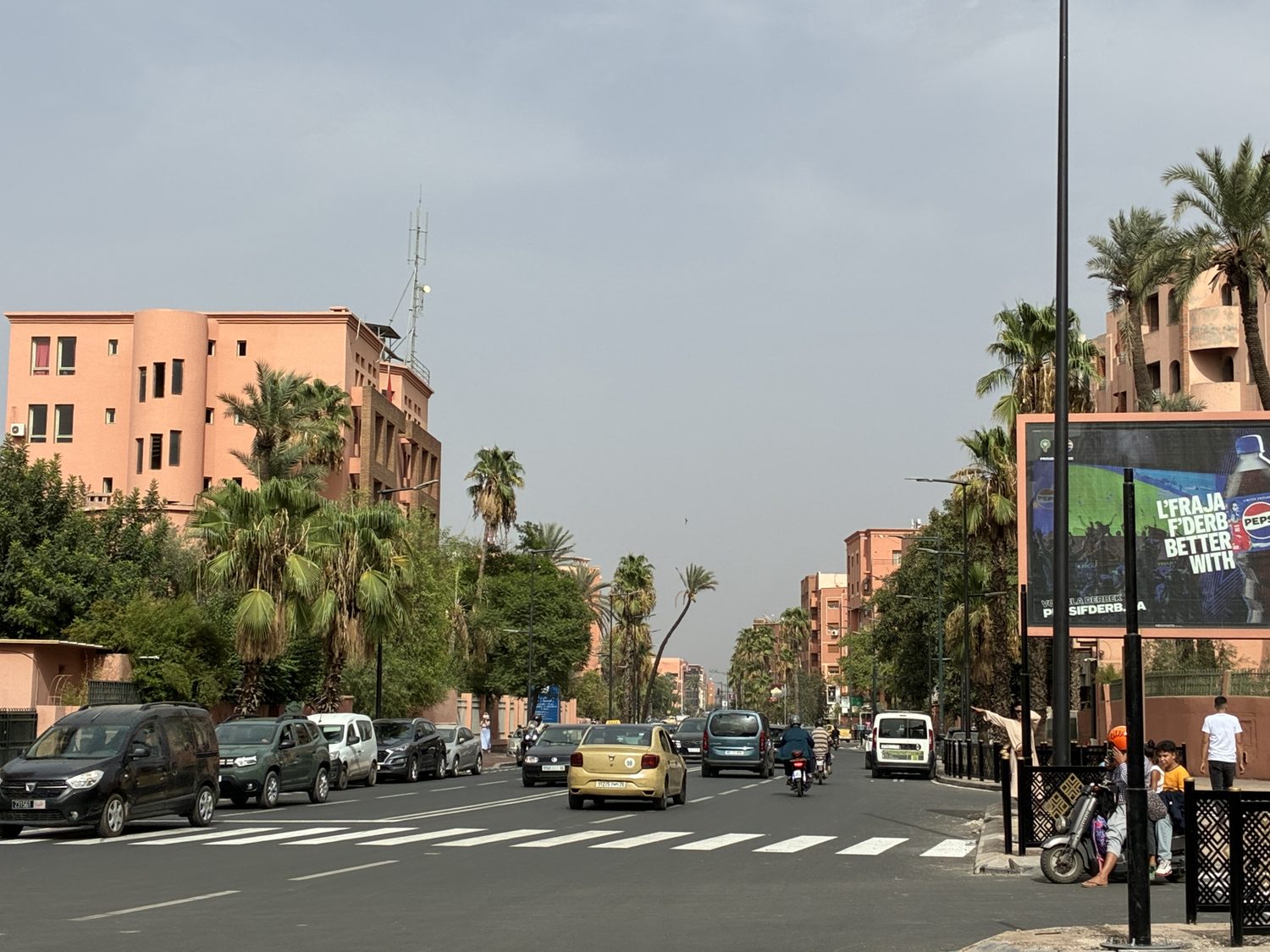
Today was a slow day, as I realize there’s not a whole lot to see or do in the new city of Marrakesh, which is to say the larger city outside of the medina, which is known as Guéliz, named for a hill on the edge of the new city as it was being developed by the French in the 1920s Unlike the medina, and its traditional buildings and sprawl of streets and alleys, in contrast, Guéliz, the commercial and administrative center of Marrakesh, has modern (more-or-less) buildings and wide grid-patterned streets and avenues.
In the morning, I mostly worked on catching up on my blog, which takes quite a bit of time. Then I went out to learn where to catch the airport bus for my flight back to London on Wednesday, and also where the CTM bus leaves early tomorrow for my day trip to Essaouira on the Atlantic coast. Not as simple as you might think, but now I know where to go for each.
Once I had all that sorted out, it was early afternoon, I took a several hour walk, to nowhere in particular, because, other than the Medina, there’s just not a lot of standout sites to see, and that’s an overstatement.
Using the Internet as my guide, I started by walking to Jardin Majorelle, a private gardens about 45 minutes away. It was pretty hot out there, 104 degrees, and, unlike the Sahara, pretty humid.
Along the way, I was delighted to see Charif on the back of a motorcycle, yelling loudly and waving at me, a big grin on his face. In turn, that bought a smile to my face. Nice little coincidence. I’m sorry we couldn’t stop and talk for a few moments. He’s a very nice guy, and did a great job with the tour, as well as building our group bond.
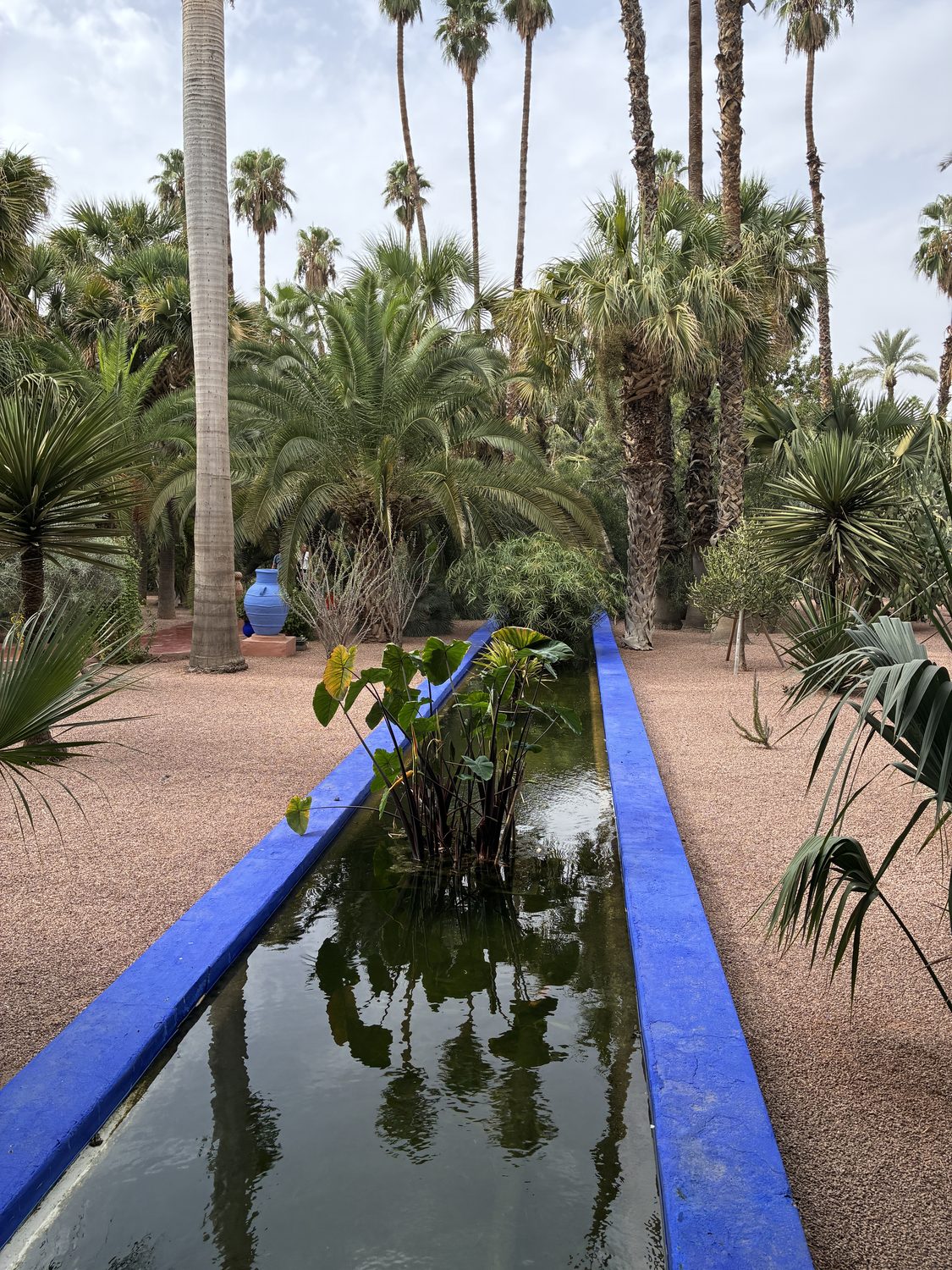
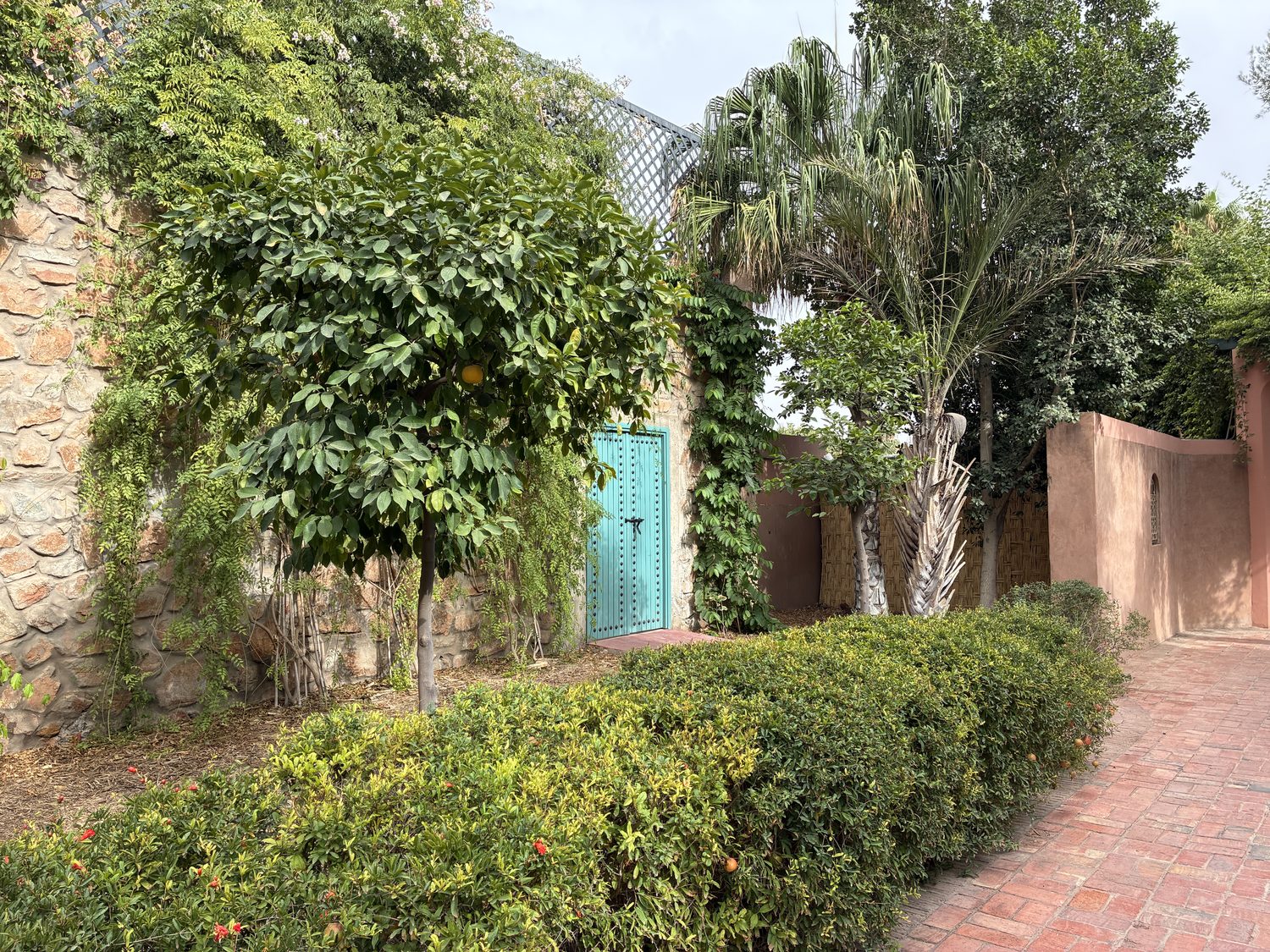
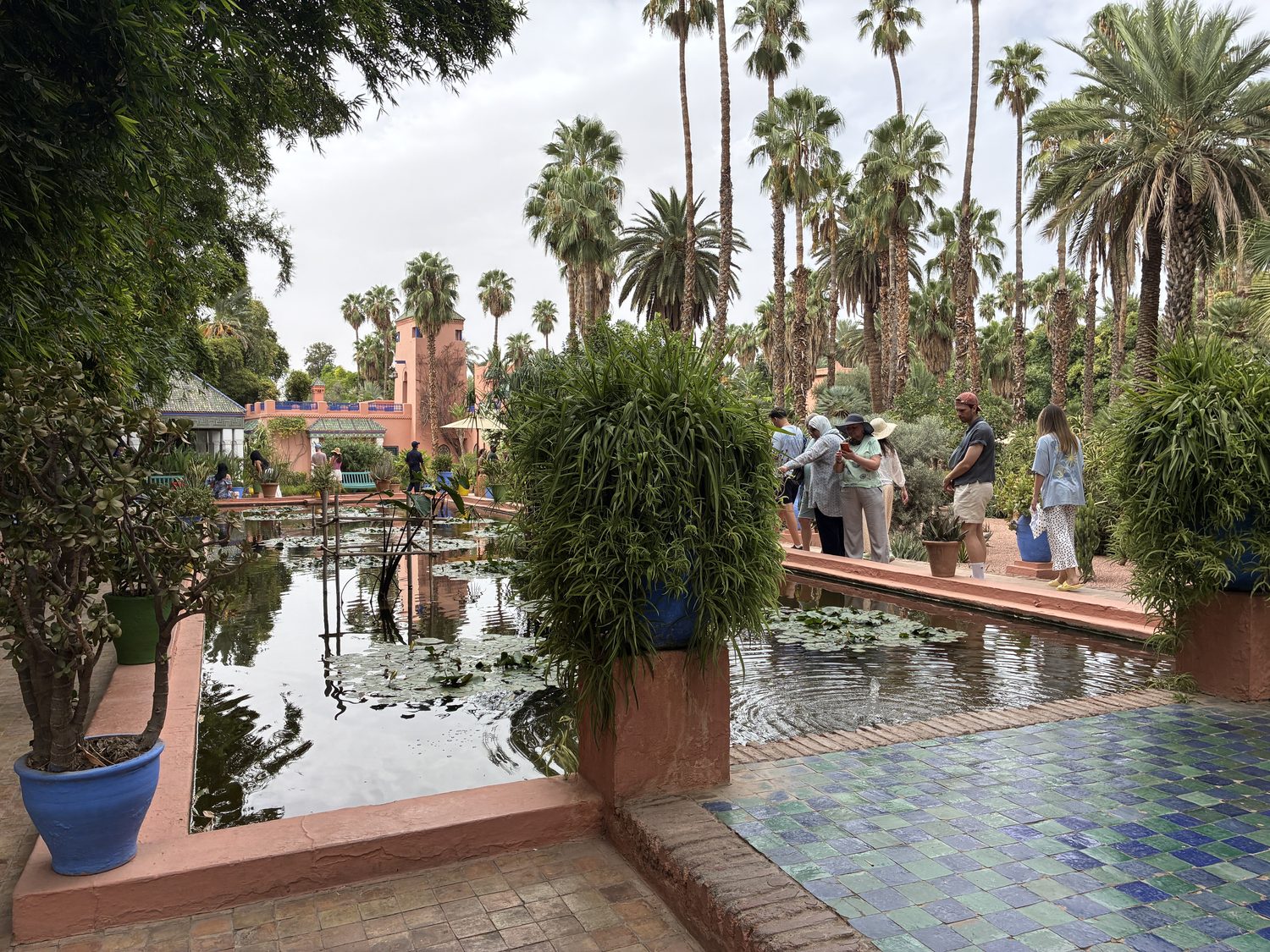
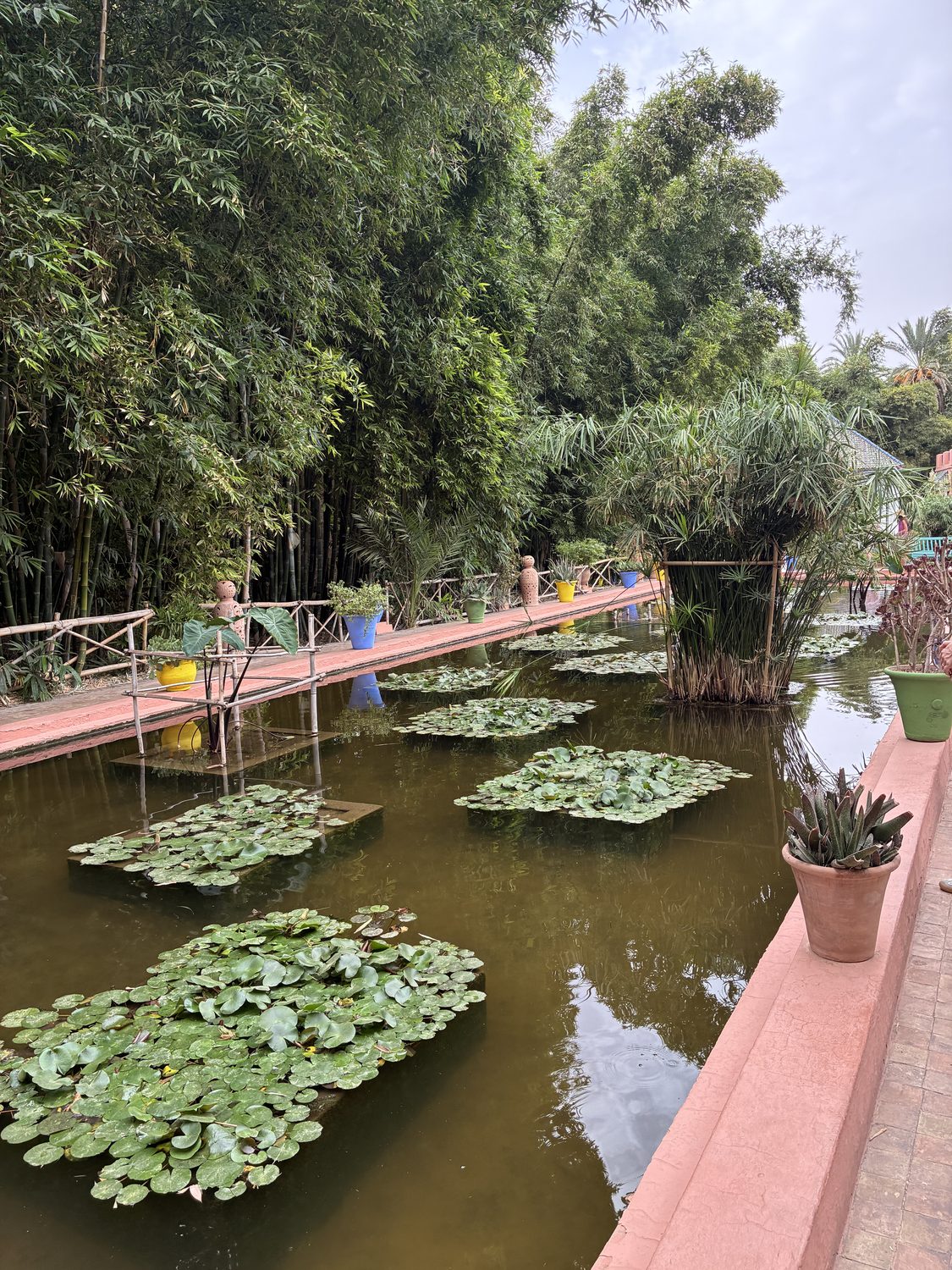
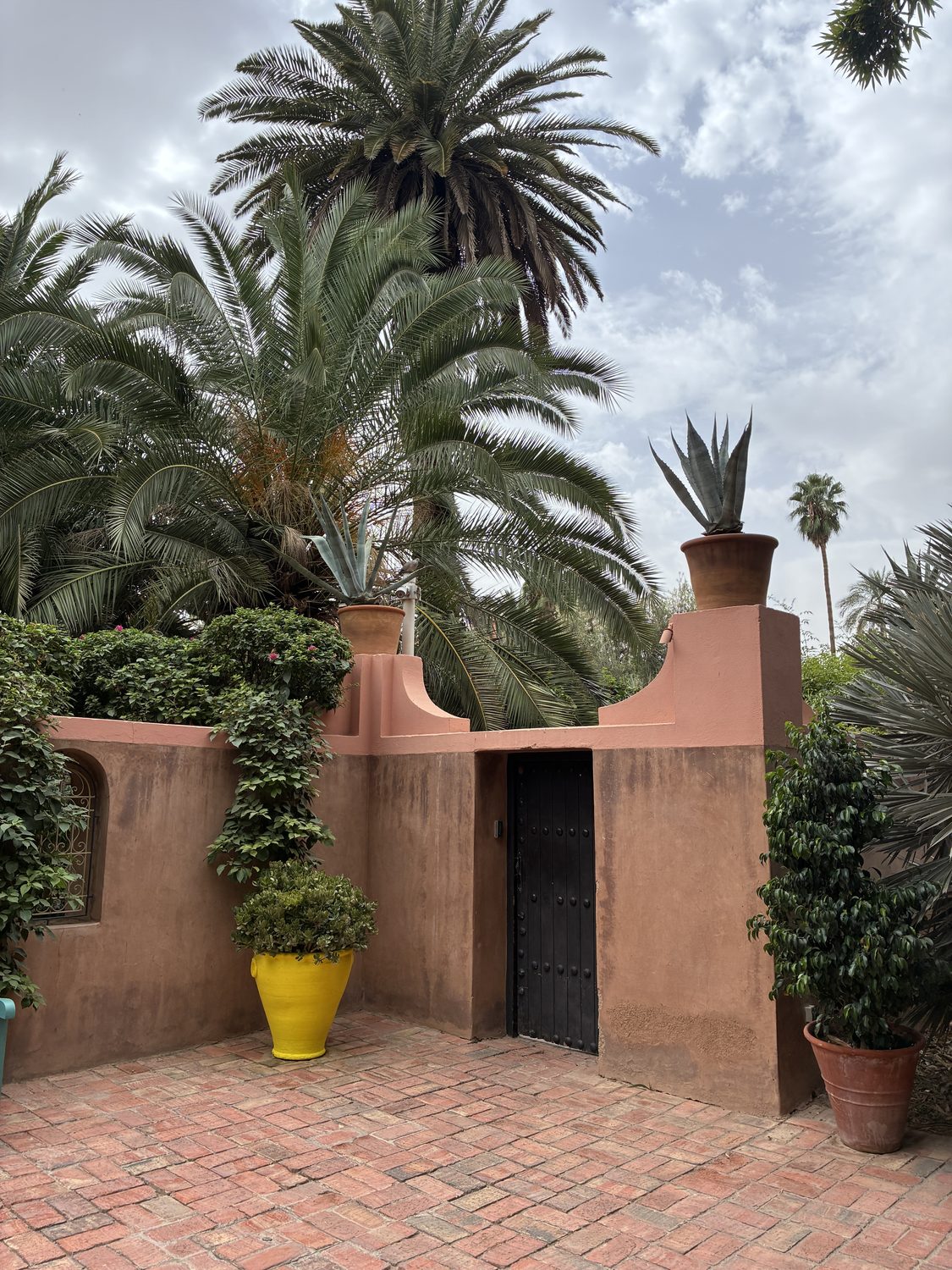
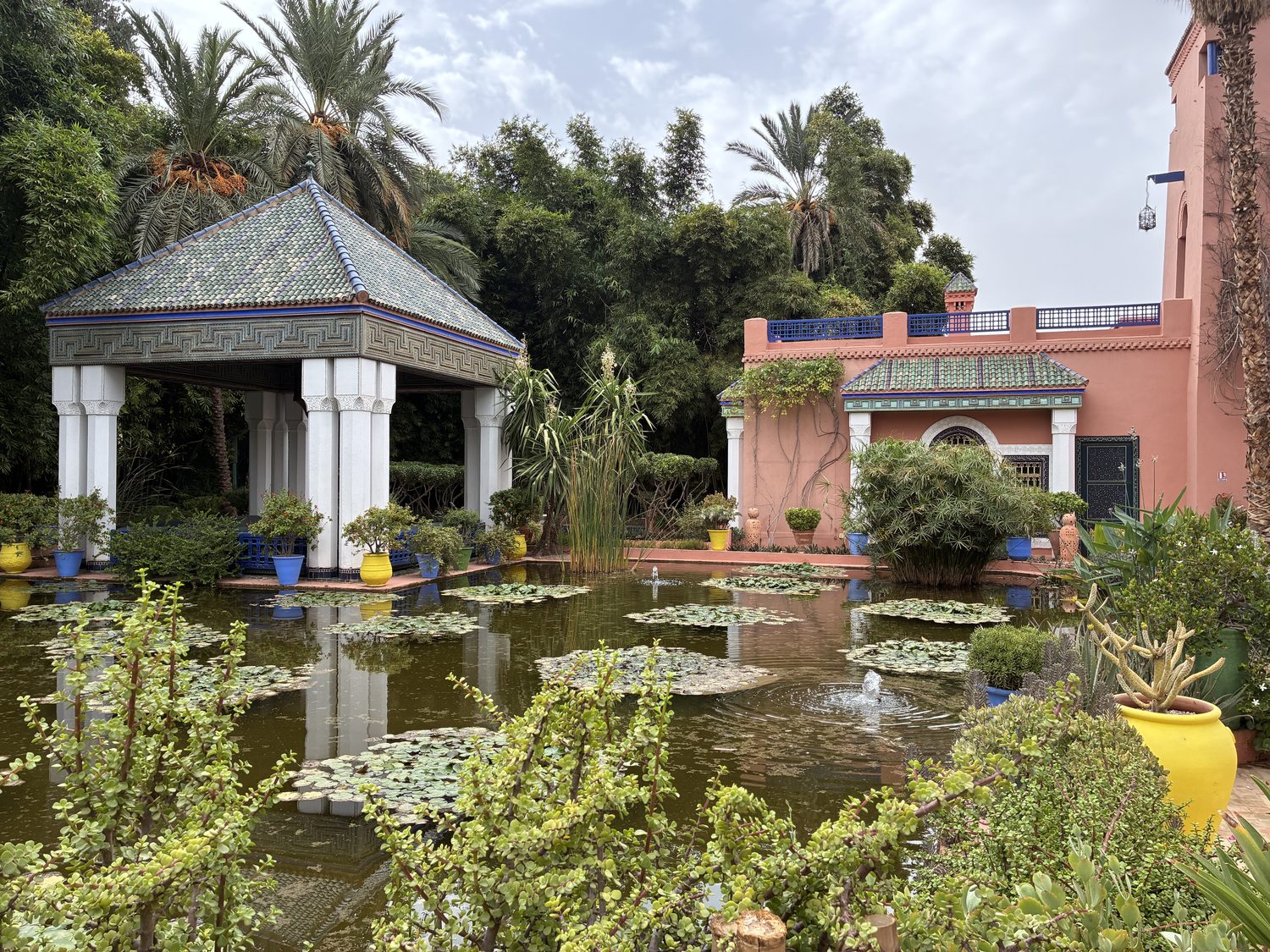
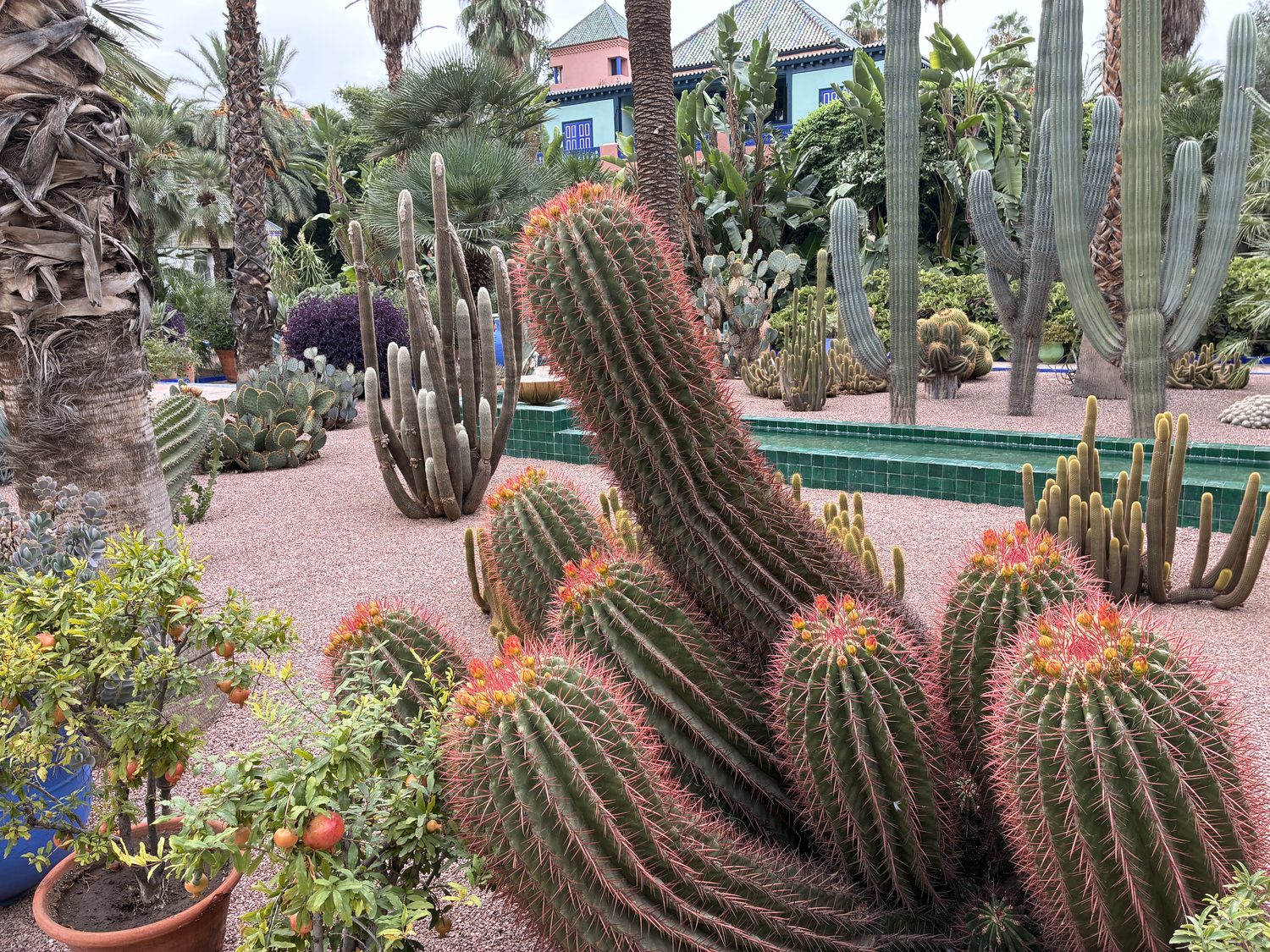
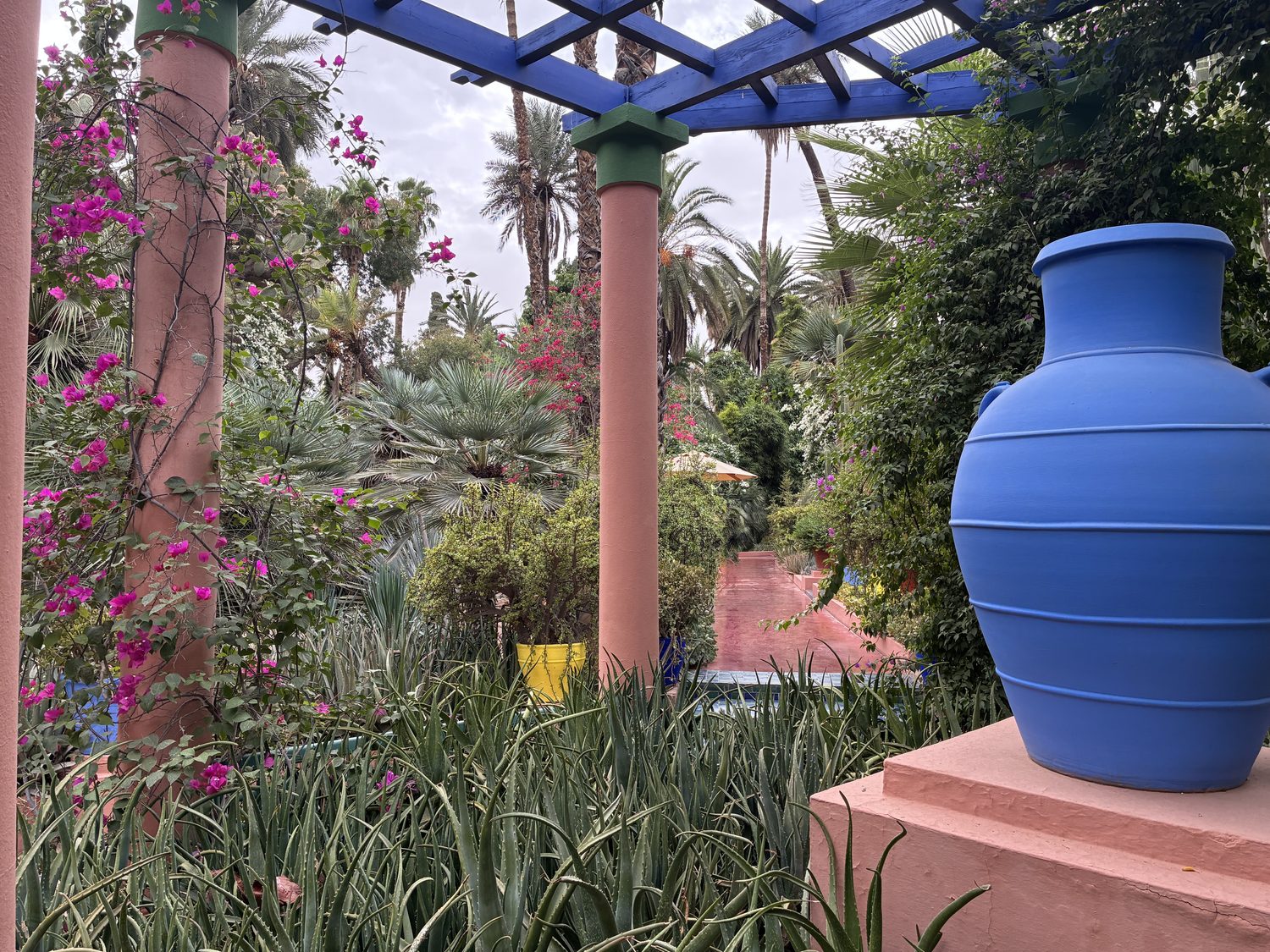
Jardin Majorelle was originally created by French artist Jacques Majorelle in the 1920s, and in 1980, when at risk of being demolished by a hotel development, Yves Saint Laurent and his partner Pierre Bergé, who had a home nearby, bought it. Saint Laurent is not only associated with the gardens, as well as having the street leading to the gardens named for him, but he is also associated with the city in general, which he apparently loved, and was artistically influenced by what he found in the city.
The gardens were beautiful, of course, and fairly large. Despite lots of visitors, with timed entry, the gardens are still pretty quiet and serene. Throughout are audacious blue and reds, with the strong cobalt blue, created by Jacques Majorelle, serving as the garden’s signature color.
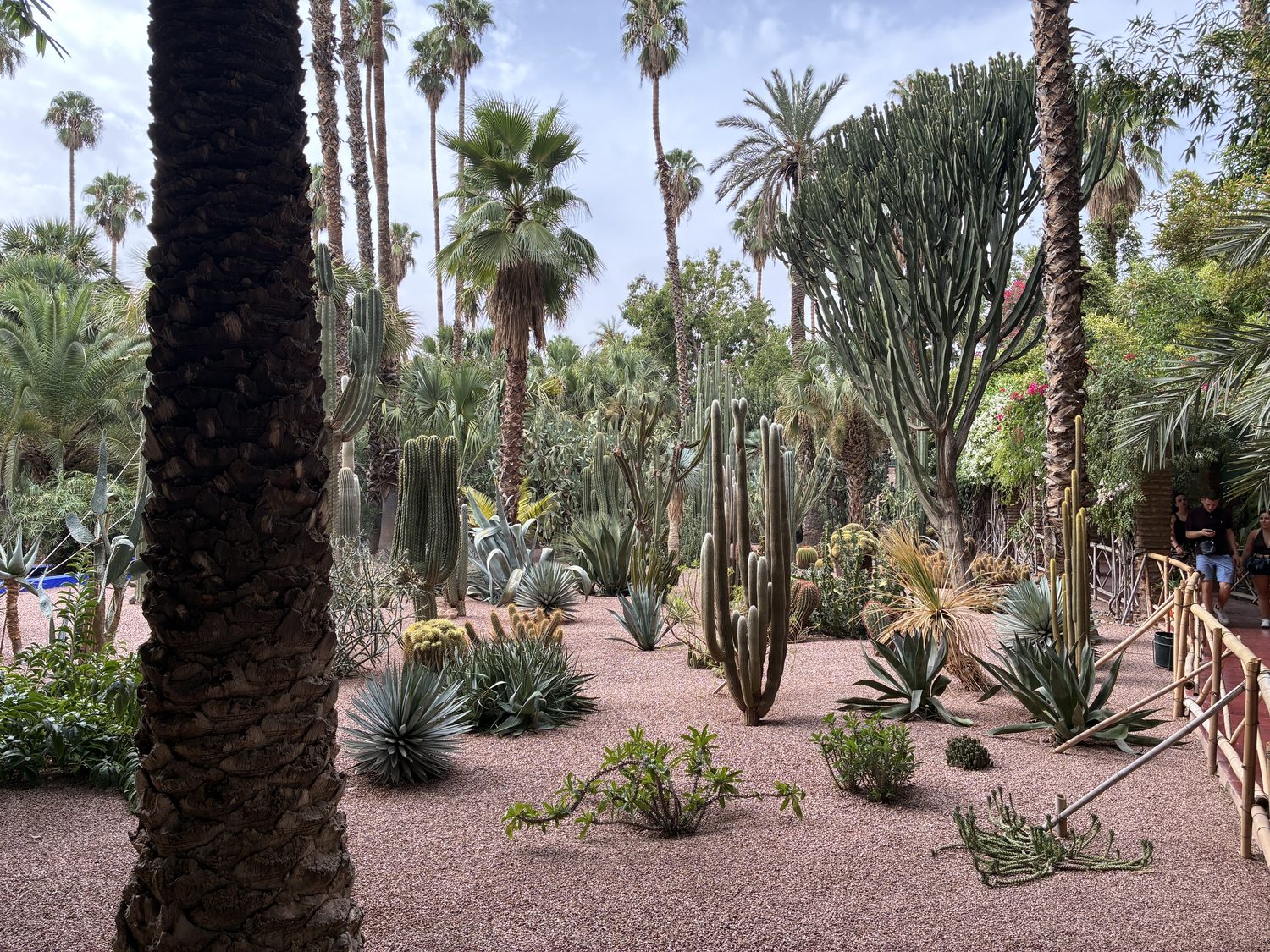
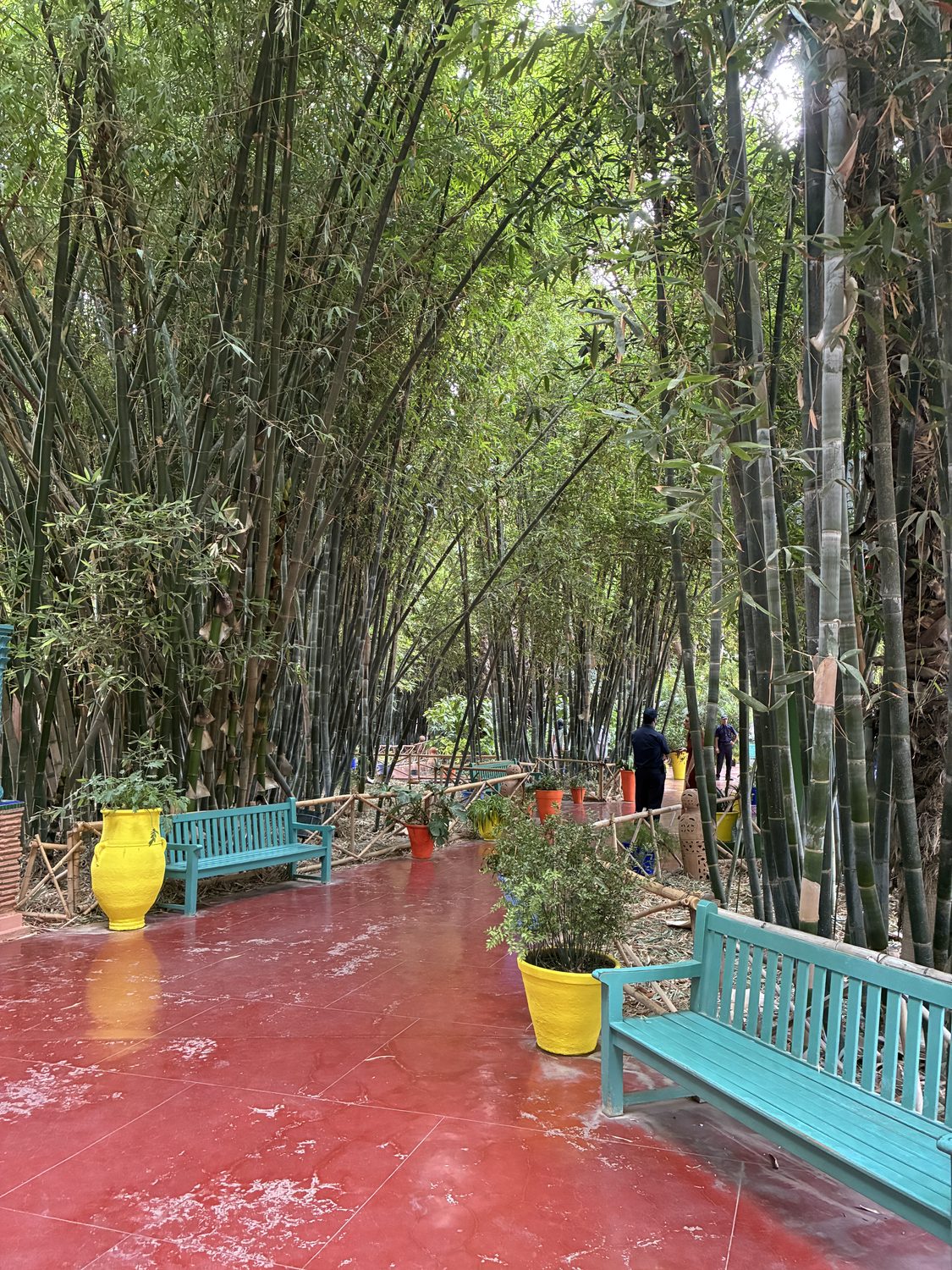
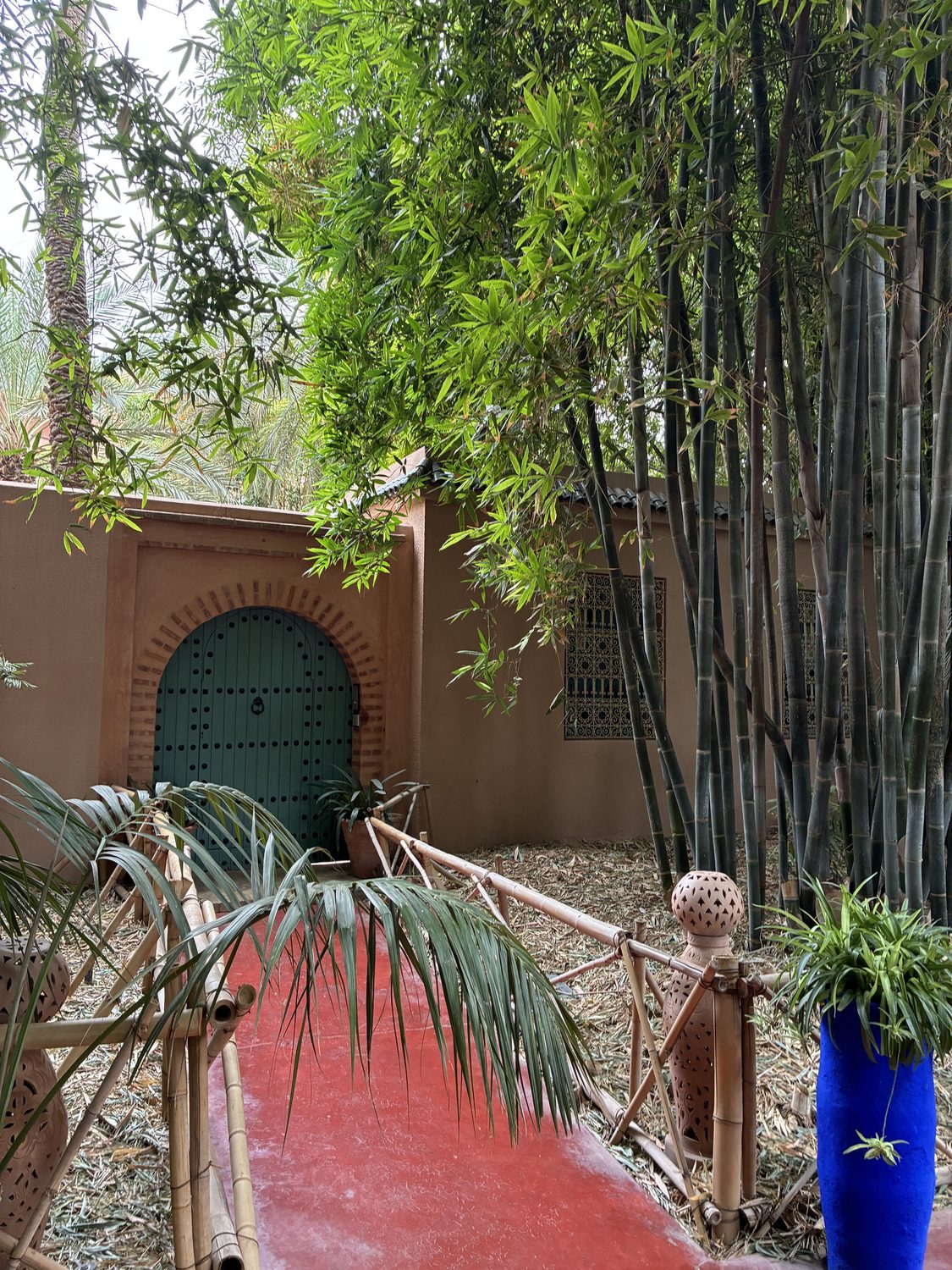
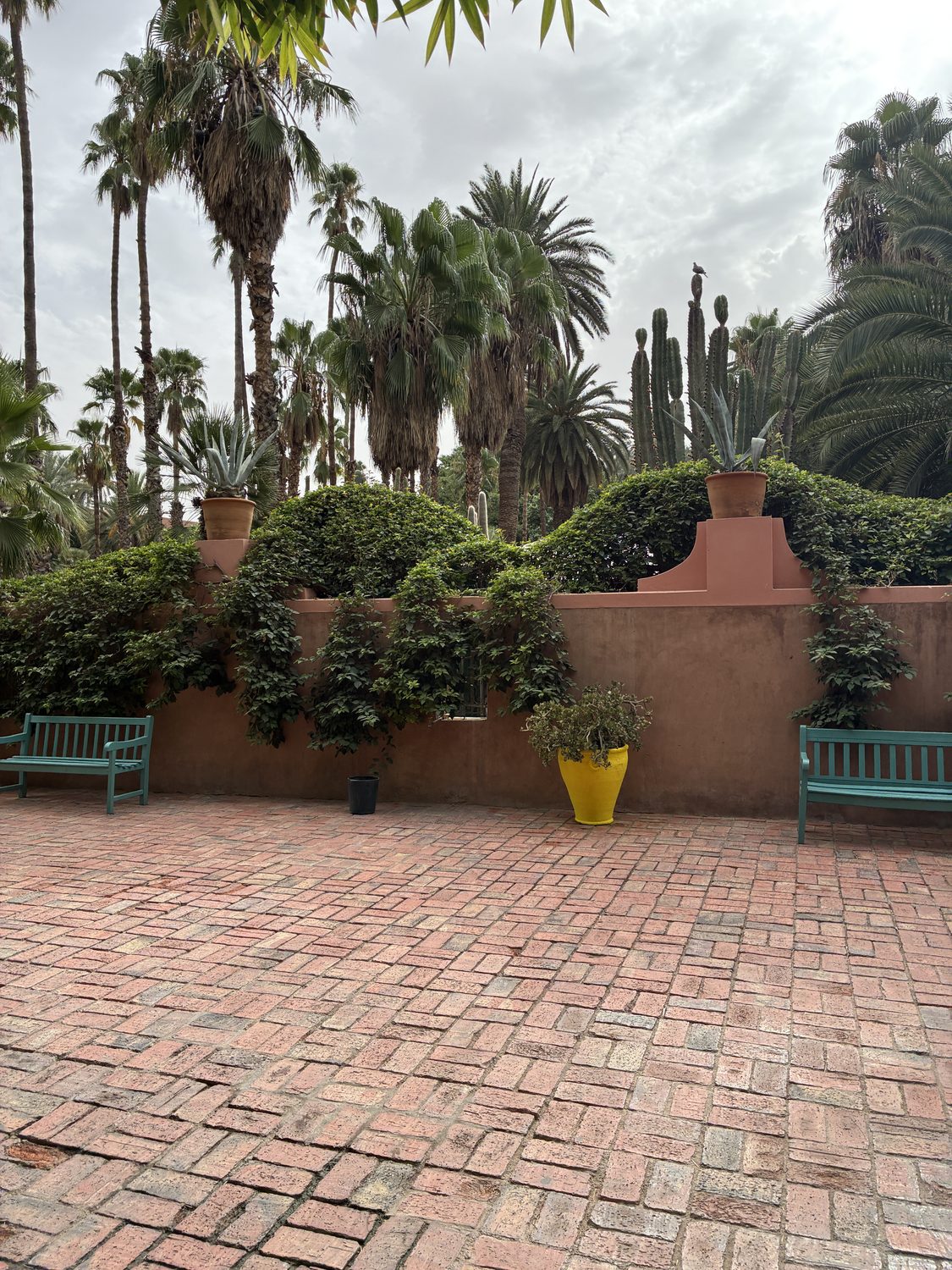
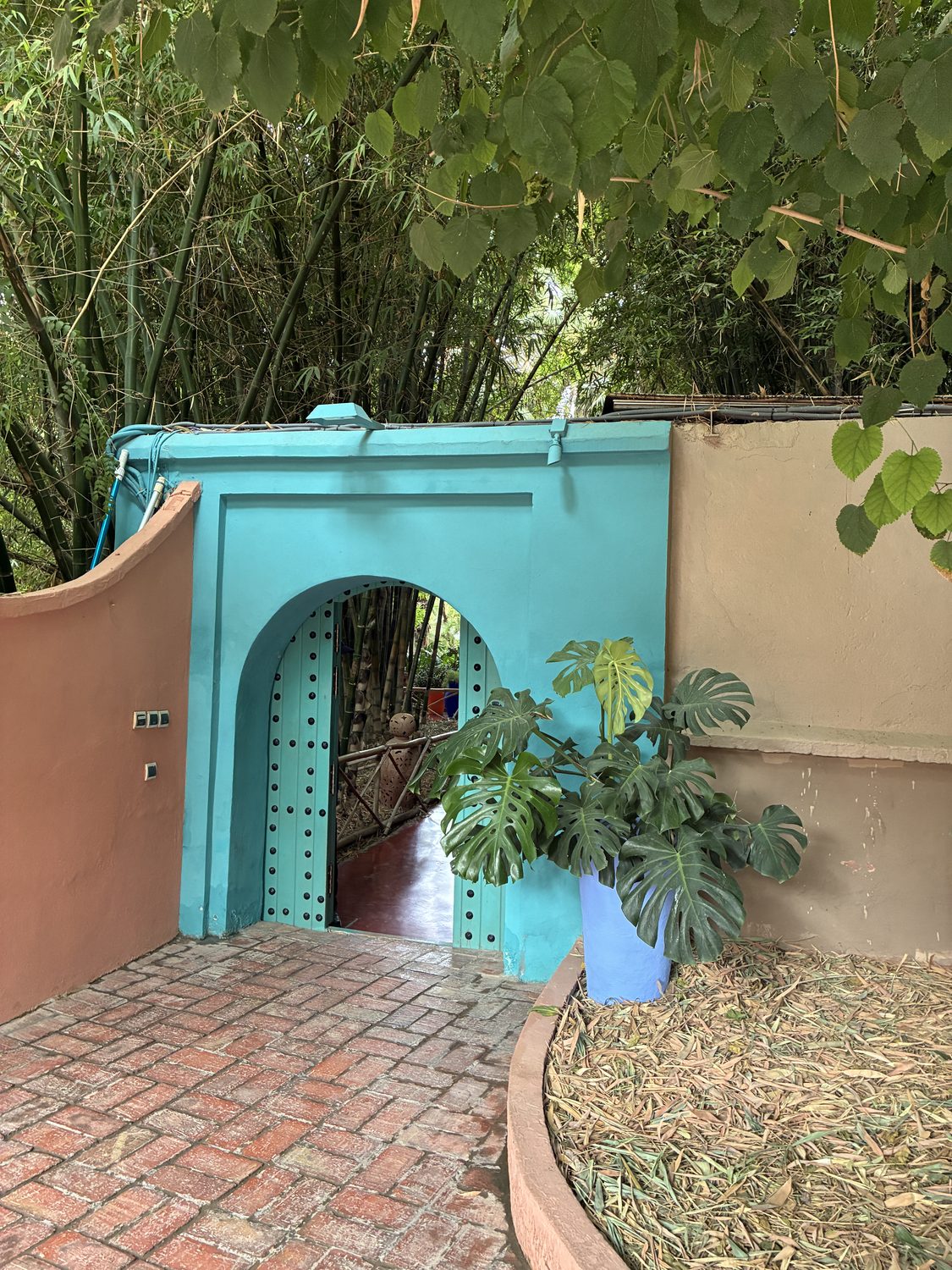
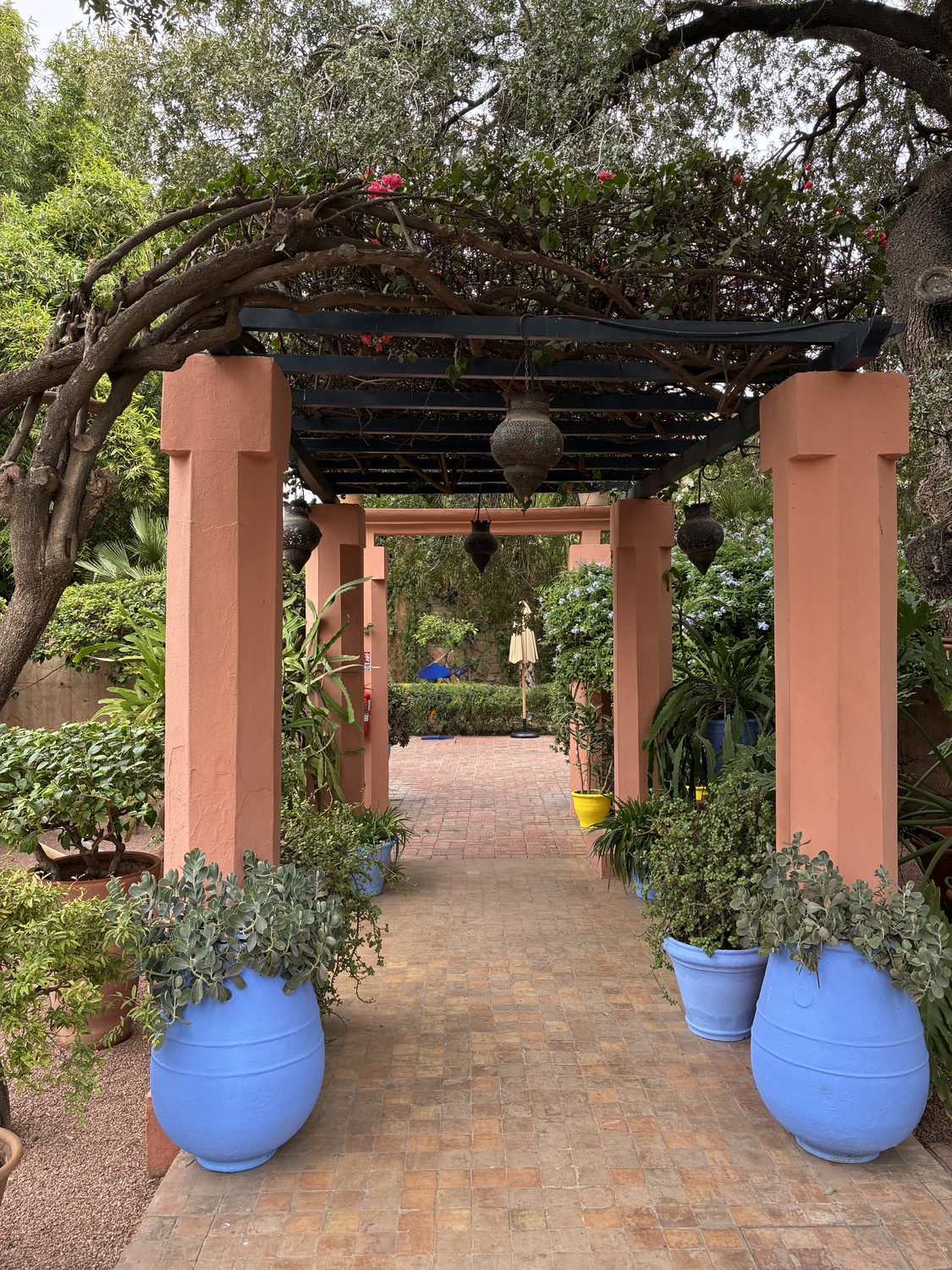
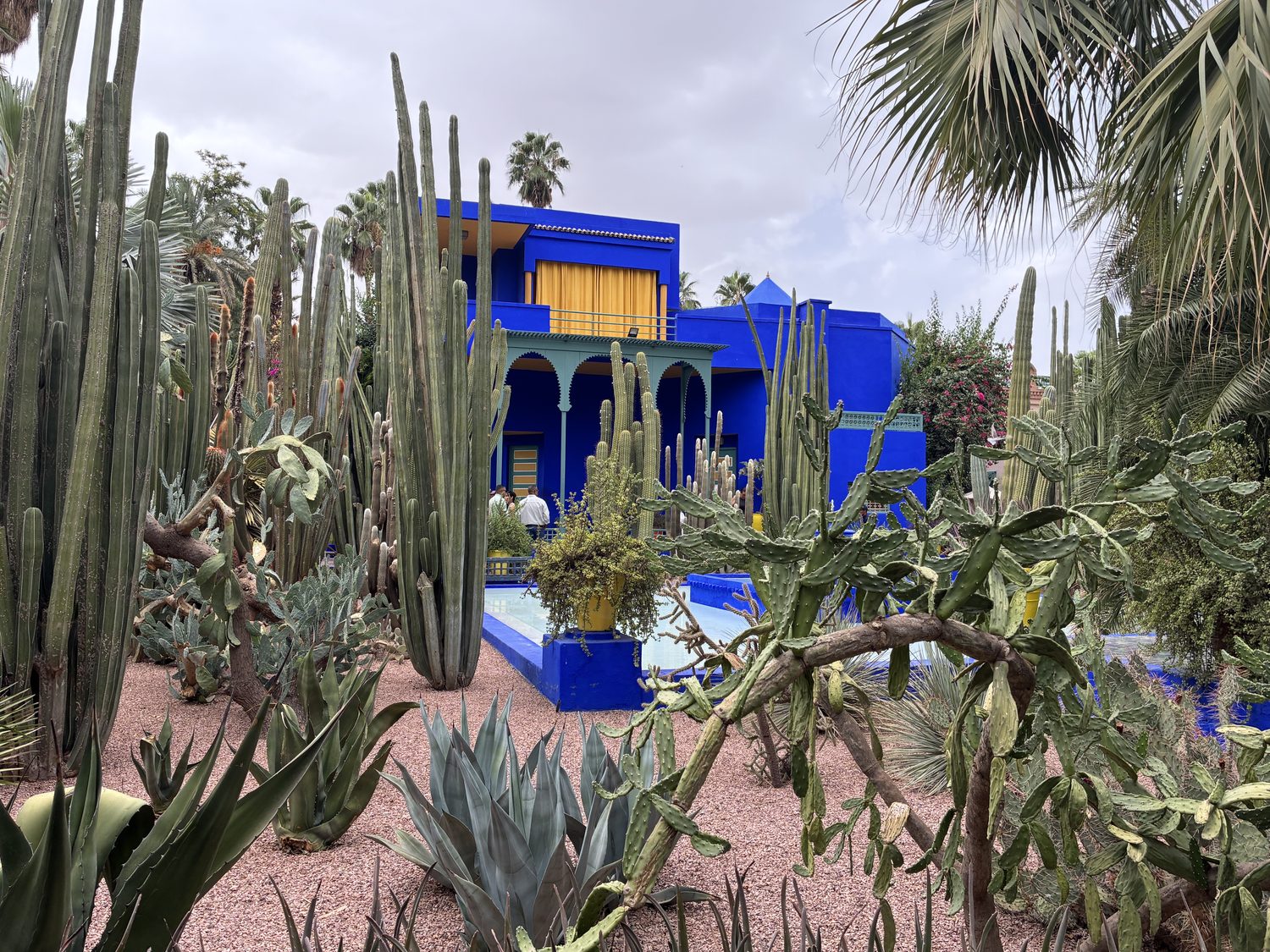
I spent maybe an hour at the gardens, and then started to slowly meander back to the hotel Ibis.
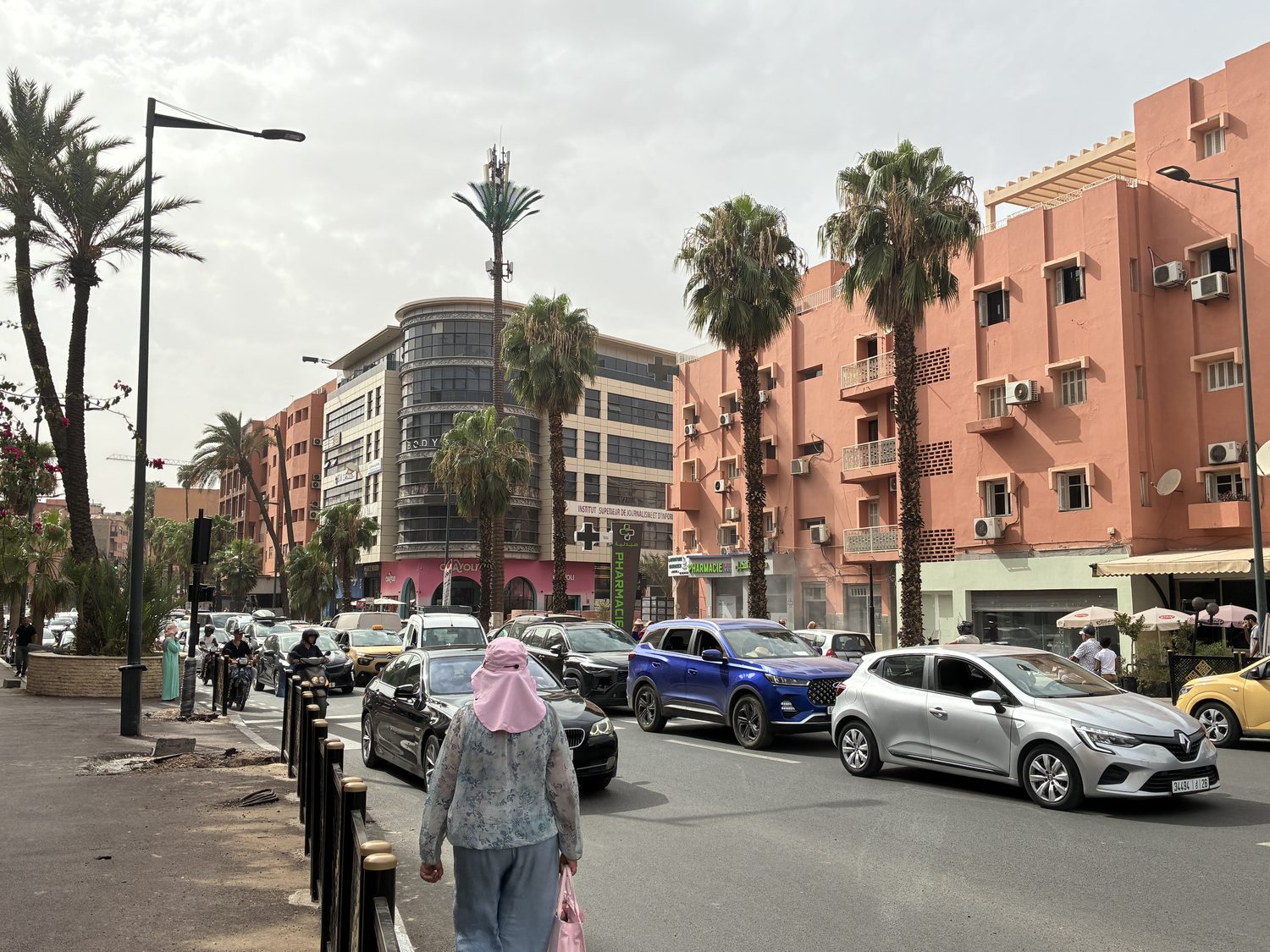
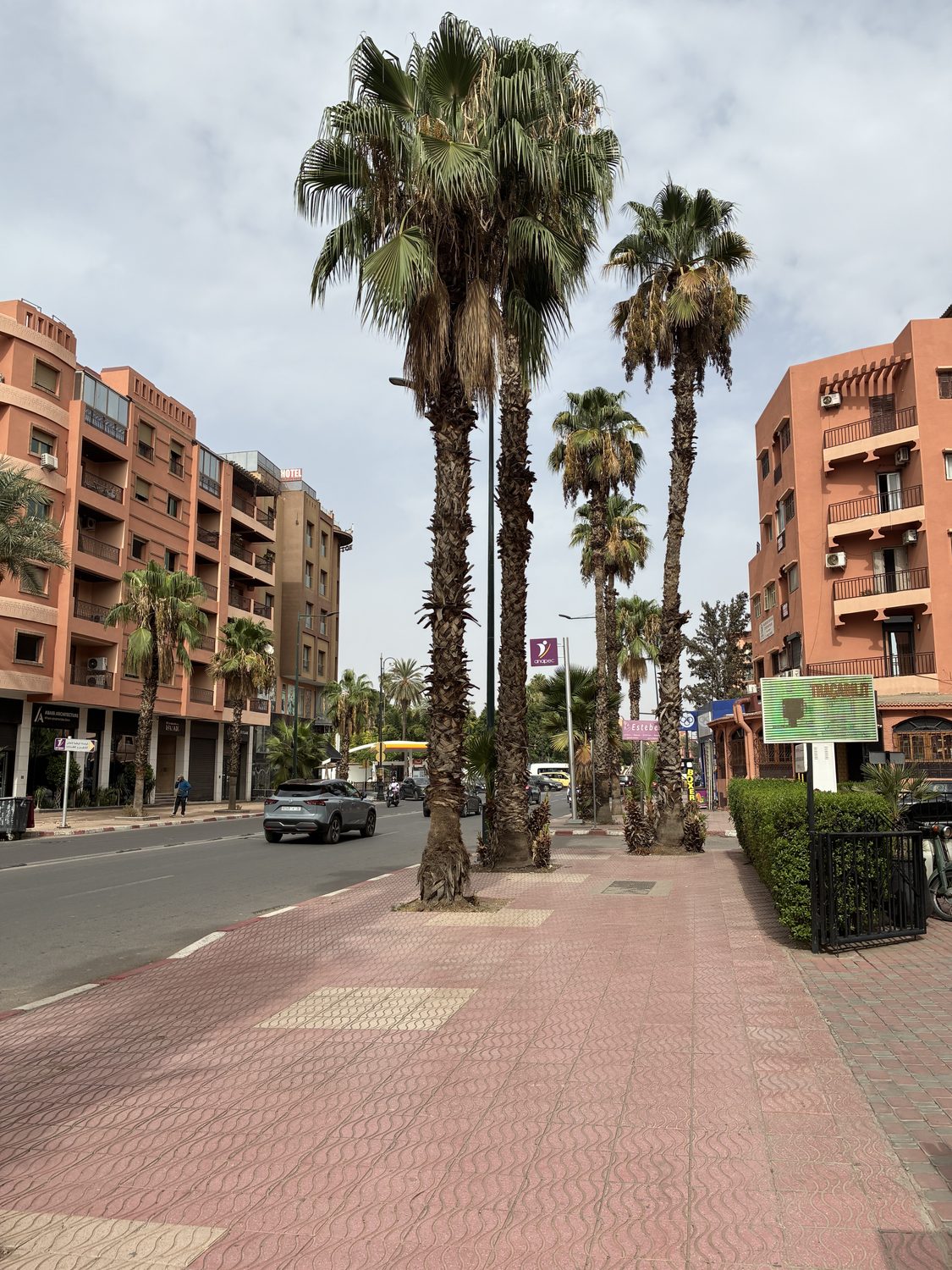
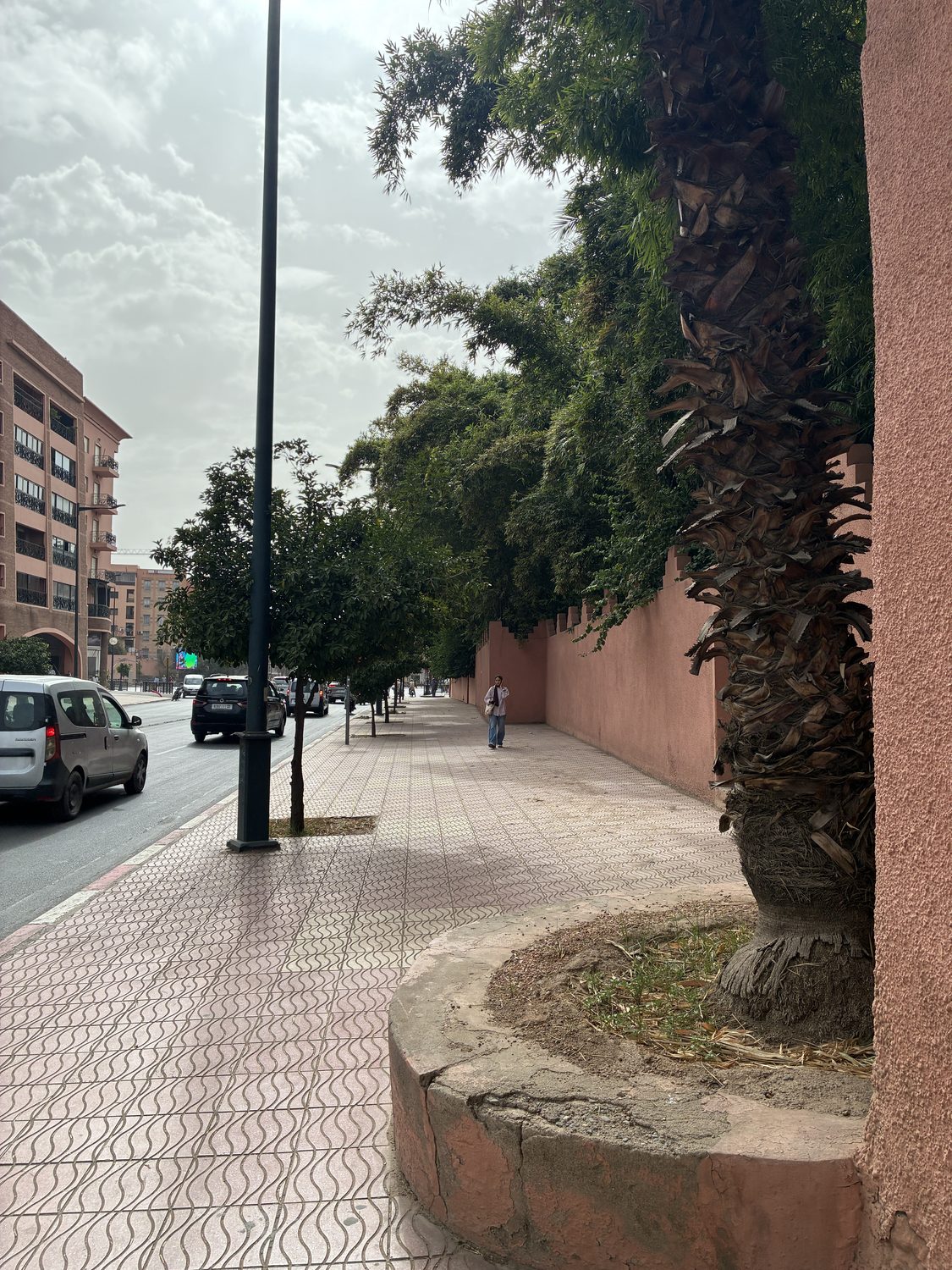
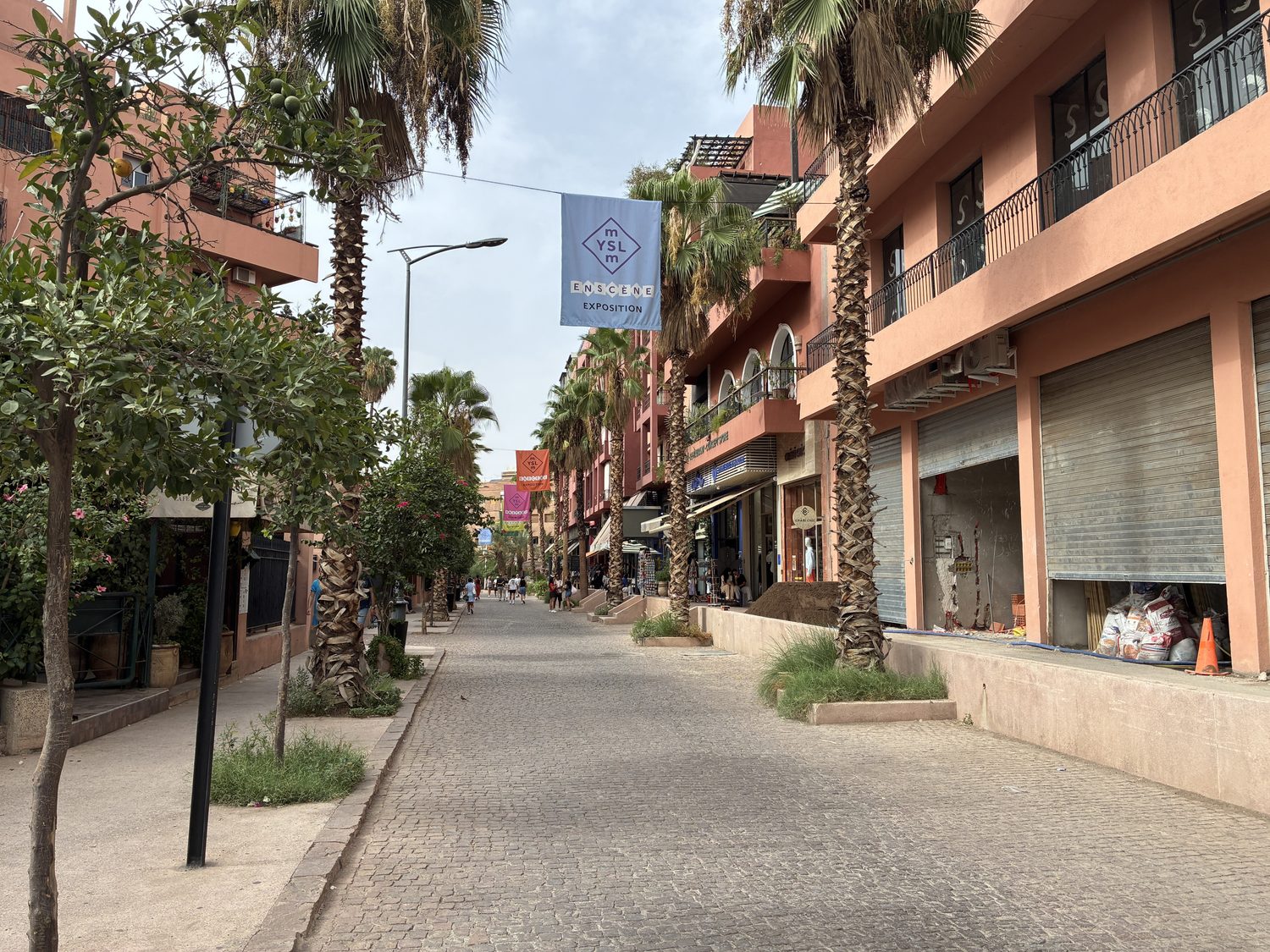
In contrast to the warren and sprawl of narrow streets and the age of the medina, Guéliz is a relatively modern European style city with large central avenues and boulevards, and the sorts of stores and businesses you’d expect from a city. Despite some pretty rundown side streets and buildings, there is no trace of old Morocco here, and although I know that there are mosques here, I didn’t see a single one.
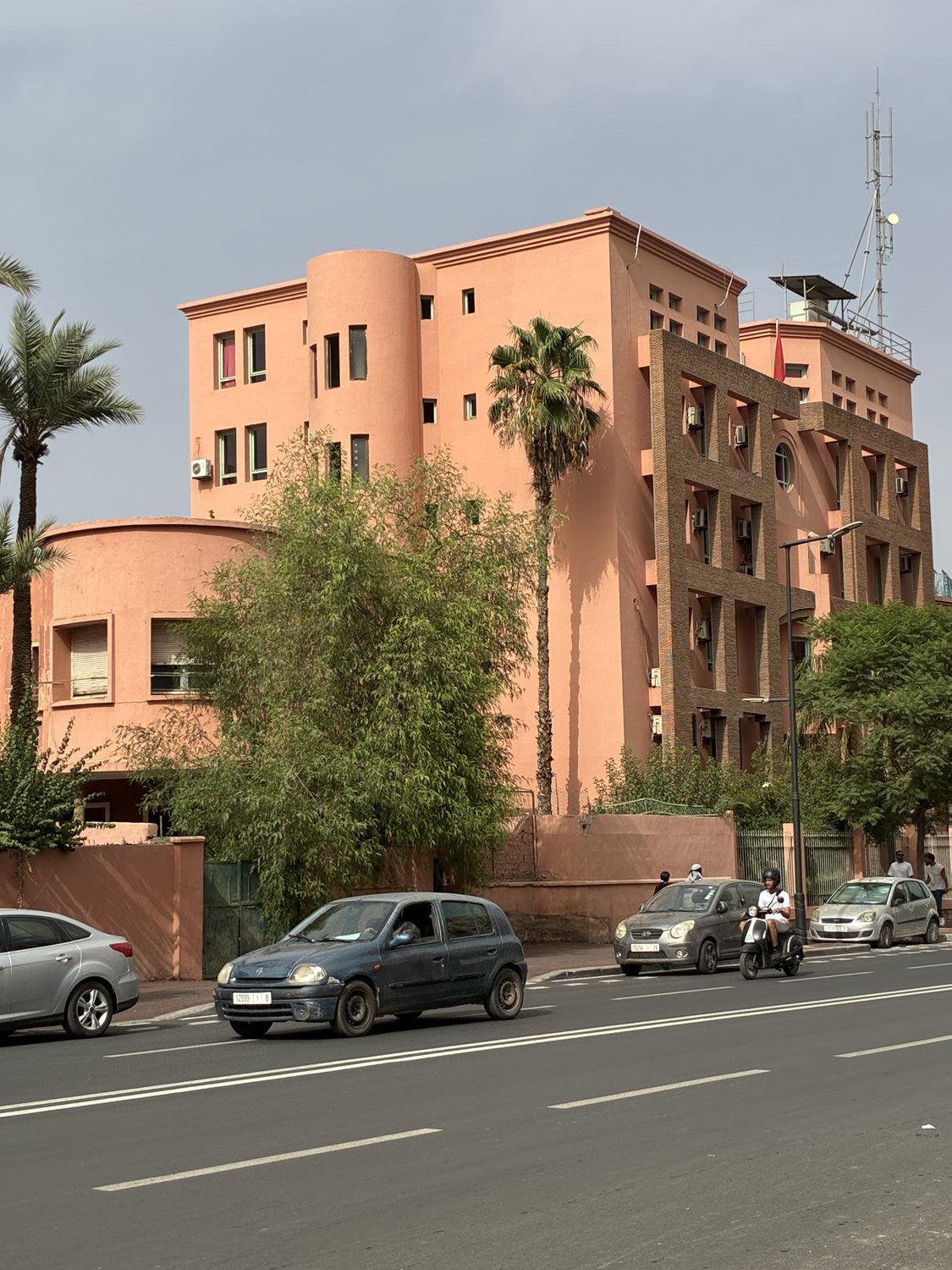
The style of the city is largely French Colonial with art deco features, but still Moroccan in character, even though not old Moroccan. I don’t think that you would mistake this for a French city, even though all of the streets have French names. And, just like buildings in the medina, Guéliz buildings are predominately that pink/light terracotta color, known as Marrakech red.
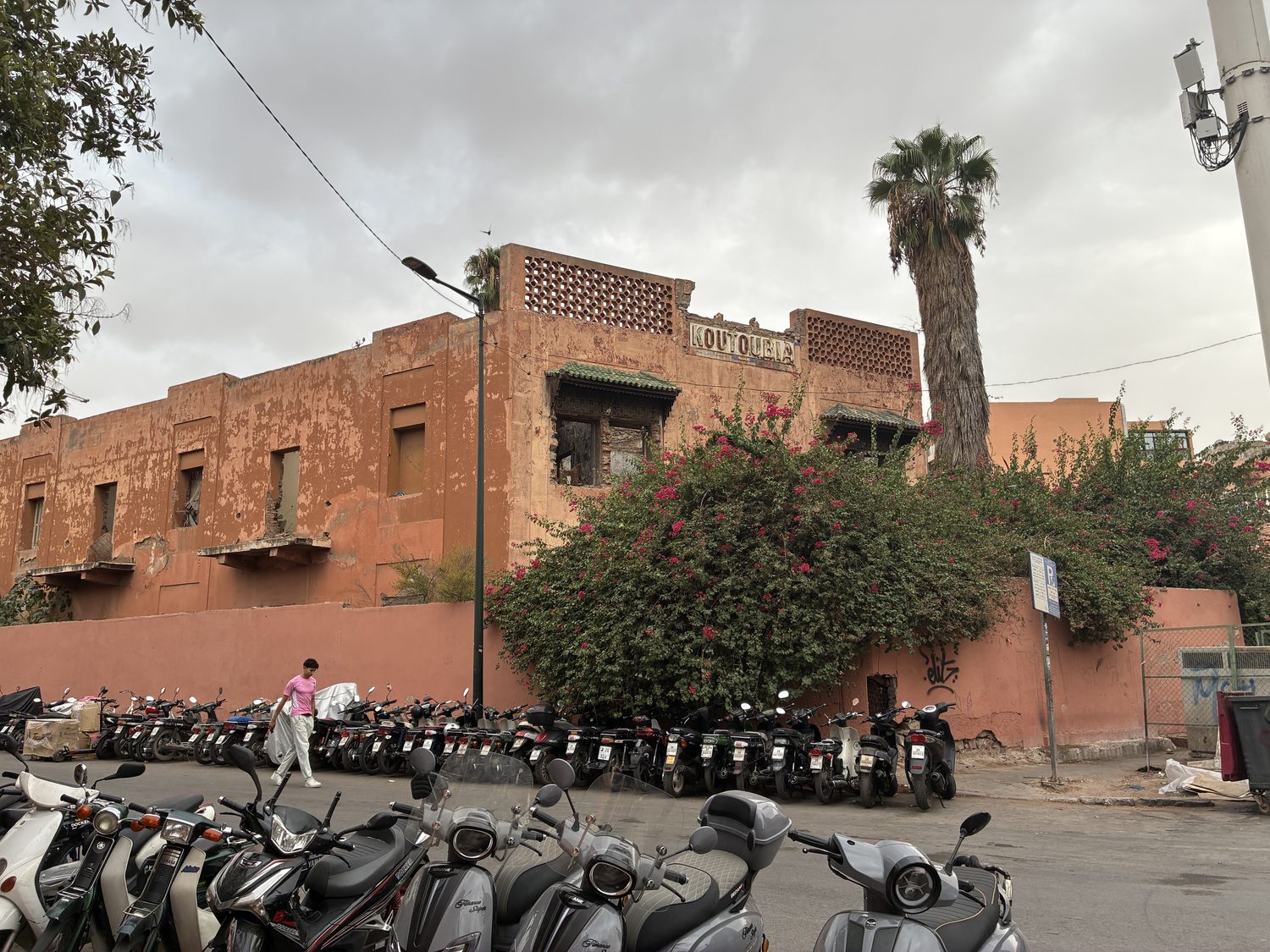
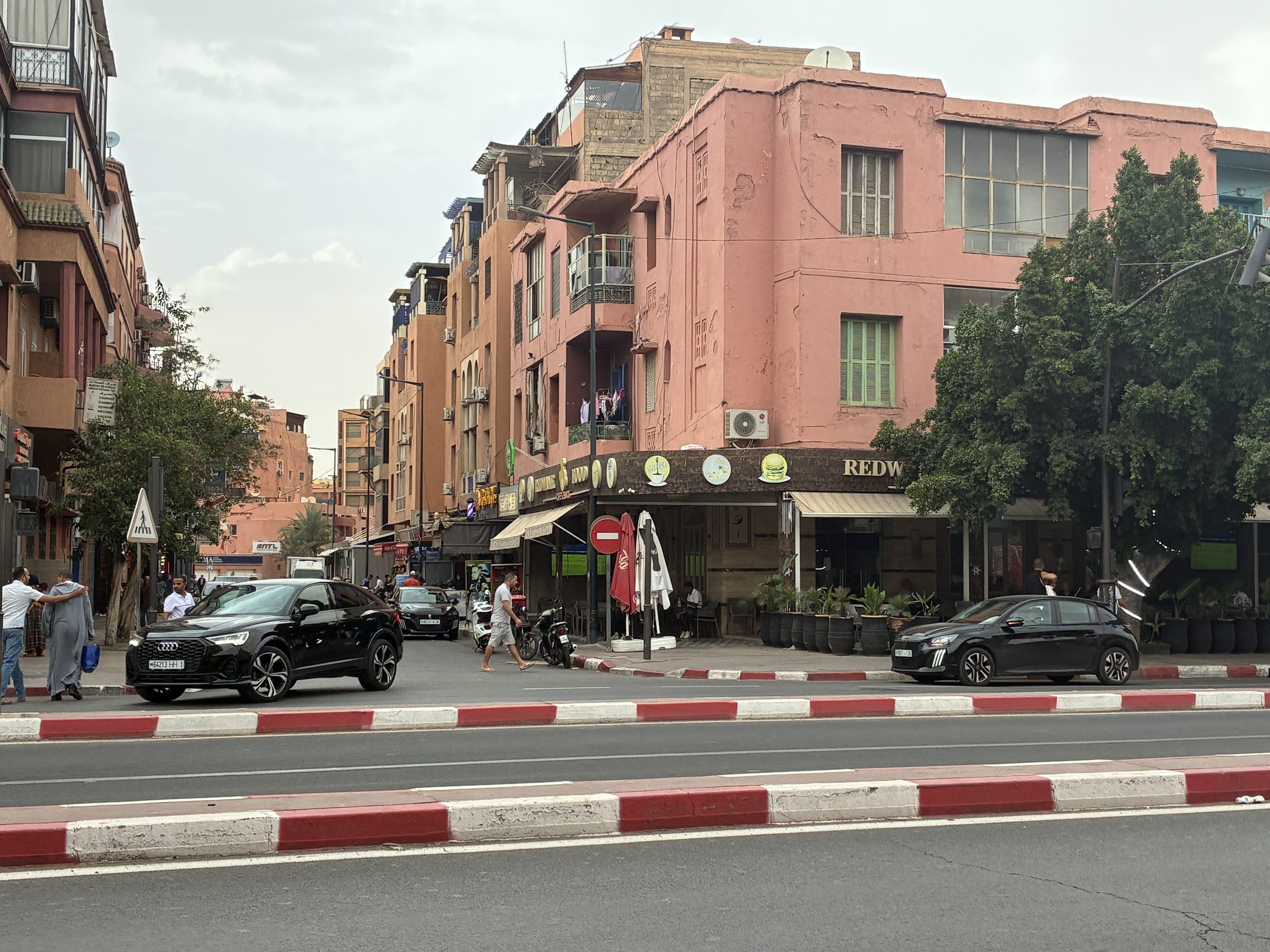
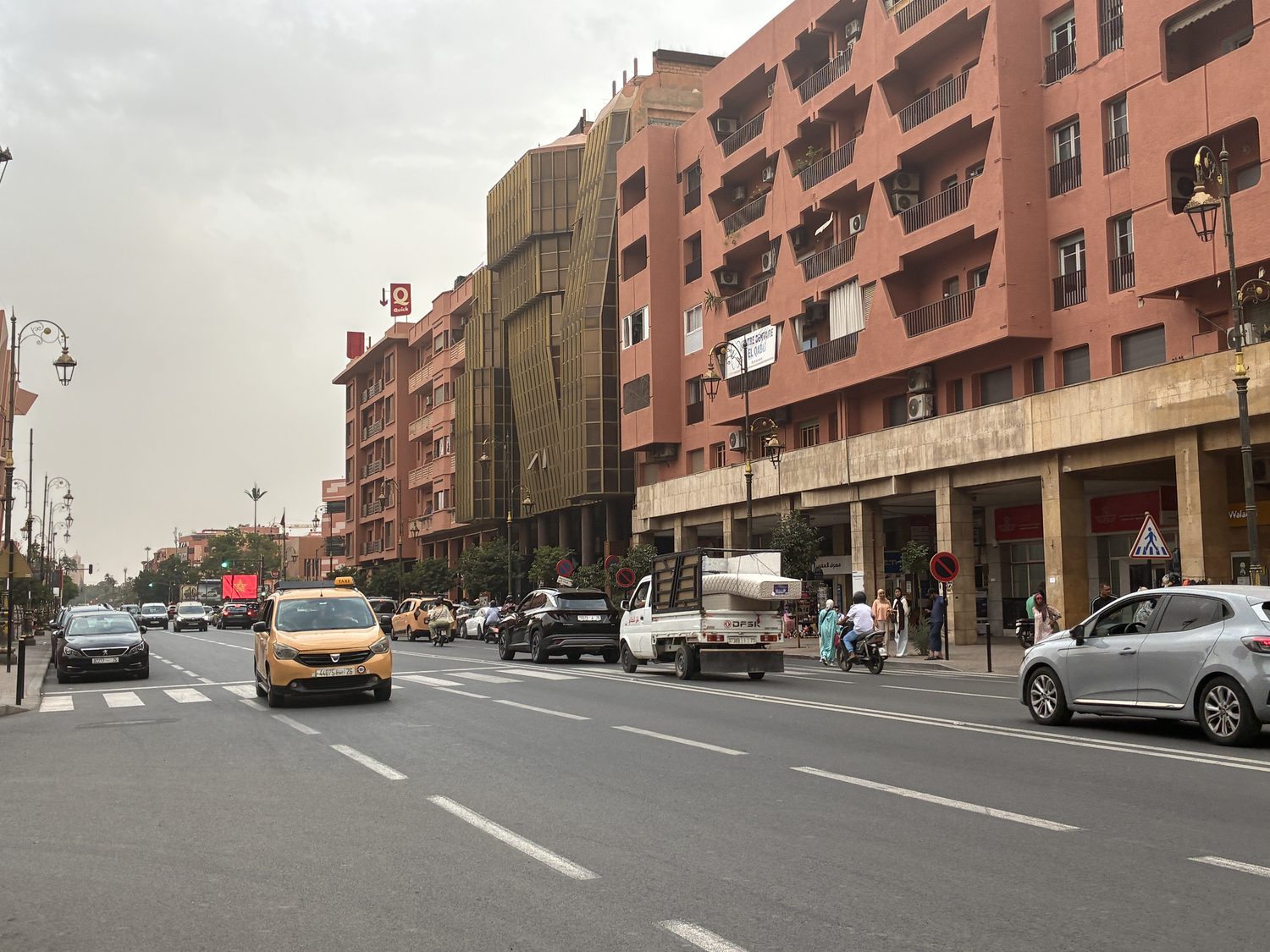
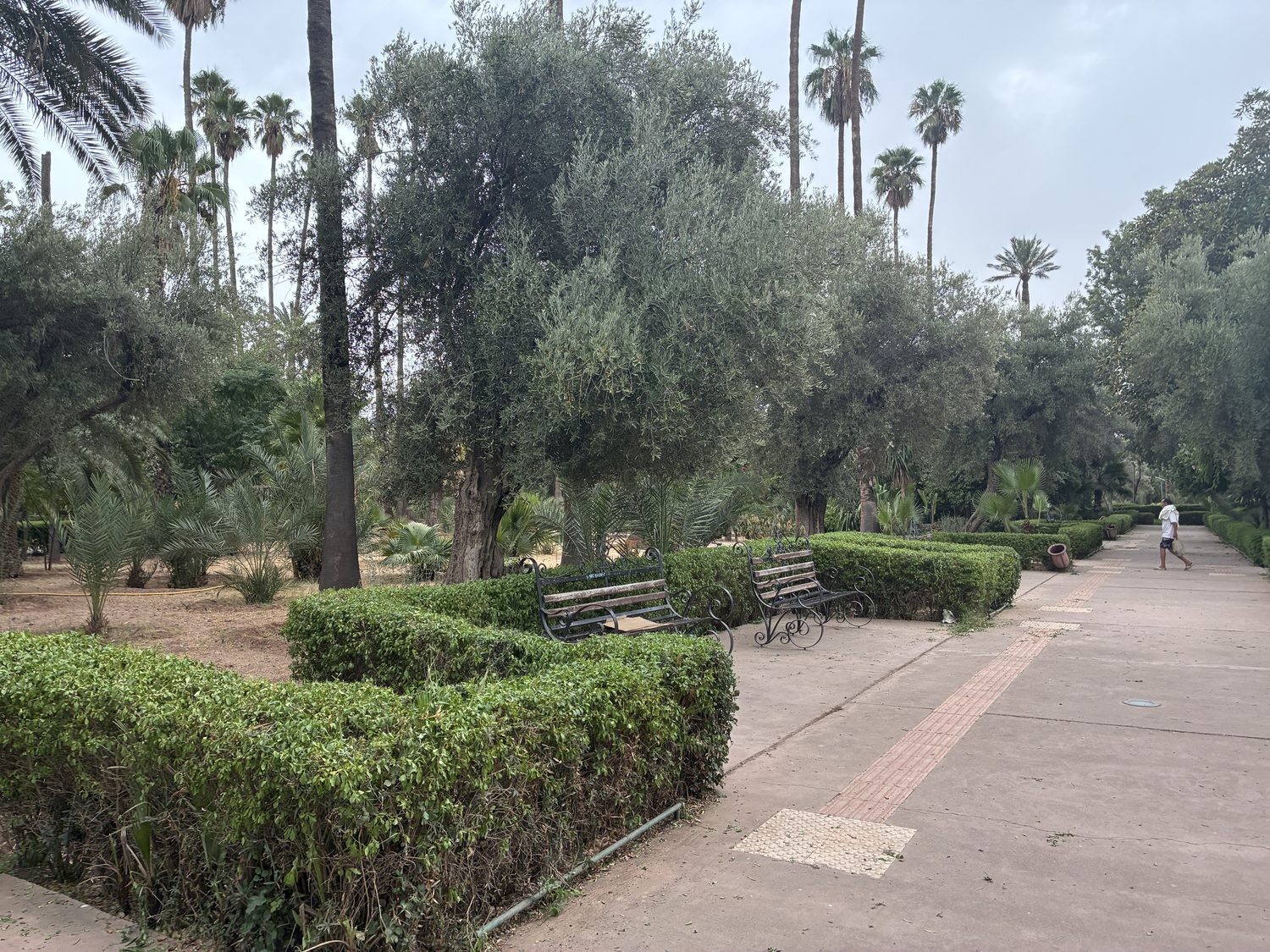
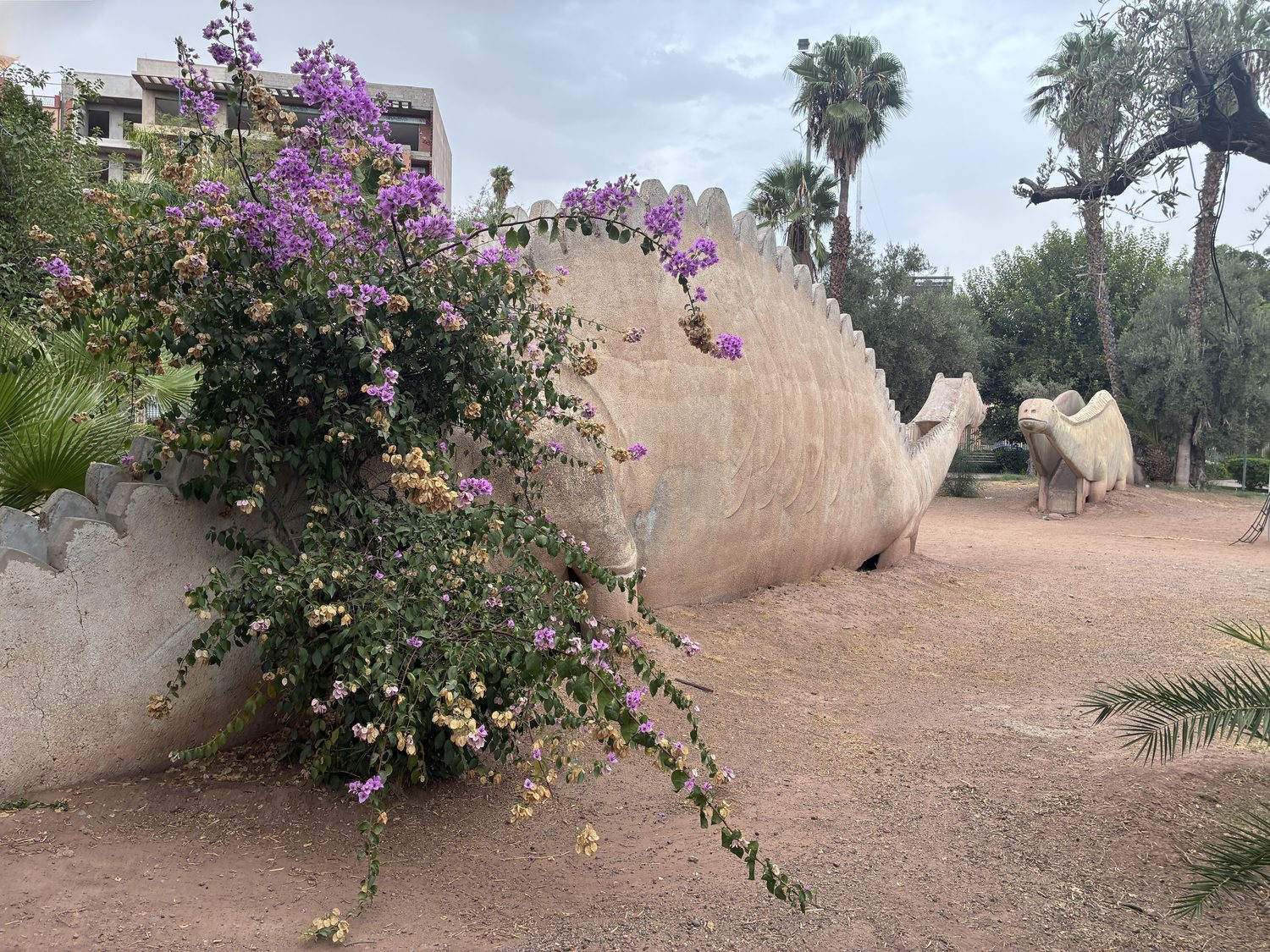
The city is pretty non-descript actually. There aren’t any standout monuments, statues, or squares. It’s no wonder all of the Marrakesh walking tours are in the medina, and none seem to be in Guéliz . I can see why – I’m not sure where they would actually take you. All the action and tourist action is in the medina, which is really the city’s claim to fame, much like Fes.
By the time I got back to the hotel, I’d meandered about five miles, over maybe three or four hours. At the hotel, I took another shot at their restaurant, but this time I looked for someone rather them having them come to me. One reason I wanted to eat here is for convenience after walking several miles in very hot weather, but the other was because I want to conserve the little cash I have left, and few places in Morocco, including small and even larger restaurants, accept credit cards. For the most part, it’s cash on the barrel head.
The hotel restaurant had a limited menu, with no local food on it at all. I grabbed a cheeseburger, which was uninspirational and not the greatest I’ve ever had, and french fries, and sat in the very nice courtyard in the back of the hotel, with a swimming pool flanked by palms. It was initially breezy out, which was fine with me, and the palms looked great waving back and forth in the wind, and after the wind dropped, it left the evening air still warm, but considerably cooler.
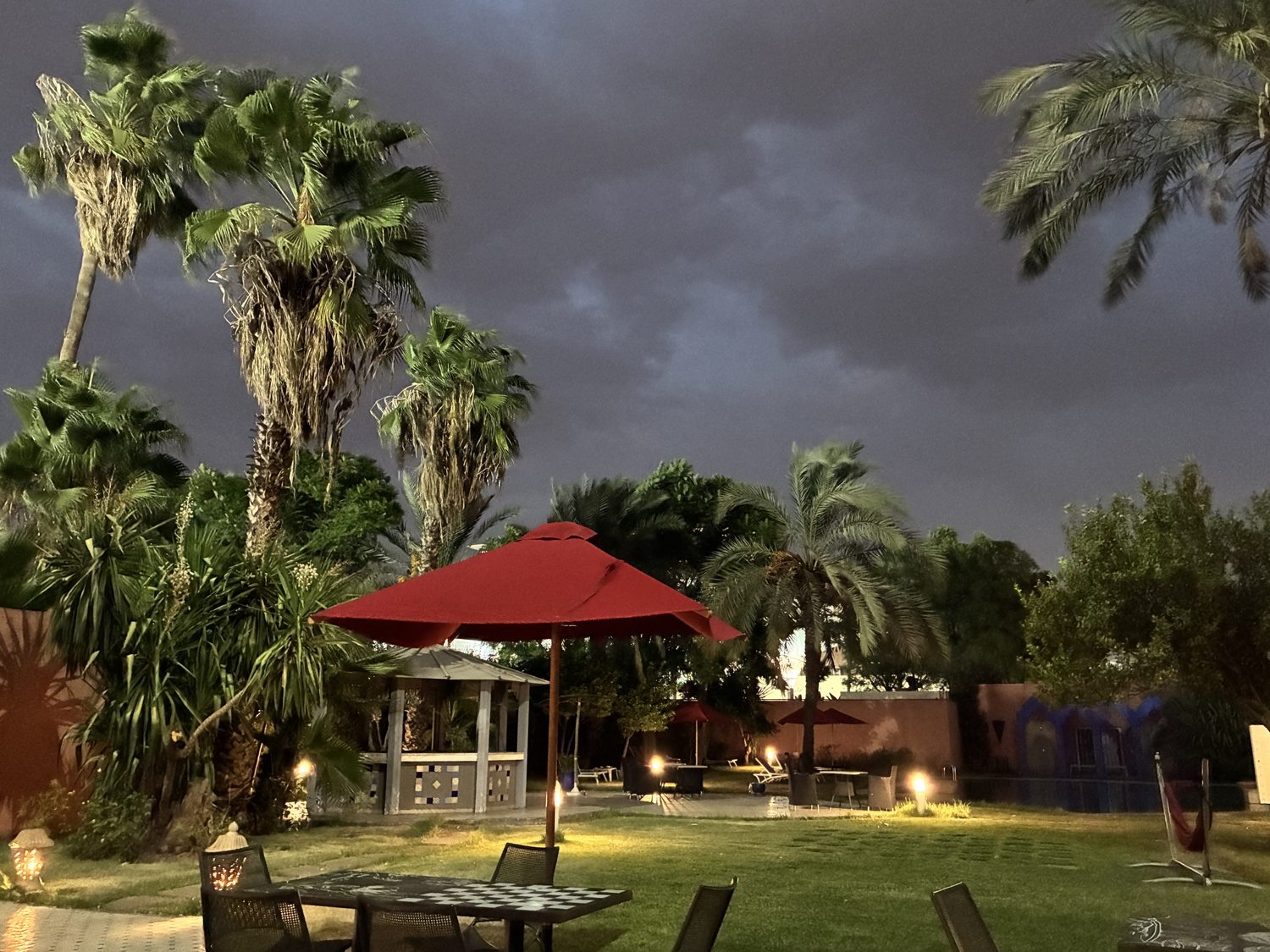
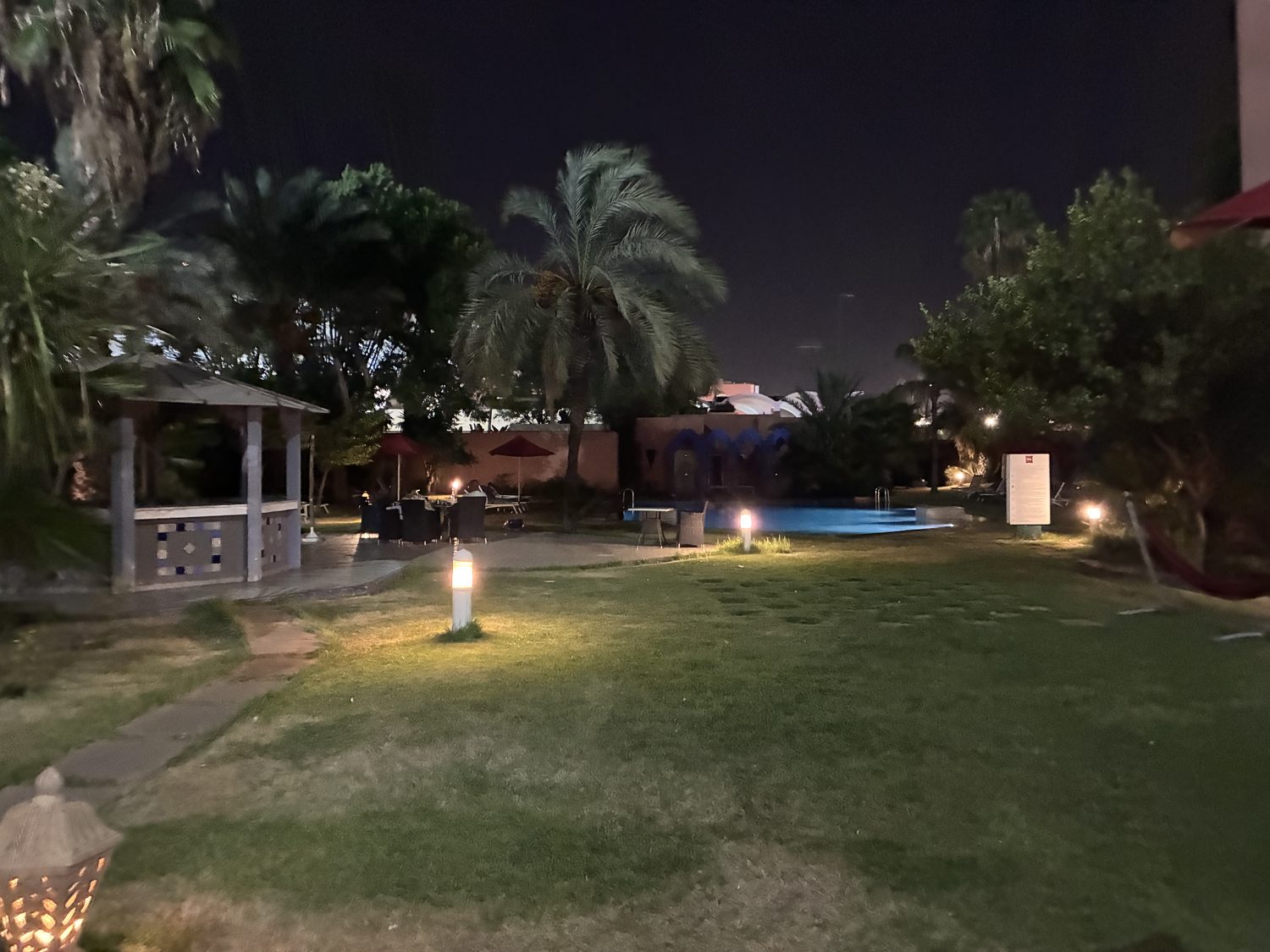
And that was pretty much my day. Not much to the day, but I’m looking forward to my trip to Essaouira tomorrow, which Charif told me was one of his favorite places, where he goes to find serenity and peace. I’m looking forward to that.