Essaouira.
I arrived at the CTM bus station with plenty of time to spare for the 8:30 bus for my day trip to Essaouira . I’m glad I came by yesterday to make sure I knew how to get here and to make certain this is the correct bus station. I’ve learned you definitely can’t trust AI when there’s more than one bus or train station in town.
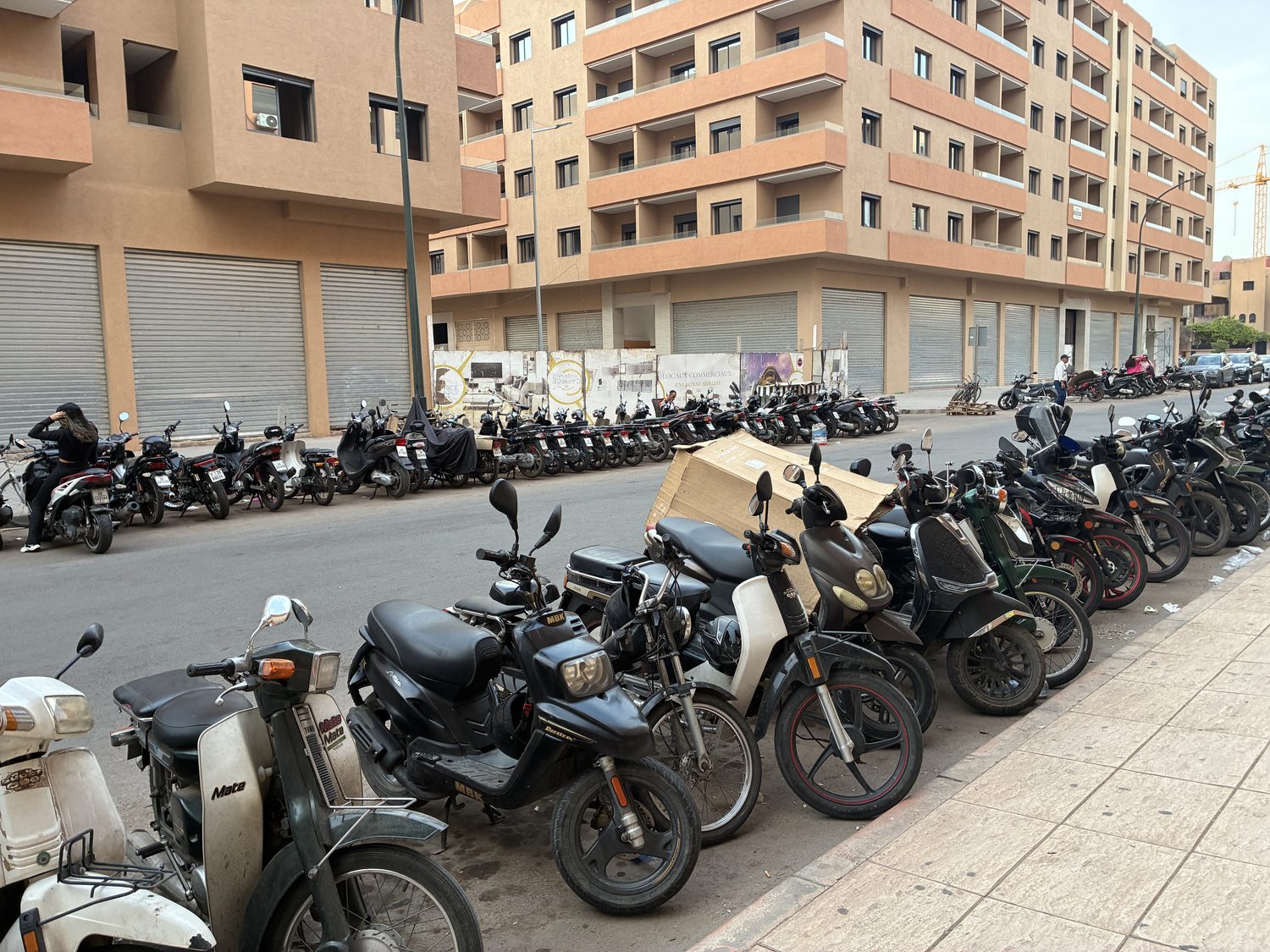
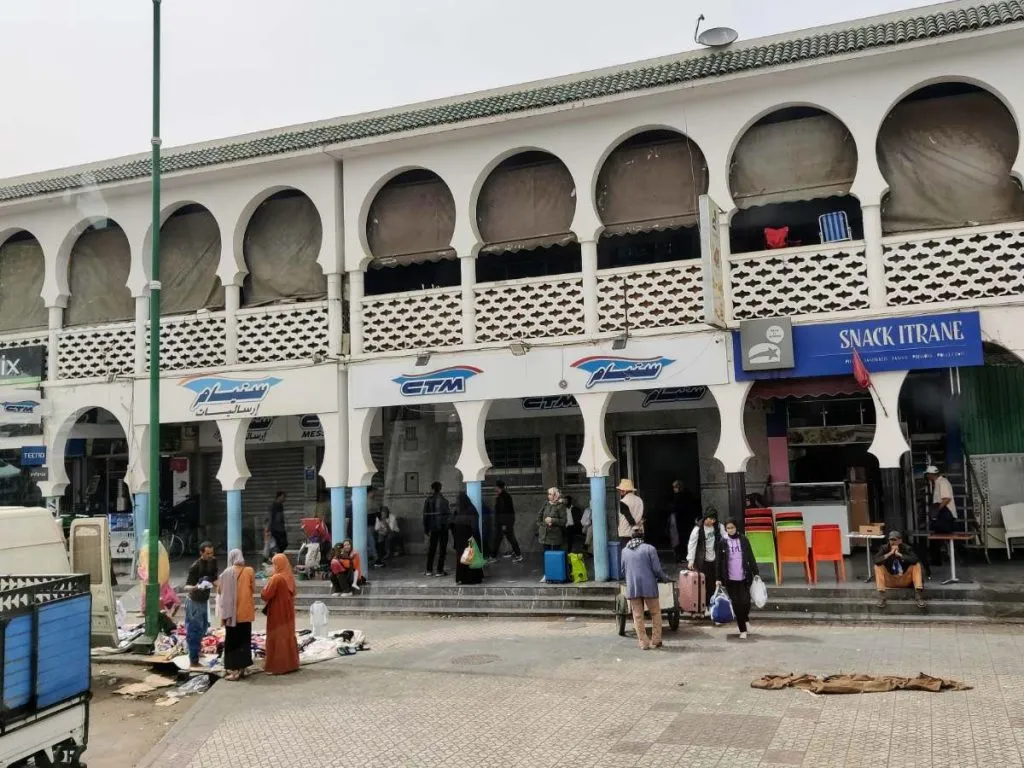
Essaouira is a seaside town about 110 miles west of Marrakesh along the Atlantic coast. It’s a 3 hour journey, that actually took almost 3½ hours today, with mostly green and flat fields and farmlands with rolling hills in the distance, pretty much all the way. I read and dozed on and off most of the way, and we pulled into Essaouira just before noon. I still don’t know how to properly pronounce Essaouira though. I’ve heard several variations, some starting with an e sound, and others starting with the s. Just when I think I’ve got it, I hear a different variation.
It was warm, but at 94 degrees not as hot as yesterday’s 104 degree weather, and there was a nice cooling breeze coming in from the ocean so it was pretty comfortable. Plus, tank top, shorts, and sandals are a winning combination in hot and humid weather.
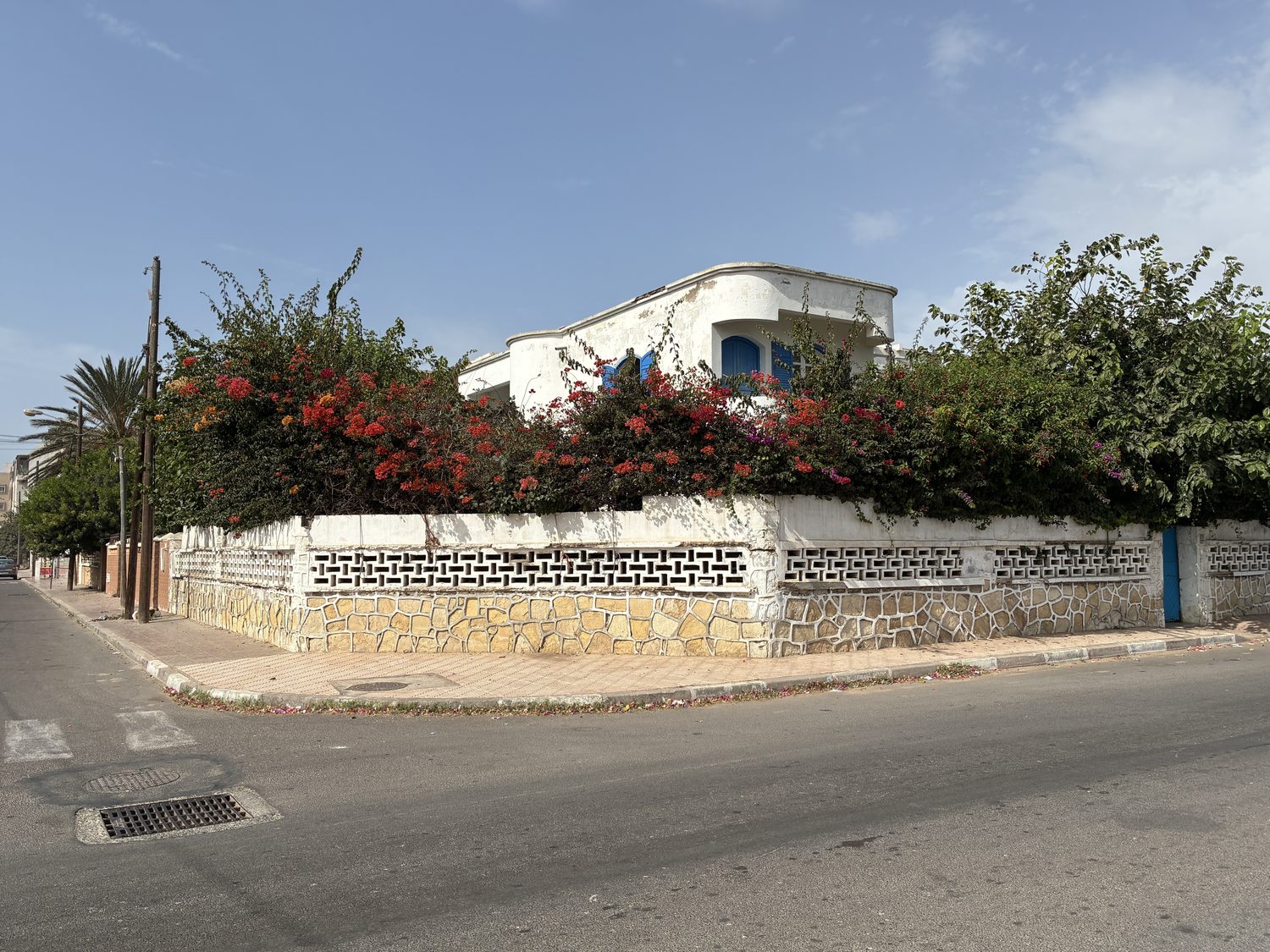
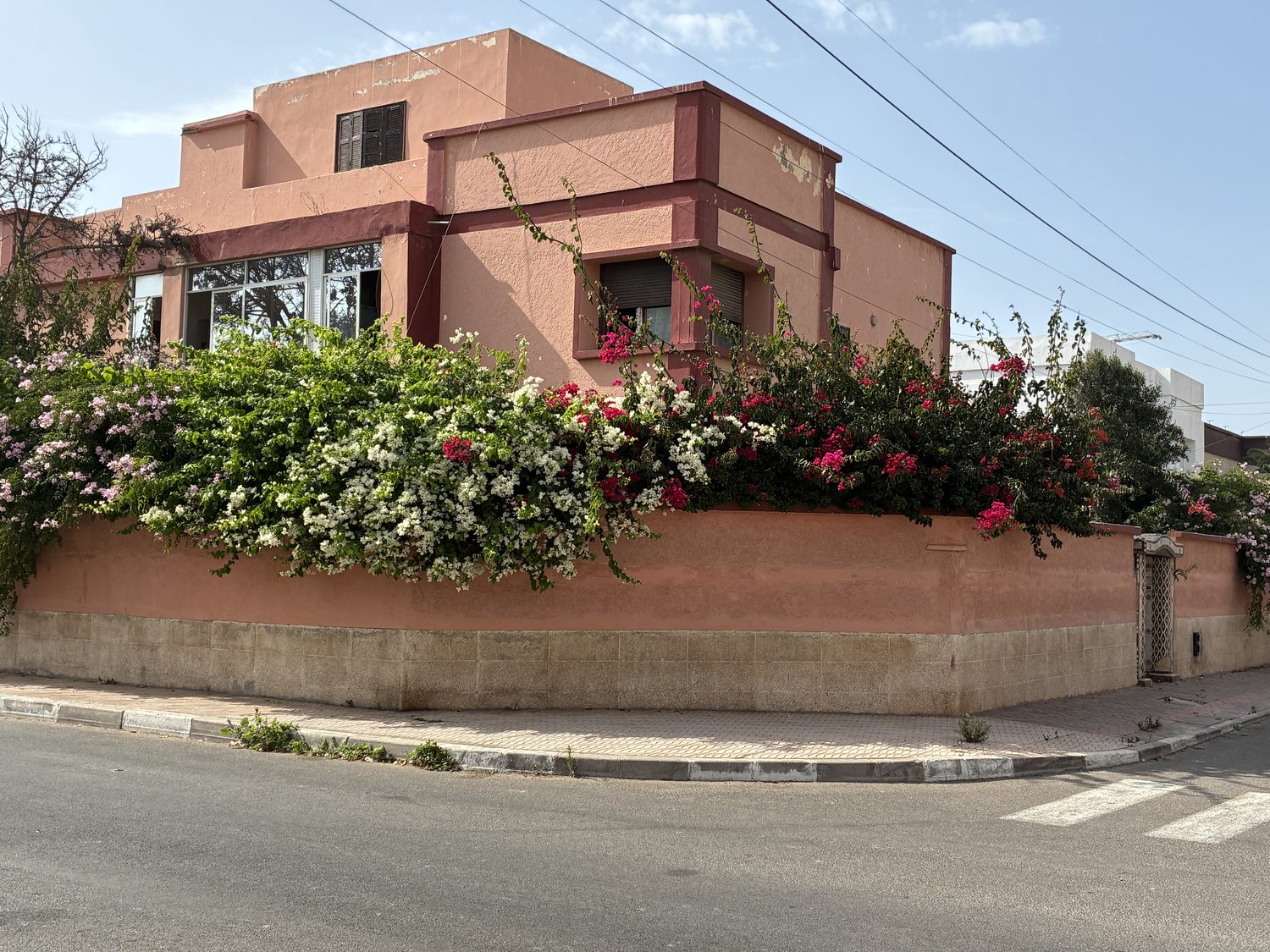
I walked about seven miles around Essaouira this afternoon, getting back to the bus station around 4:30 for the 5 pm bus back to Marrakesh. My first stop was the Essaouira medina.
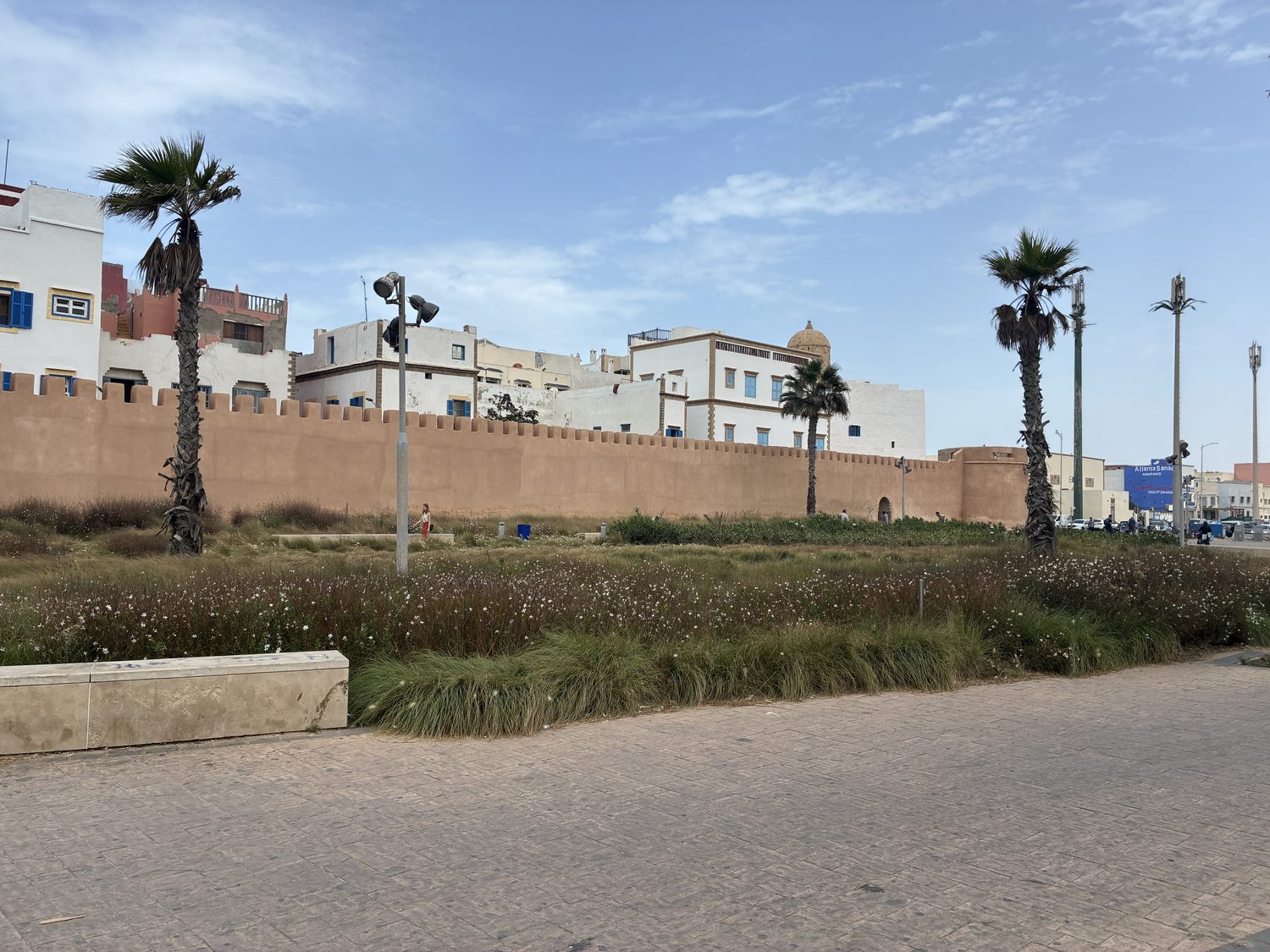
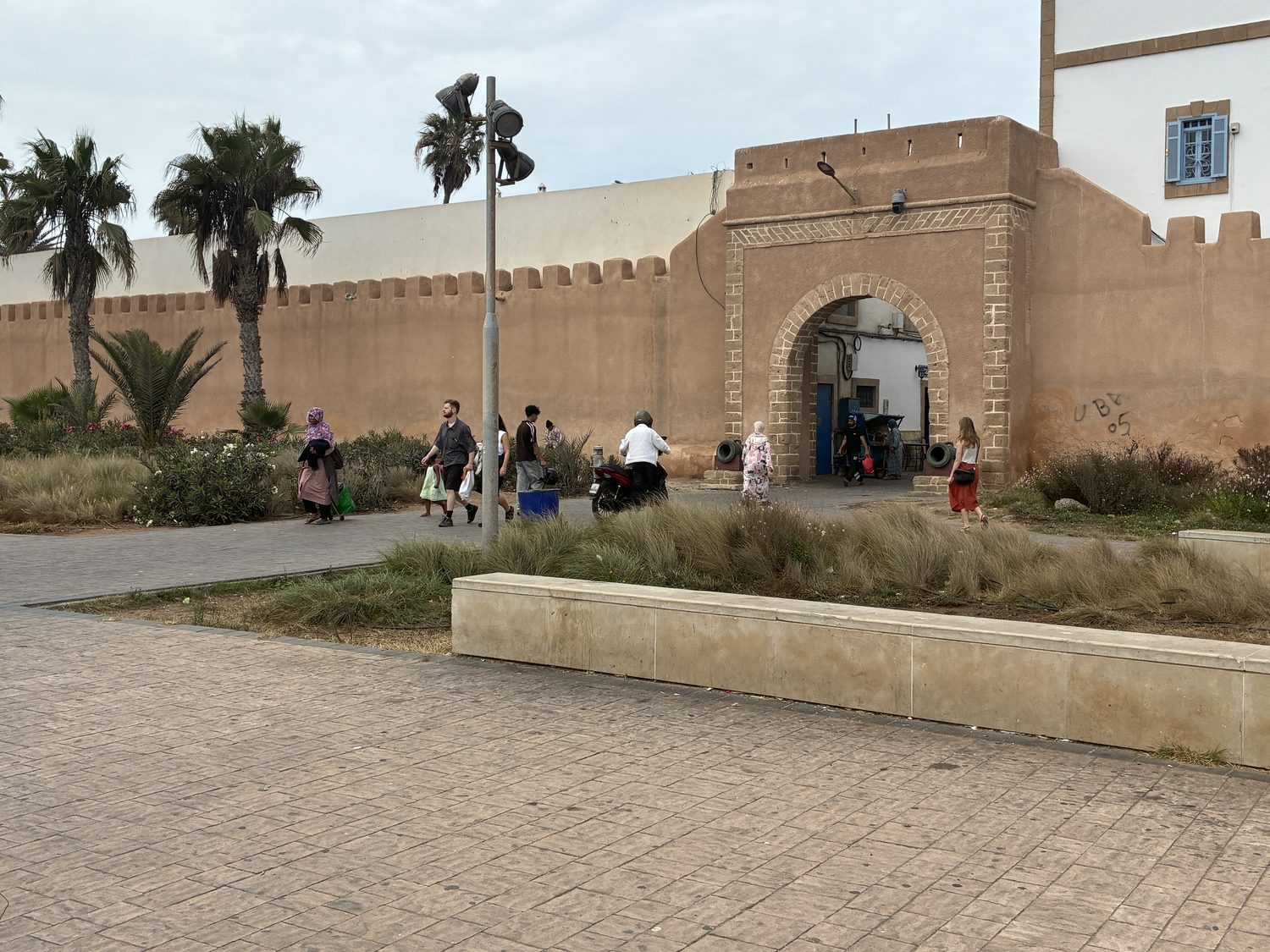
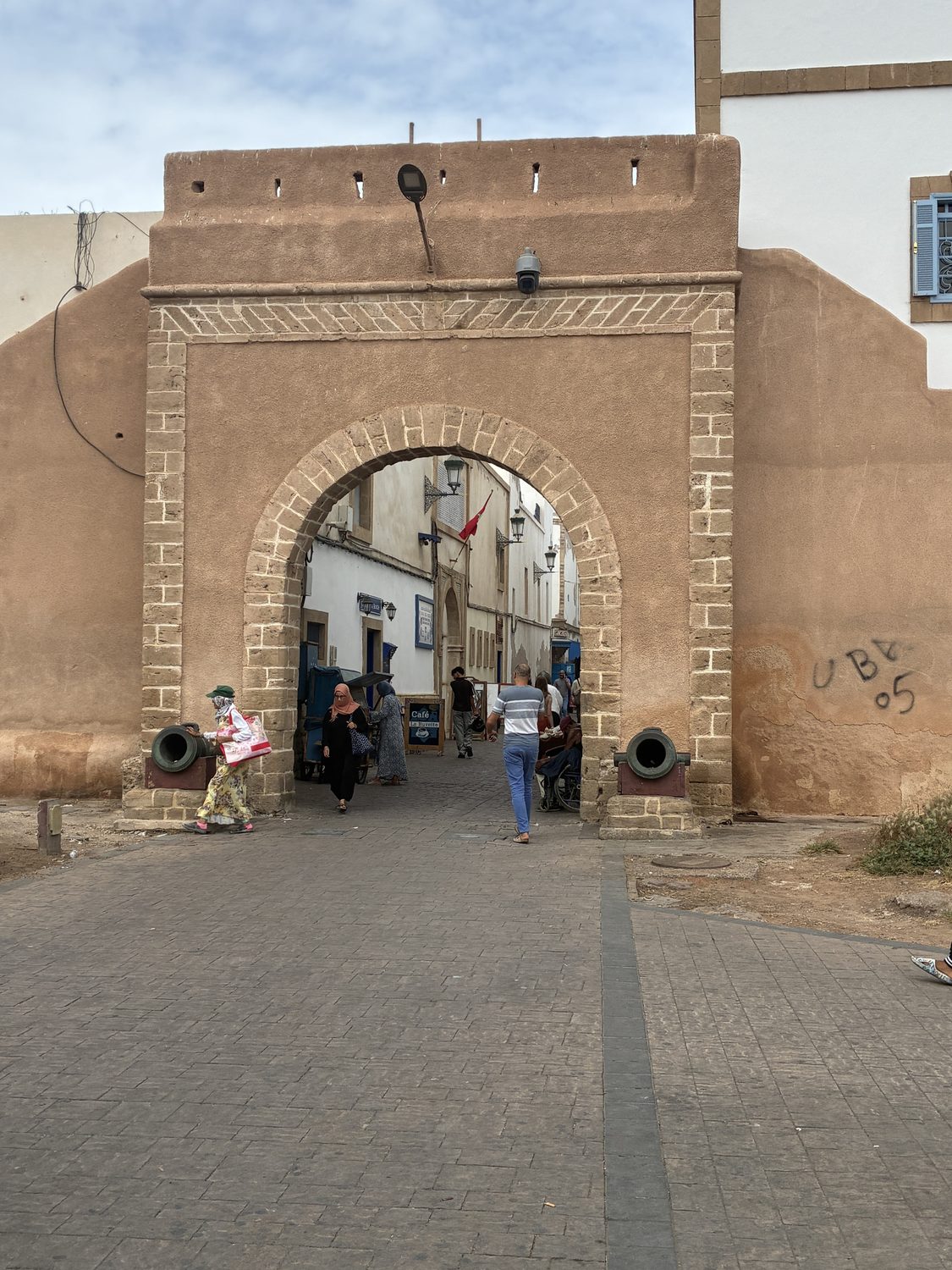
The medina here is much smaller and simpler to navigate than other medinas, although it still has plenty of narrow and time worn alleys and side streets, and the souk is concentrated on two or three main streets in the medina, with shops lining each side of the street, although it certainly extends to side streets as well. It’s a bustling market, with the full range of shops and goods that I’ve come to expect, and it’s almost completely open air, bringing in lots of bright sunshine.
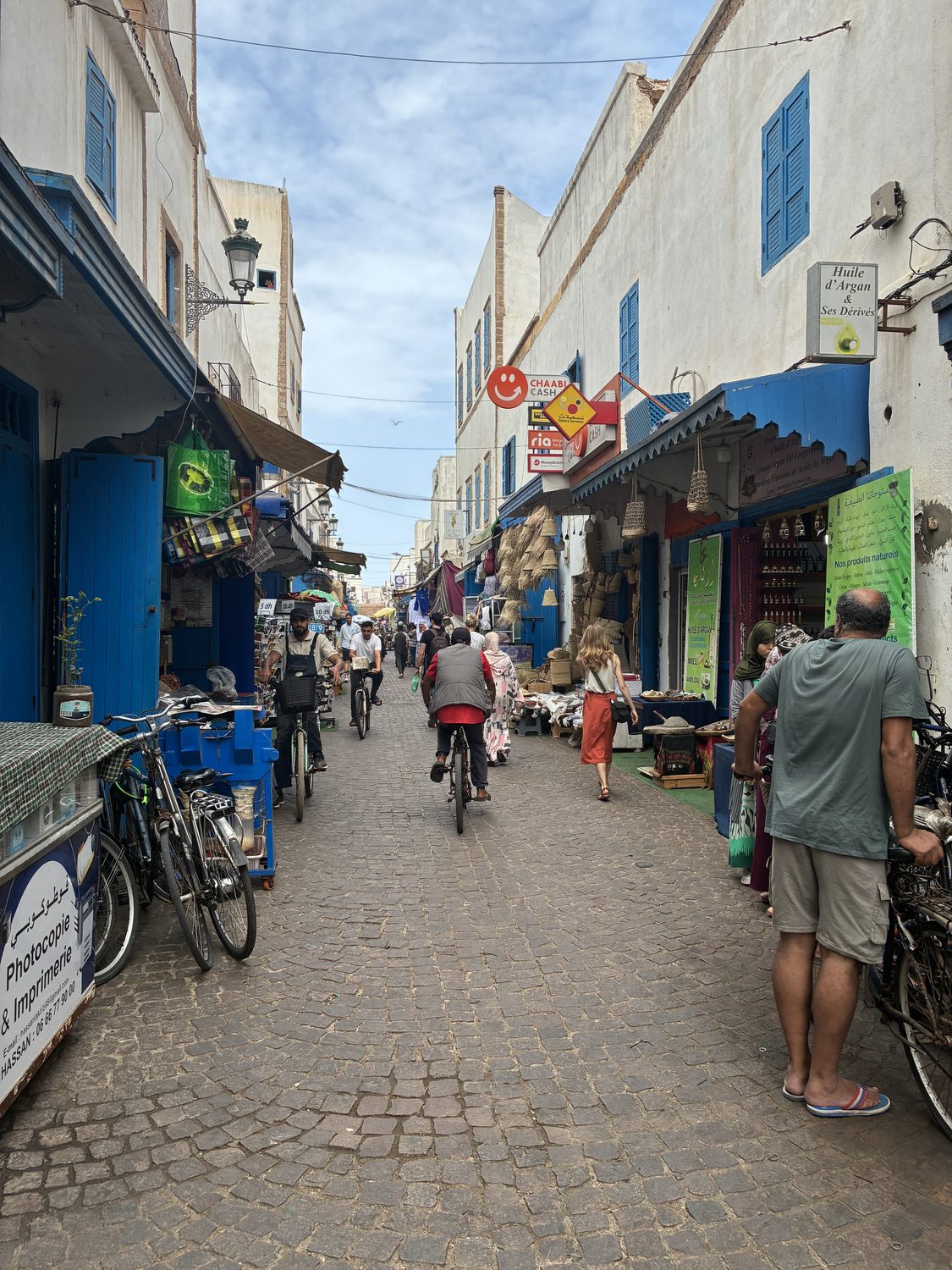
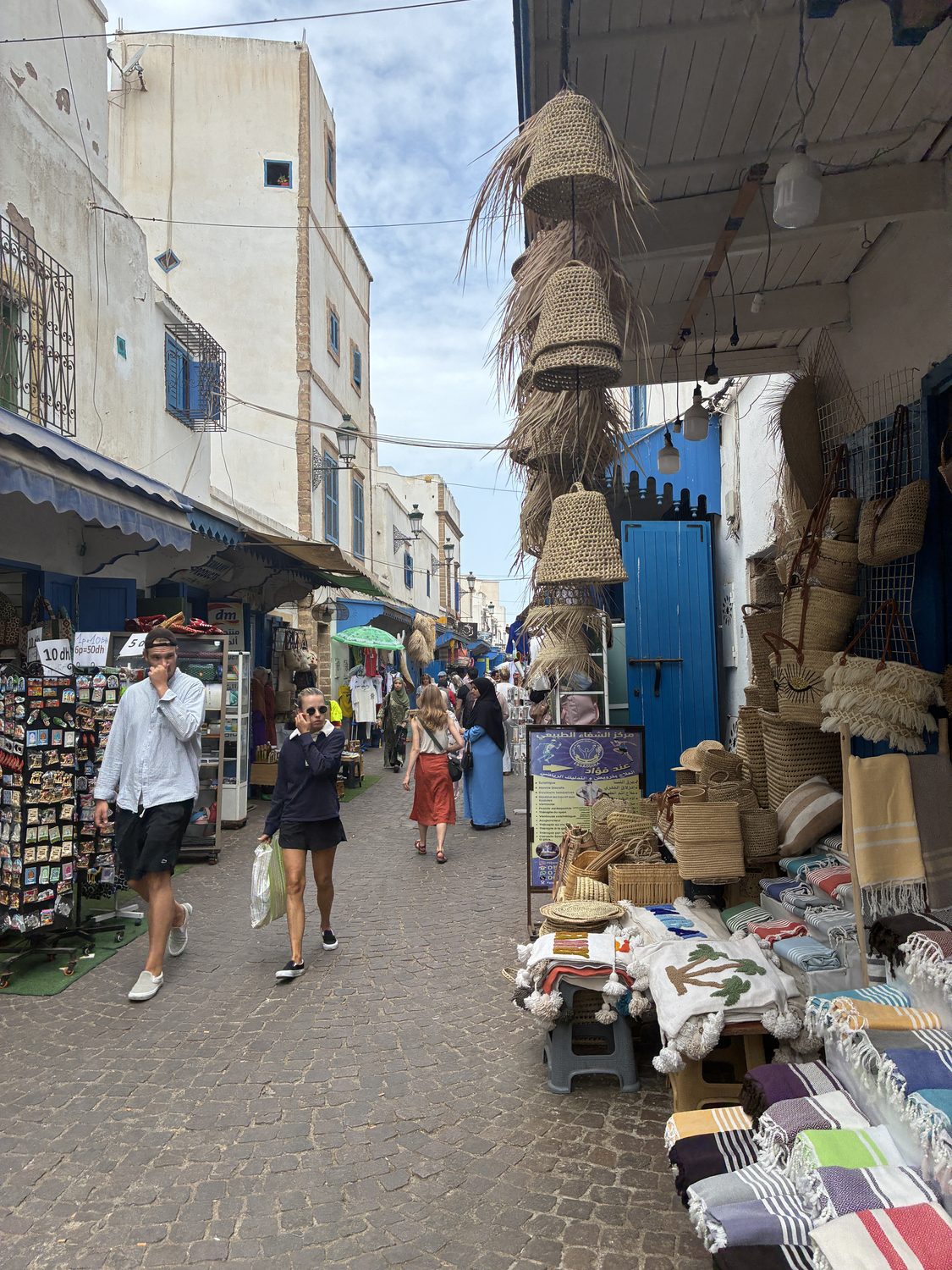
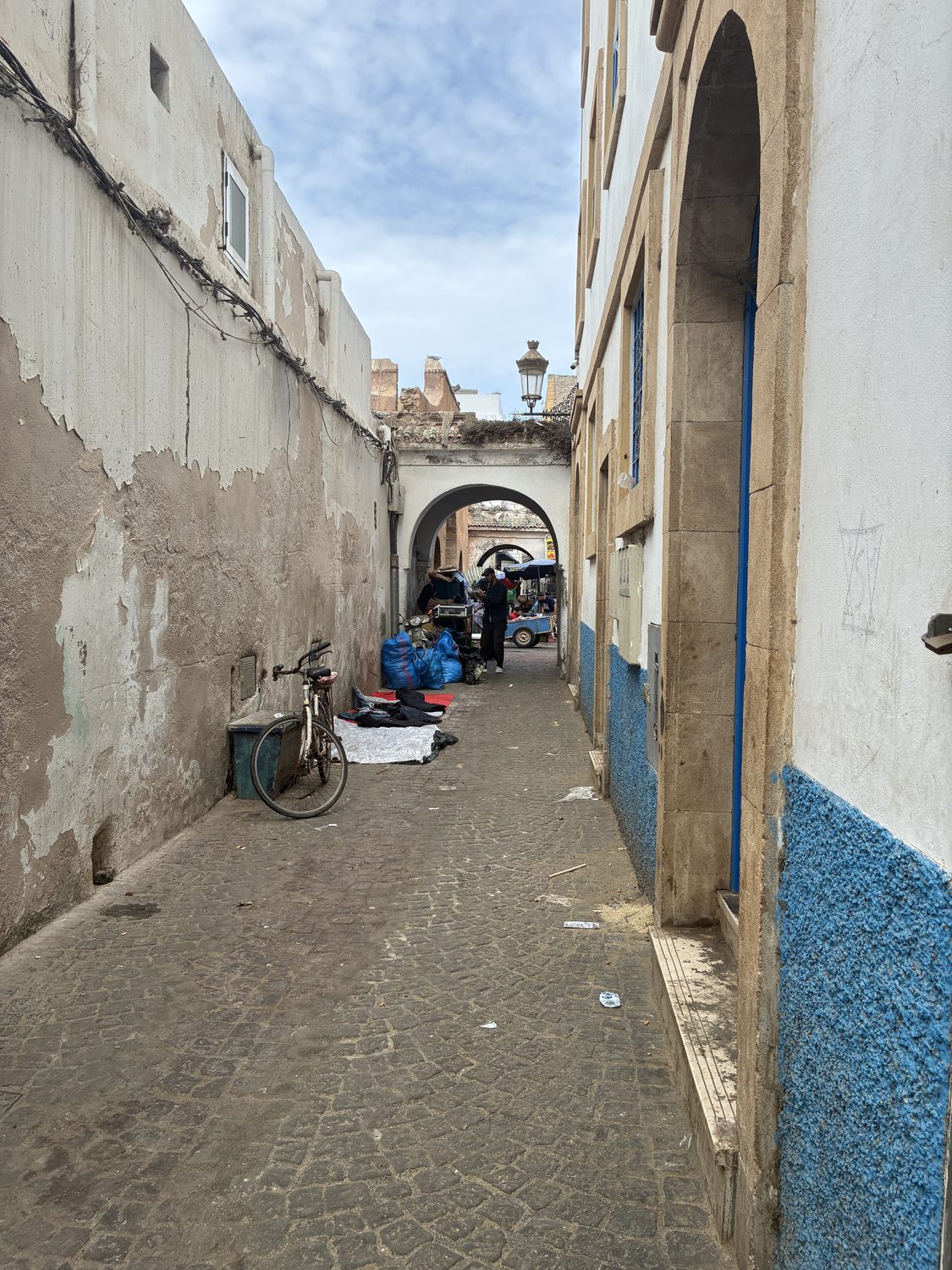
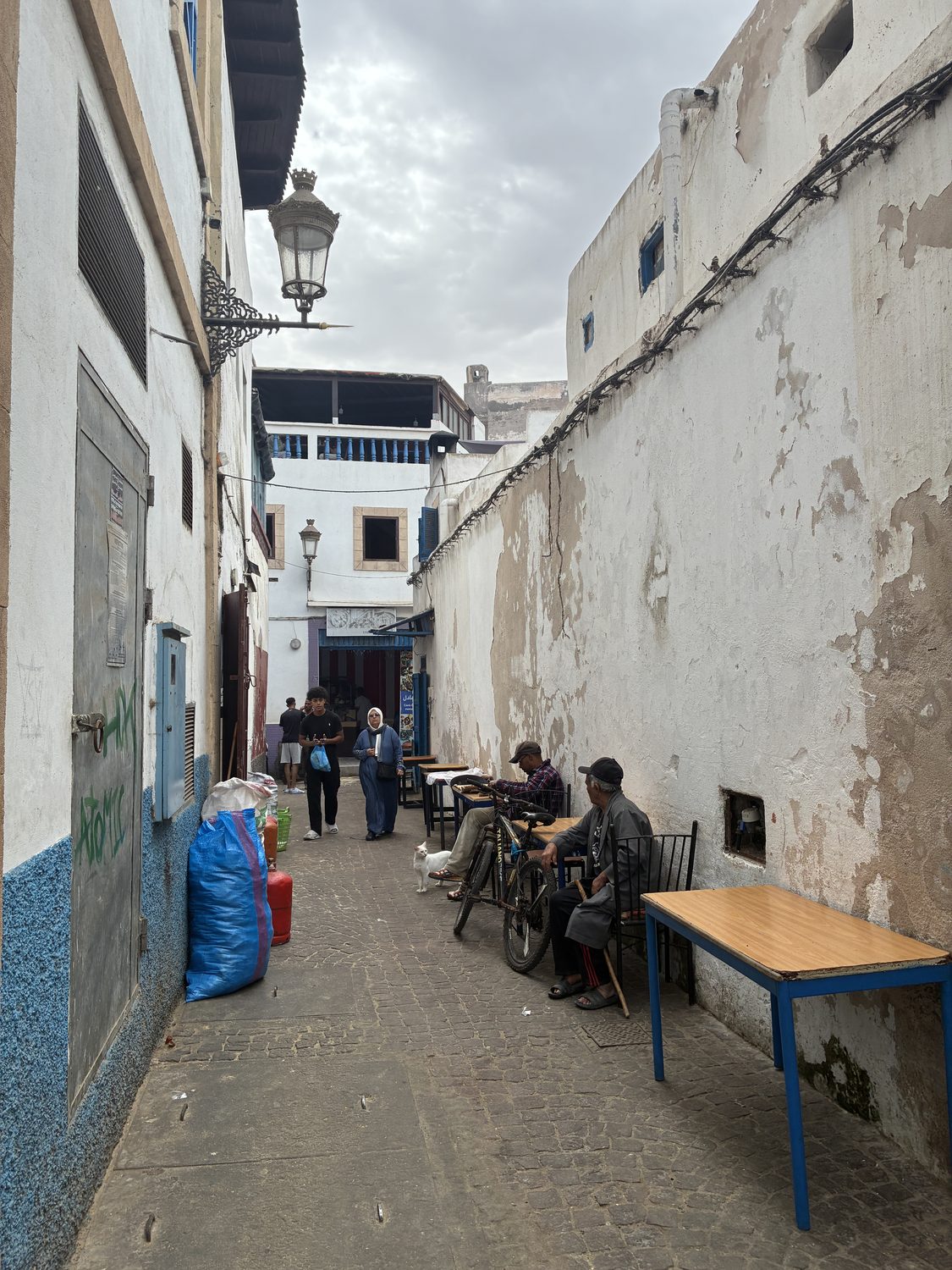
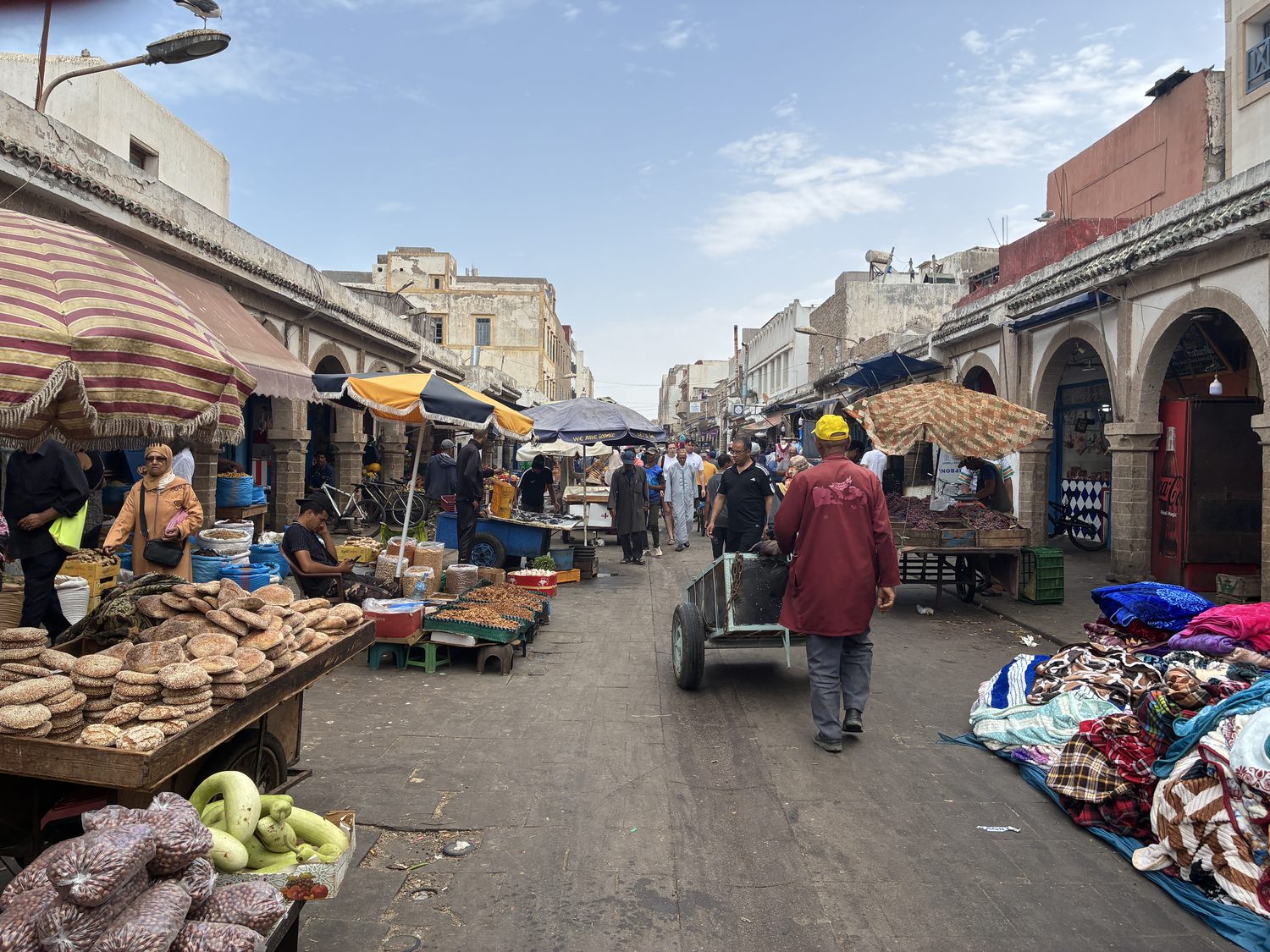
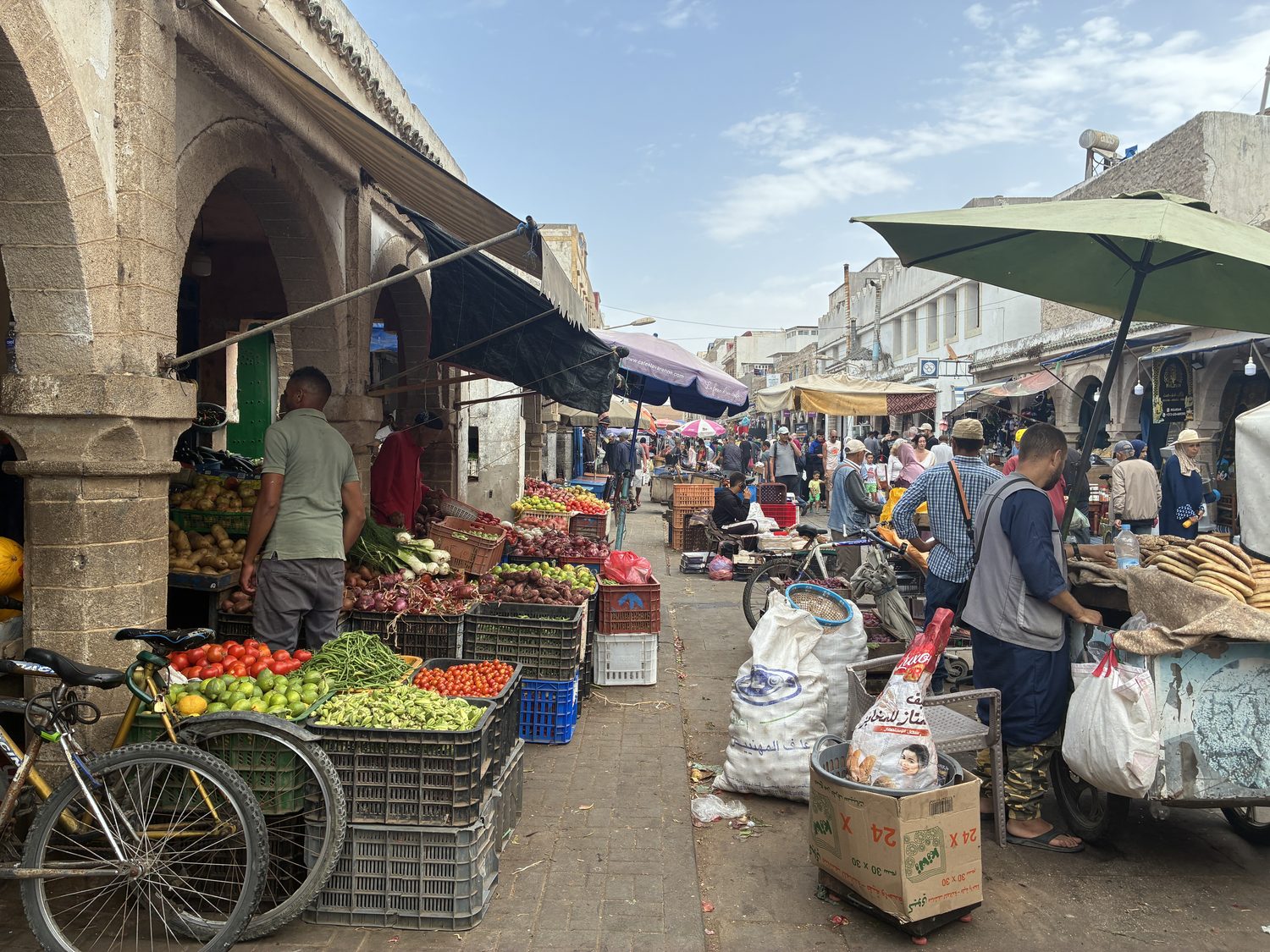
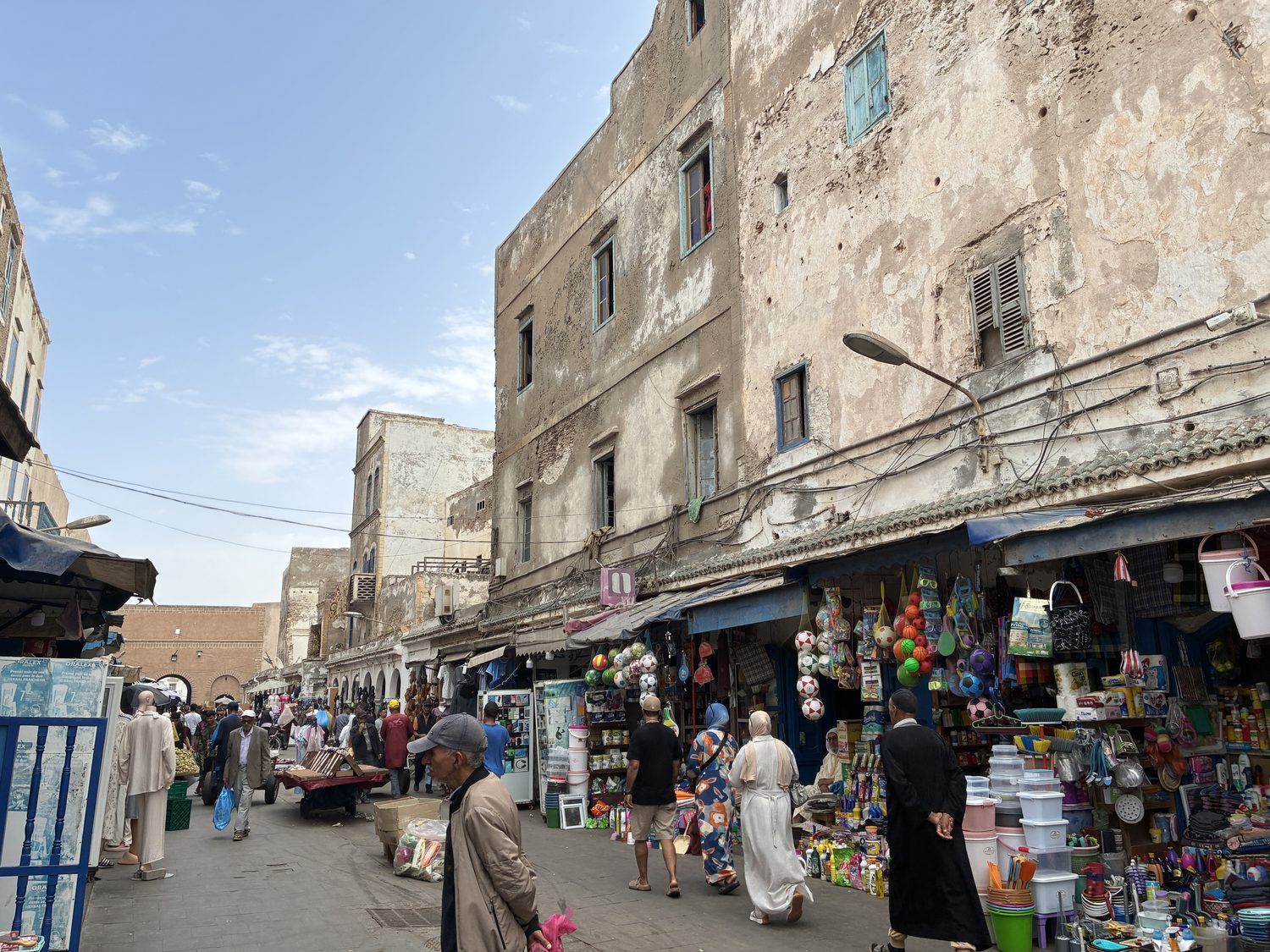
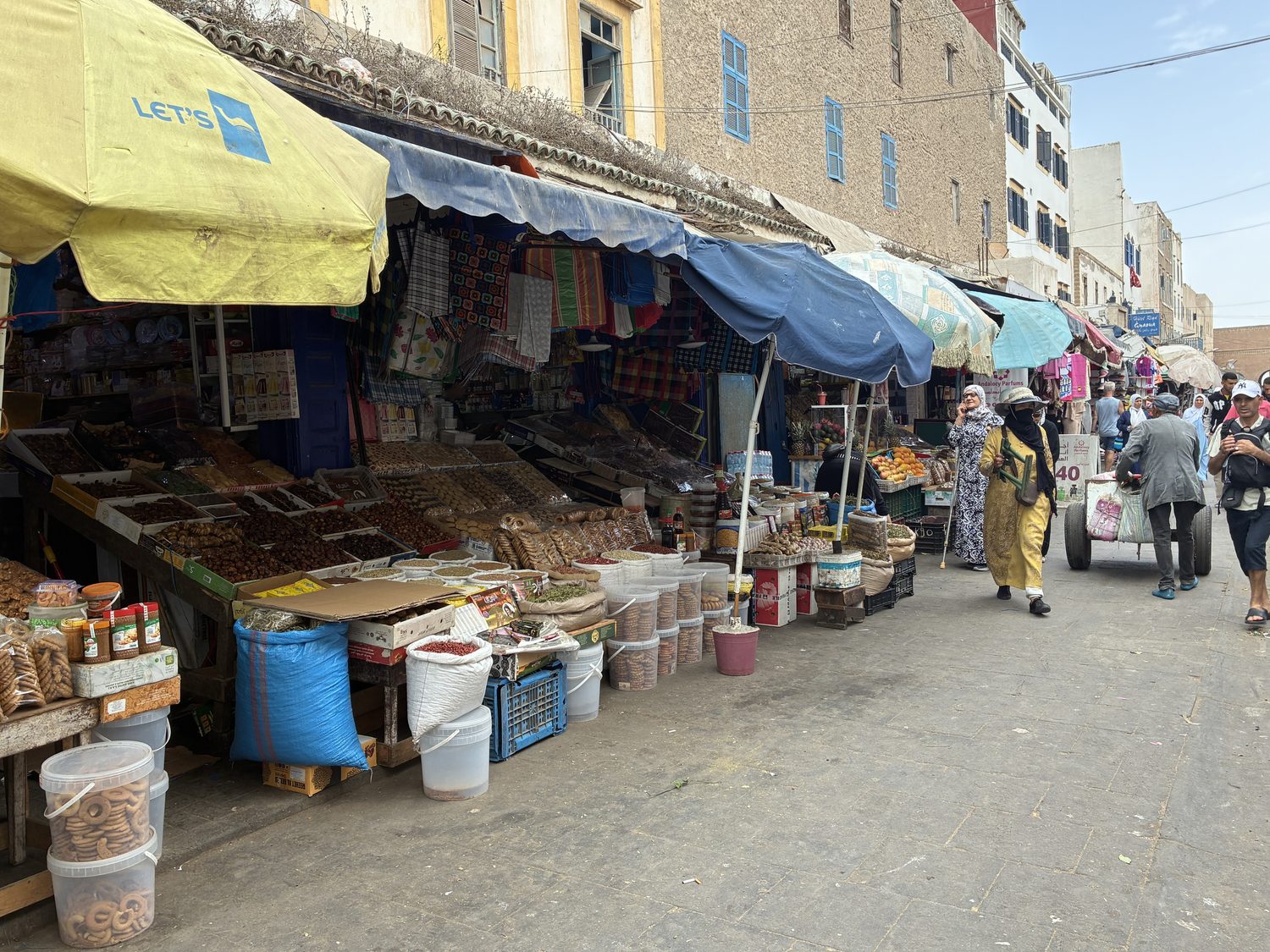
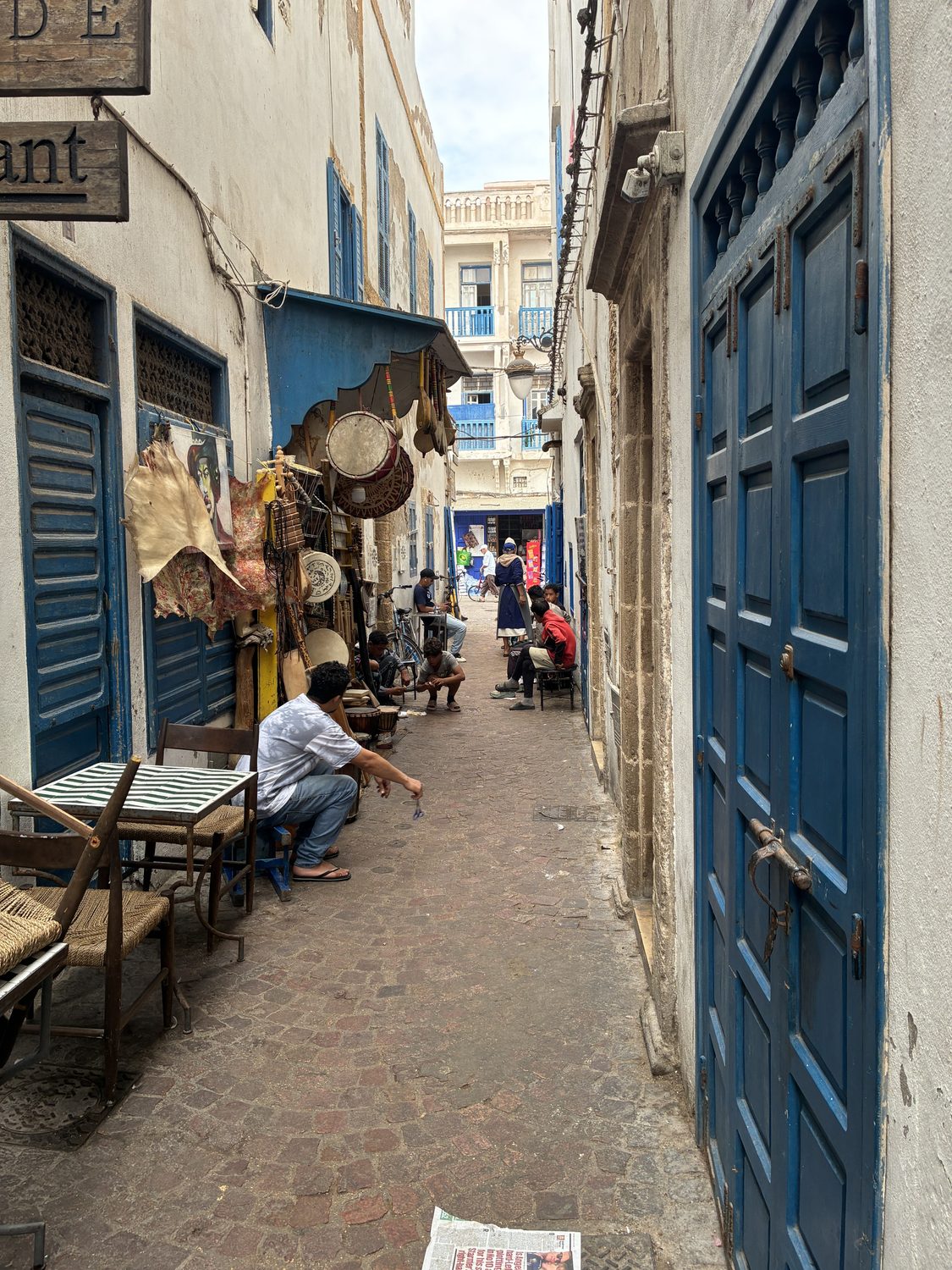
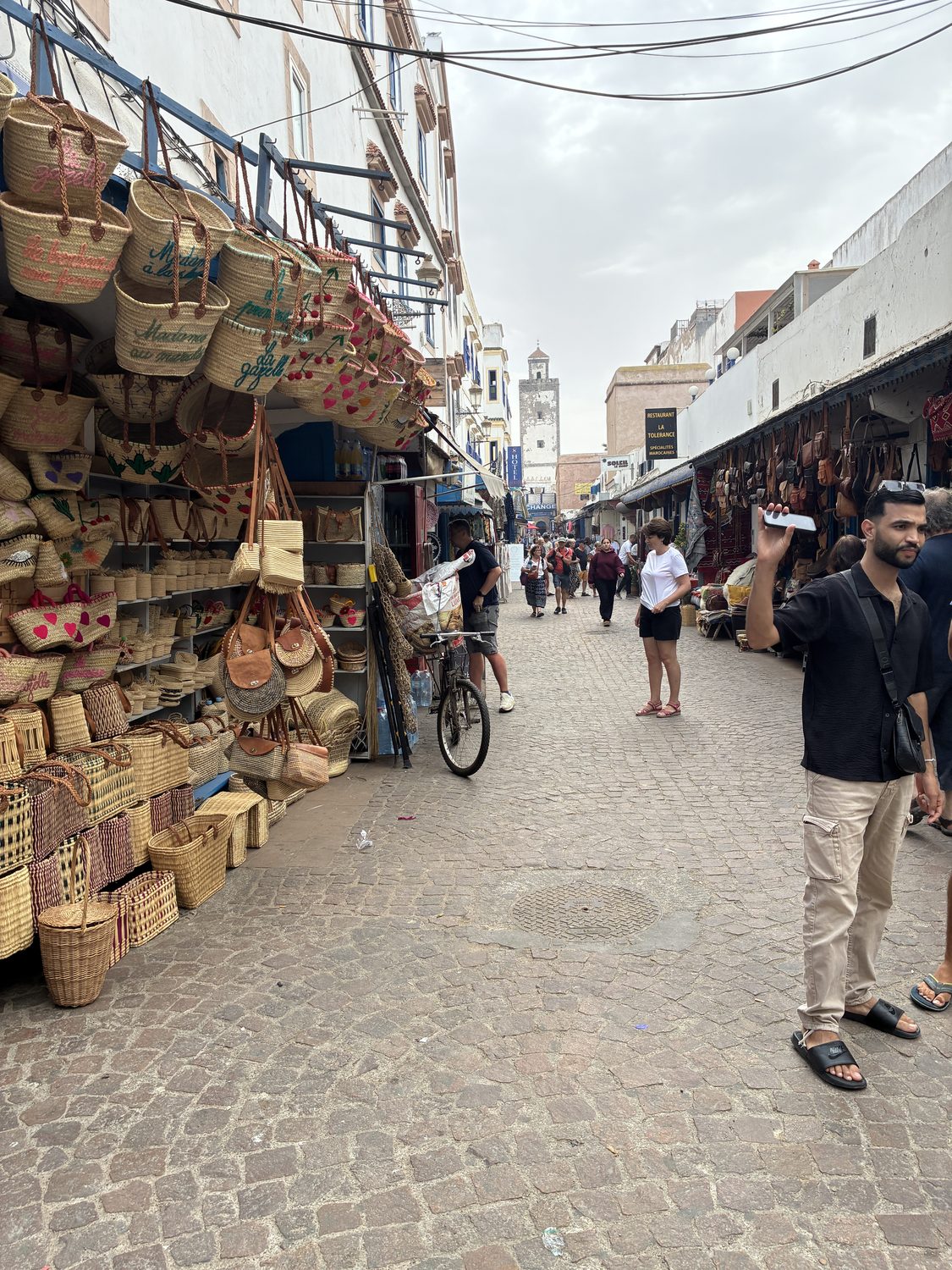
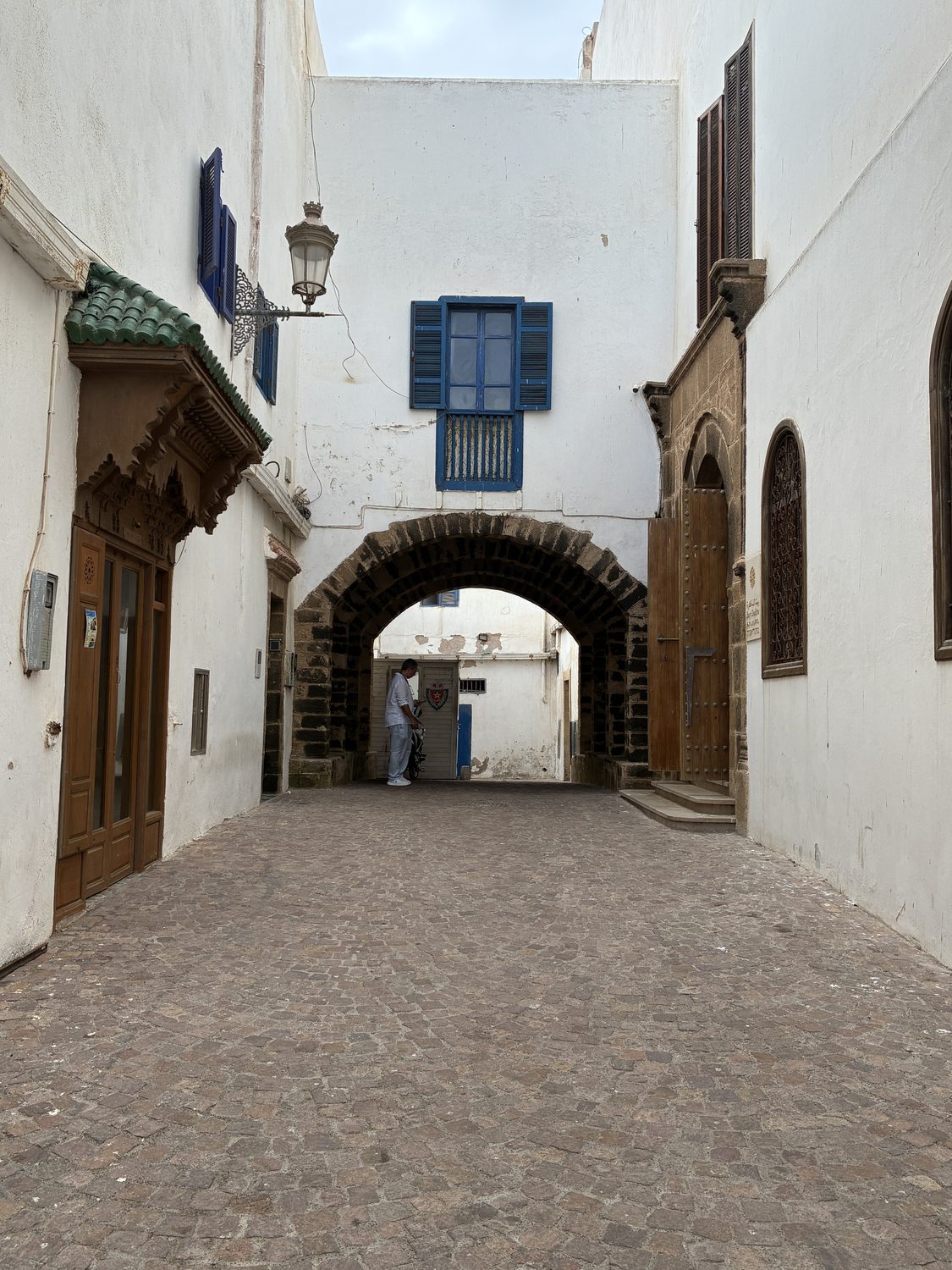
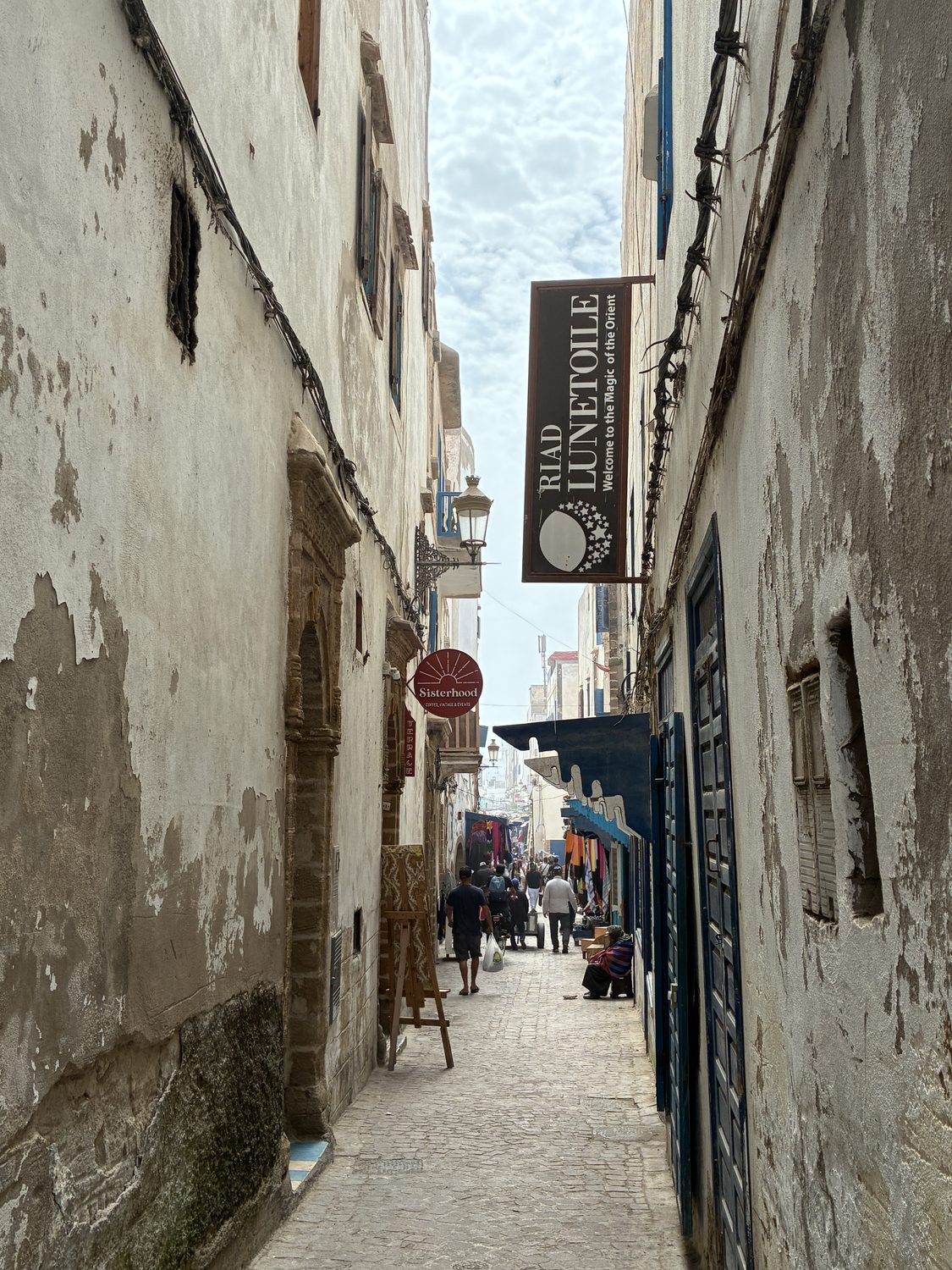
I walked back and forth through the medina, including the Mellah, the old Jewish quarter, but like the Mellah in Fes, it’s unmarked, as are all the historical areas, and seemed no different than any other part of the old city, although the buildings tended to have taller windows and balconies. Other than a couple of old synagogues, one of which, Bayt Dakira (House of Memory), is now a small Jewish museum. The Mellah was established around 1807, and during that era Jews made up as much as forty percent of Essaouira’s population. But now, as with the old Jewish quarters in the other cities and villages I’ve visited, the area is purely historical, and the Jewish population massively dropped after the establishment of Israel in 1948, and subsequent Arab-Jewish conflicts. Interestingly, I haven’t noticed one reference to Israel or Palestine the entire time I’ve been in Morocco.
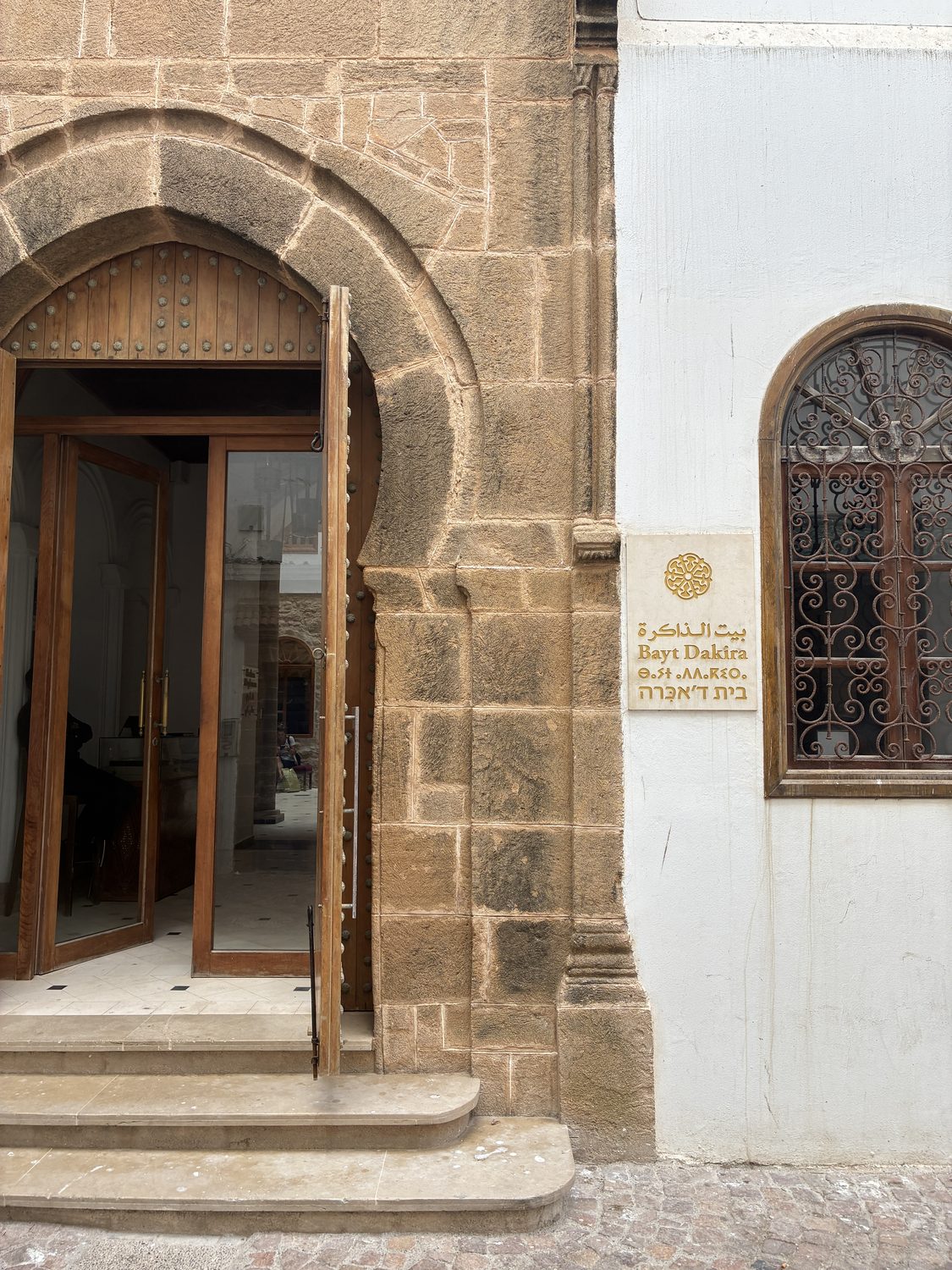
Essaouira was established in the 1760s, then called Mogador, by Sultan Mohammed III as an Atlantic port and major trade route to connect Morocco’s interior with Europe. Rather than developing and growing organically over the centuries, like Fes, for example, Essaouira was designed from the start, including its planned and organized street layout and fortifications, with the sultan bringing in European architects to do the job.
The area had settlements before that, of course, dating back to prehistoric times, and it was named Mogador in 1506 by the Portuguese, who built an offshore fortress here, but its history as a town began when the sultan had it designed and built specifically for trade. At that time, whereas Marrakesh, just a hundred miles away, was the landlocked imperial capital of Morocco, Essaouira became its fortified Atlantic trading town.
For much of the late 18th and 19th centuries, the city was one of Morocco and north and western Africa’s most important international ports, shipping goods not only from and to the Moroccan interior, but also other parts of western and sub-Saharan Africa, becoming known as the “Port of Timbuktu,” as goods from deep within Africa and far from Morocco were supplied and shipped from the port.
Mogador was renamed Essaouira after Morocco regained its independence from France and Spain in 1956, restoring the Arabic name that had been used locally. With the encroaching 20th century, Casablanca took over as Morocco’s international trade center, and today Essaouira’s two major industries are tourism and fishing.
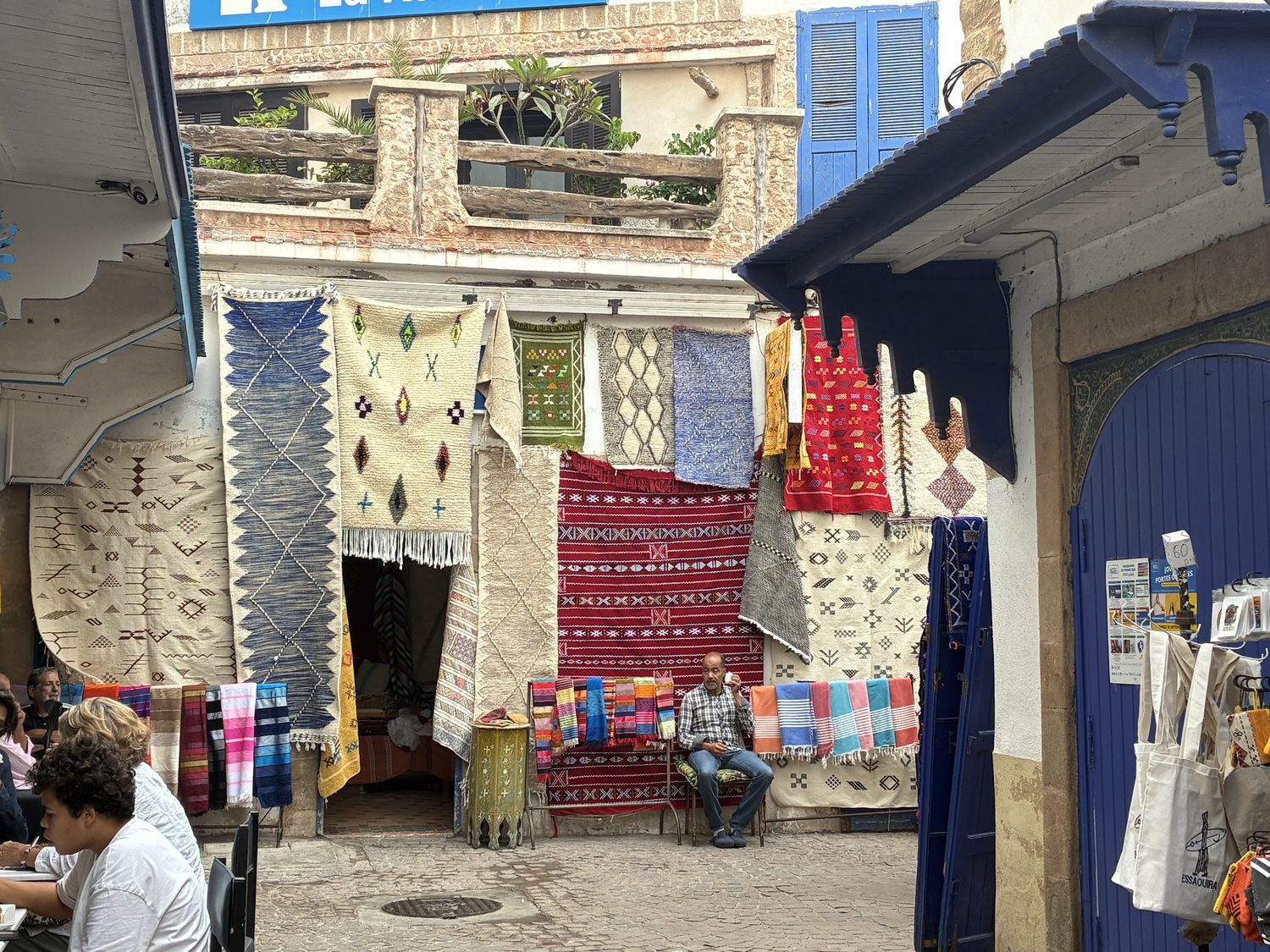
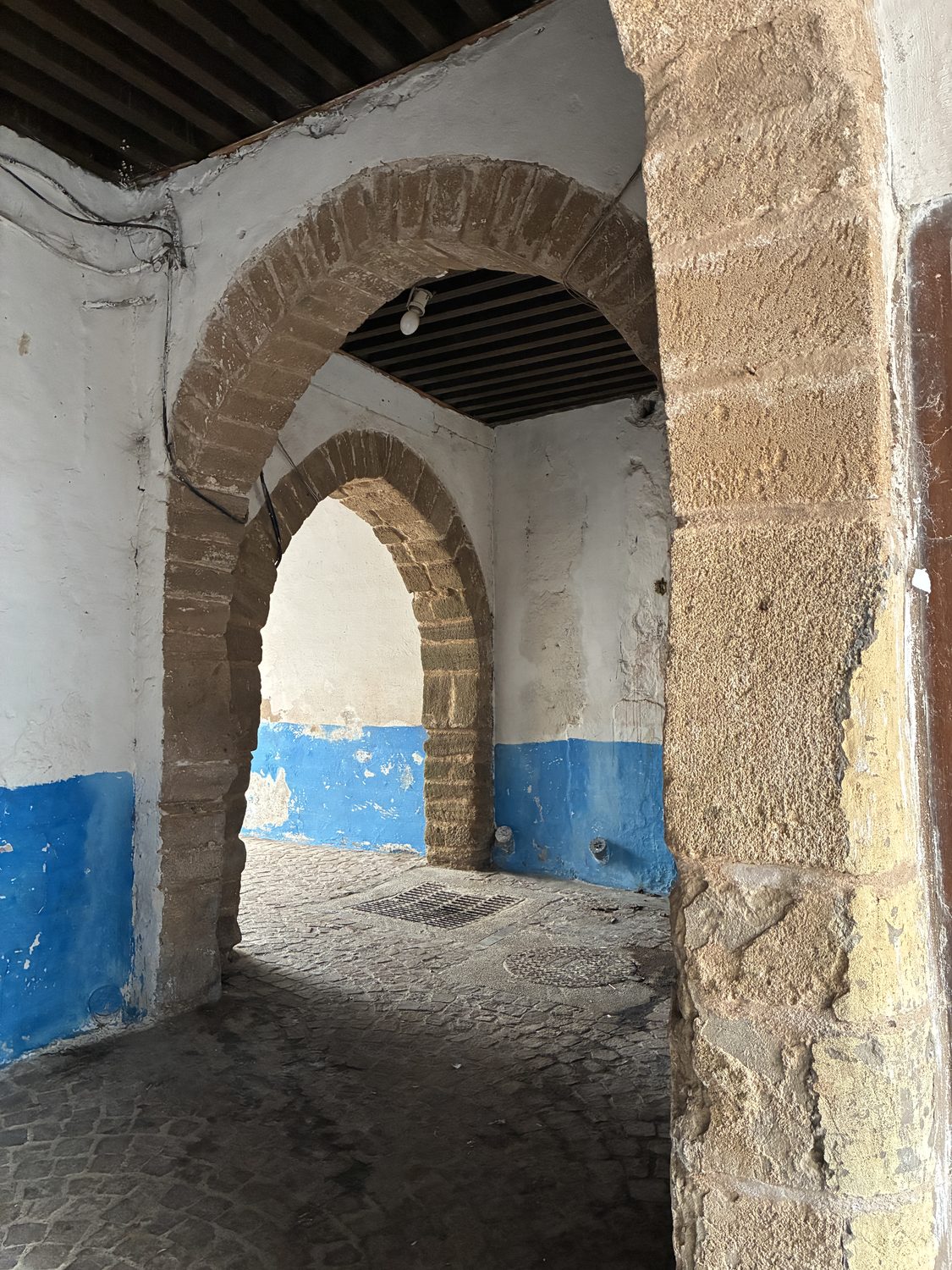
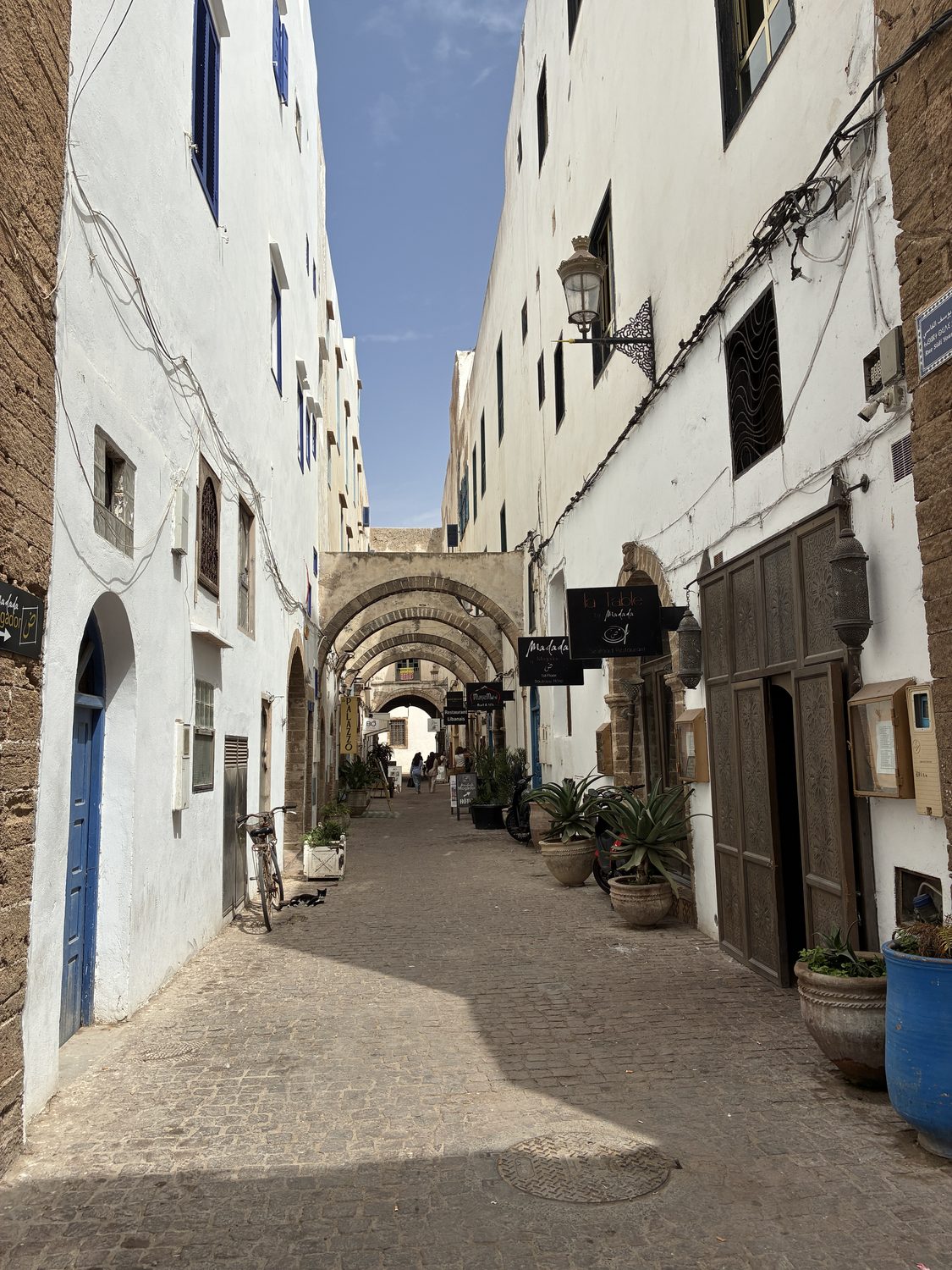
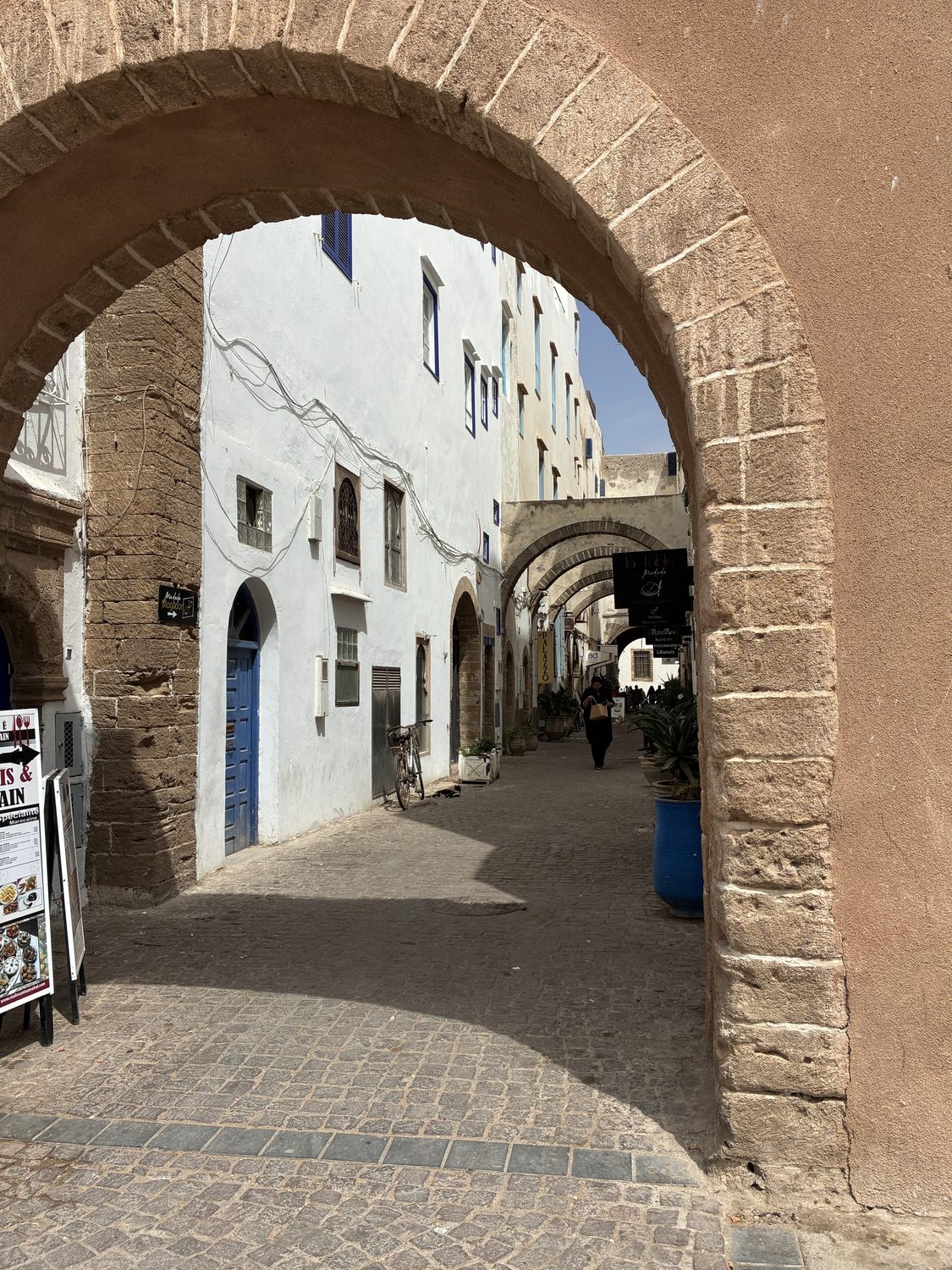
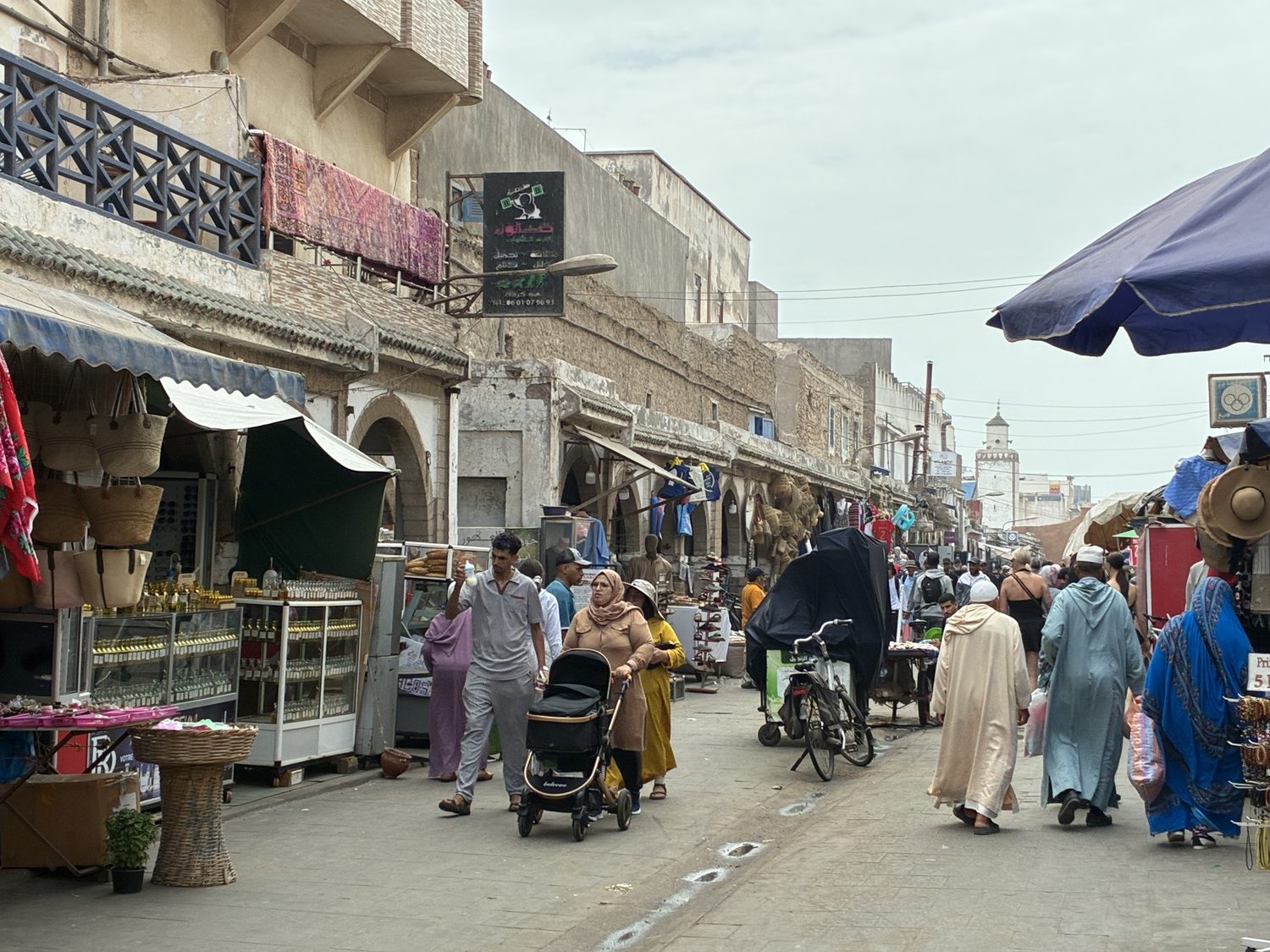
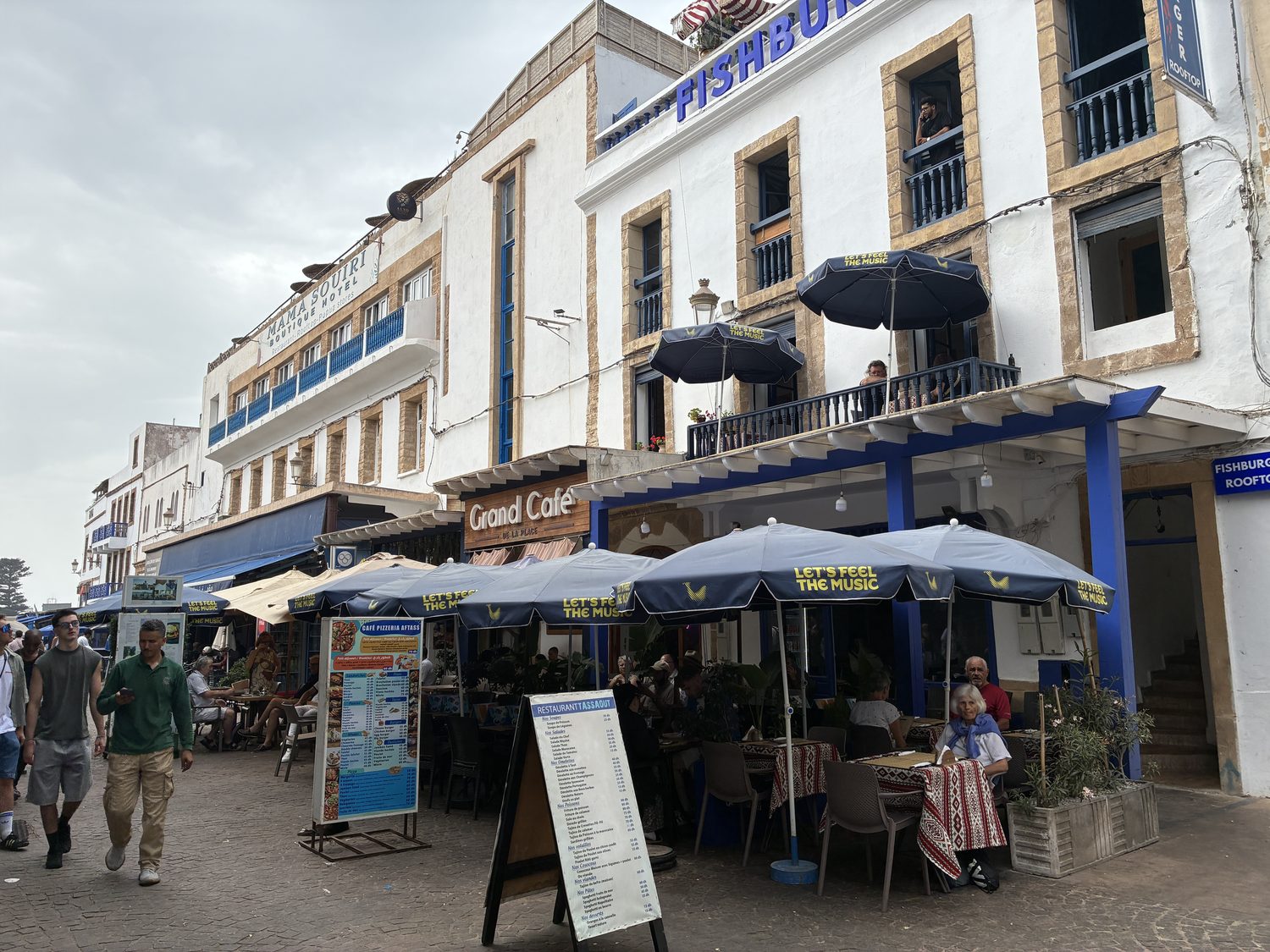
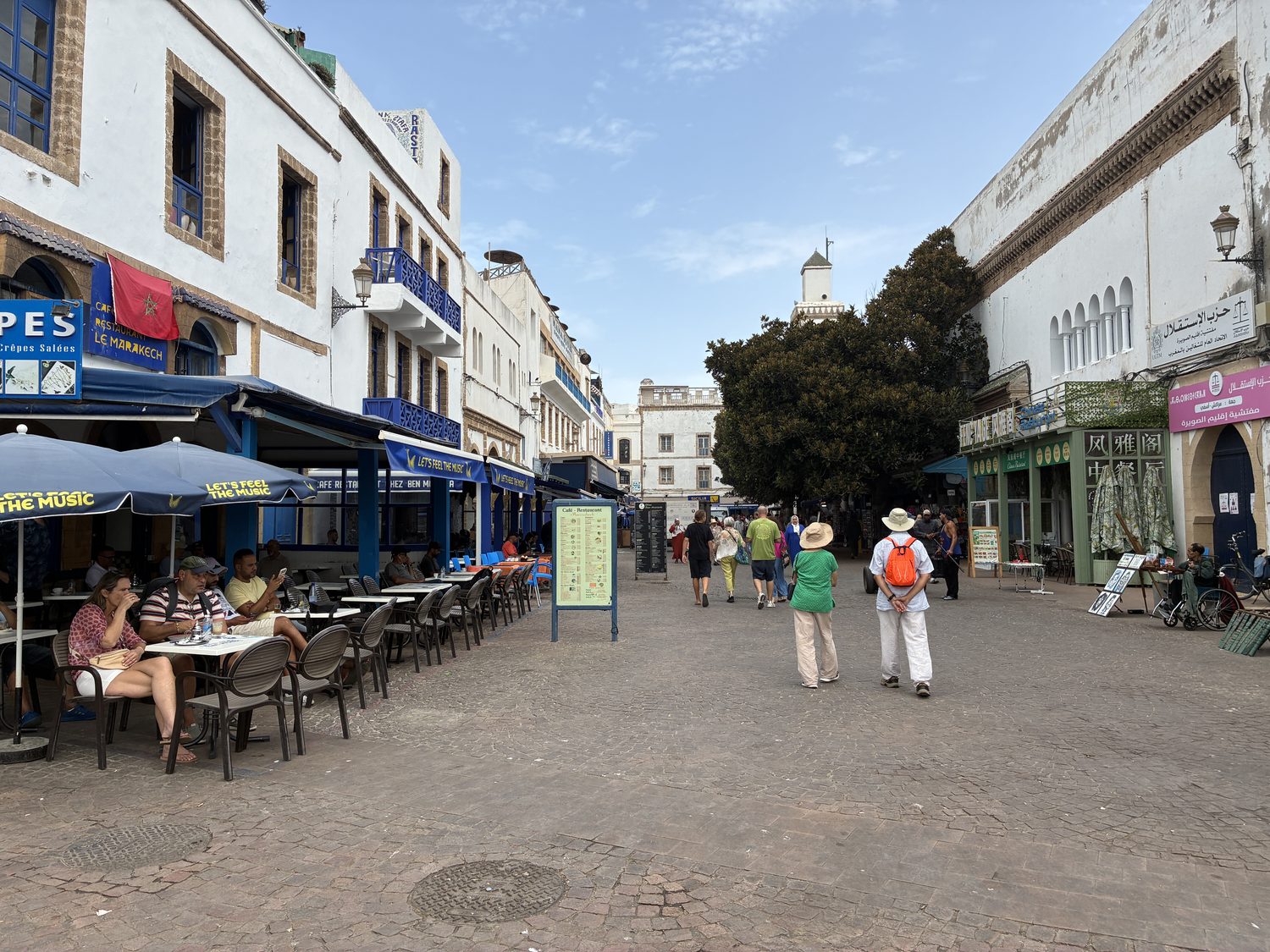
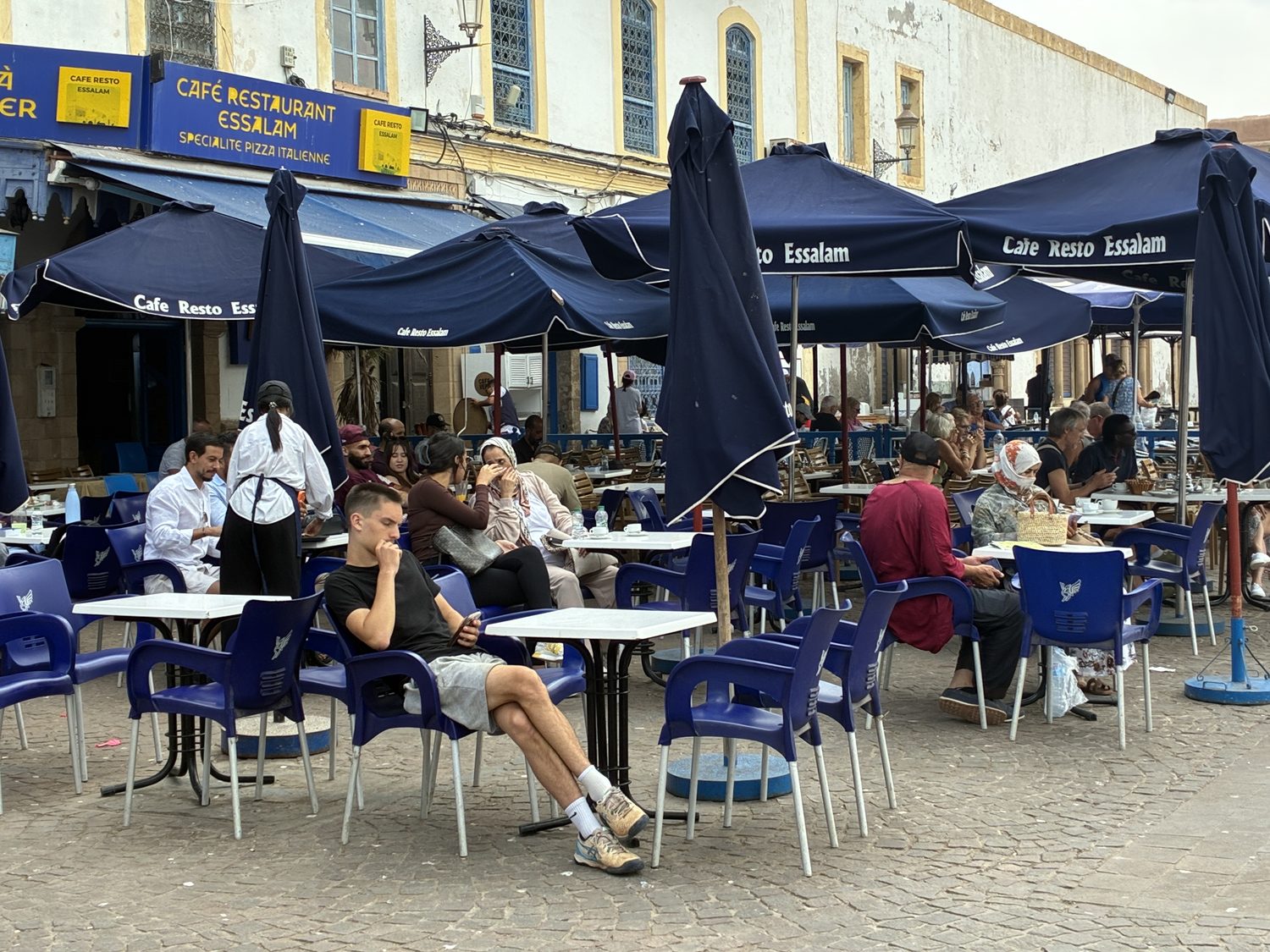
After I left the medina, to which I returned several times, I passed through Place Moulay Hassan, a large pedestrian square and plaza sitting between and linking the old city and the harbor, filled with shops, restaurants, and bars, not to mention people, airy and bright with the characteristic and traditional bright white and blue color scheme of the town. Just as Marrakesh is known for its pink ochre buildings, Essaouira is known for its striking color scheme of white and blue.
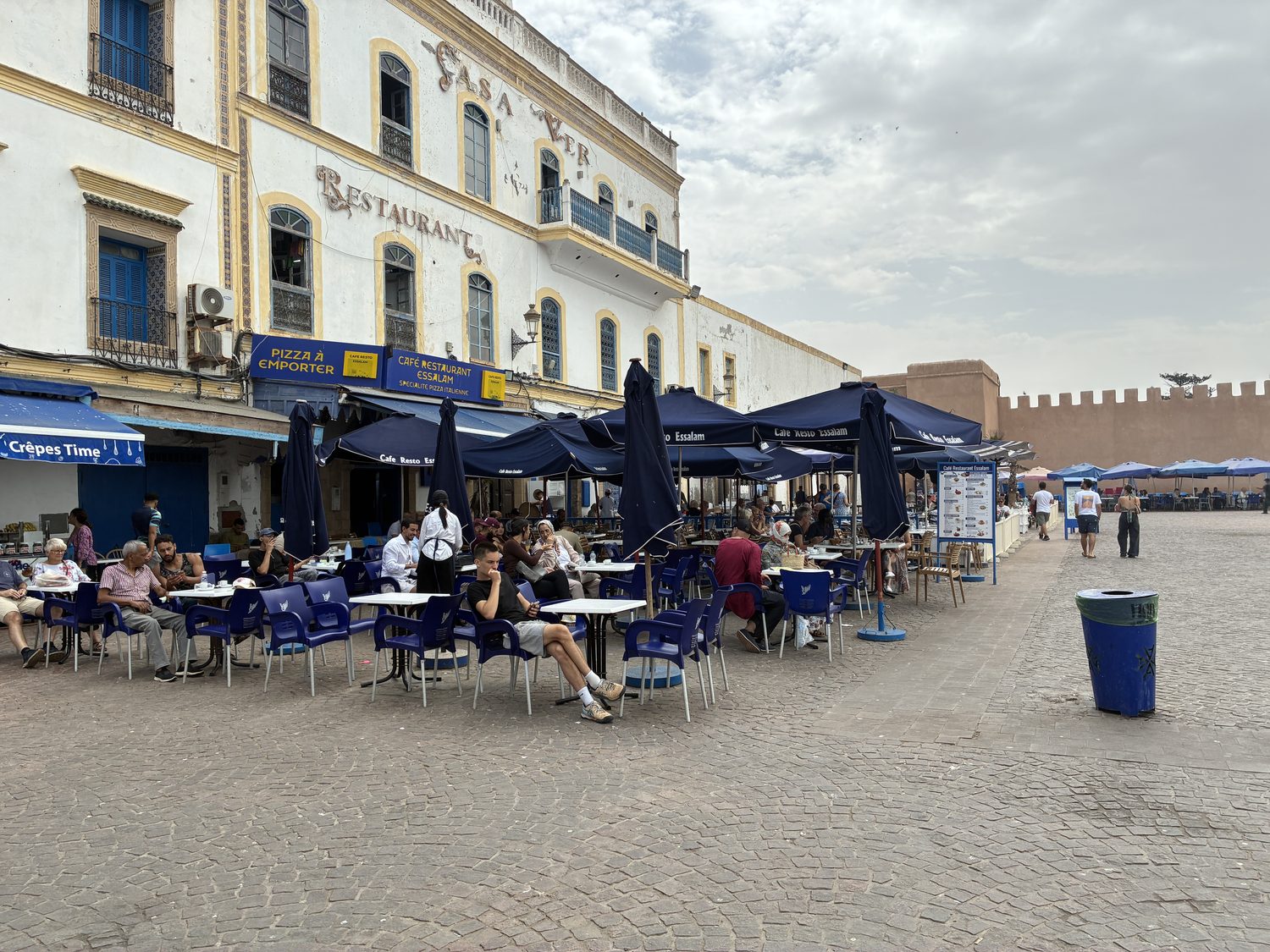
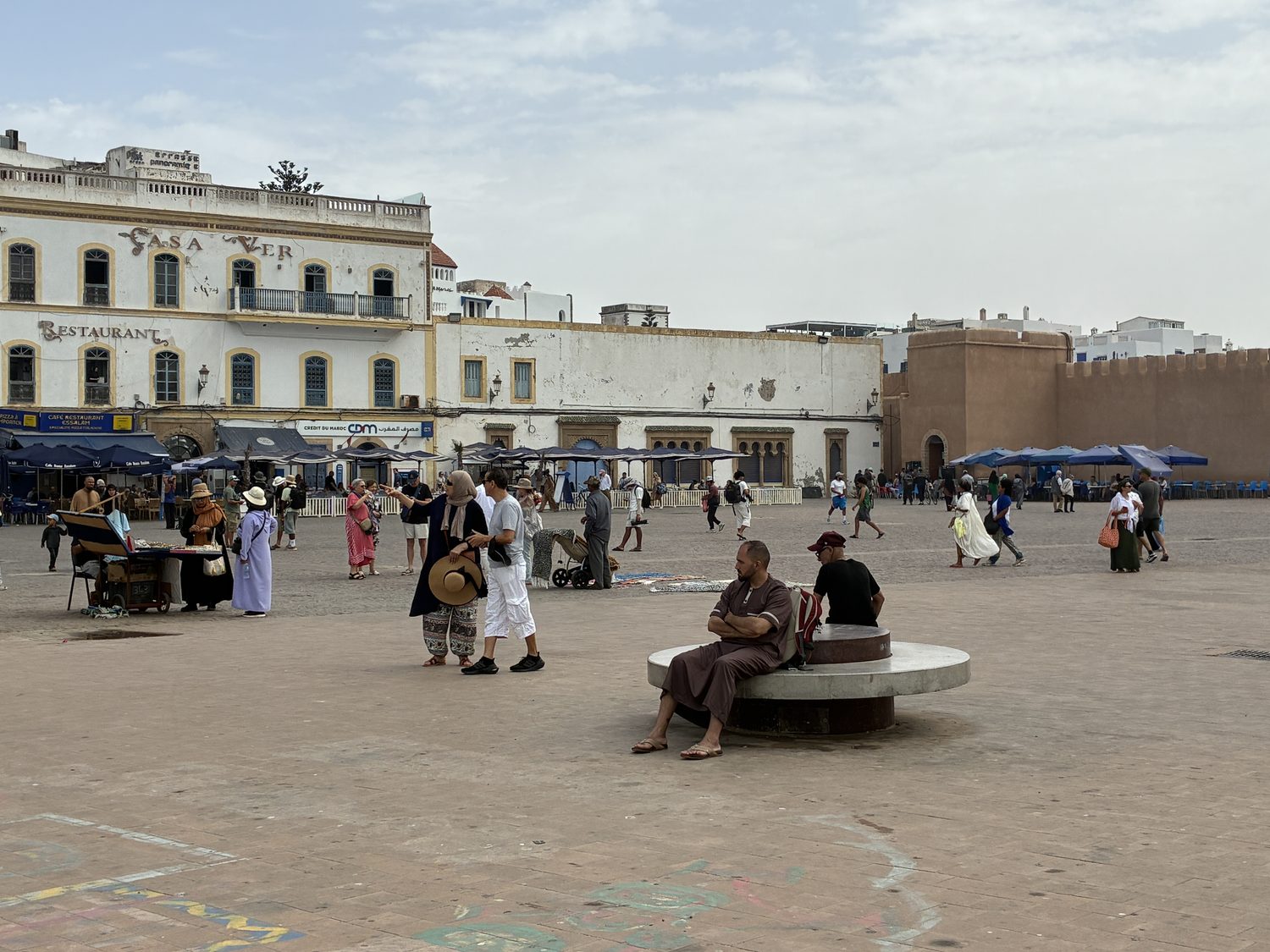
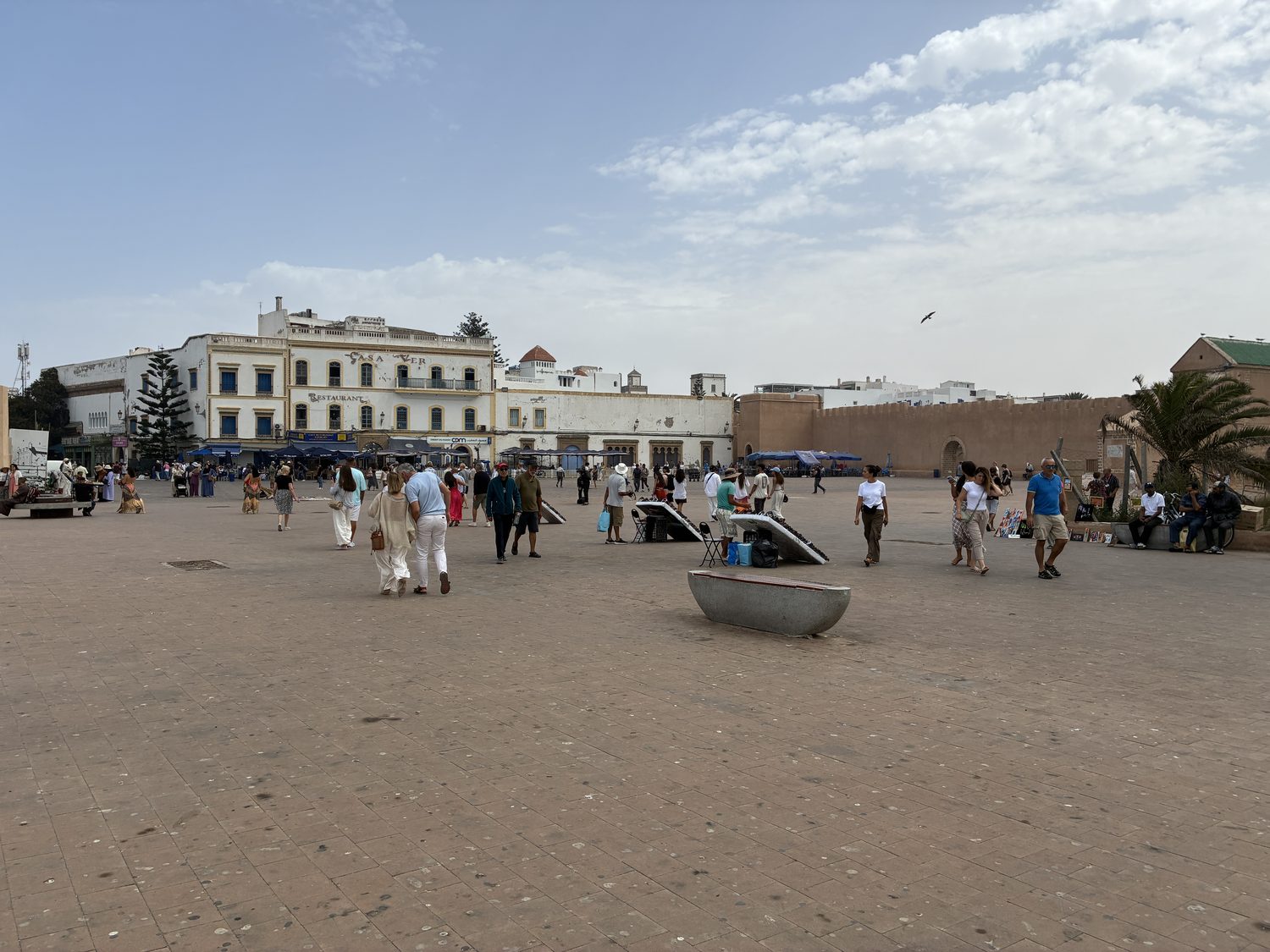
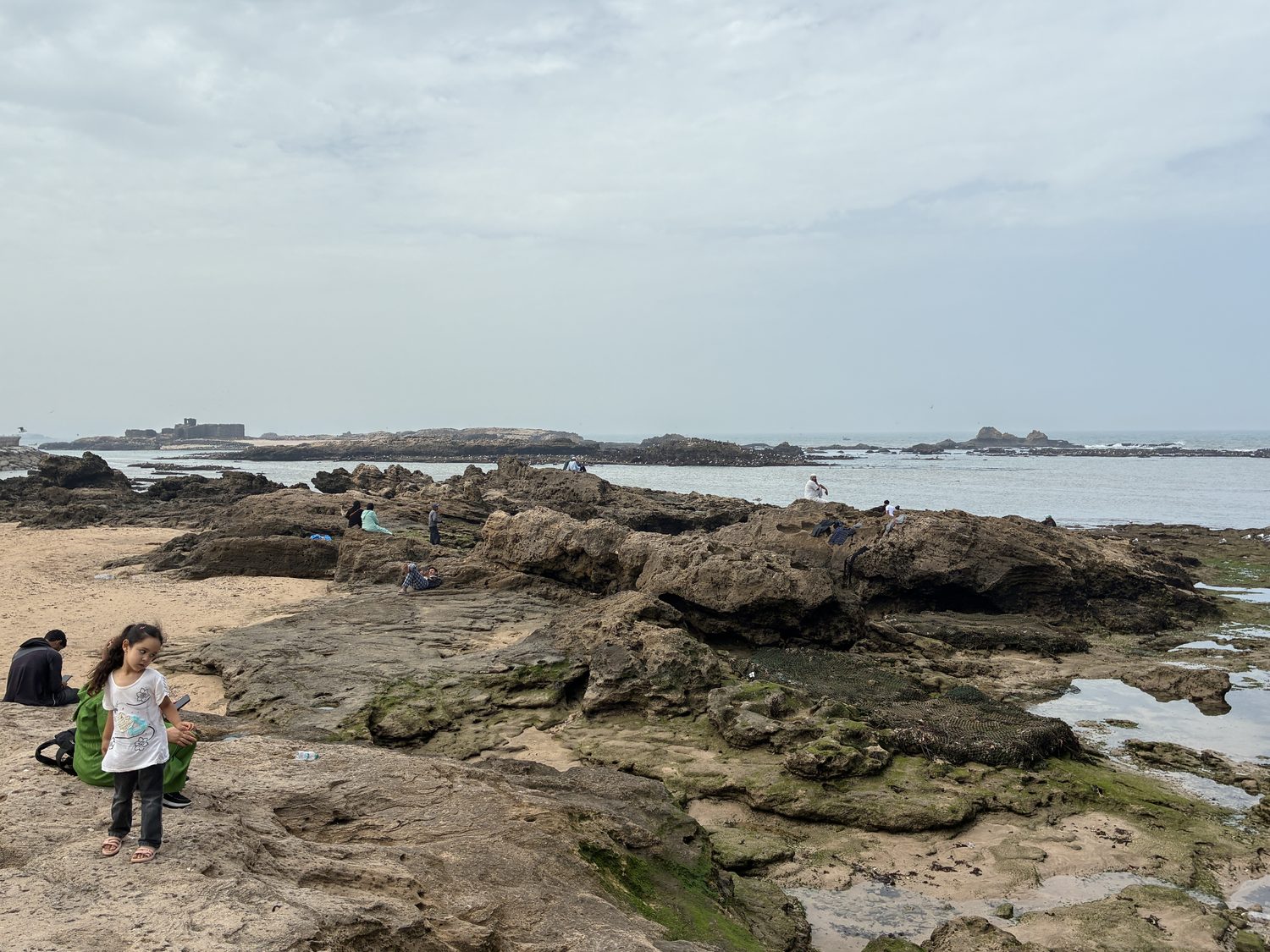
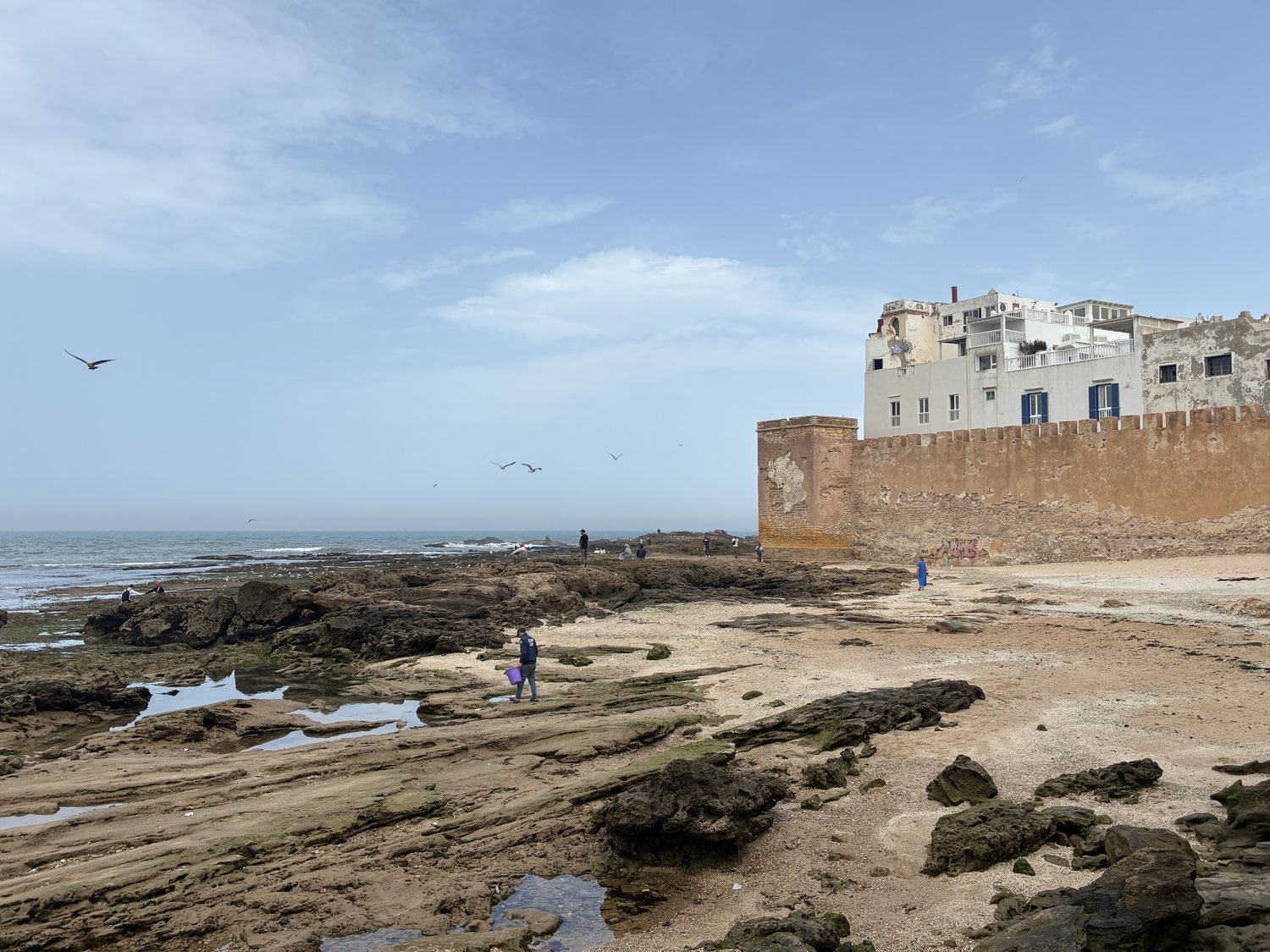
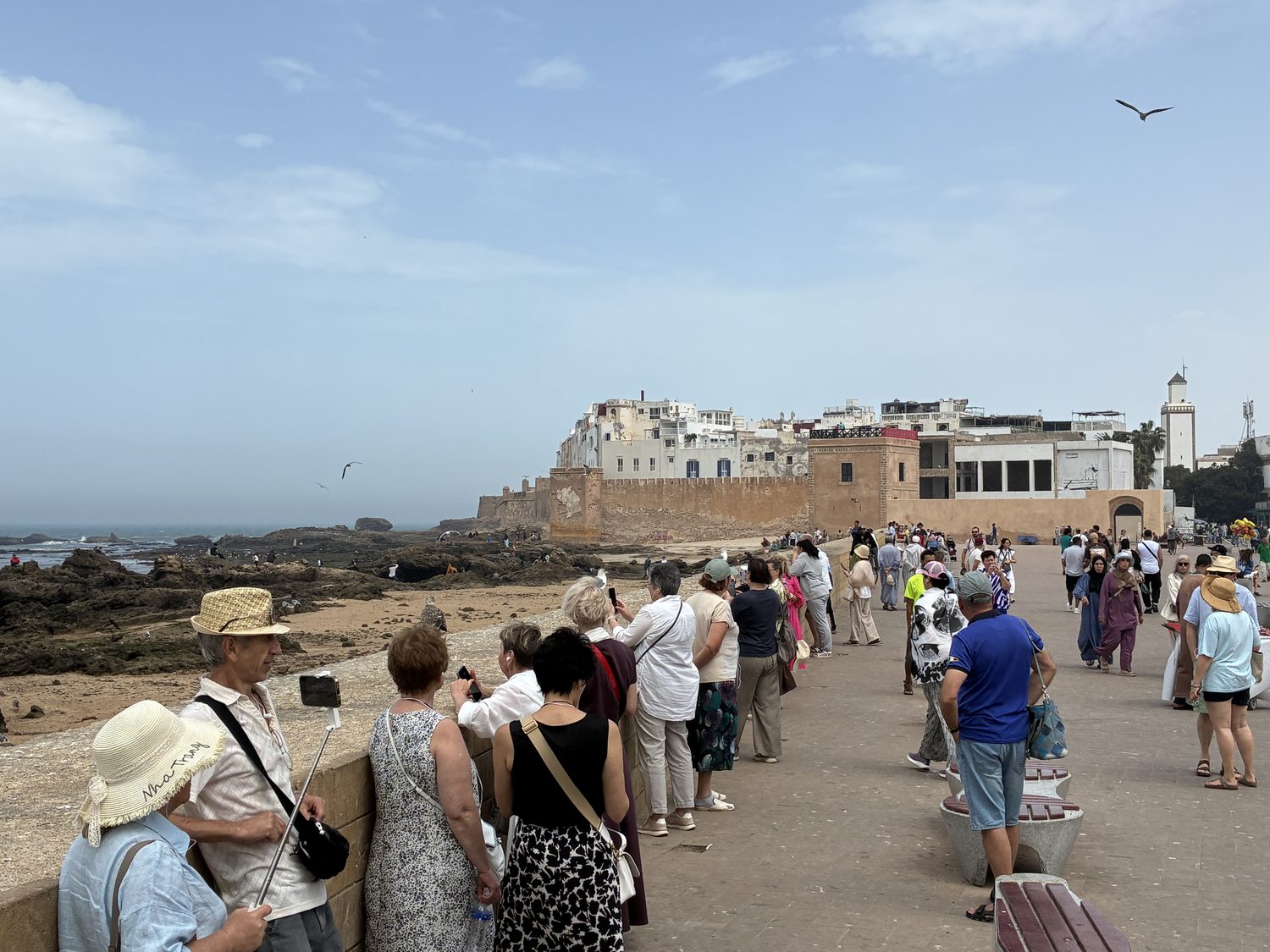
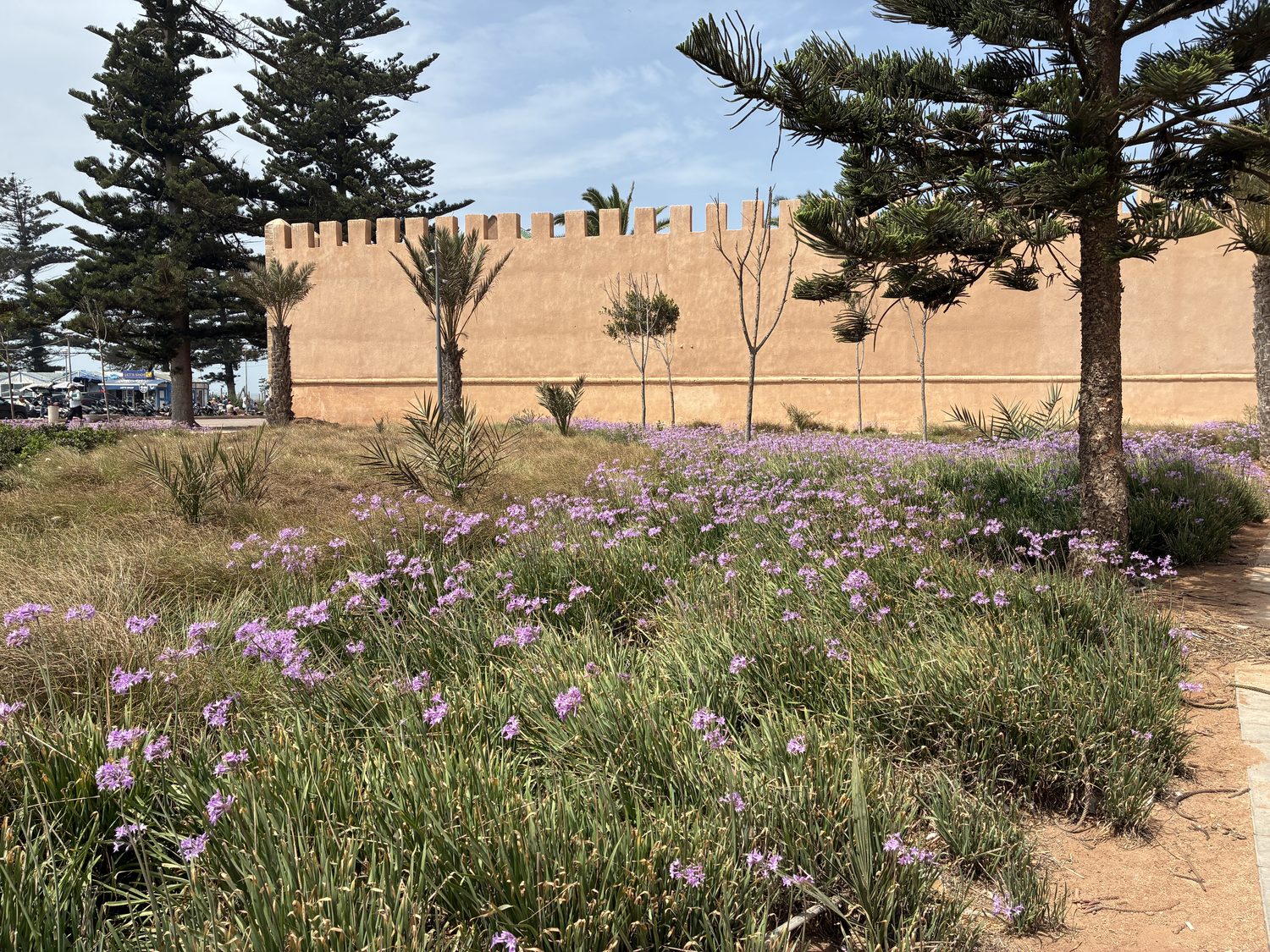
I walked on toward the Port of Essaouira Sqala, the fortified harbor with its fortress towers, walls, and turrets rising out of the Atlantic. That fortress and its long canon lined wall running along the Atlantic, the Skala de la Ville, was one of the filming locations of Game of Thrones. It’s pretty dramatic.
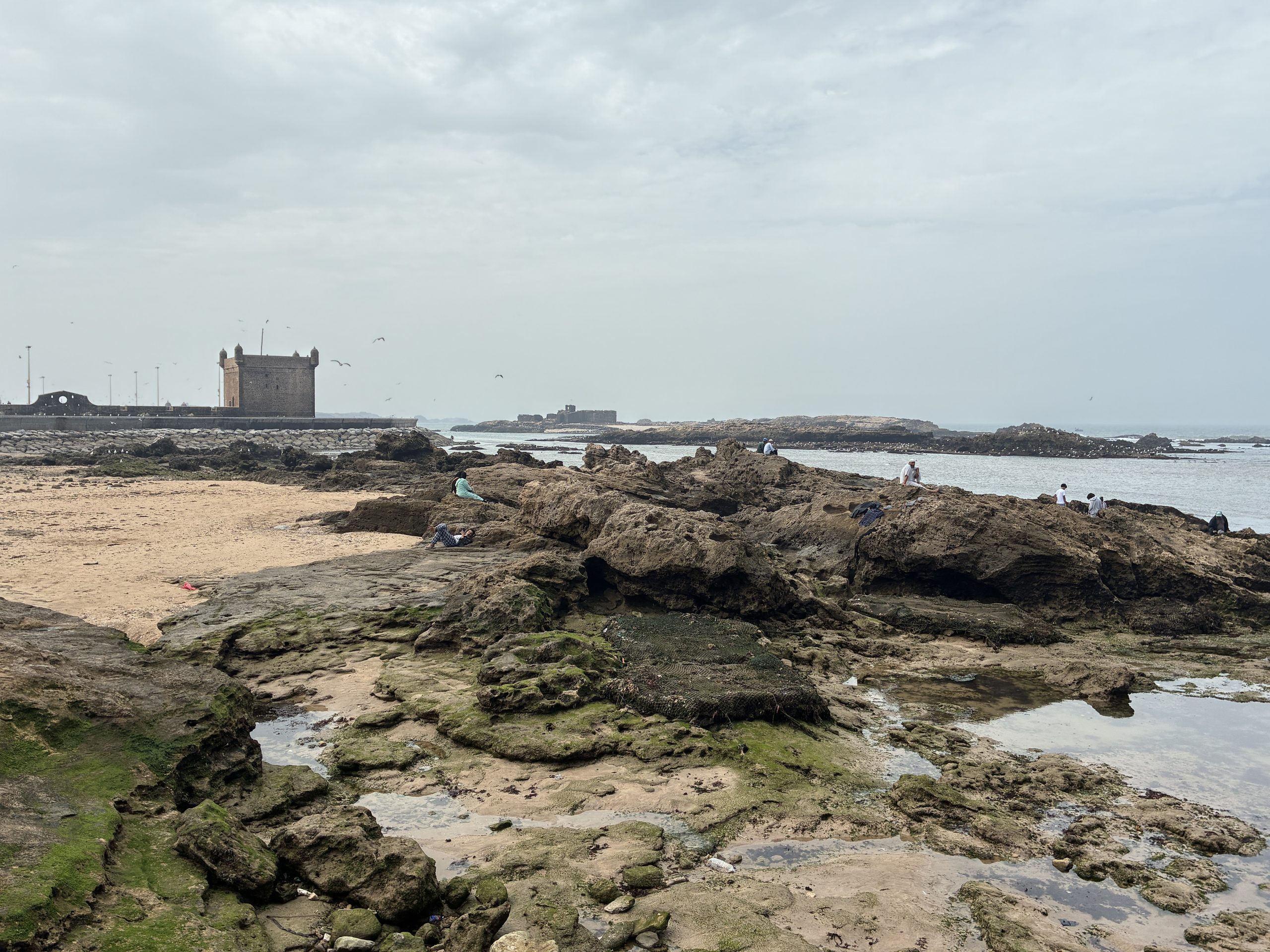
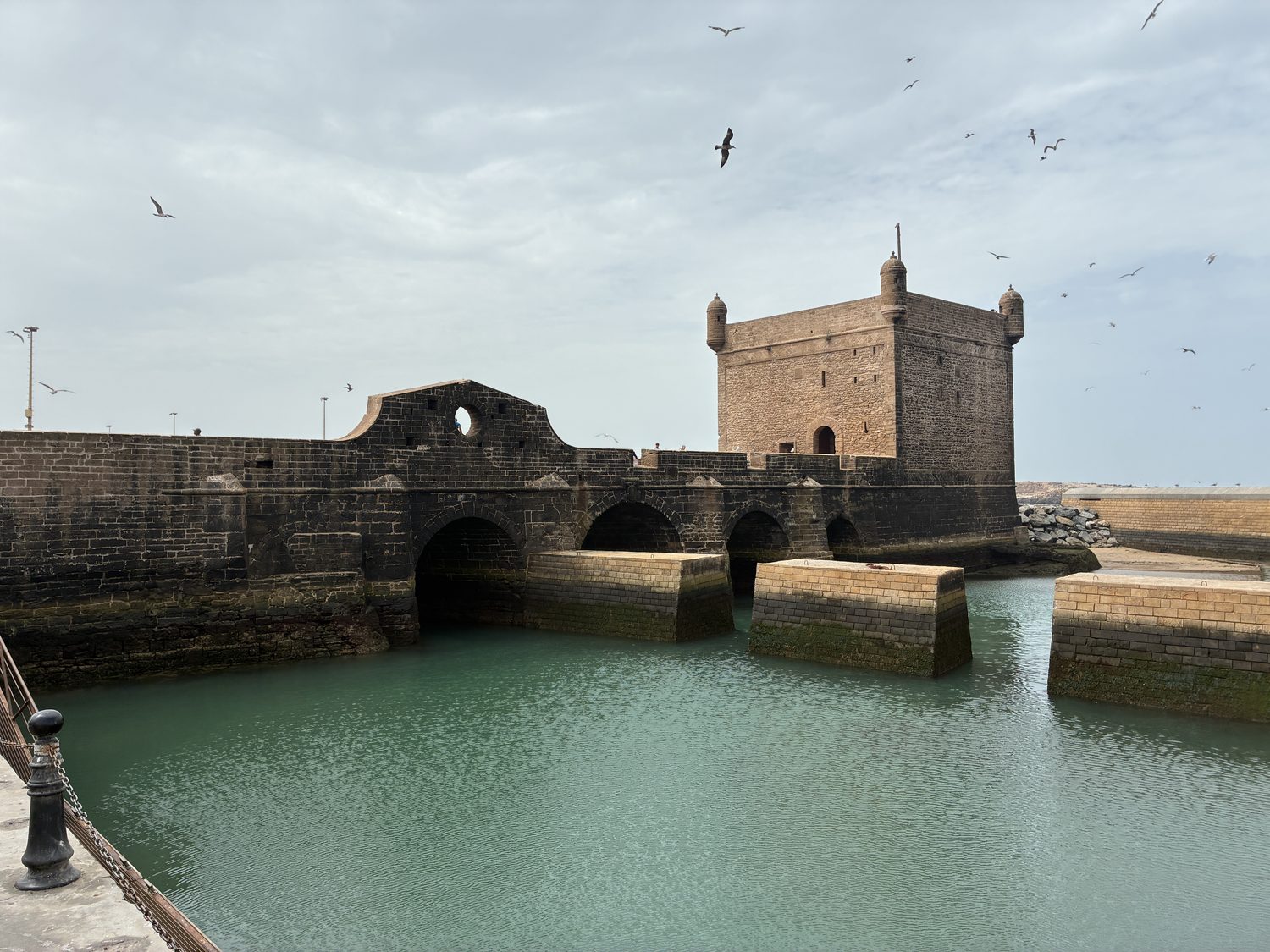
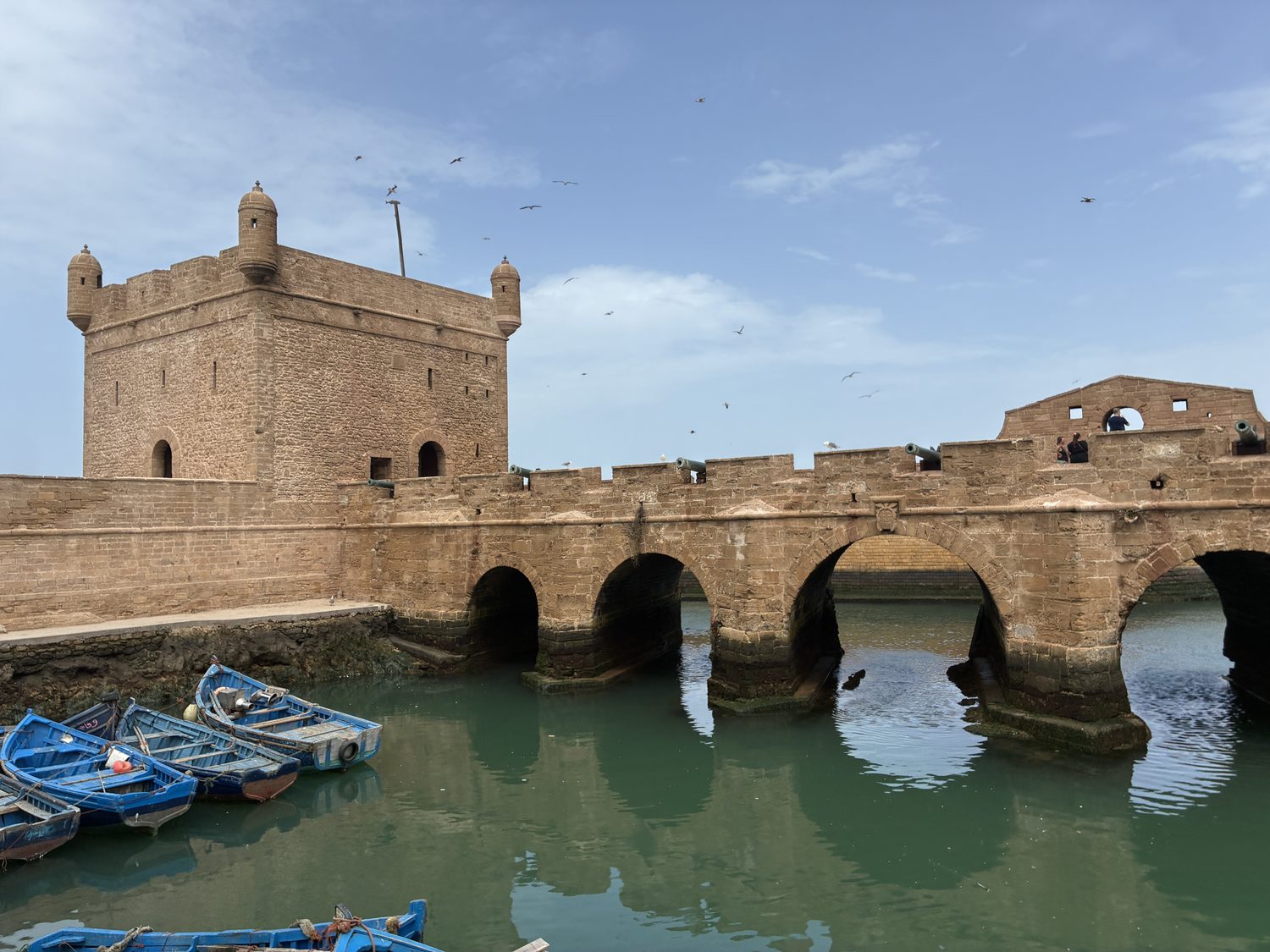
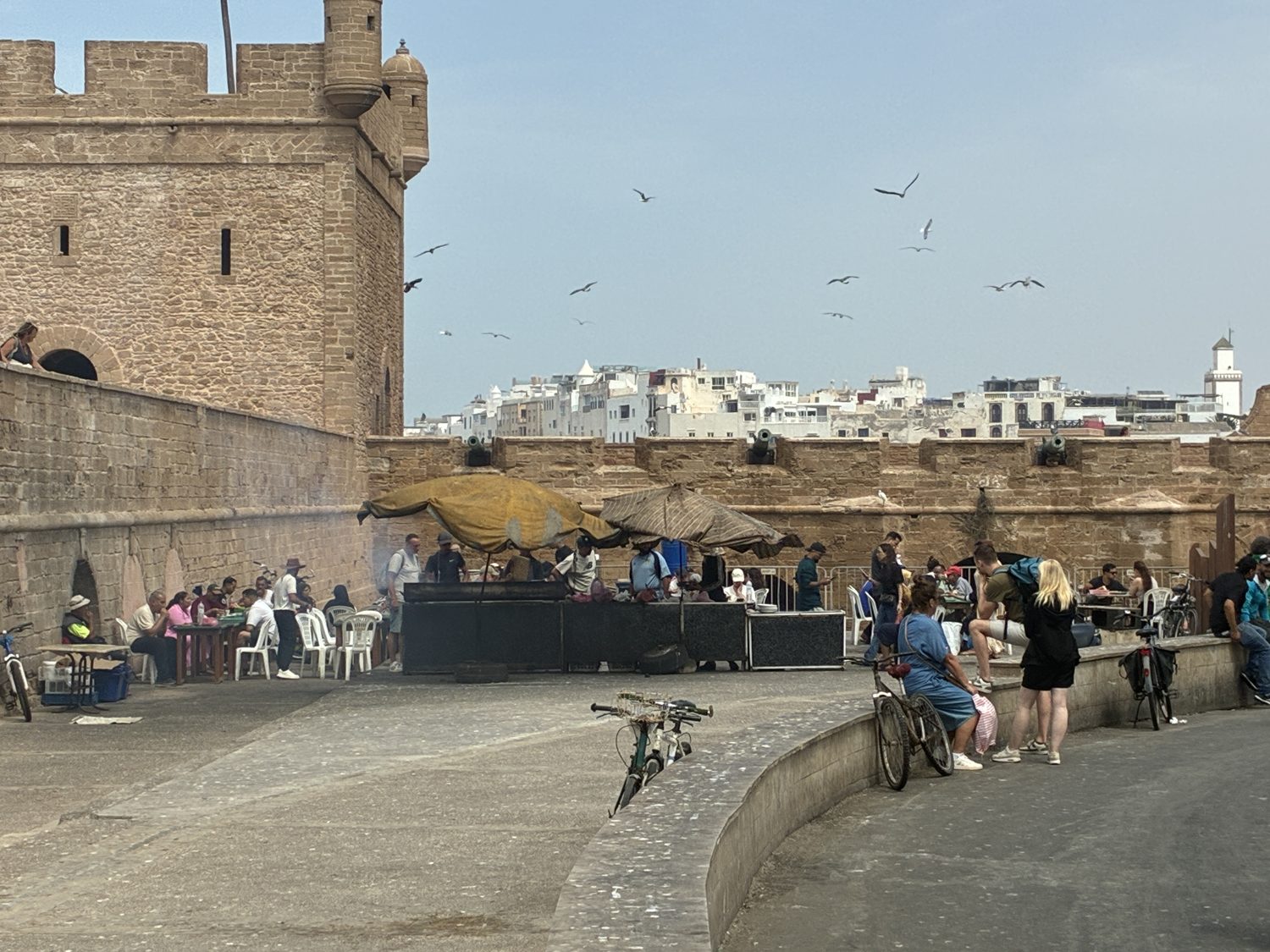
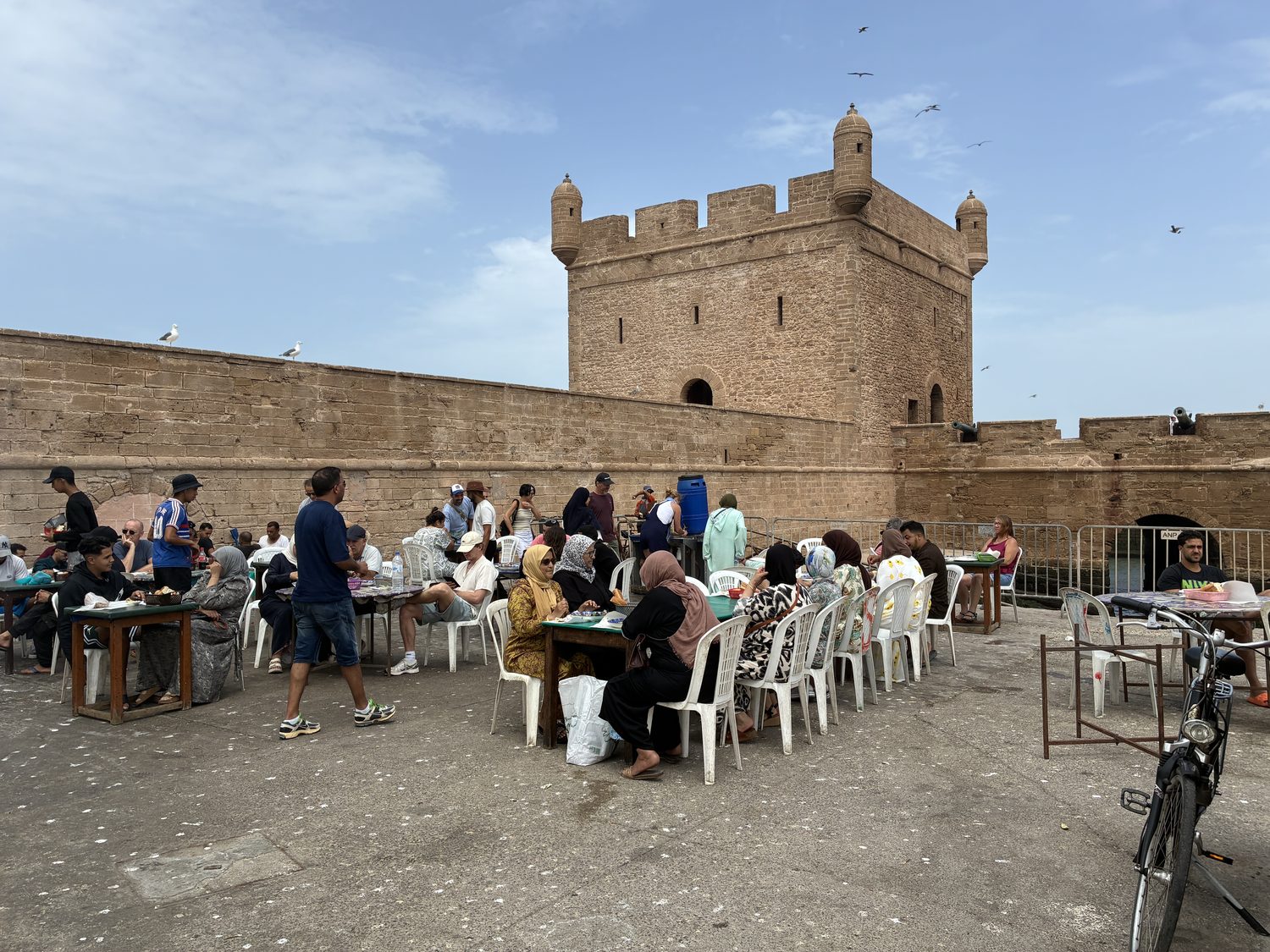
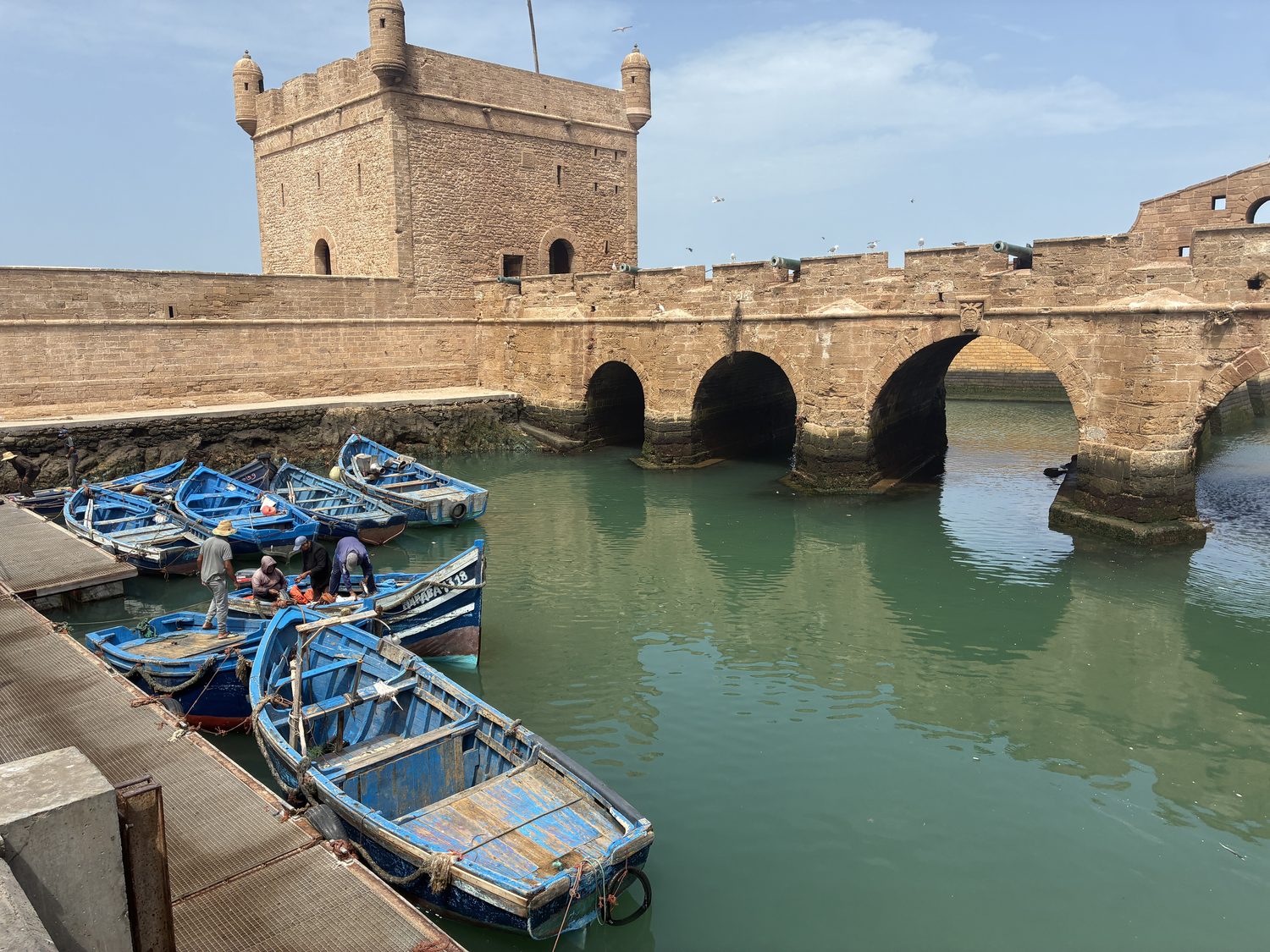
The European-style fortress is literally right by the fishing harbor, which is filled with working fishing trawlers, and lined by a fresh fish market selling fish literally right off the boats, as well as many small fresh seafood street eateries, lined up one right next to another as you enter the harbor. With the unloading and crating of the fish, men repairing trawler nets, market stalls, street eateries, and the sounds and smells of the harbor, and the occasional fisherman screaming and yelling at someone, it’s quite the scene.
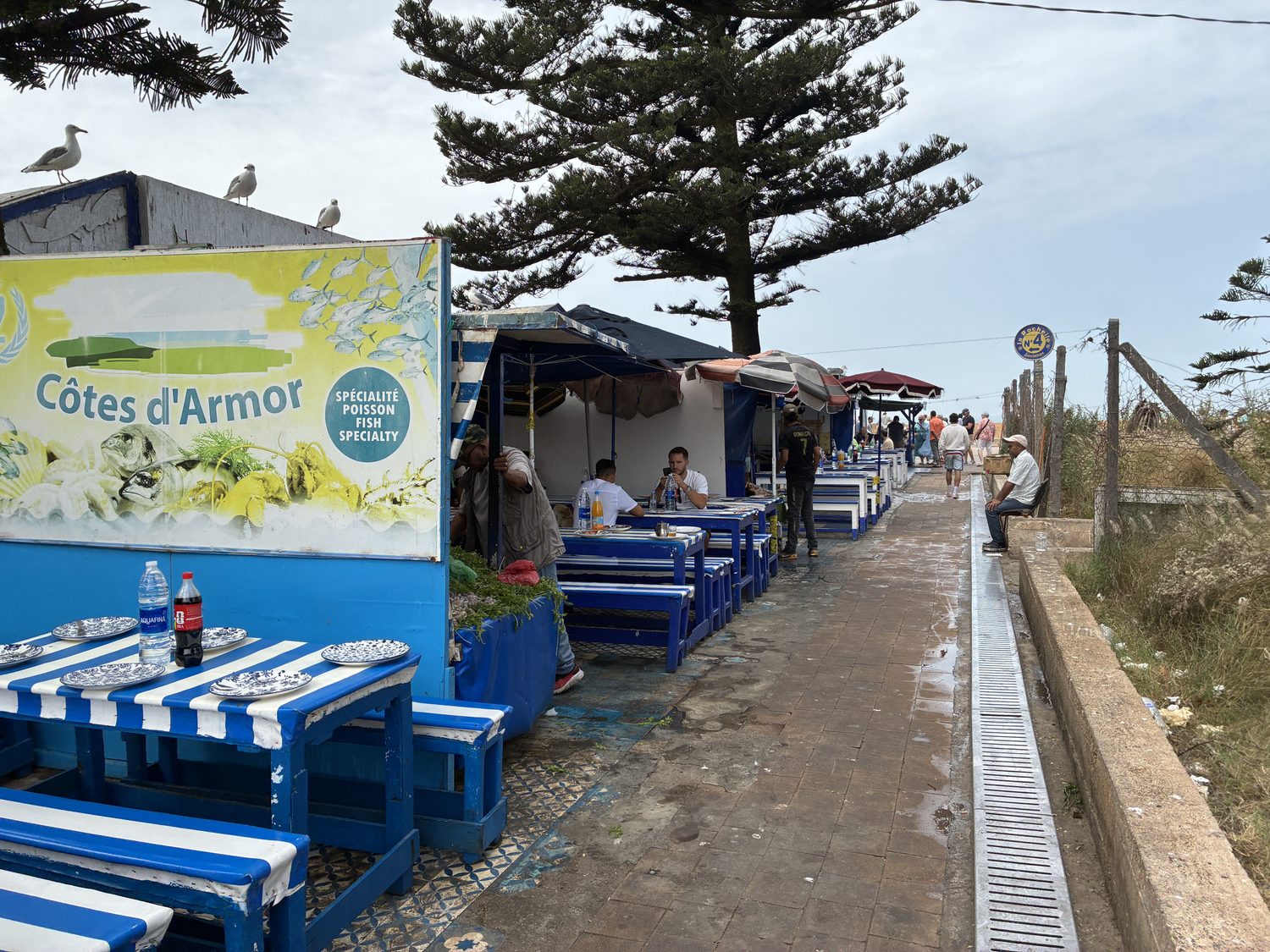
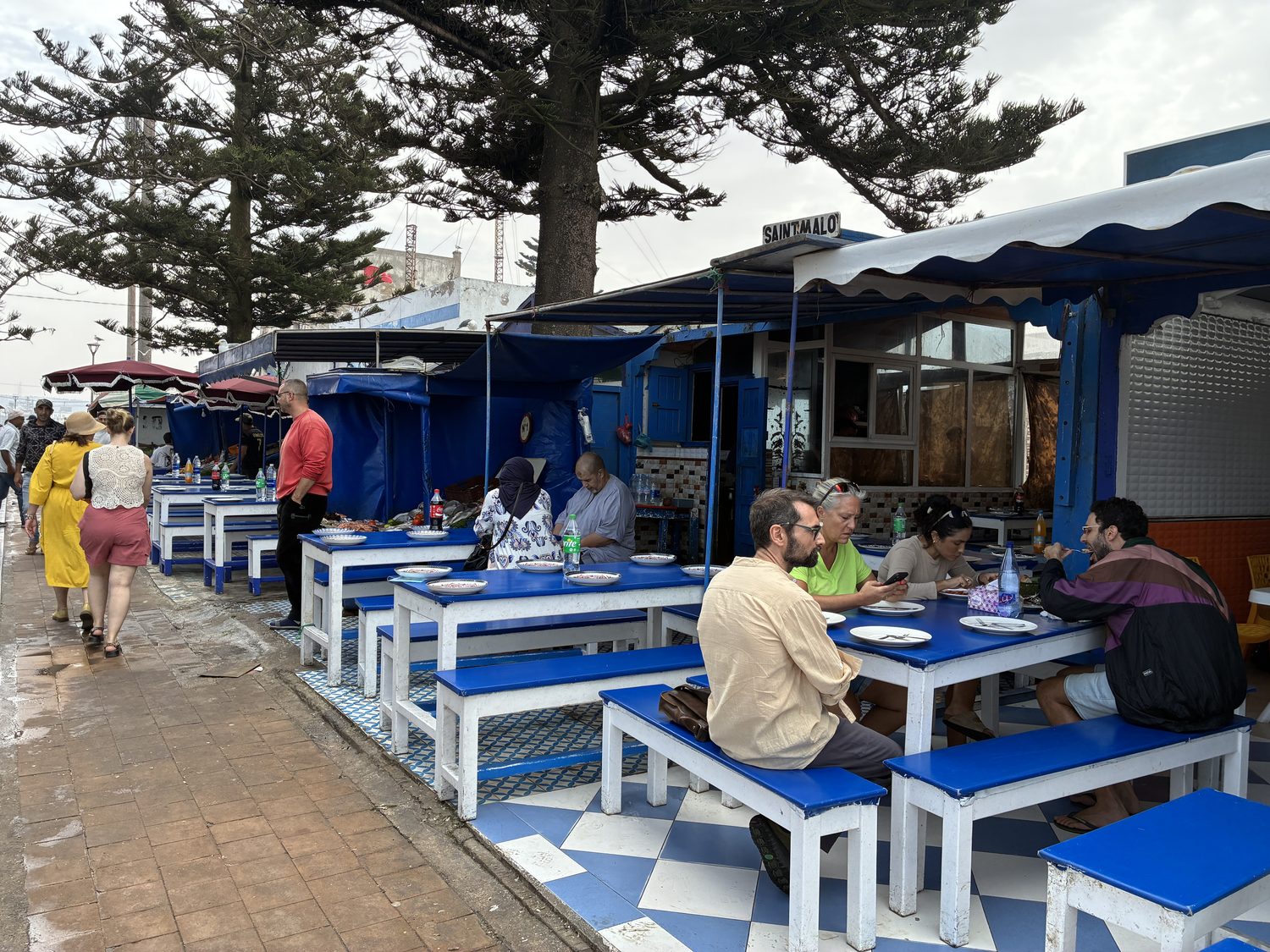
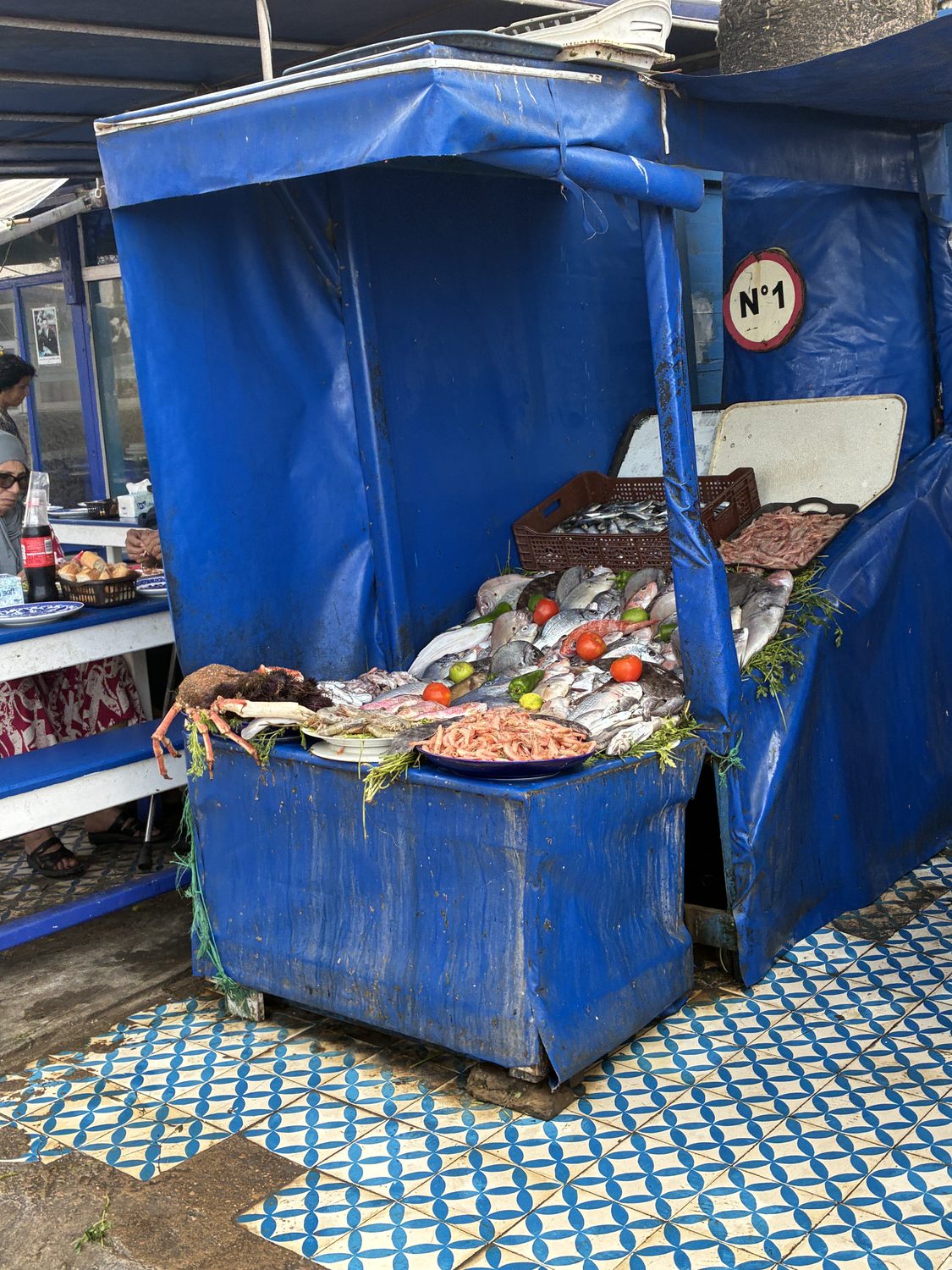
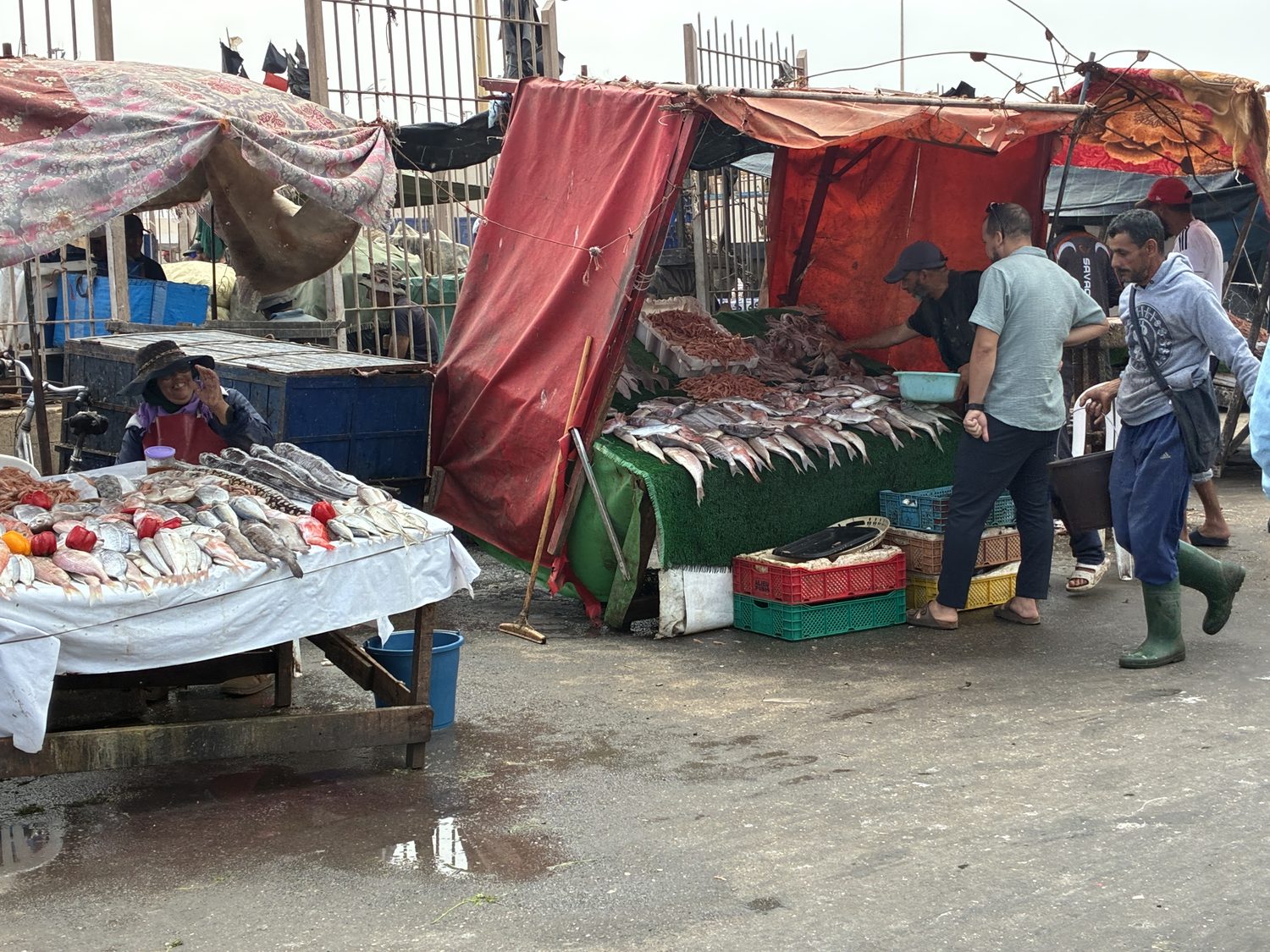
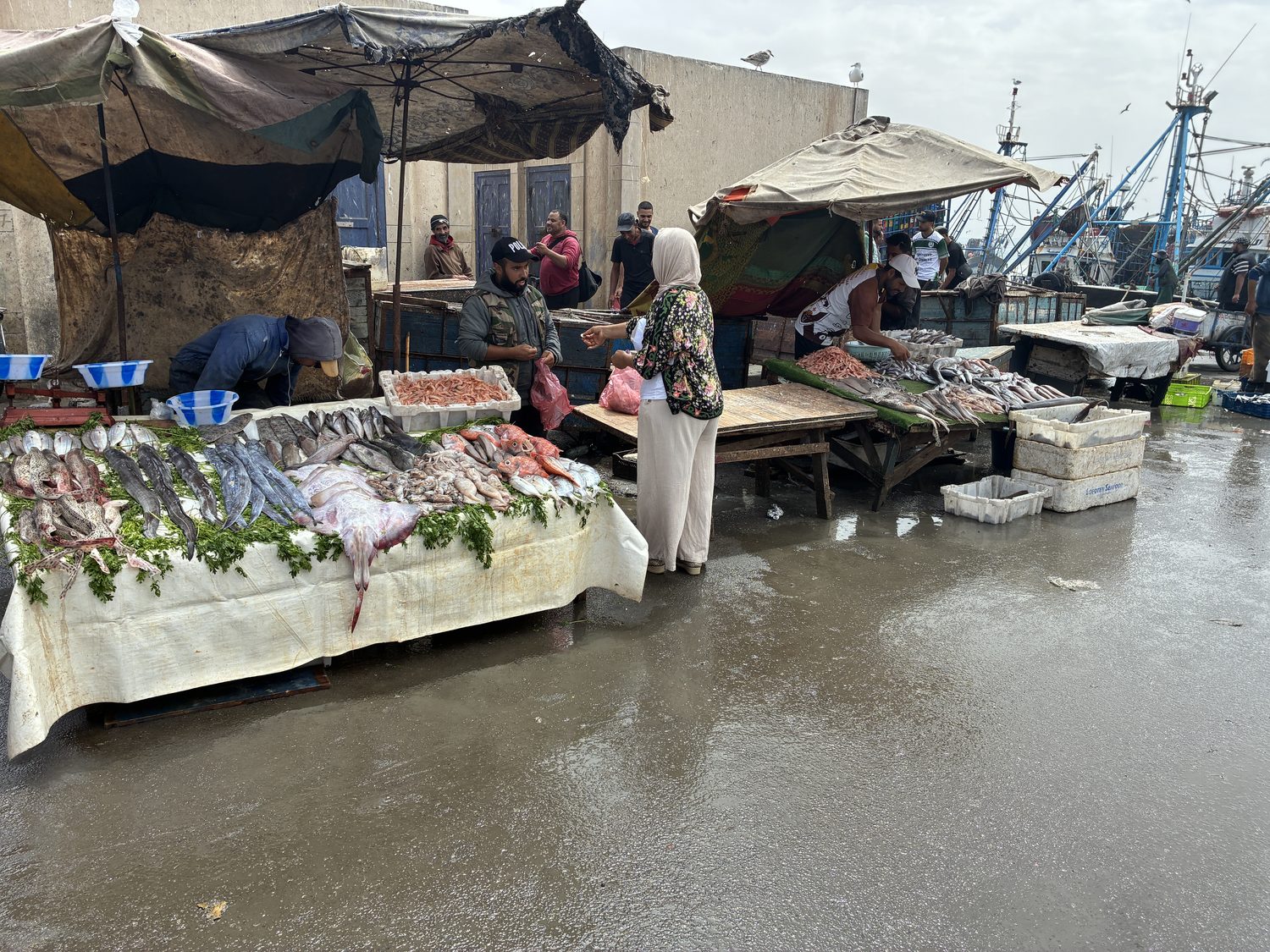
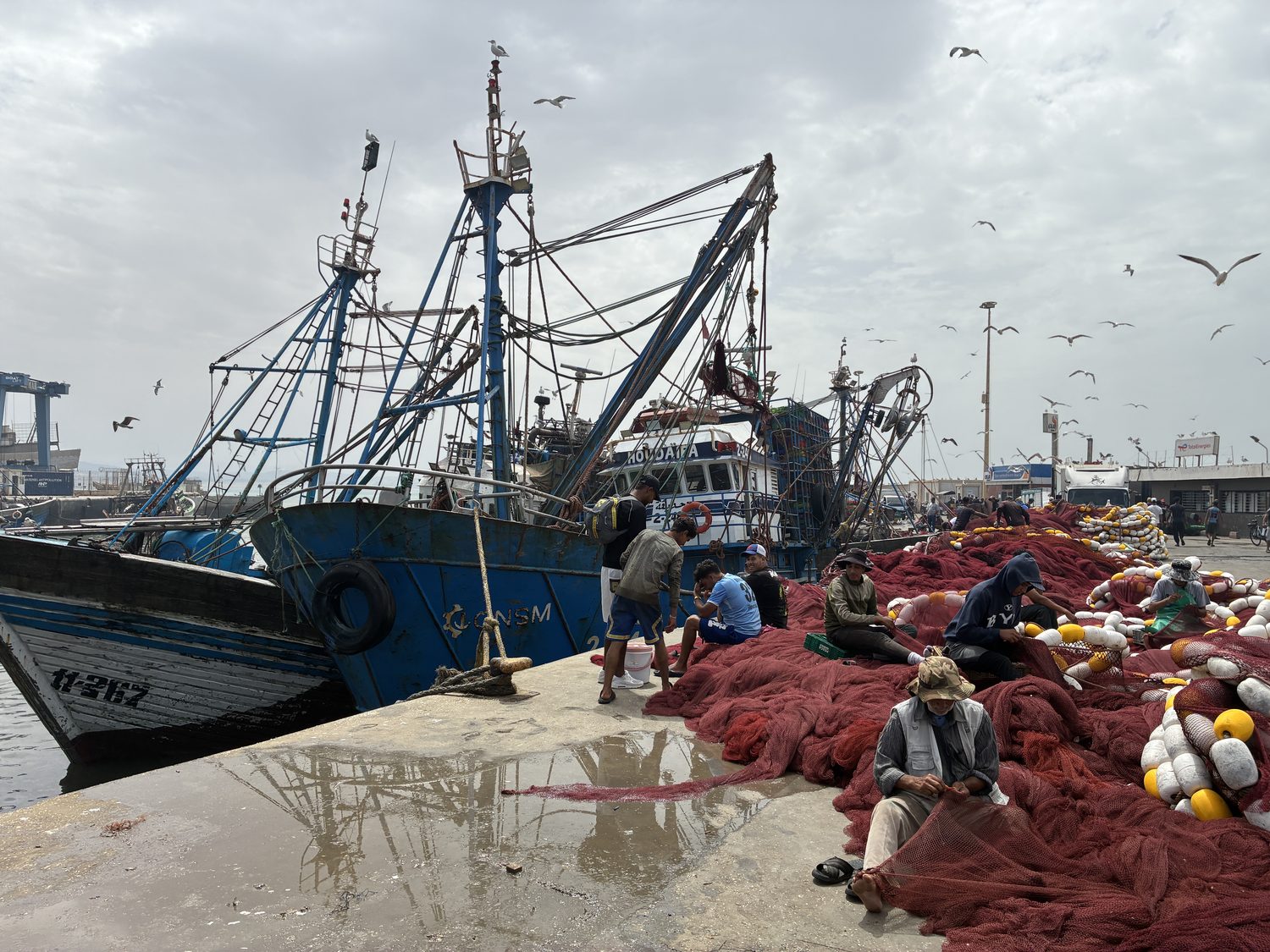
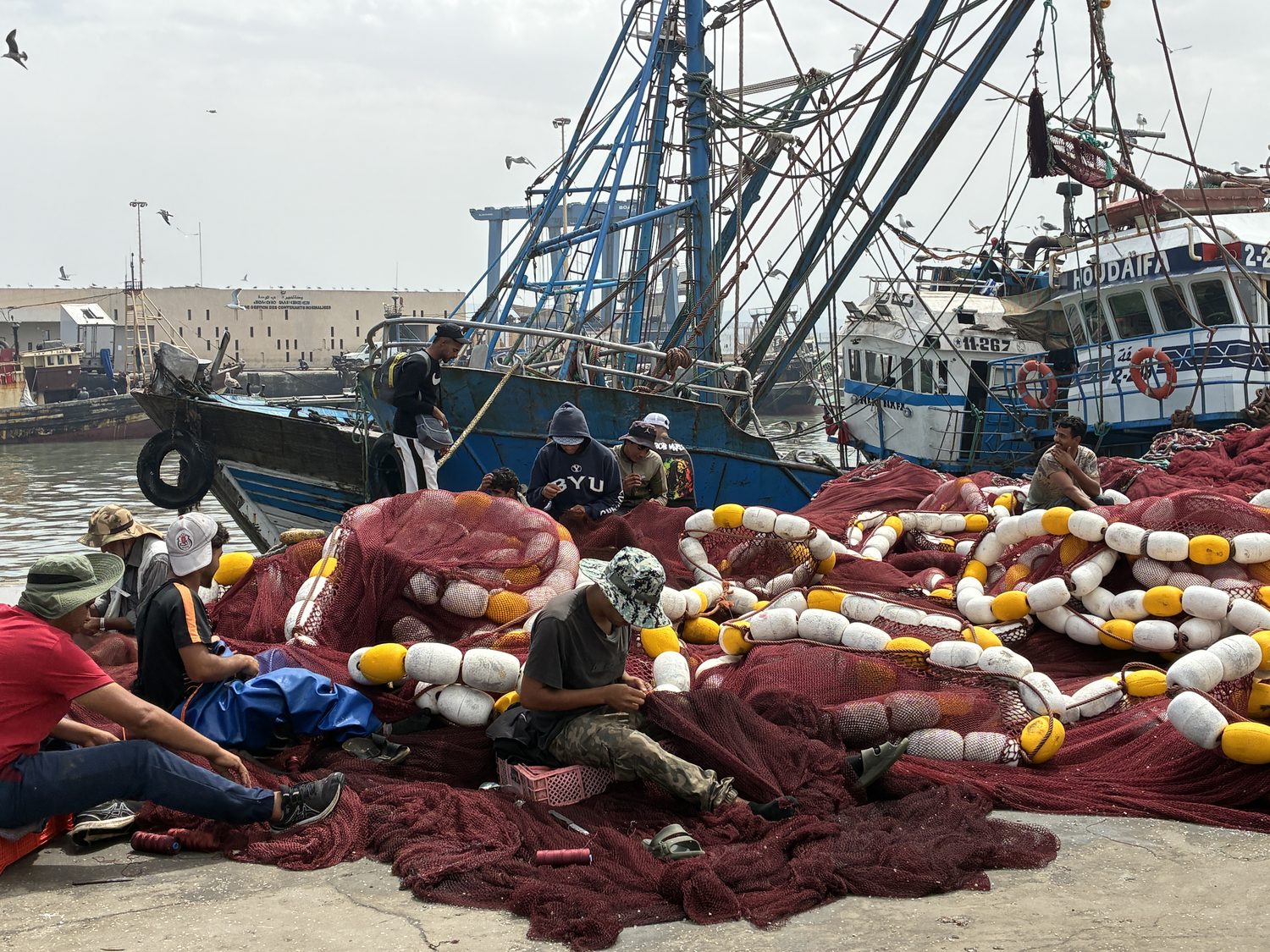
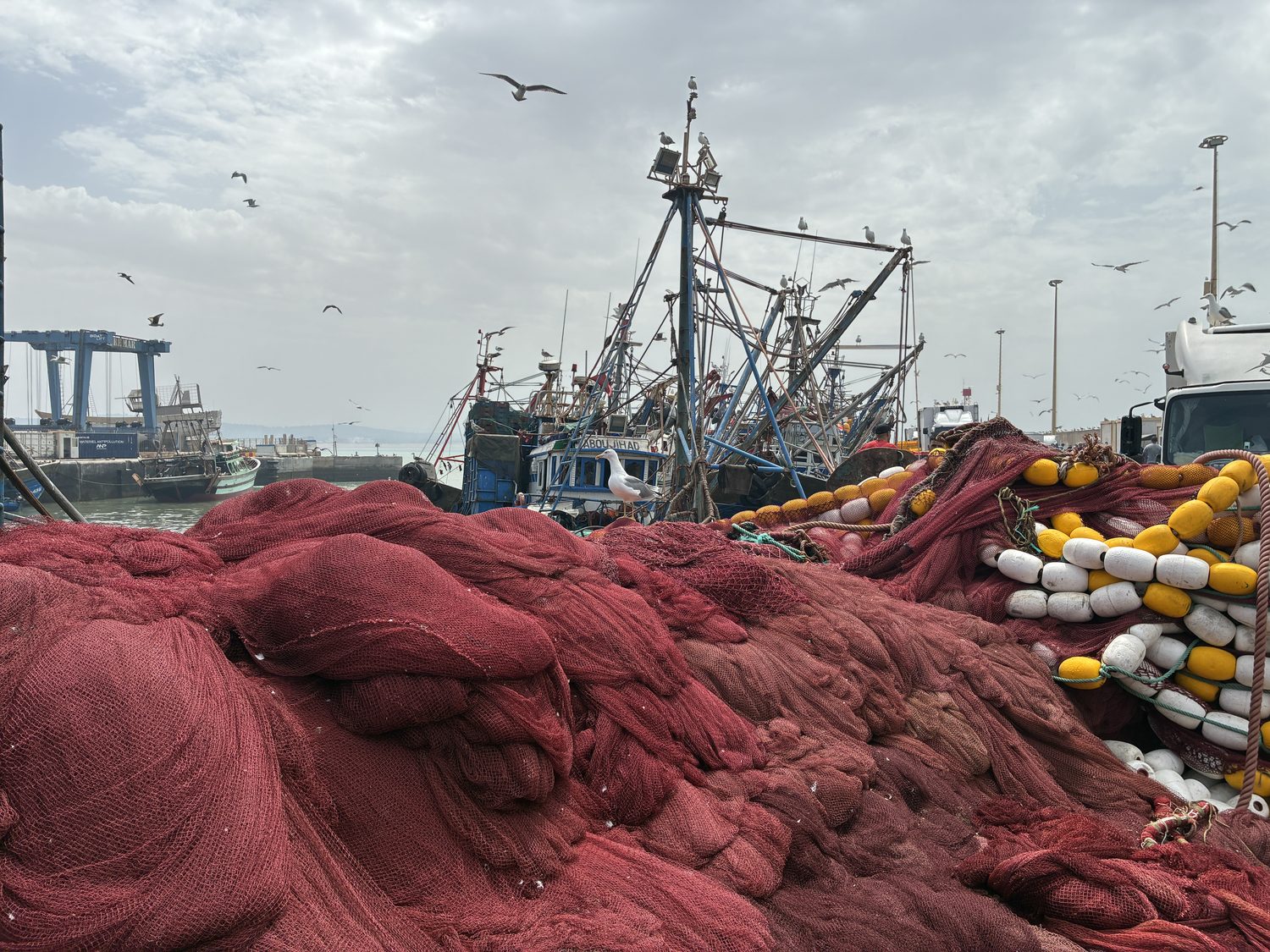
At one point, I sat for a while along a section of the shoreline within the medina that ran along the fortified walls, and where the beach was more rugged and less friendly, and before it becomes the sandy and beach lovers beach of Plage d’Essaouira, just watching the Atlantic crash onto the shoreline.
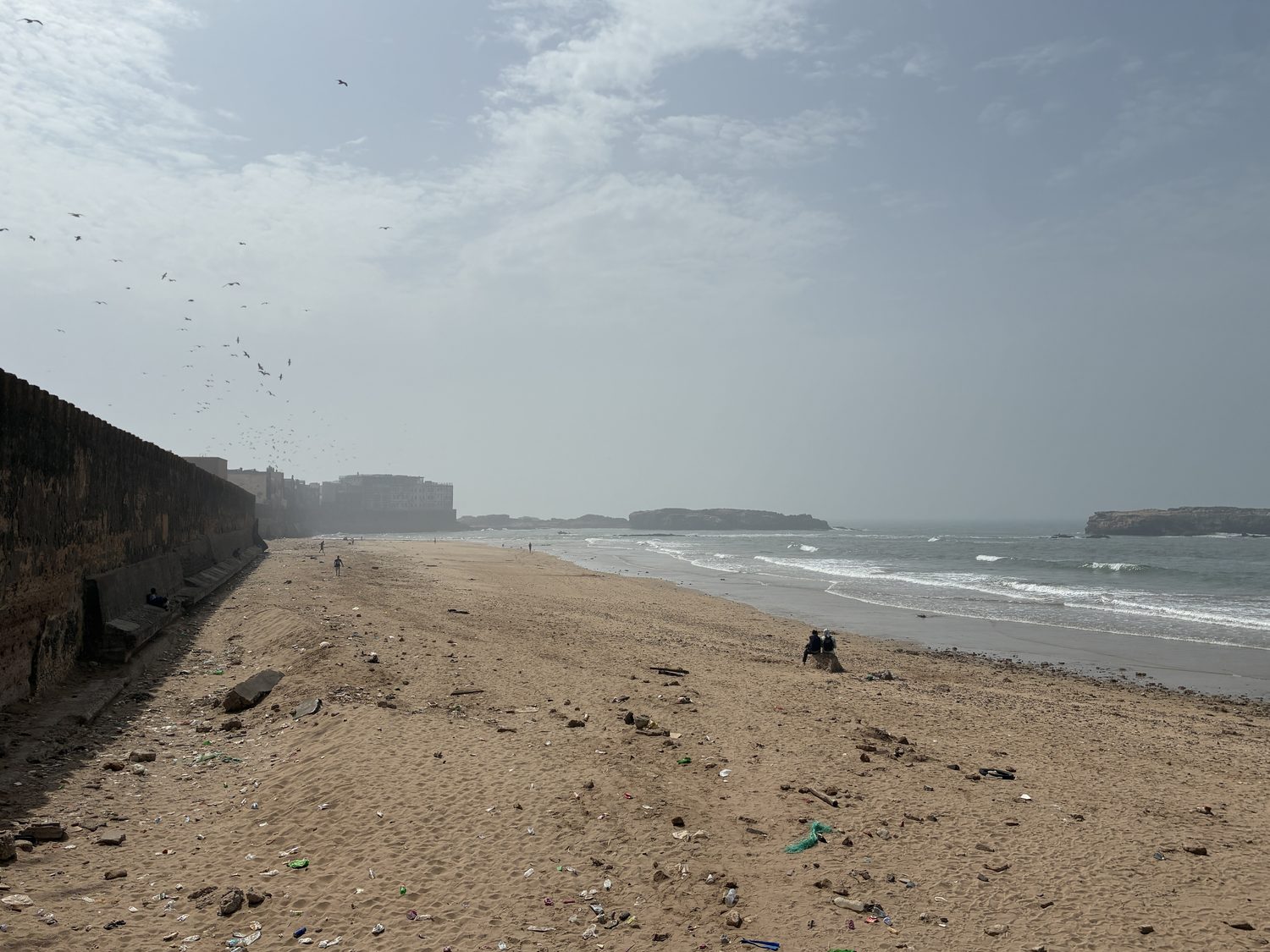
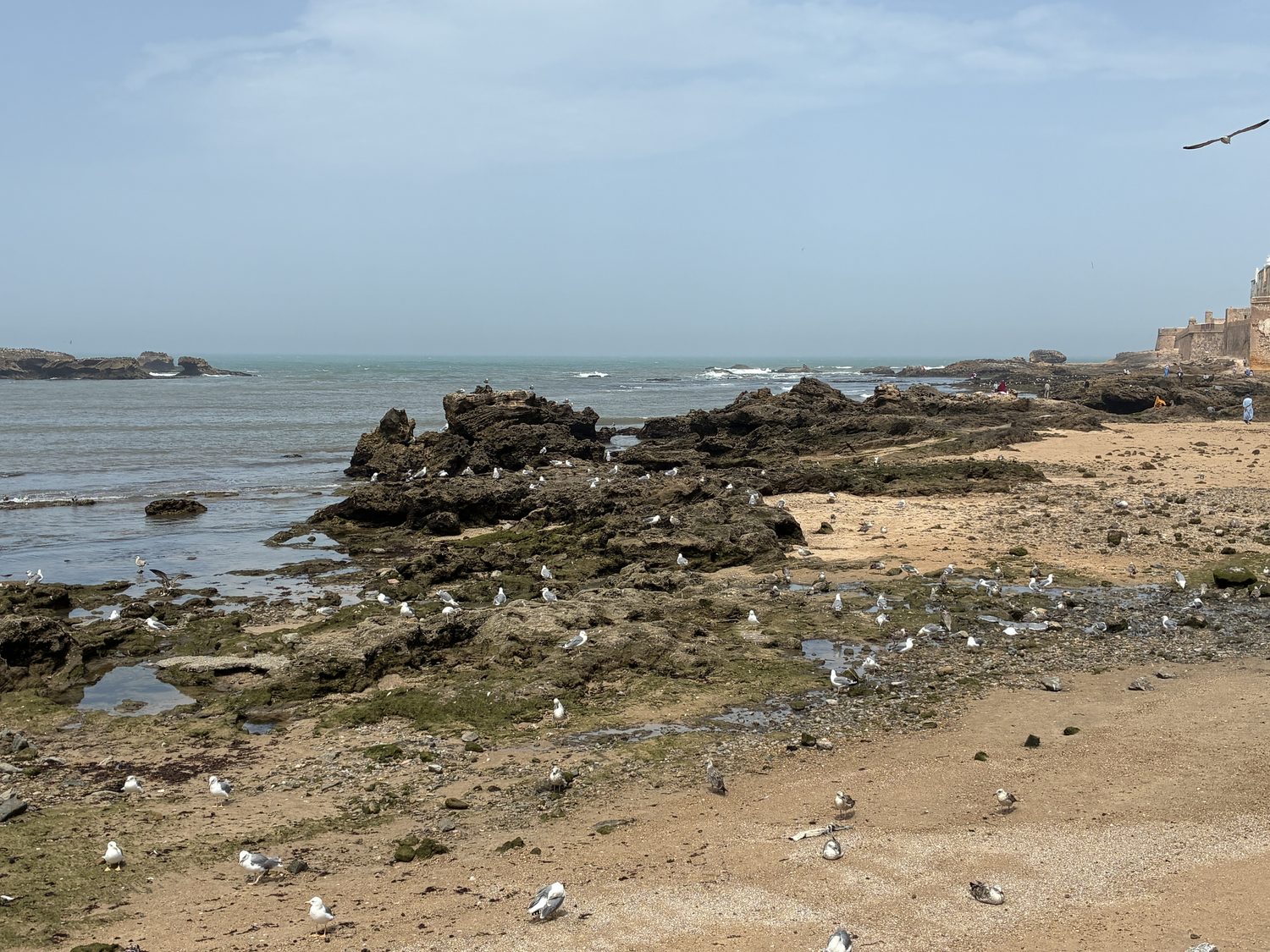
After leaving the harbor and its very lively scene, I walked along the Atlantic beach front, the Plage d’Essaouira. Not crowded by any means, it was still very busy with many beach goers, including swimmers, body boards, and people just enjoying the sun and ocean or walking along the beach, and many sailing kites as I walked further along the very long curving beach front. What a lovely town.
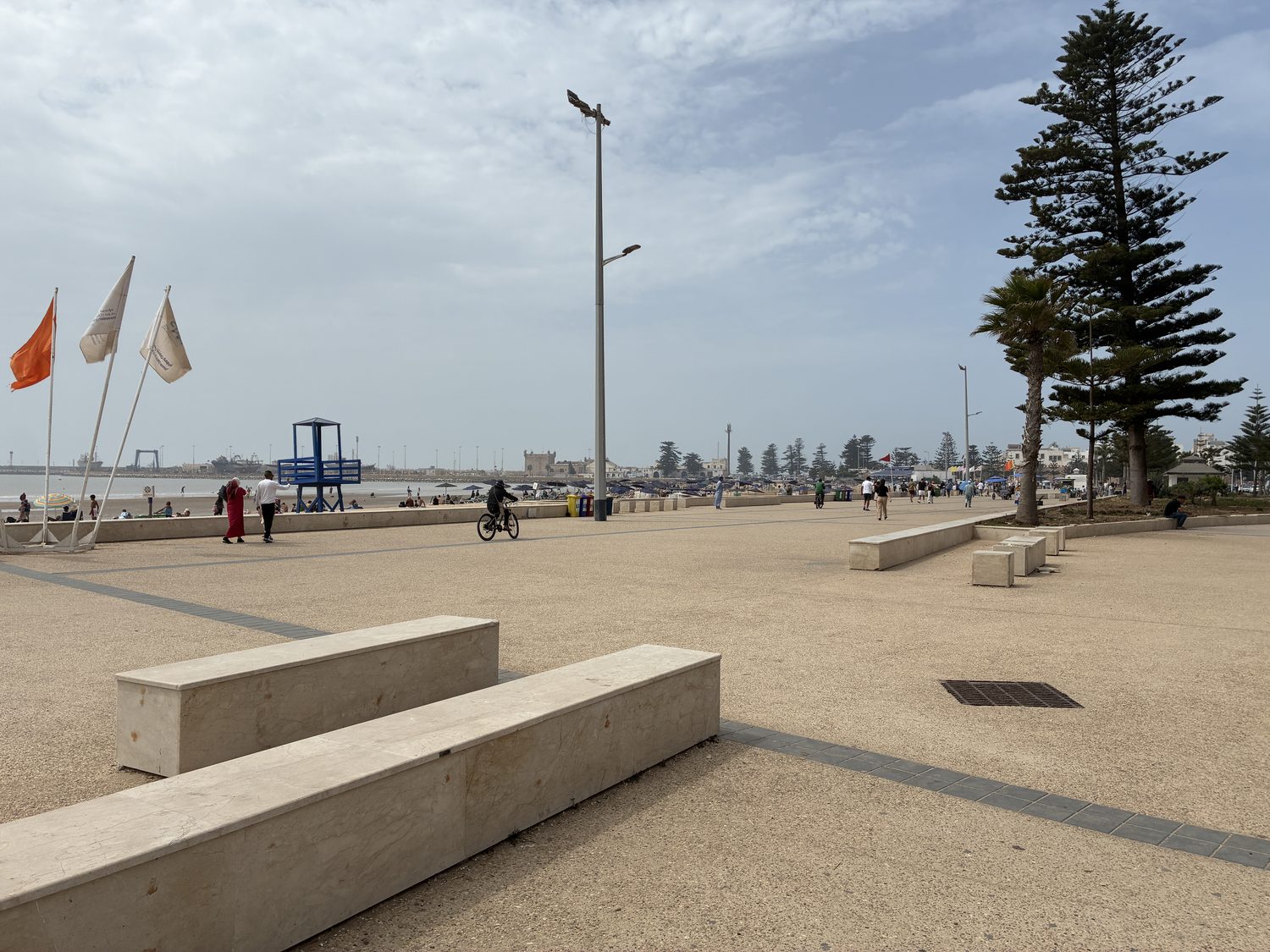
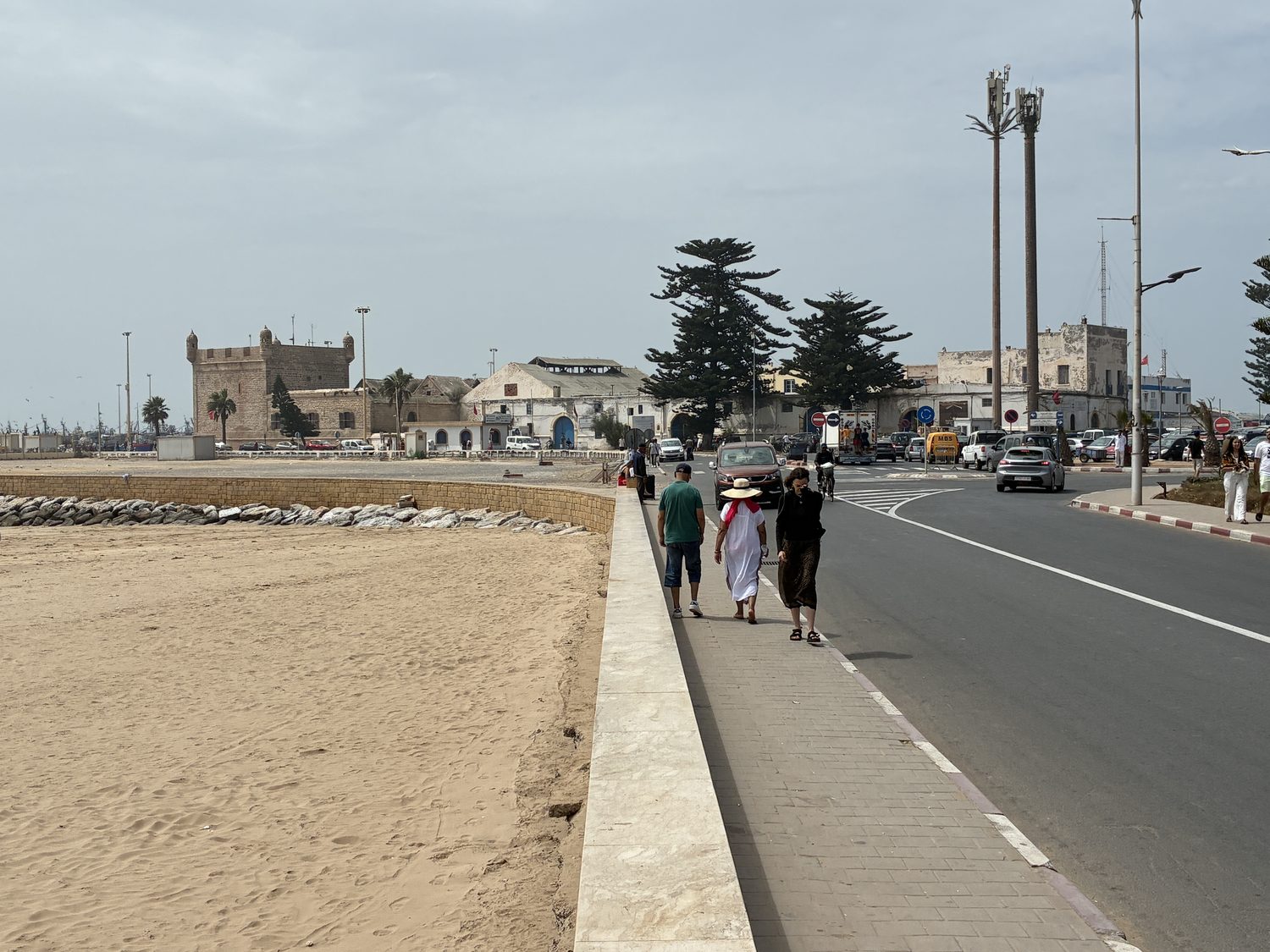
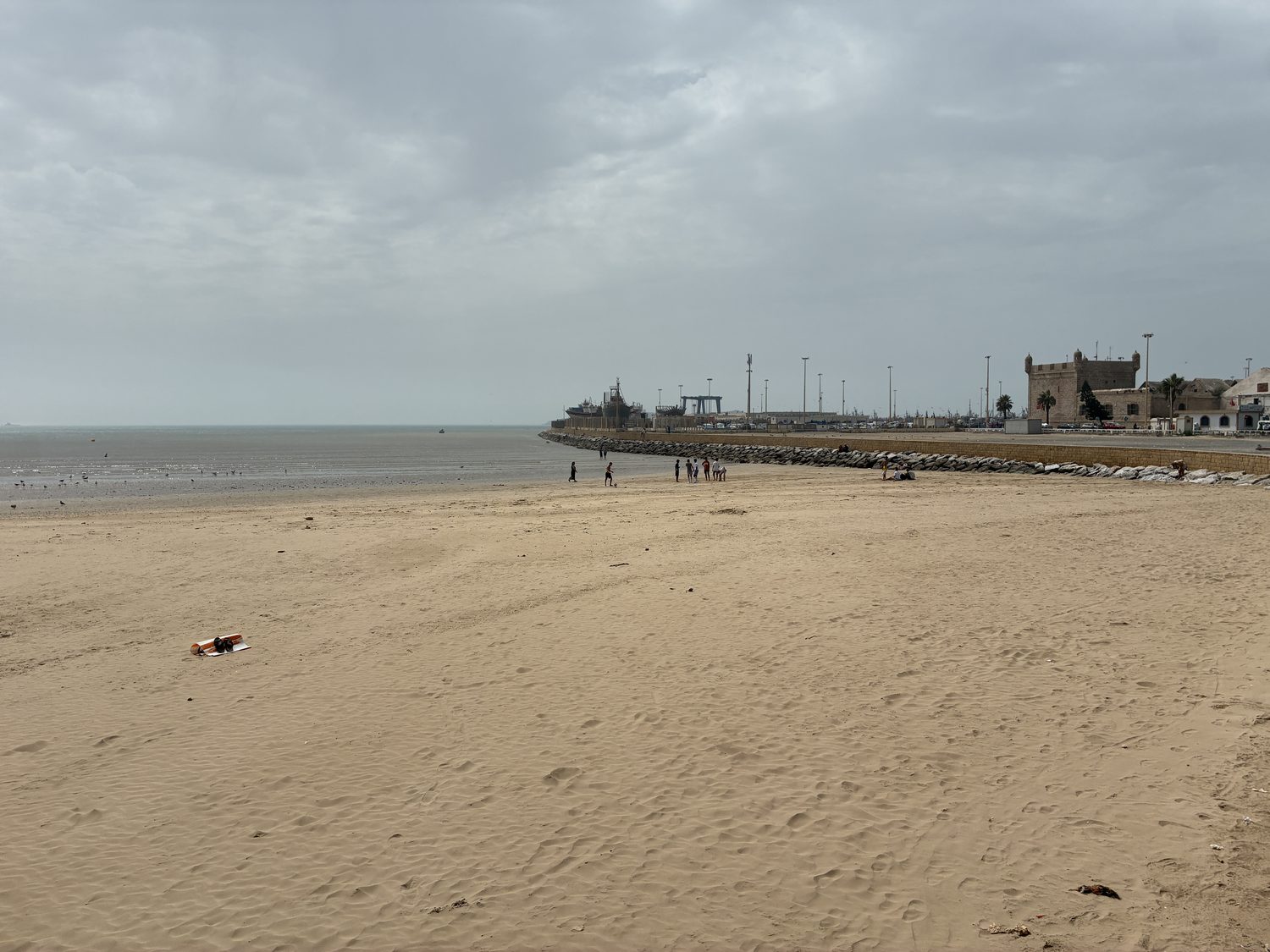
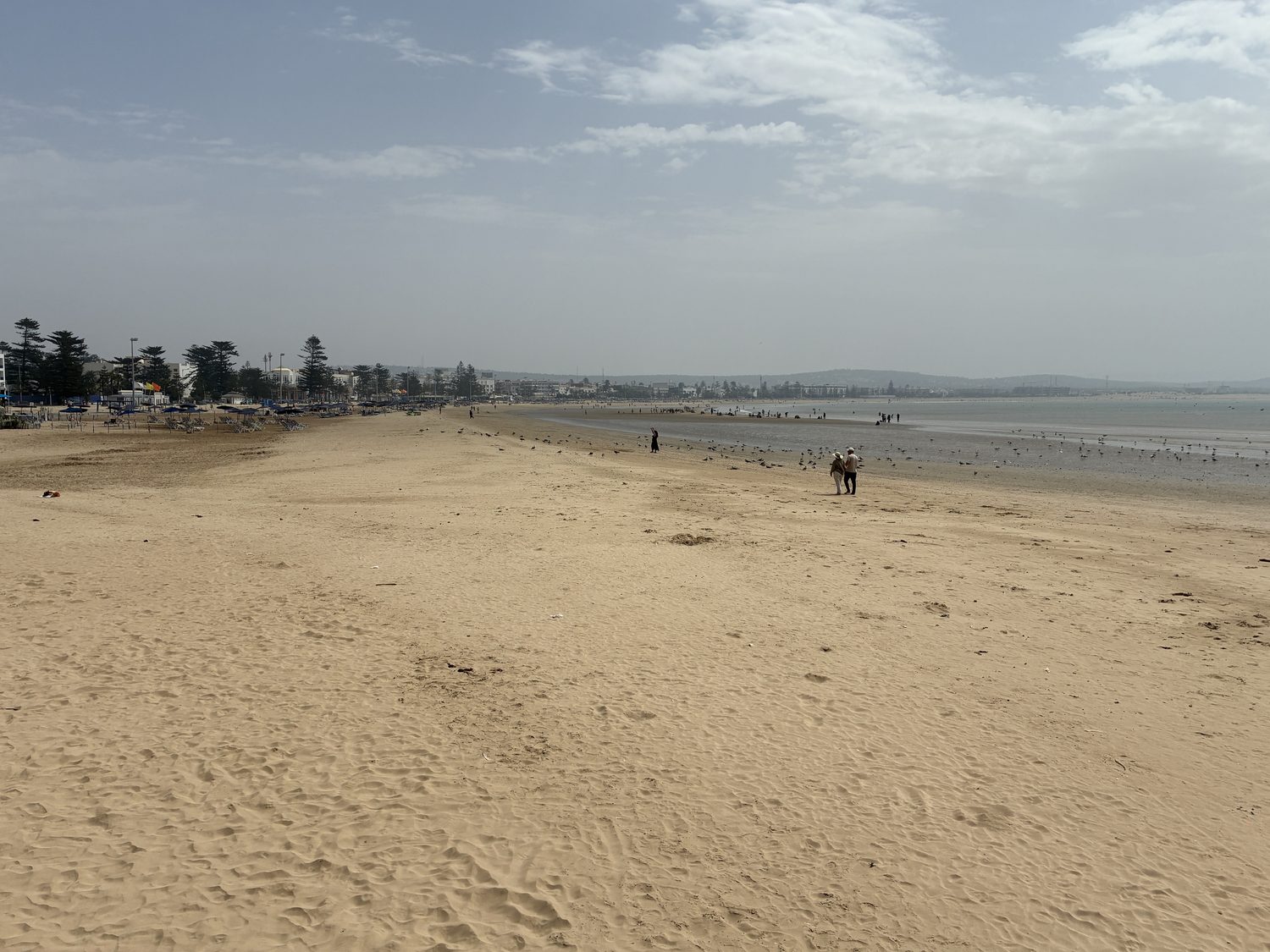
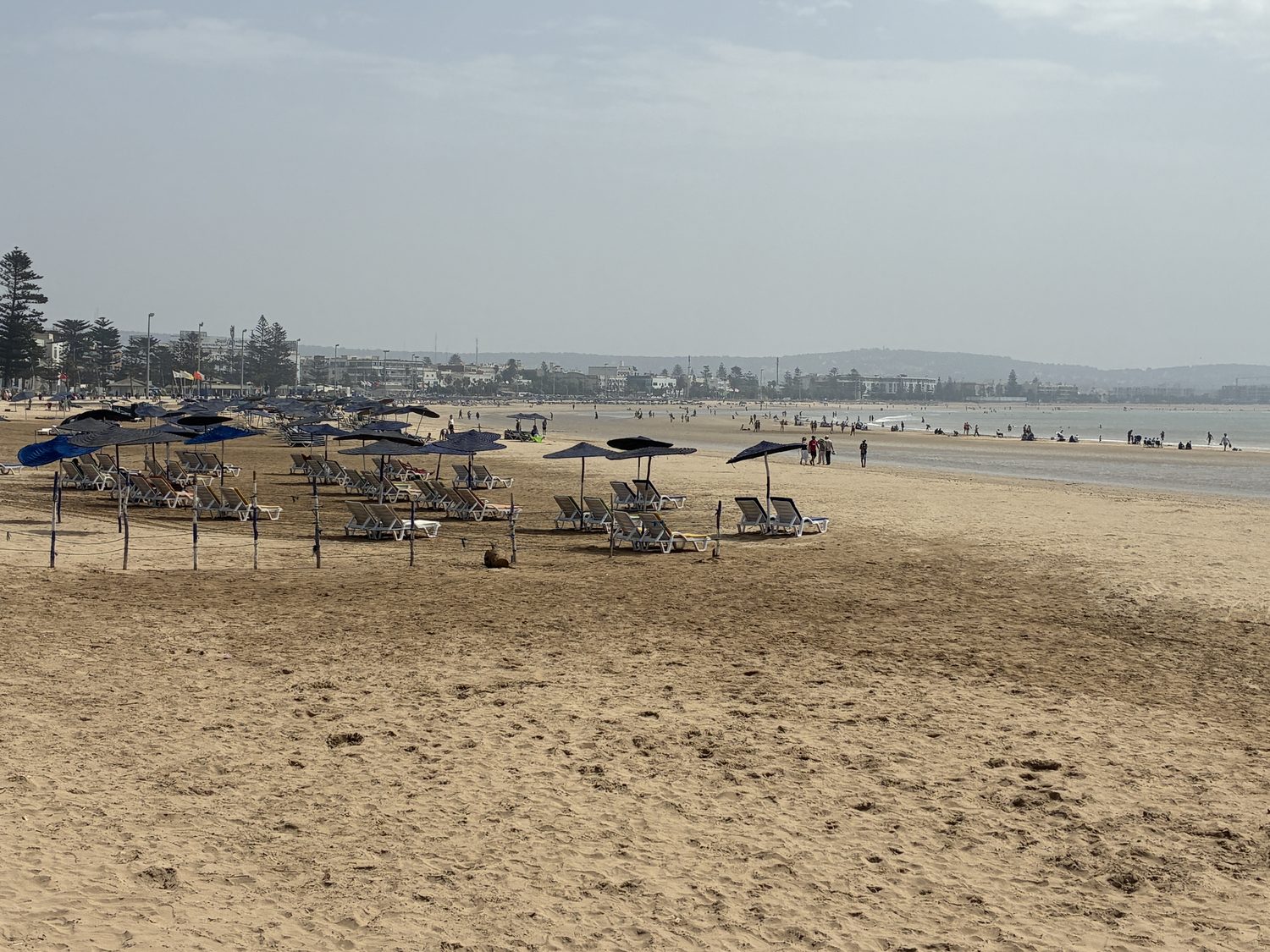
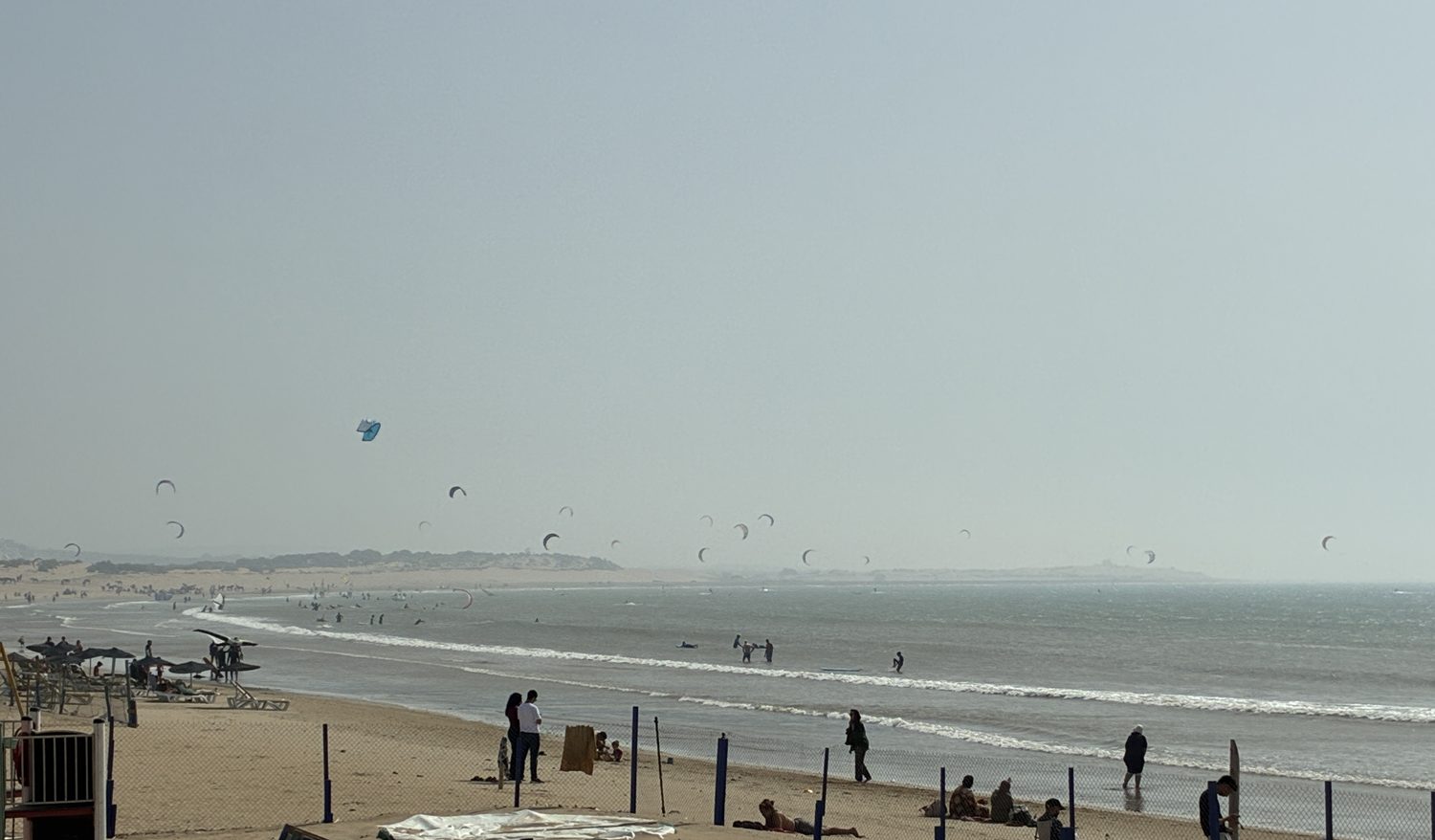
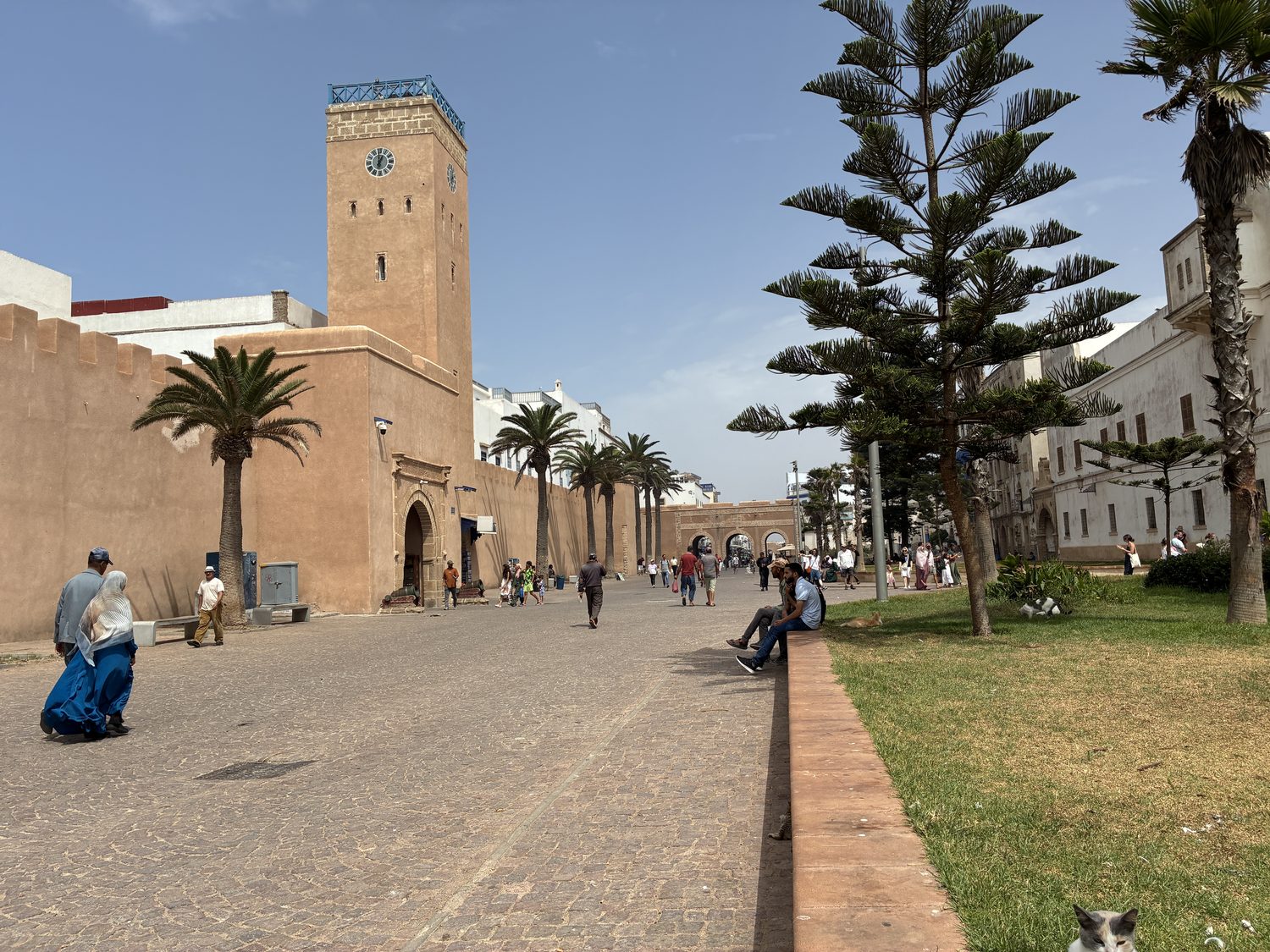
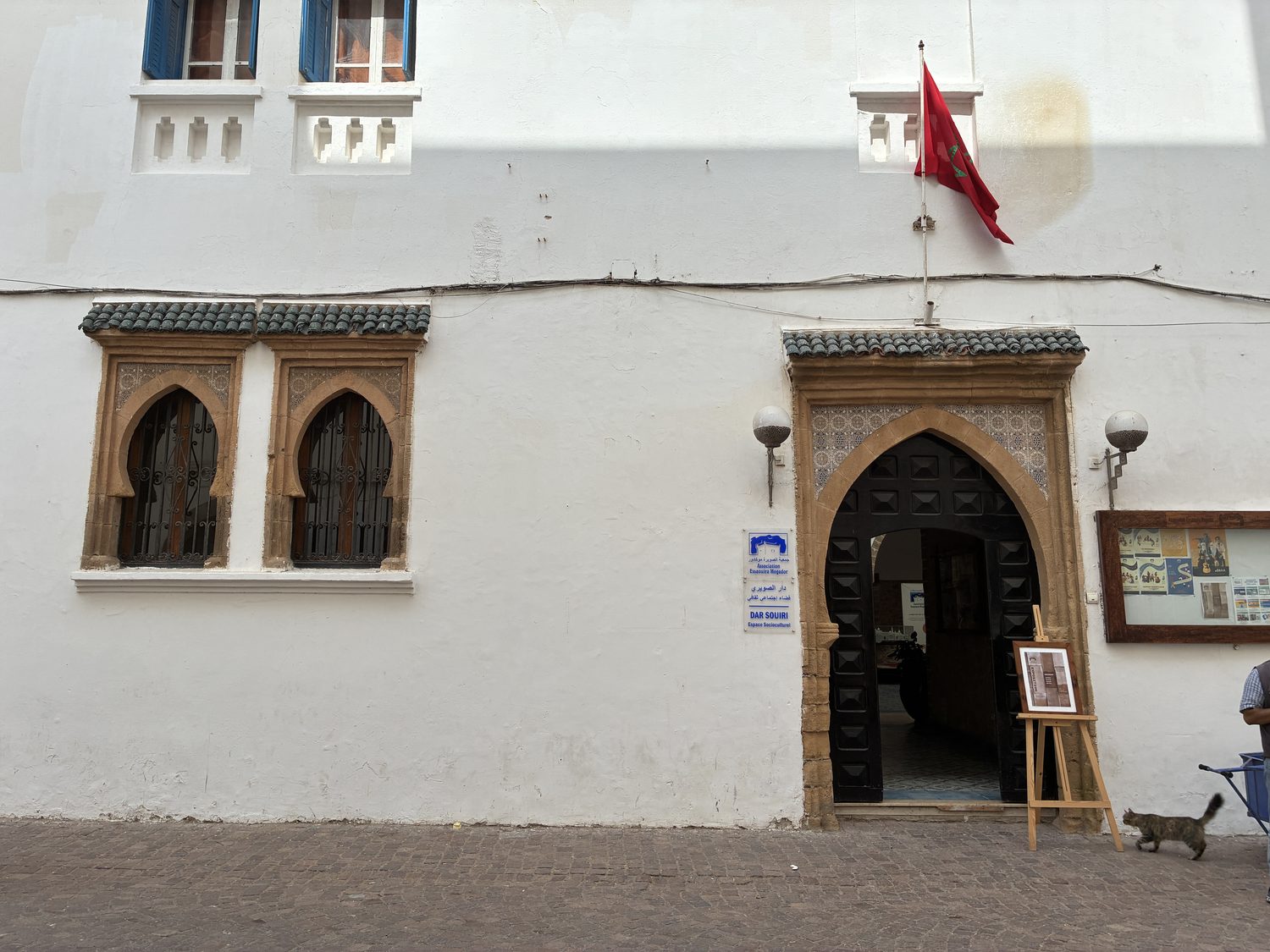
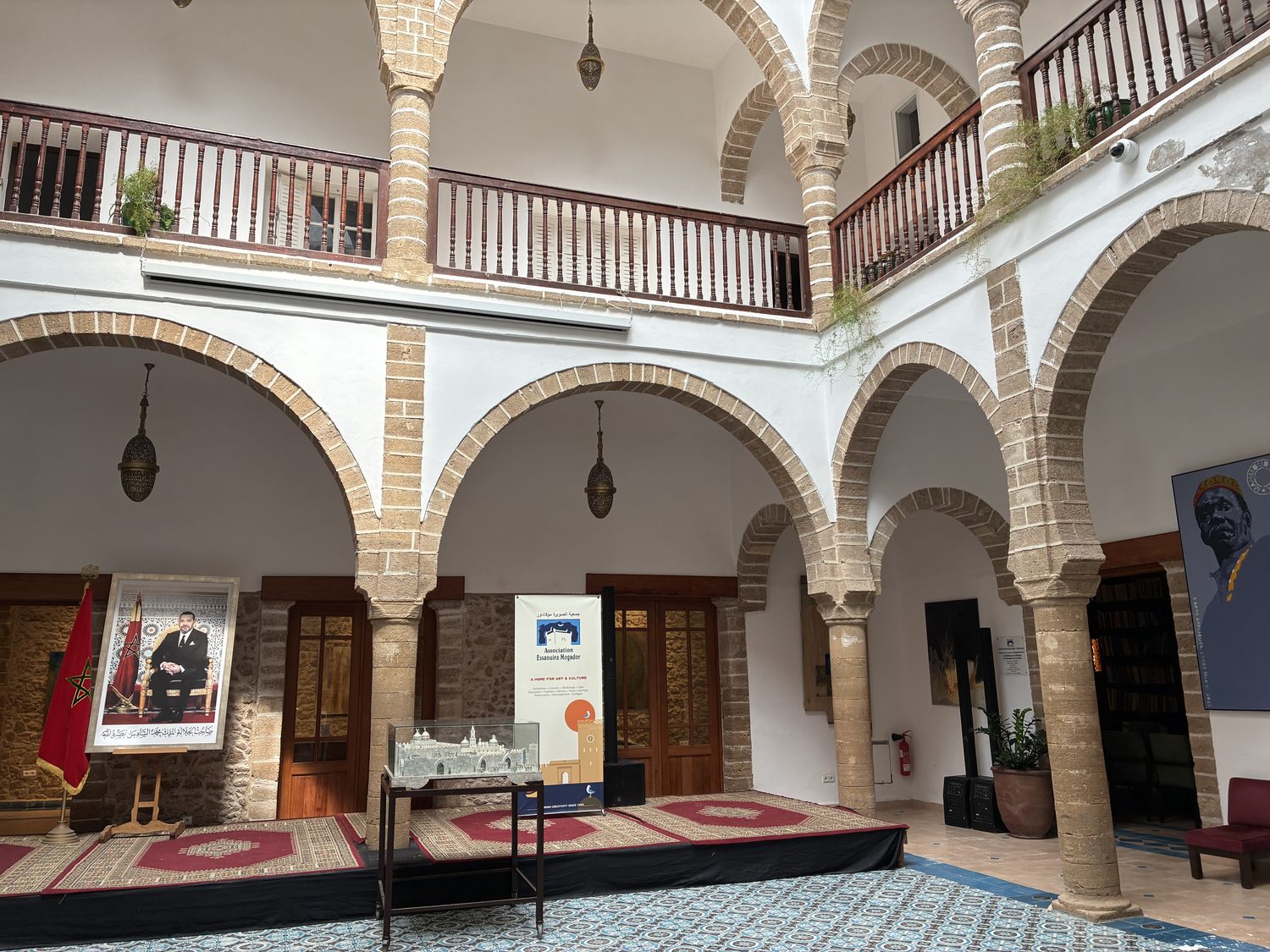
I walked back into the medina s couple of times, and had a slice of street pizza that was about as delicious as any pizza I’ve had, and just 60 cents. Then I took a final stroll outside of the old city, visiting the small pedestrian square named for Orson Welles, who filmed Othello here in the late 1940s, as well as Horloge d’Essaouira, the clock tower near the Bab Sbaa gate to the medina, and finally Dar Souiri, a cultural center focusing on the living culture of Essaouira, rather than a historical museum.
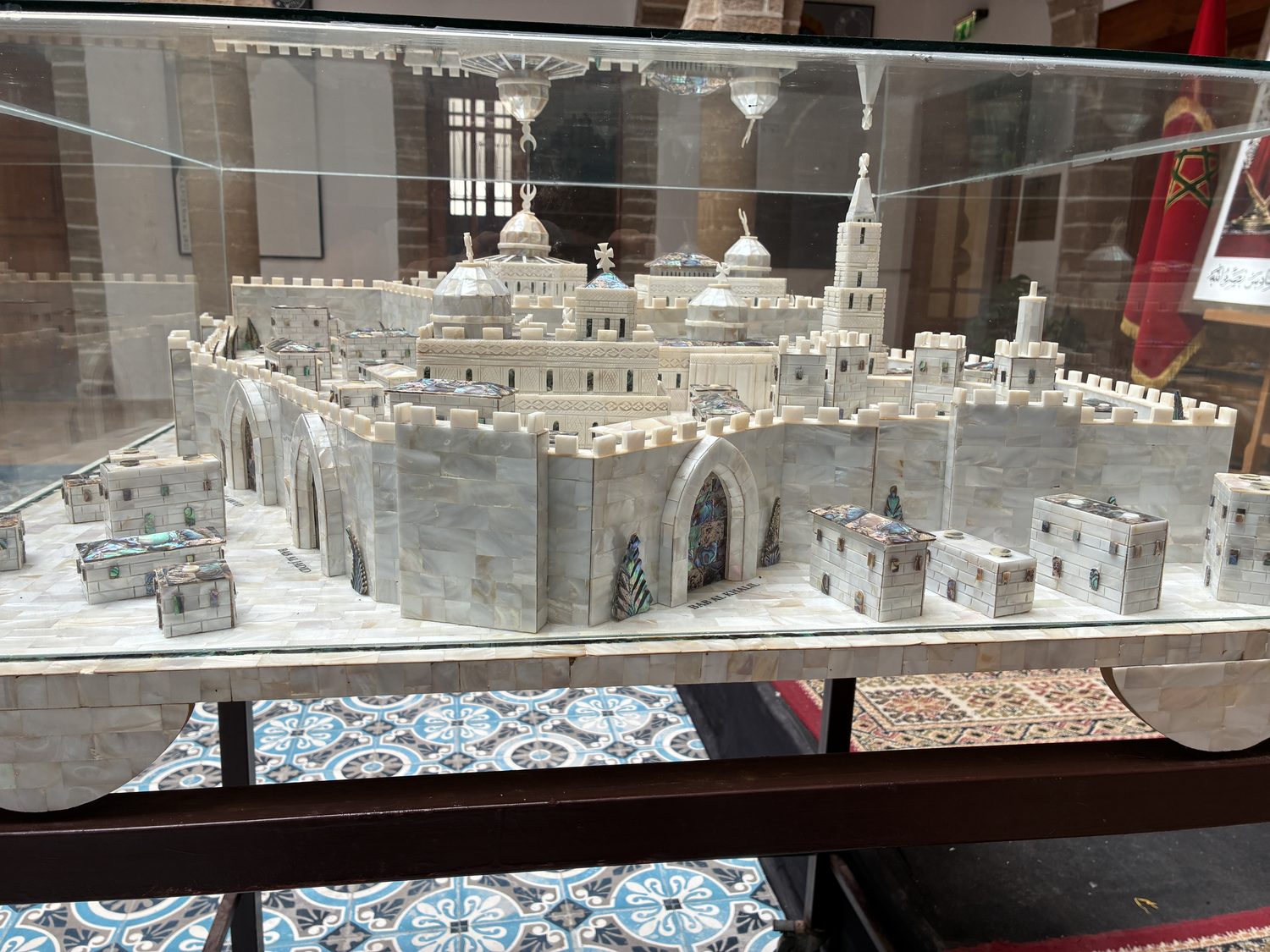
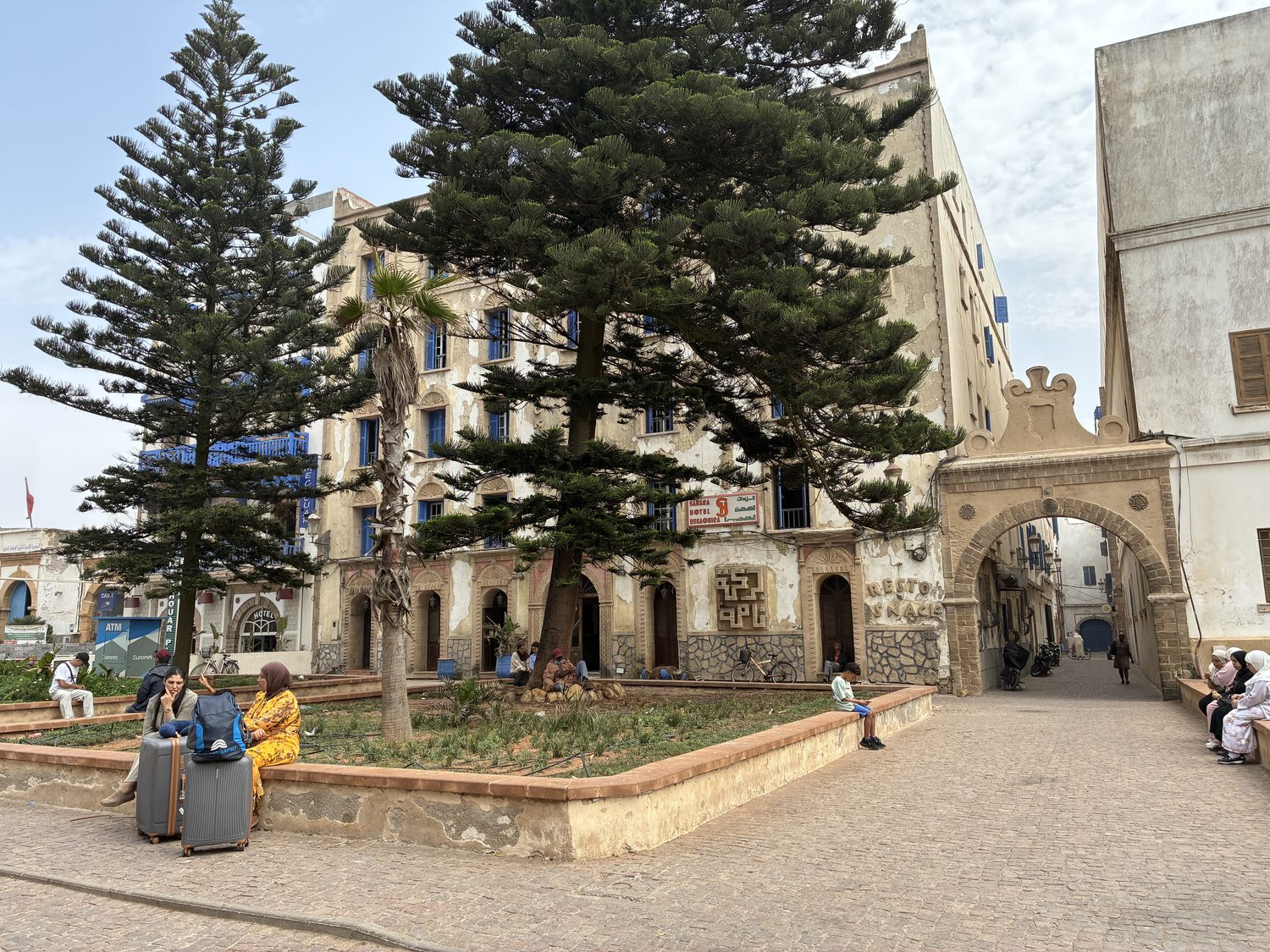
.Then it was about time to head back to the bus station, about a 20 minute walk from where I was. Even though I’d spent only a few hours here it was enough to get a feel for the town and enough for me. Unless you’re eating or drinking or shopping, or a beach goer or swimmer, there’s not a lot else to, see, or visit.
I enjoyed the town very much, but nevertheless, like many of the cities and villages I’ve visited, and not just in Morocco, despite its beauty and attractiveness, much of the town is run down, poorly maintained, and under developed. It’s just the reality, I suppose, in countries less economically developed than North America , the UK, and many of the European countries.
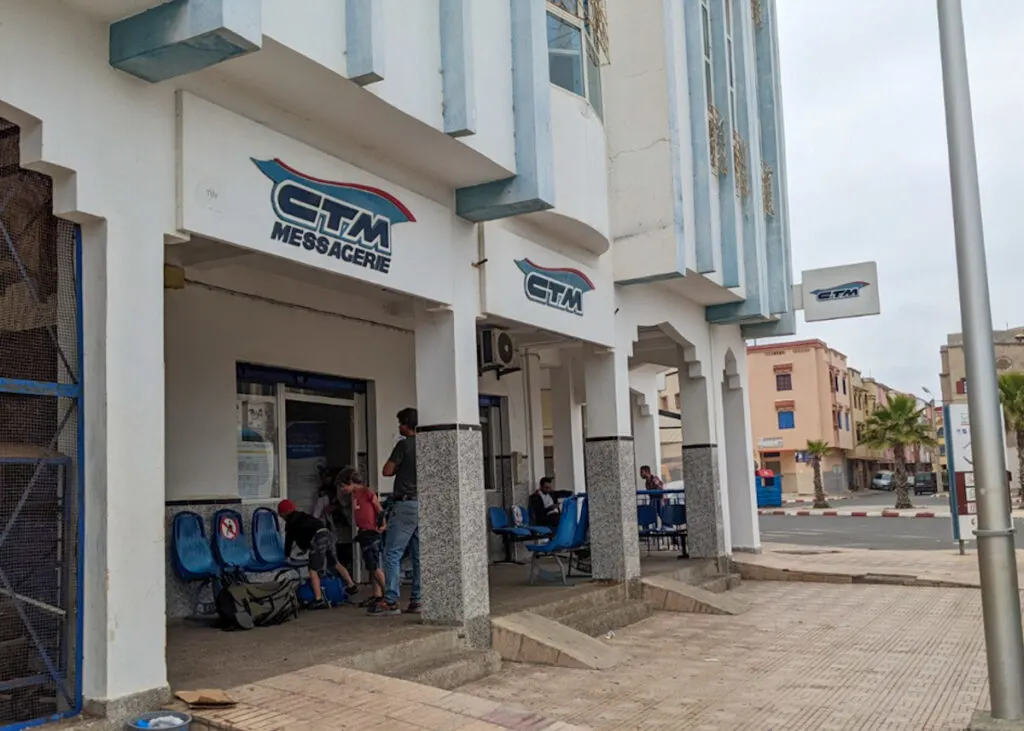
I caught the bus, which arrived in Marrakesh at 8 pm, and on my 15 minute walk back to the hotel I stopped at a decent looking restaurant where I had my final Moroccan meal of tanjia (or tangia), which is basically slow cooked Moroccan pot roast, and pretty tasty. This place actually accepted credit cards, but I’ve done well in conserving my remaining cash, as I didn’t want to make another withdrawal from the ATM, so paid in cash, and have just about enough cash left to pay for the airport bus and something at the airport tomorrow.
I’m not sure what I’ll do in the morning. I feel kind of Marrakeshed-out, but I may walk to Jemaa el-Fnaa again and take in one last look before leaving tomorrow late afternoon for London.
Dar Souir