All aboard the Marrakech Express.
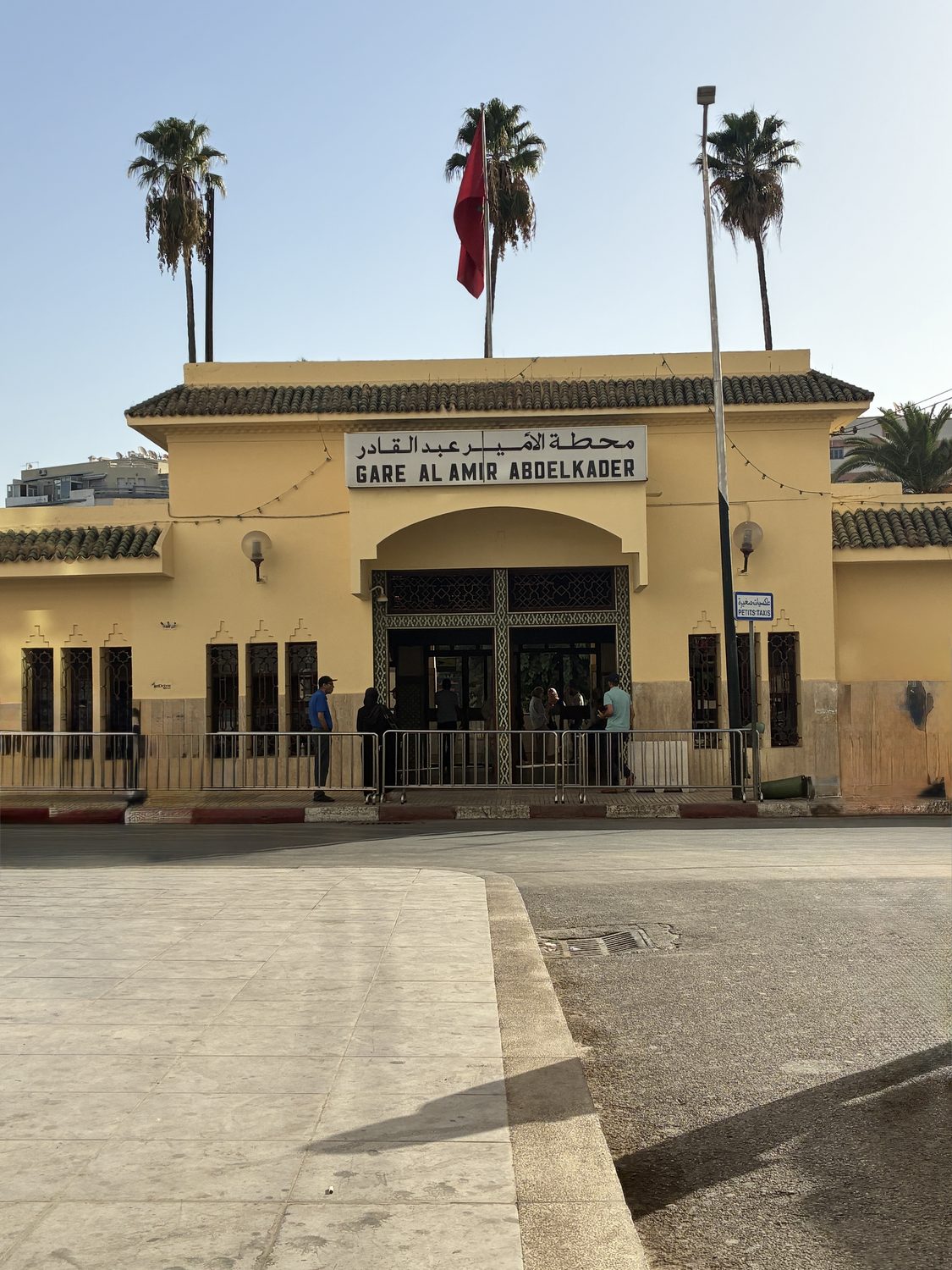
Woke up, took a shower, much needed from yesterday, and headed to the station, Gare Meknes Al Amir, the station closest to the hotel. This time the taxi cost me about eighty cents, compared to the four dollars it cost me yesterday on the way from the station to the hotel.
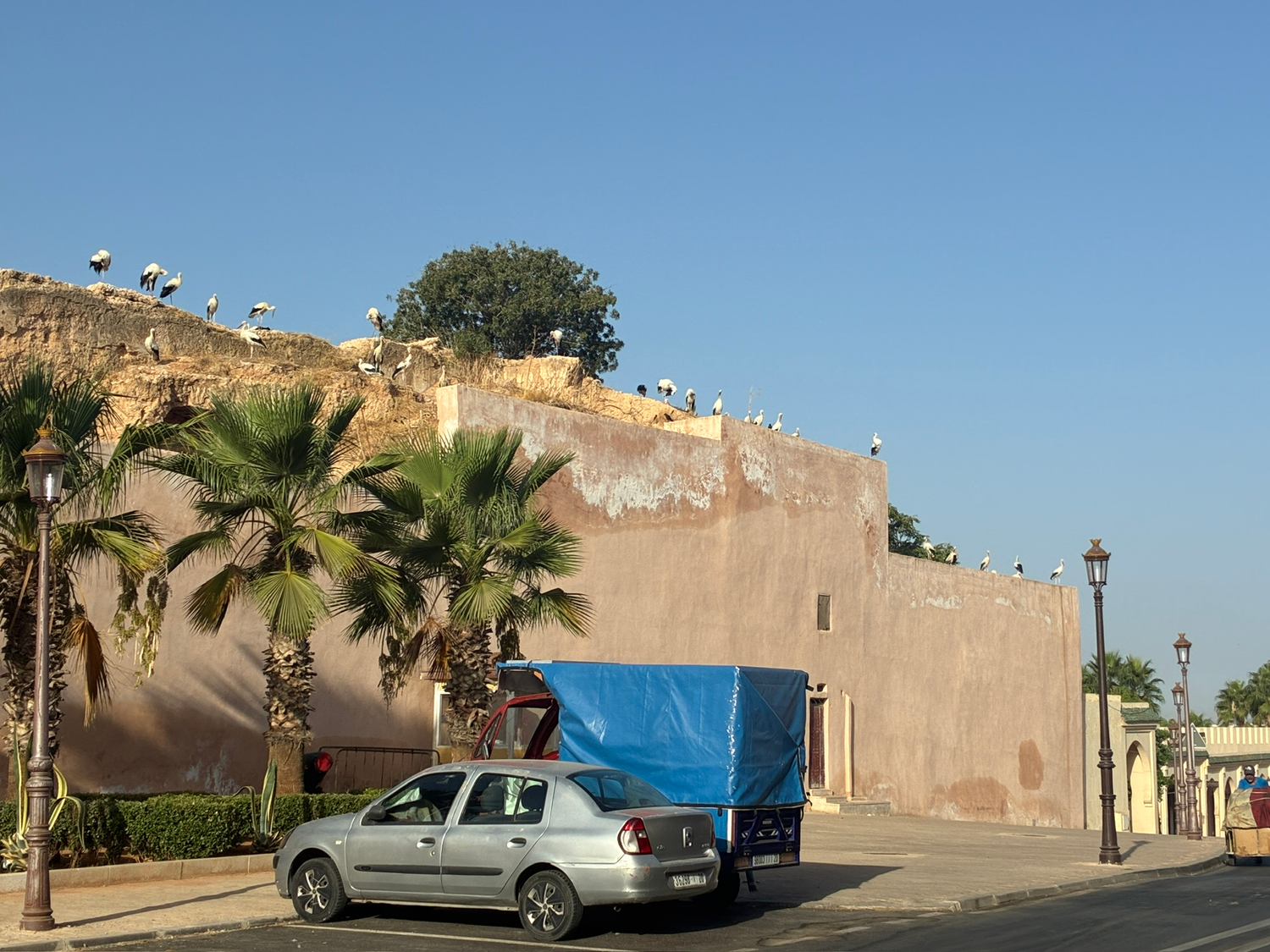
I wanted to make sure I got here early this morning for the six or seven hour journey on the Marrakesh Express (of course, it’s not actually called the Marrakesh Express, but I wish it was). And I did get here early, over an hour early, so I just sat outside the station on the pavement, in the nice morning sun, biding my time. After a while, I moved into the station cafeteria, and had a tasty flaky sweet roll and orange drink while waiting.
It’s about a 300 mile journey, passing through Rabat and Casablanca as I headed south down to Marrakesh. Even though it was against my better judgment, I booked first class, as the recommendation was that this would guarantee me a seat on an otherwise busy route. I would rather travel second class, because it seems that’s where all the action is, which was pretty much the case when I was traveling by train in Vietnam.
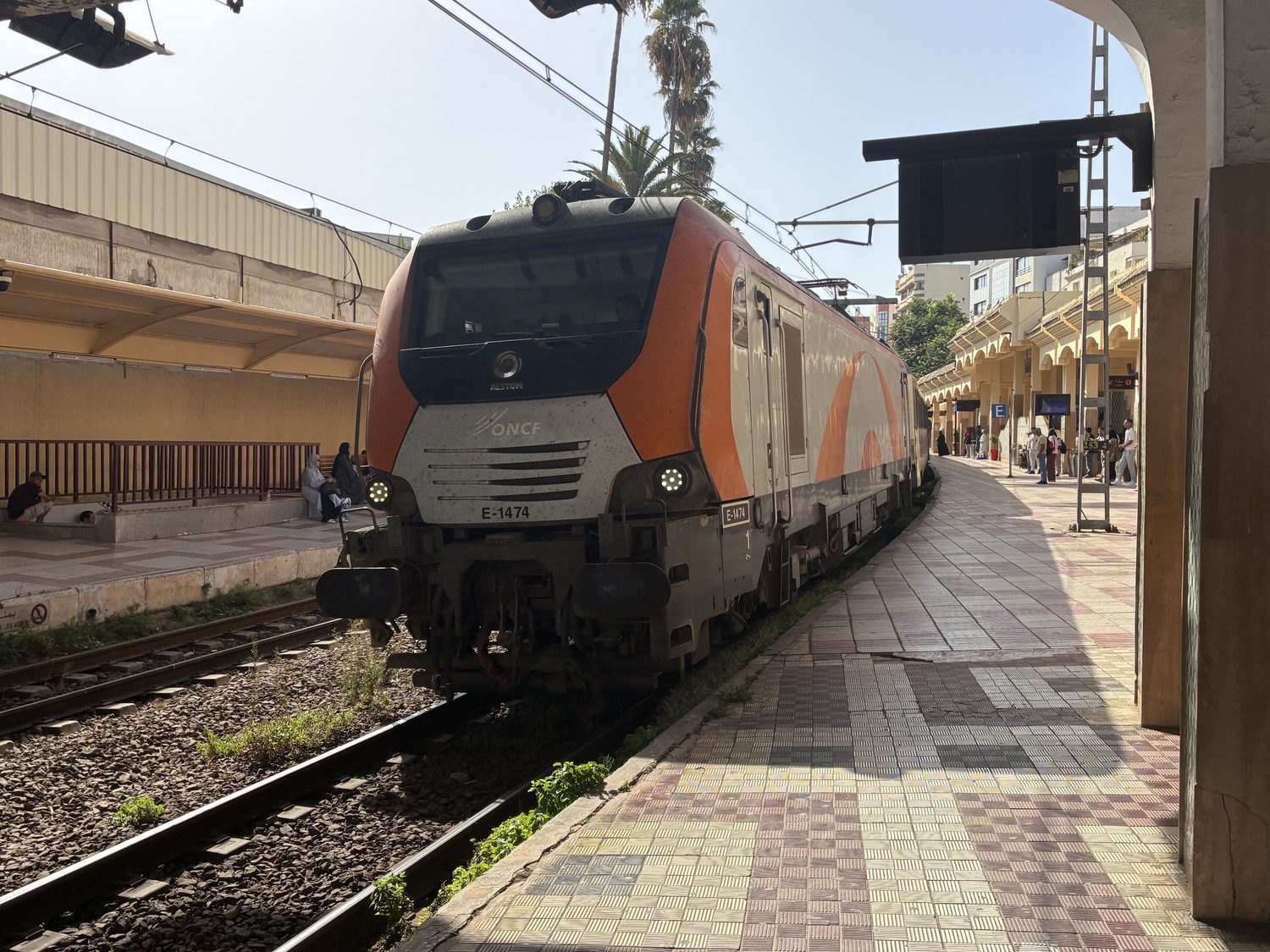
Actually, it turned out first class wasn’t what you might expect from first class, and with six of us in our compartment it seemed exactly the same as my second class trip from Fes to Meknes yesterday. In fact, I couldn’t tell the difference. Perhaps all the ducks, pigs, and chickens are in second class. In which case, that’s where I’d rather be. Interestingly, the toilets are the train are definitely not first class. You can clearly see they empty directly onto the tracks below. Now that’s the Marrakesh Express I’m talking about.
I don’t know if it was because of the song Marrakesh Express, which was released in 1969 when I was I8, or just because of my travel bug and wanting to visit far away places with strange sounding names, but this is a train journey I’ve wanted to take my entire life. And there I was, on the Marrakesh Express.
Take the train from Casablanca going south, wouldn’t you know we’re riding on the Marrakesh Express, they’re taking me to Marrakesh.
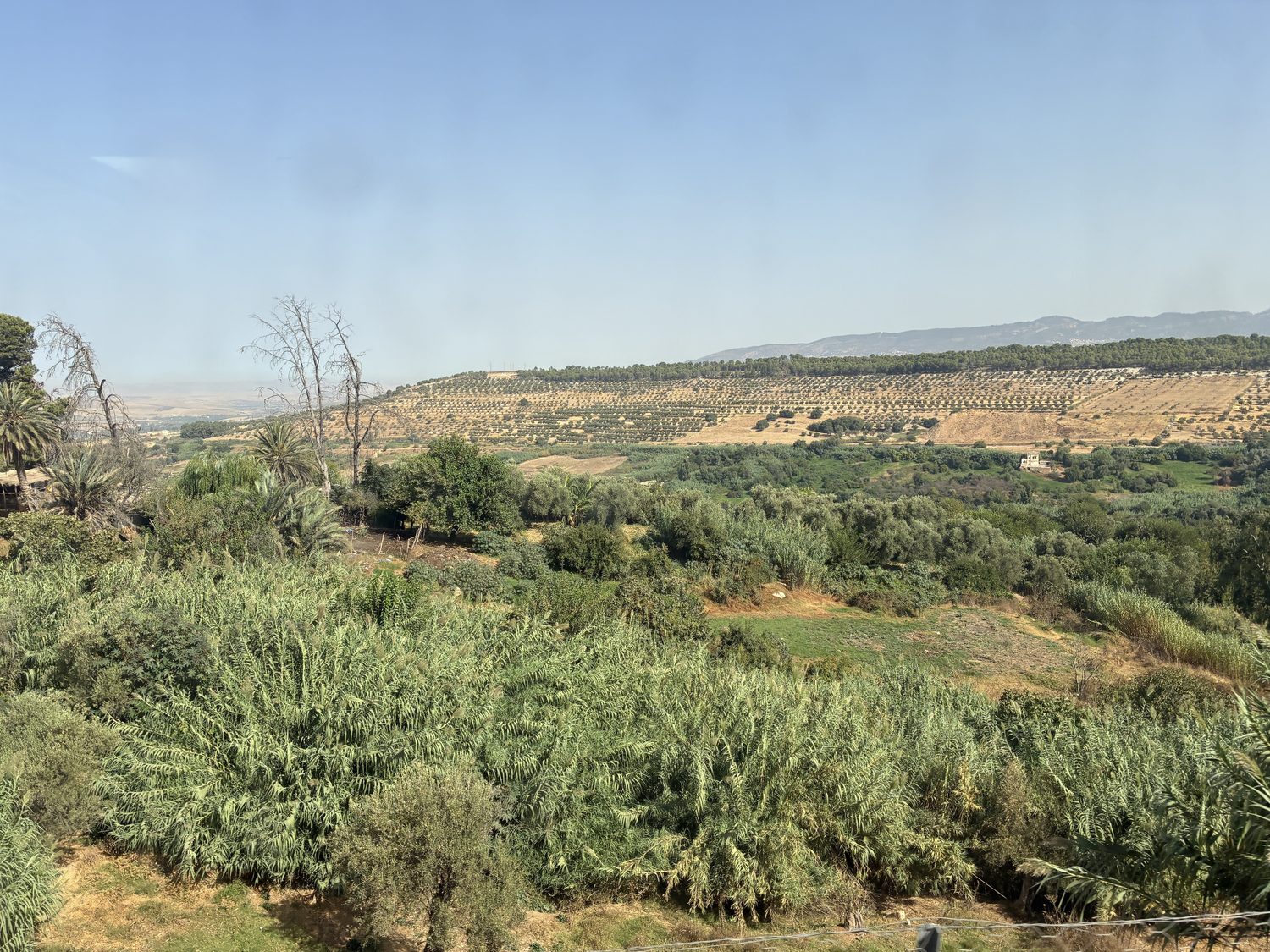
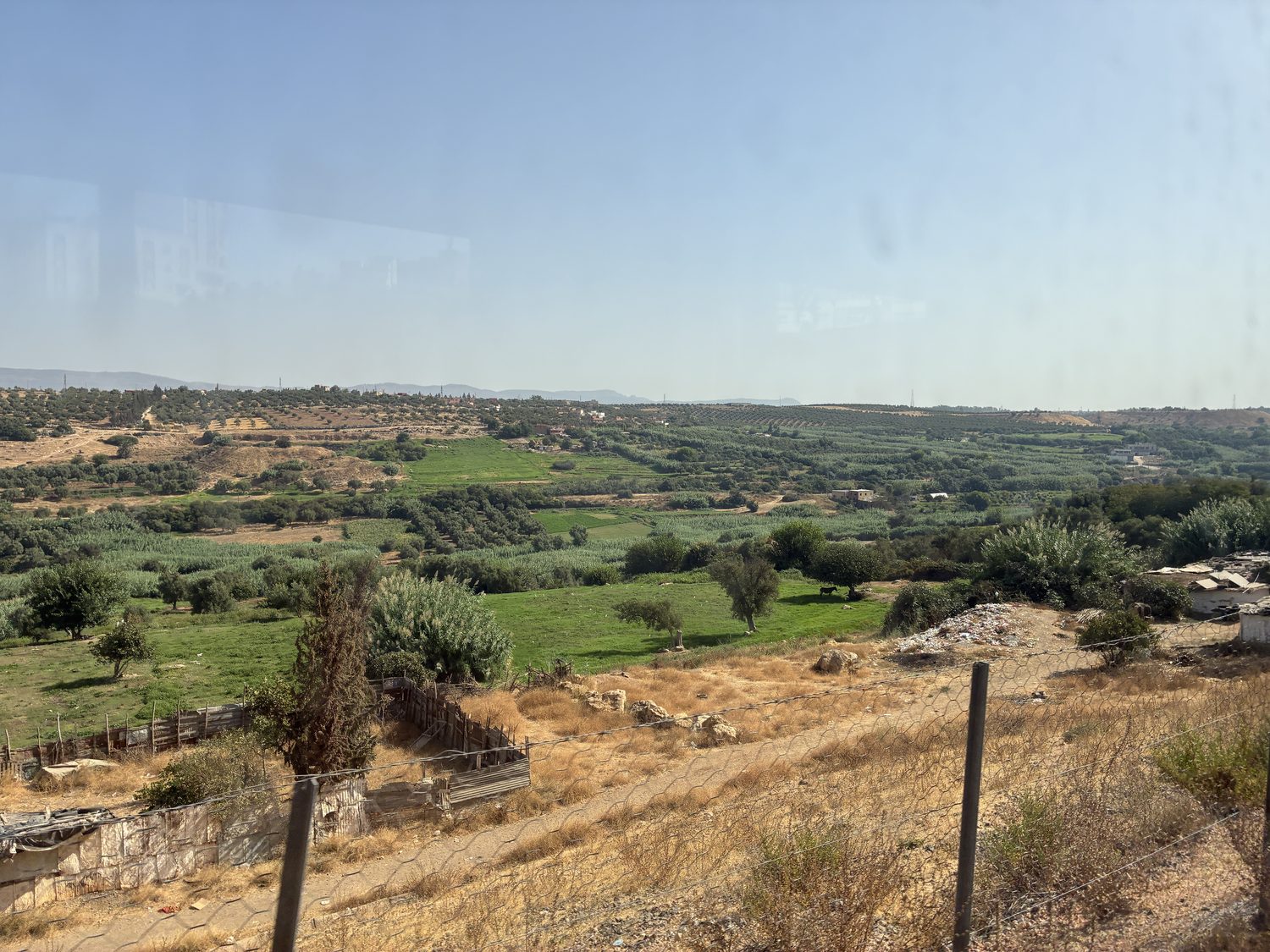
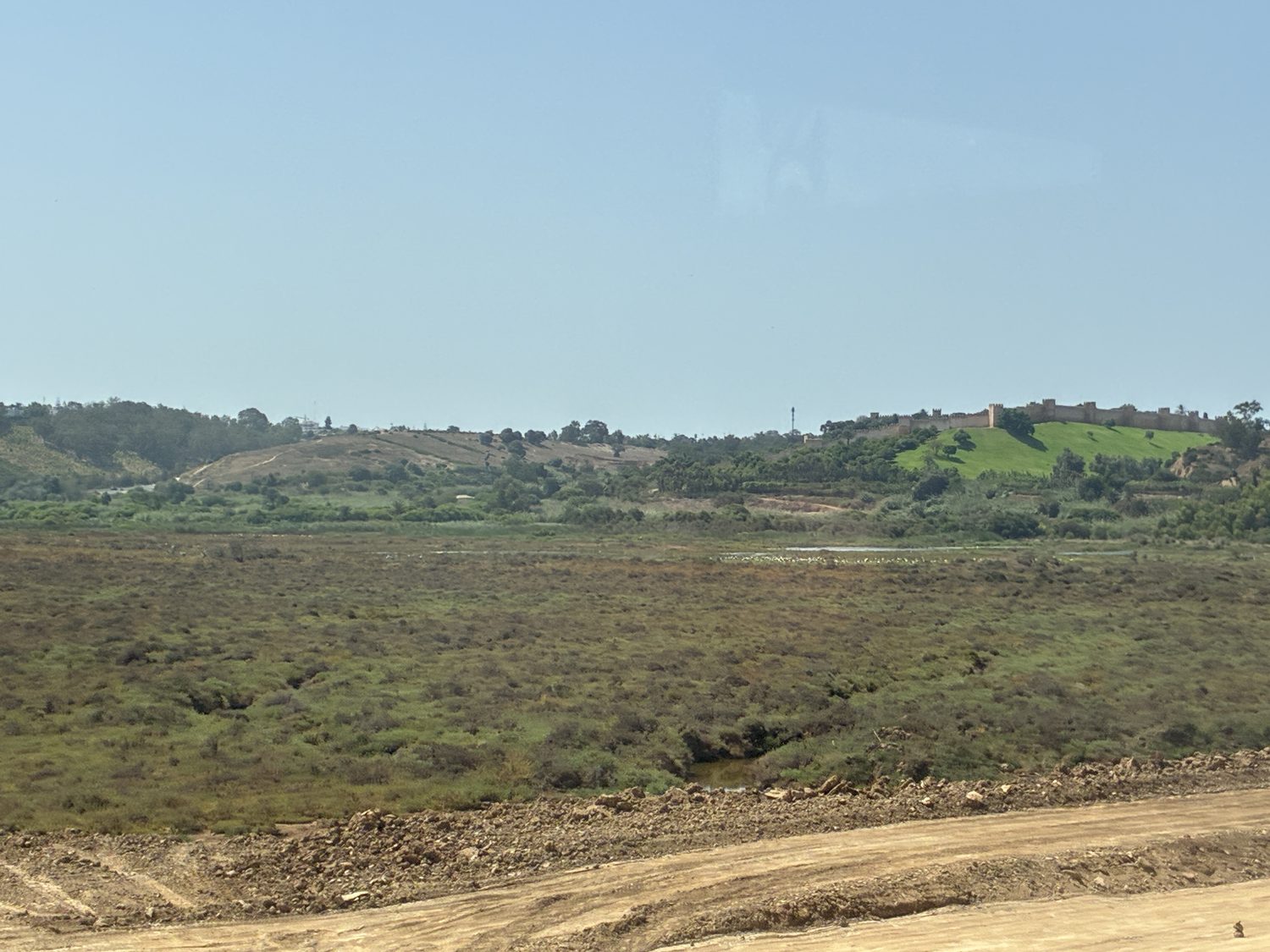
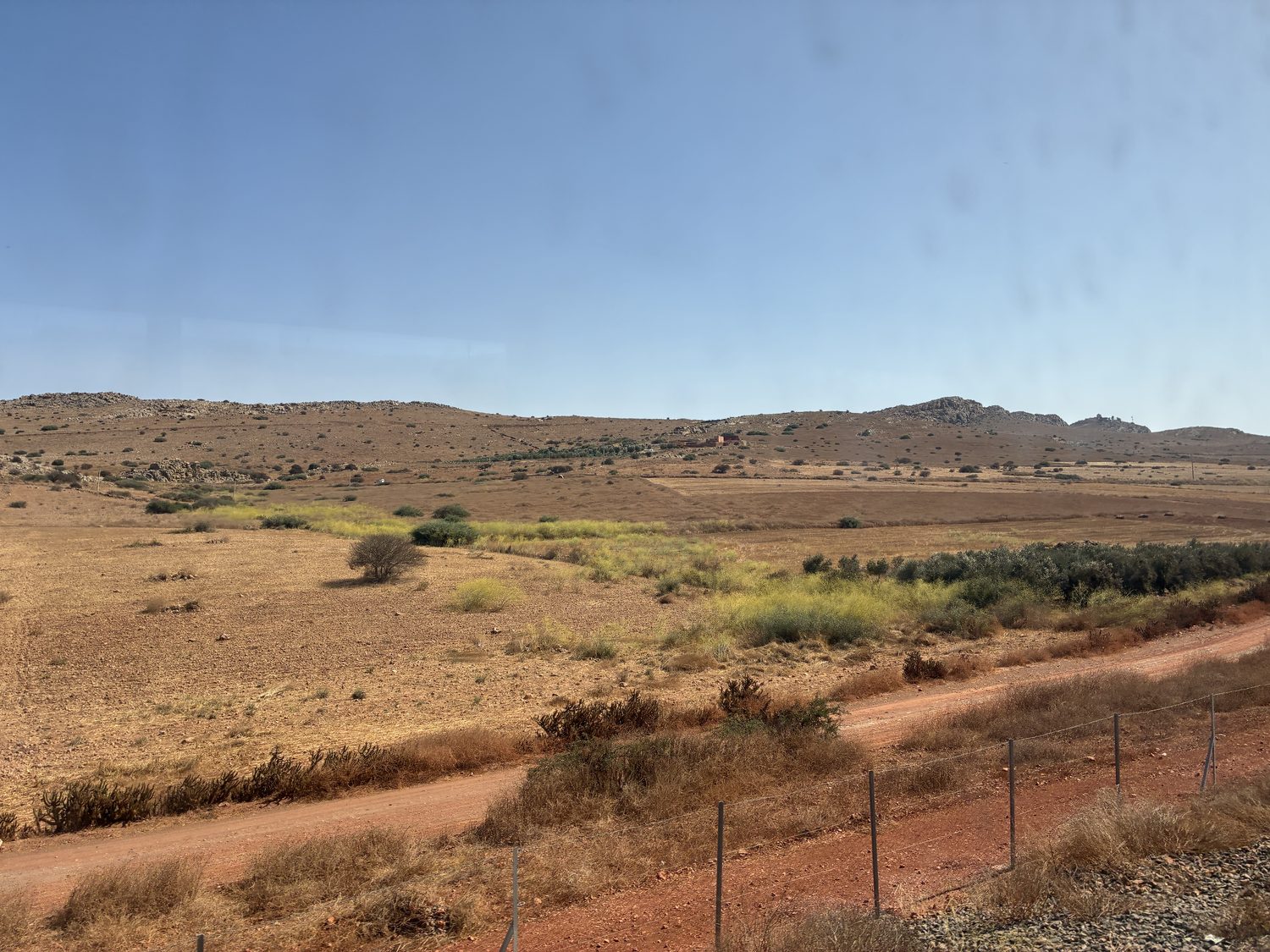
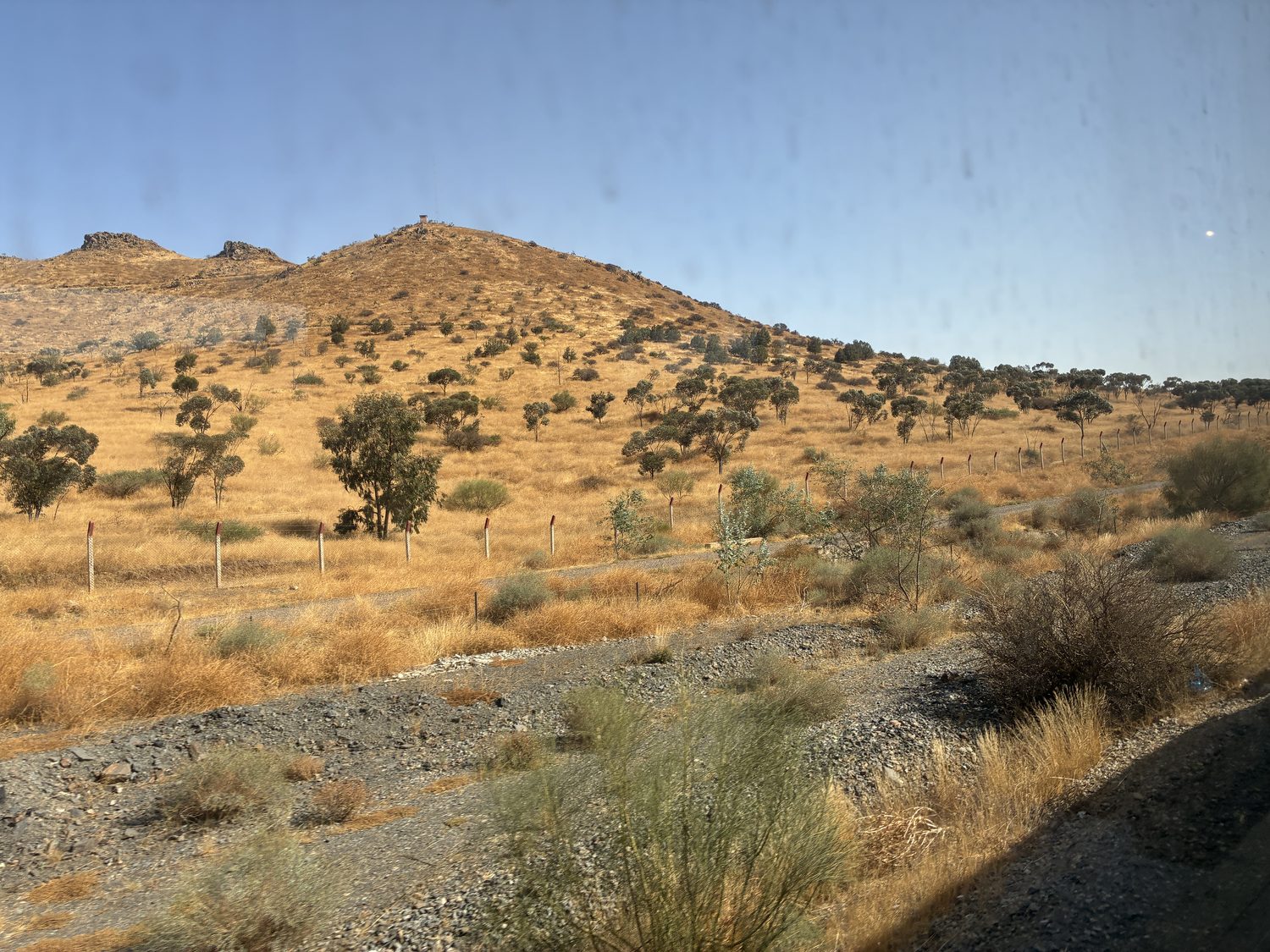
It was a long and uneventful journey with not particularly interesting landscapes along the way, although often with rich looking farmland and fields and rolling hills, as passed through a number of stations on the way, with passengers getting in and out of my carriage. The photos aren’t great as they were shot through a dirty window, but they give a sense of the countryside we were passing through as we headed south. I slept a bit, listened to music when the cellular signal was good, and read most of the way.

And then, I was in Gare de Marrakech, a large and very modern rail station, which even has a McDonalds. Like Gare de Marrakech, the area in front of the station is spacious, clean, and very contemporary, much as Rabat was, except Marrakesh is twice the size.
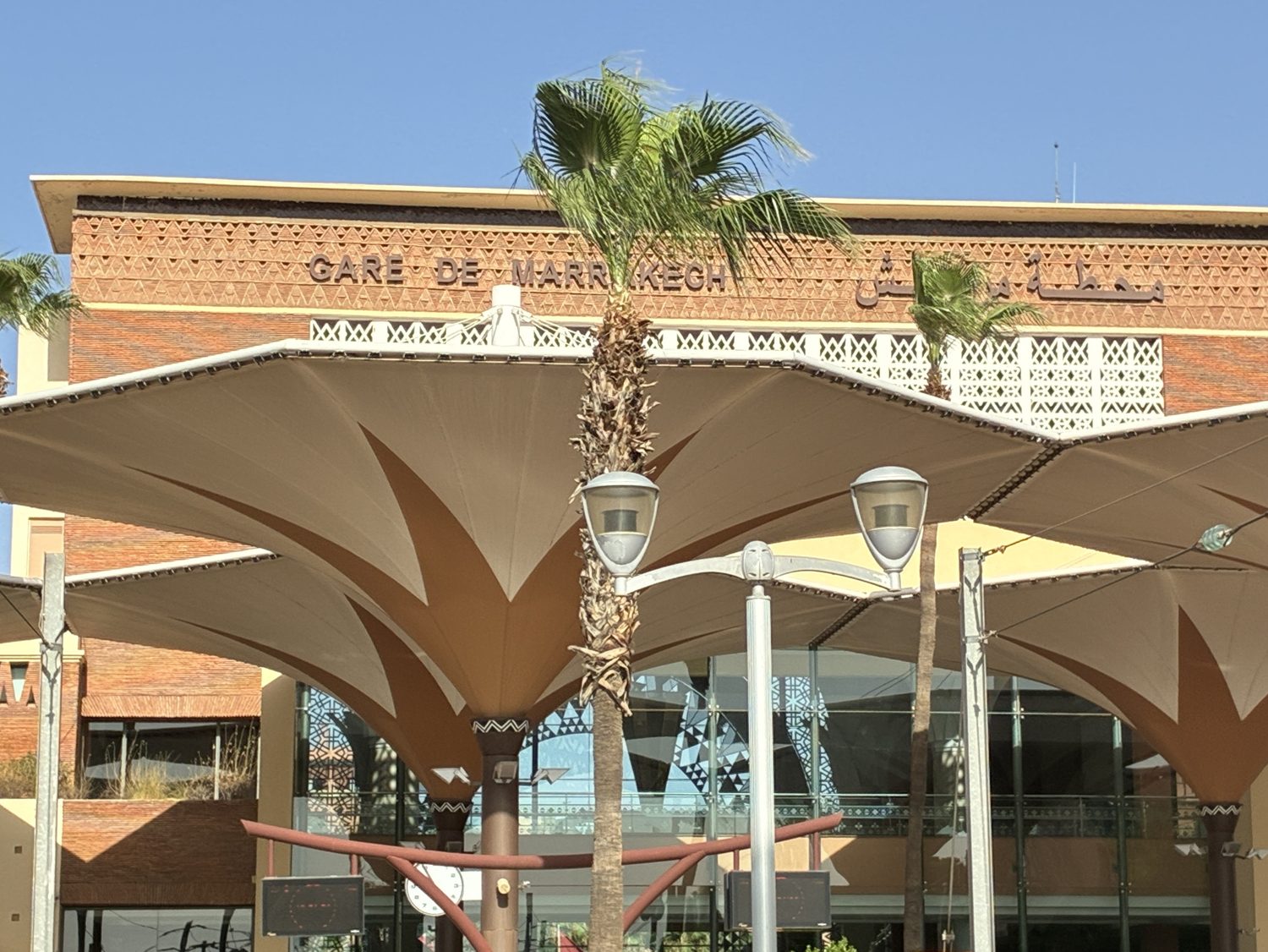
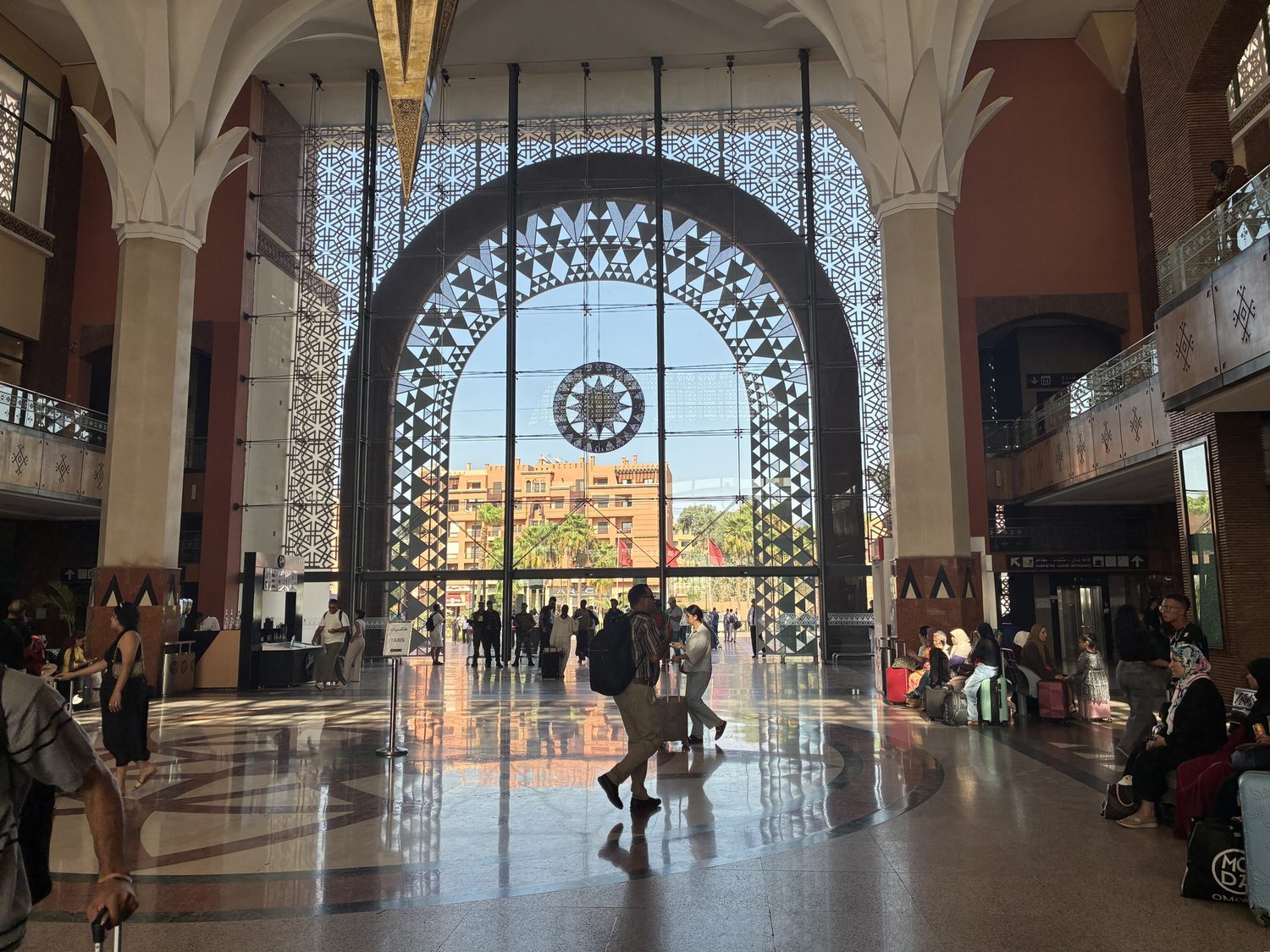
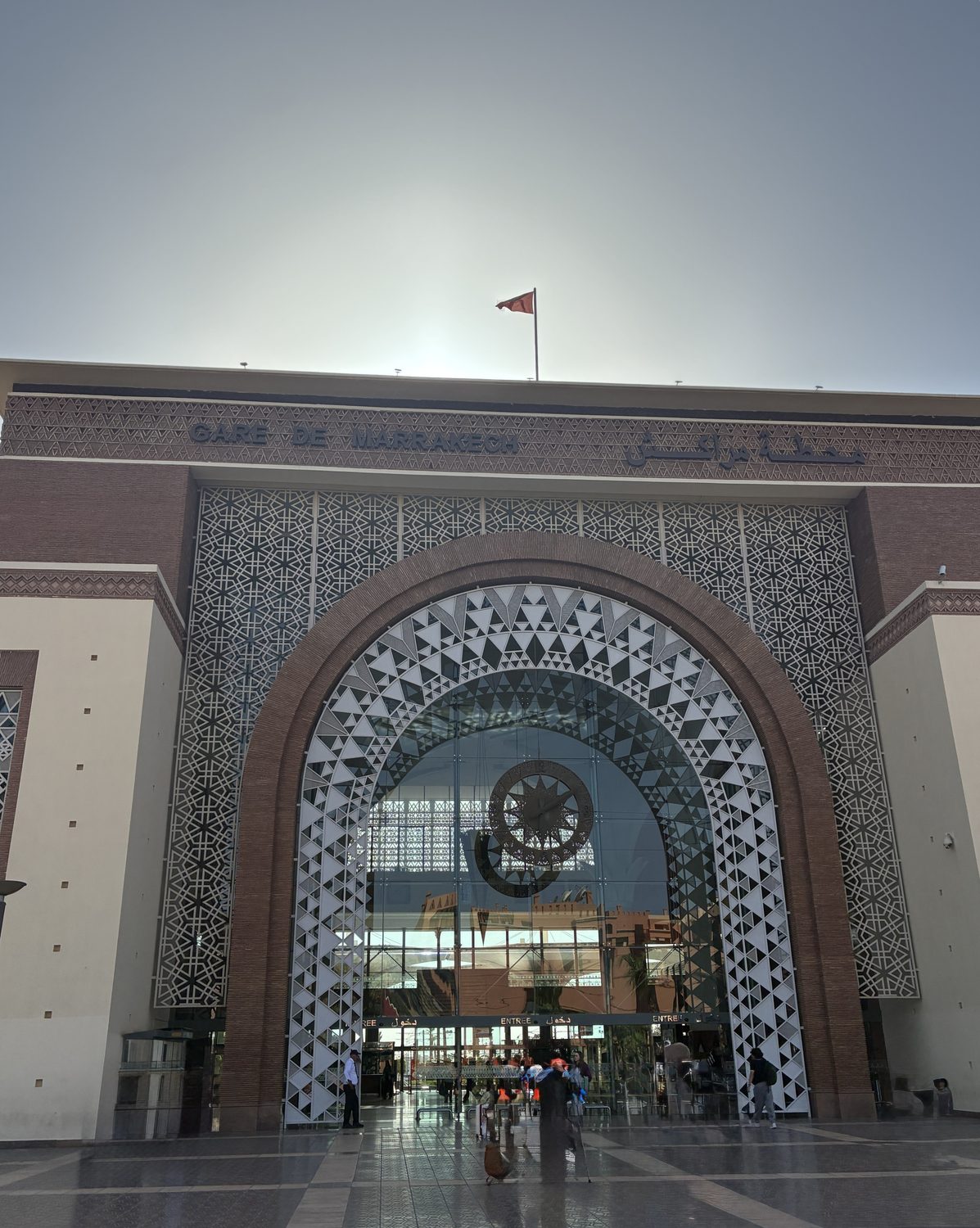
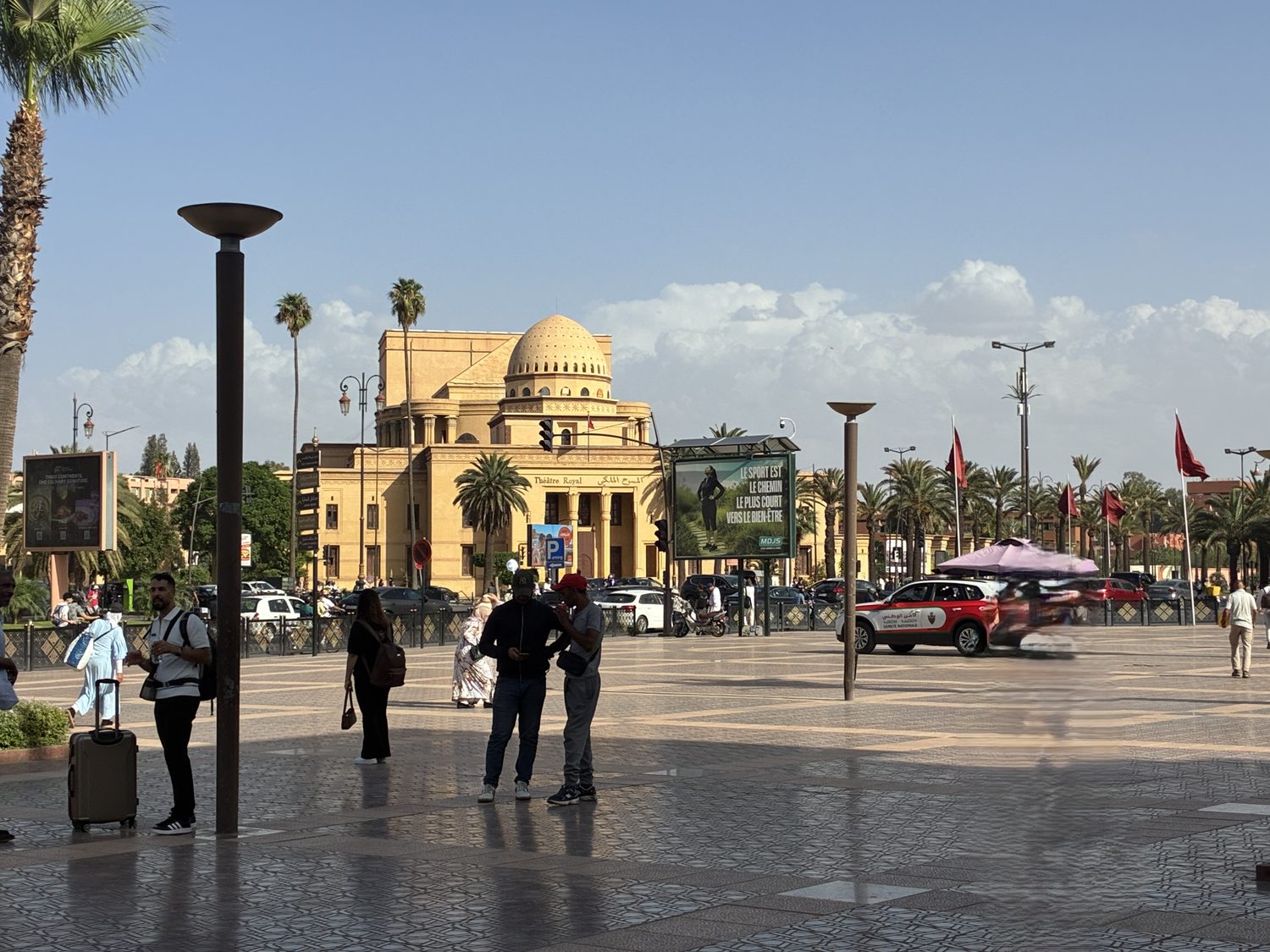
I went to the well-marked and very large taxi area, and was quickly approached by a driver. Although I hate haggling, I also didn’t want to be taken advantage of. From what I could tell, 40 dirham was the outside I should pay, about $4. The first guy wanted 100 dirham, but willing to go to 80. The second started at 80, as did the third. The fourth wanted 50, which is about a dollar more than what I should have paid at the outside, but rather than piss around for the next 30 minutes trying to save a buck or two, I took the cab, and ten minutes later we were at Jemaa el-Fnaa, on the edge of the medina, near where my hotel, Riad Andalla, is located.
On the way, I notice how modern, spacious, and clean the city is, or at least the central area of the city, and I was struck by how different it is to Casablanca and Fes. Of course, my view of Fes was almost entirely limited to the old medina and surrounding areas, and I only got to see a little of the larger city outside of the medina. Still, Marrakesh is very different, and immediately struck me as a thoroughly modern and fresh city, at least in its moderately large central area.
On the way to Jemaa el-Fnaa. we did leave that central area, driving through what I thought might actually be the medina, a fairly run down older part of the city with narrow cobblestone streets and crowded with people, utility vehicles, motorcycles, and bicycles everywhere, a part of the city more in line with the stereotype of what you might imagine a Moroccan city to be like, and not so different than parts of Mexico City or Hanoi. Regardless of how crowded and narrow those streets were, the cab driver was zipping through them, and serpentining around people, motorcycles, and bicycles like a hot knife through butter. It actually wasn’t the medina, but clearly an older and far more impoverished part of the city, which we left again as we re-entered the more modern and affluent city before reaching Place des Ferblantiers, which in turn is at the edge of the medina and Jemaa el-Fnaa square.
Interestingly, the driver was commenting about how hot it was, around 97 degrees at 5 pm, and that made me think this is unusually hot, even for Morocco. Somehow, I think because of my shorts, tank top, and sandals, even with the humidity, and even when carrying my backpack, I wasn’t feeling it and was don’t mind the heat. I kinda like it.
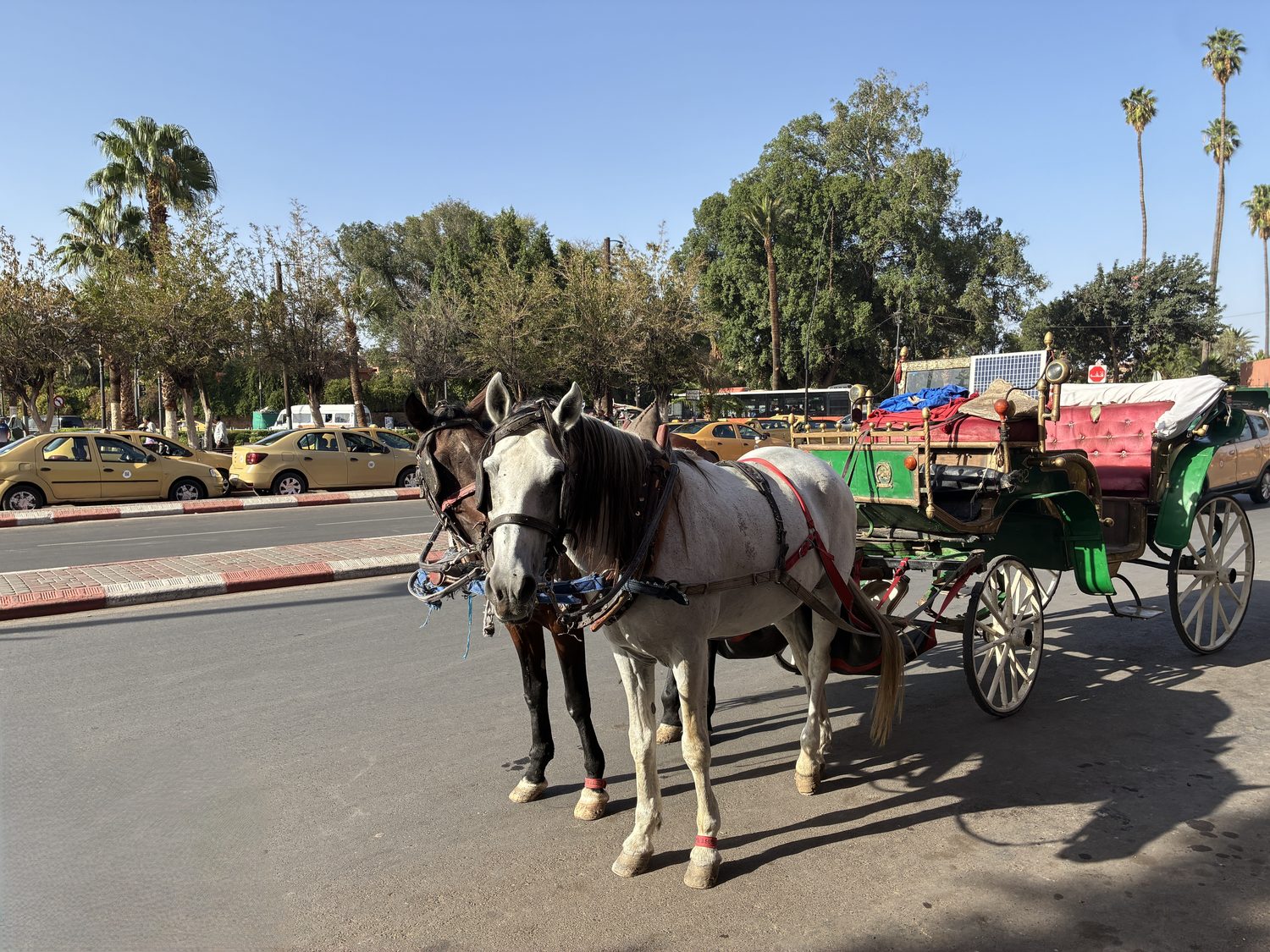
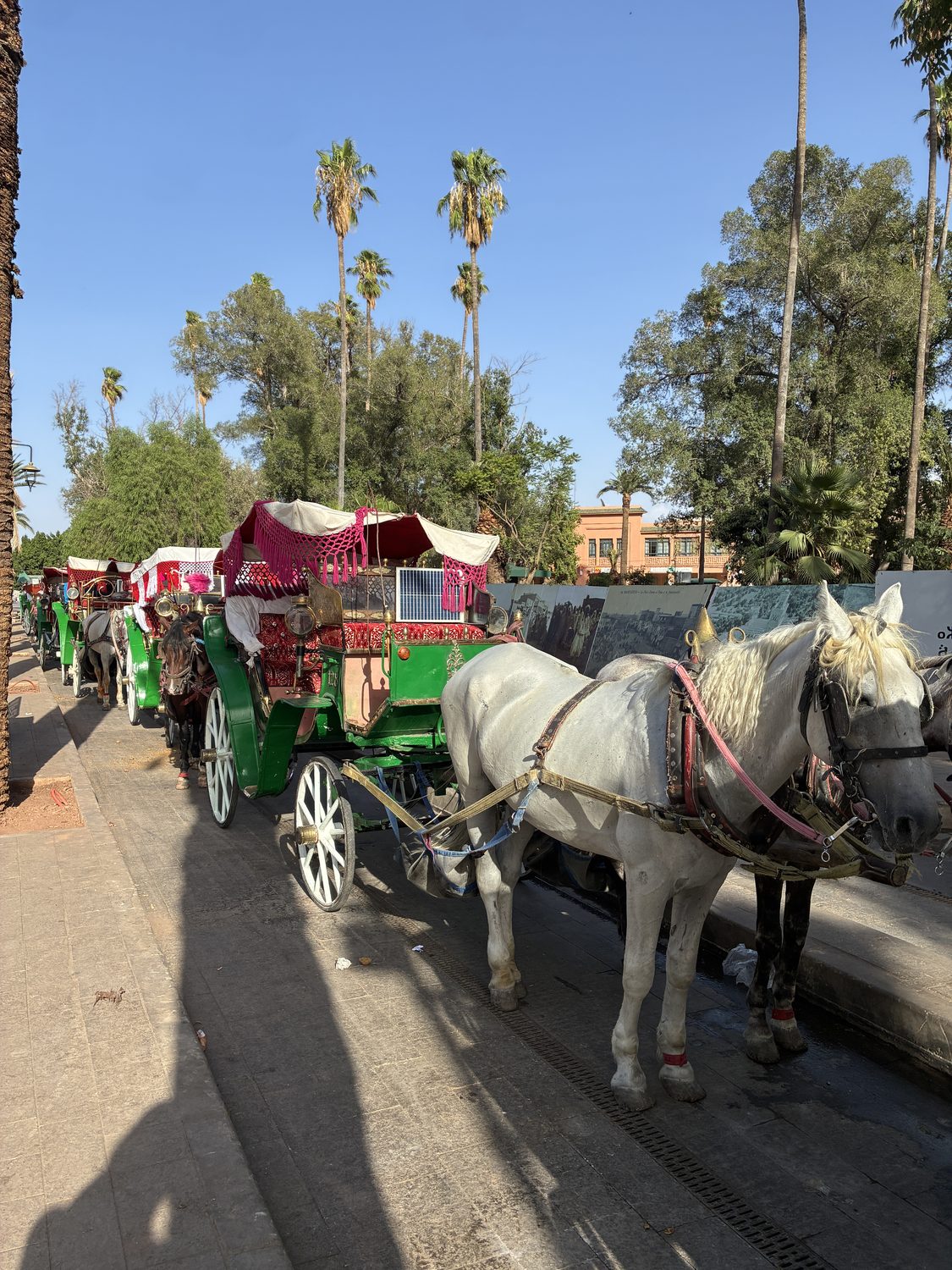
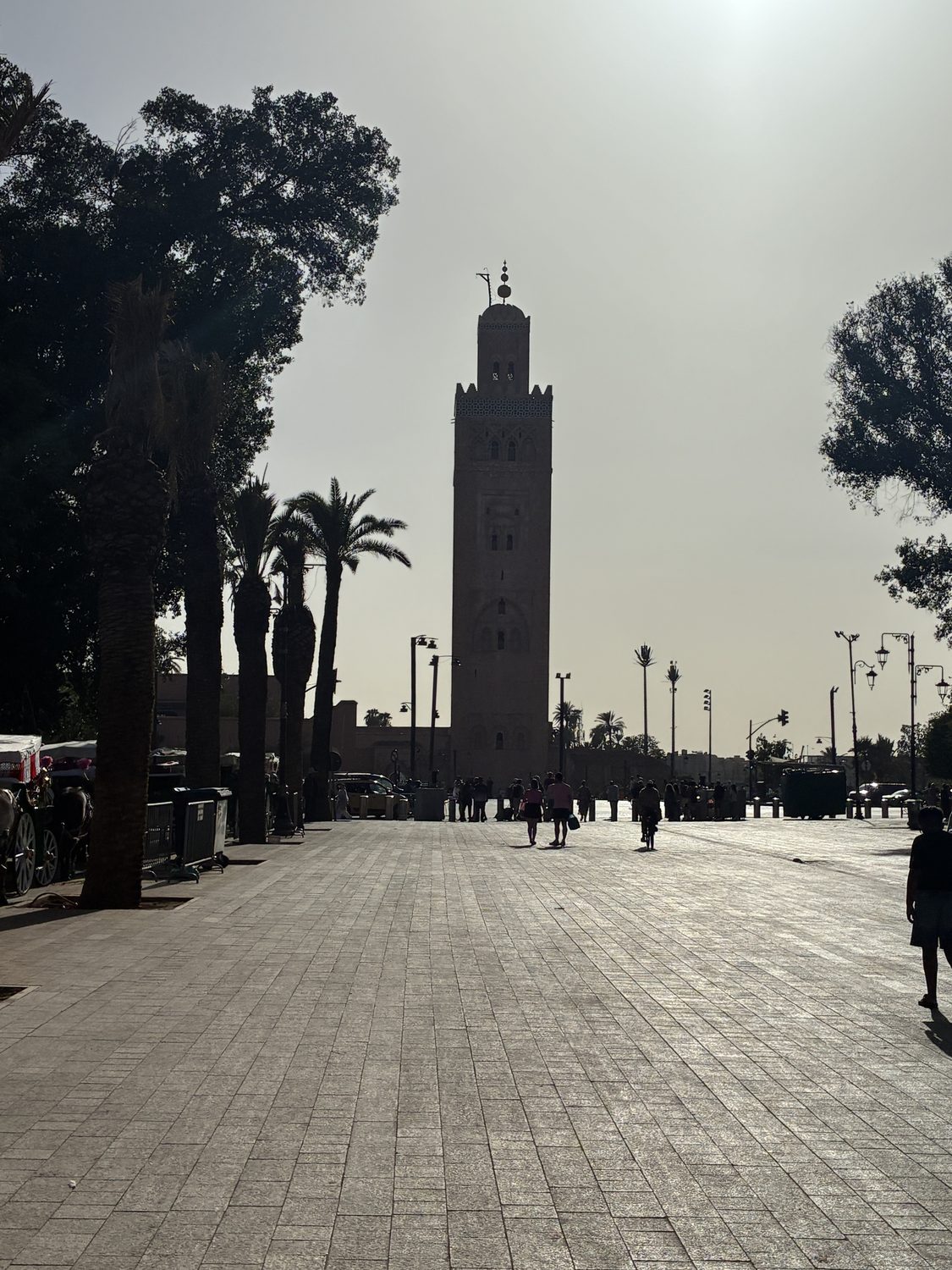
I got dropped by the cab at Place des Ferblantiers, clearly a popular visitor area with lots of horse drawn carriages lined up like taxis waiting to whisk us away. From there, I walked maybe five minutes along Rue Riad Zitoun el-Kedim, an uncrowded pedestrian plaza, Koutoubia Mosque in the distance behind me and at the other end, a few hundred yards away, Jemaa el-Fnaa square, and the many pinkish/light sandstone colored walls and buildings flanking and behind the square, which is why Marrakesh is sometimes called the Red City, and I could see why as I entered the square and the medina.

Jemaa el-Fnaa is an enormous paved pedestrian square at the heart of the medina, and has been at the center of public life here for centuries, dating back to the founding of the city around 1070. The name is usually translated as “Assembly of the Dead,” as it’s possible this was the site of medieval executions or public displays of the dead.
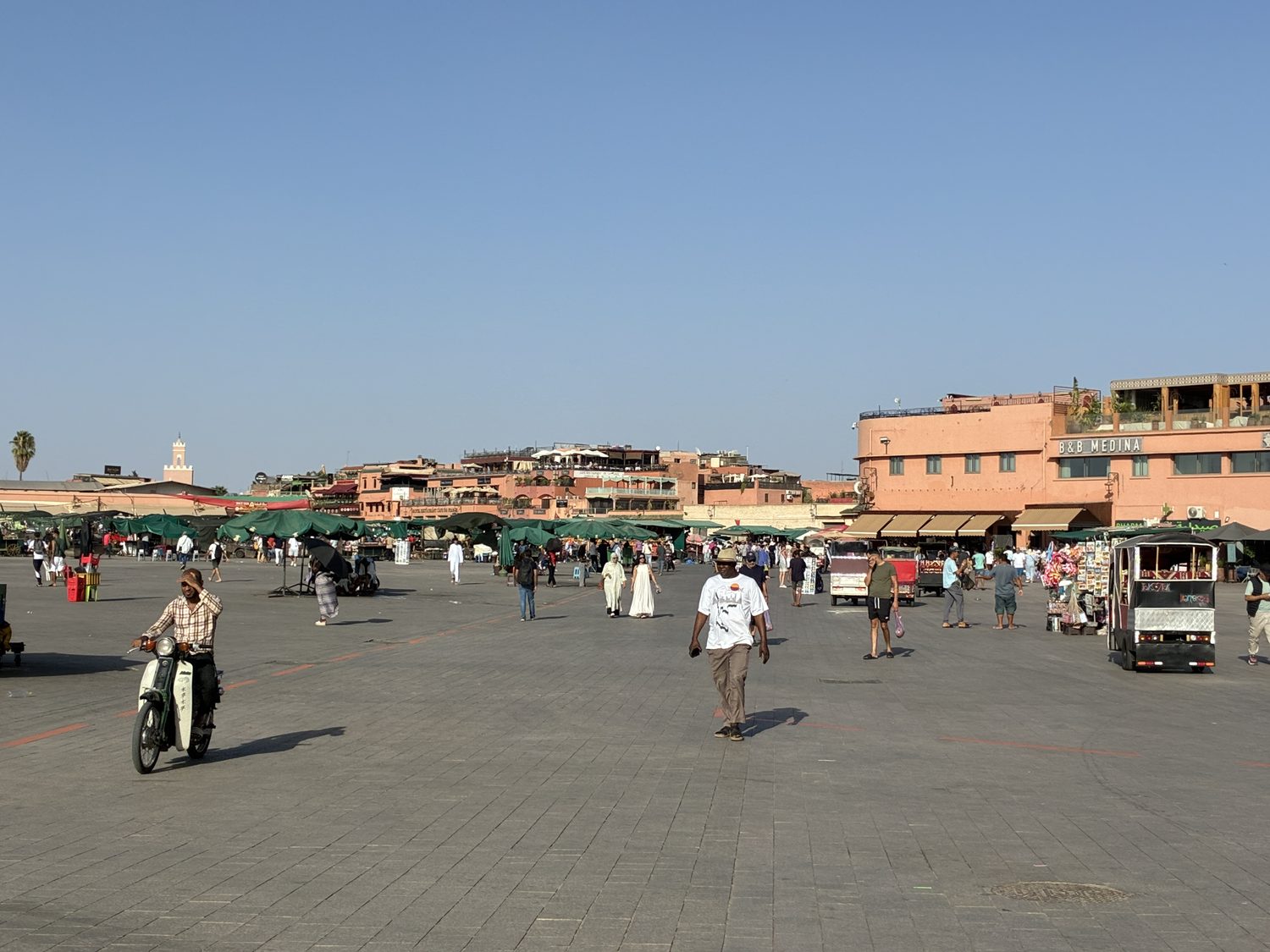
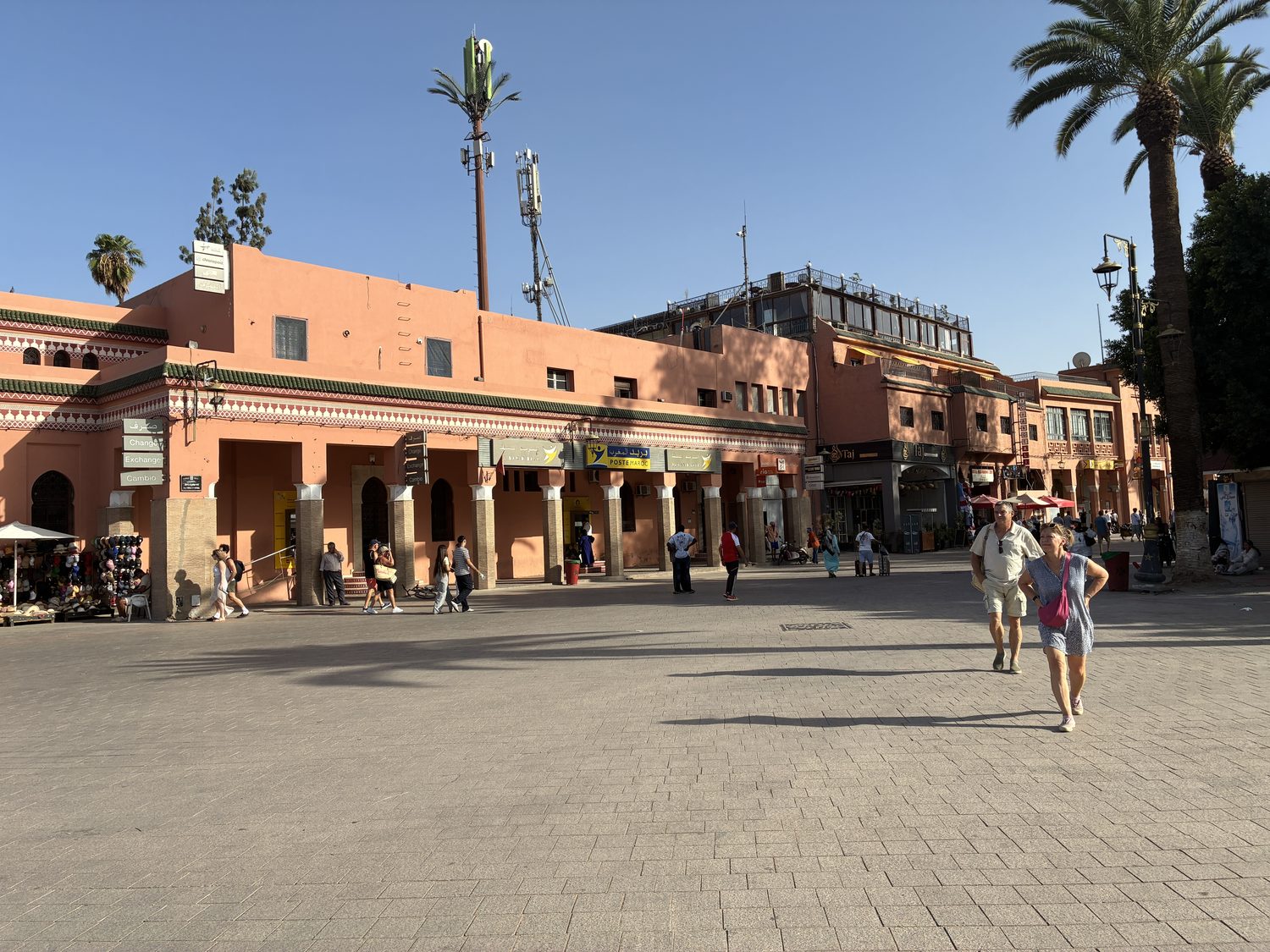
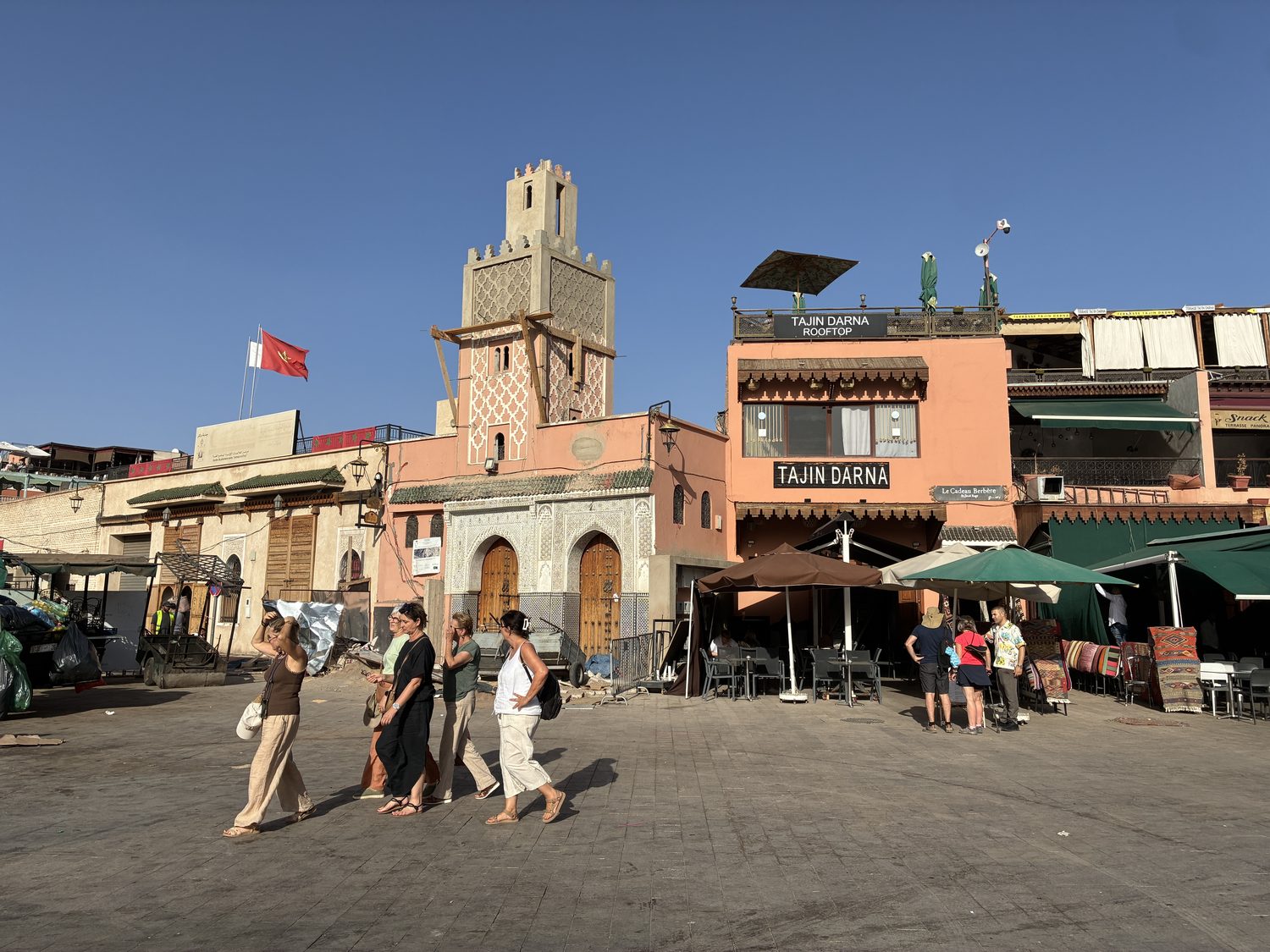
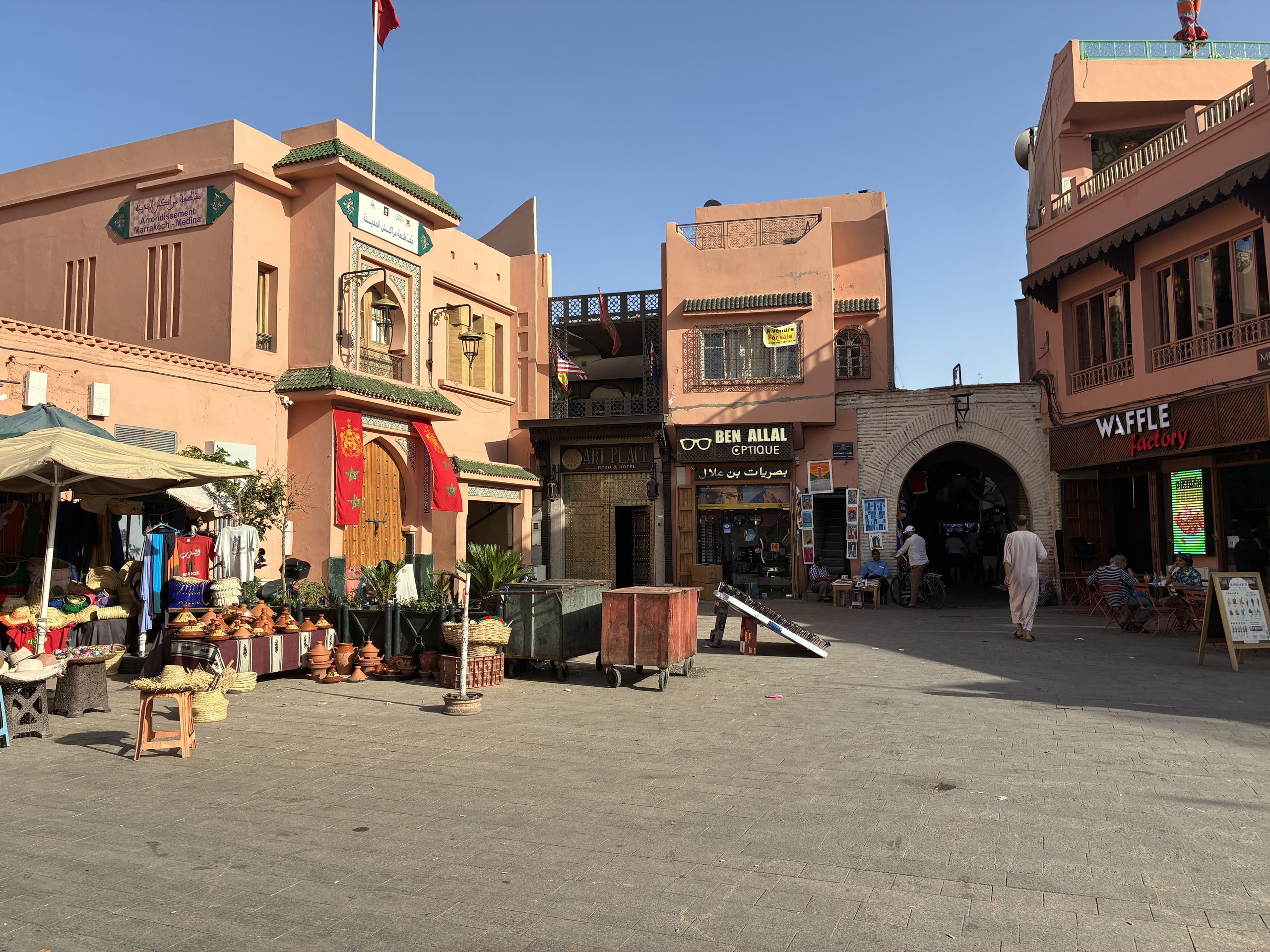
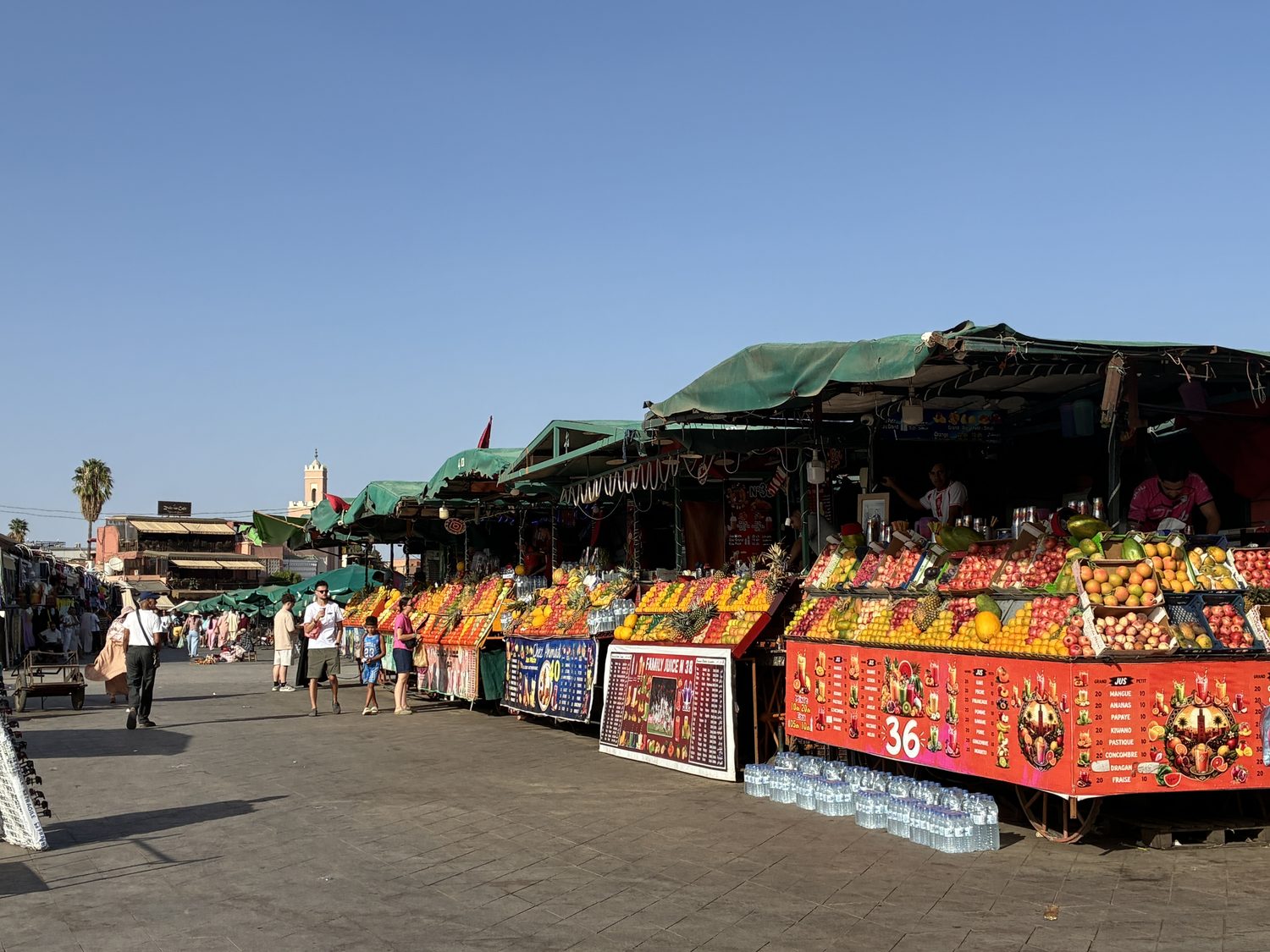
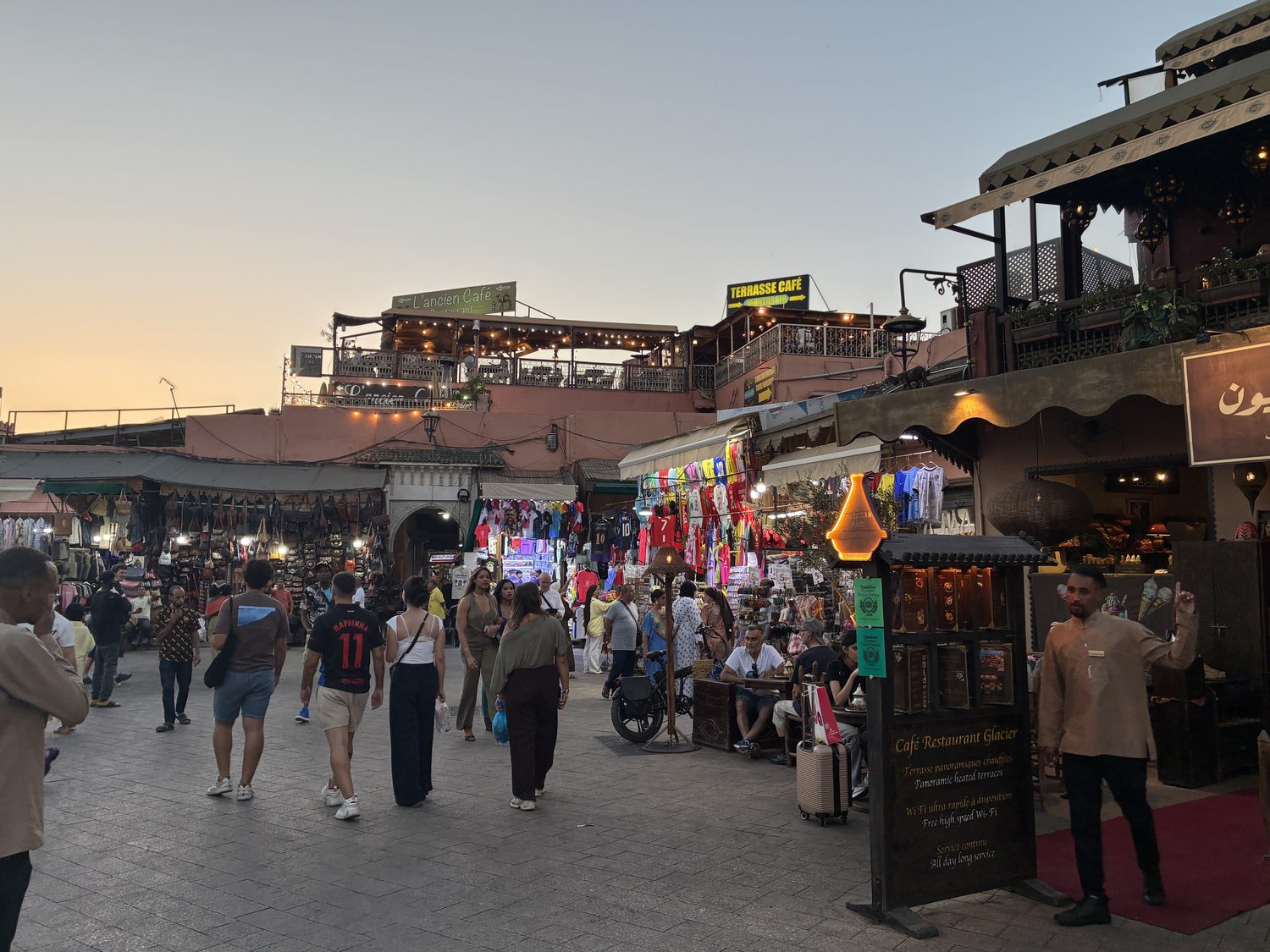
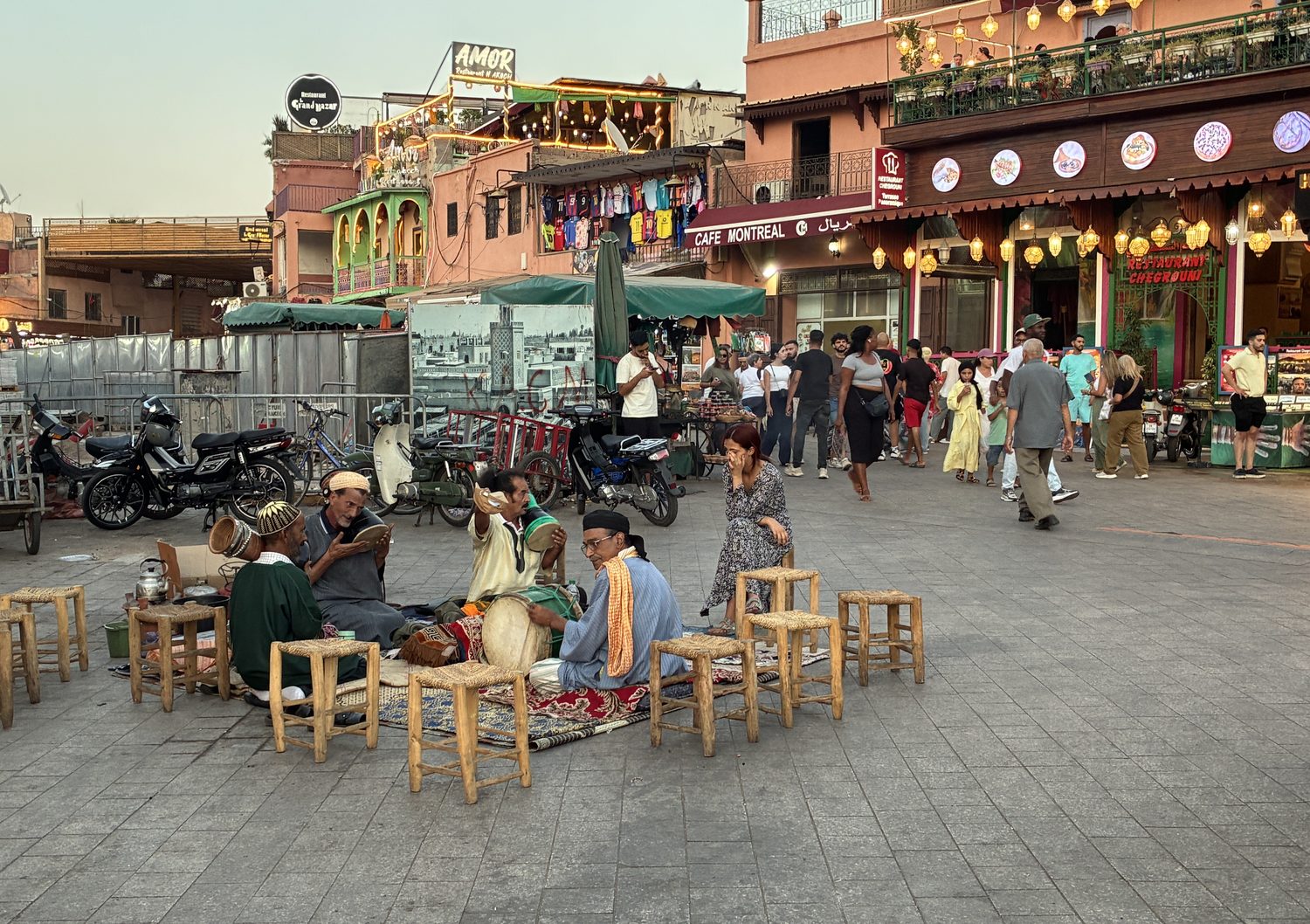
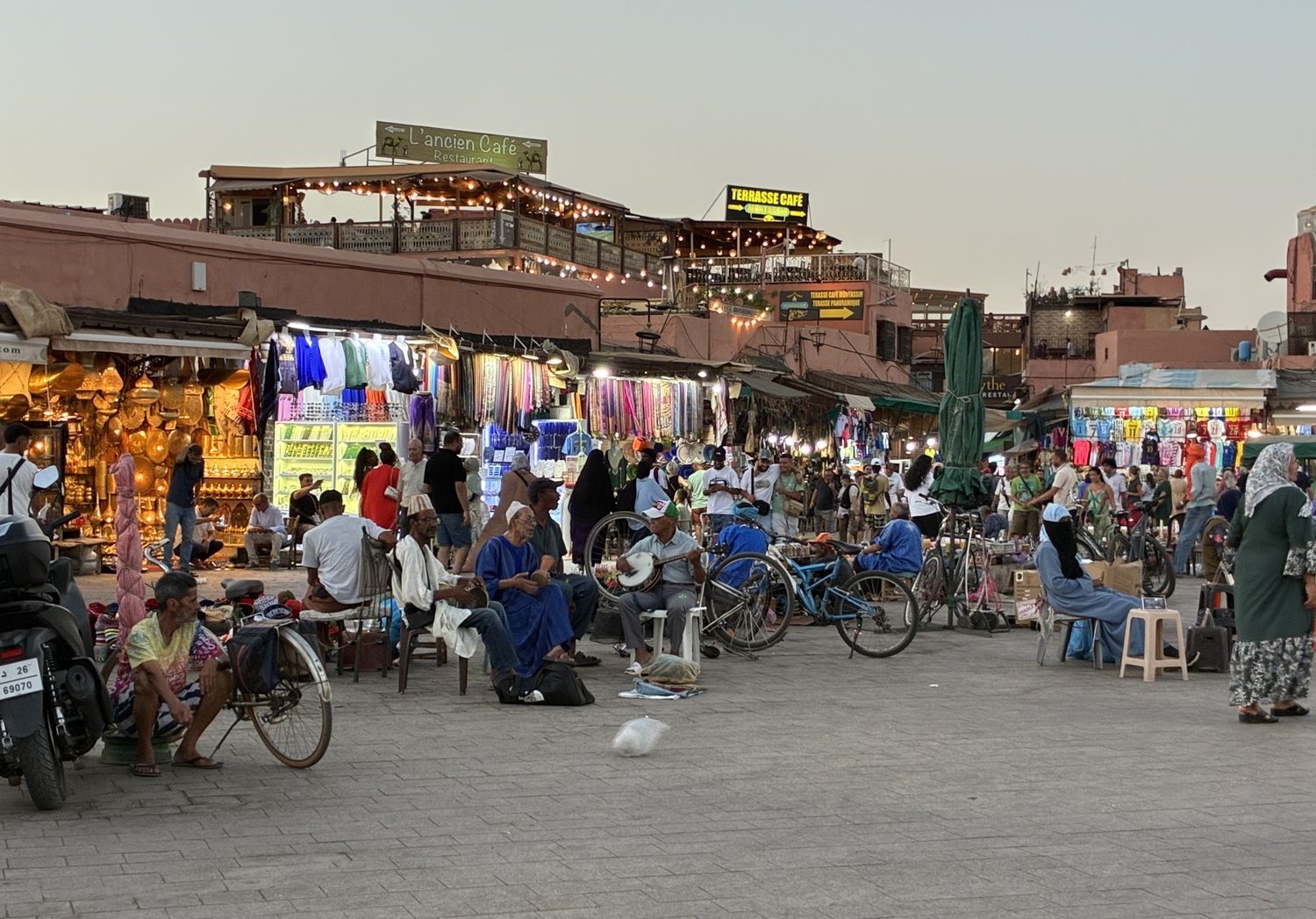
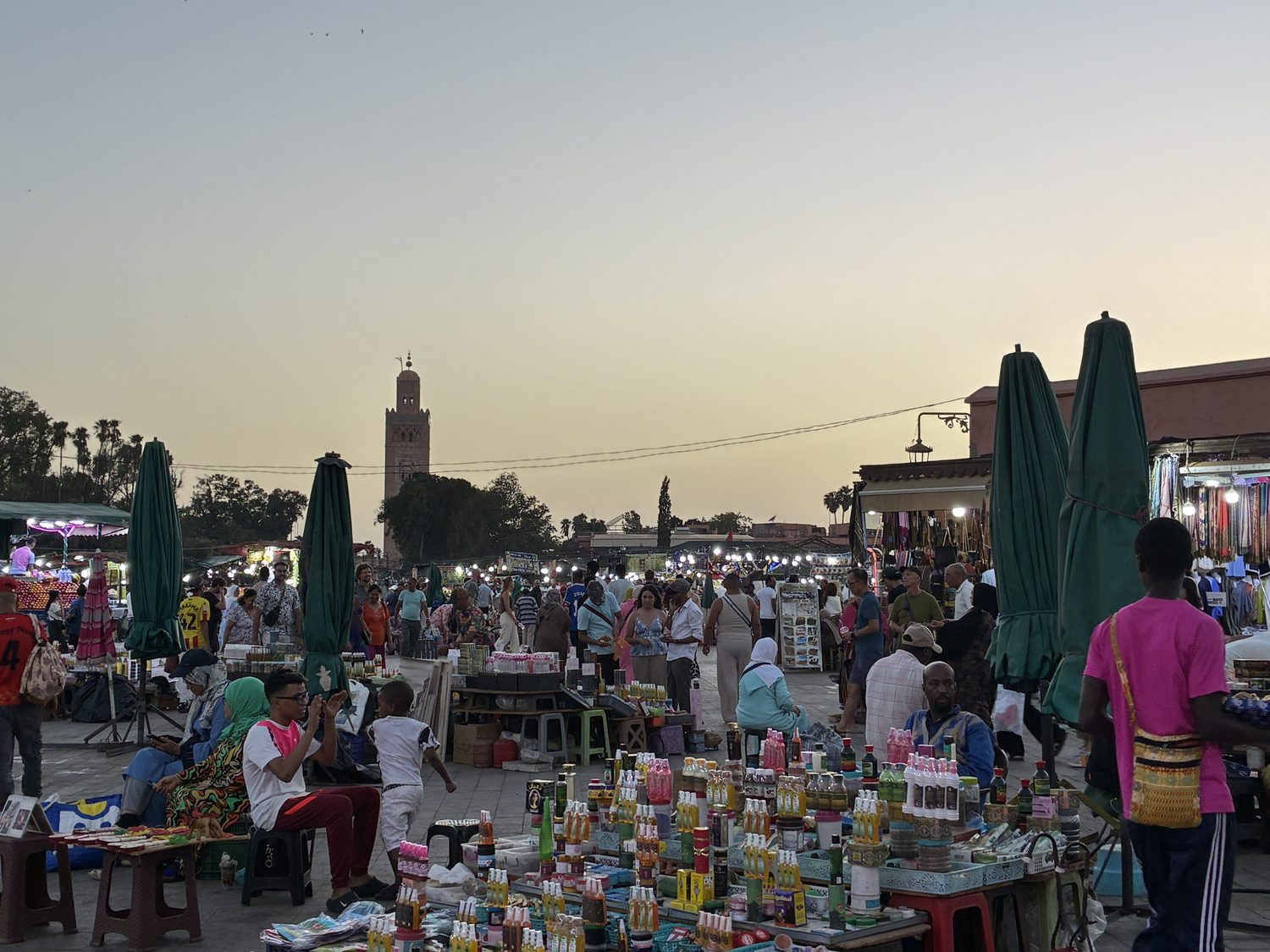
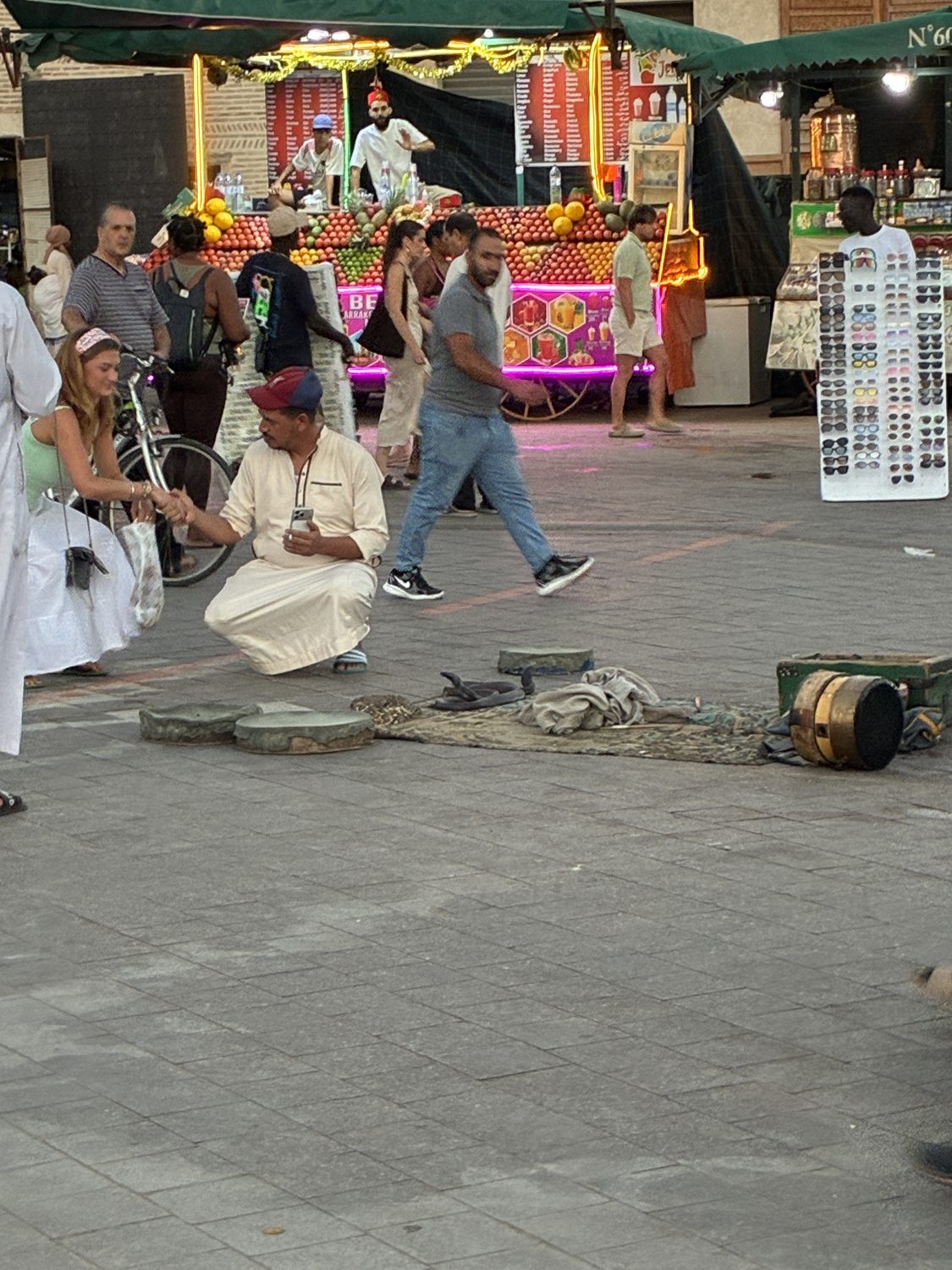
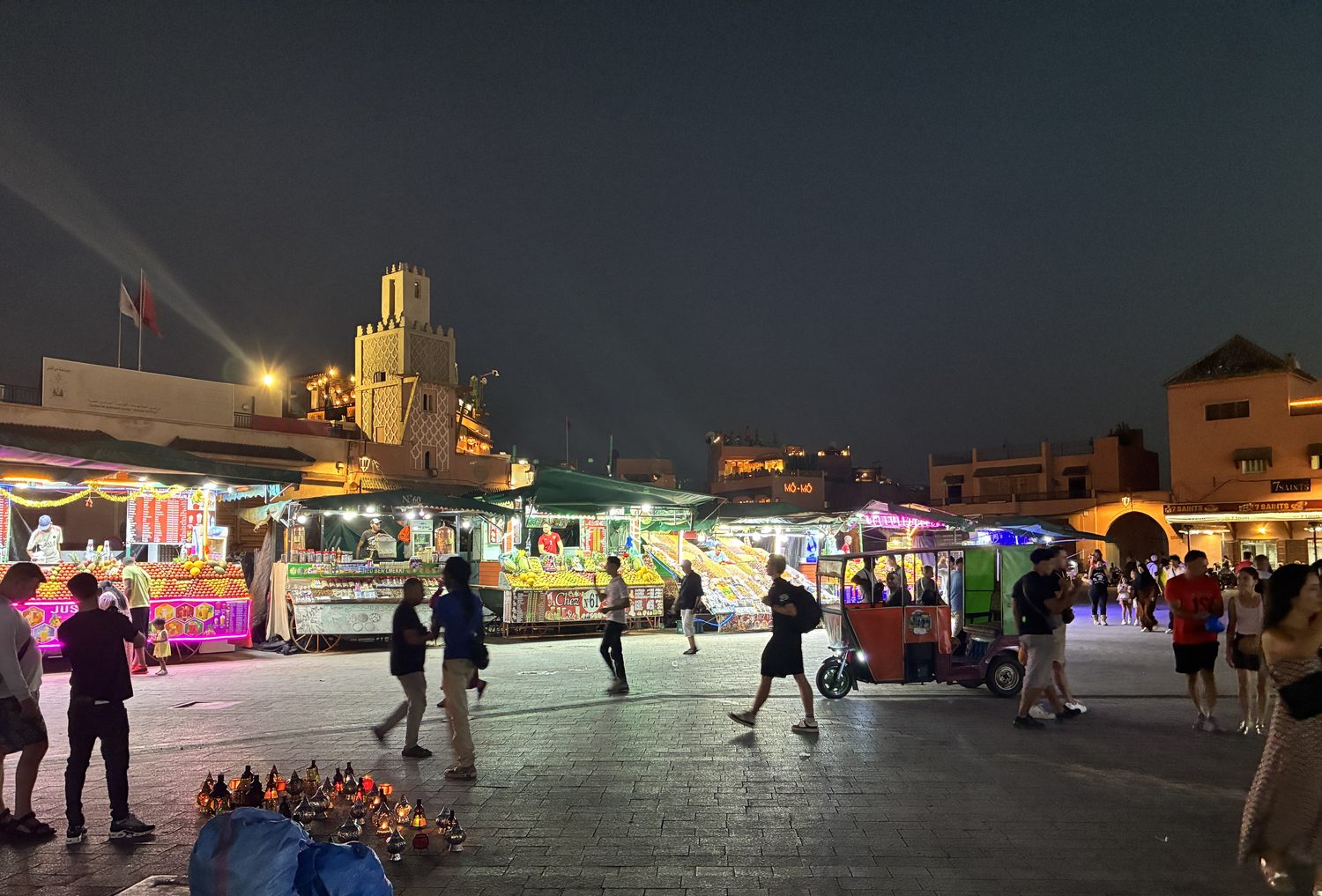
But as I got closer, entering the square, wow! That joint was jumping! And I do mean jumping. Another wow moment, not for the beauty of it, although it does look good, but for the pure spectacle of the square and everything happening in it. It is right out of Marrakesh Express, and I kid you not. There were even snake charmers, and I assume Graham Nash was talking about this very square when he wrote, “colored cottons hang in the air, charming cobras in the square.” It was a fabulous scene. An incredible scene. Even more so than in the other cities I’ve visited. Right out of a movie (or the song Marrakesh Express). It was a classic sight to behold.
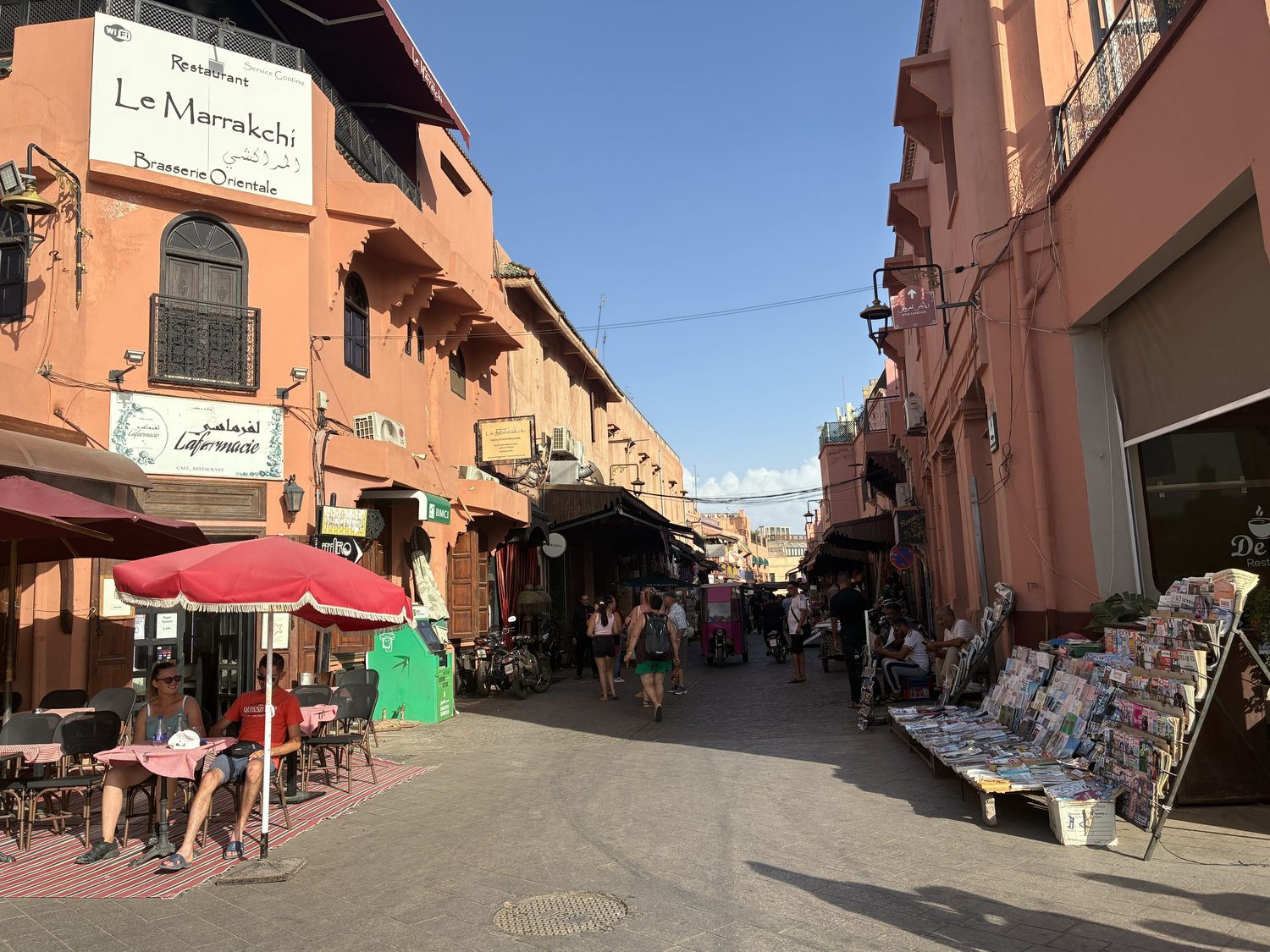
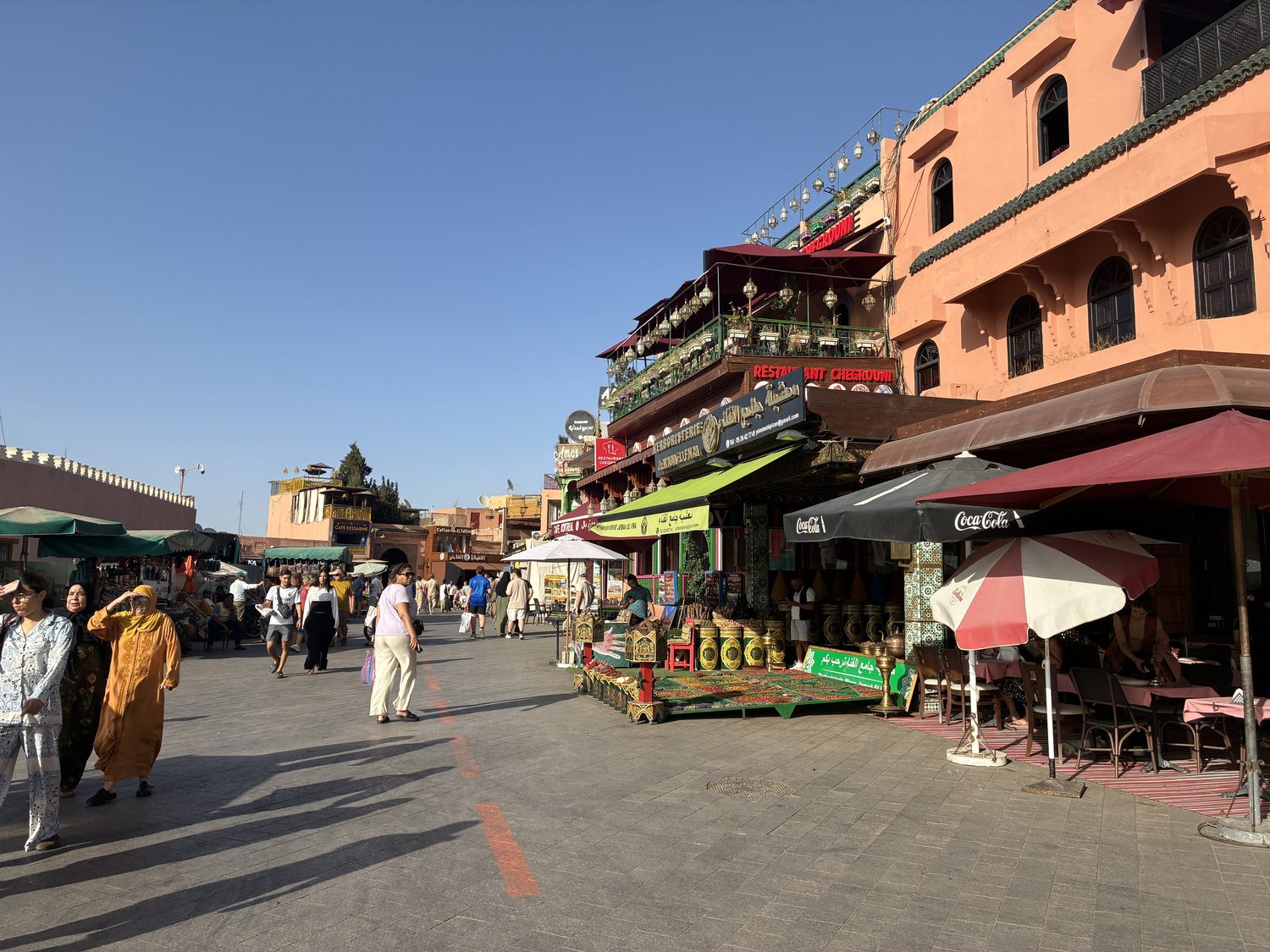
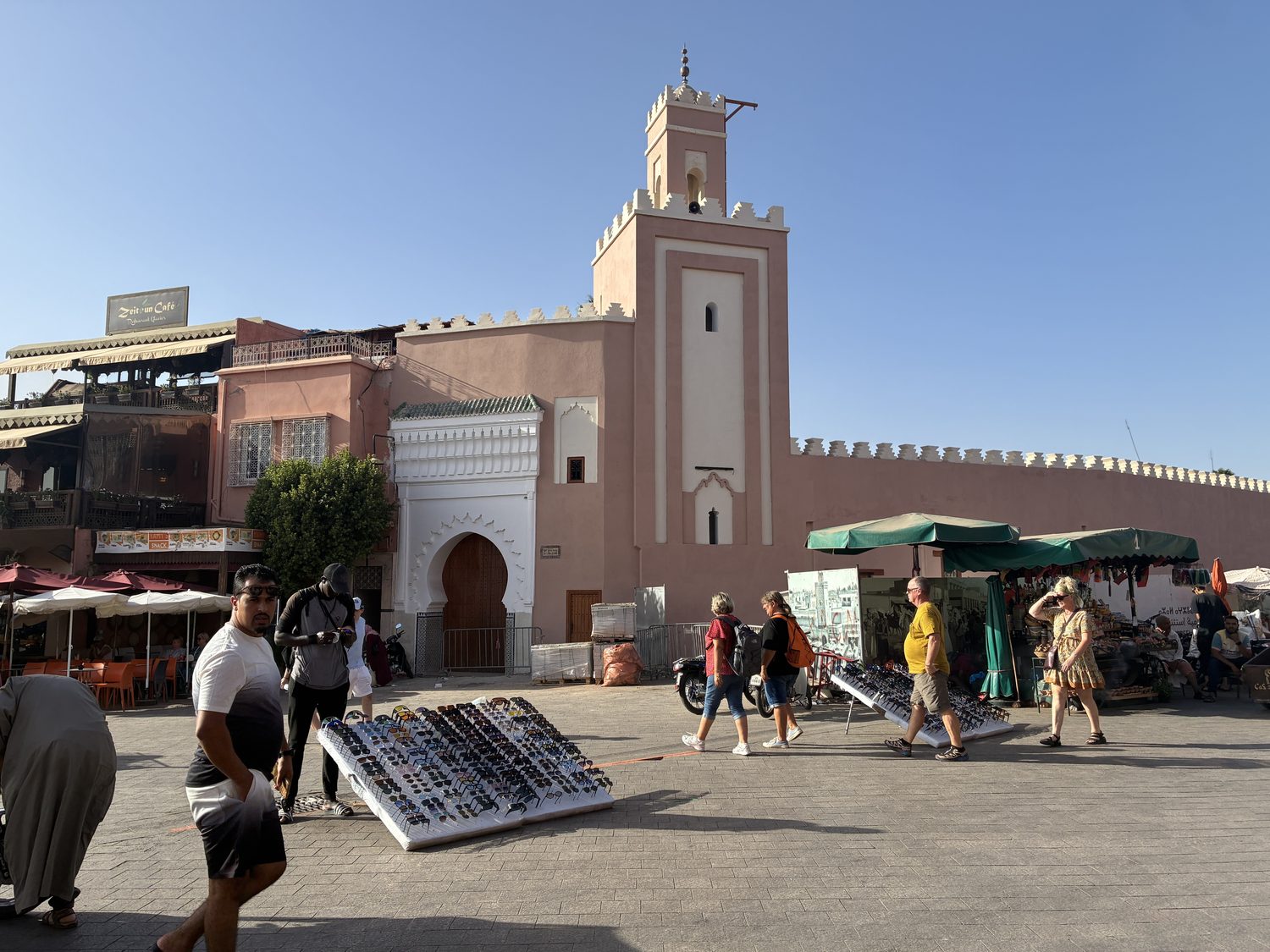

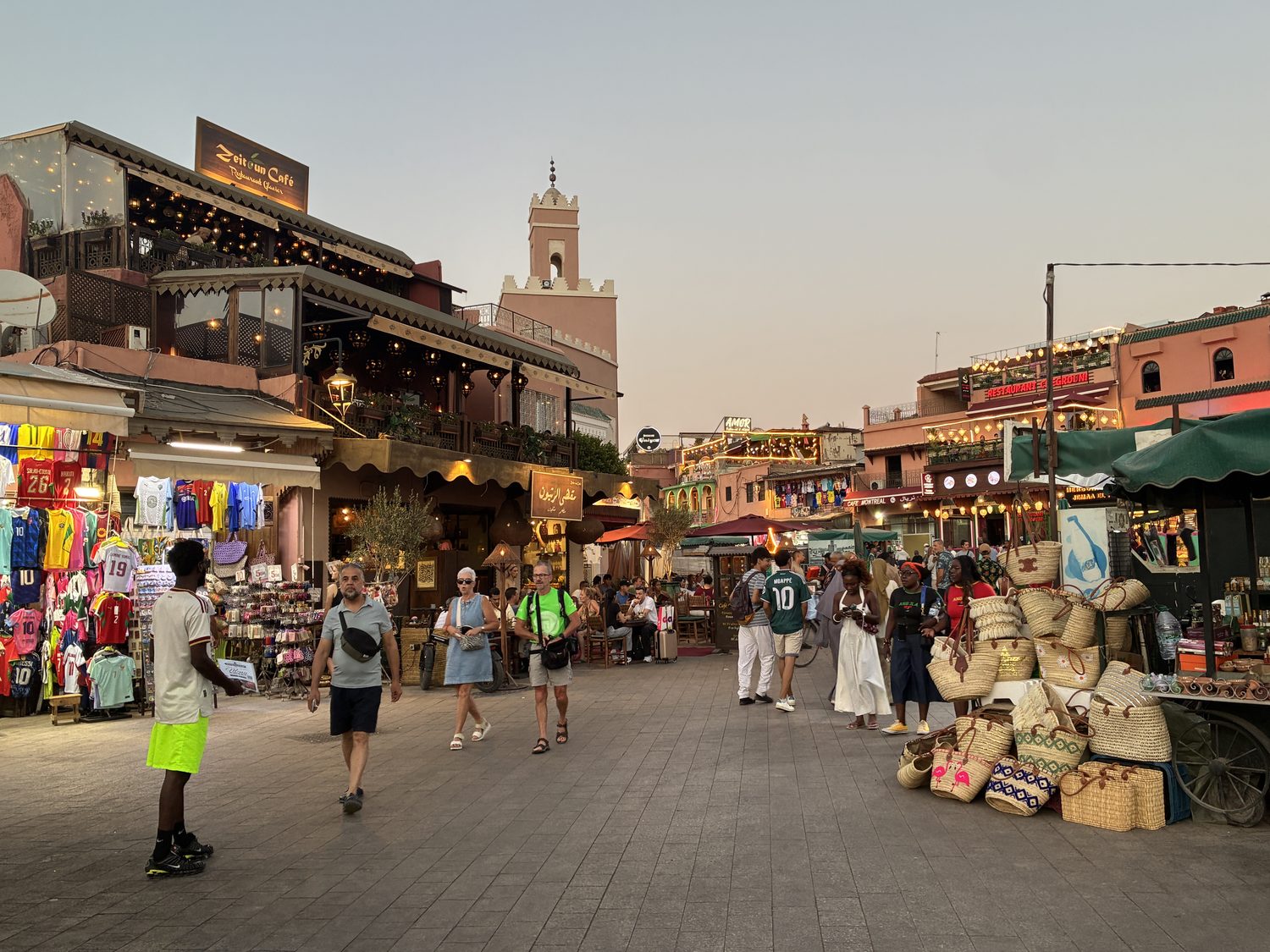
I made my way through the square using google maps to find my way to Riad Andalla, but also took some time to just walk around the square and among the crowds of locals, visitors, and vendors and along the alleys and streets coming off the square, which like the square itself but a hundred times more, was filled with shops carrying Moroccan and local goods of every kind: foods, spices, leather goods, carpets and rugs, souvenirs, clothing, meats, produce, nuts, interspersed with street food vendors and restaurants. Not so different than Fes, but even though it was a similarly covered market, these alleys and lanes were well lit, wider, cleaner, and more open. There was room to move, despite the crowds, and despite also being medieval in layout and origin these streets are brighter and more recently renovated, without destroying the medieval nature of the souk. It’s an inviting place (just like the song says), whereas I found the Fes souk and medina to be uninviting and claustrophobic.
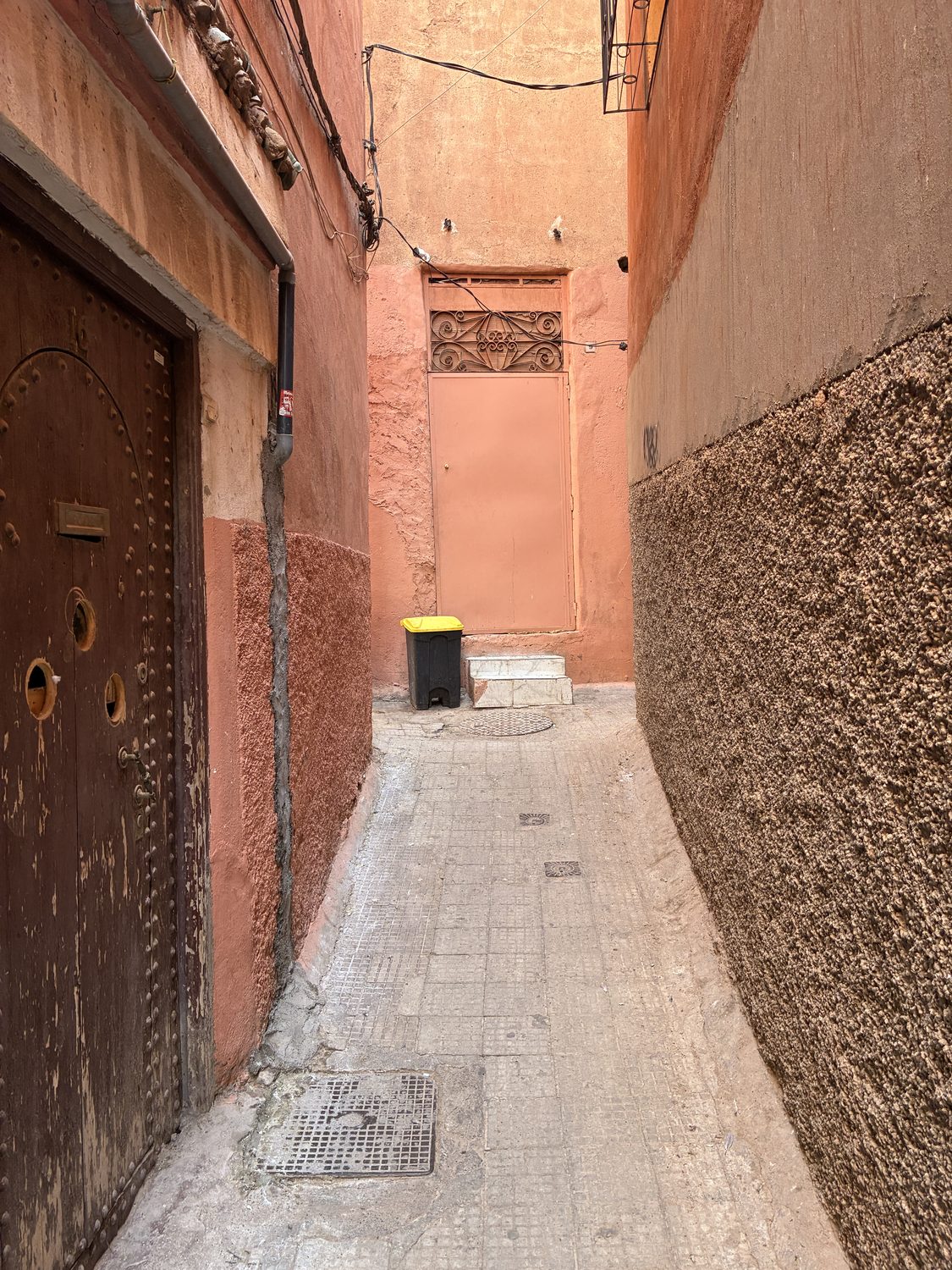
I found the riad, as usual it seems, along a narrow side alley, where you couldn’t imagine there’d be anything, although that’s where all these riads seem to be, just a door in the alley hiding large ornately decorated central courtyards surrounded by rooms, and rising three or four floors. Riad Andalla was no different, except it had a small gated outside area rather than just a door in an alley wall, before entering what was again a nice looking, but much smaller riad, and far less opulent.
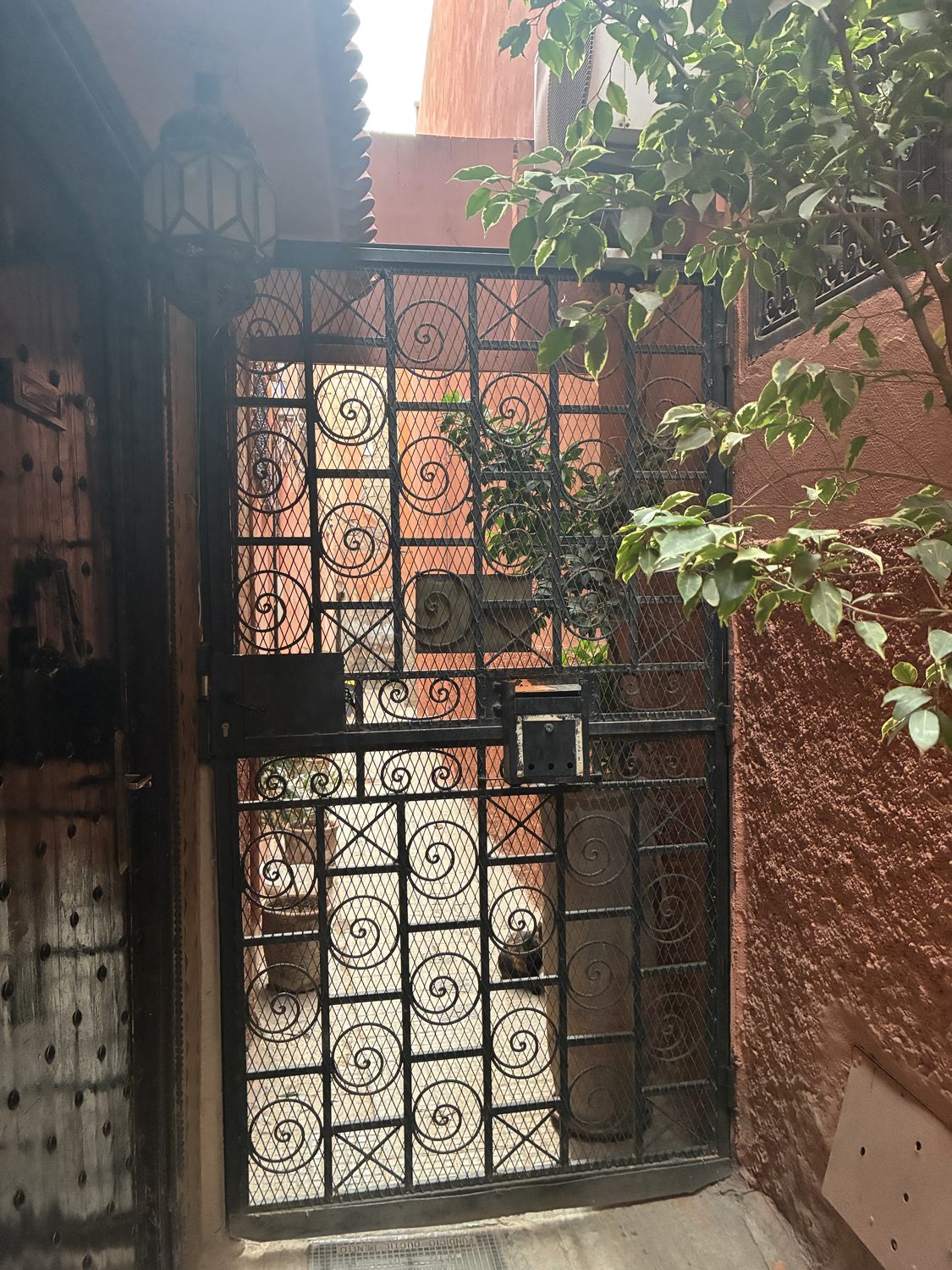
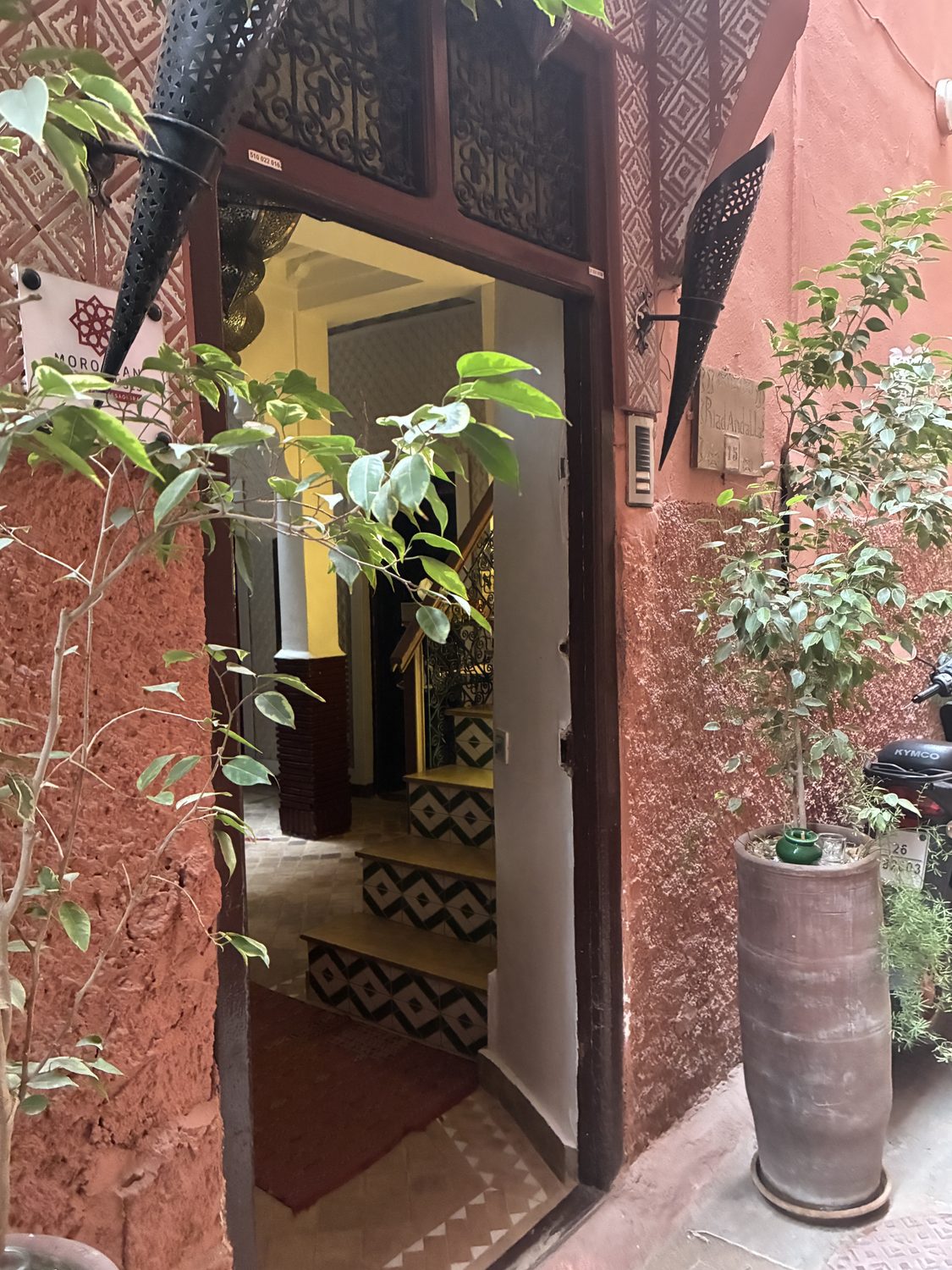
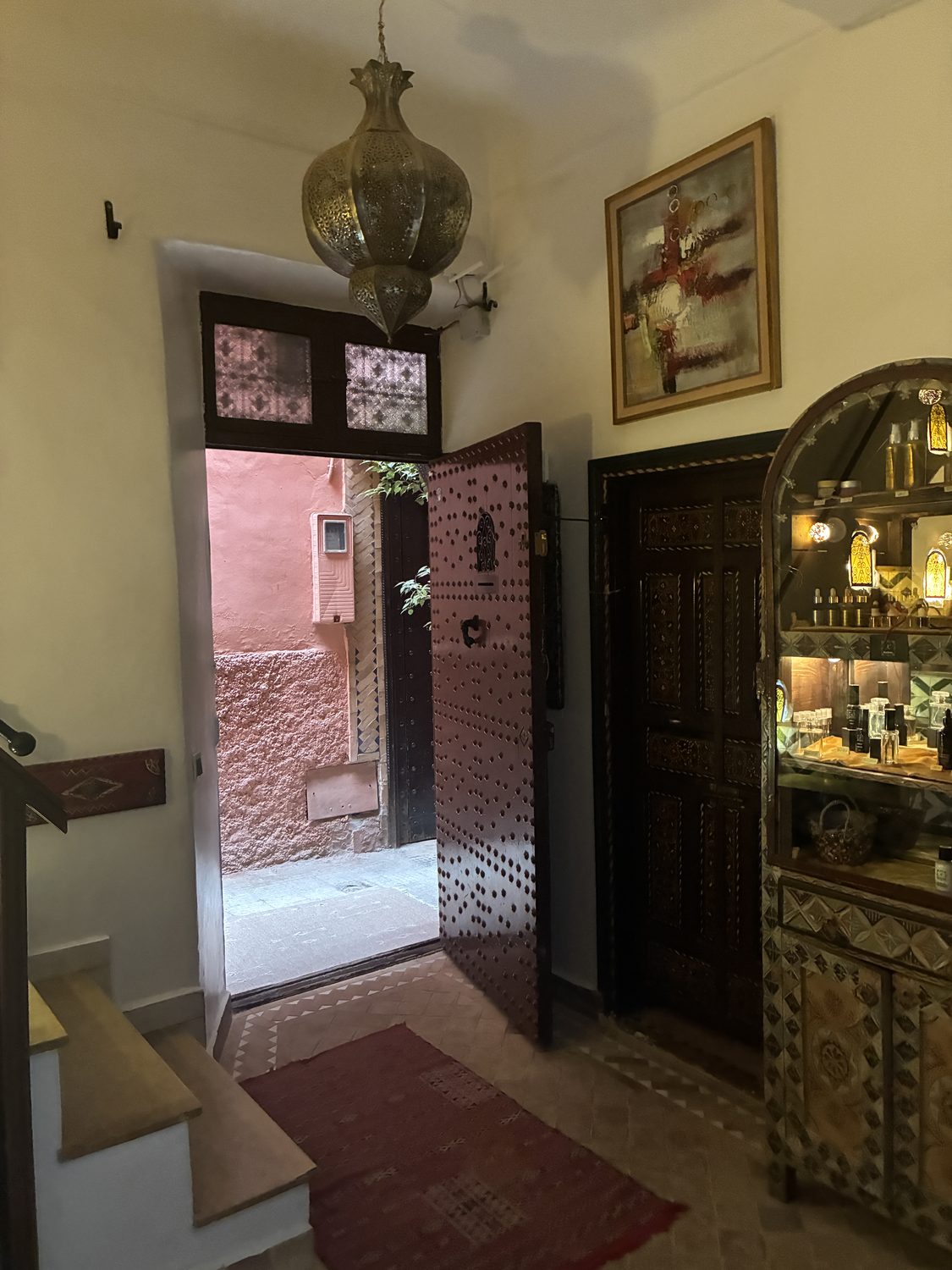
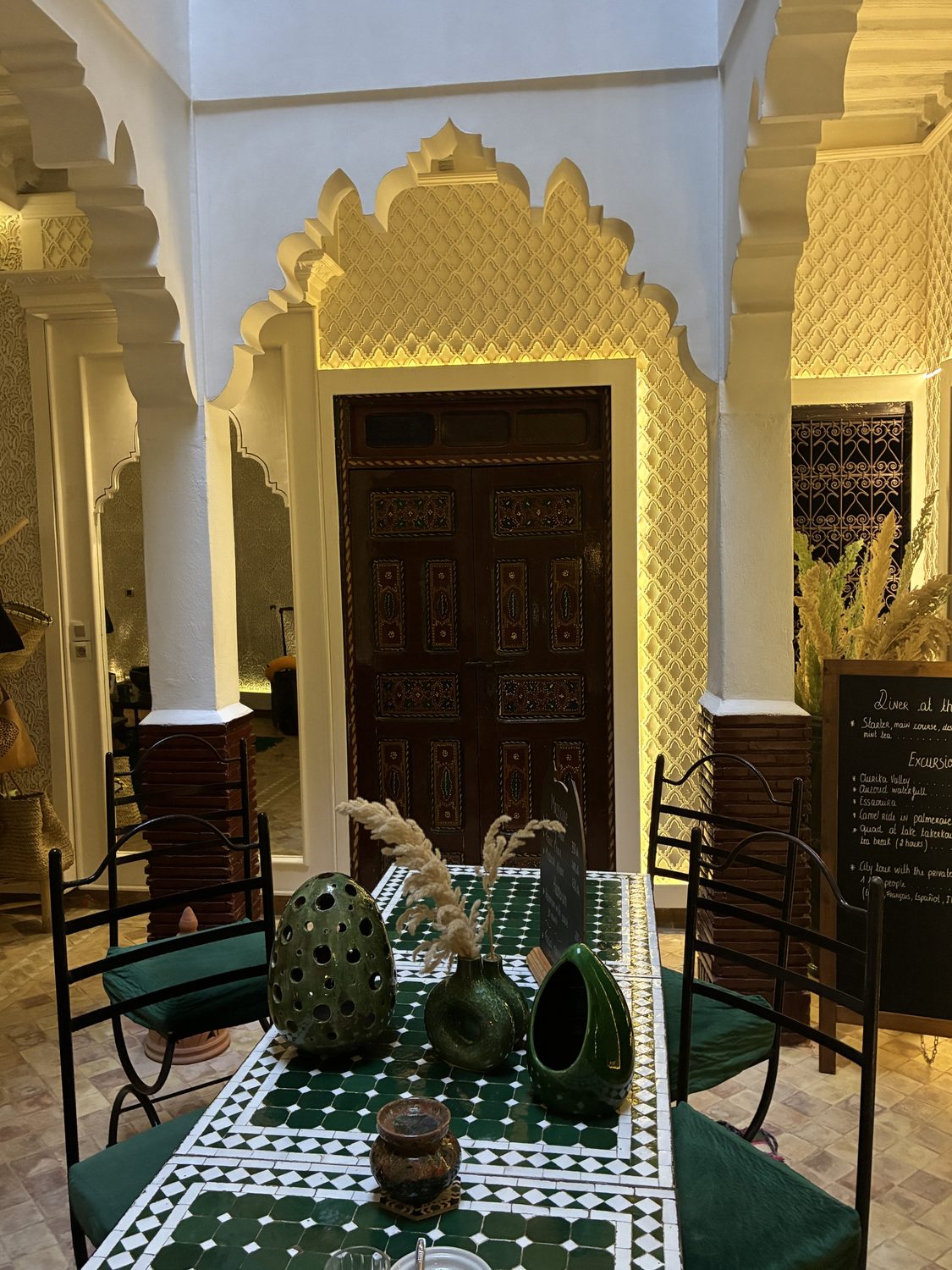
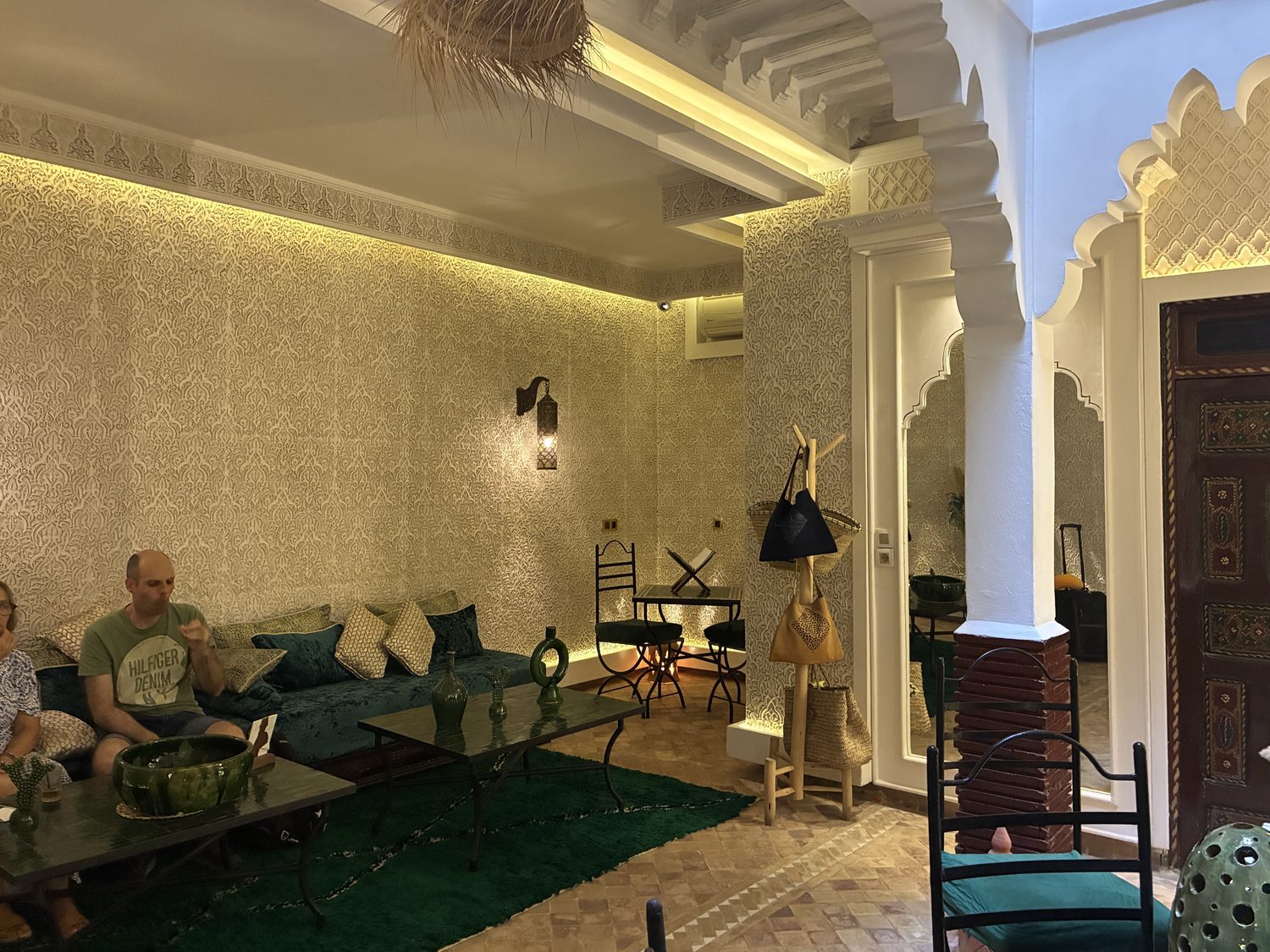
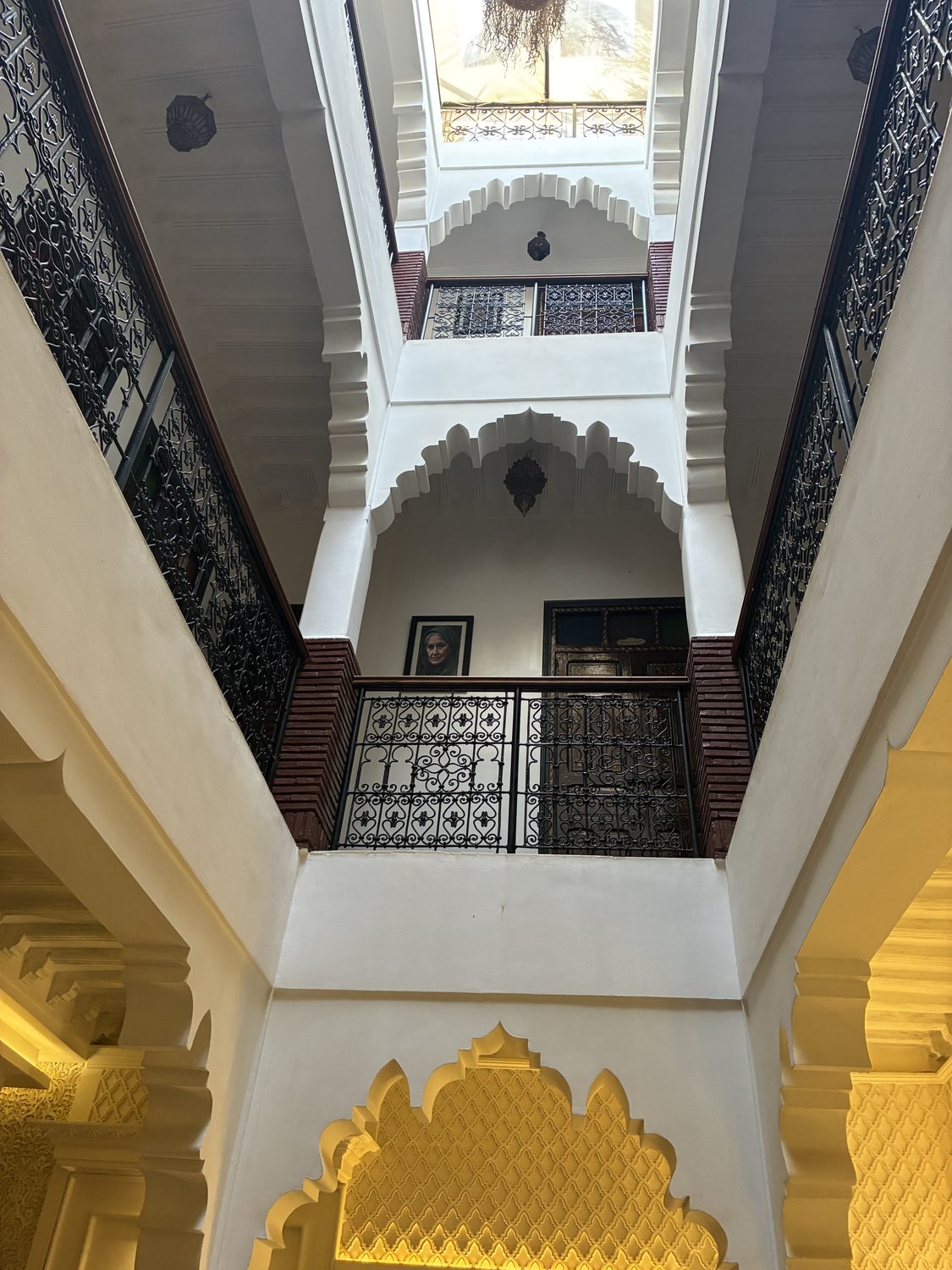
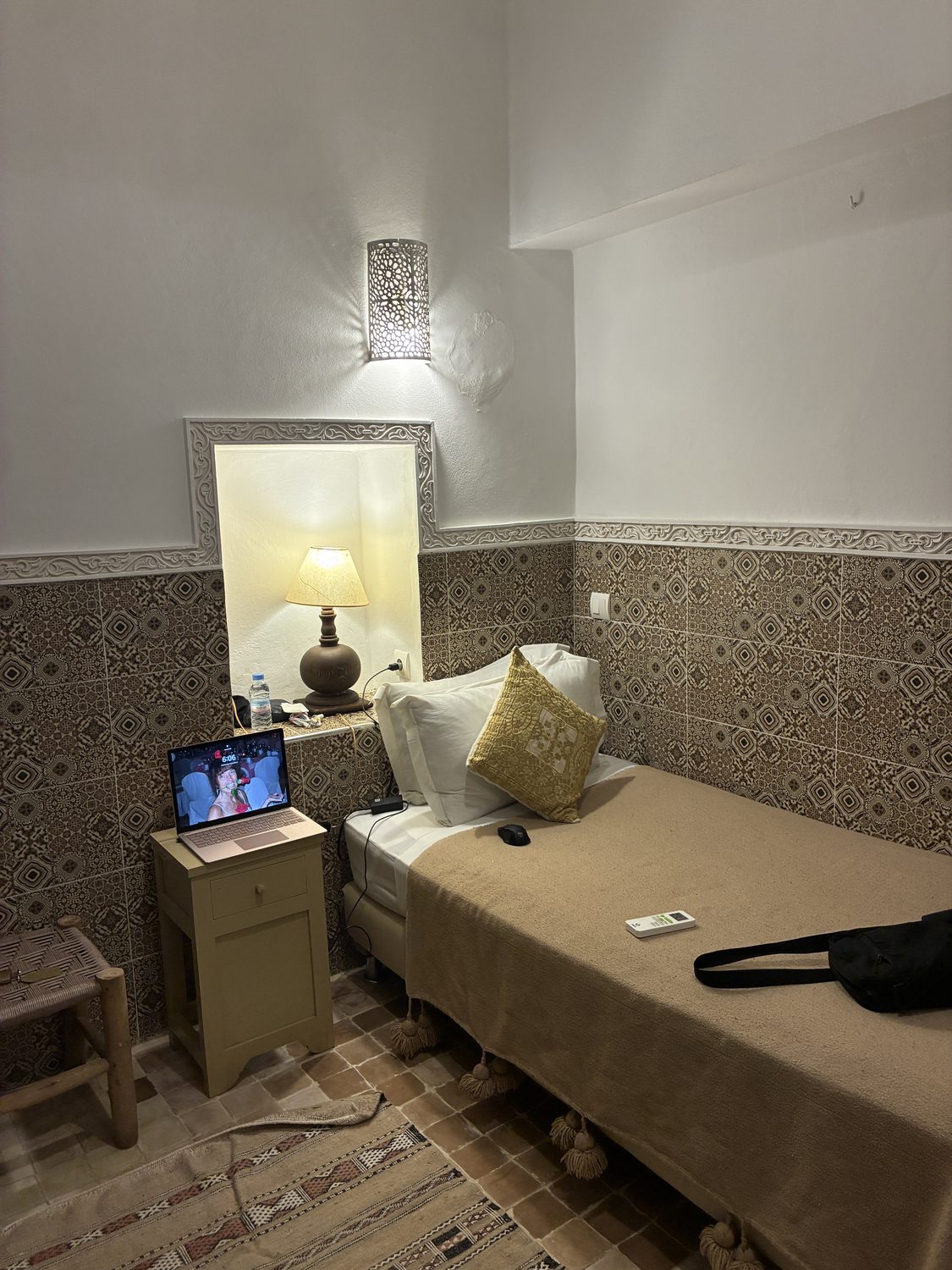
I settled in to my pretty small room, which wasn’t anything to write home about, but okay with me. Still, it was small and no room in the bathroom at all. I took care of a couple of things, and by now around 6:30 I headed back into the square and the souk to drink in and enjoy the scene, and maybe grab something to eat.
The street leading back to the square offered restuarant after restuarant, each with a similar and well priced menu, and I figured I’d eat at one of them, although was hoping for some street food. Actually, there’s not a lot of difference, if any, between street food and the meals in these fairly small and everyday restaurants, rather than restaurants offering higher priced dining options and atmosphere. Of course, these everyday street restaurants and street vendors have an atmosphere all their own, that is part of the rhythm of this place.
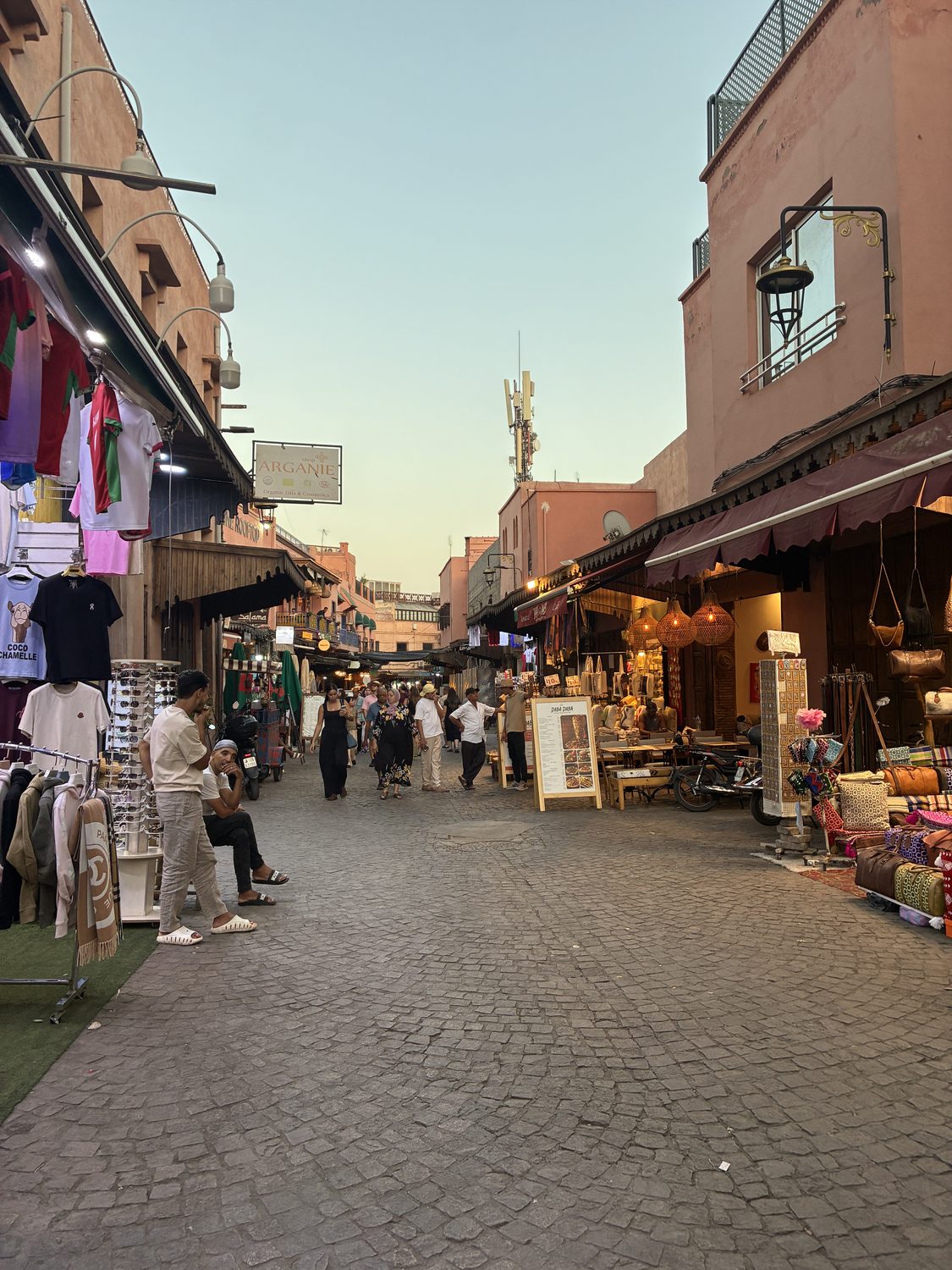
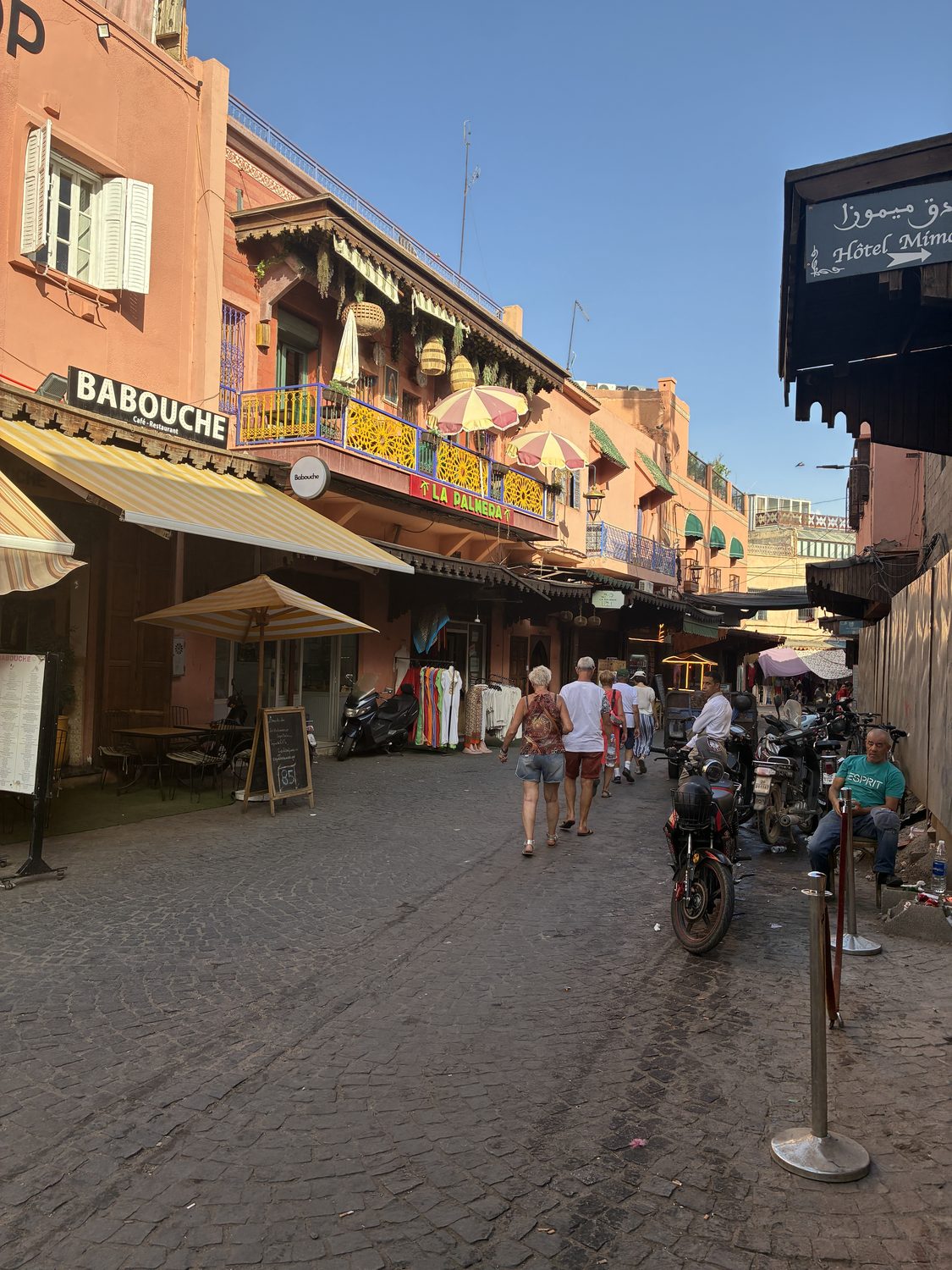
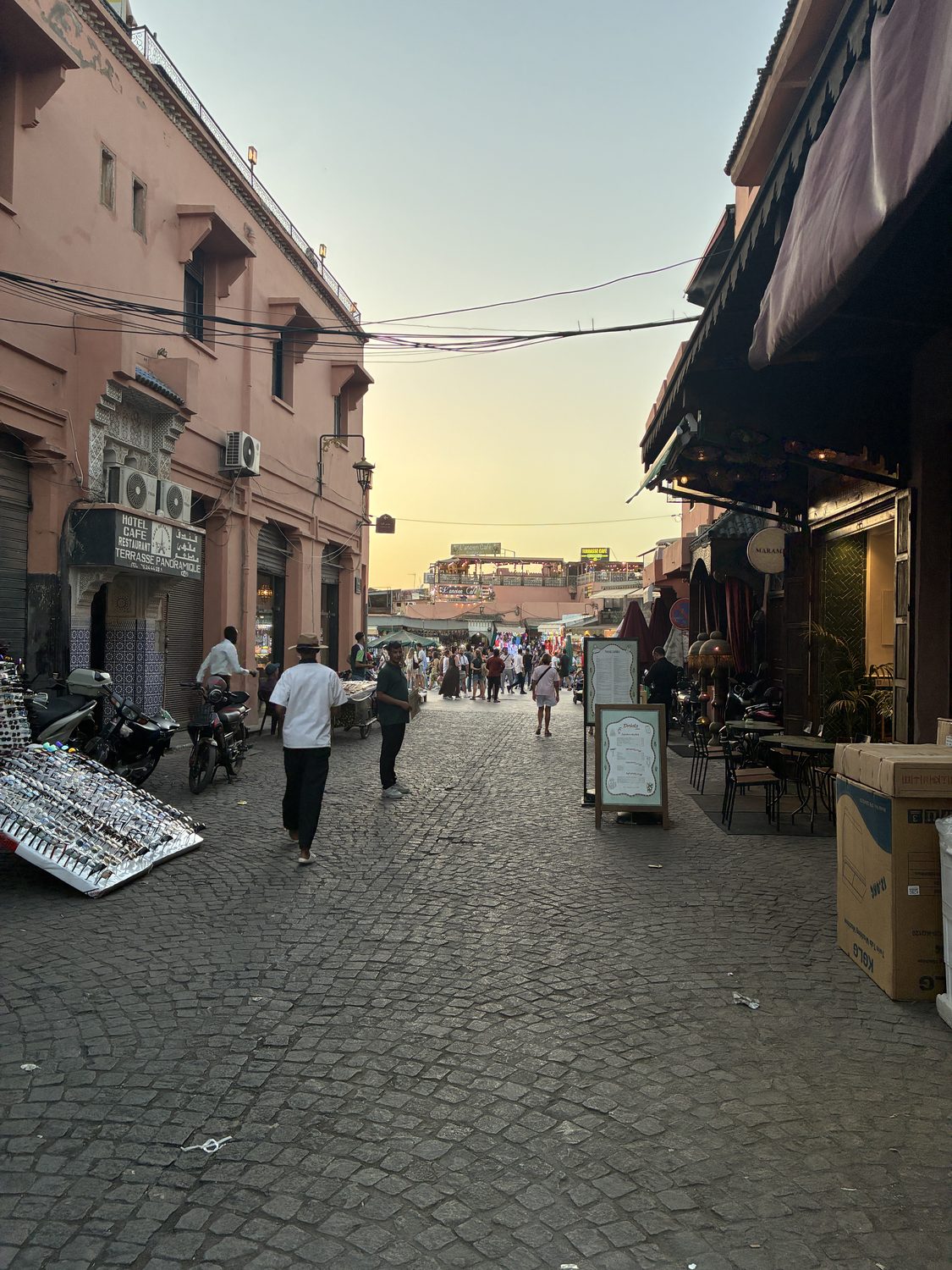
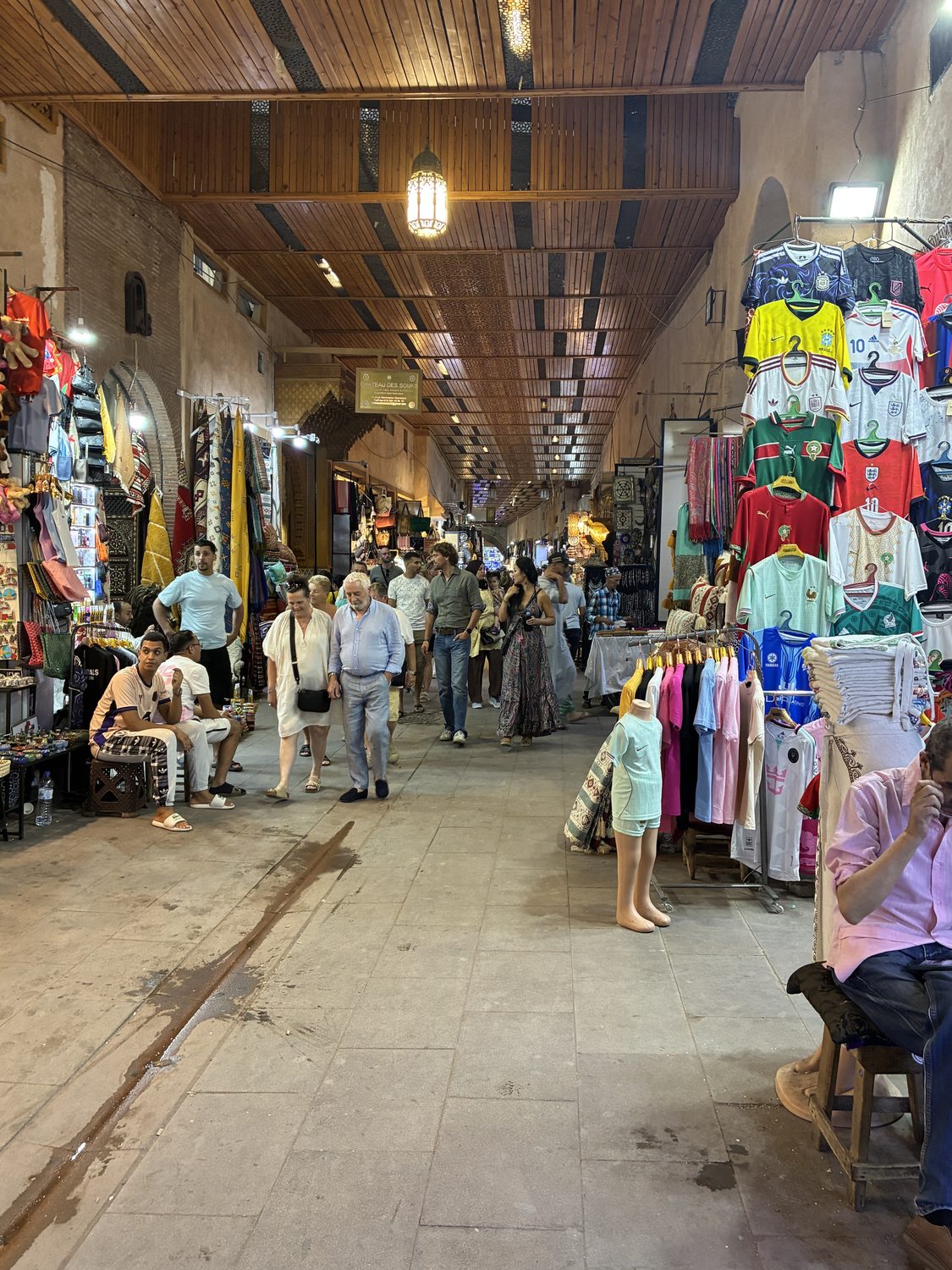
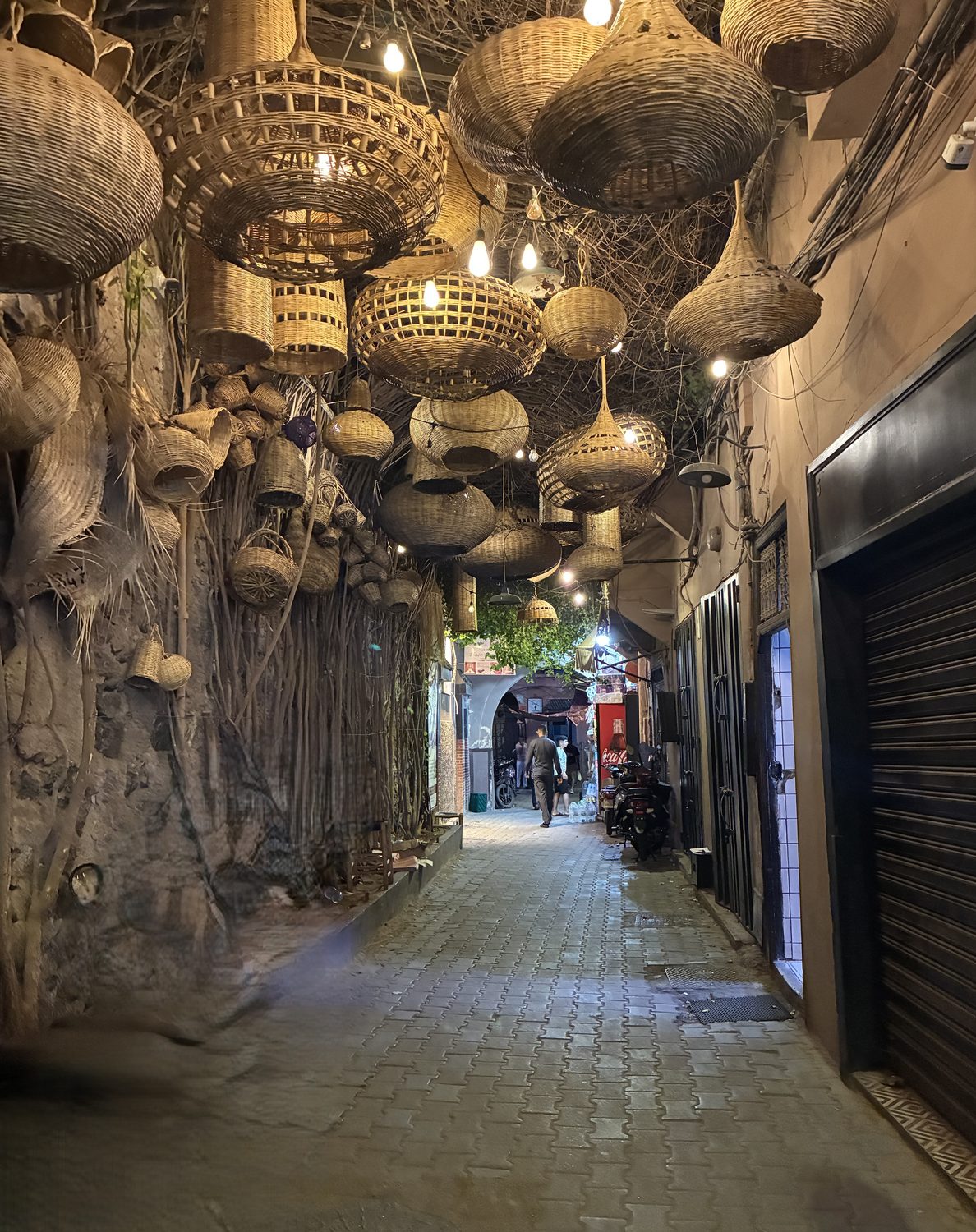
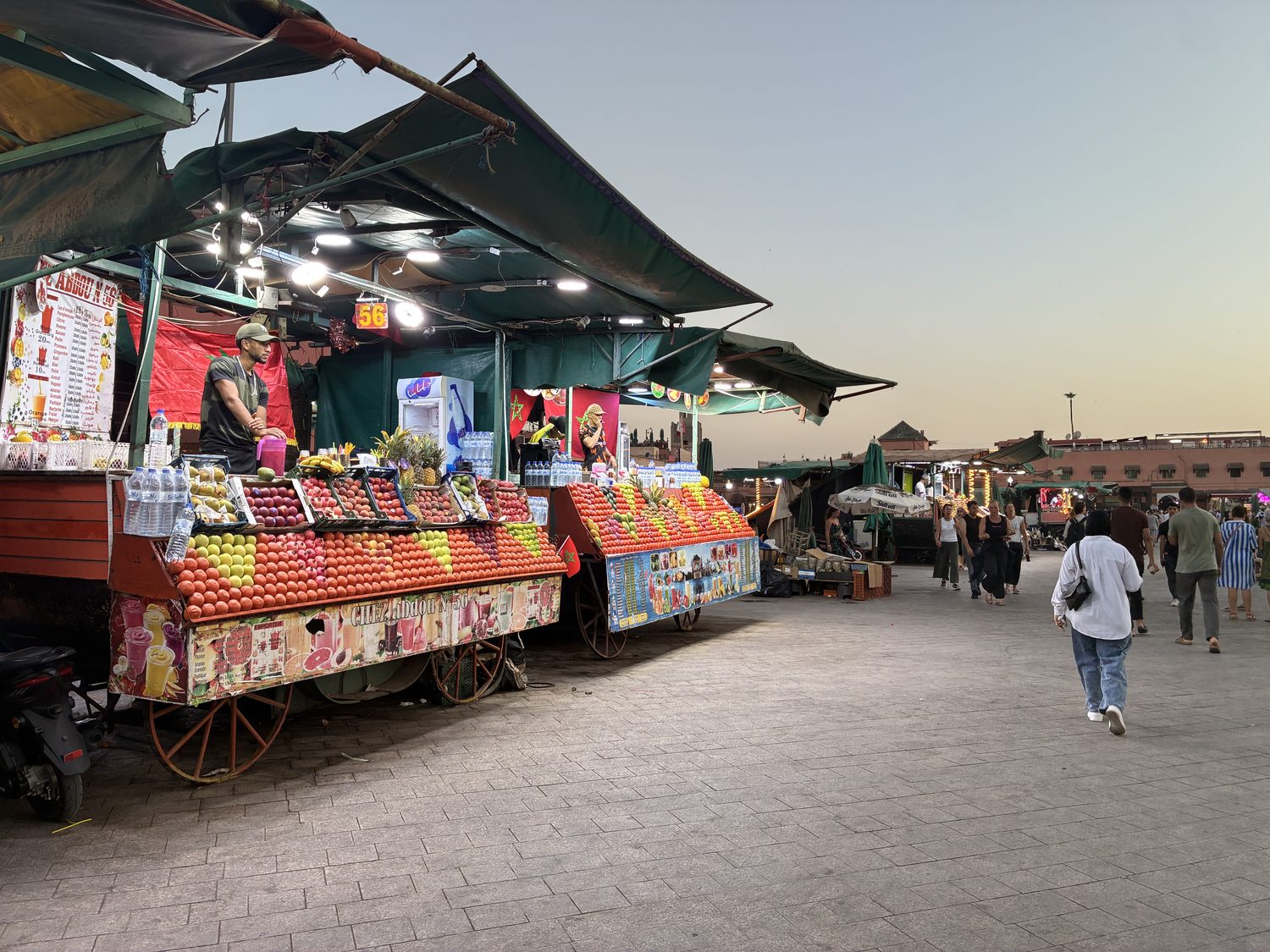
Dusk was falling, and the streets and square were beginning to light up, and starting to look exceptionally charismatic and picturesque. There was traditional music being played by local musicians, often with a heavy drumming rhythm, throughout the square, which was filled with vendors of all kinds, and open stalls of colorful fruits, produce, nuts, and candies of all types. There were pet monkeys and yes, that snake charmer, playing his ghaita flute with small cobras being charmed.

I also visited Rahba Lakdima (the Spice Square), even before venturing back into Jemaa el-Fnaa, which is small open air square that one of the covered market streets empties into, selling all sorts of spices, woven straw goods, and rugs, among other things. It is a lovey small market all on its own, also starting to light up as dusk was falling.
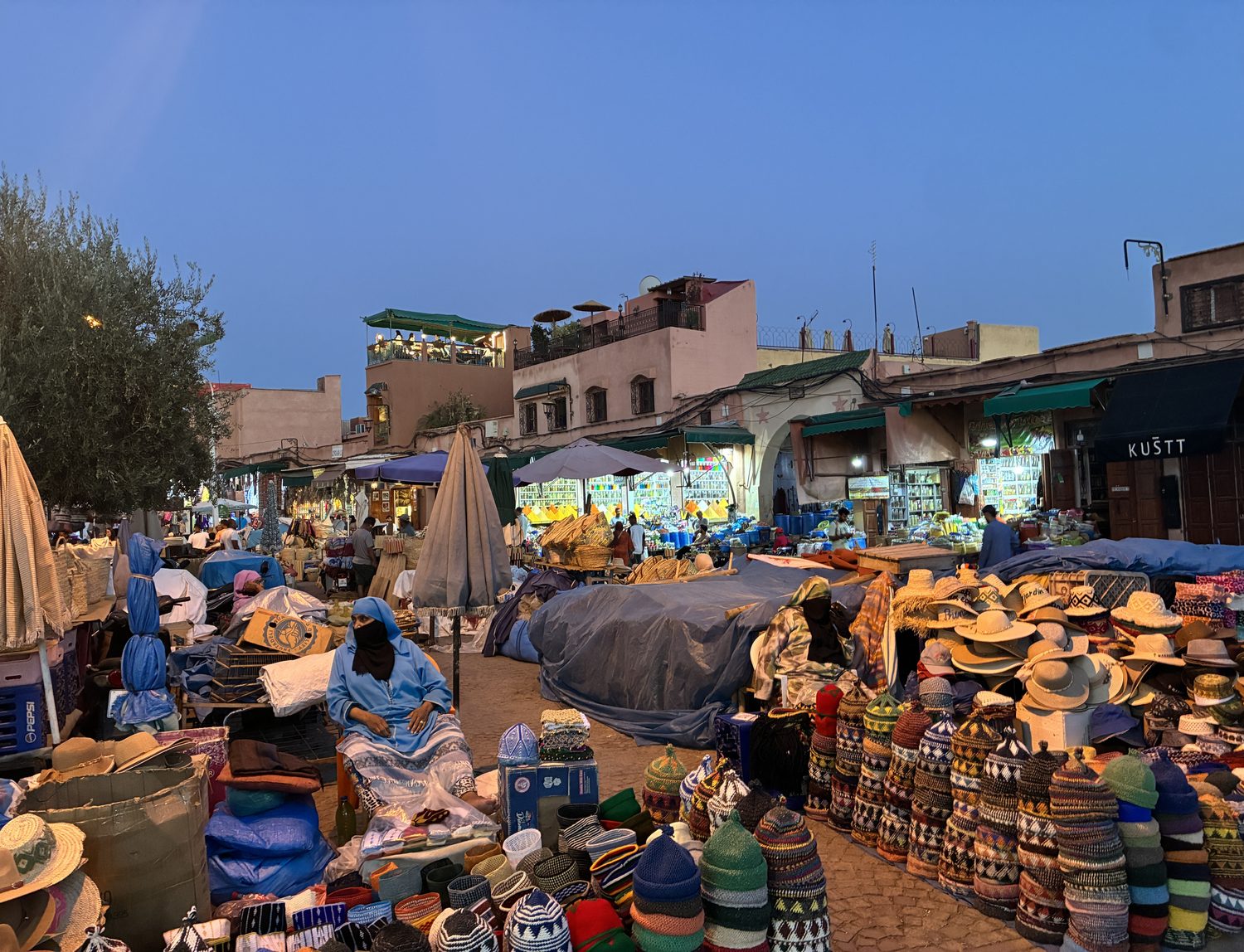
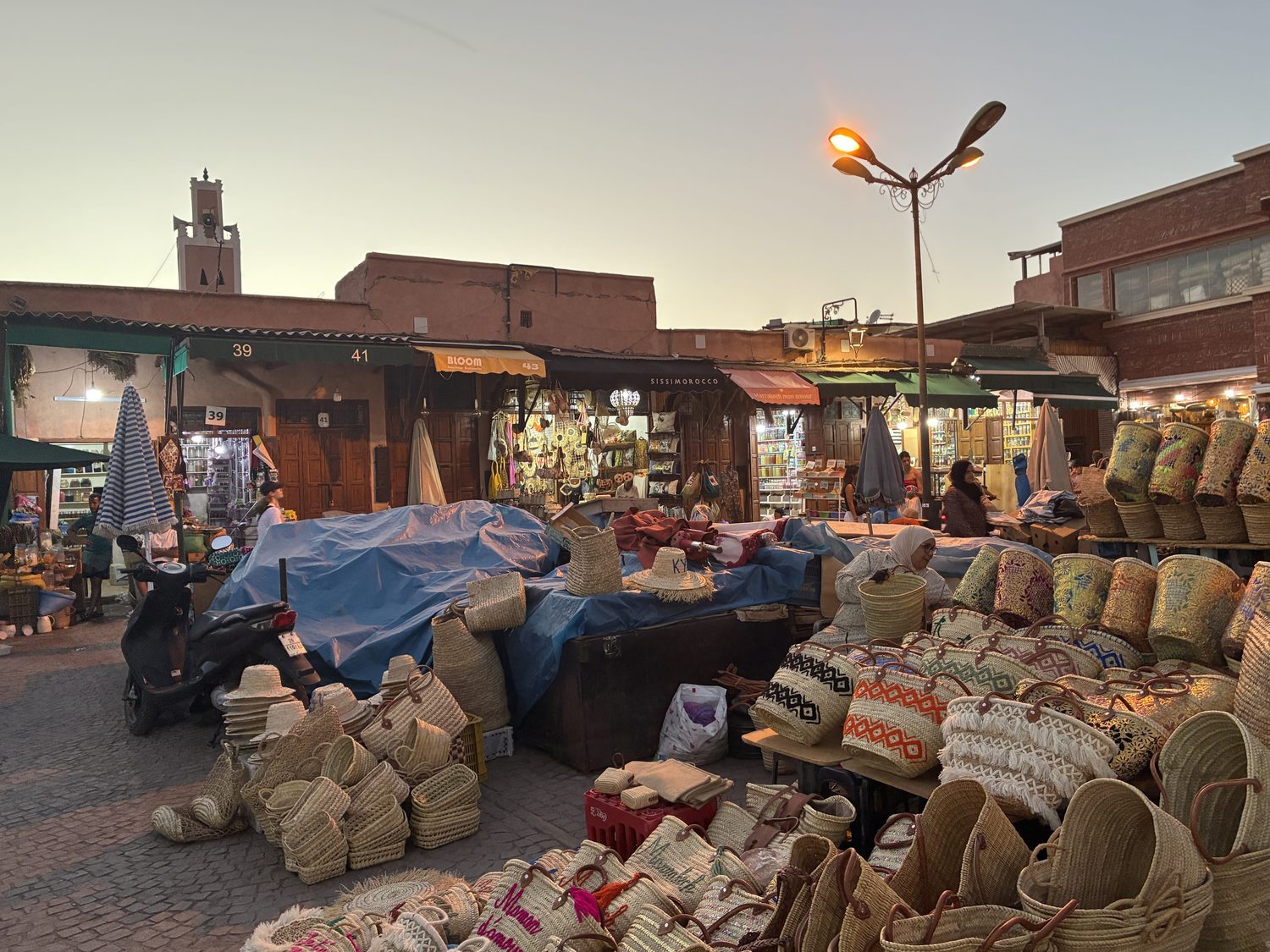
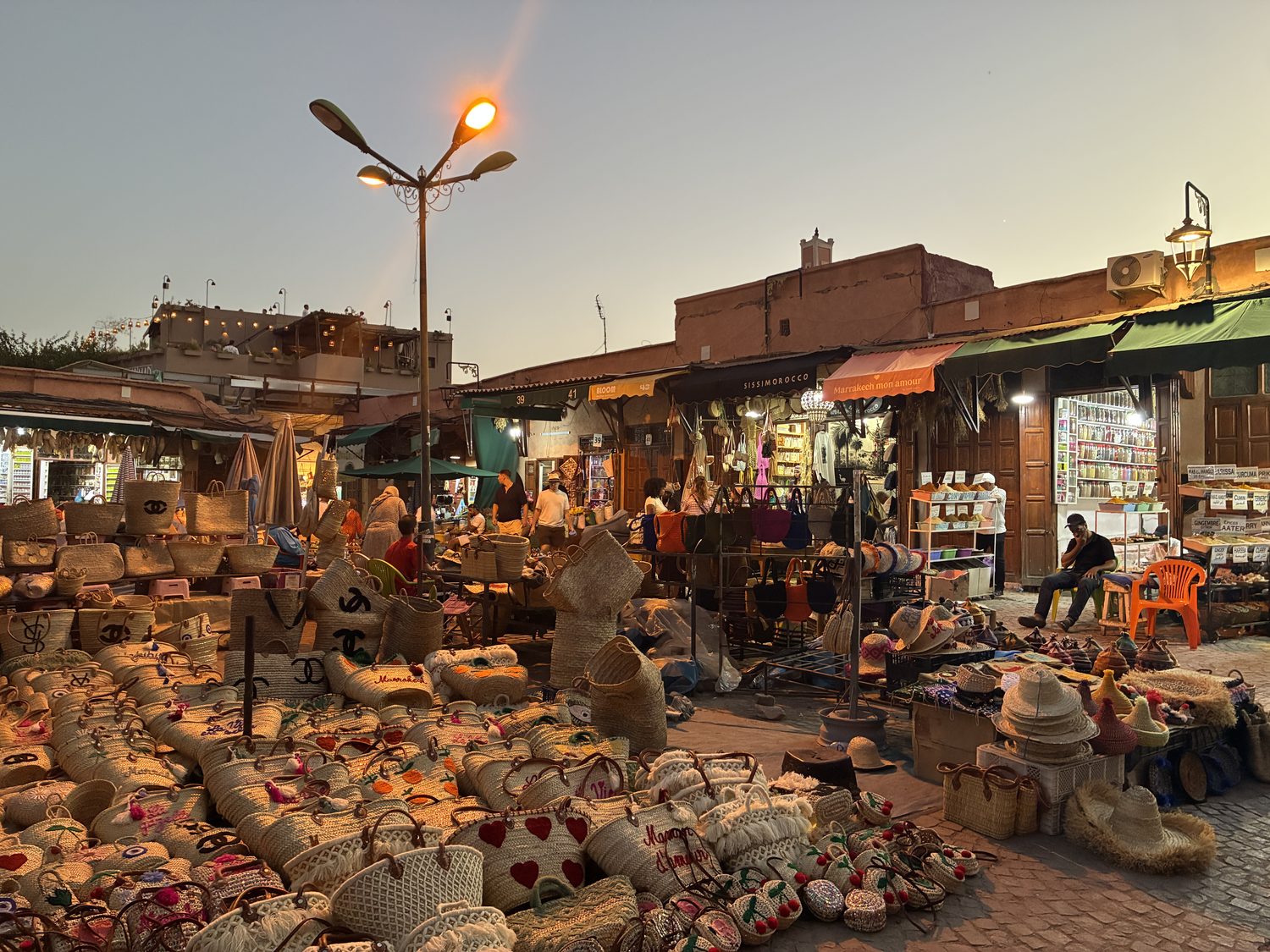
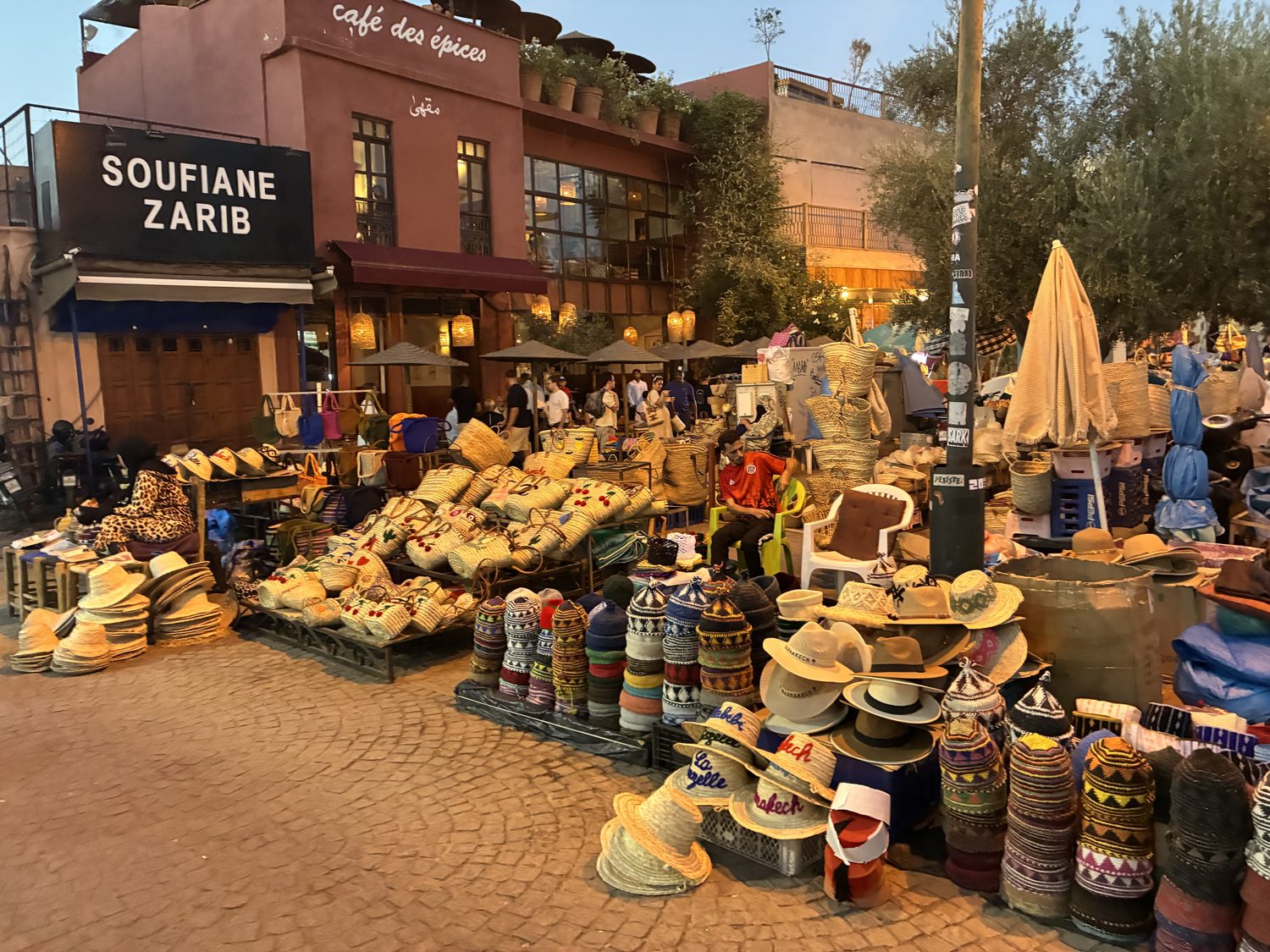

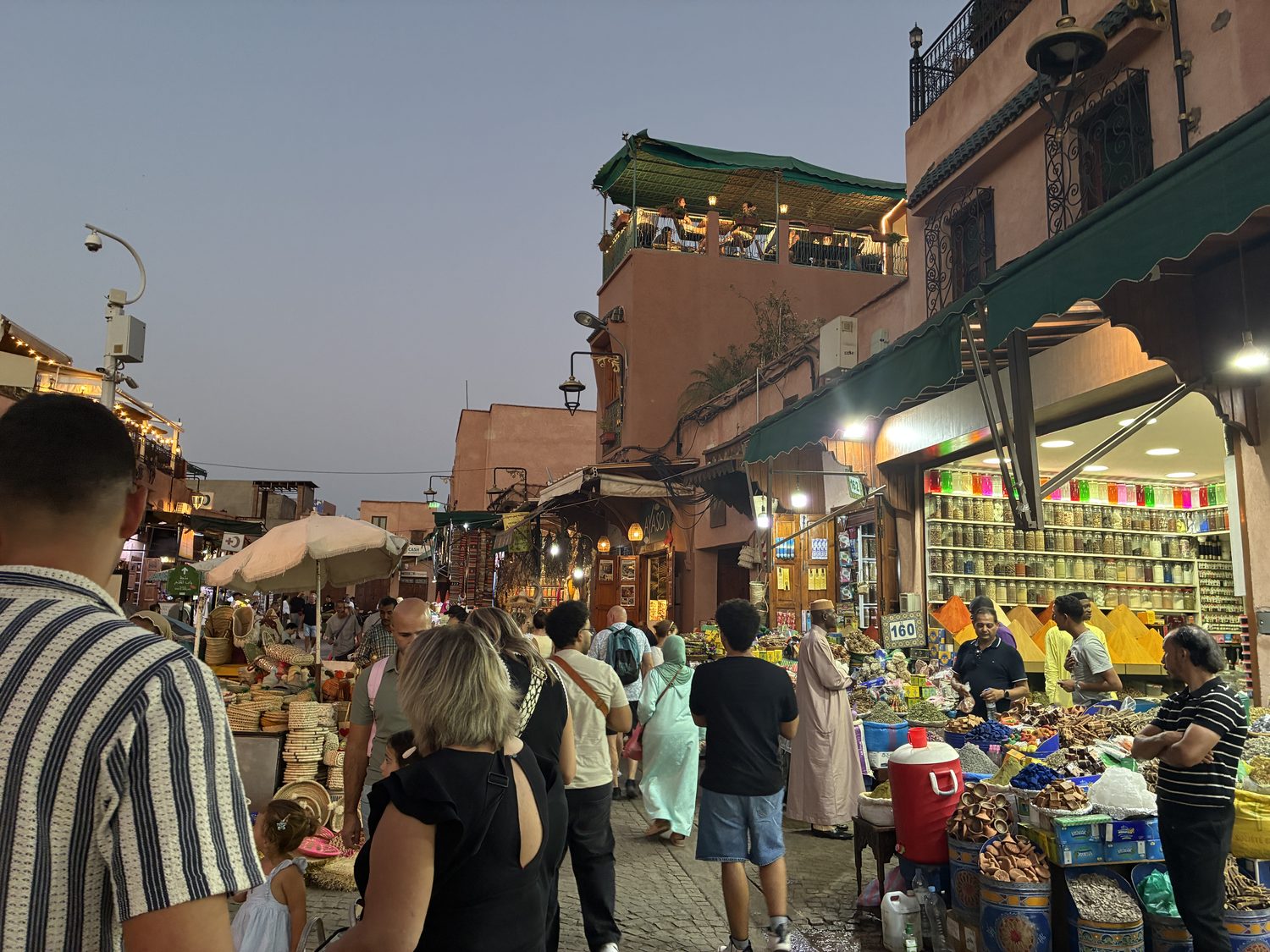
By now, it was dark in the square, looking even more festive, more crowded, more bustling, and nosier than ever, and lit up in the dark more beautiful and magical.

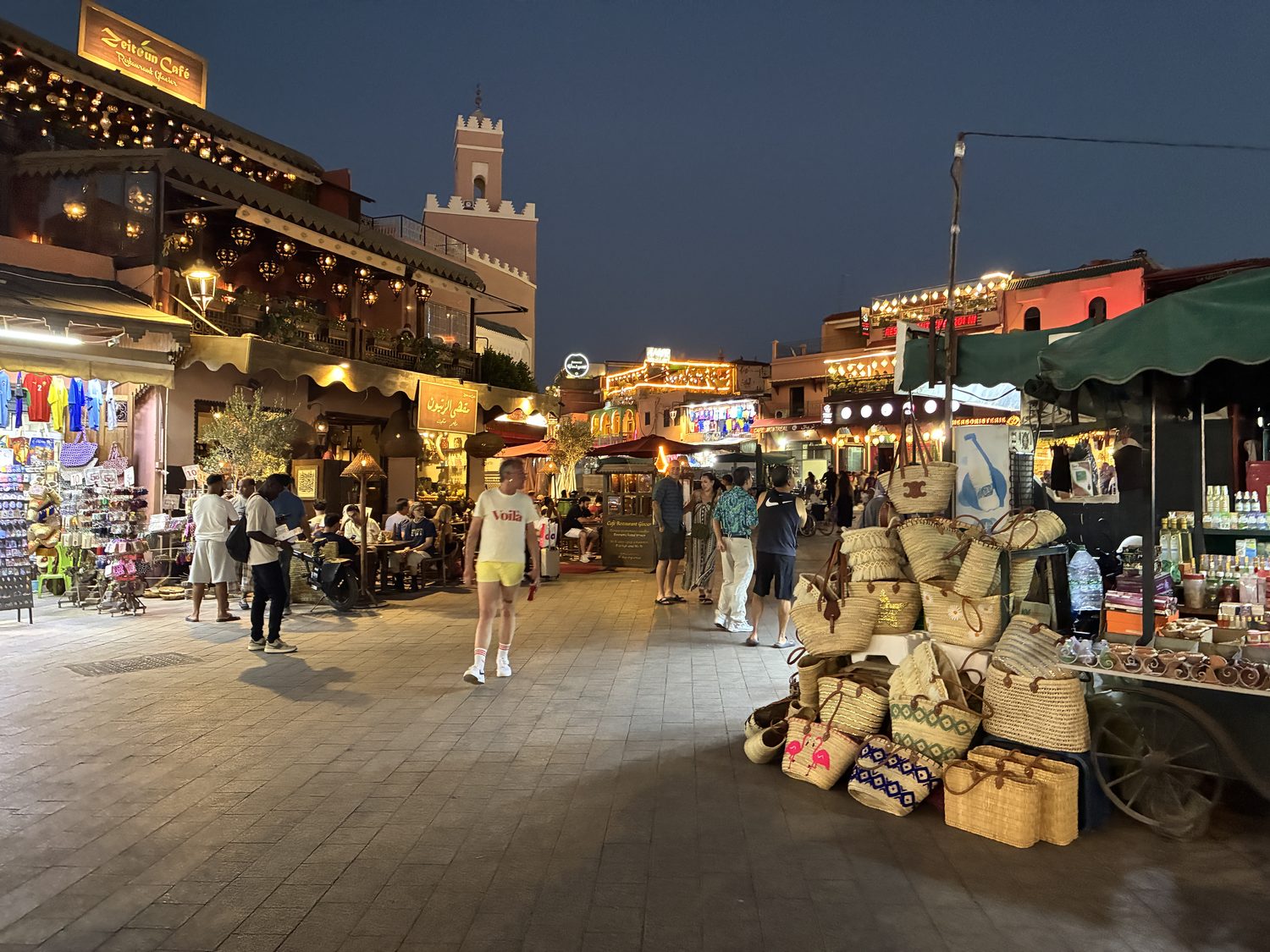
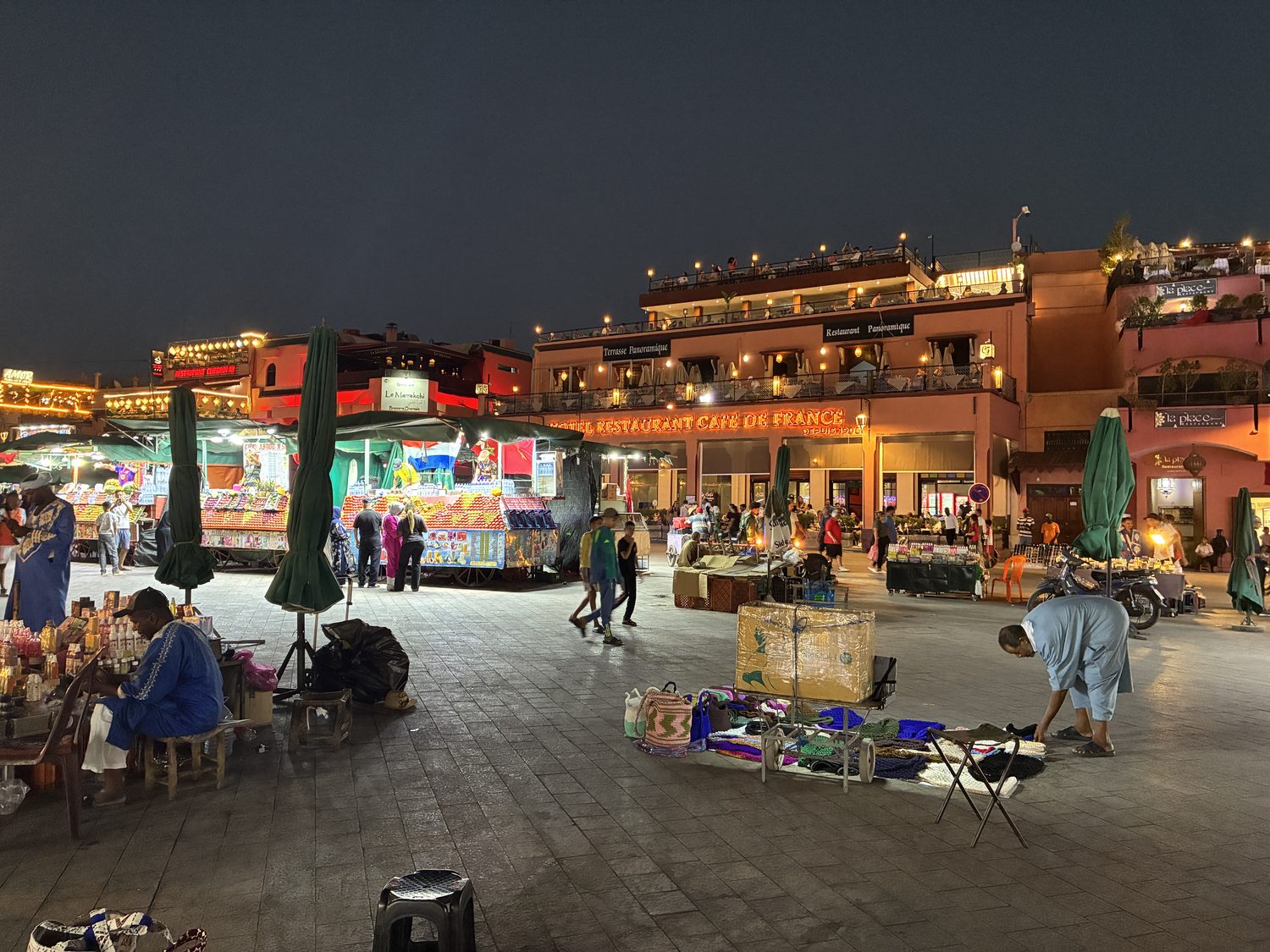
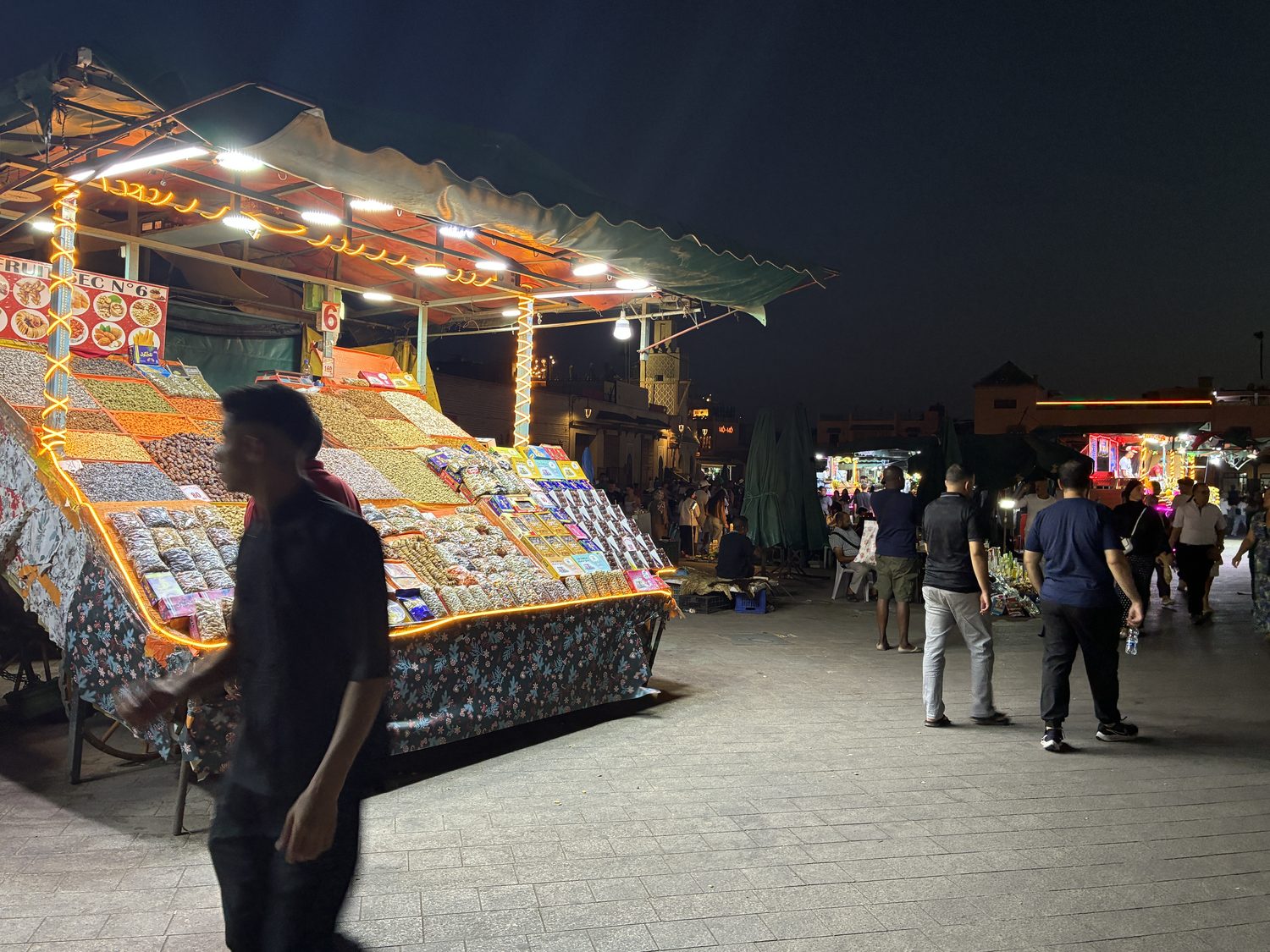
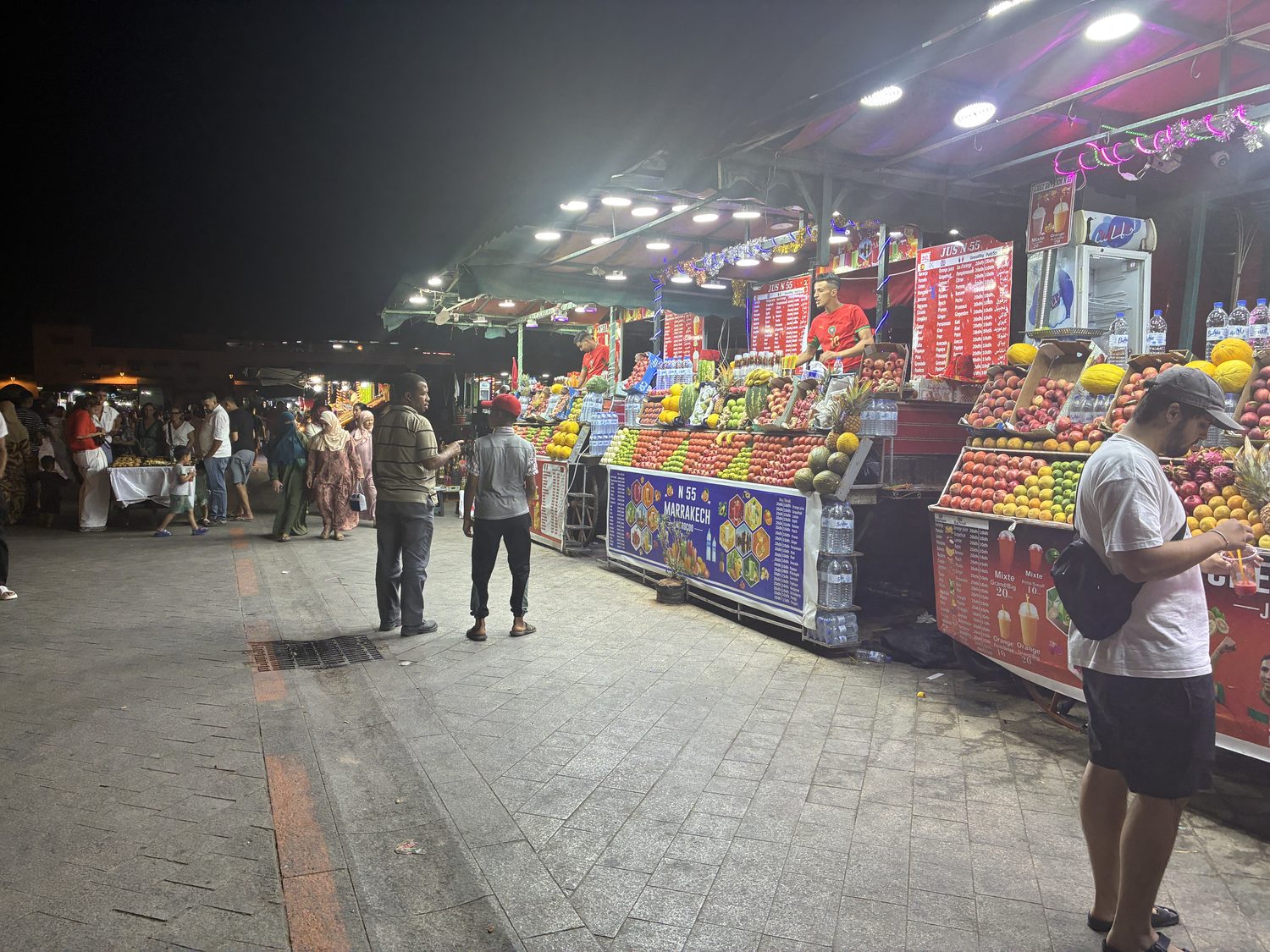



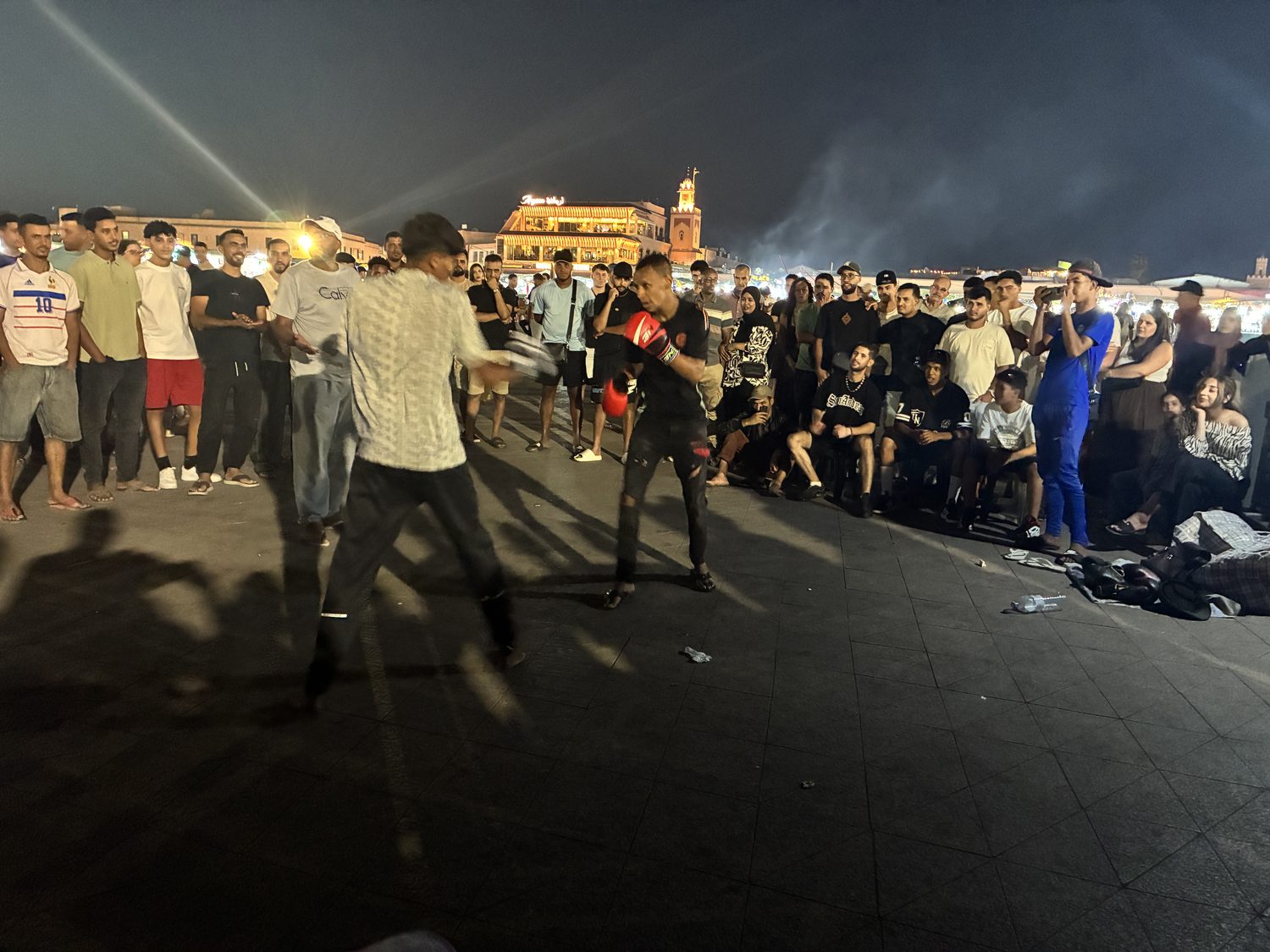
There was even street boxing. I came upon a large crowd of tourists forming a square and obviously watching a performance of some kind. What I didn’t expect was that they were watching and cheering on two young guys, fully clothed in their street clothes but with boxing gloves, beating the hell out of one another, or trying to. I actually didn’t stick around, so I’m not sure if there was one fighter taking on anyone who wanted to try their luck or two fighters just essentially sparring, or exactly what was going on, but the crowd loved it. Very primitive, but part of the spectacle and the festival that is Jemaa el-Fnaa.
I ate dinner at one of the outdoor eateries in the square, with small plates (almost tapas size) of couscous and vegetables and spiced chicken kebabs and sausage (and french fries, which seem popular in Morocco). Pretty good. It too was a bit of a scene, with dozens of locals and visitors alike eating along shared tables in this giant canvas covered open air food stand (I don’t think restaurant is the right word for it).
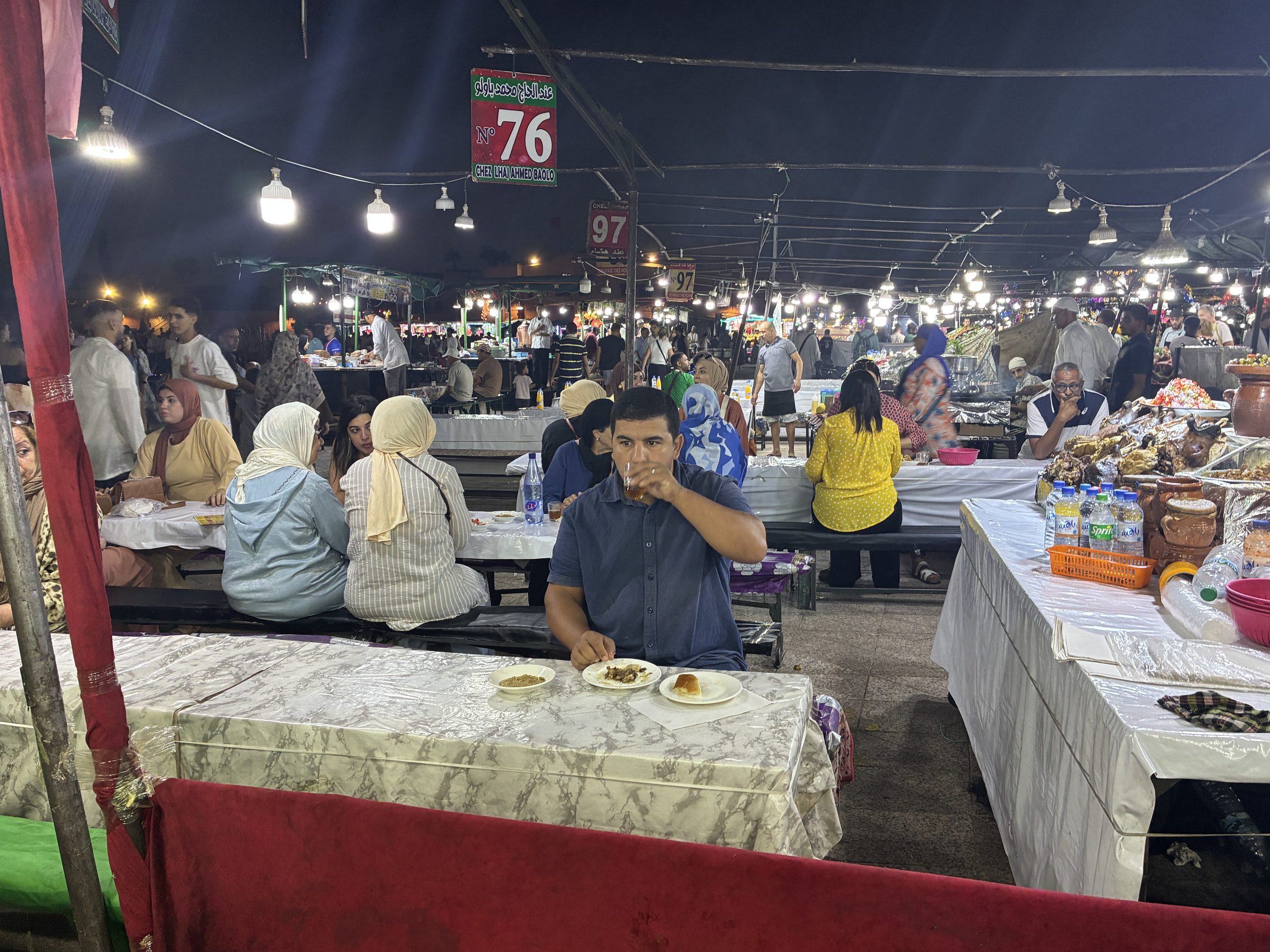
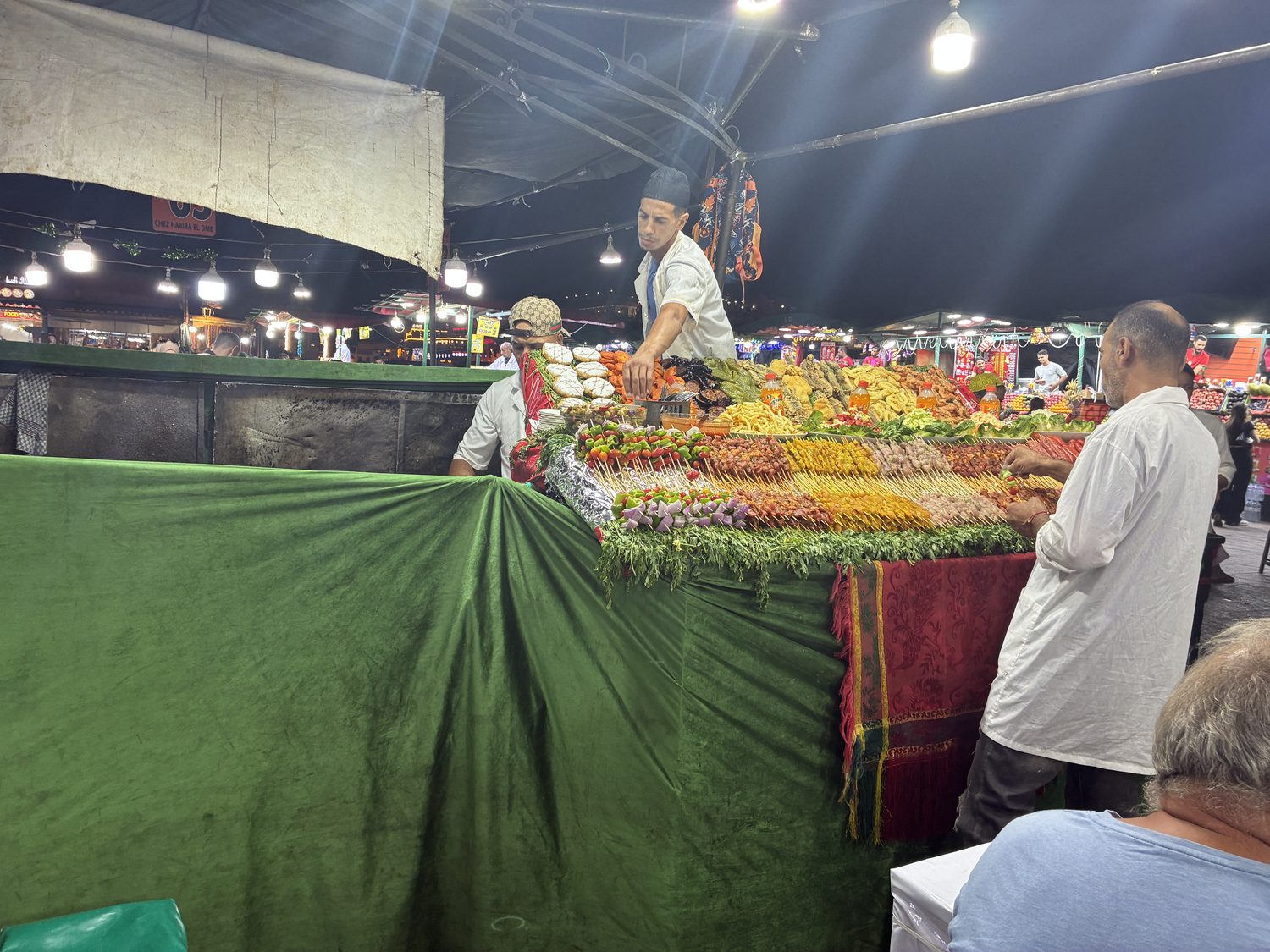

It’s not that this scene is unique to Marrakesh. I saw similar places in Vietnam for instance, and in Mexico. But it’s the combination here, and the movie-set quality of it all, and the spectacle (which is a great word to describe this experience) and festival-like quality that makes it a wow!
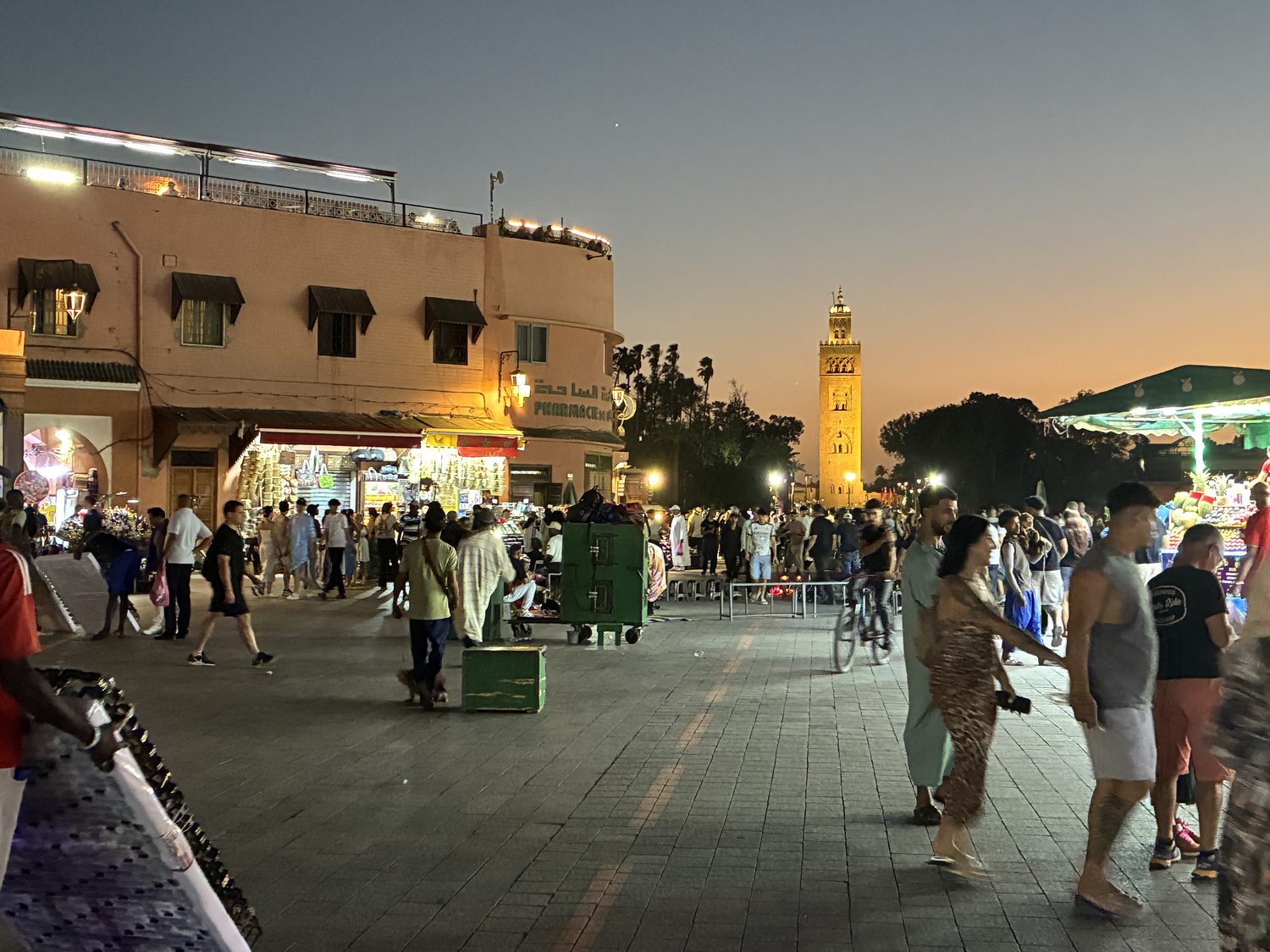
Then I headed back to the riad, just minutes away. I’ll be in Marrakesh tonight and tomorrow night, and tomorrow maybe take a guided street walk around the medina. The following day (Friday, although while I’m traveling its difficult to keep track of what day it actually is) I leave for three days on a guided trip into the Sahara. Even though the room is small, the location is good, and I considered staying here again for my three remaining nights after getting back from that trip, but there’s no vacancies. Just as well. Instead, I booked a room at a regular ol’ hotel in the downtown area, and I’ll spend one day checking out the main city of Marrakesh. I didn’t do that in either Rabat or Fes, but I’d like to get a broader view of the city here, and not just the medina.
Marrakesh, by the way, with a population of about one million, is the fifth largest city in Morocco. It too, of course, is medieval, dating back to the 11th century when it was founded, at which time it was the capital of Morocco, from 1070 until 1269, during which time it grew in size tremendously. During the 13th century, the city lost its position as capital, but was back in the saddle as capital city from 1554 until 1659, at which point, Meknes, and later Fes and Rabat, became politically more important. But although Marrakesh had its historical up and downs as capital over the centuries, it always remained an important city, and a major trading and and cultural center. Then came the French protectorate in 1912, and while Marrakesh’s medina was preserved, the city outside the medina, the Gueliz, was further developed and rebuilt in European style, which is what I saw today. After independence in 1956, Marrakesh became increasingly important as a tourist destination, and is now one of Morocco’s major tourist cities.
And after that quick history lesson, I’ll say good night.