Hoi An, by way of Da Nang and the Hai Van Pass.
Up early and on the street by a little after 6 to get a Grab taxi to the station for my 7:05 train to Da Nang. Laura, from the hotel, asked if I wanted a sandwich for the ride, for which I thanked her but said I didn’t, so she instead made me a small care package with bananas and water. Again, very nice.
The taxi driver was friendly and could speak a little English. He told me I should come back to Vietnam and take a young wife, maybe age 30.

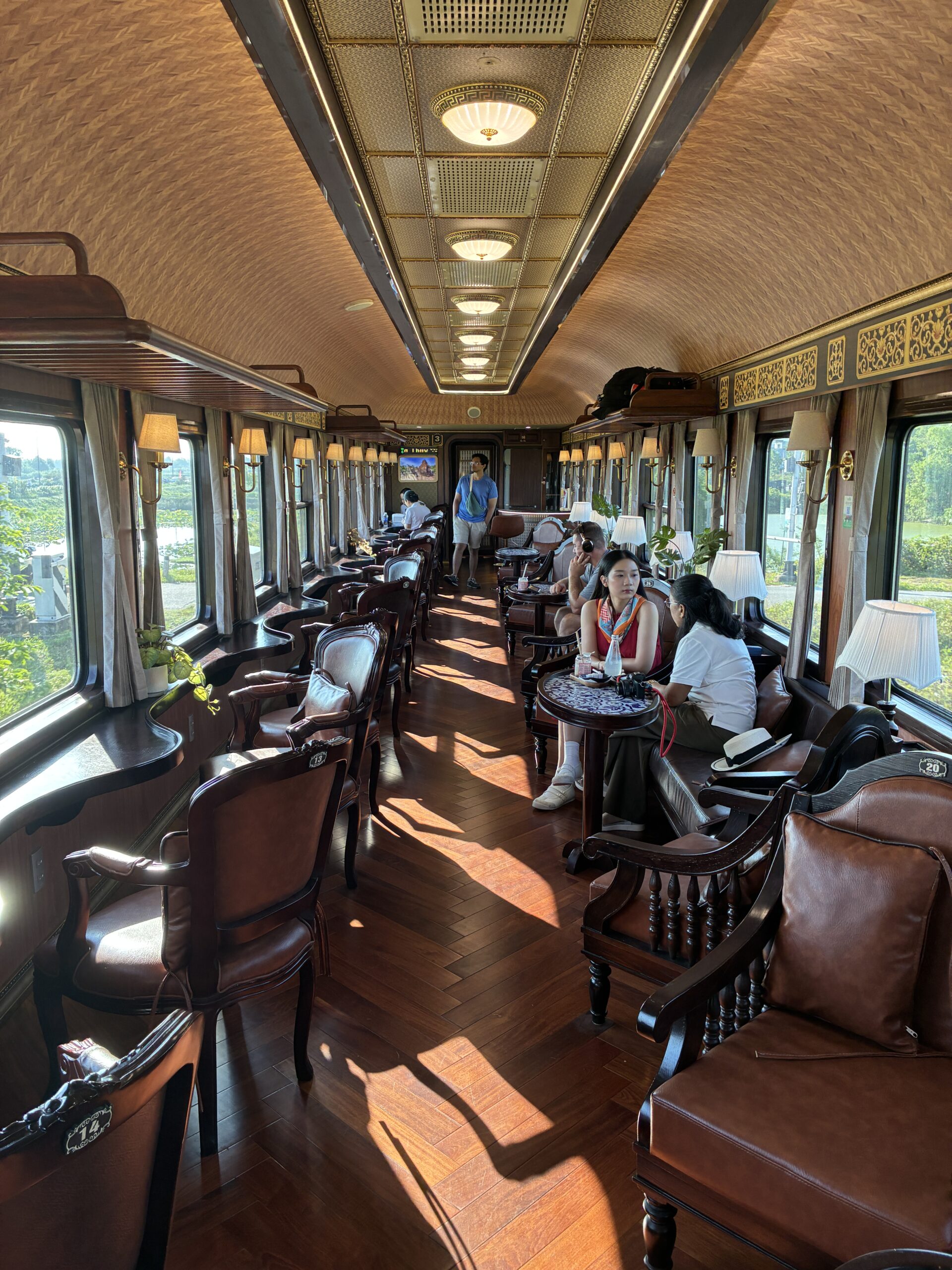
I took the “heritage” train, which is intended for the scenic views along the way, and through the Hai Van Pass. It’s a luxury, air conditioned train designed for tourists. The Hai Van Pass is known as the “Sea Cloud Pass,” and runs about 13 miles, reaching an elevation of roughly 1,640 feet. The trip to Da Nang is about 64 miles south east, and takes about 3 hours, but makes a 10 minute or so stop at Lang Co Bay to allow passengers to take photos. That part was pretty uneventful though, and there actually were no pictures to take.
Actually, I found myself on the way to Da Nang yesterday while on the scooter, after one of my wrong turns. I thought I was going the wrong way, and that was confirmed when I saw the sign telling me Da Nang was 60 miles away. 😋


There was an observation car on the train with larger seats facing larger windows, and also a community car, with live music performed by two musicians played on traditional instruments, but in addition to traditional music they also played contemporary music with the traditional sound made by their instruments. It’s a very busy car, also serving food, with lots of people taking photos of one another, and even dancing.



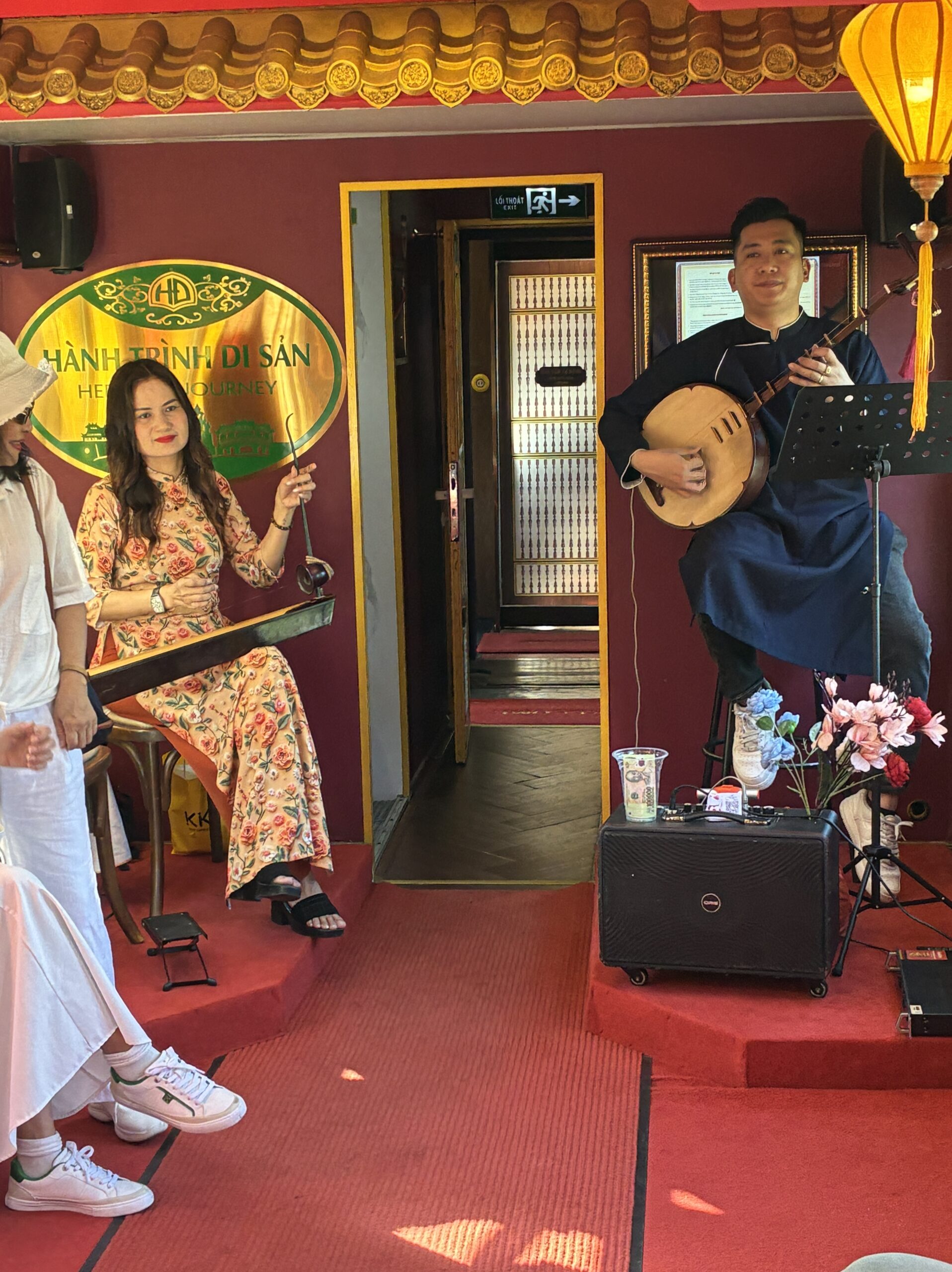


And then there was karaoke, with some pretty good singers, actually, both traditional and pop. People were in a very lively and friendly mood, and I was approached by quite a few people to ask about where I was from and going, etc., with one woman, a retired teacher. heading down to Da Nang for a few days with her sisters, telling me I was handsome. Hah!! They even took photos with me, and another guy took a couple of shots of me. Friendly people in a friendly mood.


The scenery was more of what I’d expected and hoped for on my long train journey from Hanoi to Hue the other day, and this train was not disappointing as we ran along the coast. Until Lang Co Bay station, the train was mostly inland, although increasingly headed toward the coast, where the South China Sea (the East Sea) came into view, and where the train started hugging the coastline all the way to Da Nang. The views were great until Lang Co Bay , but got still more impressive after, as we approached and entered the Hai Van Pass.
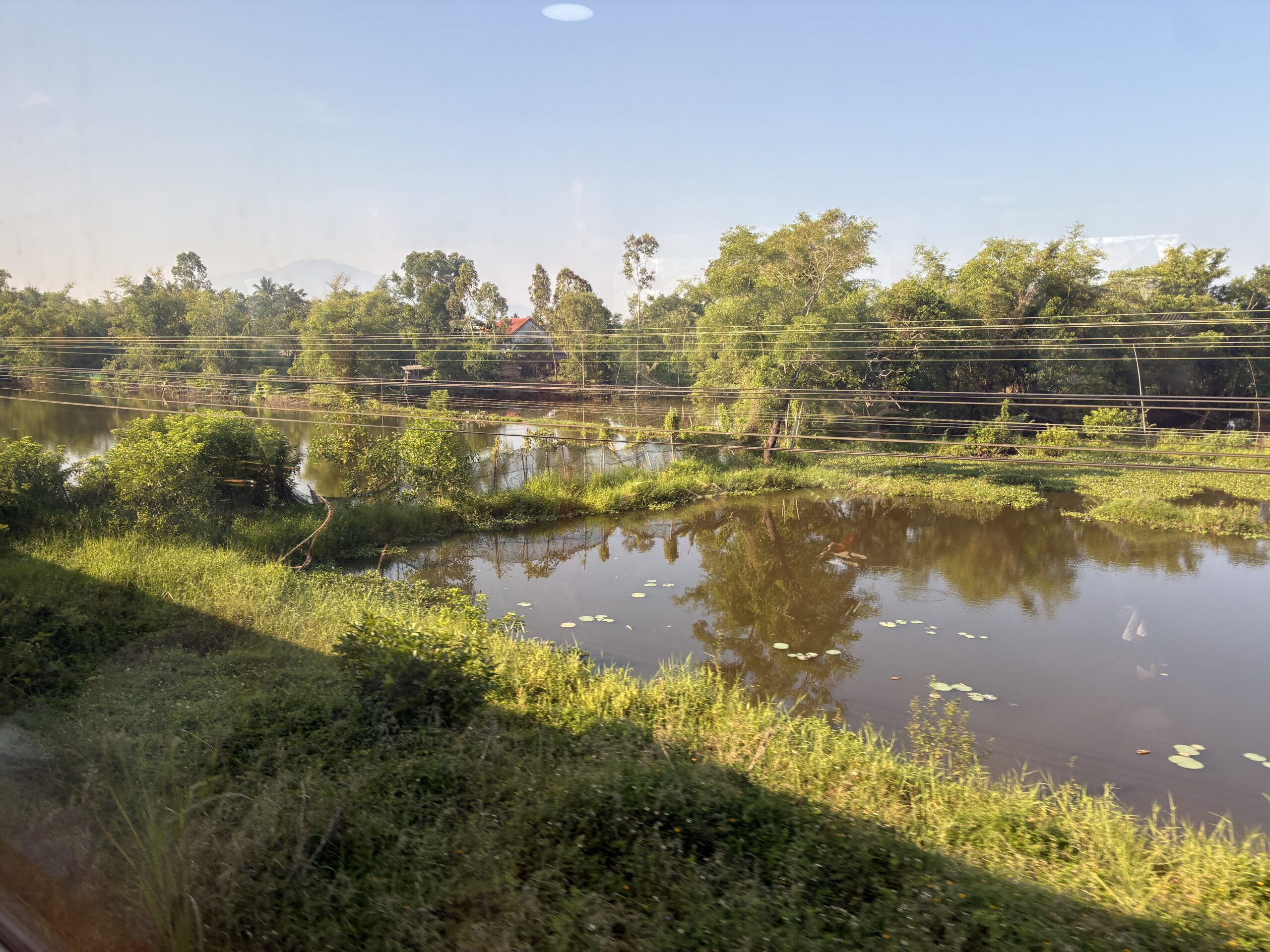

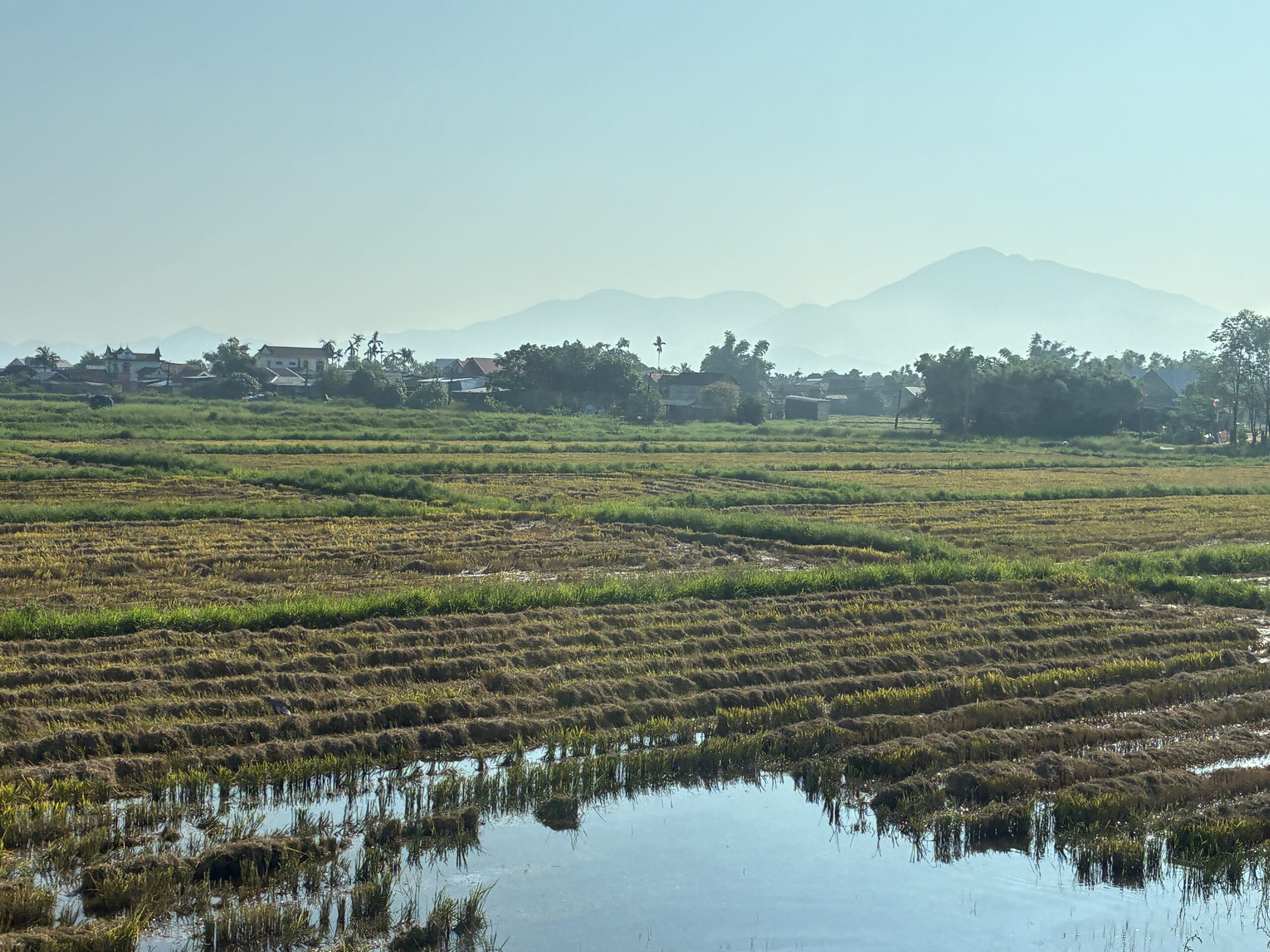
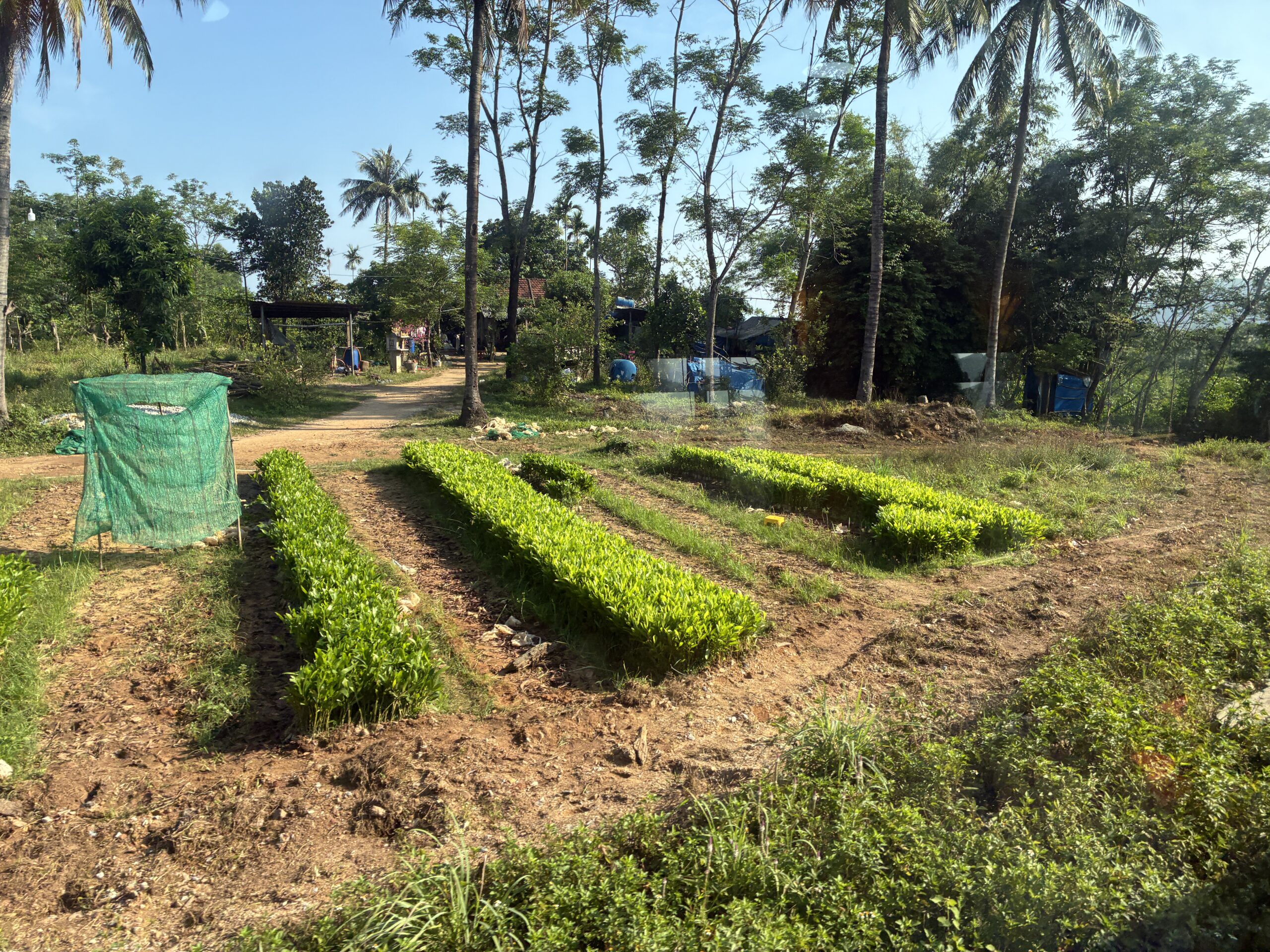
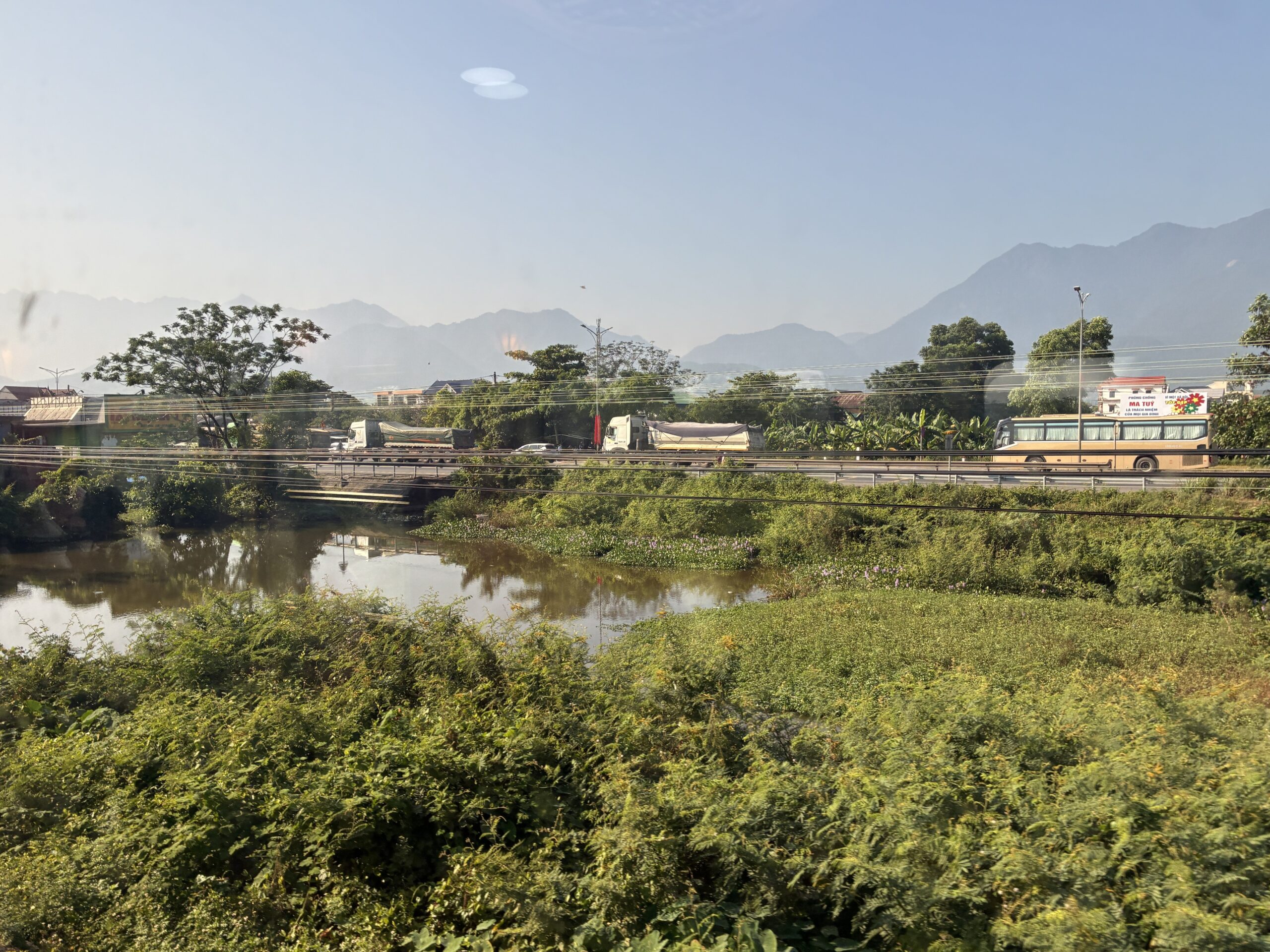
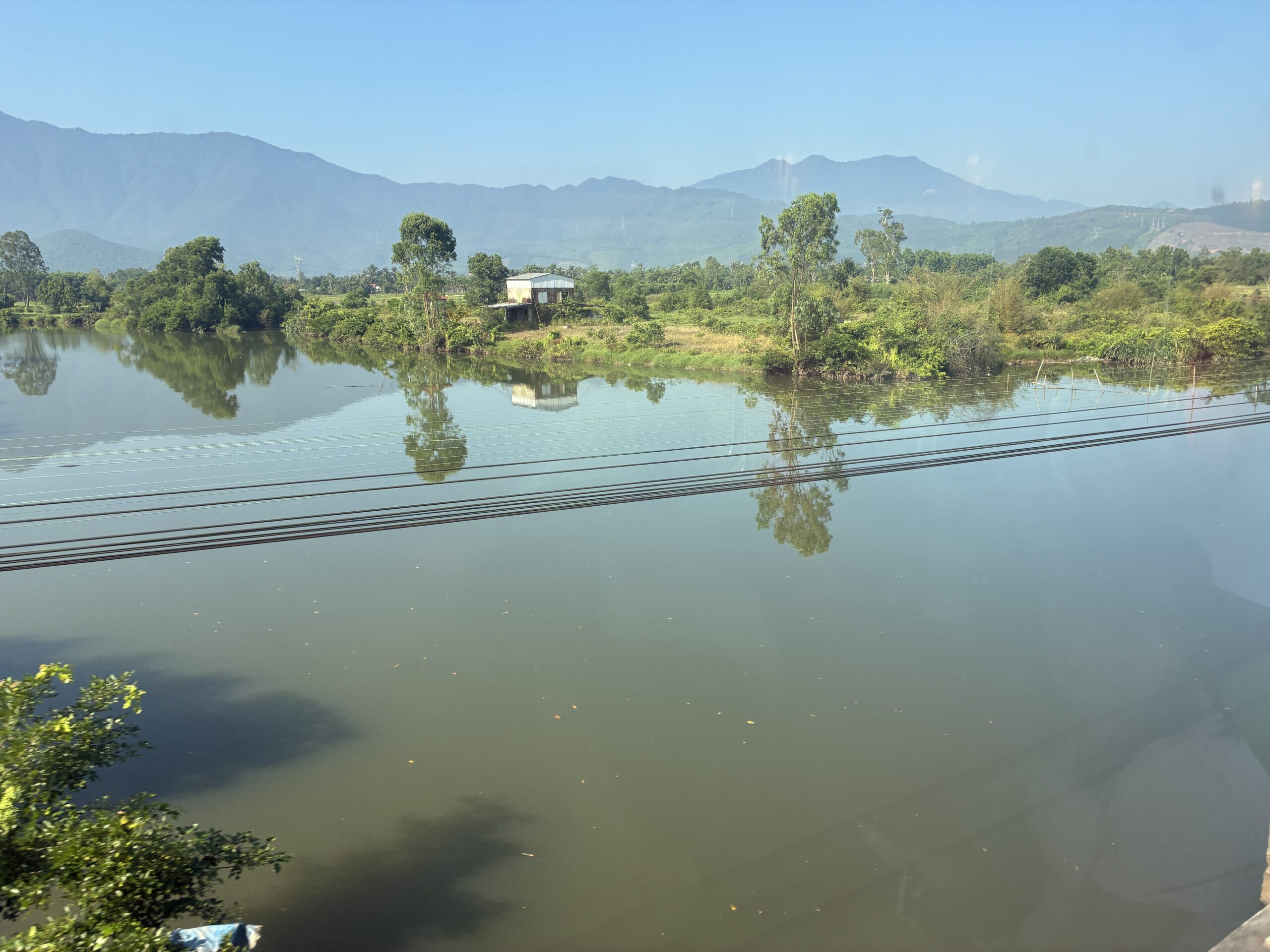


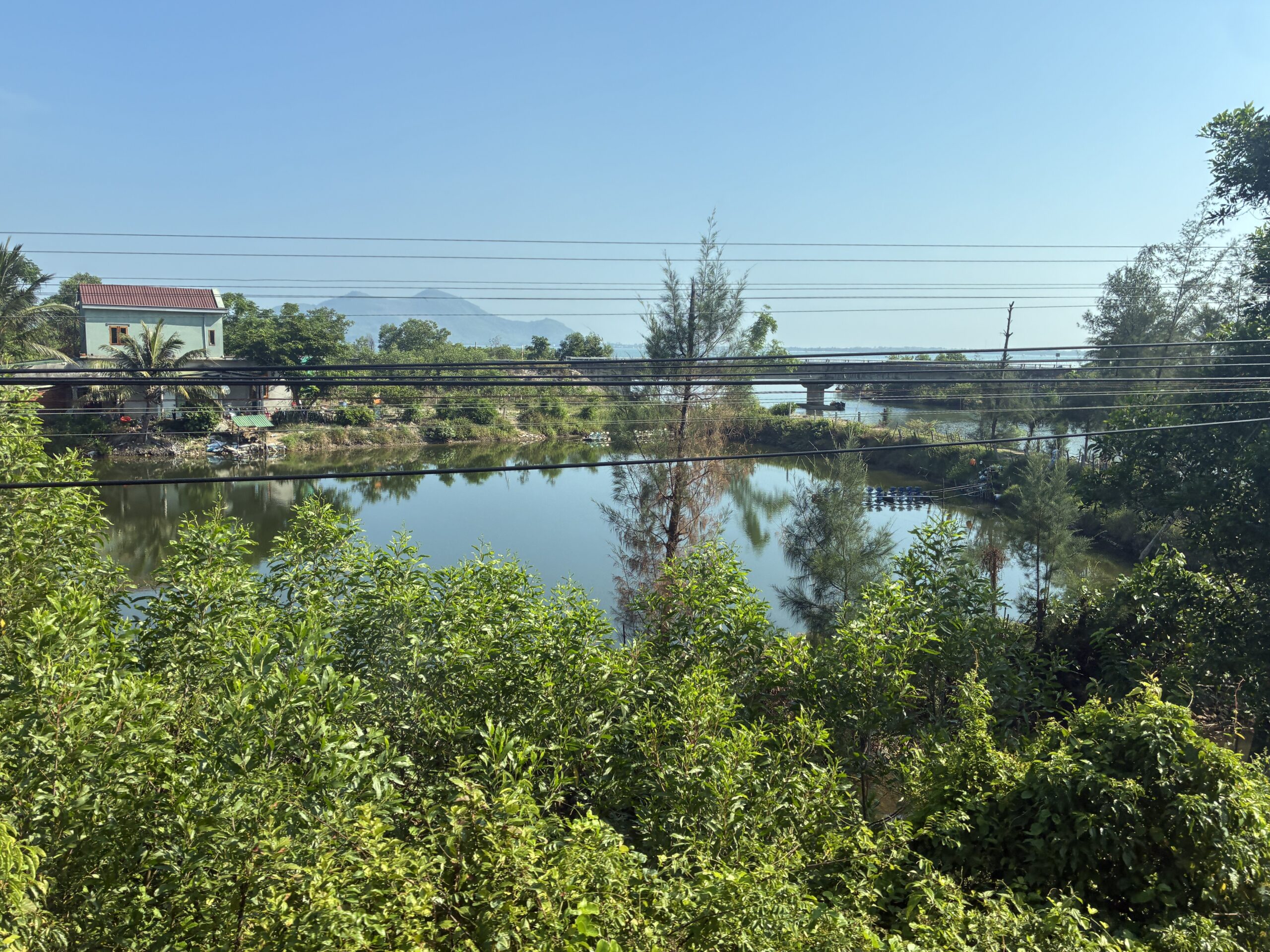
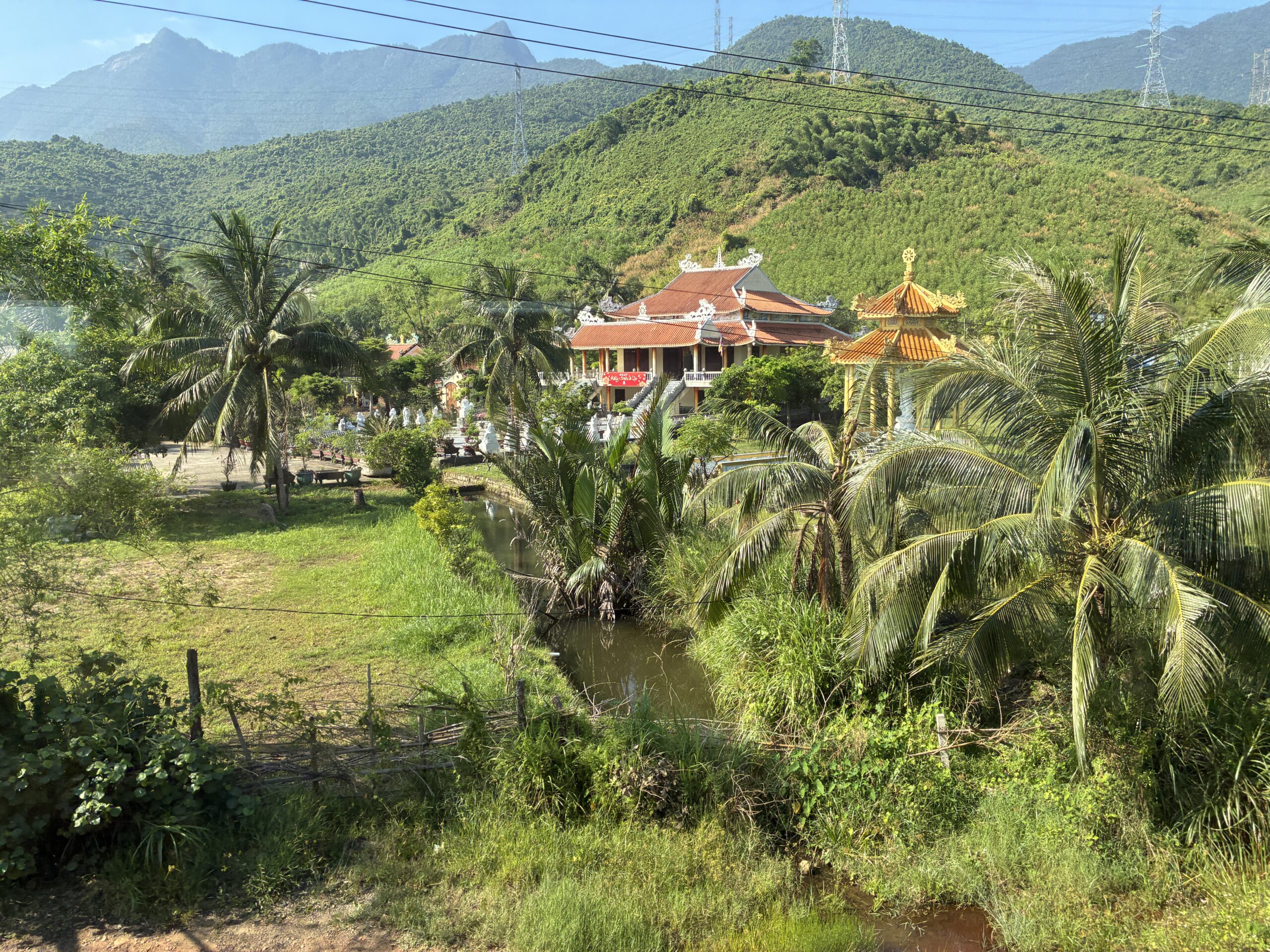
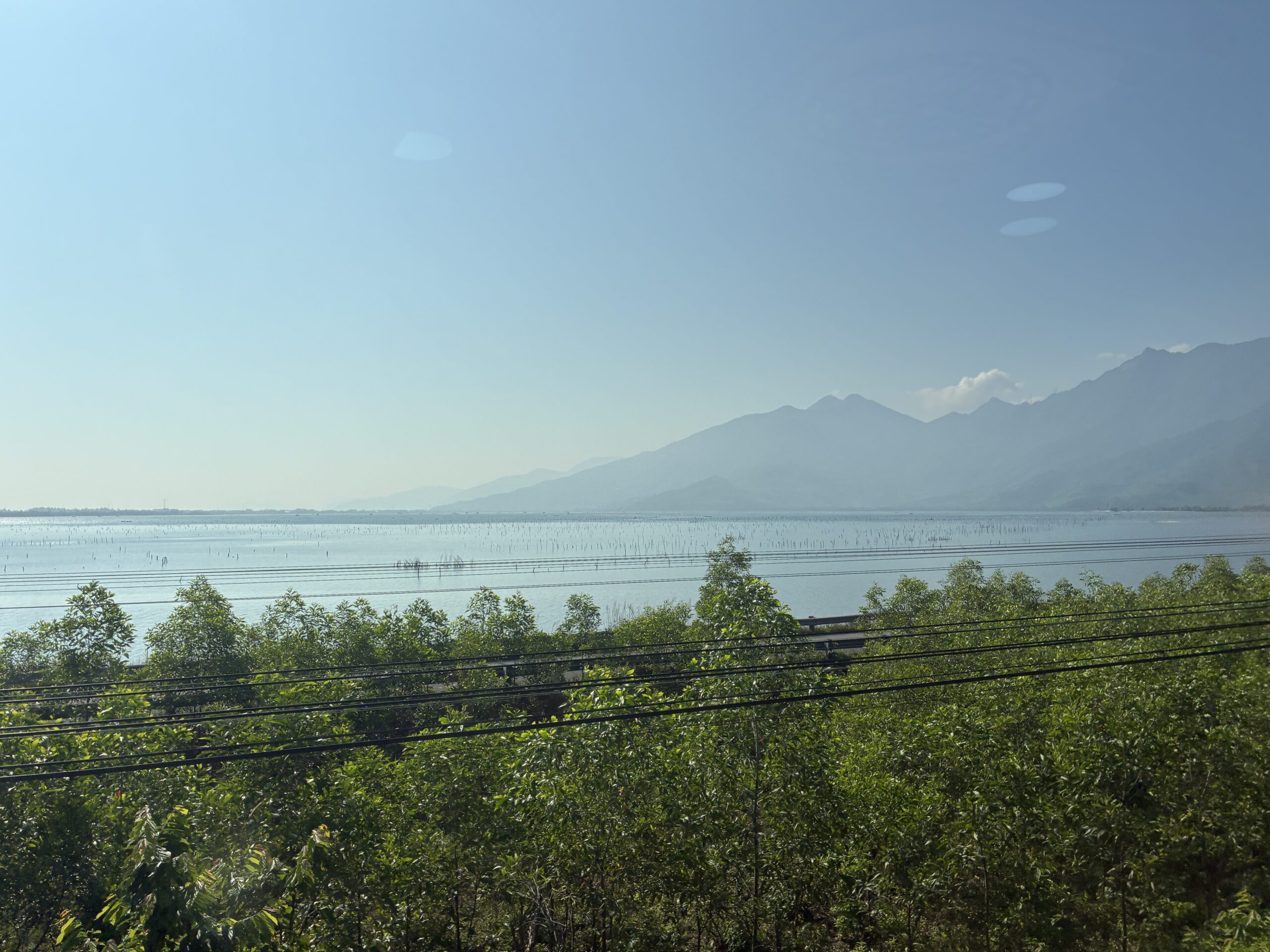
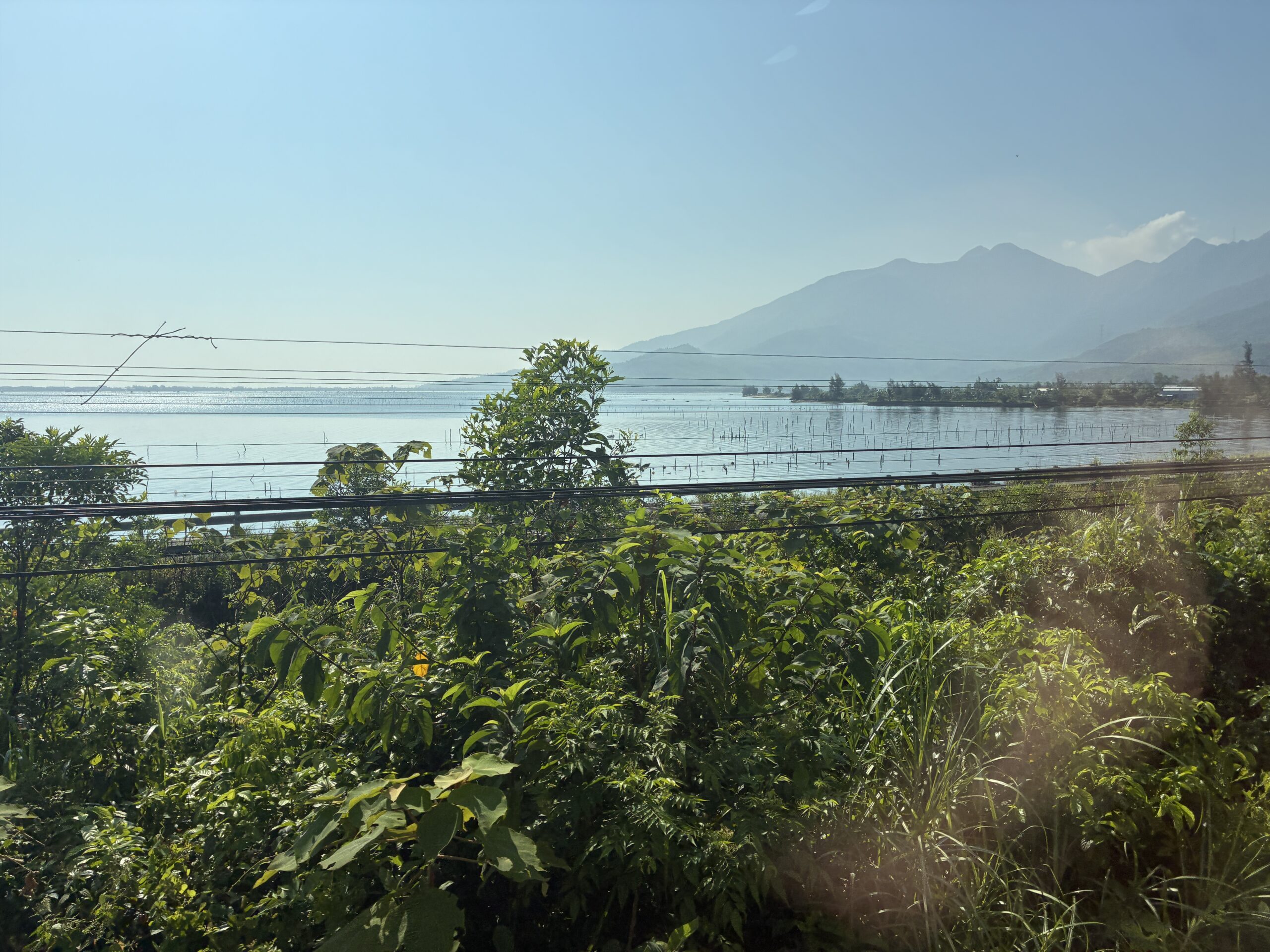
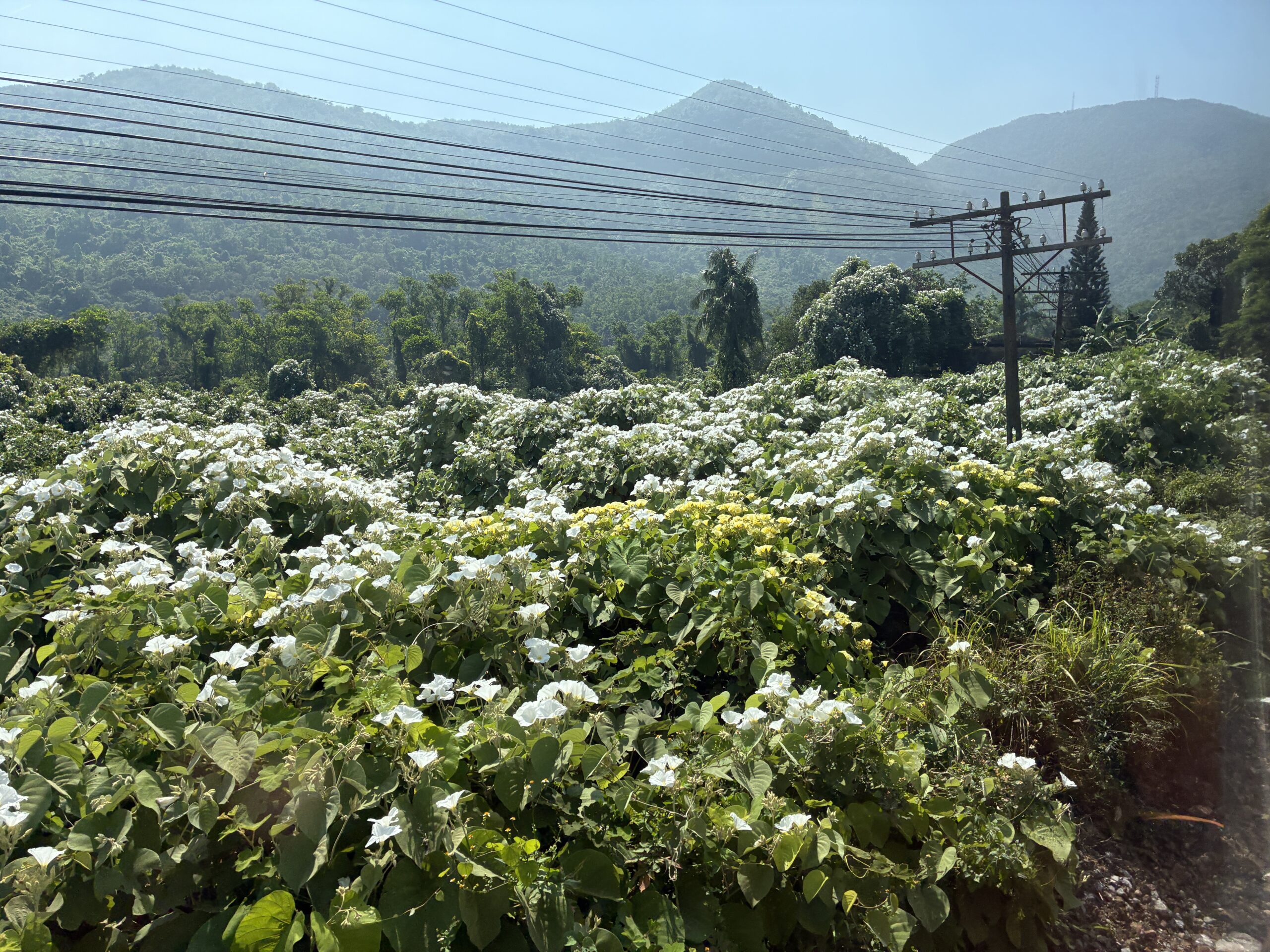
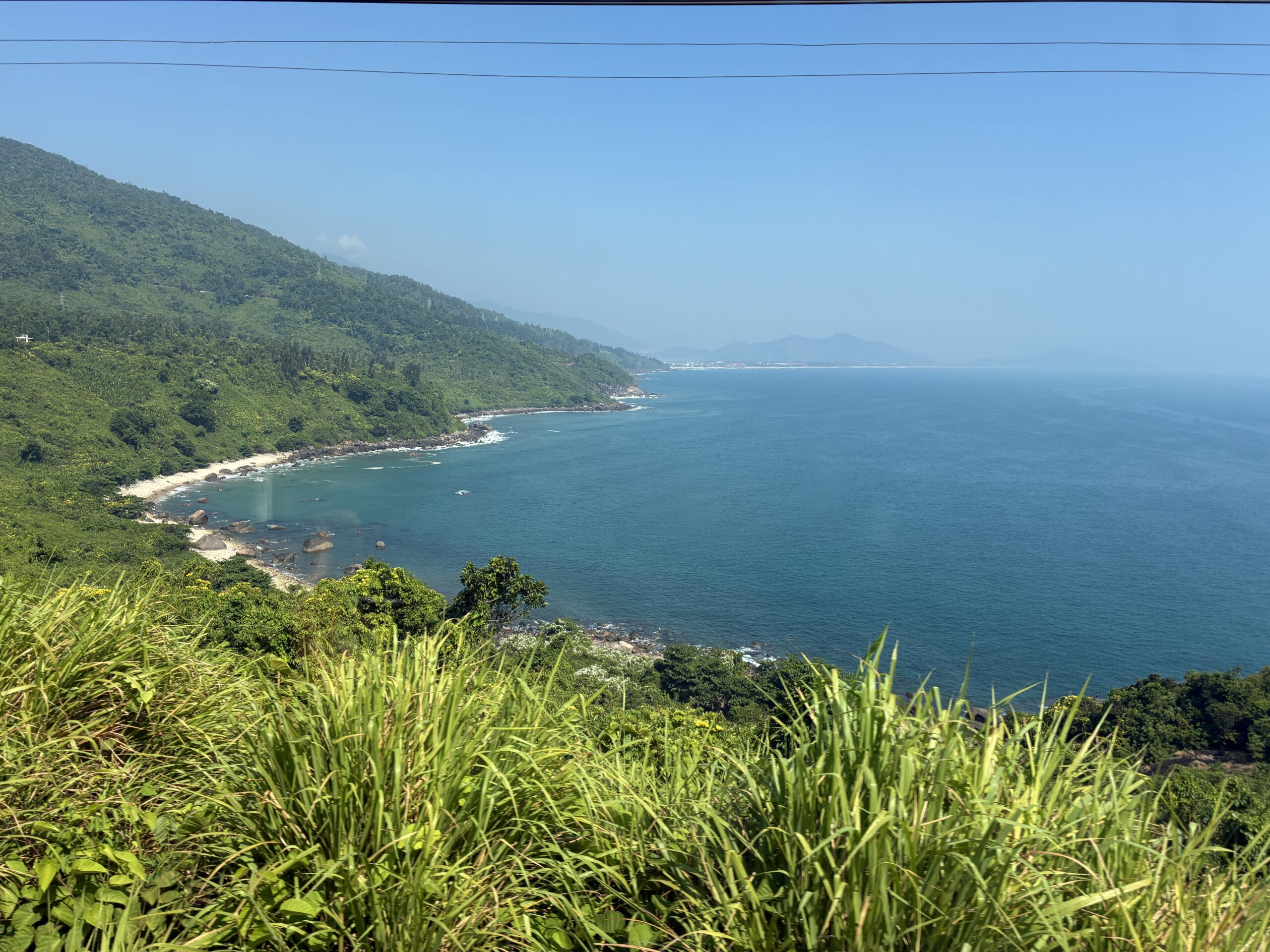
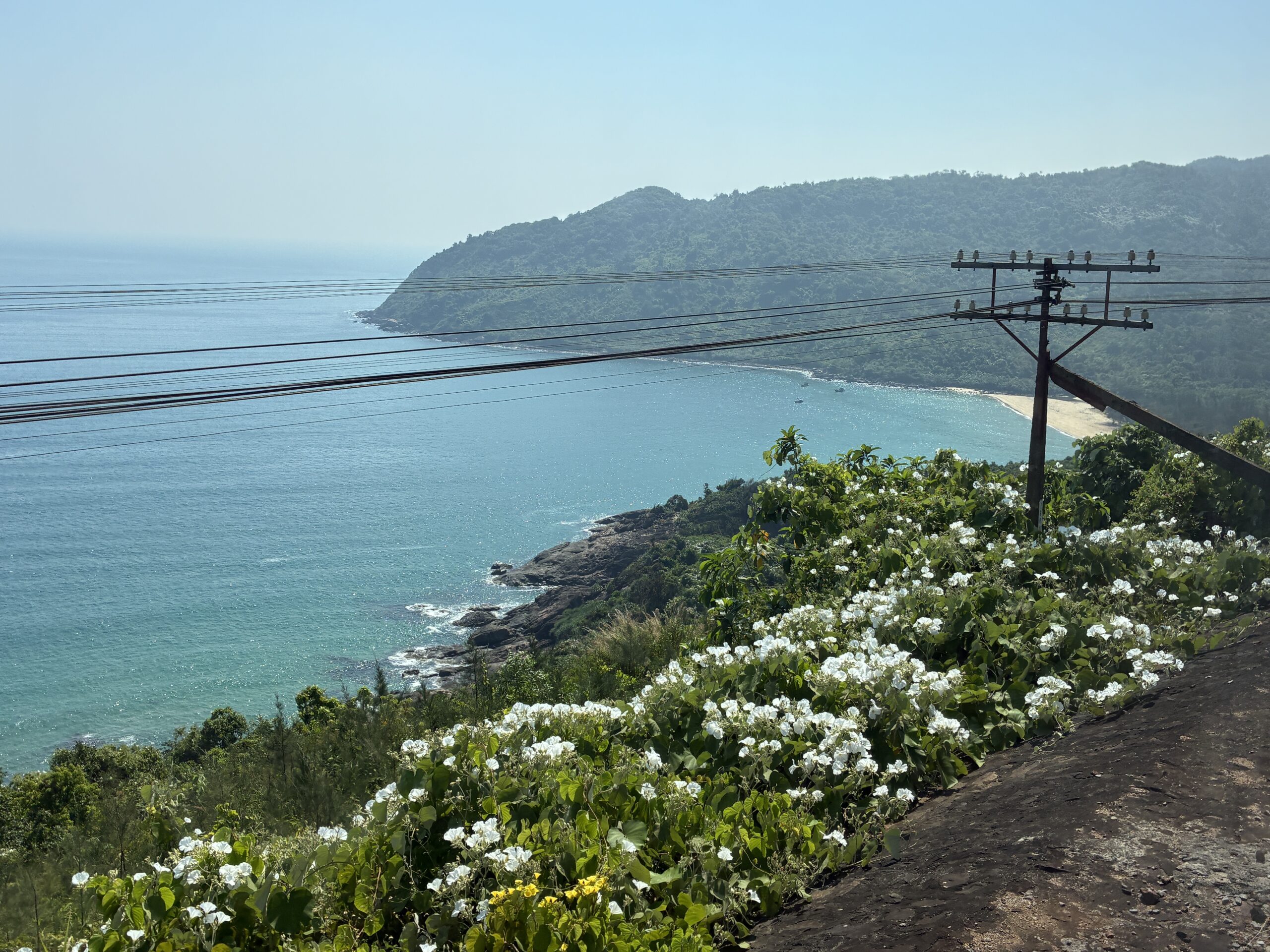
The stop at Lang Co Bay wasn’t in a picturesque spot at all, just in the station with no scenic photos there, which was surprising as I thought the whole point of the extended stop was for photo opportunities of the Lang Co Bay, but as we left the station and headed into the pass, the views of the bay and the China Sea were great. Still, photos had to be shot through windows that caught reflections from inside the car and were dirty on the outside, so photos were once again not as bright and clear as they would otherwise be.
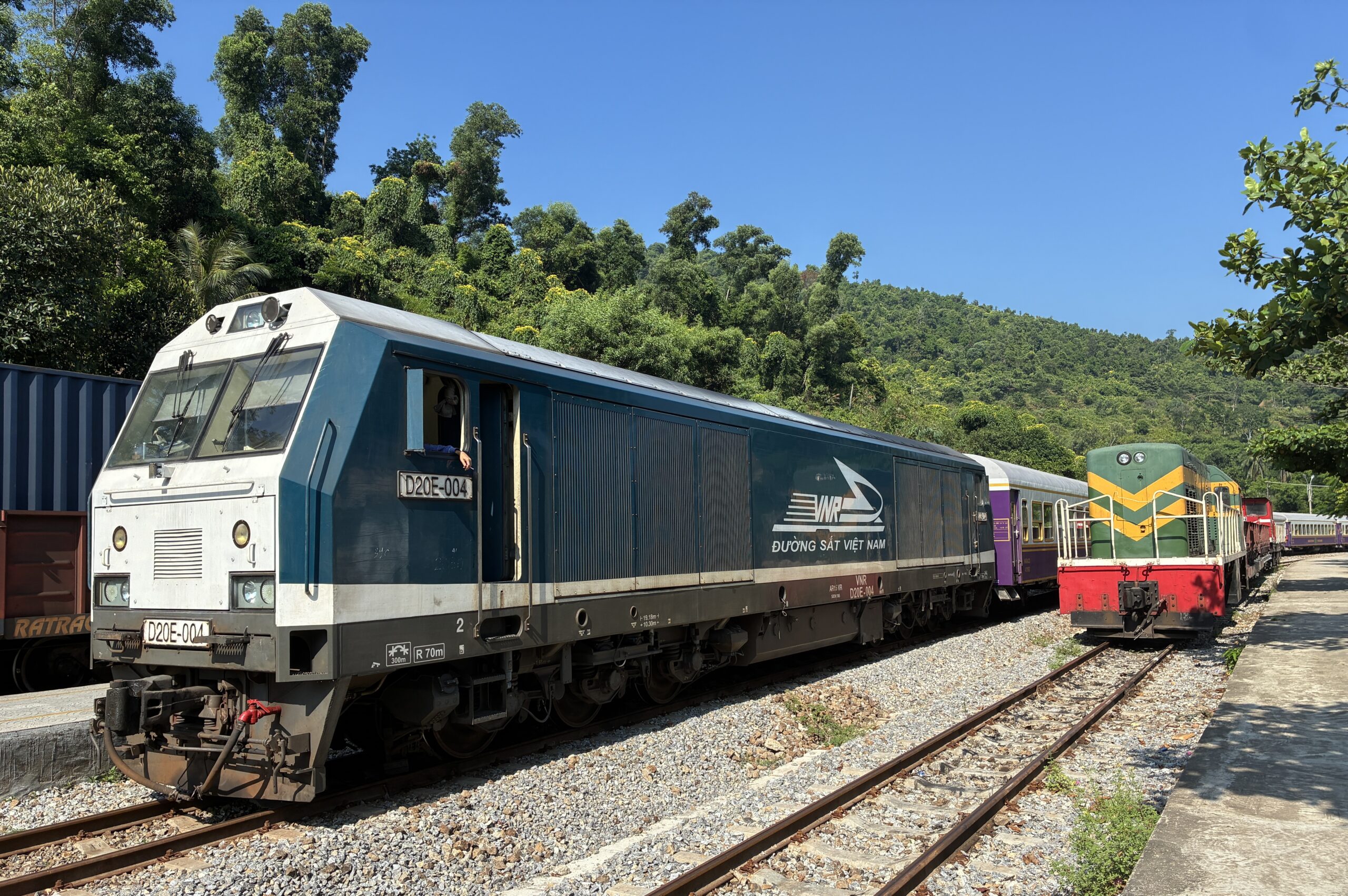


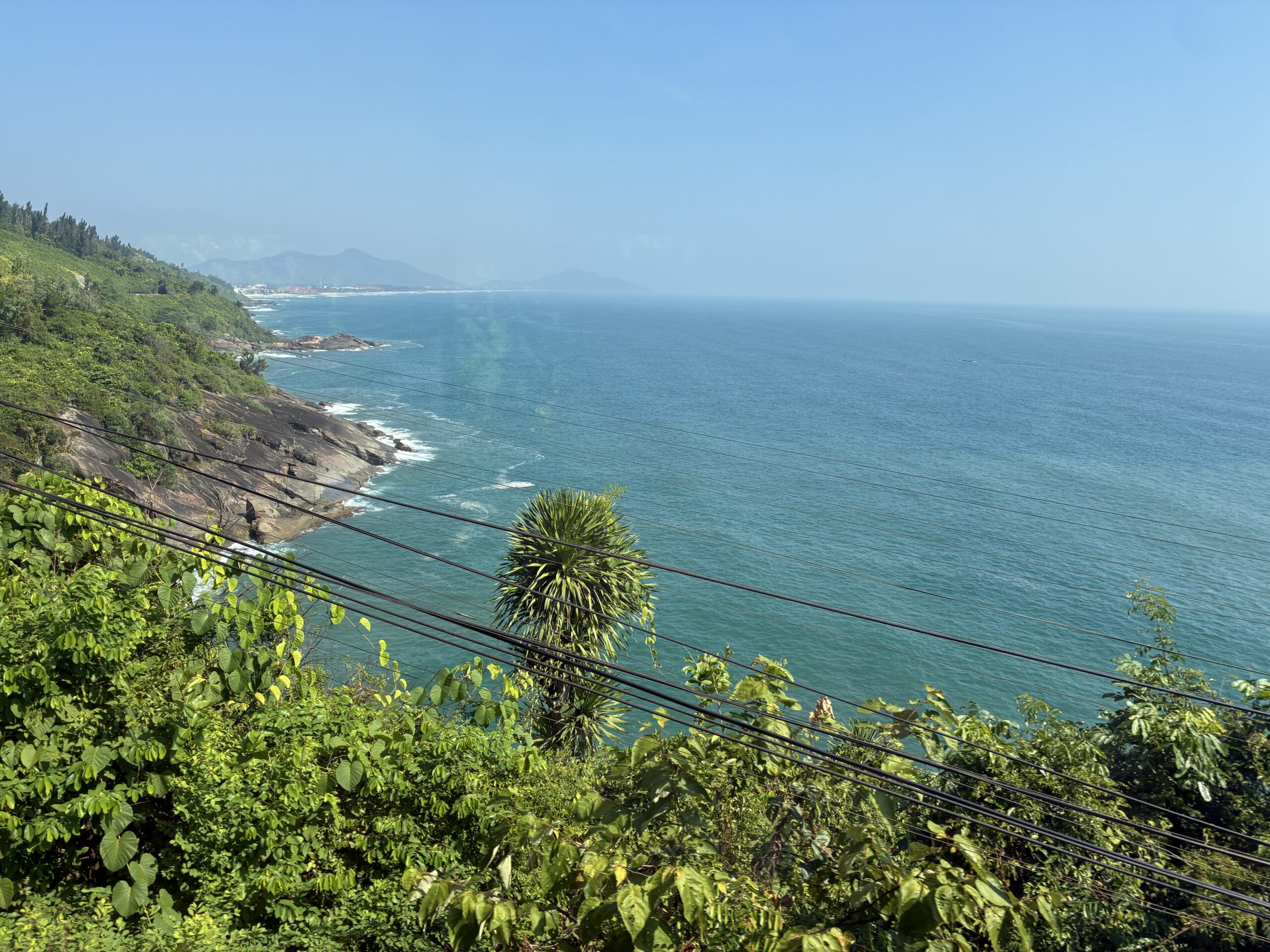


As we moved through the pass, views of the China Sea below and the mountains around us, banks of wild flowers, first yellow and then white, filled the mountain side, running all the way down to the sea.


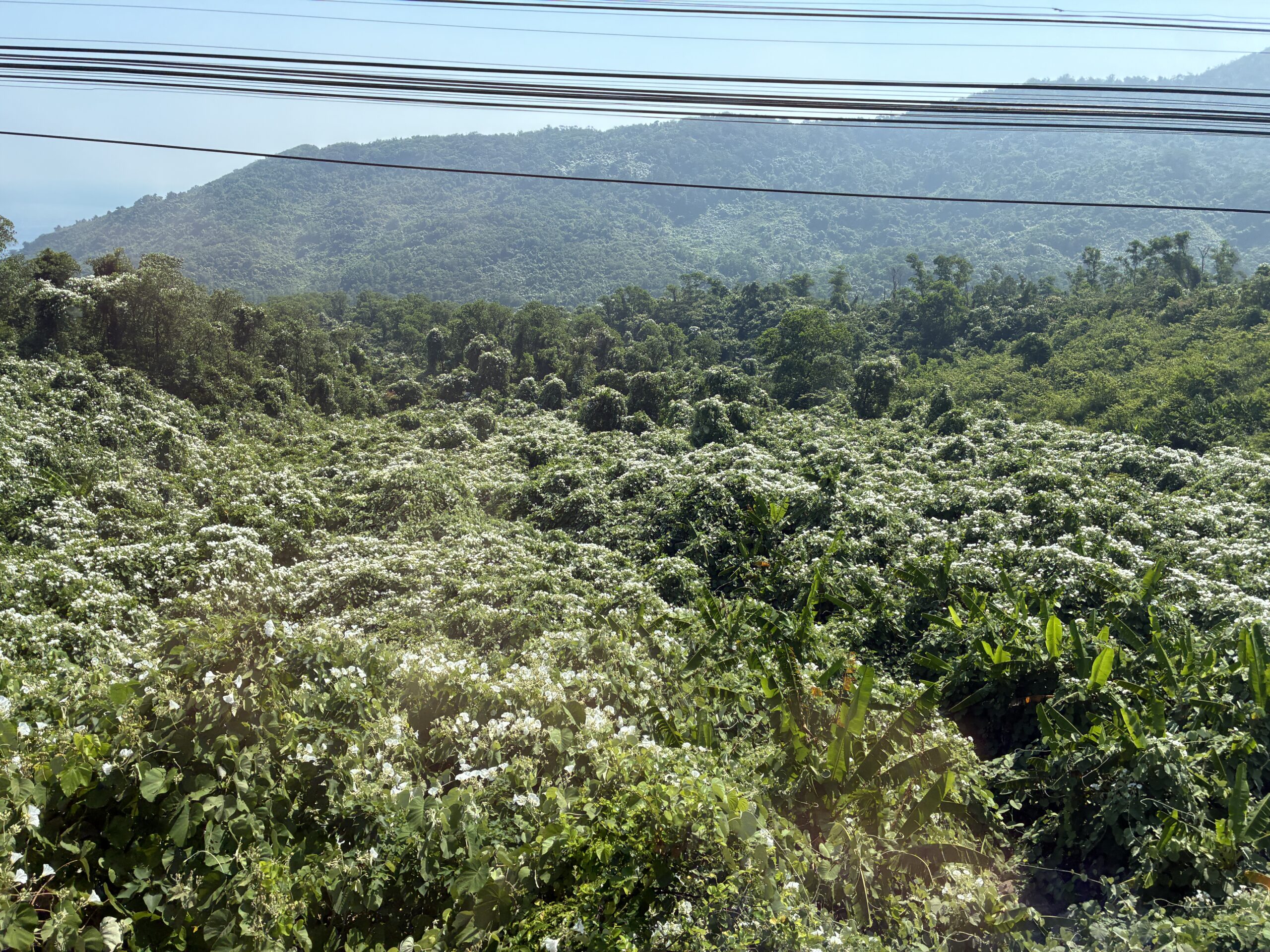
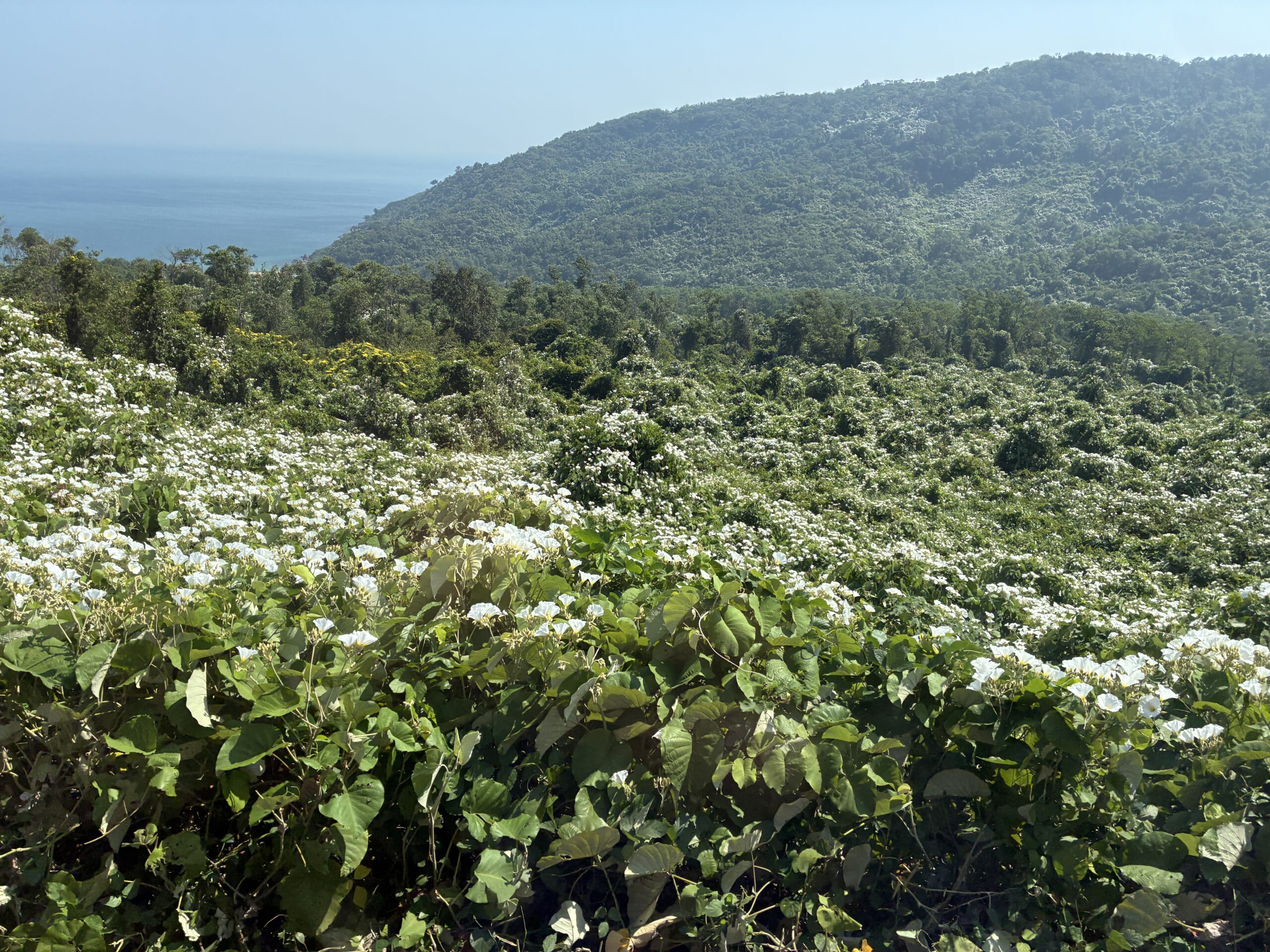


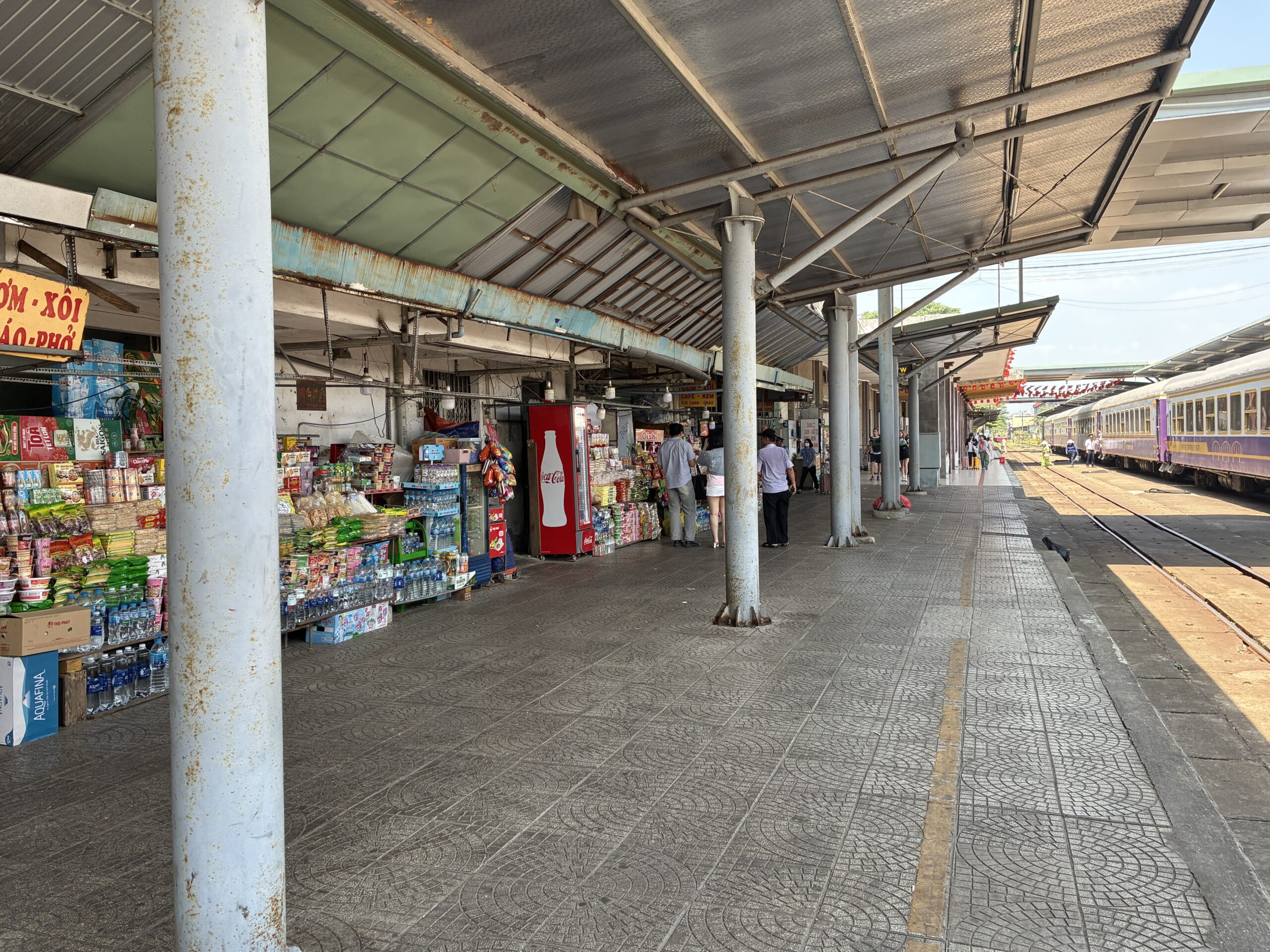

We pulled into Da Nang around 10:30, and I was almost immediately accosted by taxi drivers, so I sat in the waiting room, figuring I’d be safe there while I looked into whether and how I could get a shuttle to Hoi An, but none seemed to pick up at the train station (seems odd). But I didn’t have to wait too long before I was solicited there, and by now I figured I’d actually have to get a cab, so I accepted the ride, and off we went to Hoi An, about 20 miles south, but about an hour drive.
We got to my hotel, May’s House Ancient Town Hoi An, too early for check in, arriving around noon, so I left my backpack with them and headed into town for a couple of hours. When I say I headed into town, I actually was already smack in the middle of the old town, where Mays is located, right on the street. Another great location, although no idea what the place or my room looked like yet. No worries… both were good. The hotel was modern and in good shape, and my room was a nice size, with a small balcony.


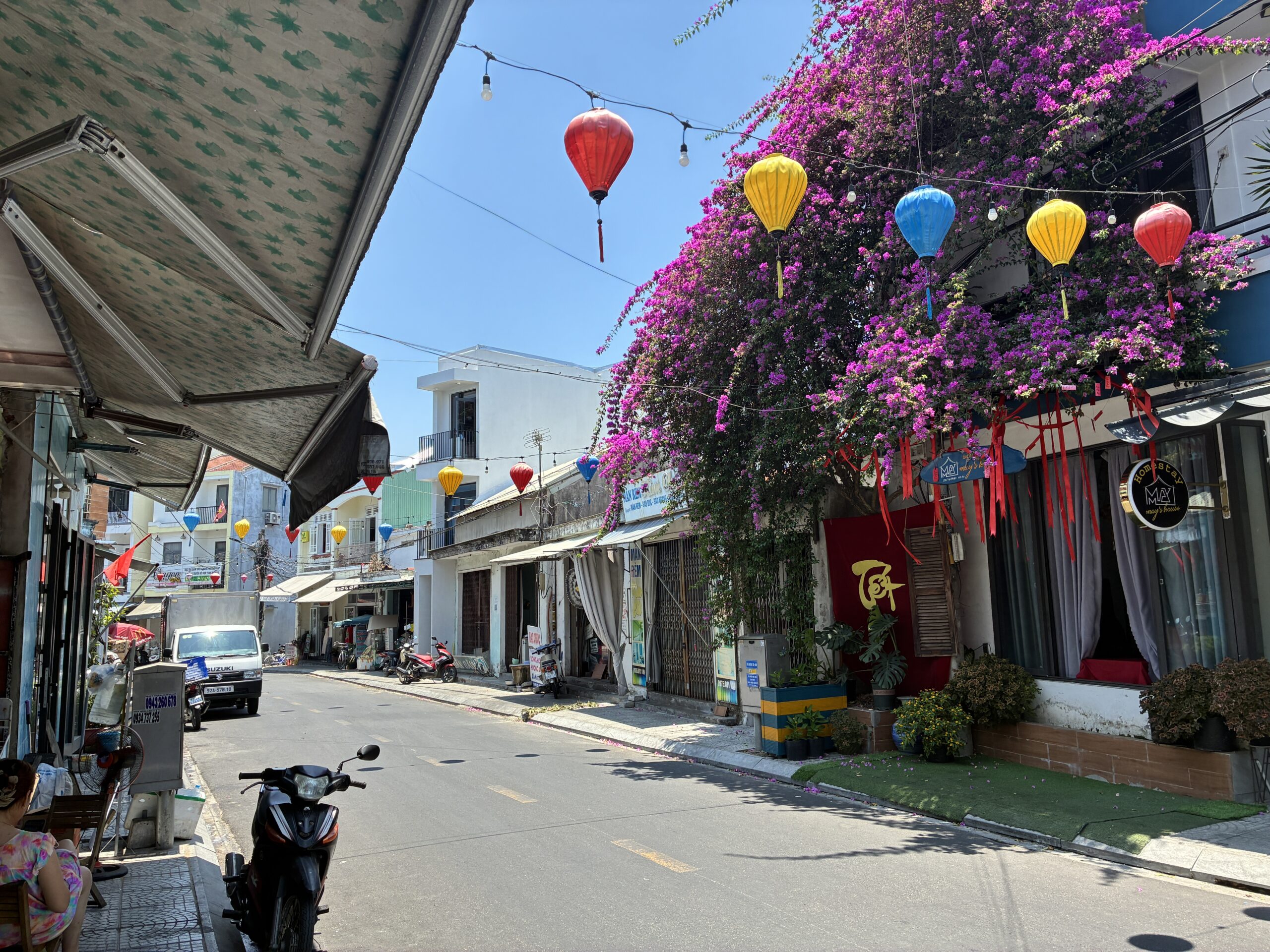
While on the train, I had booked a couple of walking tours here, one for late this afternoon, starting at 5, so I decided to walk to the meeting spot, so I can easily get to it later, and see the street along the way. As I had plenty of time on my hands, I decided to grab a bánh mì, a sandwich (the name of which I learned from Kaye a few days ago), and a smoothie. I later ate some Hoi An food specialities for dinner, and maybe will take a food walking tour tomorrow or the next day, as I’m here for 2½ days and 3 nights.

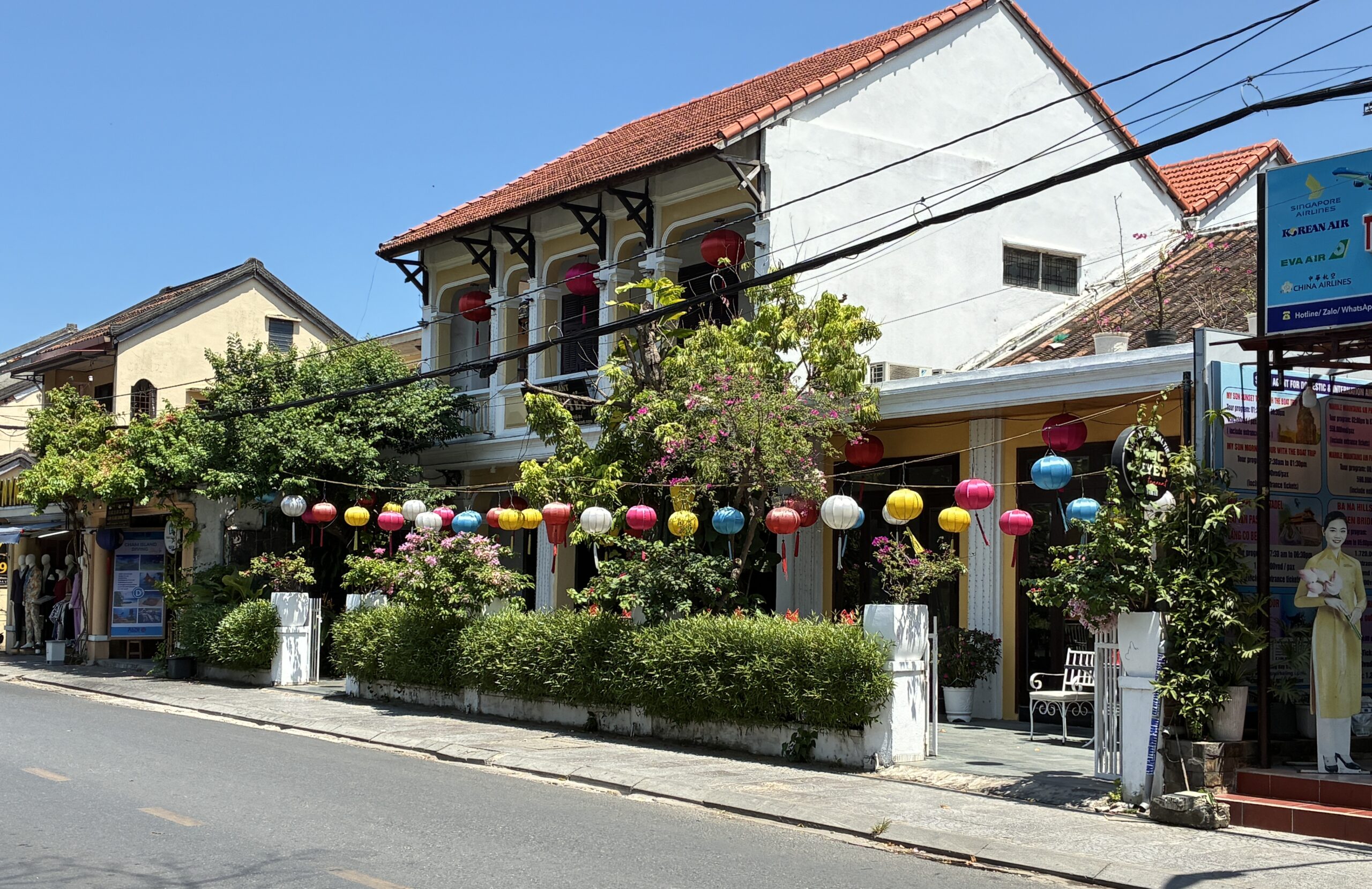


Hoi An is a decent size town, with a population of around 175,000, and a very old town dating back to the 2nd century. It served as a major trading port in Southeast Asia from the 2nd to 19th century, and as a result has a history of multiculturalism, including Chinese, Japanese, French, Indian, and Vietnamese. Partly because of building expansion and the silting up and narrowing of the Thu Bon river, by the 19th century Hoi An lost its centuries old edge as a major trading route, and became a forgotten city below Da Nang, while Da Nang began to thrive. But the town was rediscovered in the mid-late 80s and beyond with the arrival of Kazimierz Kwiatkowski, a Polish architect and conservationist who came to Vietnam in the early 1980s, and credited with “saving” Hoi An and other major historical sites in Central Vietnam and helped prevent the tearing down, rebuilding, and modernization of these old towns and regions, convincing the government that these areas were treasures to be kept alive, and helped the town become a UNESCO World Heritage site in 1999, two years after his death. .

As a result, the Ancient Town, or Old Town, where I’m staying, is considered somewhat of a living museum, with its old and original buildings preserved in time, and with over 1,100 protected historic homes, one of the most significant examples being the Quan Thang Ancient House, which I visited later and where I also ate dinner, which is 300 years old and in its more or less original condition, and in which the same family has lived and worked for seven or eight generations (and still do; I met some of them). It’s not the oldest house, though, with many of the protected wood frame houses between 100-200 years old.
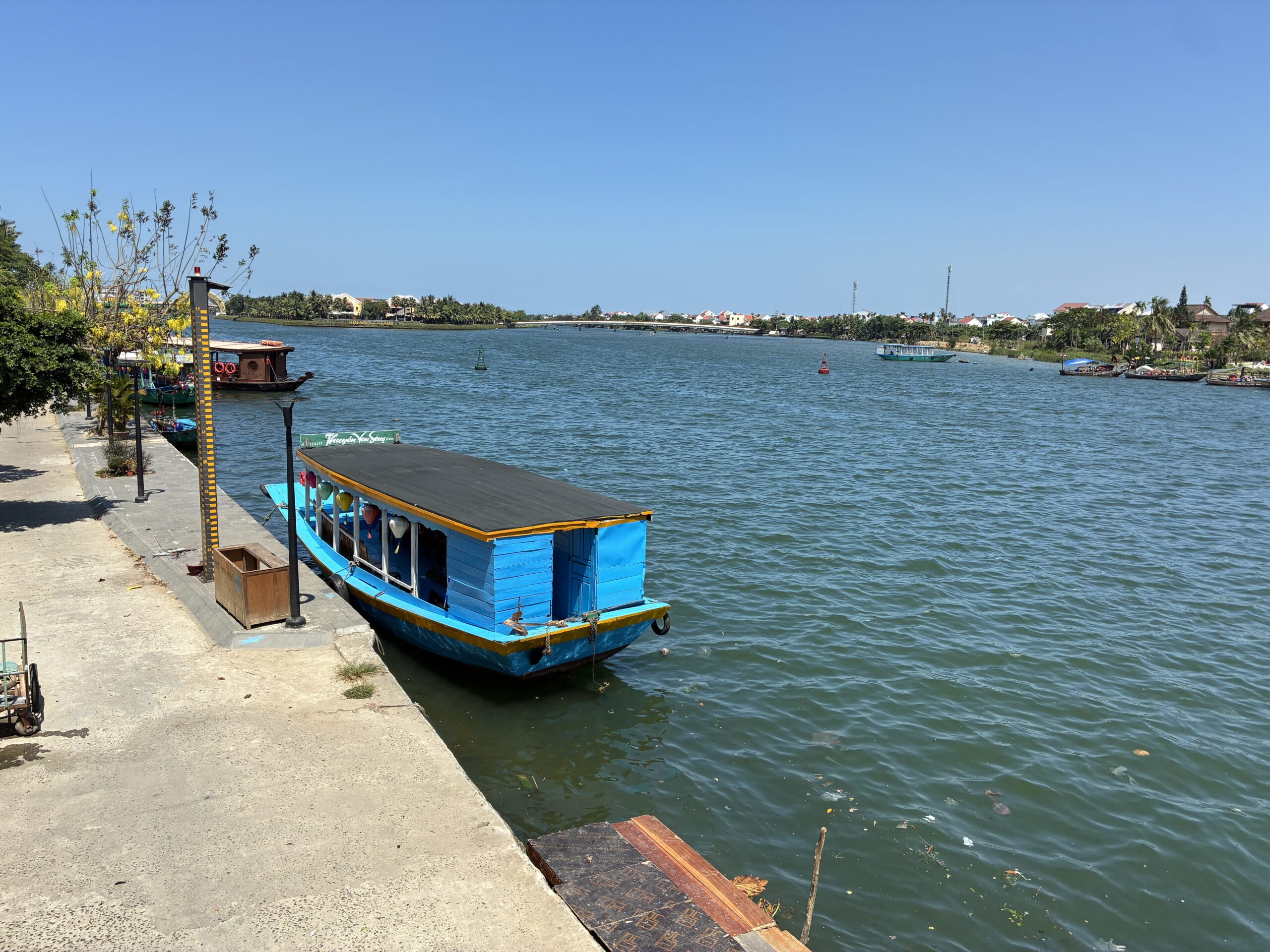
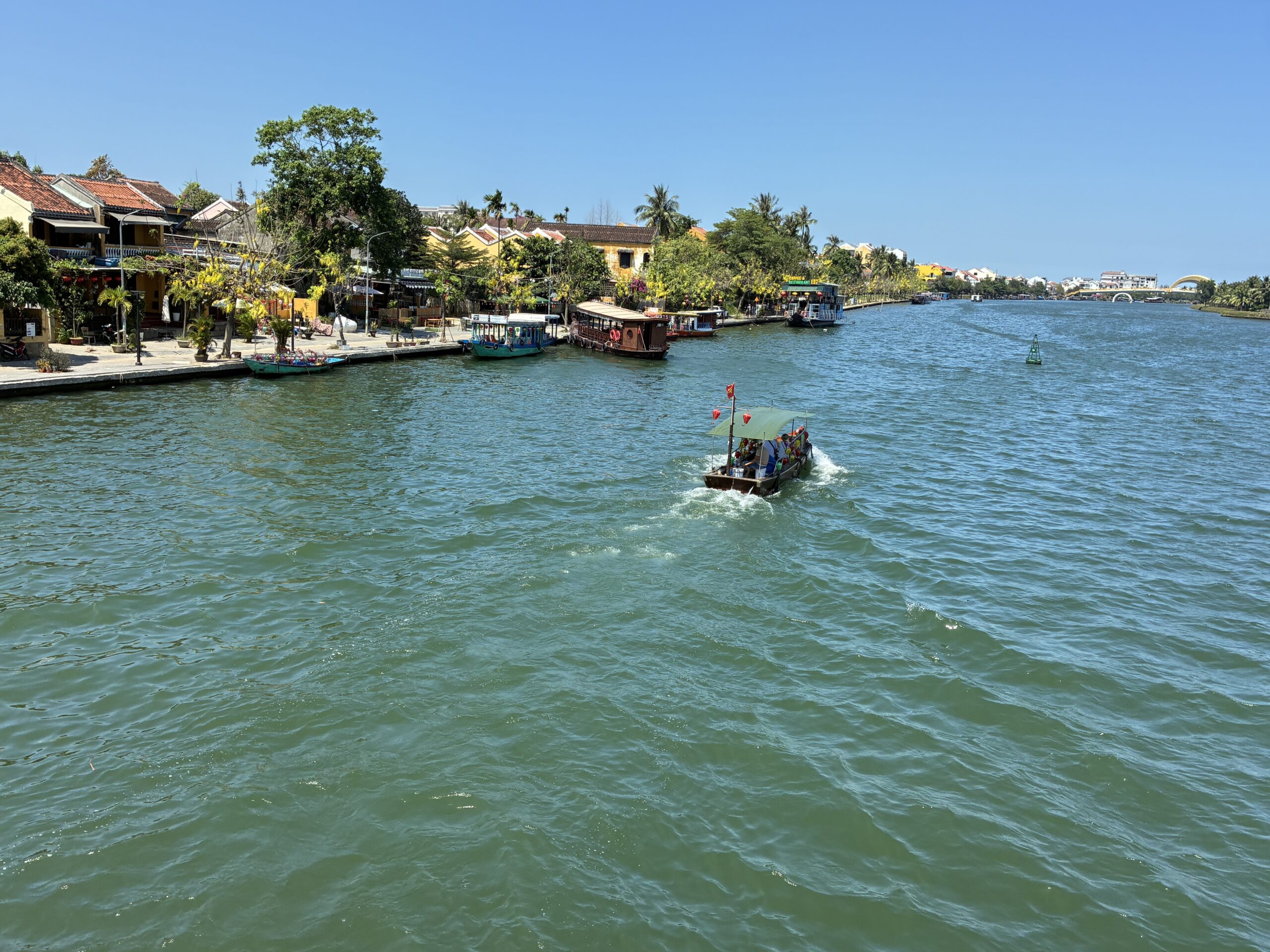

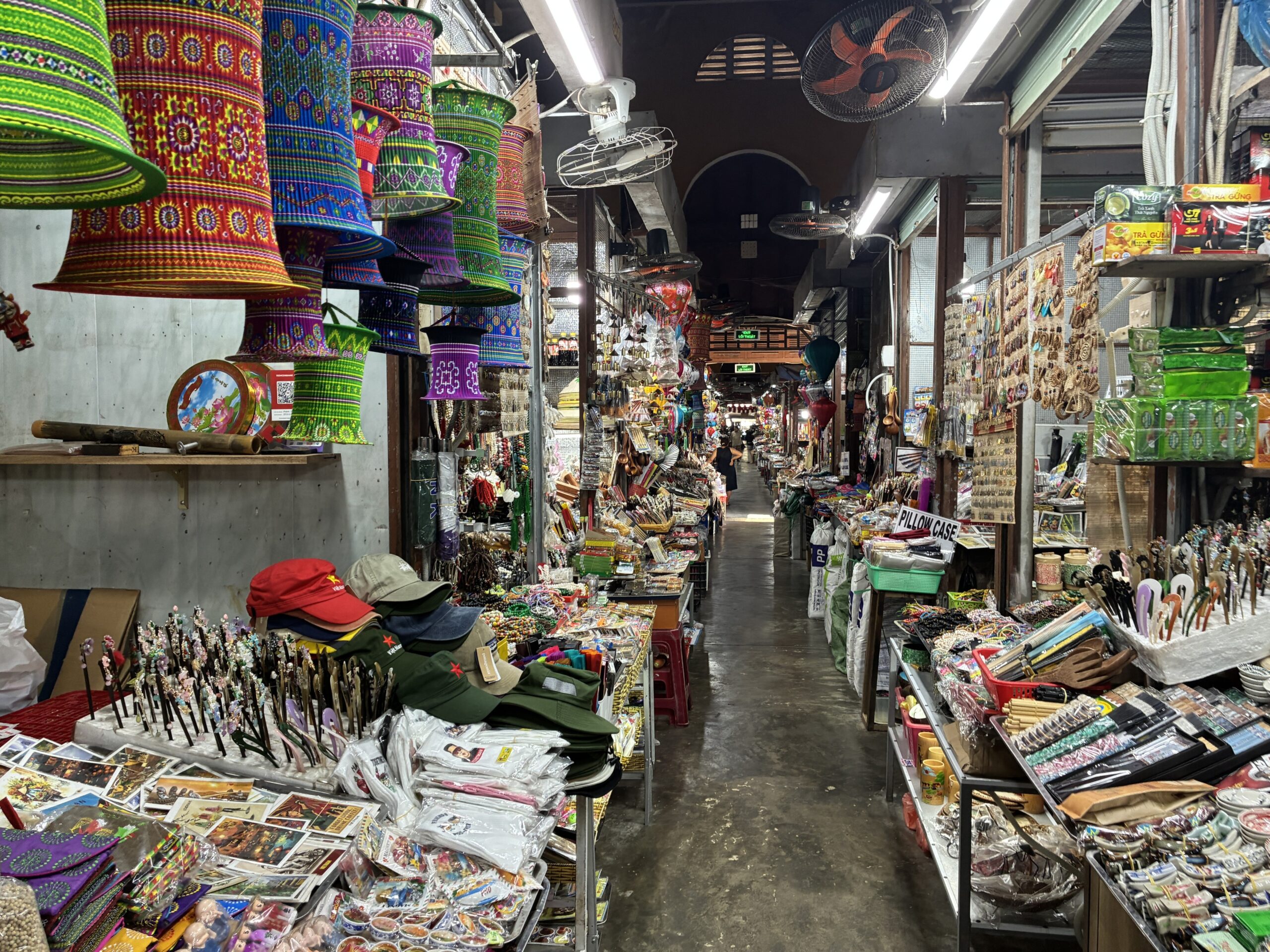
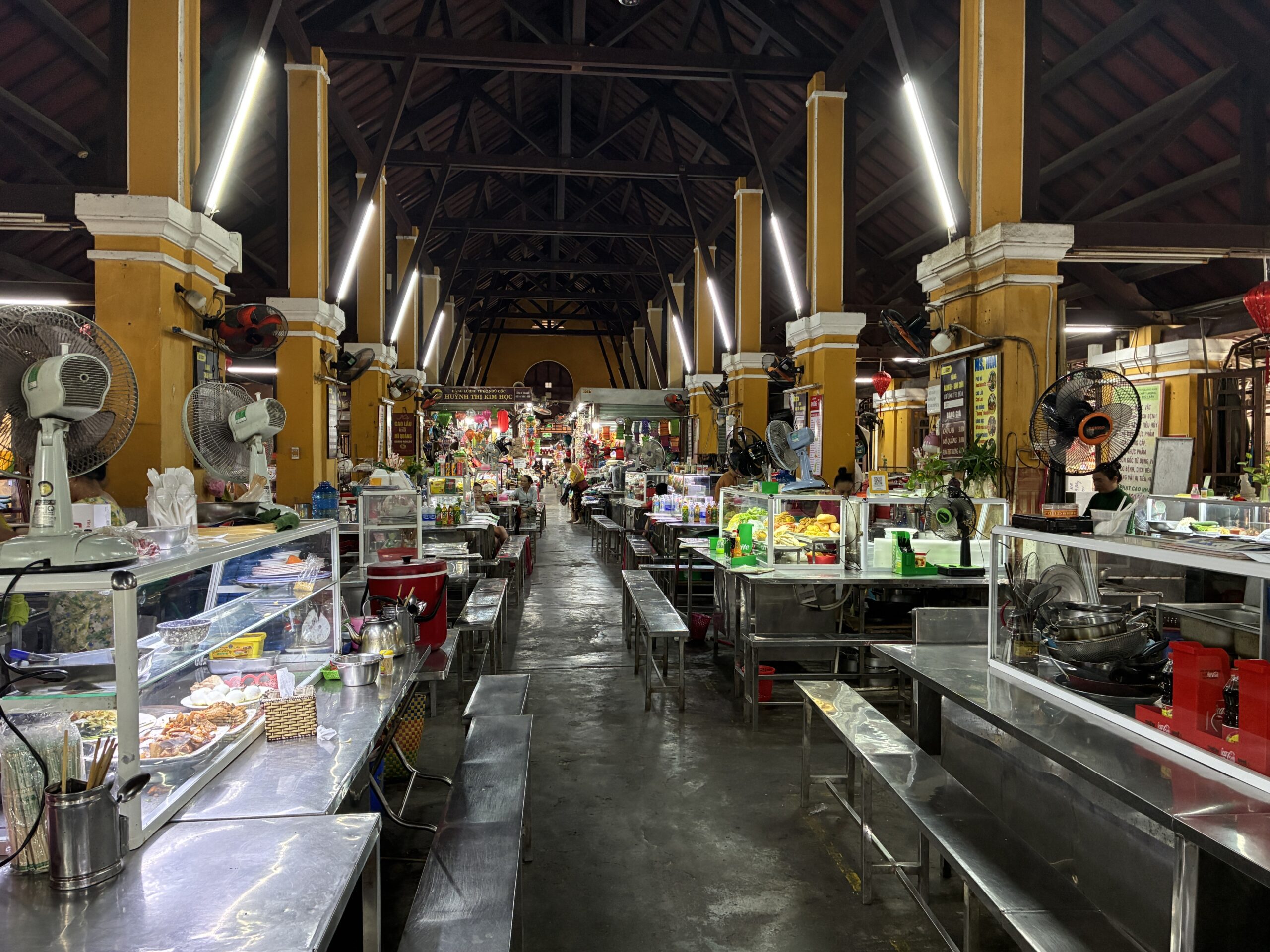
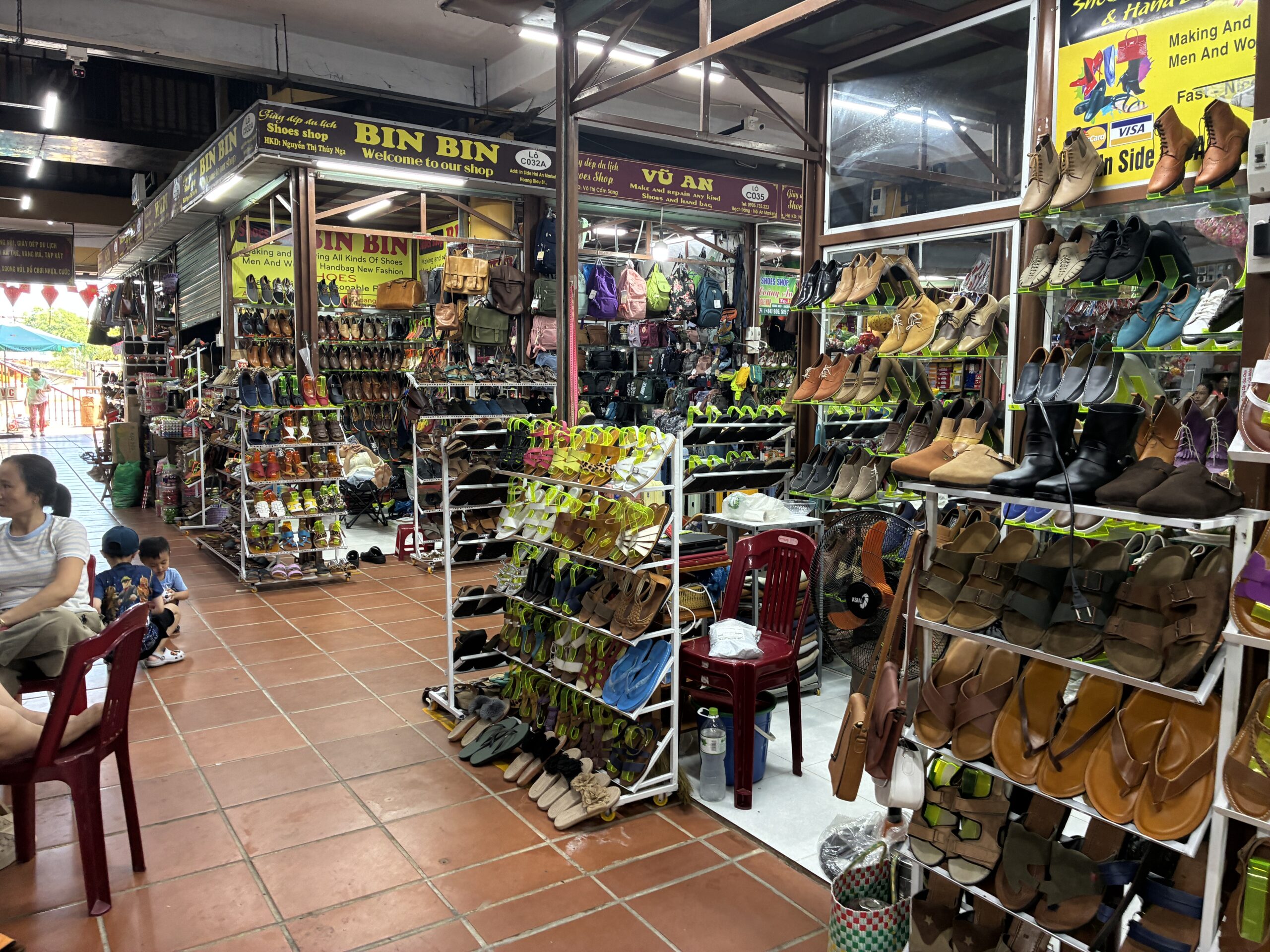
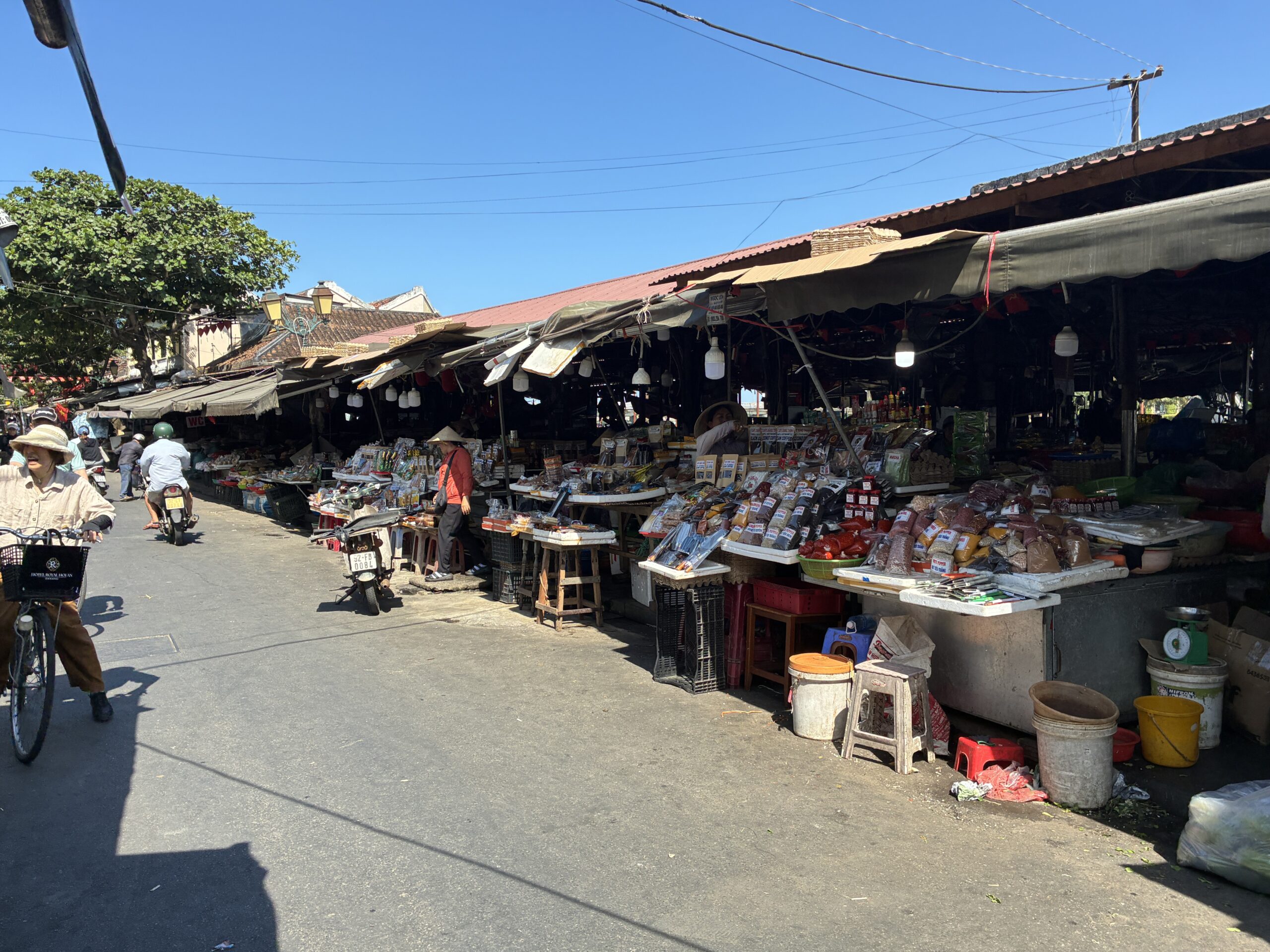
Although the town got busier in the evening, and especially near the river and in the heart of Old Town shopping district, it is nowhere near as crazy or bustling as Hue, for instance, and is relatively well ordered and calm. Lots of motorbikes and scooters, but not nearly as many, and, during my daytime walk at least, a much calmer city to walk around. In general, the town was far easier going and less frenetic on the streets, and even the Hoi An Market, a large street and indoor covered market, is well organized and not at all chaotic, and is very clean and relatively roomy, unlike every other market I’ve seen, and certainly in contrast to the frenetic, noisy, smelly, and crowded Dong Ba Market in Hue, for instance. Although busy, the Hoi an Market was remarkably well-ordered.

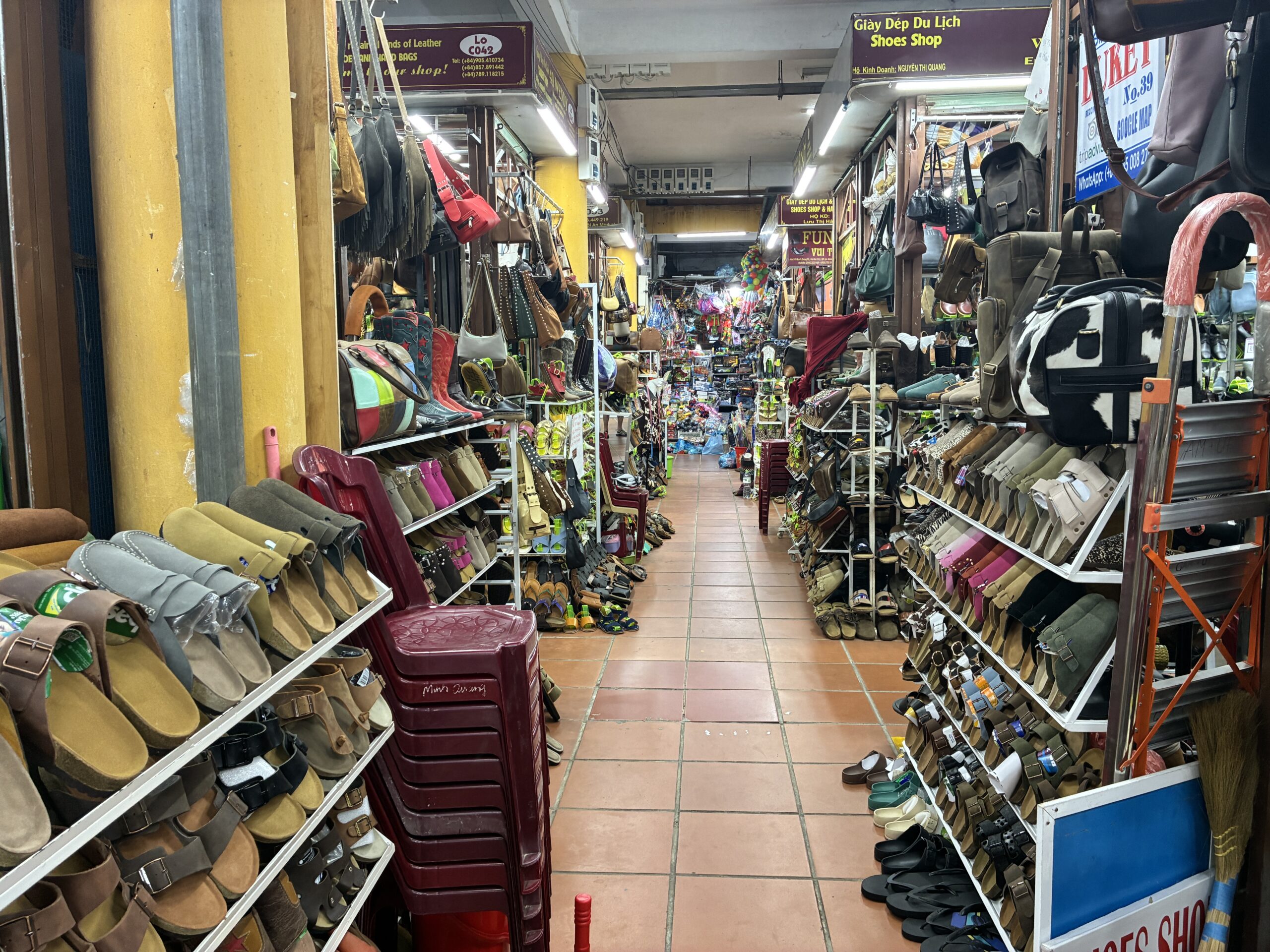

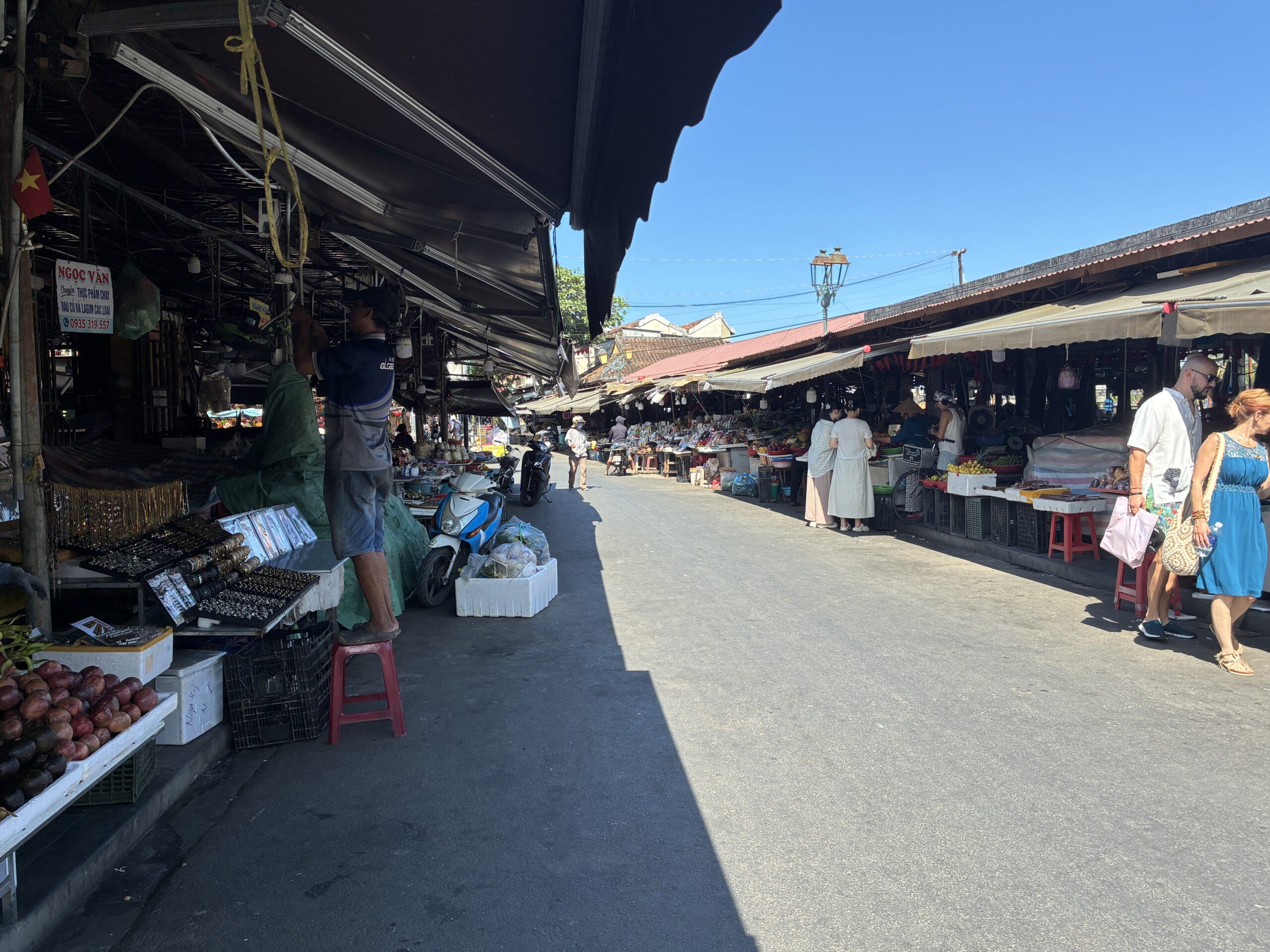
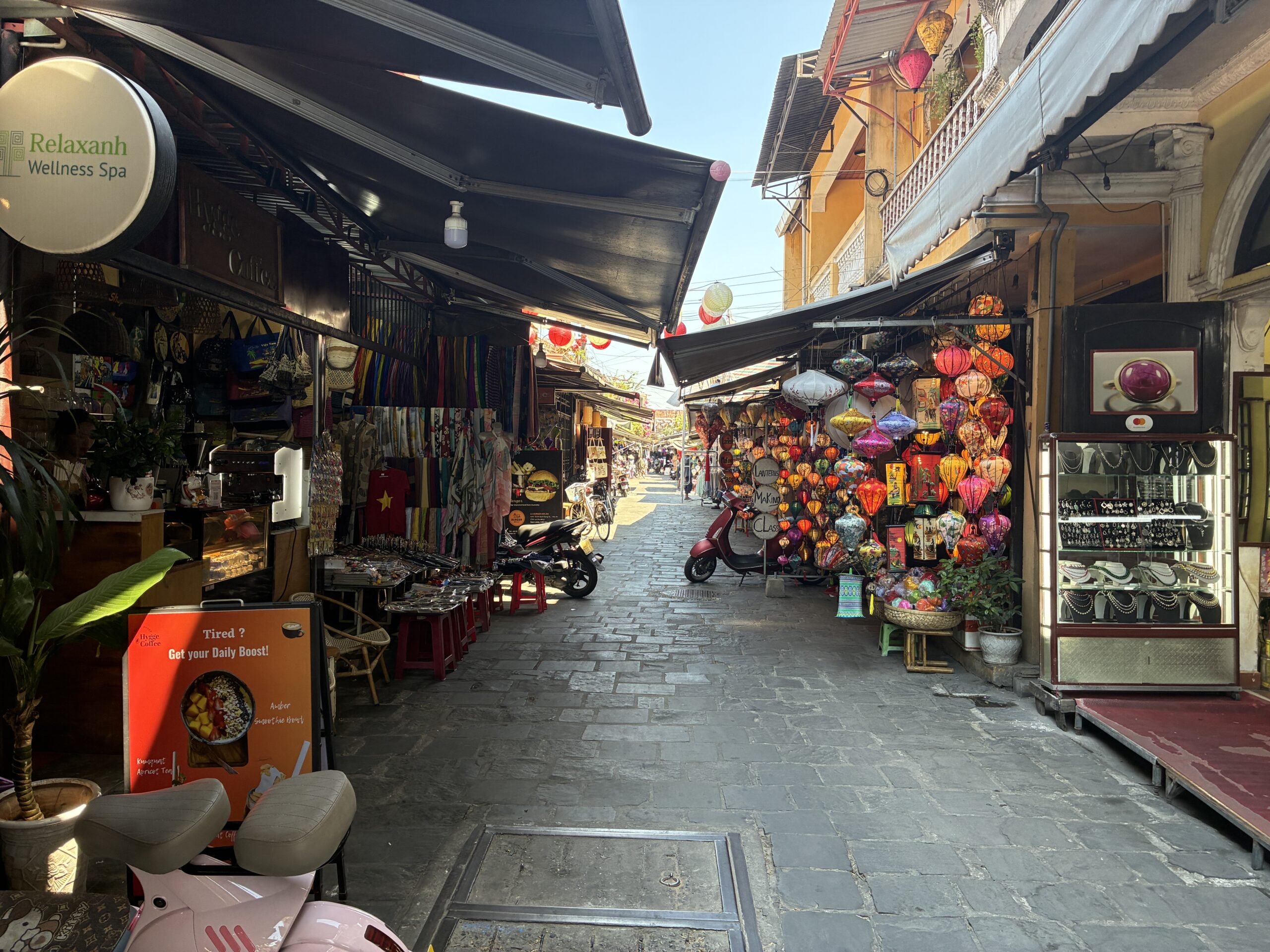
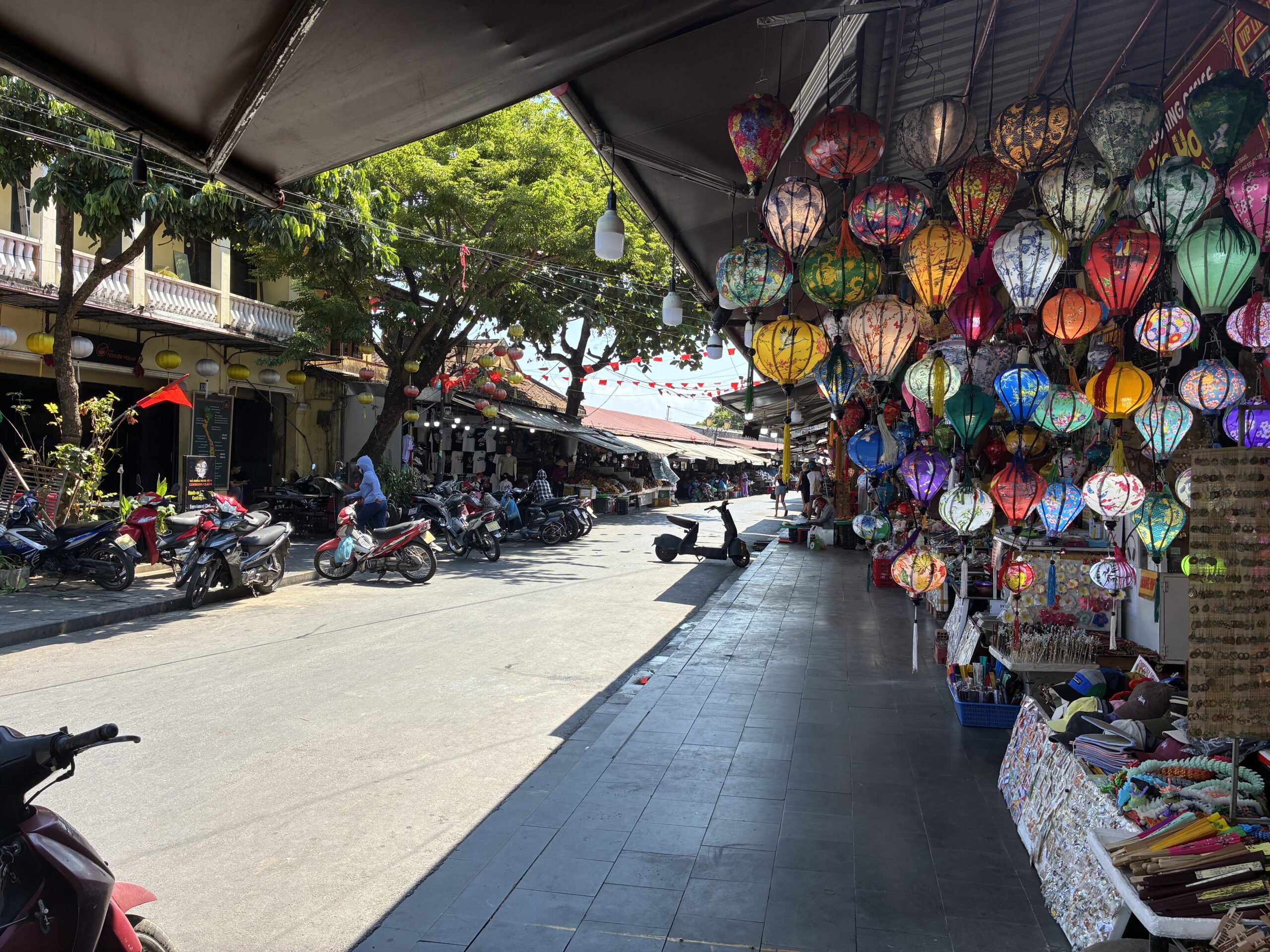
On a side note, the town is well known for its many tailors, and this I can confirm – I saw lots and lots and lots of tailor store fronts.


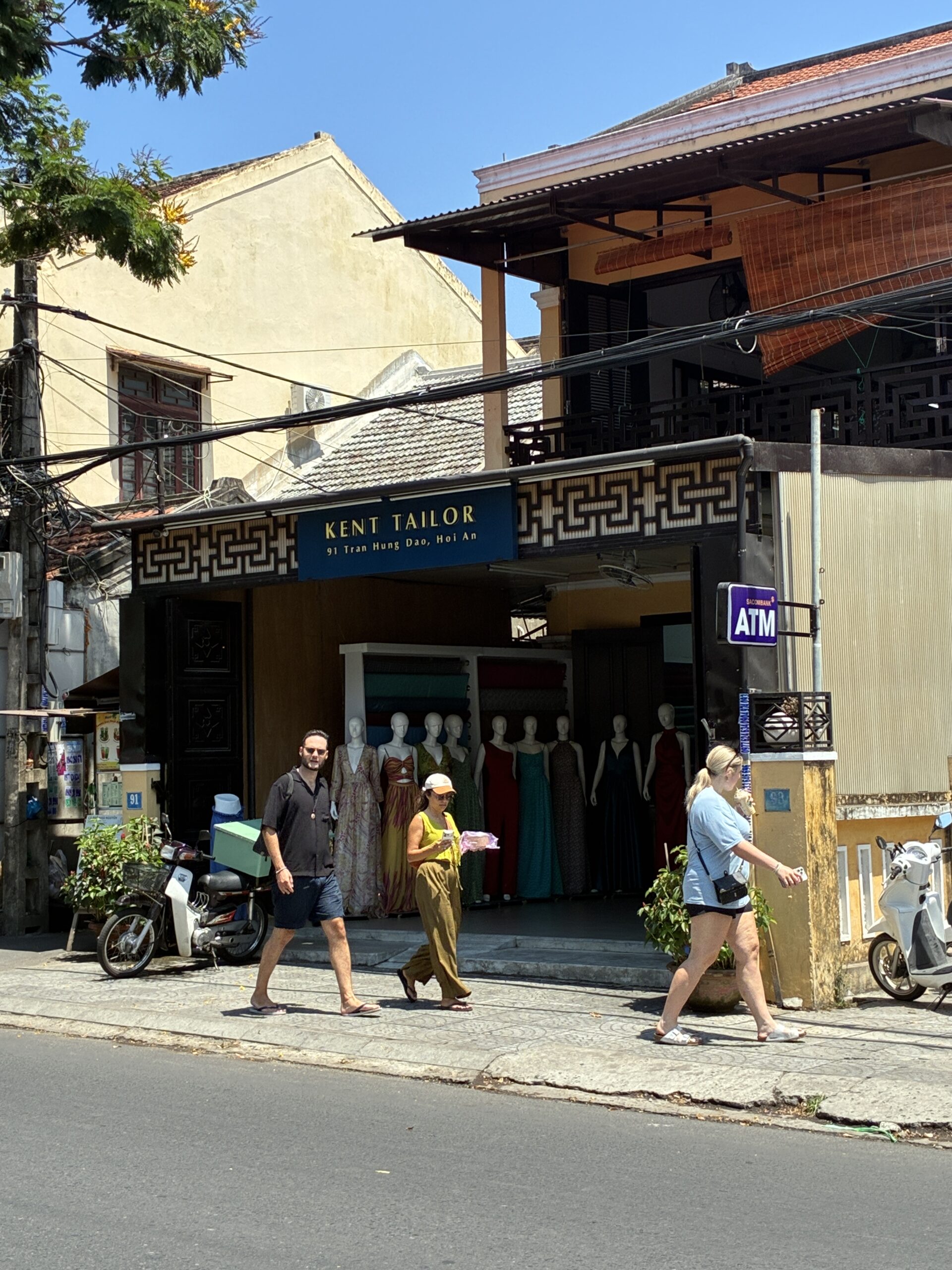


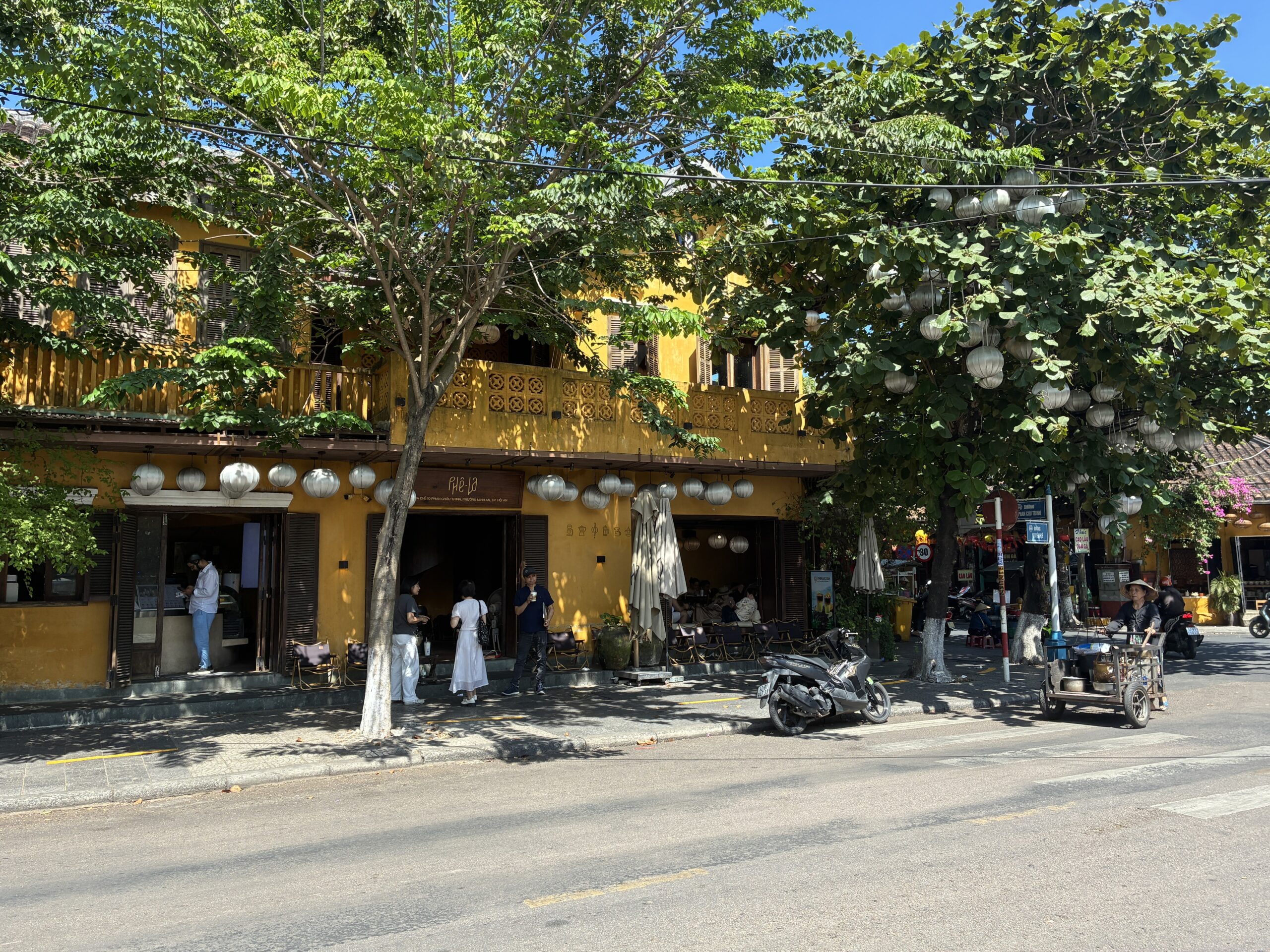
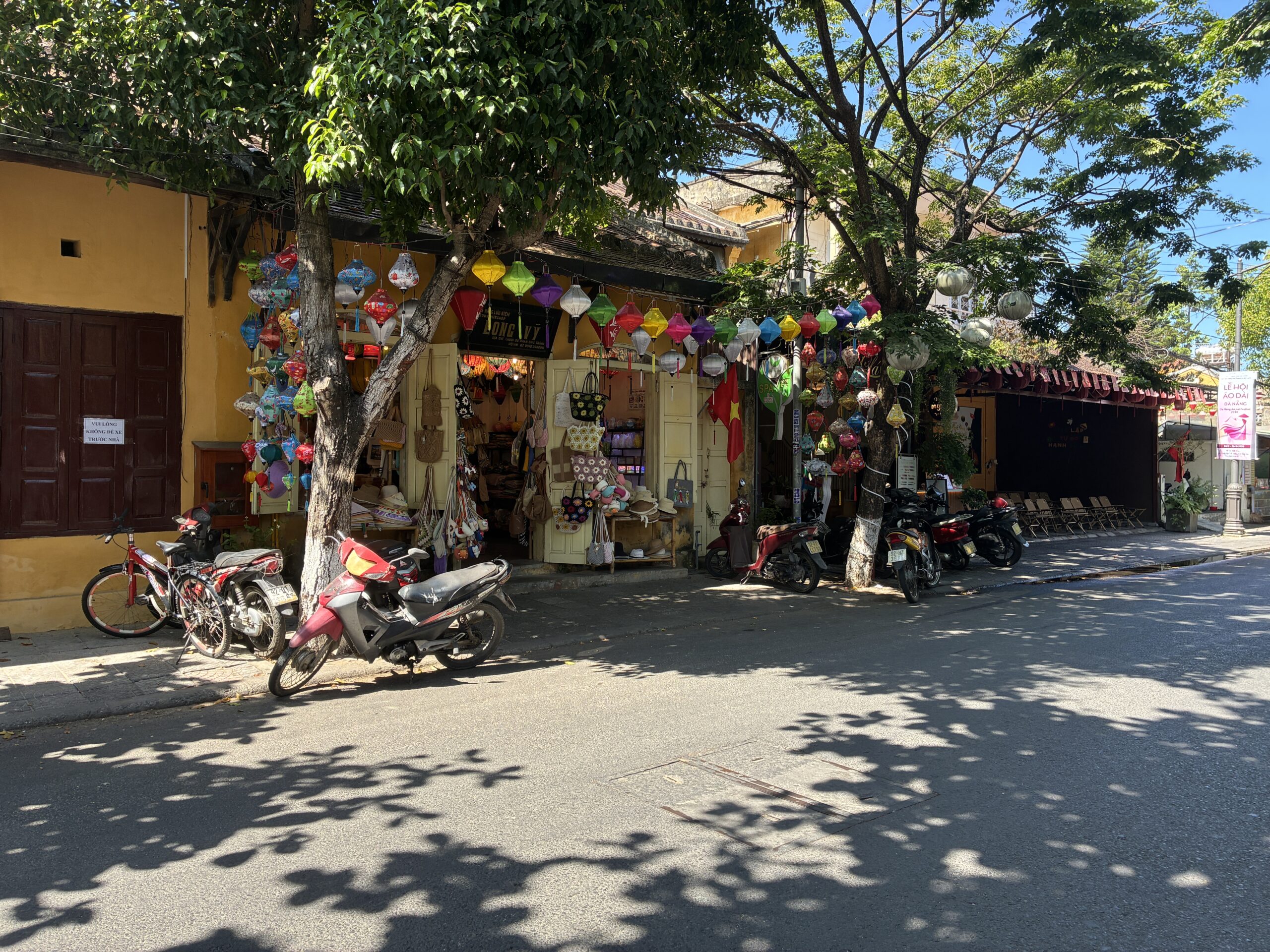
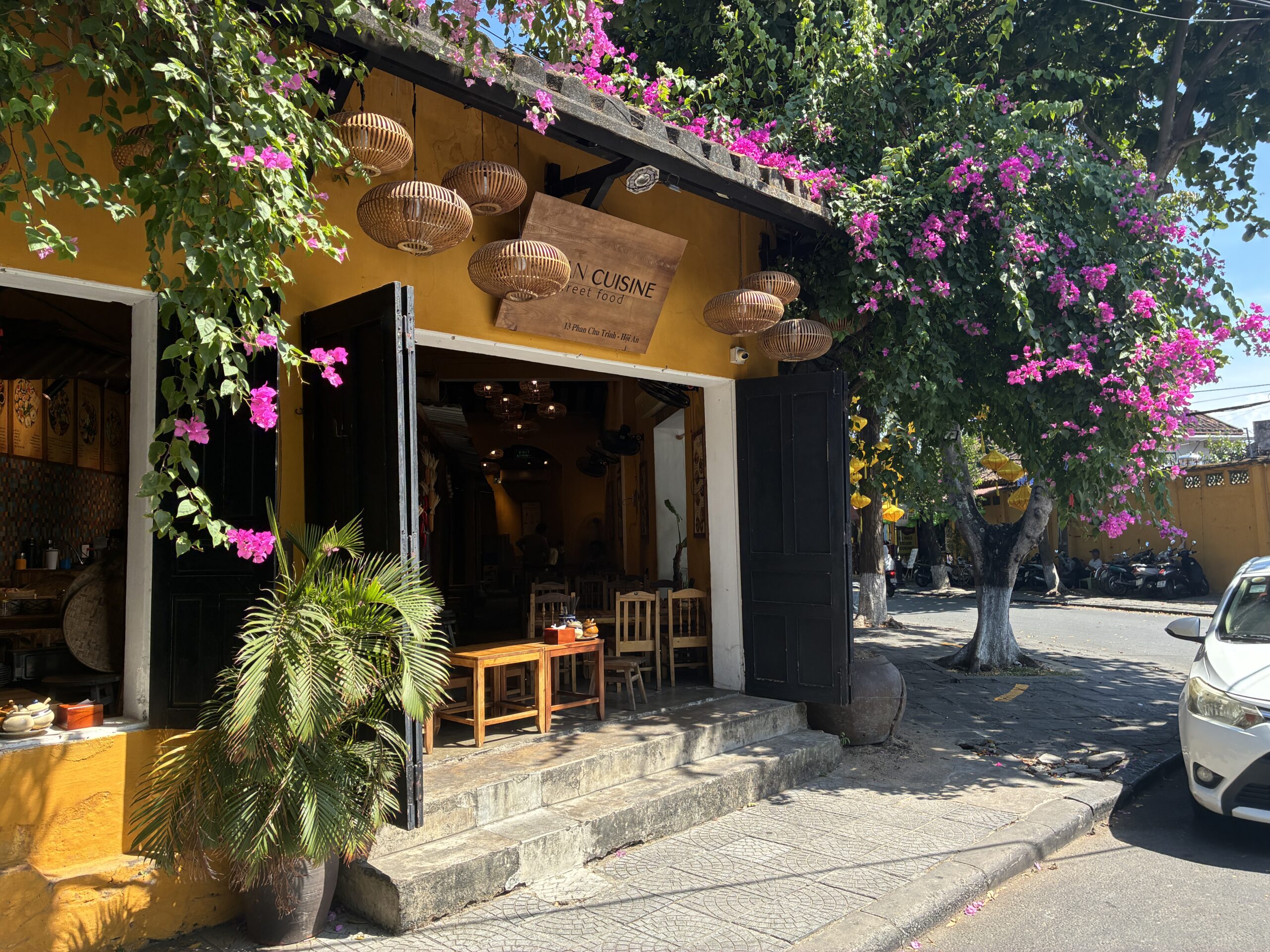
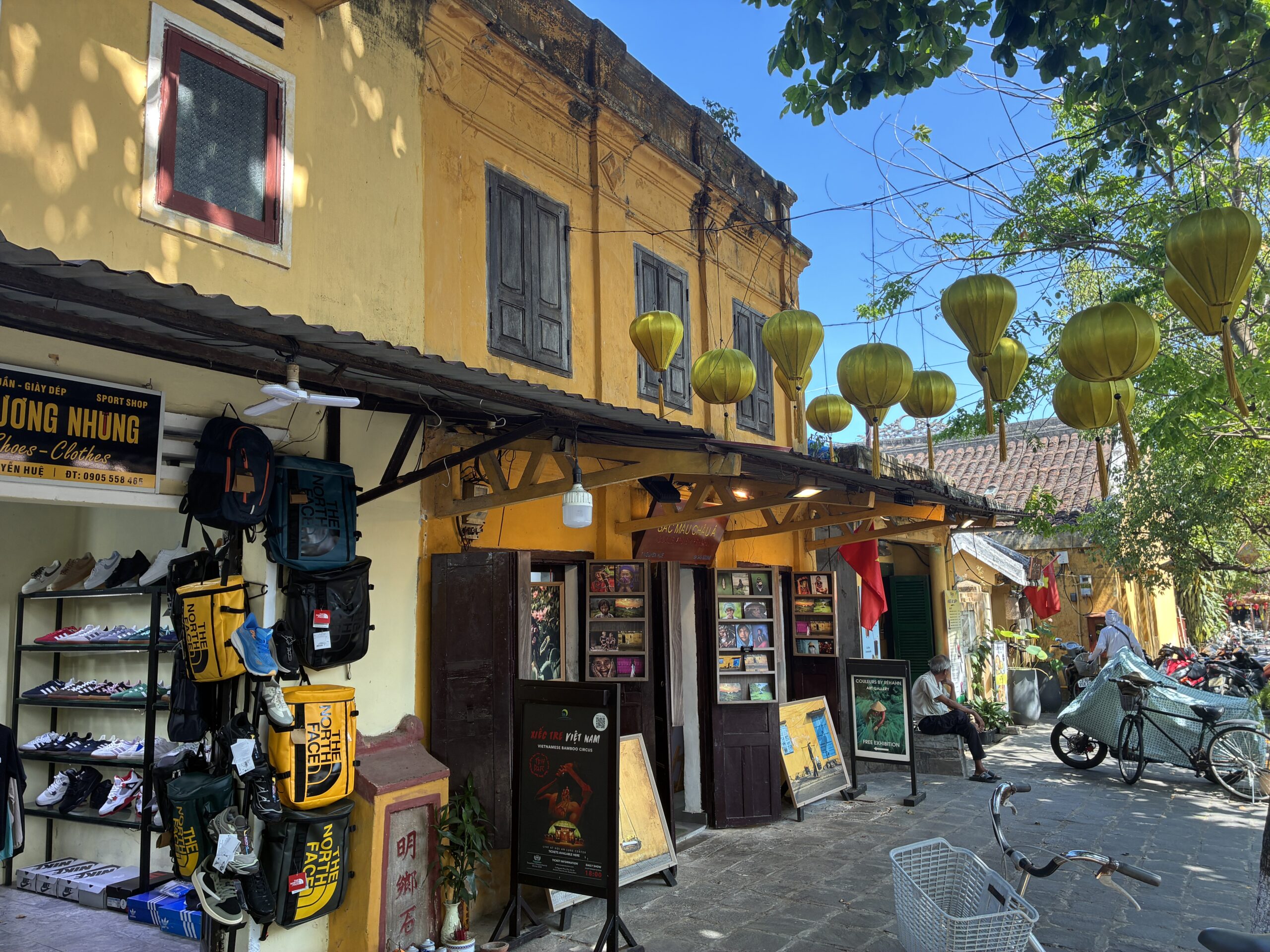
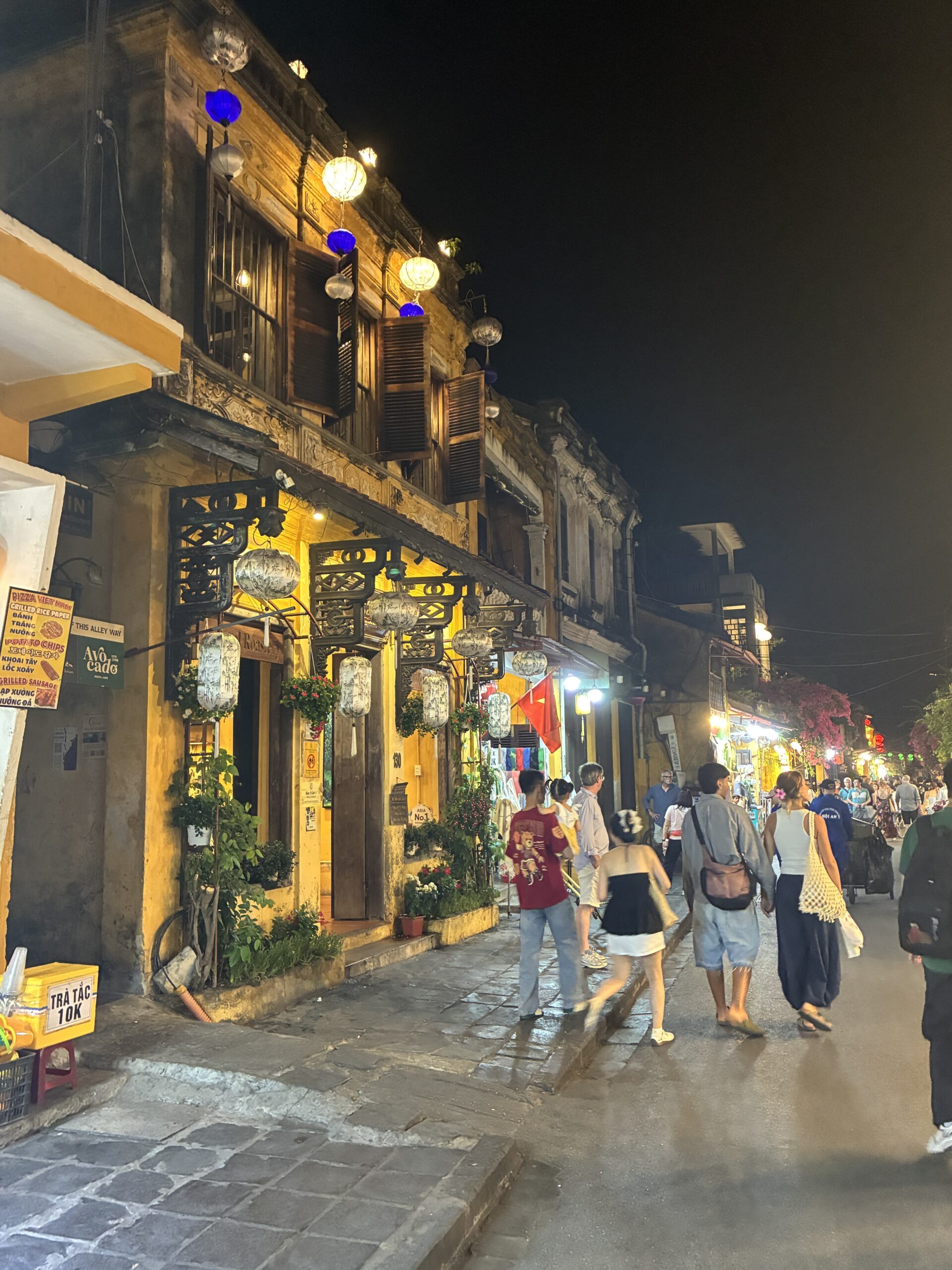
Another thing that stands out, and the town is known for, is the mustard yellow color of many of the buildings throughout town, the result of several overlapping factors, and now “Hoi An Yellow” is decreed by UNESCO preservation laws. In Vietnam, yellow has historically been the color of wealth and prosperity, and that was an early reason for painting buildings yellow, to either show wealth or hope for prosperity and good fortune. There was also the influence of the French during the colonial period , when many administrative buildings were painted mustard yellow, which became fashionable among the local elite, and many Chinese and Japanese houses in town were repainted to match this fashion, creating a sense of visual unity across the town. Finally, there are also practical reasons for the color, which helps reflect rather than absorb sunlight and heat in this very hot and humid climate, and in this wet climate, including town flooding, the color yellow ages better, and and growing moss creates a more pleasant patina, rather than looking dirty or in decay. Now, because of its status as a historically preserved town, the color is no longer a choice but the law. The result is the golden-yellow streetscape that Hoi An is known for.

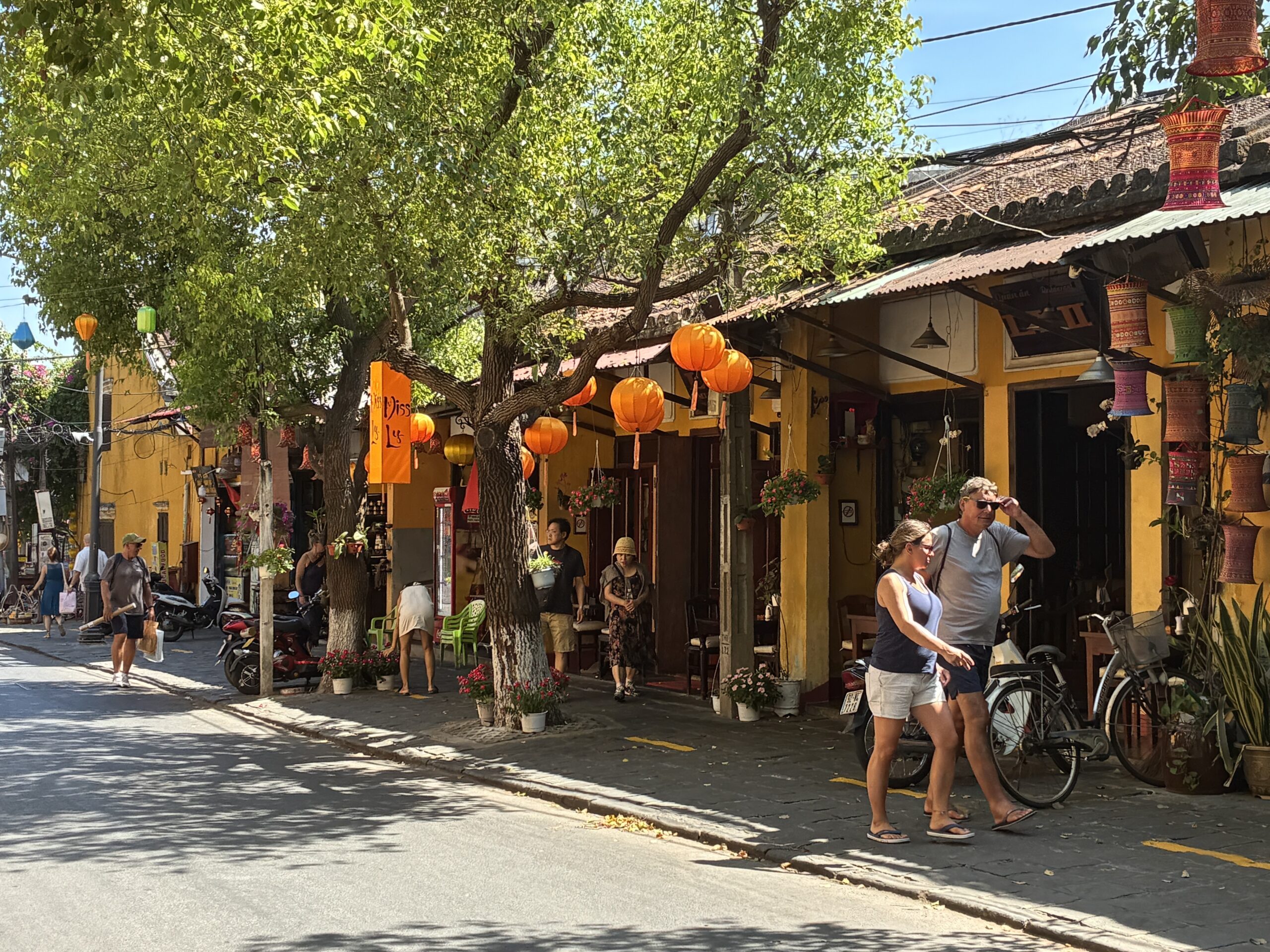


The town also regularly floods, and this seems just part of the cycle of town life, dating back centuries, and I saw a number of wooden beams which show the height of flooding over the years. The town is not only ready for the flooding, but the old building were built for flooding, often with built in drains and ventilation, using building materials and methods designed to withstand and tolerate floods. Ironwood is used for the timber, a wood that sinks rather than floats, because it’s denser than water, as well as being rot-resistant, mortise and tenon joints are used to hold the wood together without metal nails, and the wooden posts that frame the building stand on heavy stone bases, which are unaffected by the waters. Open courtyards in the center of many of the homes allow for flood waters to gather and drain from there, with doors at both end of the buildings for good ventilation. In addition, the homes have second floors, and often pulley systems that allow first floor items to be relatively easily lifted to the higher ground of the second floor, where families live during the several days of flood water.
One other thing – as in Japan and other parts of Vietnam, many of the building here are “tube: buildings, narrow across, but long and deep inside, again because of taxation, in which taxes were based on the width of the property or its entrance doors.
By noon it was hot, very hot, and very humid, with 90° plus weather. Walking on the shady side of the street made a huge difference, as did the occasional small breezes, which felt really good. By the time I got back to the hotel to check in, around 2:30, I was quite drenched and my t-shirt was sticking to me. Called for an immediate cold shower.
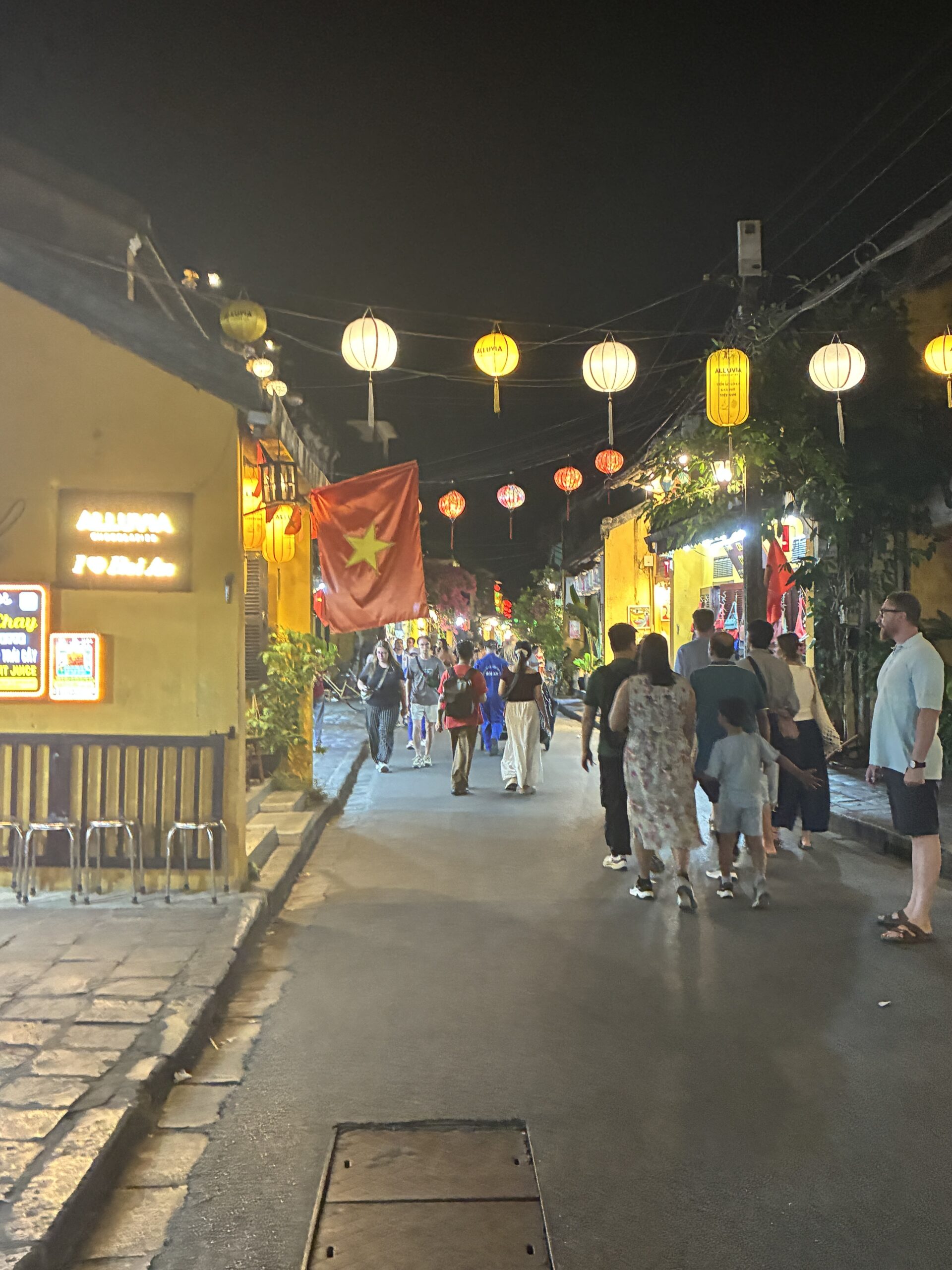
By the time I had that shower, got settled, and got my bearings, it was about time to head to the meeting point for my evening walk, Lanterns and Legends: Hoi An Night Walking Tour, which sounded good, and was! The town is also known for its many lanterns. Originally, with the multicultural history of the town, Chinese and Japanese traders who were allowed to build homes and sell in Ho An, and who settled here, brought lanterns from their home countries, hanging them in front of their homes and shops, partly to remember their homes and ancestors, and partly as symbols of good luck and prosperity. They looked great, so the local population adopted the look, and began making their own versions using local materials, including silk and bamboo, and today you see Chinese, Japanese, and Vietnamese hanging lanterns everywhere, each with varying shapes and designs, and particularly in the old city shopping area and on the river, where there are lantern festivals nightly.
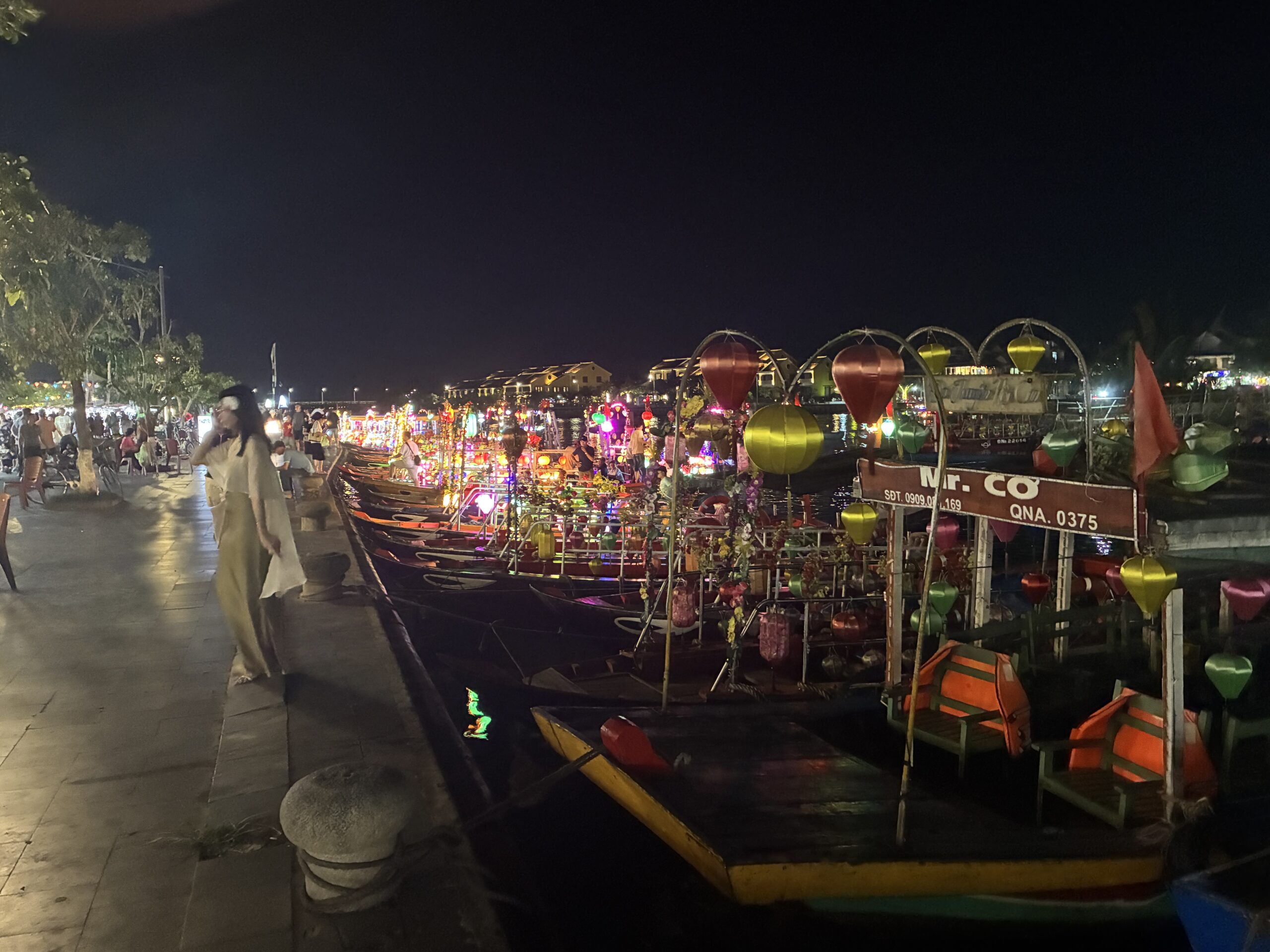
Until recently, on the 14th night of every lunar month, the town would turn off all lights and electricity in the old center, and many homes and stores would instead hang lighted lanterns. This became so popular, that it has now become a nightly event for visitors, at least in the town center and by the river, where lighted lanterns are everywhere, hundreds of lit lotus-shaped paper lanterns floating on the river, released by visitors (and must be retrieved daily, each morning), and dozens upon dozens of sampans with glowing lanterns and lots and lots of visitors are out on the water, making for a very lovely and colorful, and crowded, scene. Actually, this has created a large local industry, with many stores selling lanterns and multiple lantern making workshops in the city.
There were just three of us on our walk, a couple and myself, and we met our guide, Shanti, at 5, spending about 2½ walking. and it was dark (the whole point of the evening lantern tour) by the time we wrapped up around 7:30. Shanti grew up in the central highlands near Hoi An, but came to the area for University, and now lives in Hoi An. She was yet another great guide, and again personable and knowledgeable, and walked us though many of the areas I walked through earlier, but now with commentary.
We started off at the Hội Quán Hải Nam, the Hainan Assembly Hall, where Shanti talked about the history of the region, and what is now central and southern Vietnam but was previously the the Champa Kingdom, from the 2nd to 15th century, and it was this culture that actually built Hoi An into a major trading route, eventually becoming part of Vietnam over several centuries, as Vetnam expanded into what is now central and southern Vietnam regions. By the late 15th century,the Cham people had largely become integrated as Vietnamese but not entirely until the final annexation of the Champa Kingdom in 1832. Even now, Shanti told us, there are Cham people in the community. Interesting stuff.


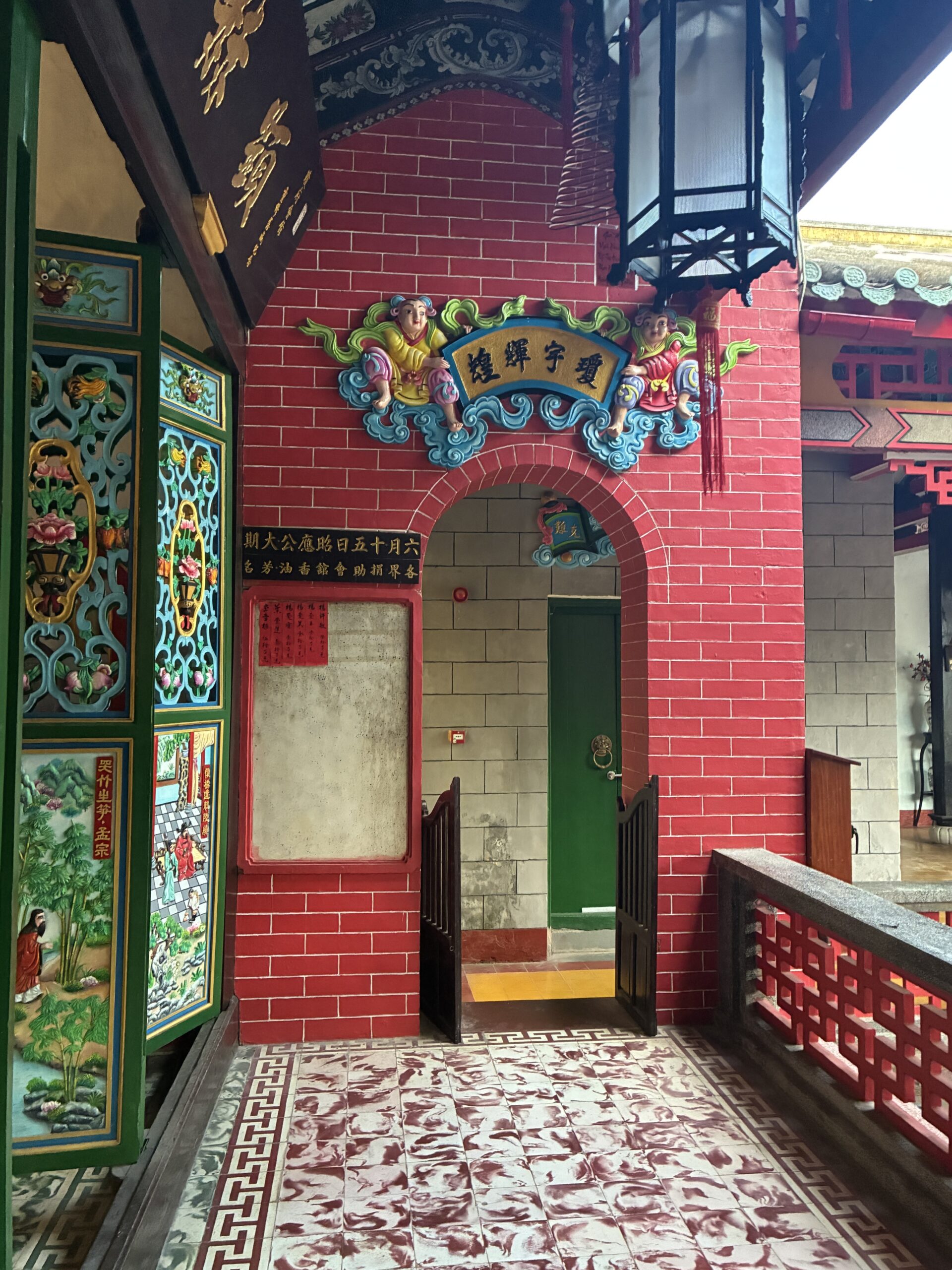


We moved to and through the Hoi An Market, where Shanti bought me some dried ginger from a vendor for my throat, which was bothering me (hope that cold, or whatever it was, isn’t returning). Wow!!! It was really very powerful with a real kick. Not exactly hot, but left my mouth ringing. I ate some dried coconut, also from the street vendor, which helped moderate the taste (and was delicious) – and it helped, no doubt. Although my throat started getting scratchy again later, it immediately felt better for at least an hour or more. Amazing.
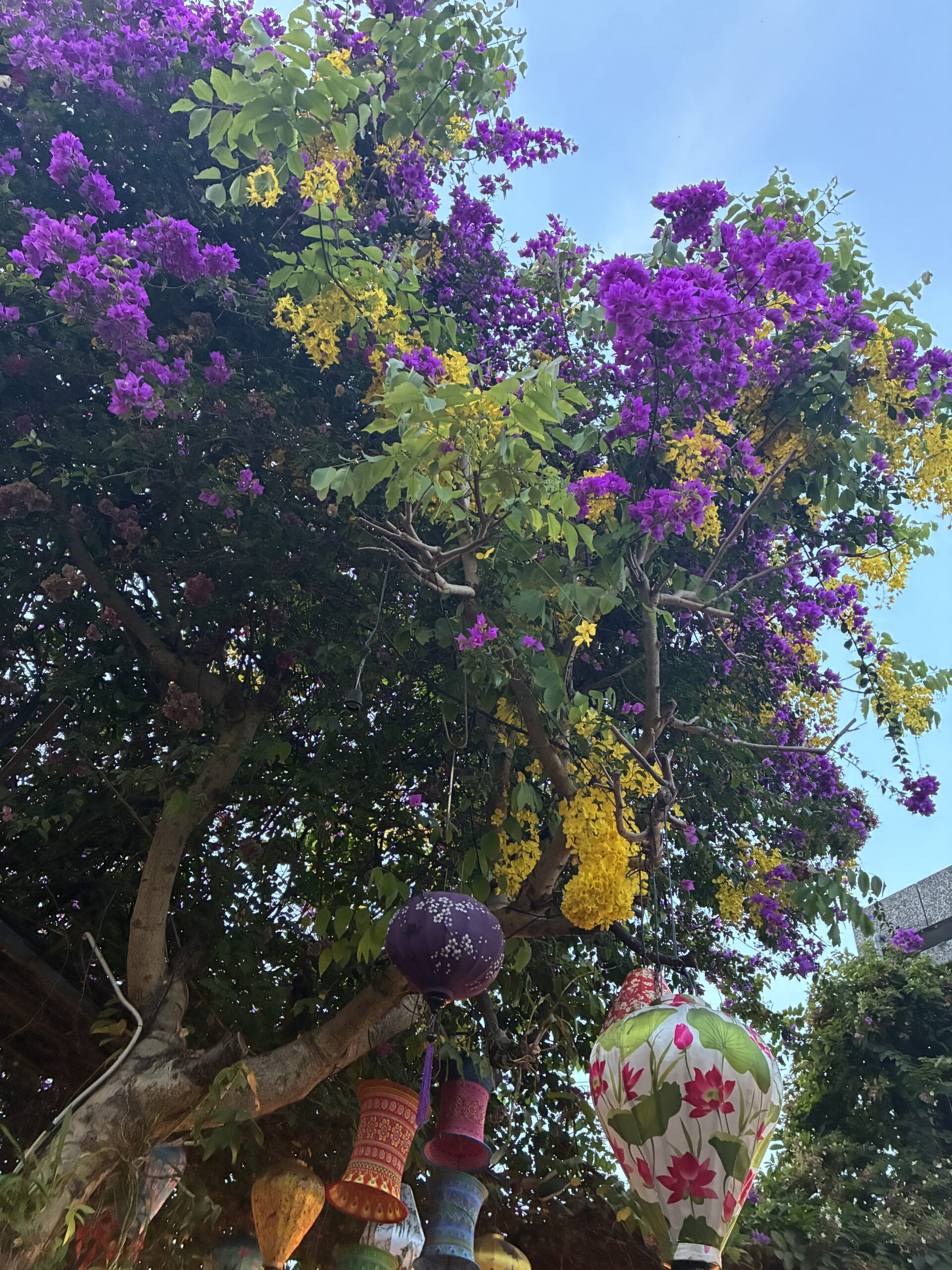
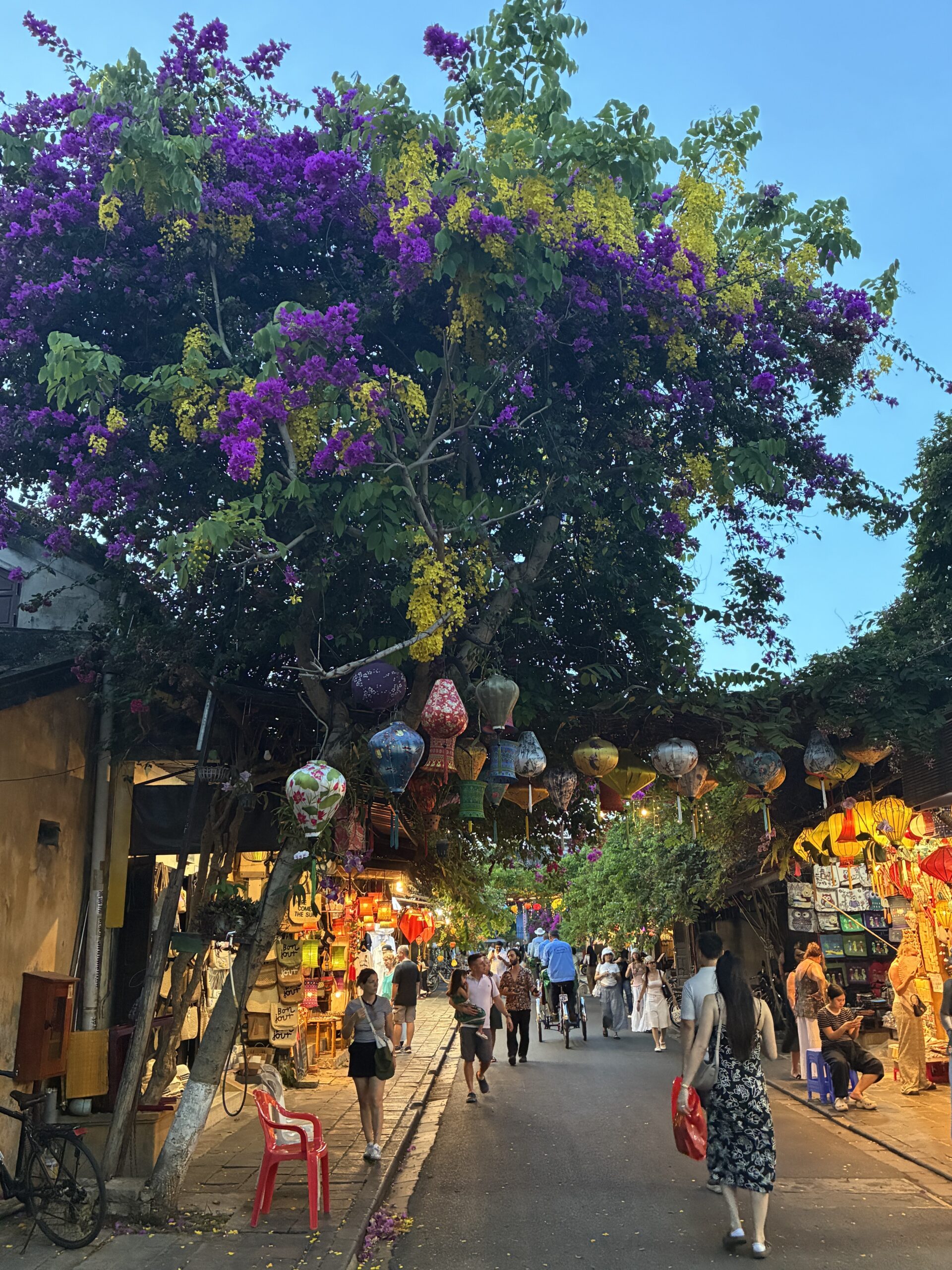
Then through the center of the Old Town street shopping areas, with many beautiful hanging lanterns, and by now the town was darkening and the lights and lanterns coming on.


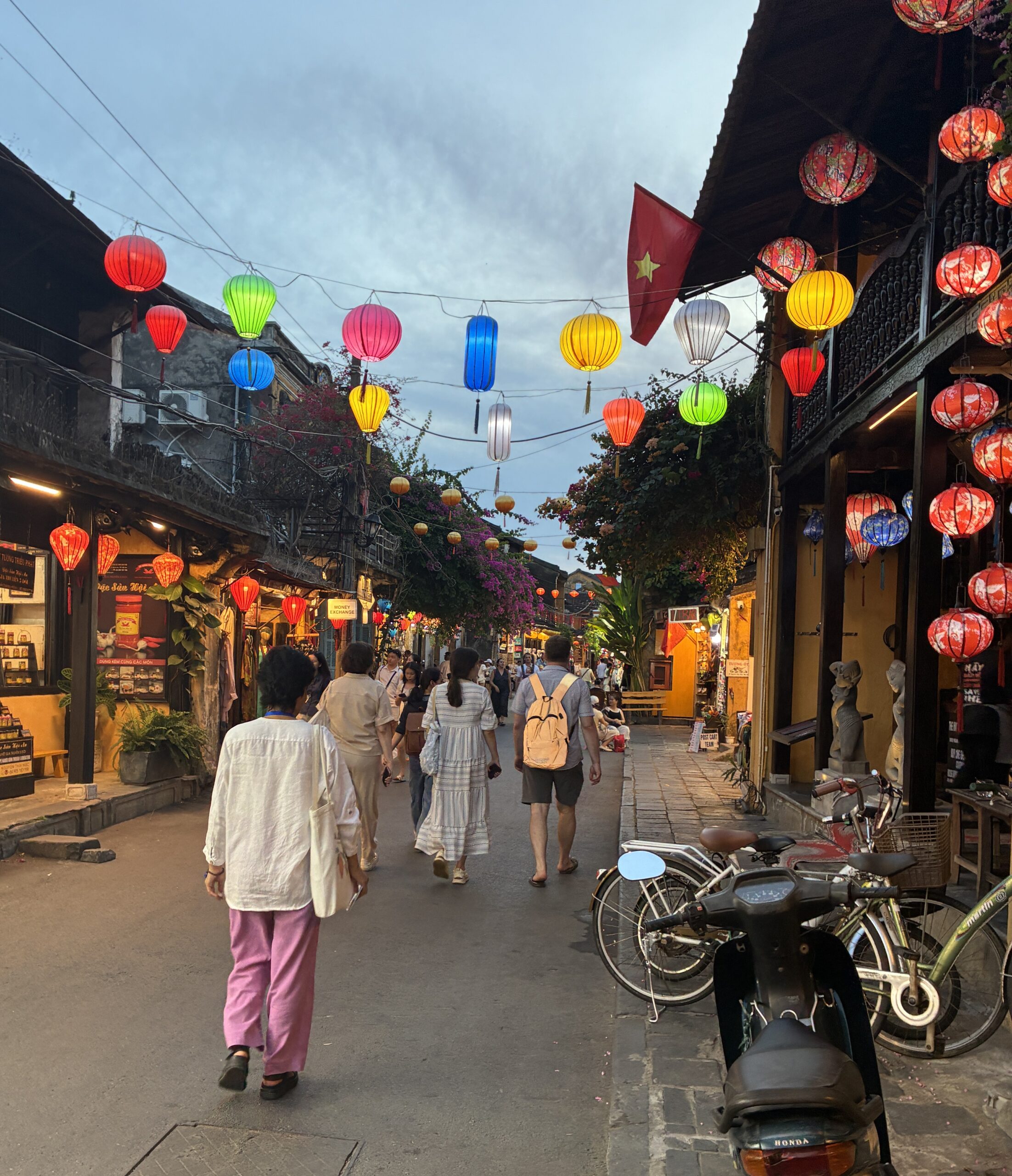
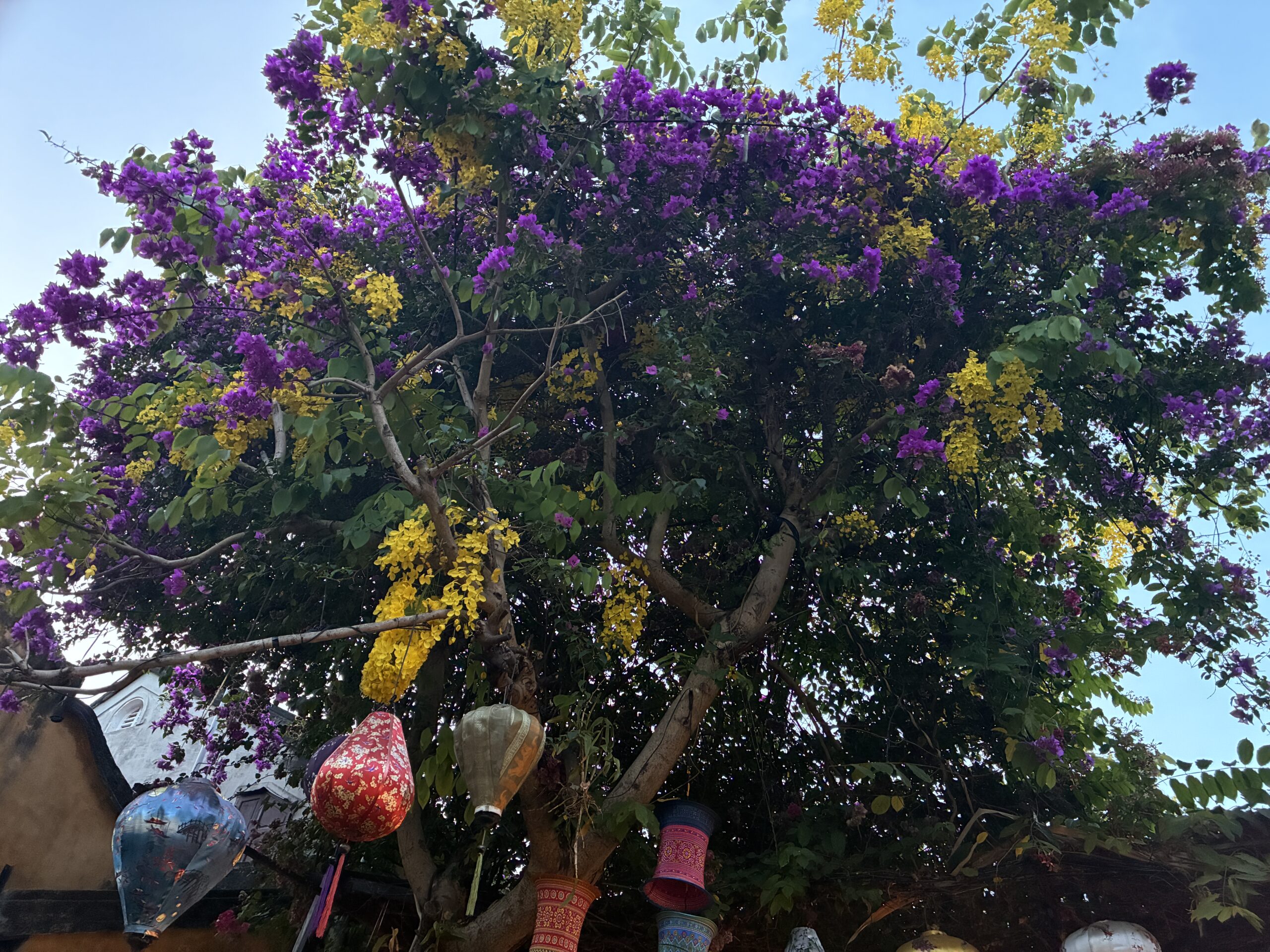

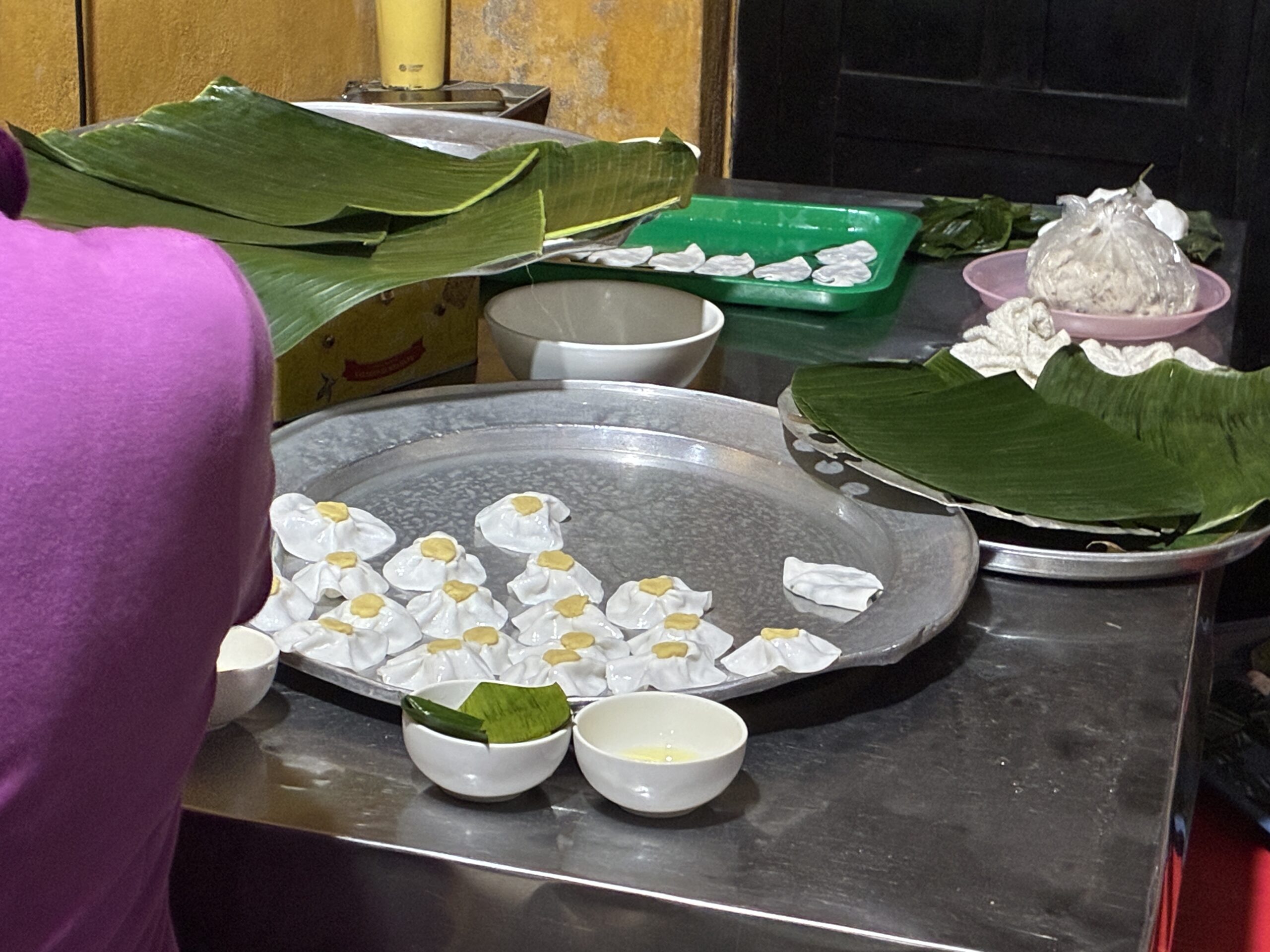
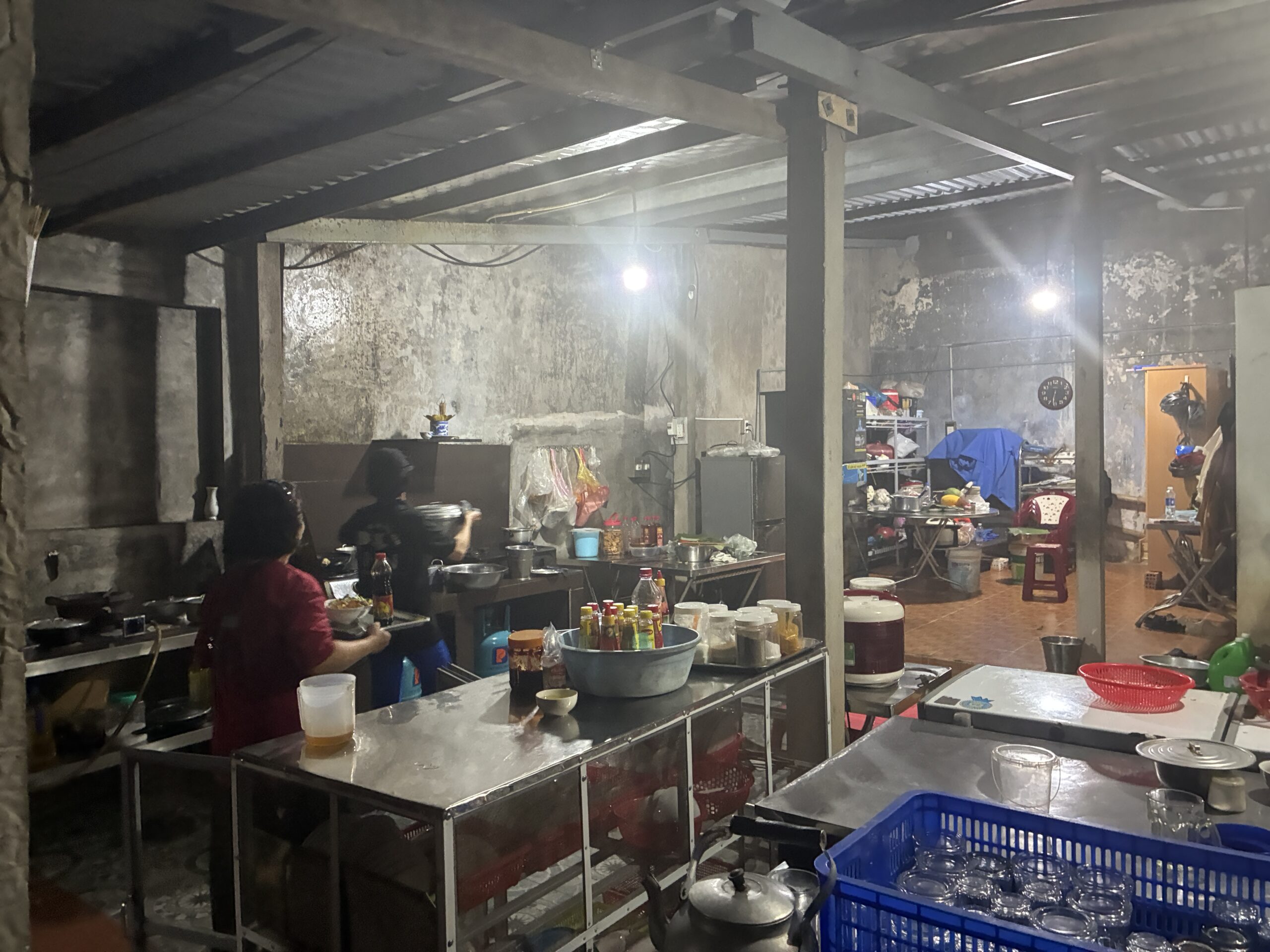
We visited the Quan Thang Ancient House, and stepped back into the past. You have to buy a ticket, which covers multiple site for 24 hours, to visit many of the sights in town, and Quan Thang Ancient House is one of them. The home is around 300 years old, built by a Chinese merchant, and apparently largely untouched, and when you step inside you’re back in time one hundred years or more. The Thai family, descended directly from the original builder and owner of the home, and of Chinese descent, has lived in and worked from this home for seven or eight generations, dating back to when the home was first built, and here they were, old and young, producing handmade goods, like paper cut cards (which are incredible), toys, and other souvenirs, as well as the famous White Rose dumplings. These are one of the Hoi An specialty foods, and they are made right here, by the women making them as we watched, filling the dumplings with shrimp and pork and shaping them into flowers, following a recipe they have been using for 100-130 years. In fact, the recipe is so secret this family produce white rose dumplings for every restaurant and street food vendor in town who sells them, as well as serving them themselves in their small restaurant in the courtyard. Actually, the restuarant really isn’t a restuarant at all, in the sense you might expect. It’s just a couple of non-descript tables on the edge of the courtyard, where you can order food from the small menu, which they quickly cook for you. While there, unless you happen to notice the menus on the table, there’s no indication it is a restuarant. If you don’t know, you don’t know.
I came back after our tour was over, and ate, After all, you want to eat White Rose dumplings where they actually create them. Very tasty, and I also had shrimp rolls, also very good (and some french fries).



We wound up down by Thu Bon riverfront, which by now was really pretty crowded and jumping, and was getting set up for evening bingo, which is called Bài Chòi, a game played here since the late 16th century. The river itself was jammed with sampans carrying visitors, and lit with individual lanterns, making for an incredible display of beautiful color on the river, with many of the visitors placing lit lotus shaped paper lanterns onto the river to float. A very busy scene, with people lining up to catch a boat. Lots and lots of people here now.


We wound up our tour at the Japanese Bridge, which spans a small canal just off the river, built by Japanese merchants who lived in Hoi An, connecting their residential area to that of the Chinese on the other side of the canal, who themselves later built a small temple inside and off the back of the bridge, called Chùa Cầu (Bridge Pagoda). Built in the early 17th century, the bridge was also built to fend off a gigantic sea monster called Namazu, so large that its head was in India, its tail in Japan, and its back in Vietnam. Whenever Namazu twitched its tail, it caused earthquakes in Japan and floods in Hoi An, and the bridge was built at this spot to act as a pin that would pierce the monster’s back and hold it still, bringing peace and stability to the town. Given the many flood in Hoi An since then, and three in 2025 alone, I guess it didn’t work.

Shanti left us with some really useful information and links, and we parted and went on our way. I wandered around some, wound up going back to Quan Thang Ancient House to eat, and then found my way back to the hotel. I say found my way back because I have not been able to pick up a cellular signal in town, except for brief moments, so unless I’m on a wireless network I’ve been unable to use my phone for information or for maps. I’ll have to call T-mobile tomorrow and figure this out, as it means I have no idea where I am at any given moment, and even though Old Town is not large, it is nevertheless easy to get lost. I also am not able to use my phone to spontaneously decide where to next. However, I was able to get a map onto my phone, and could actually see where May’s hotel was,, and where I was at the moment, and from that I was able to work my my way back to the hotel, write the blog, and hit the sack.

.

It’s been a long, but another very good, day. Good night, Hoi An.