Hoi An off the map.
I didn’t do much in the morning, other than write my blog and take a couple of short walks.
I headed out for the day around 1, and it was already pretty hot, in the low 90s, and very humid. I had booked an “off the map” walking tour, which Shanti, my guide from yesterday’s evening lantern tour, had recommended, and looked good. It looked like it would be a tour of Hoi An that did not cover the usual visitor sights and tourist areas, and that’s exactly what I got. It was exceptional.
First I walked to the pickup spot, wanting to make sure I knew where it was, and then walked back into the old town and around the area, including the Hoi An Market and the waterfront area by the Thu Bon River, just rambling around, not in any hurry, enjoying the town, the streets, its sights, and its people, taking some photos as I went. Happily, today, for some unknown reason, I was able to pick up cellular service all over town, so had no problems finding my way around.


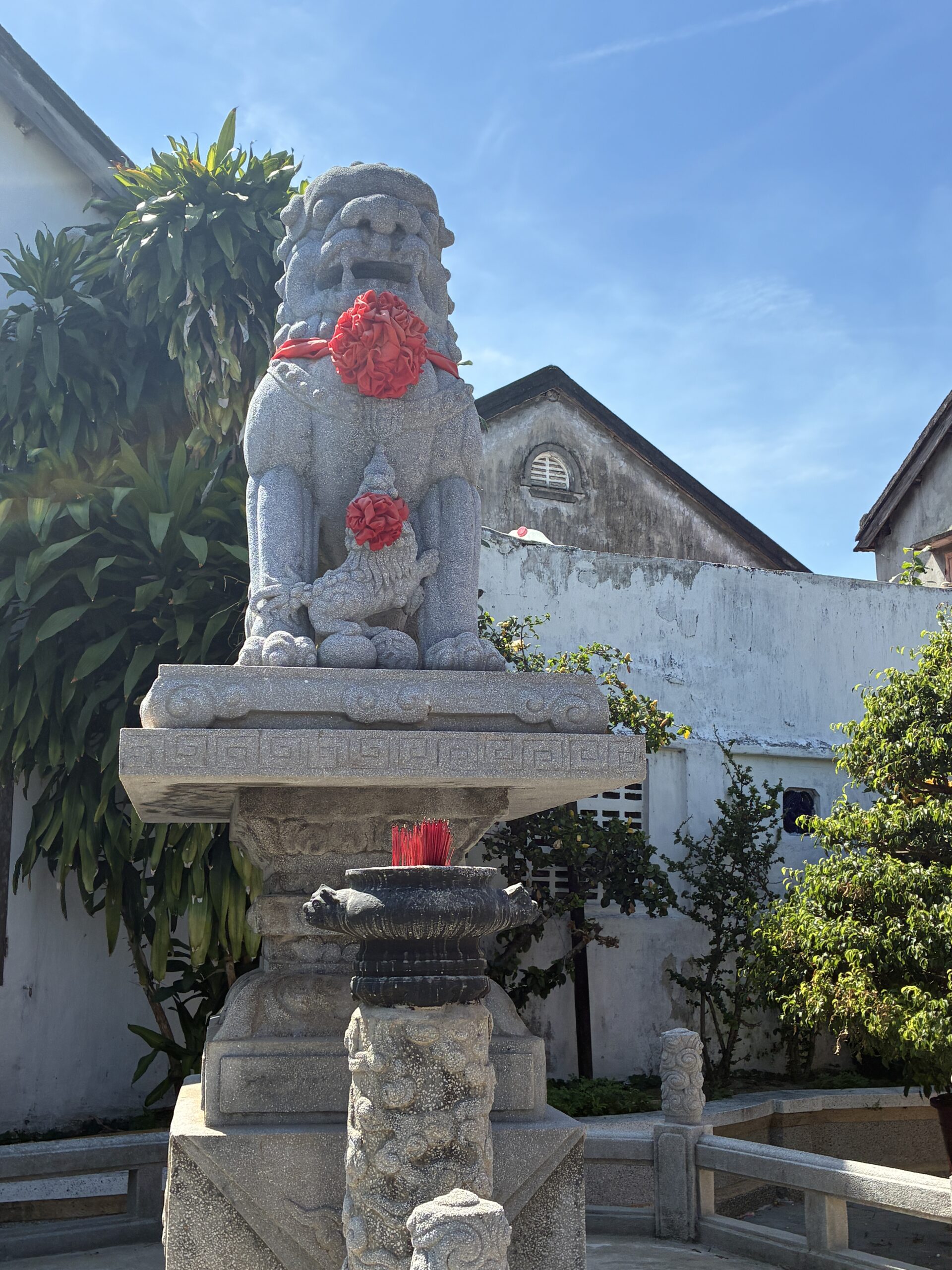

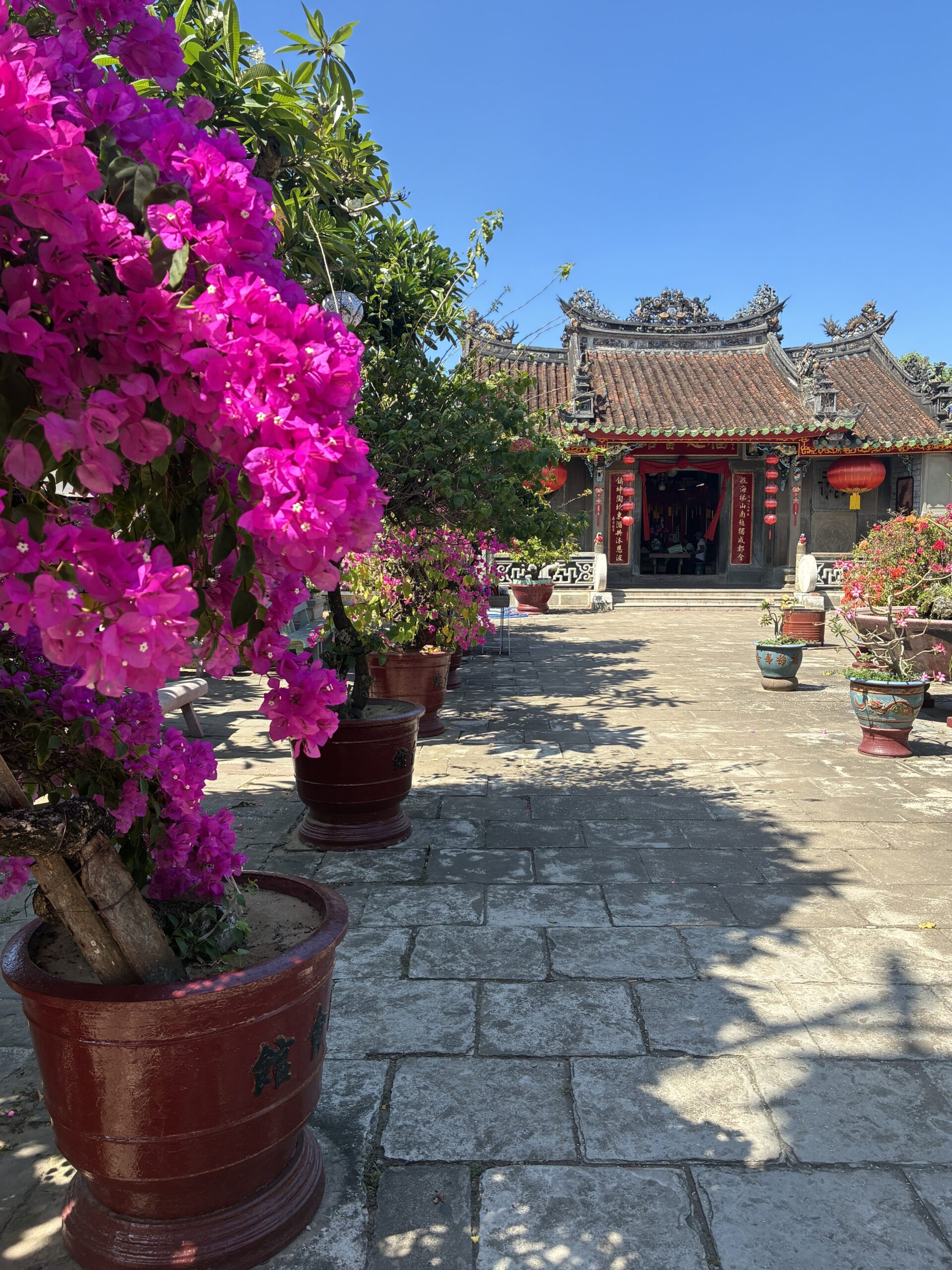
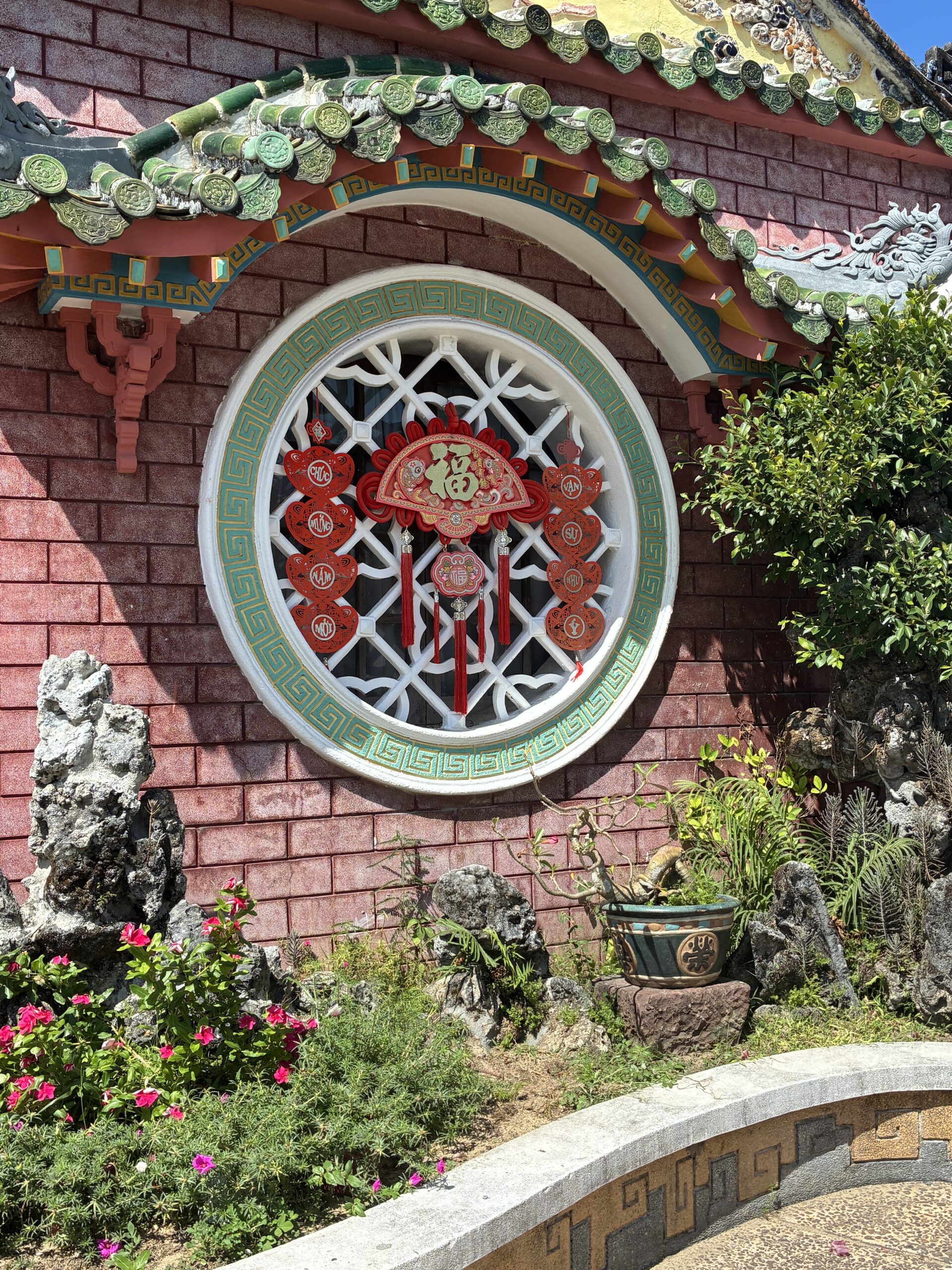
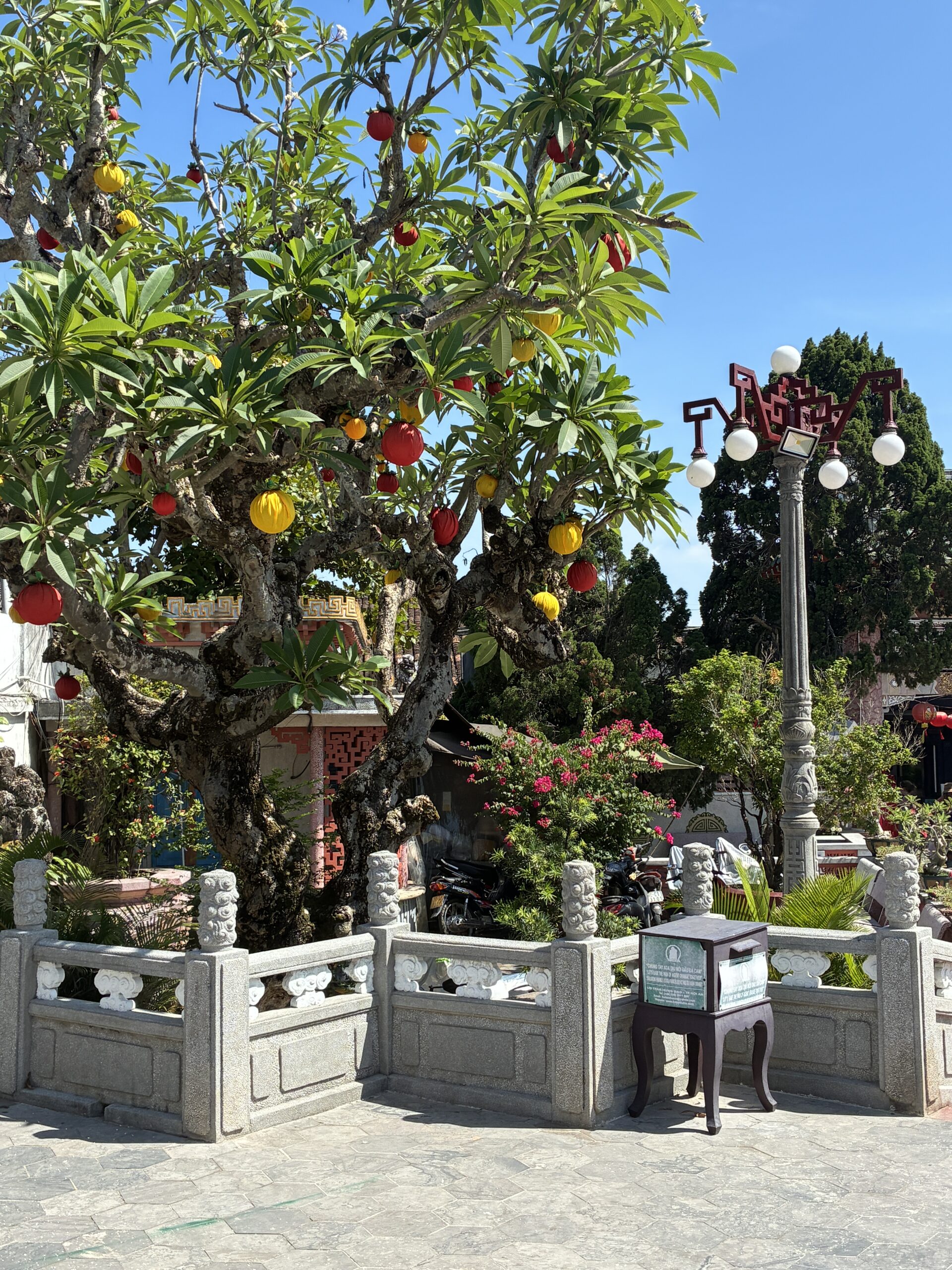

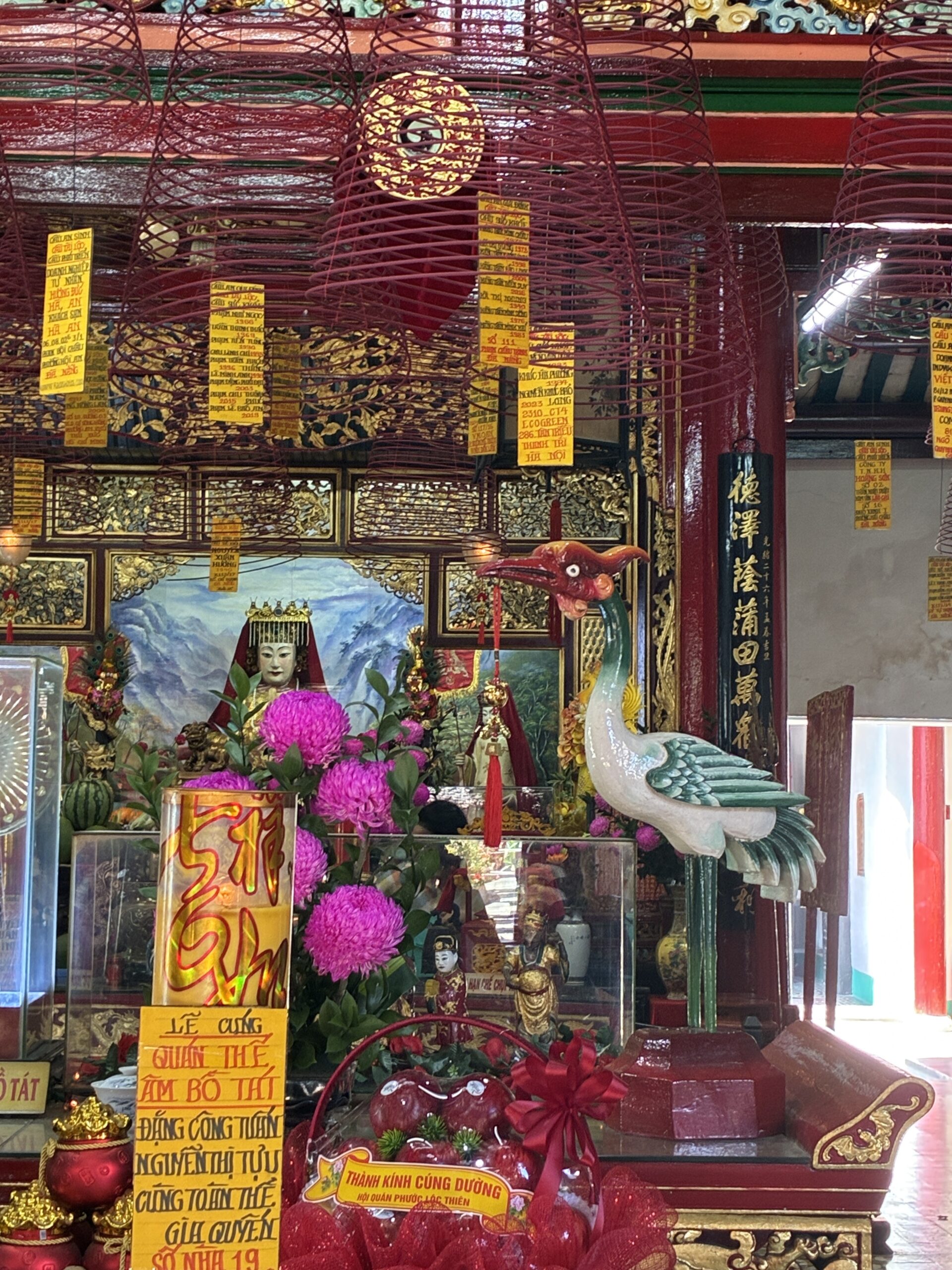
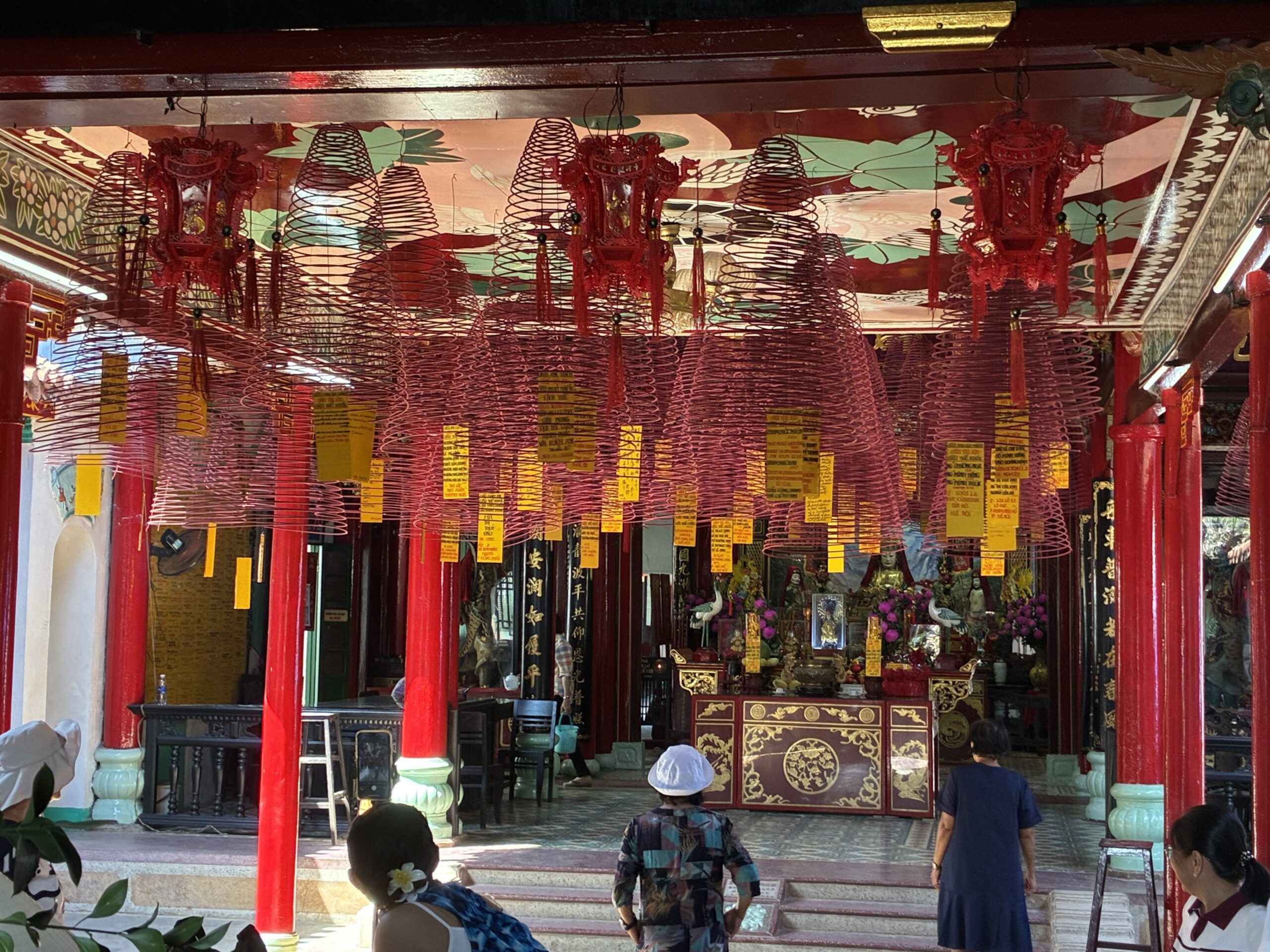
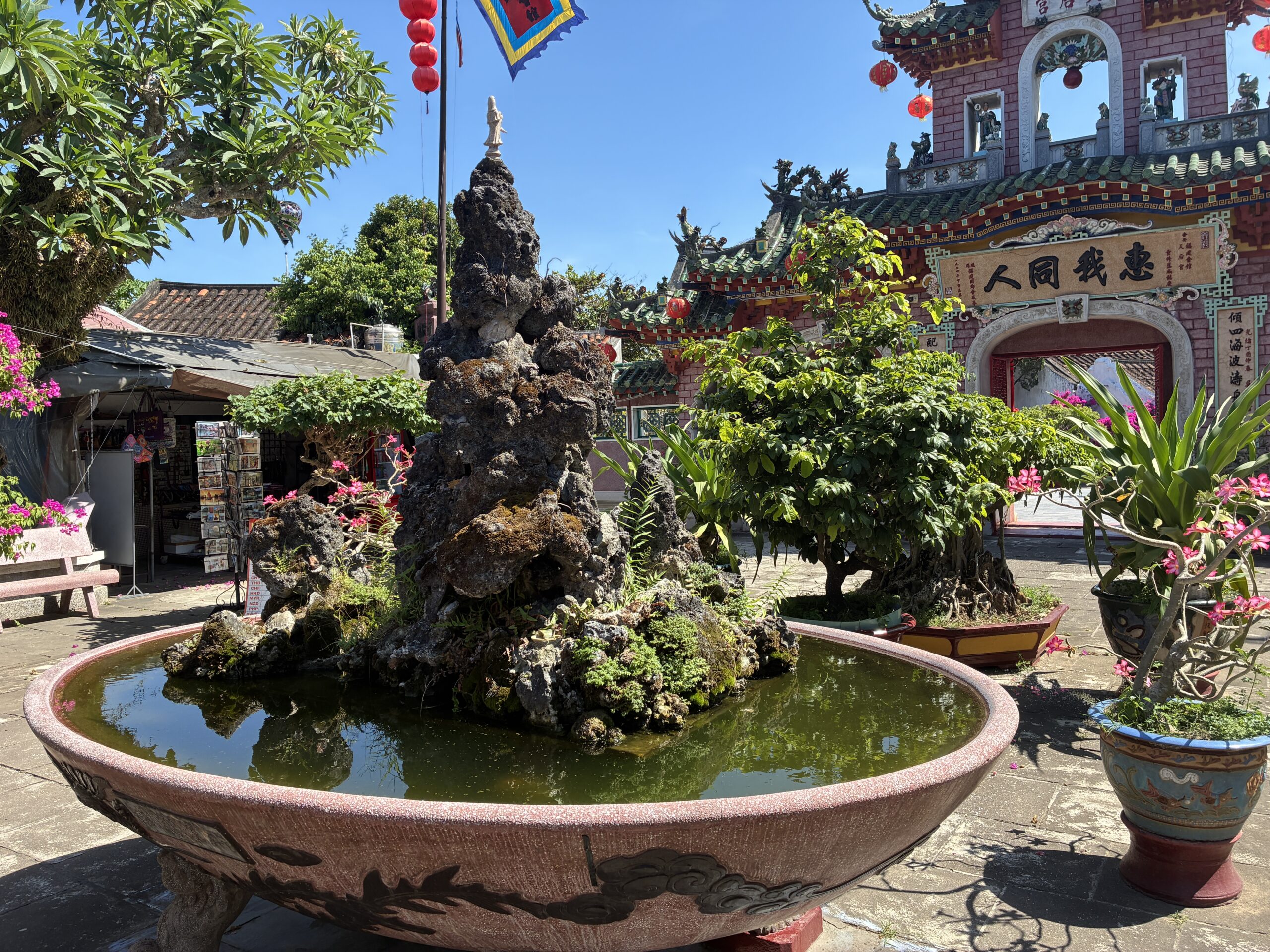


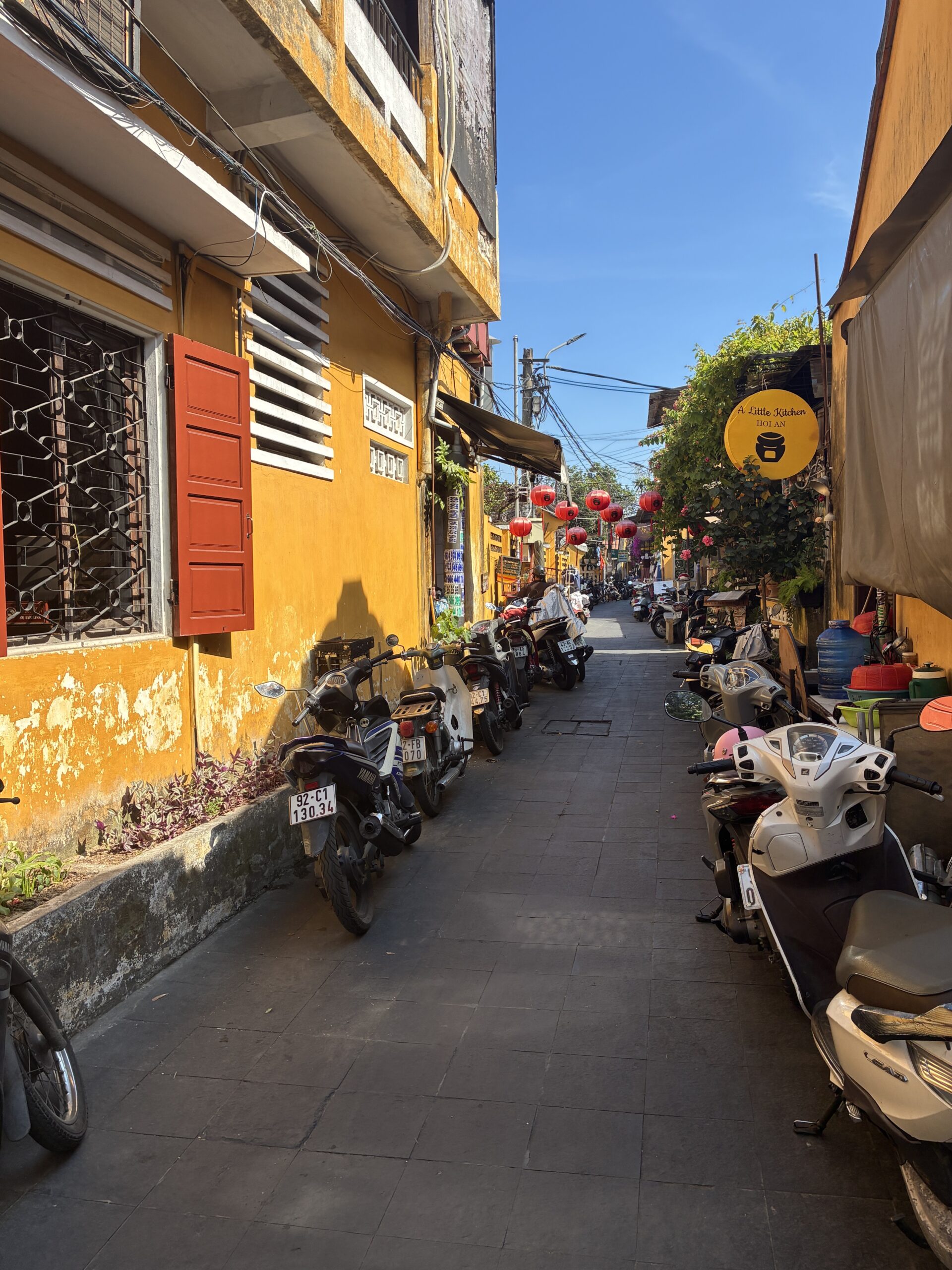
I enjoyed the walk, as hot and humid as it was, and, surprisingly, I’m fine with it, even the humidity. I’m at least wearing the right kind of clothing: tank top, shorts, and sandals. I decided it was time to head back to the meeting point for 3:00 clock, and took back alleyways most of the way. There is quite the maze of connecting alleyways here, many with small stores and restaurants along them, and they are cool in the shade, and nice to to walk through, and all, or most, in Hoi An yellow.


I got to the tour spot and met up with Karla, the guide, who explained this was the western name she’d picked, to make it easier for visitors, and gave her actual name, which was too long to repeat, so at her suggestion I used Karla. This has been true for several others I’ve met, including my guide for the Imperial City in Hue, who went by Vivien (although her name was actually Nguyen).There was only one other person on the tour, Keith, who looked to be in his early 80s, and was sweating like a pig. He was wet, and not in the greatest of shape, so we took care as we walked, especially in this heat, and Karla gave us both hand fans to use. Keith is an English ex-pat from South London, and has lived in Thailand for past 25 years, and is re-visiting Vietnam, which he last visited in 1980. Karla was again a lovely guide to meet, and she really made this unusual and off the beaten path walk very unique.
The content and locations of the walk were themselves unique, and we visited not a single tourist attraction, but she too was different in that she was so personal, sharing so many details of her own life growing up in Vietnam, some quite personal, her thoughts and feelings about Vietnam and its recent history, and how much she has changed as a Vietnamese woman over the past few years, in part influenced both by her roots and culture, which she highlighted throughout, but also the influence of her western friends and these tours, as they have exposed her to so many western visitors, as well as talking about her hopes for her future and that of her 8-year-old son. She was really something.

I wondered why we met in such an out of the way place, quite a way from the center of the old town (mind you, nothing’s really that far). That unspoken question was answered immediately, as we started our walk, which lasted about 2½ hours, right where we were by visiting the community hospital, which was right next to us. She used it as an opportunity to not only talk about the hospital itself and its history, but the health care system in Vietnam, how it’s changed, how it serves the community, and its role in community life. She talked about customs and spirituality in context of health care and death, and traditions and beliefs surrounding life and death. Unusual and really interesting stuff, and a really different type of walk right off the bat.
Then to a very disturbing spot, the Hoi An prison museum, the former Xom Moi Prison, which was active and brutal from 1960 to 1975. It is about the closest thing I can imagine to visiting the site of a Nazi concentration camp, with extremely disturbing photos and very graphic replicas of life inside the prison cell blocks and the actual cells, which have been left intact, among the ruins of other cell blocks and buildings that have been torn down or left to rot. This was the prison used by the South Vietnamese government to imprison Vietnamese political prisoners, many of whom were starved and horribly tortured and murdered by the guards, and who were housed in small cells that might have held as many as a hundred male prisoners inside, sometimes with not enough room to sit. The female cell bocks, usually for the wives and children of the male prisoners, had larger cells and housed fewer women, some of whom became pregnant while prisoners, the result of rape, and, for some, abortion was forcibly induced by the South Vietnamese guards.


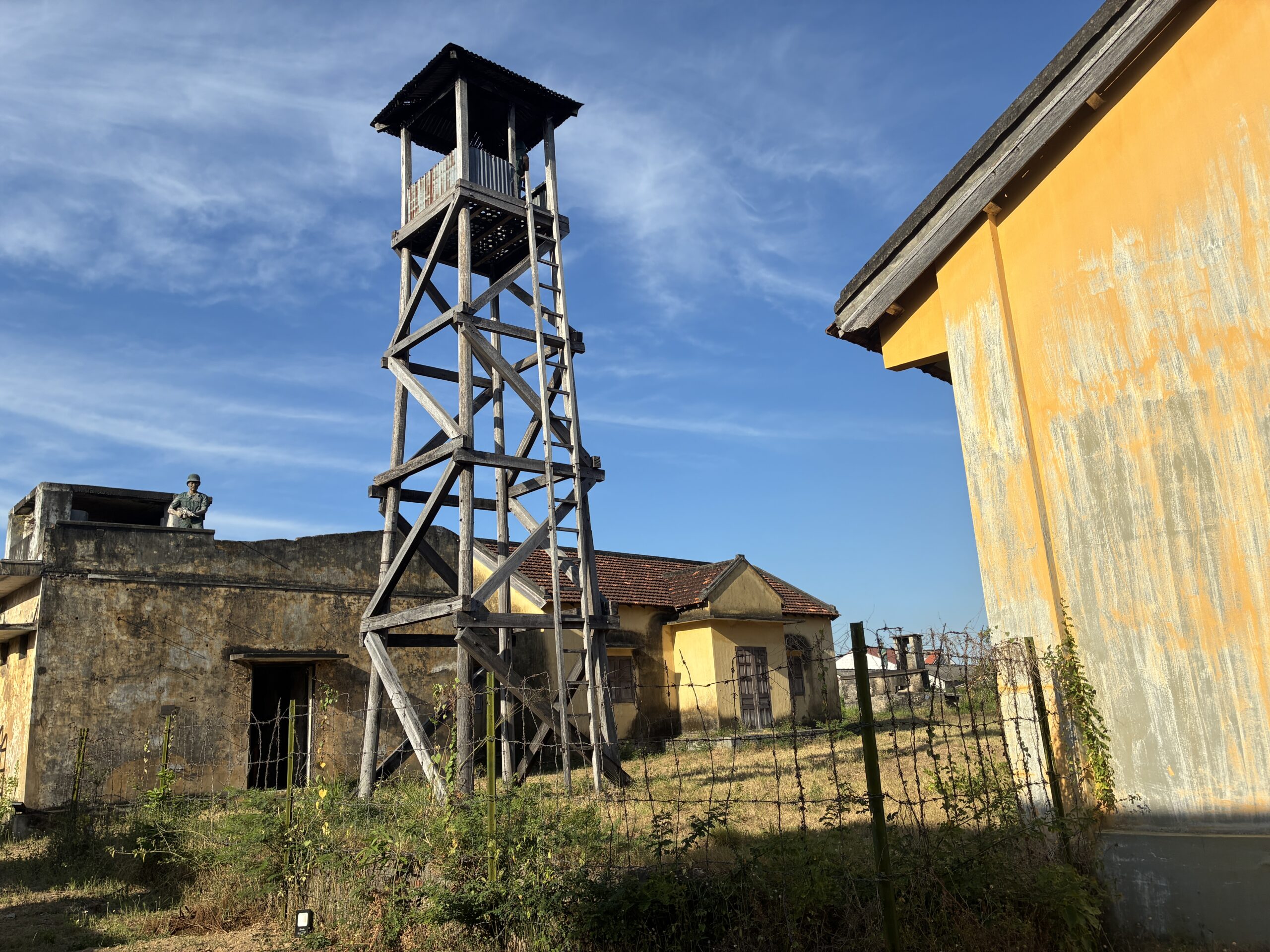
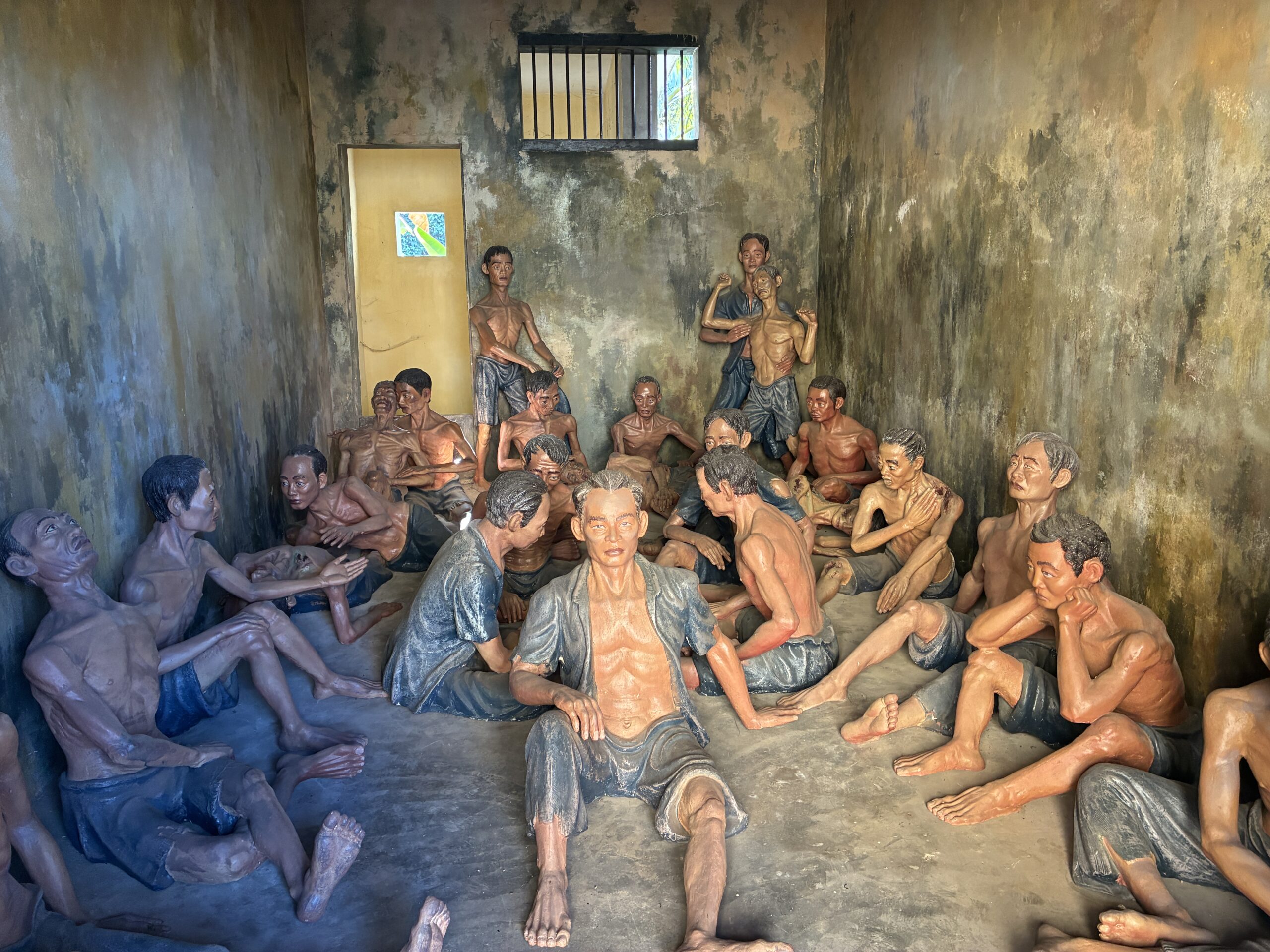
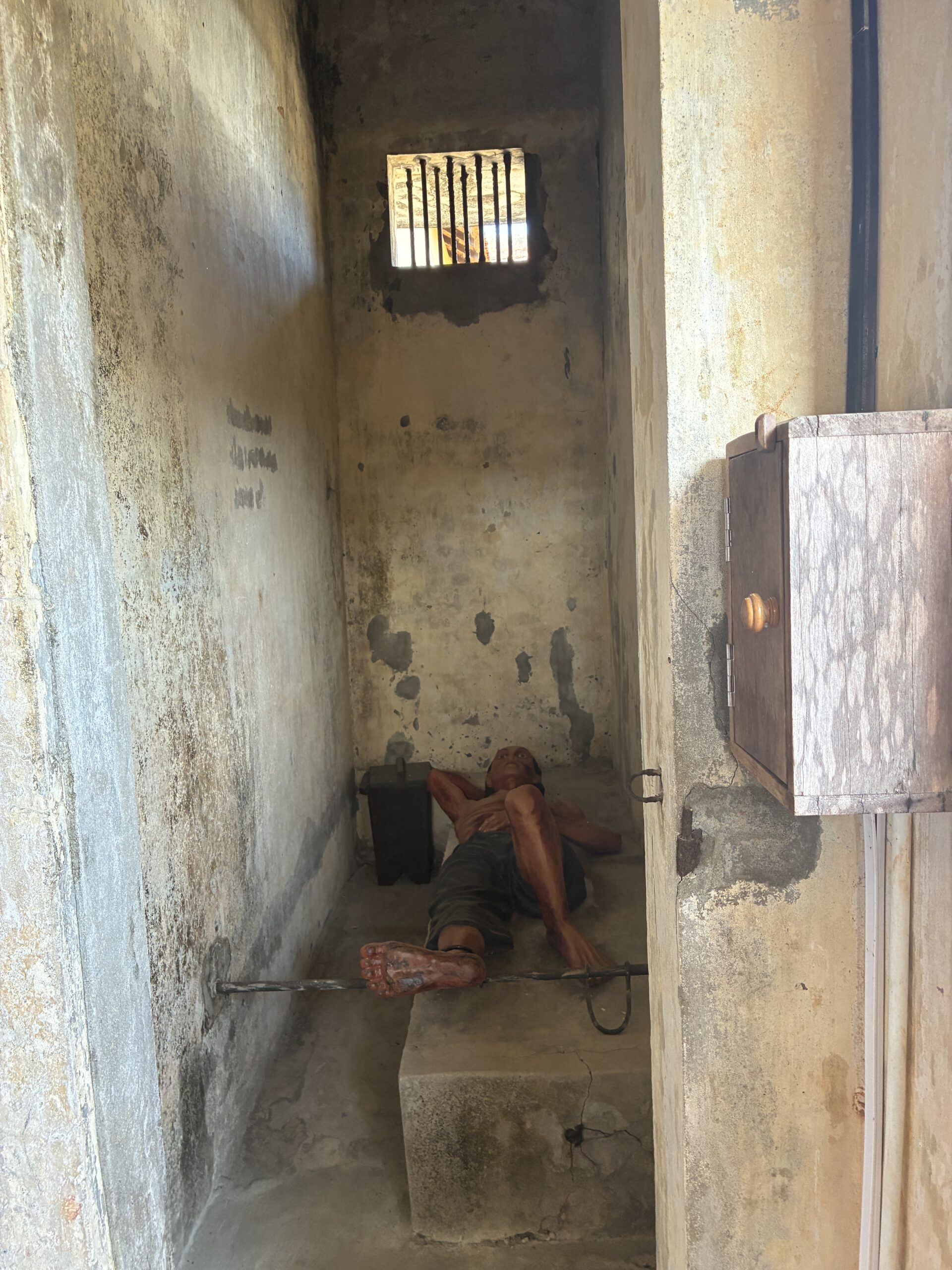

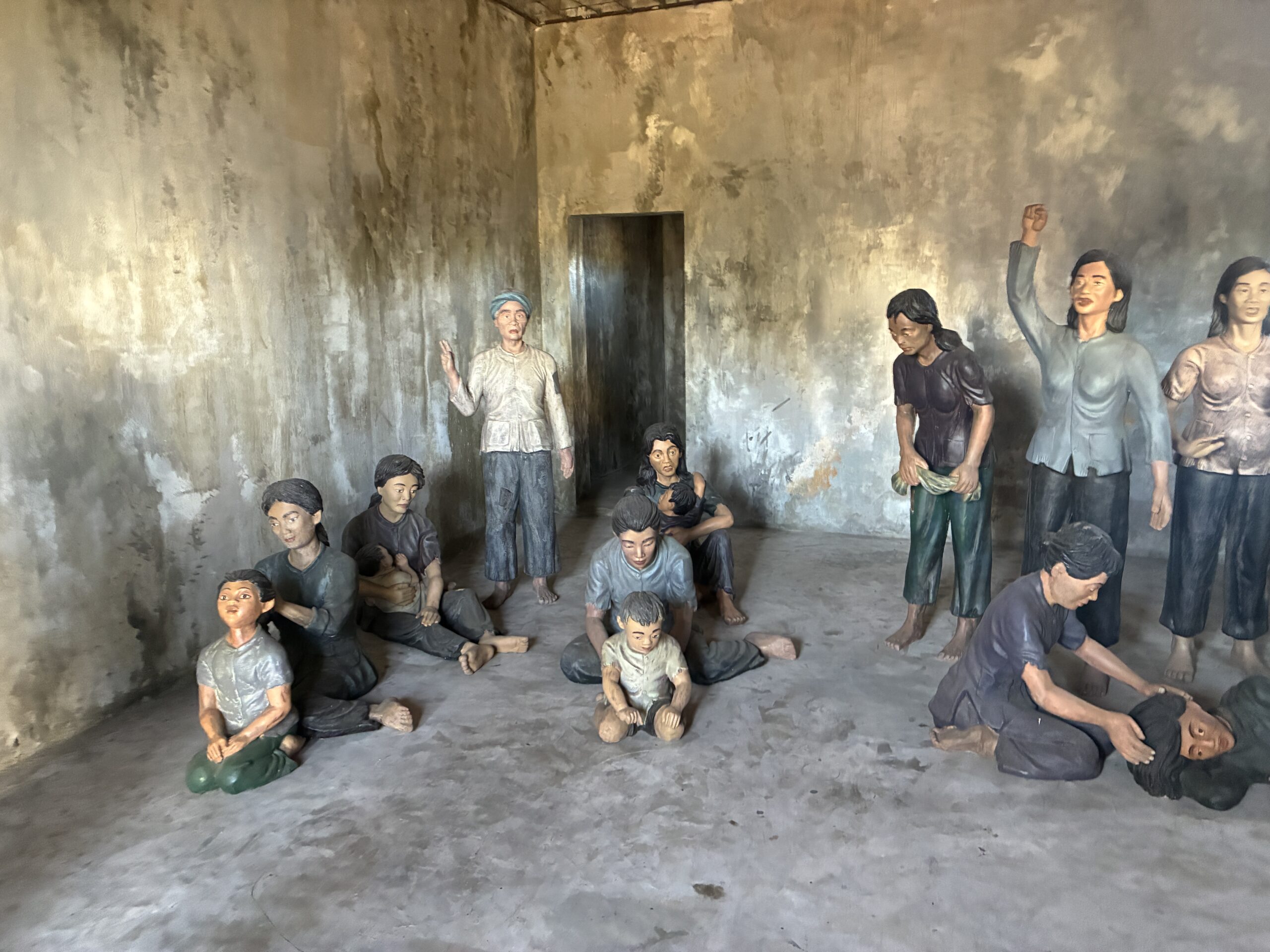
Karla talked also of how Vietnam continued to come under attack after 1975 and the end of what the Vietnamese call the American War, first by Cambodia and the Khmer Rouge, led by Pol Pot, which launched frequent and violent incursions into Vietnamese border towns, and massacring thousands, until Vietnam invaded Cambodia, and within two weeks ousted the Khmer Rouge. This was followed by Chinese attacks on Vietnam in 1979, who had been the primary patron of the Khmer Rouge, but they faced strong resistance from the Vietnamese and withdrew after about a month, although attacks continued into the 1980s. Karla’s pont, though, was just how hard won was the Vietnam peace, and how years of domination and attack shaped and unified Vietnam and its people, and she talked throughout our walk of Vietnam’s resilience and capacity to look forward and not back, and the nature, role, and strength of family and community in Vietnam.
Then we moved away from this terrible history, and just outside of the gates to the prison memorial was a girls’ elementary school, where the students were very pleased to see us, and practice their English, and invited us to watch their dance exercise class, a million worlds away from the tragic setting less than a hundred yards away. You can see the gates to the prison in the background.


We continued to walk through parts of town that aren’t on the tourist map, just the regular streets and back streets. and Karla introduced us to locals who she knows and who live and work here. Our next stop was a bit of a trend, as Karla bought us some street food here, and explained what we were eating, and the food sellers were very happy about our interest. and eager to delight us with their delicious food. Karla didn’t let up, and we made several more of these food stops, as we visited and met with local people, including in some cases visits that weren’t food visits at all, but people wanted to feed us local food and drink. This was sort of like a food tour within our larger street walk, and was very lovely and extremely hospitable of both Karla and the locals we met, where the food was either free or Karla paid. During our walk, we ate several varieties of bánh, which can refer to baguette sandwiches, Bánh mì, or often steam rice cakes filled with different ingredients. It is the word that follows that describes what kind of Bánh is being served.
At this stop along the way, it was several different types, each delicious, of bánh bèo. small steamed rice cakes, with different fillings and sauces, served individually in small dishes. Yum, plus some interesting green tea that didn’t taste like tea at all, and was cool and refreshing to drink.


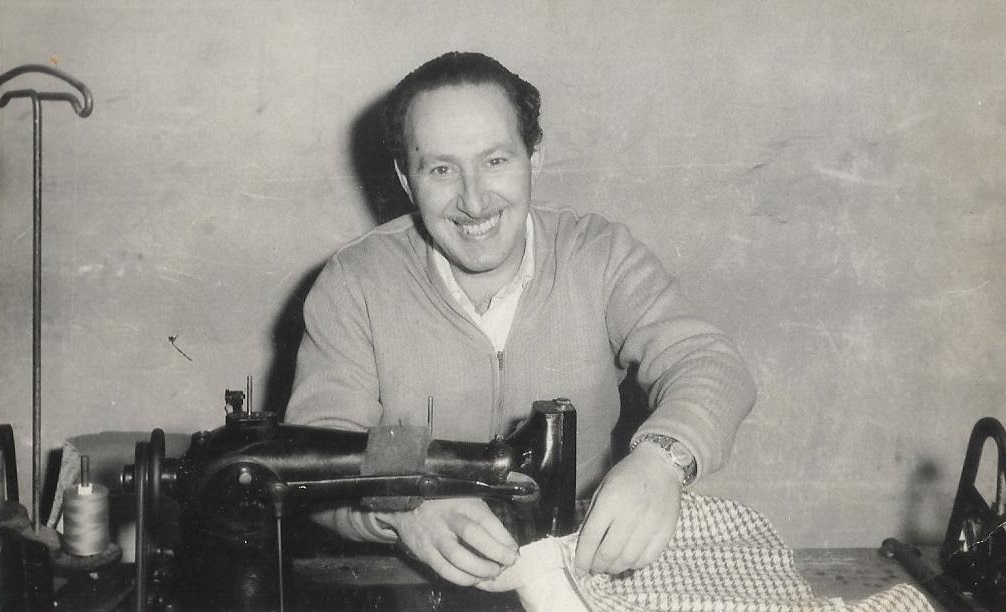
We also learned something about the tailoring business in Hoi An, which is massive, although this wasn’t always the case. The growth of tailoring, since the 1990s, has gone from relatively few tailors to the hundreds in Hoi An today, fueled by tourism, and Hoi An’s reputation for inexpensive hand made suits that can be ready in a day, and also government support for and investment in vocational programs that teach sustainable skills to young people and can also build and support the local economy. We visited one of the tailoring production shops, down a small side street, that the tailors in town job out to, which can produce as many as 70 suits a day.


I must say, I was immediately struck by the similarity to the work both my mother and father did, who also worked in production shops that turned out commercial clothing, and sat at industrial sewing machines all day.
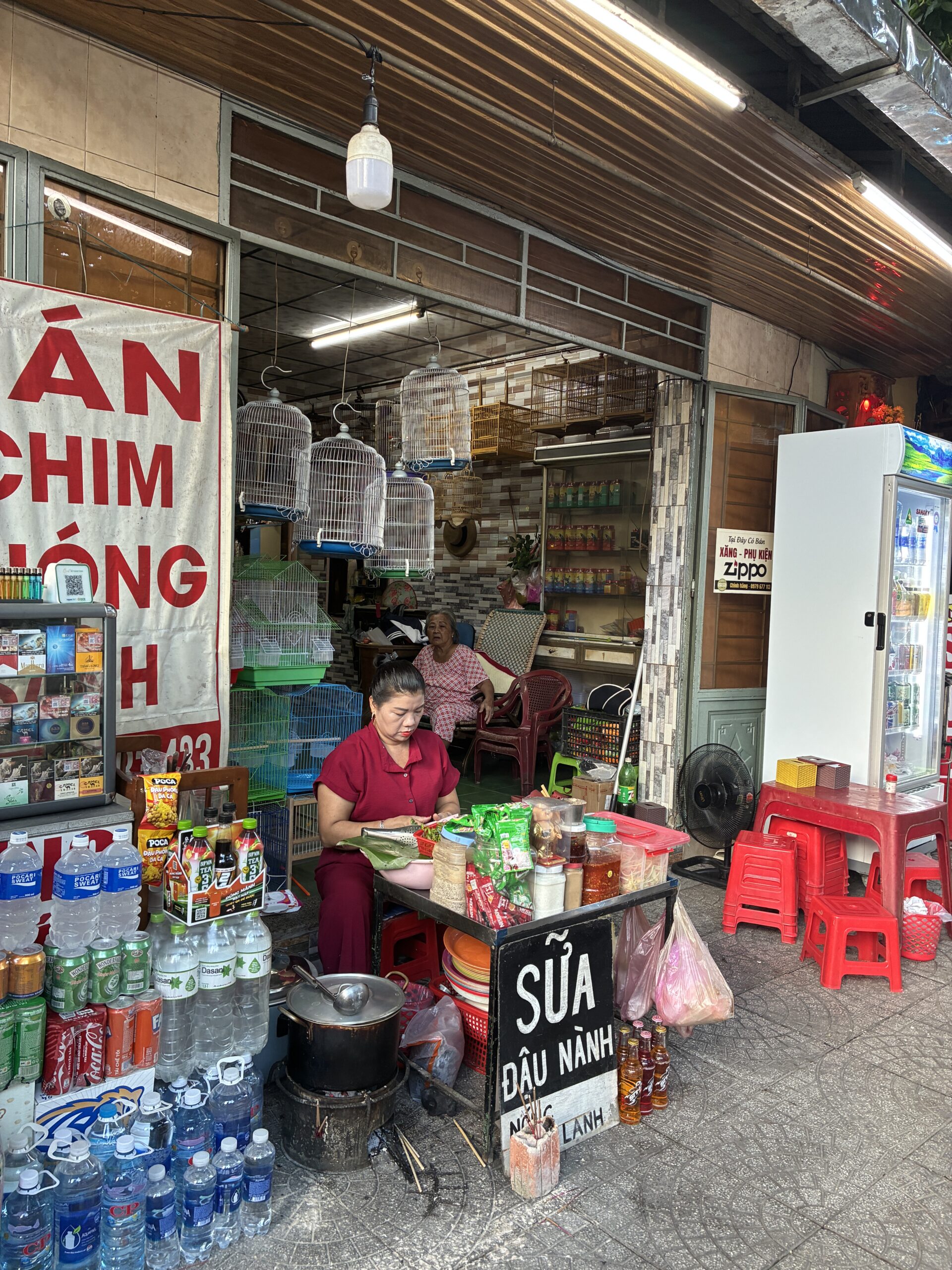
We made several more stops to homes and businesses along back streets and alleys, where Karla explained local life and community, and where we ate several more local foods (the names of which I can’t recall) and where people quite literally, insistently, and hospitably thrust food and drink upon us, including a very tasty and refreshing local Kumquat drink.
We stopped also at a local and large catholic church, funded in the early 17th century, and talked some about religion in Vietnam, and the coming of the missionaries, and how religion, spirituality, and ancestor and deity worship fit together in this county without a religion.
We were coming to the end of our really unusual and really interesting tour, with one more learning and eating spot. We stopped into a home where types of Bánh are made for sale to restaurants and other food vendors in town, and here we ate several different types of Bánh cakes that are steamed in banana leaf, and in particular those made for weddings (yellow on the inside of the banana leaf wrappers) and those made for deaths (black on the inside). I was pretty full by the time the tour ended, actually.

Time to say goodbye, by now getting close to 6 pm. we hugged, and walked on. I strolled around town some more, now it was getting dark, and took a walk near and along the river, just watching life and the festive feel of the Old Town as the sun went down, the lanterns lighted up, and the crowds filling the streets.


I was by now determined to eat cao lầu, even though I wasn’t that hungry, because it is another signature food of Hoi An, and made only in Hoi An, using the water from the ancient Ba Le Well. Cao lầu is a thick chewy noodle, served with pork (or other meat), herbs and greens, and rice crackers or fried noodle, with a small amount of broth or sauce, although it is a dry dish and not a soup. Because cao lầu is made traditionally made from local water and preparation methods, it is not found outside of Hoi An, unless it has been made and sold from here.
The place Karla suggested to eat cao lầu, a small street restaurant, was just closing by the time I got there at 7, and it turned out I was just five minutes from my hotel. As I have no way to judge which are the best places to eat cao lầu, or any other local food for that matter, other than recommendations like Karla’s, I instead just walked around and found the first small place that served cao lầu, and ordered up a dish. Like all the noodle foods I’ve eaten on this trip, it was delicious, but in this case I could tell a difference because the noodles look and taste different and are thicker and more chewy. Really tasty.
This final photo fills me with sadness. It is a local women selling floating lanterns on the Hoi An bridge. A group of loud young people was gathered around her, stooped down to take photos with her, which she graciously agreed to, but it struck me as so sad, that she is just a photo opp to them, and perhaps for me too, and yet there she sits, smiling, but probably struggling to make a living, and living in a world so far away from theirs and mine.

Tomorrow I plan on another tour of some kind, but for tonight, reading, writing, and bed.