A delightful day in Puebla.
Pueblo is a lovely and historical city, founded in 1531, when the country was still New Spain and under colonial rule. Even though there were, of course, indigenous peoples in the area, including Aztecs and Tlaxcalanst, there was no indigenous city or settlement in the valley, which was mostly open farmland. Puebla was designed and built by the Spanish as a planned city called Puebla de los Ángeles (City of the Angels), and intended as a new city for Spanish immigration, and as a safe utopia. And because of its planned location, it became an important stop on the main trade route, and between 1500–1700 it became one of the richest cities in New Spain, largely due to textile production, ceramics (especially Talavera pottery), and agriculture. Most of the churches and tiled buildings seen today in Puebla were built during this period.
The city was built consistent with Spanish architectural practice and design, initially in the Renaissance style during the 16th century when the city was founded, with orderly, symmetrical, and well-organized features, straight lines, and classical proportions, and later, during the 17th and 18th centuries, in the very ornate style of Mexican Baroque, favoring decoration that filled every inch, curved lines and shapes, heavily sculpted facades, and a LOT of gold leaf. Dazzling is the word.
The city layout itself is an example of both rational Renaissance design and very early urban planning, as all streets run almost perfectly north-south and east-west, just like Manhattan, except this was the early 16th century. A large bronze relief model of 63 blocks of the historic city center and its buildings sits in the Plaza, clearly showing this orderly design, and contains loads of tiny and interesting details.


The city also played a very important role in Mexican history. After declaring independence from Spain in 1810 and achieving full independence in 1821, officially re-named Mexico in 1824, Mexico was later invaded by France, initially because of debts, but also because France wanted to establish a monarchy in Mexico. The first major battle between France and Mexico took place on May 5, 1862, in which which Mexican forces unexpectedly defeated the French army right here, in what has since been known as the Battle of Puebla, and that victory over France is celebrated as Cinco de Mayo. Right here in Puebla. Again, who knew?
Actually, although they lost that early battle, the French returned in 1863 with a larger army and first captured Puebla and then Mexico City, installed an Emperor, and ruled Mexico until 1867, when they were defeated and the government of Benito Juárez restored,
But that’s not all. Even though the nationwide discontent and uprising that led to the Mexican Revolution were fermented and took place elsewhere, the key event, and the the first shots of the revolution, occurred in Puebla in 1910, triggering the revolution, just a few blocks from the Plaza, which I later visited.
Okay, history aside, I headed to to the Plaza for 10 am, as my hop on-hop off bus instructions said to check in there at that time. The only thing was, I had no idea which bus operator to check in with as were several bus tours, and none spoke English. I actually contacted the tour company yesterday to ask specifically which bus I would be taking, but never received a reply (still haven’t), but I eventually figured it out. But, even the ticket said to to check in at 10, as I wasn’t ready to board the bus then I was told to come back when ready to board. I wasn’t ready then because I had a 10:45 walking tour, which I was looking forward to. So I had some time to spare before the walk.


I walked around and sat a while, took photos, and then spotted my guide, Sebastian. Only two other people had booked for this walk, but they canceled, so it was just me, which was great for me but maybe not so great for him. These are free walks, and the guides make their money from tips. For that reason, I gave Sebastian a slightly higher tip when we were done, about two hours later, plus I also really enjoyed spending meeting him, and he was friendly, knowledgeable, interesting, and interested in me, and in England and Scotland, which he’d like to visit, He’s very interested in history, and so is well suited for this walk, but also knew quite a bit about the UK, including cities and history. Super nice guy.

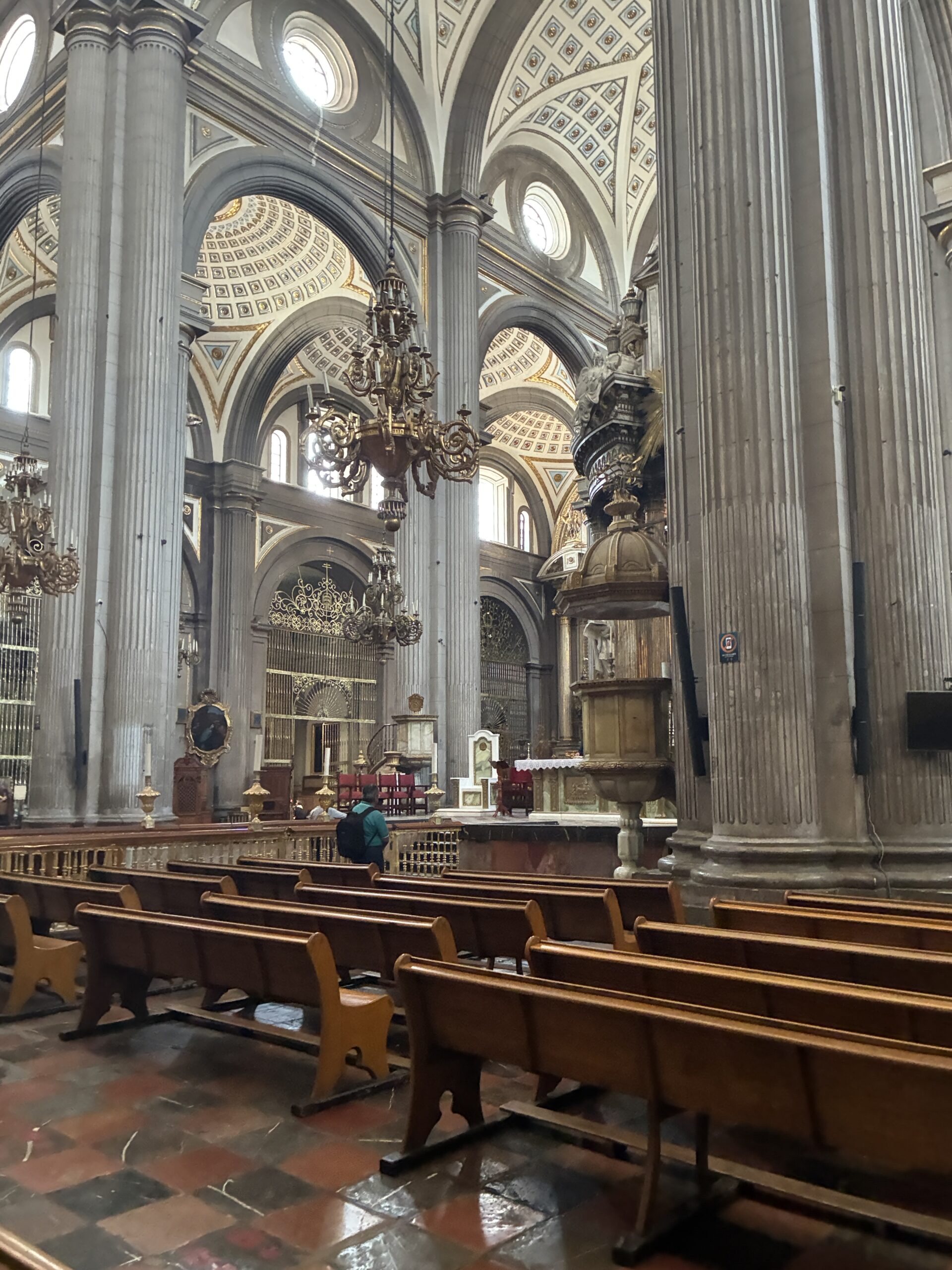
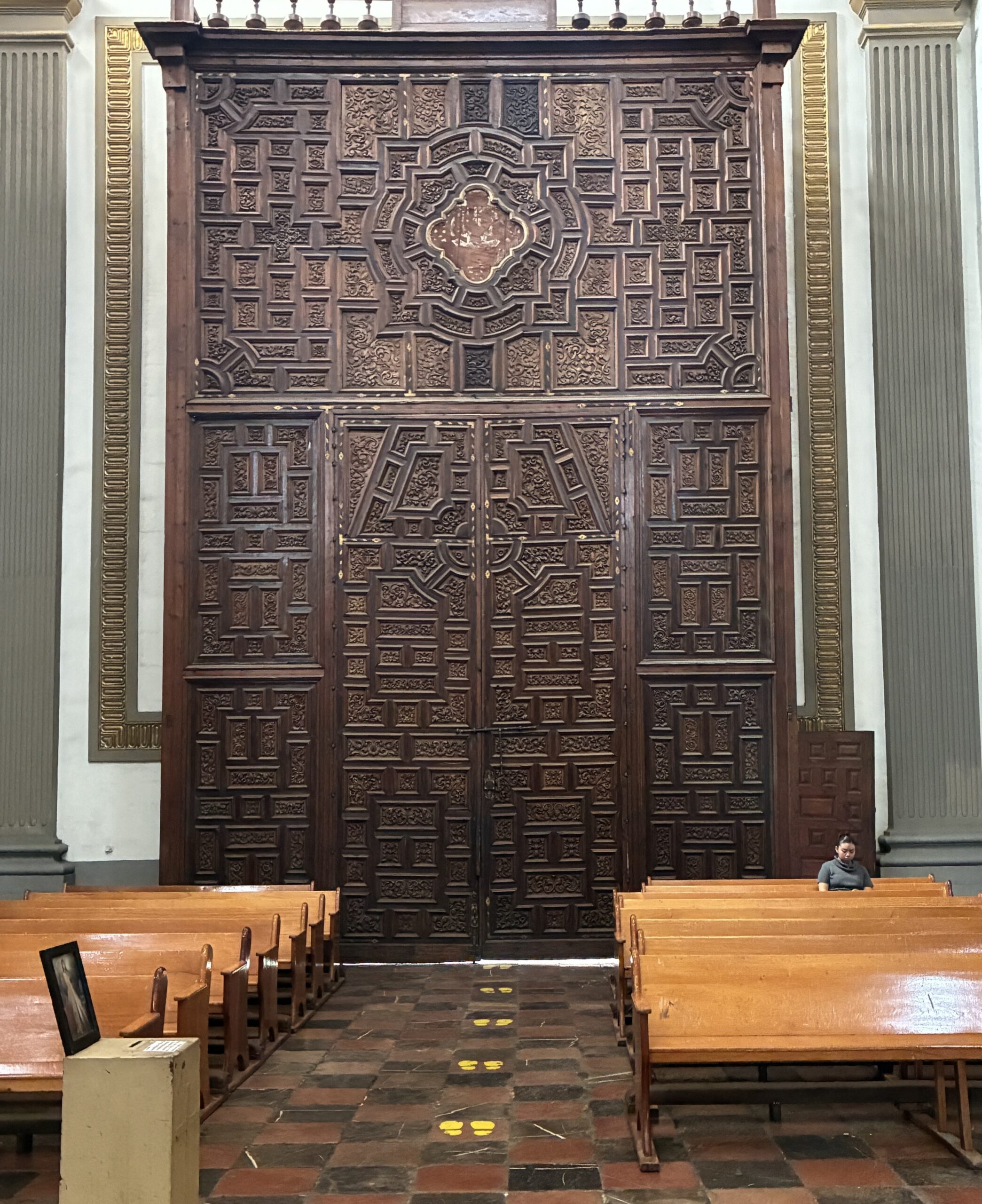
We walked and talked a little , and then made our first stop the Cathedral. Sebastian did a nice job describing both the history of the Cathedral and also what we were looking at as we moved around. It is mostly Renaissance, although with later Baroque features, as it was built over about 80 years and so began as Spanish Renaissance when started in 1575, and had crossed into Mexican Baroque by the time it was completed around 1649.


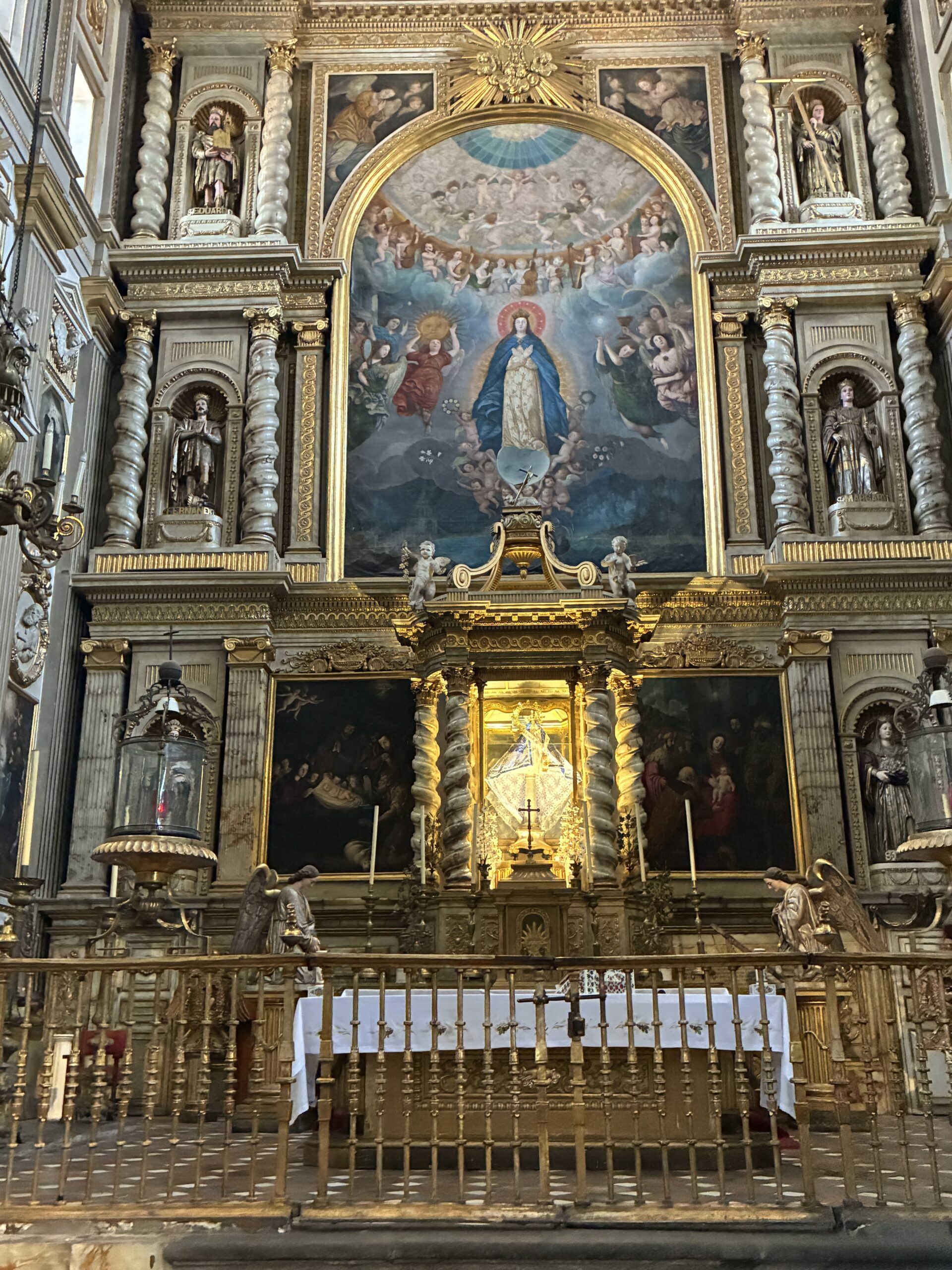
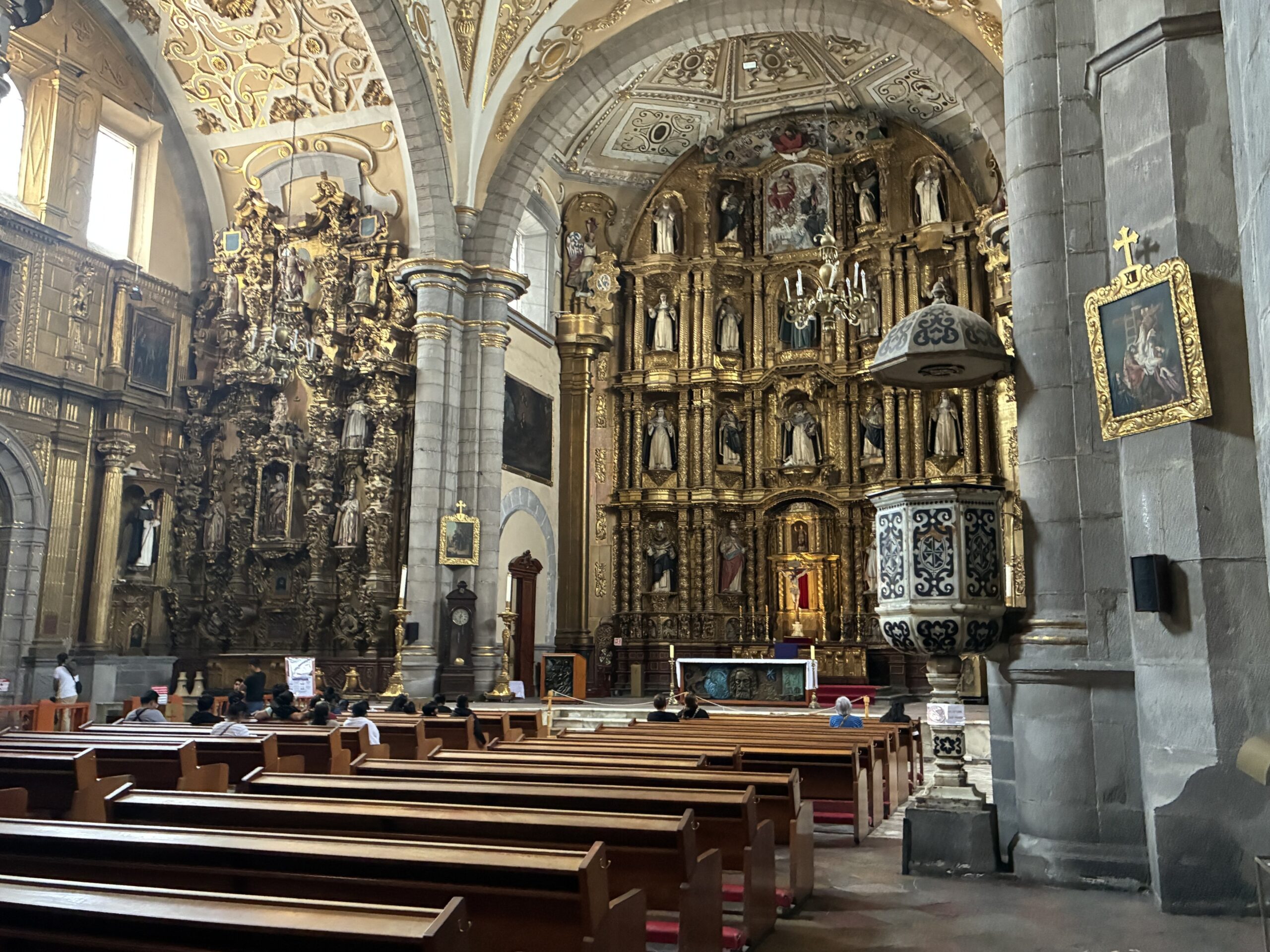
We later visited Capilla del Rosario (the Rosary Chapel), built between 1650 and 1690 when it was completed, and is full on Mexican Baroque (or New Spanish Baroque), in which every inch is decorated and every surface gold leafed, and saying it is ornately decorated is a gross understatement. When completed, it was called the Eighth Wonder of the World.
Built by the Dominicans, dogs are featured in many of the art works in the Chapel, symbolizing the Dominican Order, and representing the Latin origins of the name, Domini canes, or Dogs of the Lord, reflecting their obedience and loyalty to God. Woof!


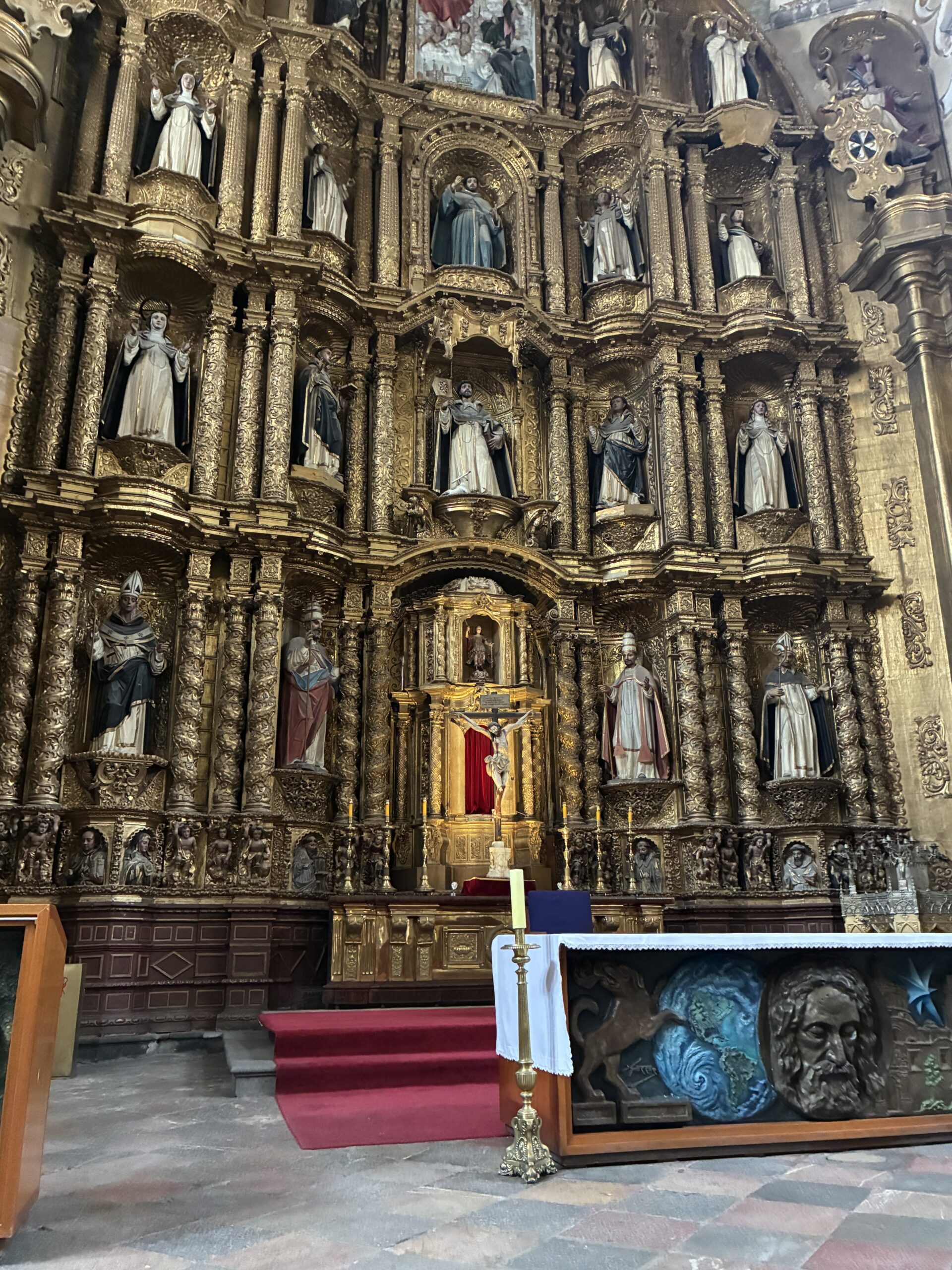

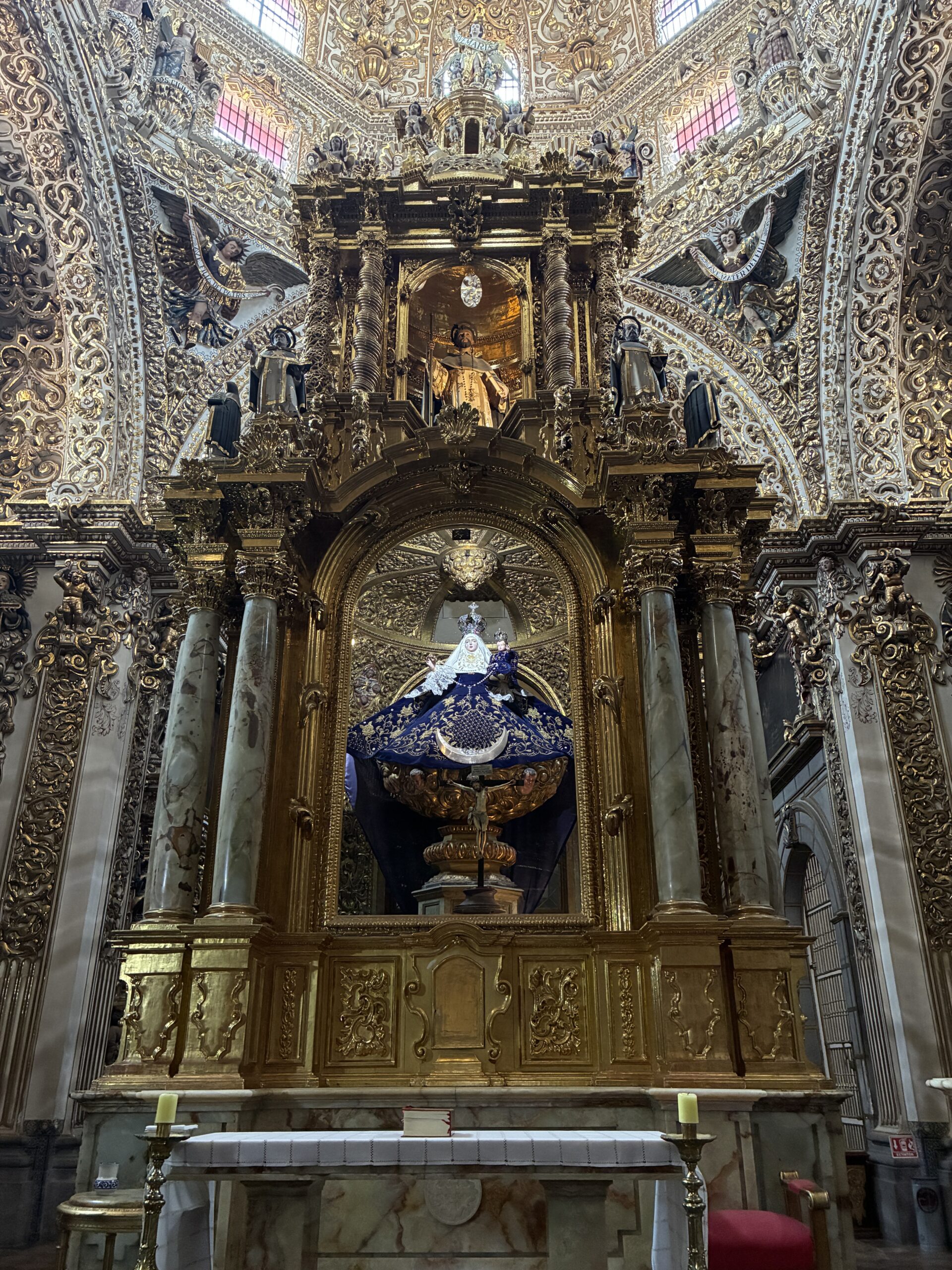
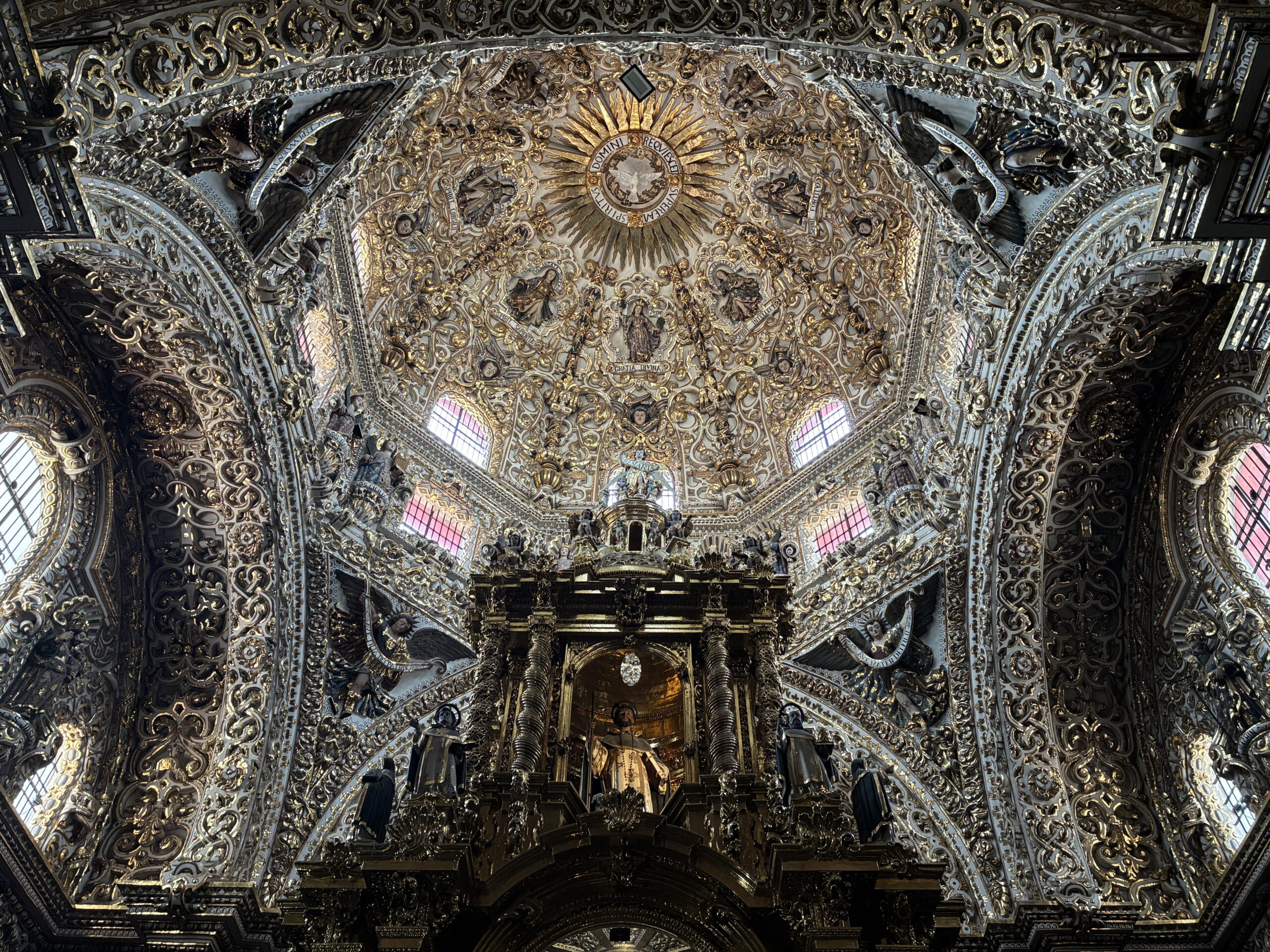
Both the Cathedral and Chapel were no doubt inspired by the Sistine Chapel, completed in 1481, with Michelangelo’s ceiling frescos added between 1508 and 1512, as was the case with many Catholic cathedrals and churches that followed.
But enough of huge and adorned Catholic churches. I found the street walk more interesting and unique, as all of these giant churches start to look alike, no matter where they are in the world.
We visited a couple of local and authentic small eateries, recommended by Sebastian for specific local dishes, and passed La Pasita, a small but very well known bar dating back to 1916, known for serving a single drink called “la pasita.” It is a sweet raisin liqueur served in a shot glass, in which a single raisin (pasita) sits in the bottom of the glass. It tastes sweet, but is apparently surprisingly powerful and creeps up on you, so you may not realize the effect it is having. Meaning, you’re becoming drunk but you don’t know it yet.

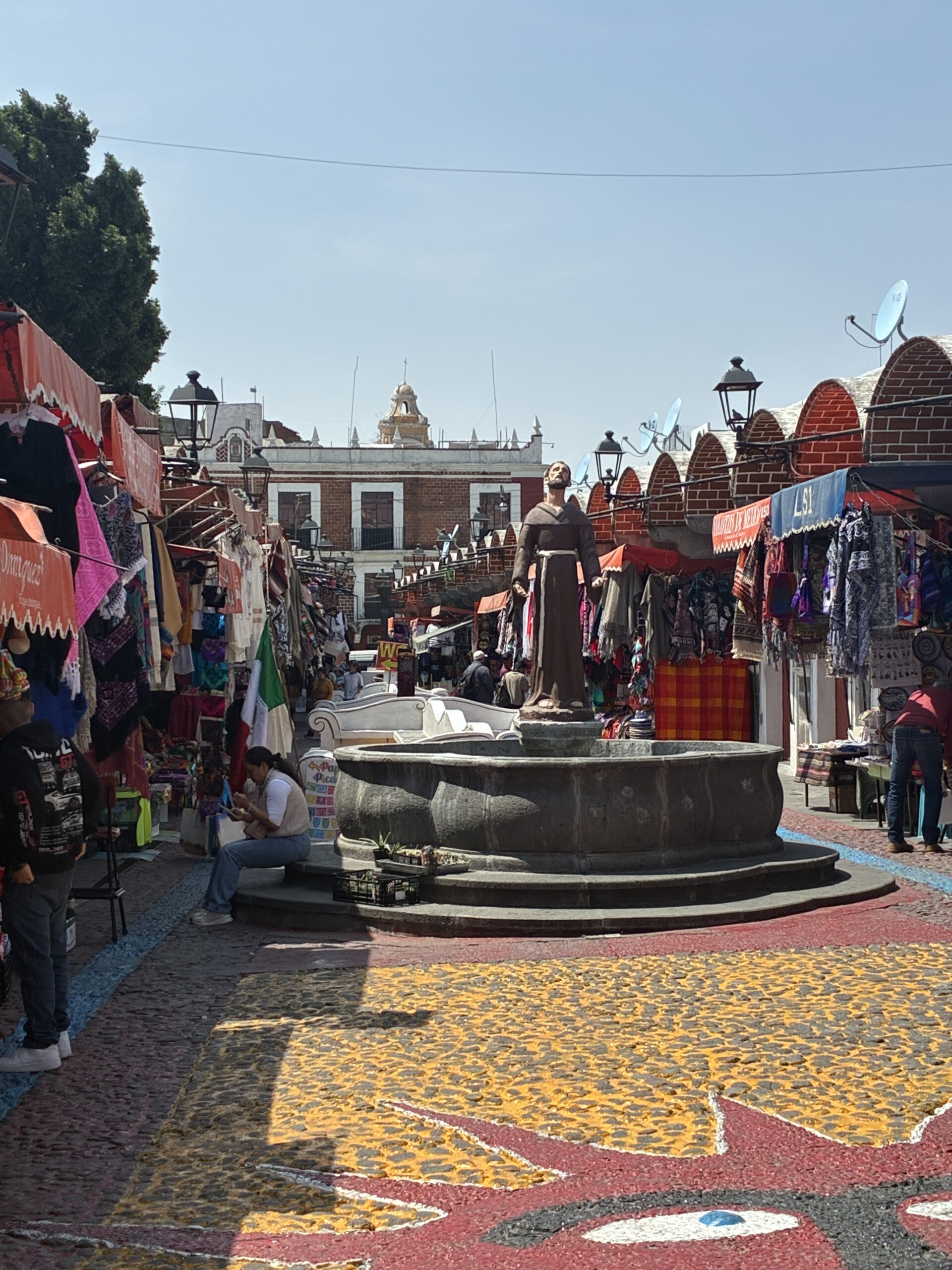
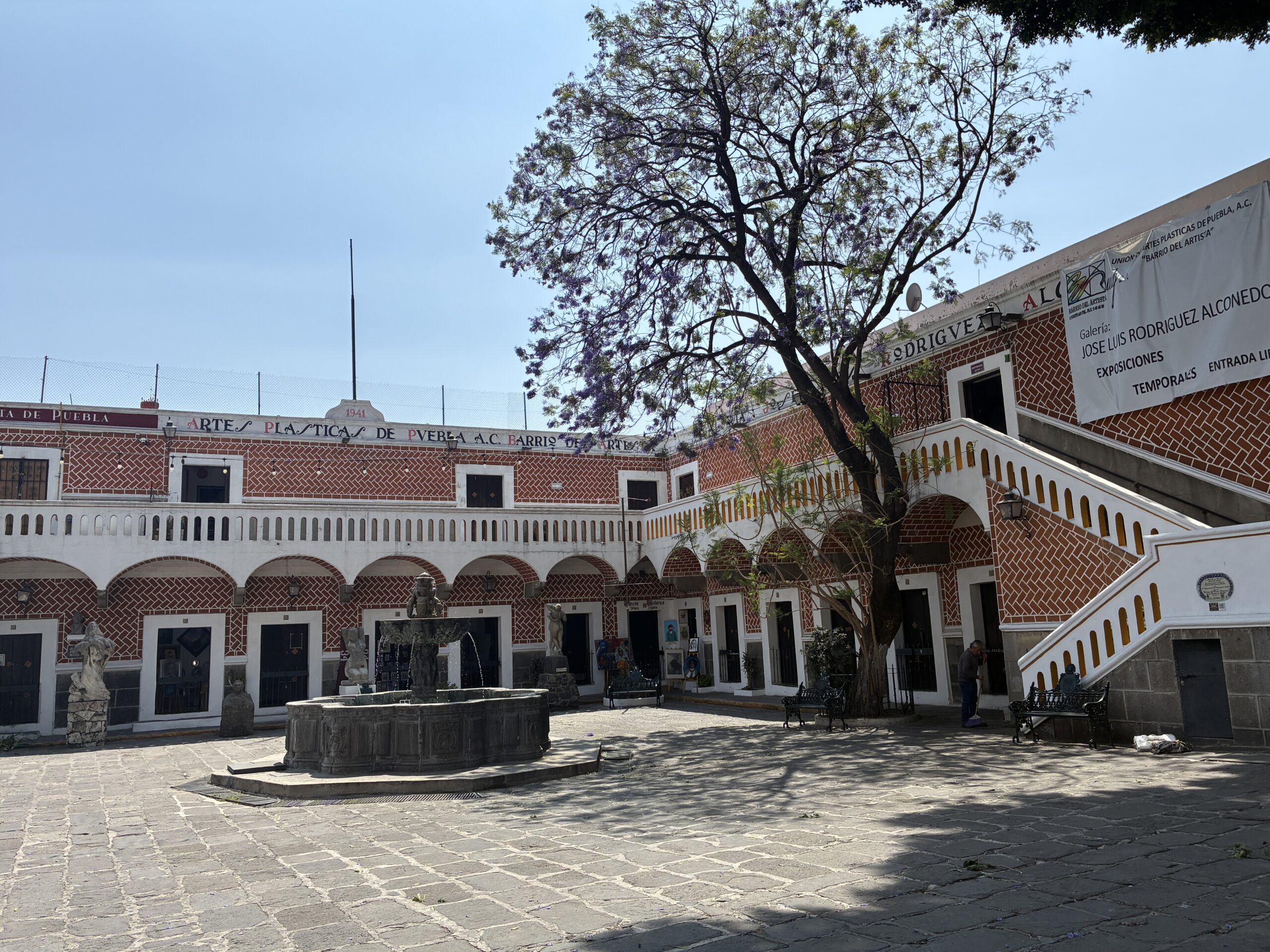
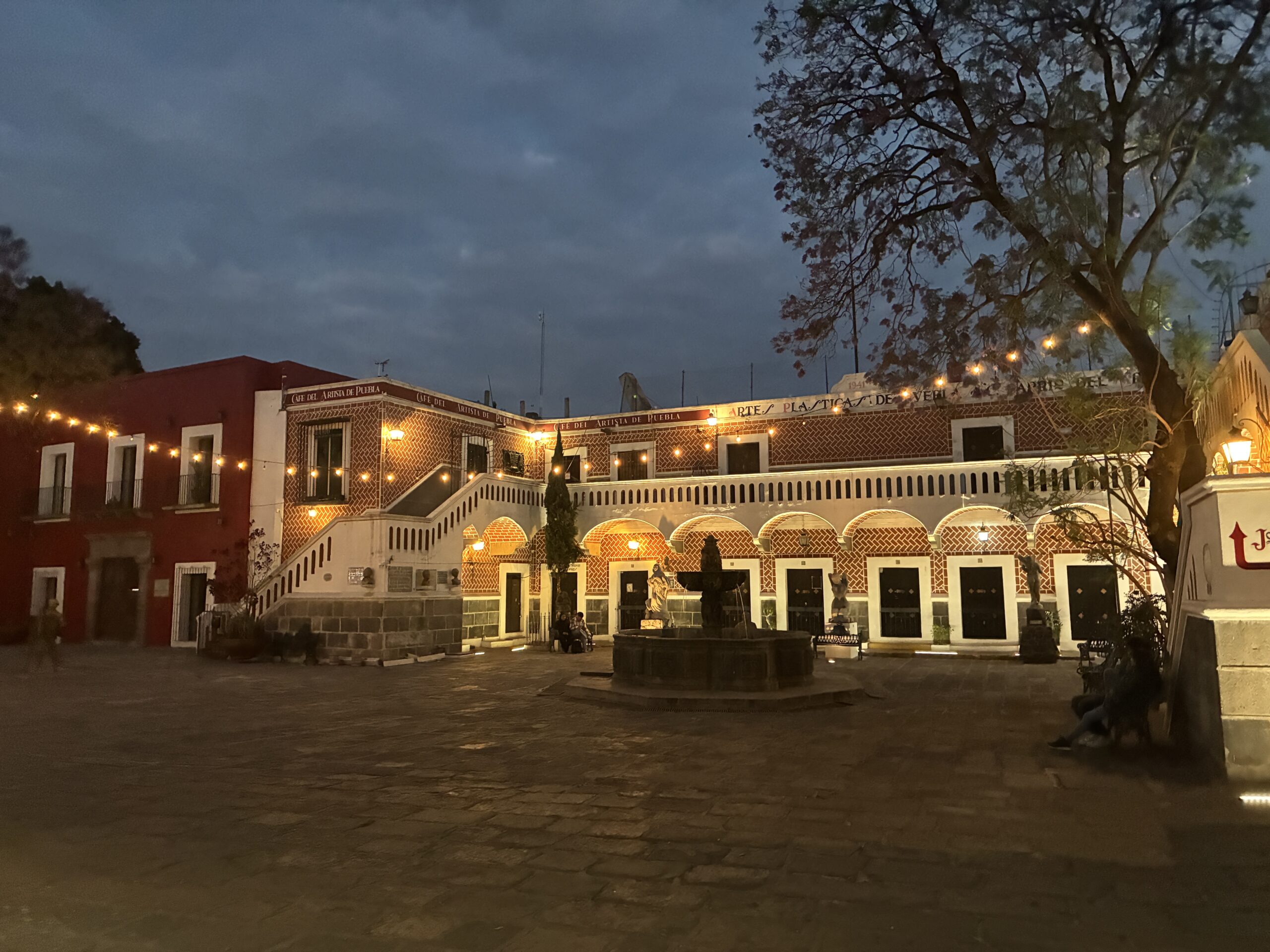
We walked through El Parián, the oldest artisan market in Puebla, several blocks from the plaza, a market for local and regional traditional goods dating back to 1801. This is an old town. From there, we visited Barrio del Artista (the artist’s neighborhood), a small art community established in 1941, with studios, galleries, and stores.


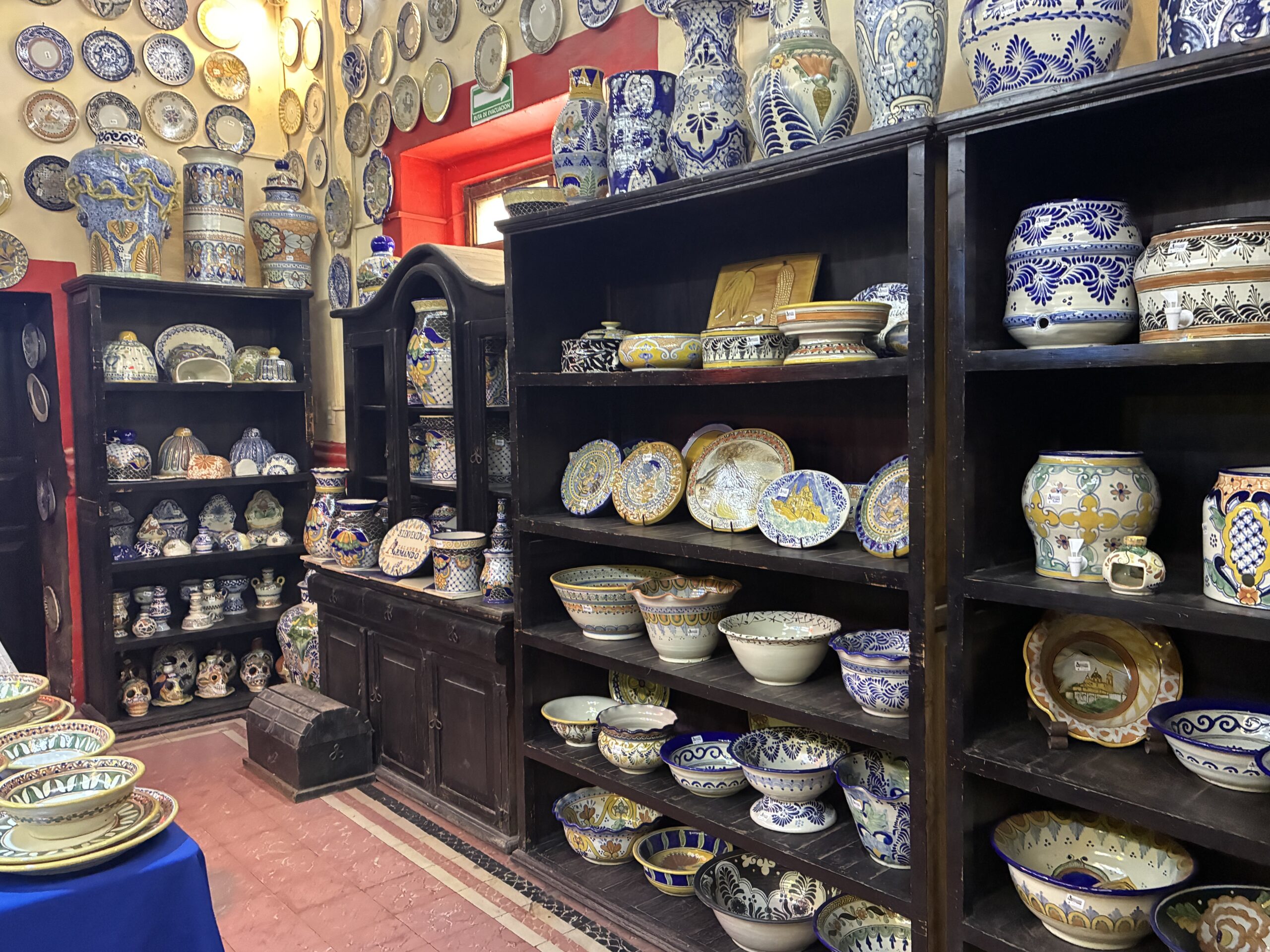
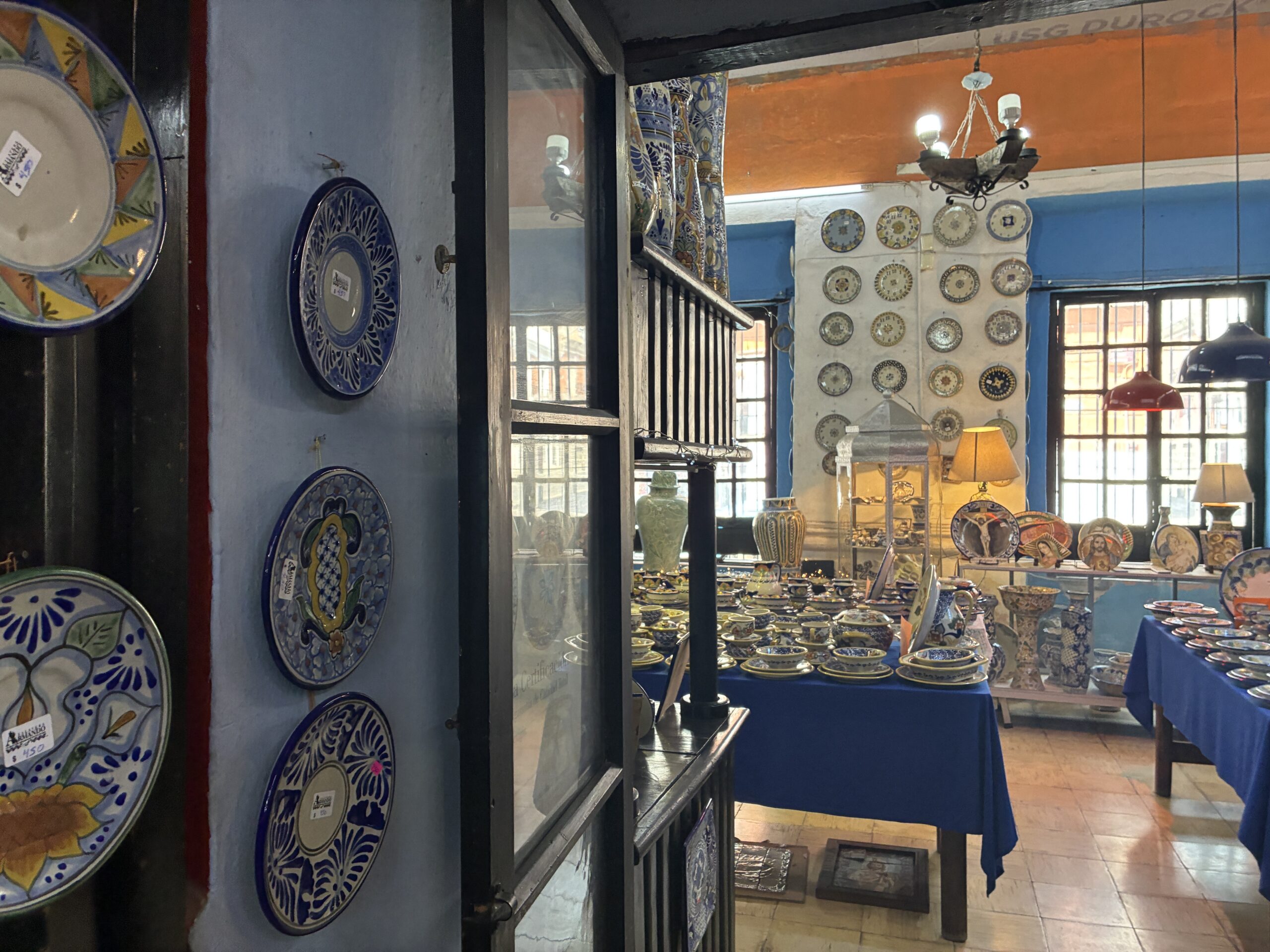
I’ve loved Talavera pottery for years, and so did Bev, and stores selling Talavera pottery are all over Puebla, which is famous for the pottery. Originally named for Talavera de la Reina, a town in Spanish that produced pottery, and the style was brought to Puebla by Spanish potters in the 1500s, developing into Talavera Poblana style.
The name Talavera is protected, much like Champagne, for instance, which must be produced in the Champagne region of France, and authentic Talavera ceramics come from only Puebla or San Pablo del Monte in the neighboring state of Tlaxcala (the smallest state in Mexico). Authentic Talavera pottery is essentially hallmarked beneath the base of each piece. Only six pigments are part of true Talavera decoration, each produced from naturally occuring minerals mixed into ceramic pigments: blue (cobalt), yellow (antimony), black (manganese), green (copper), orange (iron), and purple/mauve (manganese mix). Finding a piece with red, for instance, means that is not true Talavera.

We visited a studio that makes and sells Talavera ceramics, which was really interesting, and had a little exhibit laying out the several steps required to produce the pottery in its various forms, as well as showing each of the natural mineral pigments.


Then onto the residence at which the incident sparking the Mexican Revolution took place, also near the city center. No wonder it’s called the historic center. Everything took place within a few blocks. Casa de los Hermanos Serdán, the home of the Serdan family, was the site of the opening battle of the Mexican Revolution on November 18, 1910. Learning that revolutionary seditionists were there, government forces attacked the home, killing at least one of the revolutionary Serdan brothers and several others, and the bullet holes from the attack remain visible on the facade. The building today is a museum dedicated to the Mexican Revolution and the Serdán family.


We neared the end of our very lovely and interesting walk by visiting Calle de los Dulces, known as the Street of Sweets because it is filled with candy shops, in which many of the candies are uniquely poblano. We stopped into a store that allowed me to sample several. Tasty, but too sweet, even for me. One of them was a candied sweet potato.


We arrived back in the plaza, a couple of hours later, and parted ways. And then I hopped on the hop on-hop off bus tour… but only to find there was no English translation, even though it said there was on the ticket. Another oh well! Still, I used Google Translate live conversation, and managed to pretty well get the gist of the tour, but it was difficult to look at the translation on my phone, look at the scenery around me, and take photos. After a while, I just looked at the scenery from the top deck, in the hot sun (I was the only one up there: Mad Dogs and Englishmen go out in the middays sun), but got bounced around every time the bus hit a rough patch of road (which was frequent). Not a really well designed bus, this one.
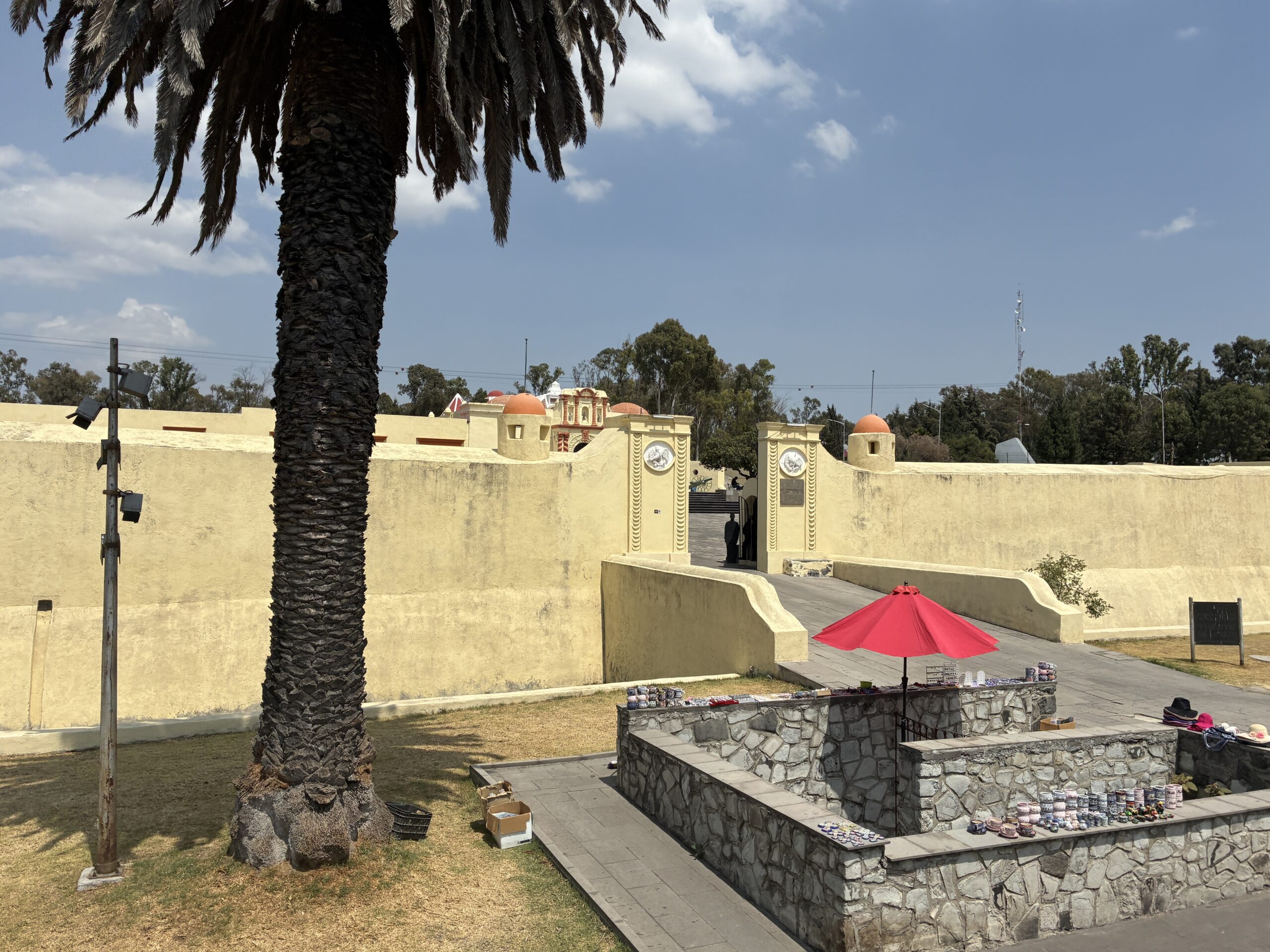
It was an interesting, but really just okay, tour, with not too much hop on/hop offing. Although we went outside of the central area, to look at some interesting spots, the ride probably lasted only 45 minutes. We saw the fortification at Loretta, originally built as a religious shrine in the 1600s but turned into Fuertes de Loreto (Fort Loreto) for the Battle of Puebla, as well as some nearby panoramic views of the city from the hills above.


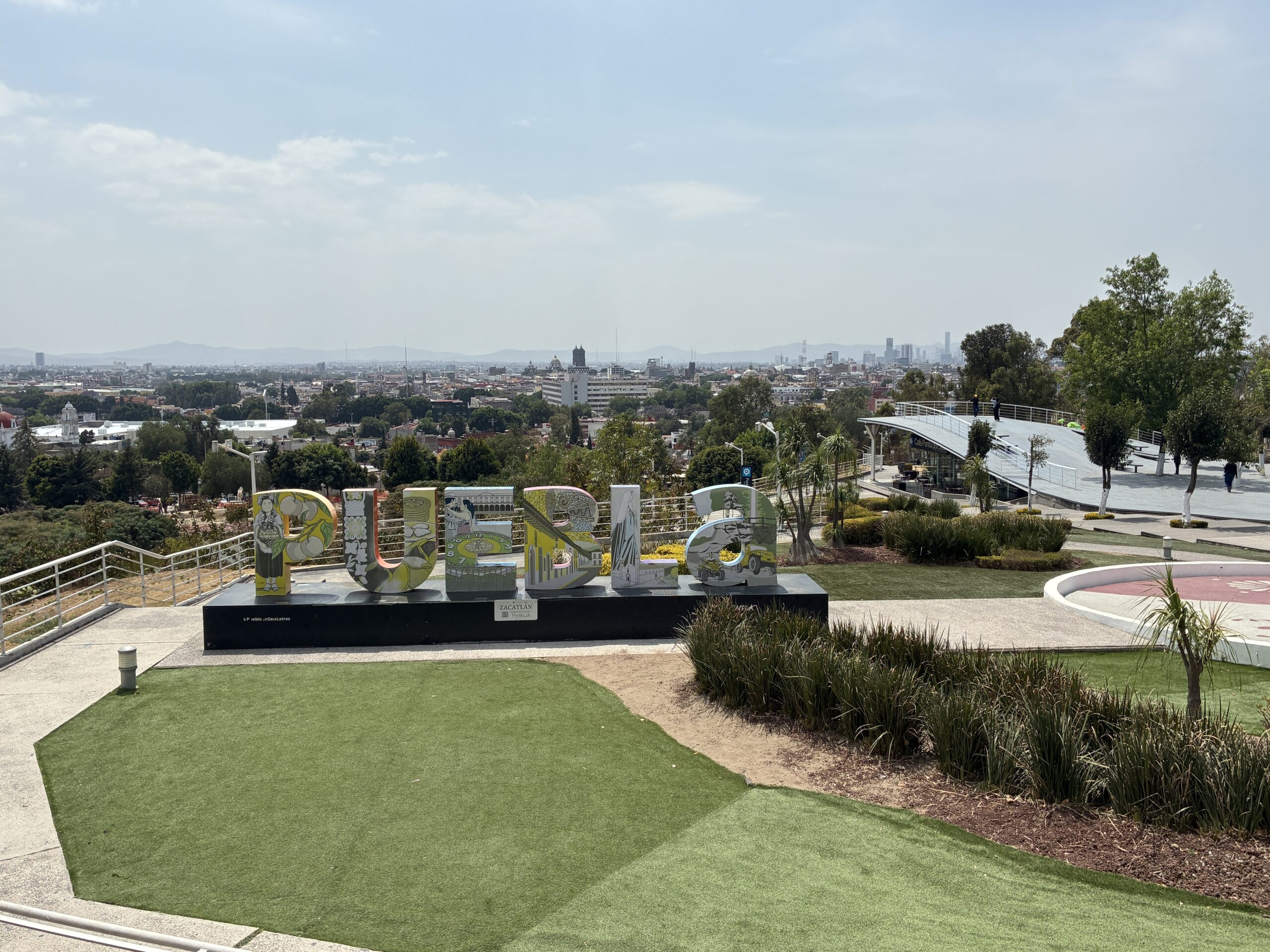

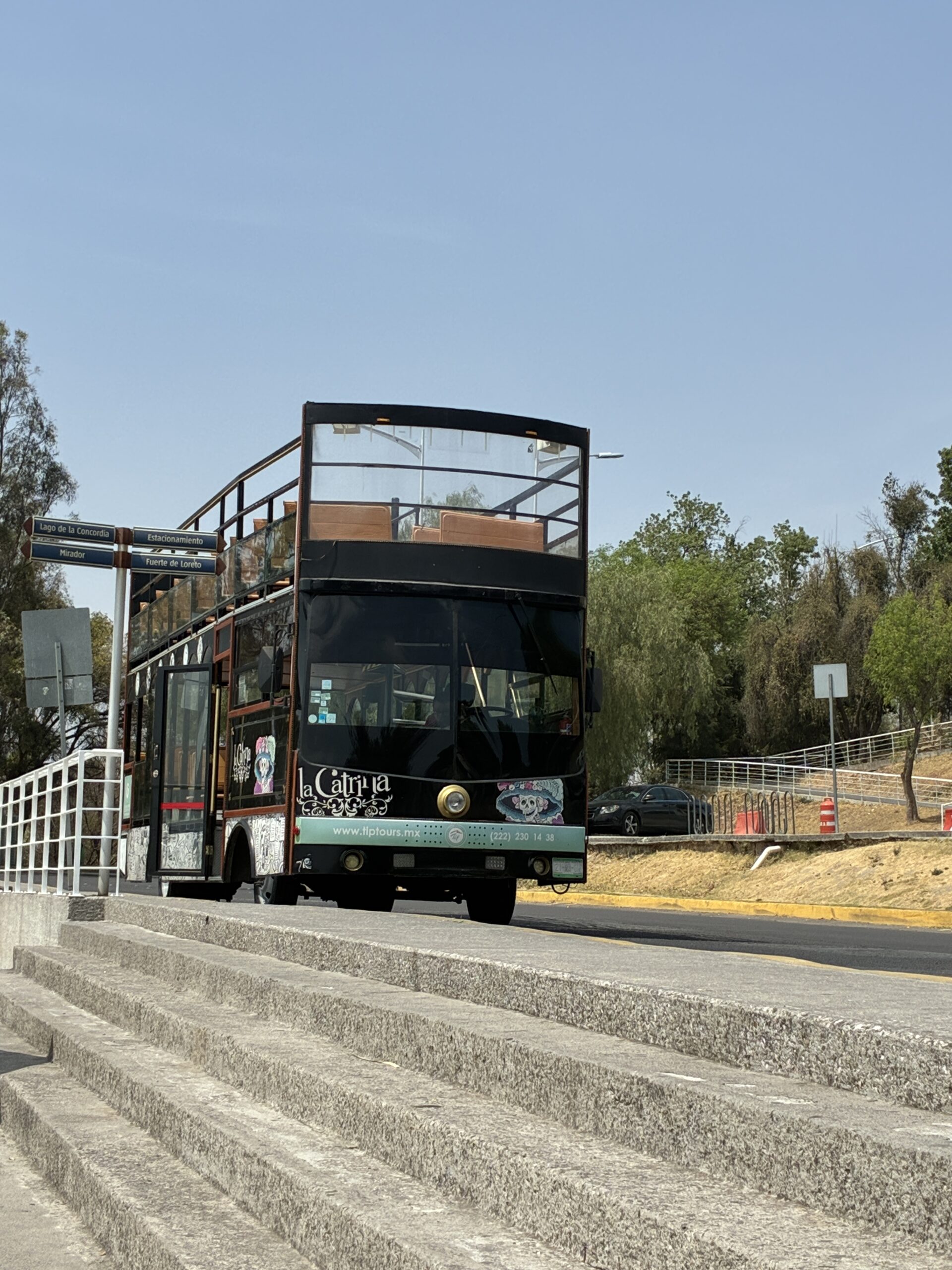
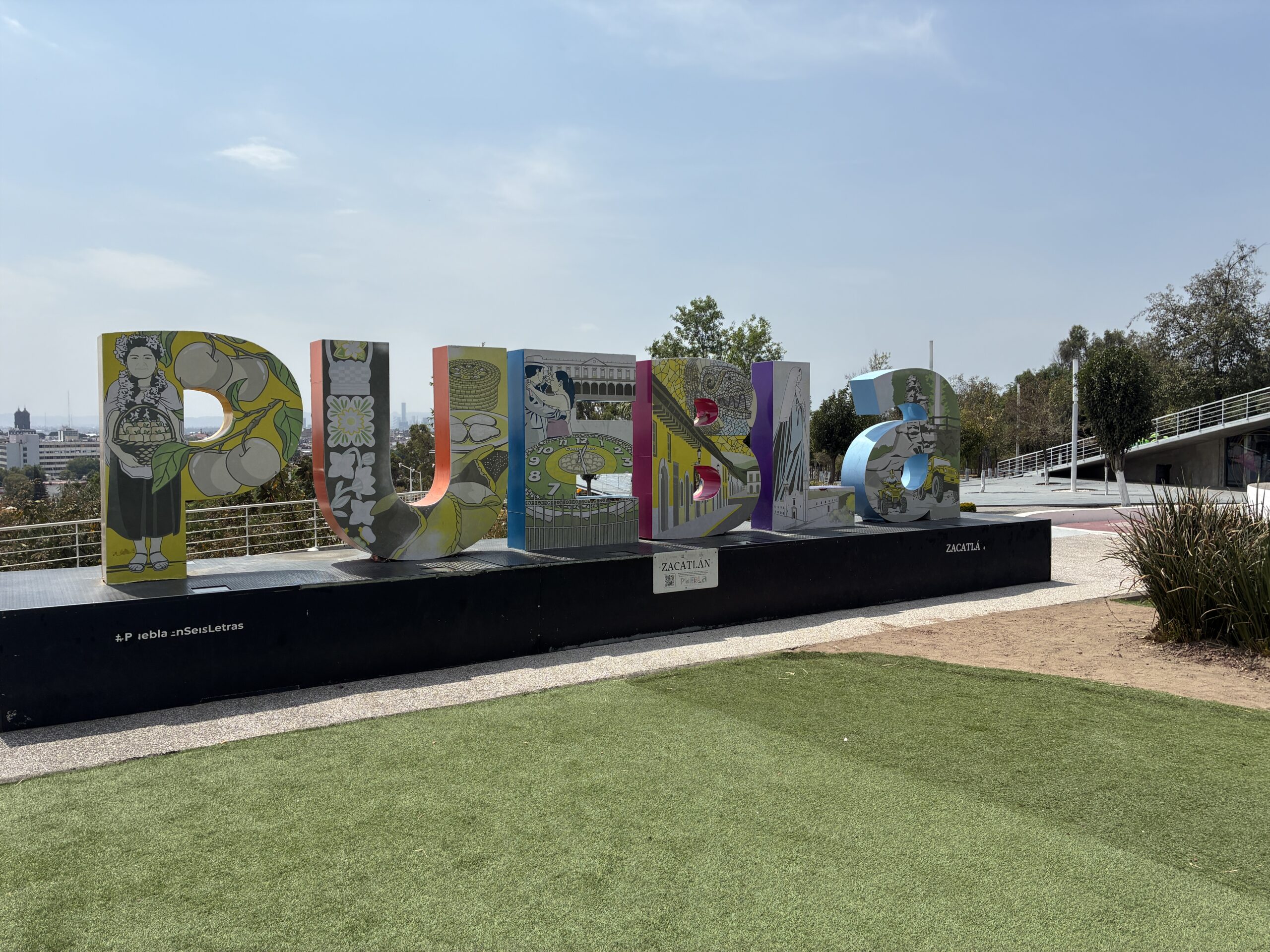
I pretty much just stayed on the bus until the end of the ride, and there was only one actual hop on-hop off stop! But I I enjoyed the ride, saw things I wouldn’t have otherwise seen, and it was inexpensive. However, I’ll make sure that hop on bus tour in Mexico City has English translation.


Between the guided walk and the bus tour, I was having a pretty good time. I did a little more walking around, covering some of the the same areas I visited this morning, hoping to take a further look, and after a while headed back to the hotel and hung out for a couple of hours before venturing back out into Puebla.
I walked along streets I hadn’t previously taken, as well as looking for one of the eateries that Sebastian had taken me into, where he recommended a couple of the local dishes. However, I figured I might be running out of time, if I could even find the place (which I eventually did), as these small local joints typically close by 8, as I had learned the evening before. That’s actually what happened tonight, and by the time I was ready to eat and found places that I might like to eat at, they were closed. By now, it was getting dark, and the streets and buildings were magically lighted.


I enjoyed walking along the busy pedestrian boulevard, lined with stores and filled with street vendors, and was surprised to suddenly be confronted with…. Yes, they’re still alive and well in Mexico.
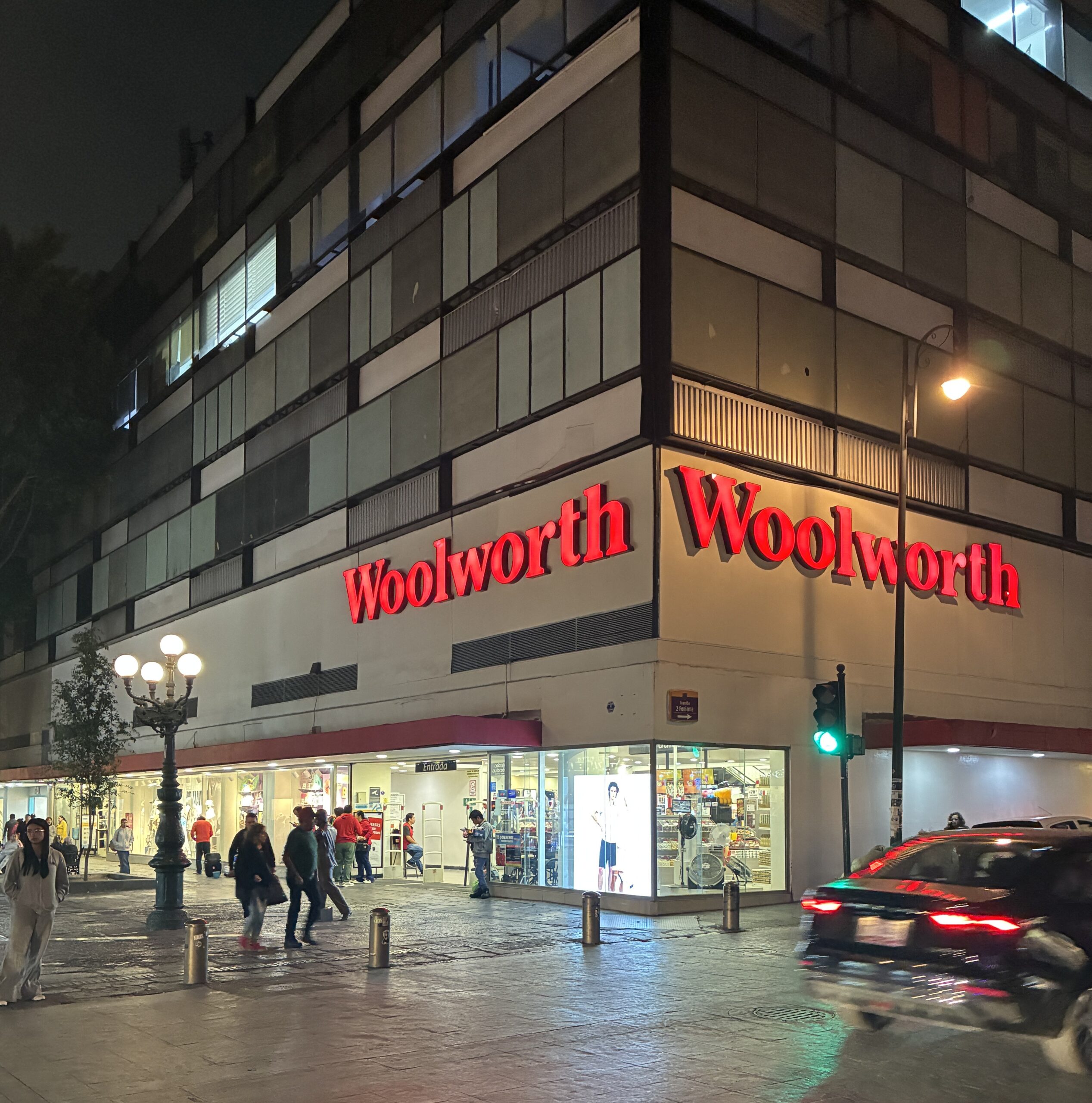
All the places at which I might like to have eaten were closed by now, but I eventually ate in a small place off of the Zokalo, where I could see are many locals were eating.


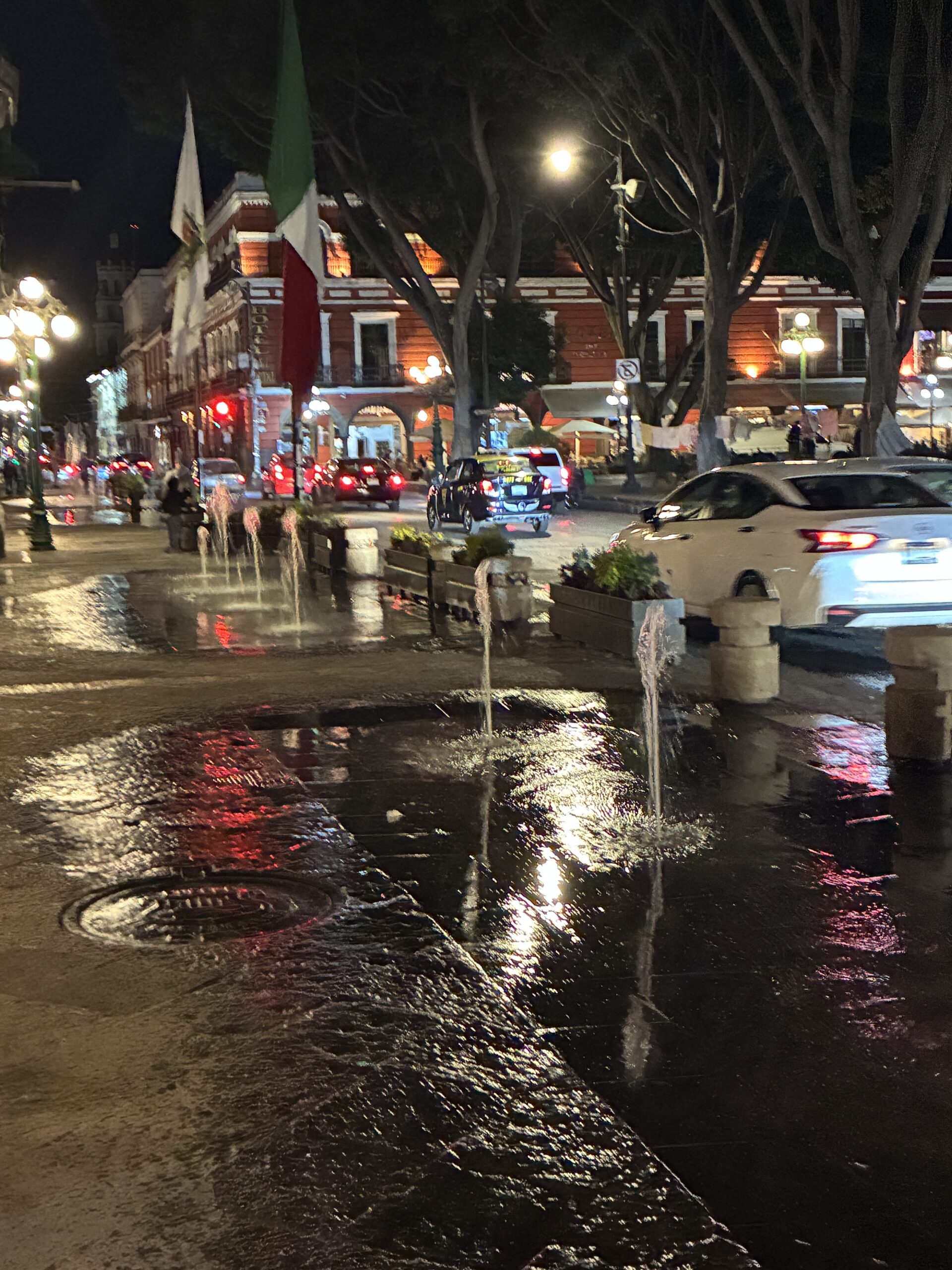
I walked a little more, probably walked 4 miles this evening, in addition to what I walked earlier today, and then headed back to the hotel around 9, wrote a little, and checked, and re-checked, and checked again to make sure I would be going to the correct bus station tomorrow, as there are two stations in Pueblo, regardless of what the ticket actually said. I felt about as sure as I could be that I had the station for tomorrow, and then hit the sack. Good night.