Puebla to Mexico City.
I left the hotel around 11, got a taxi to the bus station, hoping I was going to the correct bus station. That last experience, leaving Tehuacán, has given me pause. It’s one thing if it’s my fault that I went to the wrong bus station, but I went to the bus station that was listed on the actual ticket. but, happily, I arrived at the right station this time.
Other than my short ride on the Puebla hop on/hop off bus, I really only saw the historic center of Puebla, but the taxi ride back to the bus station provided a view of the larger city. It’s a nice city, although nothing like the historical center, and along our route has a commercial feel along the main roads, with many industrial looking single floor commercial and business buildings made of cinder block and stucco, although with nice looking buildings interspersed among them and nice looking residential streets, and beautiful palm trees and other tropical trees, plants, and vegetation lining every road.
Anyway, we arrived at the right bus station (phew),with the right amount of time to spare. The Pueblo bus station is BIG. It’s almost like an airport. I wish I’d have taken a photograph of it, but I was so focused on making sure I was at the right bus station, and then figuring out where the bus was leaving from, I really didn’t think about taking a photograph.
I did manage to find the gate, board my bus, and right now, as I’m writing this, I’m sitting on the bus heading out of town to Mexico City, only about 80 miles north-west, but between 2½ and 3 hours travel time because of the intense traffic. We actually made it in 2½ hours, and for part of the way I watched Batman, in Spanish, as these first class buses show movies.
The journey was pretty much an urban or semi-urban affair, as though you never actually left the city. As the Puebla urban area peters out and ends, the Mexico City urban area picks up the slack and you pass from one to another almost seamlessly. That’s not quite true; there is some some grassland between the two urban spreads, but don’t blink or you’ll miss it. The traffic was intense all the way, pretty much non-stop it seemed, and between the urban cityscape and the non-stop traffic, I found the ride uninteresting. Except for this photo of this truck we passed as we entered the outskirts of Mexico City. Not for the squeamish.

The Mexico City bus station is, as you might expect, a large one, but I had a sense of where I was going this time, so didn’t dally, and headed straight to the metro, as I’d decided I was going to take the subway to Lagunilla, which is the district in which I’ staying, and not too far of a walk to the hotel.
The connection from the bus station, nice, clean, and spacious, was very straightforward, and simply meant leaving the bus station and entering the adjacent metro station. Onc e there, minutes later, I had to figure out how to figure out where I was going and to my the fare. Also easy. 75 pesos (about one dollar) for a reusable travel card that can be topped up (like the Oyster card in London), and 5 pesos (about 25 cents) for the actual fare.
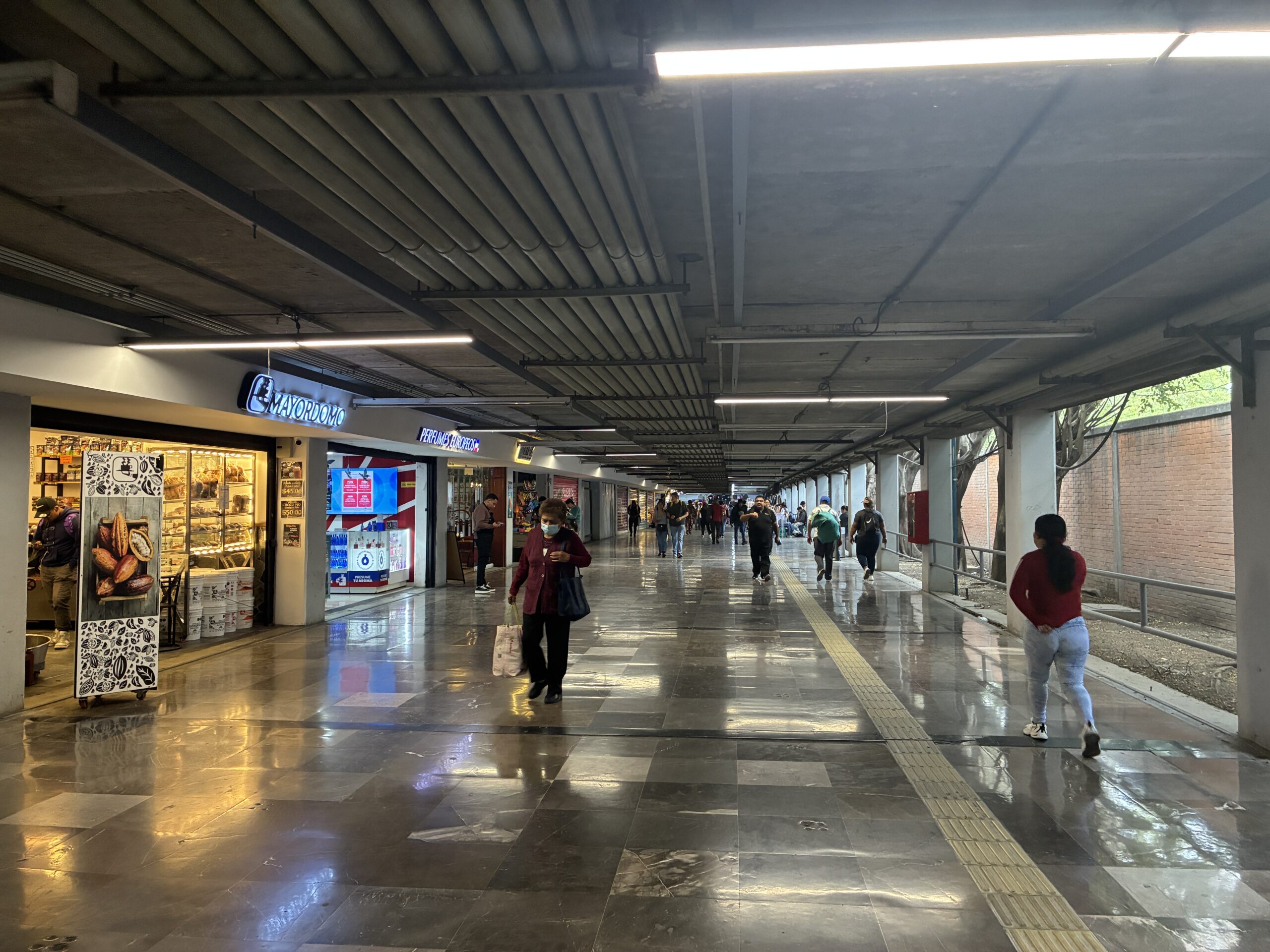

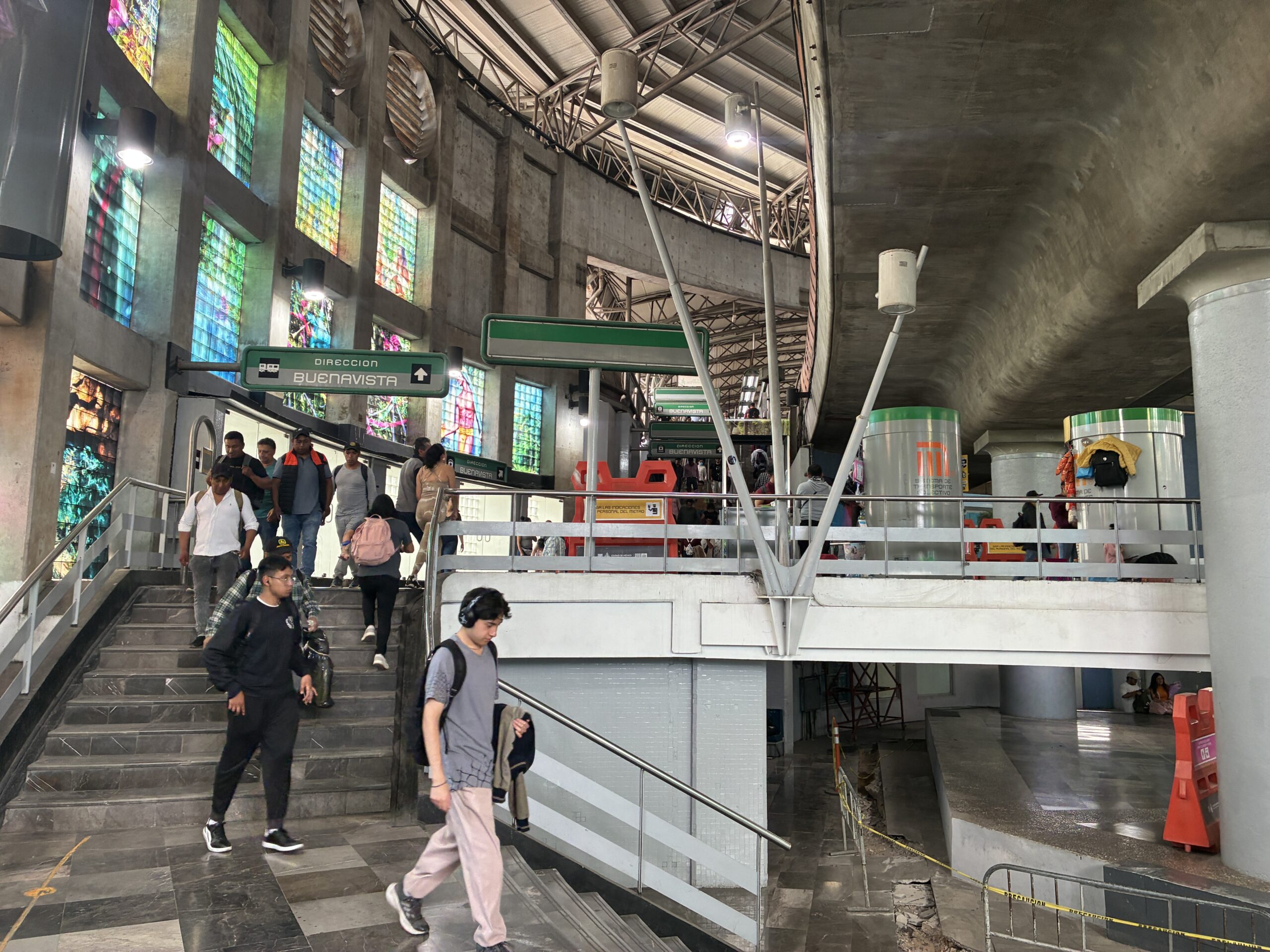

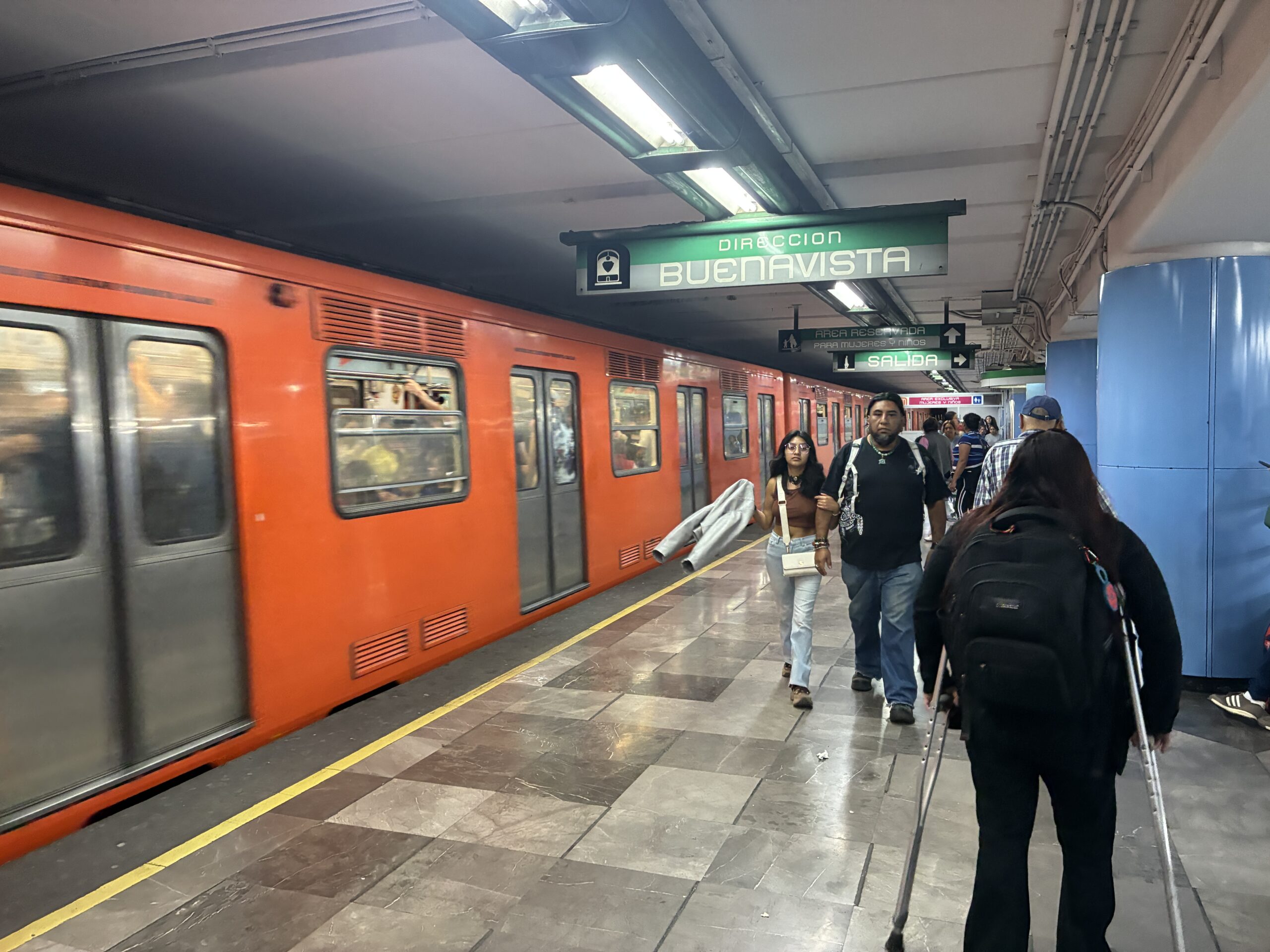
The metro was also straightforward, and there was my subway, just arriving as I got the platform. On the way the stairway to the platform, I was thinking how frail the guy in front of me looked, holding onto both rails and walking slowly, and seconds later I missed my footing on the stairs and went crashing down. Embarrassing. Much later, I noticed blood had streamed down and dried on my leg. Also embarrassing. It at least 30 minutes till I noticed that, and took care of it.
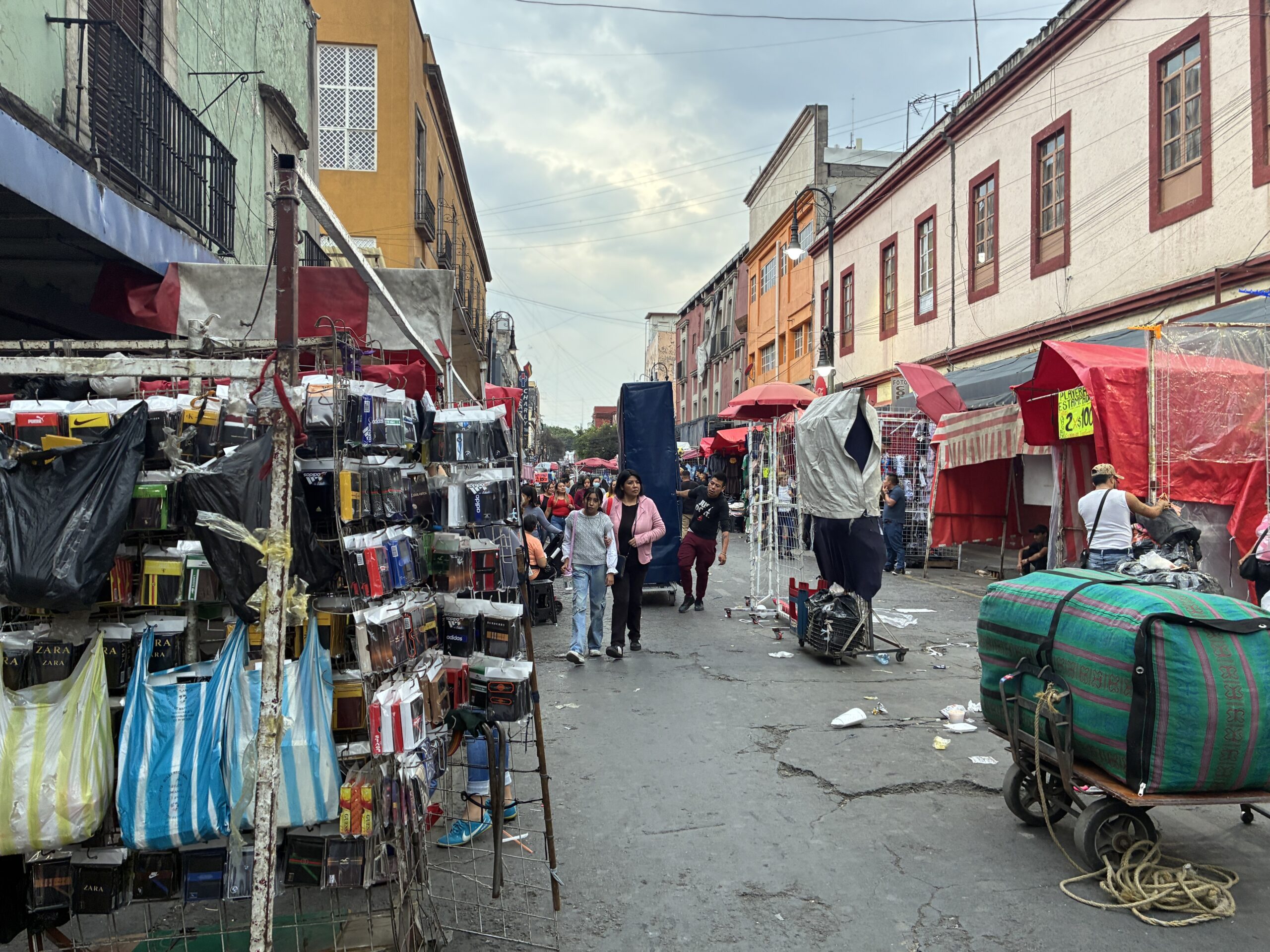
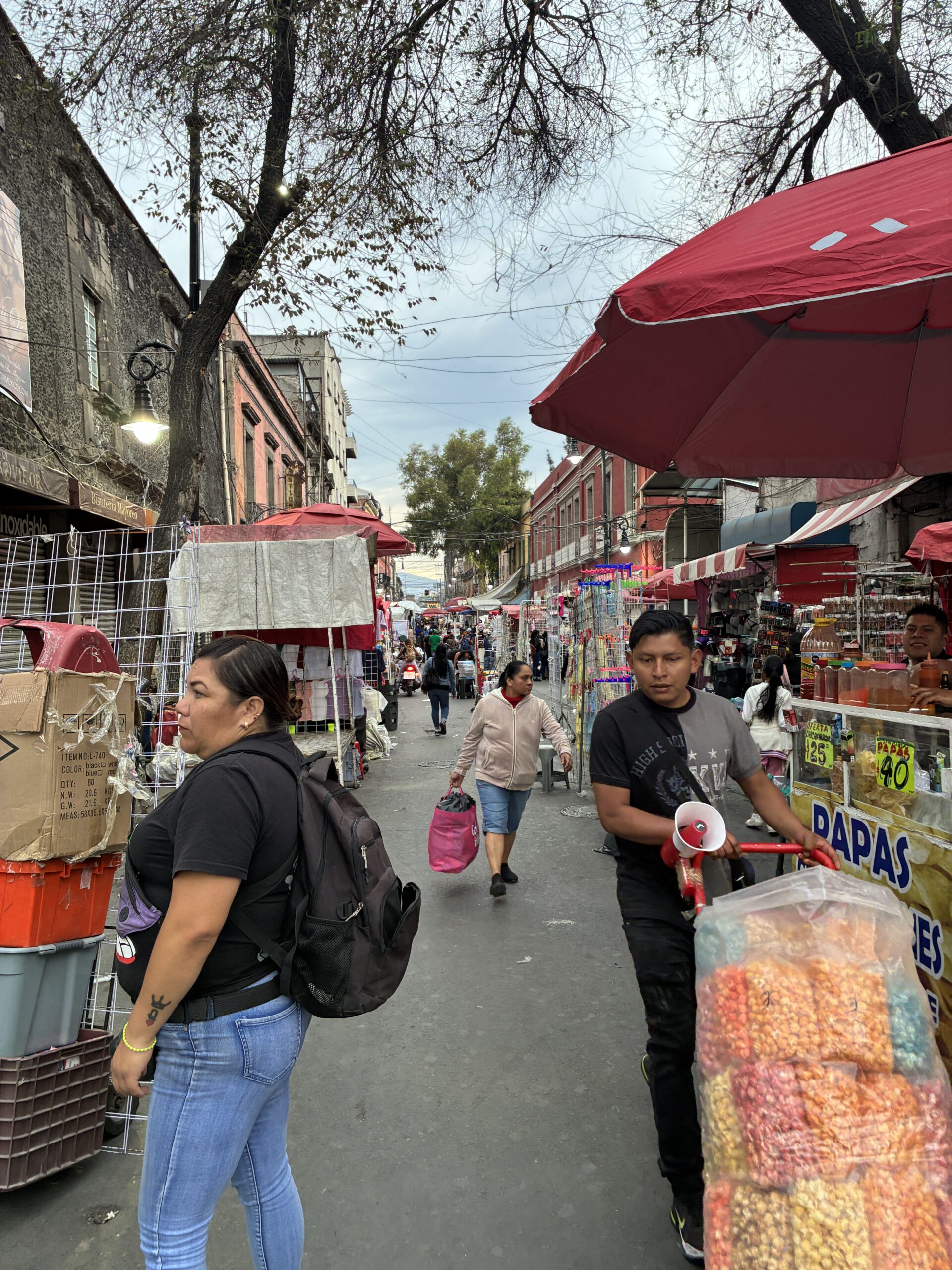
Coming out of the station in Lagunilla, I walked instantly into a tightly packed street market, that went for blocks and blocks. It was like going from an air conditioned room into the heat of the desert.
The market, on both sides of the road, was really dense and stretched forever, and as you might expect kind of dirty, with throngs of people packing the street, and the traffic was equally packed in both directions. I found myself thinking, hmmm, my hotel is in this neighborhood? It seemed kind of down and dirty, and not a pleasant, quiet tourist location, and I wondered how far I actually was from the downtown city area. Had I booked in error?
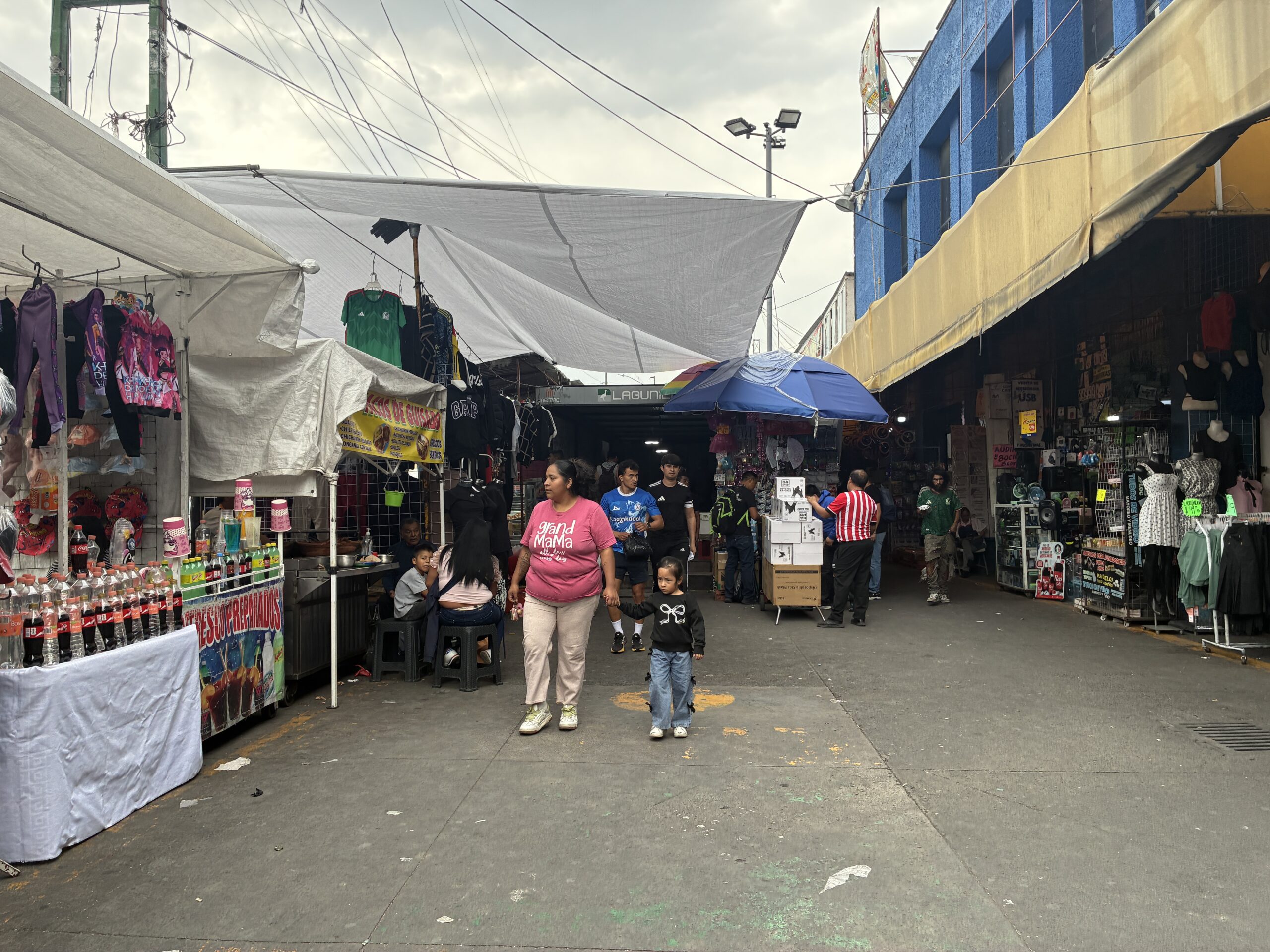

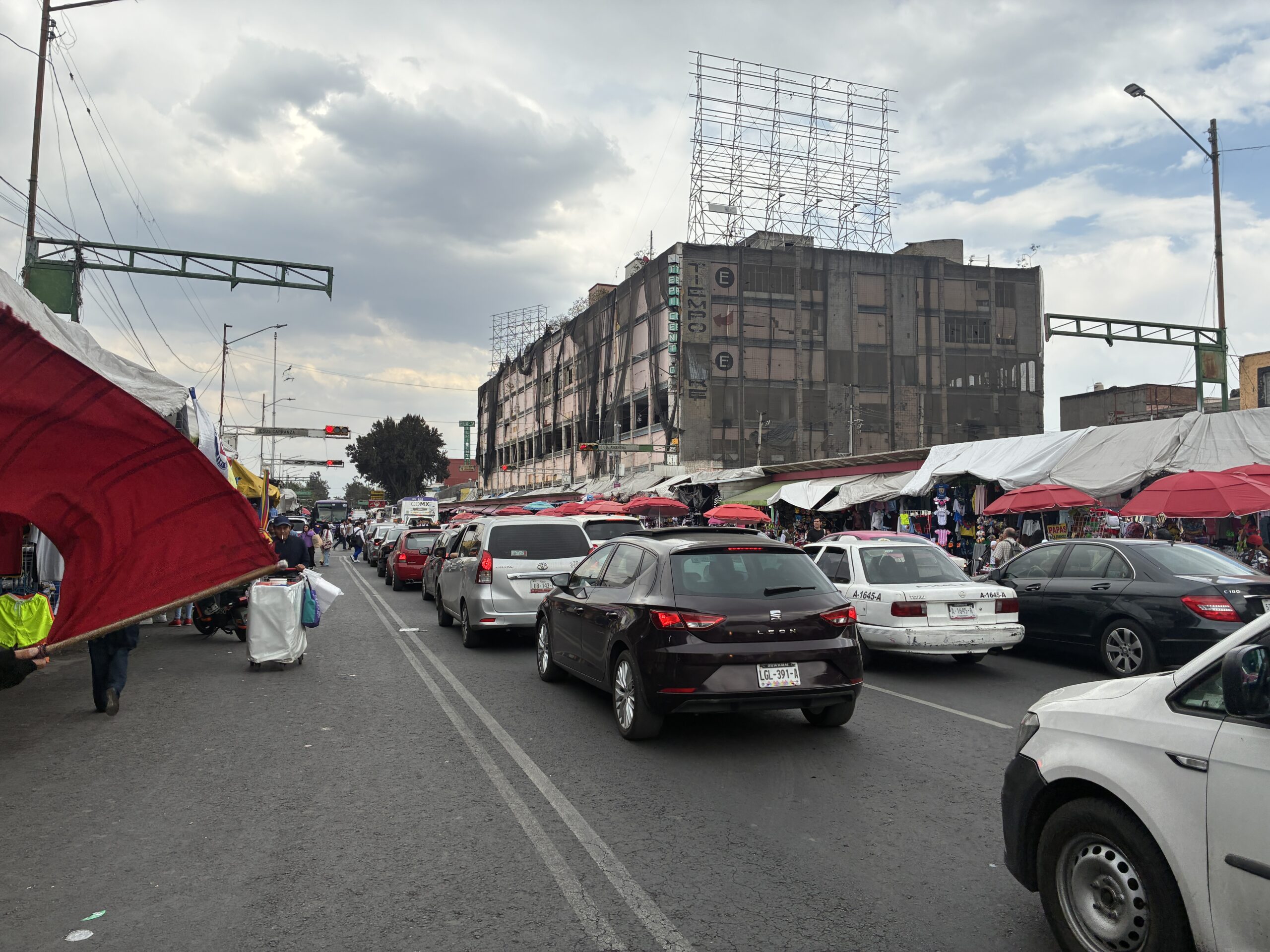
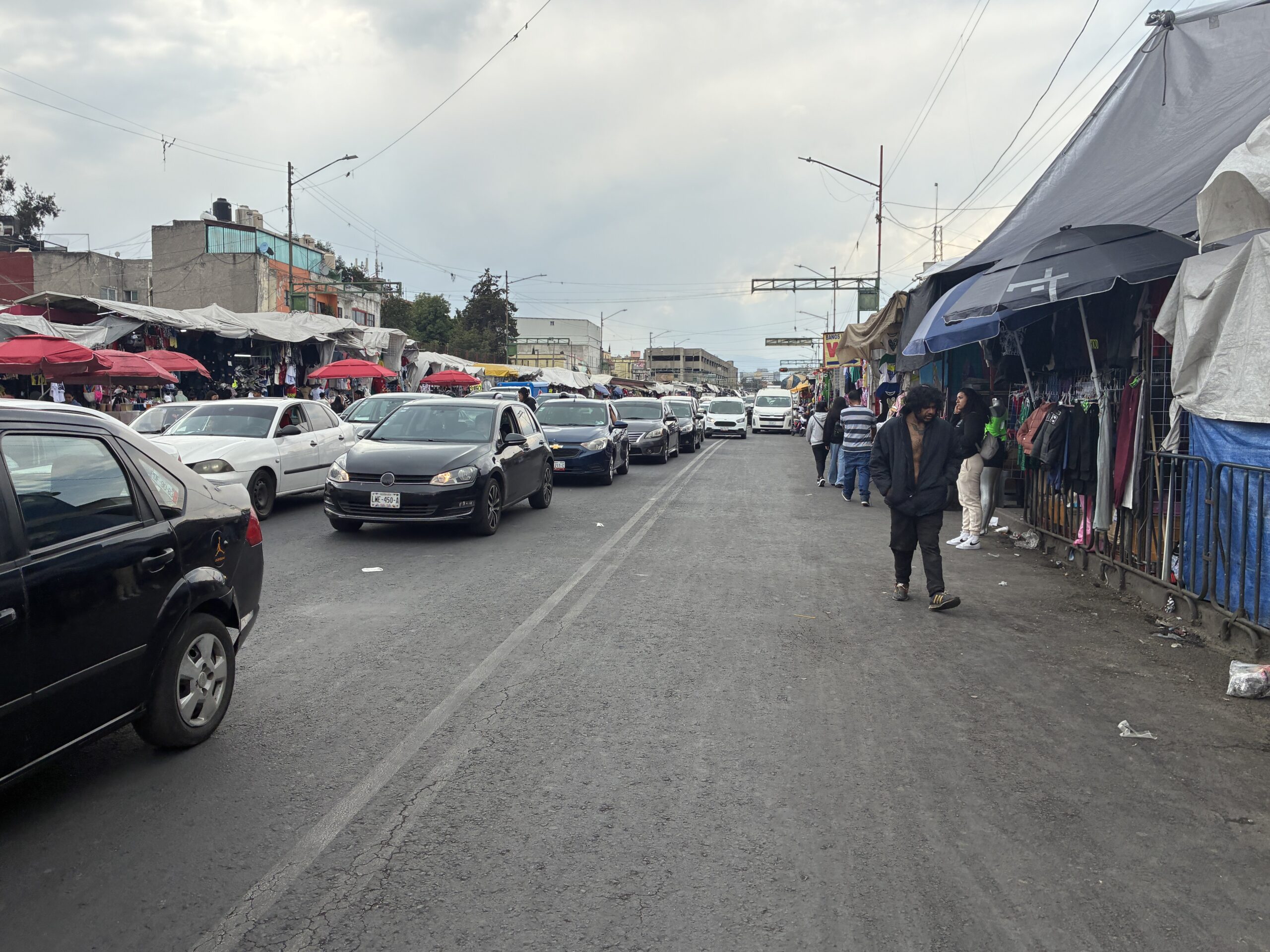
I walked about 15 minutes to my hotel, which would have been shorter but I had a difficult time initially following my walking map until I got oriented (it was actually a 6 or 7 minute walk), and although moving away from the street market, the area still seemed seedy and run down, and I was still wondering about where the hell I was. I could see the road stretching toward the the downtown area, which seemed far away, and wondered just how far I actually was from the center, and, given the neighborhood, what kind of hotel I had booked.
But, not to worry, as mum used to say! The area was sort of run down, but this is just the way these working and middle class areas are outside of the central city, and the hotel, tucked into the main street, was in fact a nice looking place once you stepped inside. It offered free large breakfasts, had a gym and a business center, and on the whole is a nice place, although the views aren’t so great (what views?)


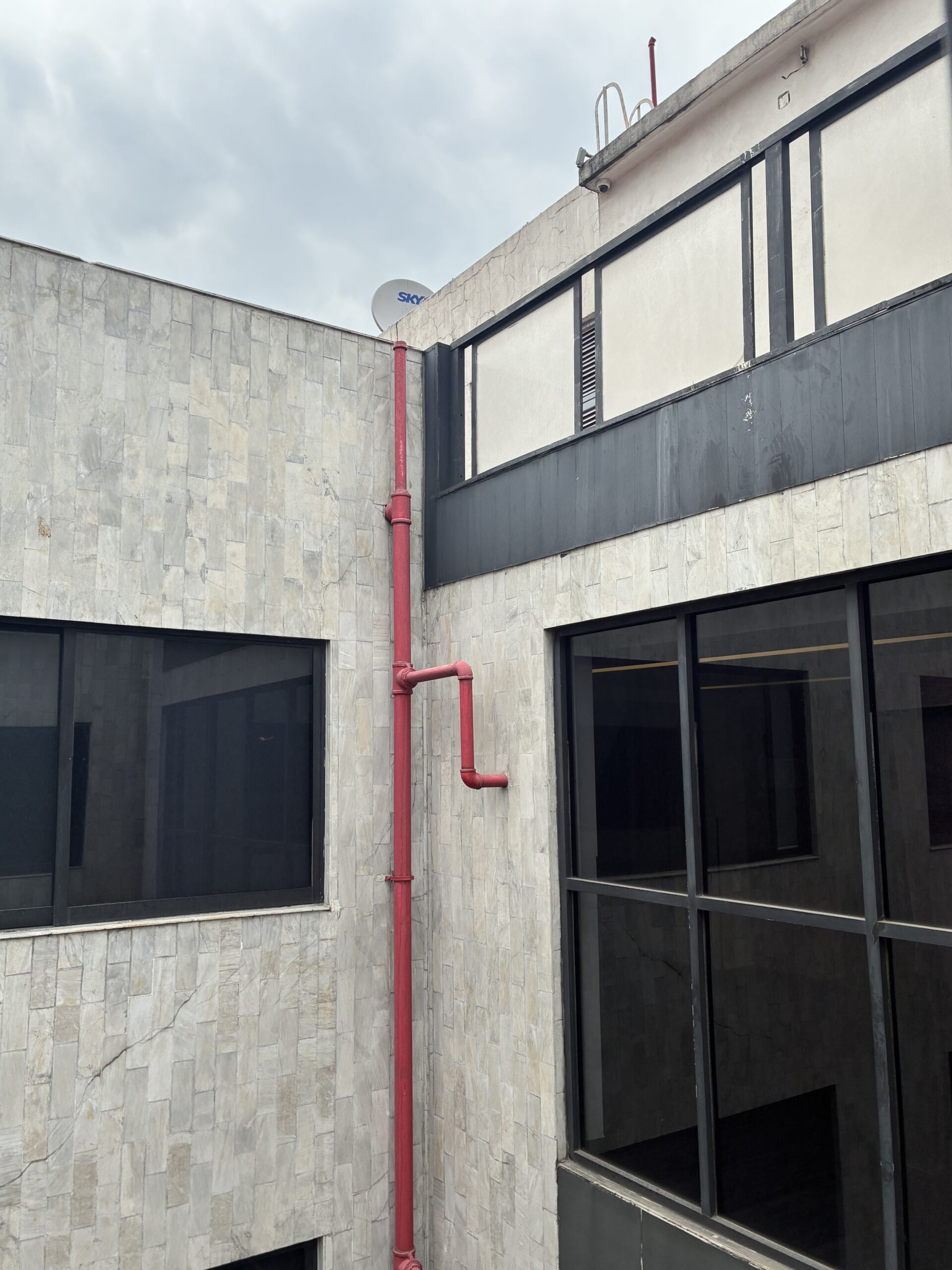
My room was basic, but fine (but, then again, almost anything is fine for me), and the view from my fourth floor window was… well, judge for yourself


I settled in, had a quick chat with Alan, who was warning me that today is Friday the 13th, and then headed into the city, not knowing how far it was or what was ahead. I started walking along the main road, still in this commercial and not picturesque part of the city, without any real clue, other than following my walking map. But, again – not to worry.


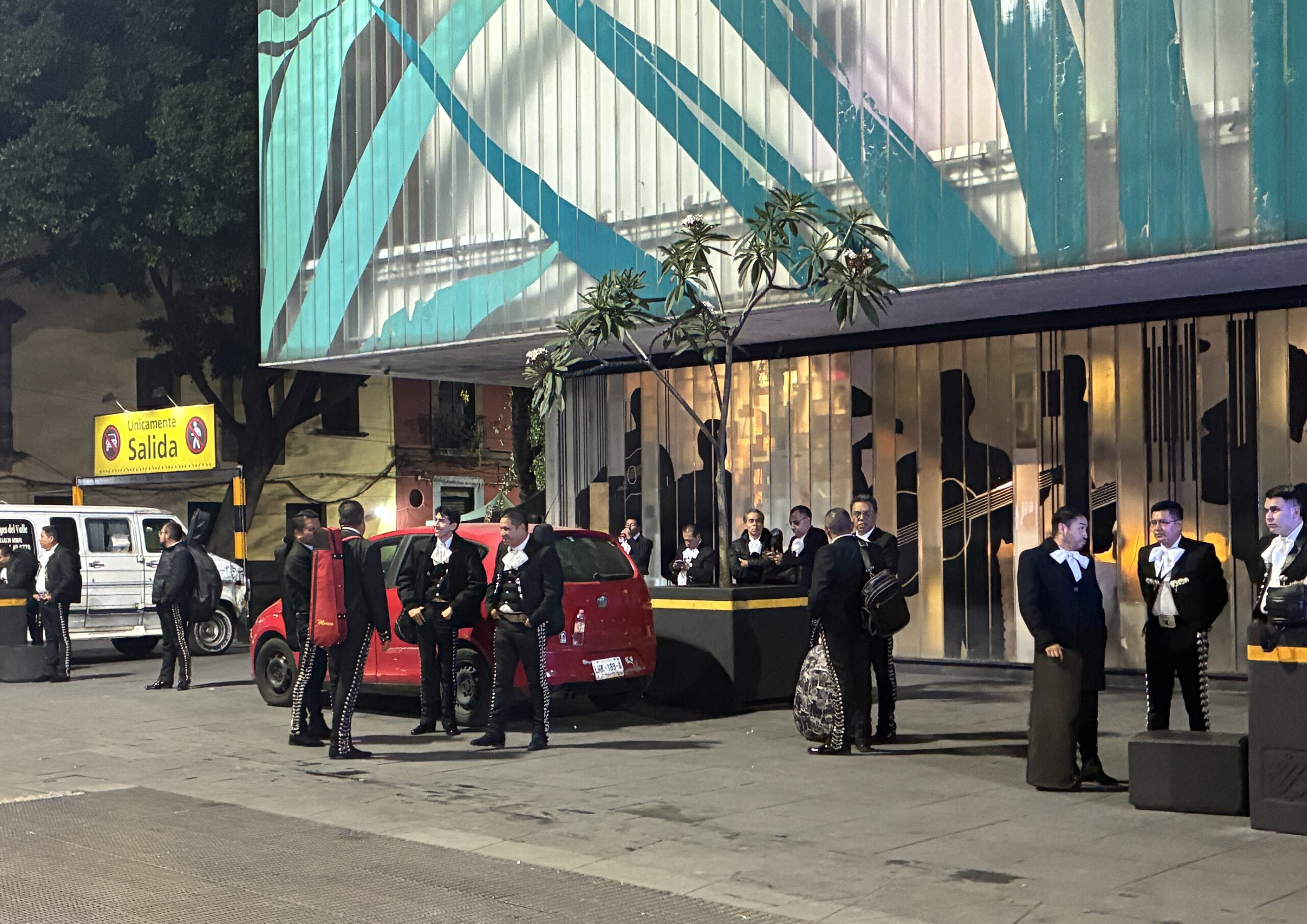
The map said about a 25 minute walk to the central plaza, the Mexico City Zócalo, and I headed that way but almost immediately spotted an interesting looking museum across the road and crossed the busy main road, where I found teems of Mariachi musicians just hanging out in front of the building (the museum itself is exactly what it says), and it turns out there are many more all over the large square, Plaza Garibaldi, behind the building. Apparently, this is where Mariachi wait to be hired for gigs, sort of like a union hall or hanging out in front of Home Depot waiting for daily work. It’s almost surreal.


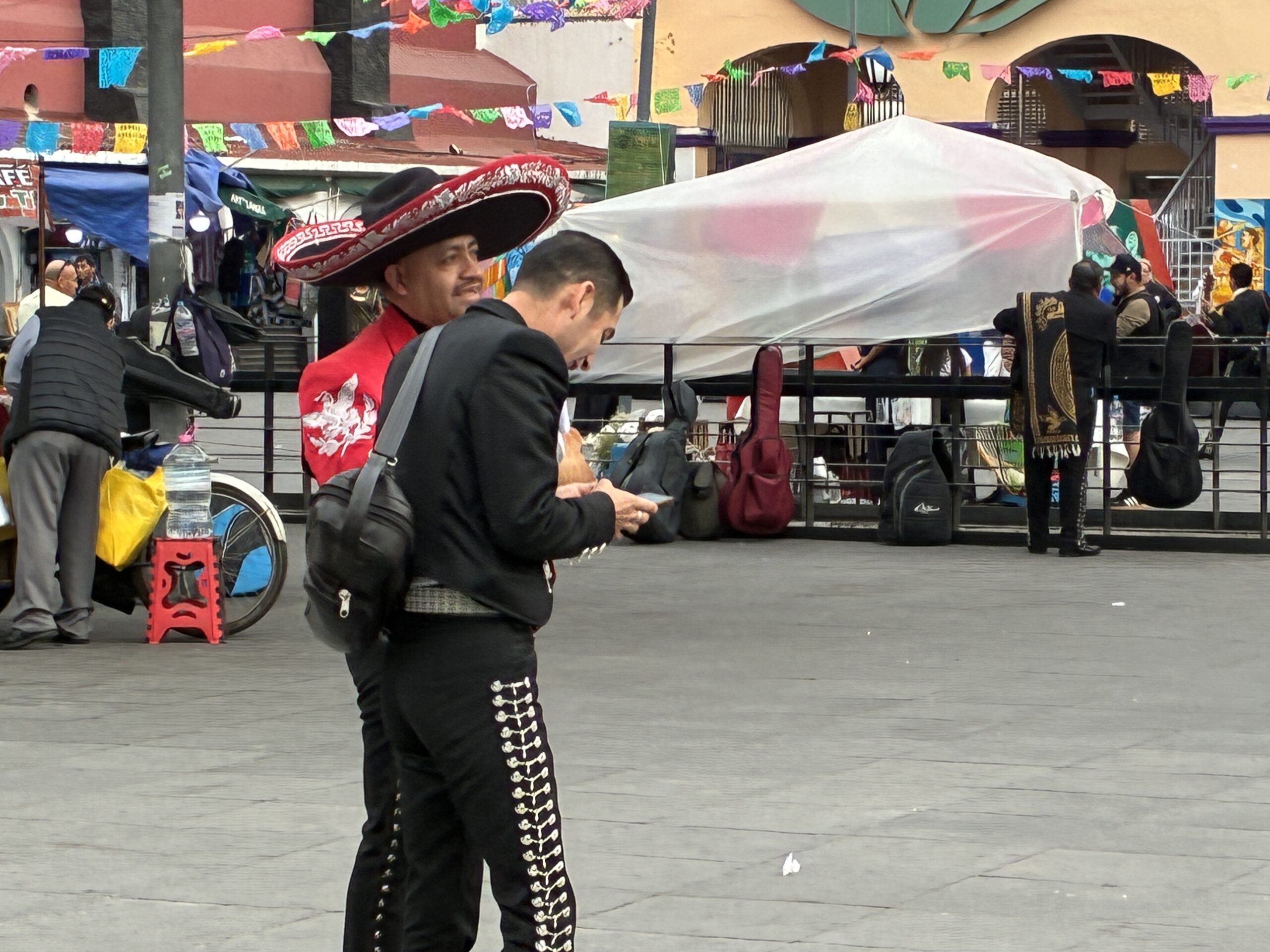

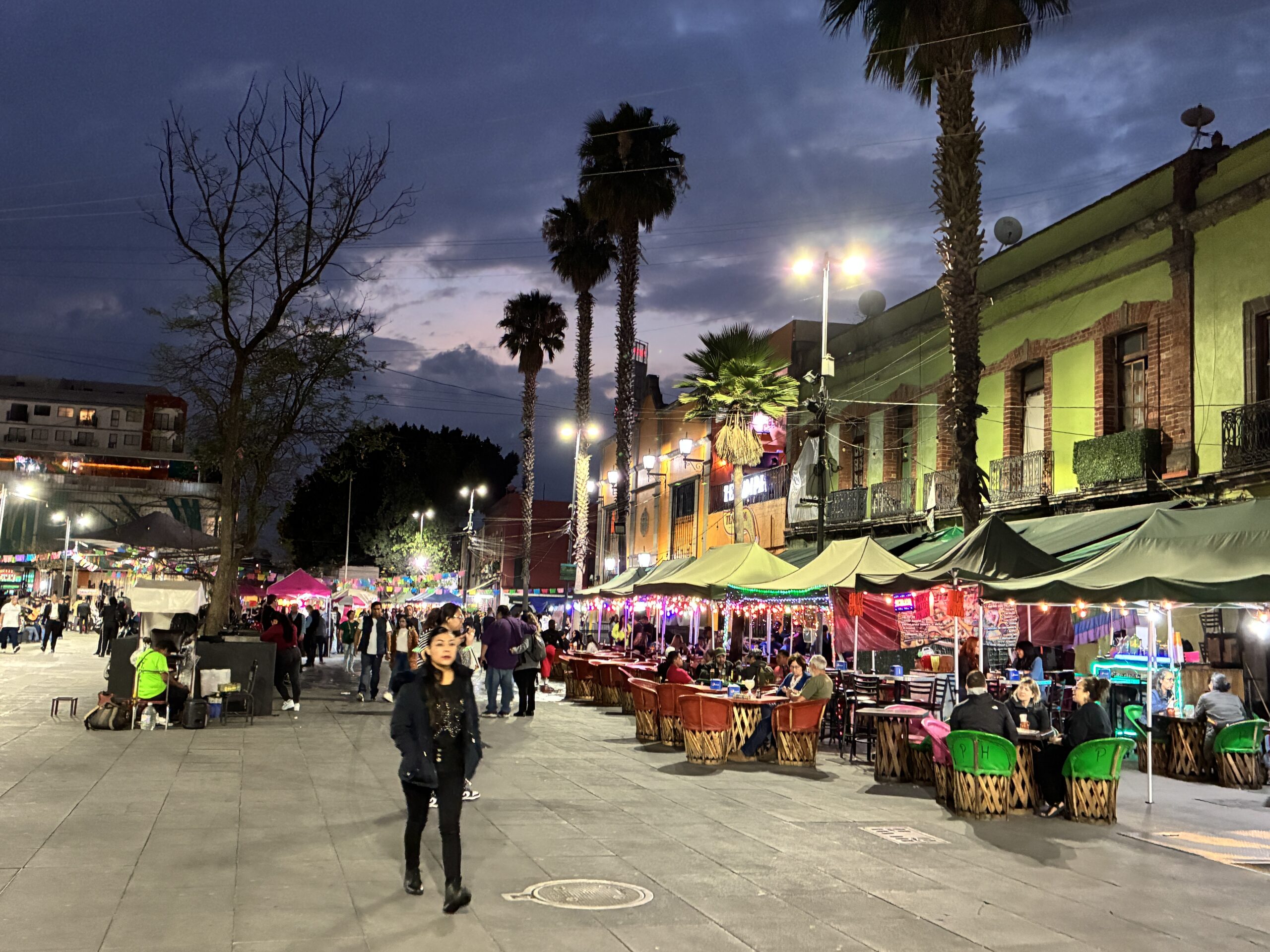
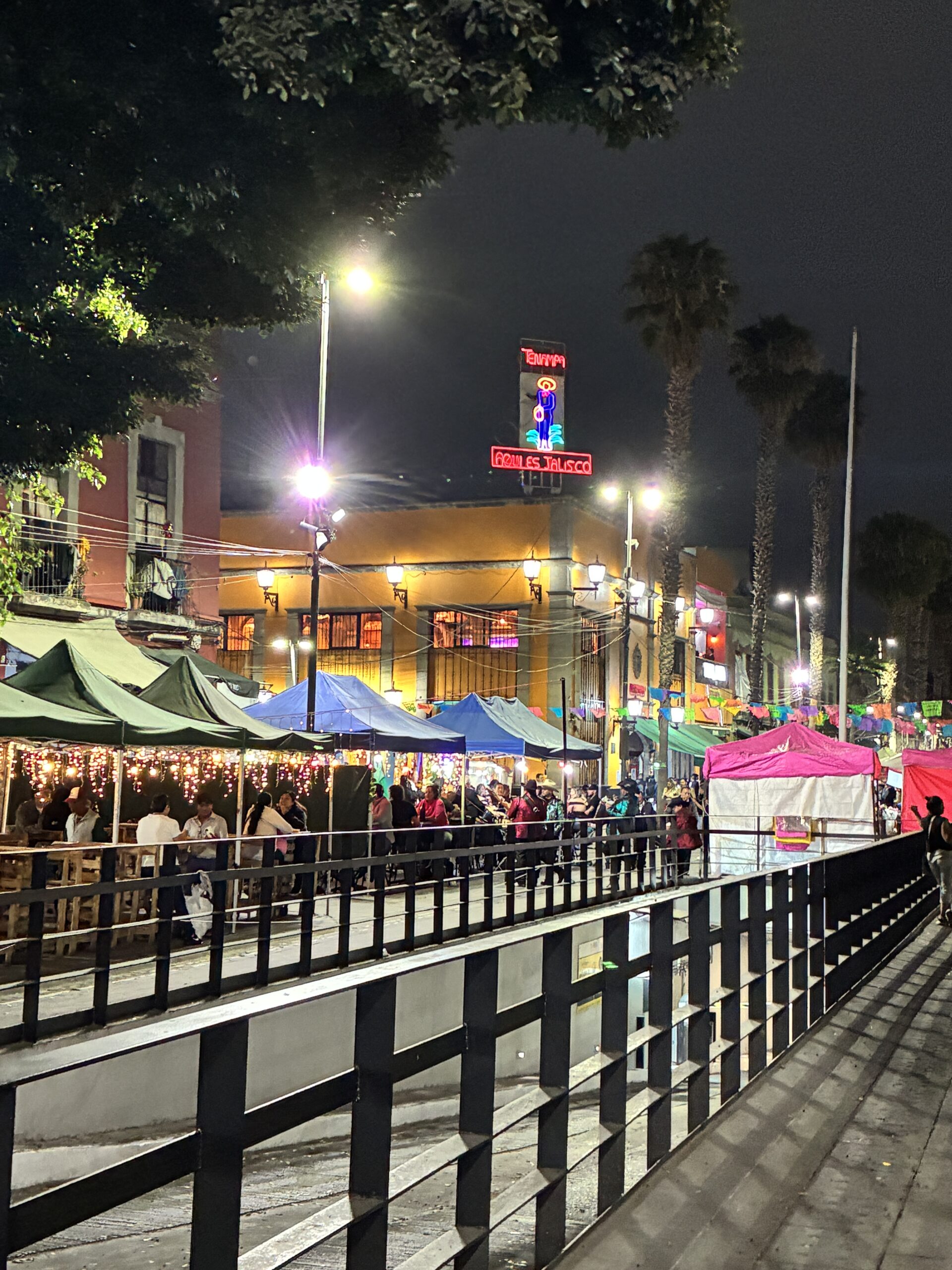
Plaza Garibaldi Plaza is a lovely place, what I did expect from a Mexican city, and it turns out is a a historic square famous for live mariachi music and the Salón Tenampa.


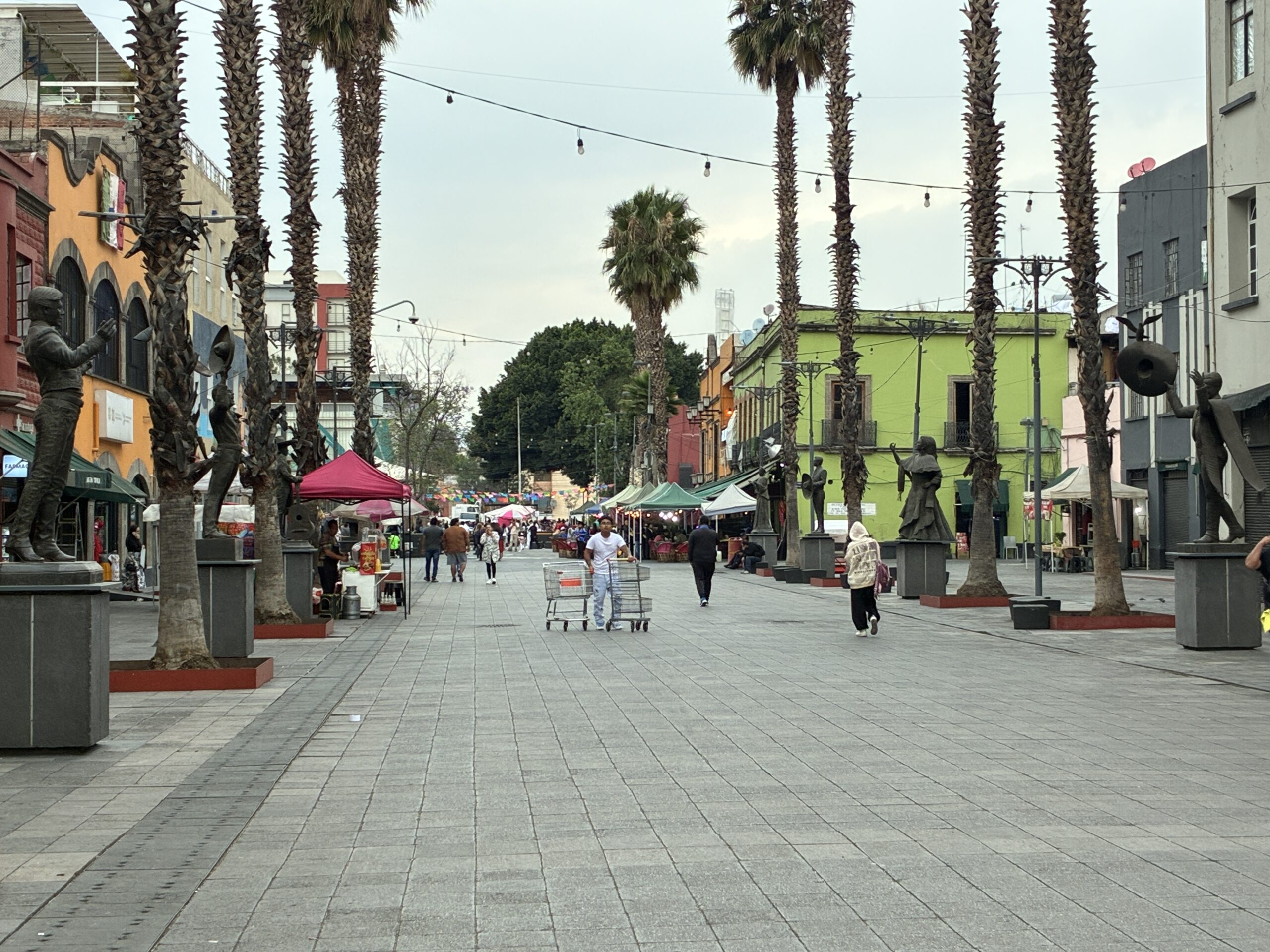
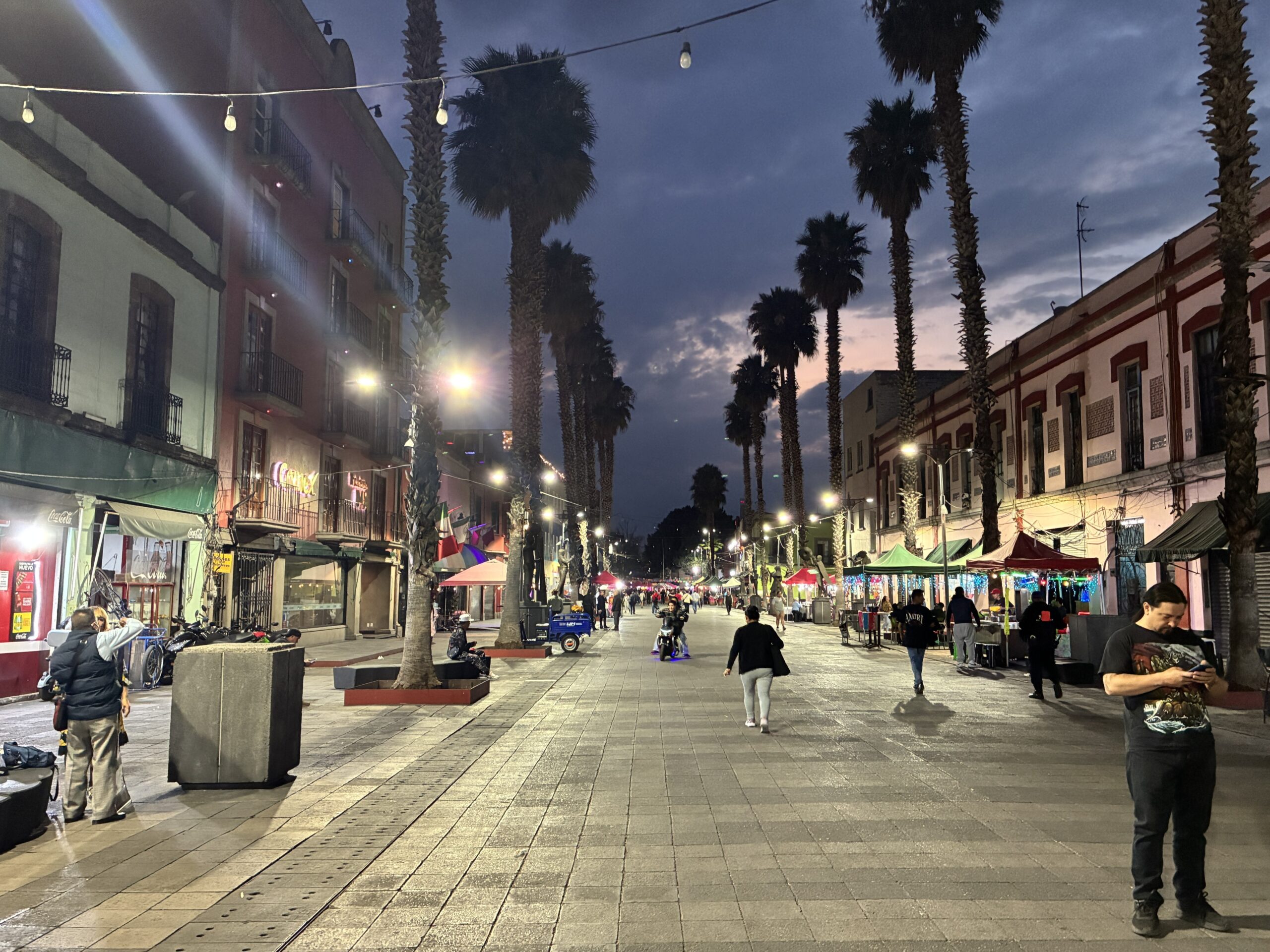
It turns out that Plaza Garibaldi is more than just a square, but continues into a long boulevard leading south toward the downtown, and is a lovely mall lined with statues of famous Mexican men and women musician associated with mariachi and ranchera music. It’s sort of a walk of fame. What a great first outing in Mexico City.


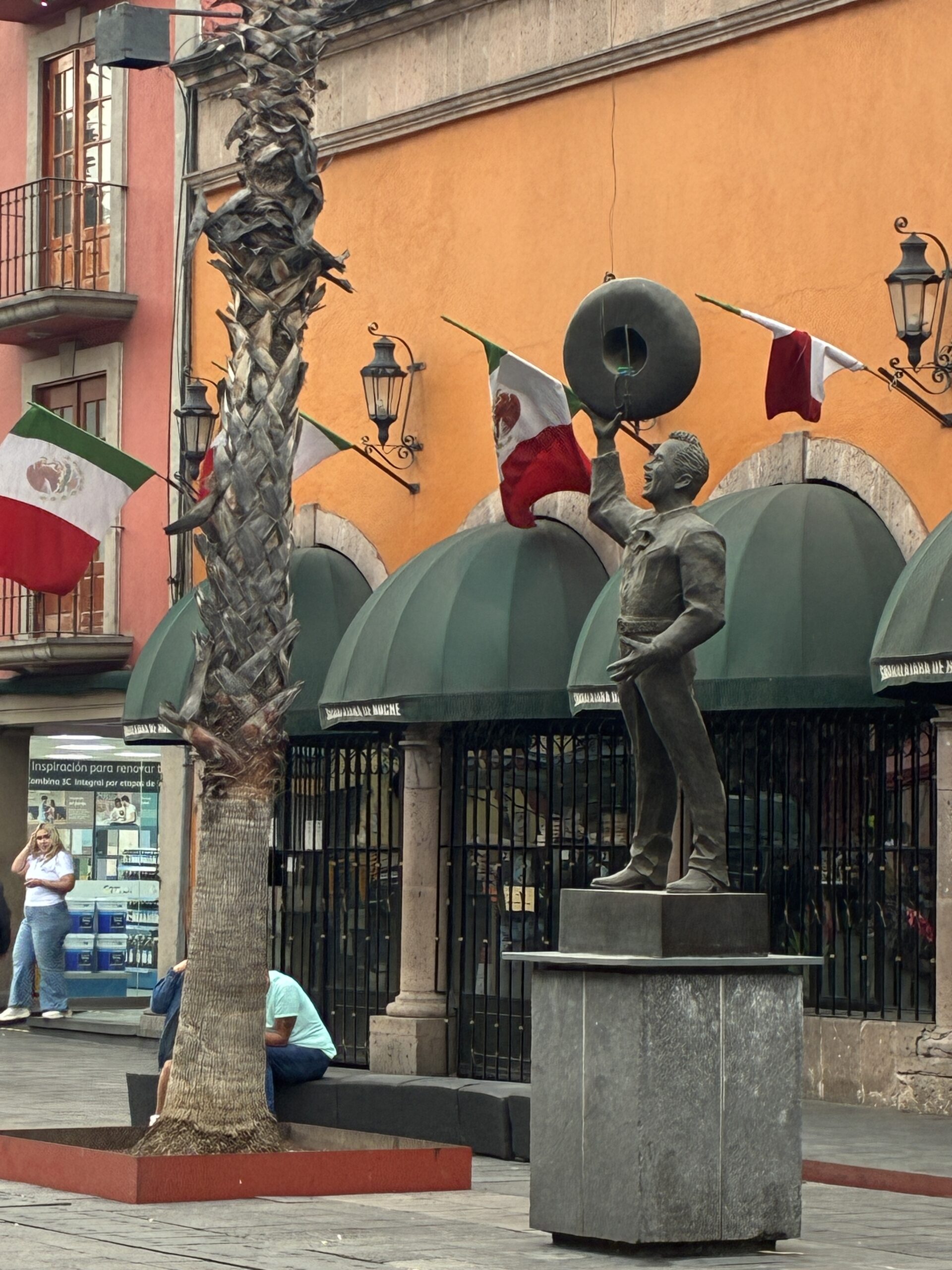

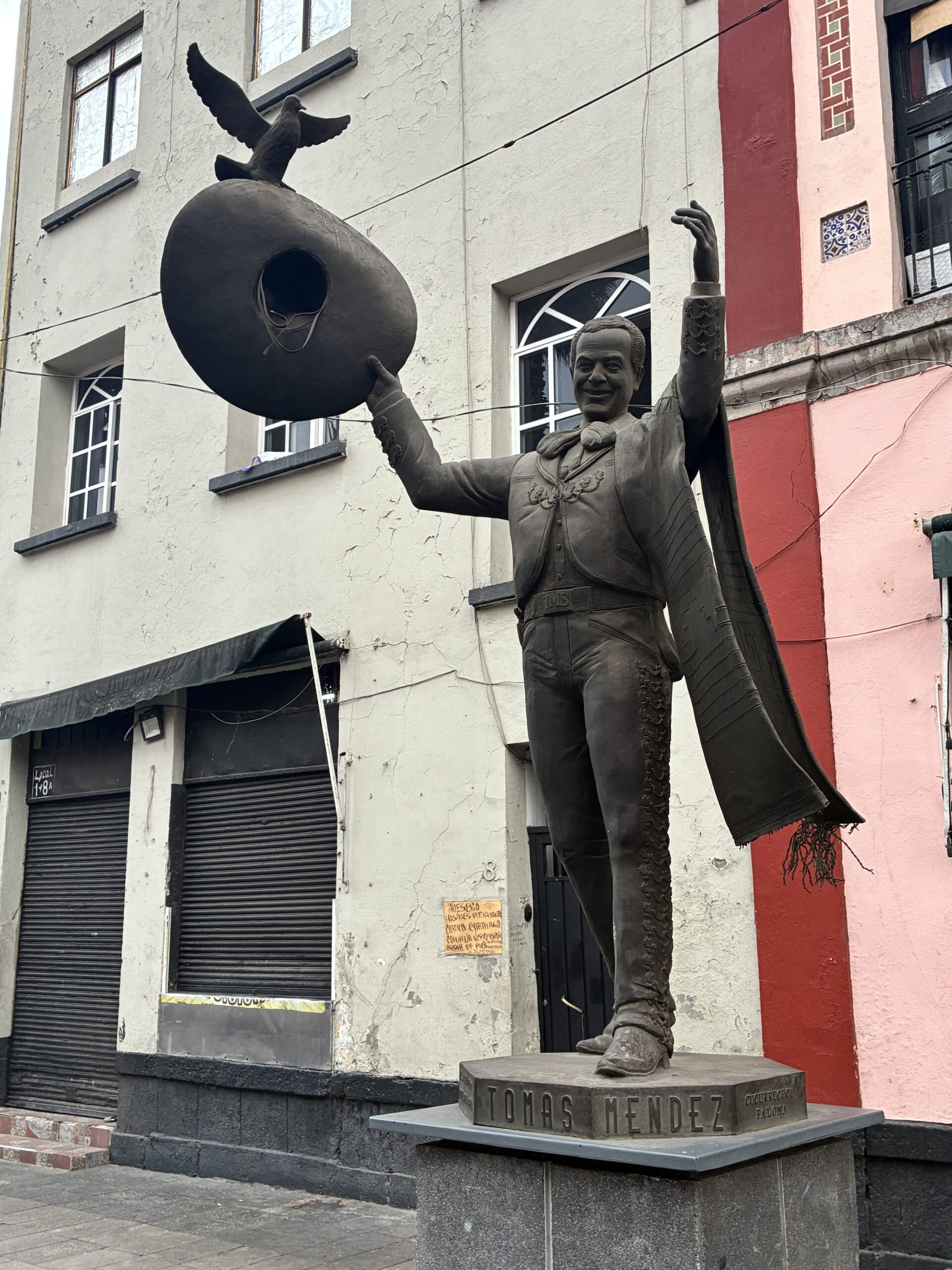

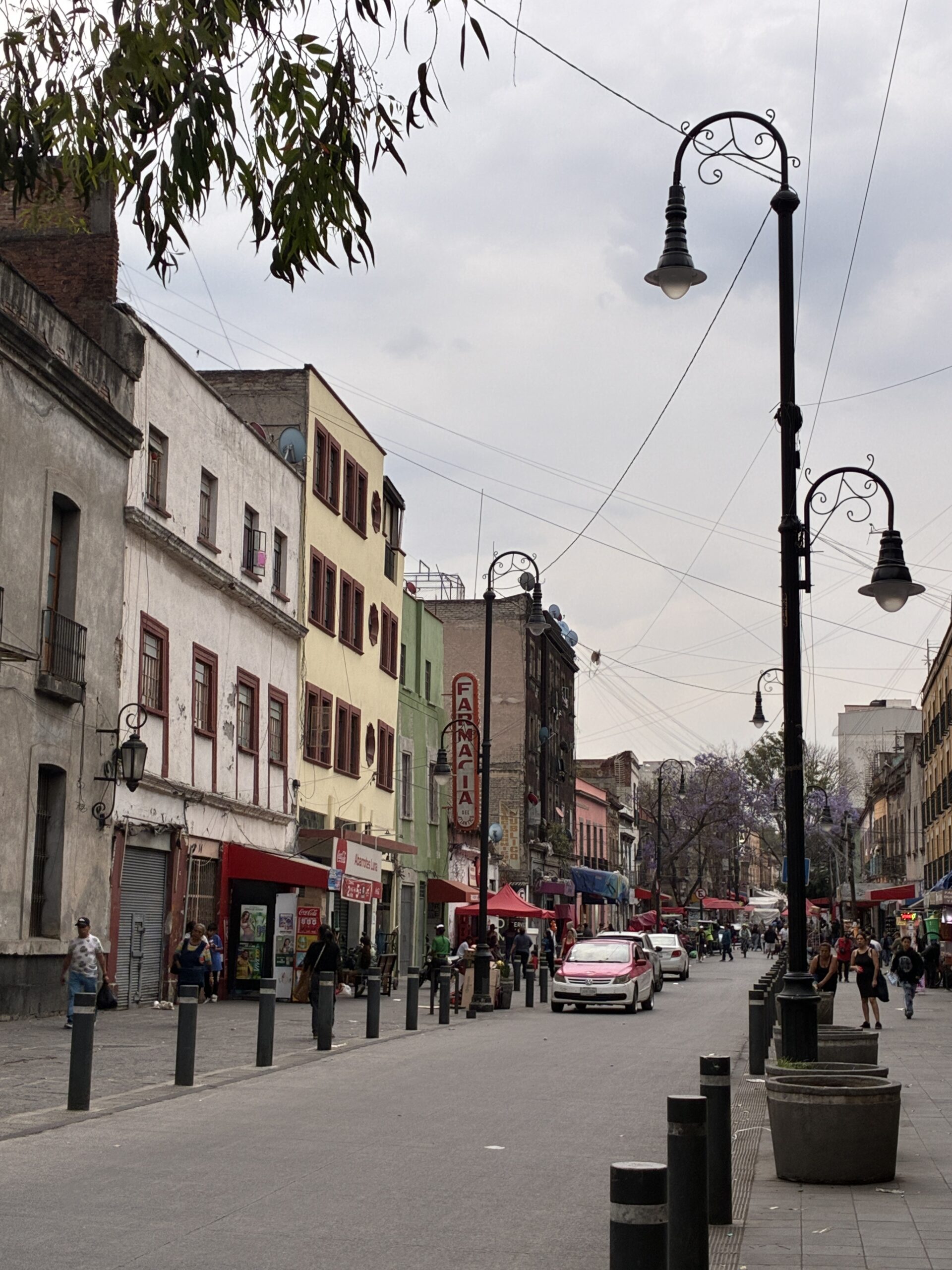
I continued walking toward the city center, not really following the map as I had a sense of where I was heading by this point, and just rambled along various streets that grabbed my fancy, heading more-or-less in the right direction, and just enjoyed walking, not really caring at this point whether I made into the city center today, especially as it was already getting late in the afternoon (although I did). I was just enjoying the walk, more street markets, the buildings, the plazas, the people, and the feel of the place.


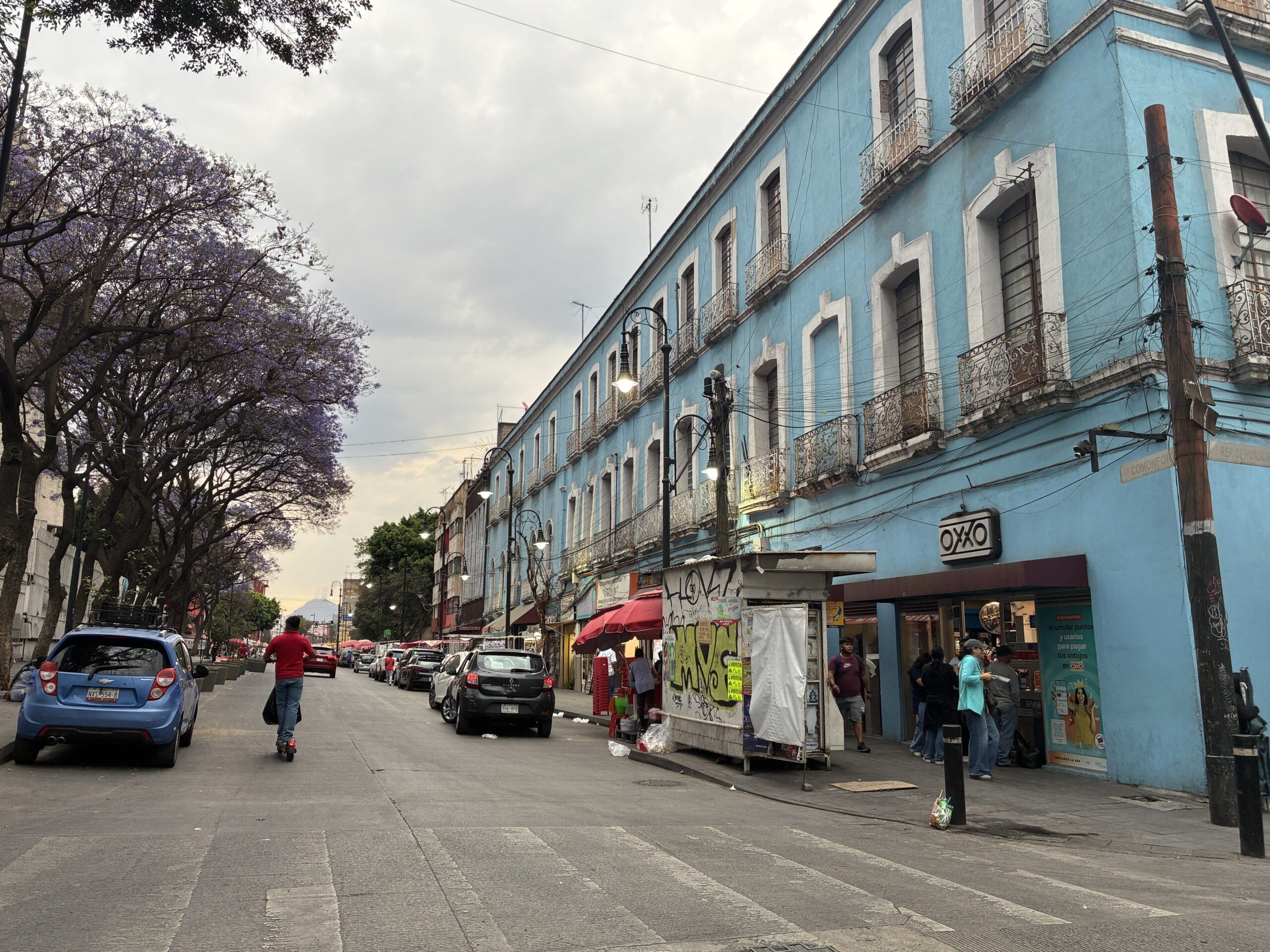


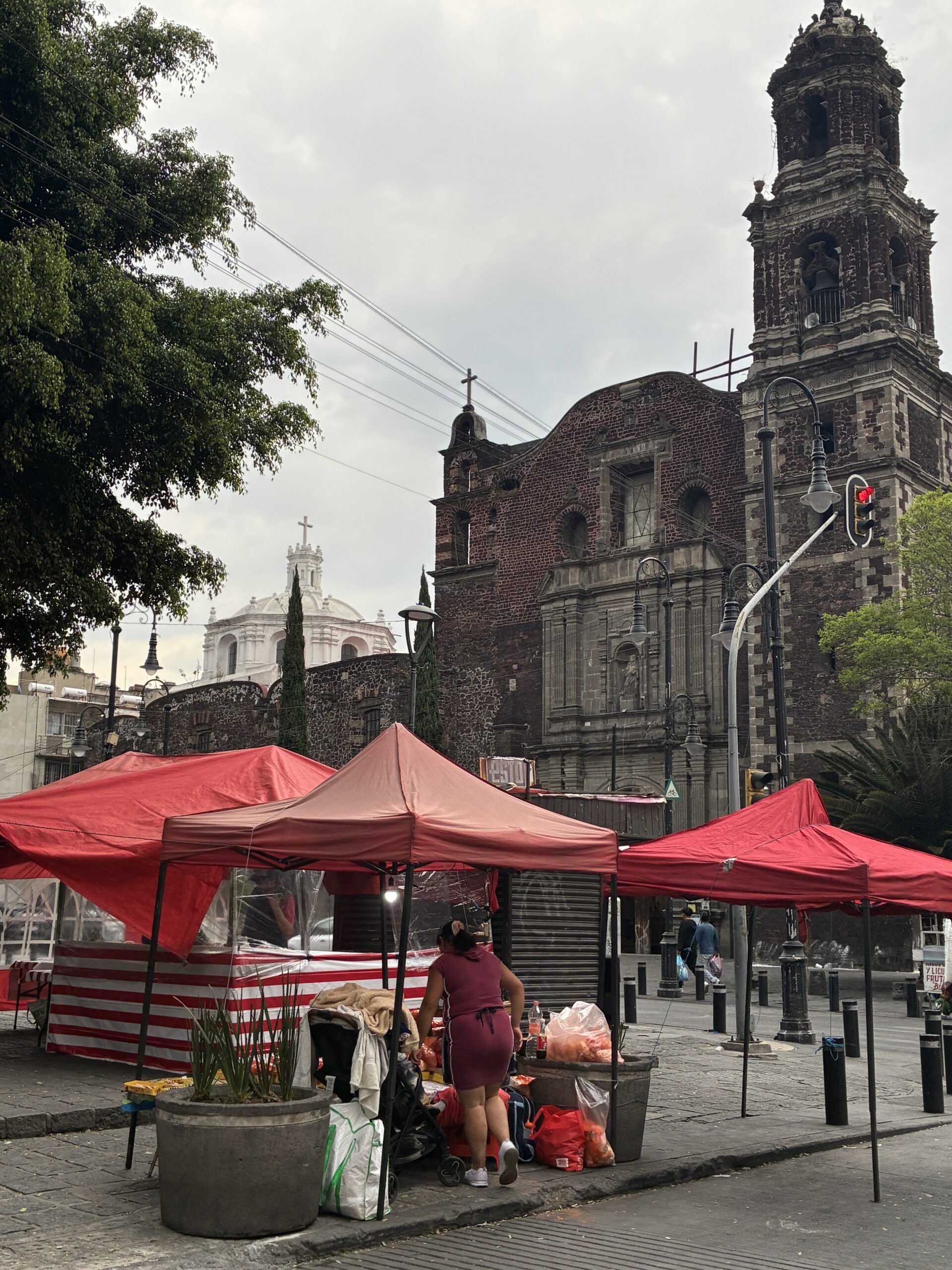

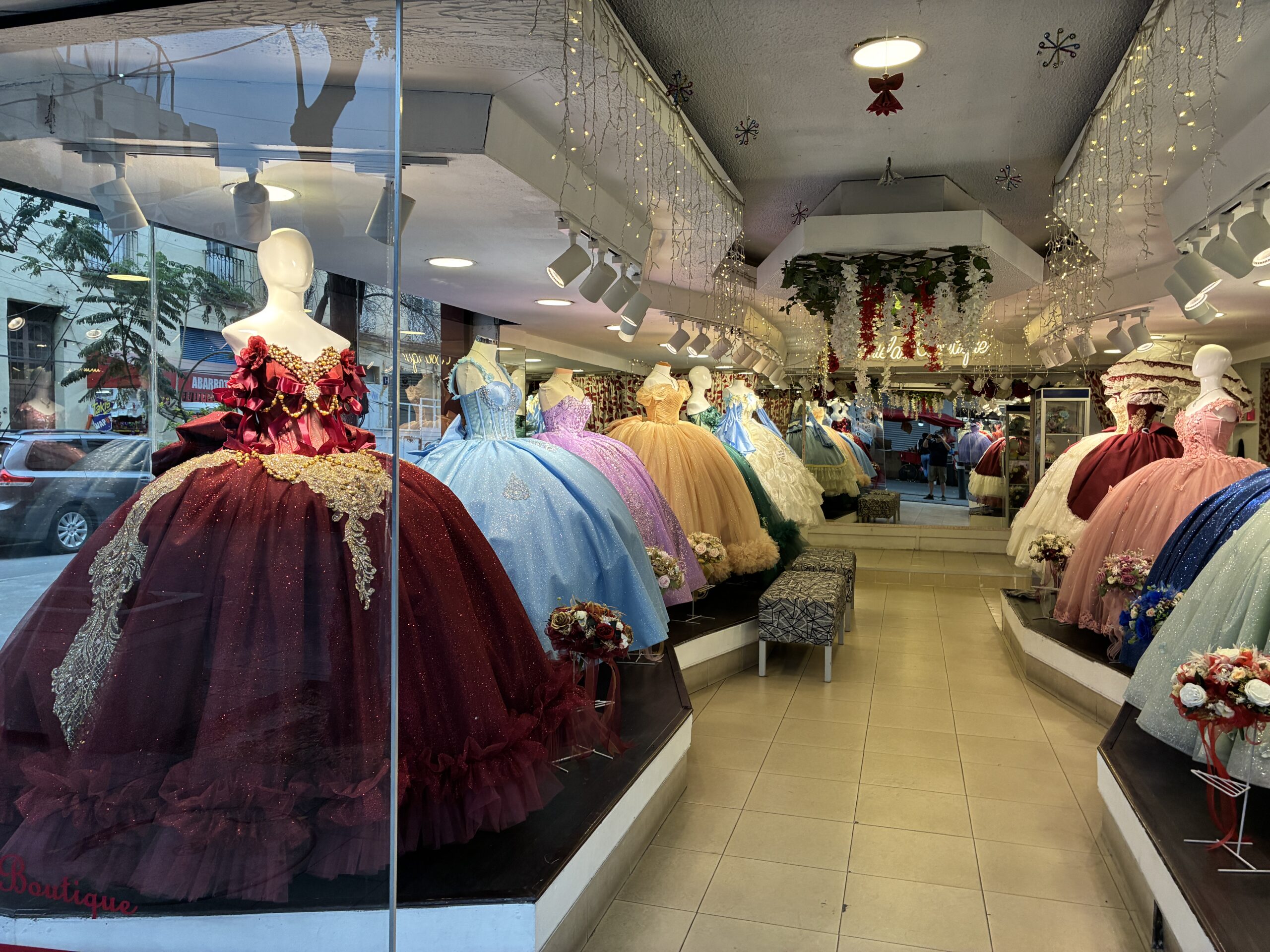
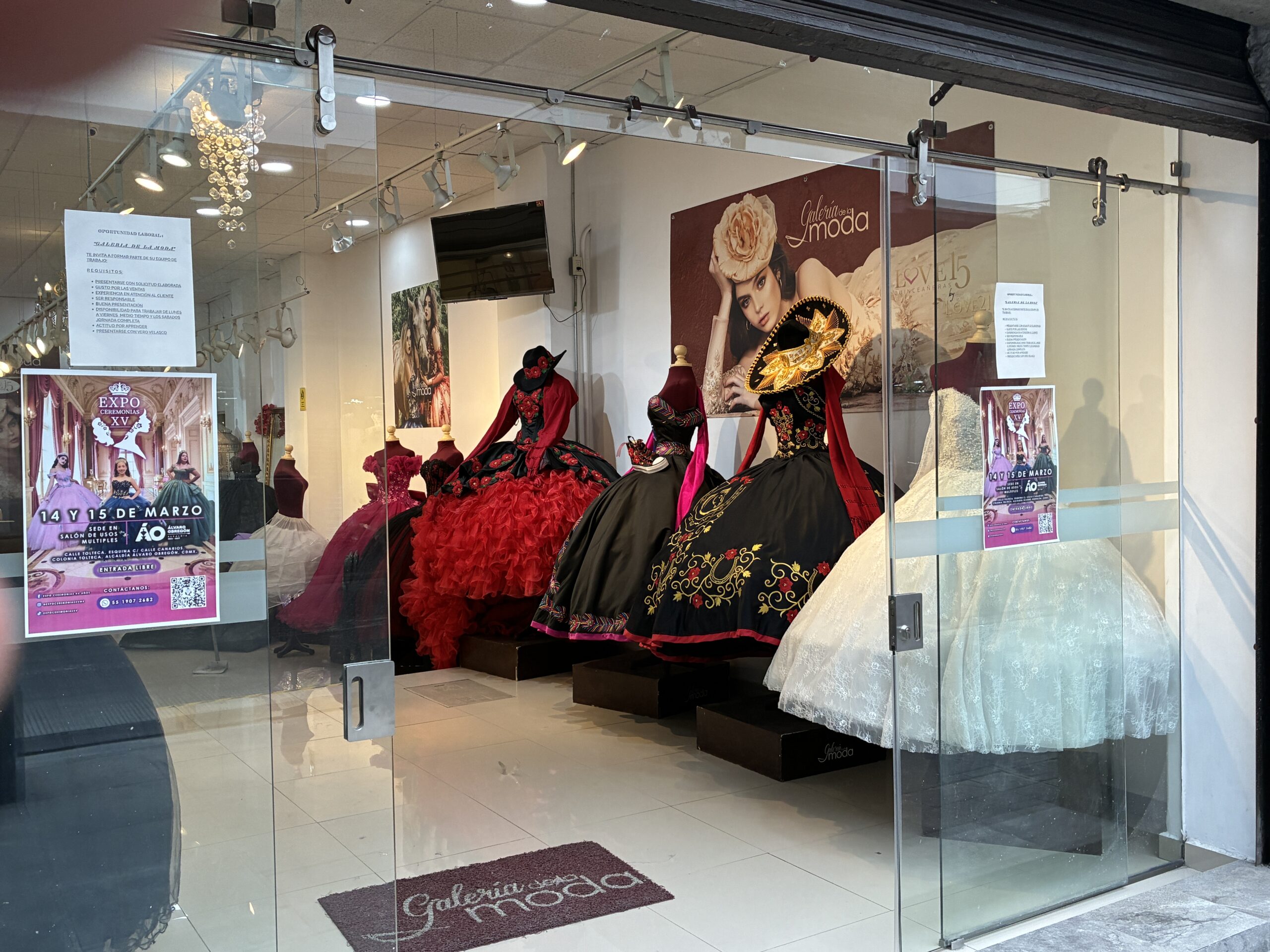
Along one of the main streets, there was store after store and after store displaying ball gowns worn for Quinceañera celebrations, a traditional celebration marking a girl’s 15th birthday.

Continuing to ramble on, I passed through another street market, even more densely packed and crowded, like many found all over the city. That are packed, and difficult to, with traffic, including the omnipresent small engine motorcycles and motor scooters that are found all over cities like this, negotiating these same streets that throngs were walking along, narrowed by the markets stall on each side of the road.
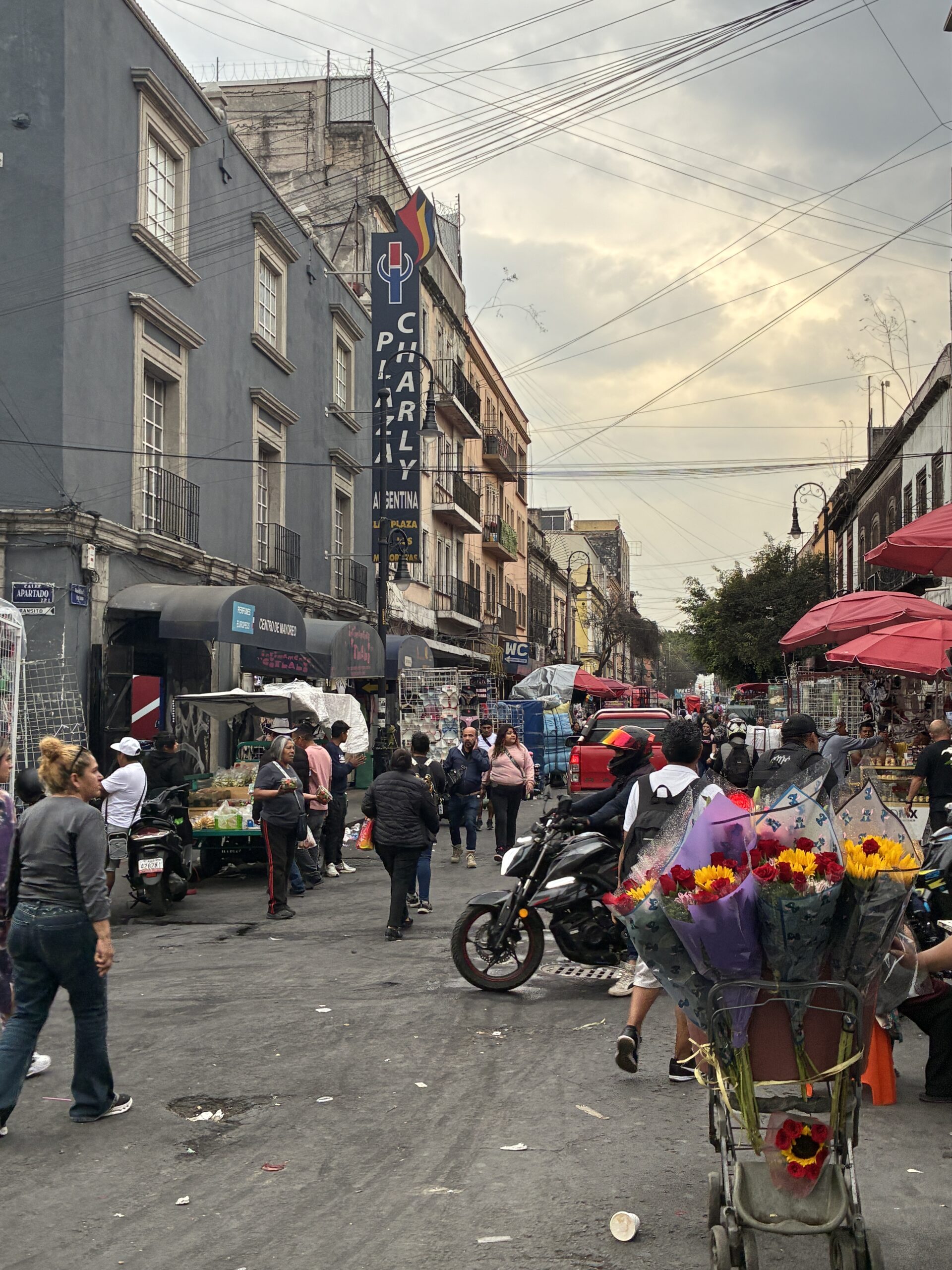
And then, suddenly it seemed, I was downtown, coming into the Zócalo, or actually the Plaza de la Constitución (like Puebla’s main Zócalo, and I guess those of many other large Mexican cities), being channeled with other pedestrians (and there were many) by a defined walkway toward the center of the square, first passing ruins of the ancient Aztec temple, Templo Mayor. The temple dates back about 700 years, and was the main temple of the Aztec capital city, Tenochtitlán, where Mexico City now stands (and on top of).
These ruins were actually not discovered until 1978, and that was by accident when the city electric company, digging trenches, struck a circular stone carving over 10 feet in diameter, which was recognized by archeologists as the Coyolxauhqui monolith, and in that confirmed the location of the lost Temple. Soon after, archeological excavations began in the area, and more and more ruins were revealed, running under the city (where they still are).

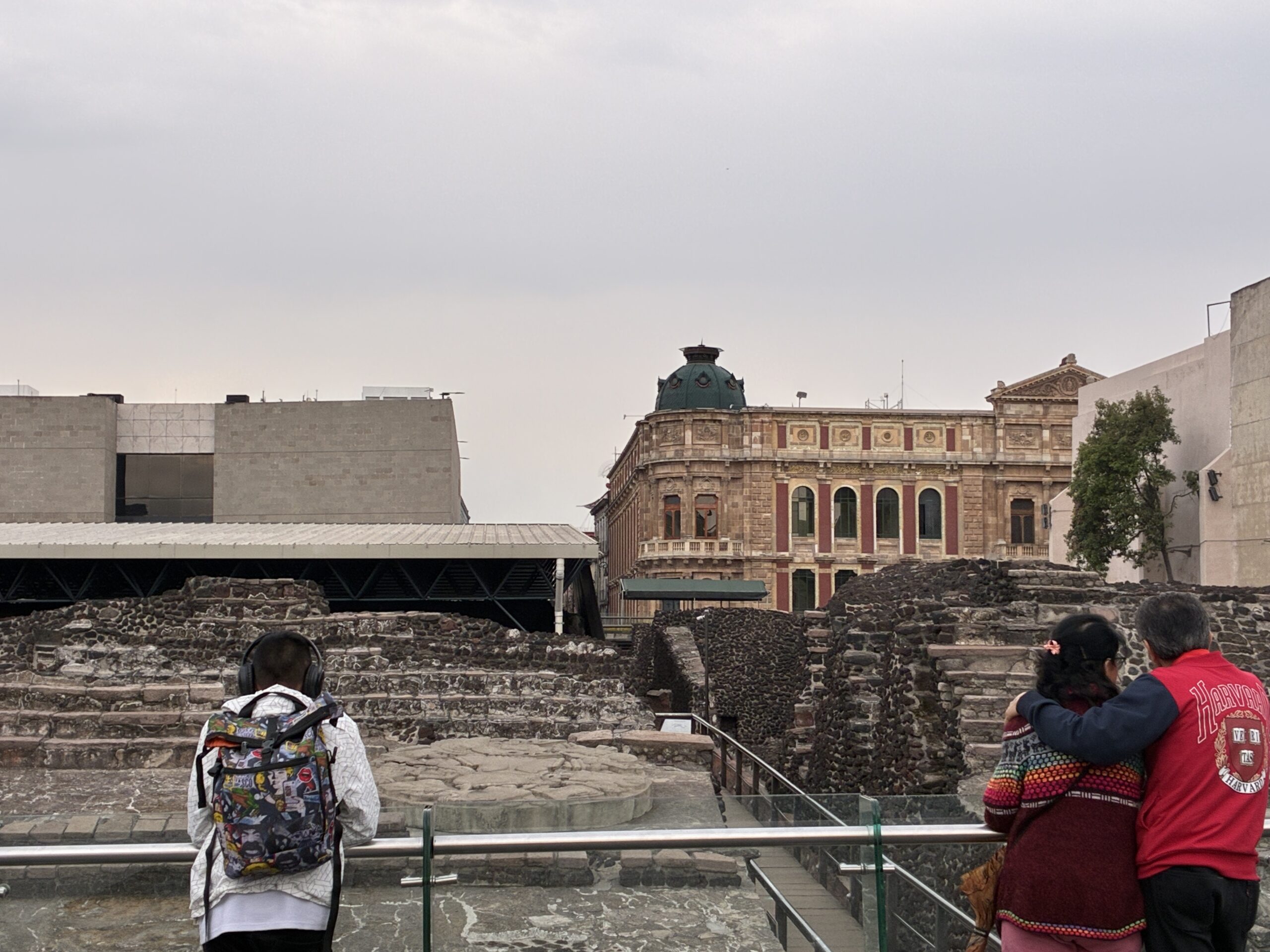
As I moved further toward the Zócalo, guided by pedestrian barriers, suddenly the Metropolitan Cathedral of Mexico City popped into view, as it was initially obstructed by large metal barricades that remain following the Women”s March last week.
The Cathedral sits on the north side of the Zócalo, and is one of the largest churches in the Americas, built between 1573, about 50 years after the city was founded, and 1813 (that’s 240 years; a lot can happen in 240 years). It was partly built with stones taken from the nearby Templo Mayor, which was partially demolished by the Spanish and built over (hence the excavations). Attached to the Cathedral is the Sagrario Metropolitano (Metropolitan Tabernacle), built much later at comparative light speed, between 1749–1768, a mere 19 years.
Like many other buildings in the central part of the city, both of these churches are slowly sinking, because Mexico City was built on the lake bed where the Aztec city stood. It is a significant problem for which the city has undertaken major engineering to stop or slow the sinking of buildings, and parts of the city have sunk over 30 feet since 1821. Evidence of this can be seen in buildings all over the central district, including the Cathedral, with portions of buildings leaning or higher at one side than the other, and/or showing other signs of subsidence clearly visible to the naked eye.


The Zócalo is bordered by the Cathedral on the north side and the National Palace on the east, civic offices on the south side, and shops and restaurants on the west. It is huge, and one of the largest central plazas in the world. It is gigantic.
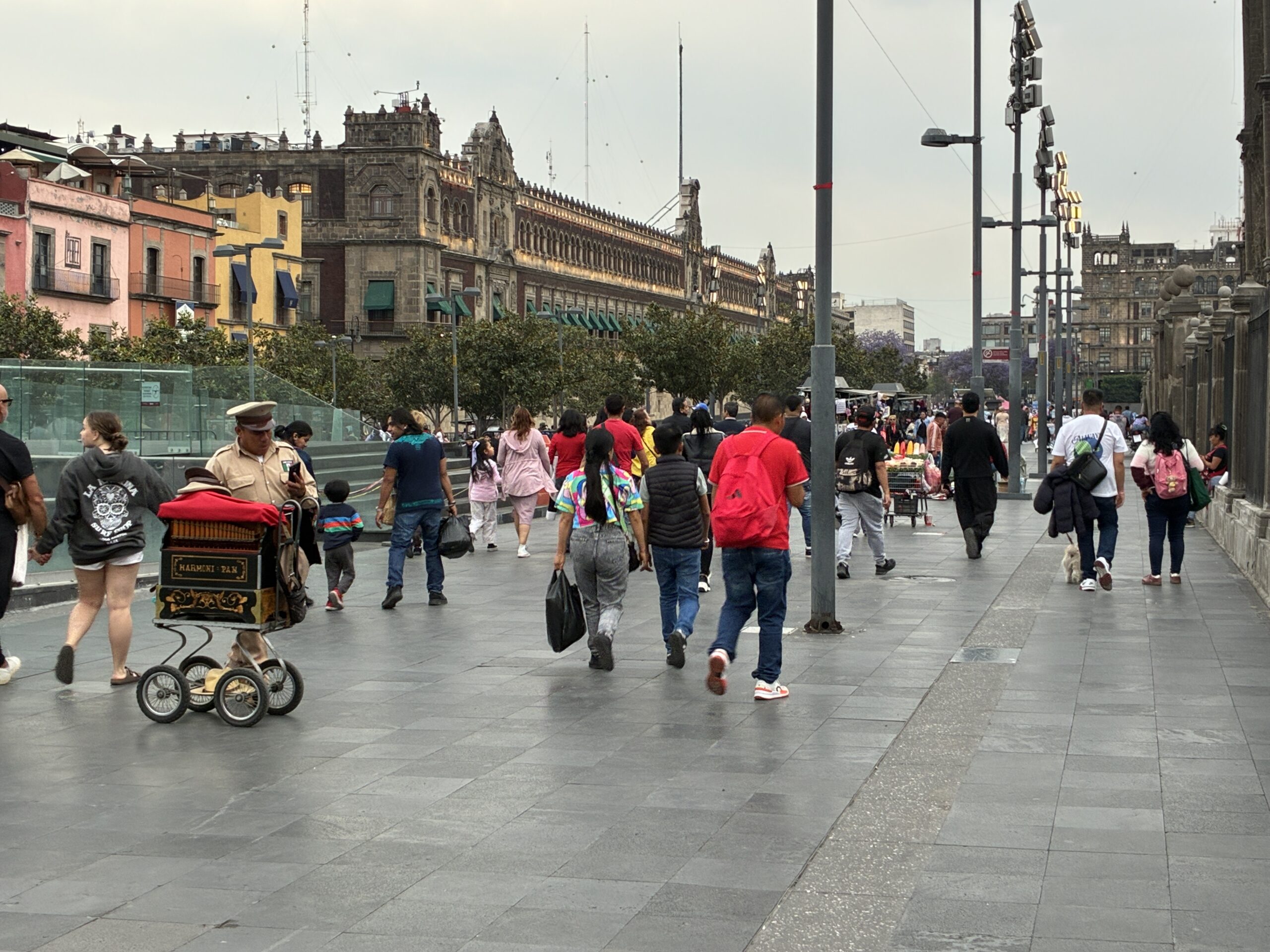
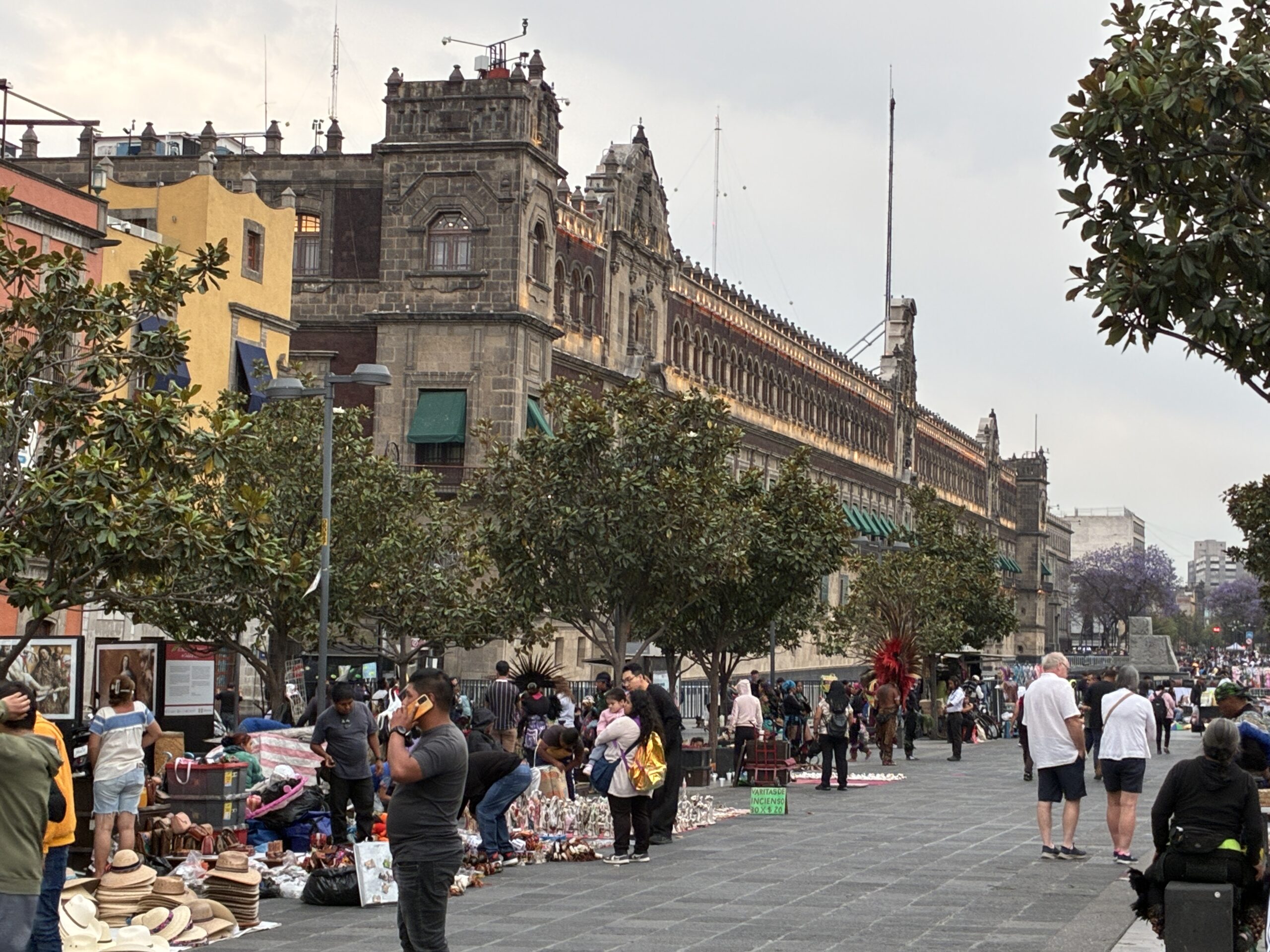
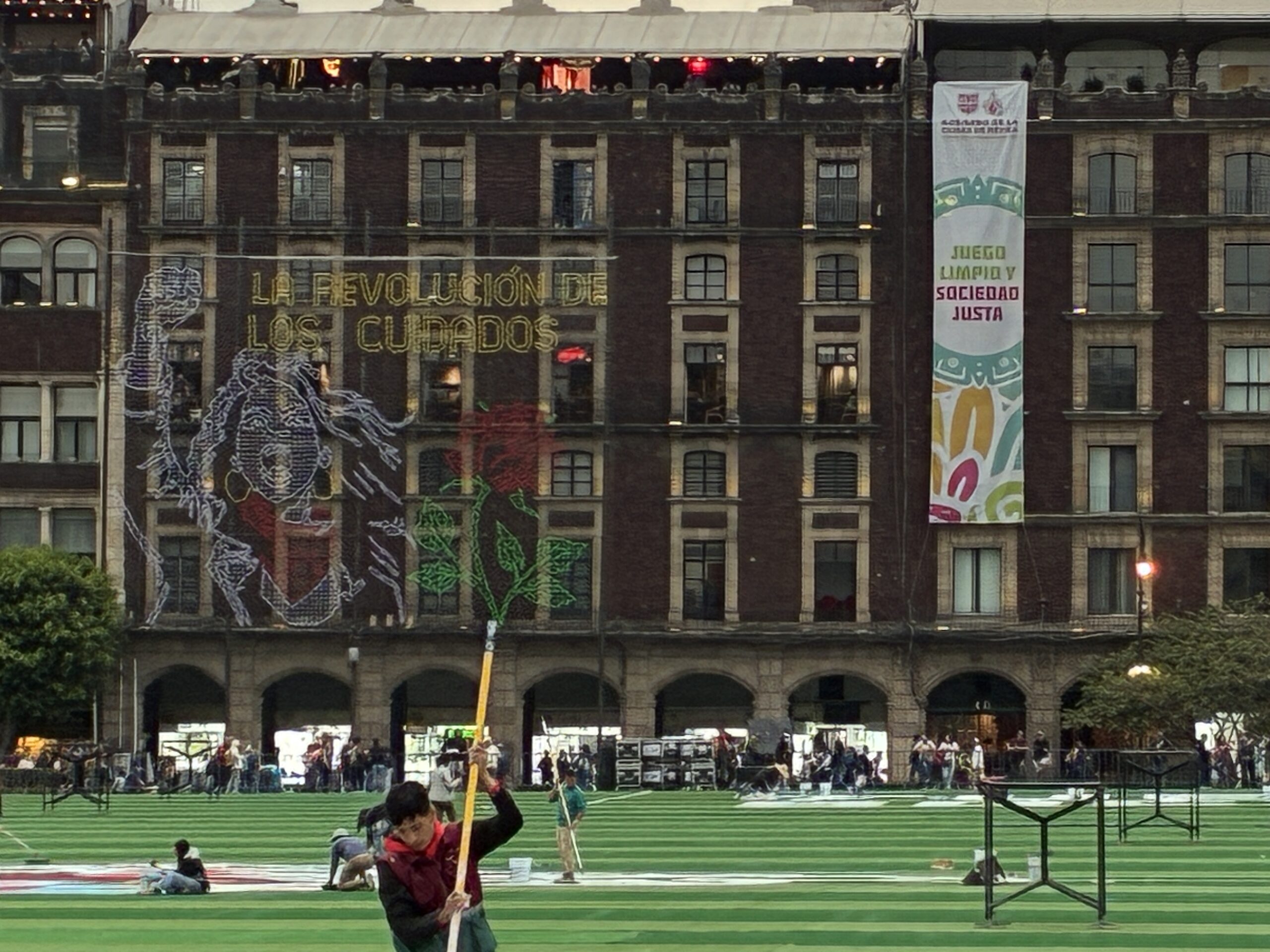
The Zócalo is used for many events and purposes, and given its enormous size it can hold many spectators, and at least 100,000, with some accounts saying as many as 400,000. Whatever its actual maximum, it is BIG. Today, it was being covered with artificial turf and being turned into a giant soccer field for a massive public soccer class this weekend, in an attempt to break the world record for the largest soccer lesson ever. Around 10,000 people are expected to participate, practicing soccer drills together in the square. This event is not only to set a world record, but to publicize and stir excitement for the soccer (actually, football) World Cup, with a number of matches taking place in Mexico City this June.
While the crews were working on installing and marking the field, concert volume music was blaring across the square from stage in front of the cathedral on the north side. It was great. The city is alive, packed, vibrant, and filled with sound. The incredible volume of the music seems just a part of the cultural traditions of the city.


The buildings are beautiful and from an age gone by (aside from the fact that some are sinking), and the buildings on the south and west sides of the plaza are hung with political messages, and remain from the Women’s March last week. These marches can result in violence and vandalism, and like Oaxaca, where I was last week when the Women’s March took place, there are high metal barricades protecting property and landmarks all over the city, not yet taken down.

I walked around the Zócalo for a while, taking in the sights and sounds, and enjoying the Jacaranda in full glory.
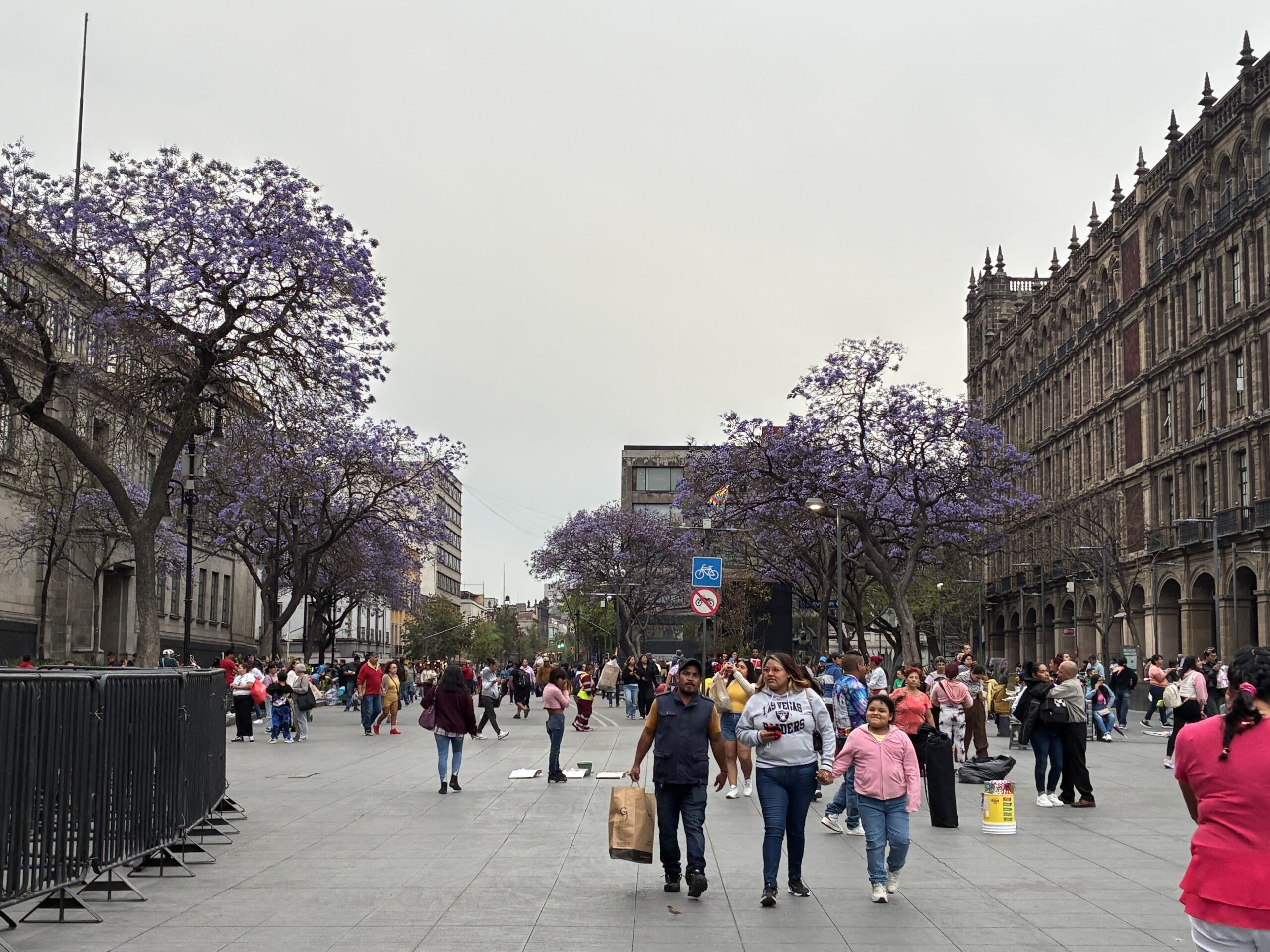
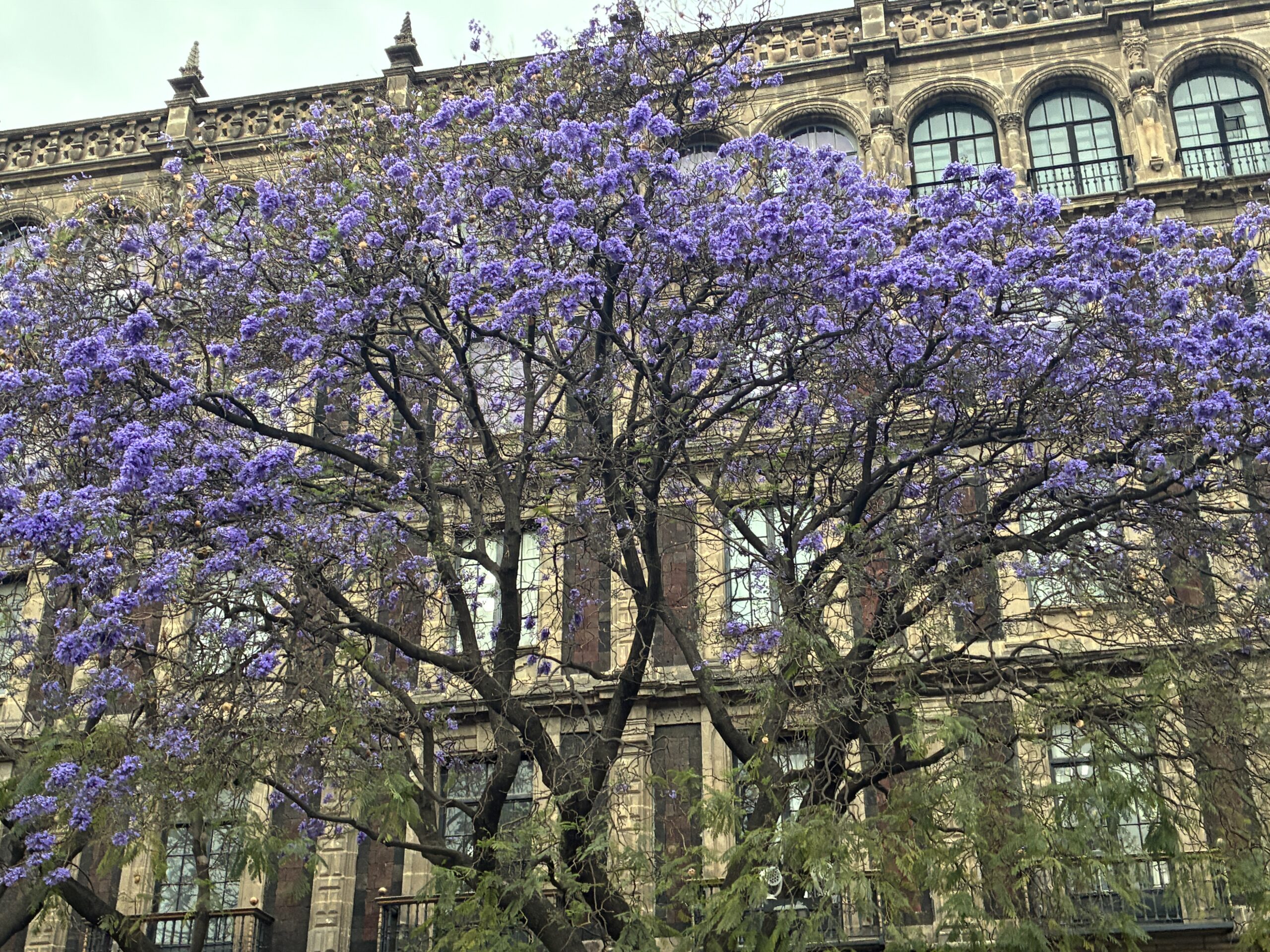
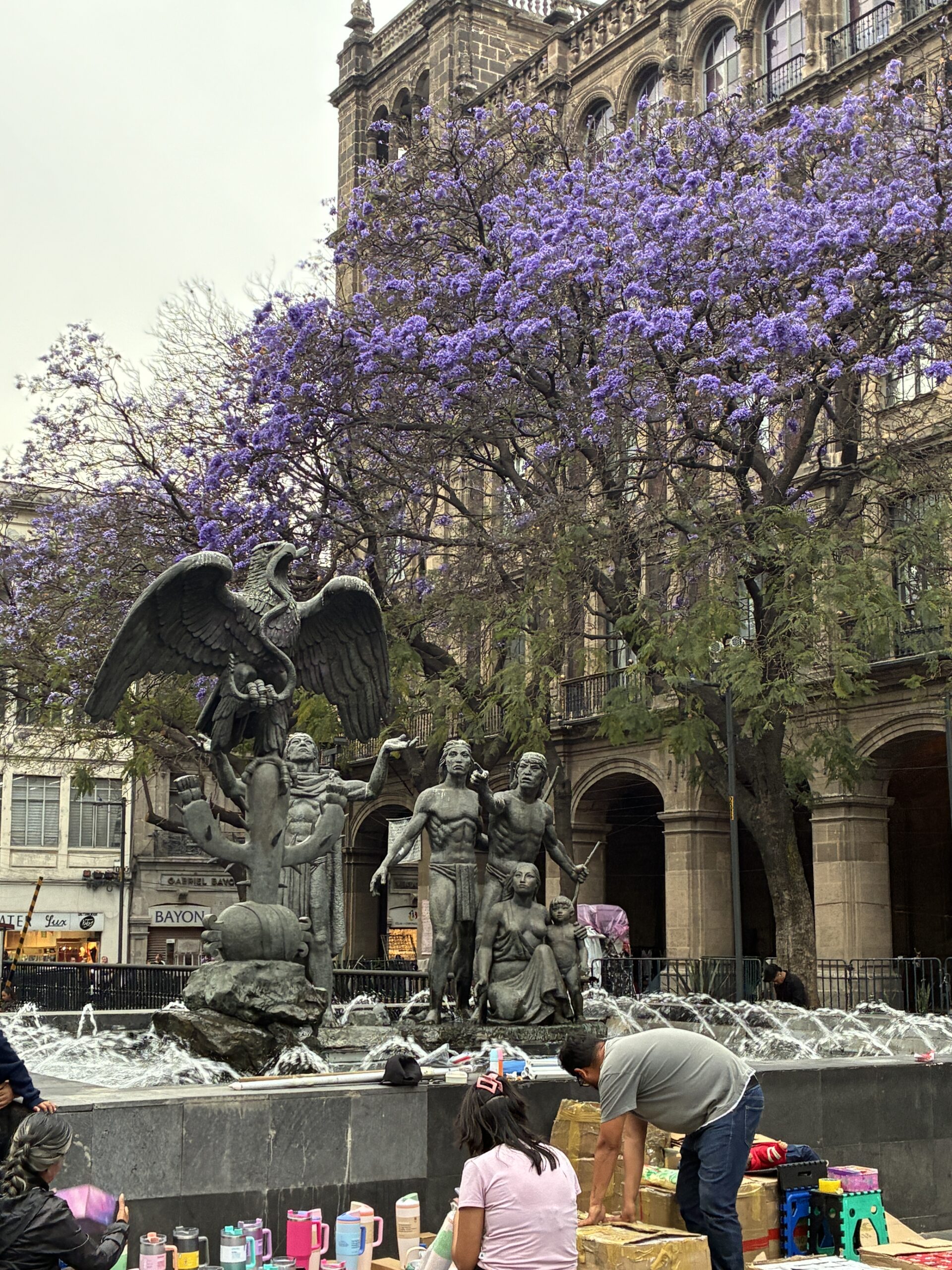
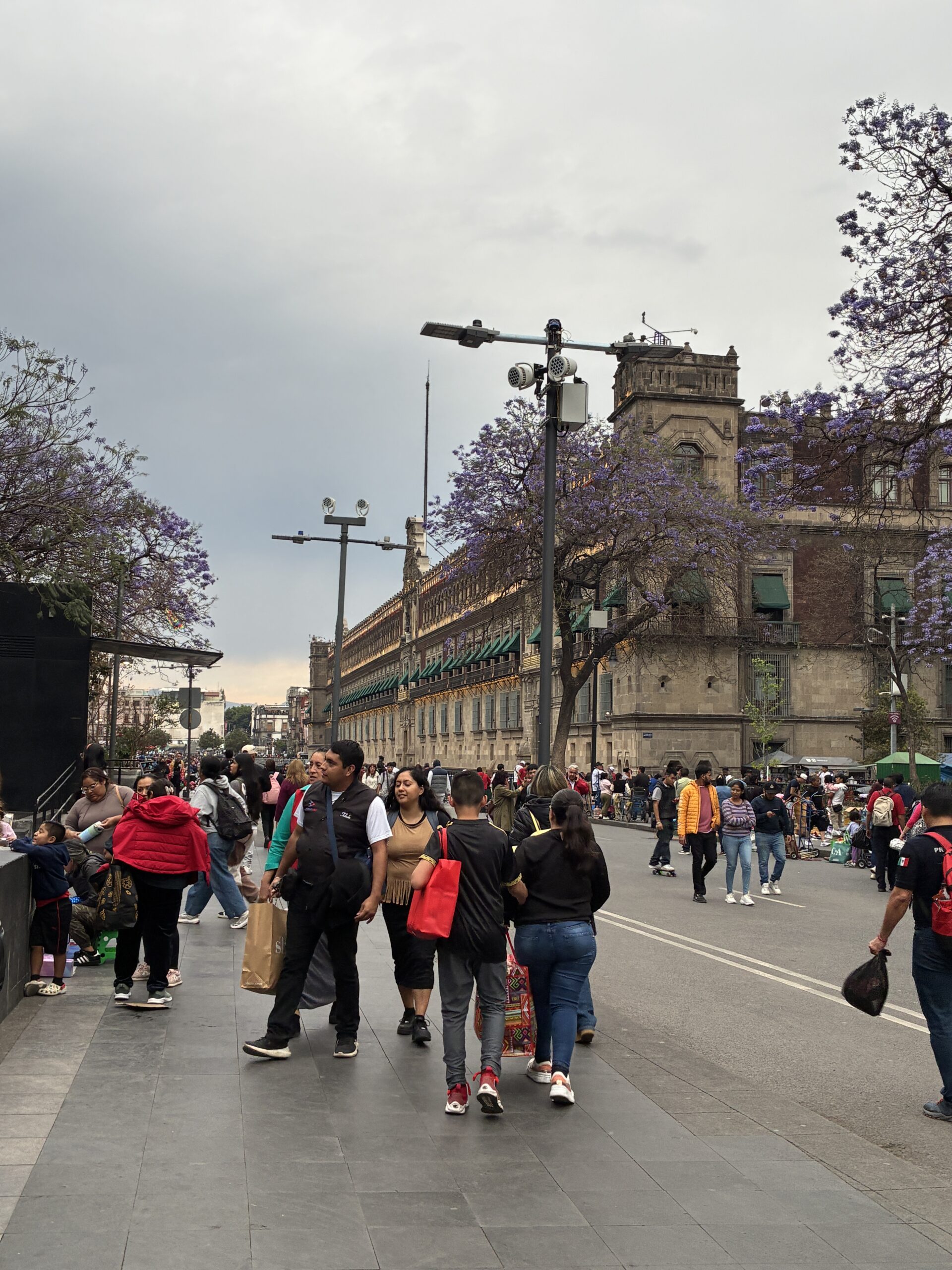
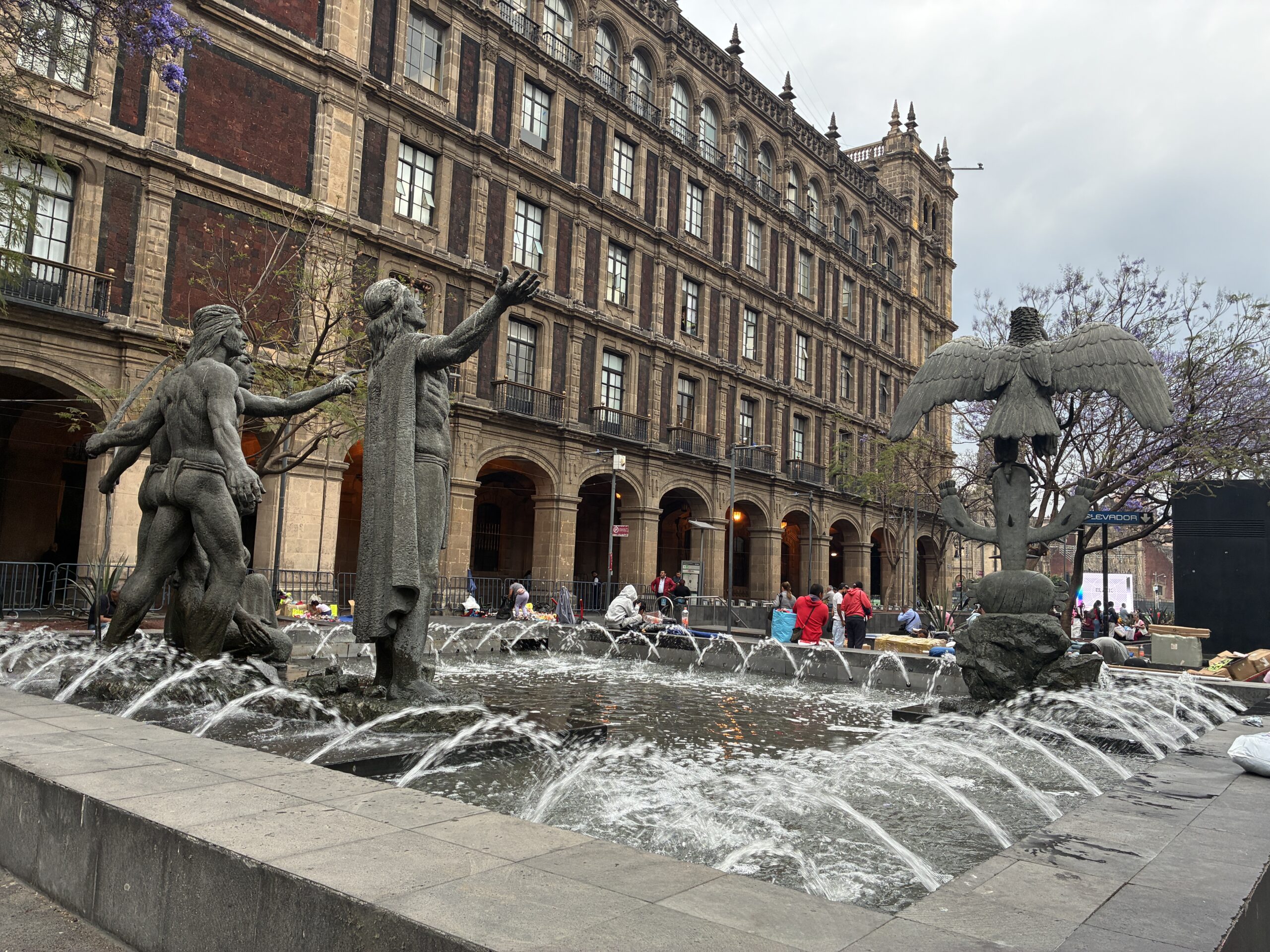
I walked through the crowded streets around the Zócalo, with a very bustling market on the west side and directly in front of the Cathedral, and then walked through the streets around the central plaza, before returning later.
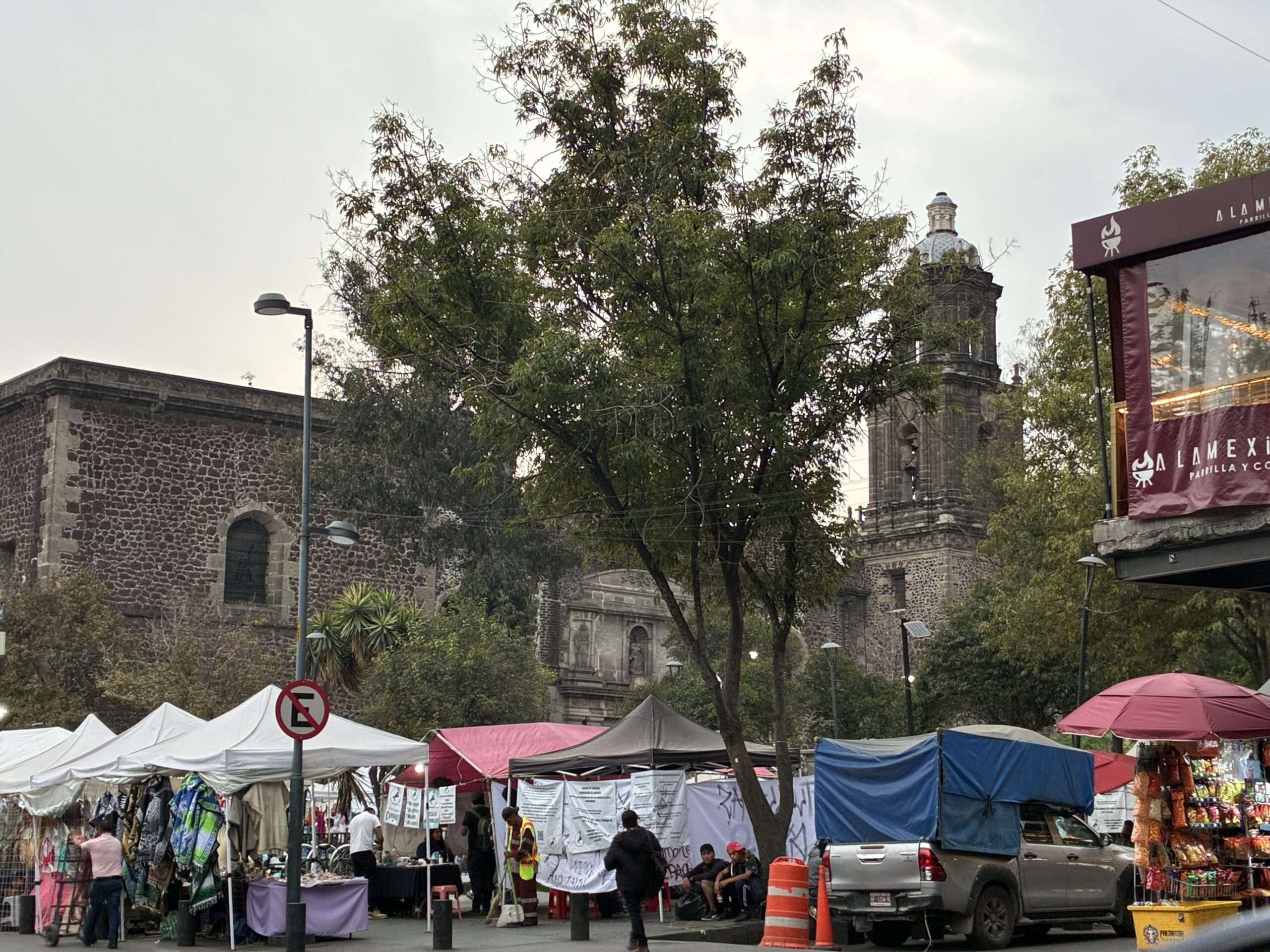


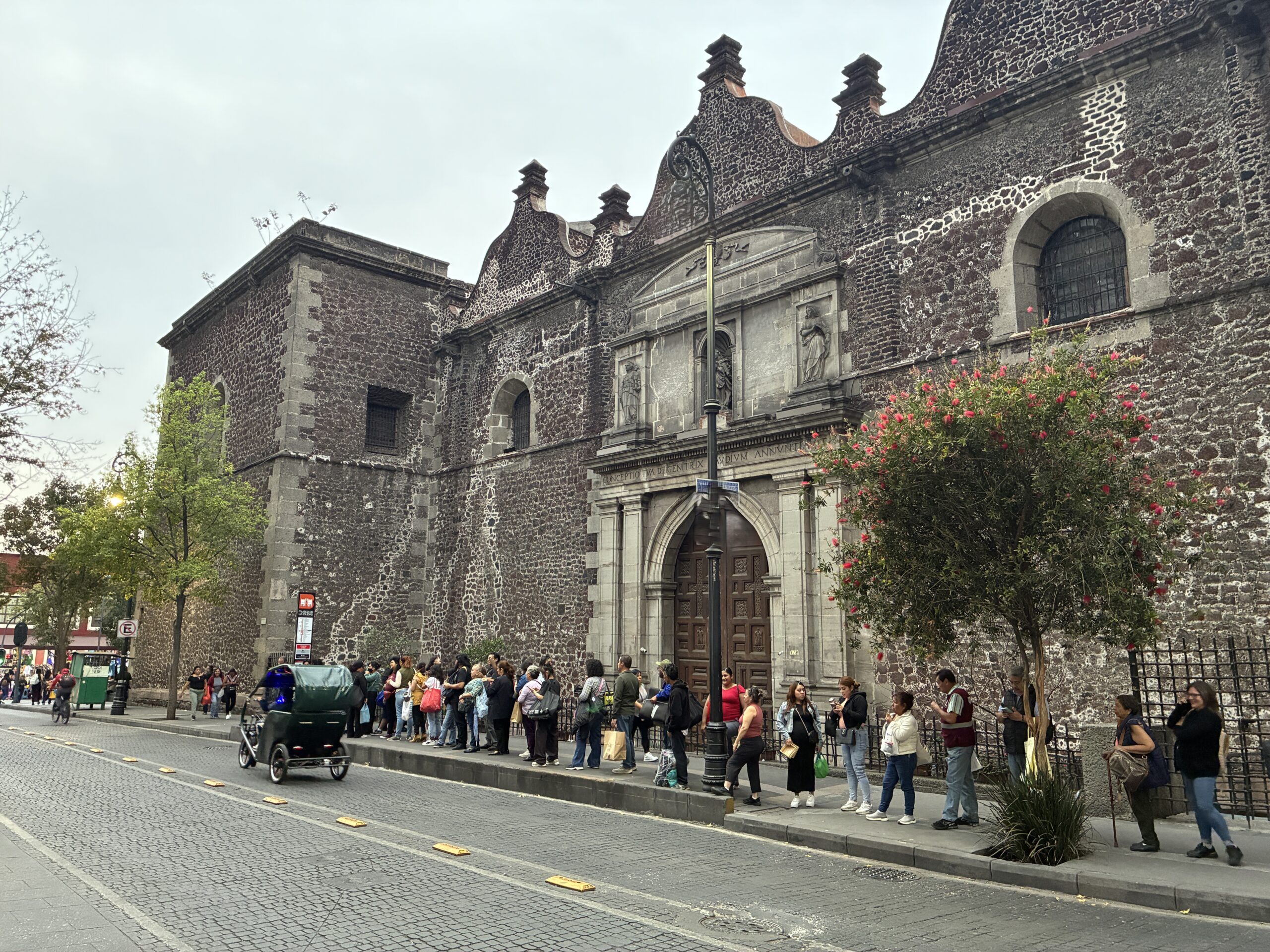


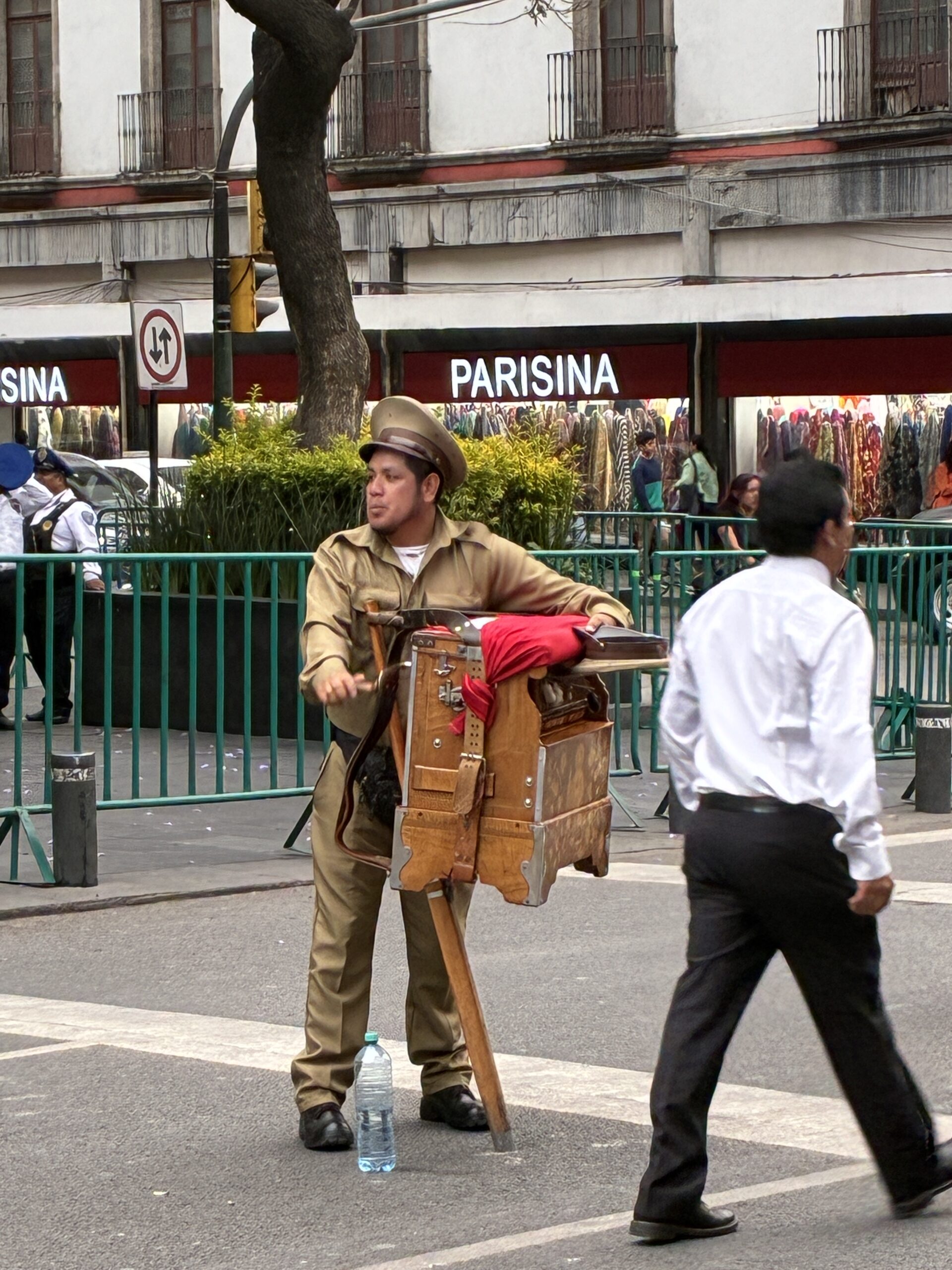
And talking of cultural traditions in the city, the center is filled with “organilleros,” men and some women, of varying ages, playing barrel organs for tips, wearing the same uniforms, which is itself a tradition dating back to the 1800s and the presidency of Porfirio Díaz. Many are members of an organilleros’ union, and the tradition is often passed down through families. Many of the organs were imported from Germany in the 19th century, most of which are a hundred years old. I never actually saw anyone give a tip, and I wondered how they survive.
Dusk was starting to settle, and street and building lights coming on, as I continued to work my way through streets around the Zócalo, and returning to it before heading back to my hotel. Those building lights make the city look extra lovely.
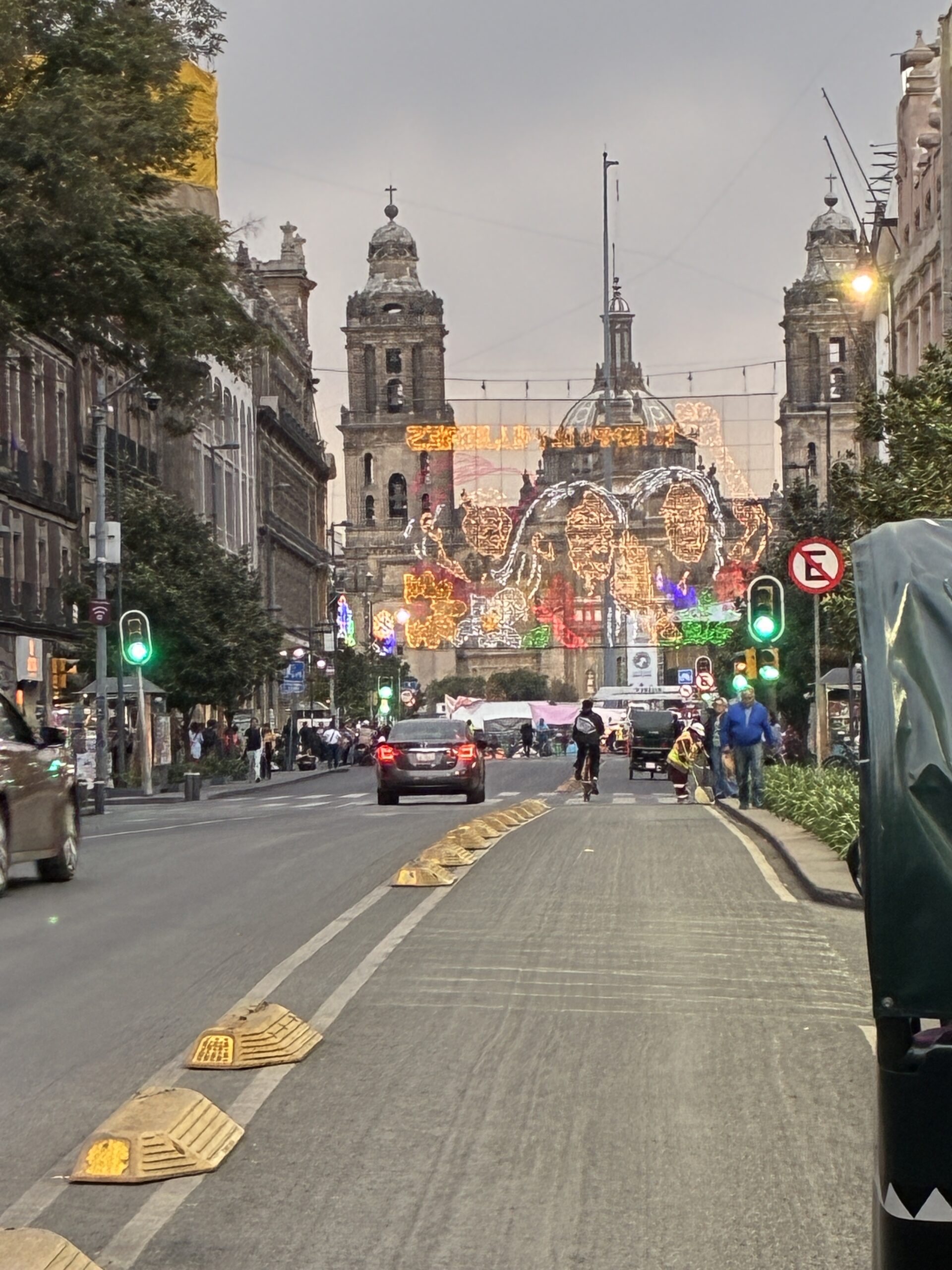


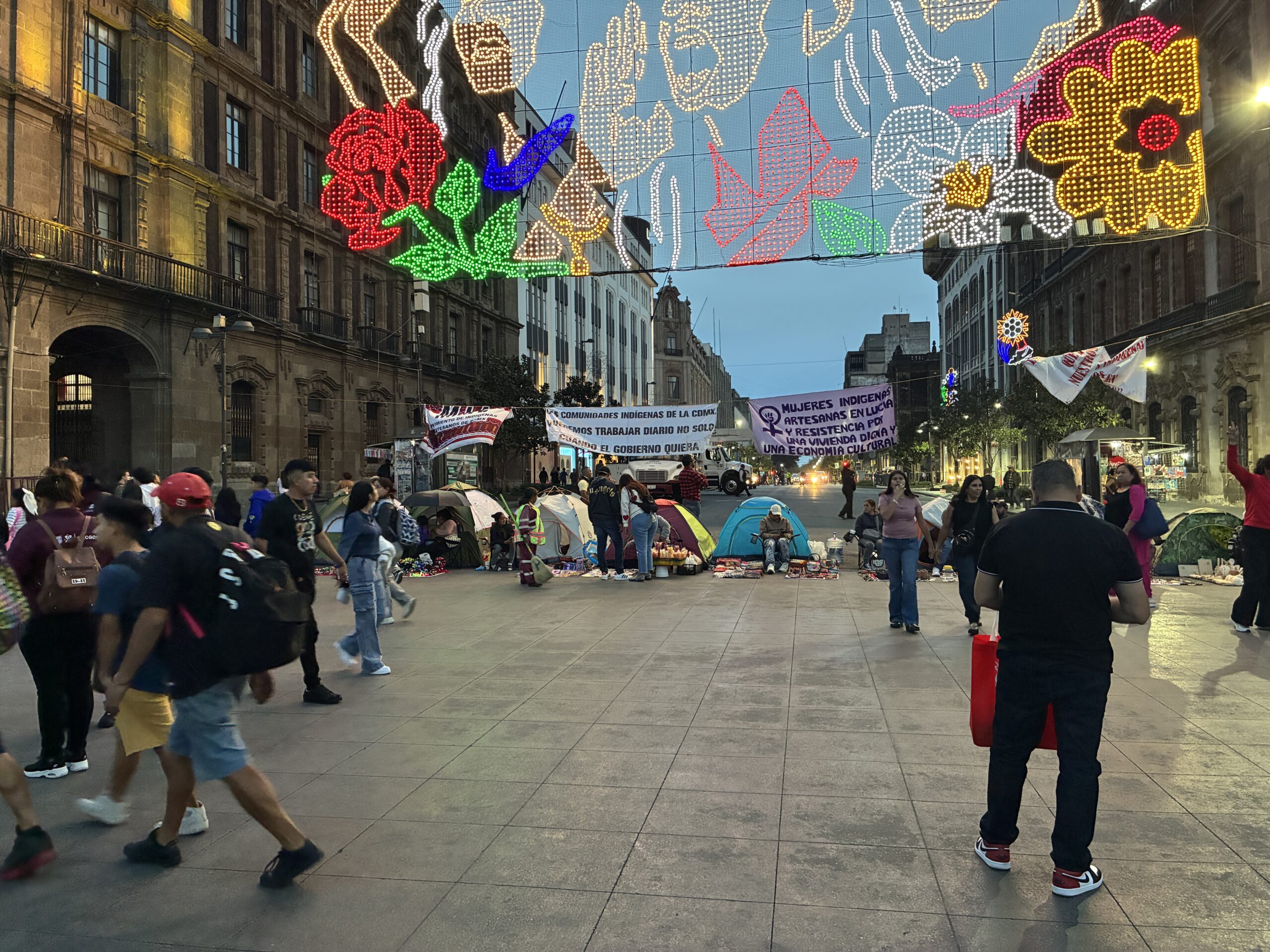


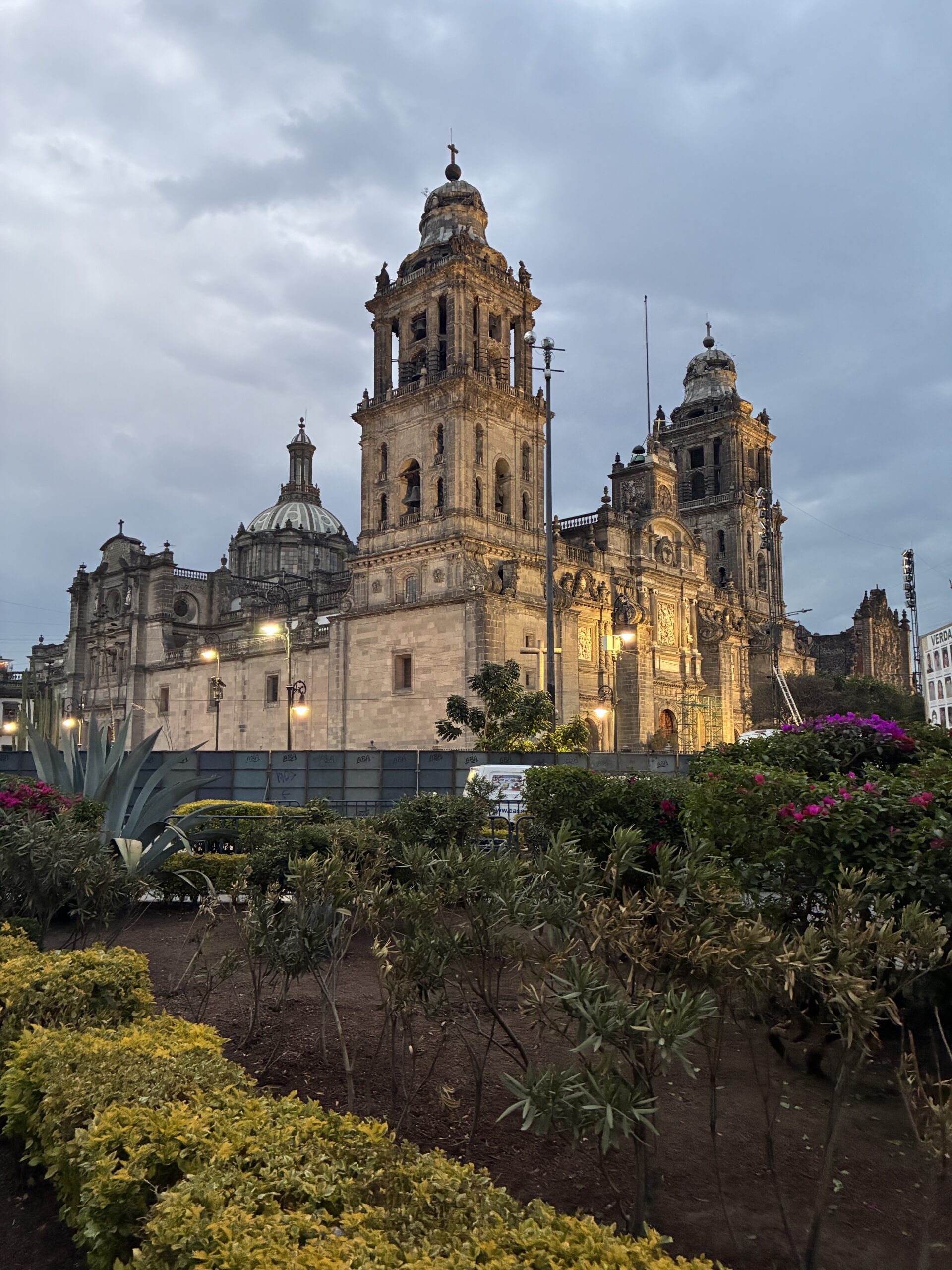

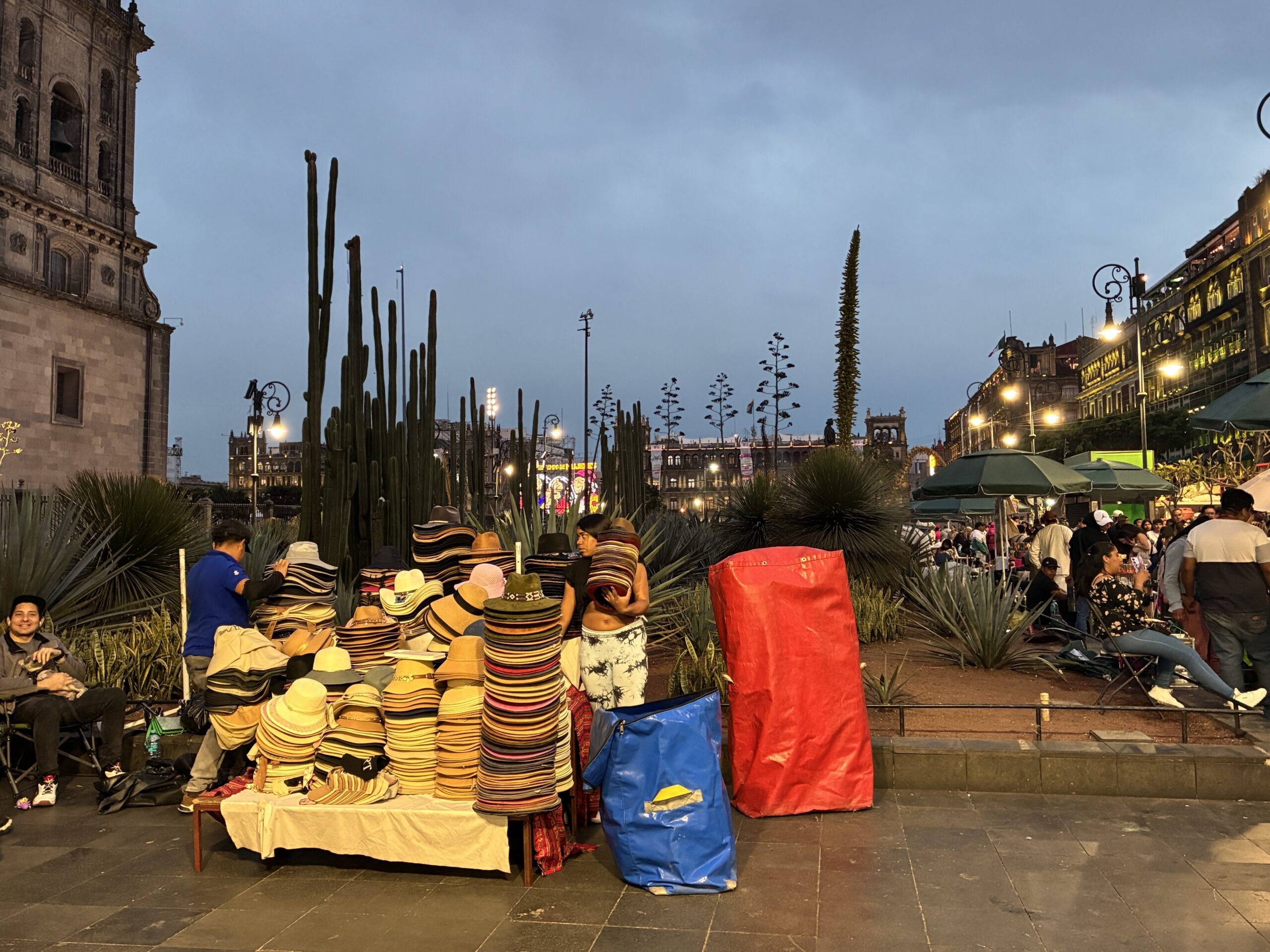

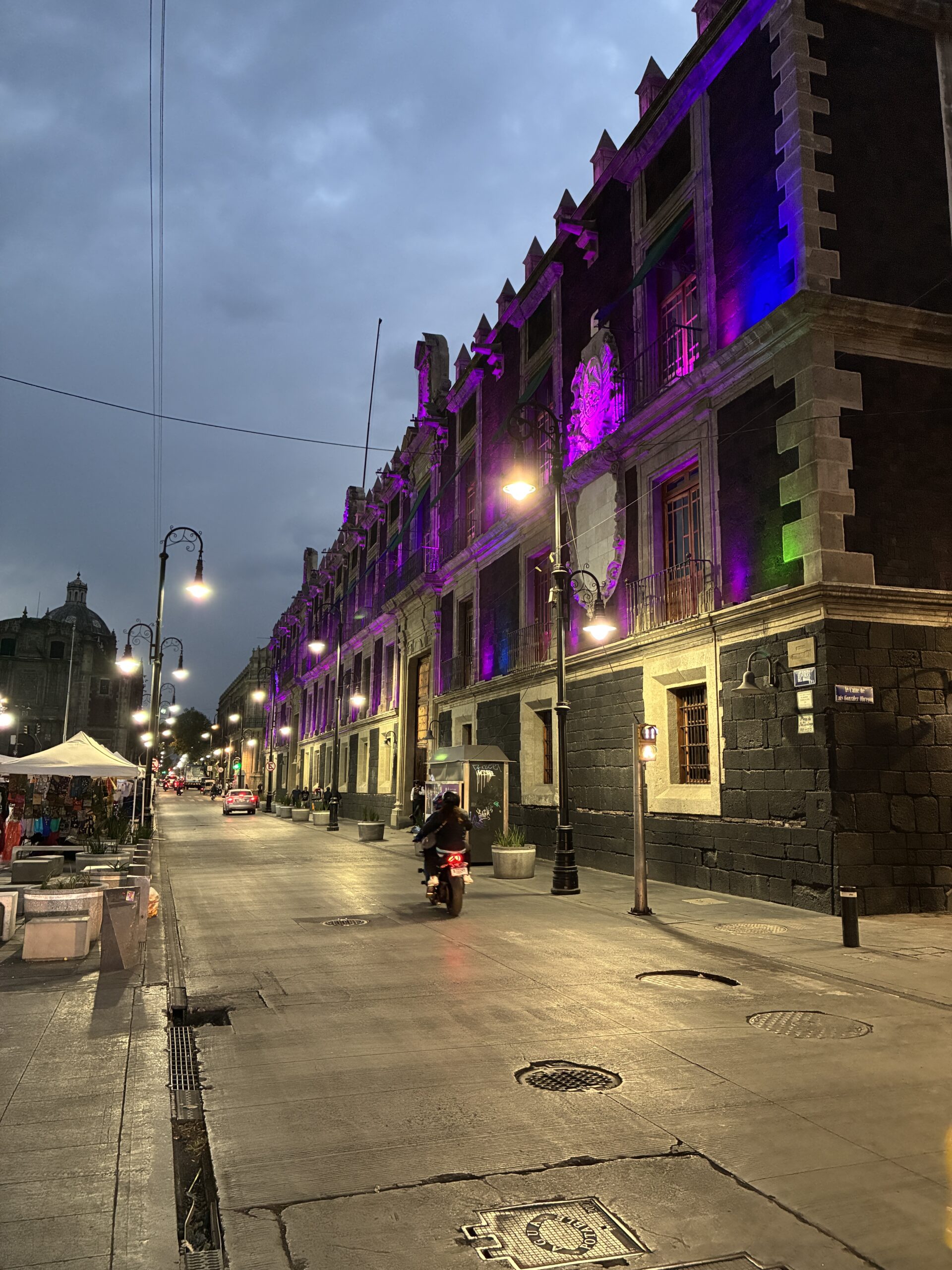
And then time to head back to Lagunilla, which I now knew was about a mile or less, and maybe a 20-25 minute, depending on which way I went, and on the way back passed through Plaza Garibaldi again. The look of the city as the dusk settles and the lights come on.





A good day, and a great introduction to Mexico City. although it isn’t actually my first time. But it may as well be. I was here in 1981, and traveled around the entire country, from coast–to-coast and in between, but I can’t remember a thing about it, and I have no photographs to remind me.
Tomorrow I have a guided walk, and following that the hop on bus, which I scoped out while at the Zócalo, so know just where to go. Now, some writing and then bed. Hasta mañana.