Monte Albán and the Tree of Tule.
Another great day! Today was my half day trip to Monte Albán (White Mountain), which was spectacular. Other than knowing it was pre-Columbian ruins, which I didn’t visit last time I was here, I didn’t have any kind of expectations about what I’d actually see, or its extent. That was good, because it allowed me to experience the ancient site without any pre-expectations, so it sort of “unfolded” before me… and it was spectacular.
I visited a pre-Columbian site when I was visited Chichén Itzá in 1981. But Chichén Itzá lies in the dense rainforests of the Yucatán peninsular, is flat and close to sea level, and is Mayan, plus the temples and other buildings there are more fully restored and intact. Monte Albán, on the other hand, was built on a flattened mountain top at about 6,300 feet, has steep and hilly slopes, terraces, and terrain, and is Zapotec, and the site is less excavated, with less fully restored buildings. Additionally, Monte Albán is way older than Chichén Itzá, which was founded 800 years later in 600 CE, compared to the founding of Monte Albán in 500 BCE.
The tour was yet again very good and our tour guide did a nice job. It would’ve been less expensive had I taken a taxi from the city, hired a guide at Monte Albán, and then a cab back, but the tour was all-in-one and a lot simpler for me, and not too expensive. The tour started at 8 am, and I enjoyed the walk to our meeting point near the Zócalo, walking along quiet and relatively empty streets and past stores not yet open.
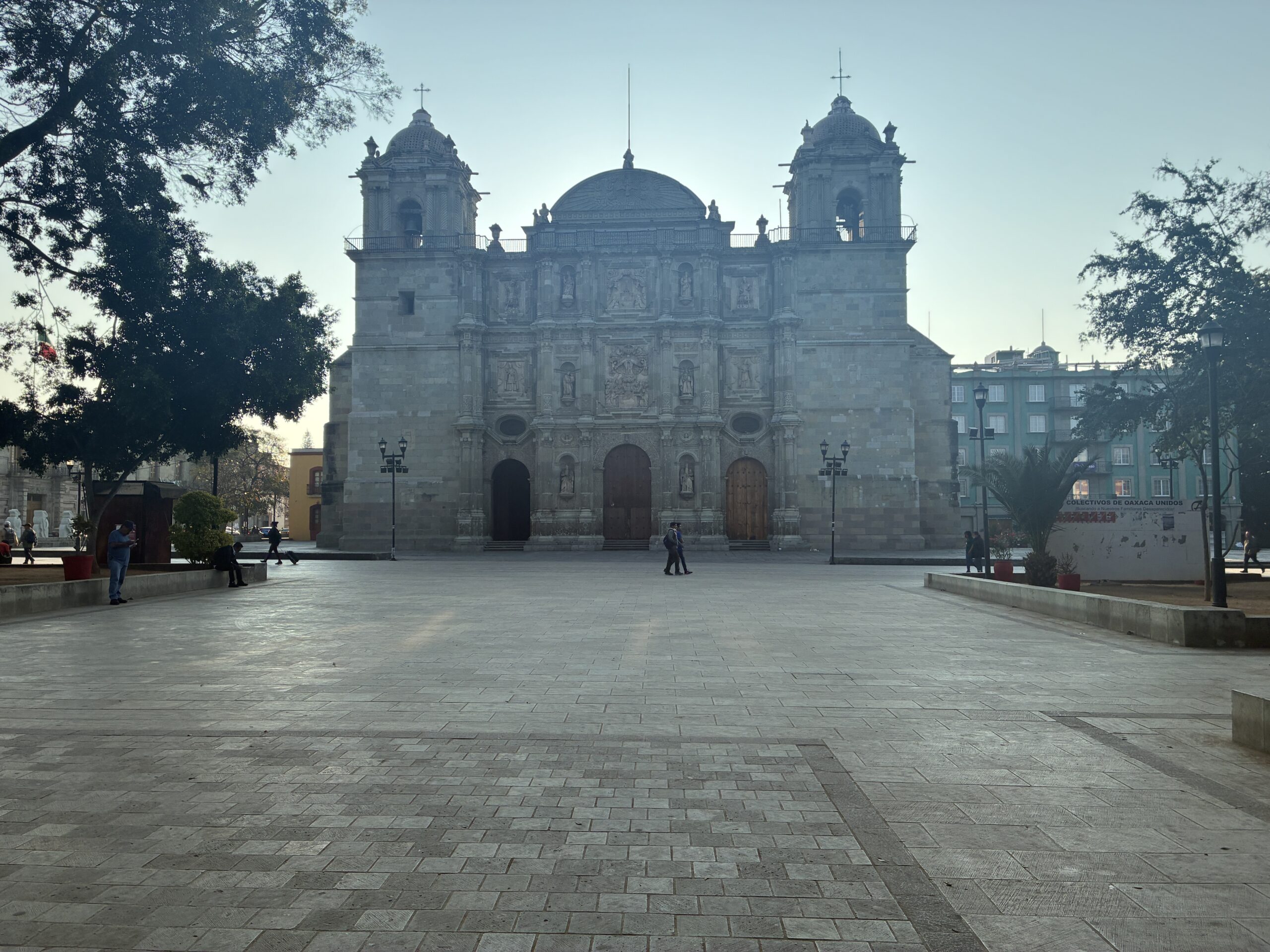
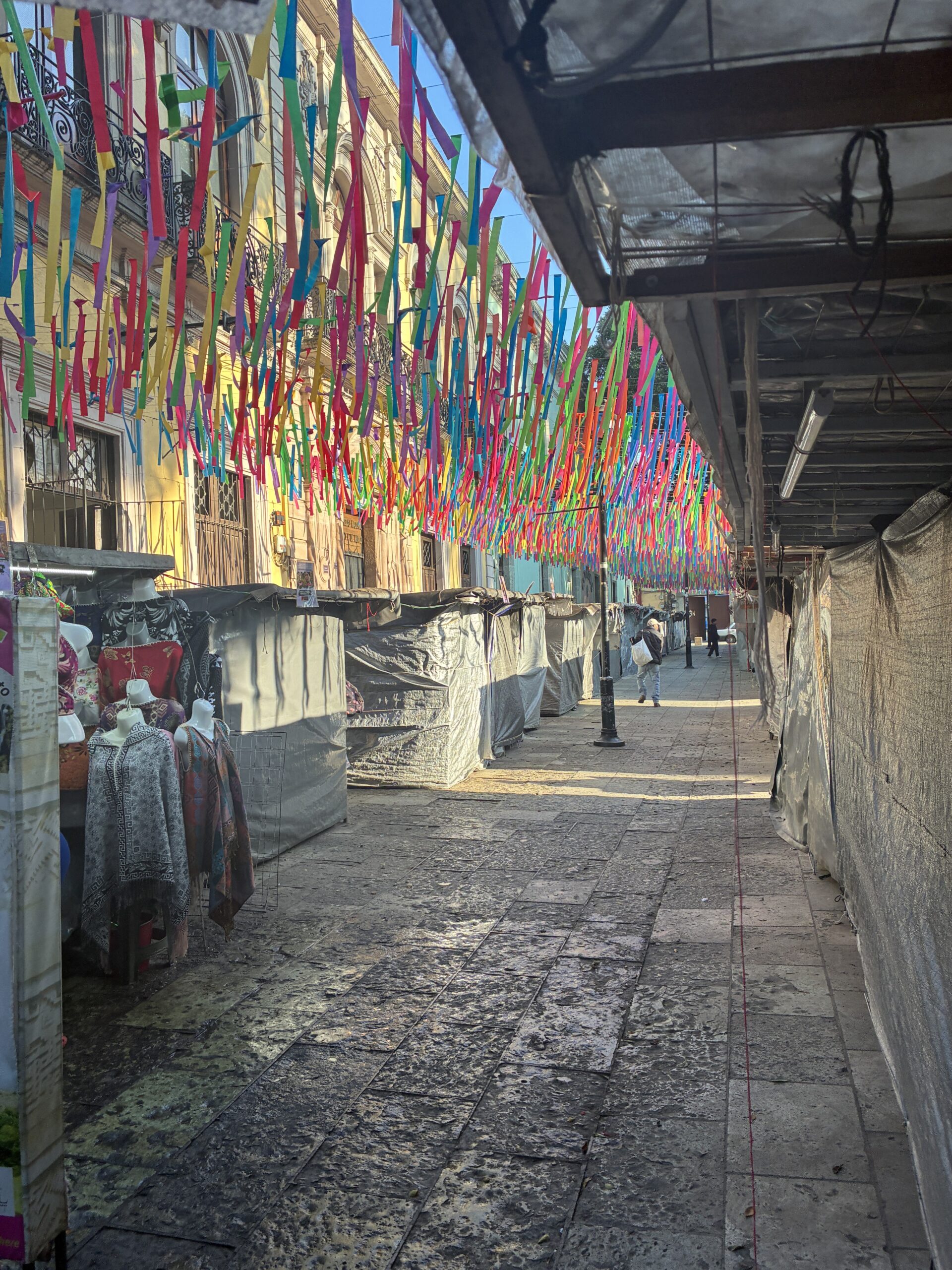

There were perhaps a dozen in our group, mostly English, Irish, or Australian. A few people had already met one another on previous tours in the last couple of days, and there was a great deal of interaction between members of our group. Other members of our group, that is, as I pretty much stayed out of it, and just listened. I like talking to people, and I’m happy to engage and get to know people, but nevertheless I’m not really seeking it out, and don’t go out of my way to make contact. But, listening in, especially on the bus, it was interesting how many of the younger people in the group, in their early-mid 20s, travel extensively, much as I did in my early 20s, but traveling further afield and spending two or three months in places like Thailand. Excellent.
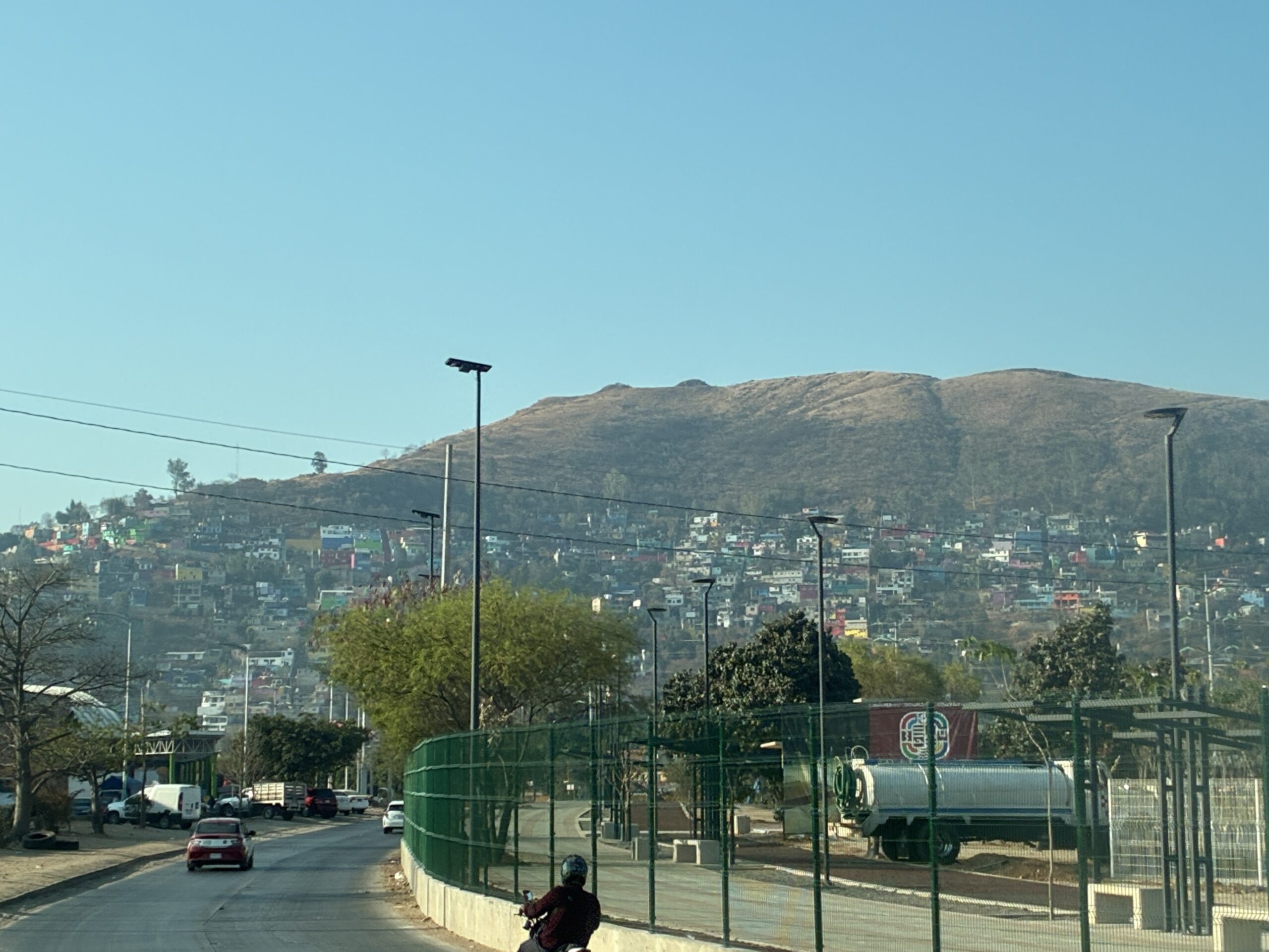
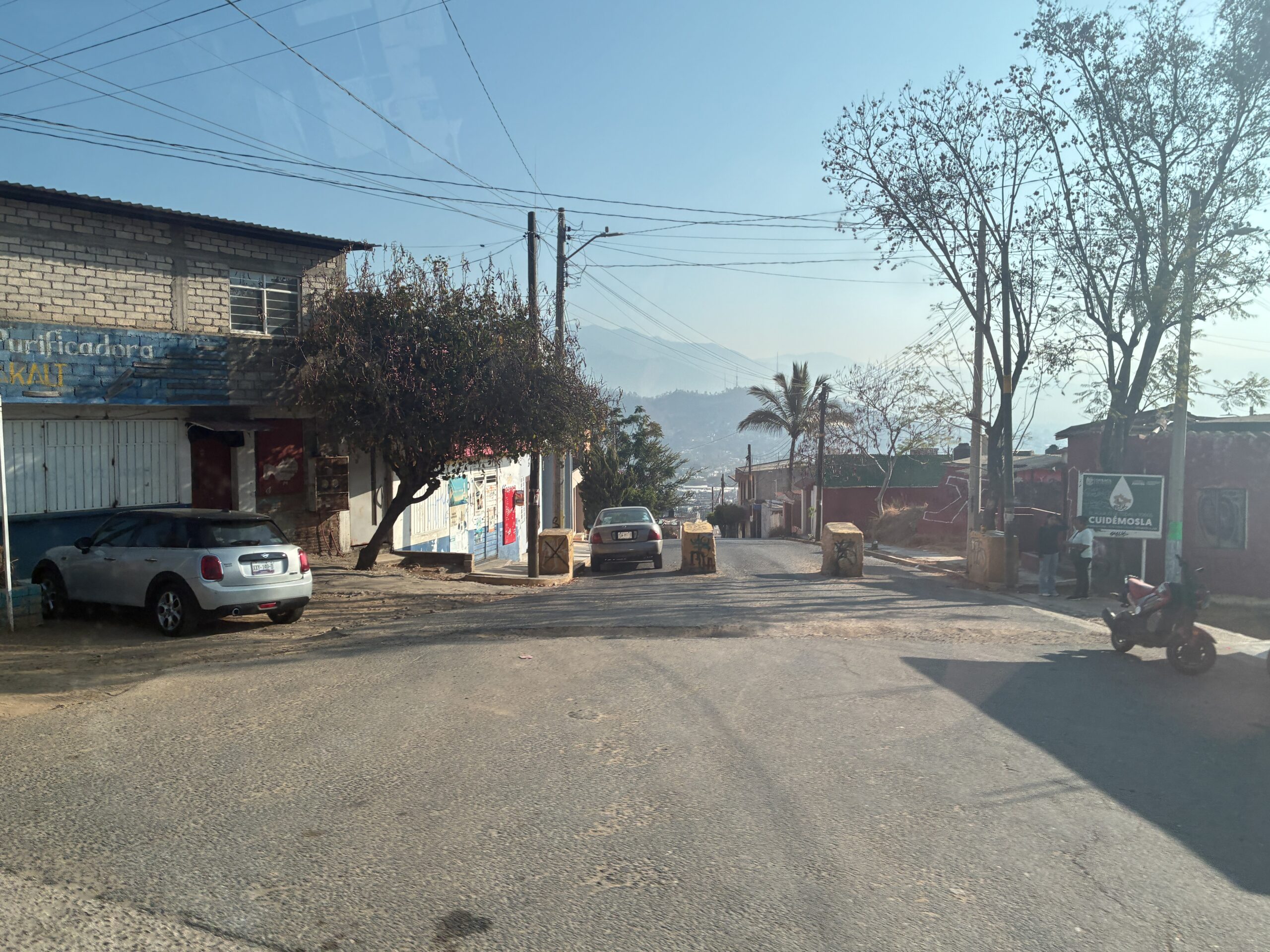
It was a nice drive to Monte Albán, only about 6 miles from the city center, but a 30-minute drive weaving along uphill and twisting mountain roads, and beautiful. I wish we could have stopped to visit the small villages along the way, and the views were lovely. I’d like to have taken photographs, and better see the area, but I did my best to take some shots from the van. The Oaxacan central valley is ringed by the Sierra Madres, with 360 degree views from Monte Albán, which rises 1000 feet from Oaxaca (which itself 5,000 feet above sea level), looking down at the city and valleys that surround it.




Our tour lasted close to two hours, after which we had an hour or so to wander around the site on our own, which is exactly what I did, taking photo after photo after photo of this incredible place, before a visit to the small museum. The place is really incredible, with incredible view of the surrounding valleys below, ringed by the Sierra Madres.
When we first reached the main ceremonial plaza of the ancient city, a large flat area surrounded by temples, tombs, and other buildings (there are other multiple other smaller plazas in the city), it was right out of a movie. Really amazing. All buildings in the city are aligned along the same axis, facing the same direction, except one building, much smaller and shaped like an arrow, presumed by archaeologists to be an astronomical tool for agricultural and seasonal purposes. Much of the site is still unexplored, though, with buildings, art, tools, everyday artifacts, and jewelry, gold, and other riches buried in the buildings and tombs beneath the hills and mounds not yet been excavated. What is visible today is only part of Monte Albán, which at its height had a population somewhere between 30,000-40,000 people, perhaps more. The main ceremonial plaza and the largest pyramids were excavated and restored starting in the 193Os, but hundreds of terraces, mounds, and terraces are still unexcavated. It is certain that with more excavation the visible city will grow larger.


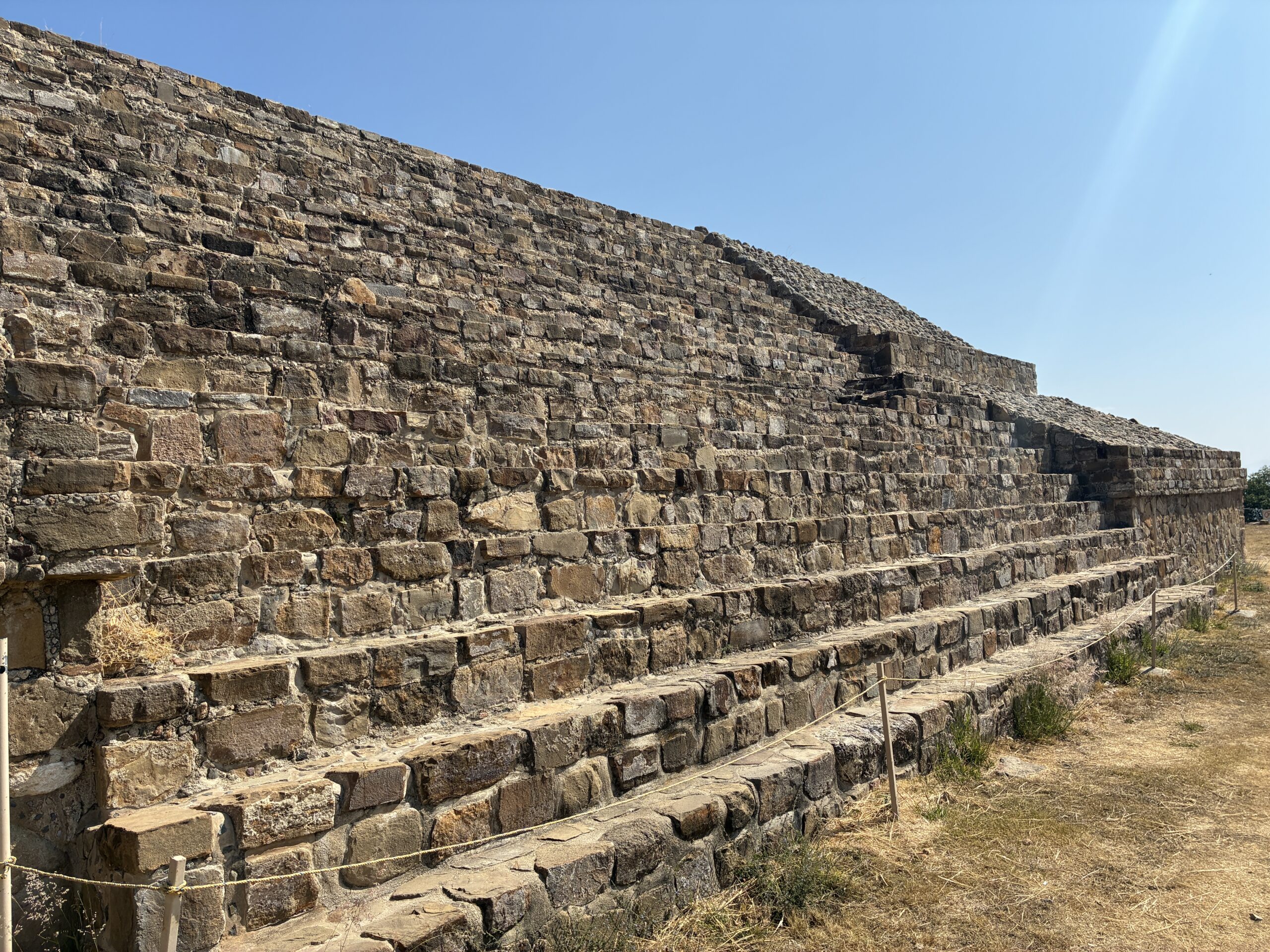


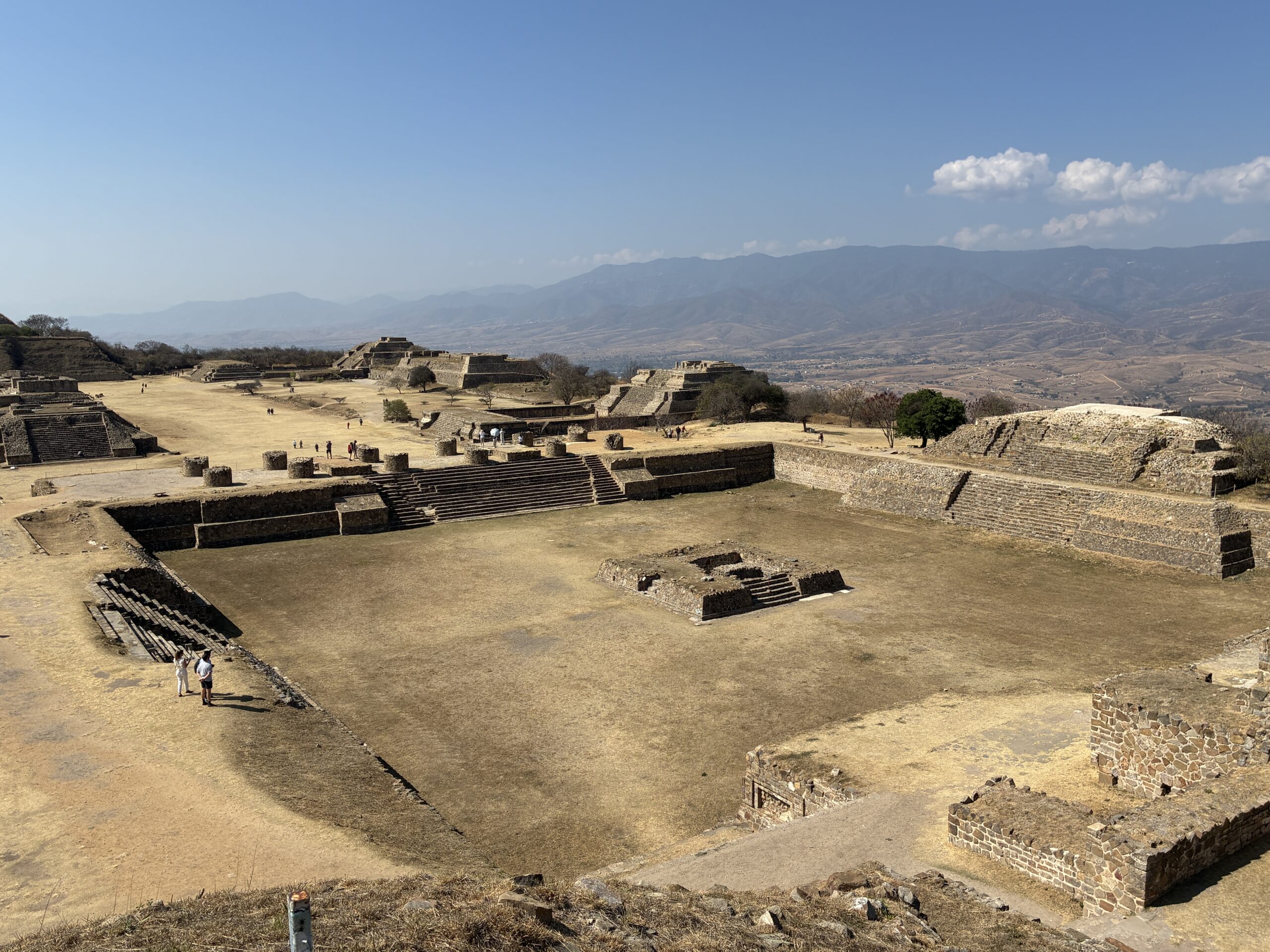


Monte Albán dates back about 2,500 years, founded by the Zapotec around 500 BCE, and built on a mountain top flattened by them over one to two hundred years as they built, but construction and expansion continued for another seven hundred plus years. After about 1200 years, Monte Albán started to decline, between 700–800 CE, as its population dropped and political power shifted to other indigenous cultures in the surrounding valley. Hundreds of years later, between 1200 and 1400 CE, the Mixtec, then in ascension in the valley, began to reuse tombs at Monte Albán, placing gold, turquoise, and fine jewelry into the tombs as part of burial rites. These were discovered within the tombs when excavations began in the 1930s, led by Mexican archaeologist Alfonso Caso. Although Monte Albán was already known, Caso discovered its central importance and established it had been the ancient capital of the Zapotec civilization for centuries.

The city had different districts, some for the priests and other elite classes and others for the ordinary citizens, with temples, tombs, and other buildings surrounding each plaza, and homes built near and around the plazas. There were no burial grounds, and the elites were buried in ornate tombs, which were often then sealed, whereas among the ordinary citizens the deceased were interned below the floors of homes, with stairs leading down to them, or in shallow pits or terraces near their homes.
Excavated buildings at Monte Albán are numbered, and when excavated in 1932, Tomb 7 was discovered full of gold, turquoise, jade, and carved bones. These were actually Mixtec, establishing that centuries after Monte Albán’s decline, tombs were reused by the Mixtecs.


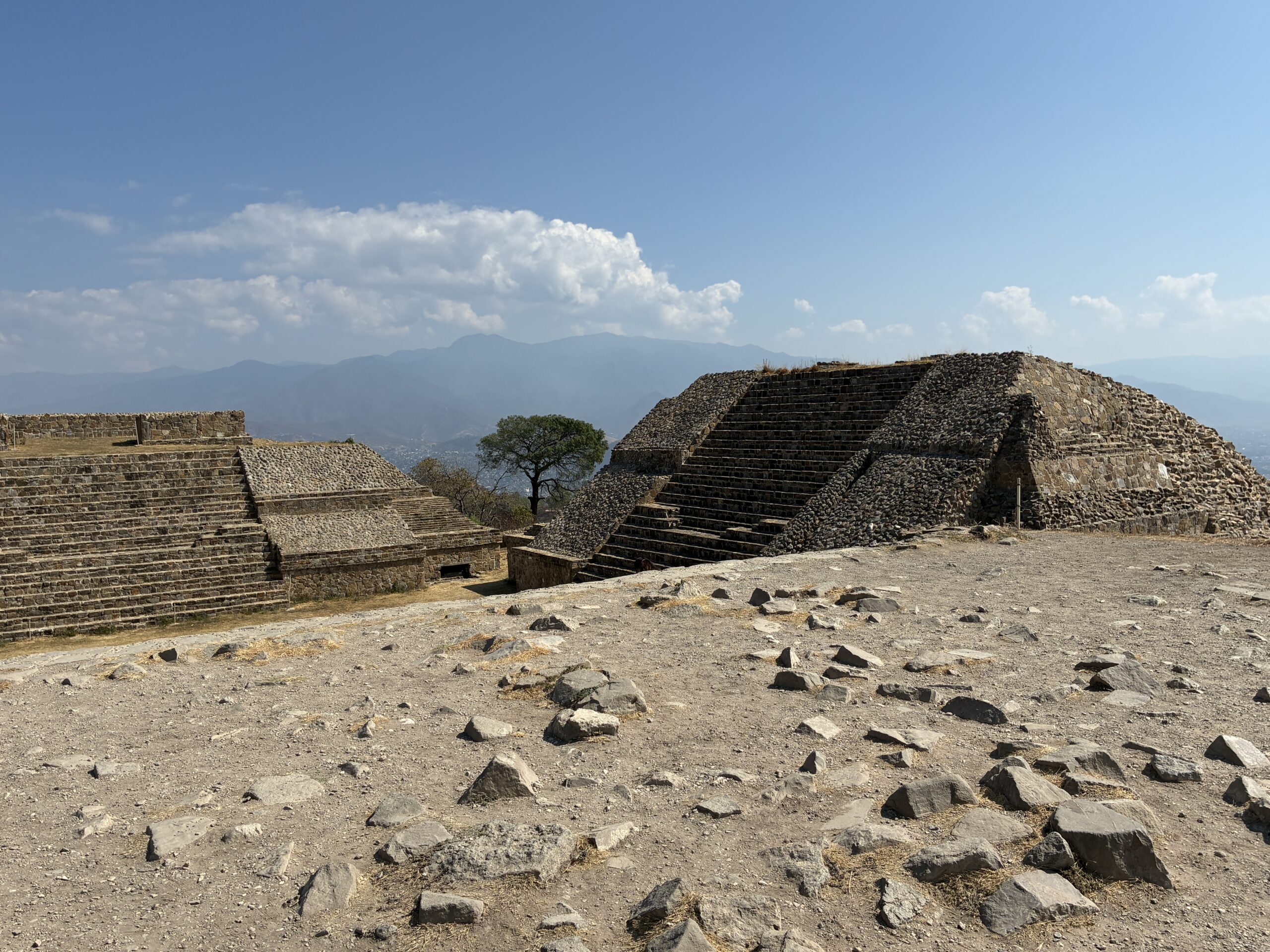


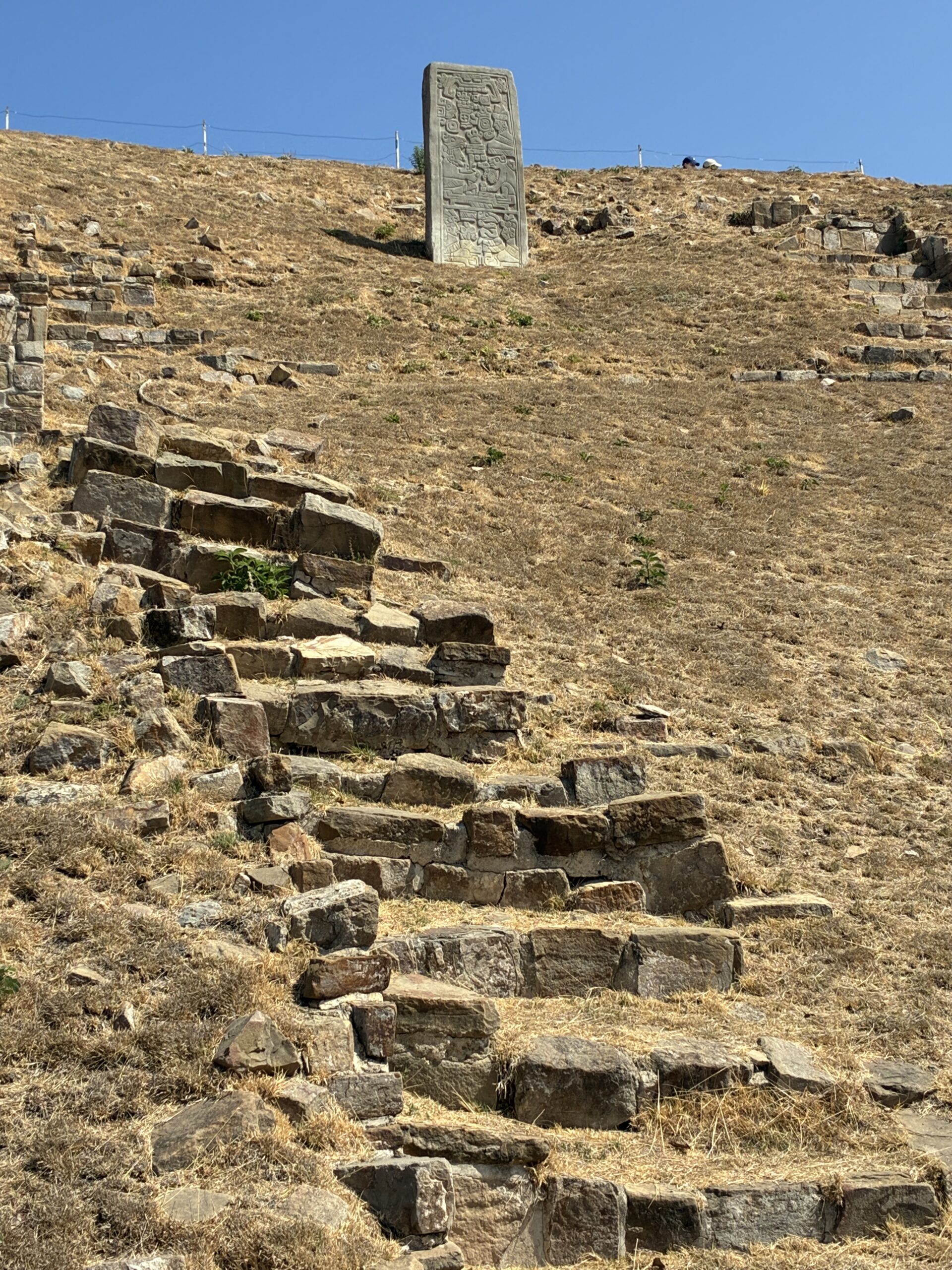
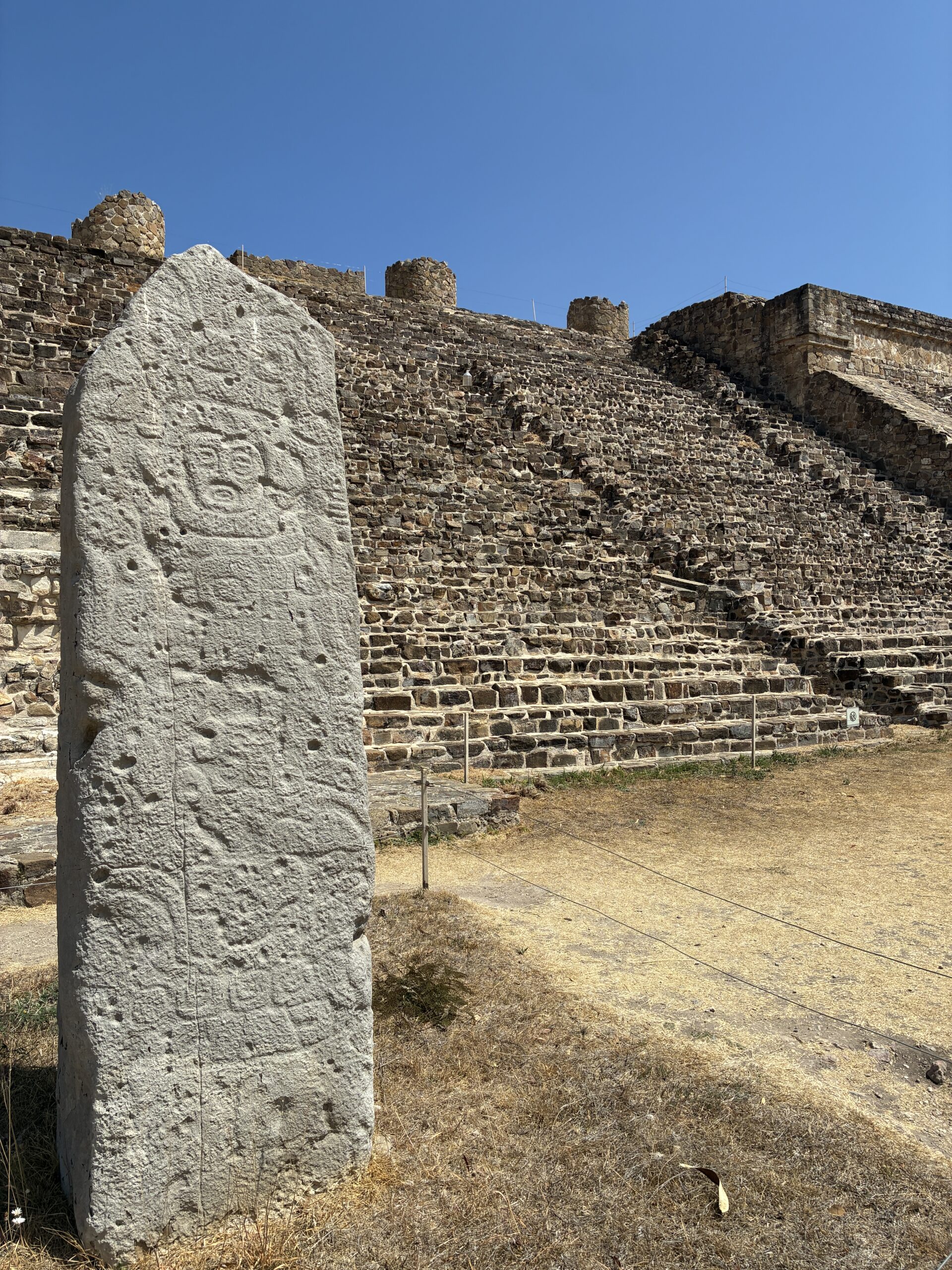
Sports were popular, and important, as part of cultural life in Monte Albán, and especially a ball game played with a ball made from natural rubber, and there are at least three ball courts in Monte Albán. Similar ball games were played by other ancient Mesoamerican cultures as well, and, as reconstructed by archeologists, the ancient ballgame has been revived and played today as Ulama.

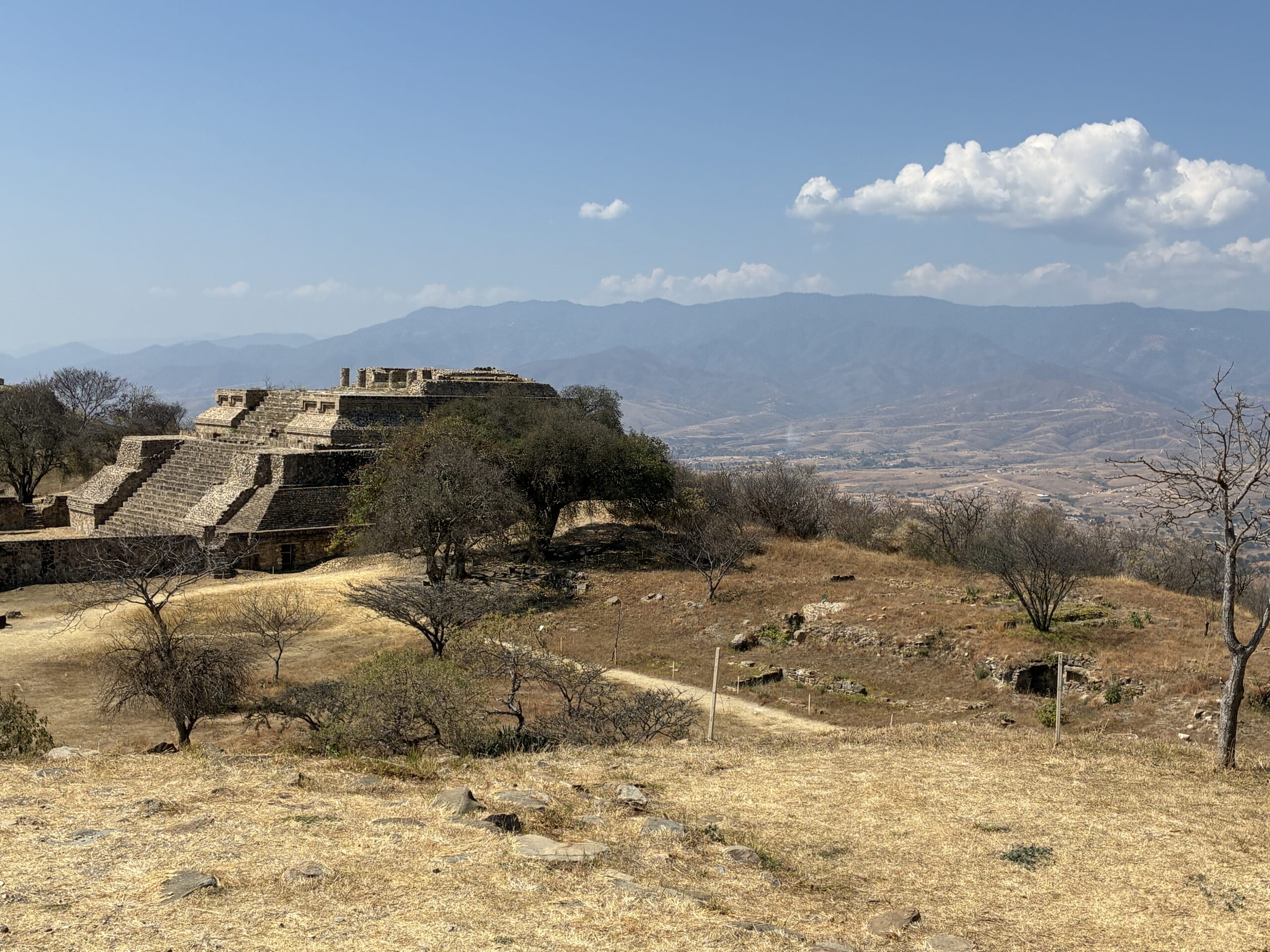

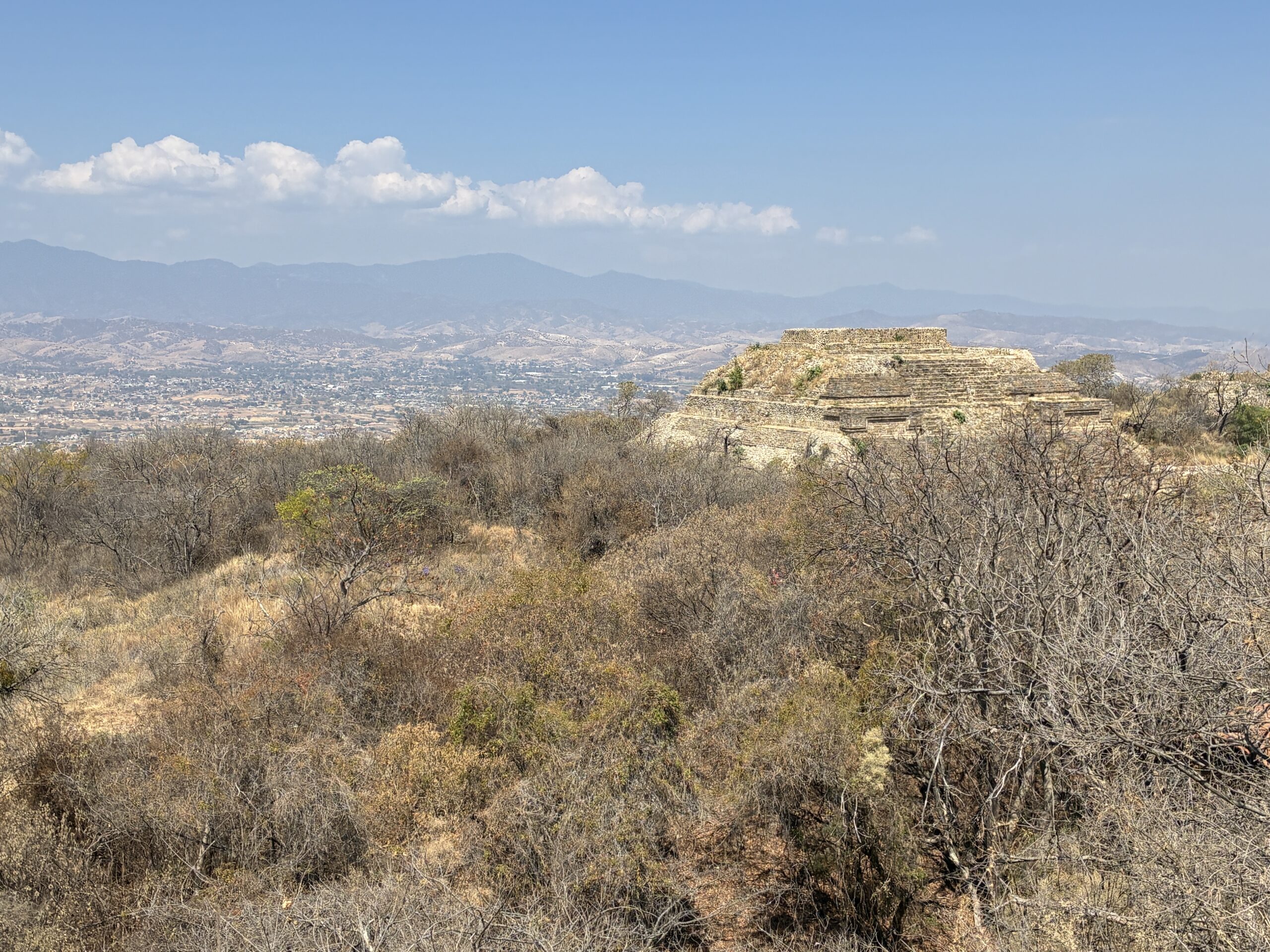
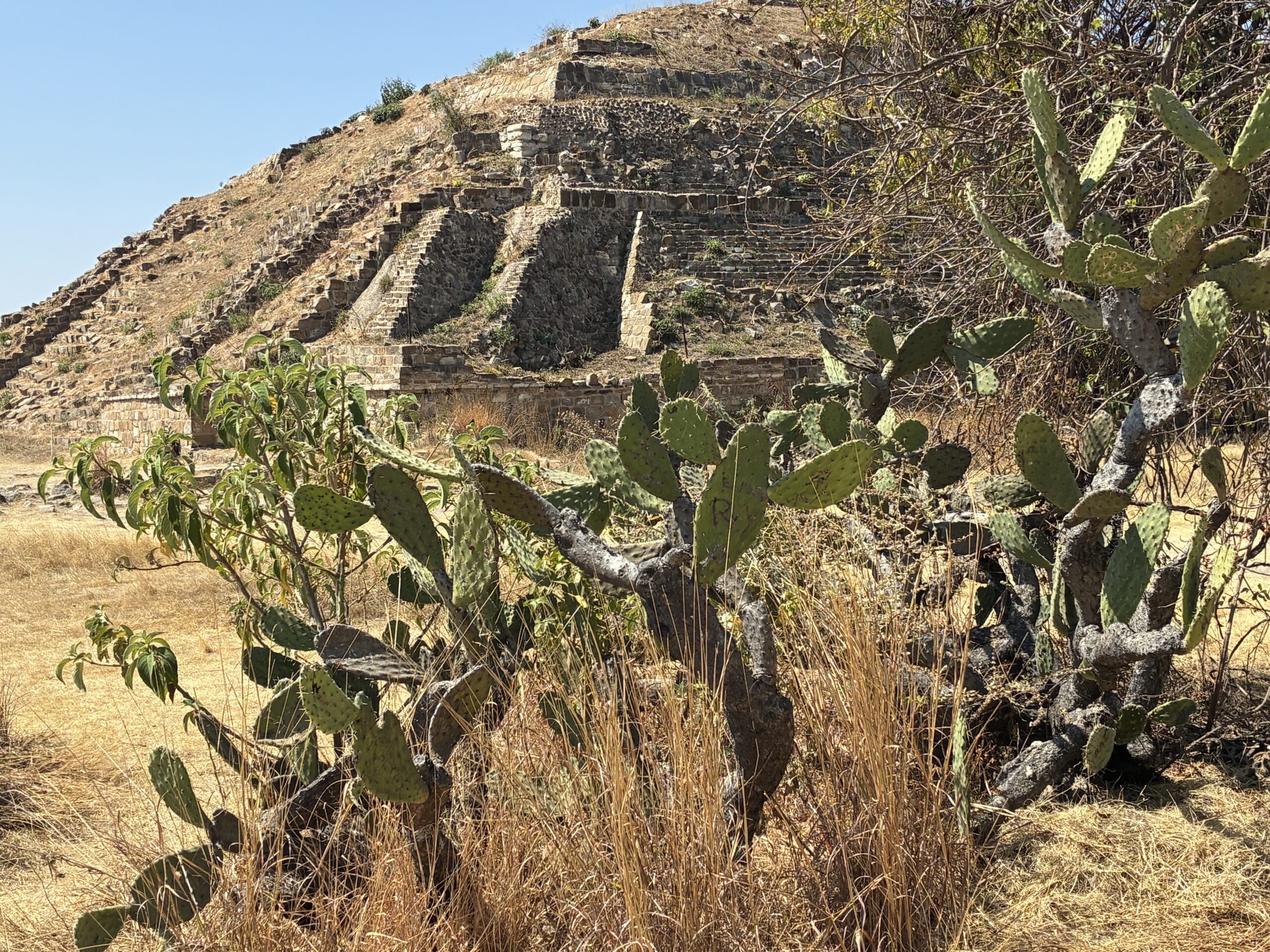
Around noon our group regathered by our tour van and we headed back into the city, and it was pretty hot by then, especially on the mountain top where there’s no shade.

Once back in town, I took a taxi to Santa Maria del Tule. Only about 7 miles east of Oaxaca, it took about 30 minutes to actually get there because of traffic leaving the city and after that cleared, generally slow roads. The cab driver definitely overpriced me, not by too much, about five dollars, and that was largely because it took me a while to translate the price he gave me, which I figured out only after agreeing to it (which I initially had misunderstood). Still, it was probably an hour round-trip for the driver. Coming back though, I was ready and paid less (and that taxi driver gave me a more realistic price).
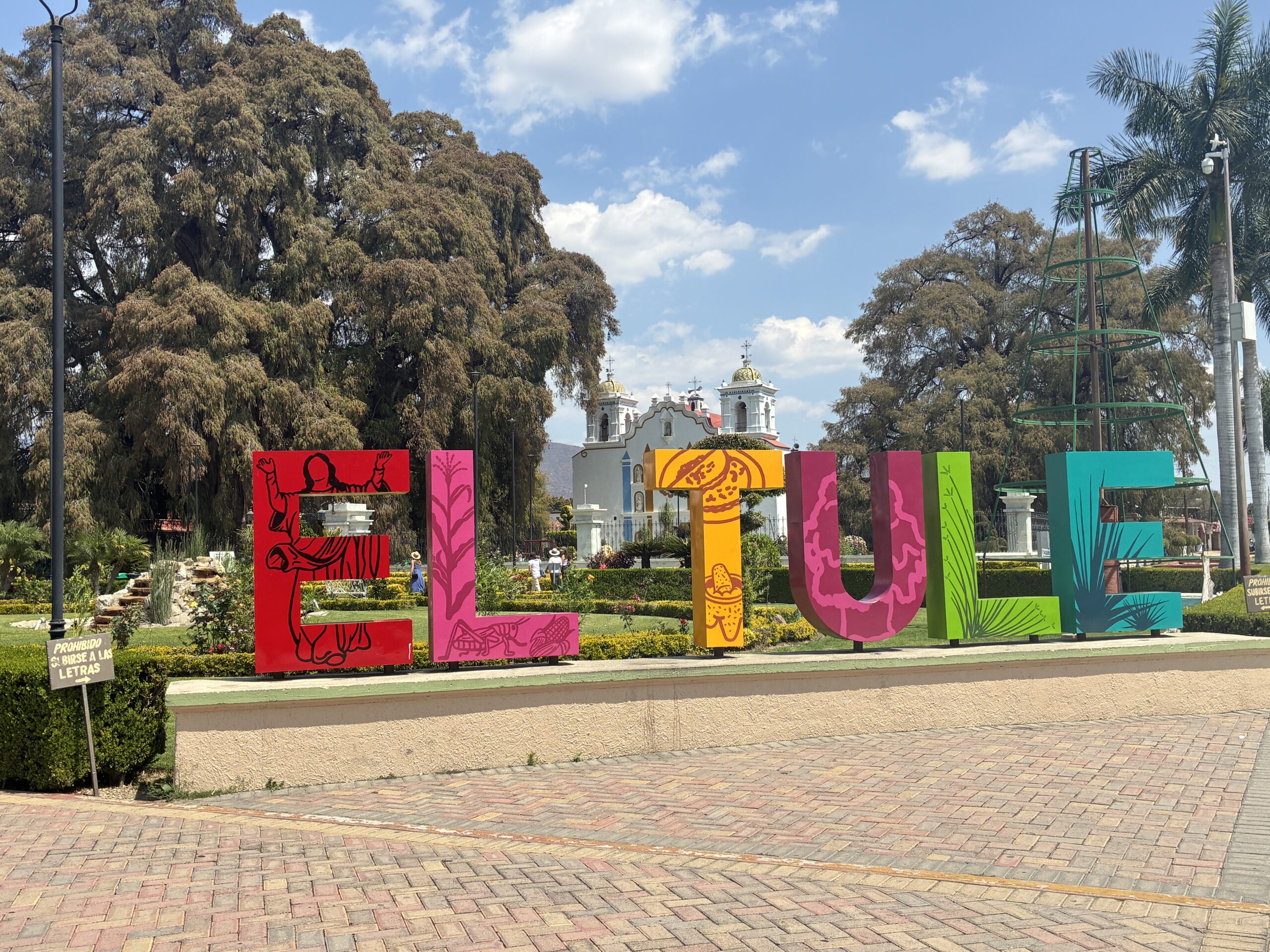
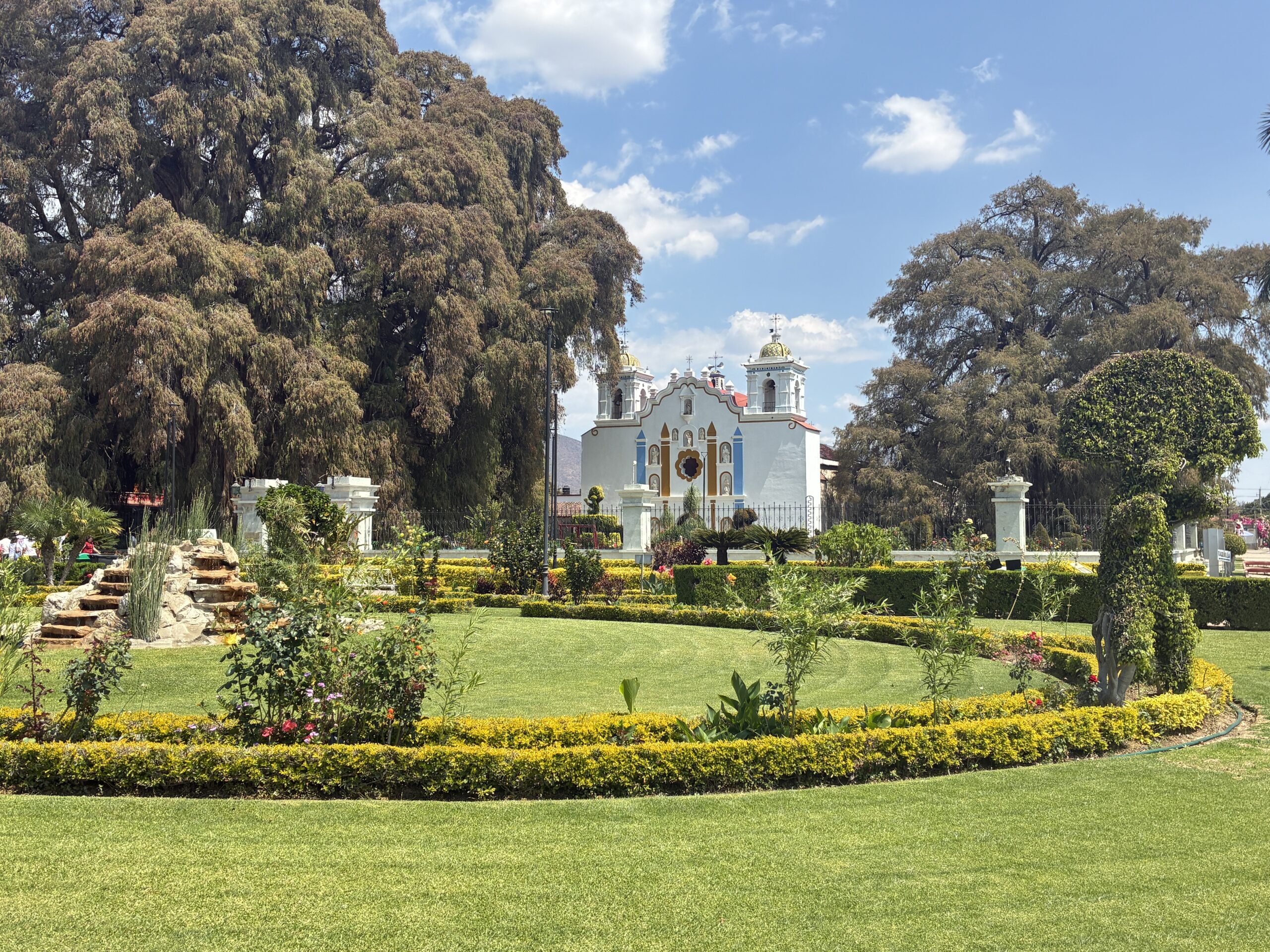
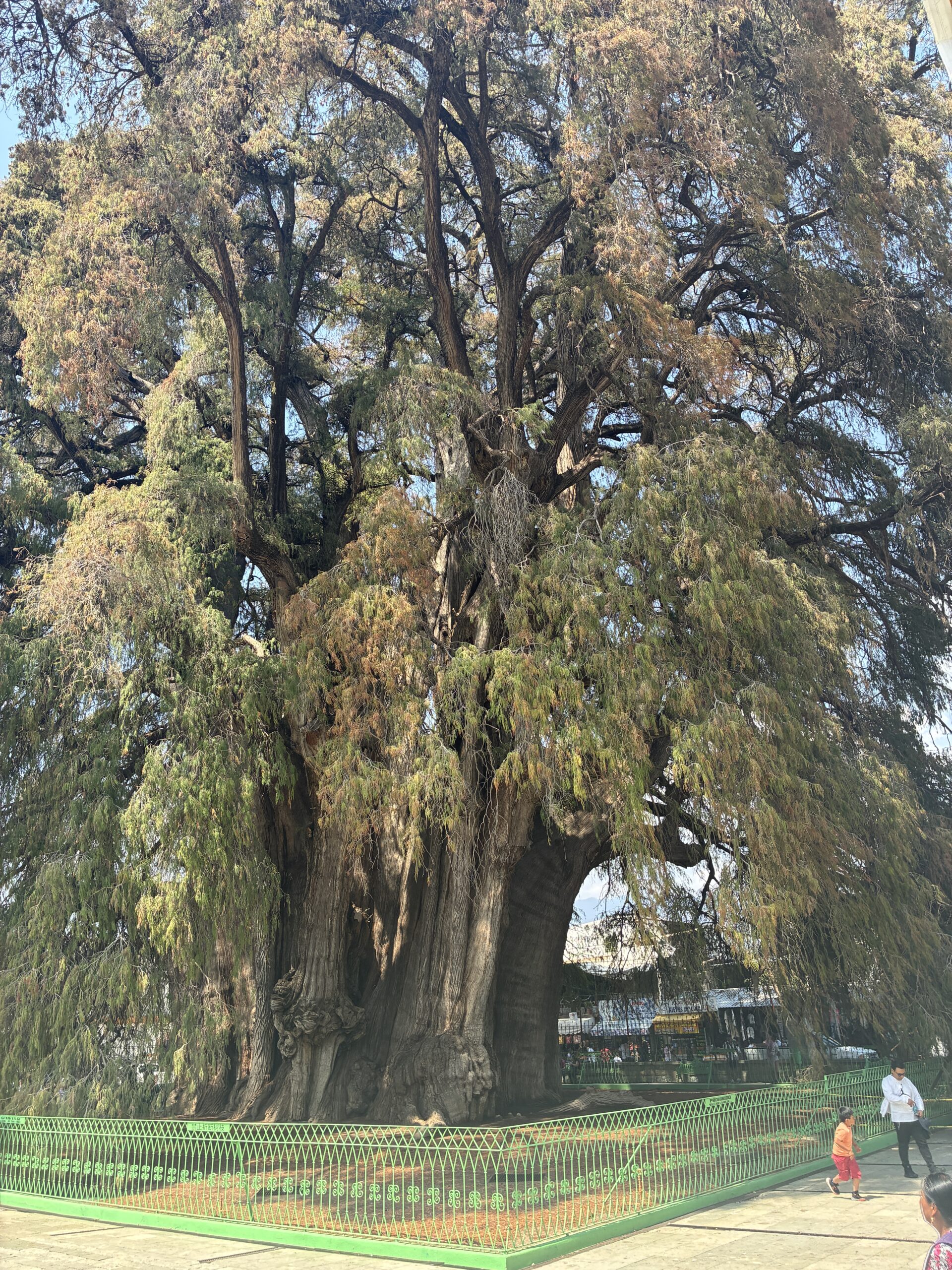
I wanted to see Árbol del Tule, the Tree of Tule. an enormous (and I do mean enormous) Montezuma cypress plated in the churchyard of Santa María del Tule. The tree has the largest trunk circumference of any tree in the world, and is a national natural monument. When first discovered, it was thought to be a grove of entangled trees, but it is not. It is a single tree, thoughts to be 2,000–3,000 years old, with a circumference of about 138 feet. It’s big. And old. It’s so big that it was difficult to get a photograph that really captures its enormity.


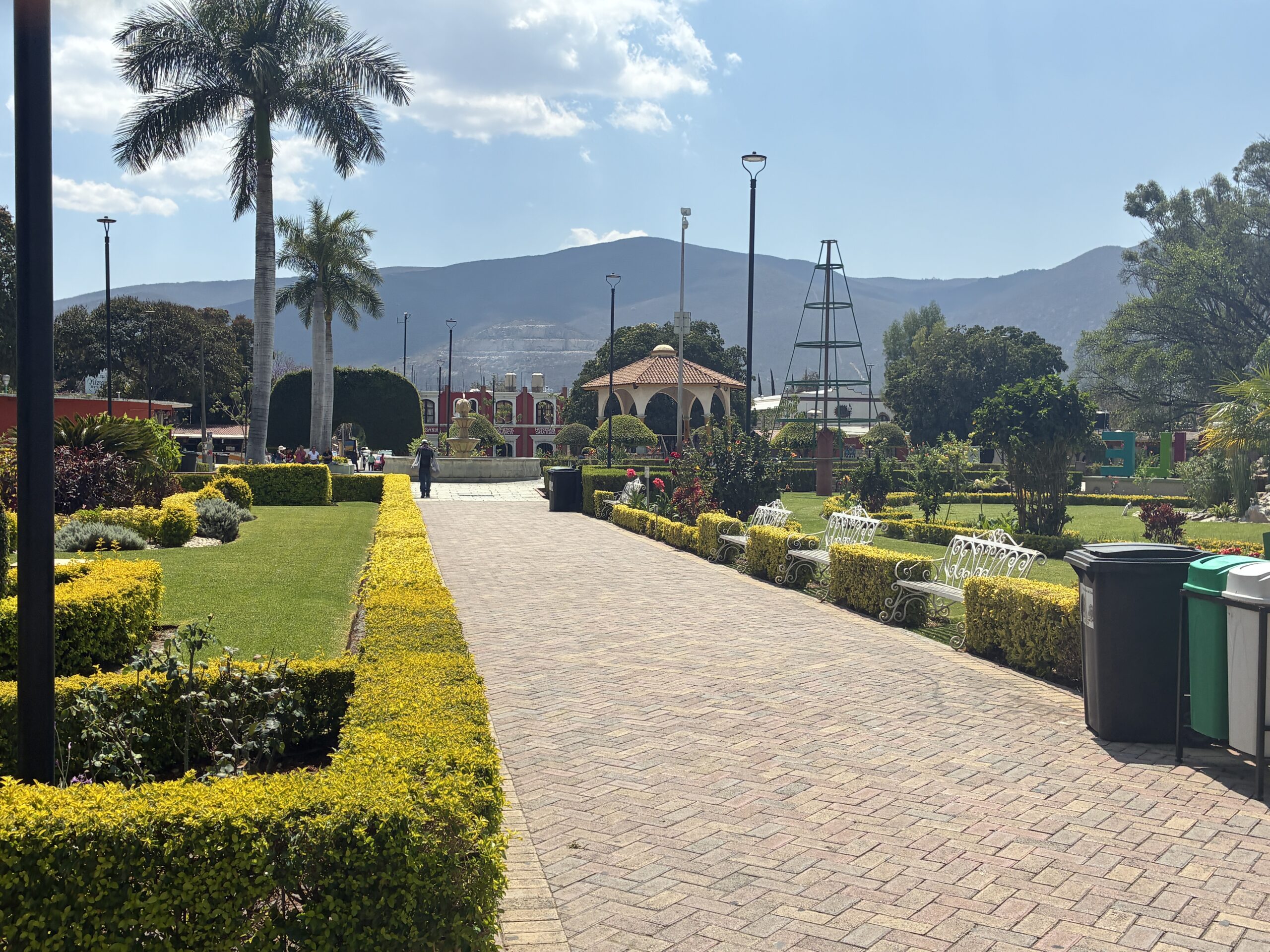
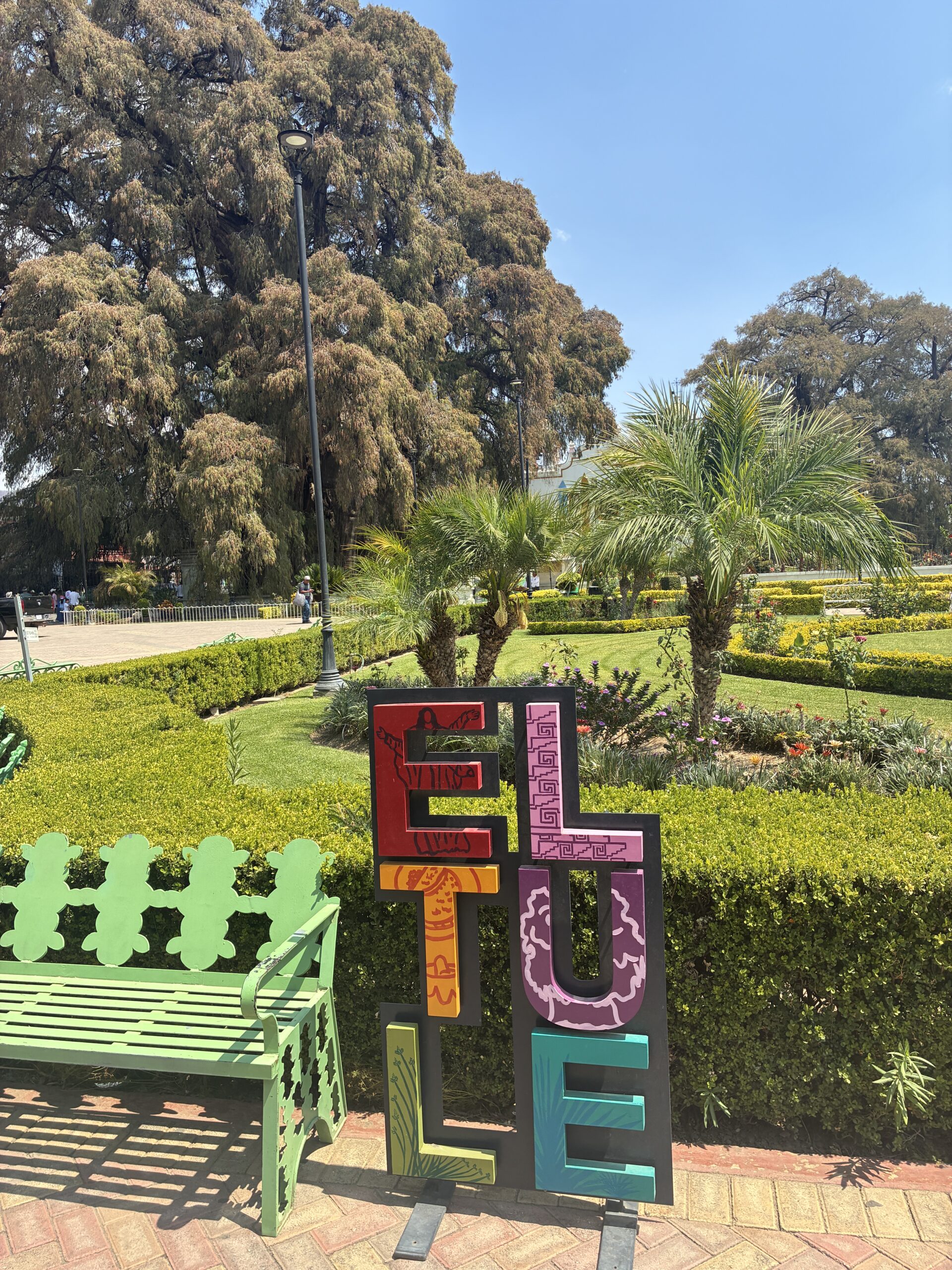
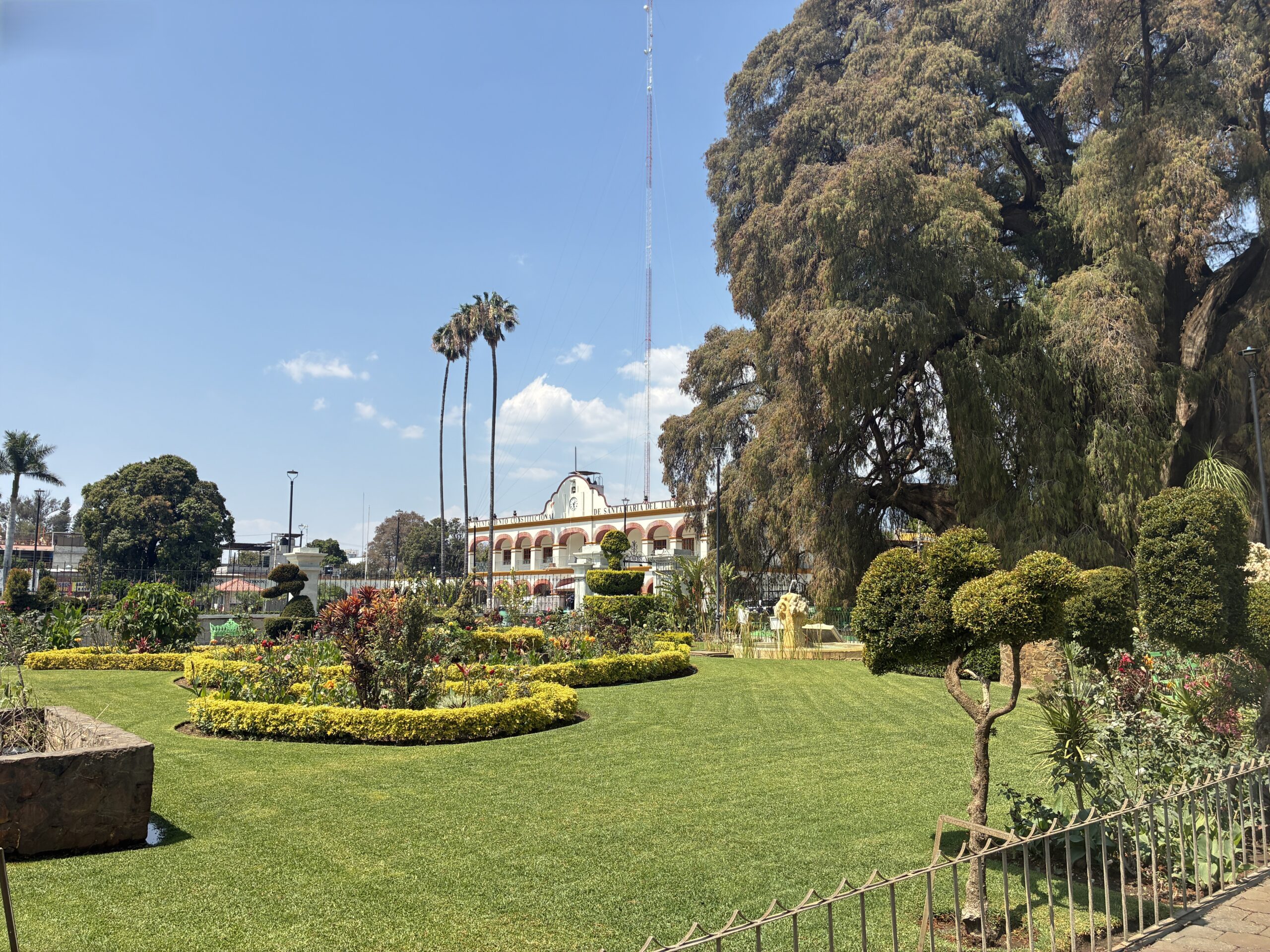
The main plaza and gardens are really lovely, with topiary gardens and beautiful surroundings. After I walked around (and around and around) the tree, I took a walk through town. The small back streets are pleasant, but nothing out of the ordinary, and I really enjoyed a very thirst quenching mango popsicle as I walked in the beautiful weather.




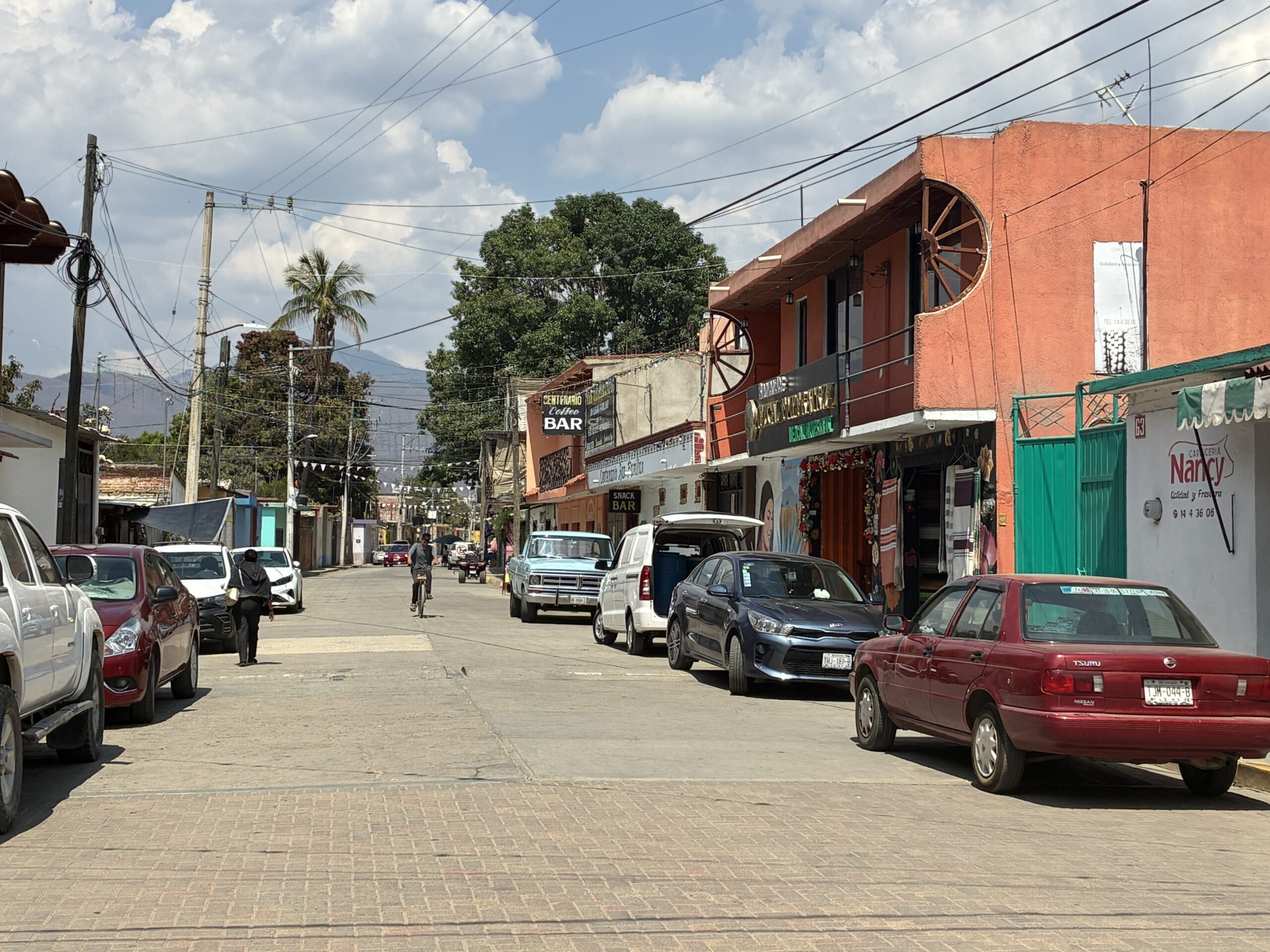
Then, time to head back to the city. This time I had the cab thing figured out, so not only asked the price first, but actually understood what the driver said. This cab was not like the new model yellow taxis found in Oaxaca, but the red and white cabs that are found in the smaller surrounding towns, and often beat up and chugging along. This one was no exception, and my driver, Eduardo, had to keep the car revved up each time he stopped at traffic lights or frequently restart it. Like so many of the locals I’ve met, Eduardo was friendly and interested in hearing about me, but my Spanish is too poor (way too poor), although better than a week ago. We were able to converse, but just a little (and at one point I mistakenly said “pollo,” instead of “pero,” or to put it another way, I said “chicken” when I meant to say “but”). I’ll keep trying, and especially as I’ll be on my ownsome next week, with no Rachel to translate for me.
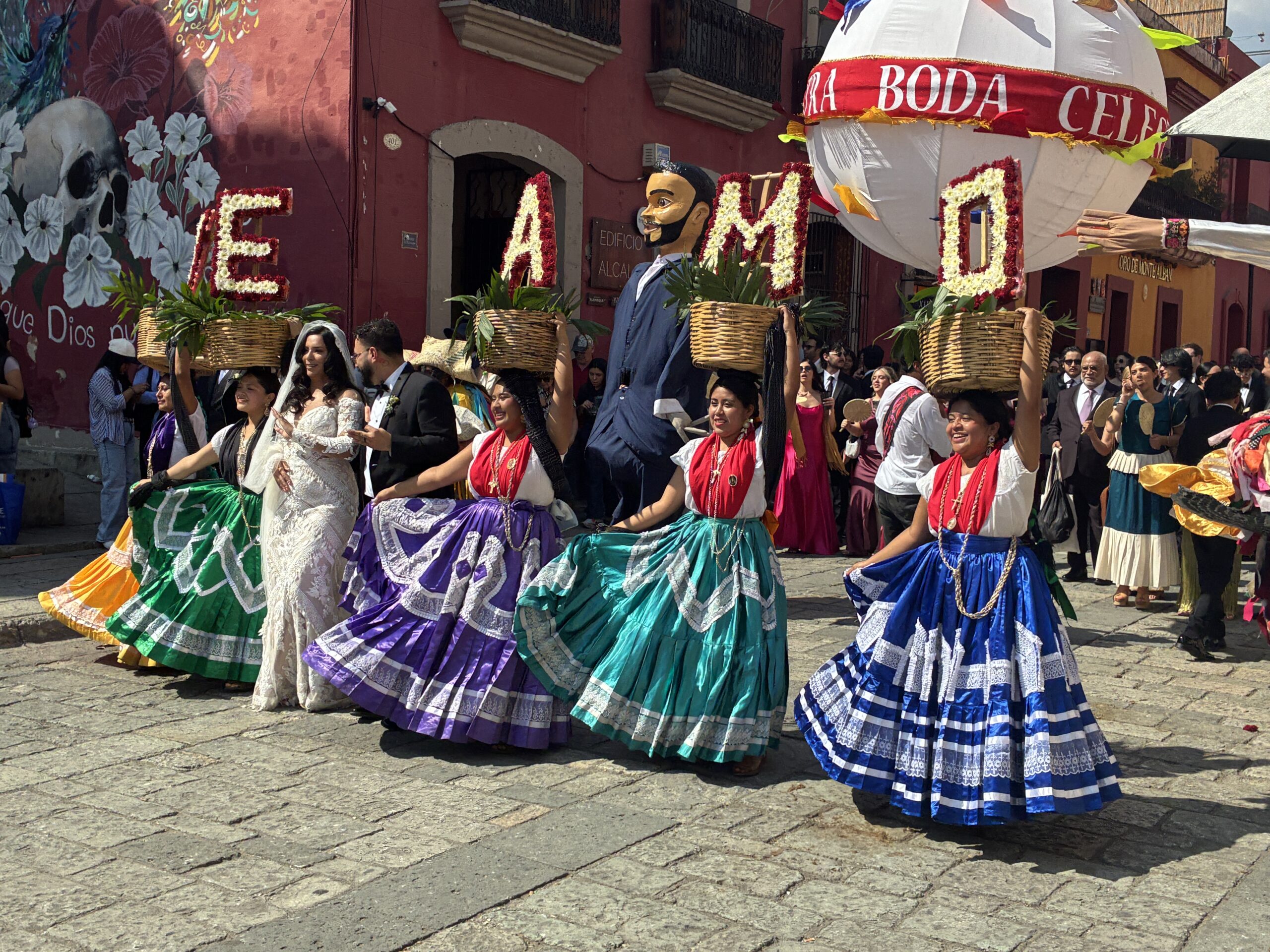
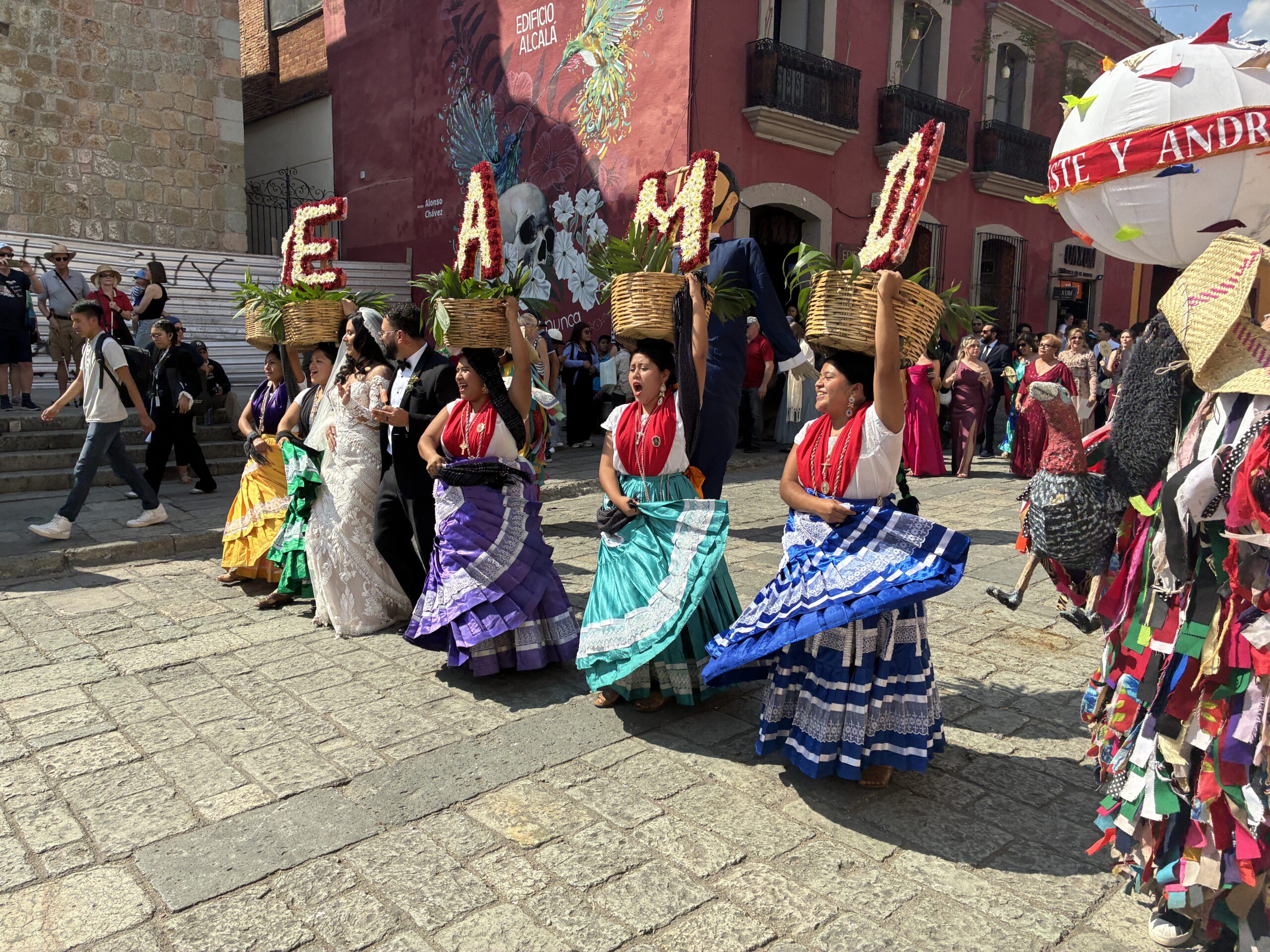
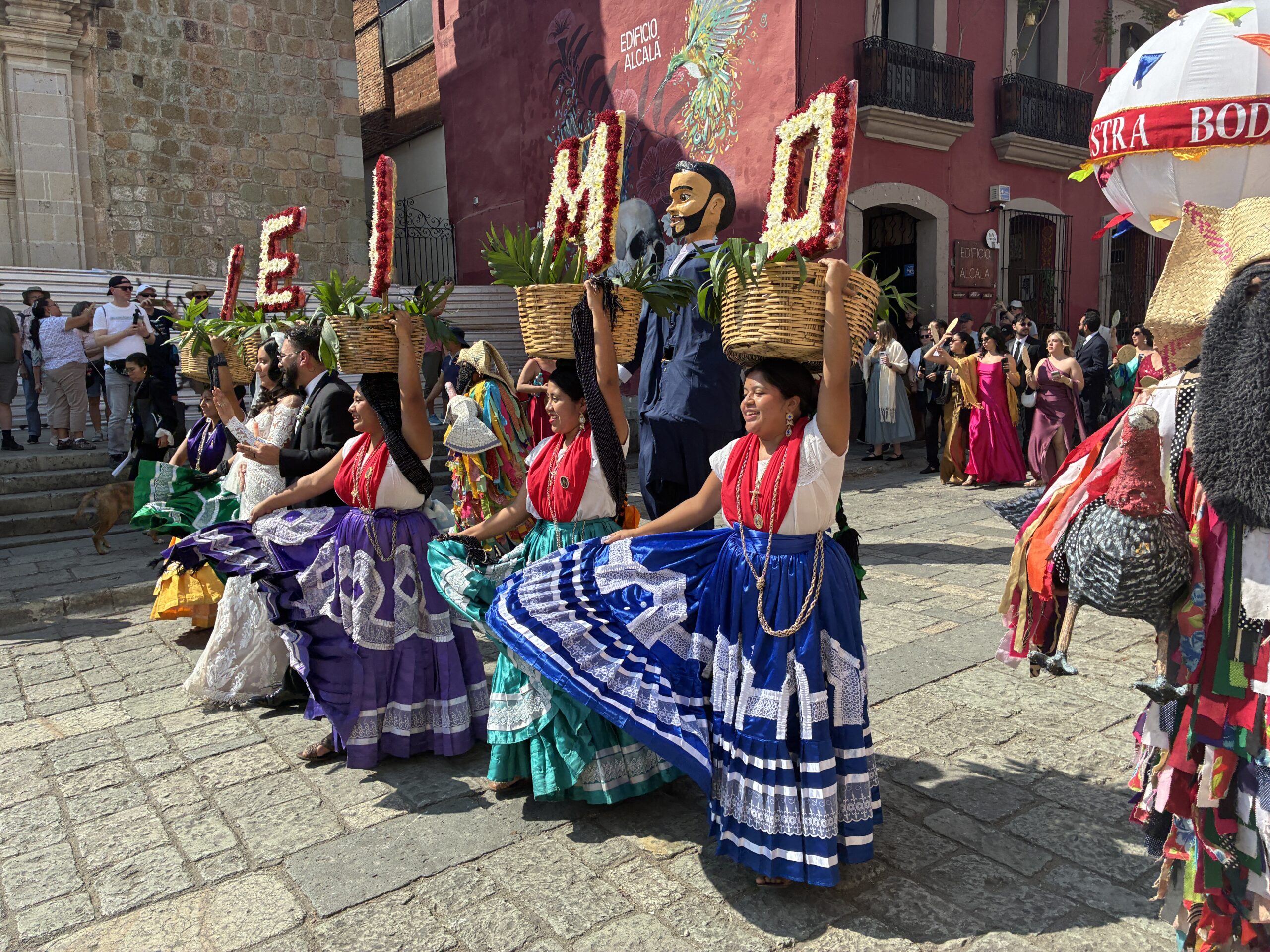
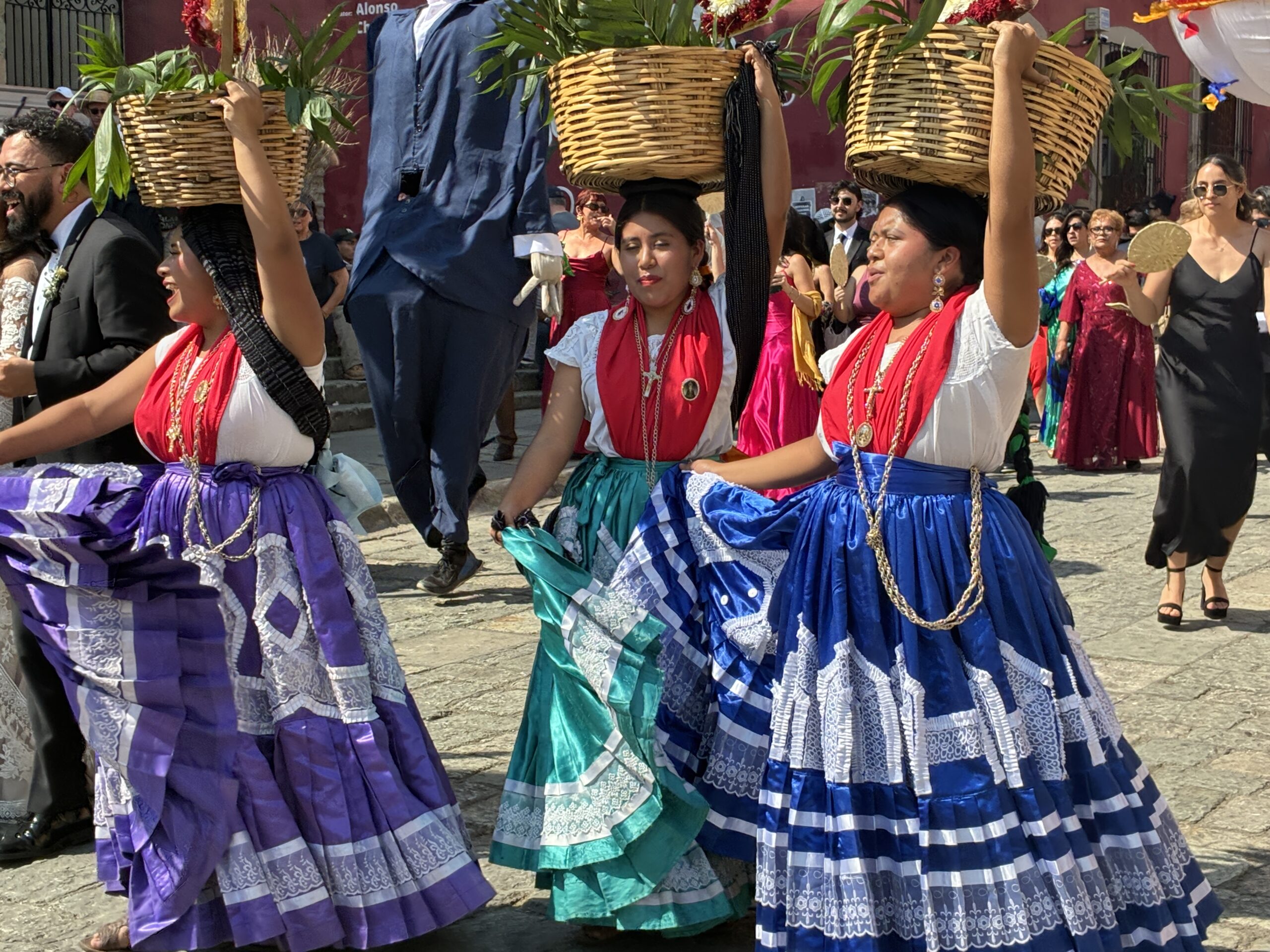
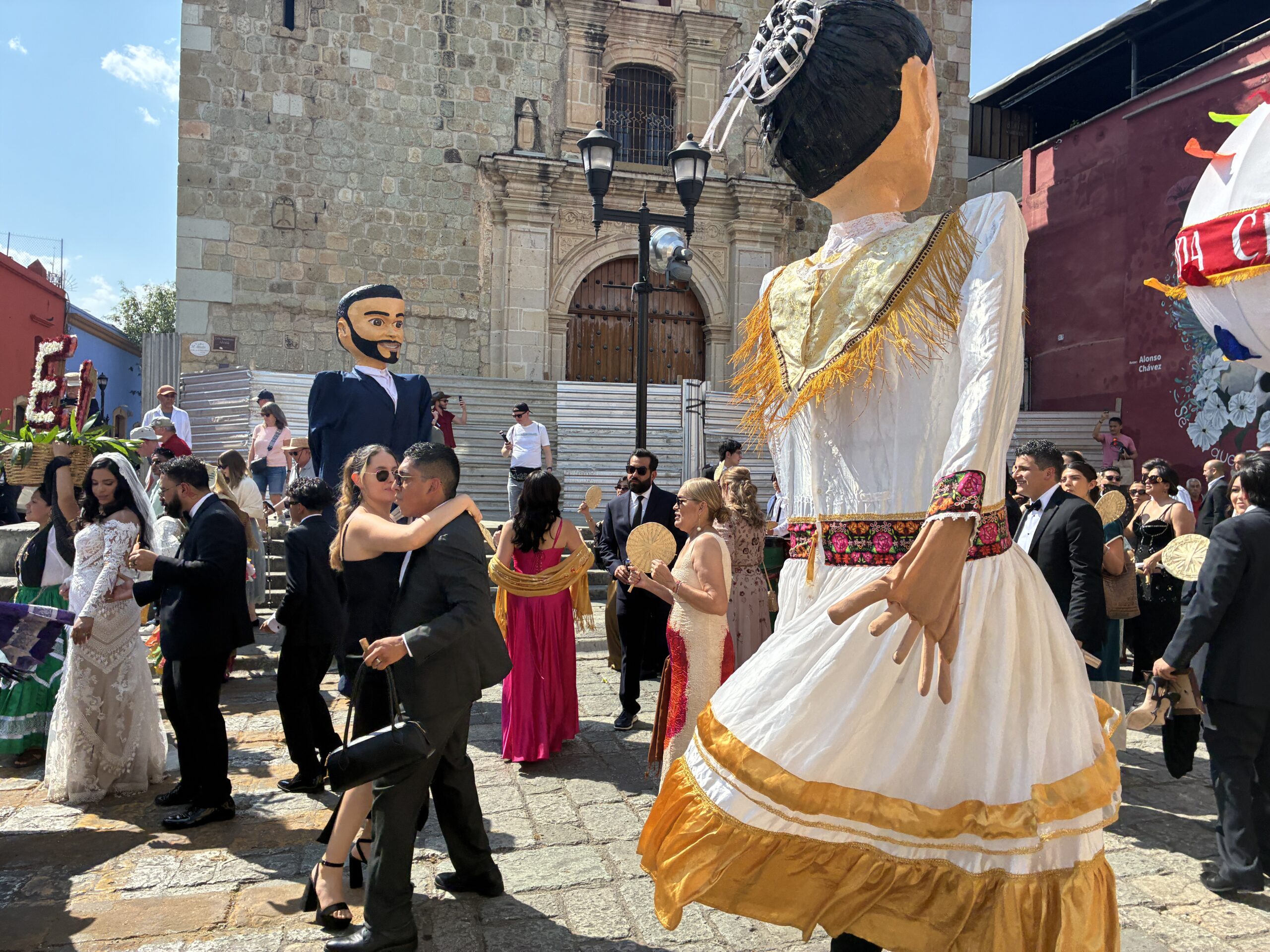
Once back in the the city, I walked around some more before heading to Rachel’s, and encountered a classic street wedding procession. These begin on the plaza in front of the Santa Domingo church, and the parade spills out onto and around surrounding streets. These are really glorious, as are so many other events and celebrations in Oaxaca.

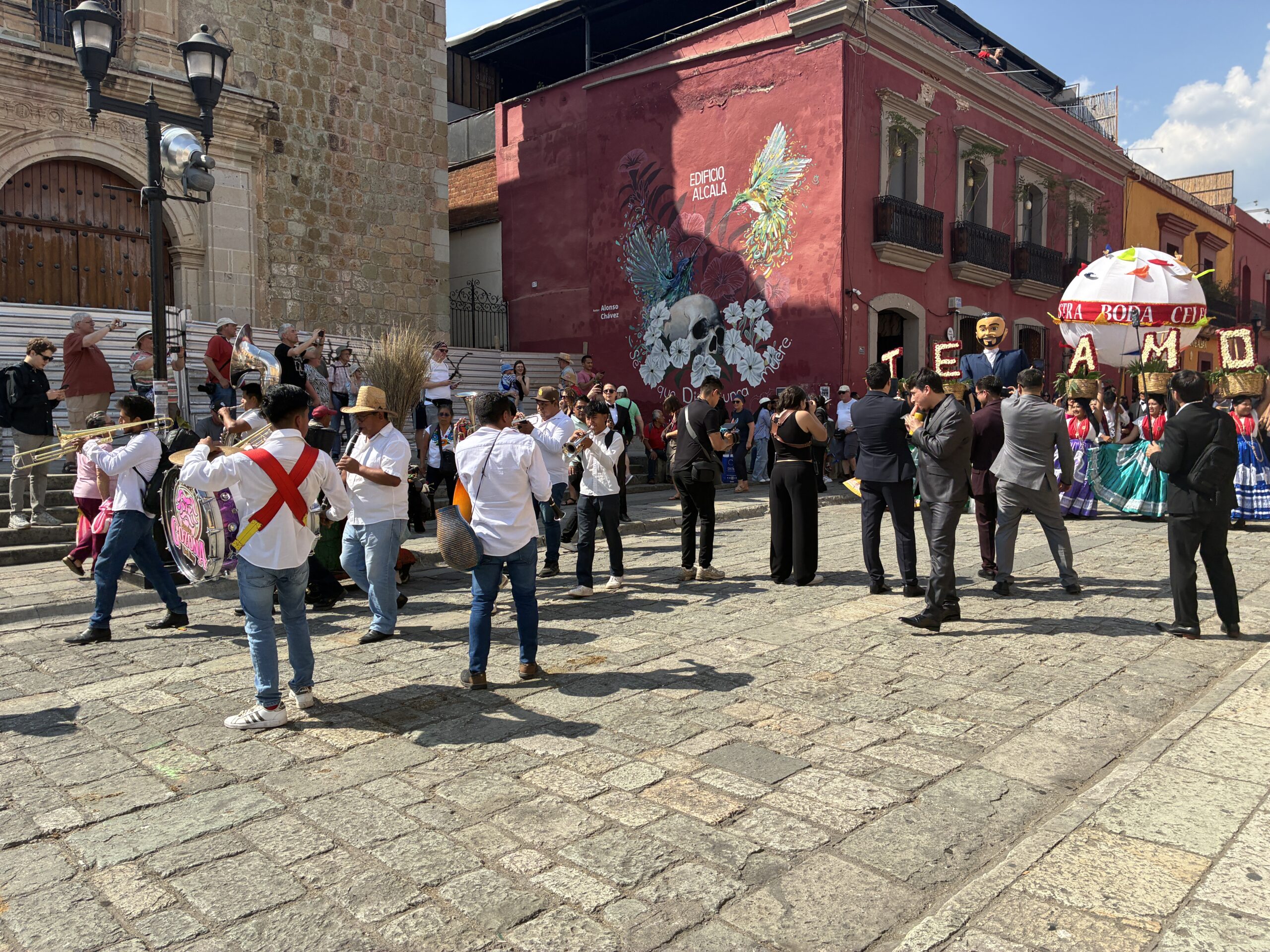
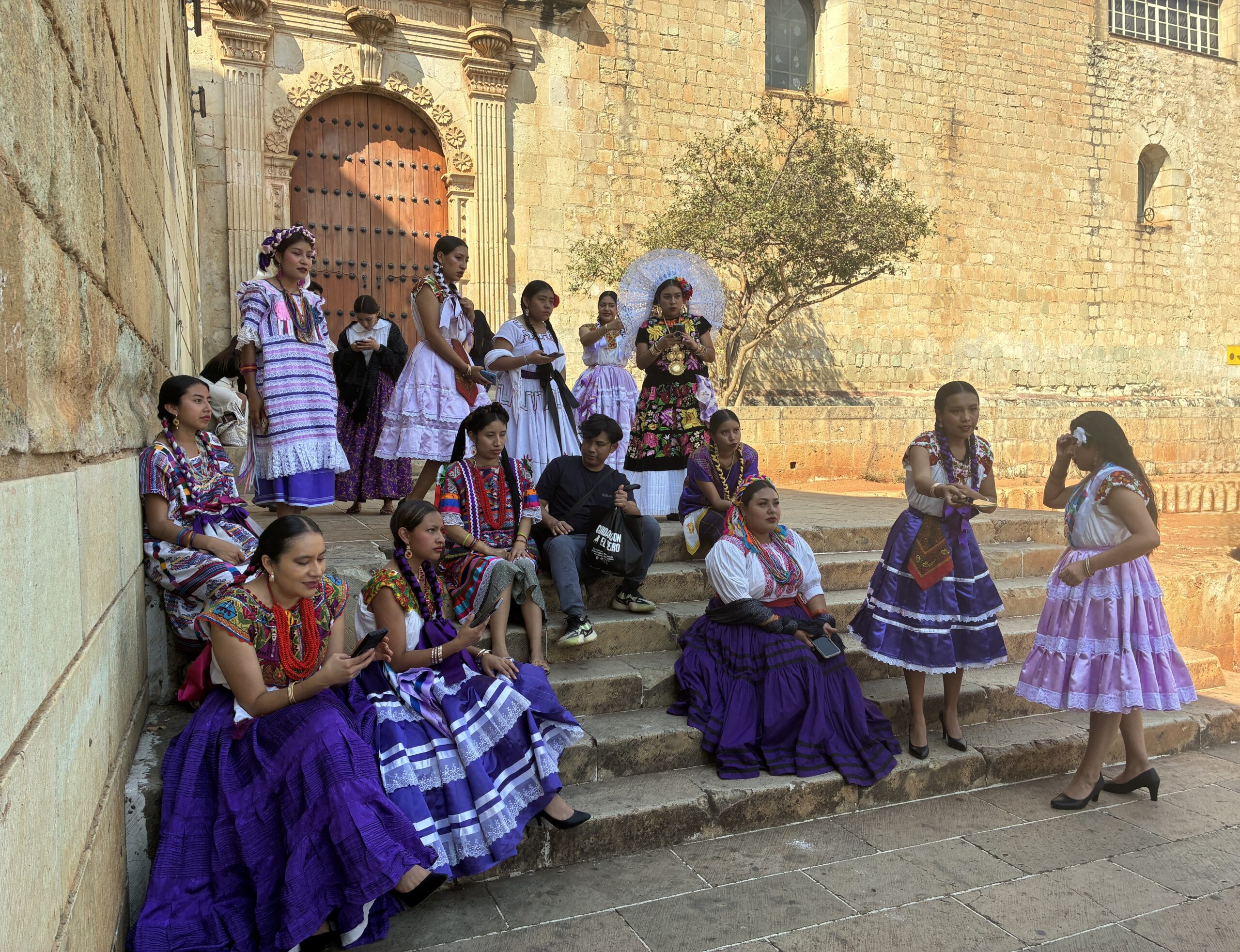
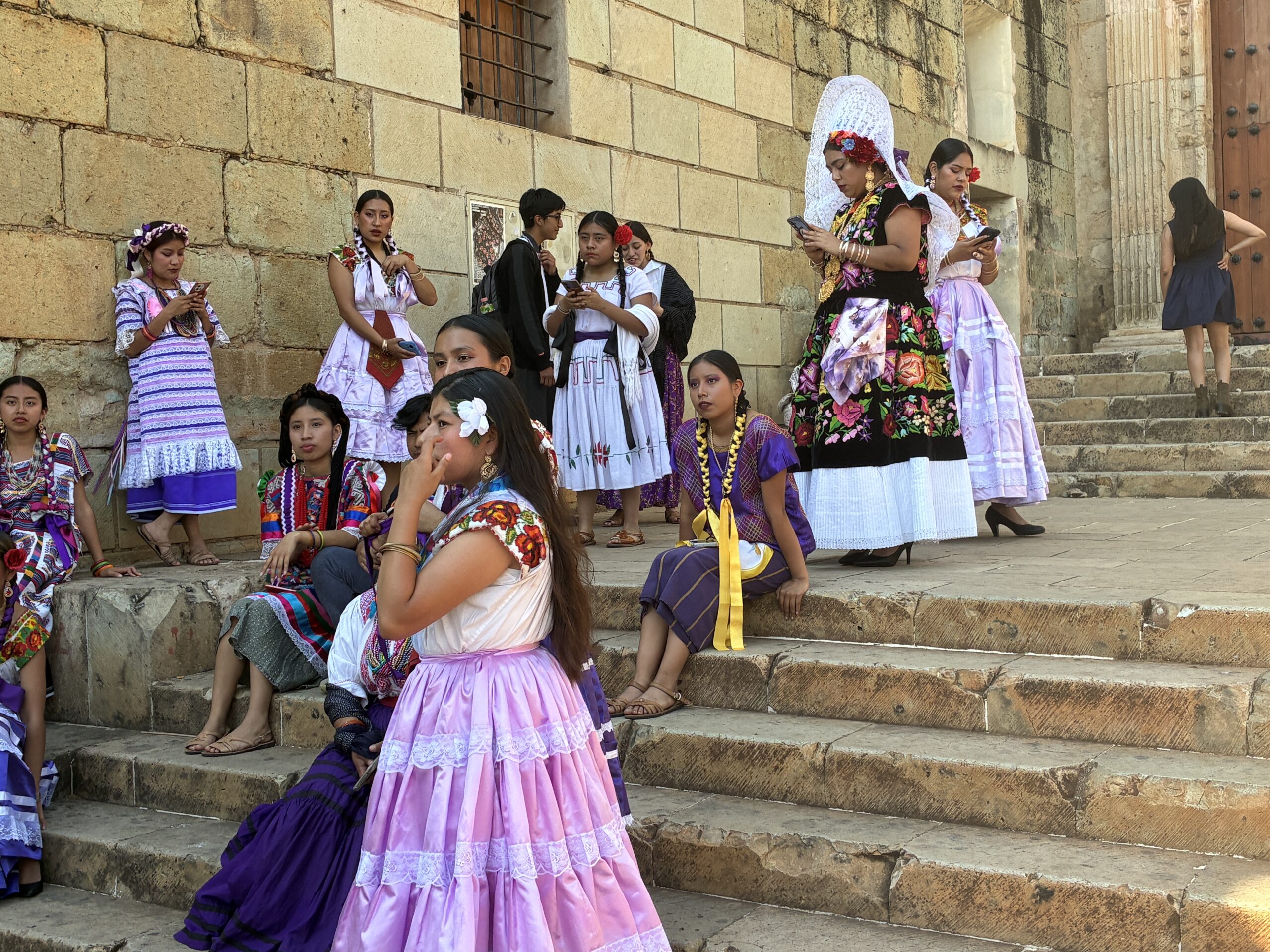
And then came the Tehuana women (from the Isthmus of Tehuantepec), wearing embroidered huipiles (tops) and enaguas (skirts). Beautiful and joyous.

I finally got back to Rachel around maybe 4 or 5. I had a great day exploring and enjoyed everything. I know I keep saying the same thing, but traveling alone like this was something I did before there was a Bev in my life. Now I’m doing it again, except this time it’s very sad that I’m not doing it with her.
I took a immediate shower from the long hot day, and then took a nap, something I usually don’t do. I went right out, napping for 90 minutes or 2 hours. It was good.
When I woke up, Rachel had a visitor, Mike, who had initially inquired about renting the place while she’s away. I joined them on the roof in the very lovely cool of the evening, and Mike stayed for a couple of hours until Rachel found a way to “escape” from the situation. It was difficult. He was a nice enough guy, but really had few social skills, and a whole lot of very detailed knowledge, and some well-founded, but nevertheless, conspiracy, theories about the world around us. I suspect he is neurodivergent, with high functioning autism. Mike pontificated a great deal and monopolized the conversation, moving from subject to subject, as one thing led to another, with little, if any, input from us. I found it difficult to just sit and listen to Mike, and a couple of times I pretty assertively jumped in, either disagreeing with what he was asserting or asking where he got these ideas, as they seemed pretty conspiratorial. Any particular answer or statement made by Mike seem to lead directly into another and another, and another, circling around, but also leading away from the original question or statement. Eventually, Rachel texted Alberto, who then phoned her and she told Mike she had to leave to help out, and that is how that social engagement came to an end. It’s sad that even though we (and others in his life, I suspect) find it difficult to be with Mike, and may not realize that he perhaps does not think in the same way that we do, his life must indeed be very difficult, even though he has survived this long. At 61, he has become a full-fledged ex-pat, a year-round resident in Mexico. From what he said, he left the States for an environment that he might find more accepting of him. I’m not sure if that’s working for him, though, as he just got evicted from his apartment. Life is very difficult some people. I’m sorry!
Late night for me again, but I slept pretty soundly for the next few hours.