The Cattle Market at San Antonino Castillo Velasco and the Market in Ocotlán de Morelos.
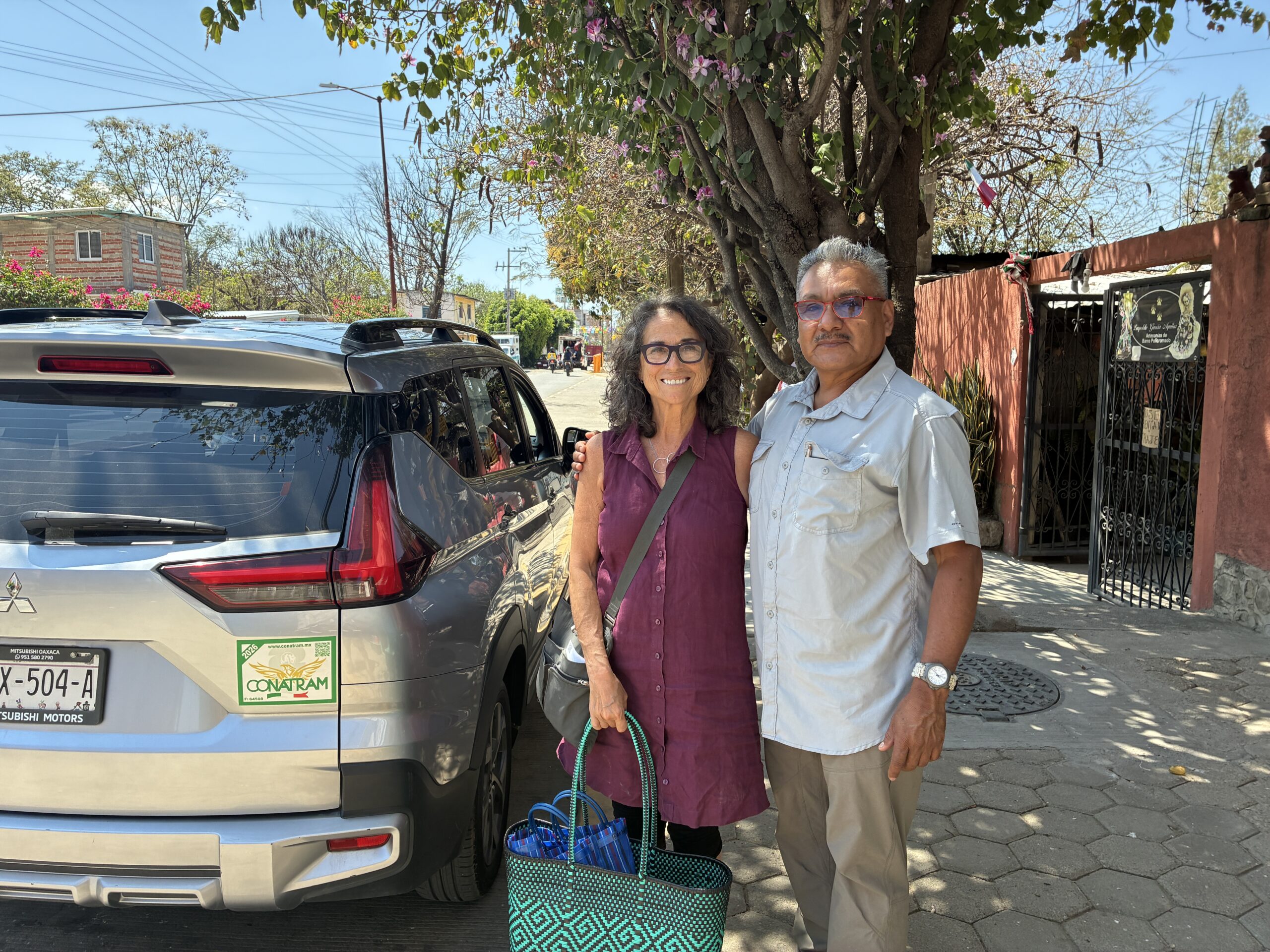
Nice day!! Rachel and I went to Ocotlán this morning, with Patti and Tom, and were picked up for the trip by Samuel, a colleague of Fili. He took us, waited around while we doing what we were doing, and then brought us back home. Nicest guy, instantly upon meeting him, and spoke pretty good English, which was great. Rachel continued to talk with him in Spanish, but the rest of us were happy we could speak to him in English.
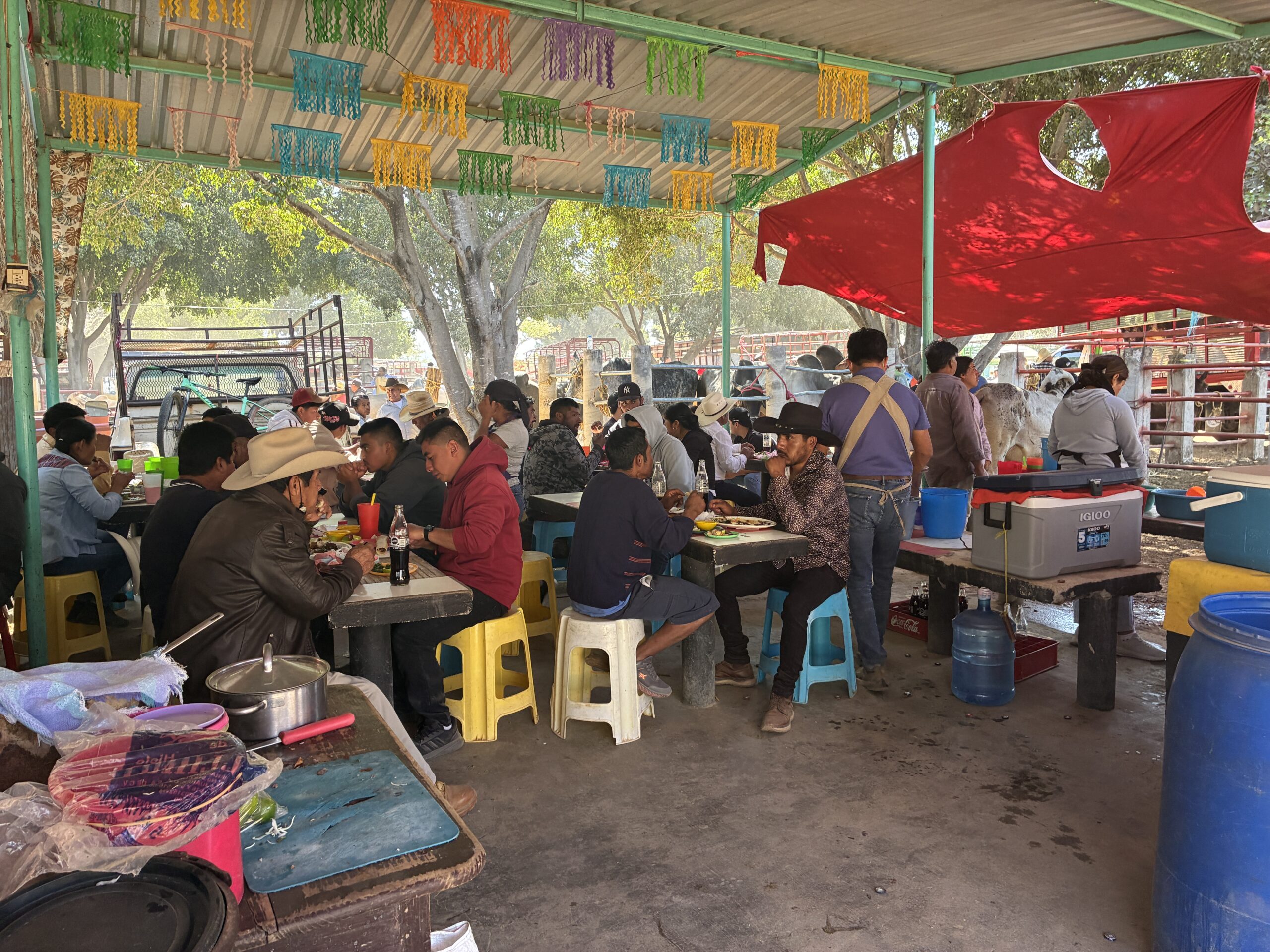
En route to Ocotlán de Morelos, about 23 miles south of Oaxaca,we first visited the very busy, vibrant, noisy, and smelly (but in a good way) livestock market in San Antonino Castillo Velasco, which was spectacular. Rachel wanted to see the market, but was hoping to see more than livestock, and thought the market also carried smaller and domestic animals, including birds and animals like Armadillos, for instance. It didn’t, however, and it seems that market is separate and located in Ocotlán, which we later headed to (but never got to the small animal market as we ran out of time).
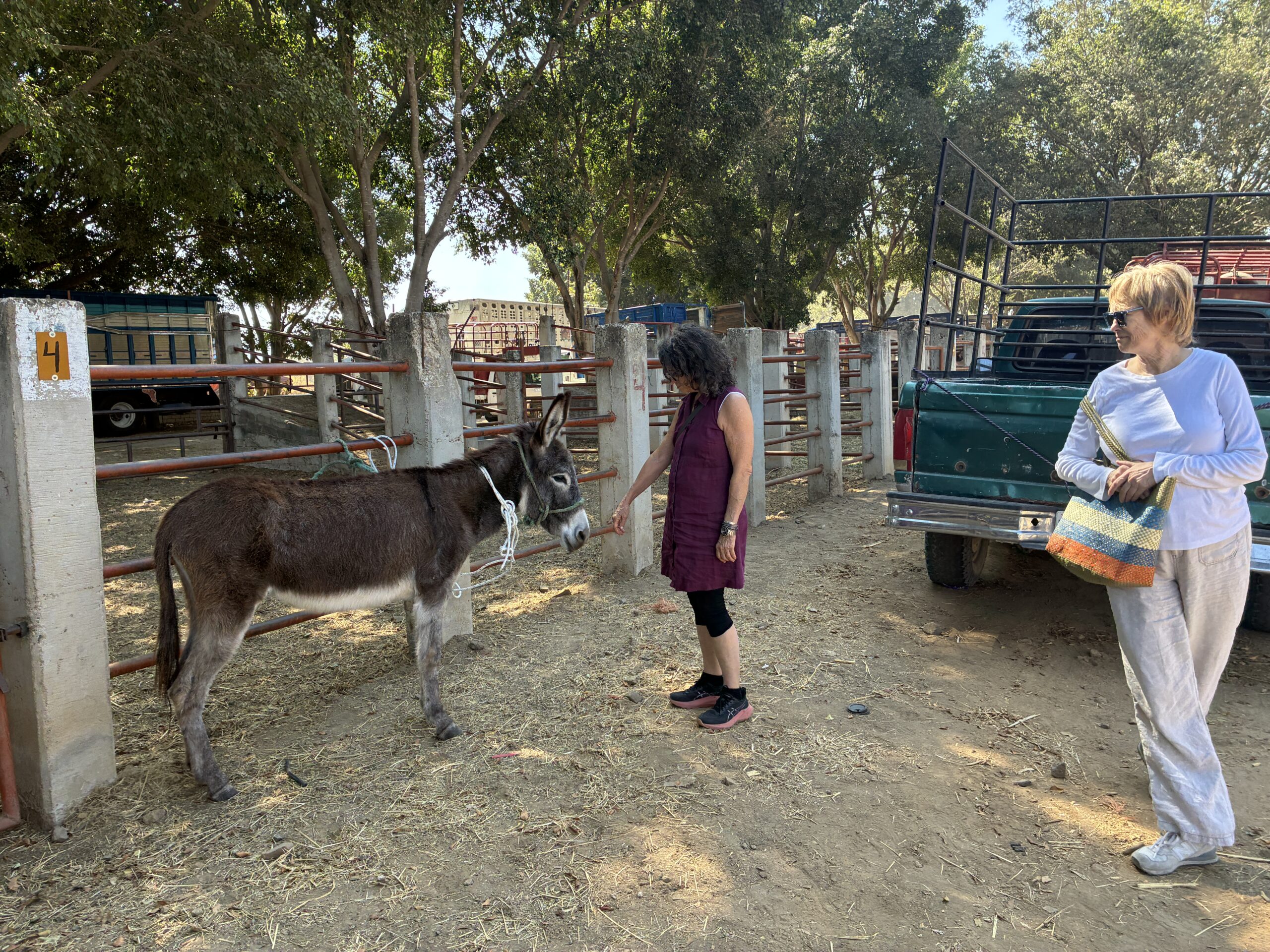
But this market – it was great! It is a working agricultural market for local farmers, and not intended as a tourist attraction, and carries mostly bulls and cows, but also horses, mules, sheep, and pigs, although we mostly saw cows and bulls of all shapes and sizes, including classic looking Brahman bulls and cows. The market is a wild place, and just what you might imagine, lively, dusty, and noisy. With cattle and traders all over, it is a traditional, no-frills rural trading market, which runs every Friday morning, from around 6–7 am.
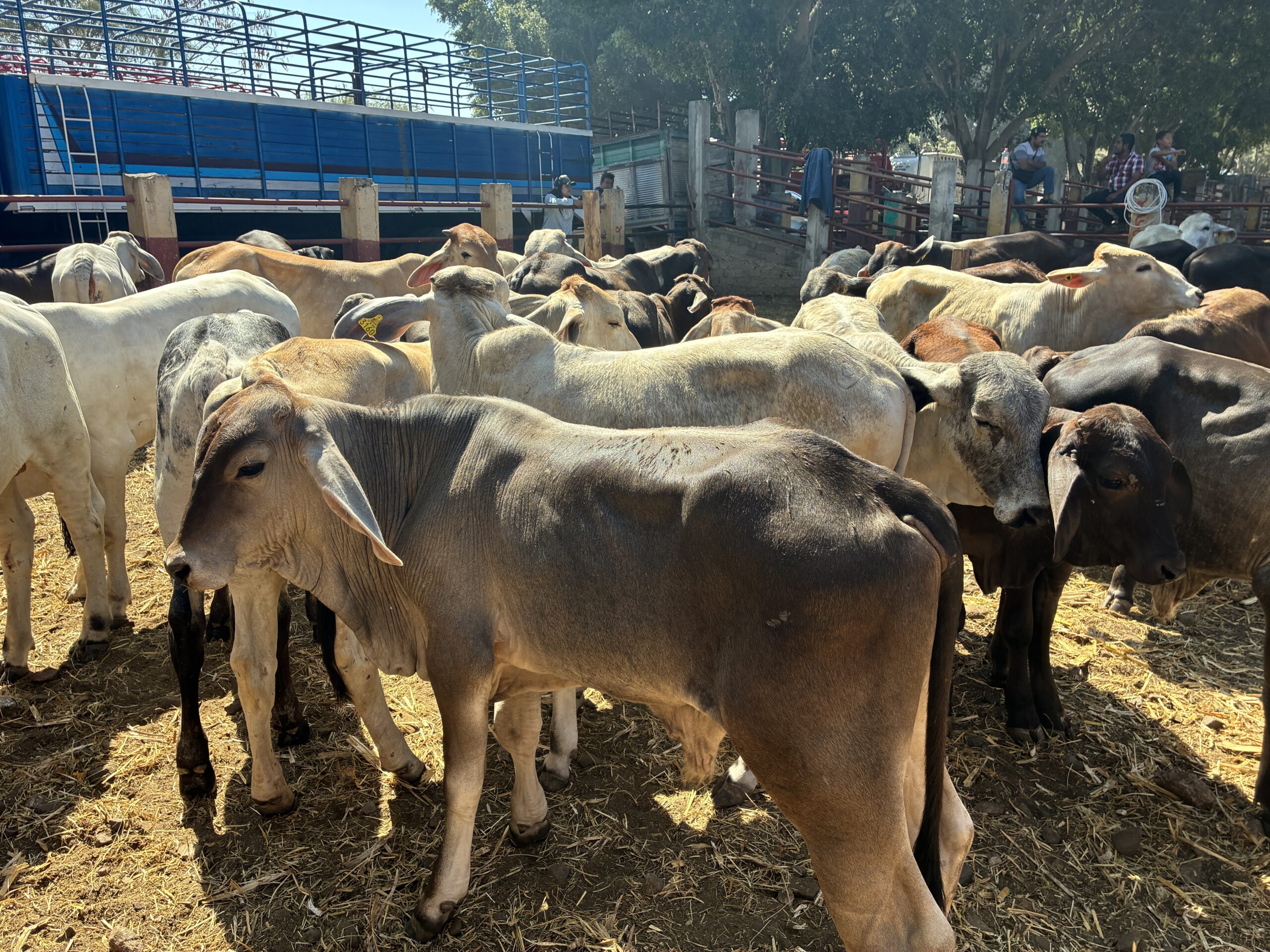
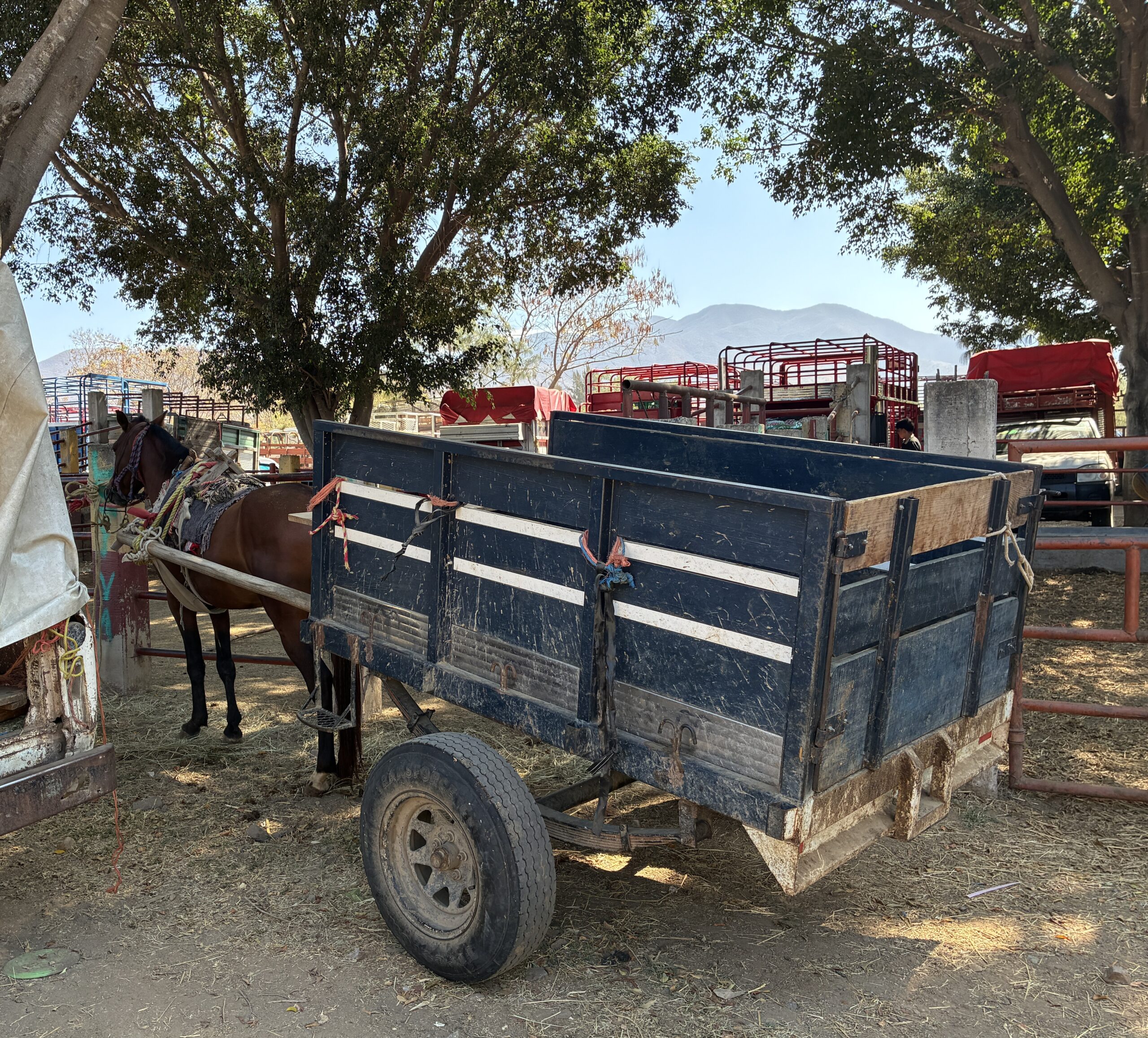
The market is one of the most traditional rural livestock markets in the valleys surrounding Oaxaca, and is often called the “baratillo ganadero,” (livestock flea-market), drawing farmers and traders from surrounding villages. It’s at least a century years old, but with a history and tradition dating back to the pre-Hispanic era, before 1521.


San Antonino Castillo Velasco, where the market is located, is an ancient Zapotec farming community that evolved over centuries into a small market town. Although now more mixed in its population, it remains a strong Zapotec community and culture, where dialects of Zapotec are still spokwn, often as a first language, with Spanish coming second, and is known for traditional embroidery, as well as agricultural trade.



I think we all really enjoyed the market… I definitely did, and could have stayed a little longer, but we moved on. We remained in San Antonino Castillo Velasco, and visited “Manos Que Ven,” meaning Hands That See, the ceramic studio of José García Antonio, a local potter who’s been blind for 18 years, but has since sculpted by touch, with almost everything in the studio sculpted by him, an enormous body of work.

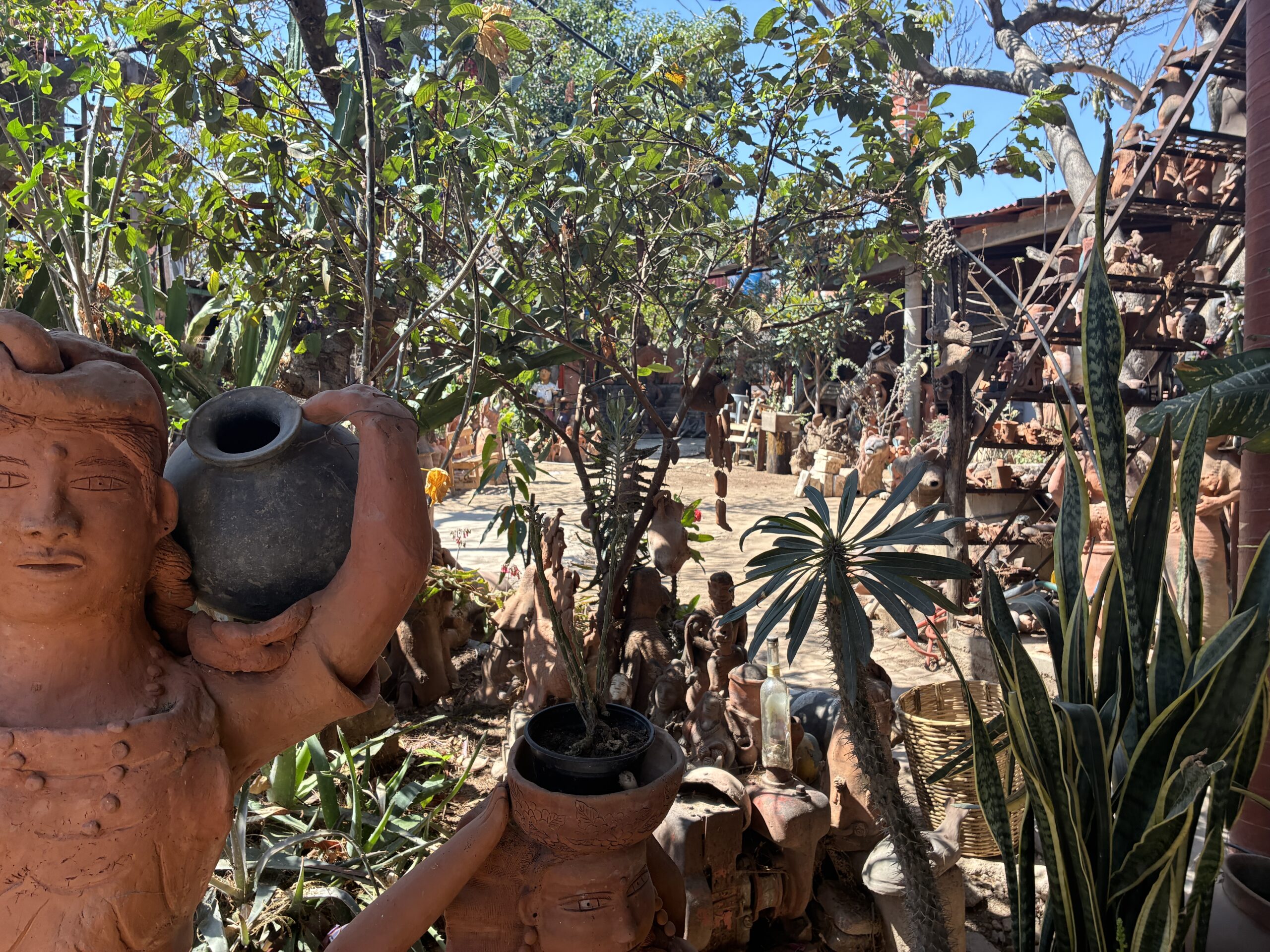

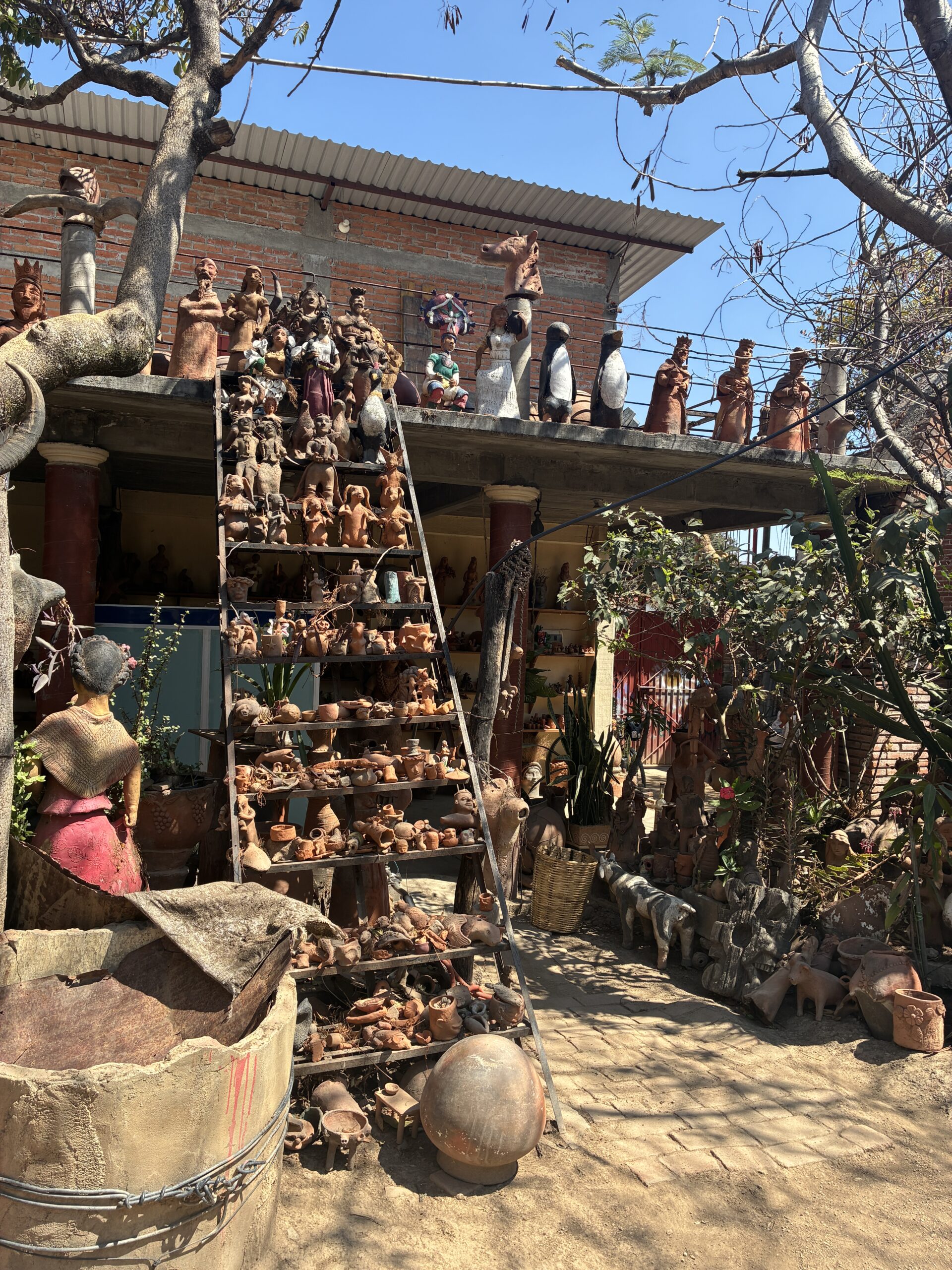
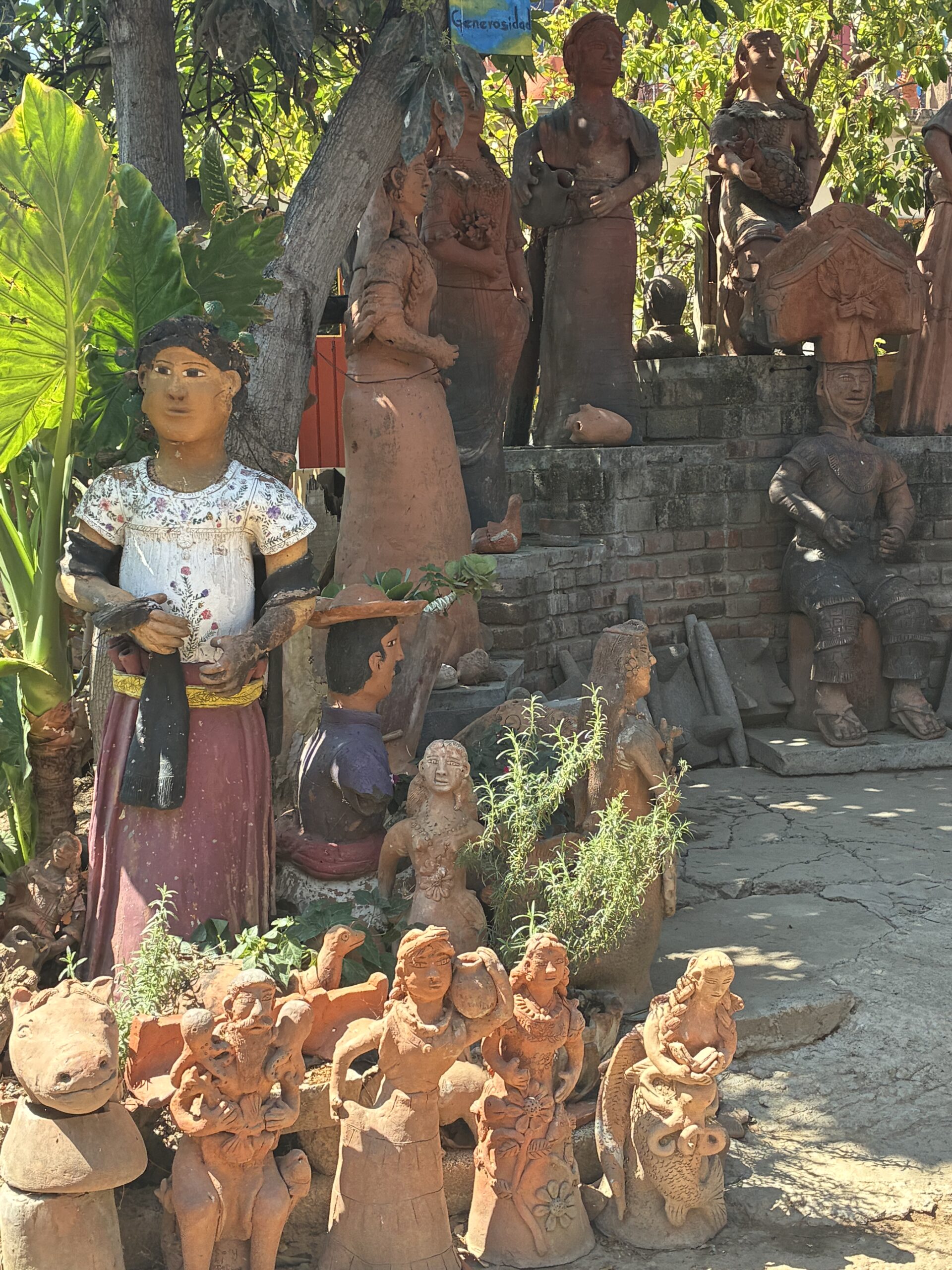
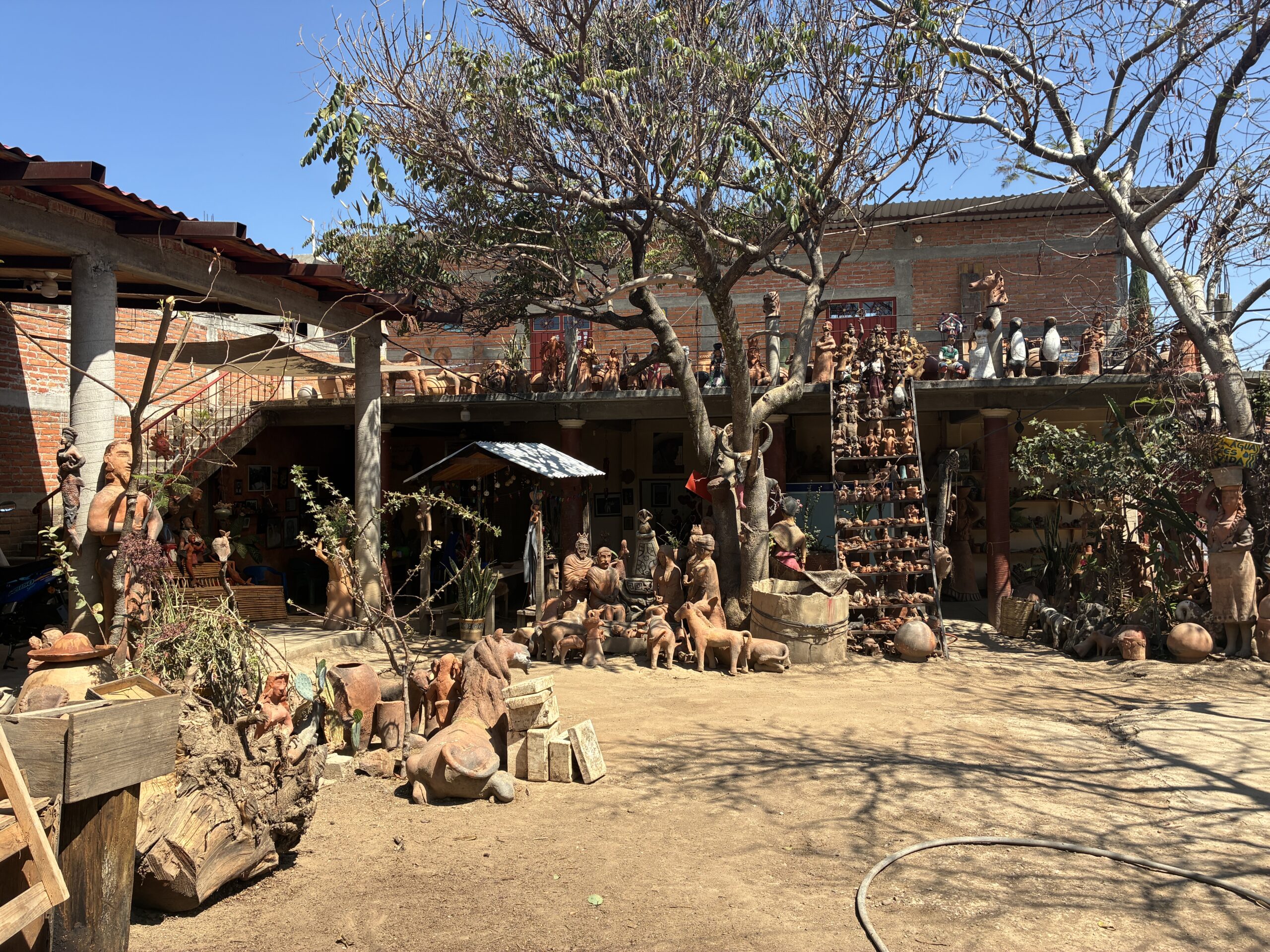
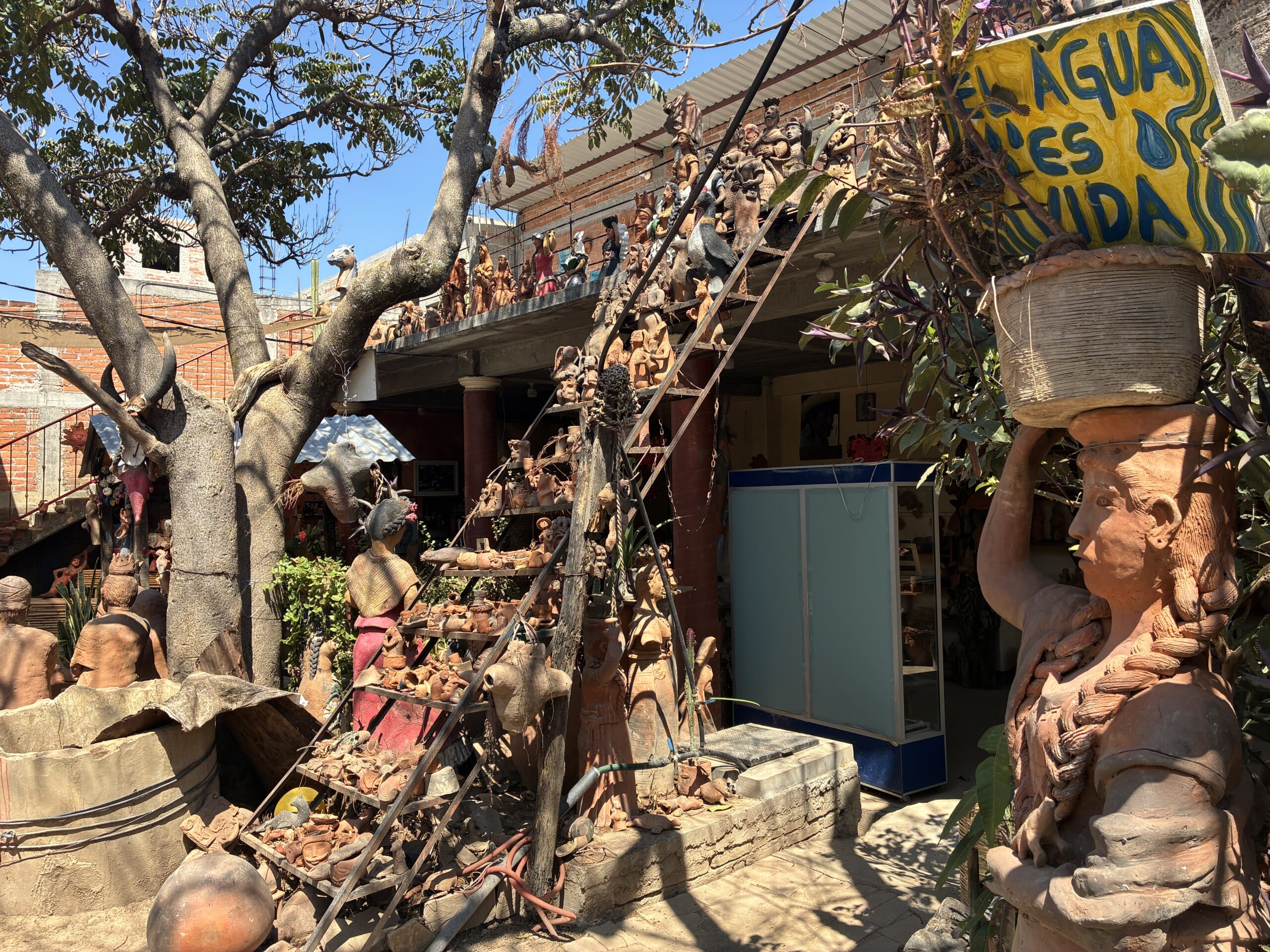
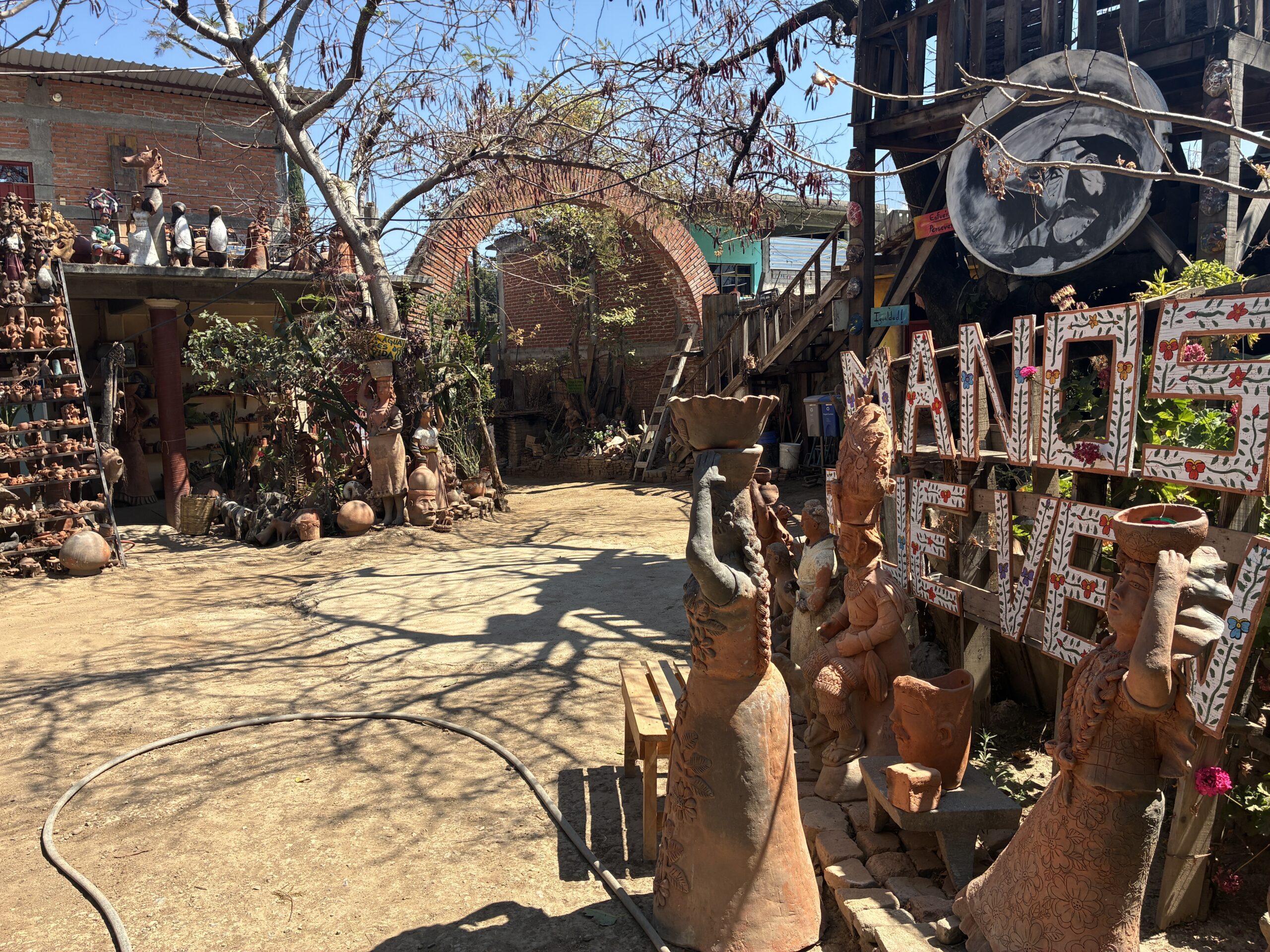
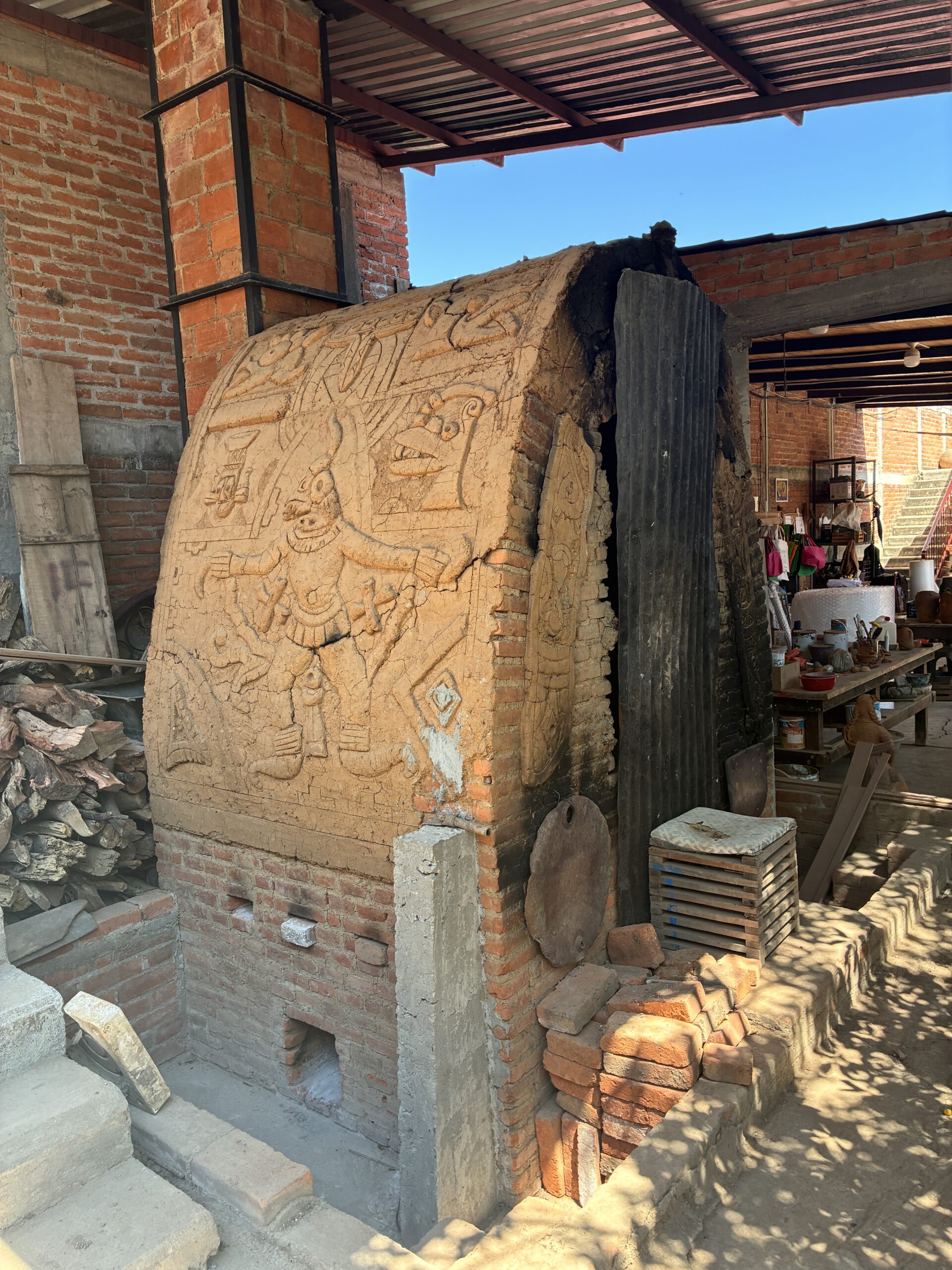
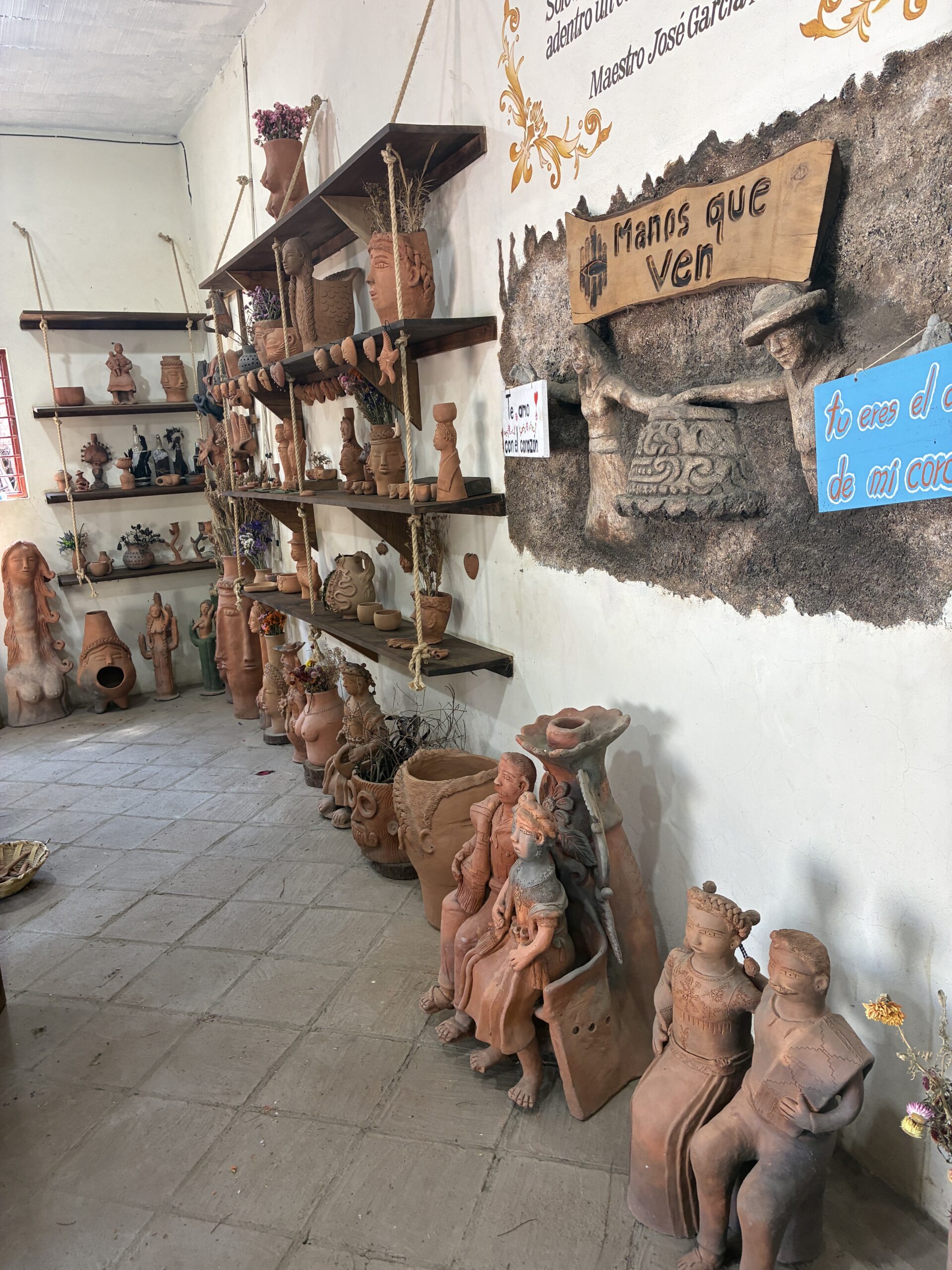
And then, completely unexpectedly, I met the man. While looking around the outdoor space I noticed a old and worn looKing man sitting with a younger man and woman, his wife it turns out. As I passed, not realizing the older man was the artist, the other man, José Mendoza Mendoza, welcomed me and introduced me to José García Antonio. We talked for a bit, and then José asked if he could interview me for his YouTube channel, which highlights and documents the Zapotec culture and its people and works: https://www.youtube.com/@josemendozamendoza4518.

José García Antonio is actually not much older than me, born in 1947, but has clearly led a far tougher life than me, in the sun, using his hands and body constantly, his blindness, and on many other levels. He is considered one of the leading artisans from Oaxaca, famous for his sculptures that are collected by museums, galleries, and art collectors around the world. He was friendly and warm, and I was so glad to meet him (even though I’d never heard of him before) because of his warmth and his commitment to his way of life and his art. It was a thrill. And, who know, maybe my interview will make it to YouTube. What an unexpected meeting. It left me feeling warm inside.
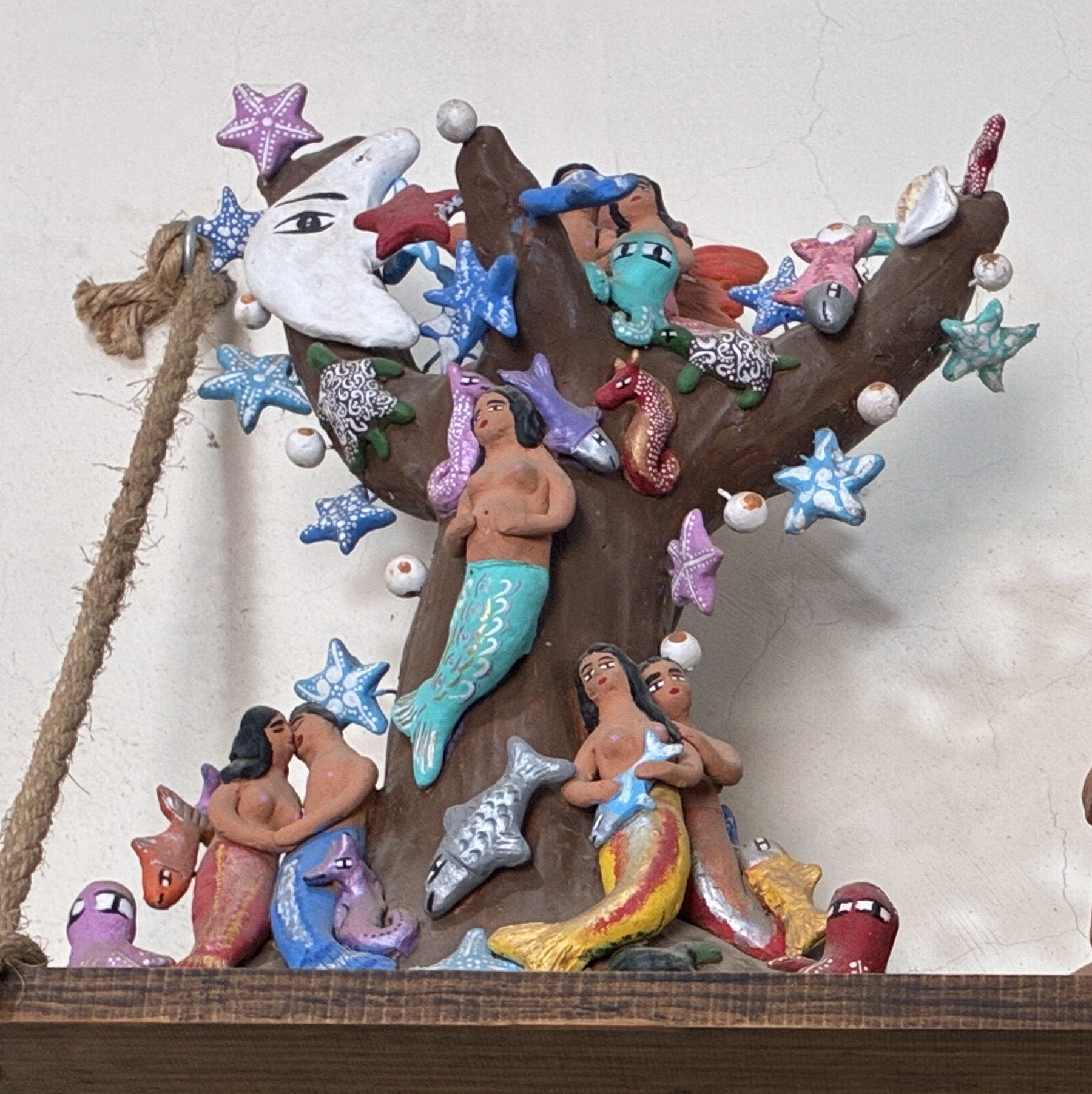
Then onto Ocotlán, where we first visited a couple of local artisan ceramic studios as we entered the town. There is a similarity to much of this ceramic art, as it has a regional flavor, a Mexican flavor, and a flavor of indigenous peoples, with often common themes, but it also very individual it seems to me, with each artist expressing their own creativity, despite similarities. The same is true really of every school or wing or movement of art, no matter to which culture it is attached. Despite similar themes, ideas, and content, individual creativity and expression comes through.
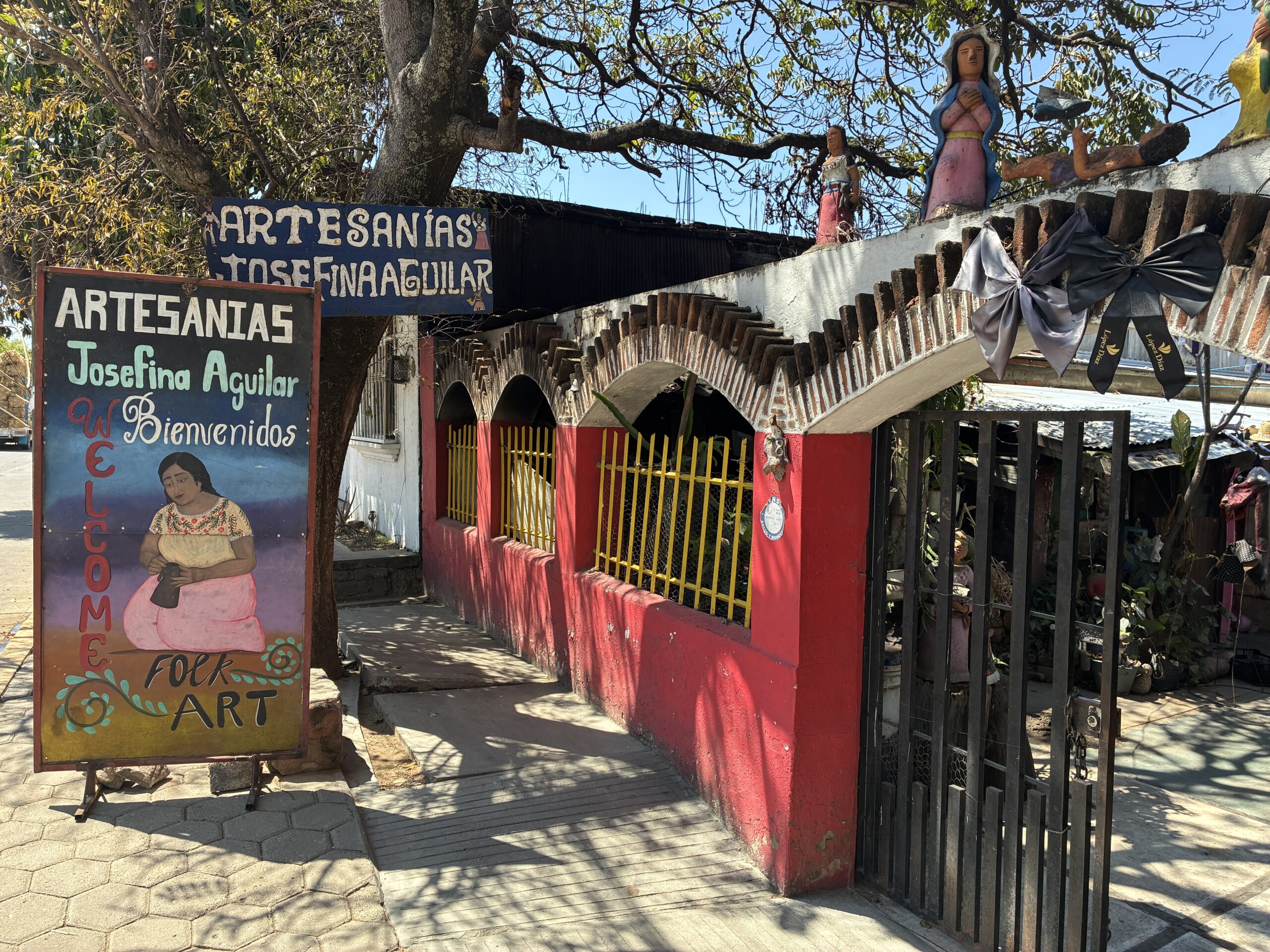

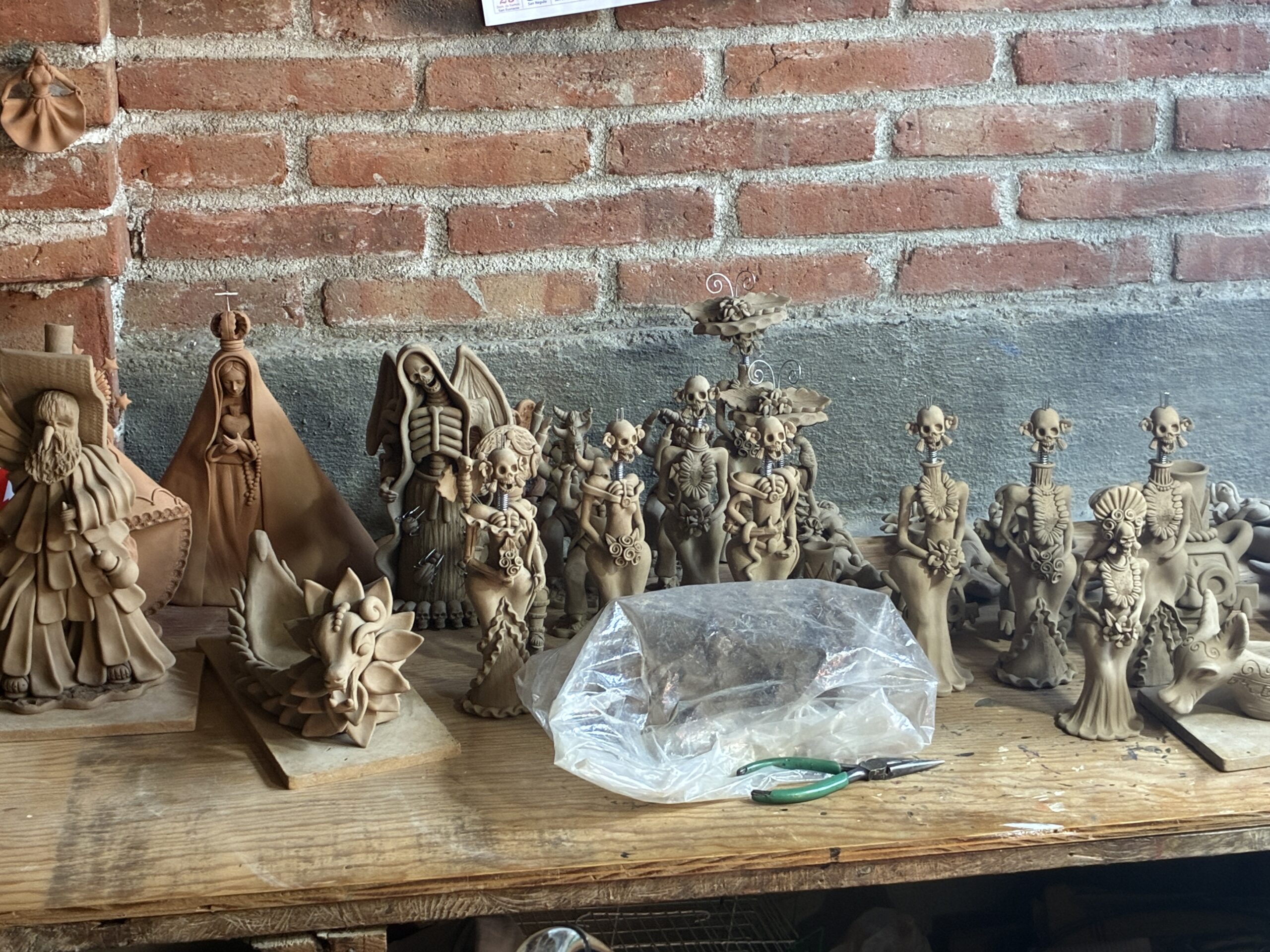
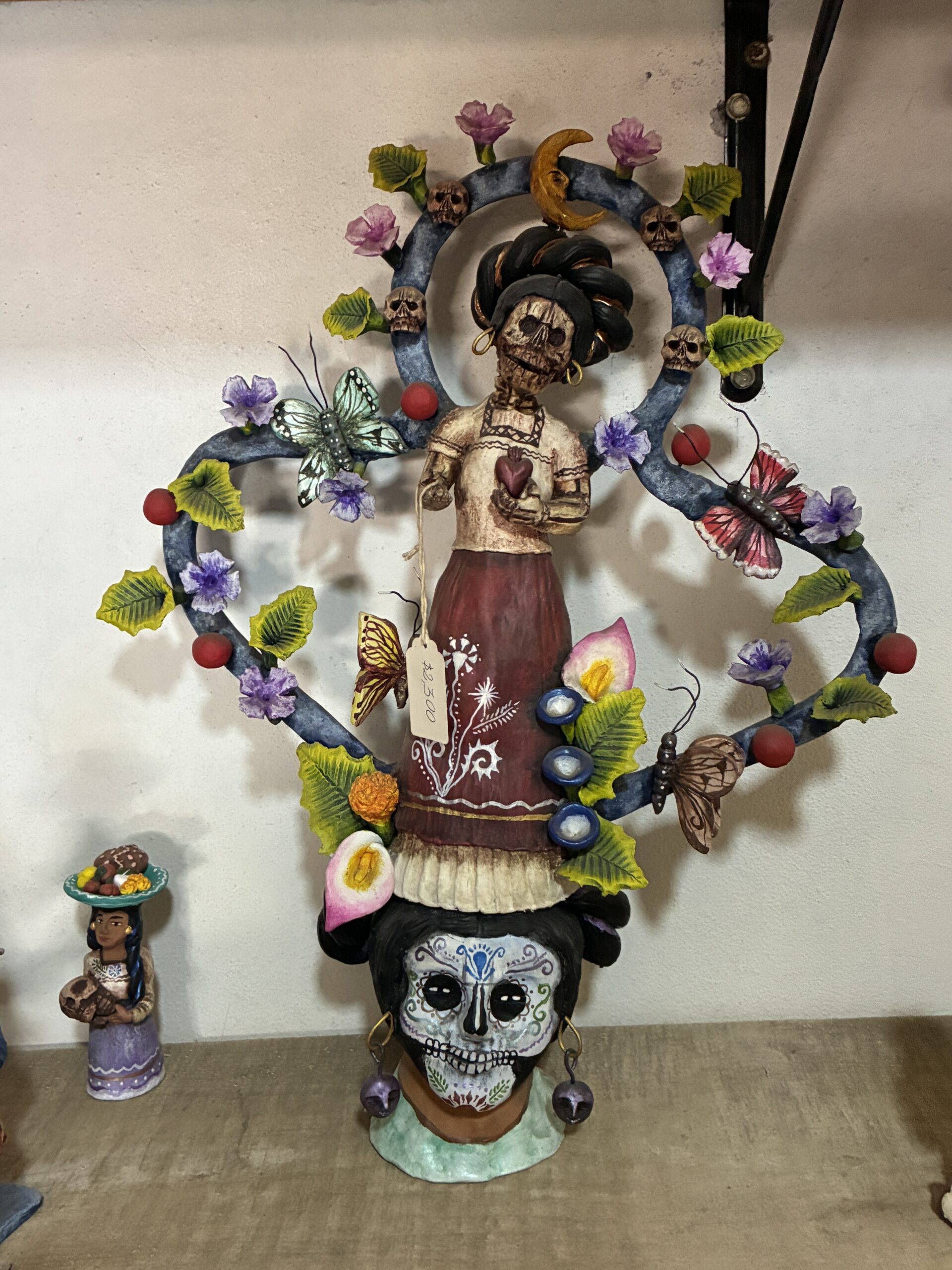
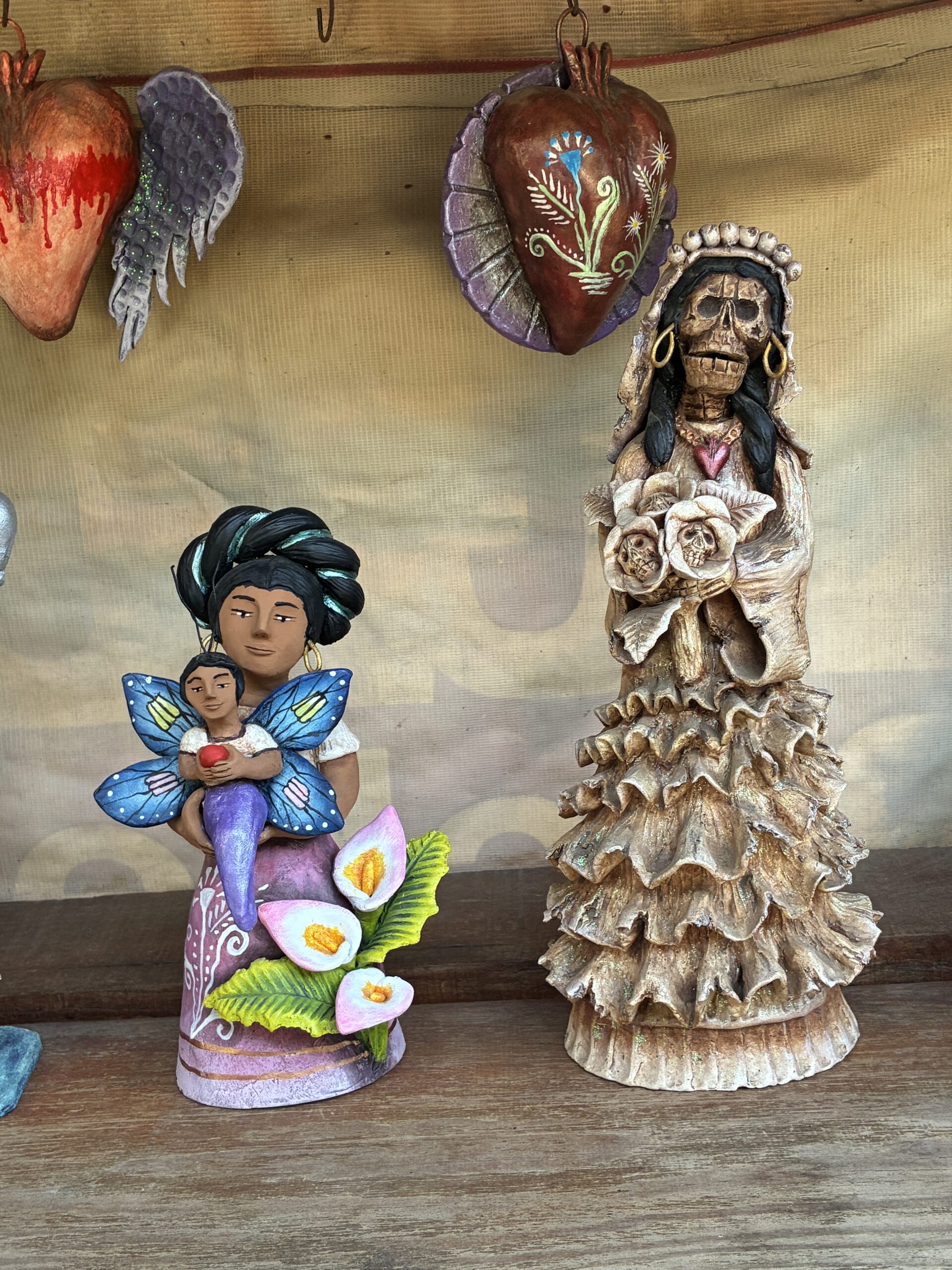
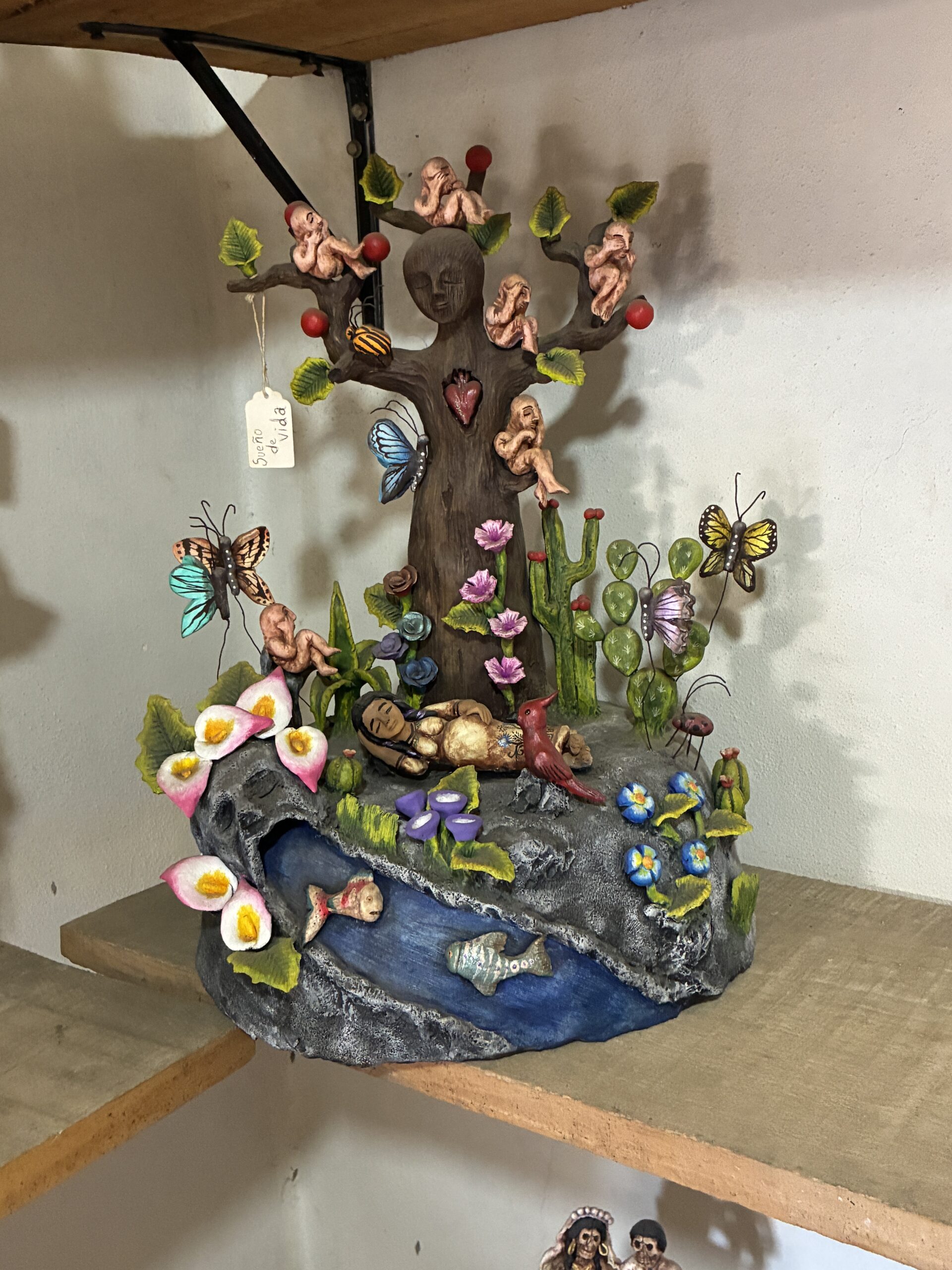
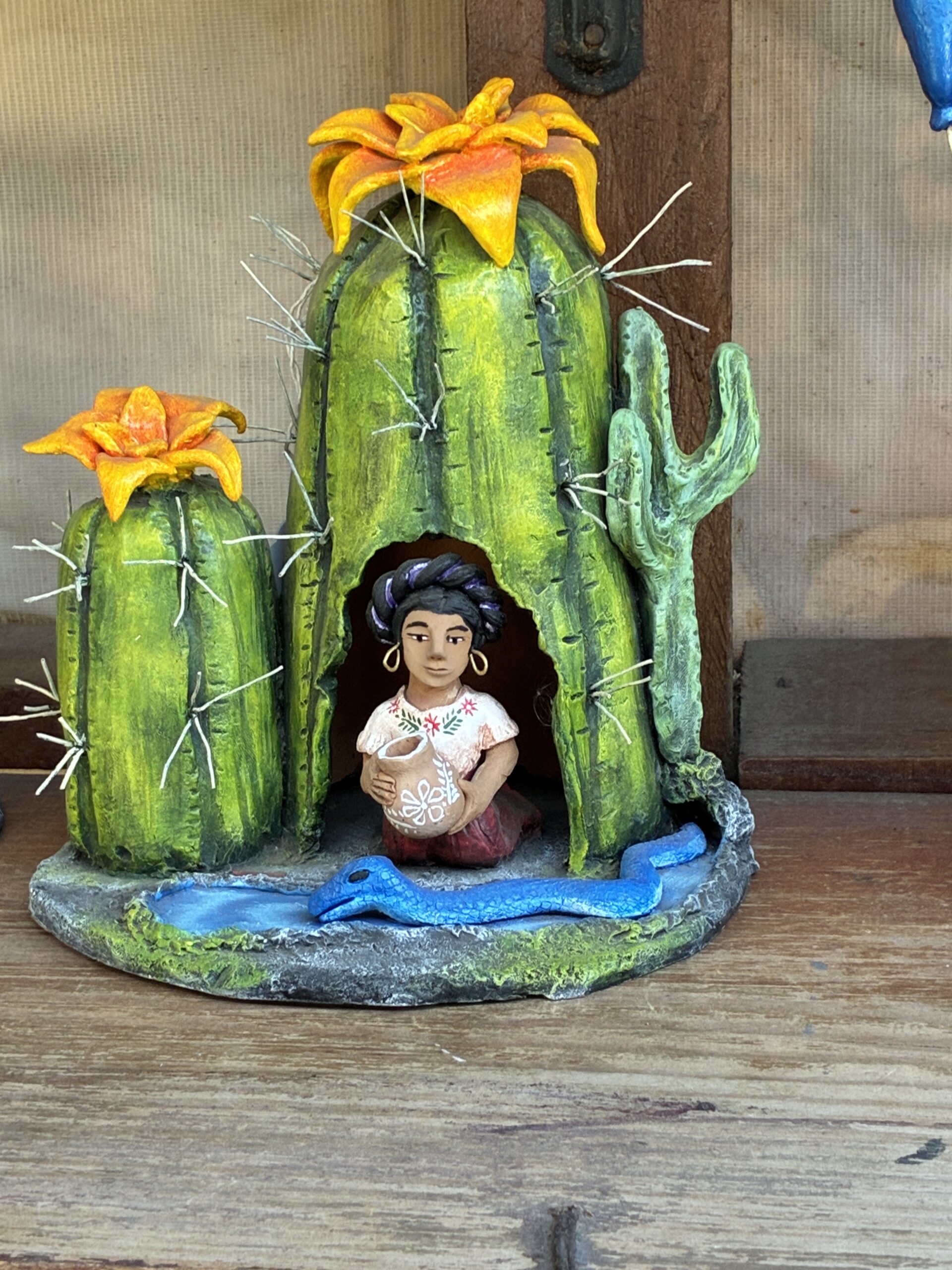
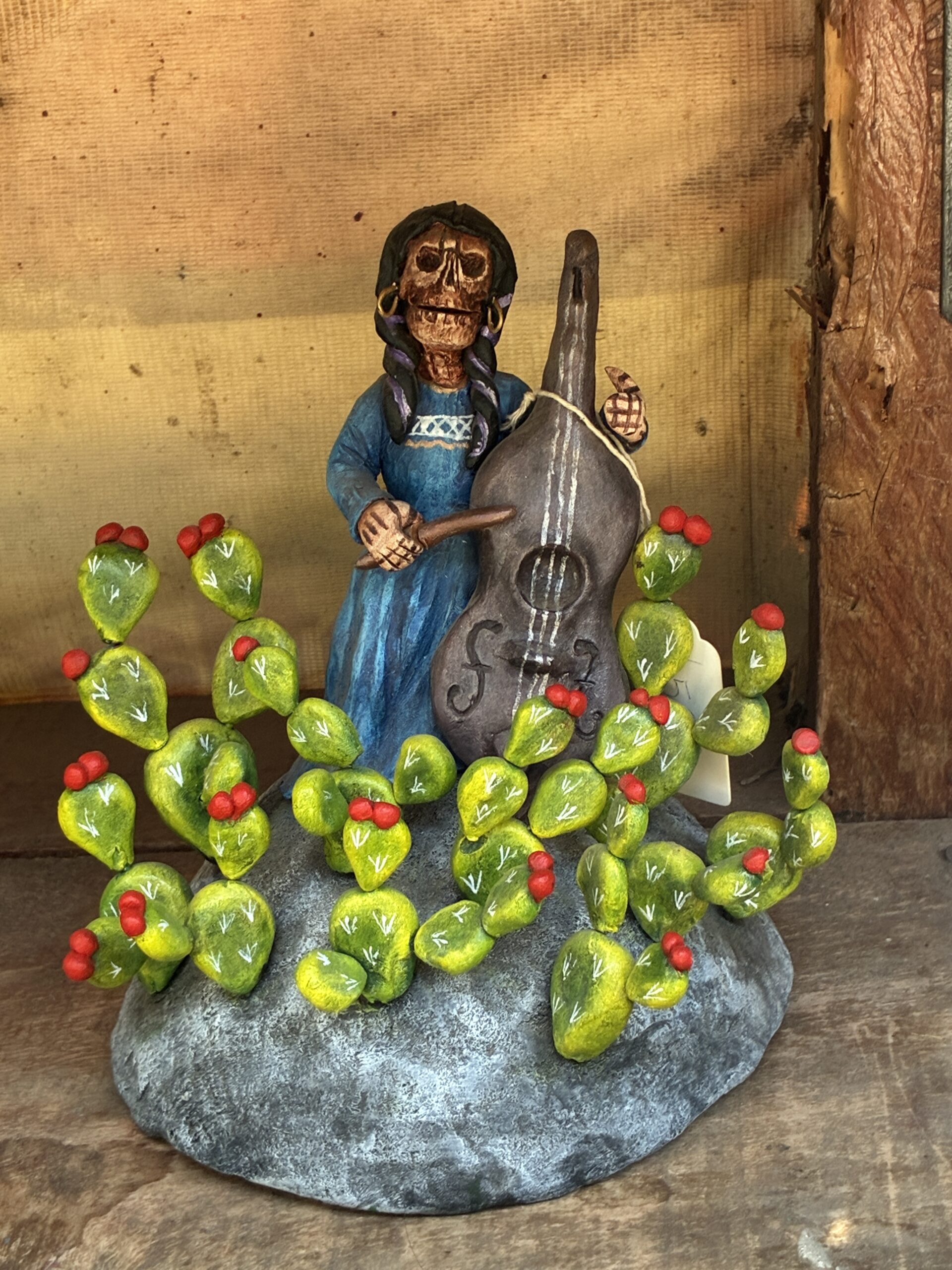
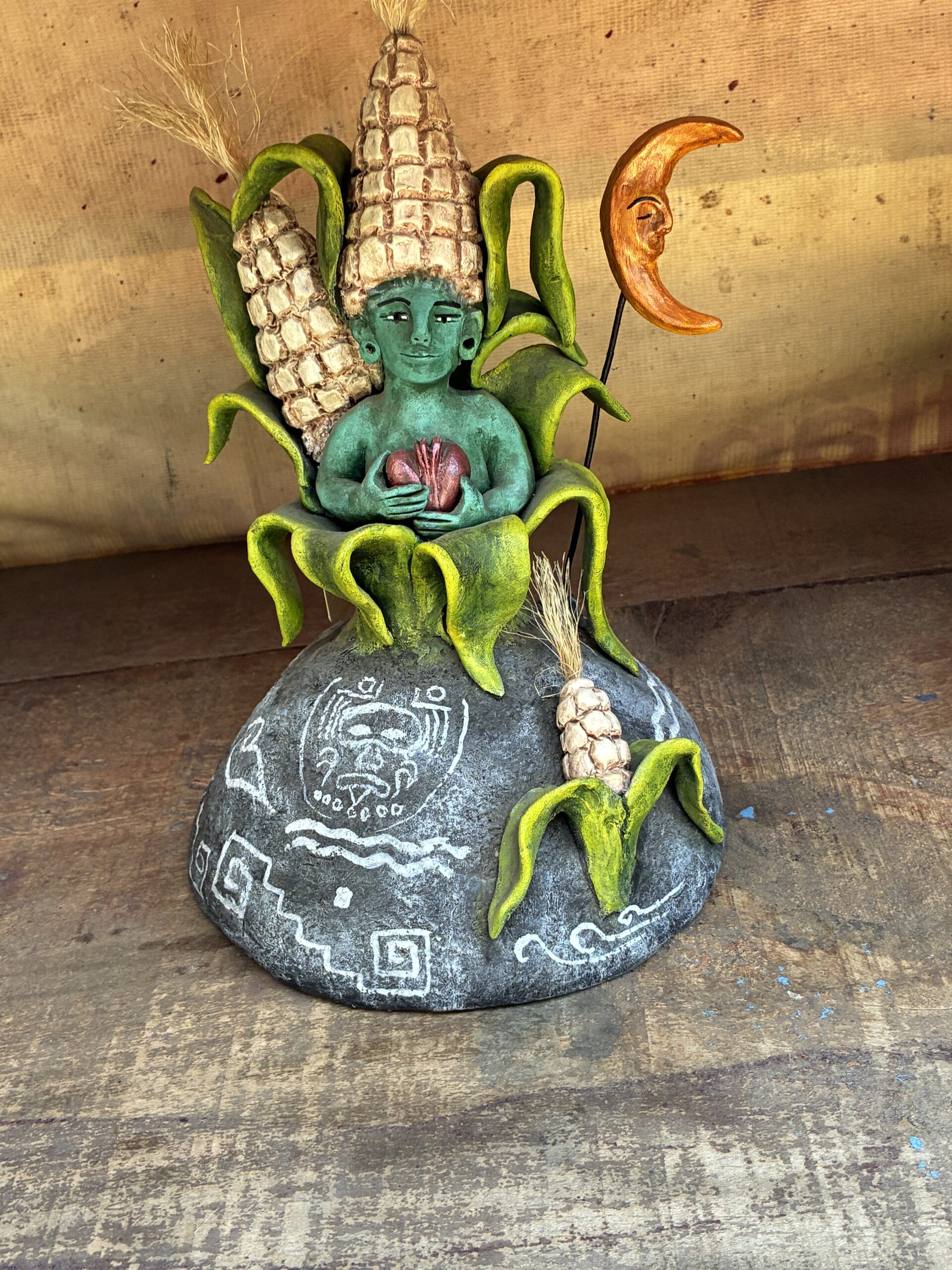
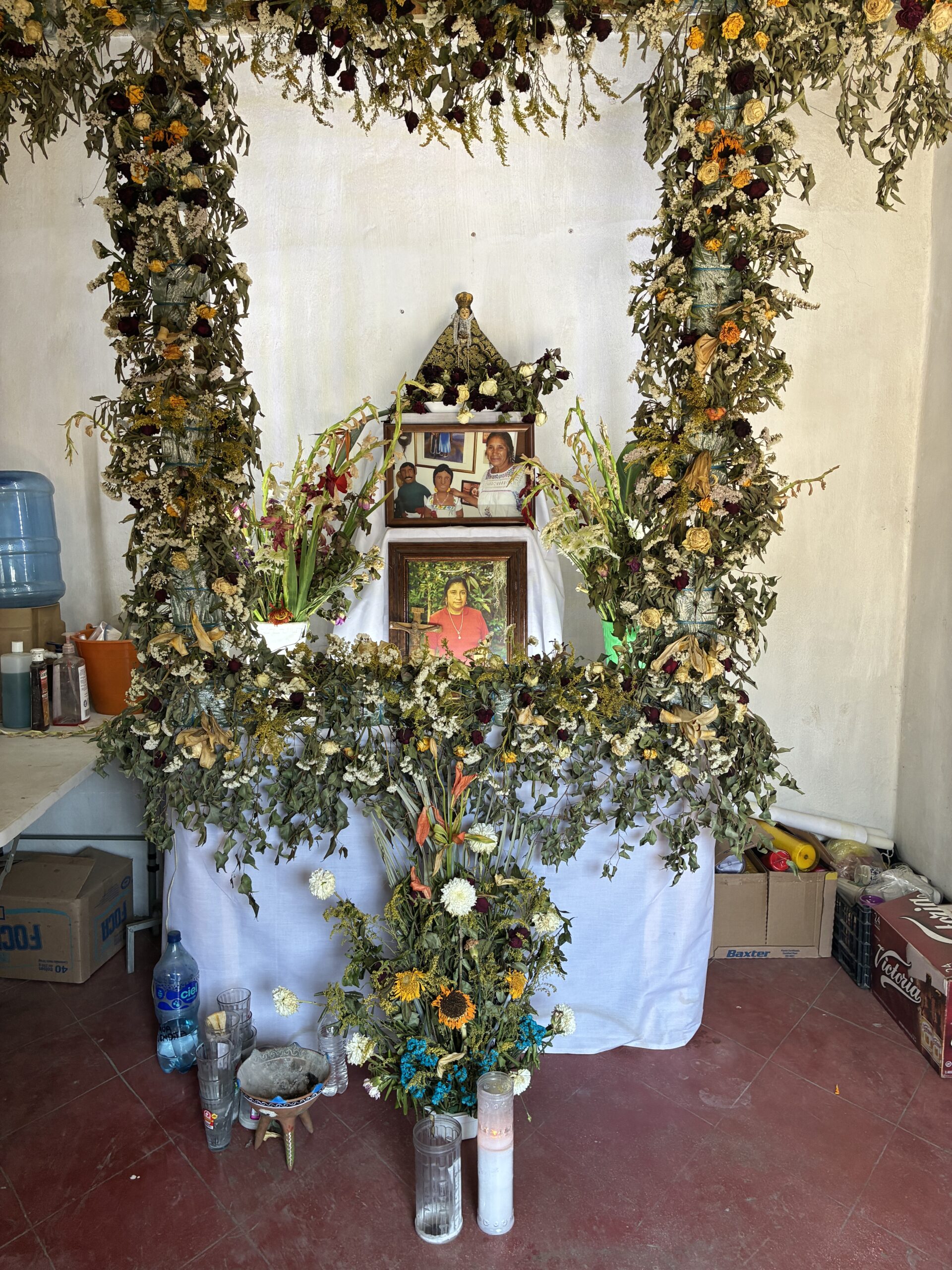
The mother or grandmother of the art studio owner had recently passed, something I of course still feel deep resonance with, and one of the studio rooms was currently serving as as a shrine.
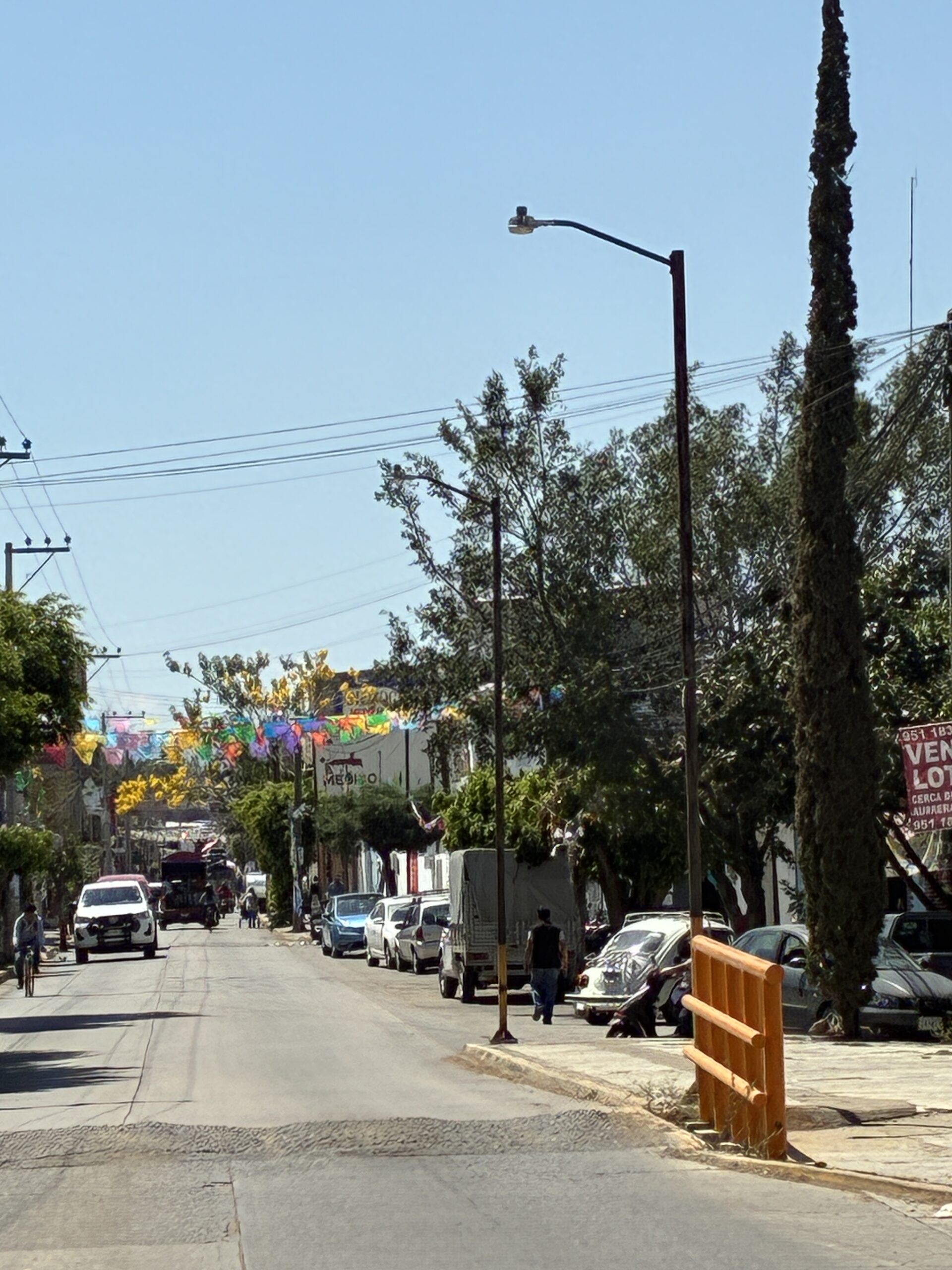
After leaving the studios, we walked into town, with Samuel waiting for us as it is just too difficult to get into and park in the downtown plaza area, because today is outdoor market day.
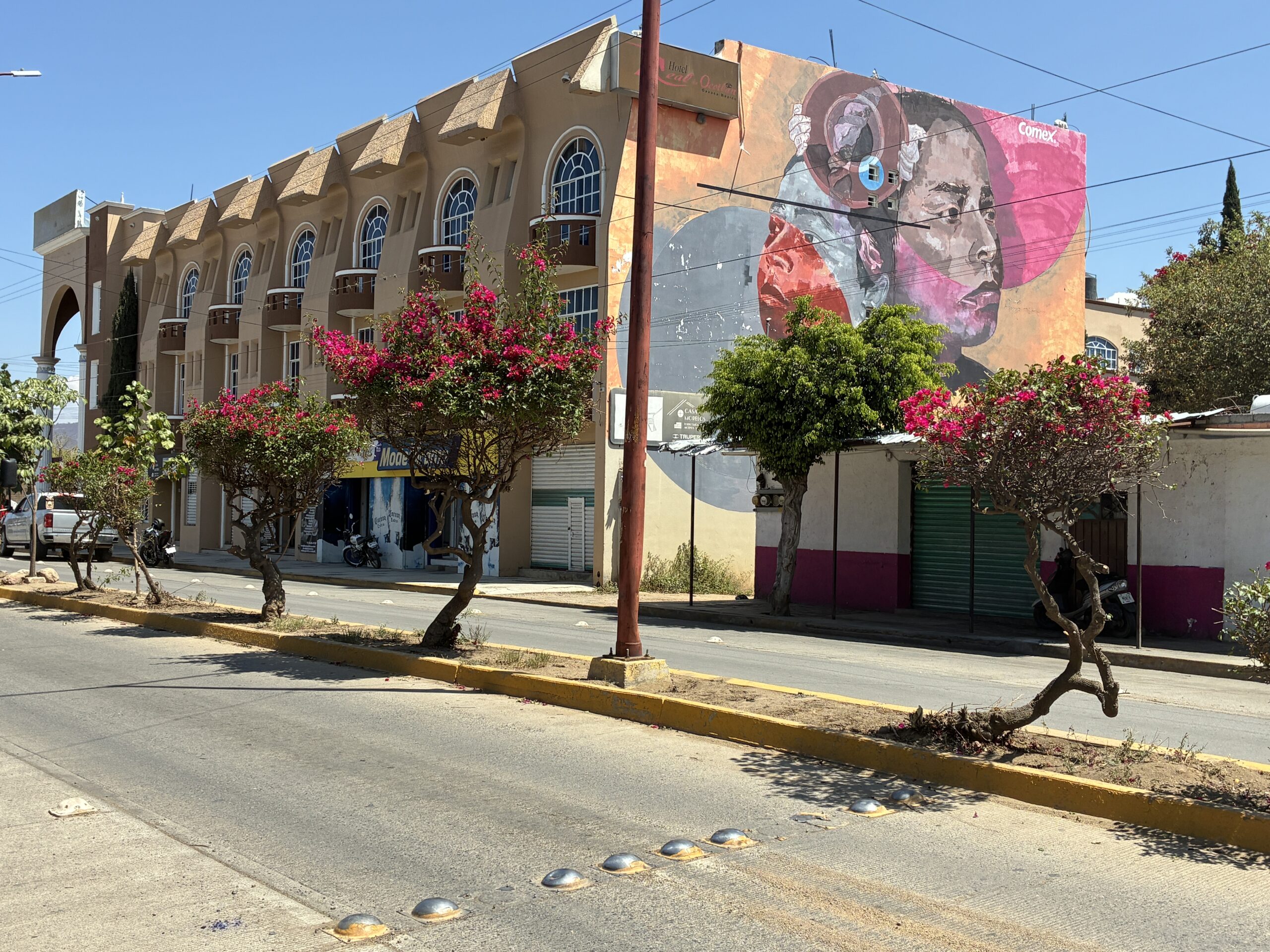
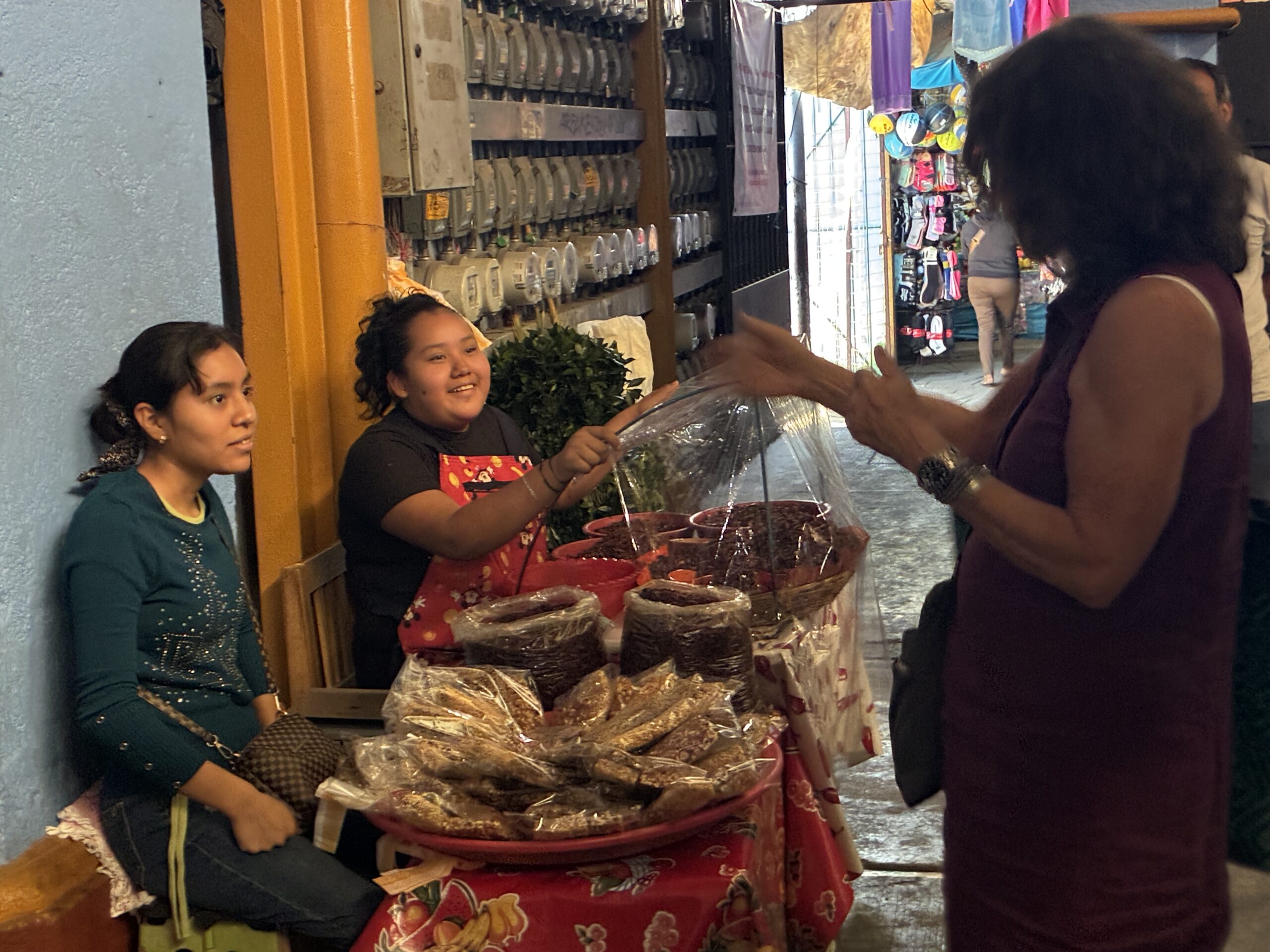
Like all these markets, this one too was bustling, vibrant, lively, and filled with people, noise, and color. Whereas the covered market we were heading for, right off the plaza, is permanent, the outdoor market is held only on Fridays, and on those days, the tianguis, as these traditional open-air street markets are known, and dating back to the pre-Columbian (or pre-Hispanic) era, effectively extend the the covered market, filling the plaza and surrounding streets with hundreds of vendors and goods of every kind. The traditional Friday market day in Ocotlán has continued without interruption for generations, and the tianguis today is considered one of the oldest and largest traditional markets in the central valleys surrounding Oaxaca, which is surrounded by the Sierra Madres. Frankly, they’re incredible.
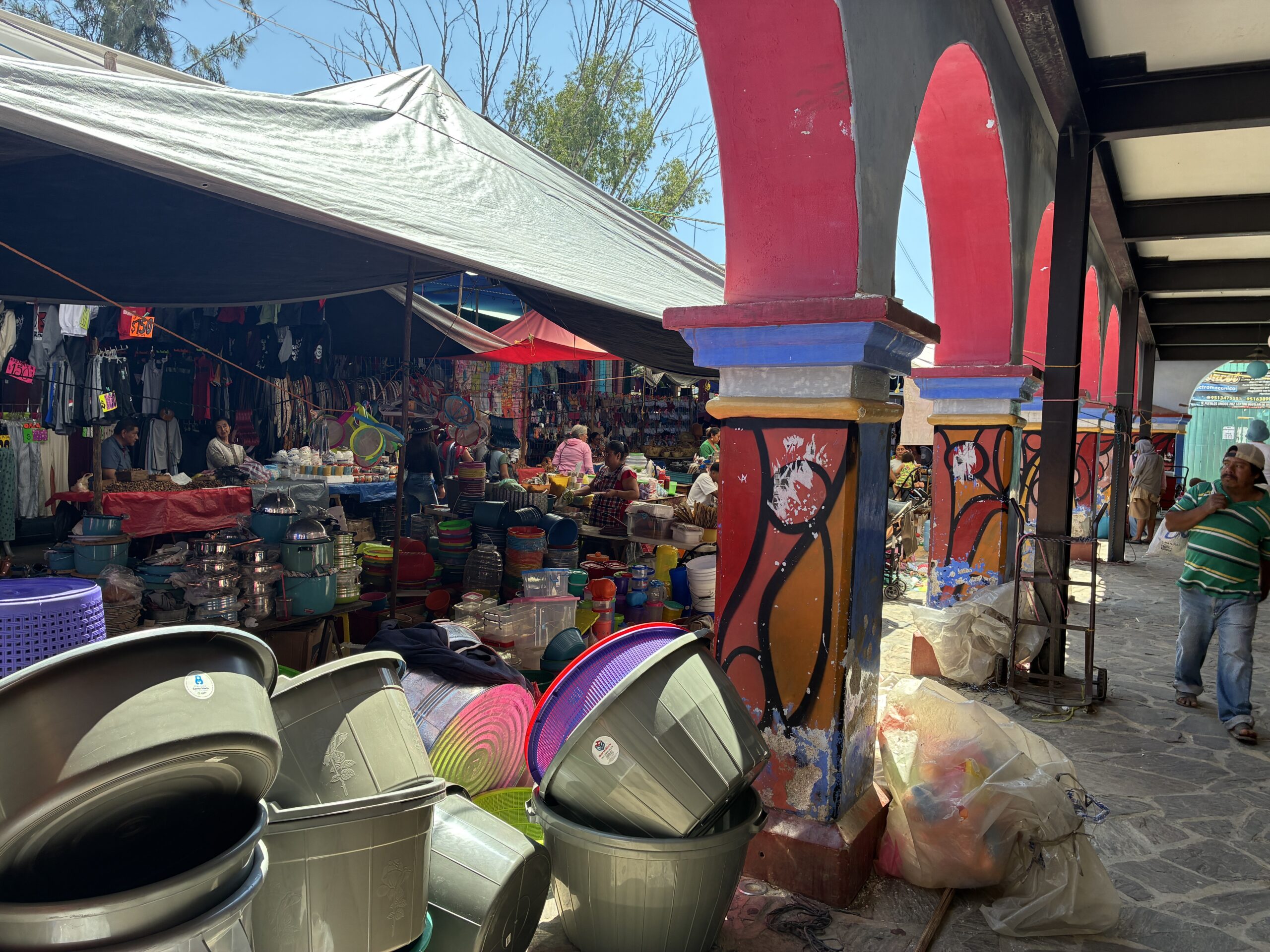
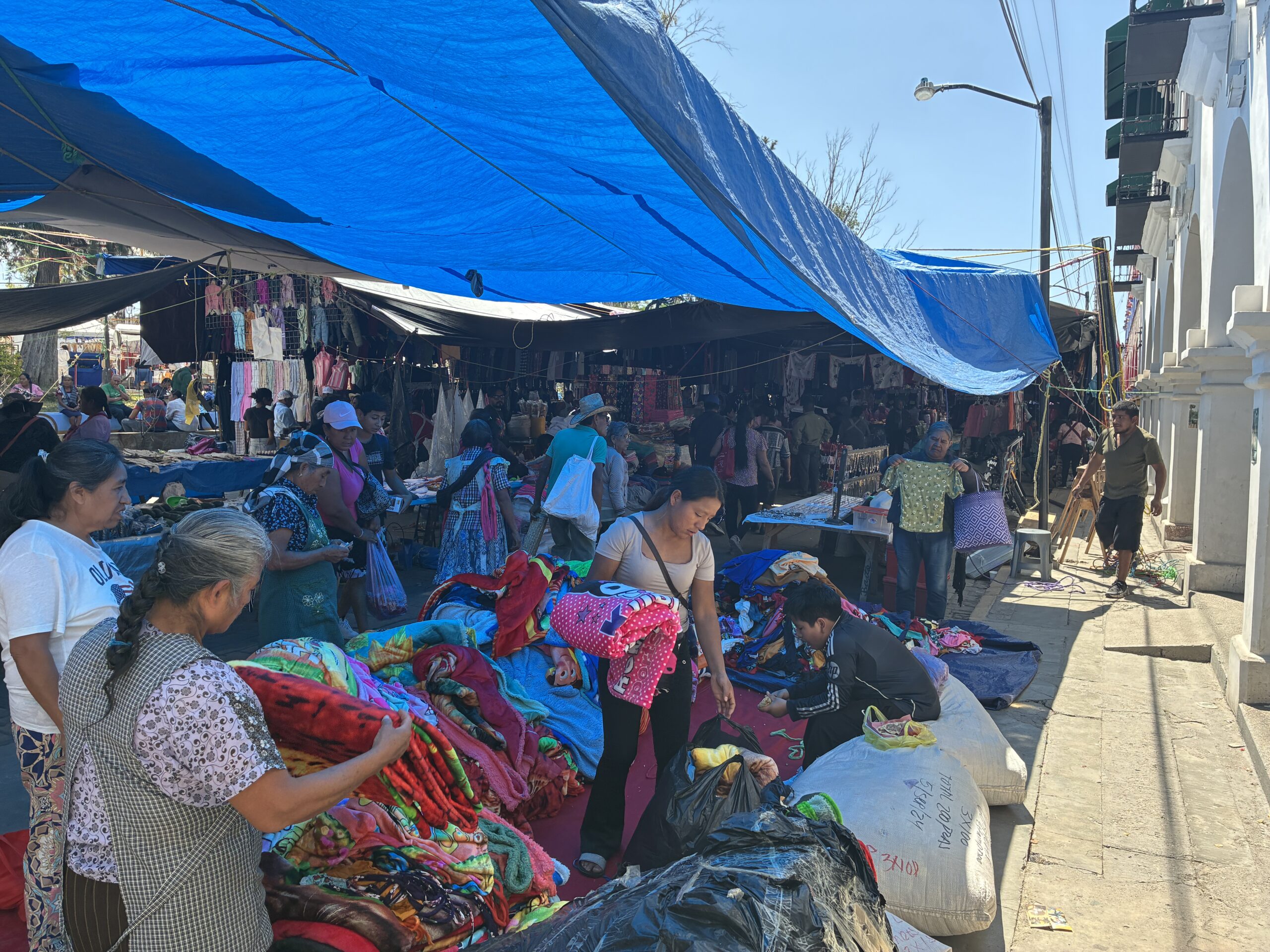
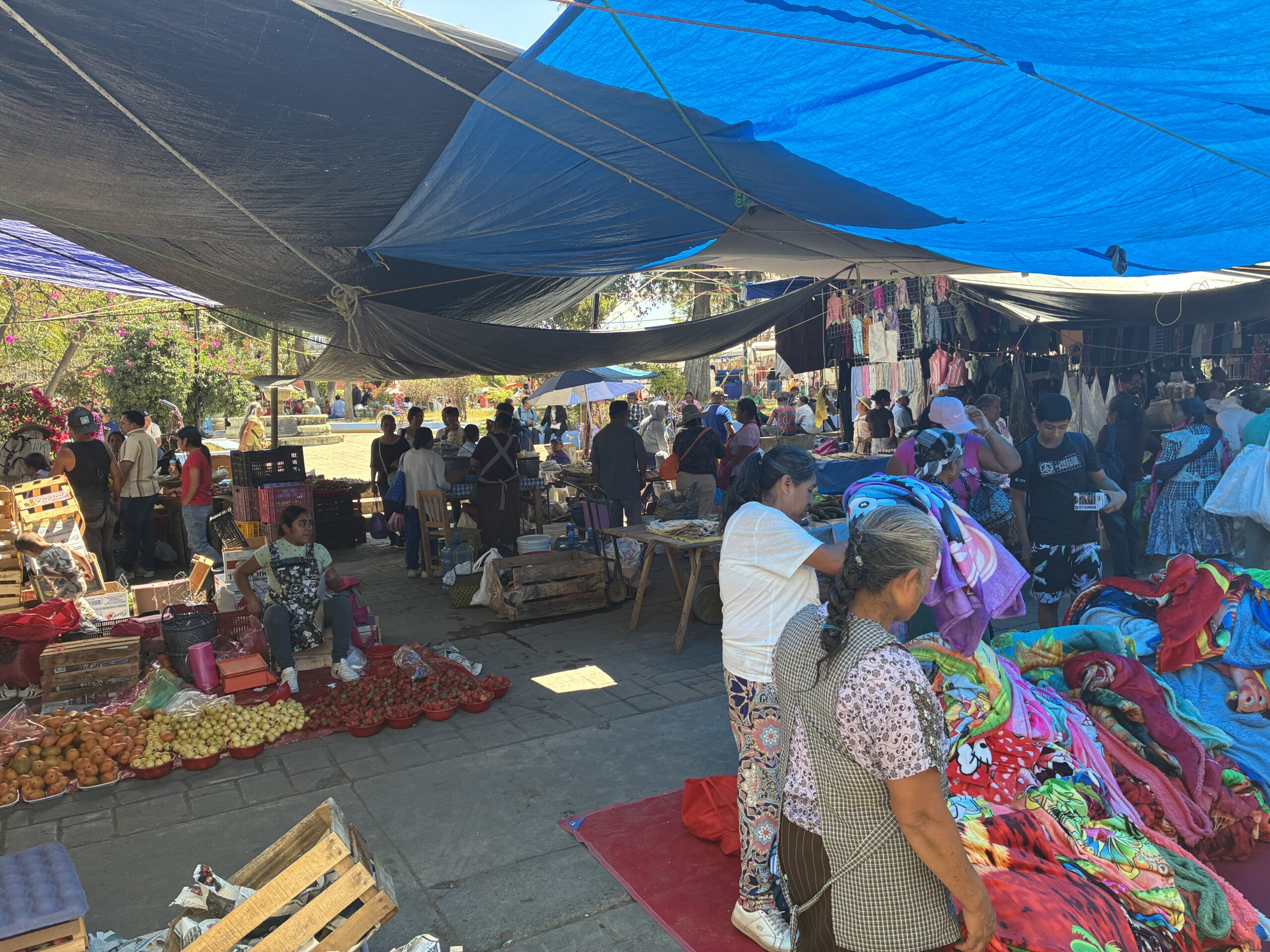
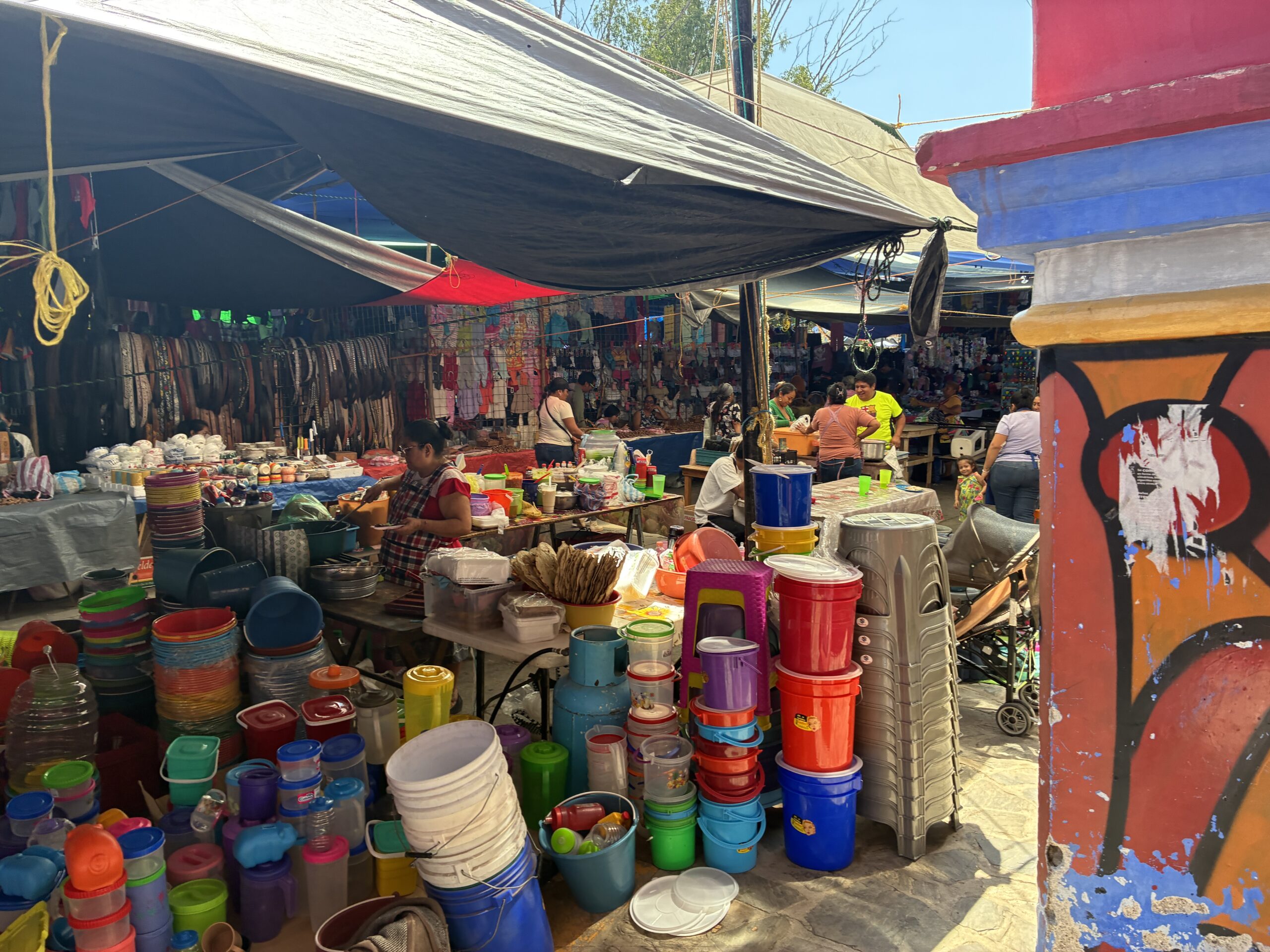
Getting into the covered market was tricky, crowded as it was, as was moving through and trying to figure out where we were headed, through narrow and crowded aisles in the large indoor space, market stalls on each side and crammed with people heading in every direction. The scene, and especially once inside the covered market, is like something out of the song Marrakesh Express.
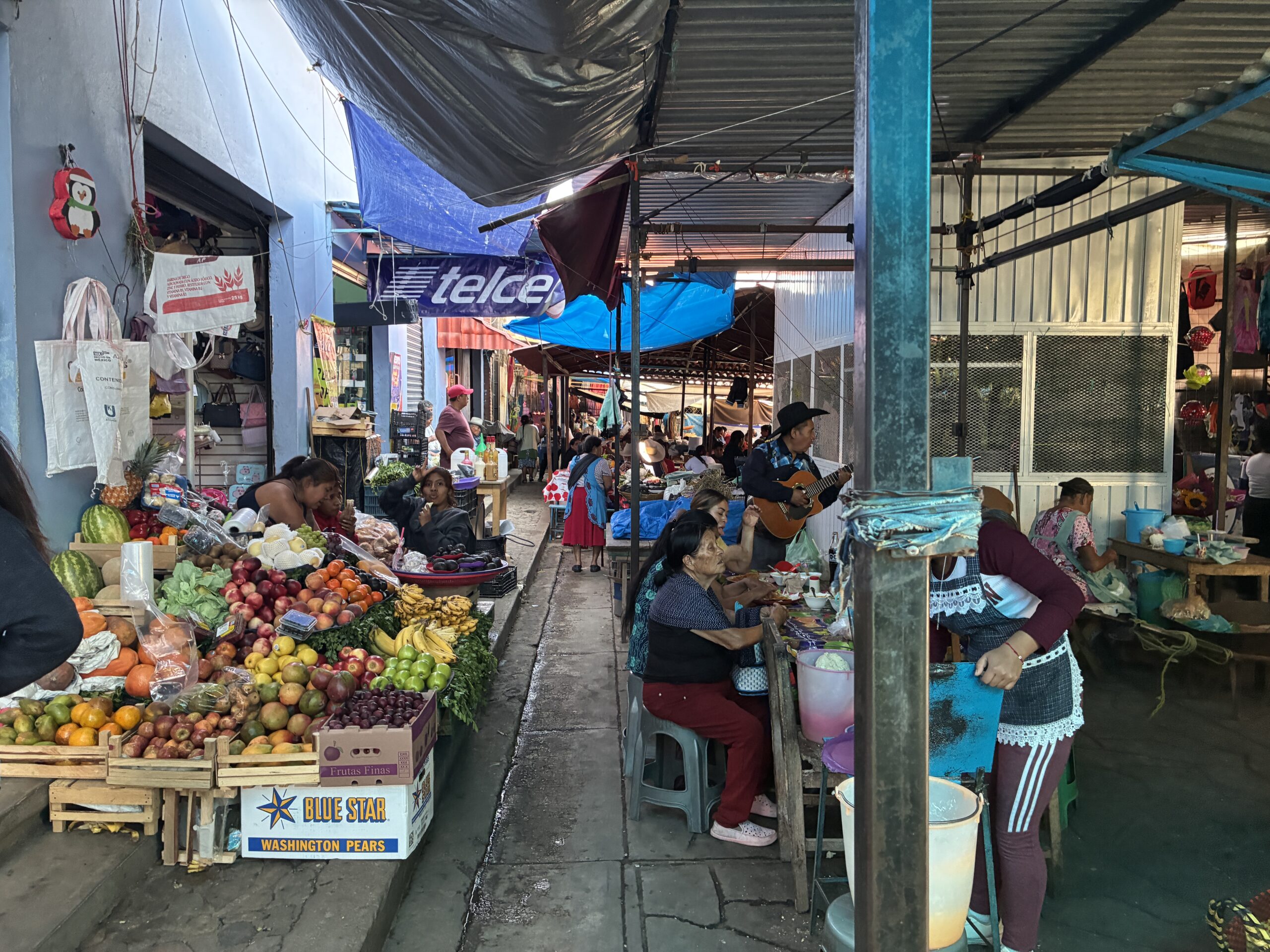
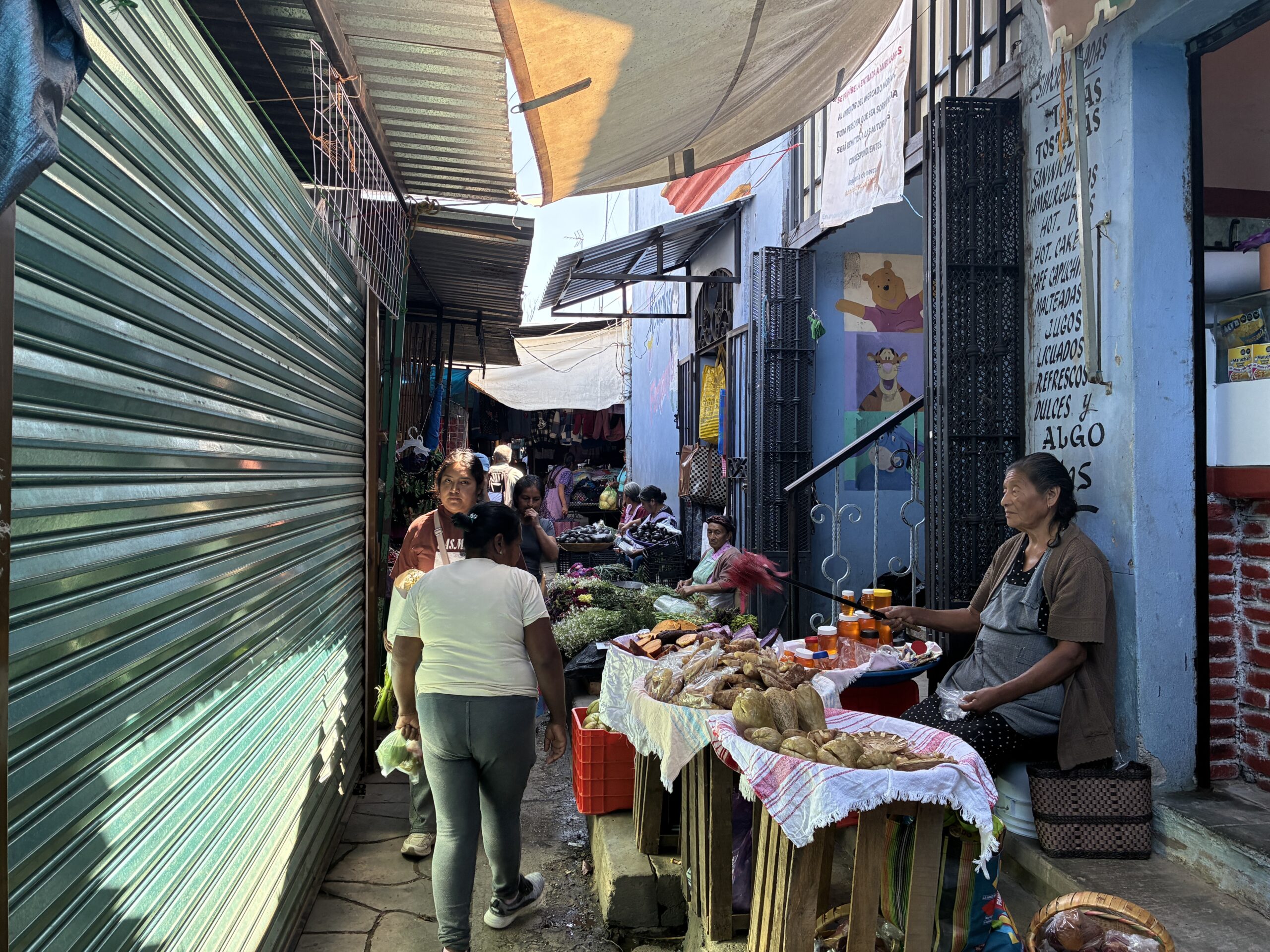
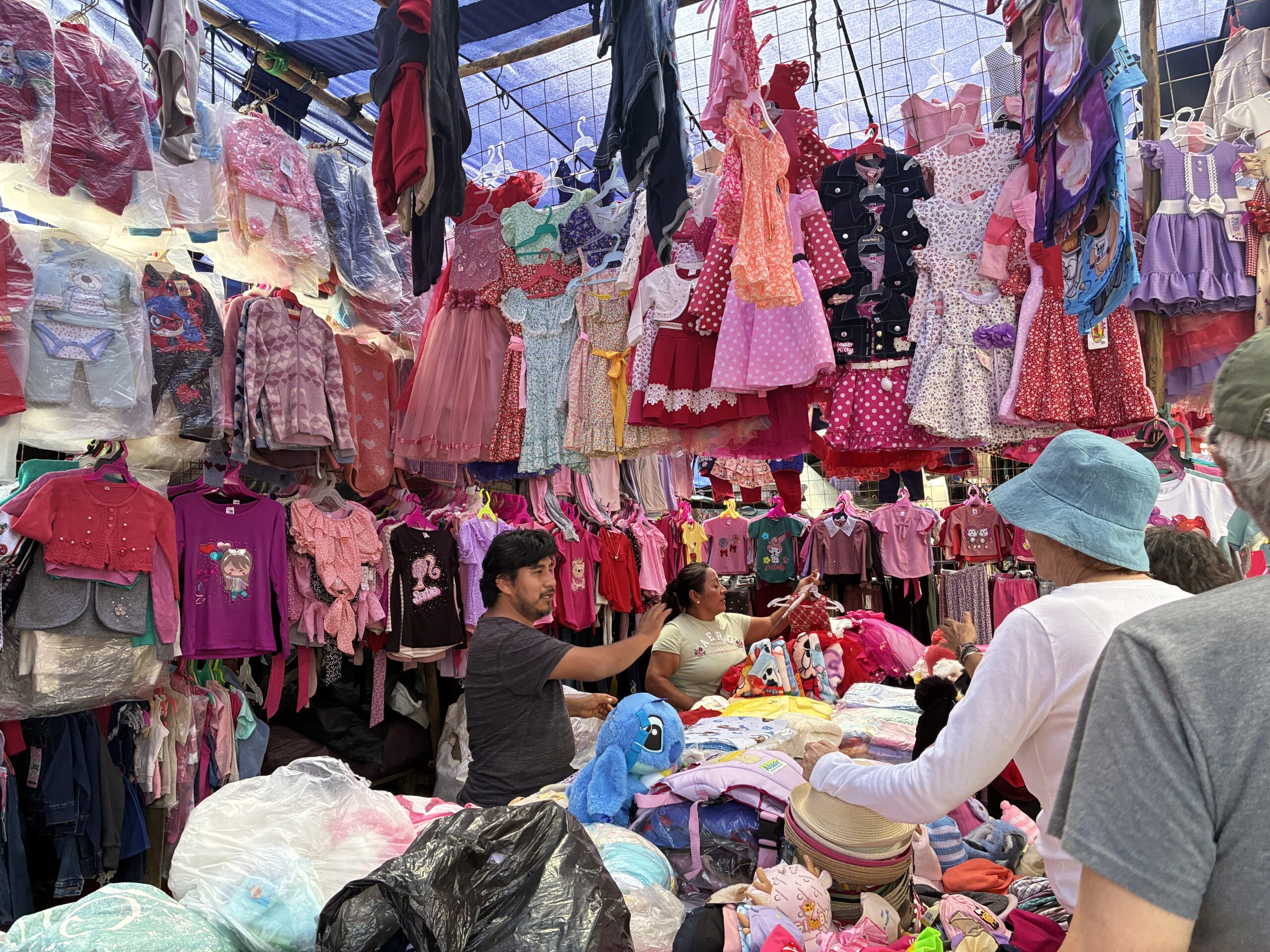
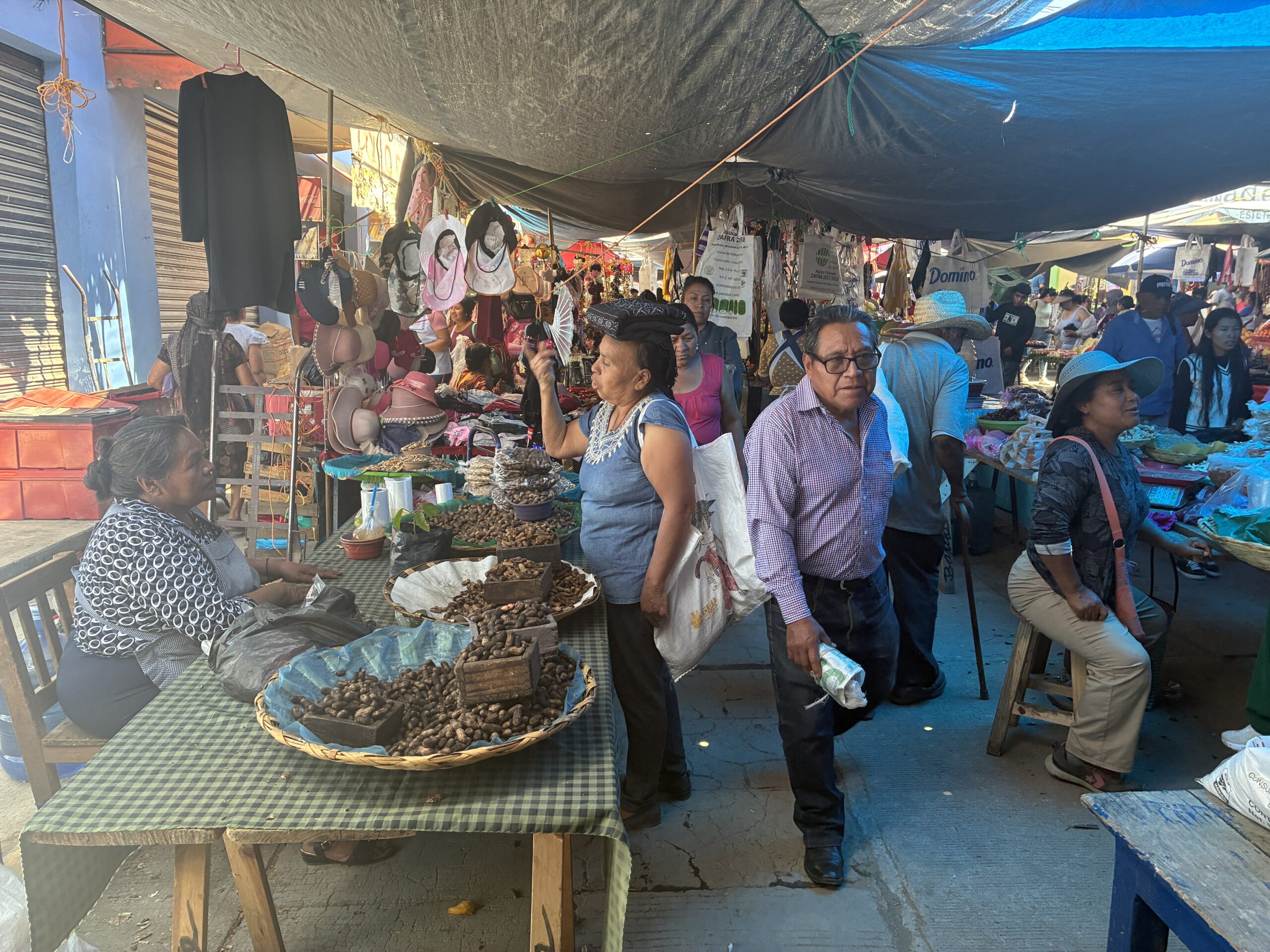
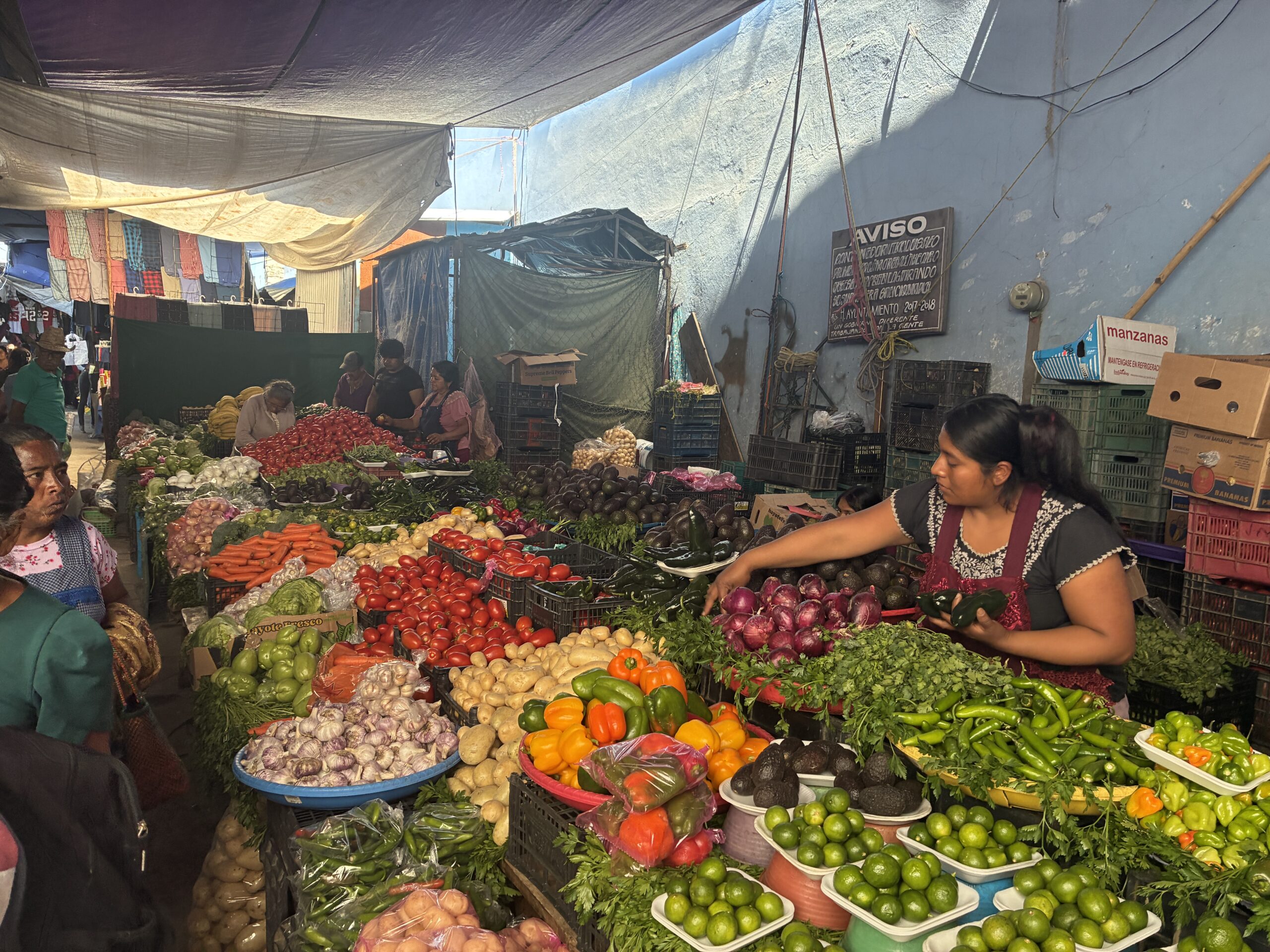
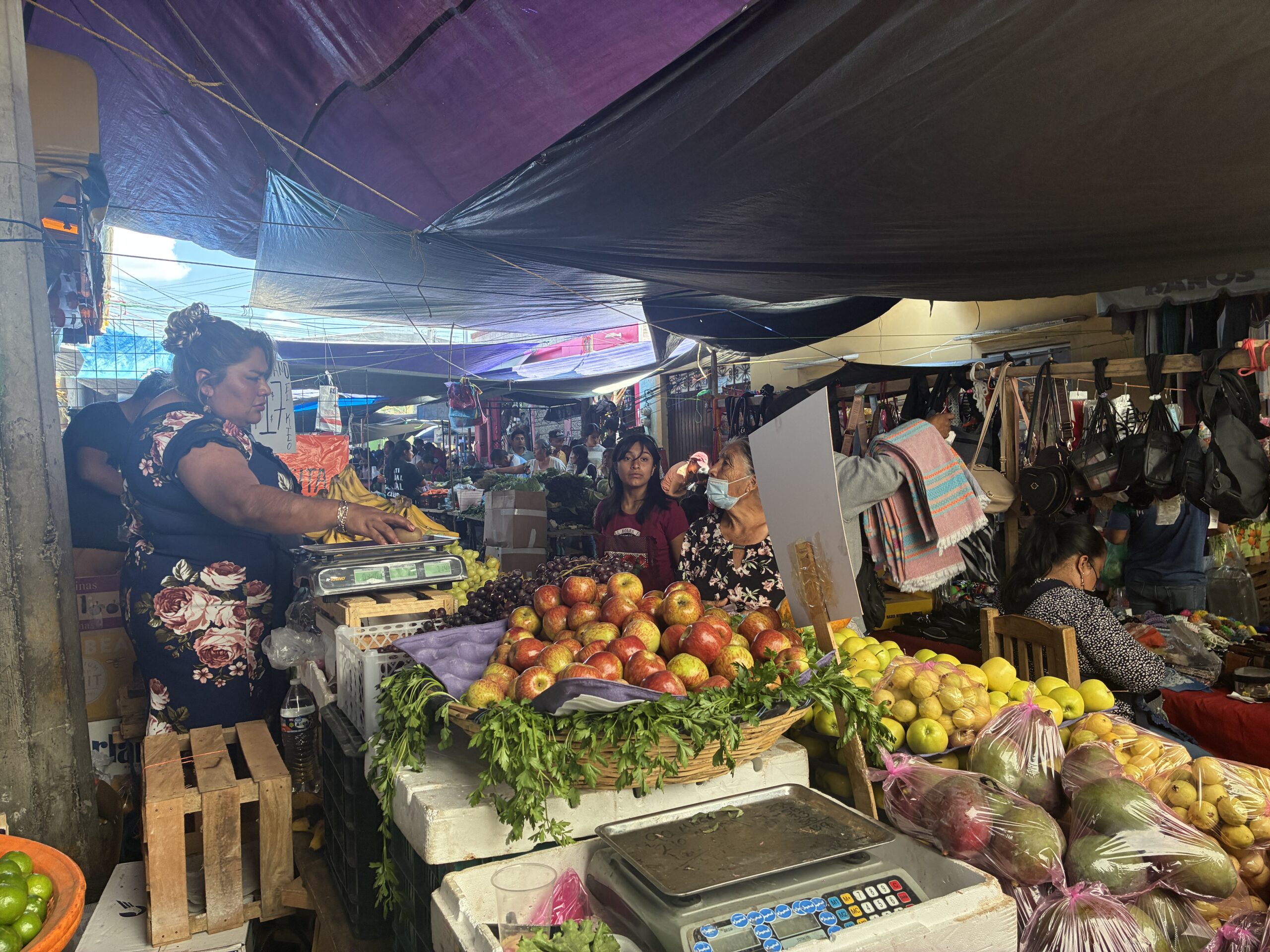
I very much enjoyed the Mercado 20 de Noviembre (November 2 market) in Oaxaca, which I visited last time I was here, but this was even more exciting, crowded, and filled with everything it seemed, and certainly more people (it seemed). Trying to figure out how to find the eating place we were headed was itself a bit of a challenge, which we finally reached largely thanks to Rachel’s Spanish skills.
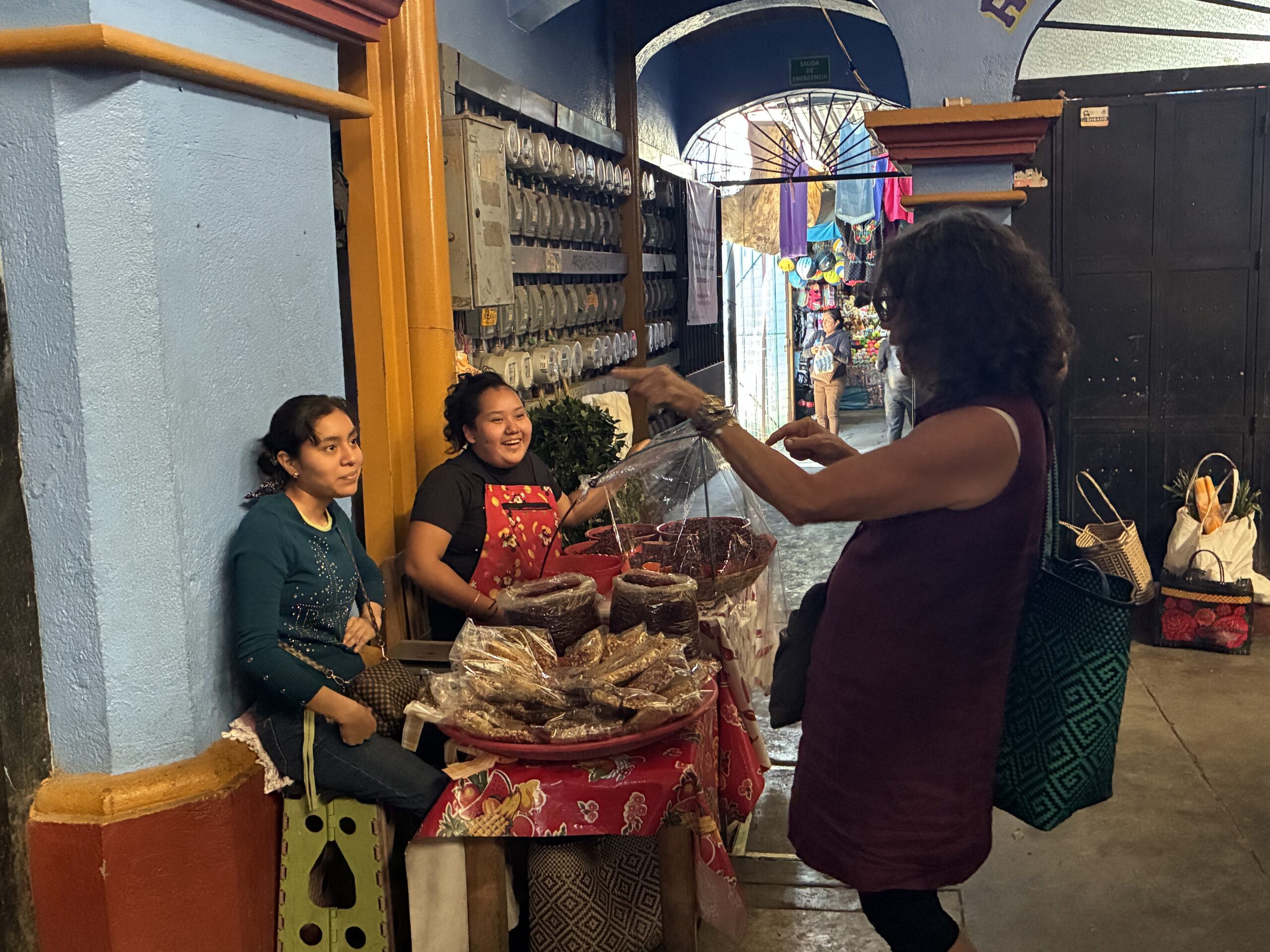
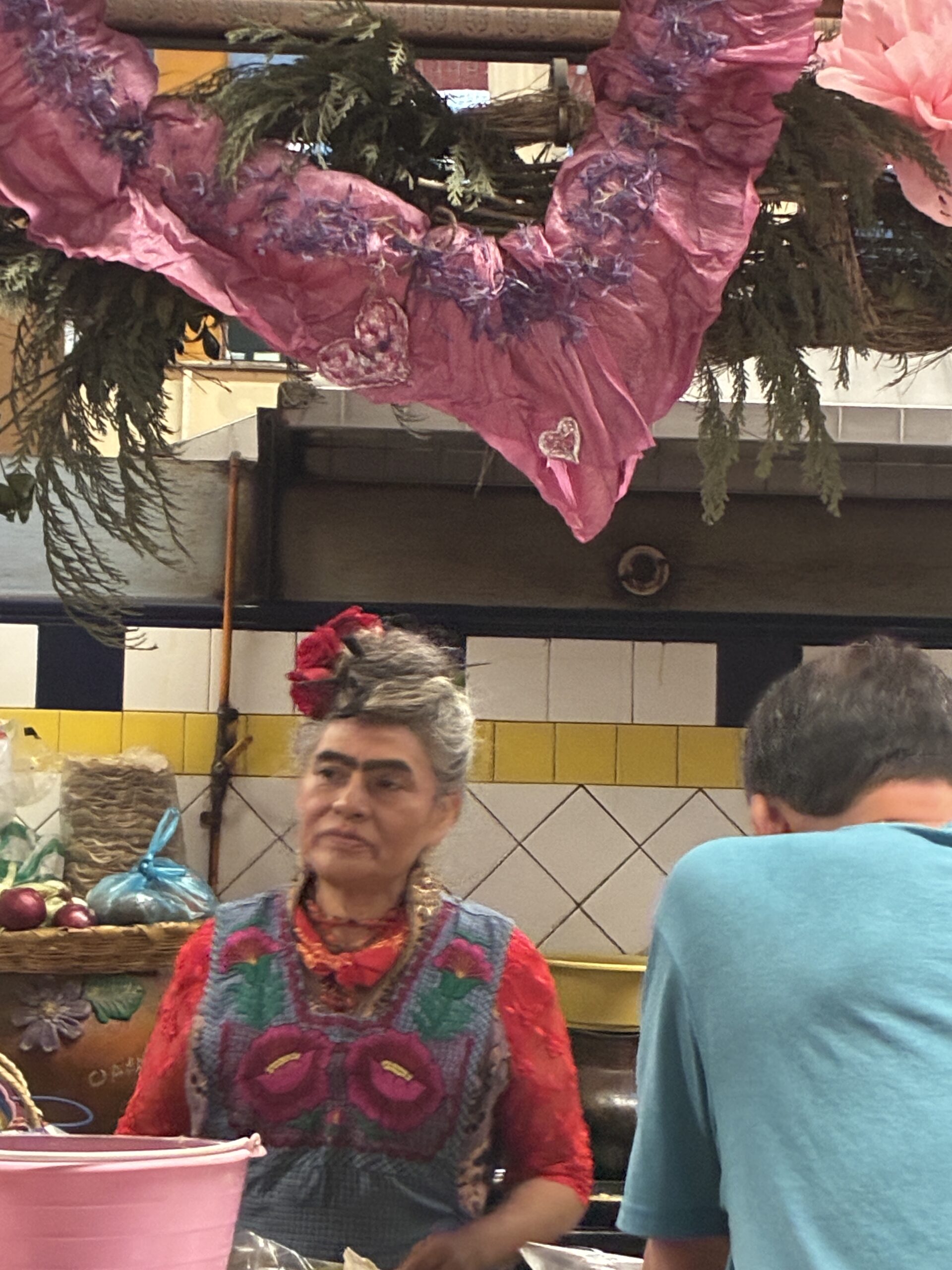
We finally reached and ate at La Cocina de Frida Kahlo. Of course, it really wasn’t Frida Kahlo’s kitchen and, besides that, she died in 1954, but the principle was great.
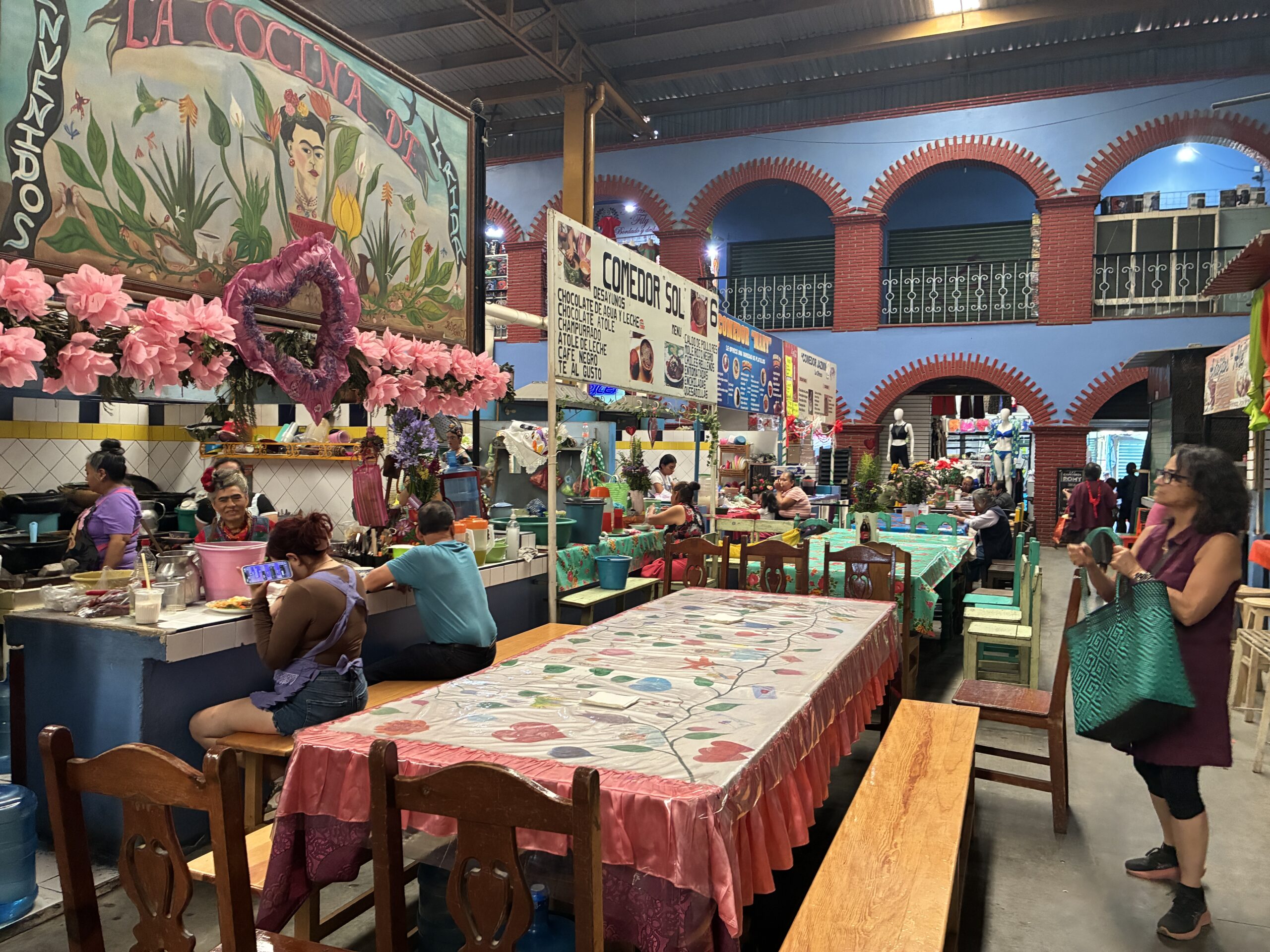
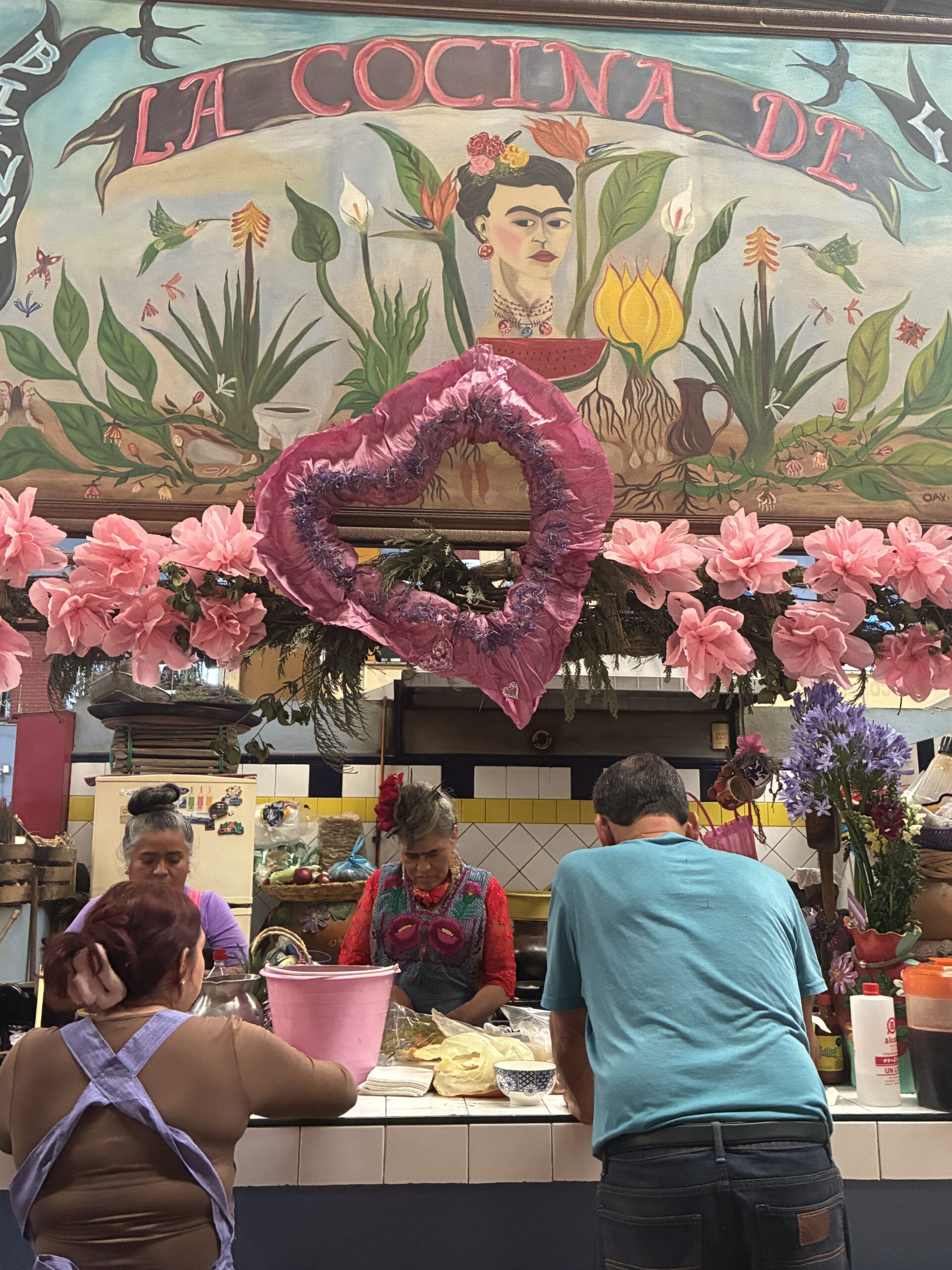
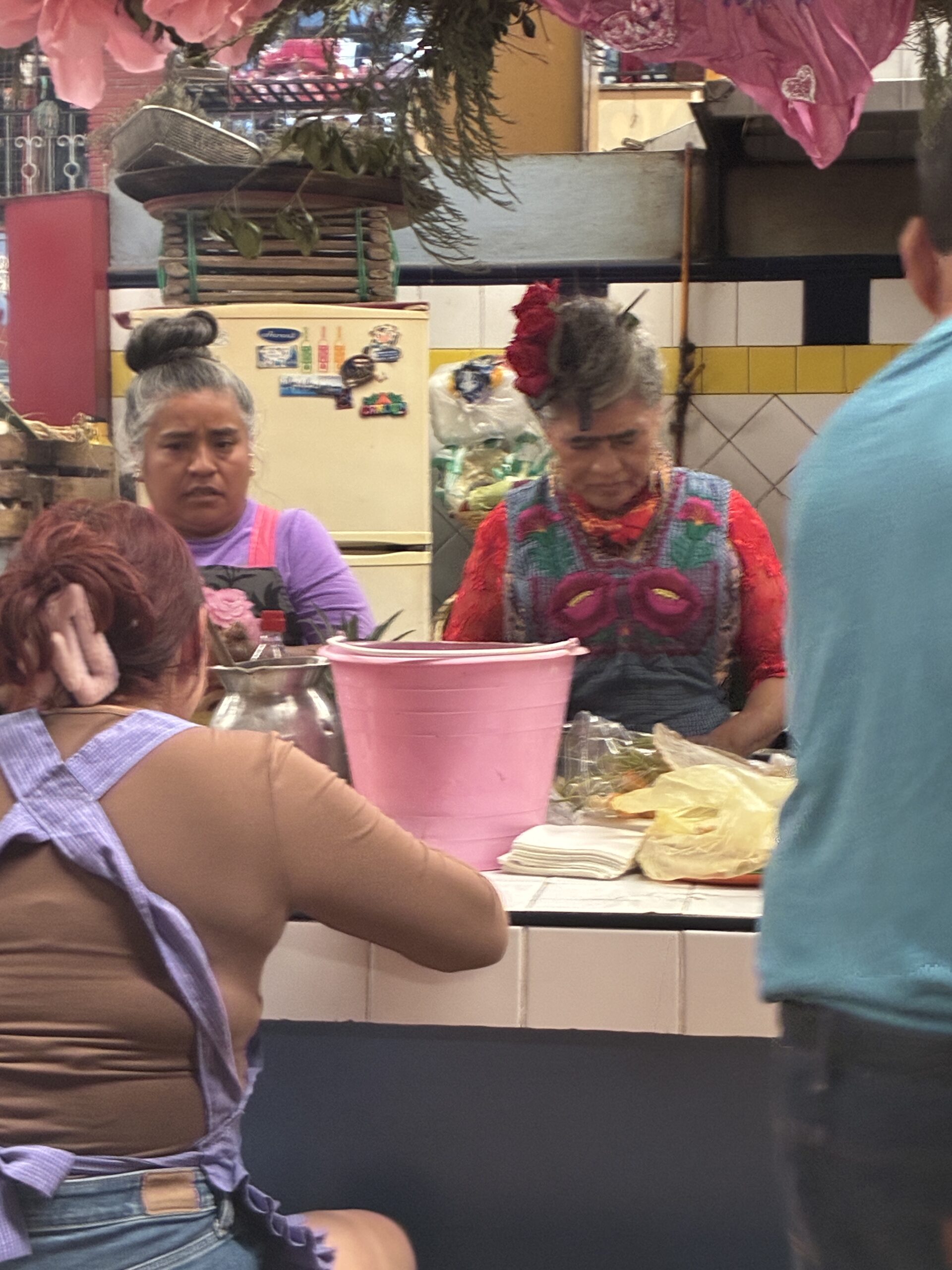
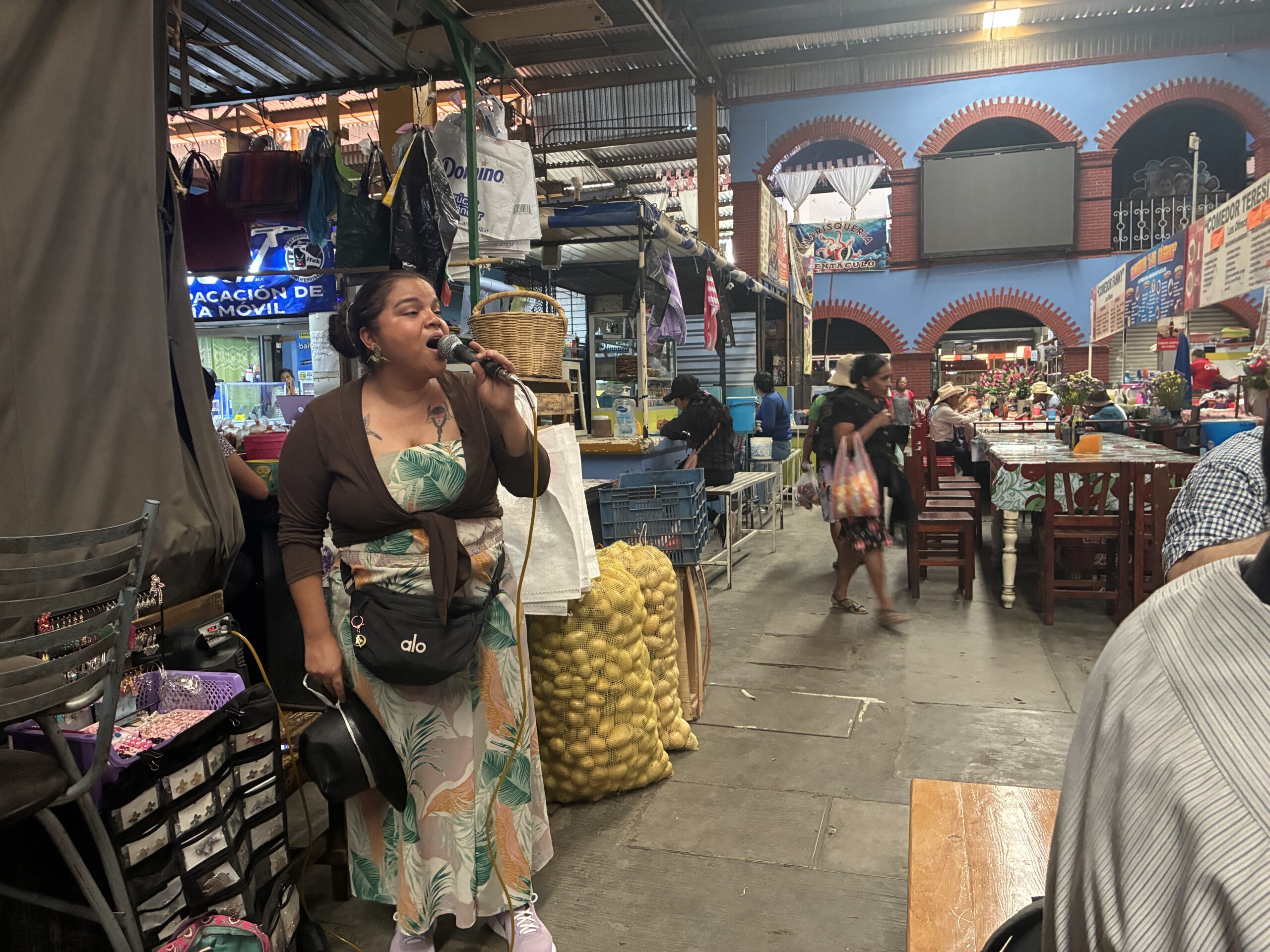
These markets are lively and filled with activity. While eating, we, and the rest of the market, were serenaded by a young woman with a great voice.
While eating, a local guy sat next to me, and although neither of us could communicate well (that’s quite an understatement), like so many people, he was friendly and interested to hear where I was from, and shared some fruit with me while we were waiting for our food. He had visited Boston and New Haven, and was happy to the share that with me. I wish I’d taken a photo.
After eating, we worked our way out of the market. The town is Zapotec, and the whole region has a large indigenous population, so it was of course common to see many indigenous faces among the many sellers and in the crowd.
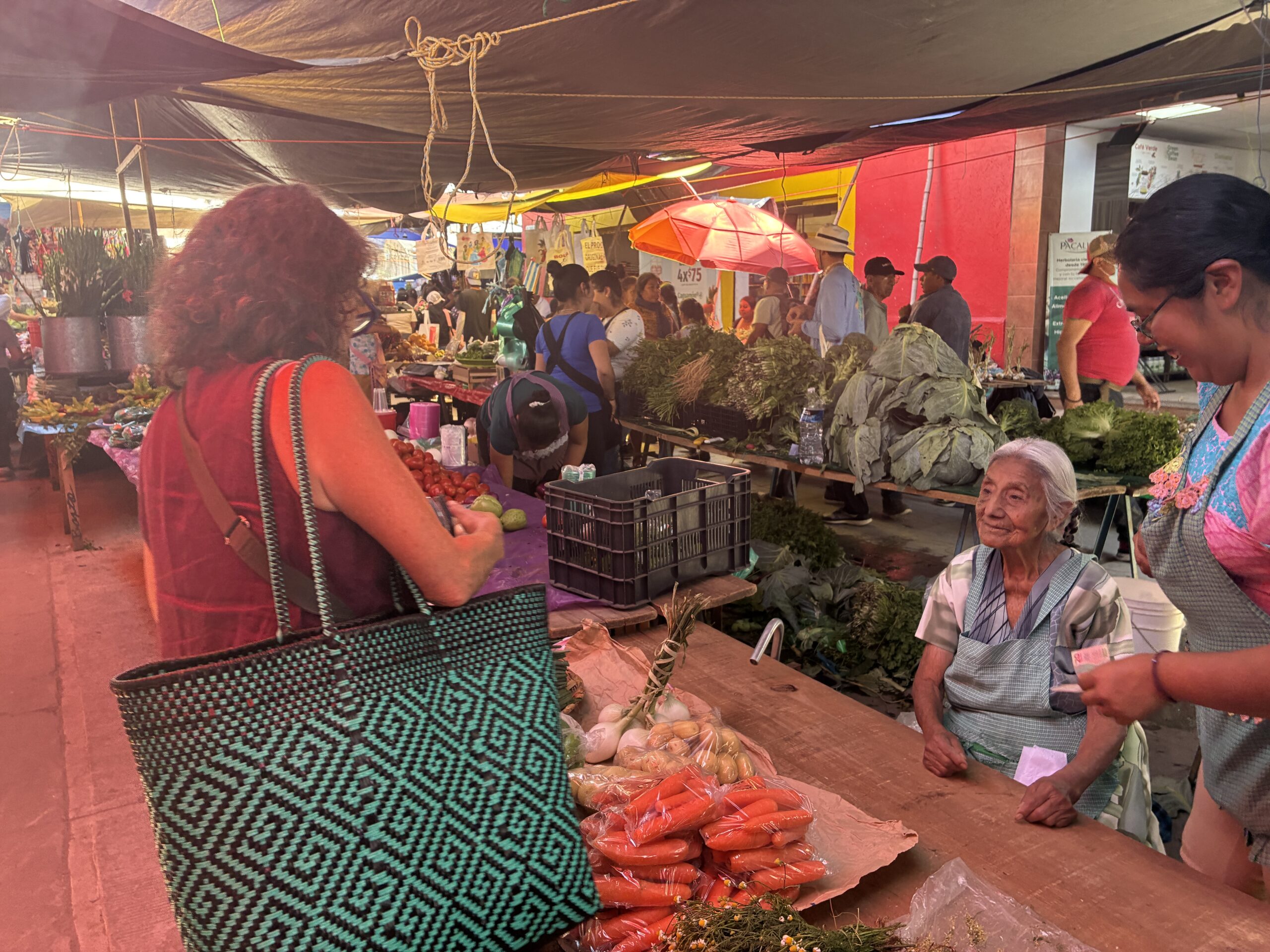
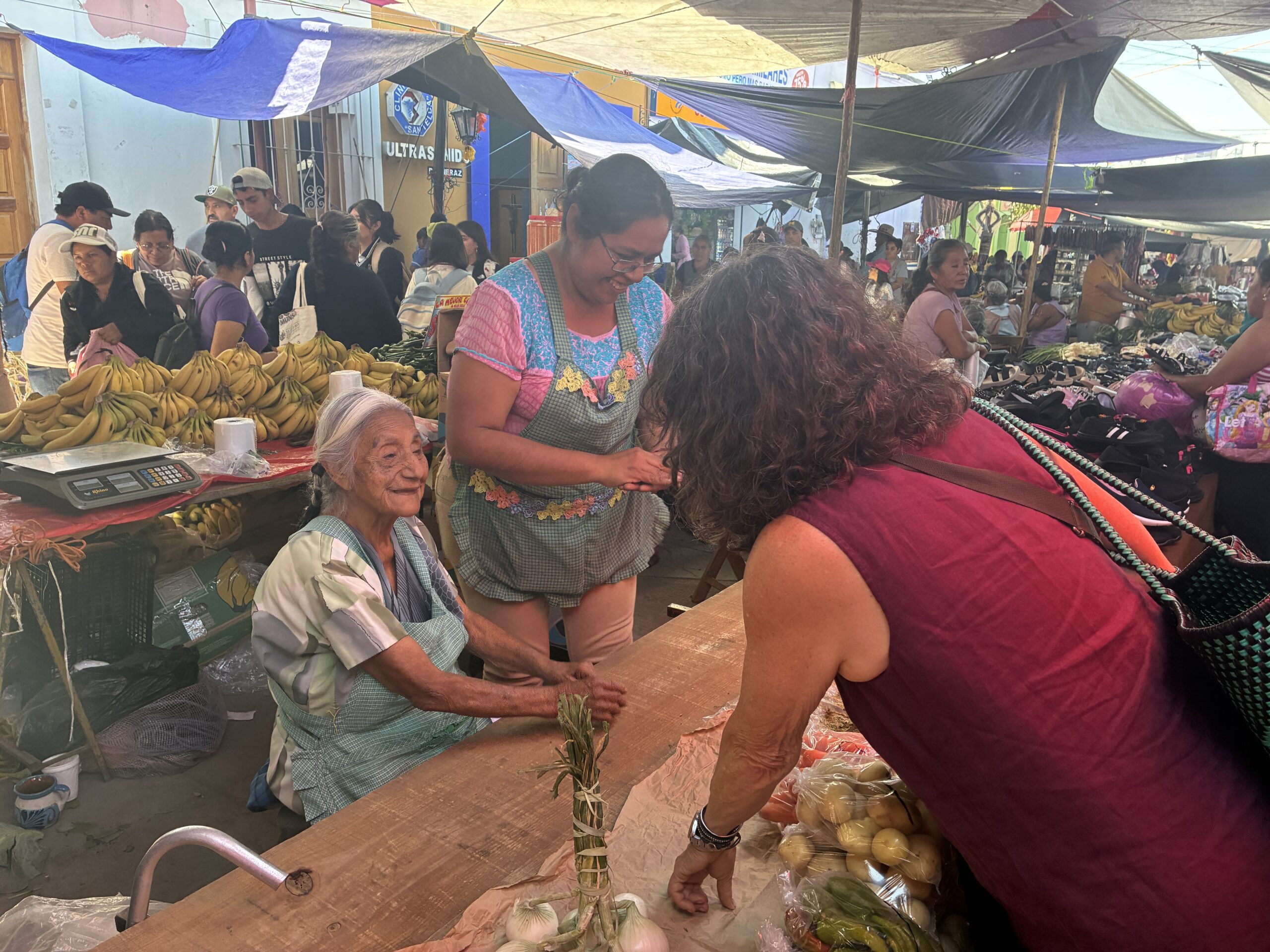
Once outside, we worked our way through the outdoor market, and Samuel met us. The day was drawing on, and we didn’t have time to spend walking around, which I would have loved, or finding the small animal market that Rachel wanted to visit, as did I. Oh well, but I wish we’d have had more time.
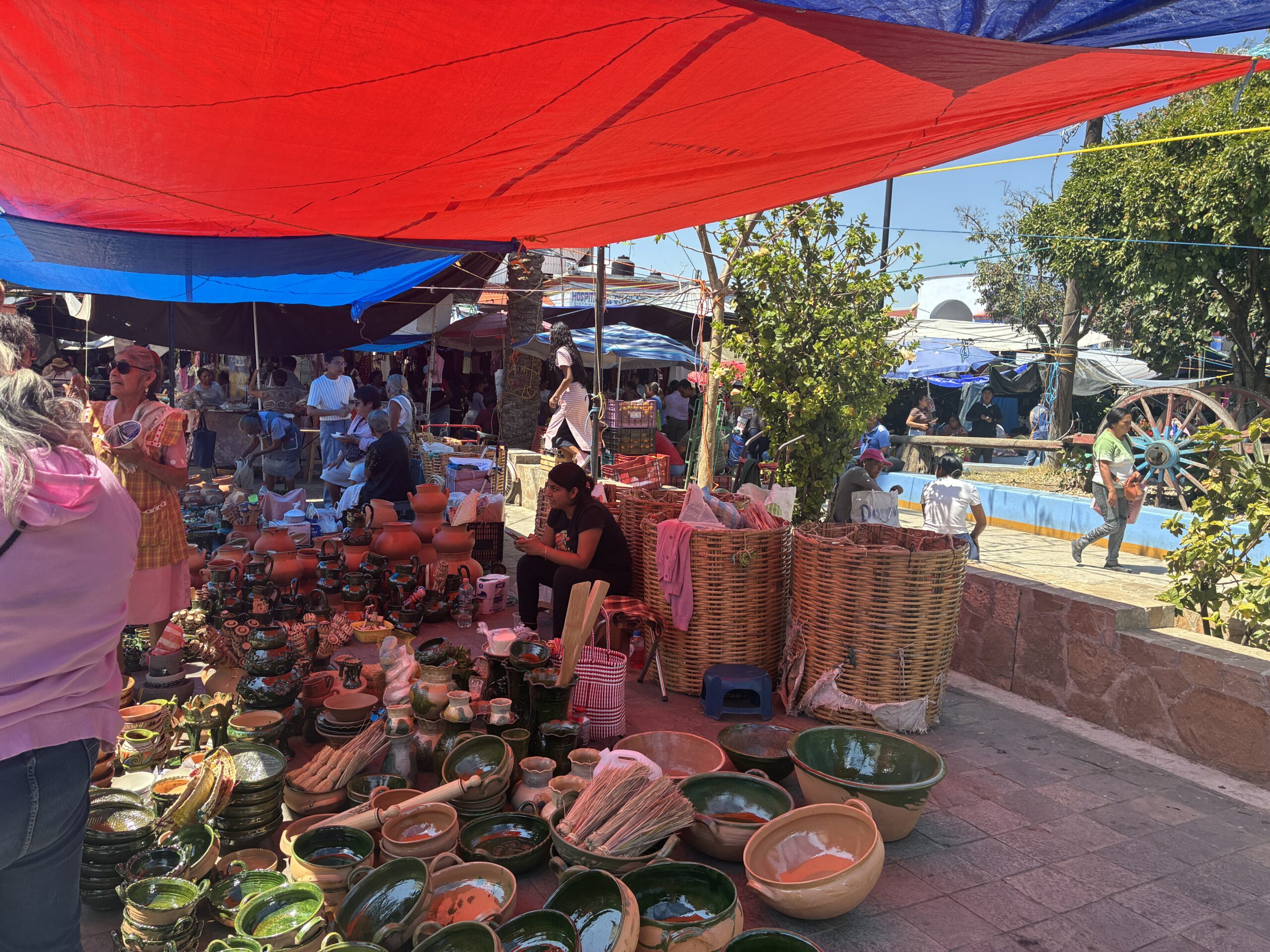
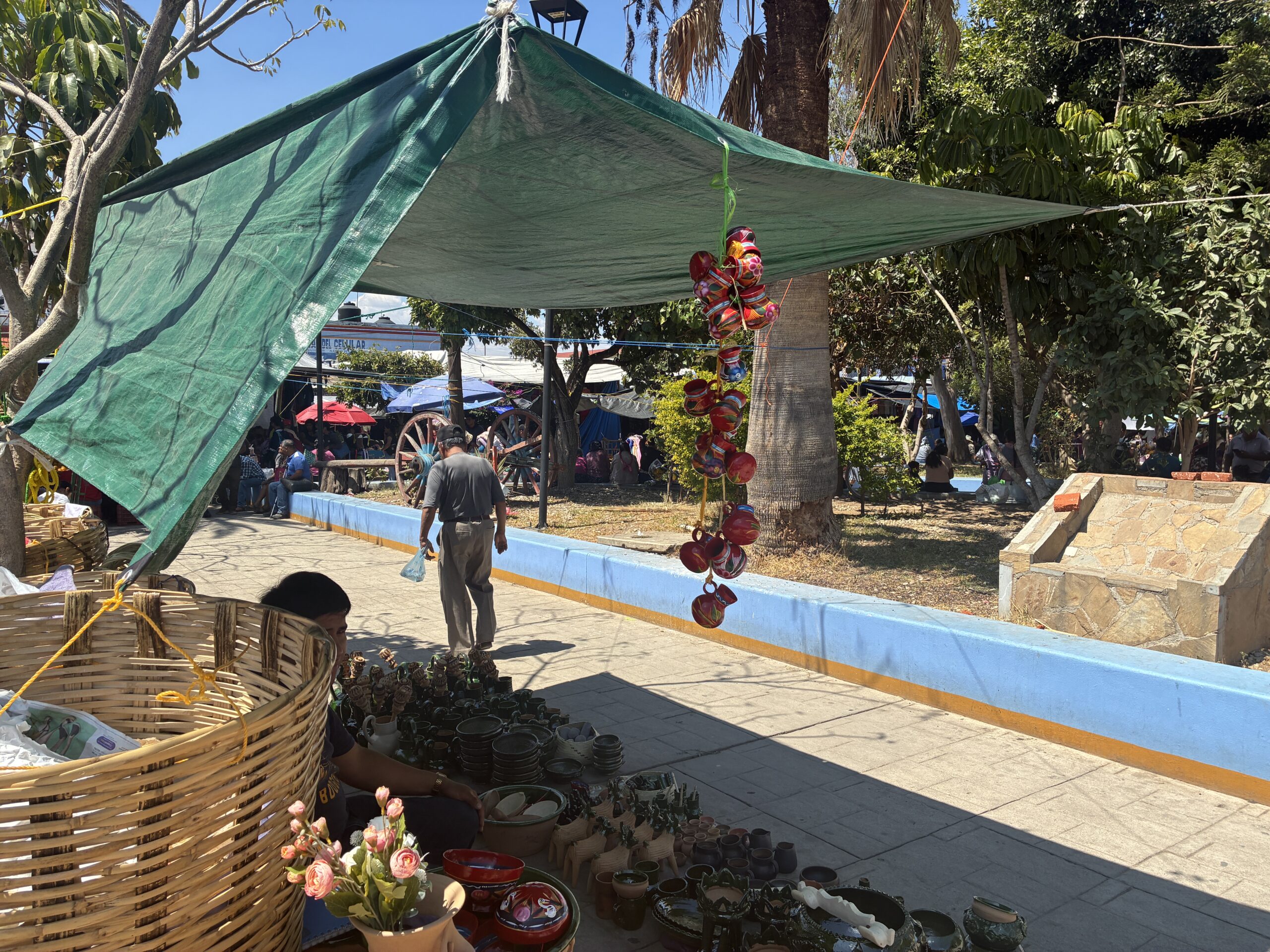
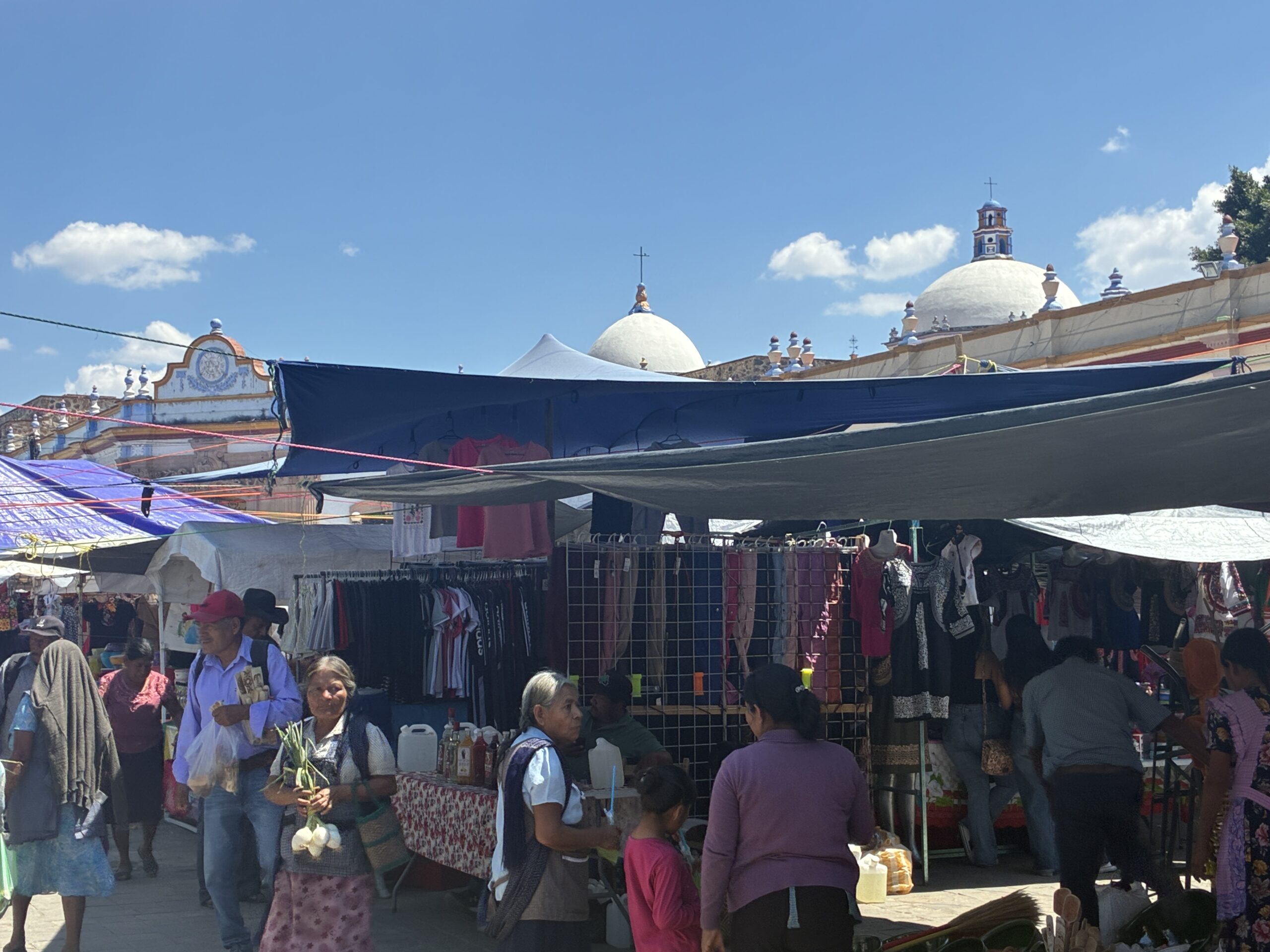
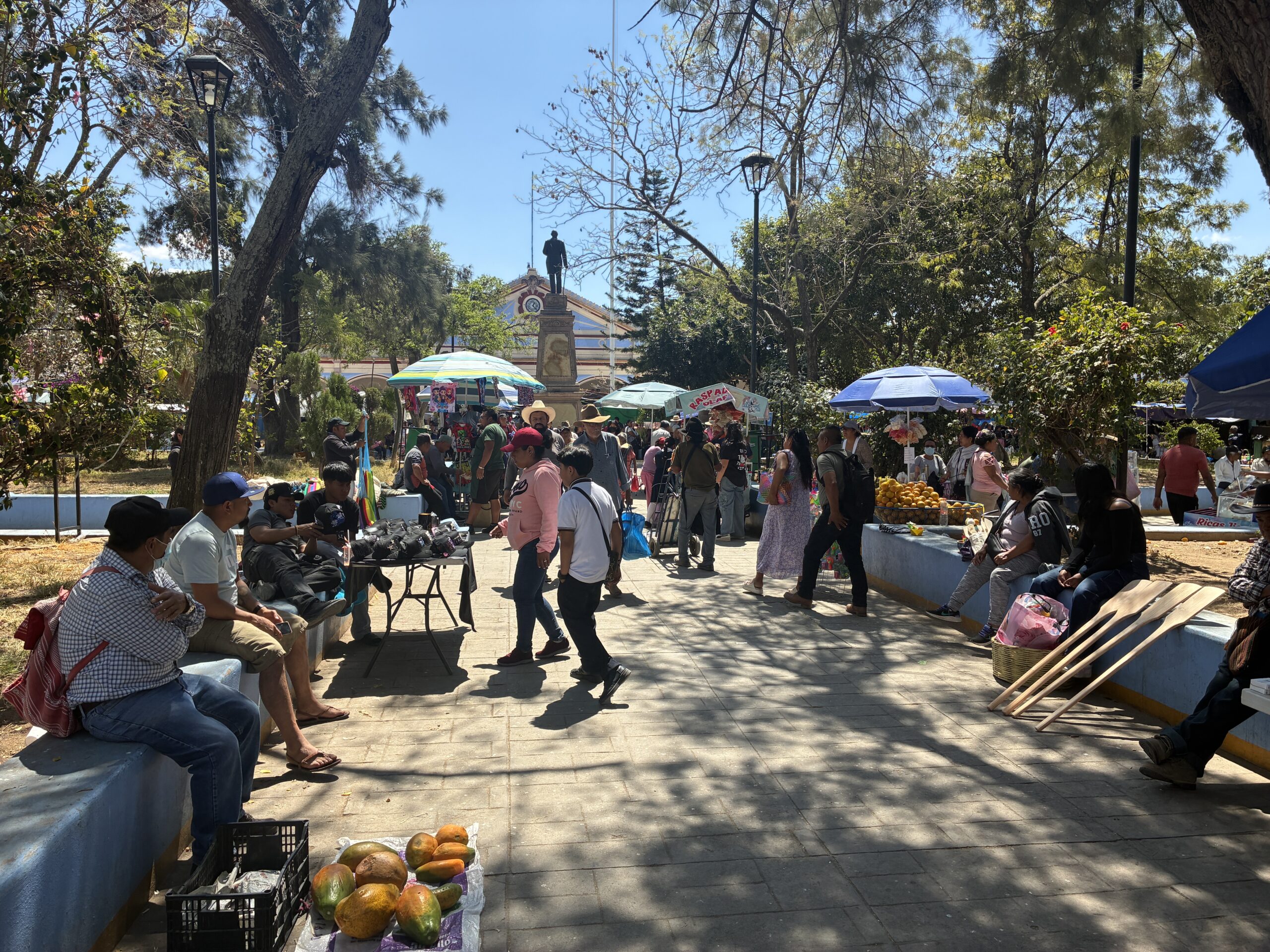
Just as well we did leave, as traffic was heavy coming into Oaxaca, and it’s apparently like this e very afternoon. Patti had to be back by 3:30, and I had my fourth and final Spanish lesson with Alberto at 4.
The lesson was again good, with a focus on just practice, and we had some low key conversation, where I could essentially understand the simple sentences Alberto was saying, and, with the help of my cheat sheets, I could, more-or-less do the same. But let me stress the simplicity of the sentences and the all-important use of those cheat sheets. As I said to Alberto, if someone took five minutes to say something simple to me, and repeat it when asked, and they were willing to take an additional five minutes to listen to me speaking my sentence (and they could speak English when necessary), I’d be okay. But these four lessons have provided me with fcar more than I imagined I’d get out of just a few hours of instruction. Alberto is, I think, a good teacher. Of course, I’ve only ever had one other language teacher, and that was Mrs. Theodossen, my high school French teacher (and a piece of work, like som many teachers I and peers encountered from that era).
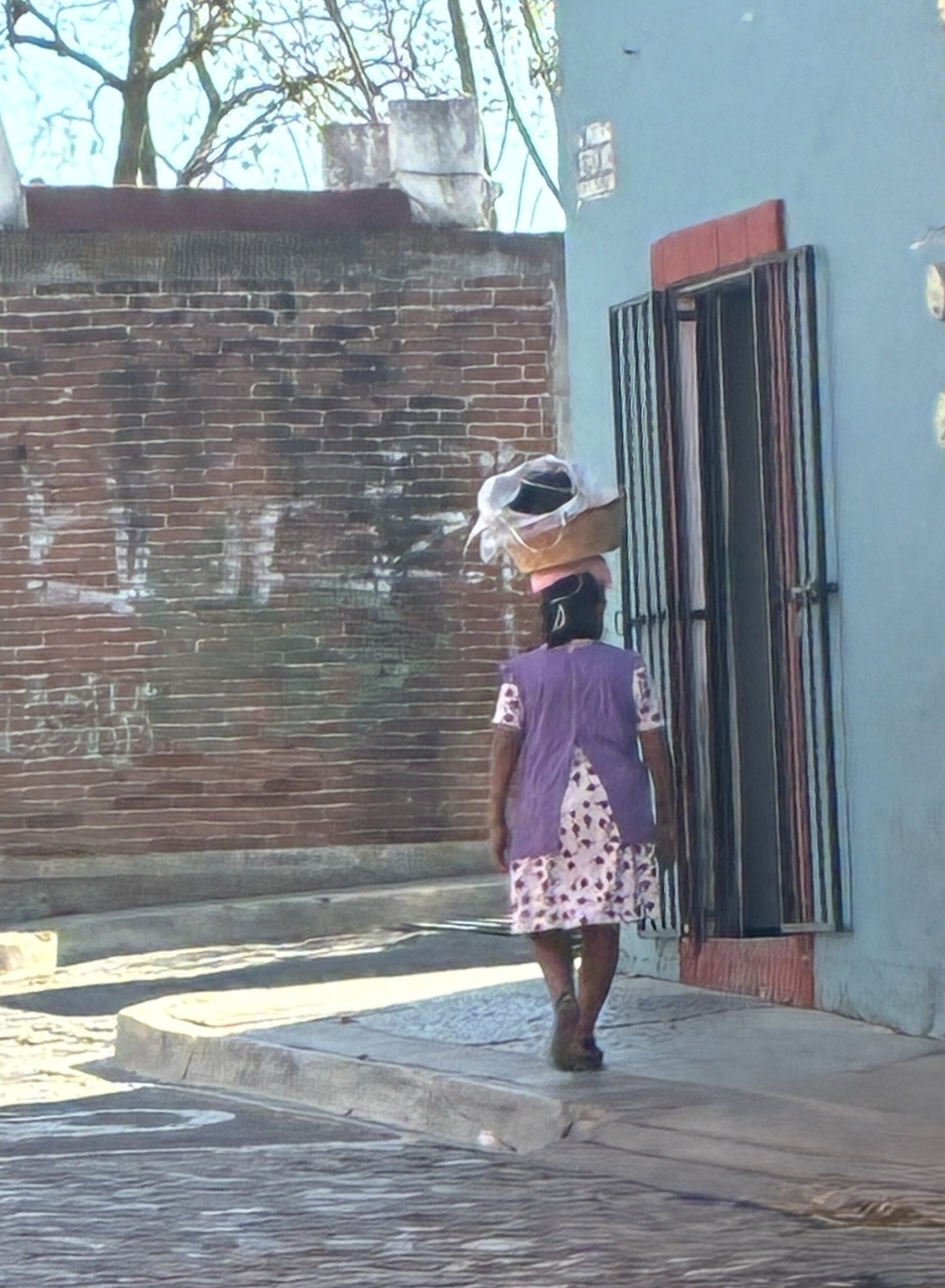
On the way home, I saw a woman effortlessly carrying laundry on her head, and it made me think of Elisa, who growing up in Cabo Verde, did the same.
Rachel and I hung out, and frankly I can’t remember what else we did for the rest of that evening. I’m guessing we just talked. I went to be late as usual, and looking forward to my visiting Monte Albán tomorrow, although I have little idea of what I’ll actually be seeing. But I’m gonna go and find out. Buenas Noches.