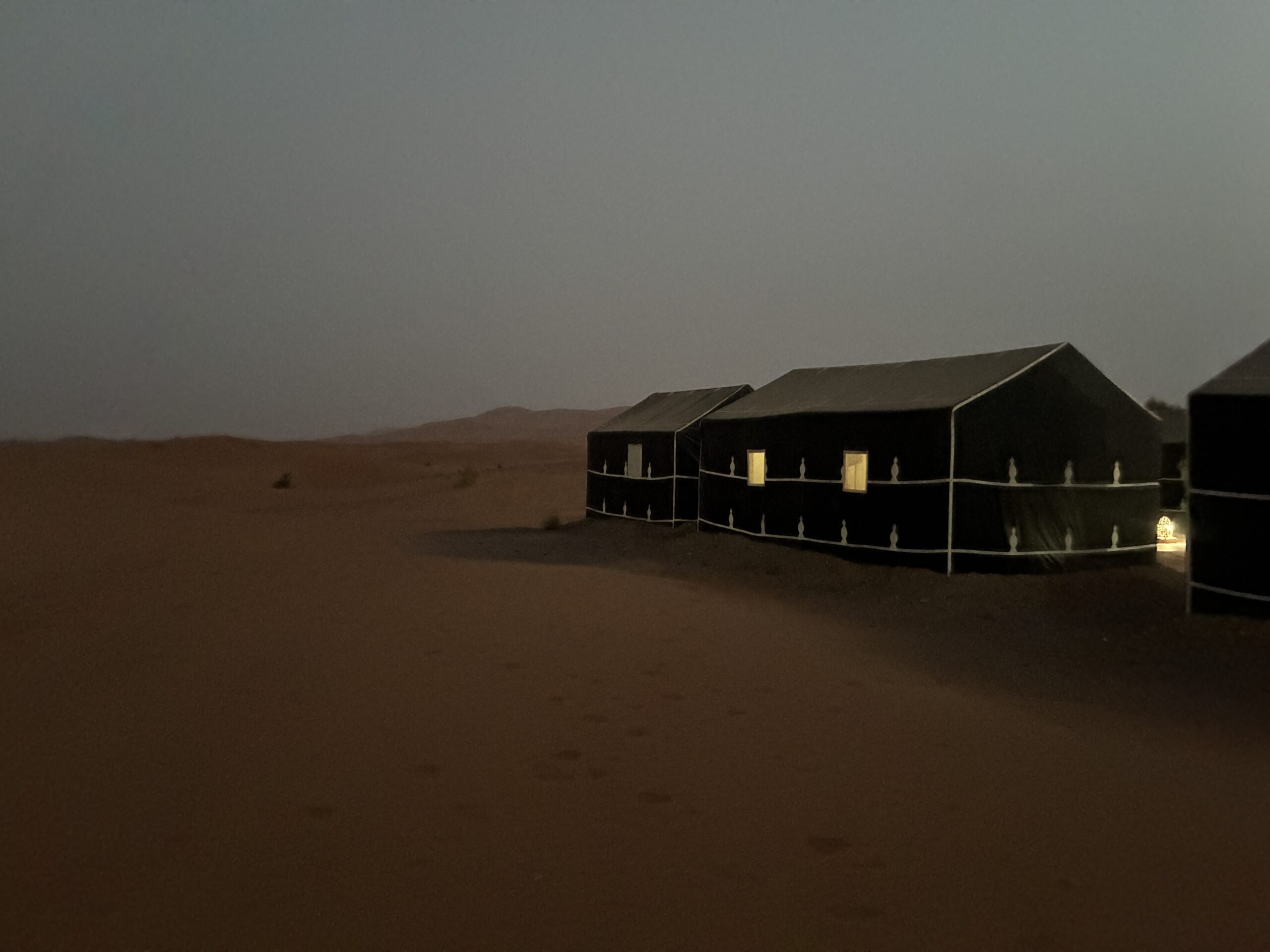
The Sahara: Merzouga and the Erg Chebbi dunes.
First, it’s Rosh Hashanah today. Not that I would have known if Hilary hadn’t told me. Still, L’Shana Tova.


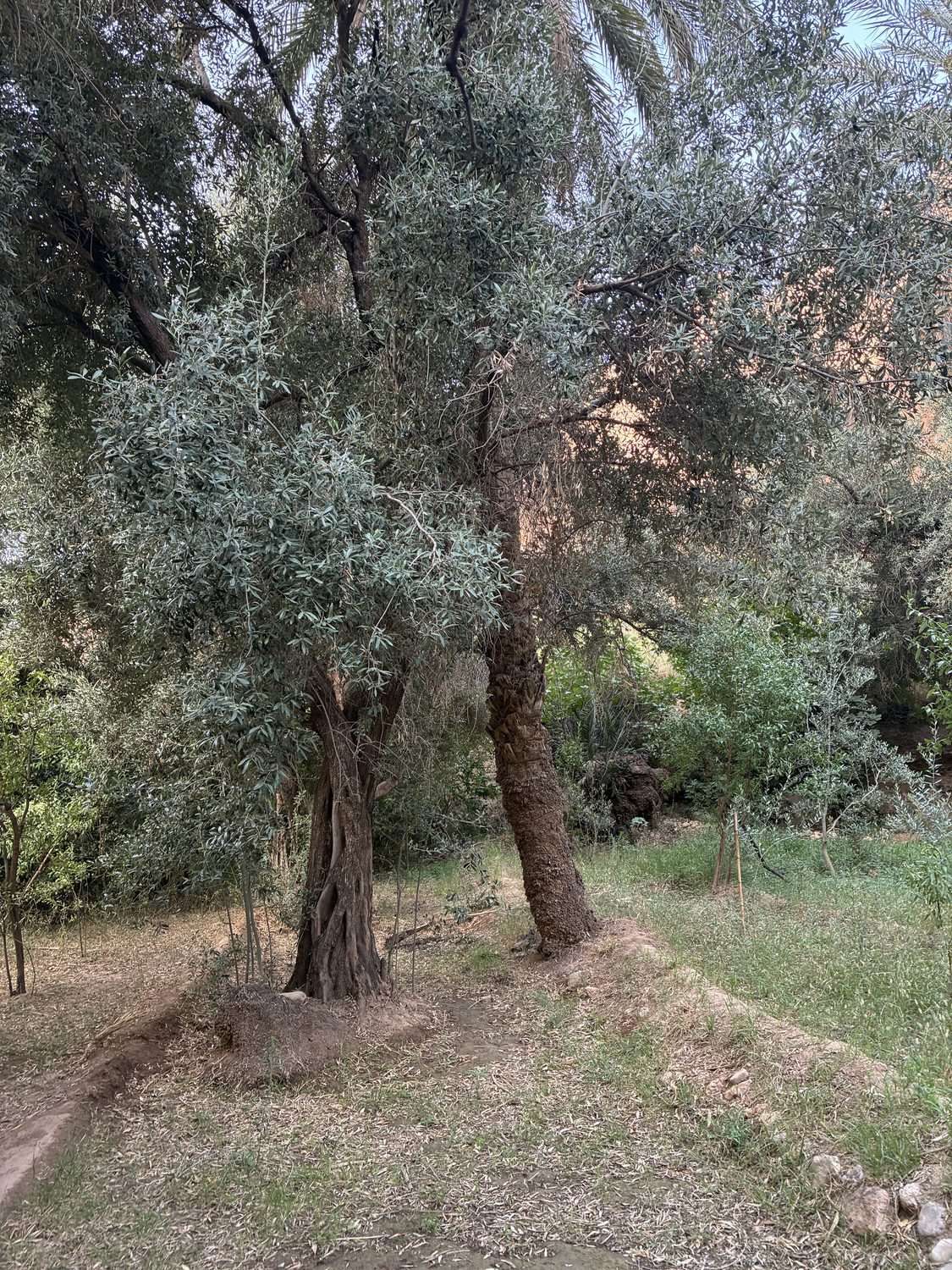
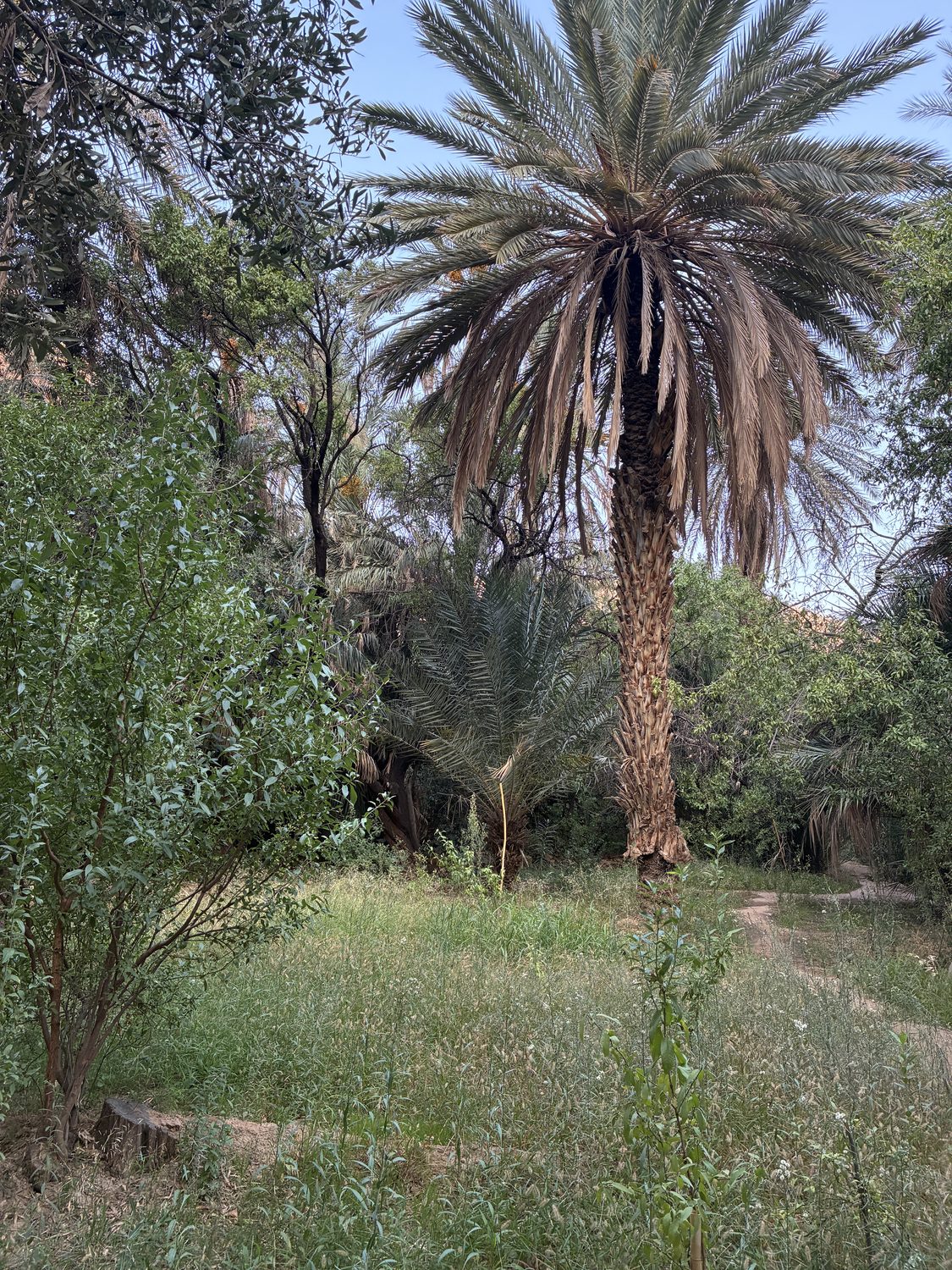
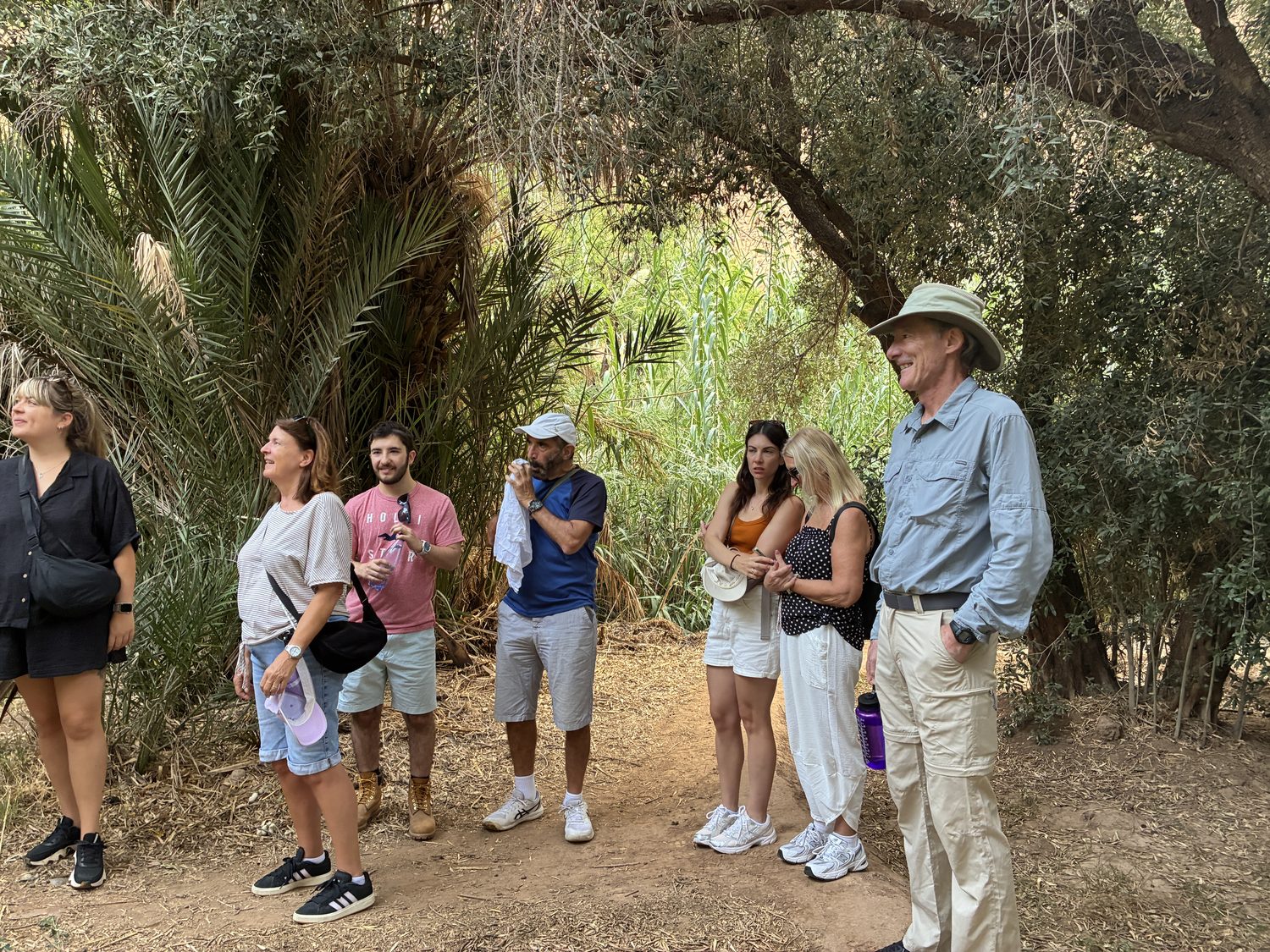
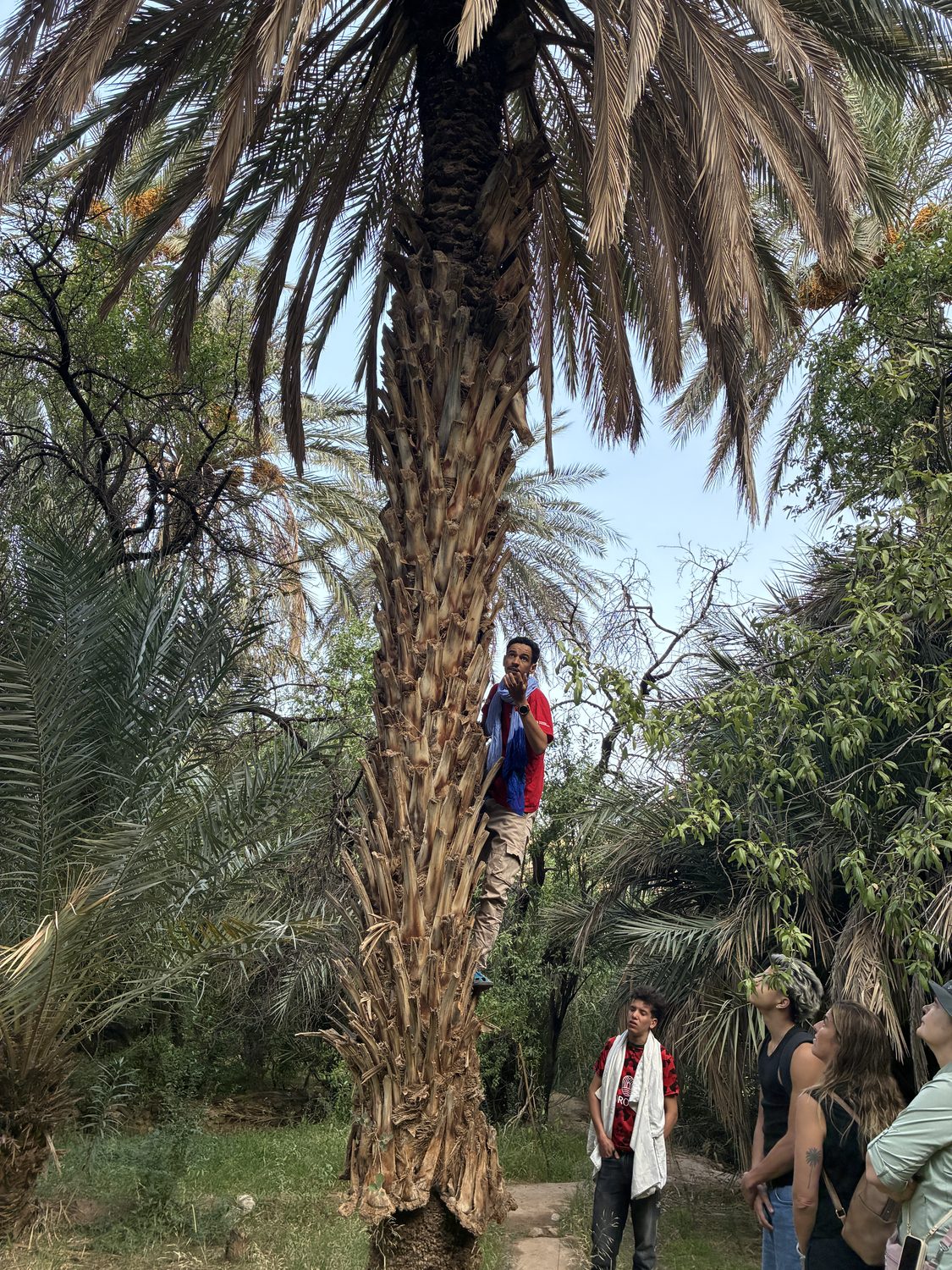
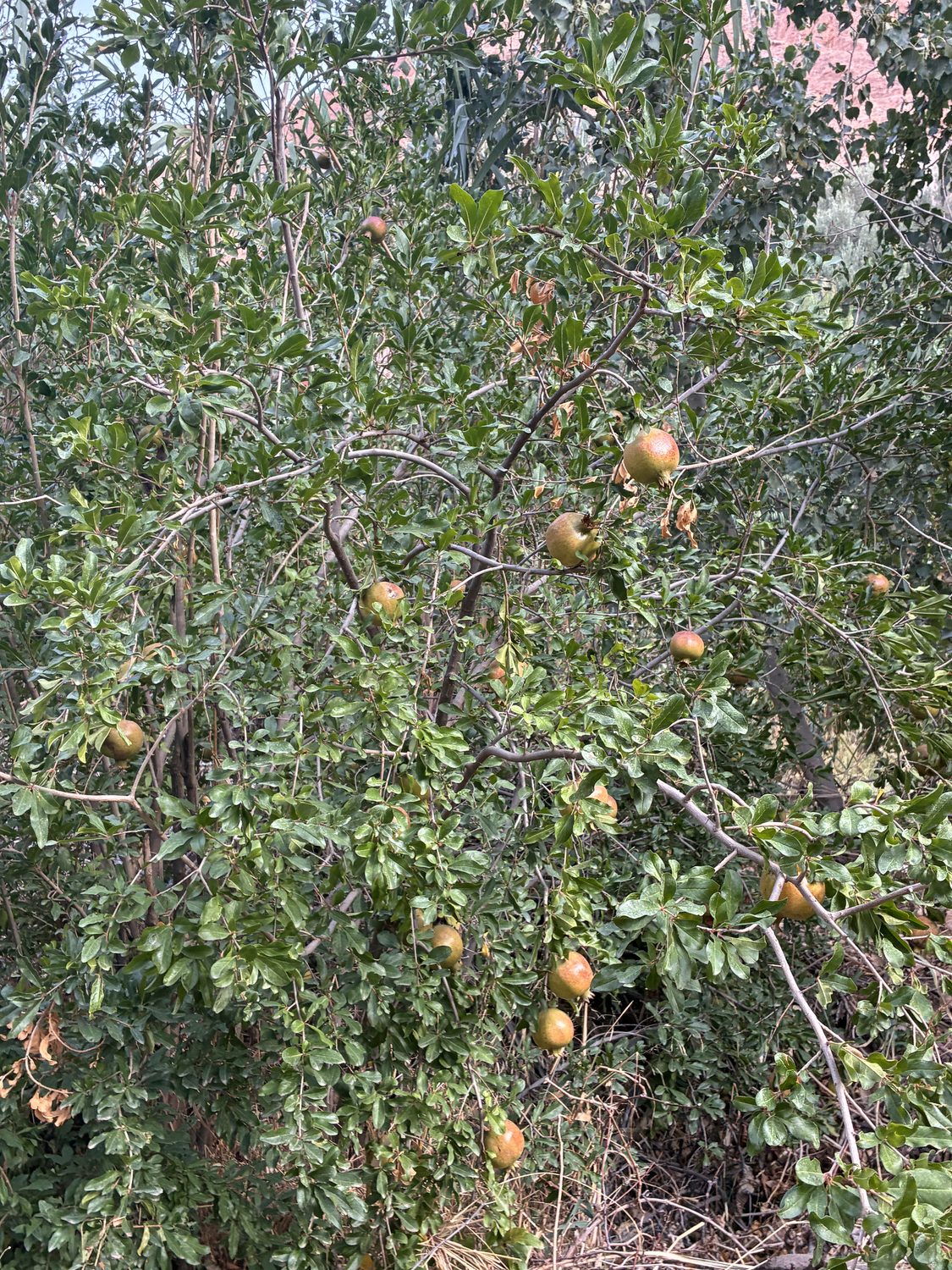
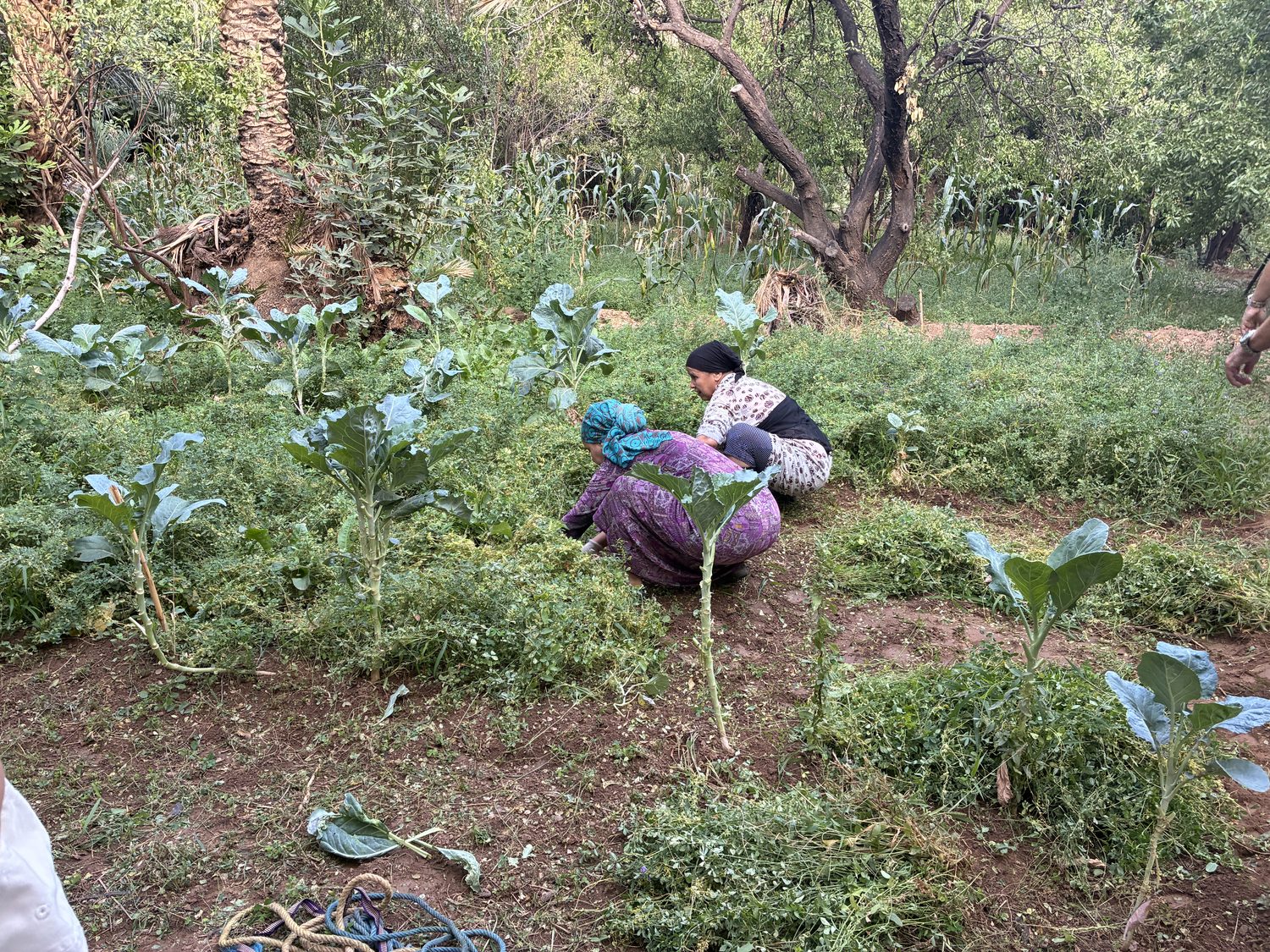
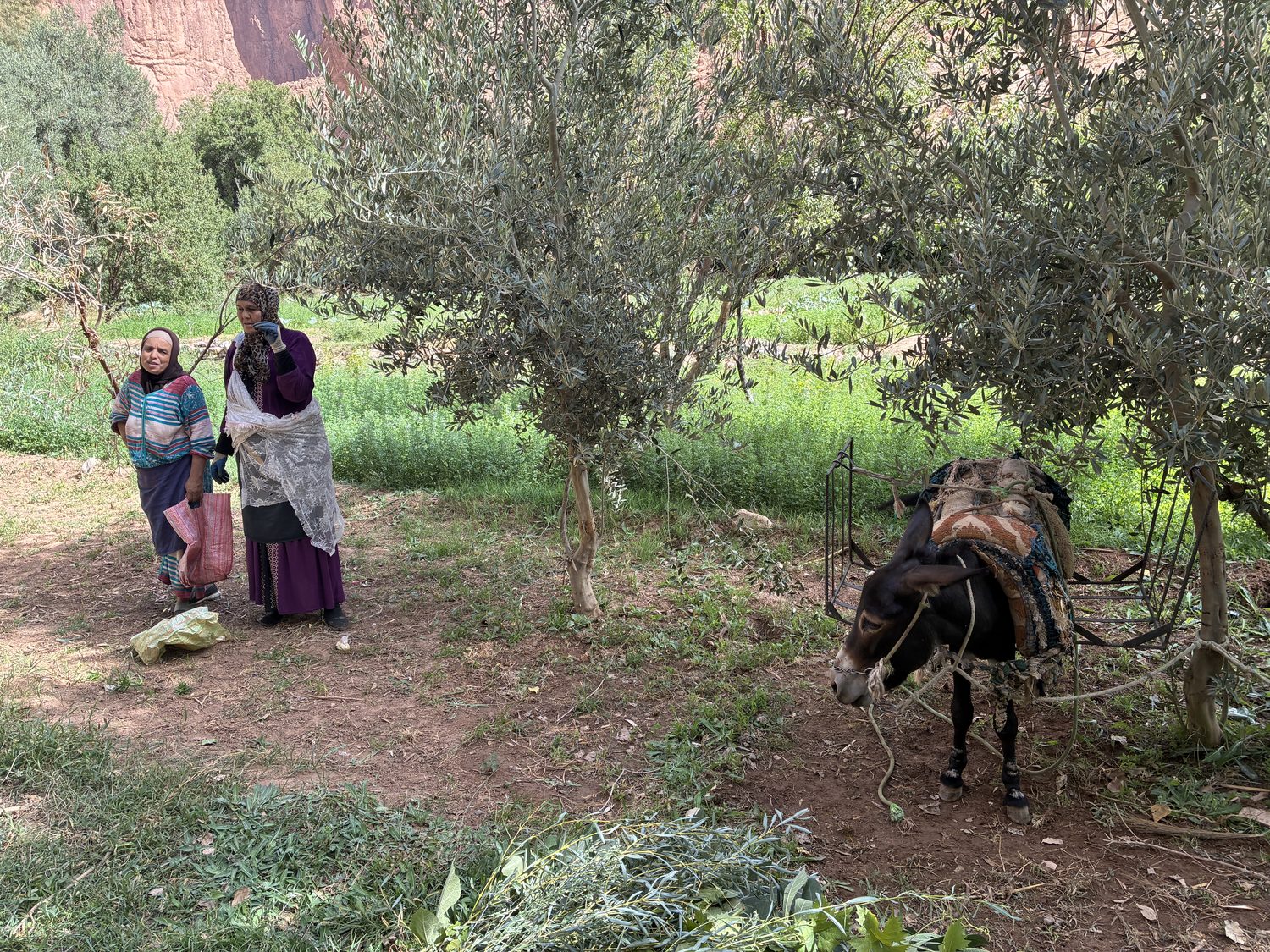
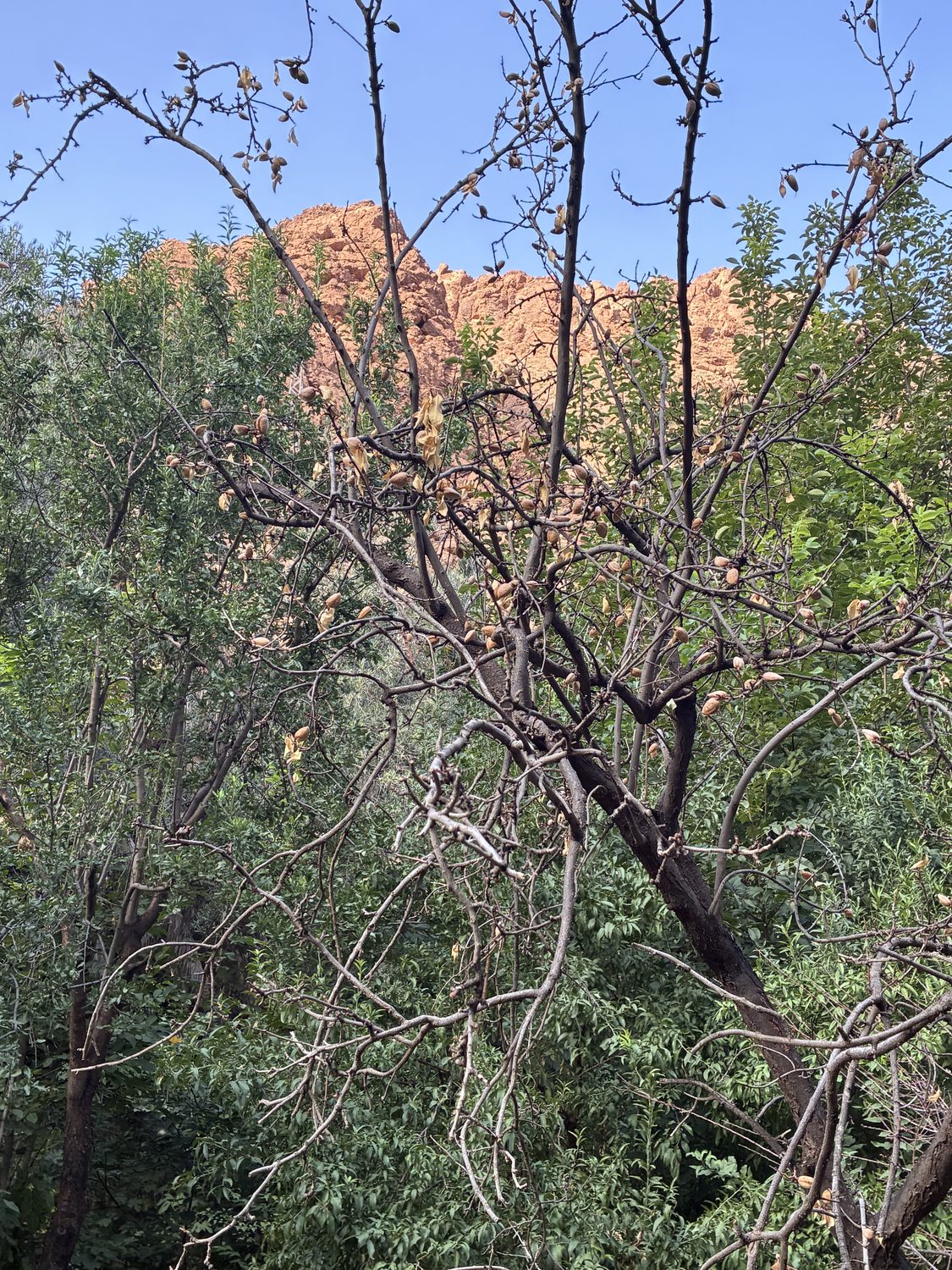
Around 8:30 Charif led a three hour walk, starting in community farmland that was tucked deep into the deeply wooded land near the hotel. He took us along a narrow dirt pathway leading to ground crops like alfalfa, and many fruit bearing trees, frequently stopping to show and tell us about walnut, almond, sweet and sour pomegranate, and quince trees, and partly climbing a male palm tree showing us how farmers manually fertilize the female date bearing palm. We sampled some of the fruits, including both sweet and sour (very sour) pomegranates and wild growing green and red grapes, and Charif told us it was always okay to pick and eat fruit growing in these forested farms, where sharing and hospitality is the norm, but it is never okay to take them off the farmland.
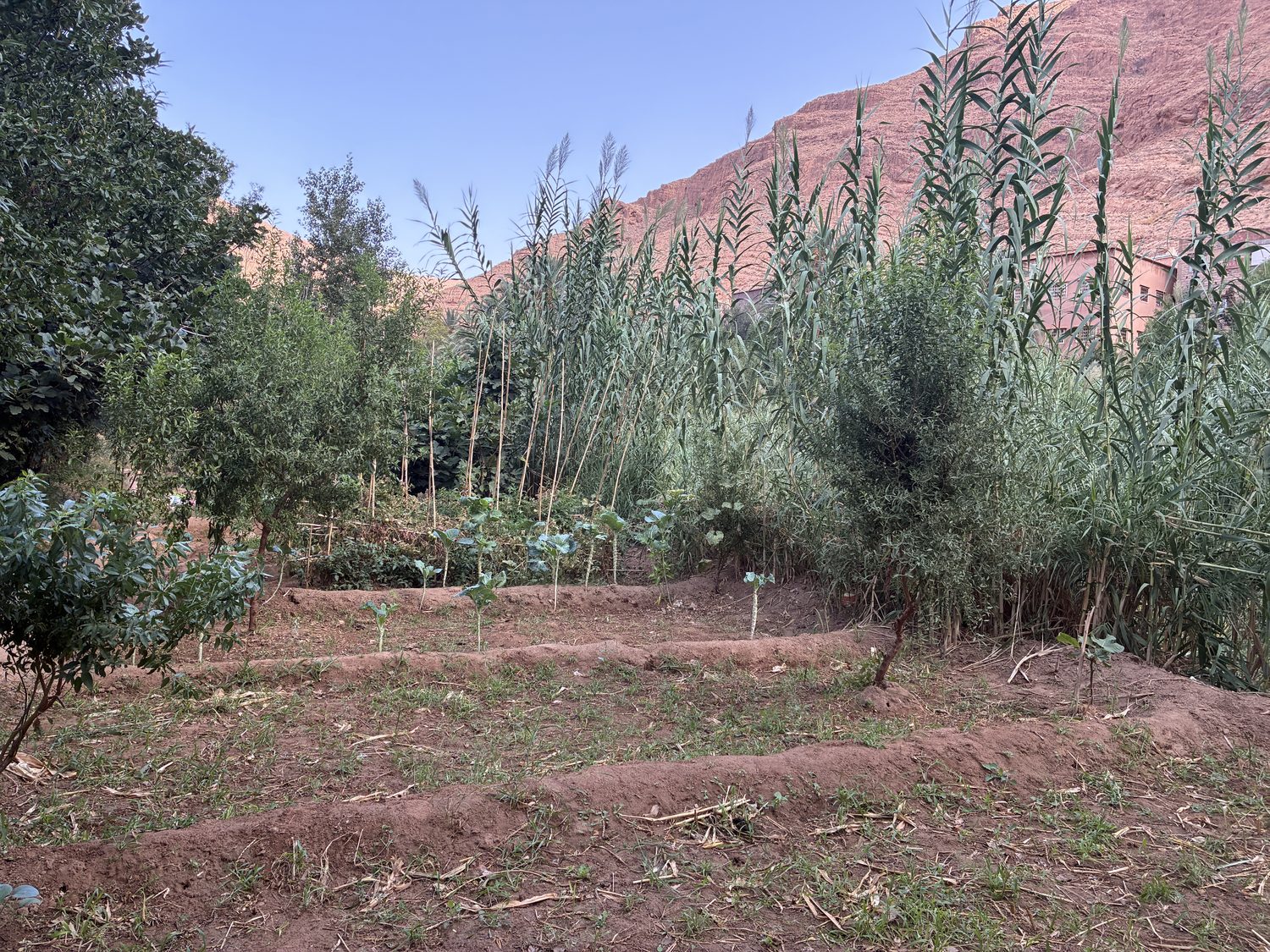
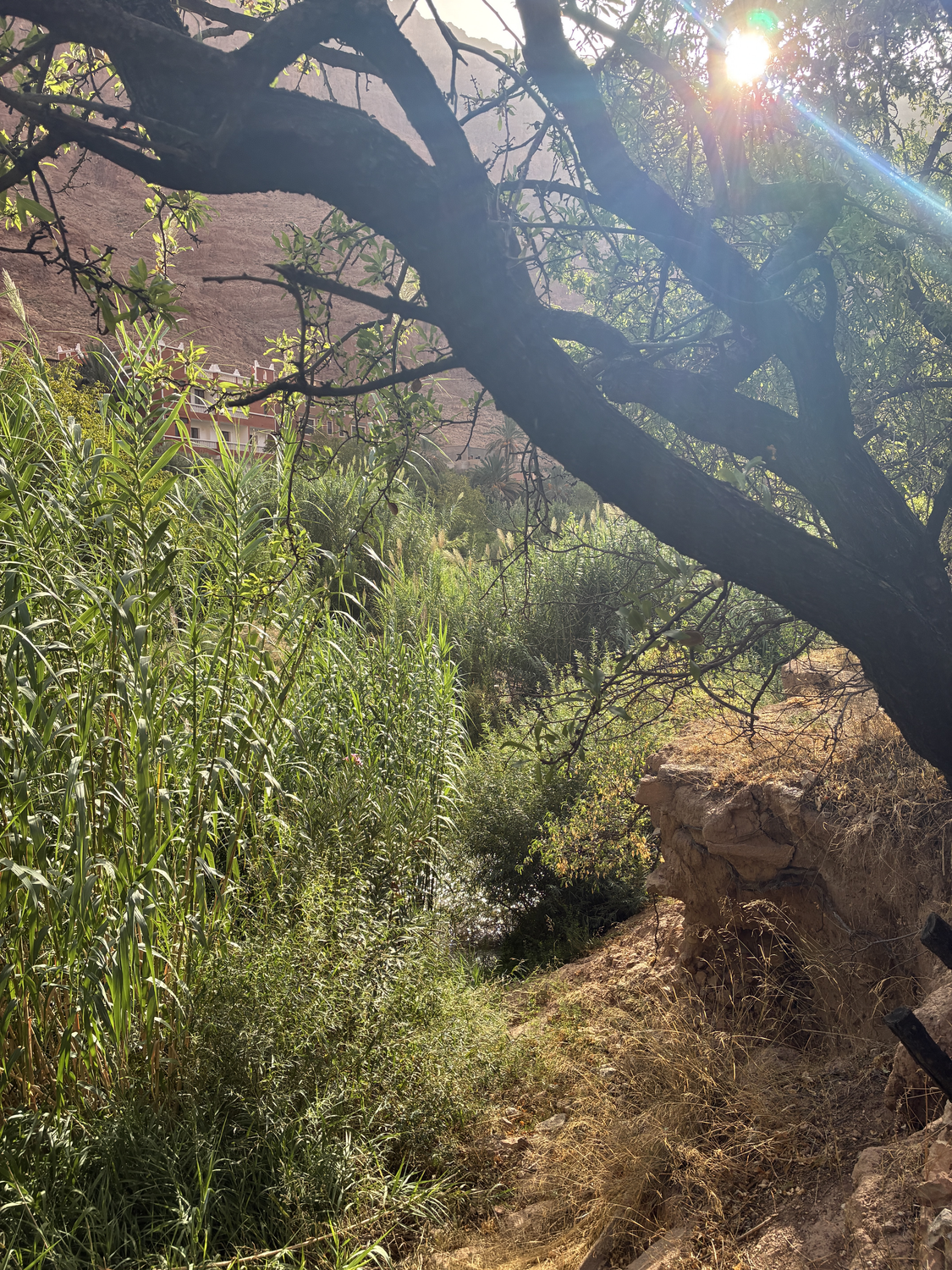

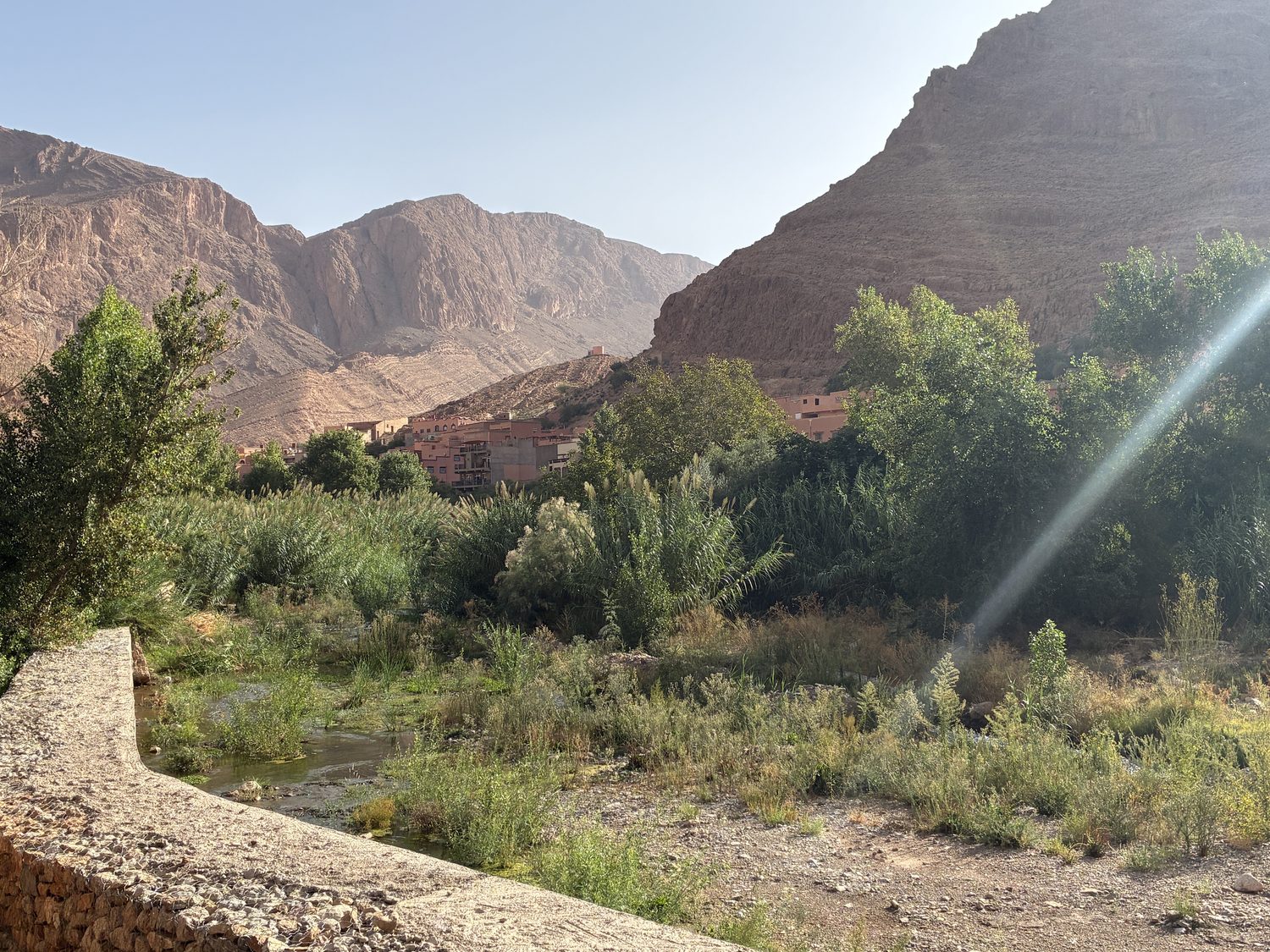
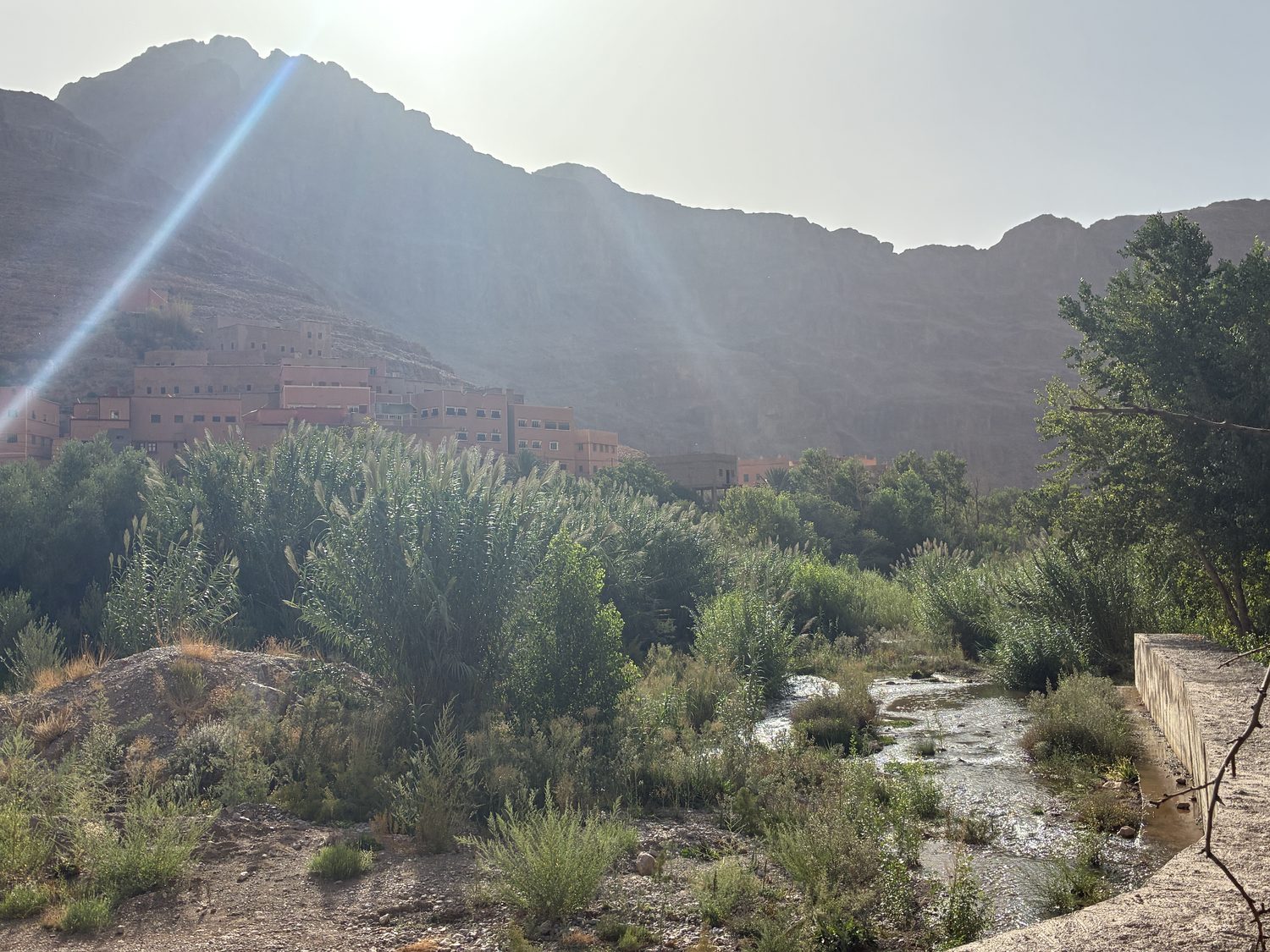
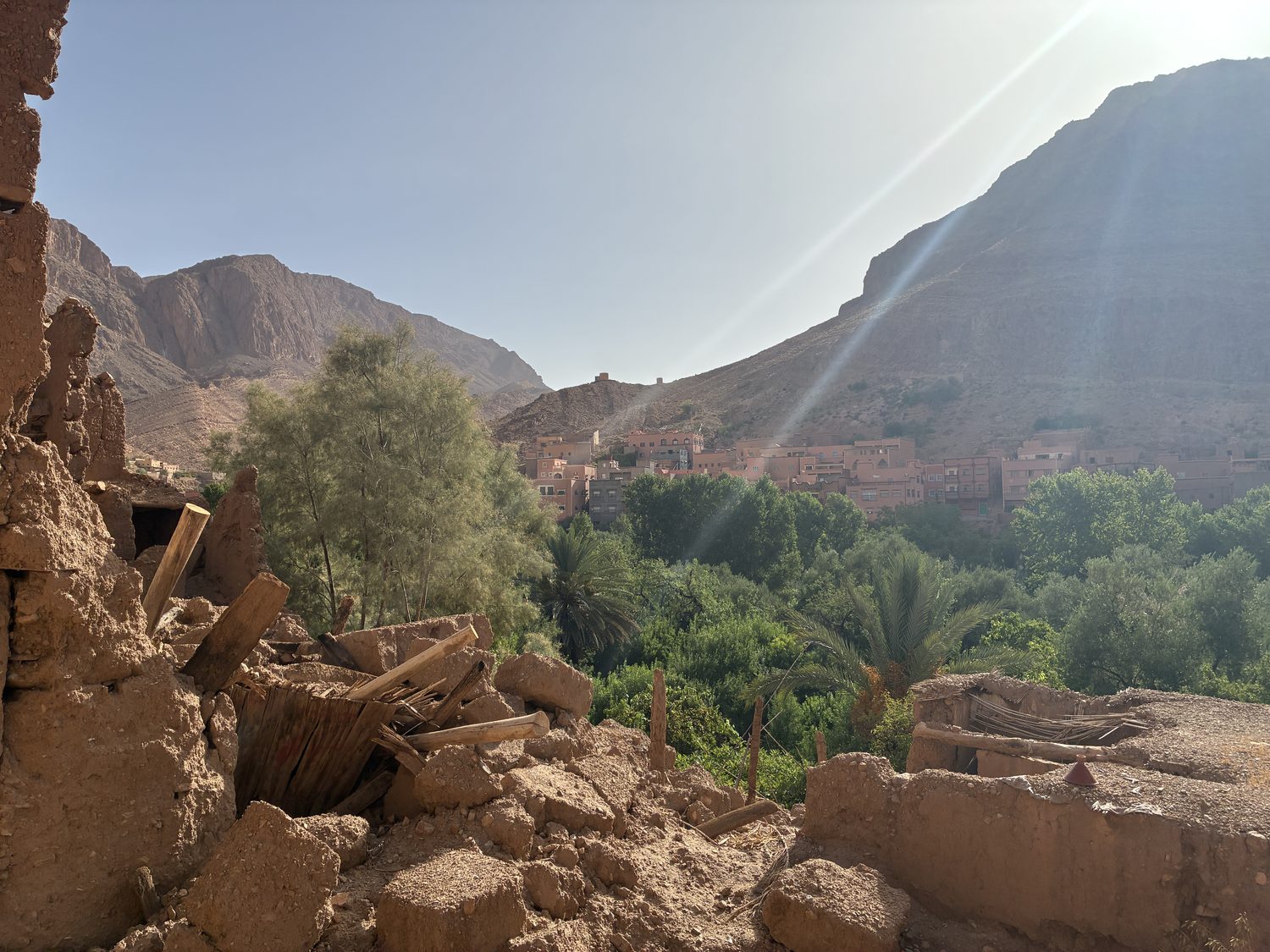

The forest trail took us into the small village of Aït El Caïd, passing abandoned and partly ruined old adobe homes, behind the more modern newer homes, built from reinforced concrete and finished to look like the traditional earthen or adobe buildings. Charif tells us this is because people in the area seek to live a modern life, and living in older earthen and adobe buildings carries a negative status.


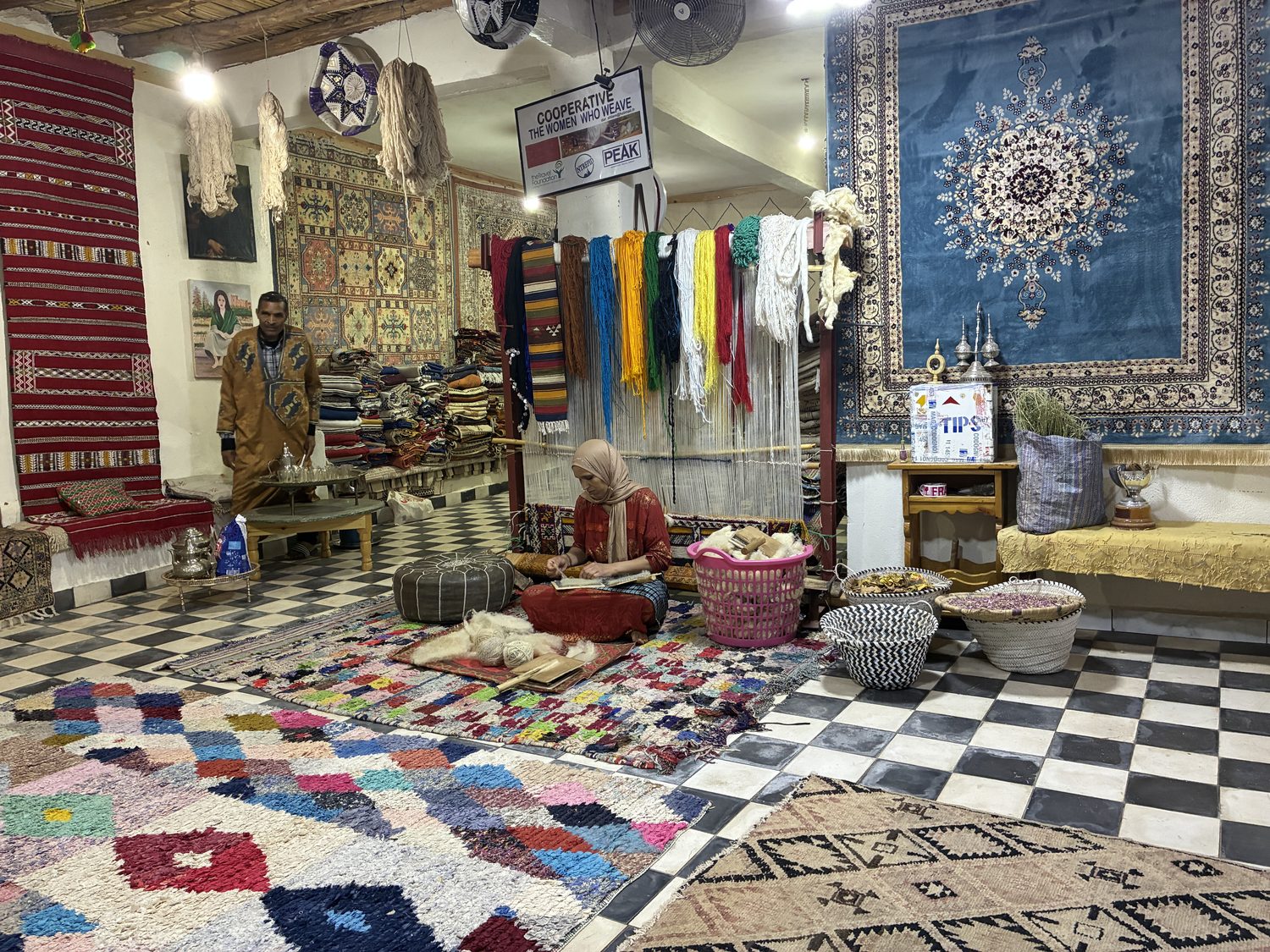
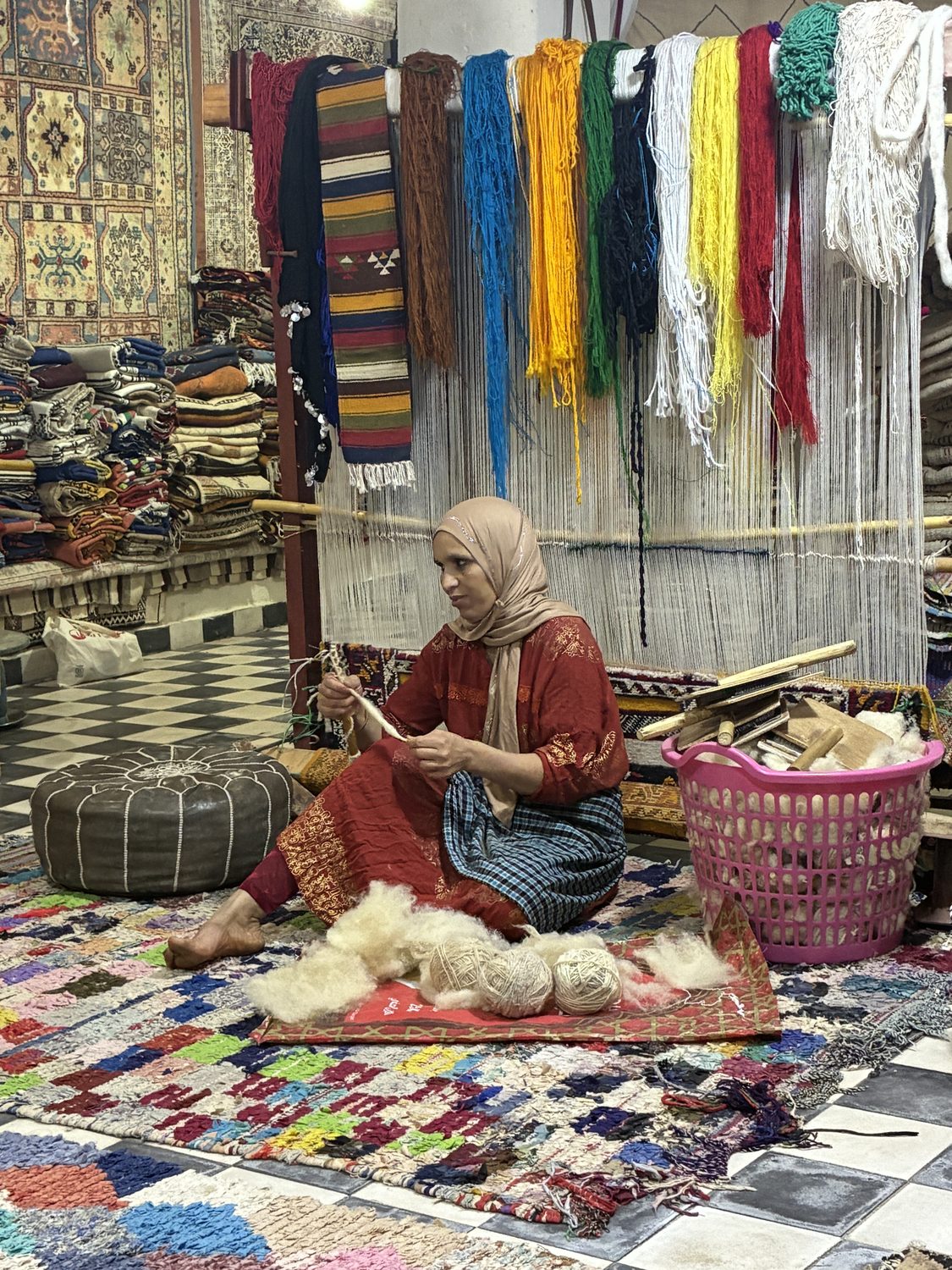
In Aït El Caïd, we visited the Women Who Weave Cooperative, and got a demonstration of the wool carding process, in which raw wool is separated, dirt removed, and wool fiber aligned so it can then be spun into yarn for dying and weaving., and an explanation of how the carpets, rugs, and blankets are made from lamb wool, and sometimes camel hair. The women are co-owners of the cooperative, and paid for their work, and each individual piece is made by a single woman, with many women weaving their own pieces. Although using traditional Amazigh designs, each weaver nevertheless decides upon the final design of her piece. A single large carpet can take as long as six months to make, whereas smaller or less intricate carpets and rugs or blankets might take five or six weeks. They sell their work in the cooperative, and so want groups like ours to visit and possibly make purchases, as well as selling through distributors. A couple of people in our group made purchases, and although it’s not clear whether they paid a truly good price, it is clear they were not only supporting the cooperative, but also purchasing a hand made artisan product at a price far cheaper than if they purchased it from a dealer or in a city like Marrakesh. Of course, we also drank traditionally made and served green tea there.




We finished walking through the village and then through the Toudgha Gorge, just outside of the village, which was beautiful but filled with visitors, just like us, and locals alike, and even a couple of cliff face climbers on the other side of the Toudgha River. The crowds definitely diminished the beauty of the gorge, an area that would otherwise have been both beautiful and tranquil.
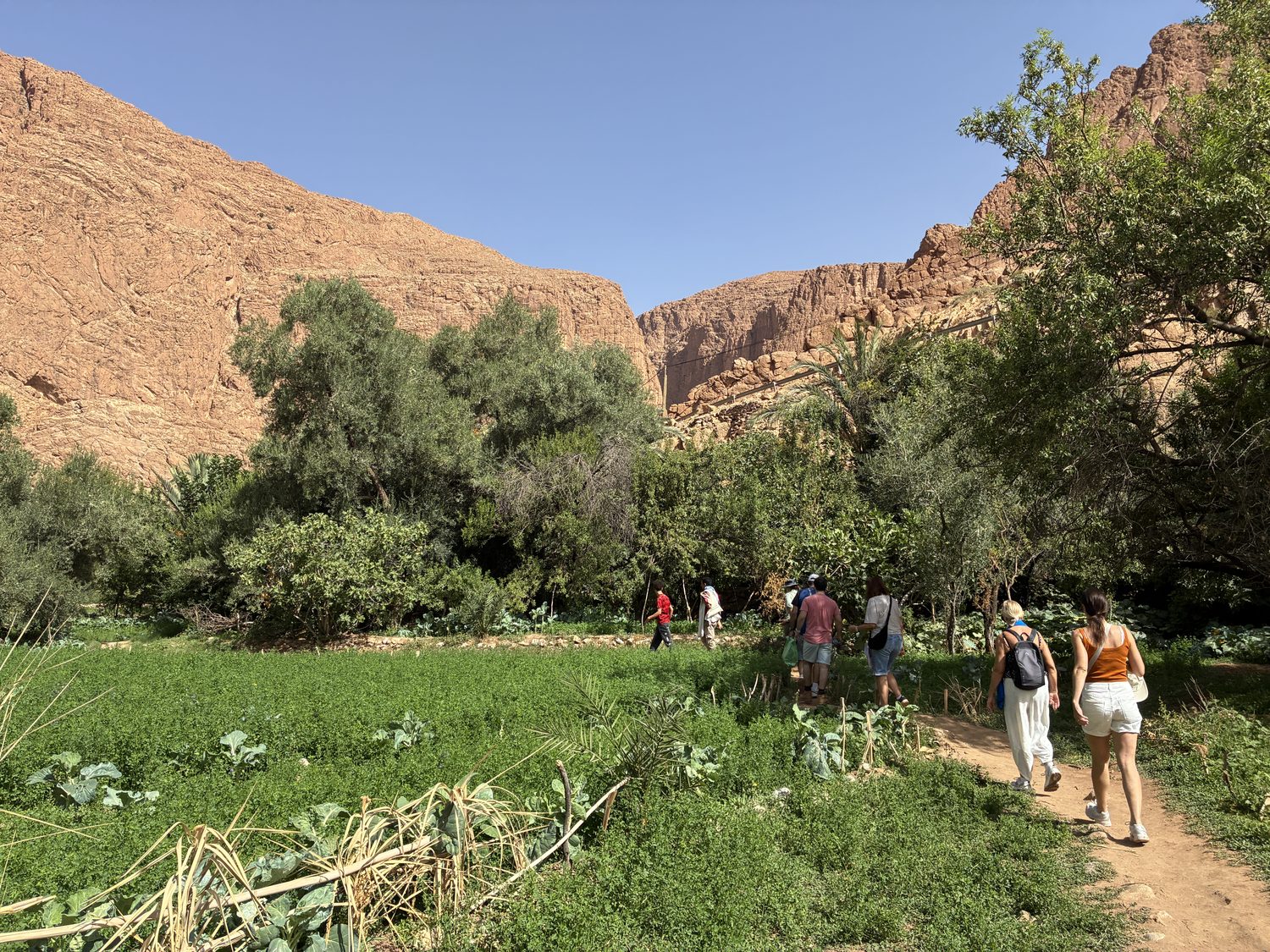
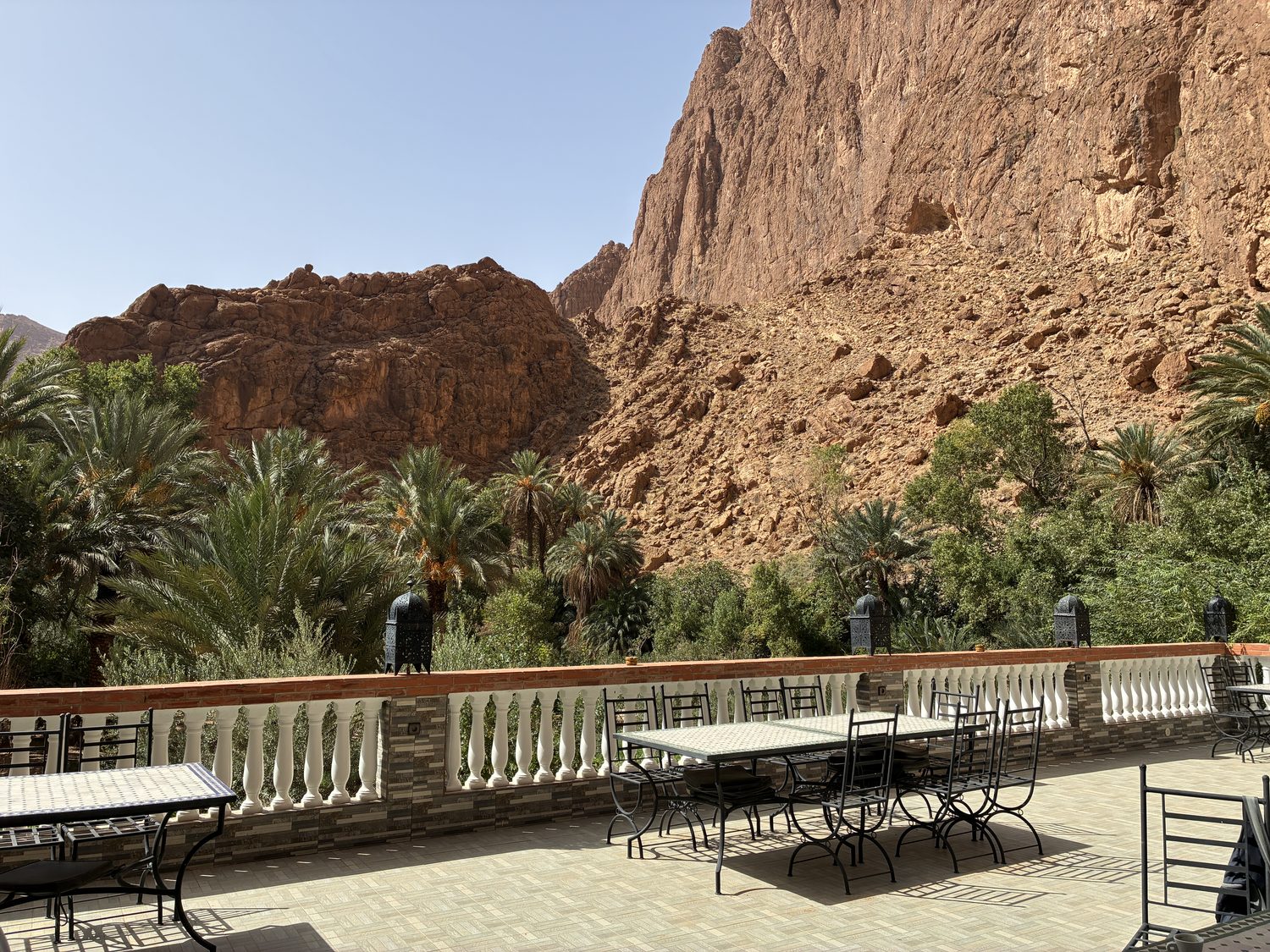
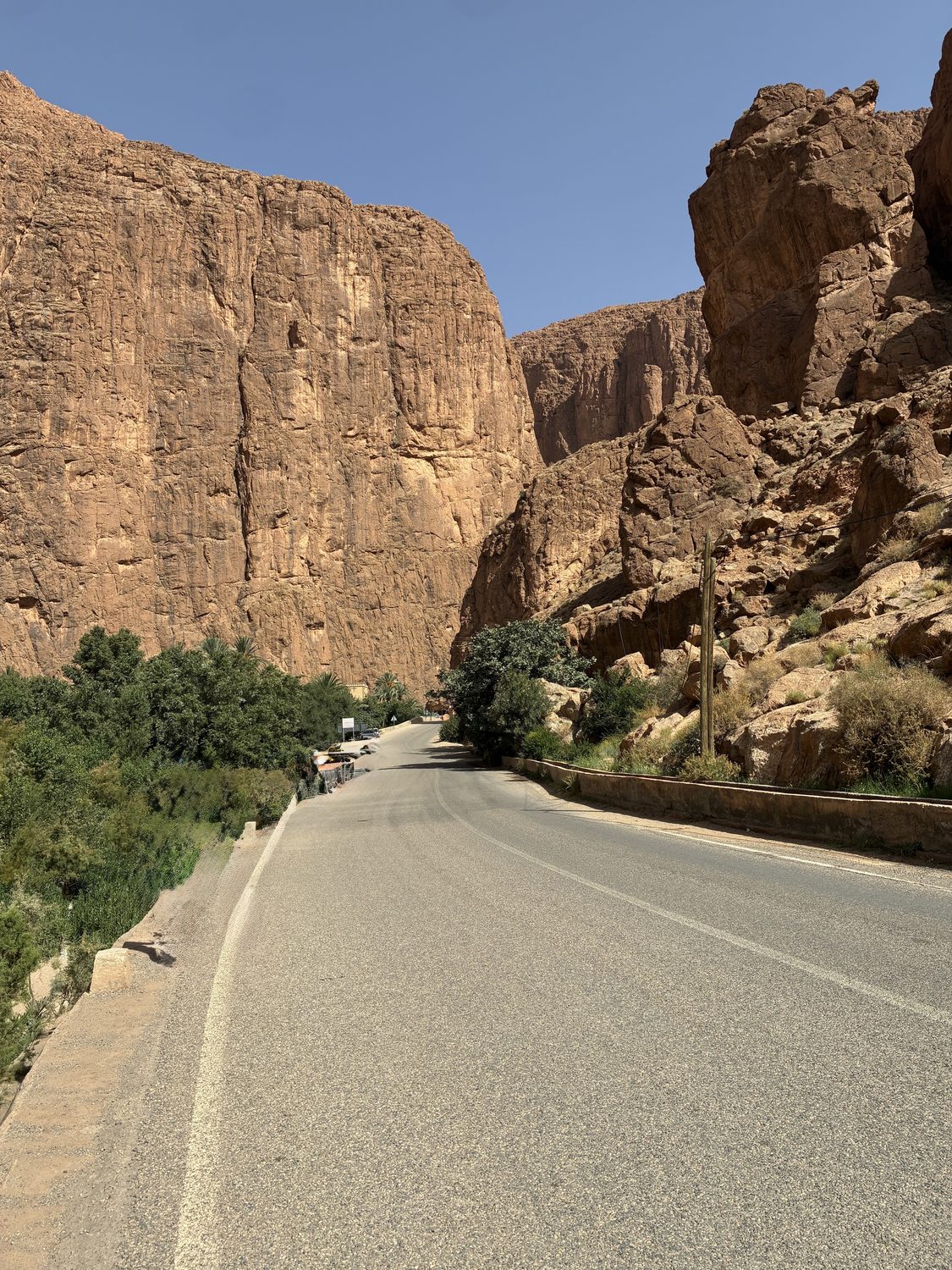


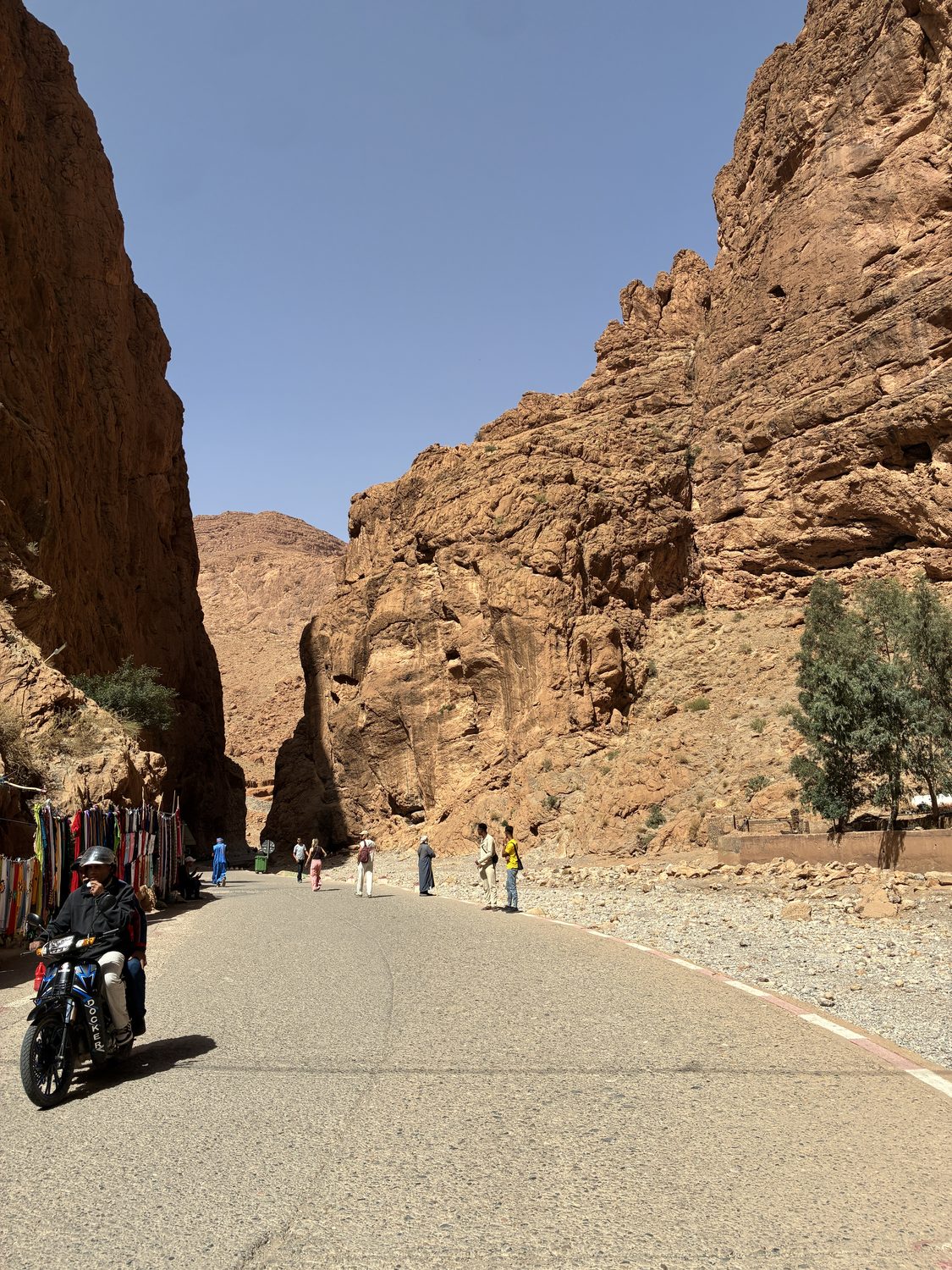

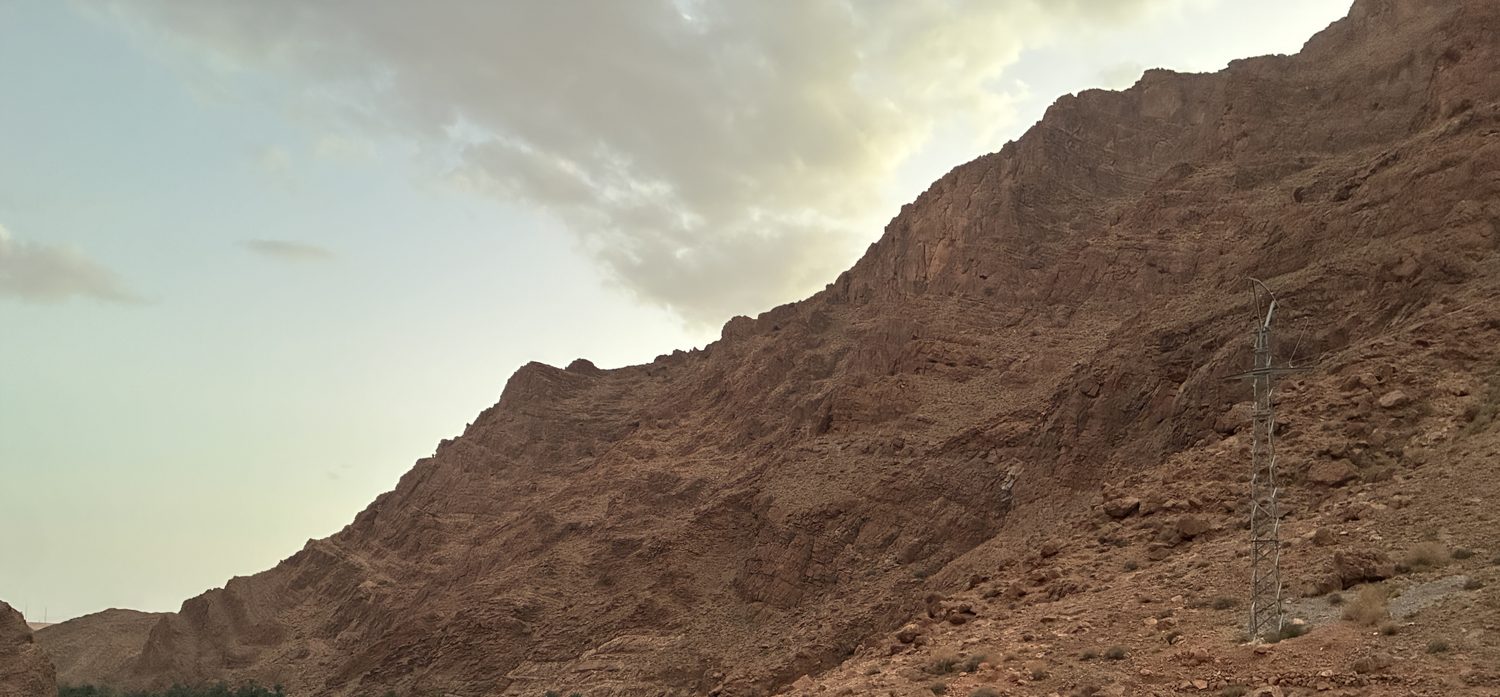
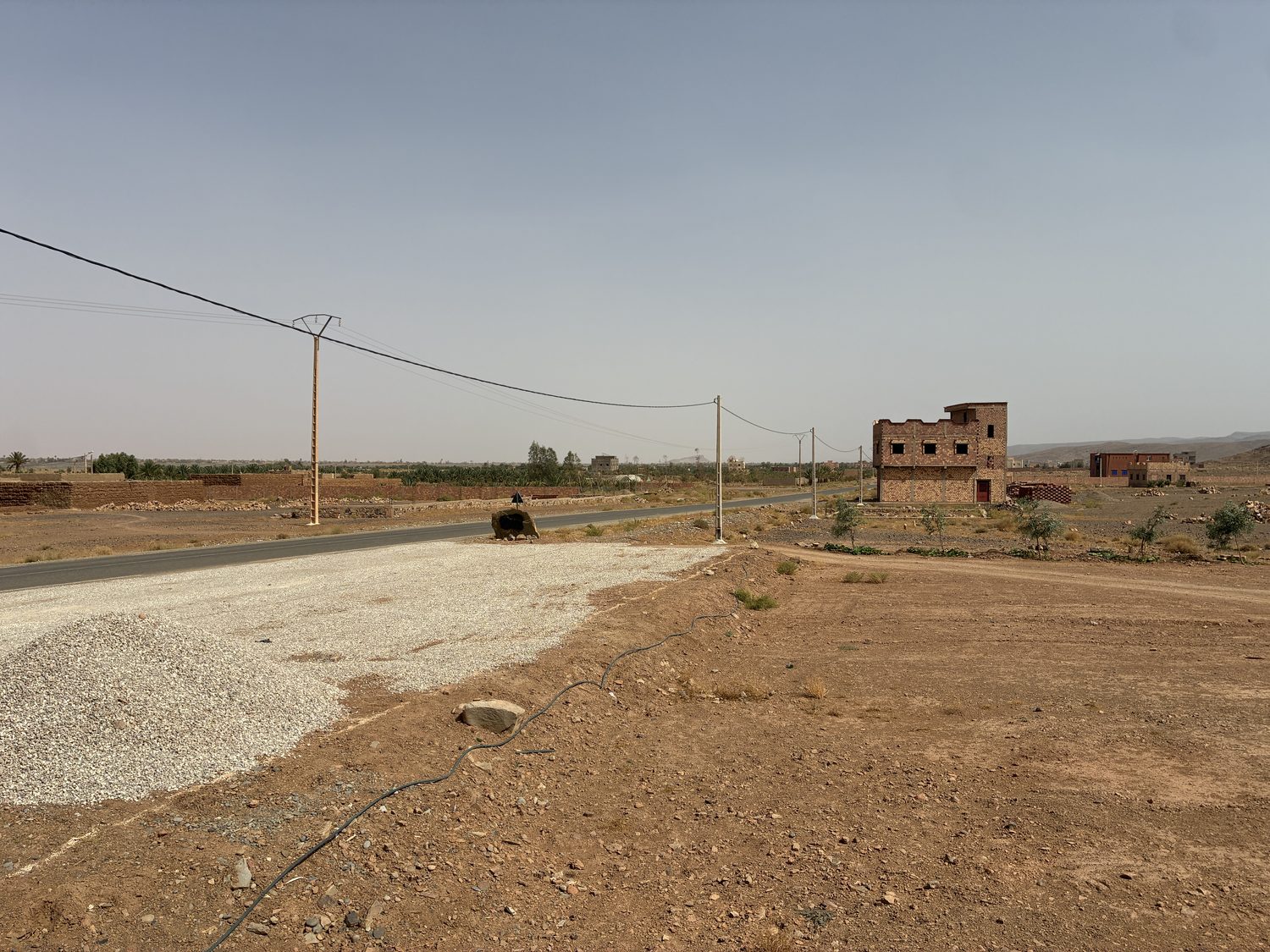
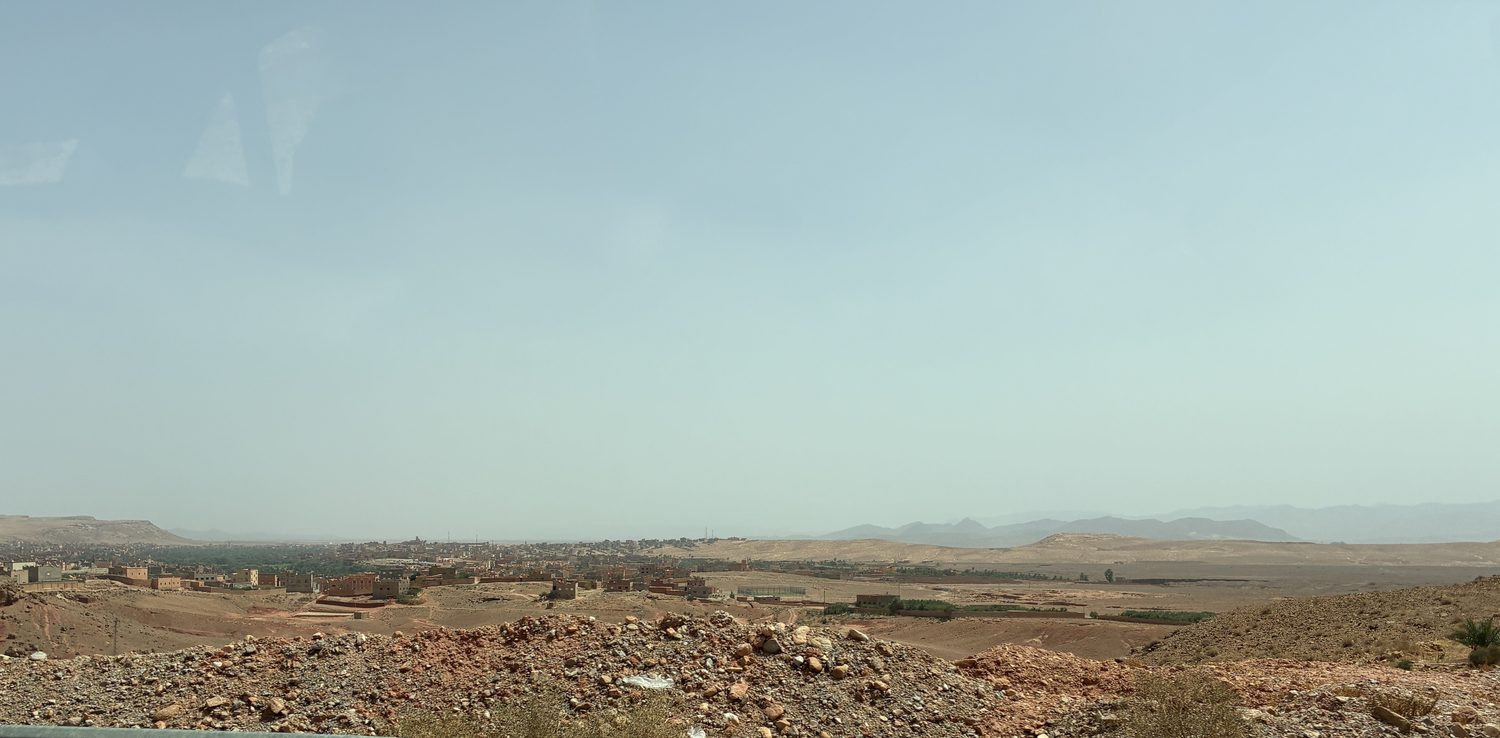
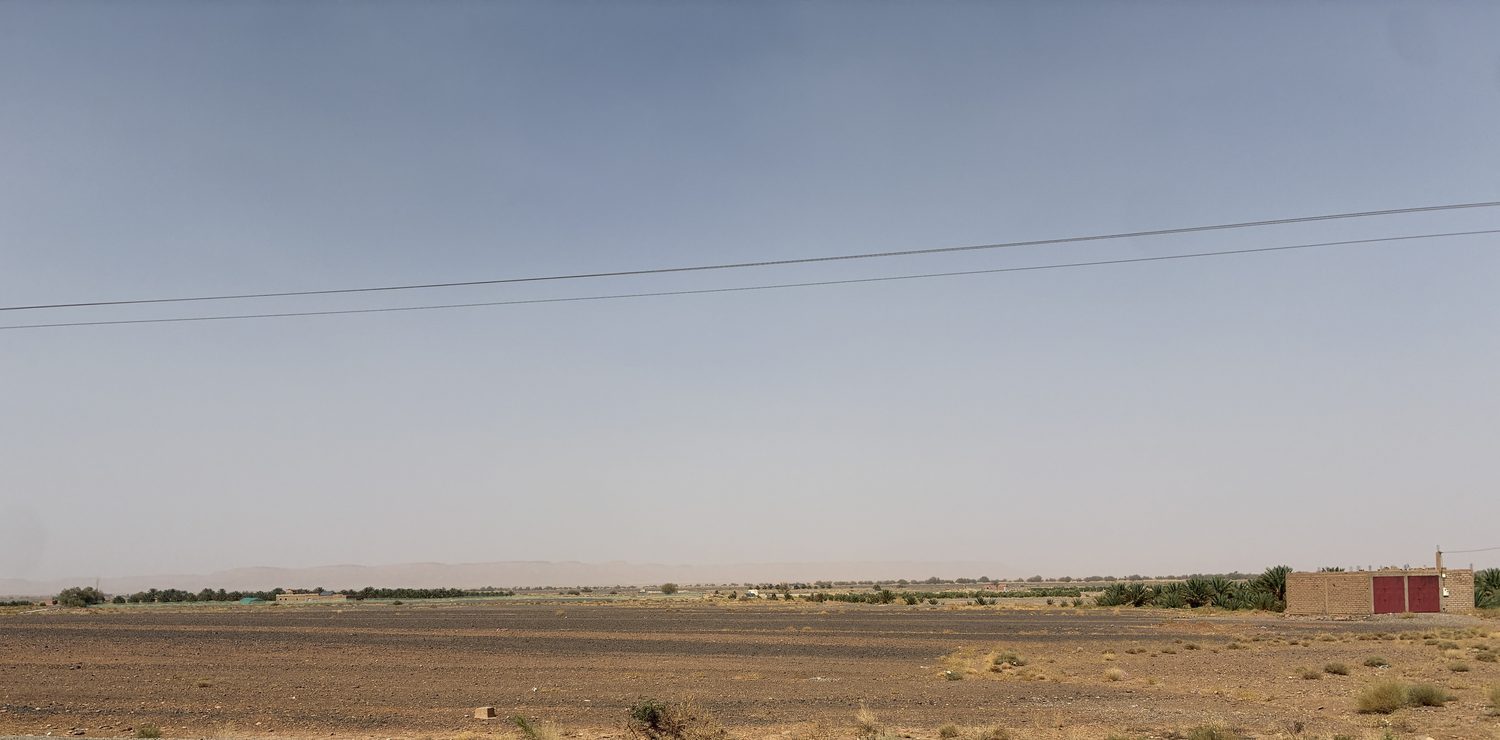
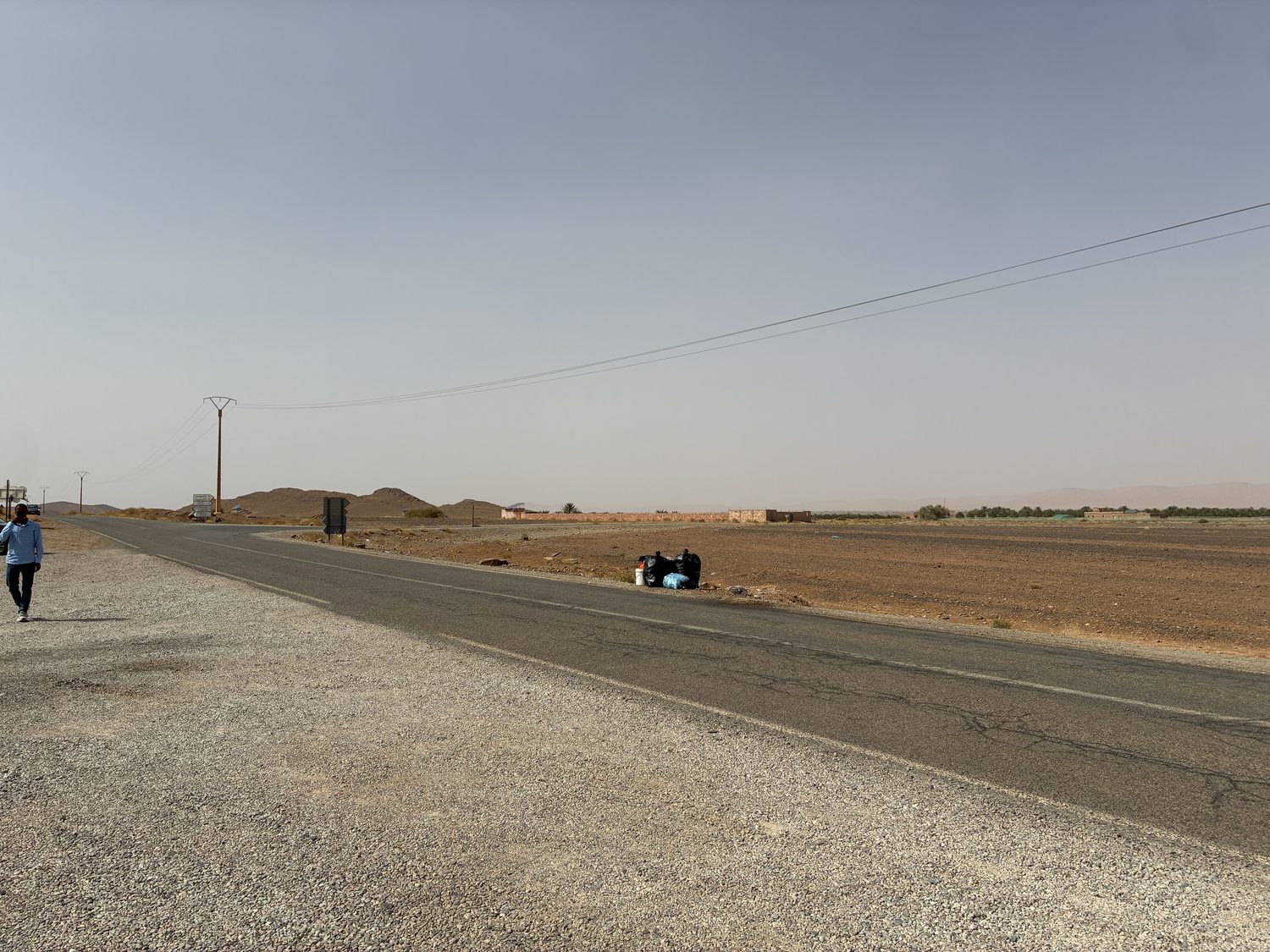
We headed back to the hotel and packed up, and continued driving southeast to the Sahara. From the steep limestone cliffs and the rich and lush palm trees and green cultivated farmlands of the Toudgha Valley, the mountainous landscapes gave way to flat and dry valleys and plateaus, with sparse and scrub-like vegetation, and with scattered villages and buildings along the way.
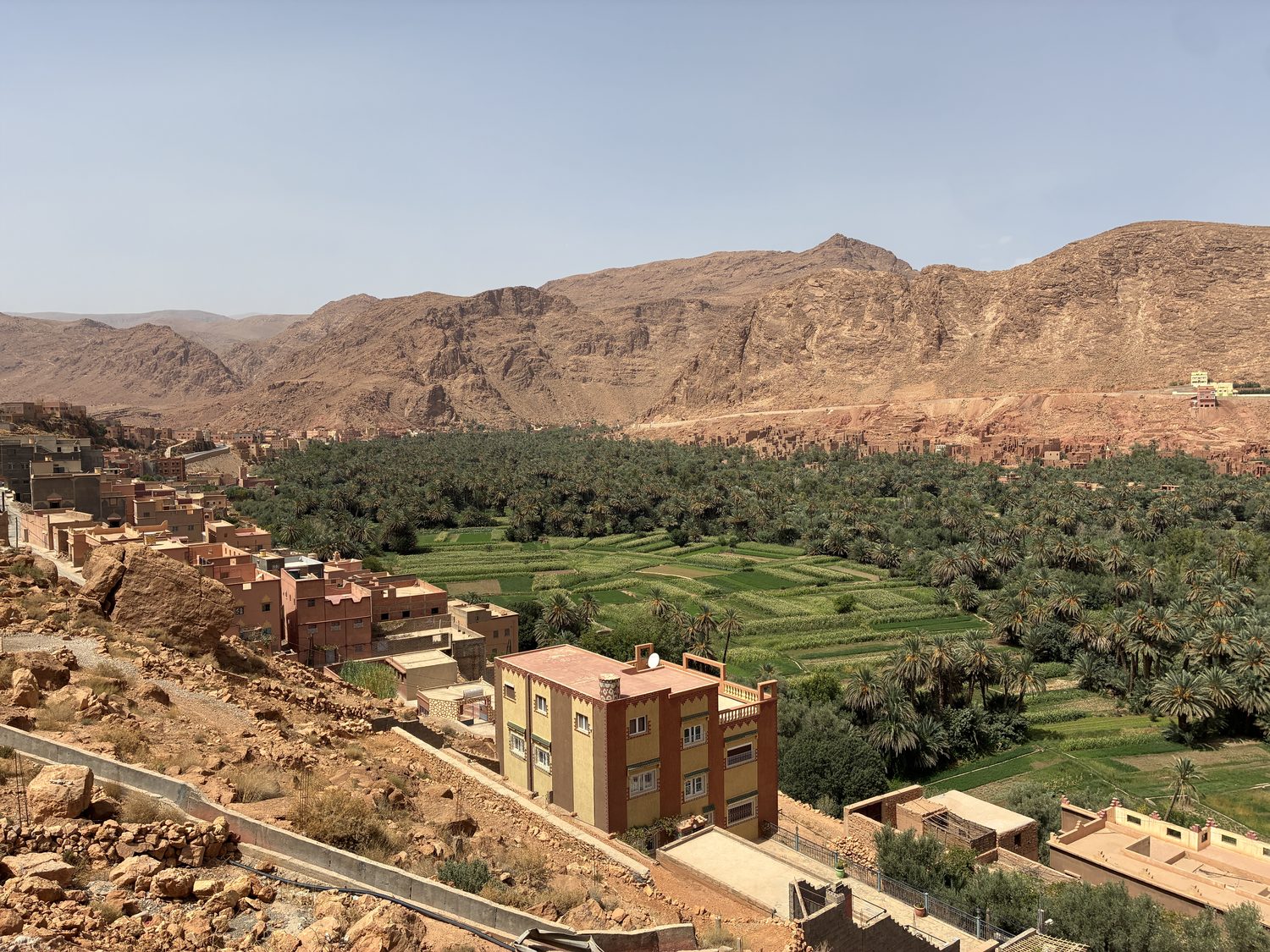


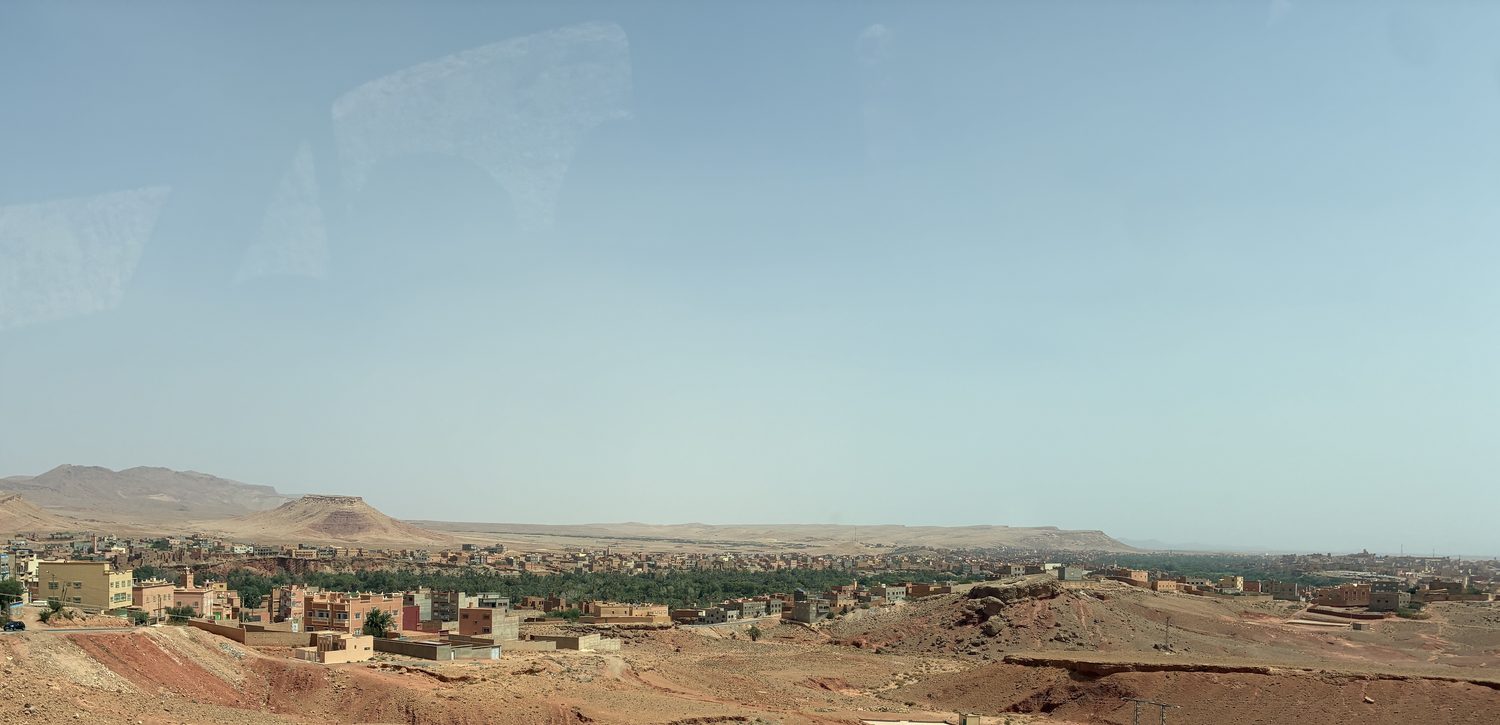
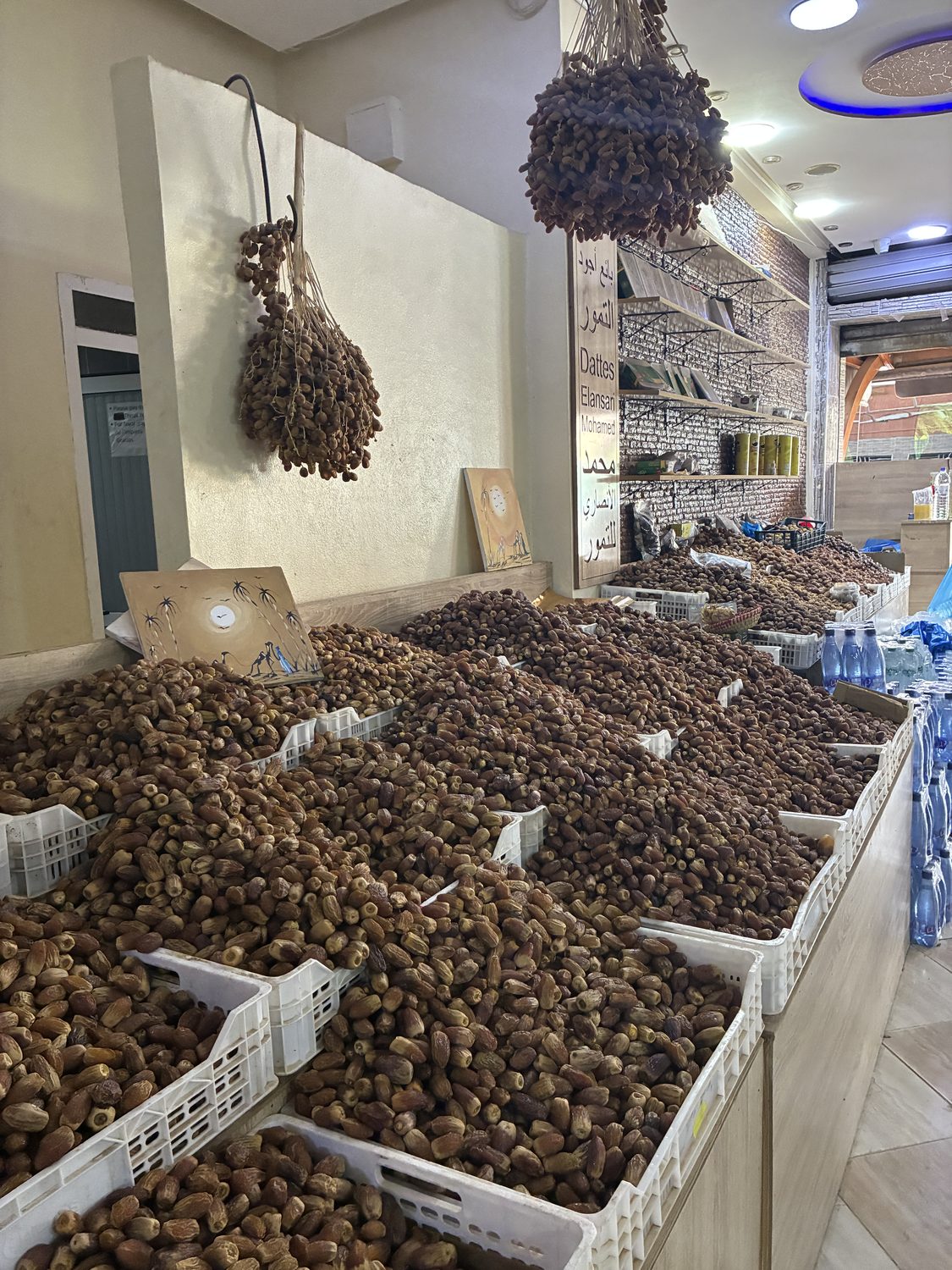
Along the way we made a brief stop in Erfoud, the “Date Capital” of Morocco, known for its date harvesting, and because it sits in the Ziz Valley, which is one of Morocco’s major date-growing regions, and is one of the largest trading areas for dates.



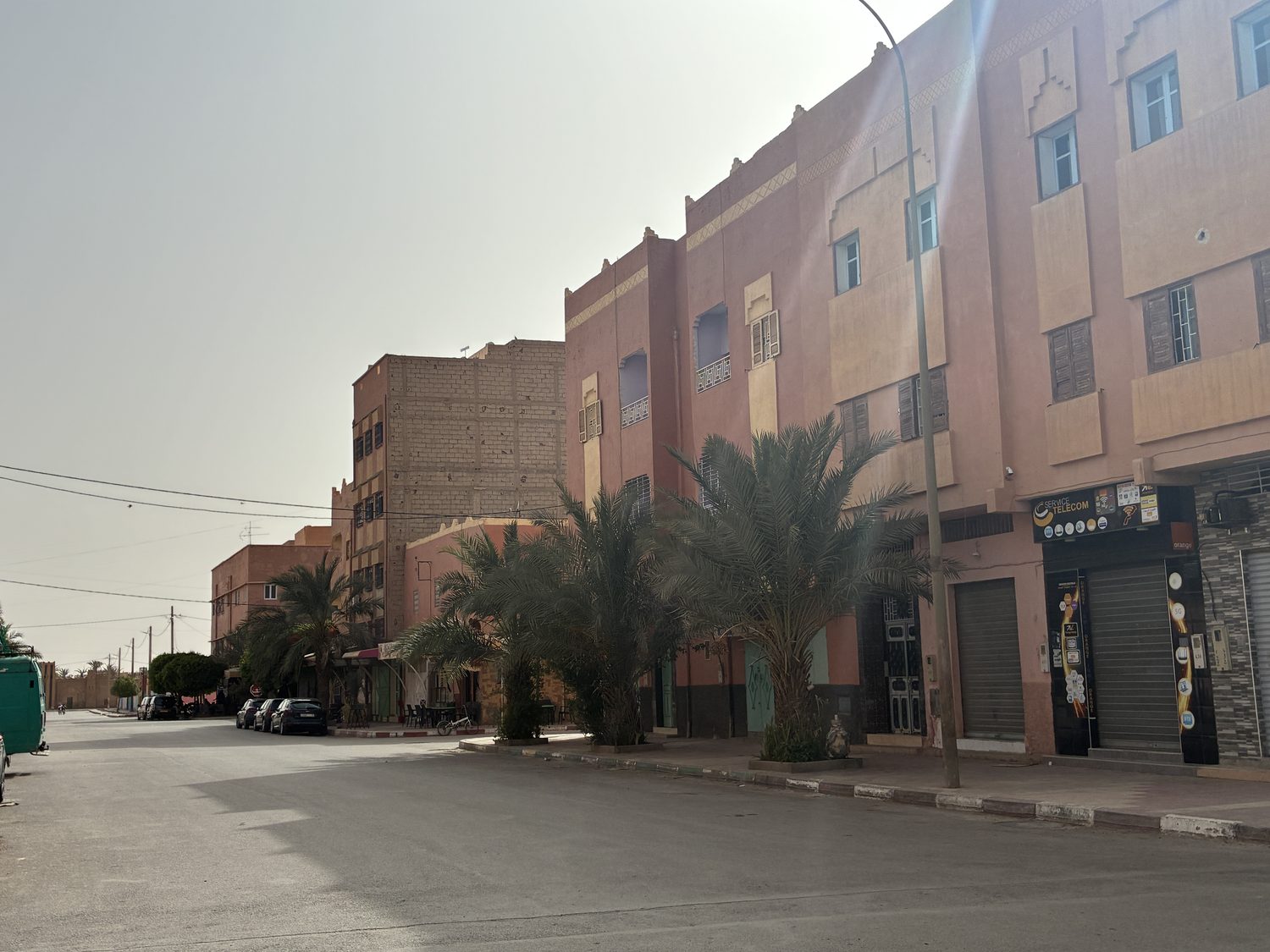
The route we traveled is known as the Road of a Thousand Kasbahs because of the number of fortified earthen buildings or ruins along the route, which were built around oases or rivers, but as we continued these became more and more scarce, replaced by mile after mile of gravelly and barren flat land on either side of the highway, stretching to the horizon.


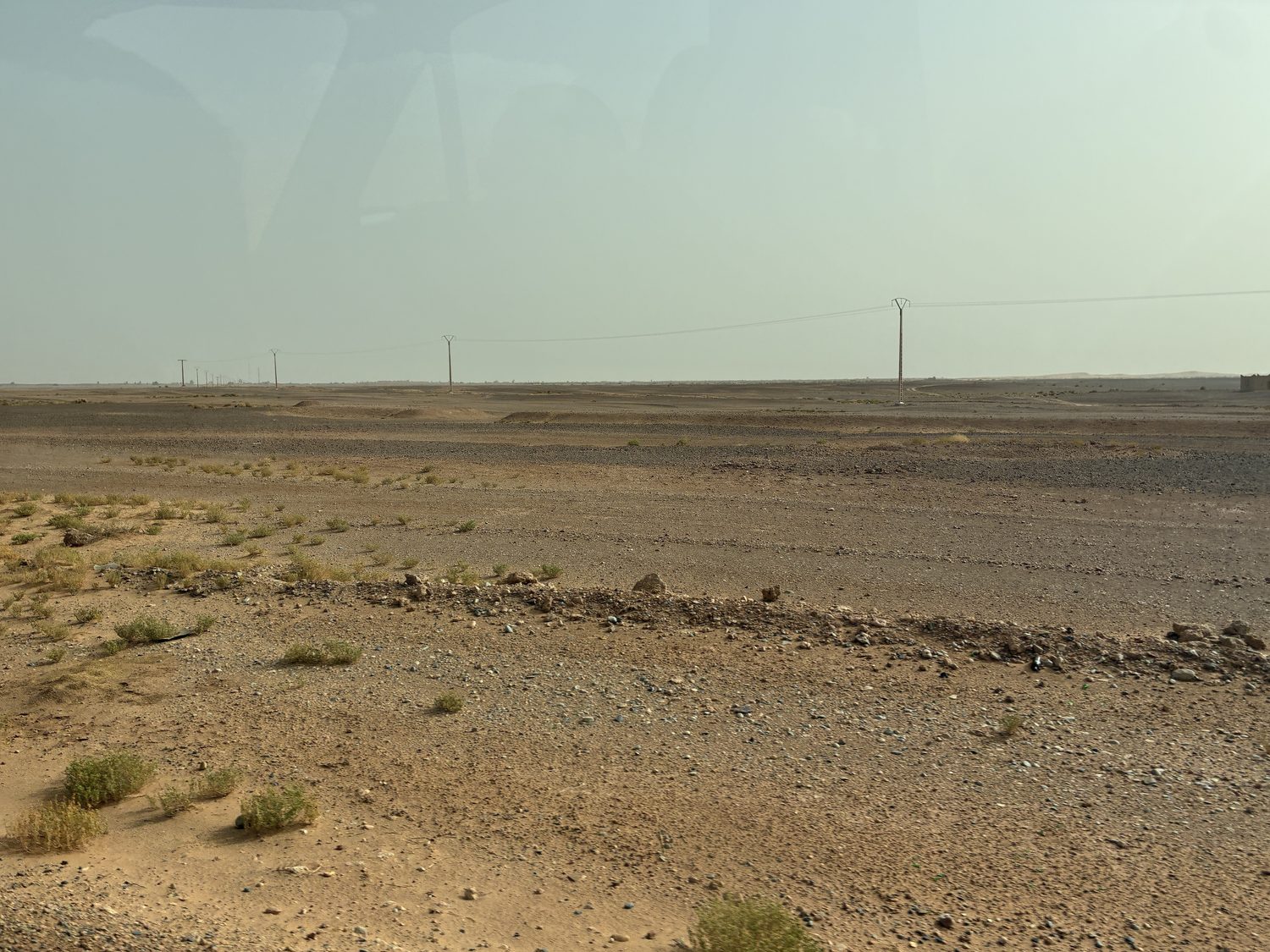
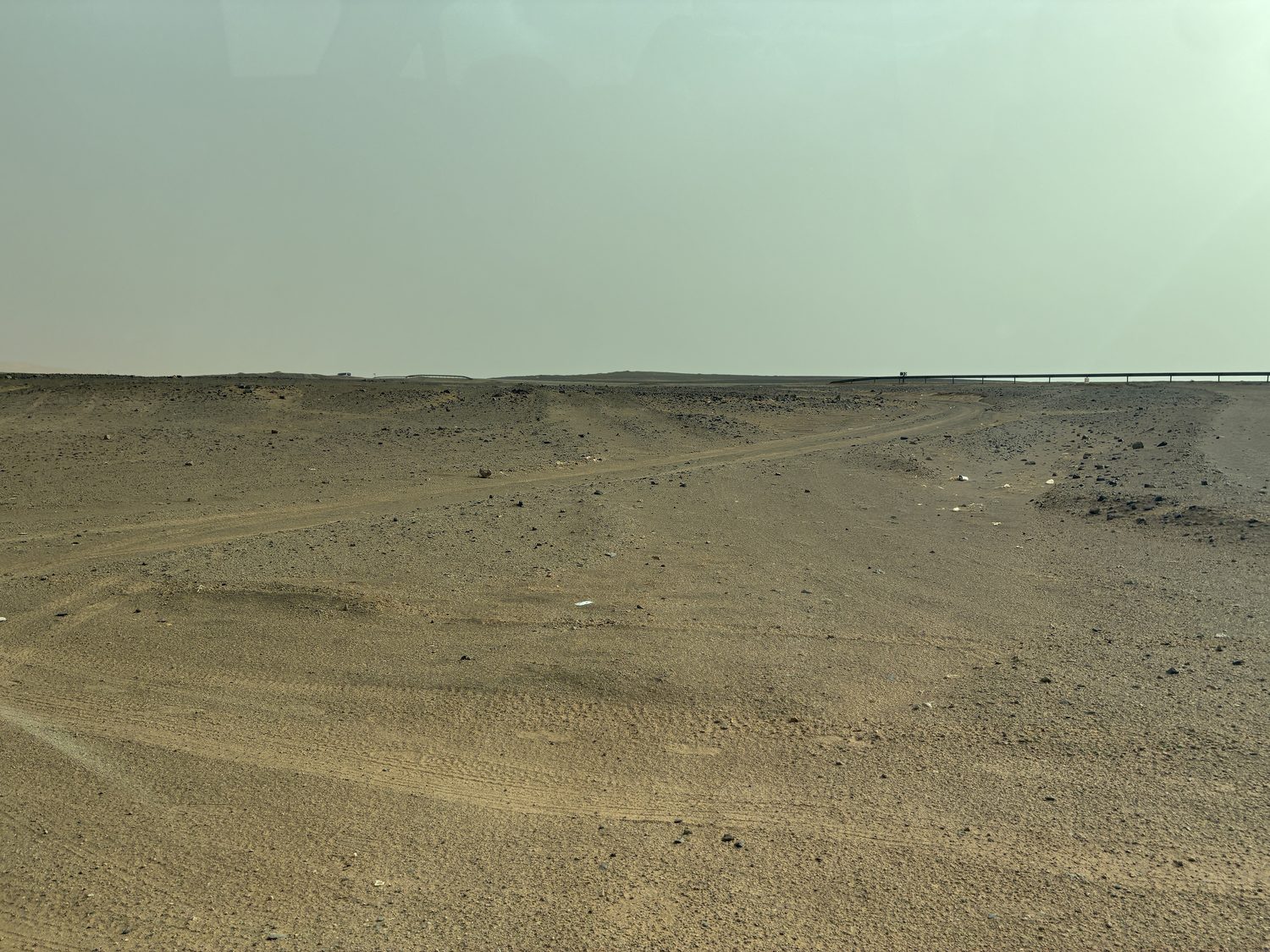
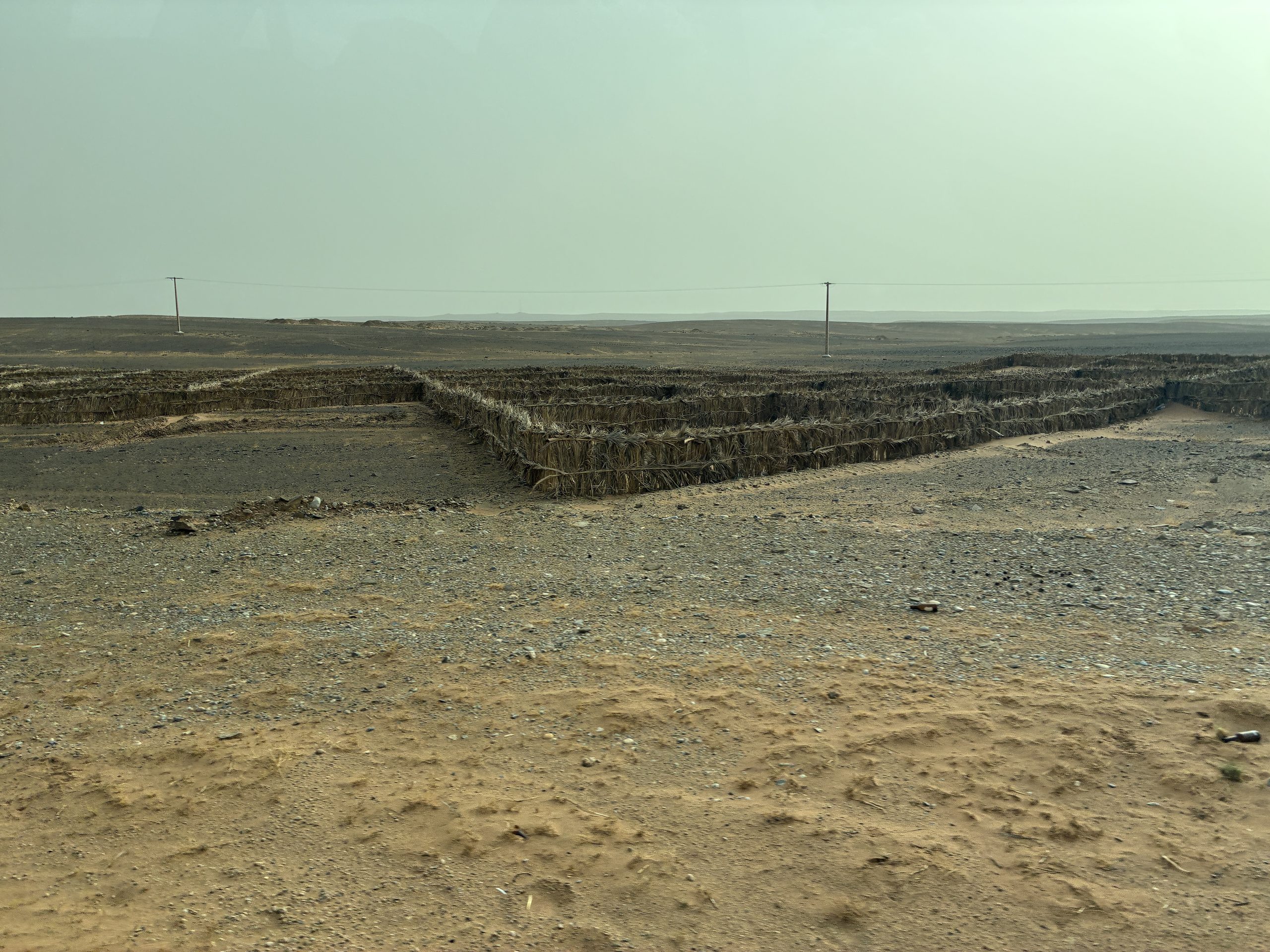
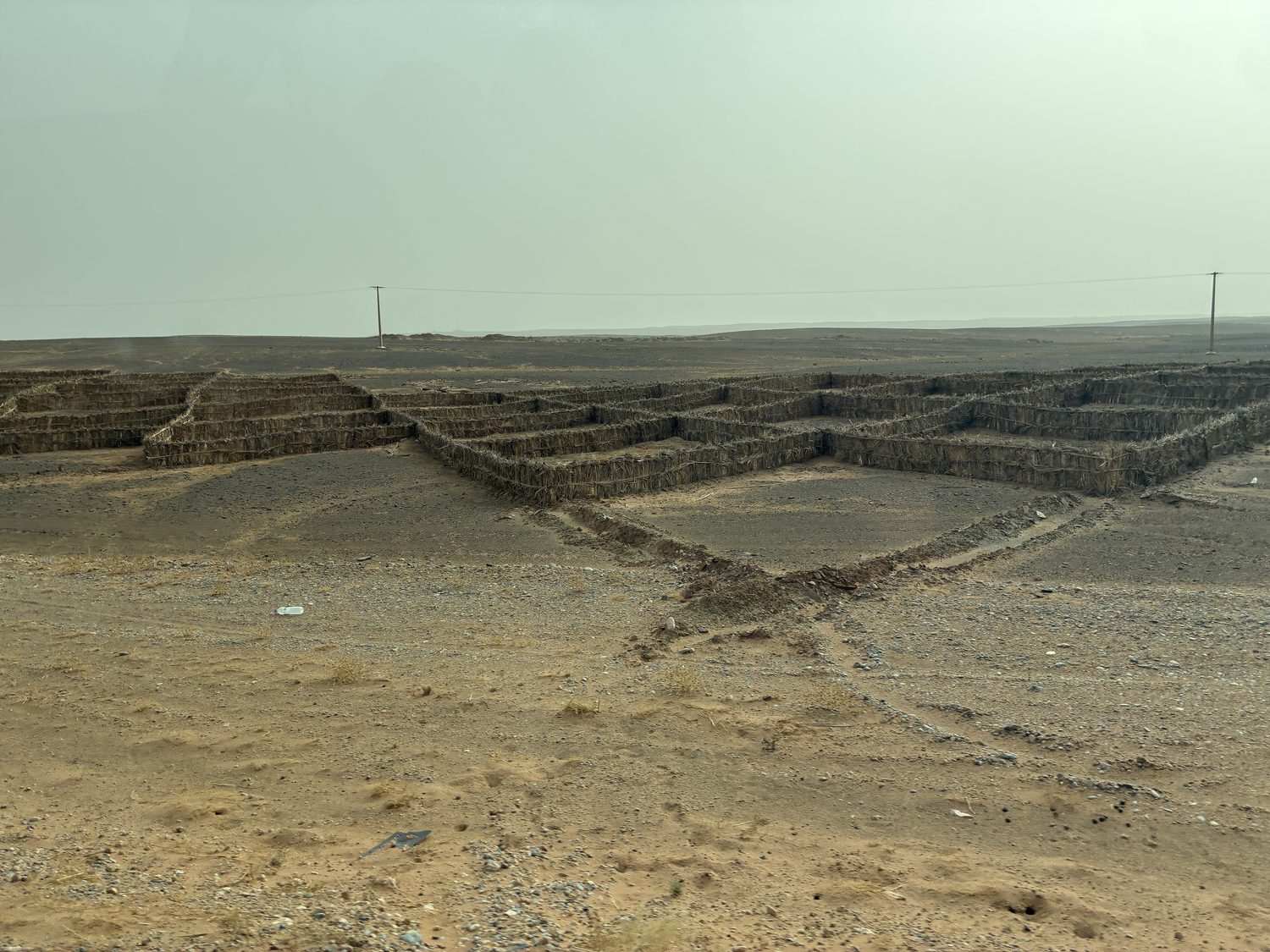
Eventually, as neared the Sahara, the landscape became even more flat and open, until we reached the camp at Merzouga, about 40 miles south of Erfoud. As we neared Merzouga, Charif pointed to low barriers made of palm leaves in the rocky desert plains, intended to help offset and protect against sand blown from the desert.
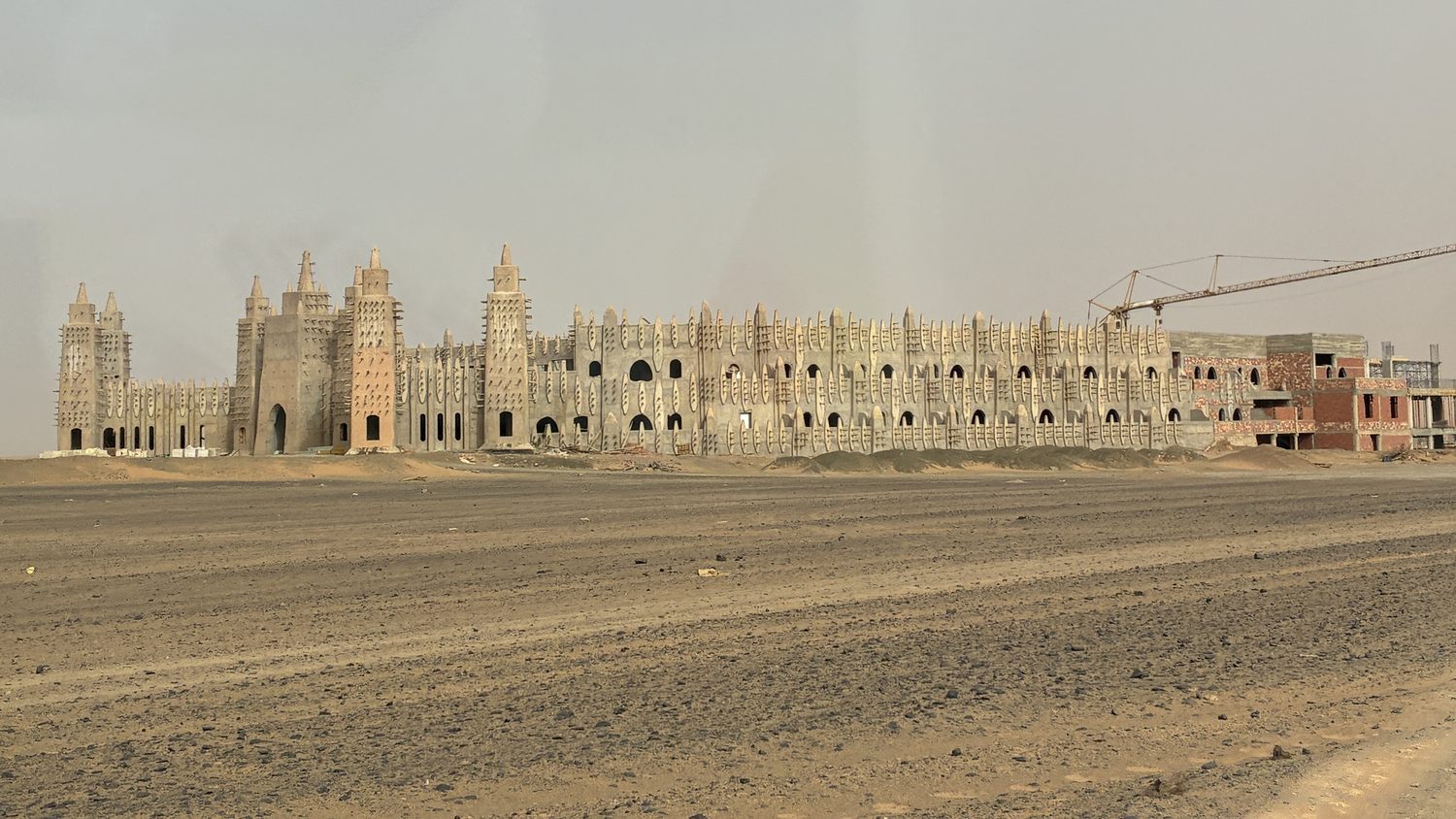
Our very last stretch of driving was on an unpaved and bumpy road for maybe a couple of miles, until we reached the camp. On the way, we passed a huge hotel under construction, expected to open in 2030, joining other large hotels already in the area, and bringing welcome financial but unwelcome environmental changes to the area.
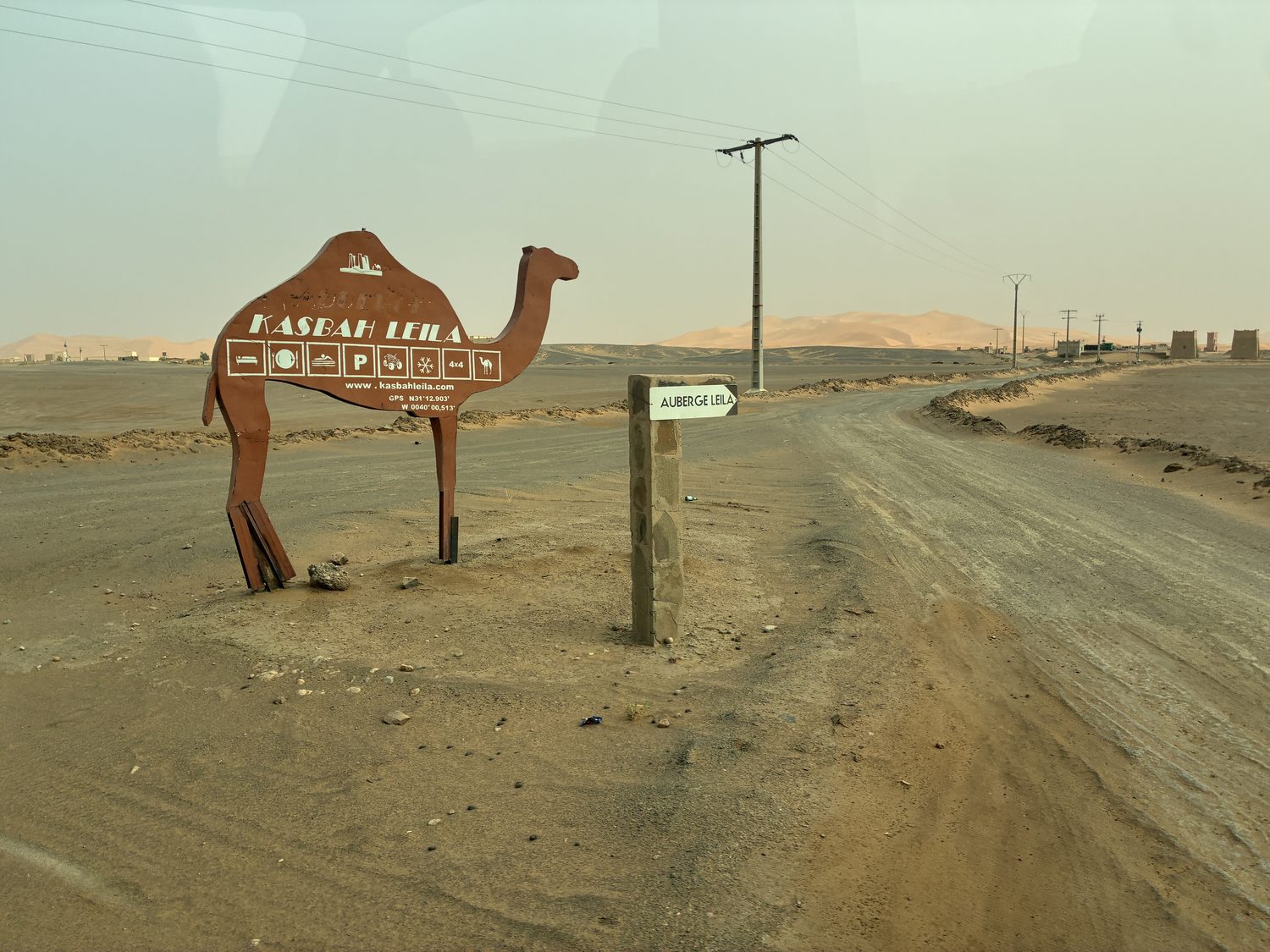
We reached the base camp at Merzouga around 5 pm, and for the first time saw the sand dunes that signaled we were in the Sahara Desert, even though technically the desert had begun earlier in the rocky desert we had been driving through for a while. But at Merzouga, we had arrived at the beautiful soft sands of the Erg Chebbi dunes, which seemed to stretch on forever, with nothing but occasional tufts of coarse grass to interrupt it, accompanied by the sounds of desert silence.


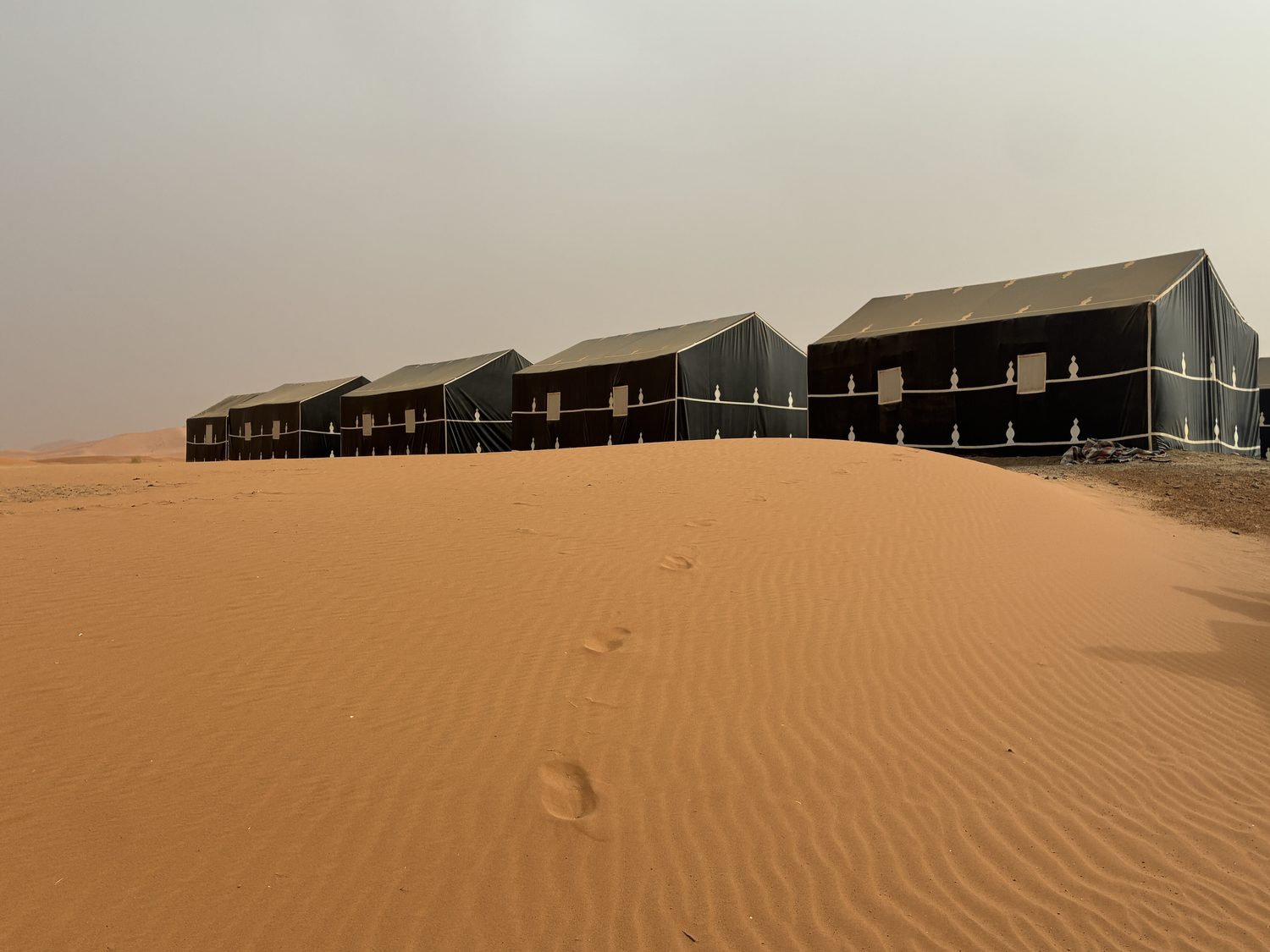
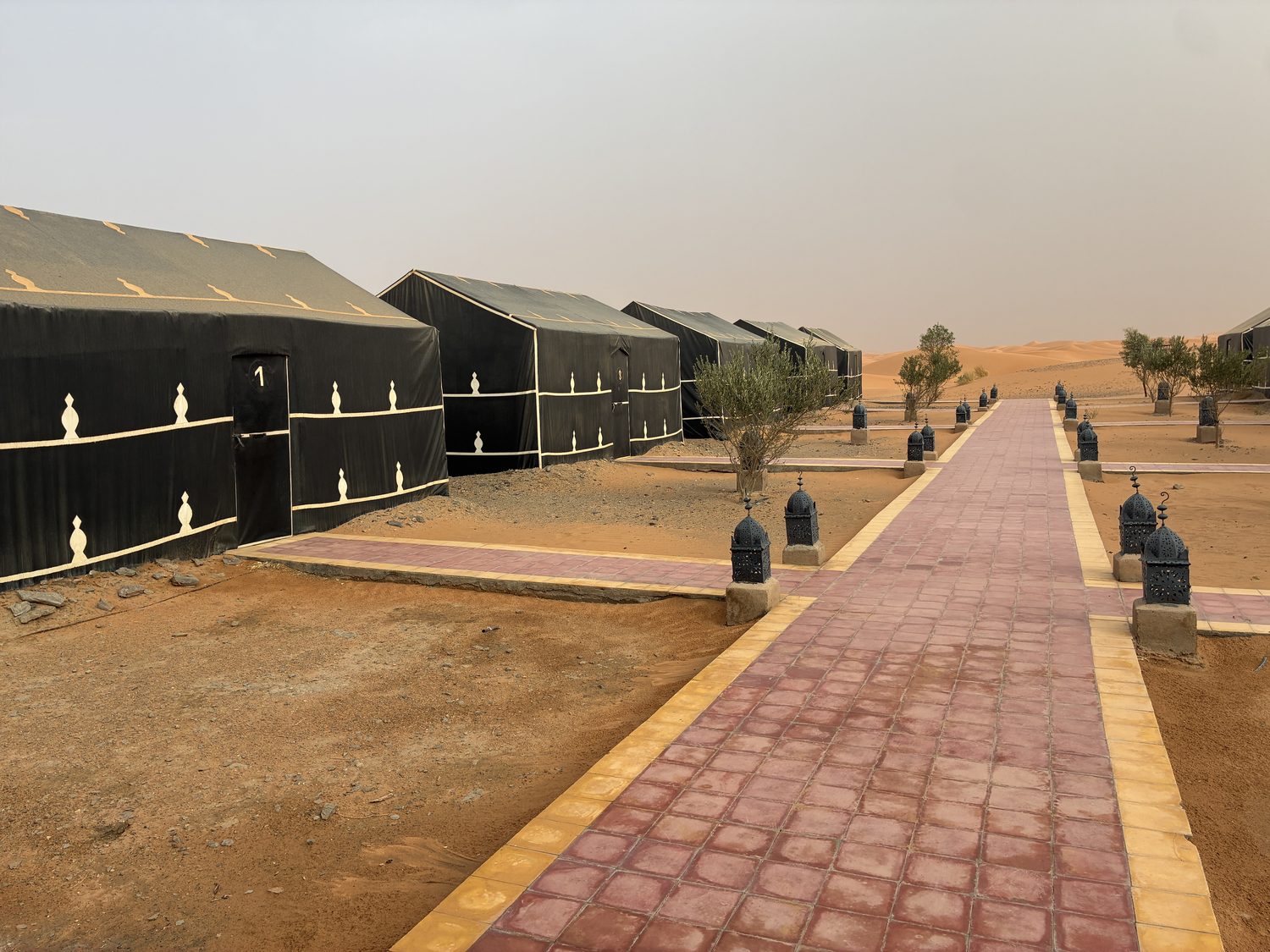
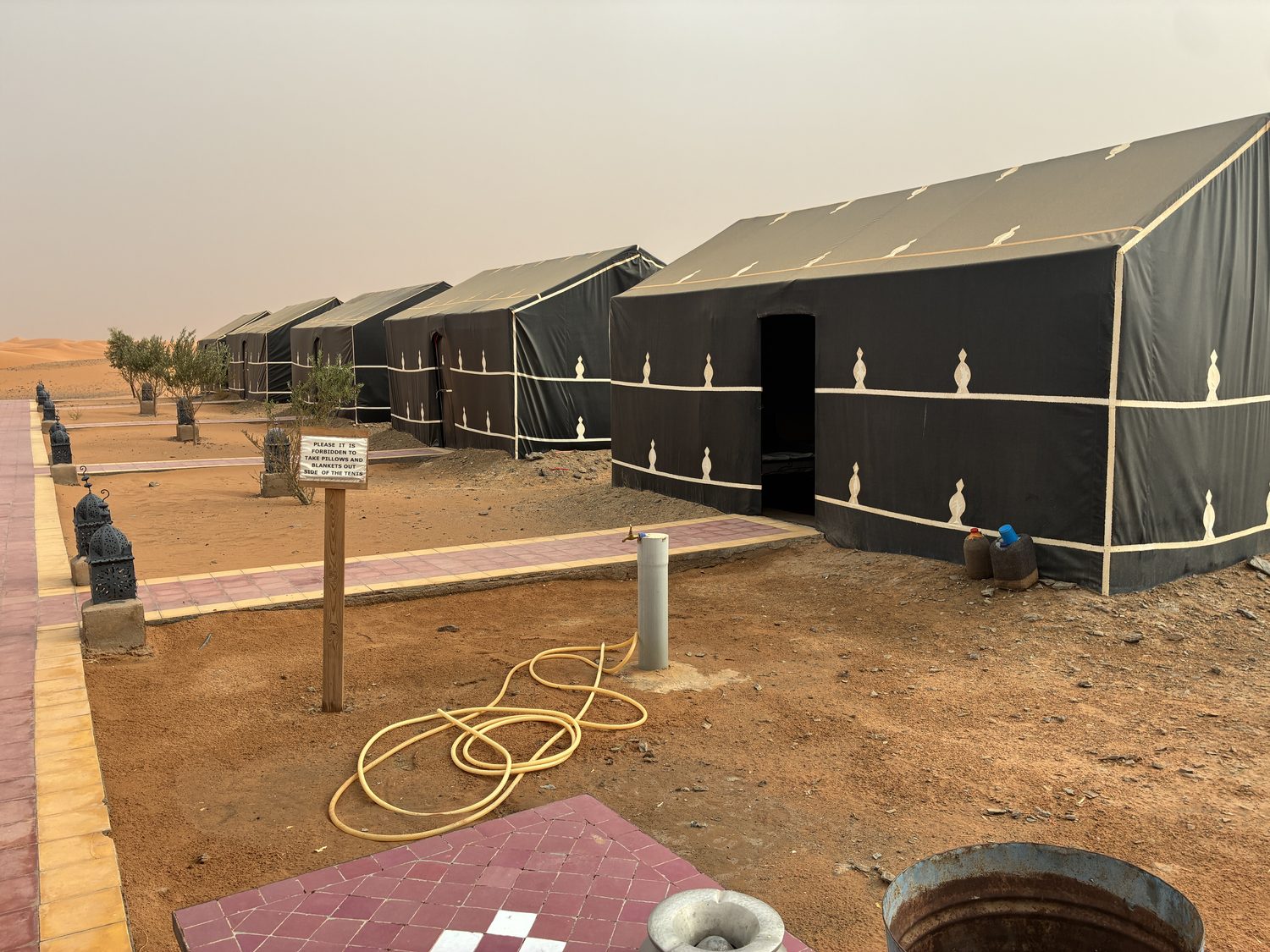
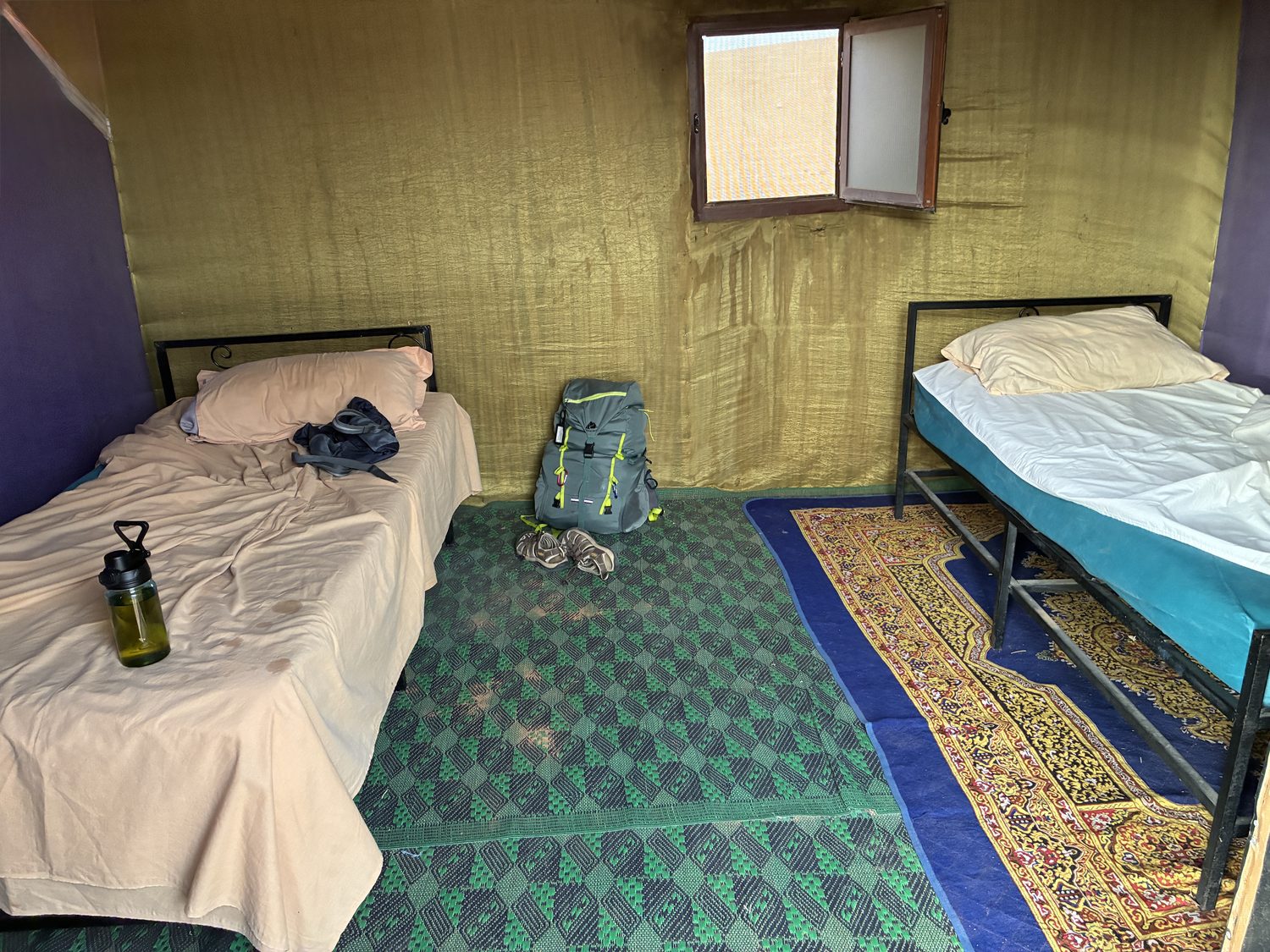
Claude and I were again buddied up to share a tent, which was pretty damn hot inside. No air conditioning here. Just two basic beds under canvas.
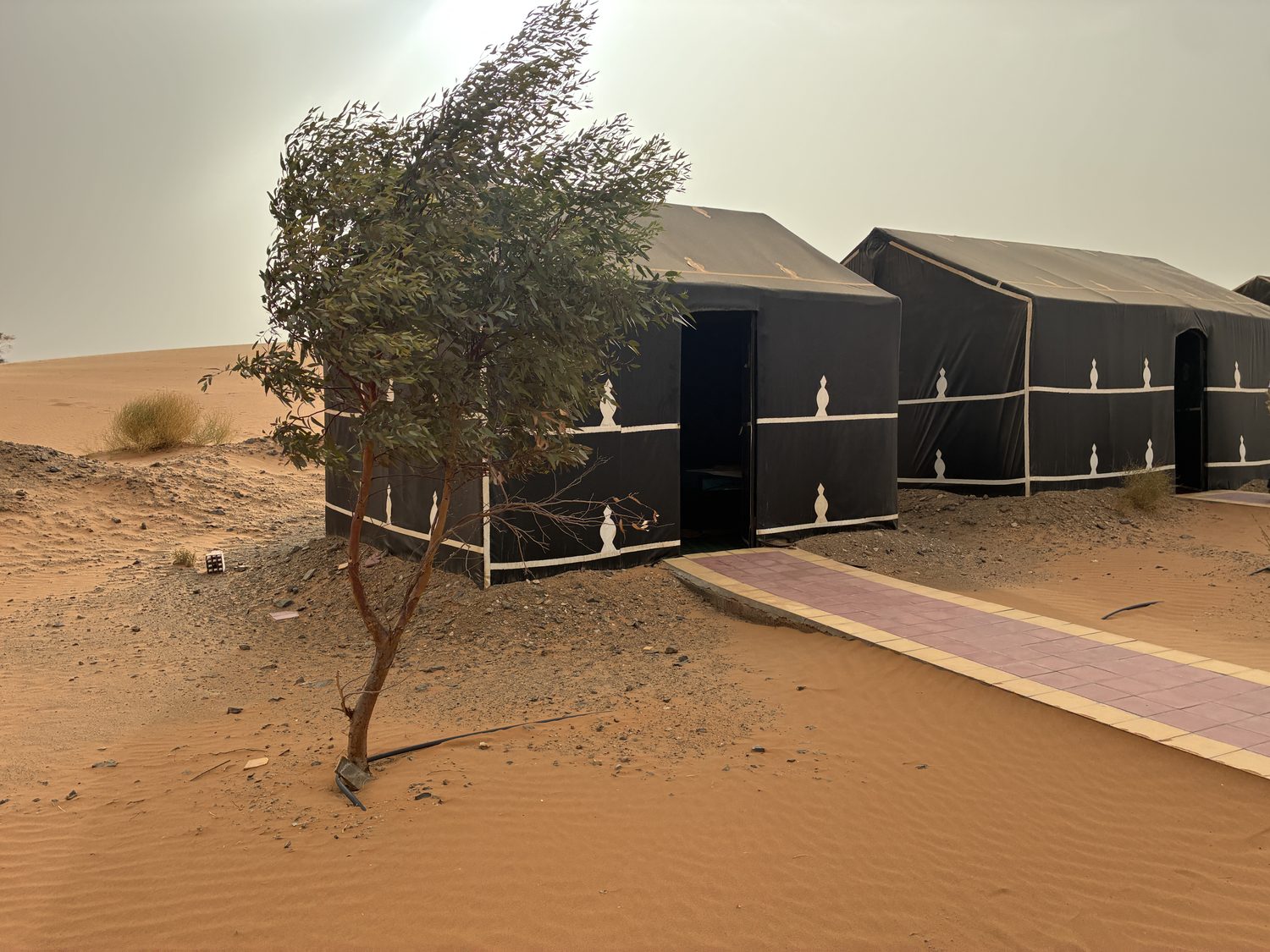
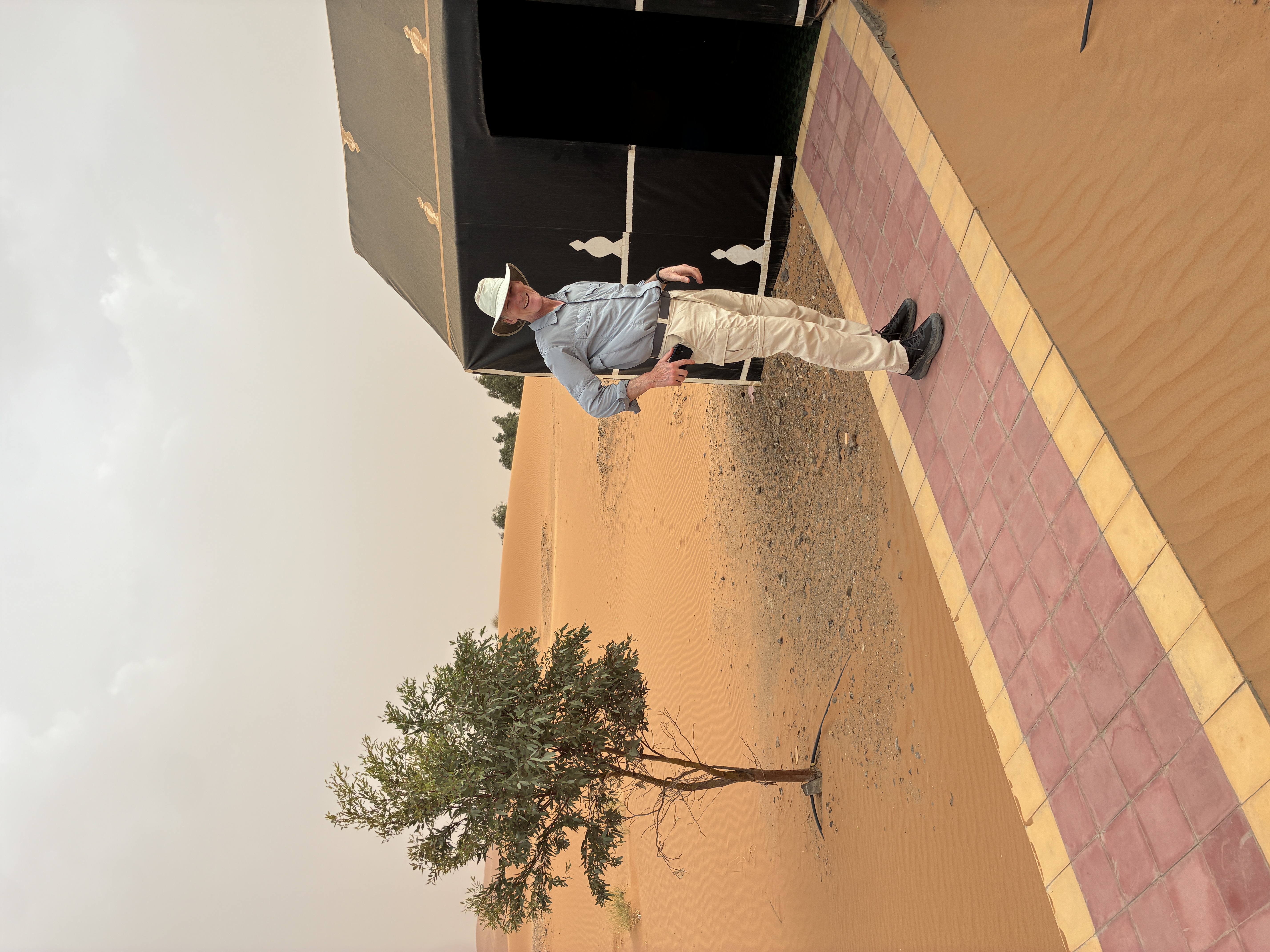
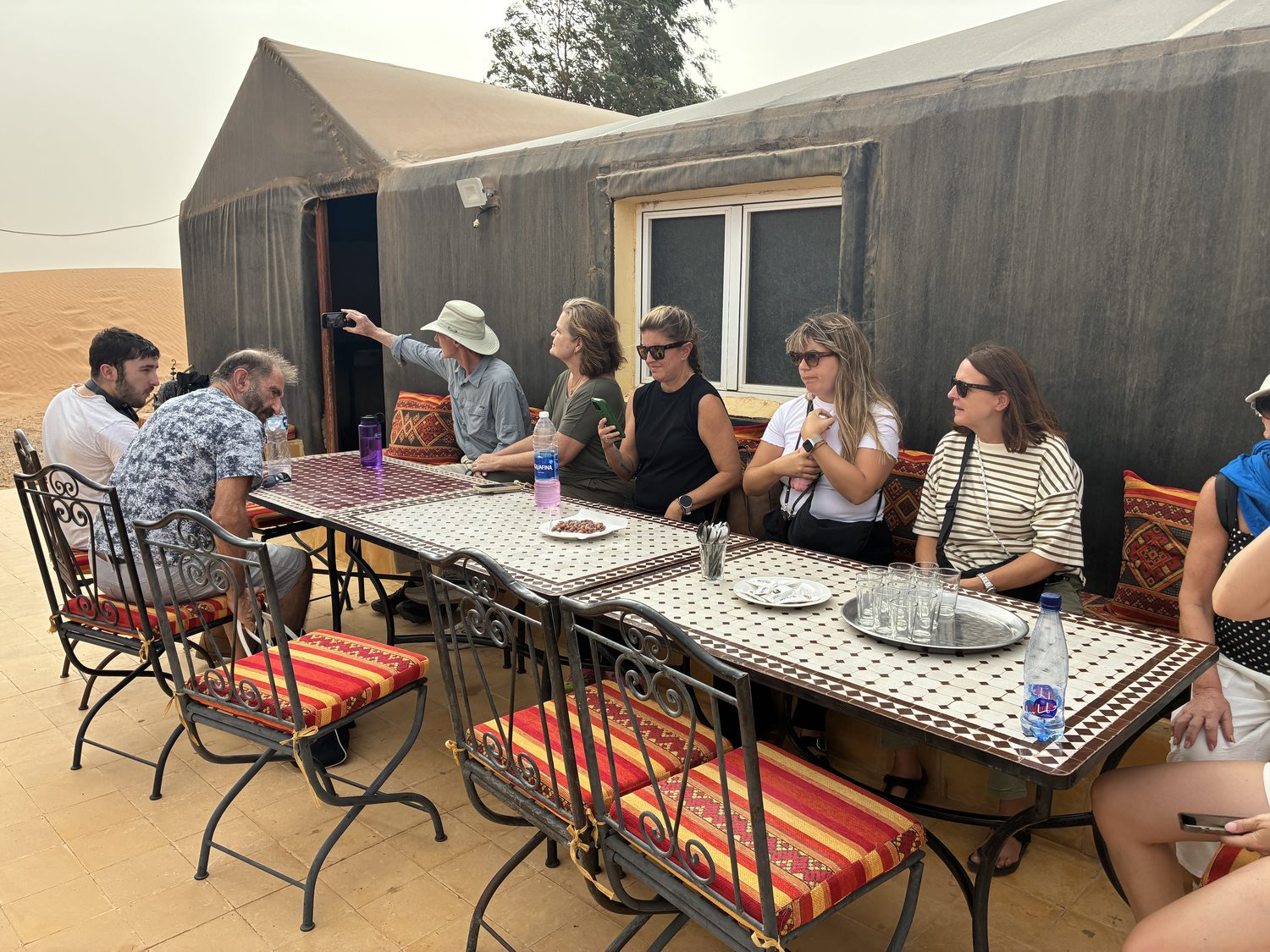


There was a pretty good wind going, so we got to experience a little of what happens when the wind kicks in over the dunes. It makes it difficult to see and you need eye protection and a face covering to stop the sand filling your nose and mouth, and these were just light winds. It stopped after a while, which is good as it would’ve made for a difficult time on the camels.


Around 6:15 we got the call to take our camel ride into the Erg Chebbi dunes. One by one we mounted a team of resting camels tied together by a guide rope, and one by one each camel rose to its feet, until every camel in each team of five was standing and had someone on its back, and ready to be led across the dunes and into the desert by the camel guide, who led the way on foot. The last and only other time I rode a camel I was maybe 8 years old, at London Zoo.

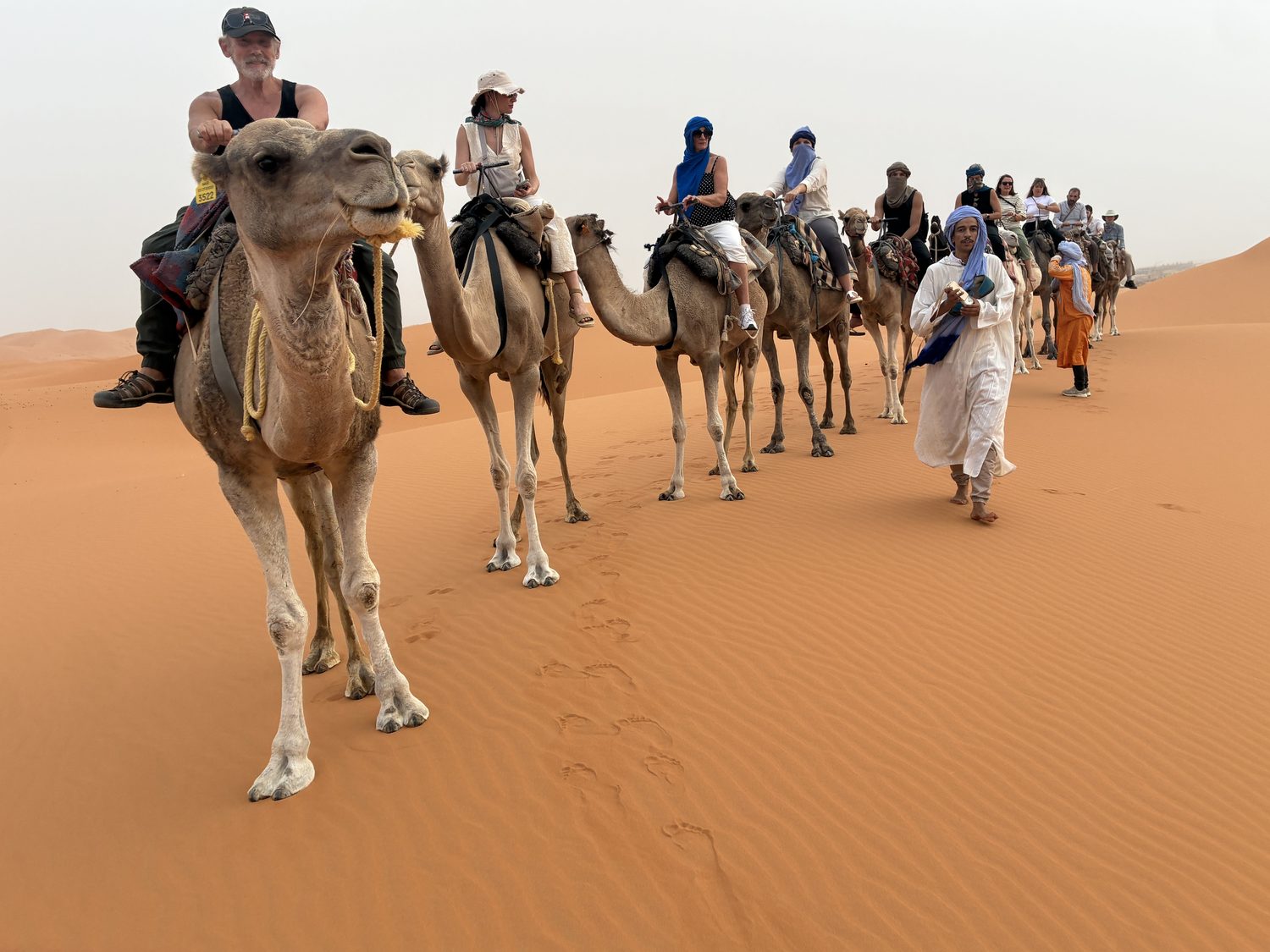

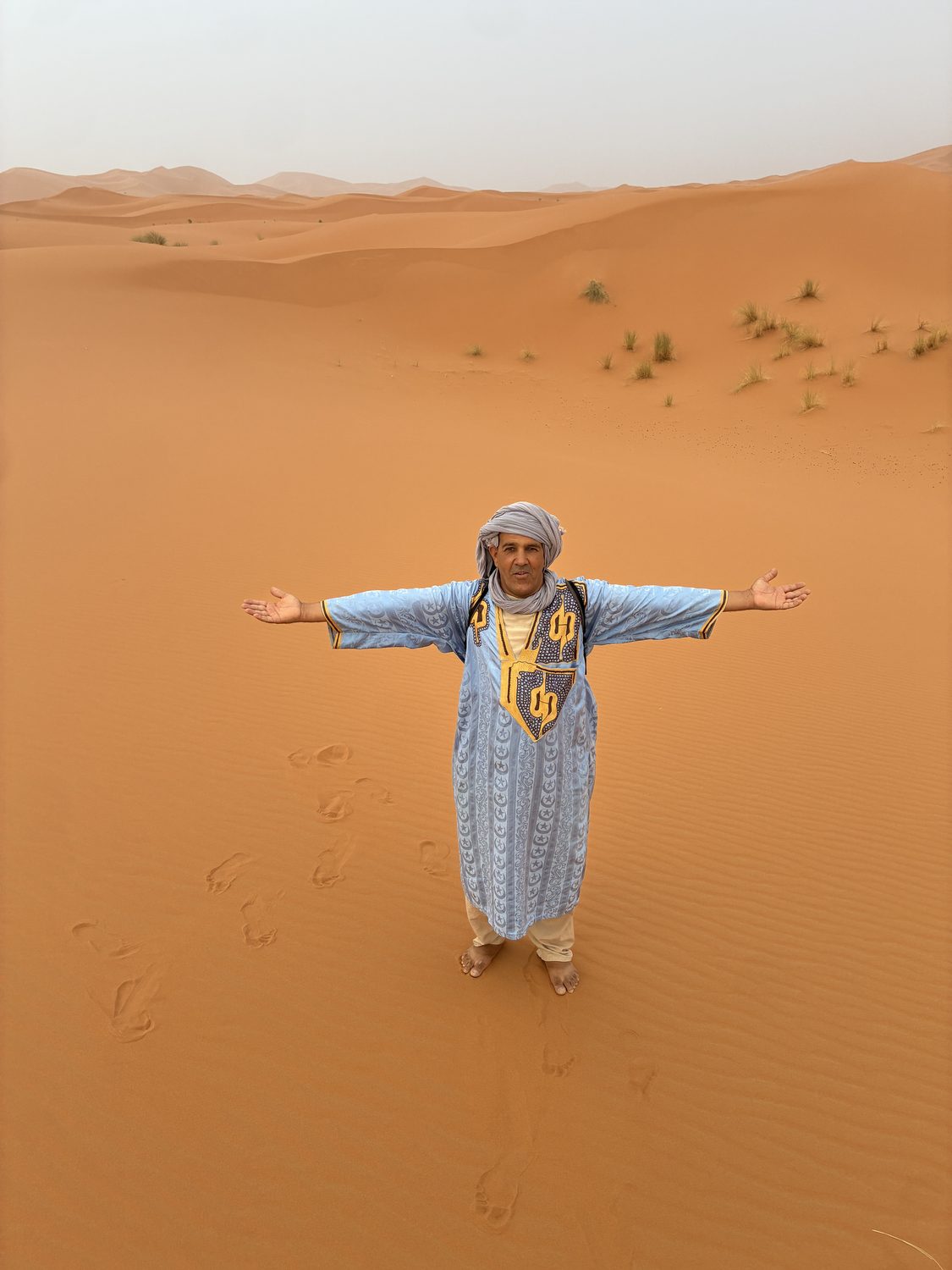


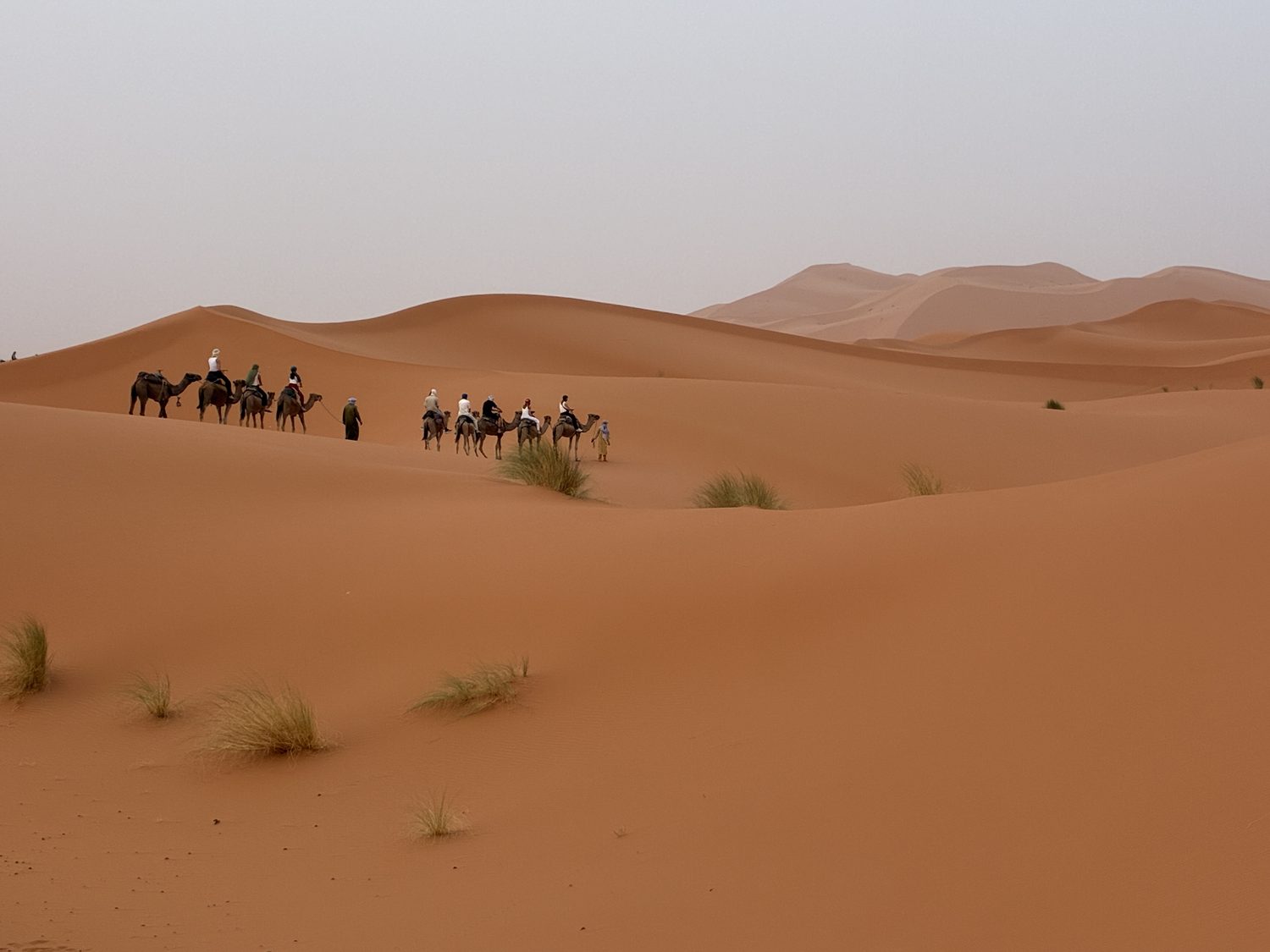
It was slow walking and we loped maybe a quarter mile across the dunes, which took 15 or 20 minutes, and then we all dismounted and spent maybe an hour out there in a group, just hanging out and having fun in the dunes, which are magnificent and magical. They rise up into huge walls and mountains of baby soft sand and go on forever. The two younger people in our group had a foot race with Charif to the nearest dune, and we just had fun and relaxed, lying in the sand and/or walking barefoot in dunes. It was wonderful, the serenity of it slightly diminished by the motorized quad vehicles racing around a quarter mile away. It was a wonderful experience, with a by now fully bonded group.


Walking in the dunes was wonderful, by now, having abandoned my shoes, feeling my feet sinking into the sand, which at times was pretty compacted and actually hard on the feet for a moment, until giving away to soft, warm, embracing sand.
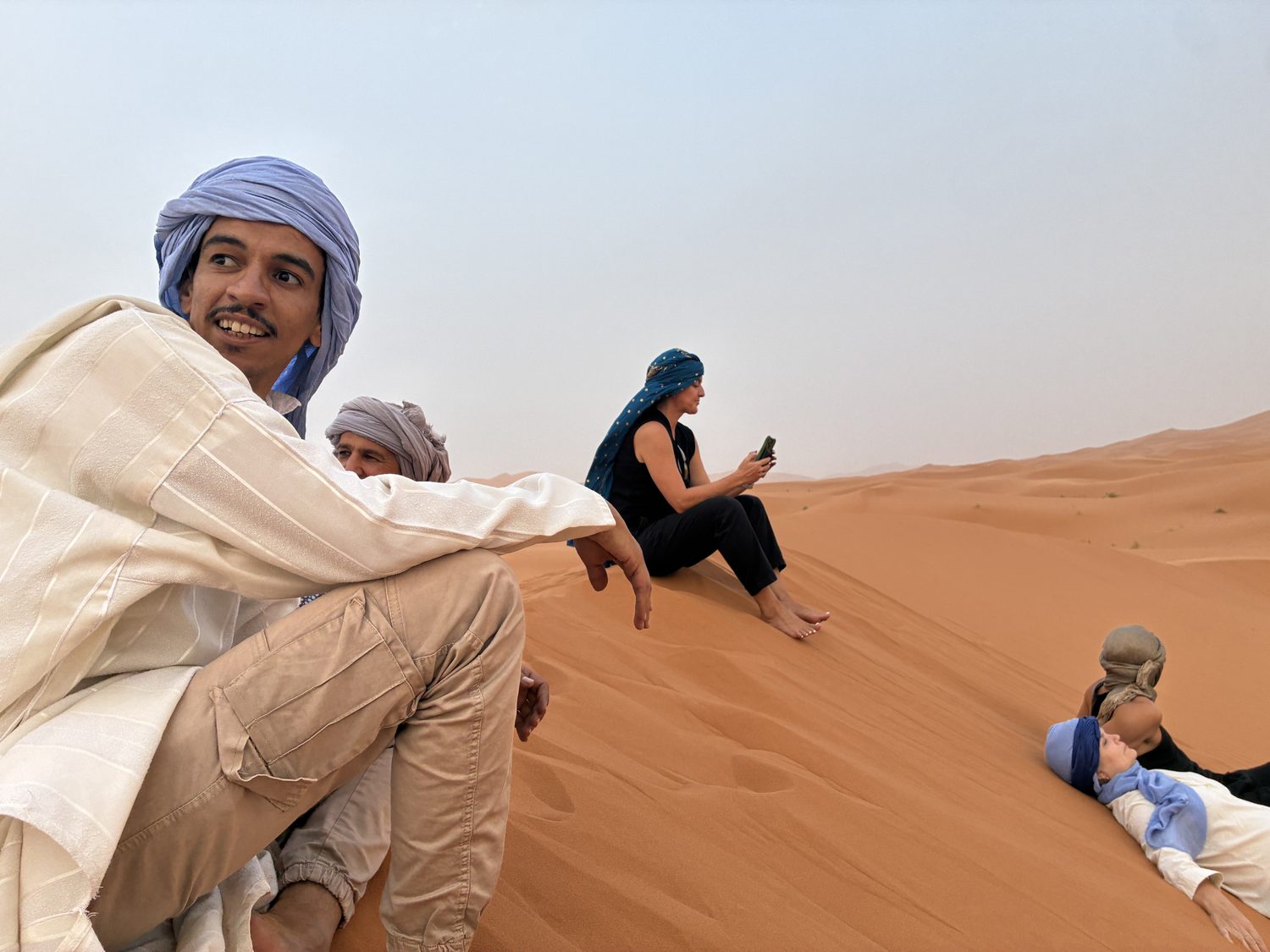
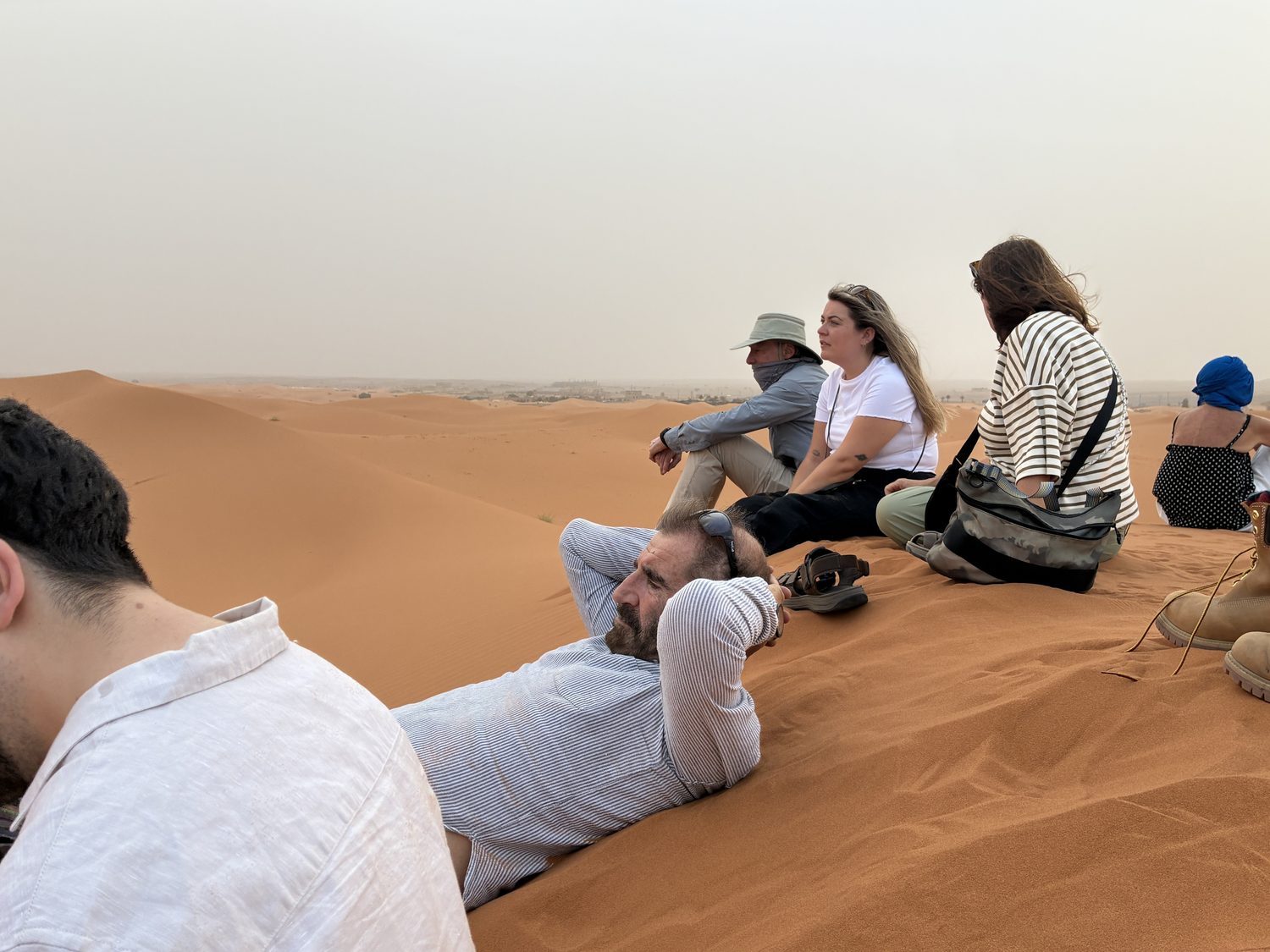
The dunes are magical, undulating and rising and falling into ridges and mounds, peaks and valleys, and distant unending mountains of sand. If it wasn’t for the quads there would be little sound at all, the sand swallowing it up like giant sound proofing baffles. It’s a mystery.


We had aimed to see the sunset but the sky was too cloudy, which also helped keep the temperature down, and after an hour or so we remounted and loped back to the tents.

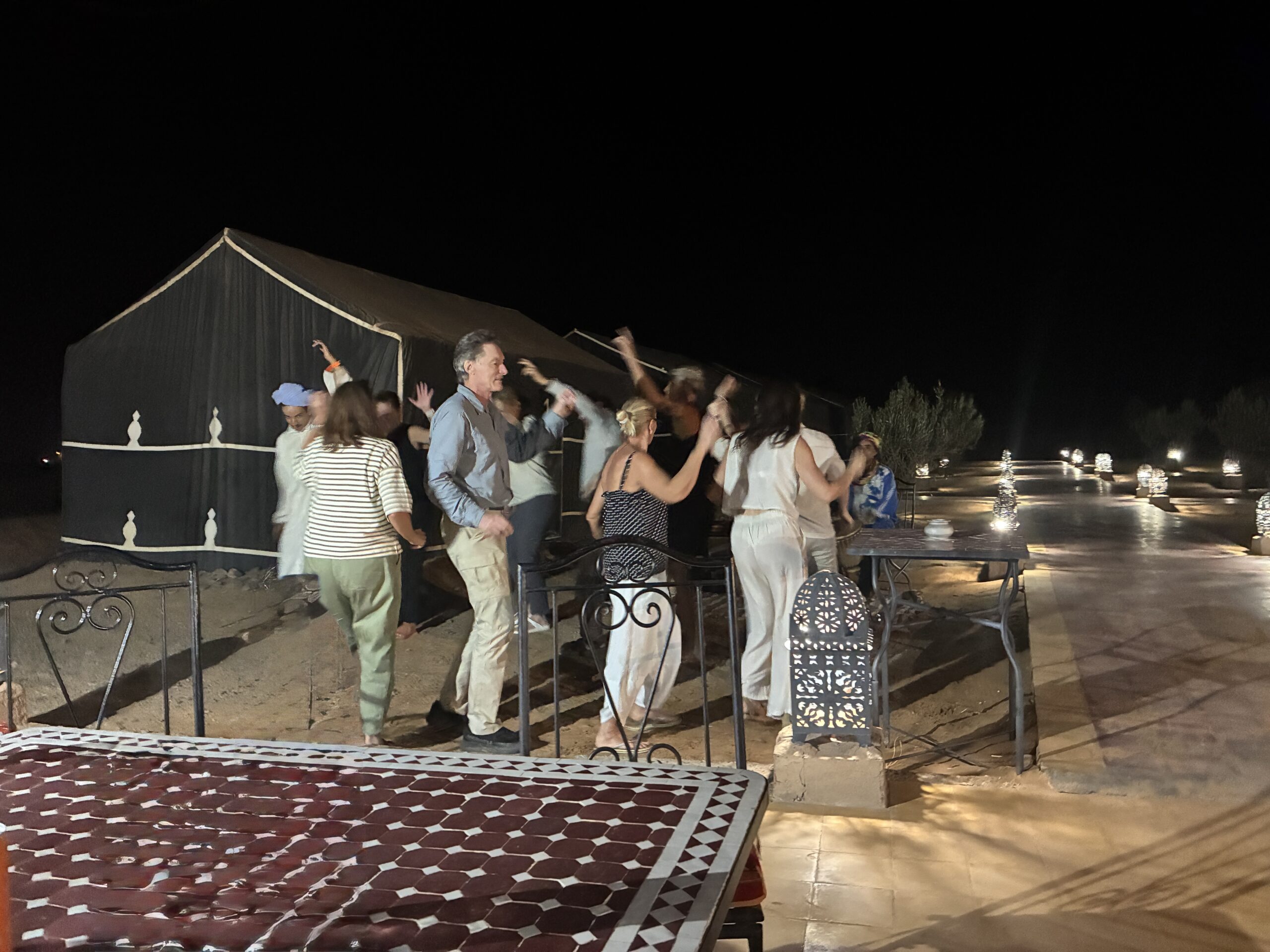
We ate another nice meal – although they’re always a variant of the same meal – and afterwards sat outside, while Charif and some of the other guides played traditional drums and sang, encouraging people to dance, which they eventually did, but not me of course. Nothing could entice me to dance. Not even all the sands of the eternal Sahara.

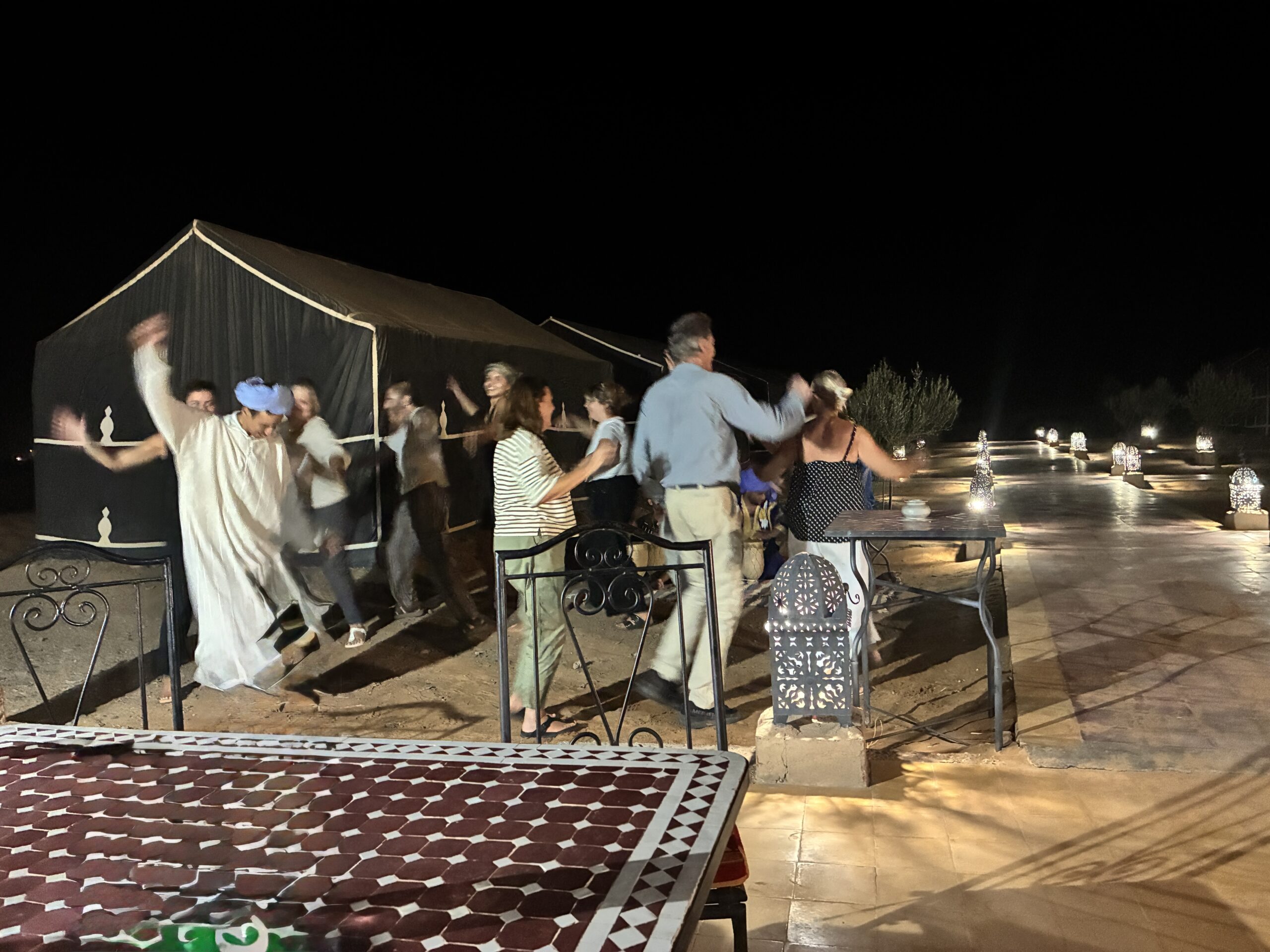
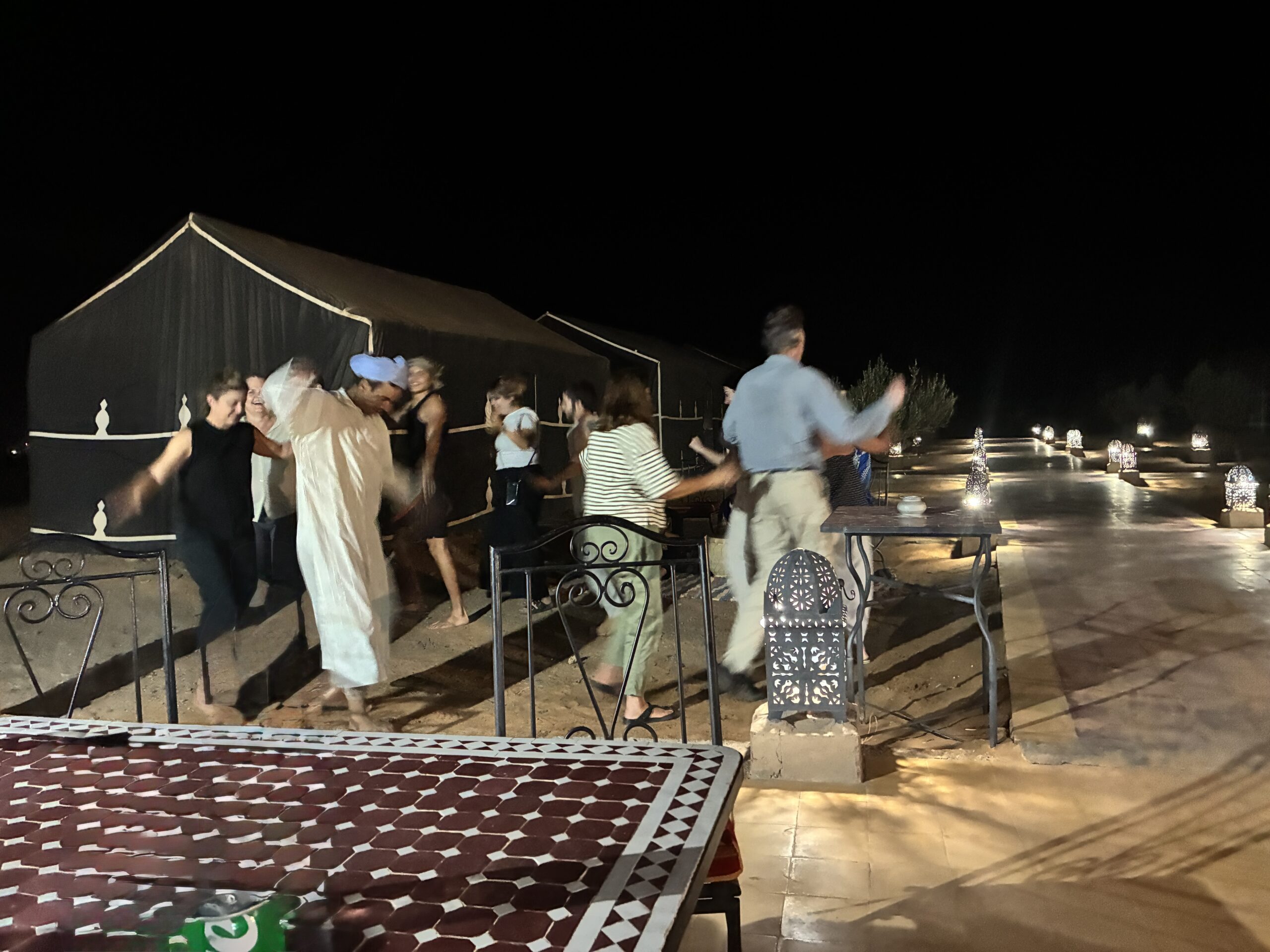
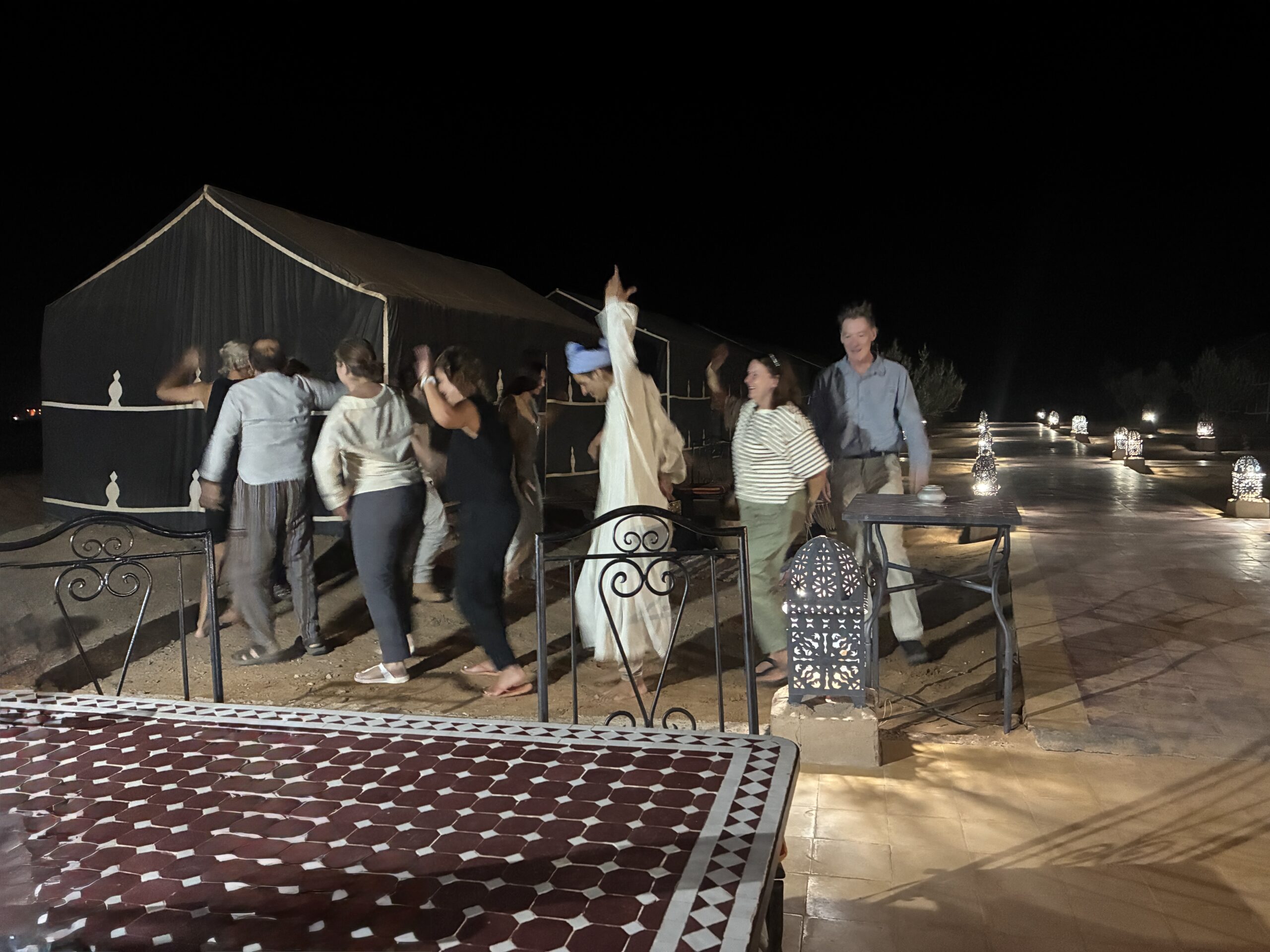
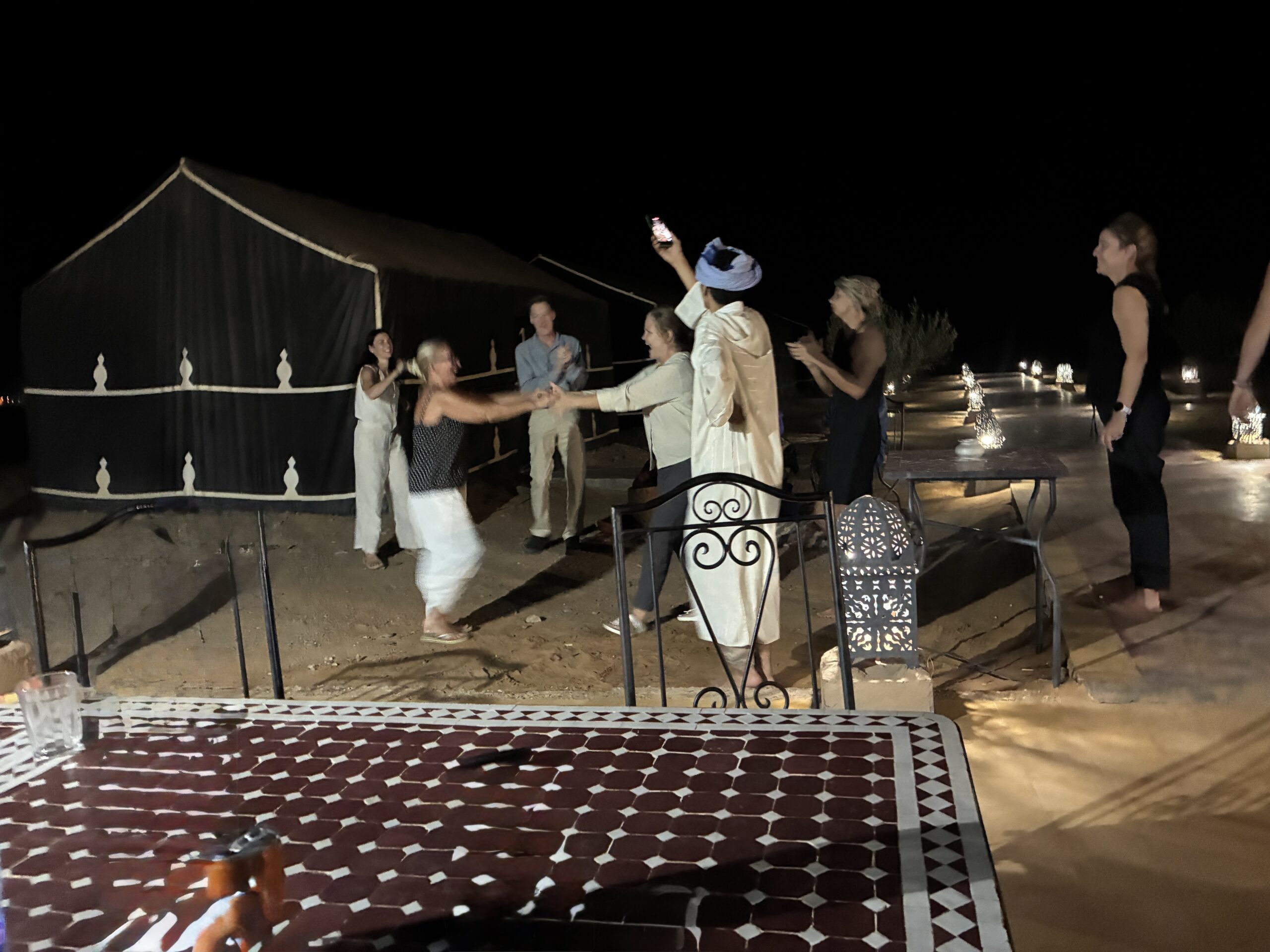
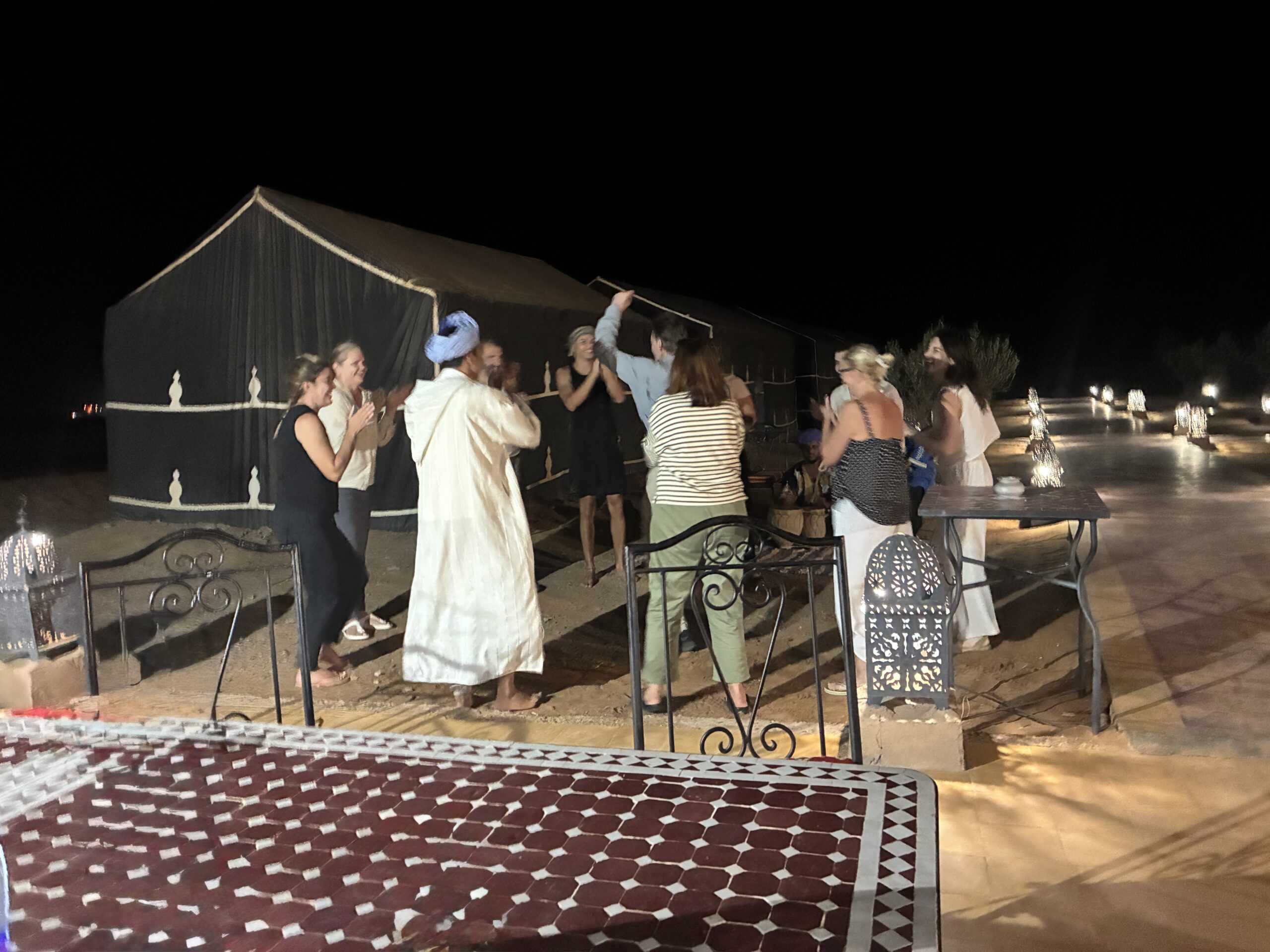
It was around 10 pm by now, and along with most others I headed to my tent. But first I decided to get a jump on what I imagined would be the morning shower queue in the communal bathroom, and took a shower. Then I walked out into the sand dunes to take a look at the desert sky, but between the sky being overcast and the lights from the camp, few stars were visible. Claude and I talked a little and laid on our beds to fall asleep in the warm and dry Sahara heat, sleeping with the door to the canvas bedroom open.
We plan to see the sun rise over the dunes at 6:30 tomorrow morning, but until then, we sleep. Good night.