From Devon to Bath.
We left the Park Hotel and drove from Barnstaple to the Bristol area, actually Keynsham which is a district or suburb of Bristol, about a 2 hour drive, arriving around 12:30, and found the Crown Inn, where we’d booked for two nights, which turns out to be a sort of run down, but okay, pub hotel, but both the pub and the hotel sections were closed, and not open until 3, with pretty poor instructions on how to proceed, other than return to the Crown Inn at 3 (which we did).


We instead drove into the town center and took a walk around, and eventually found another pub – a pretty good looking one in this case, for lunch. The Lock Keeper sits on the River Avon, and offered a nice menu. We ate in their outdoor garden, and stayed for a while, until ready to head back to the Crown.


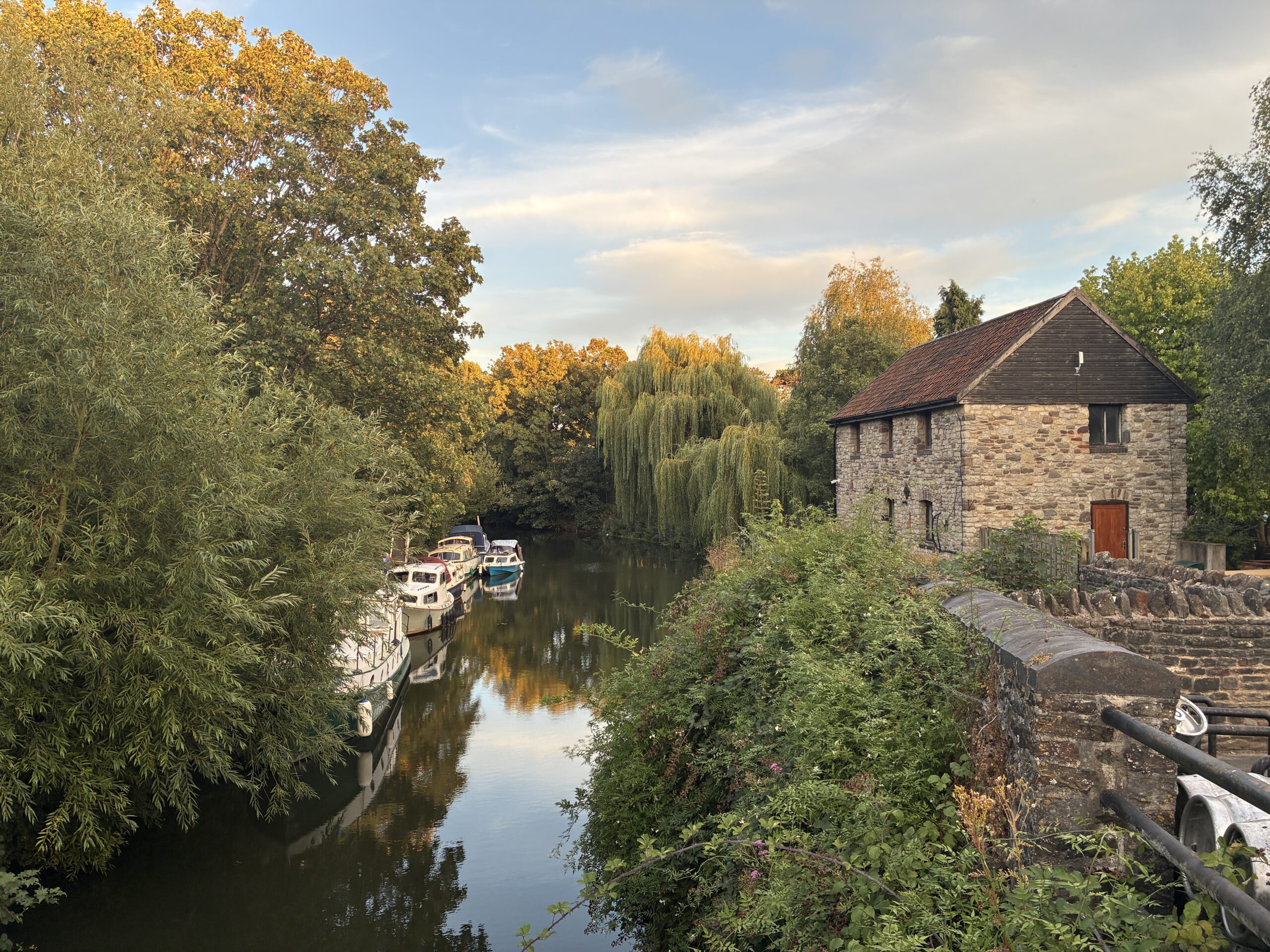
All went well when we returned to the Crown Inn, and we checked in and learned we could park the car opposite, in the parking lot of the Keynsham Rugby Football Club, which seemed a whole lot safer than parking on the street in the small spaces directly in front of the hotel. The room was okay – it fit our needs, but like the whole building, which is 300 years old (according to the sign in the bathroom), it is poorly maintained and shabby, with that musty odor the second you enter the building and the room.
Our room wasn’t too bad actually, and certainly spacious with comfortable beds, but it was nonetheless not well maintained, with a strong musty smell, which permeated the whole building, and every electrical outlet was damaged and potentially dangerous for that reason. Not our favorite place to stay, but it was comfortable enough, and sufficed. The sign in front of the pub describes the large beer garden and their excellent menu… but, there is no beer garden and the kitchen was out of service. Like the hotel part of the place, the bar was utilitarian, and pretty shabby and basic. I certainly would not consider returning here.

Now, around 3:30 or so, we drove into nearby Bath, not far, but busy with traffic at this time of time so the usually short drive took closer to 45 minutes, and figuring out how to get to the city center and then park was a maze for us, with Google Maps and Apple Maps giving different directions, until we finally and happily arrived at the central car park, and started to discover the city.
When we first arrived, we both thought, well okay, this is alright, but what’s the big deal about Bath? Starting our walk at Queen Square, it seemed interesting, as did the neighboring buildings and streets, but nothing extraordinary. That changed as we walked toward the city center, which was not only jumping and vital, but also filled with incredible architecture and views, which at times reminded us of Paris. It is an incredible city, and it only got more beautiful as we walked, World class, I’d say.


Bath is almost 2,000 years old, although its natural hot springs, which are the only naturally occurring hot springs in Britain, have been in use since before 1000 BCE or longer, used by ancient Celts, probably among others. The Romans founded the city around 60–70 ACE, building the original Roman baths, temples, streets, and public buildings, and marks the founding of Bath as a city. The Romans left the city in the 5th century, and by the 7th century, Bath had become an important Anglo-Saxon religious center, and Bath Abbey was initially built was built. The present Abbey in the city center, was built in 1499.
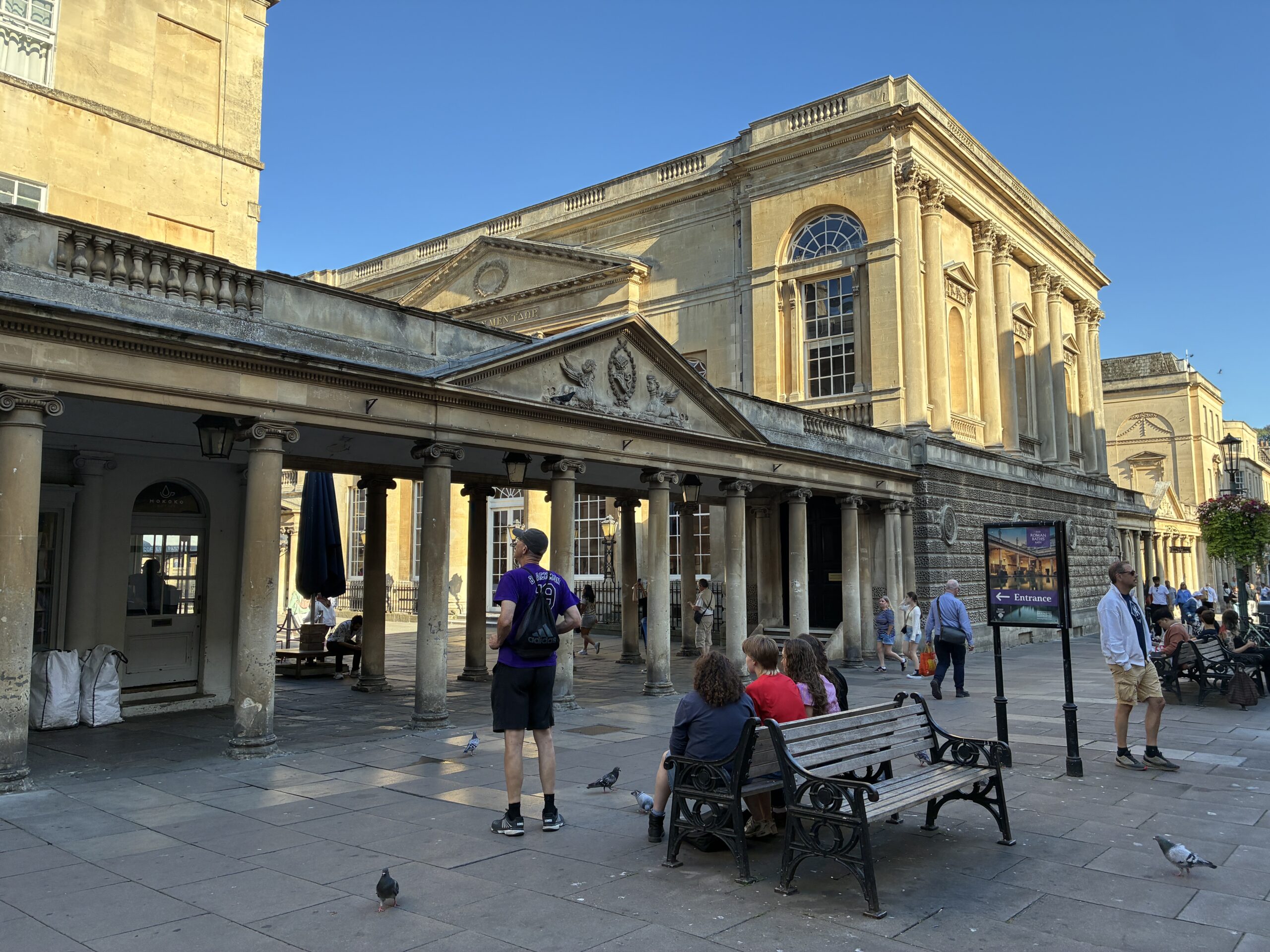


Bath became fashionable again in the 1700s as wealthy and aristocratic folks sought out the spa. During this period, the city was transformed into a center of Georgian urban planning and building, using the honey-colored local limestone. This included the Royal Crescent, built in 1774, which we visited today, consisting of 30 terraced houses arranged in a crescent overlooking what is today a large open park, but was once just the countryside.The Crescent is famous for its appearances in period-piece movies and TV shows, and considered one of Britain’s greatest Georgian buildings. Another residential area, just down the road from the Royal Crescent, is the Circus, a circular arrangement of Georgian townhouses inspired by Roman amphitheaters, was built between 1754 and 1768, and Pulteney Bridge, crossing the River Avon, another example of Georgian architecture, was built between 1769 and 1774.
Bath was big in Jane Austen’s day, and she herself lived here from 1801 to 1806, writing about the city in several of her novels, usually as a place to be and be seen, to relax and take to the spas, to meet and marry into wealth, and of debutantes, aristocracy, and fortunes. Bath was it!


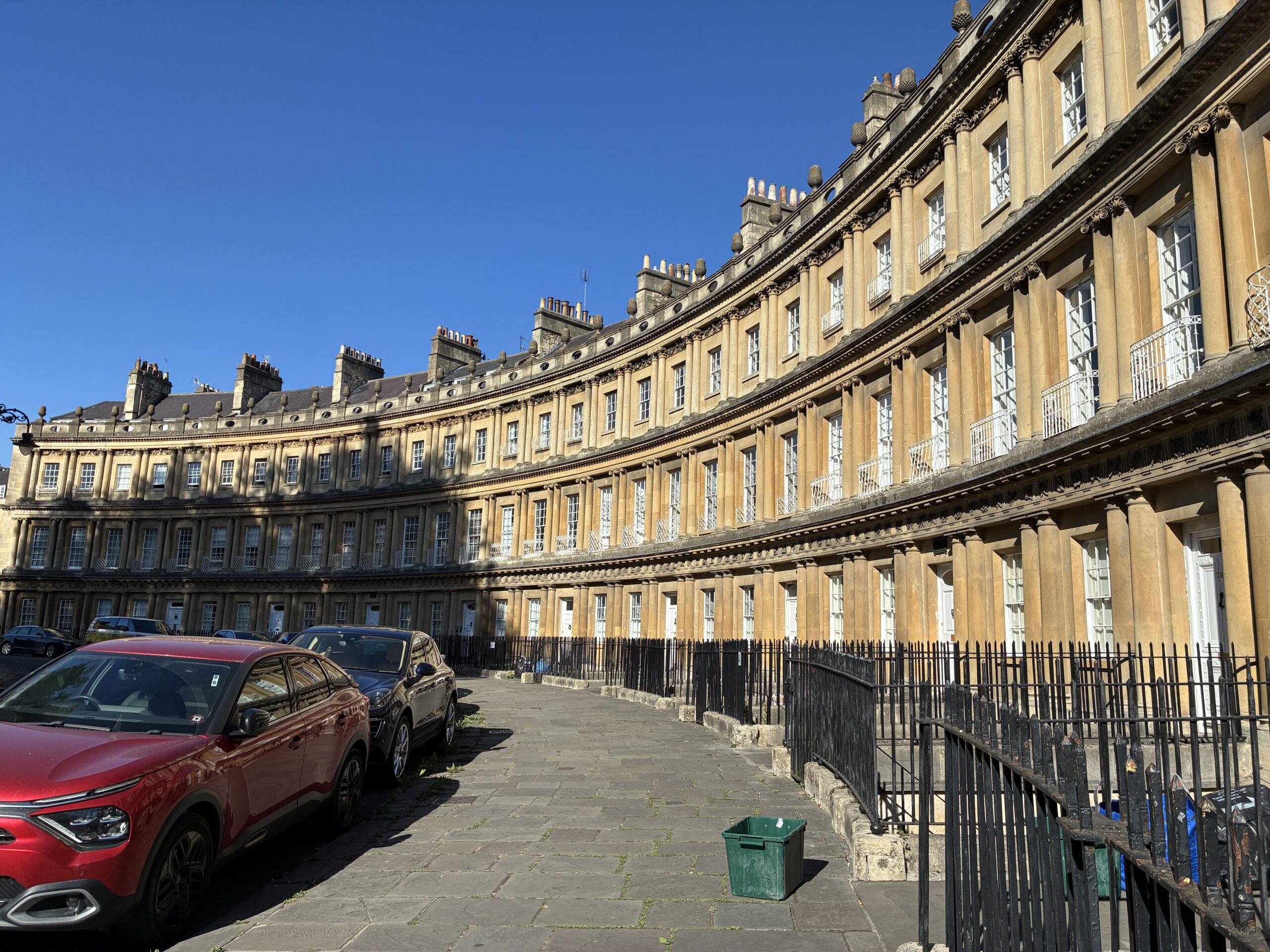

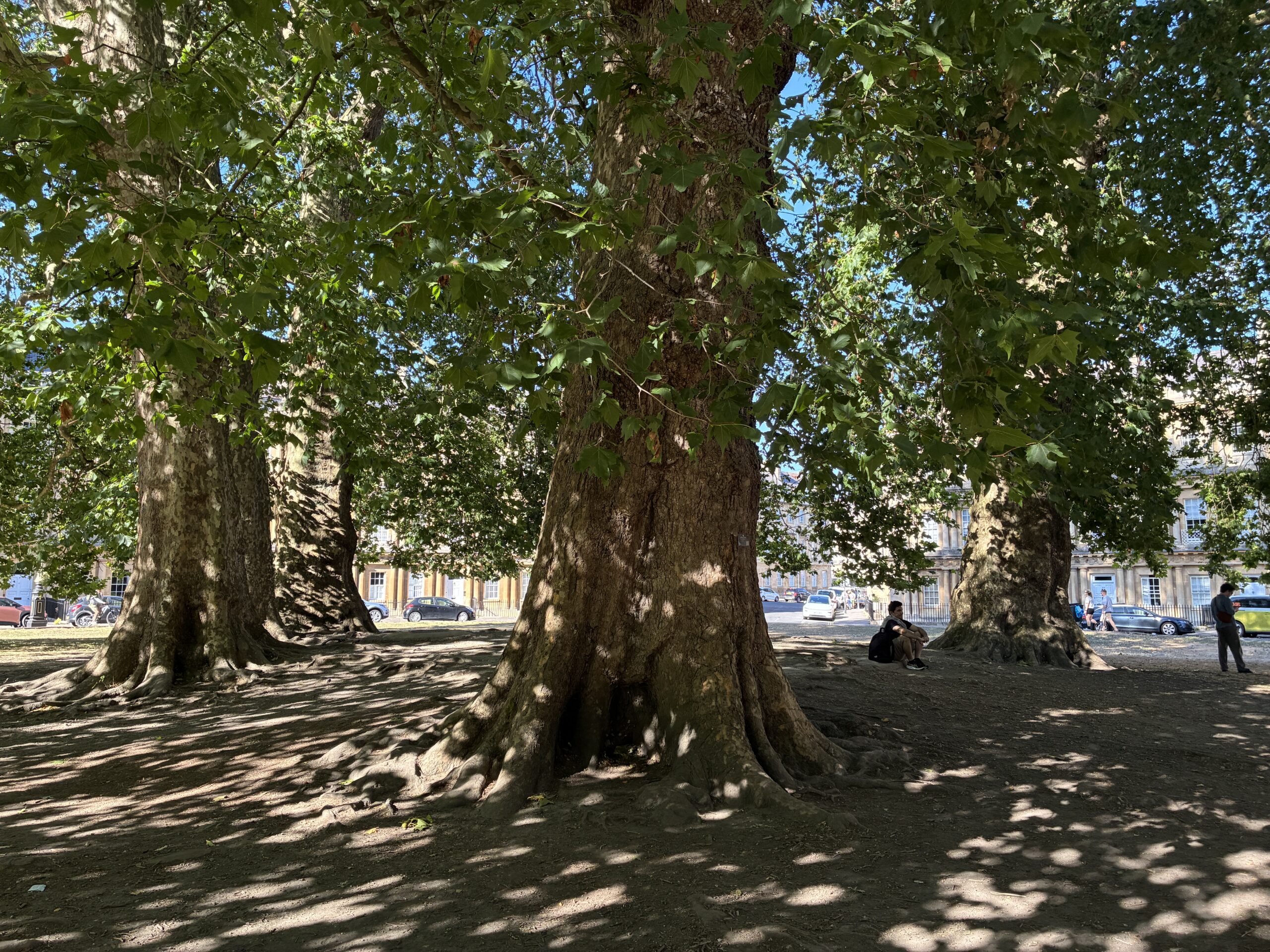


As we walked through the city, marveling at it actually, walking past the many restaurants, bars, and pubs, we just kept on enjoying it more and more. The area by Pulteney Bridge is wonderful, with classic views and scenes.


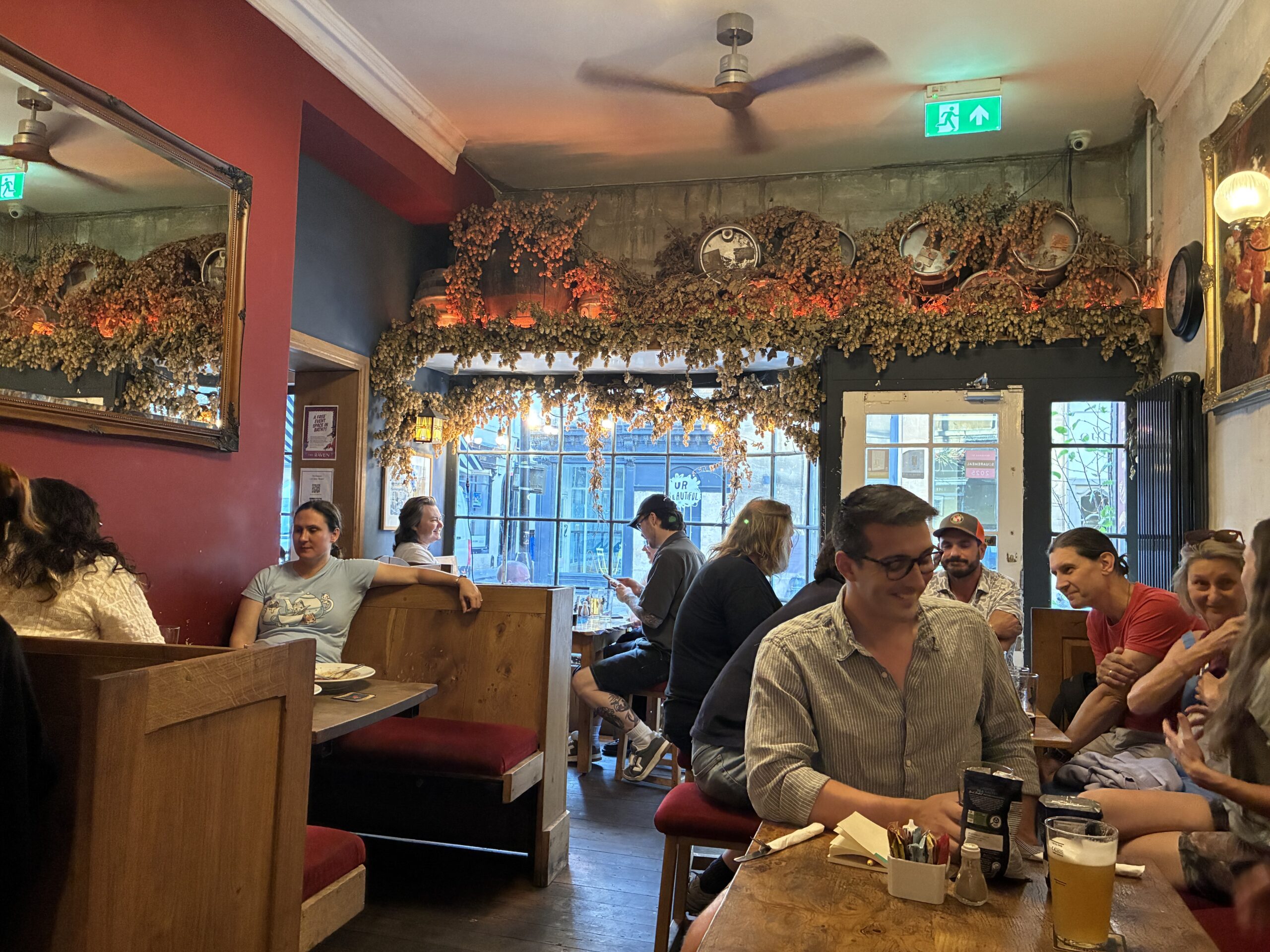
We wound up our day at the Raven, a well-known pub in the city, has a long history, with the building itself dating back to around 1735, and first became a drinking establishment around 1895.

The food was good, and I really hoped Tom would experience a good ol’ English meat pie, which we both did at the Raven. Pub menus seem more continental nowadays, and not really serving traditional British pub fare, but the Raven had a pretty traditional menu, and the meat pies were really delish. Our meal ended a really nice day in Bath.


We found Bath to be excellent, and filled with life. It is a place worth visiting. Then back to the Crown Inn, but before we left we couldn’t help but notice this poster in Bath. It speaks for itself.

Tomorrow, we’ll be visiting the local area, heading up toward the southern Cotswolds, north-east of Keynsham, where we’re staying. The rest of the day, we’ll figure out as we go. For now, a West Country good night.