Oaxacan Days.
Well, inexplicably, the garbage truck arrived again today, at a different time and much earlier, and a different location, just down the road. That got us out early to meet the truck, and how lovely it is in Xochimilco at 7:45 am. Barrio de Xochimilco is the city’s oldest neighborhood, with a strong community feeling, and many part-time ex-pats, like Rachel, live in this district, which is a hub for weaving and arts and crafts.
Mexican history is interesting . The Xochimilco district in Oaxaca was settled by indigenous people known as the Xochimilca, who in 900 BCE settled the original Xochimilco as an independent city-state, which 600 years later became Mexico City. In 1325, the Aztecs (then called the Mexica) developed the city of Tenochtitlan, which 200 or so years later became Mexico City. They conquered the Xochimilca in 1430, who then became subjects of the Aztec Empire until the Spanish conquest of the Aztecs in 1521, during their colonization of Mexico., They built Mexico City on the same site as Tenochtitlan, and in 1529/30 relocated (forced is more likely) Xochimilca families from Mexico City to what is now the Xochimilco district of Oaxaca because of their agricultural and horticulture skills , as the Spanish needed them to help supply food and develop agriculture for their new colonial city, which was later named Oaxaca by the Spanish after the word Huāxyacac, from the Nahuatl language spoken by the Nahua people of whom the Xochimilca were part (as were the Aztecs, coming along later on the same indigenous “family tree”). In turn, the name Xochimilco means Field of Flowers (or similar) in the Nahuatl language, and Xóchitl, meaning flower, is a well-known female name in Mexico, or Xochi for short. So there!

The small cobblestone streets in Xochimilco are lovely, and adorned with beautiful flowers, like these Bougainvillea (which I thought were Jacaranda – that color!).

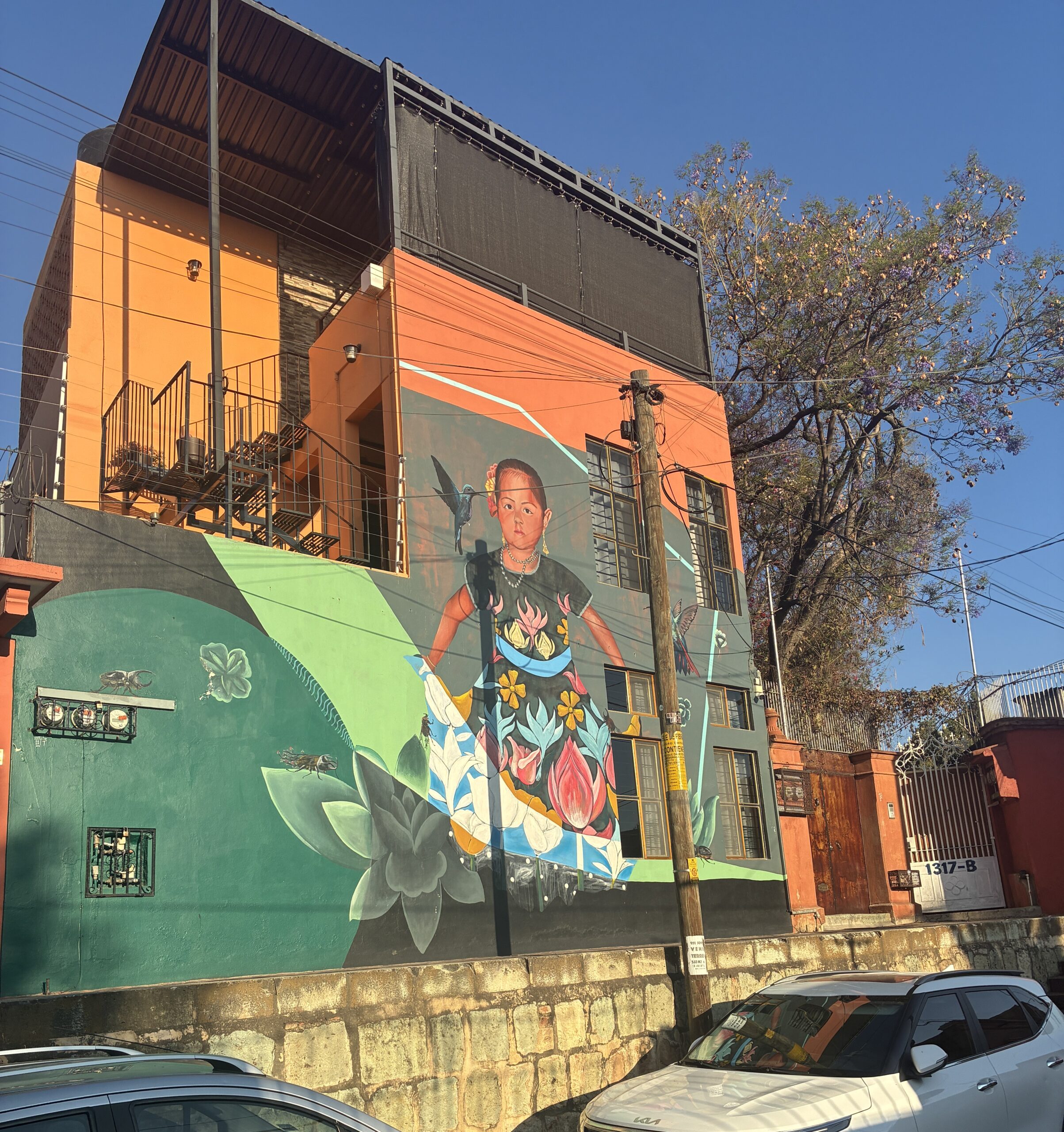
Rachel’s friends, Patti and Tom, whom I met last night, live just behind Rachel on an adjacent street, and their home has this wonderful and gigantic mural of the landlord’s granddaughter. What a lovely thing to do.
Then it was time to head to the central district and meet up with my walking tour group. There were just six of us (the rest were Canadians), and we met in front of the Teatro Macedonio Alcalá, an historic theater in Oaxaca and a beautiful building, built with a mix of Art Nouveau and Neoclassical styles, and quite different from unlike most Oaxacan buildings. We formed a pretty nice small social group, and I enjoyed meeting and talking to the others in the group.
Our guide, whose name I cannot recall (he only said it once, at the very beginning), was very good, and had great comedic timing with his jokes, even though I’m sure he’s said many times over. We didn’t actually walk that much, maybe covering a mile around the central district, back out to Xochimilco, but instead stopped frequently and talked about the history of the area and buildings, the multicultural nature of Oaxaca state and its 16 indigenous peoples and a little about their history, as well as the arts and crafts base in Oaxaca, and its food, as Oaxaca is known as the food capital of Mexico.
Construction started on the Macedonio Alcalá theater in 1903 when Porfirio Díaz was President, and it opened in 1909 as a casino, but at that time this meant more of social and cultural center for Oaxaca’s upper class, as well as a theater, rather than a place for gambling, but that closed in 1916, although continued to serve as a theater and in 1933 received its current name for Macedonio Alcalá, a composer who wrote Dios Nunca Muere (God Never Dies), considered Oaxaca’s unofficial anthem. We only saw the outside of this ornate theater, and did not go inside to visit.


Our guide gave us plenty of info about the city and state history, and I already knew of the city’s strong history of protests. In fact the city’s law school, the Facultad de Derecho y Ciencias Sociales of the Universidad Autónoma Benito Juárez de Oaxaca, which is presently on strike, as the photo shows. There are often teacher strikes and marches in Oaxaca, and this coming Sunday there is the annual Women’s March, drawing attention to problems such as gender-based violence and a lack of accountability from authorities. A strong history of street protests here.


The walk lasted around 2¼ hrs, and we many times stopped to talk about food and food stands, music, political and social history, and the history of the 16 indigenous peoples, dating back perhaps 2,000 years or more. Our guide is himself Zapotec, and so had an additionally interesting take on the history of the region.
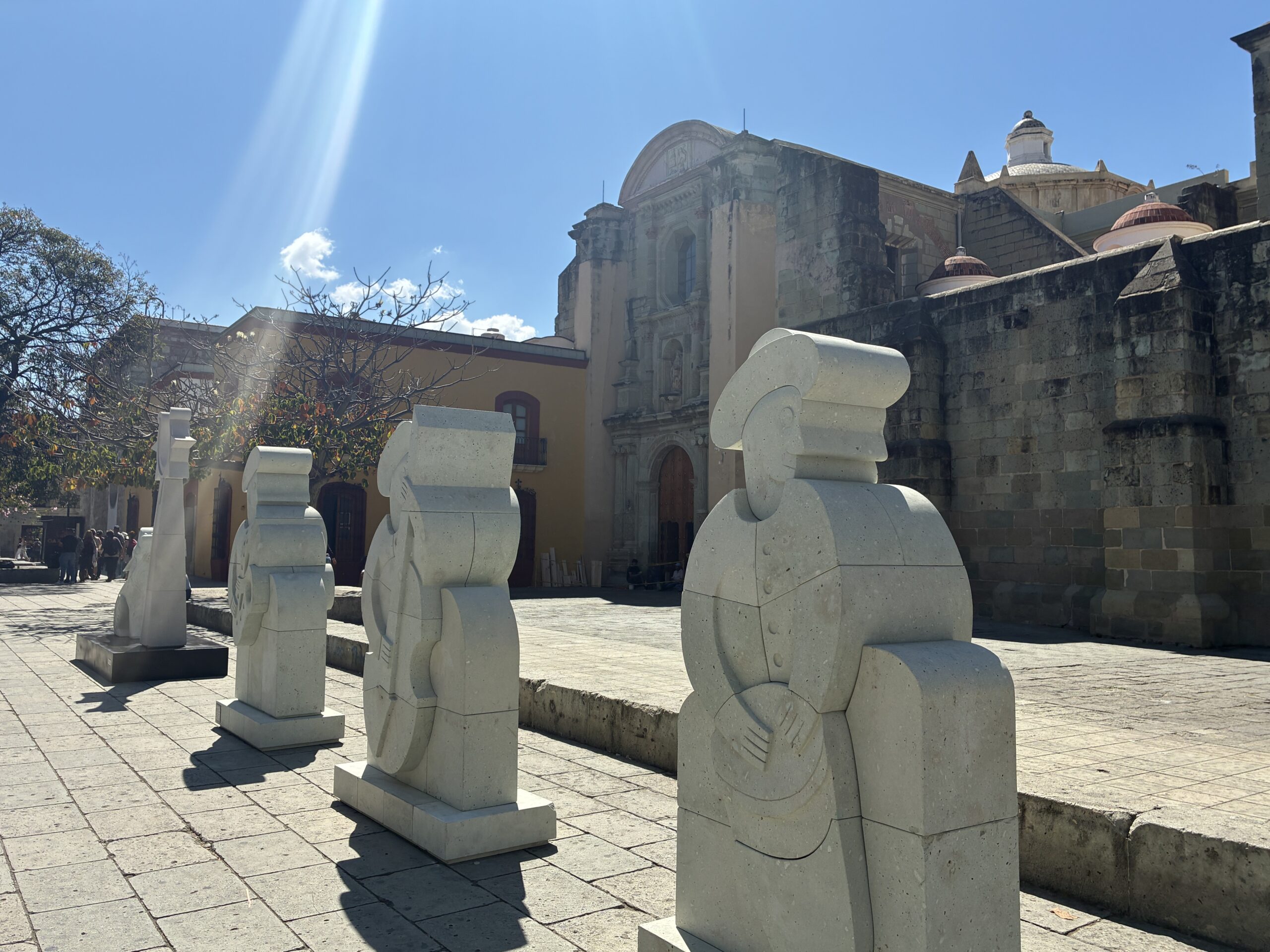
As we walked by the Zócalo, I noticed quite a few sculptures that were lovely, but not there last year when I visited, including those in the photos below and in some other photos I’ve posted.

We mowed on to visit the Centro Fotográfico Manuel Álvarez Bravo, which is located a few blocks from the Zócalo in a beautiful restored colonial home, and is an important Mexican photography museum and gallery. The gallery is named for Manuel Álvarez Bravo, who died in 2002, who is known as perhaps the most influential Mexican photographer of the 20th century and was a key figure in world photography. He was active from the 1920s-1990s and died at 100 years old, and is often called the father of modern Mexican photography, especially known for his photographs of everyday Mexican life. The museum/gallery is lovely place to visit, with interesting, and sometimes quirky, photos, and the restored house and garden patio are beautiful.


As we moved on through the bustling and active streets, I passed two street sellers who were making or working on their wares right there. No question about where those goods were made (i.e., not in China or Vietnam, but right here in Oaxaca).

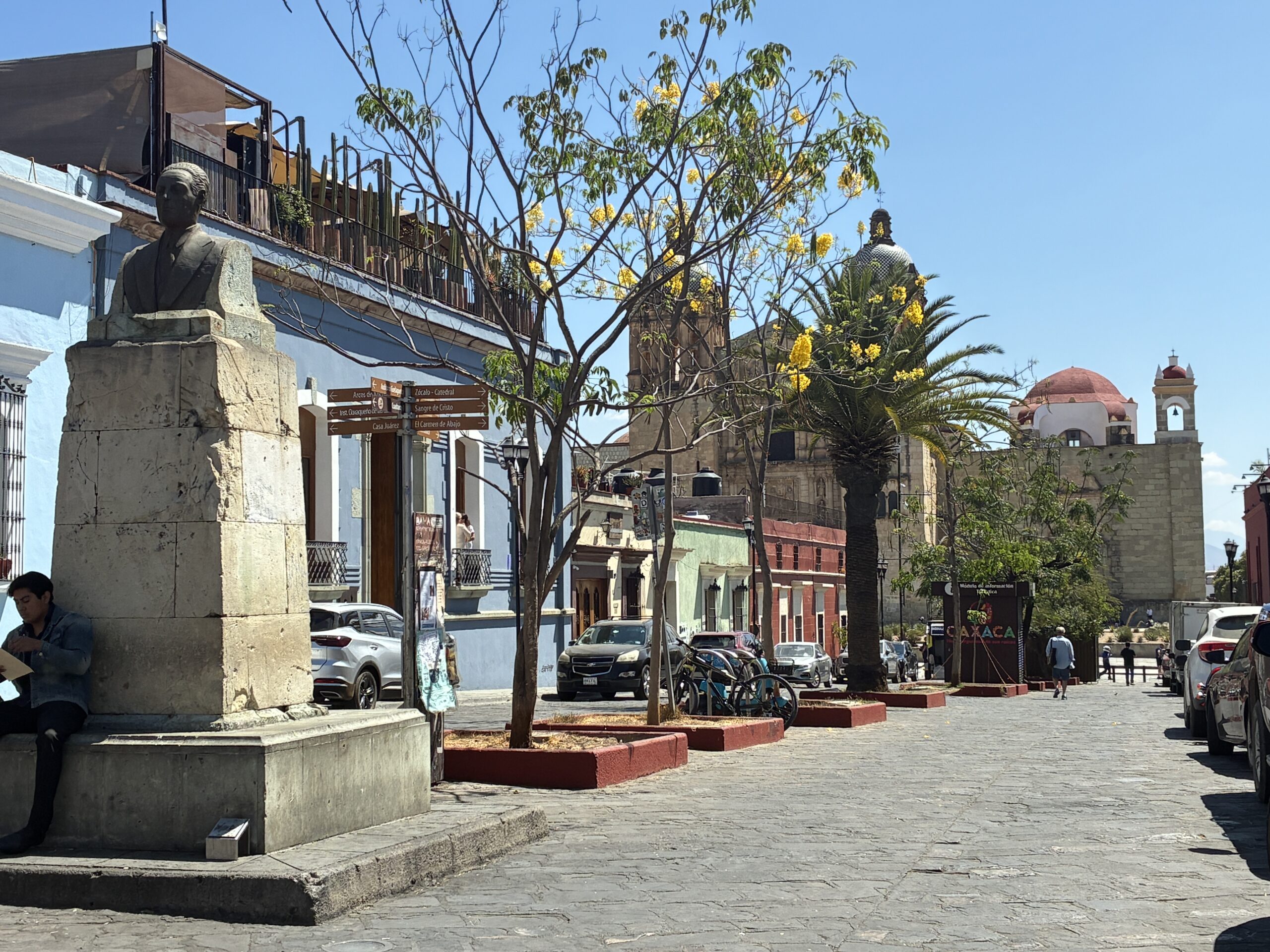
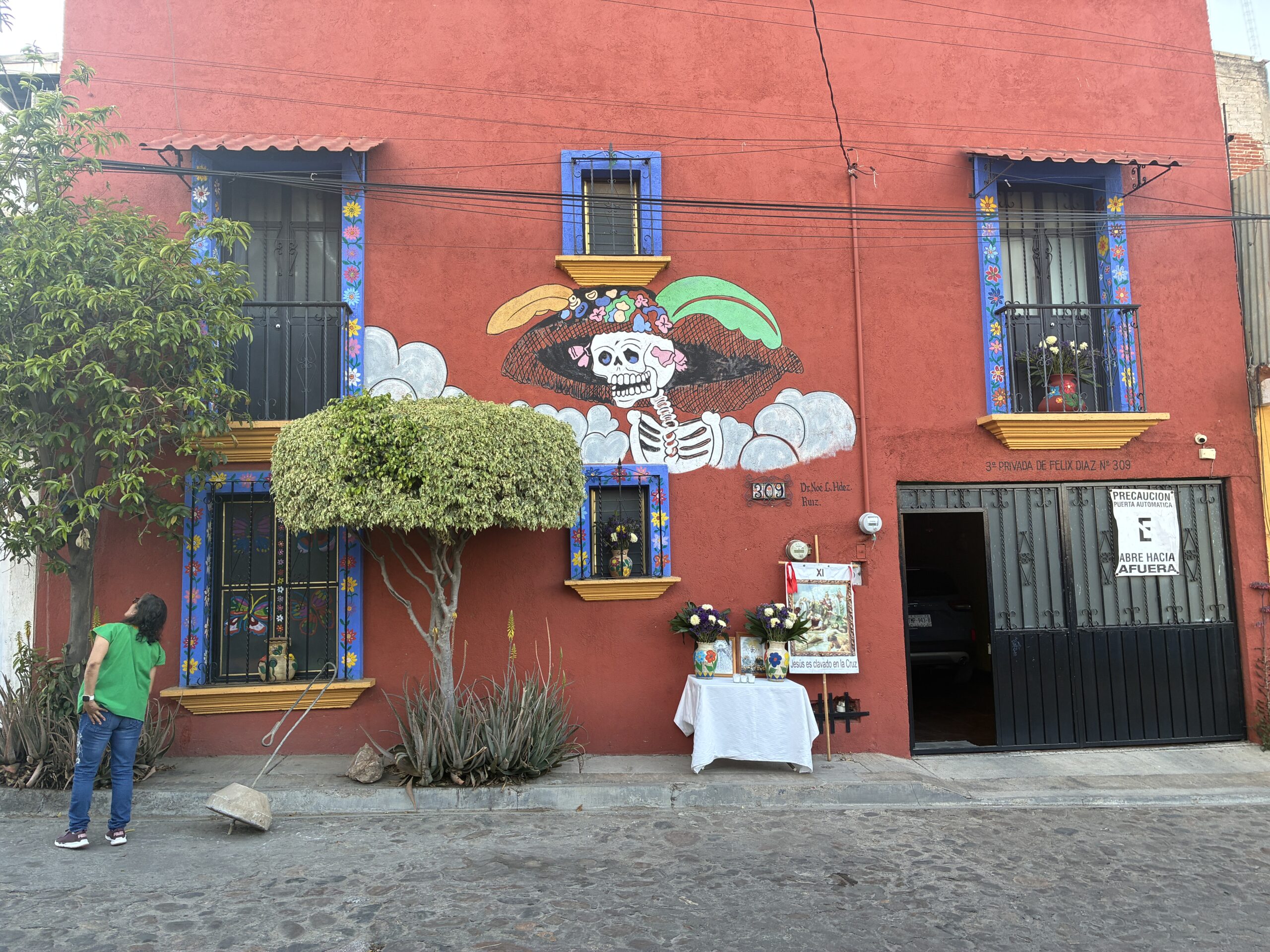
We continued our walking and talking, taking in the Oaxacan street landscapes, and I kept taking photographs (hoping to establish a museum here in my name)


We wound up our tour at La Cosecha (“The Harvest”), a small organic market and food court, set around a shaded courtyard with tables, where vendors serve traditional Oaxacan dishes and sell organic produce and artisan goods. Lovely place, with good food.


Walking tour over, I kept walking, back to Rachel’s, which was pretty close by that point, and wandered Xochimilco a little more before returning home.



And then to my third Spanish lesson, today working on present and past tense. Phew. I’m getting what I’ve learned so far, but it’s the tiniest of droplets. Still, even though it’s the tiniest of droplets, I know faaar more about Spanish today than I knew a few days ago. Only one more lesson to go, though. I find Alberto a good teacher in every way, as well as Frida, who I worked with on my second day. Today, tiempo futuro (future tense).
Back to Rachel’s to spend time, and then, just when you think the day is drawing to a close, Rachel and I took a mid-evening walk to the Zócalo, to enjoy the streets and the people in them and the evening streetscapes.


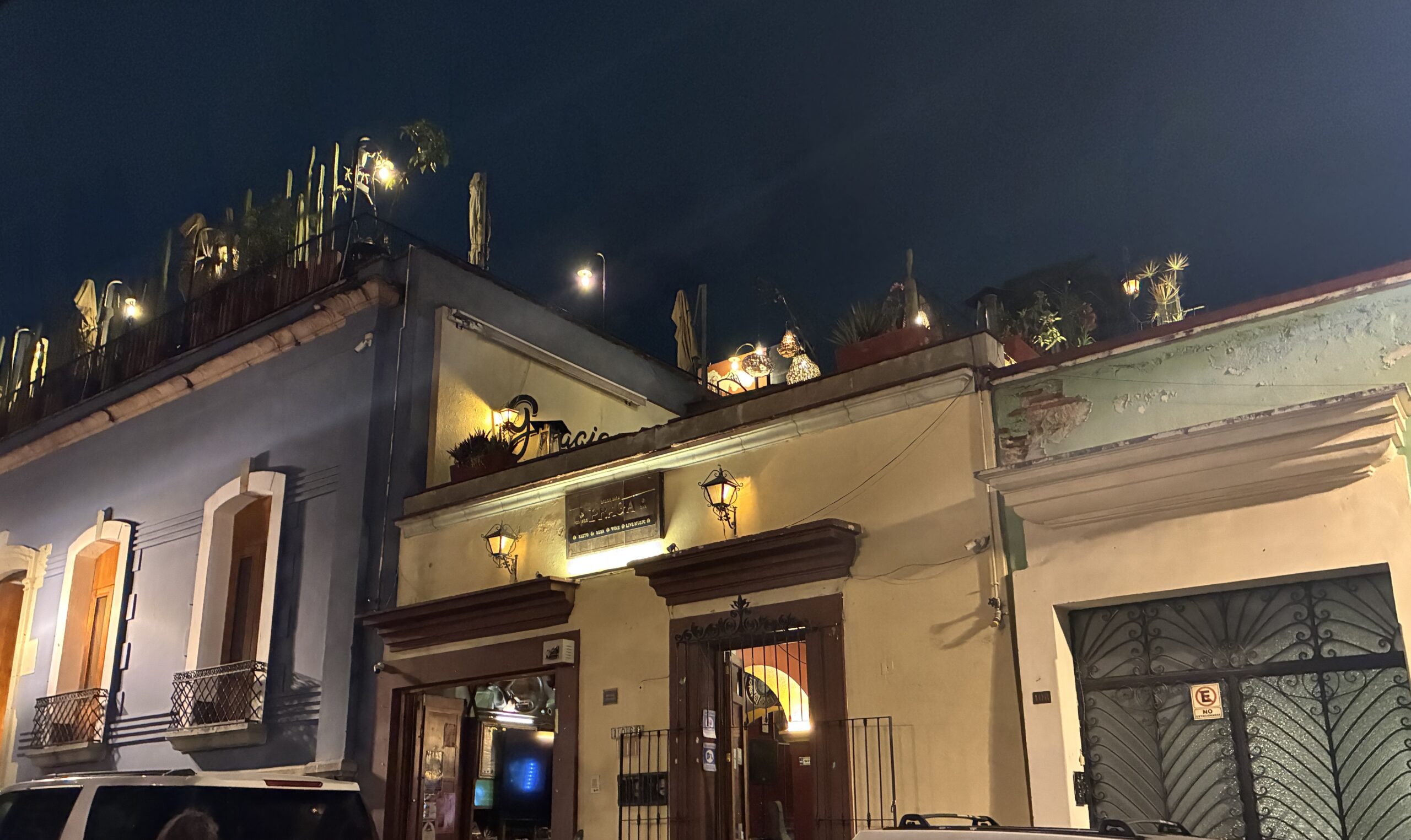
And then back home, and to bed. Actually, Rachel stayed up longer than she usually does on non-dancing and non-party nights, but hit the sack soon after getting home. I stayed up doing bits and pieces until about 12:30, and then it was sleep for me too. Hasta mañana.