Shinkansen (bullet train) to Kyoto.
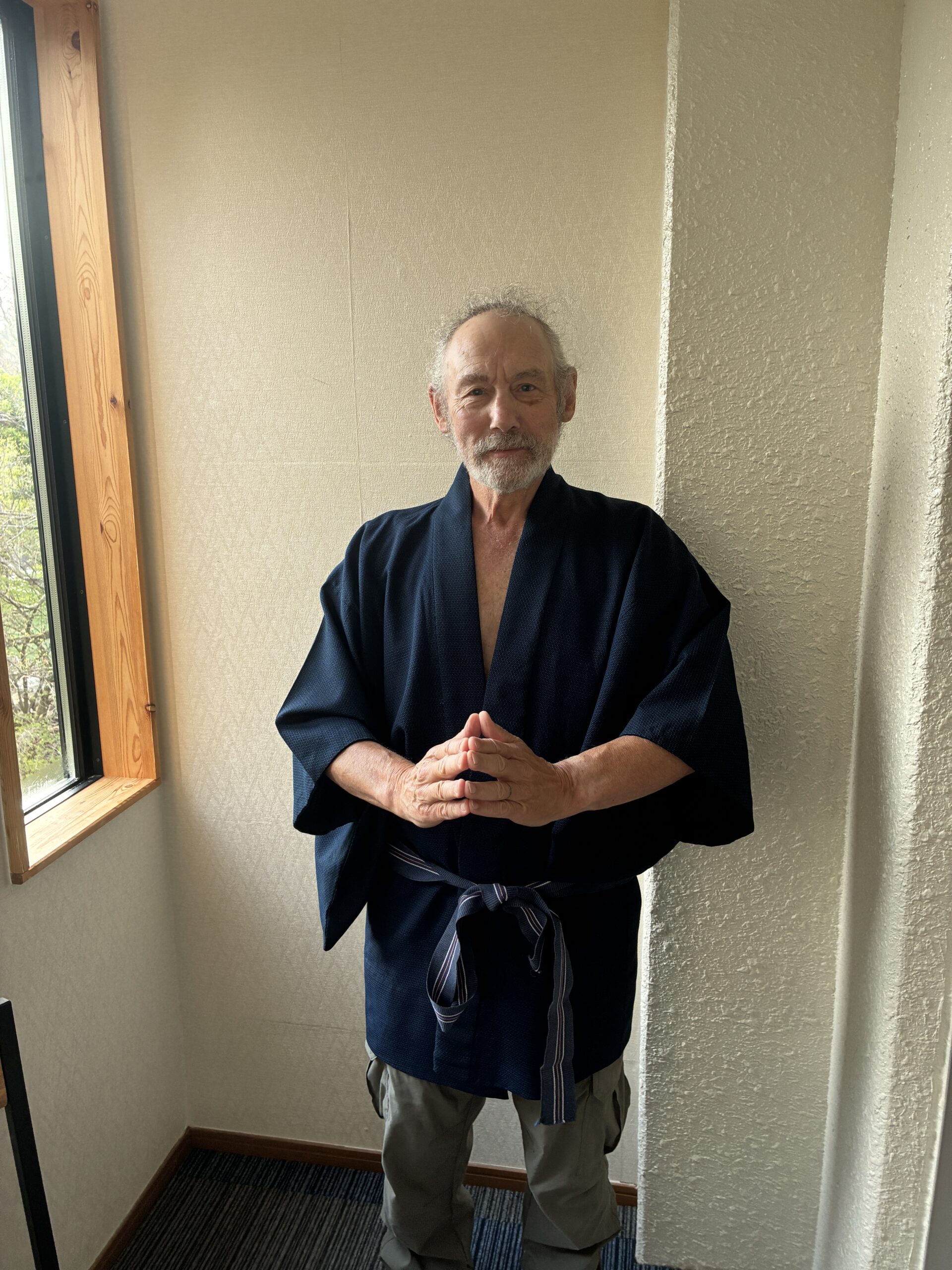
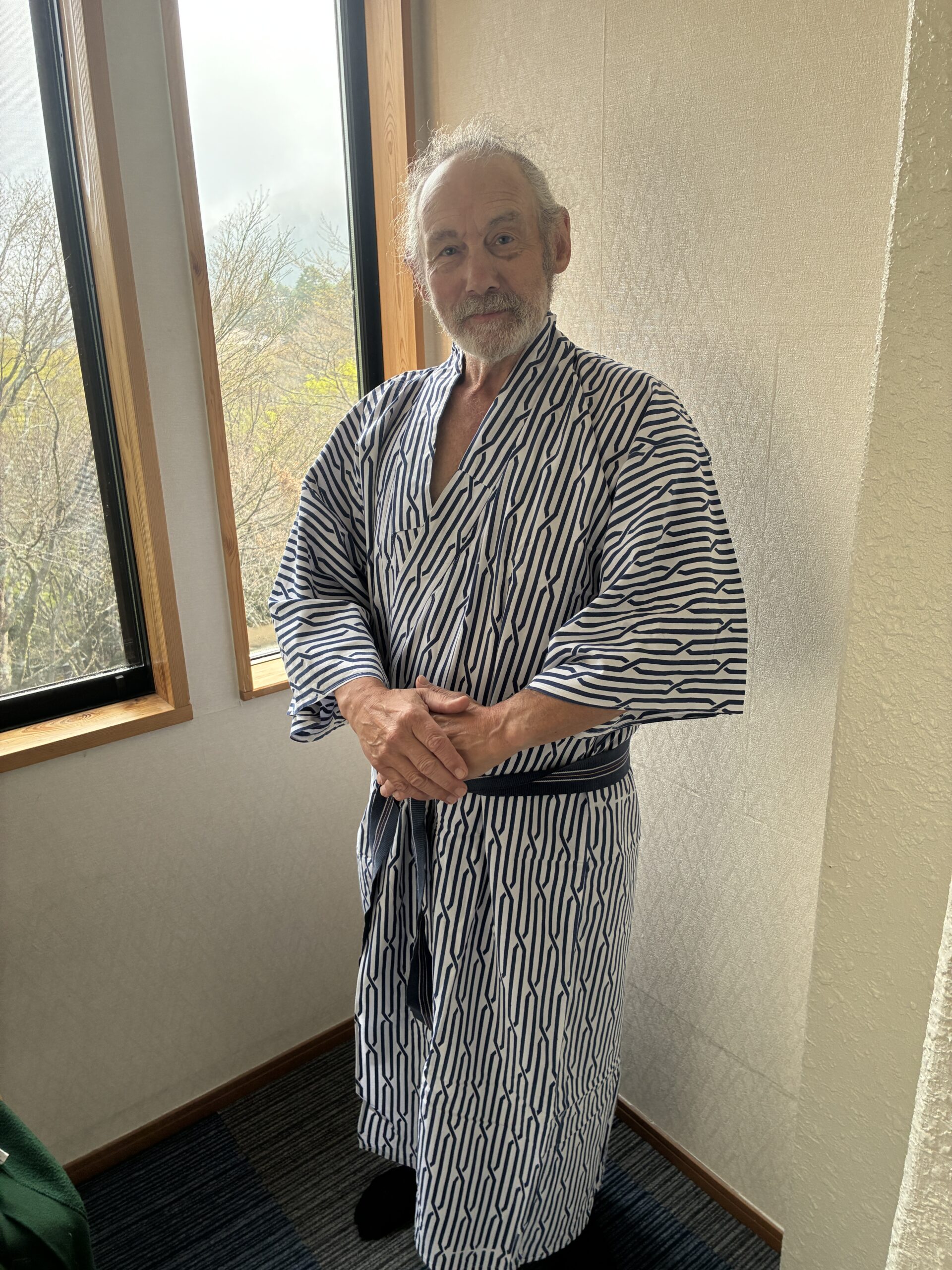
Before we left this morning, I couldn’t help but take a couple of photos in the robes that were in our room.
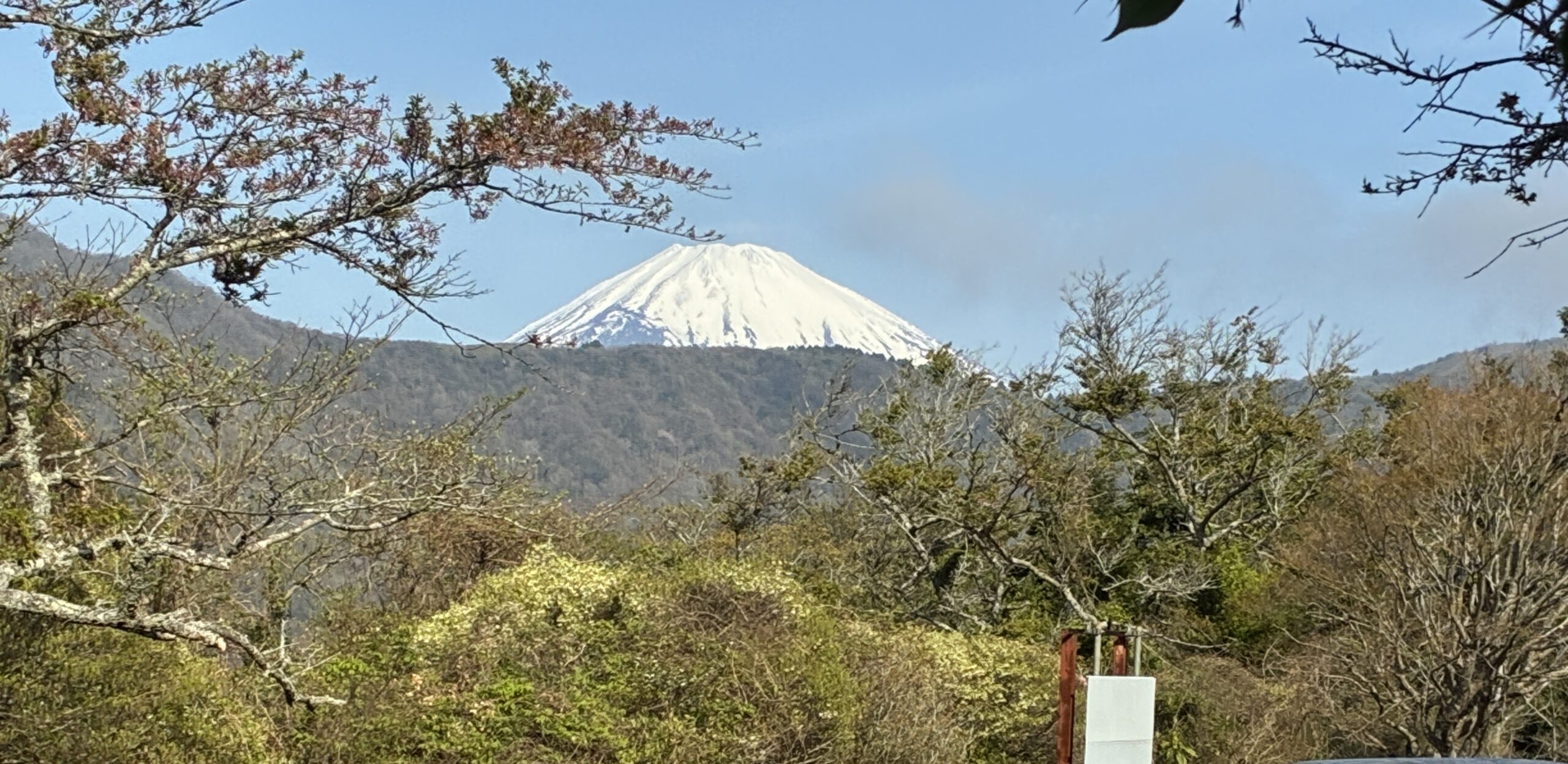
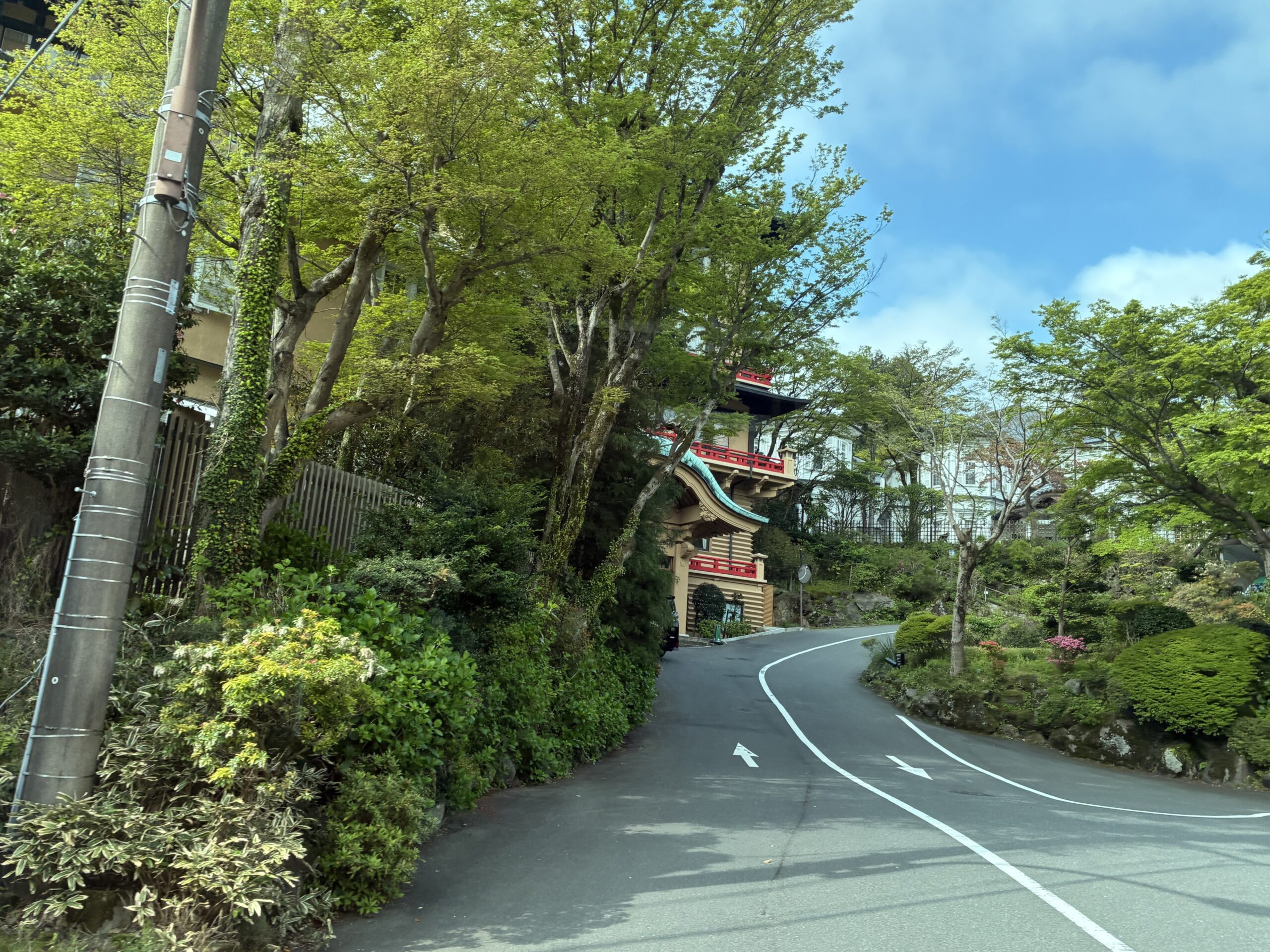
We left our lovely ryokan in Hakone around 7:30 am, and headed down the lovely wooded lane, which I see now is residential, with some high priced property flanking the road, tucked into the scenic landscape. It was pretty brisk out this morning, no surprise given the lush forest and the altitude, at a little over 2,300 feet. Nice, though. As soon as we left the Ryokan we spotted a very clear Mount Fuji off to our right. It’s everywhere, it’s classic appearance dominating the view.
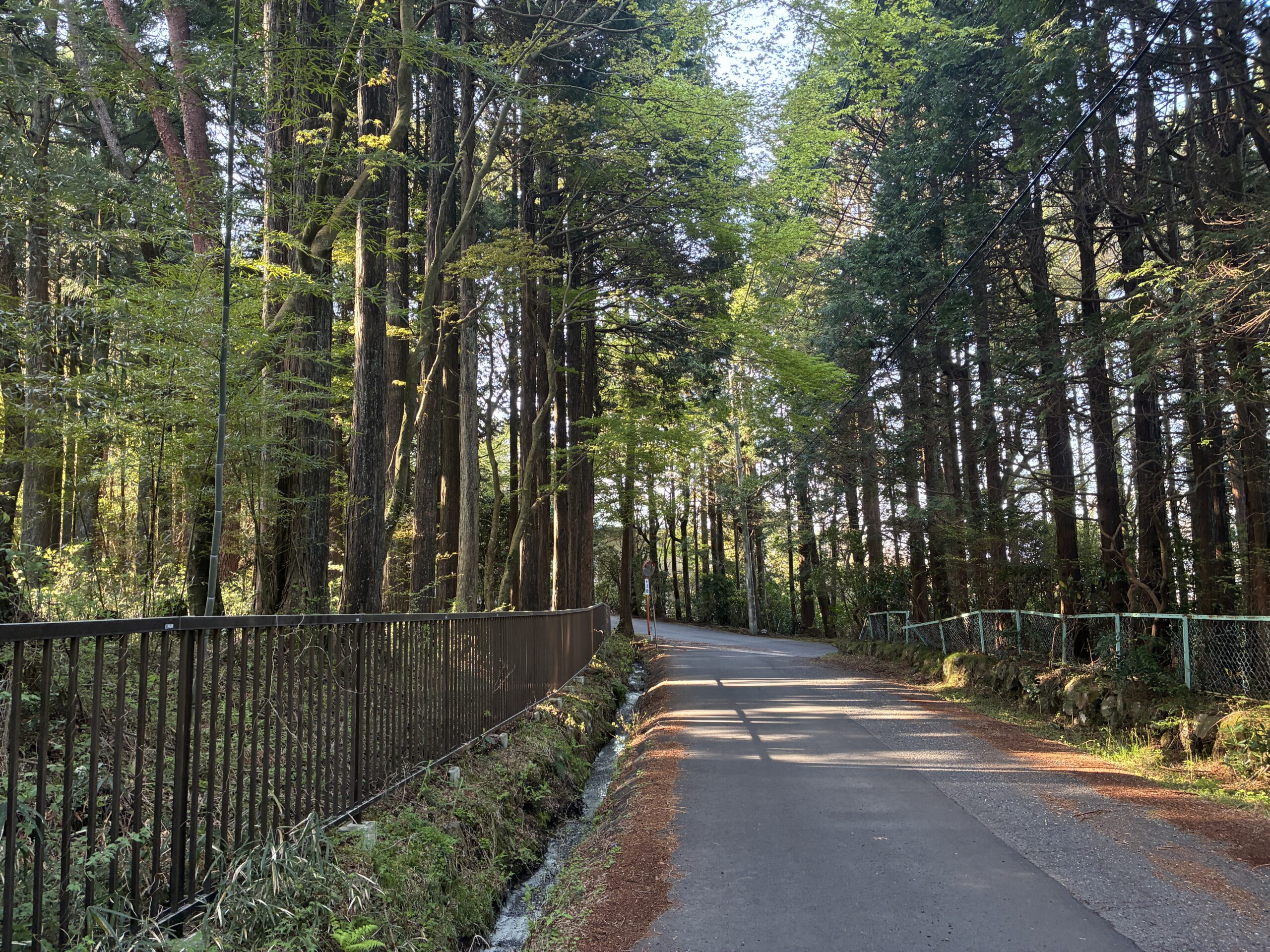
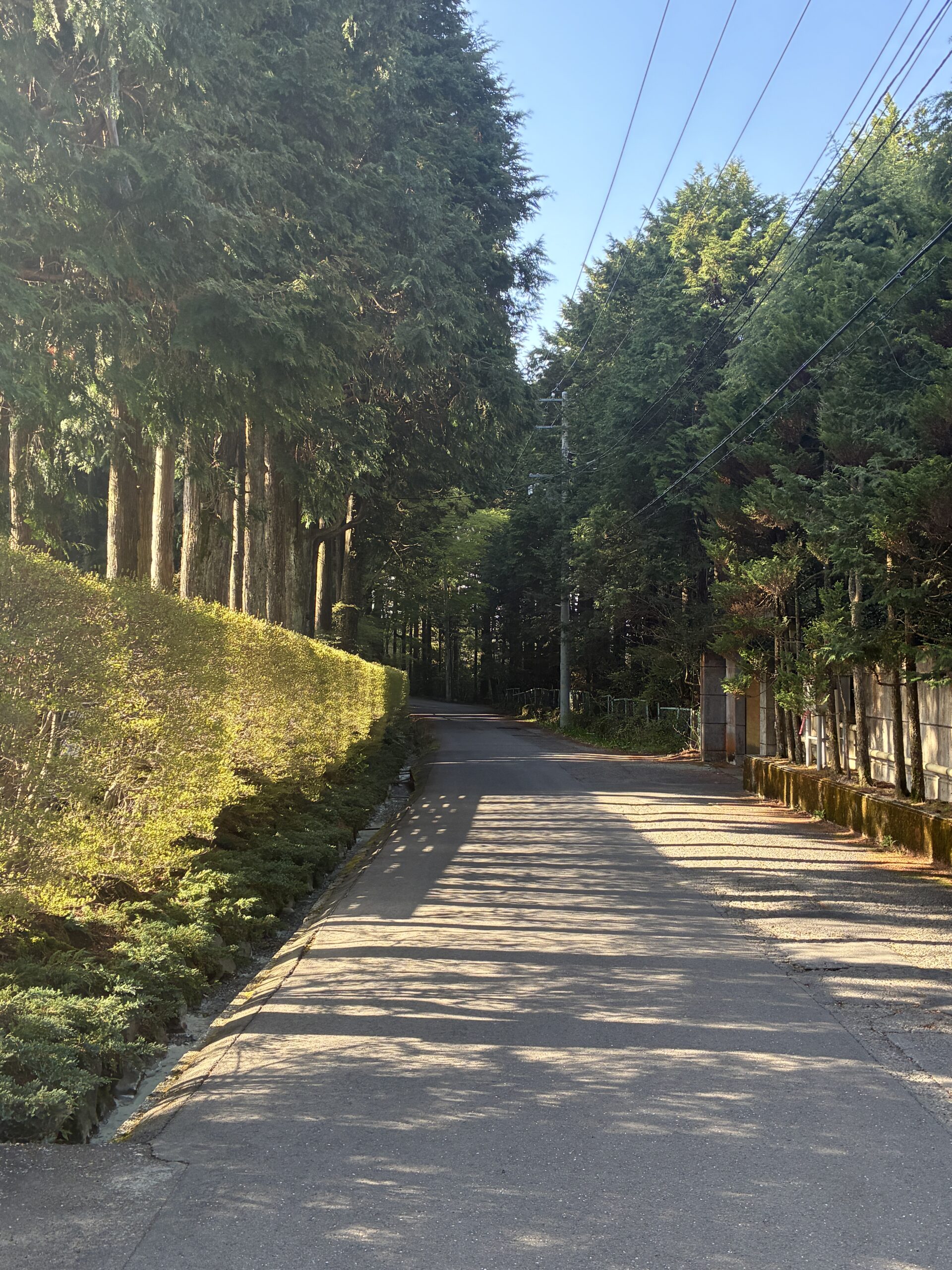
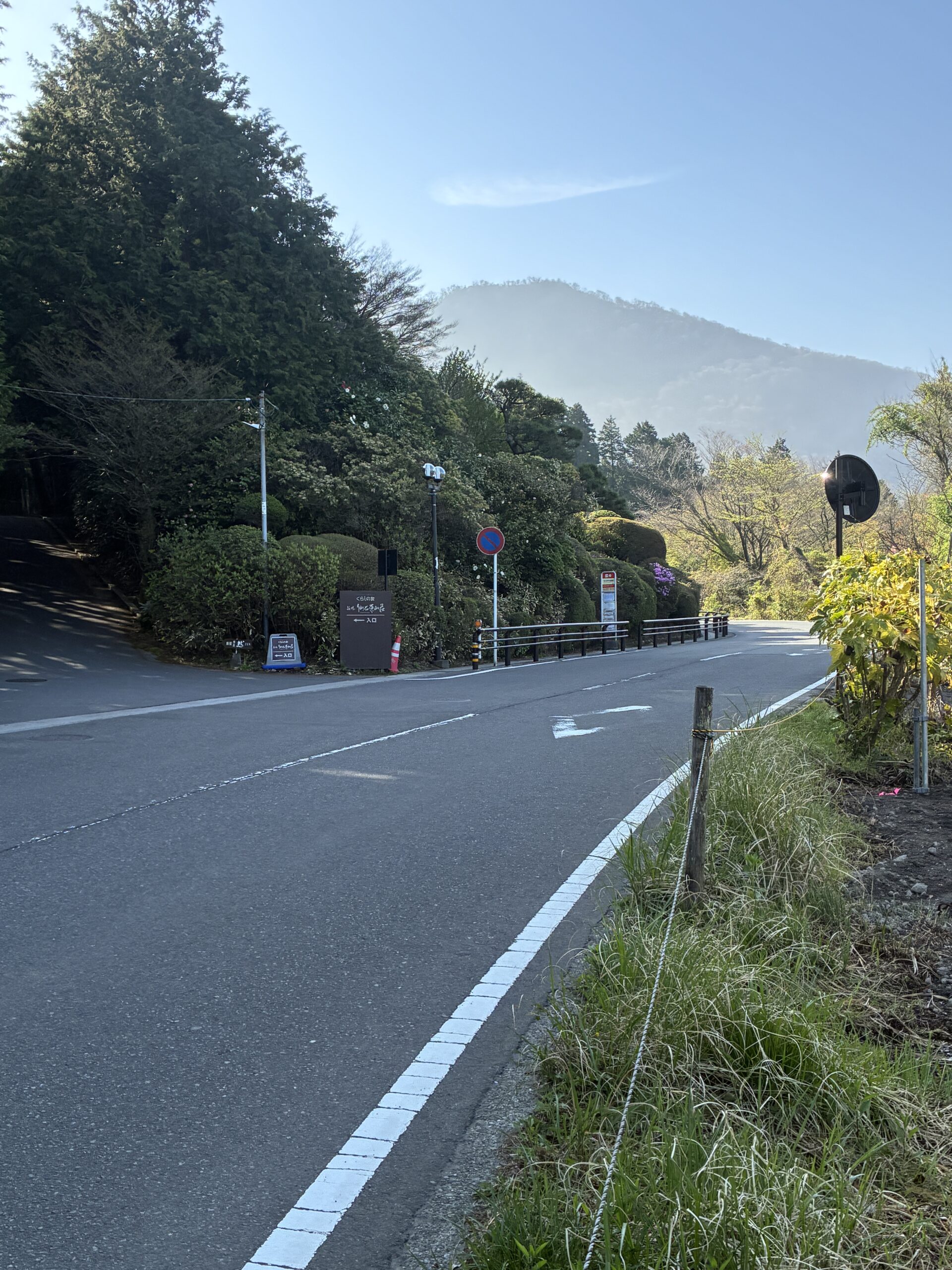
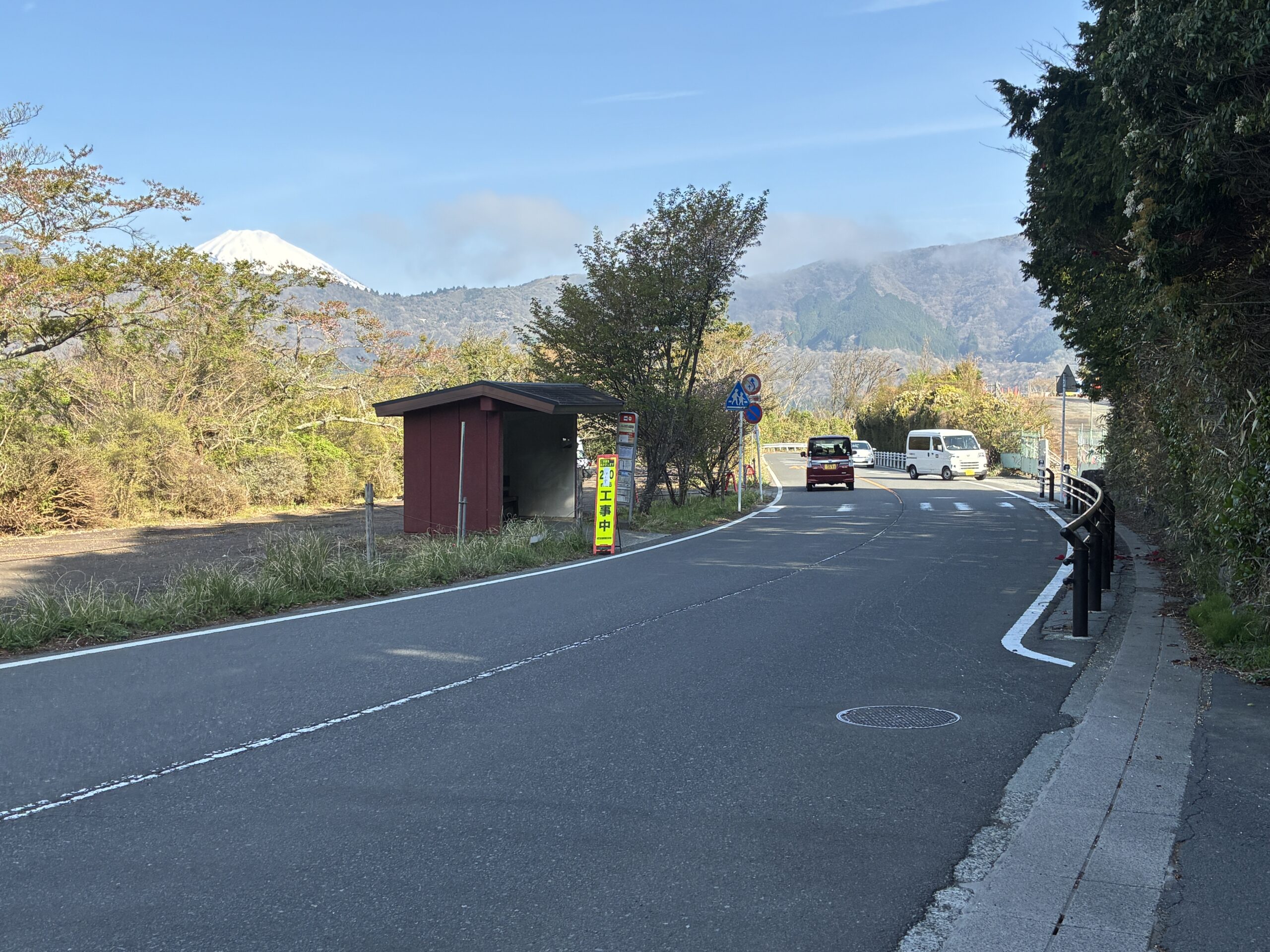
We got to the bus stop, minutes from the hotel and all downhill, so relatively easy for Laurence to walk. And 10 minutes later, along came the bus to Odawara Station.
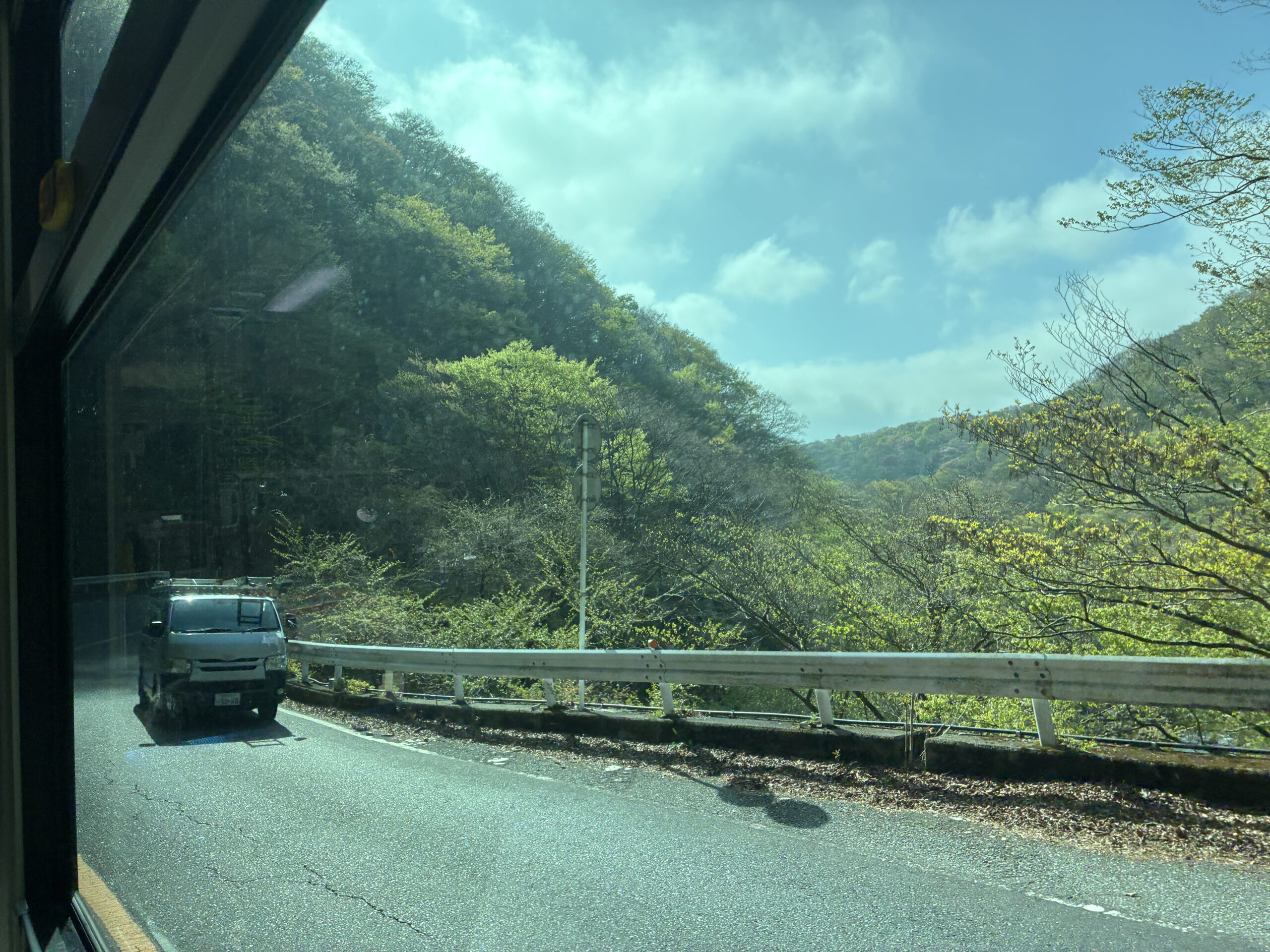
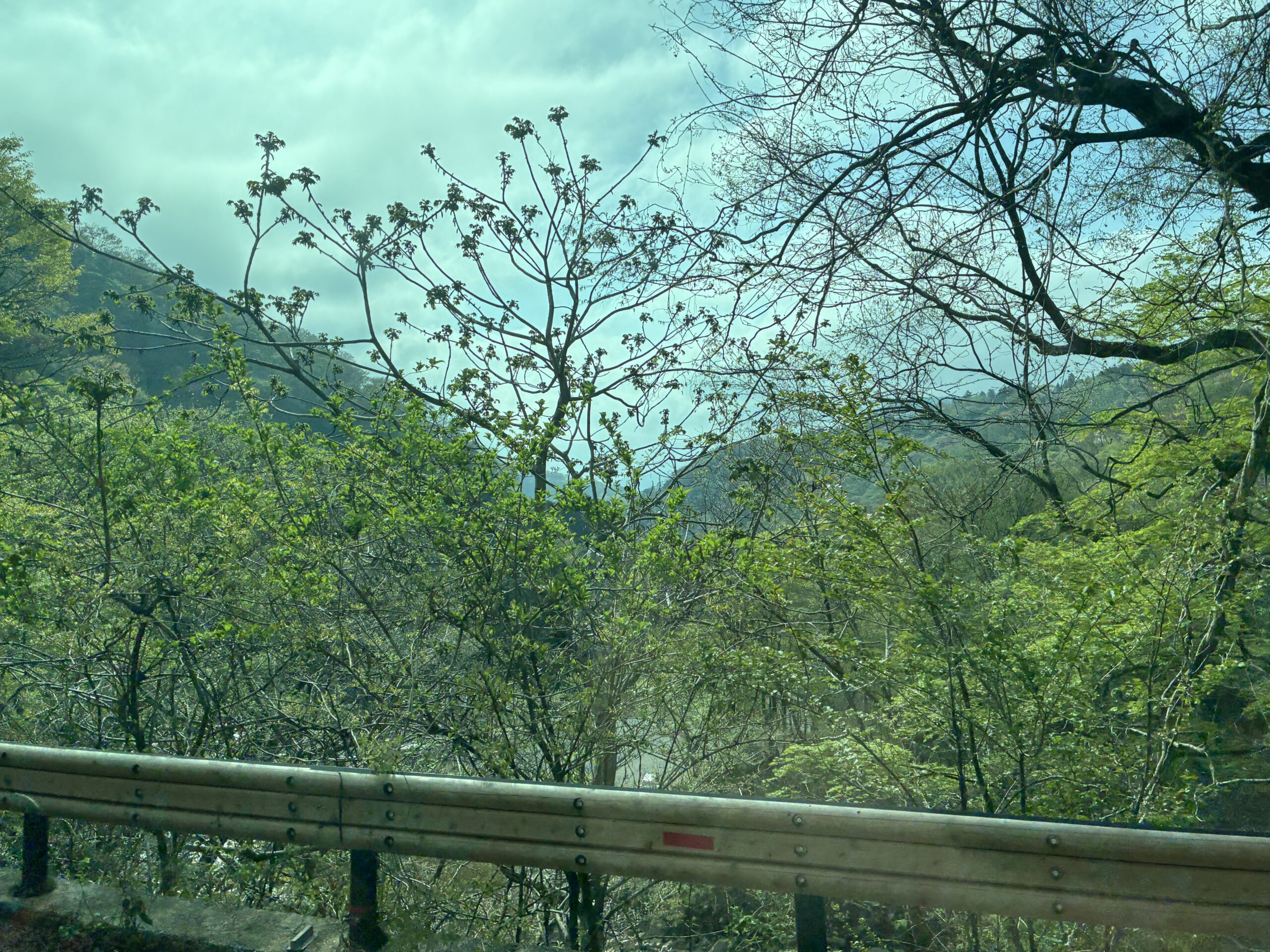
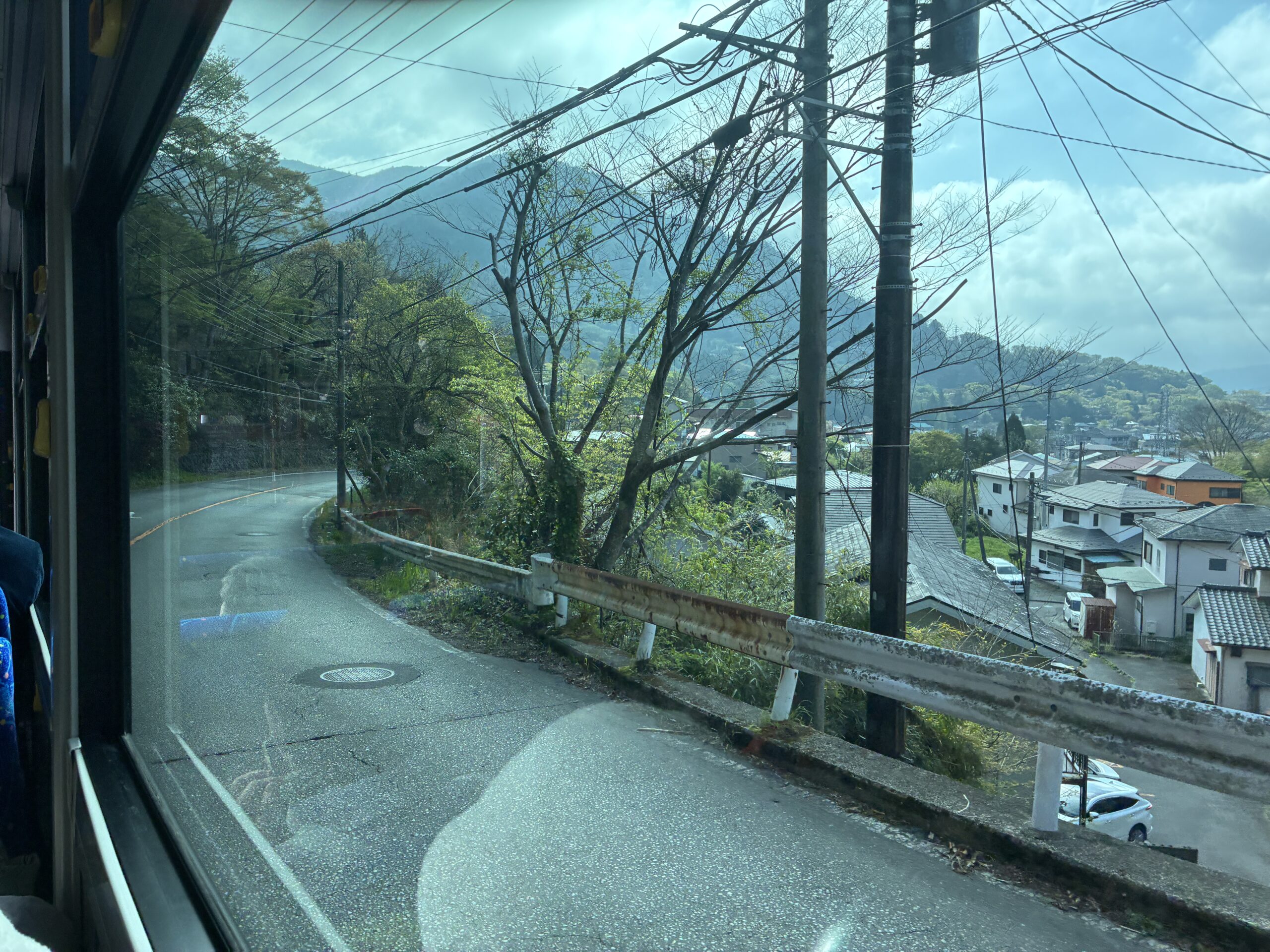
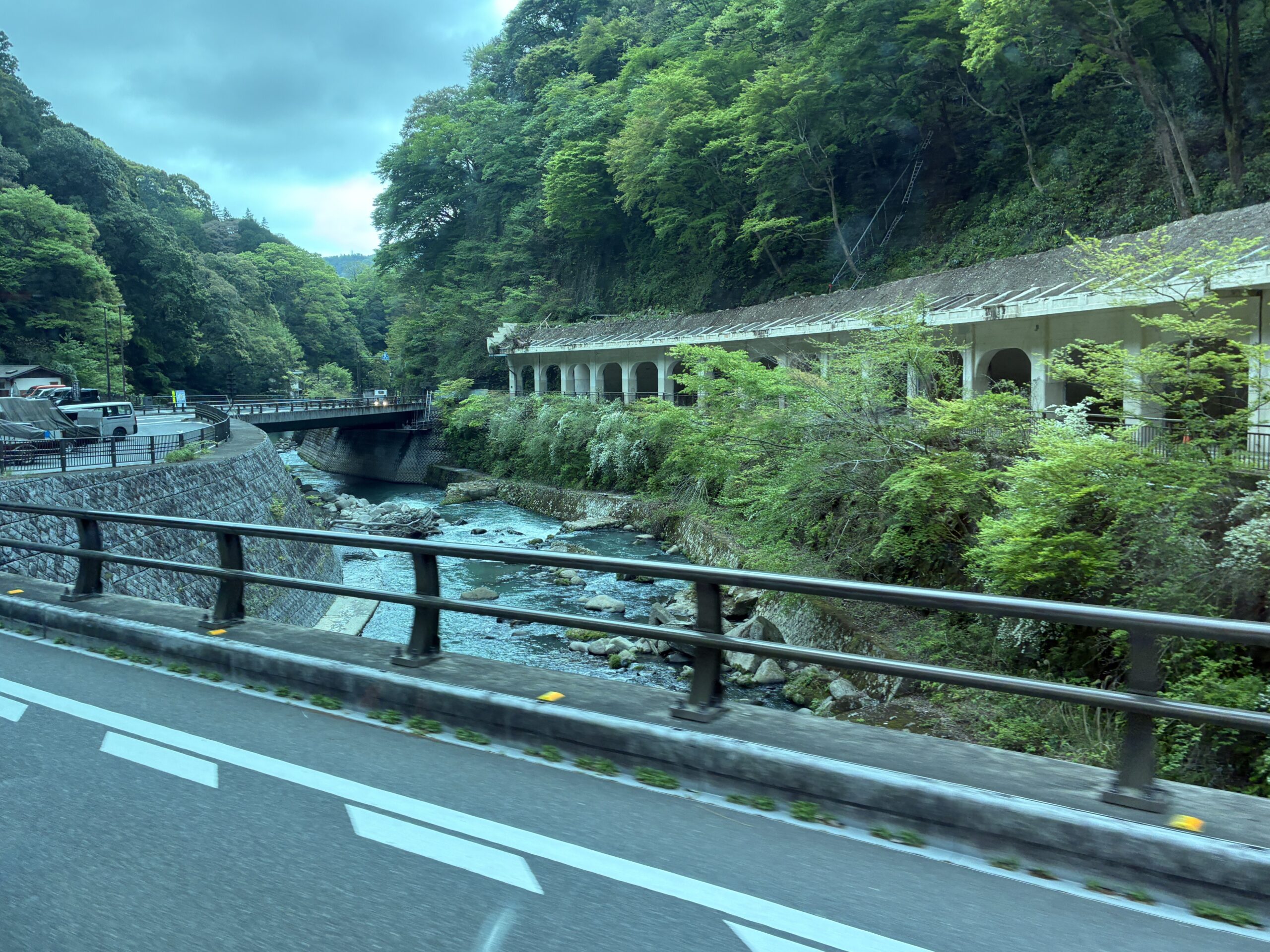
The bus ride is spectacular, traveling along continuously, curving and fairly narrow mountainside roads, passing through small village of the small village, picking up passengers at small bus stops all along the way. The road passes through deeply forested beautiful terrain on either side, sometimes with deep valleys. I took many shots from the bus, to at least give a sense of what the roads look like, although it’s difficult to get clear shots, especially with reflections in the windows. Still, they give a sense of the lovely journey. This is a fabulous ride, taking about an hour.
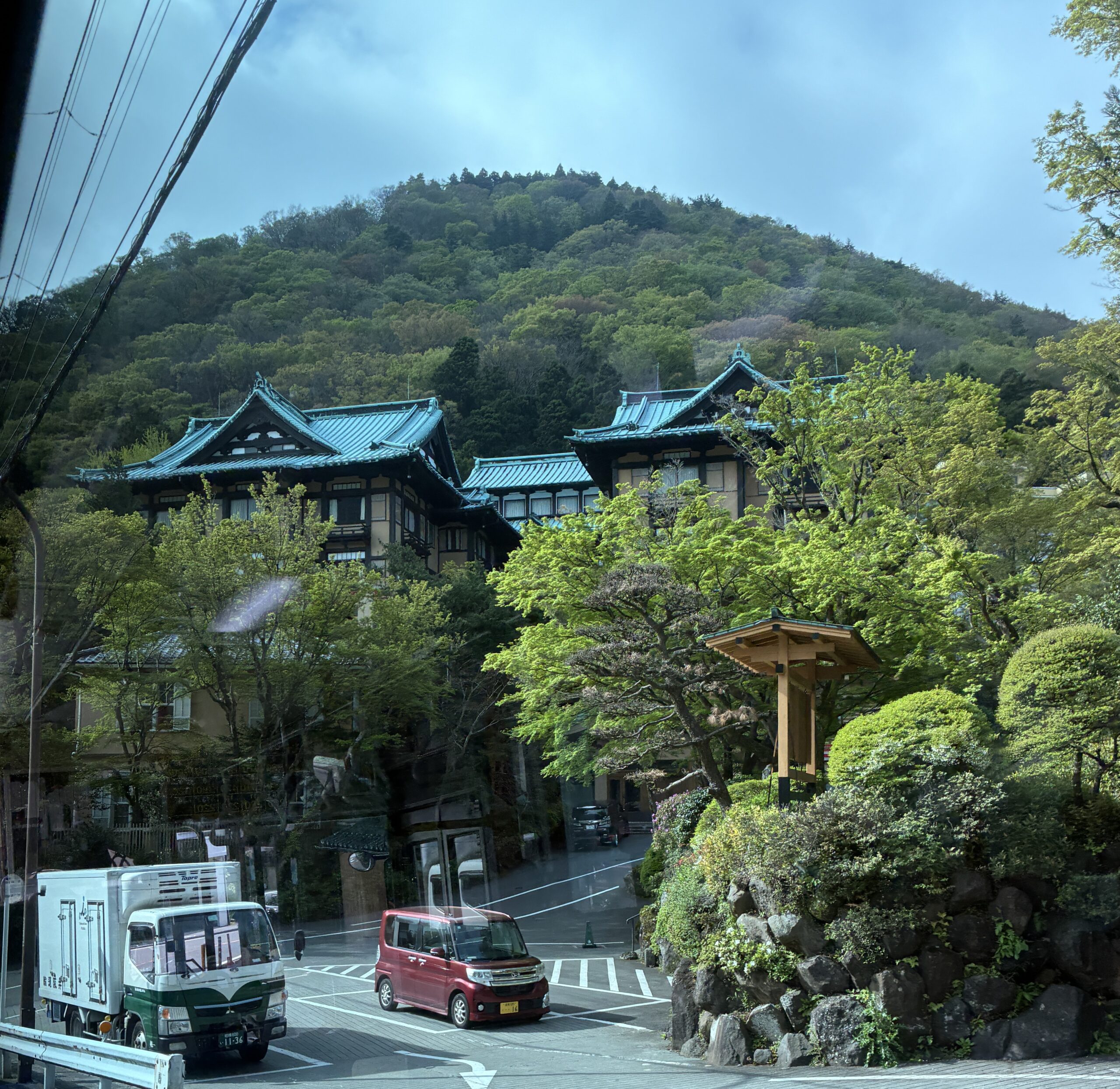
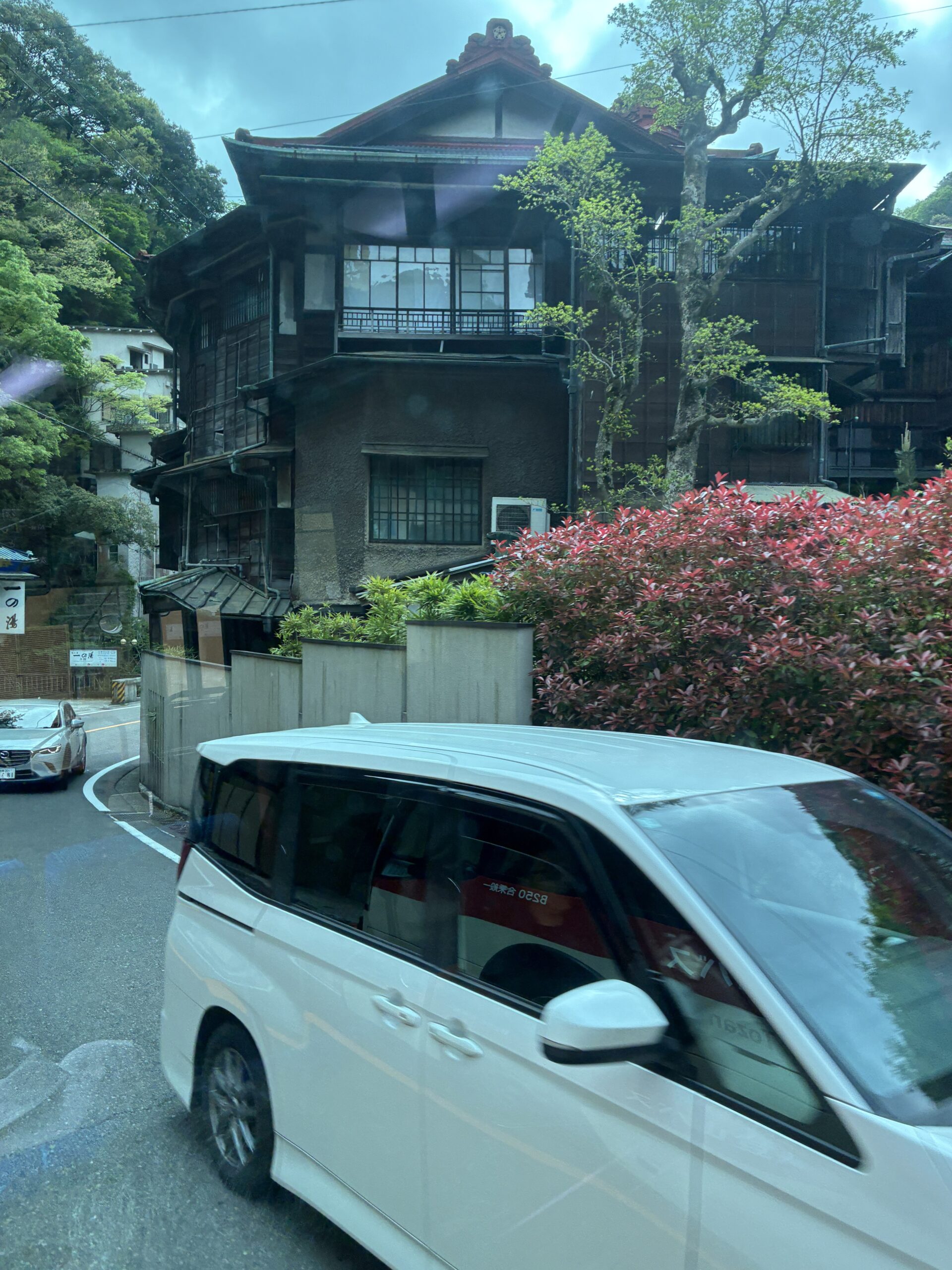
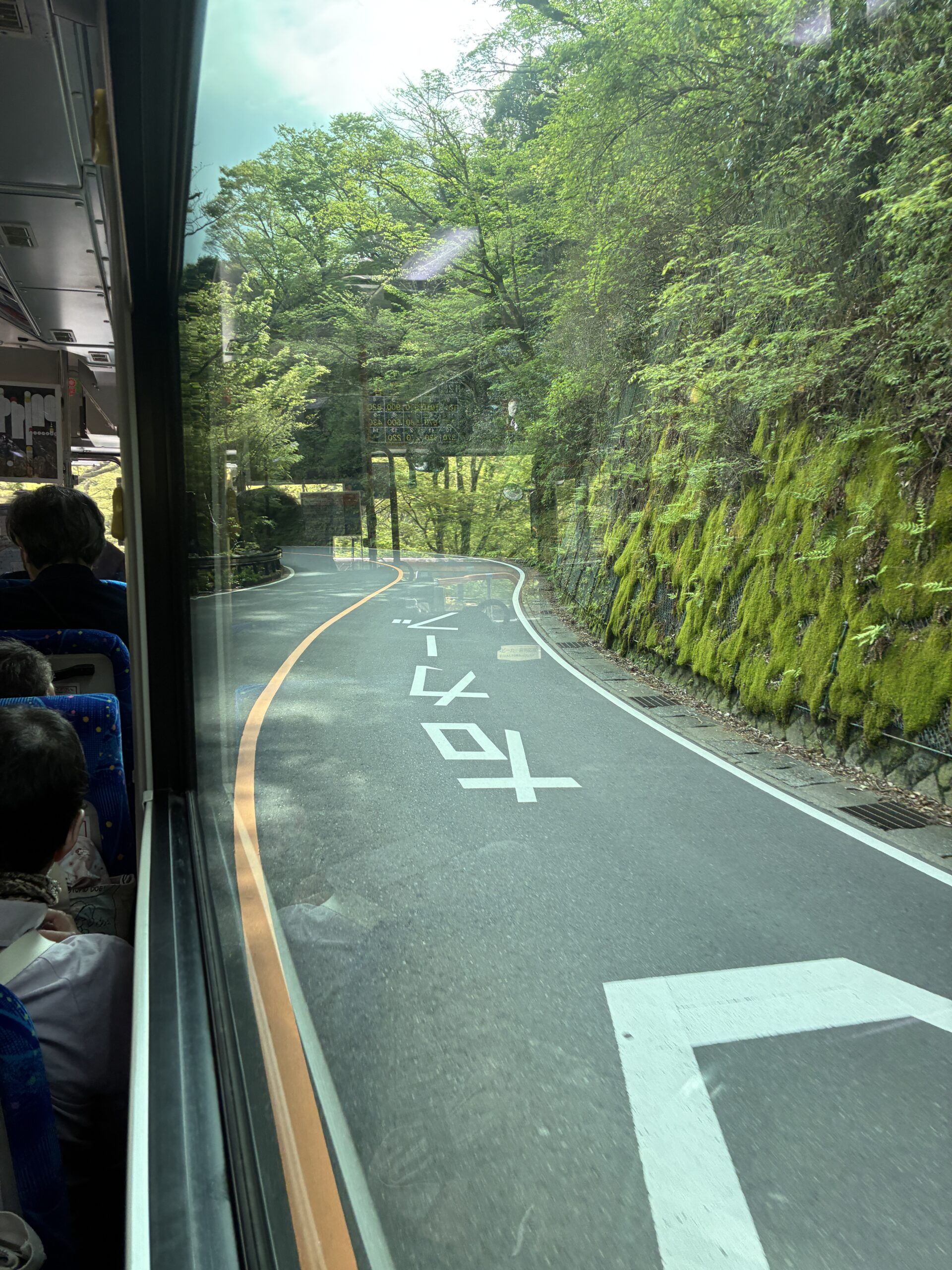
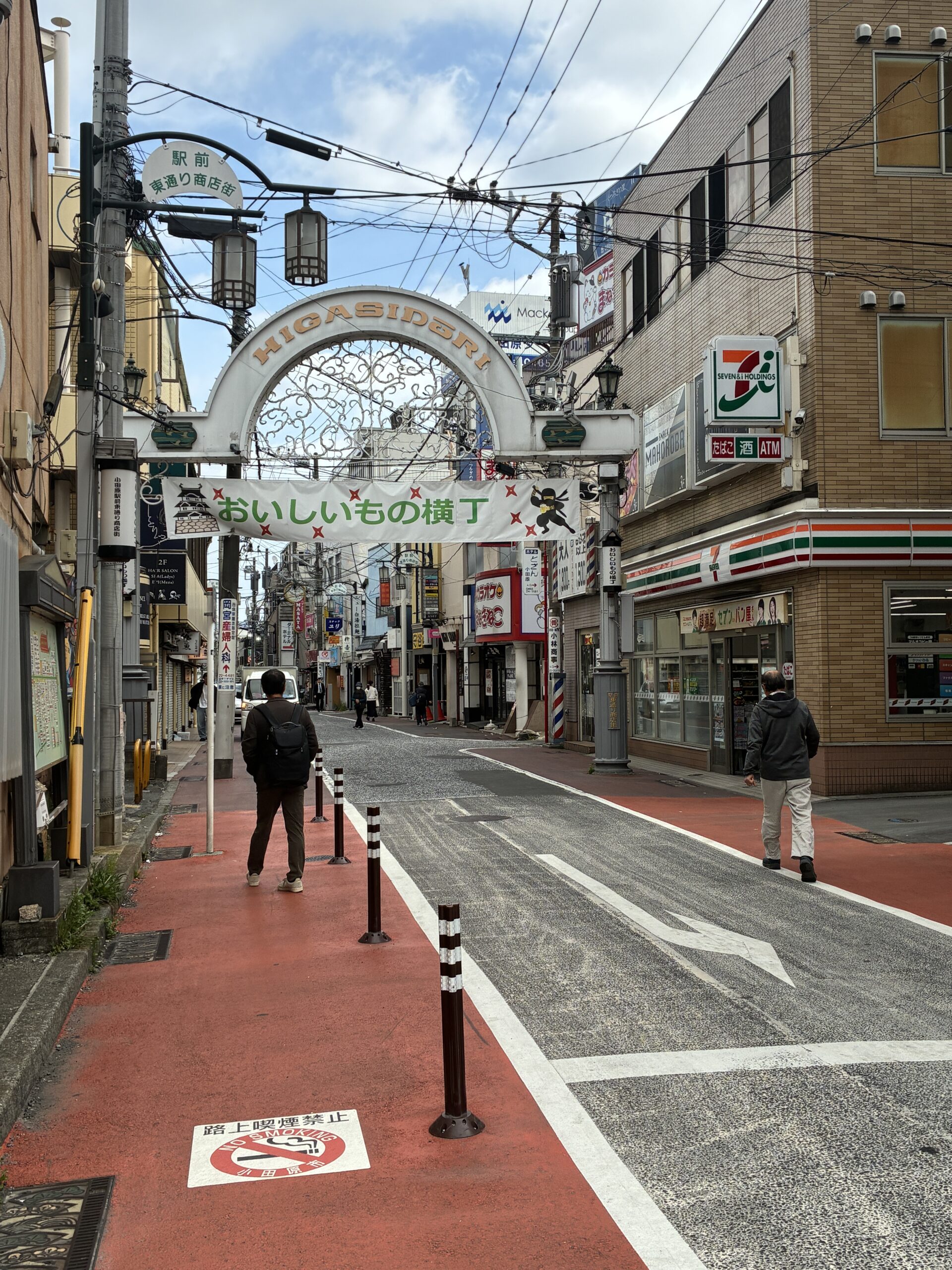
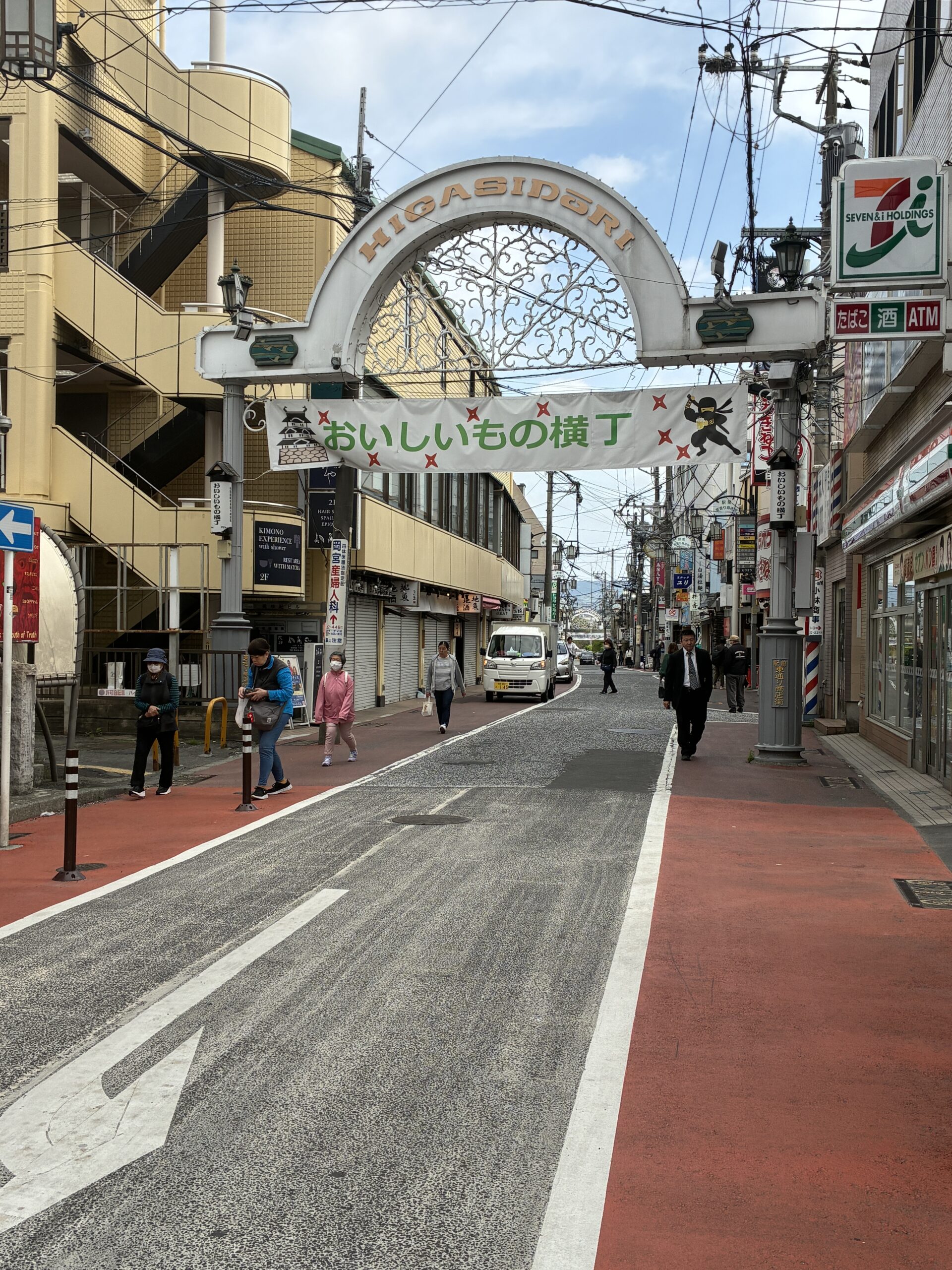
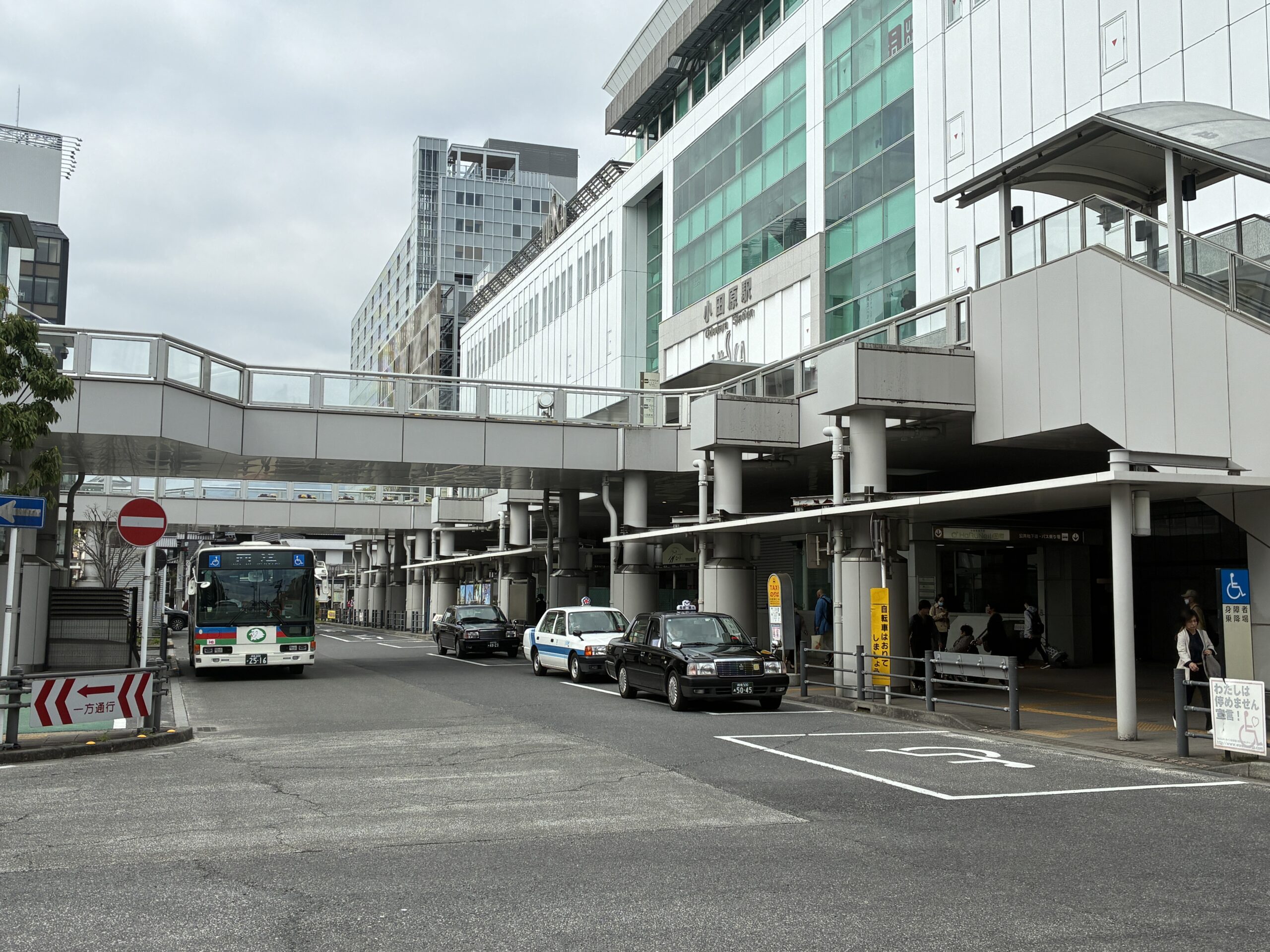
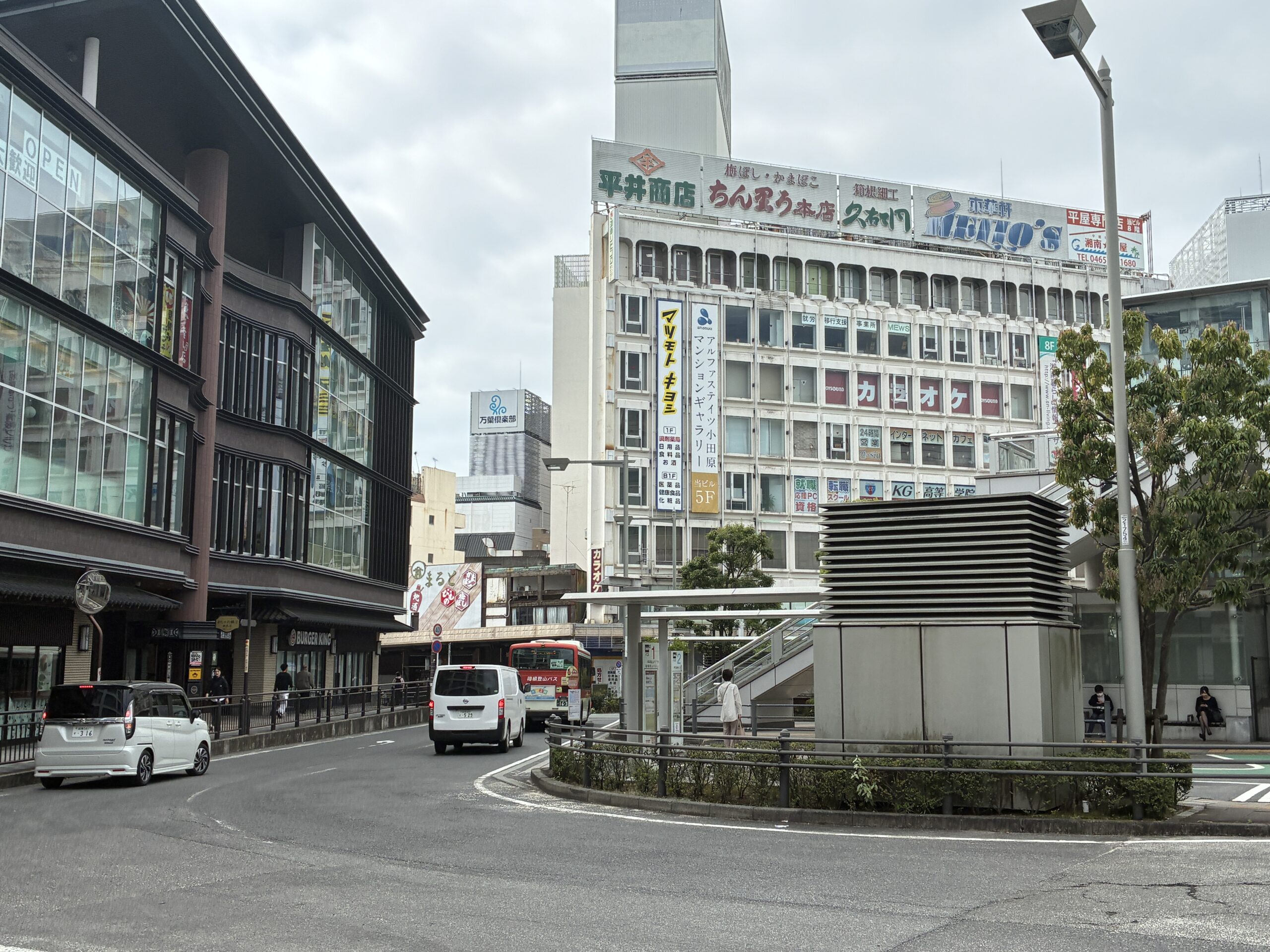
Reaching Odawara, we’d left the mountains behind and were now at sea level, with Odawara sitting on the Sagami Bay. We got to the station, another big station, although nothing like Tokyo Station, with plenty of time to spare, and had a little breakfast in the station. We boarded our train right on time, with it arriving precisely on time. Very orderly.
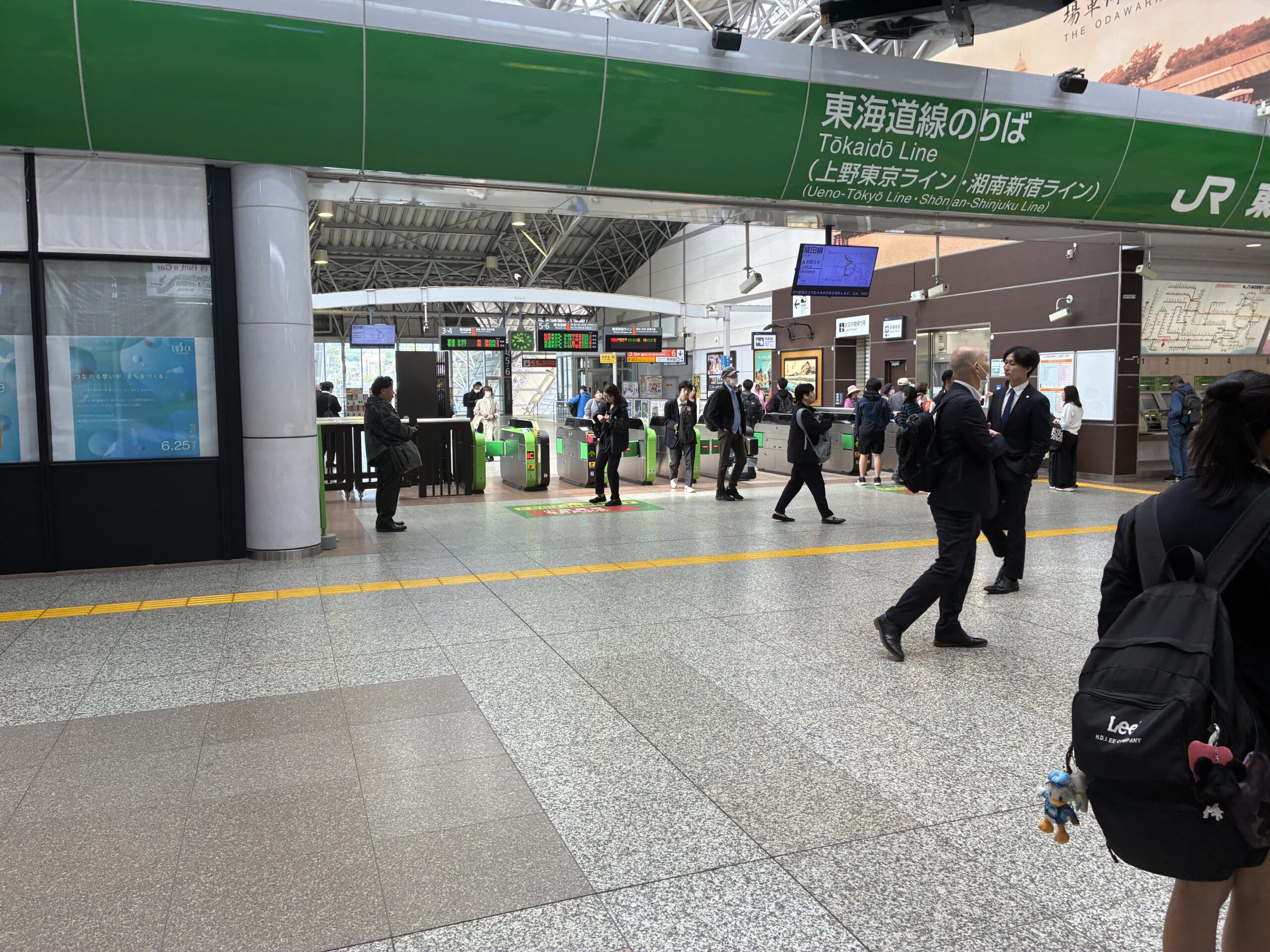
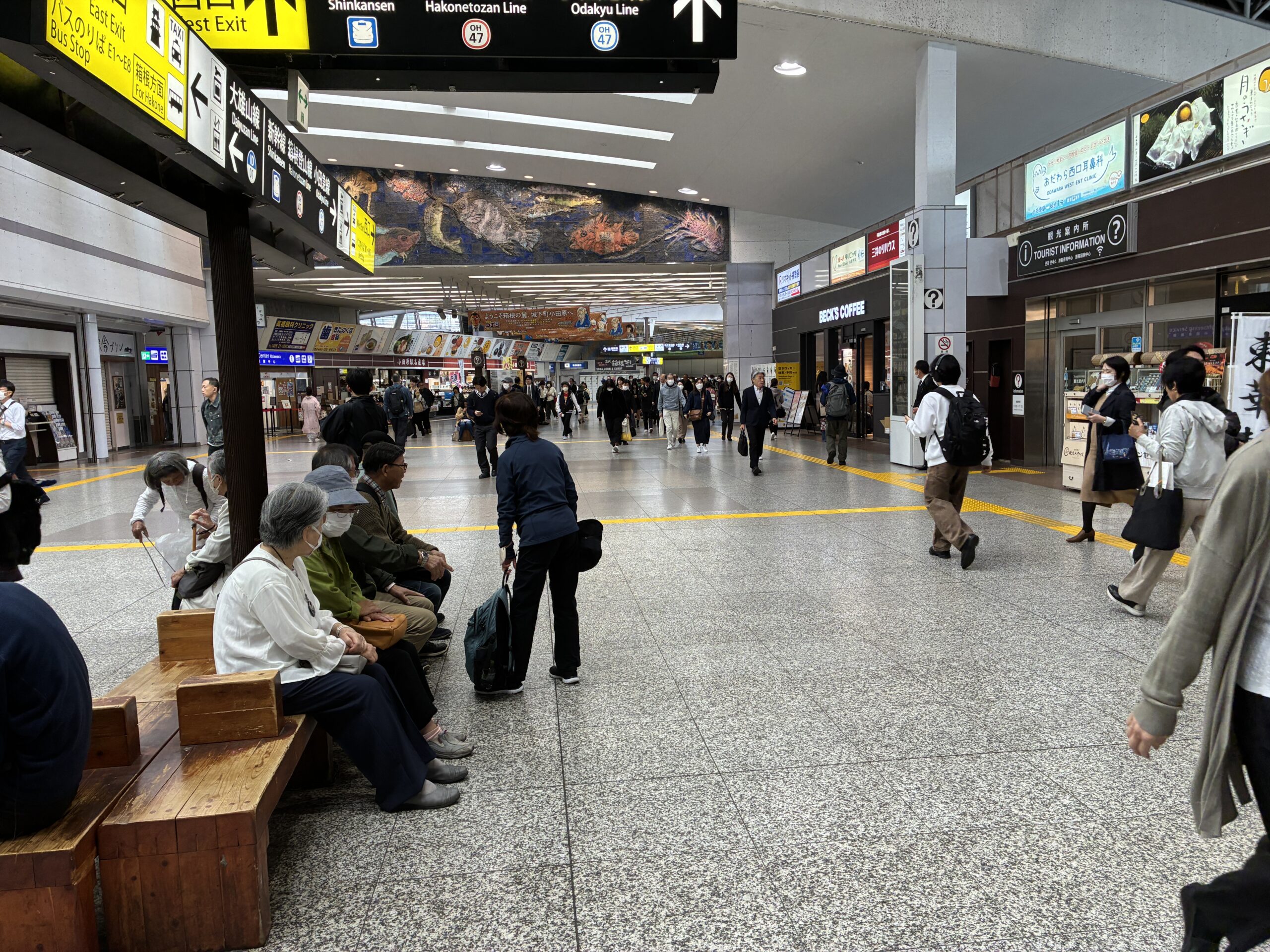
While waiting, several non-stop bullet trains passed through on the center rails. I see now why they’re called bullet trains. It’s a definite “wow” moment watching these trains fly through the station at incredible speed. Wow!!
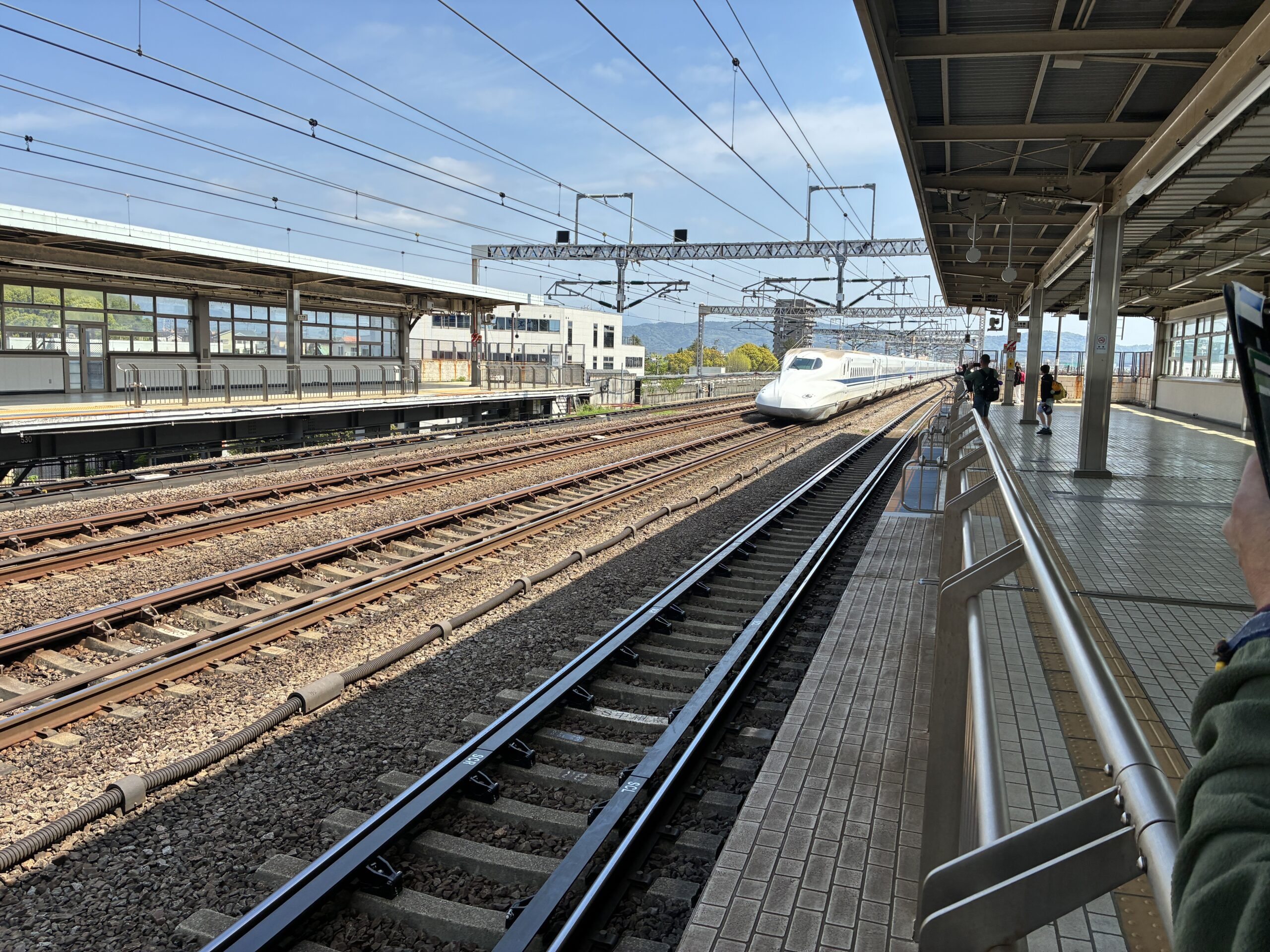
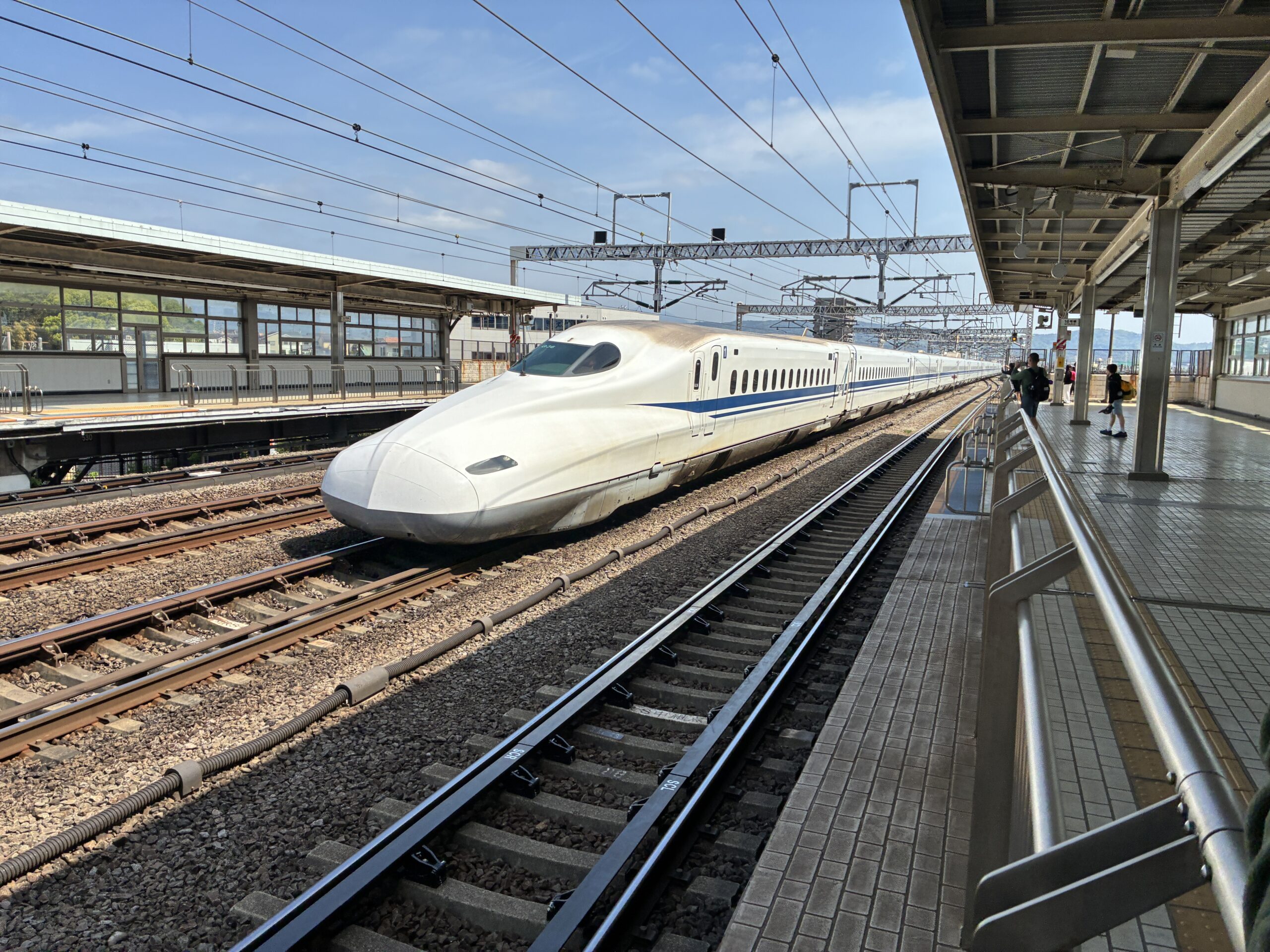
Once on, with very comfortable seats, there’s no sensation of sped at all, and the train feels like it’s traveling at a regular speed. Leaving the city, there’s quite a few lengthy tunnels, but I was happy to see the ocean as we first left, and for the first leg, stopping at Nagoya, the train loops southwest, hugging the coastline, before heading inland, traveling west to Kyoto.
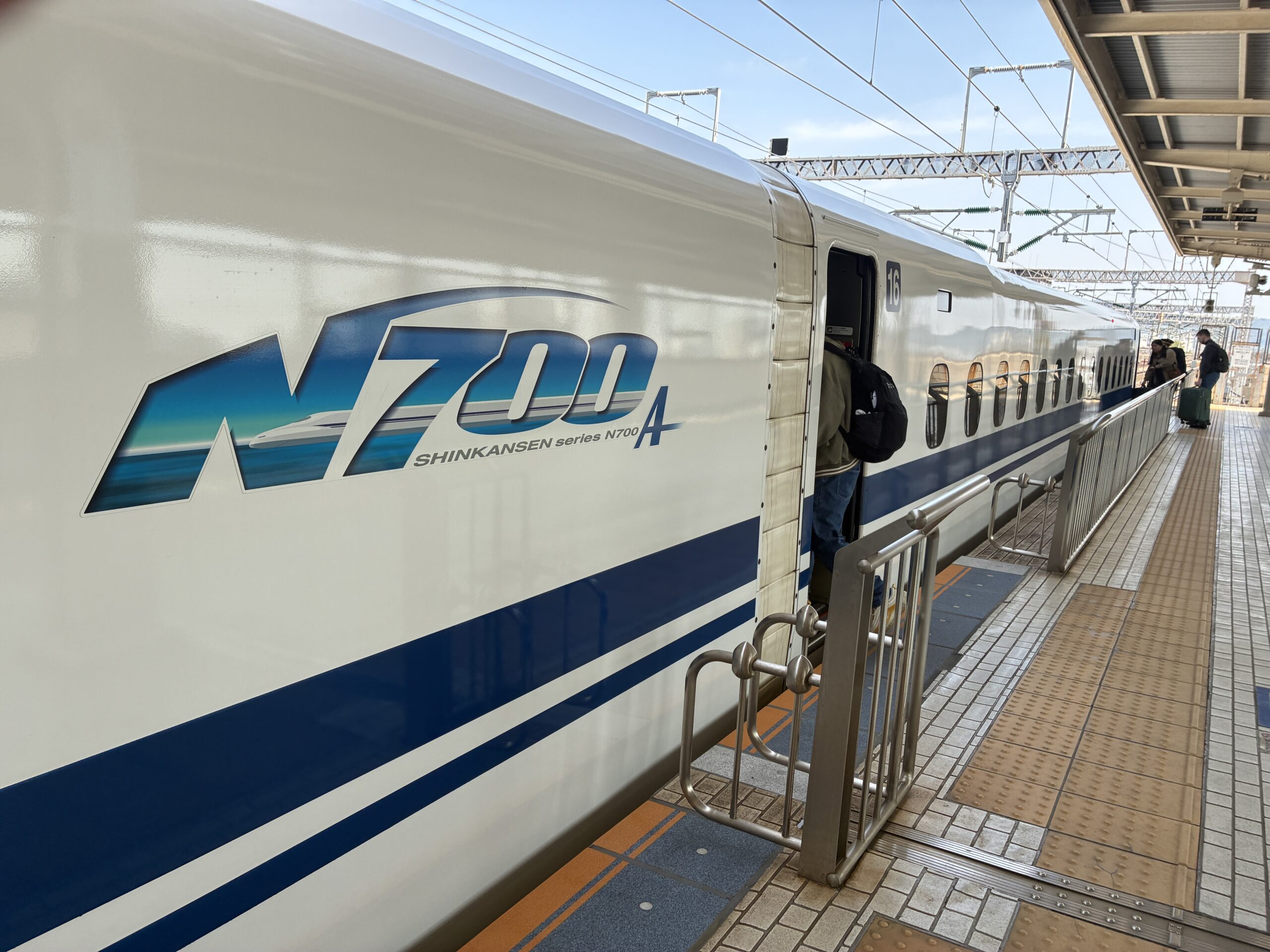
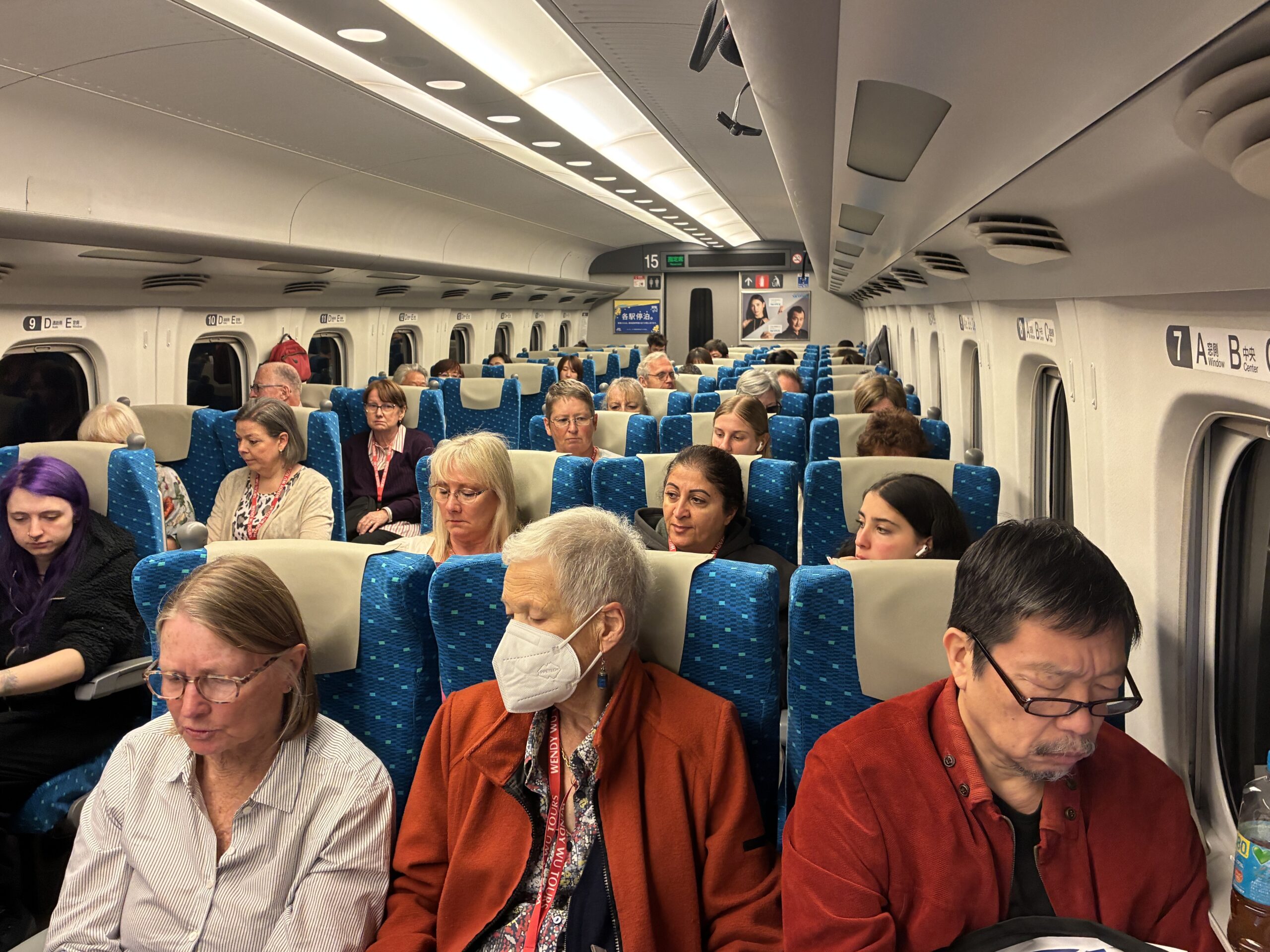
The trip took about about 2 hours, not only leaving dead on time, but arriving in Kyoto exactly on schedule, to the minute. The top speed on this journey is approximately 177 mph, but with stops, deceleration, slower speed sections, etc., the average speed is actually less. The thing is, despite how fast the train passes to the observer, on board this very comfortable and smooth train there is no sense of especially high speed; it feels just like its moving at a regular speed.
Interestingly, highlighting the politeness of Japan, as the train conductor enters and subsequently leaves each car he clasps his hand in the prayer position and bows his head to the entire car full of passengers. These displays of politeness, helpfulness, and humility seem everywhere, and these characteristics seem not only to be part of the Japanese culture, but when people are friendly, helpful, and smiling, or bow their head in thanks, they seem genuine and not just convention.
We arrived in Kyoto Station precisely on time, a little after noon, and headed for the Kyoto subway, which is a lot smaller than the Tokyo subway. It has only two lines, and is relatively limited. Once figured out to how to read and use it, we headed to the subway closest to our hotel, the Kyoto Uraraka Guest House, which sounded like it would be a quaint little place, but is instead a several floor low cost hotel, which turned out to be a pretty decent place, although not the traditional ryokans we’d been staying at for the past few nights.
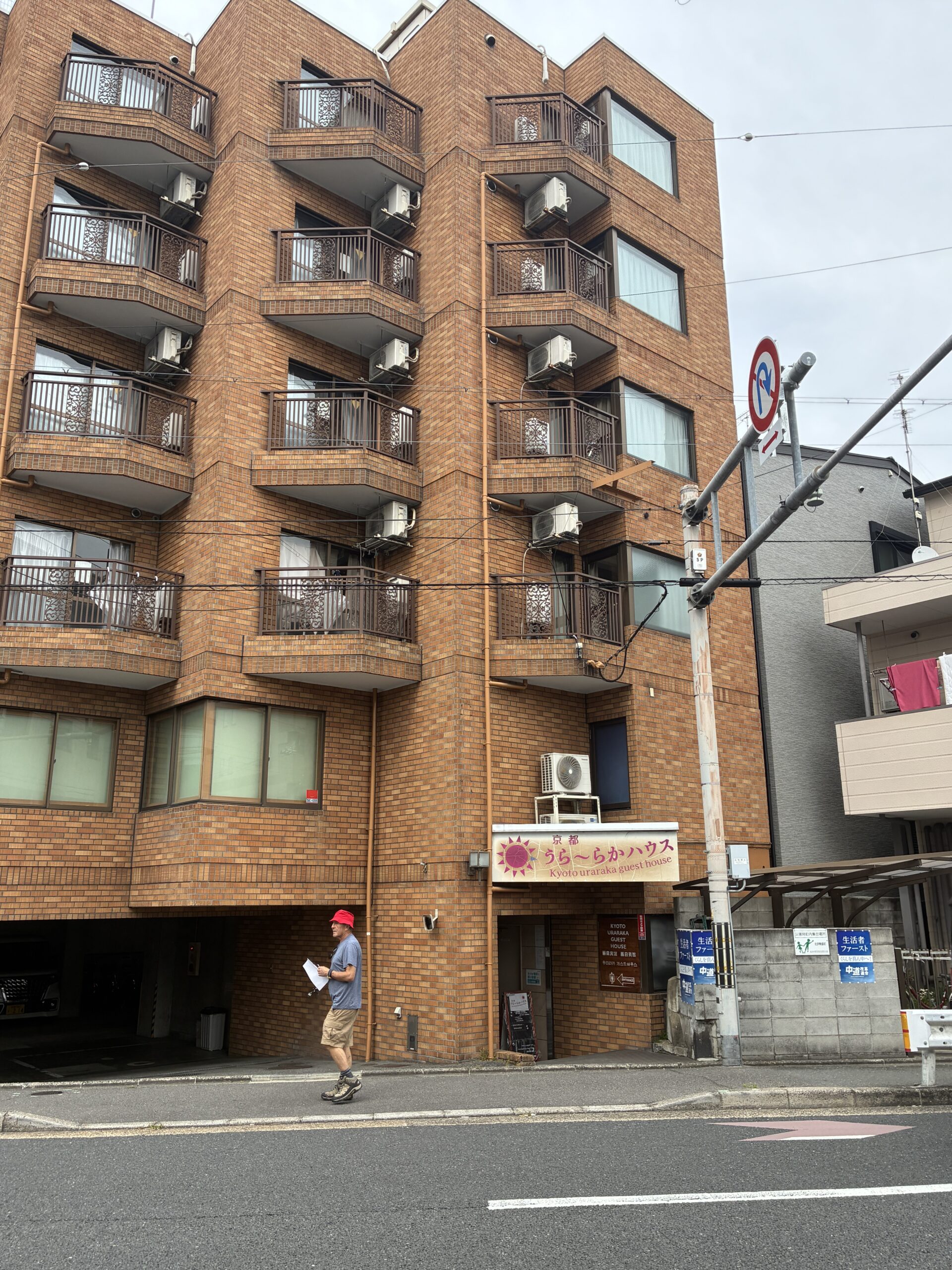
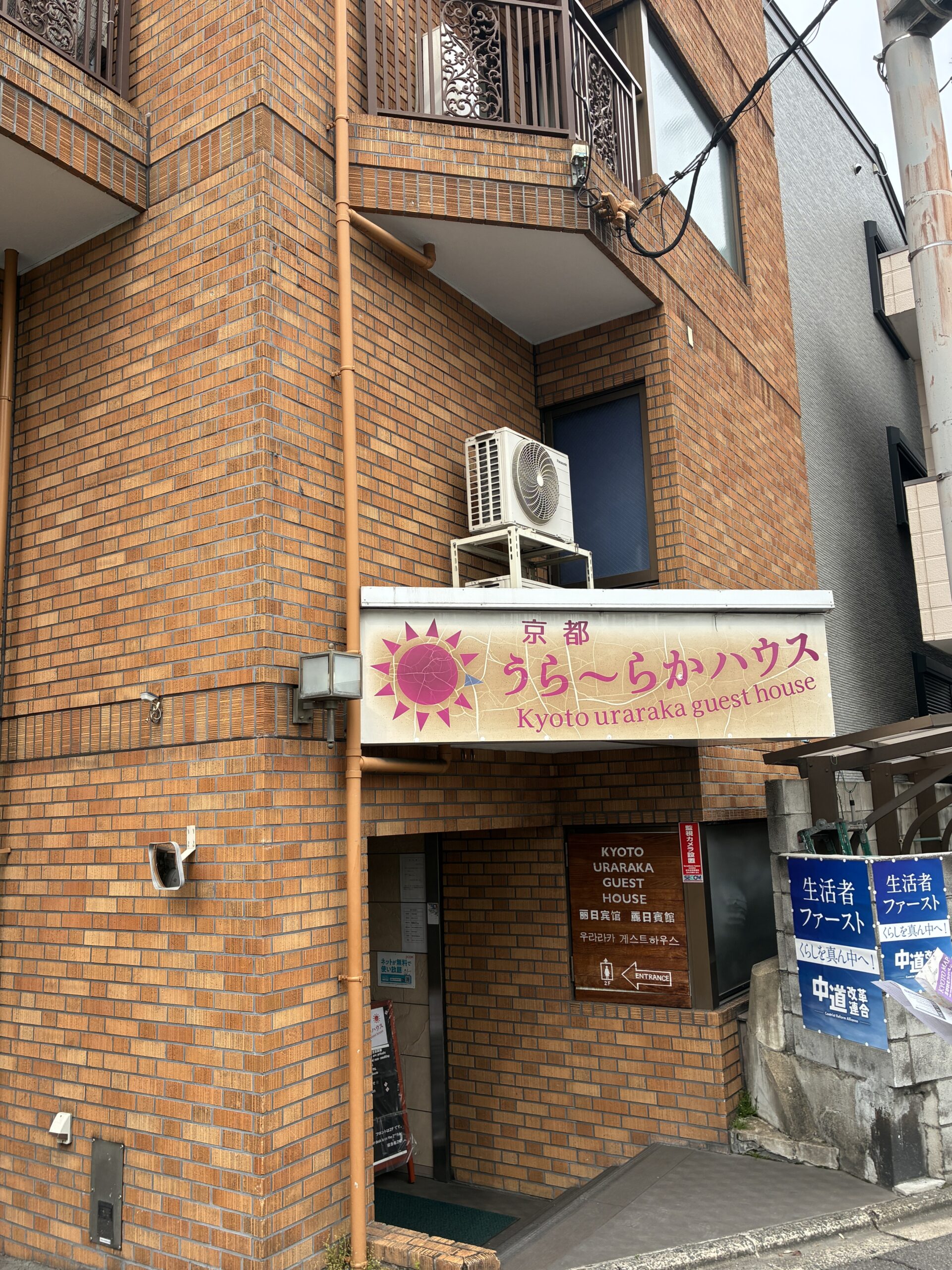
This is a comfortable place, with a nice lobby, and pretty traveler friendly, including a coin laundry. Our room is small but comfortable, with a TV and fridge. and even a small balcony (but not much of a view). Very happily, it had beds rather than futons, as Laurence was really feeling a need for a bed at this point, given his physical state. But, he was feeling pretty good, and although in a little pain and somewhat fatigued was feeling and looking better than he had.

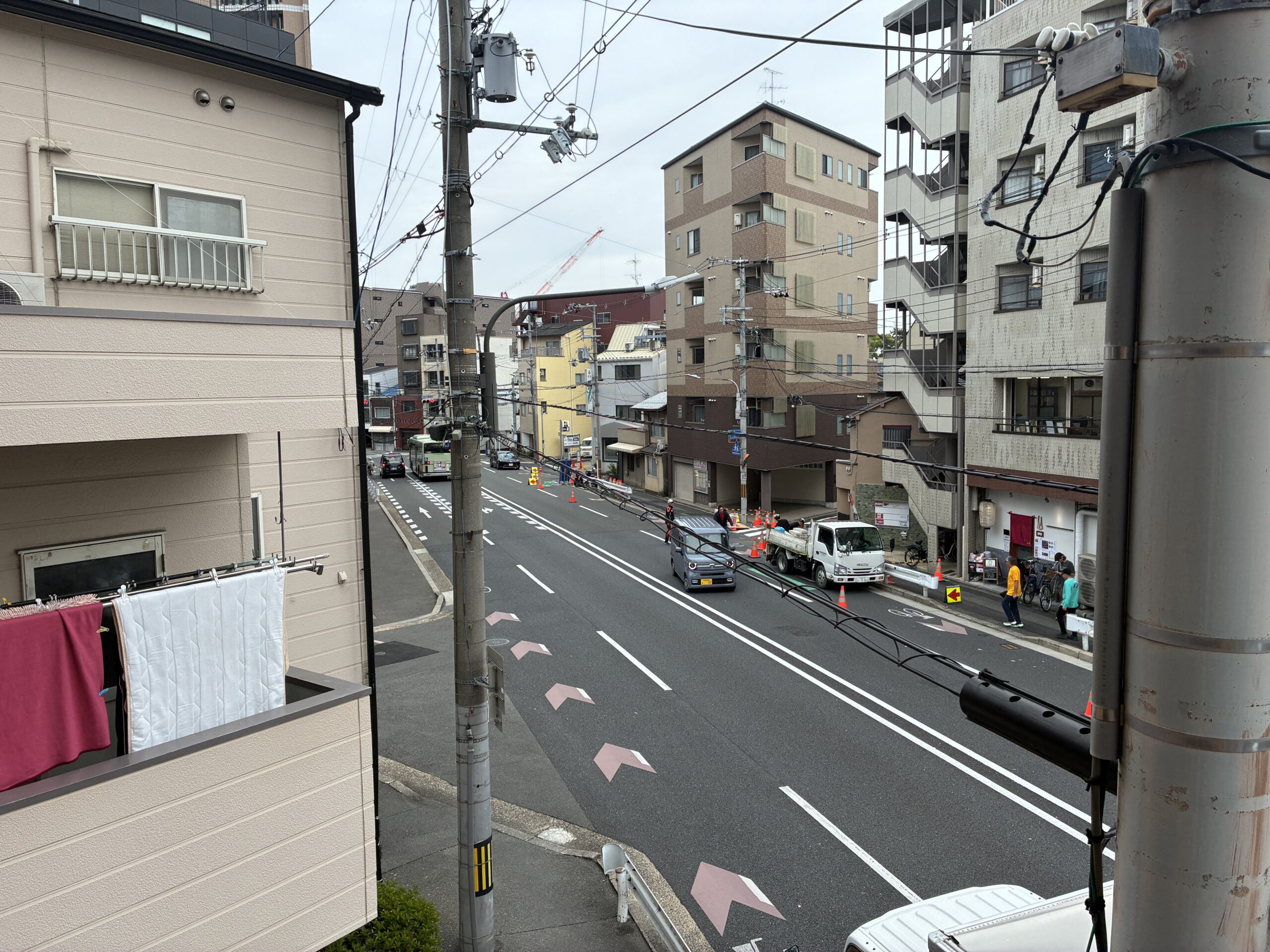
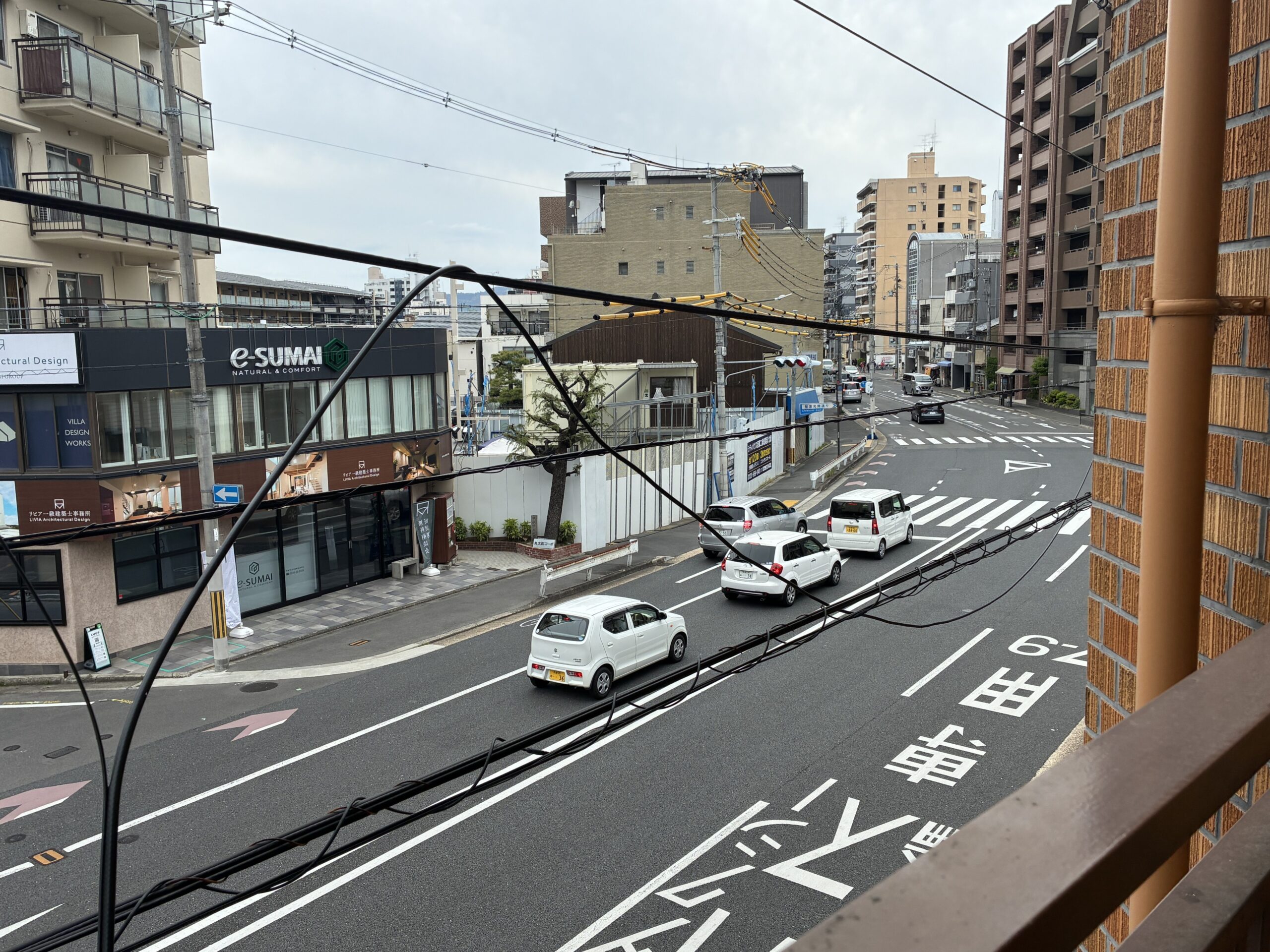
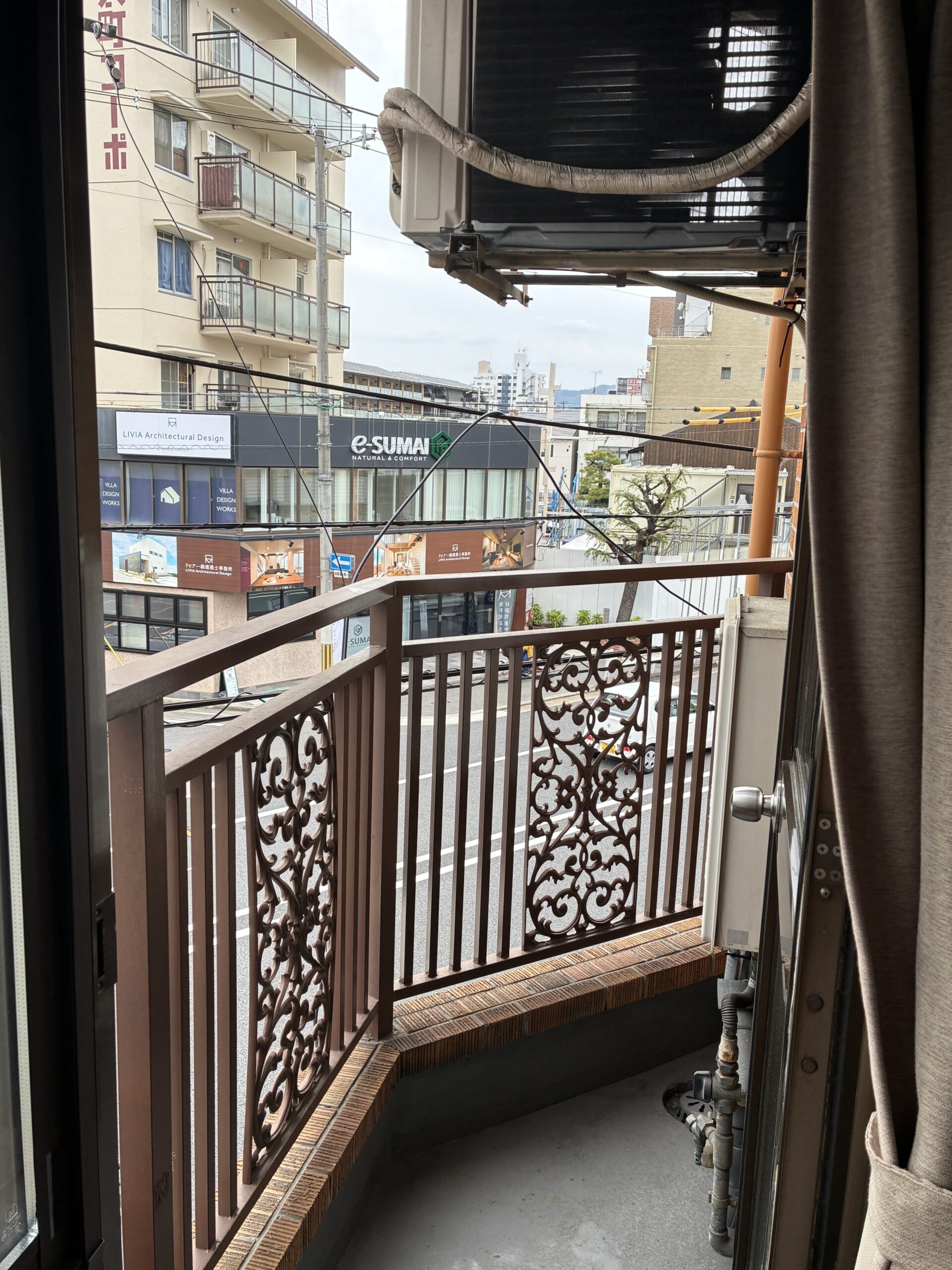
Although we’d seen only what was along the way as we walked from the subway to our hotel, it seemed evident that Kyoto is a different type of city than Tokyo. The size difference, of course, is obvious. The Tokyo metropolitan area – the city proper – has around 14 million, whereas, although not small, Kyoto has around 1.4 million. Kyoto is also a much older city, and not at all the high rise, ultra modern, neon lit, fast moving city that Tokyo is known as, and has a limit on building height, for instance, as well as generally older buildings throughout. Kyoto, the former capital of Imperial Japan for over a thousand years (794–1868), has a slower pace, and is filled with over 2,000 temples and shrines throughout the city, offering a greater sense of historic beauty. Although it has old and traditional areas, such as the Asakusa district where we stayed, Tokyo is dominated by its high rise and modern buildings and lifestyle, whereas Kyoto reflects history with a tranquil and slower moving vibe. Buses and bicycles abound in Kyoto, and bicycles are everywhere, and a norm in the city, with cyclists of every age. Tokyo and Kyoto have been described as the two different sides of Japan.
Our hotel is in central Kyoto, in the Nakagyo ward, and well located for getting around the city, and not far from several historical sites, and it turns out the city is generally very accessible by the subway, which is relatively small but nevertheless covers and connects much of the city, with several stations within a short walking distance of our hotel. Once we got settled in, with Laurence feeling much better than he had, we took off and walked quite several miles, exploring by foot what was in the immediate and adjacent areas.
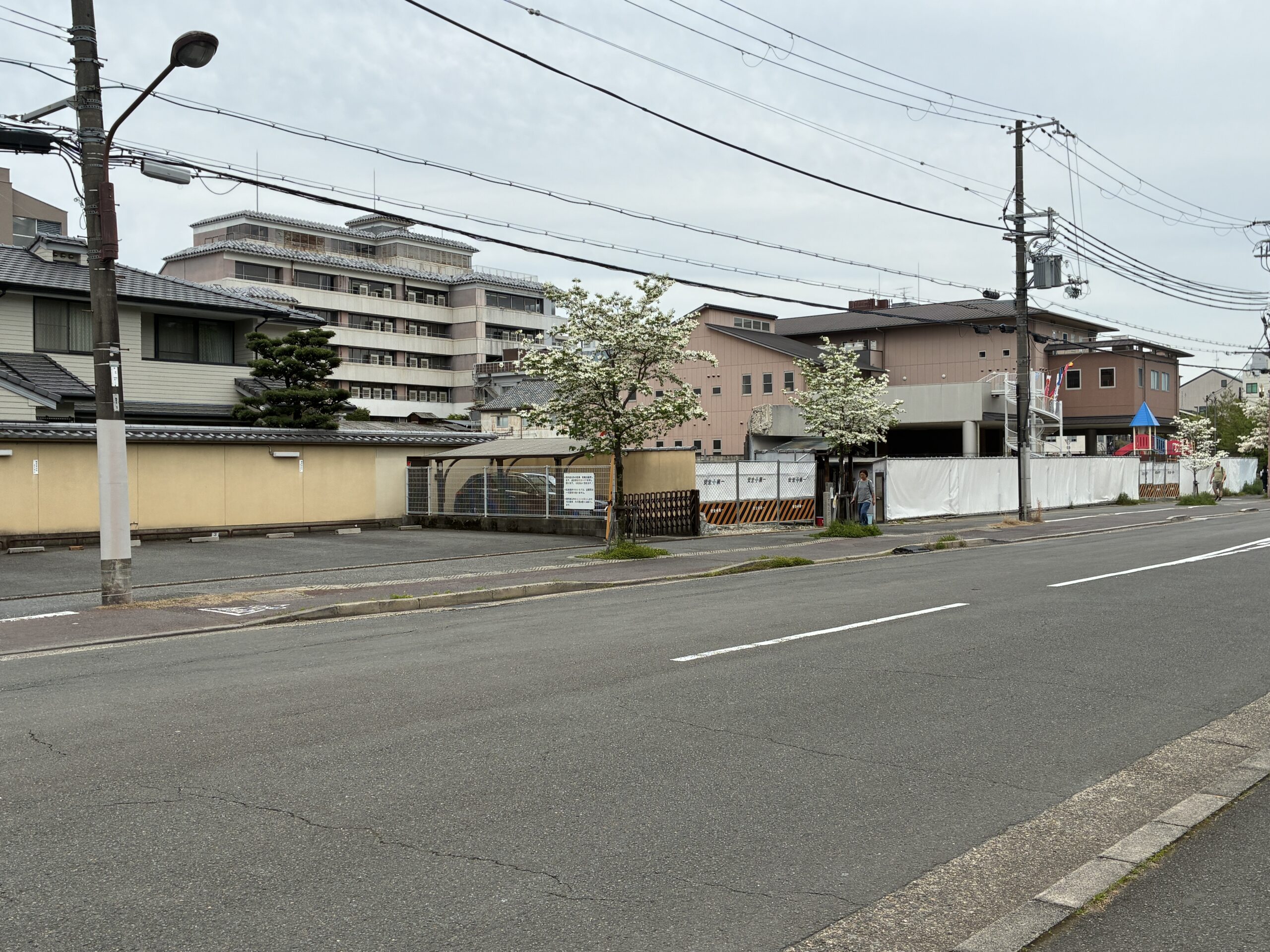
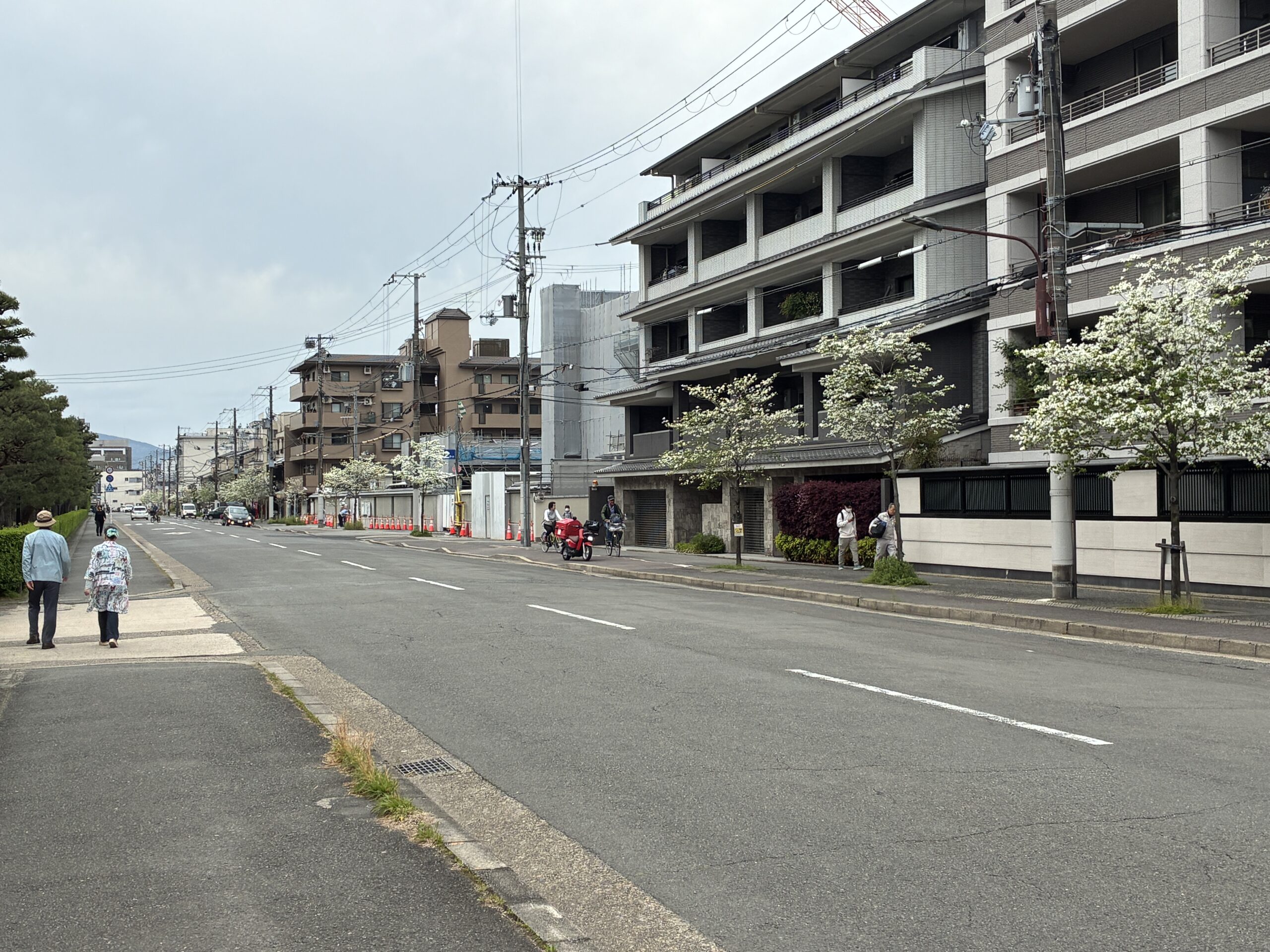
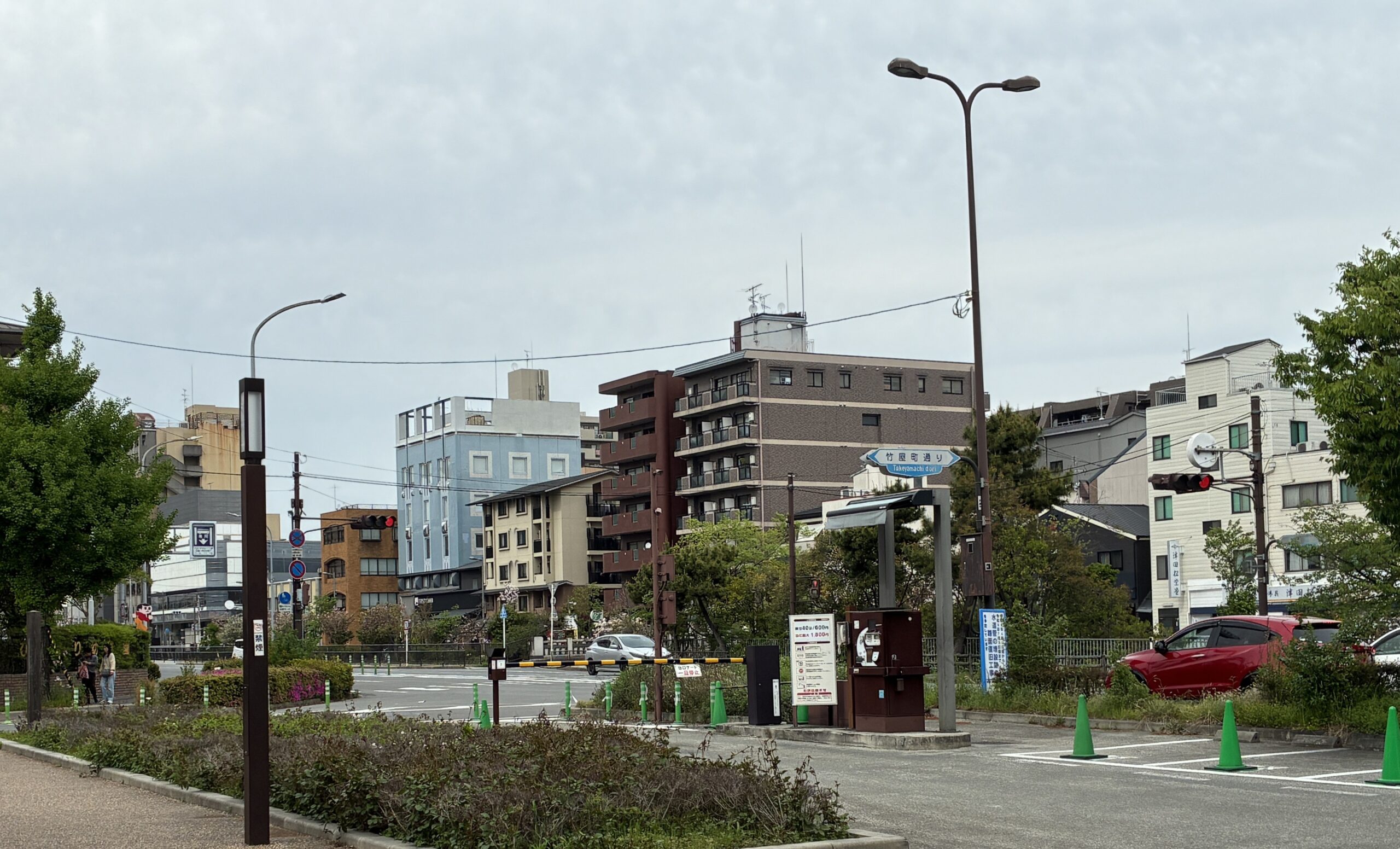
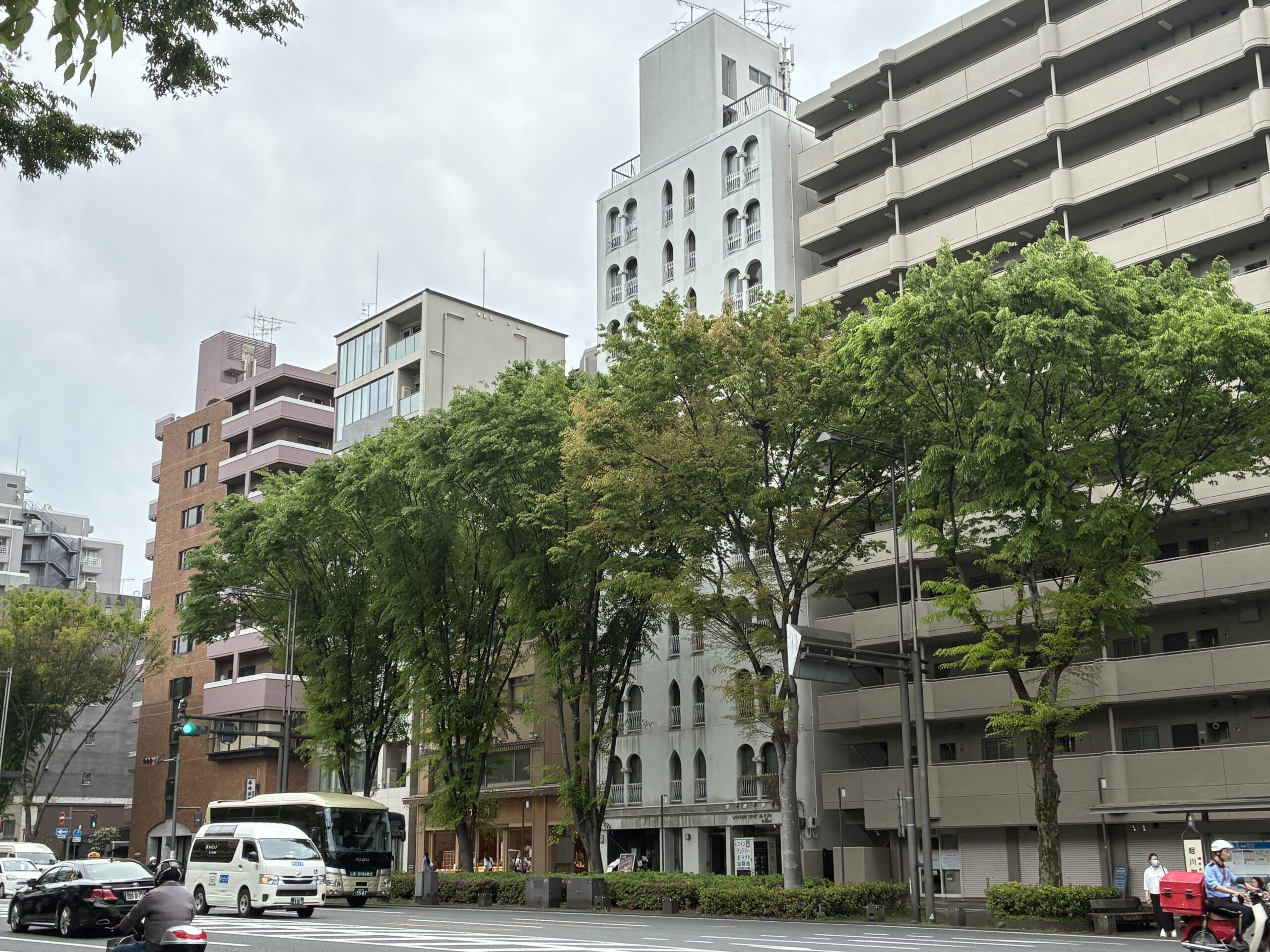
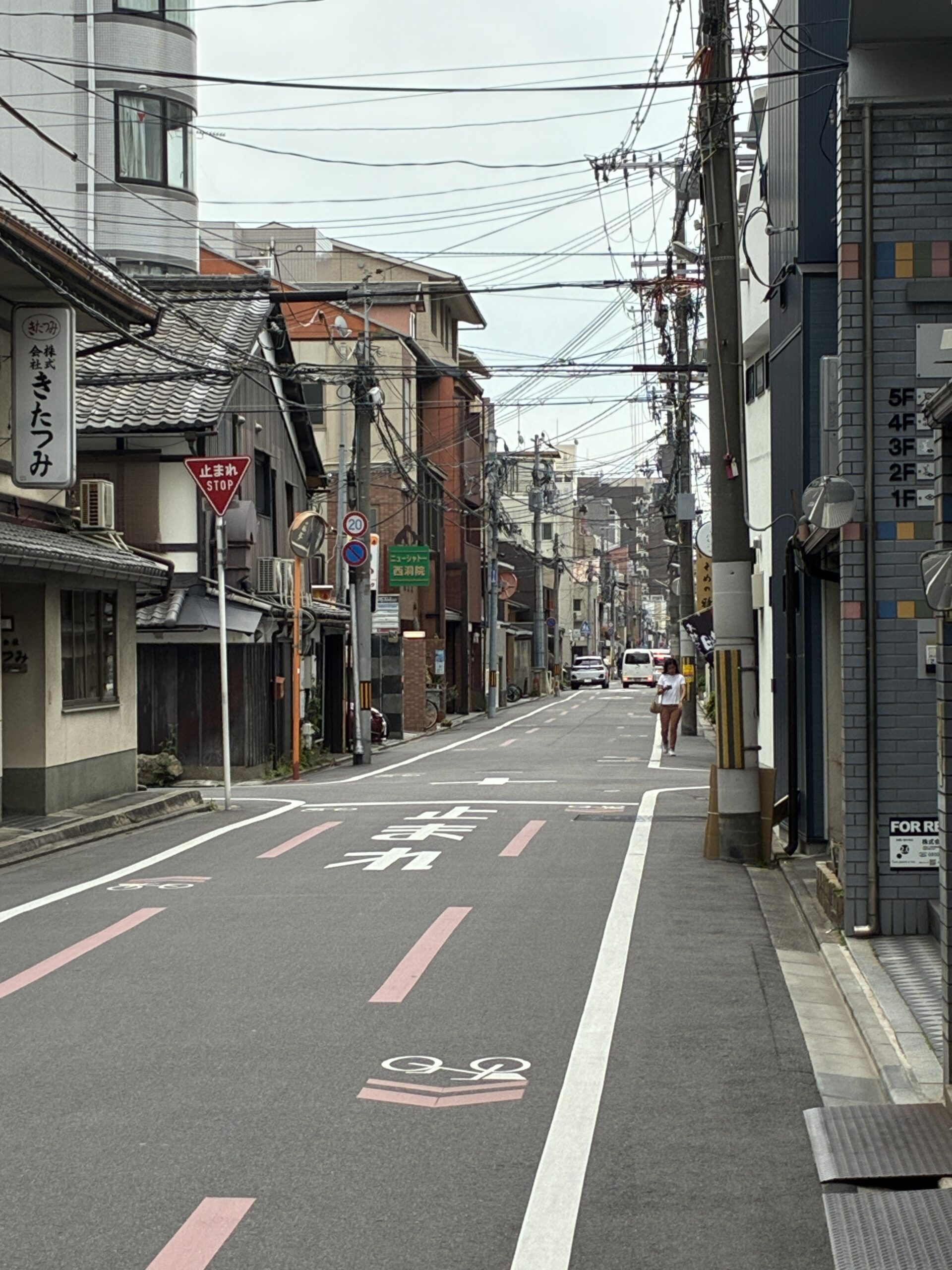
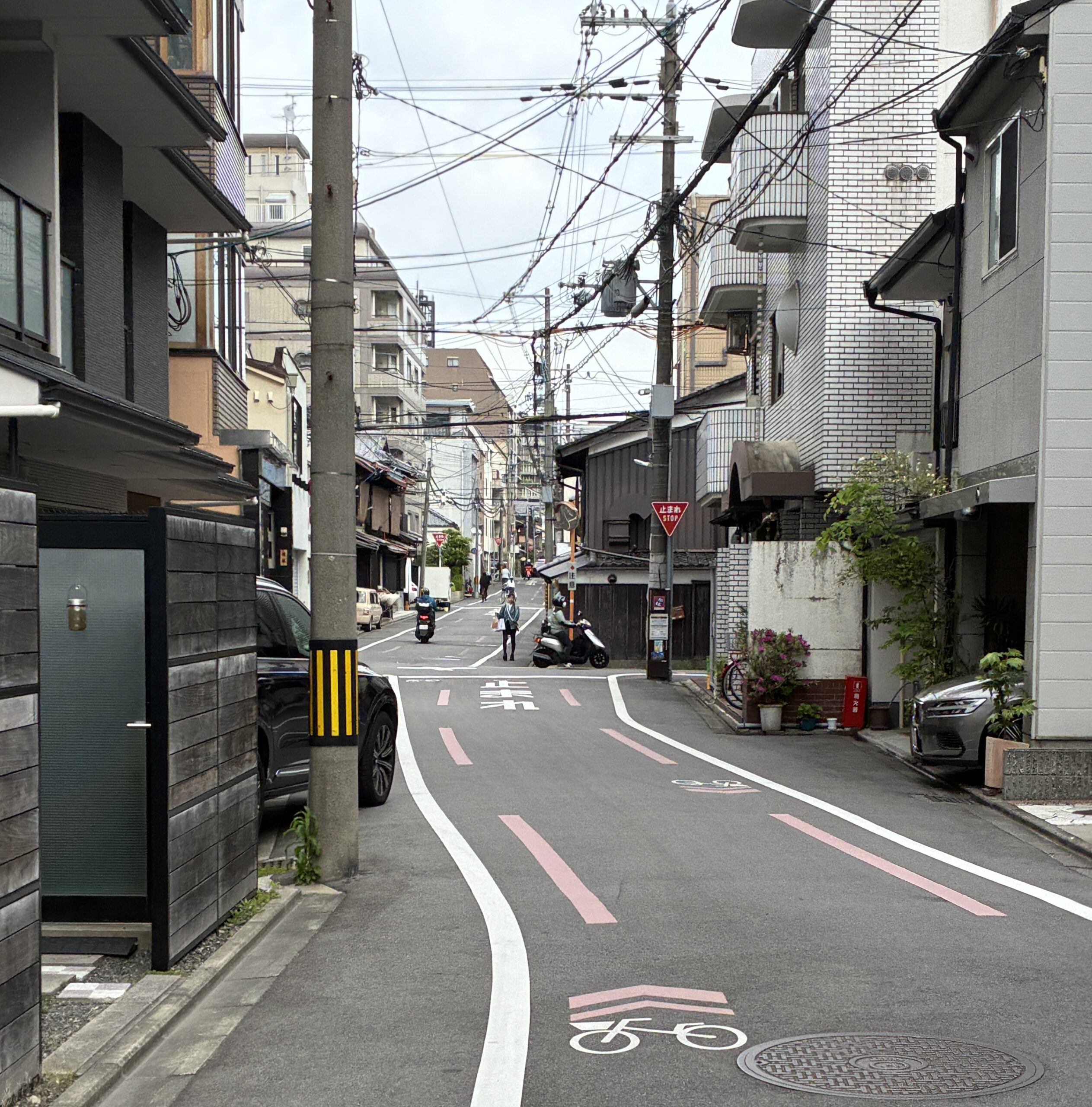
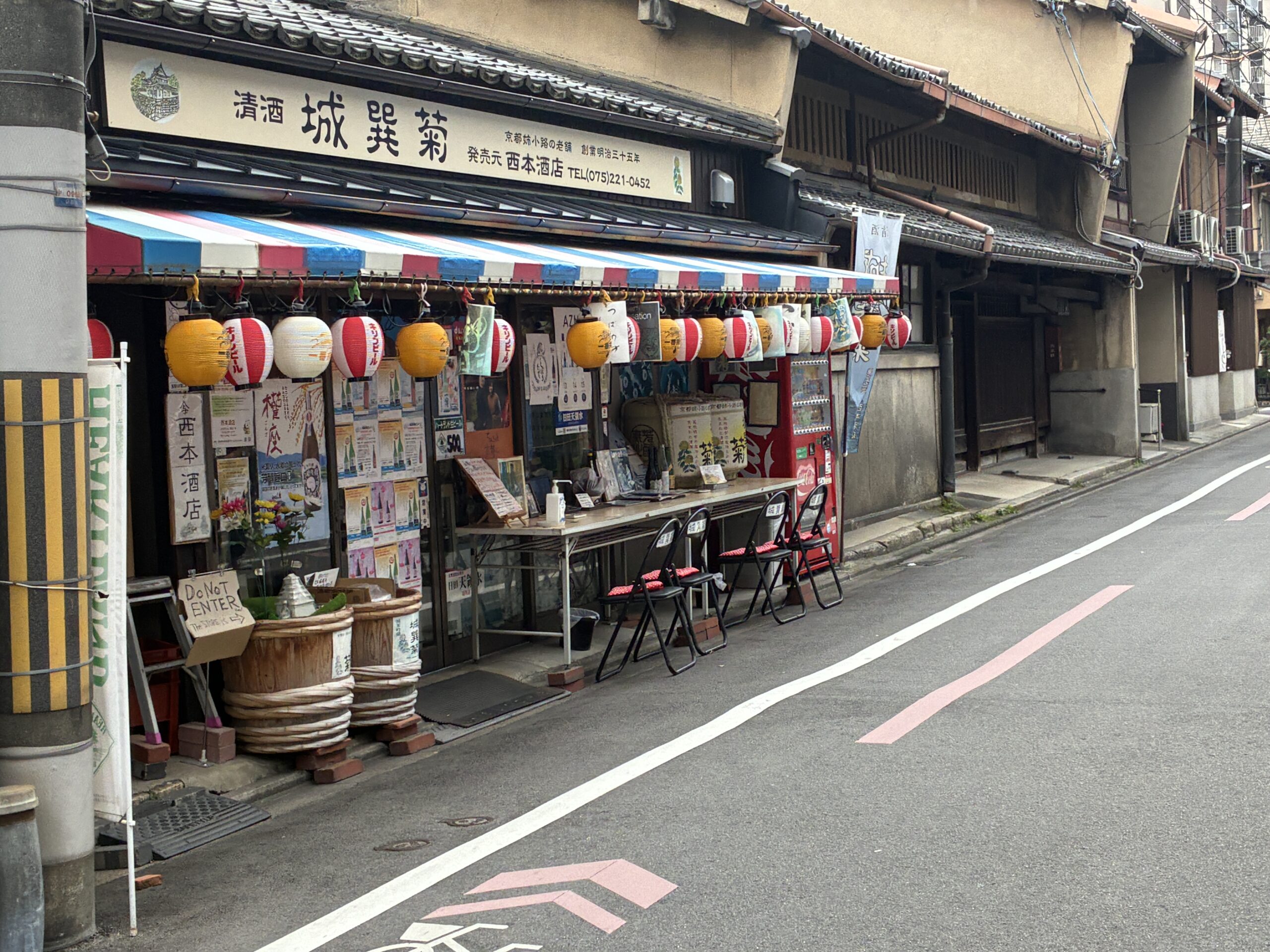
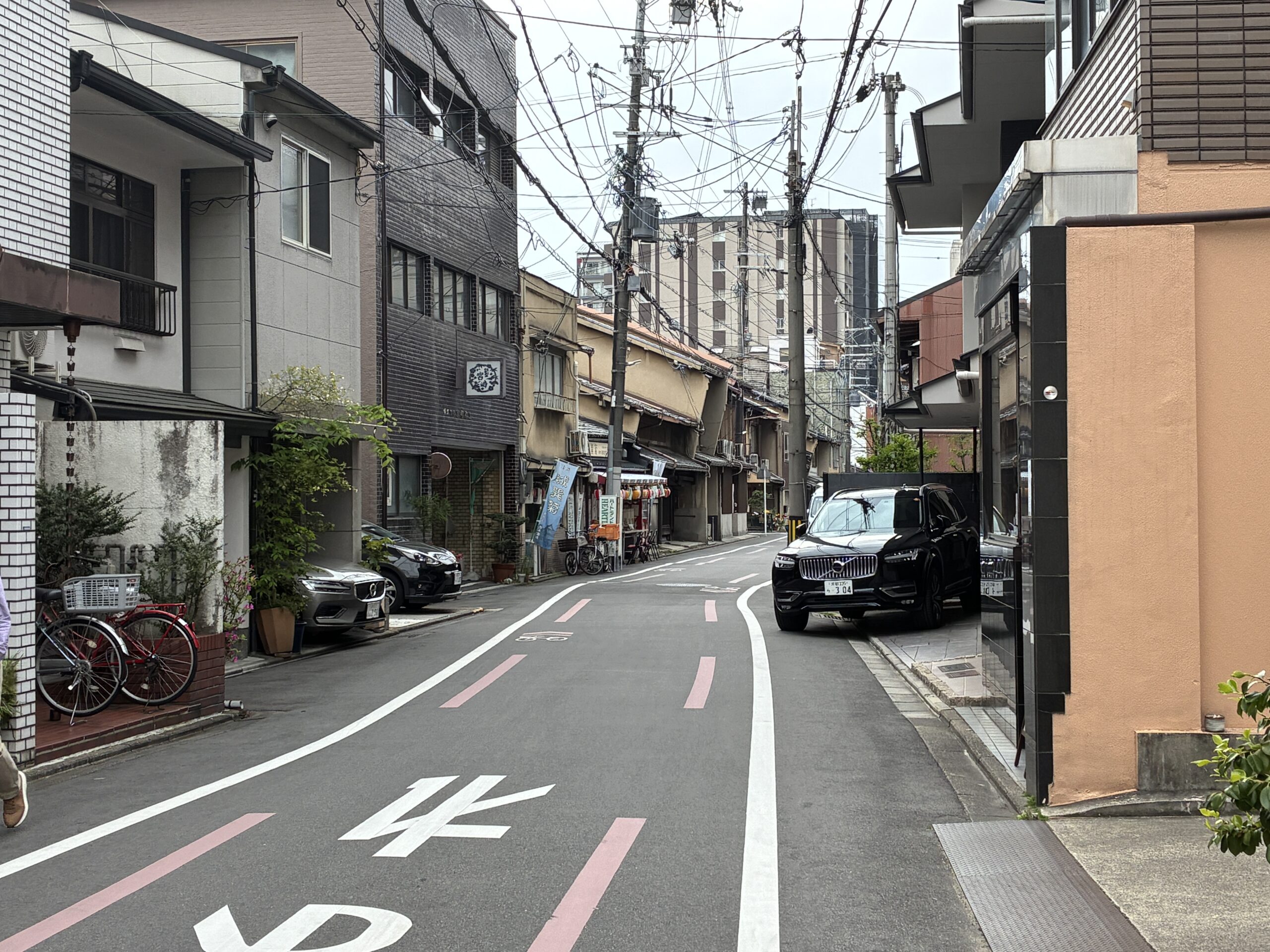
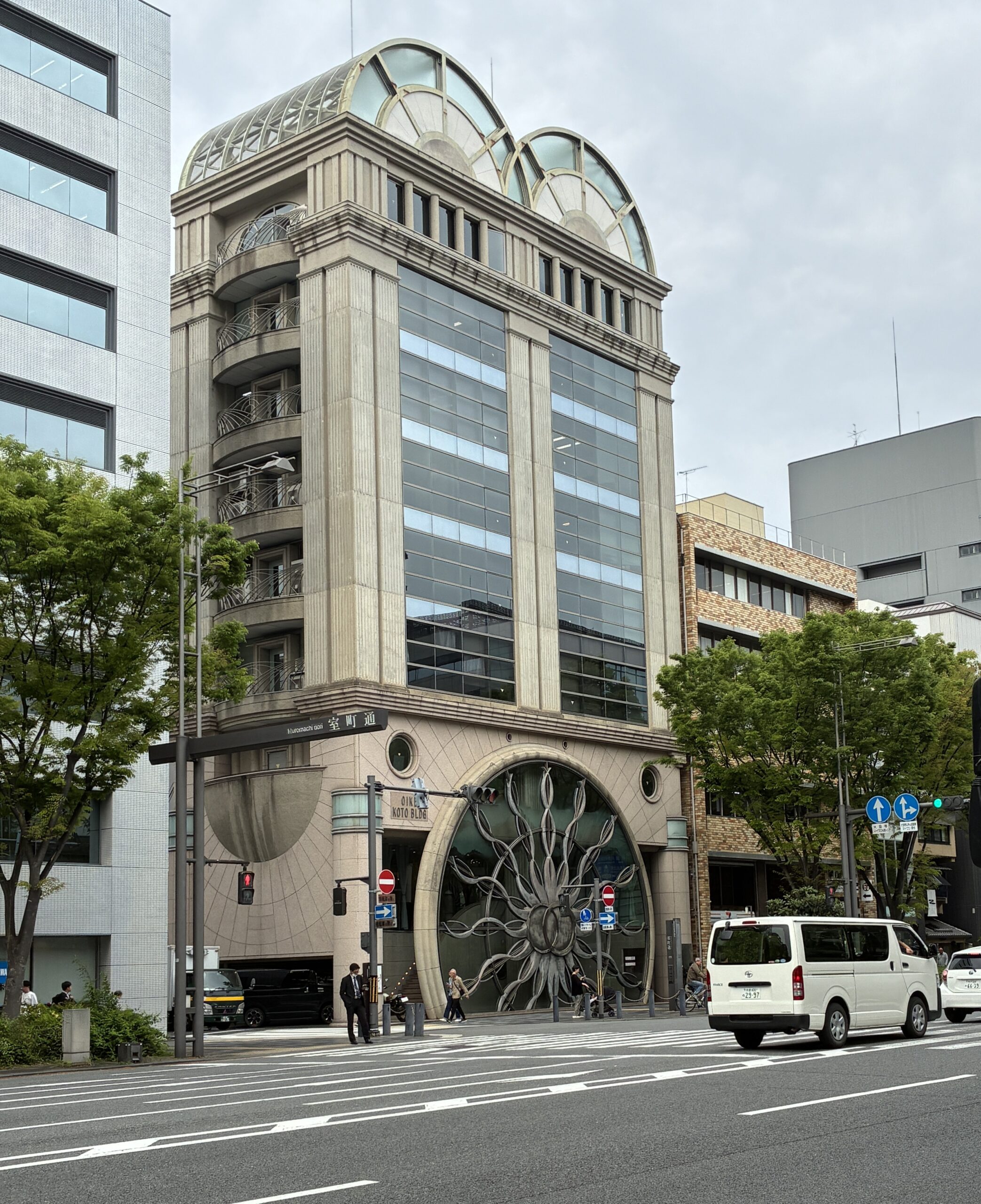
The city is laid out in grid fashion, with quiet and wide streets and major streets that are broad and wide avenues, but not with flashy and modern buildings. The older side streets are as you might imagine for a an old city in east Asia, narrow and lined with old buildings. We liked the vibe, and walked for a couple of hours.
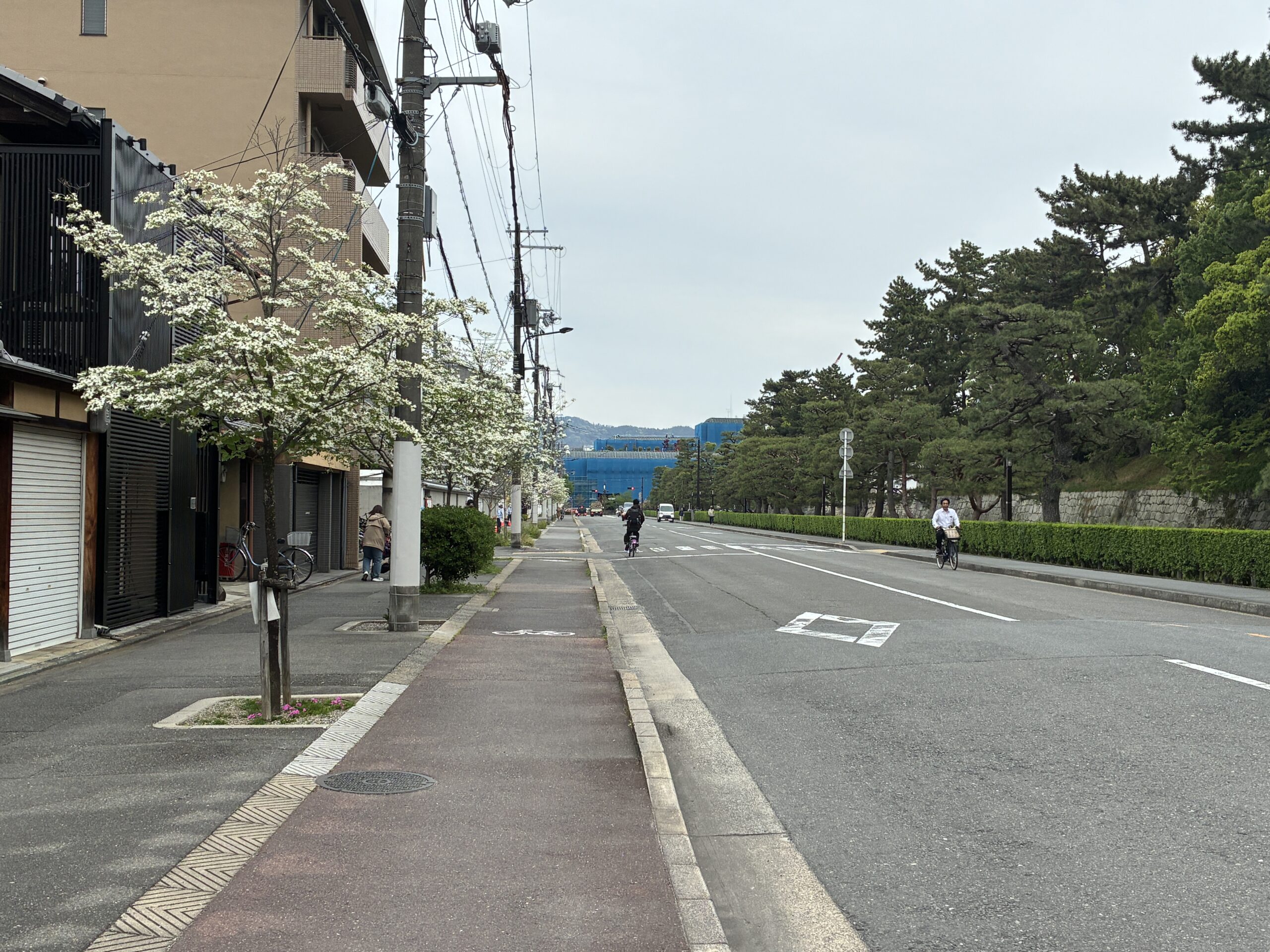
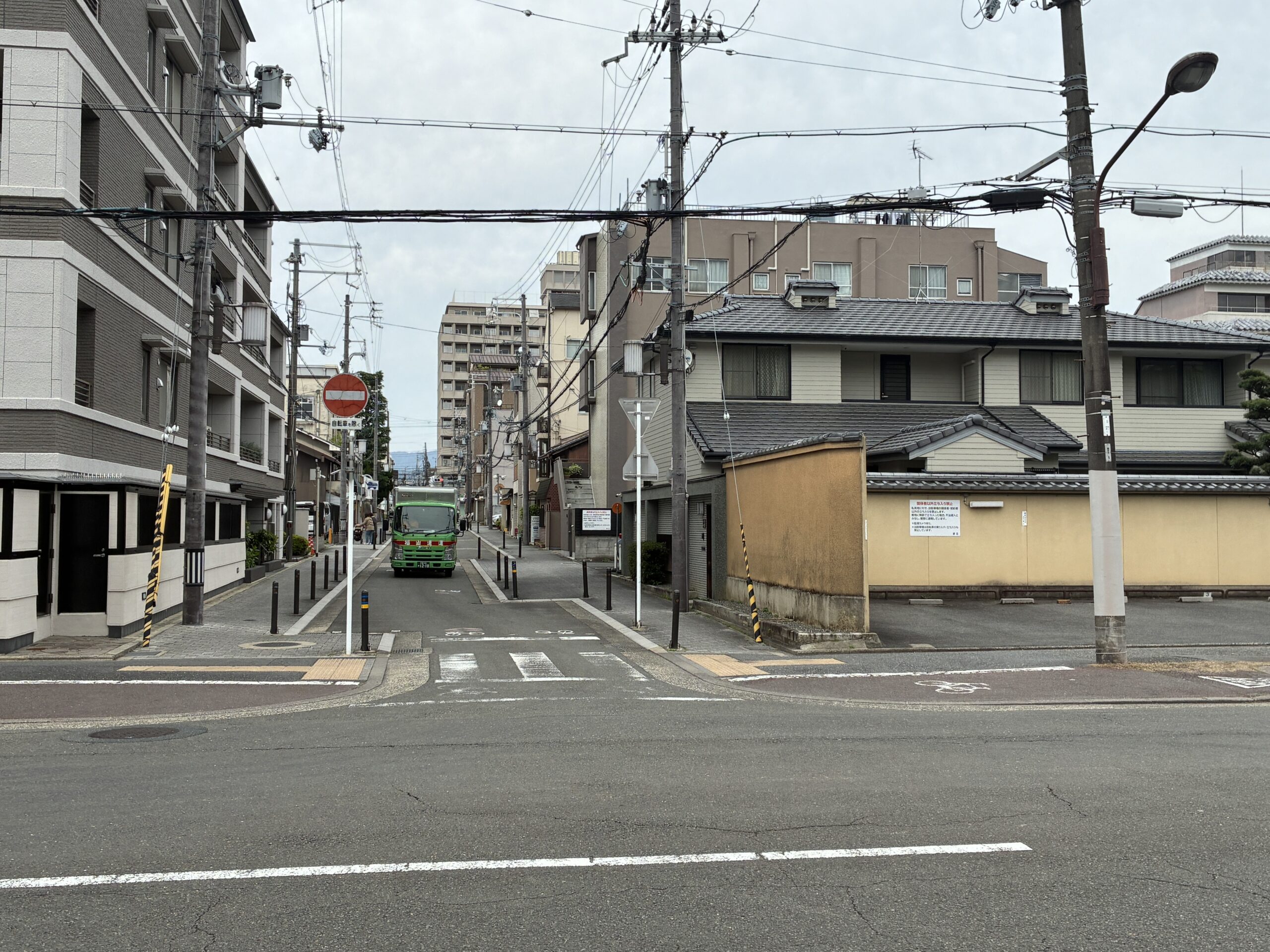
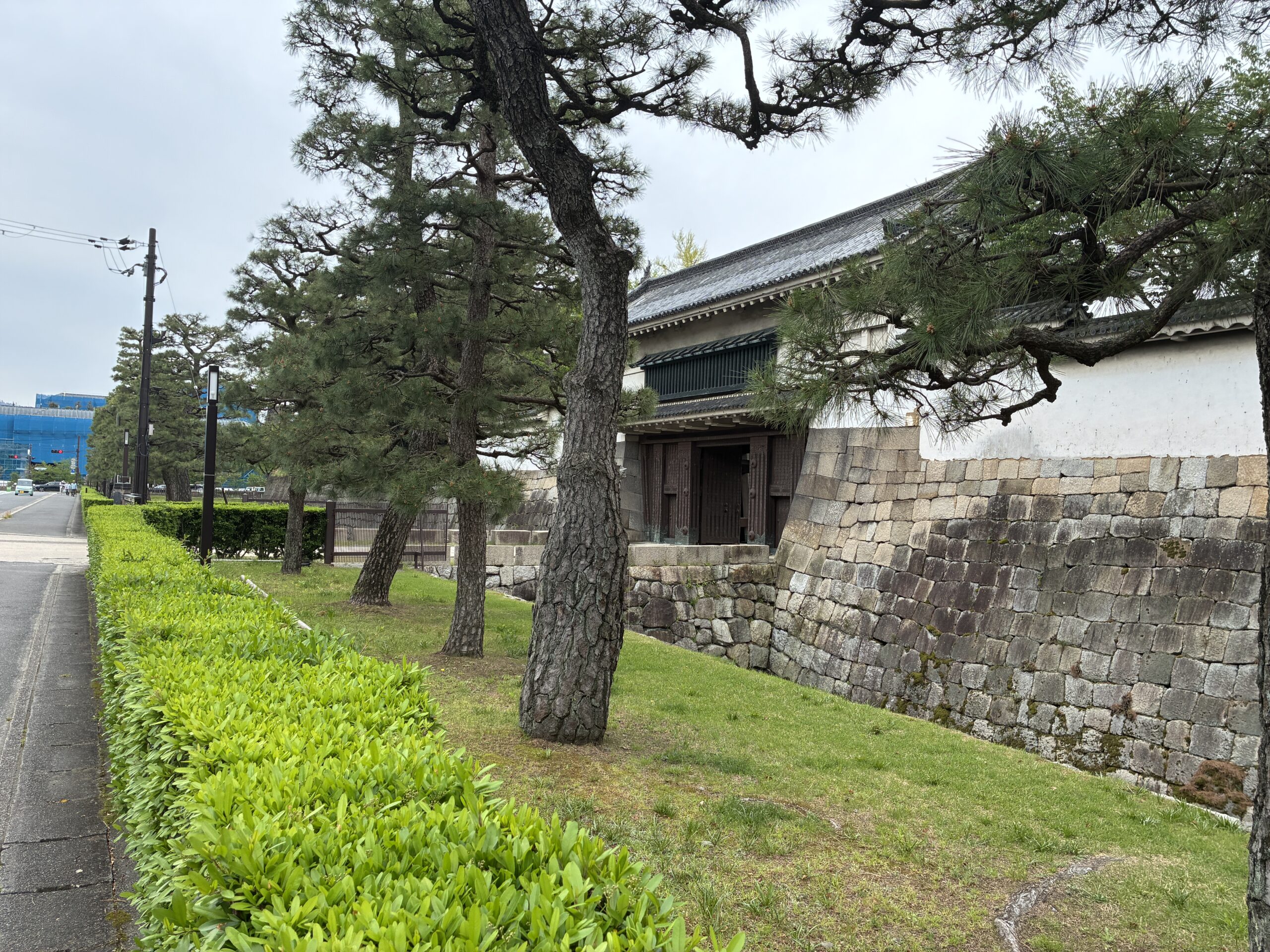
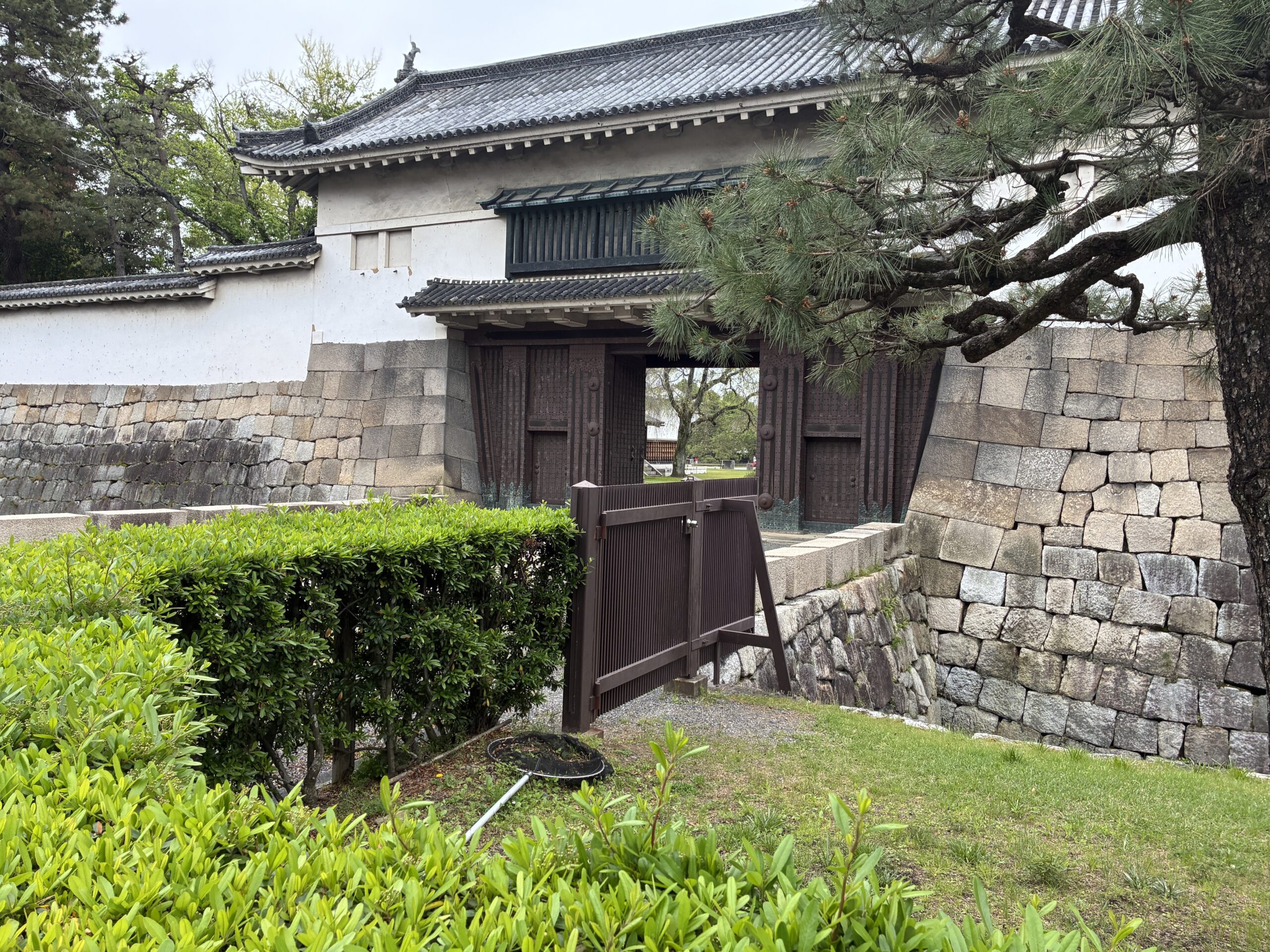
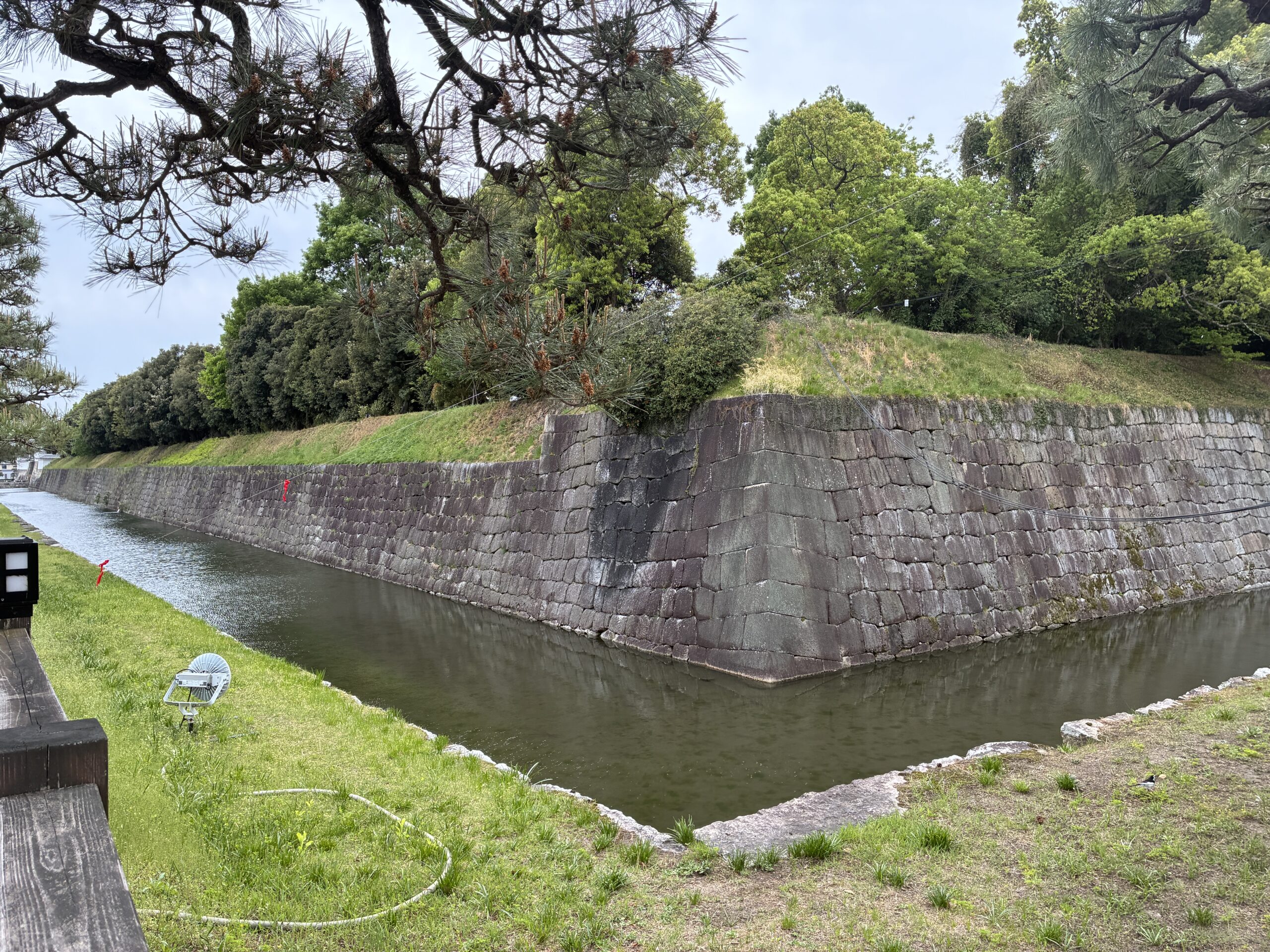
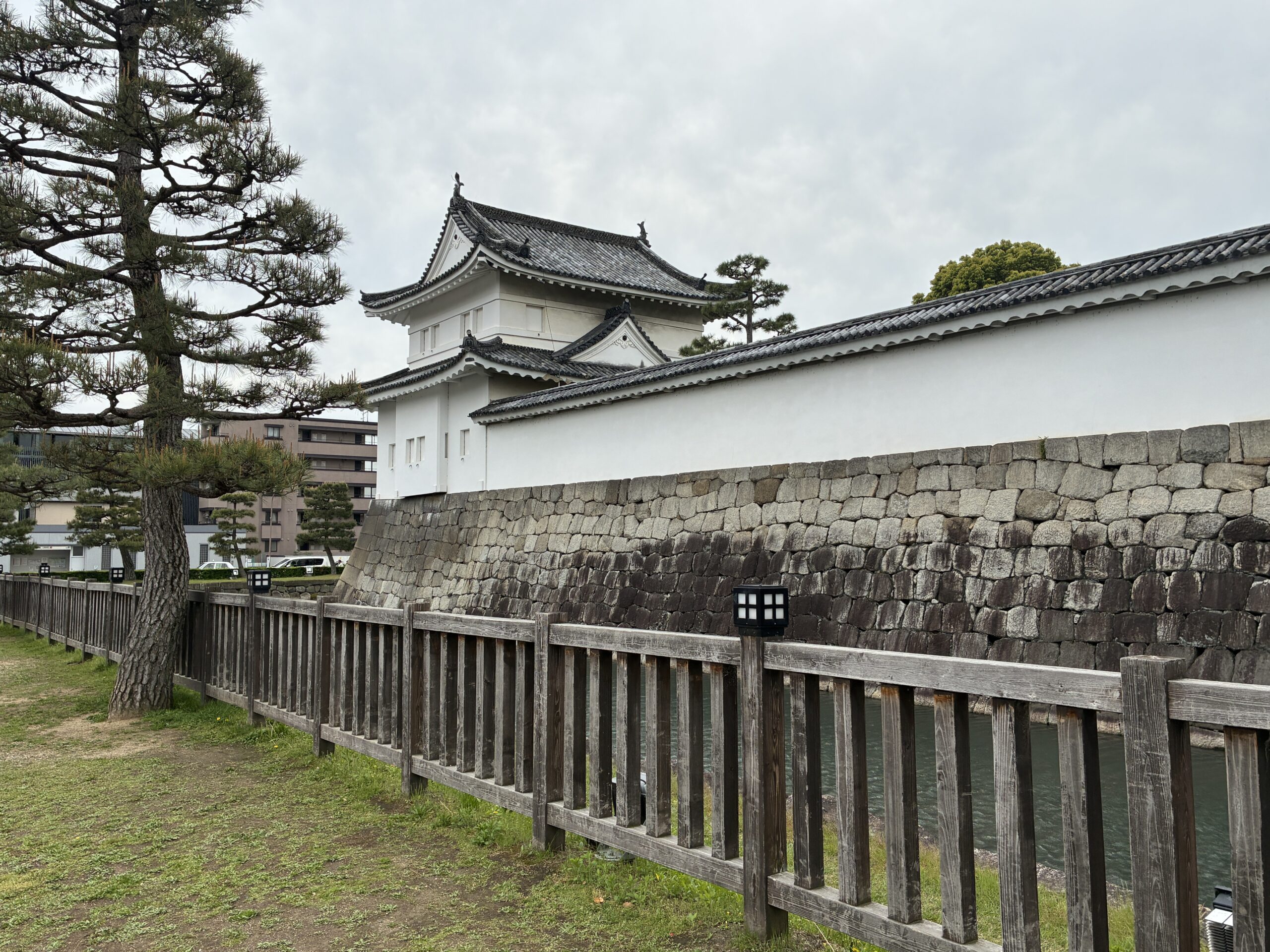
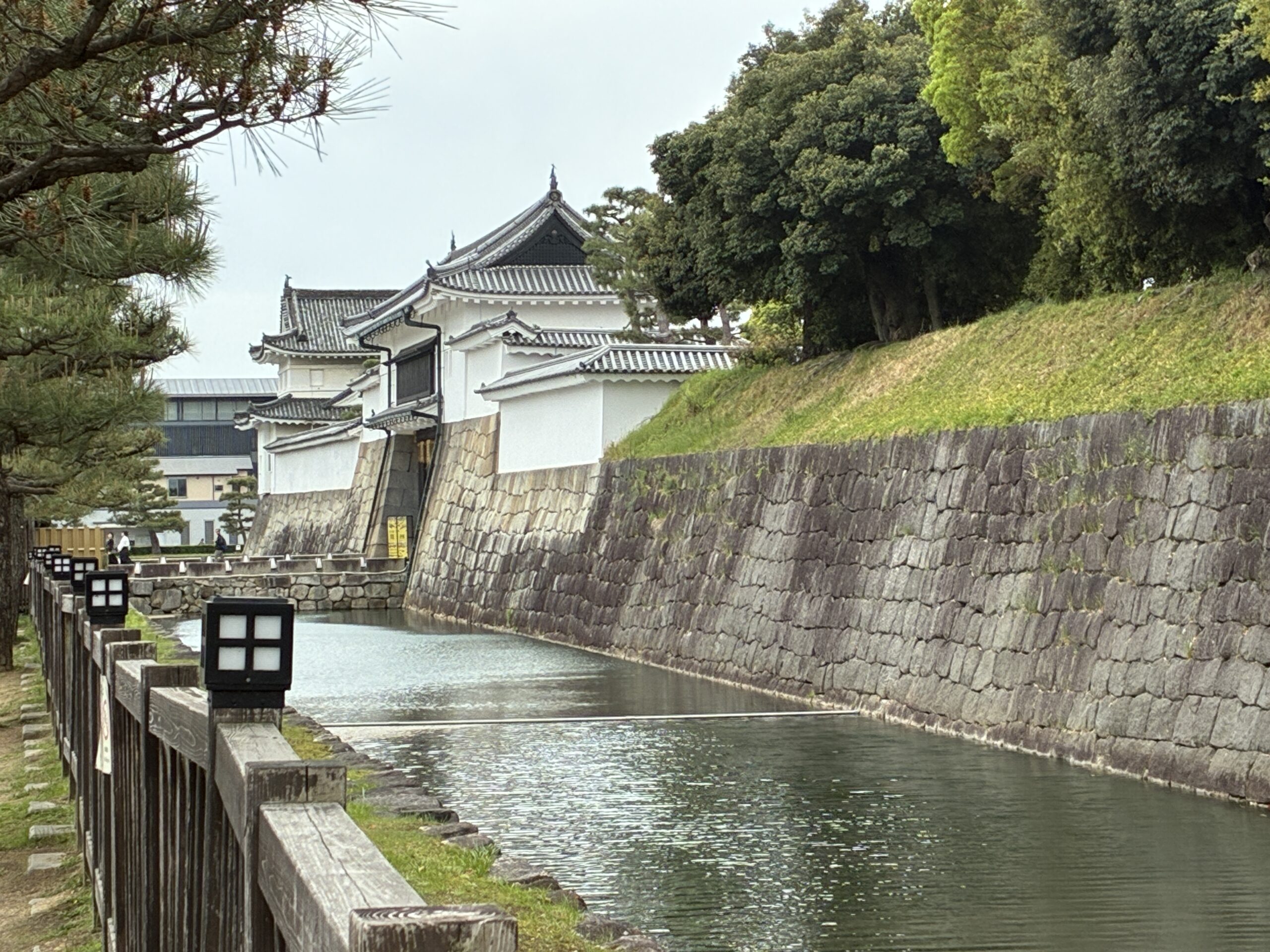
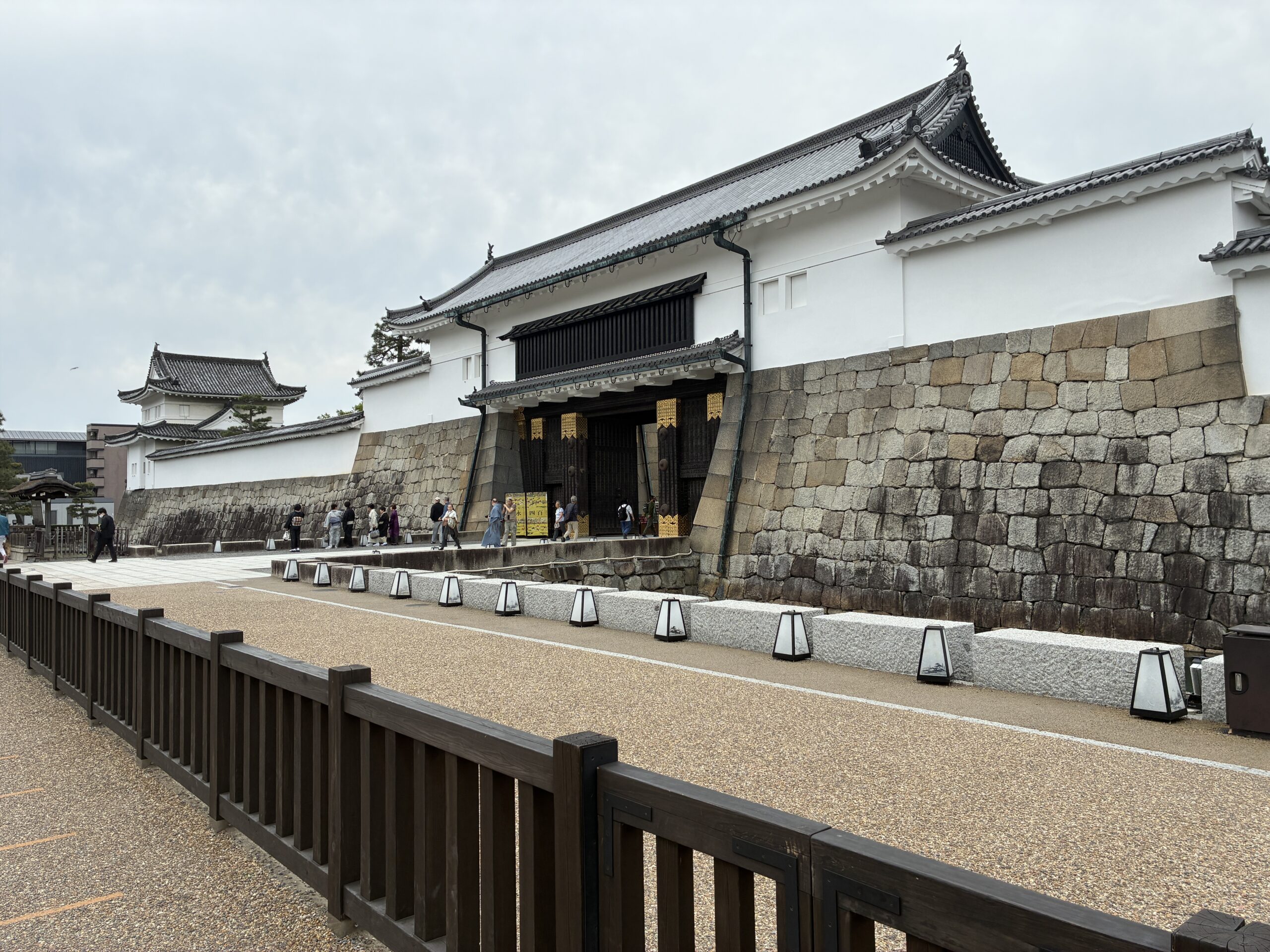
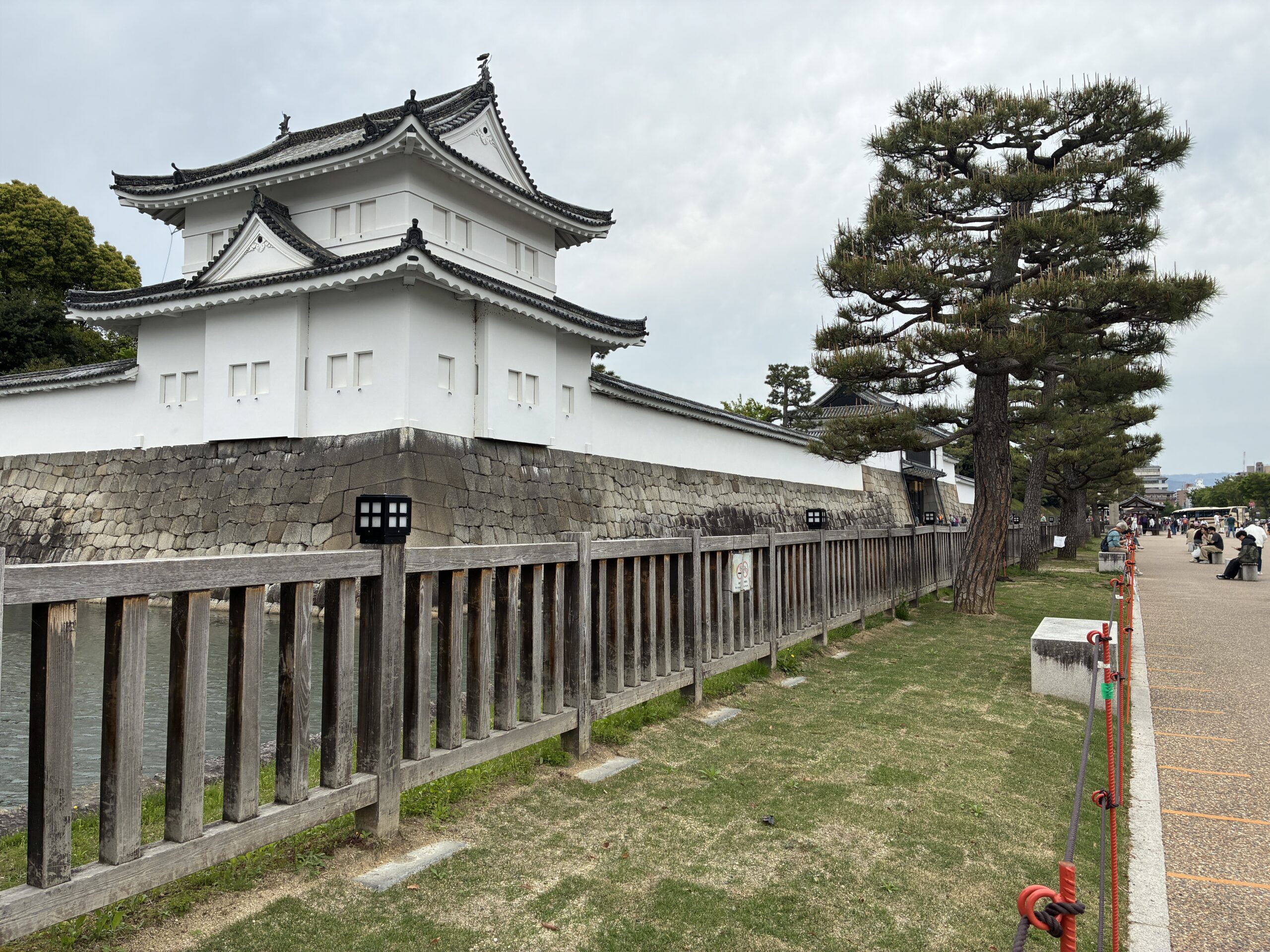
We were delighted to find that Nijō Castle, built in 1603 as the residence of the Tokugawa Shoguns, who were the military rulers of the country, was just minutes away from our hotel, and an early stop on our walk. It’s quite an imposing structure, dominating the area, and although we didn’t go in we enjoyed our walk around the building, and saw how busy it is, with tourist buses and crowds lined up at the entrance.
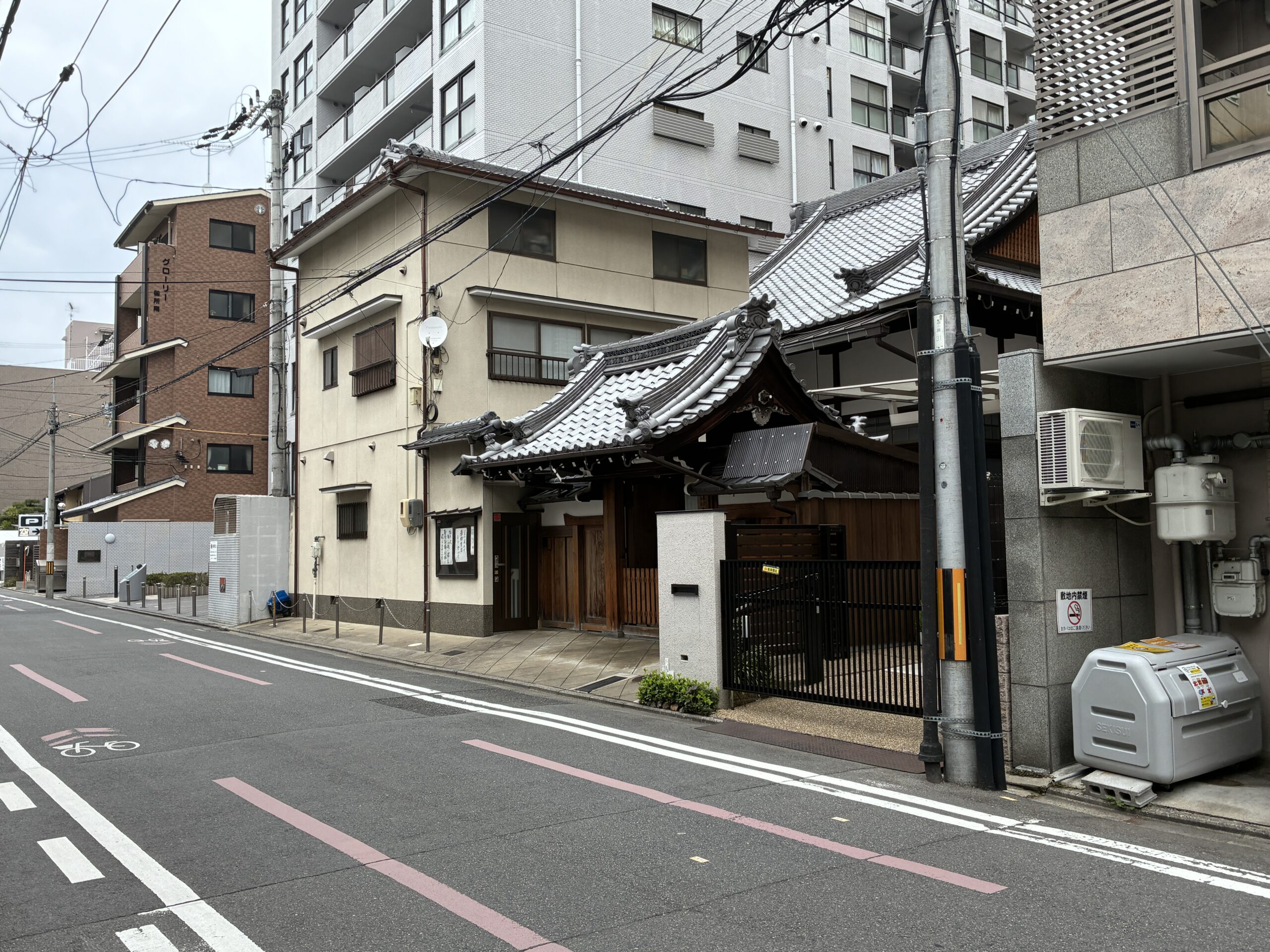
There are Buddhist temples and Shinto shrines throughout the city, and Kyoto is known as the the City of Ten Thousand Shrines. Although that’s a bit of an overstatement, there are over 1,600 temples and 400 shrines throughout the city, which are regular features on many main and side streets, and even by or in covered shopping arcades.
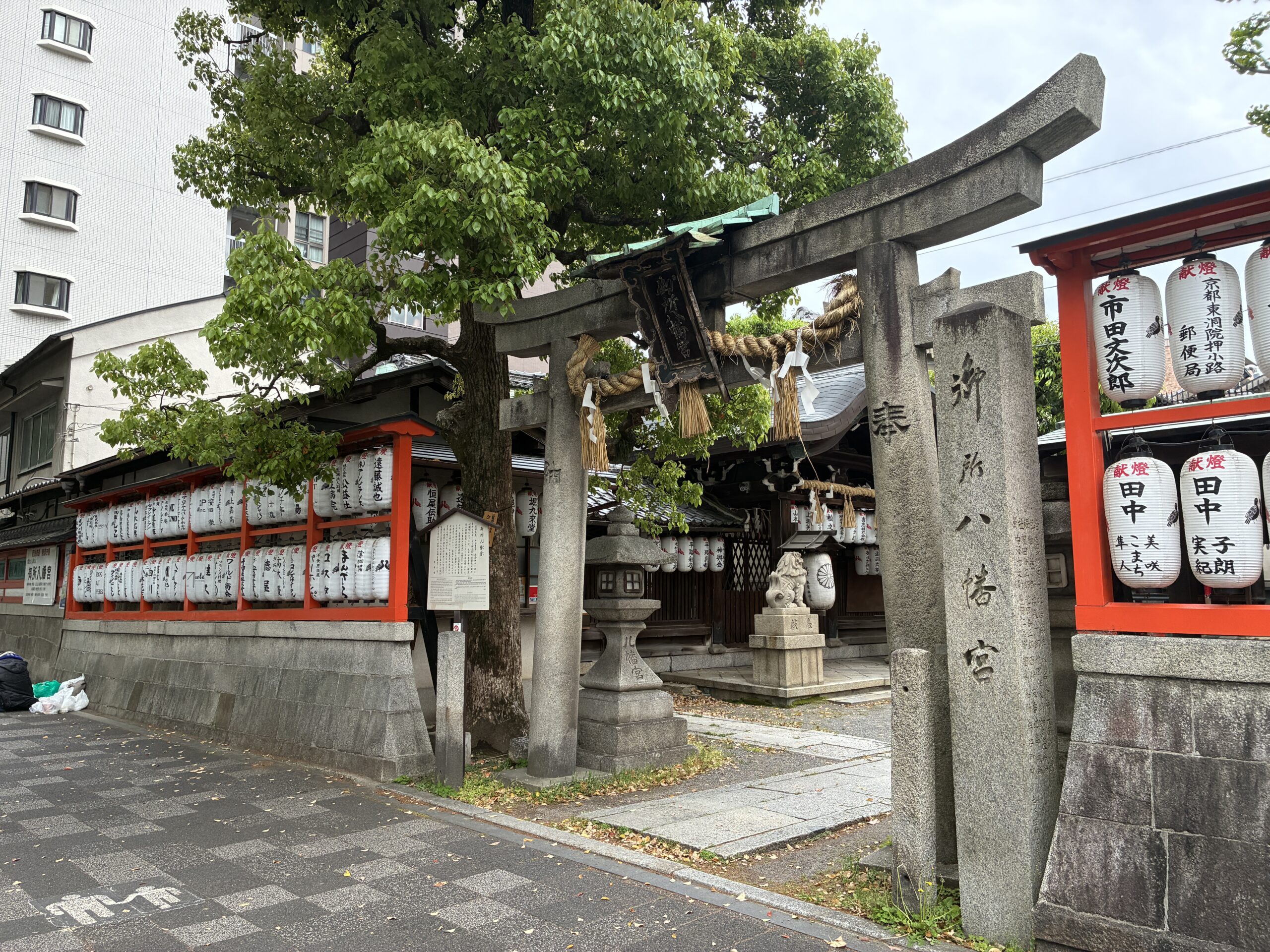
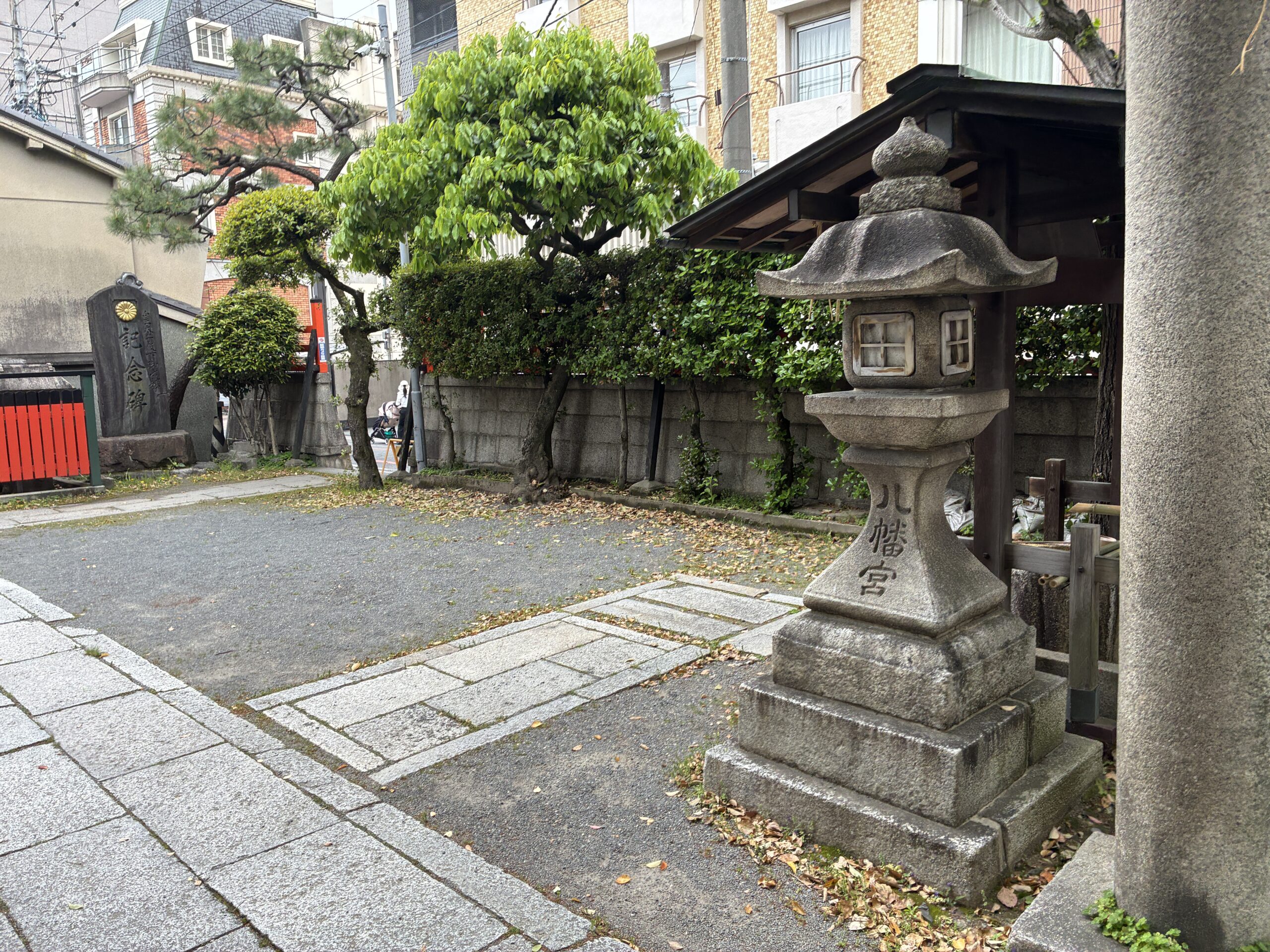
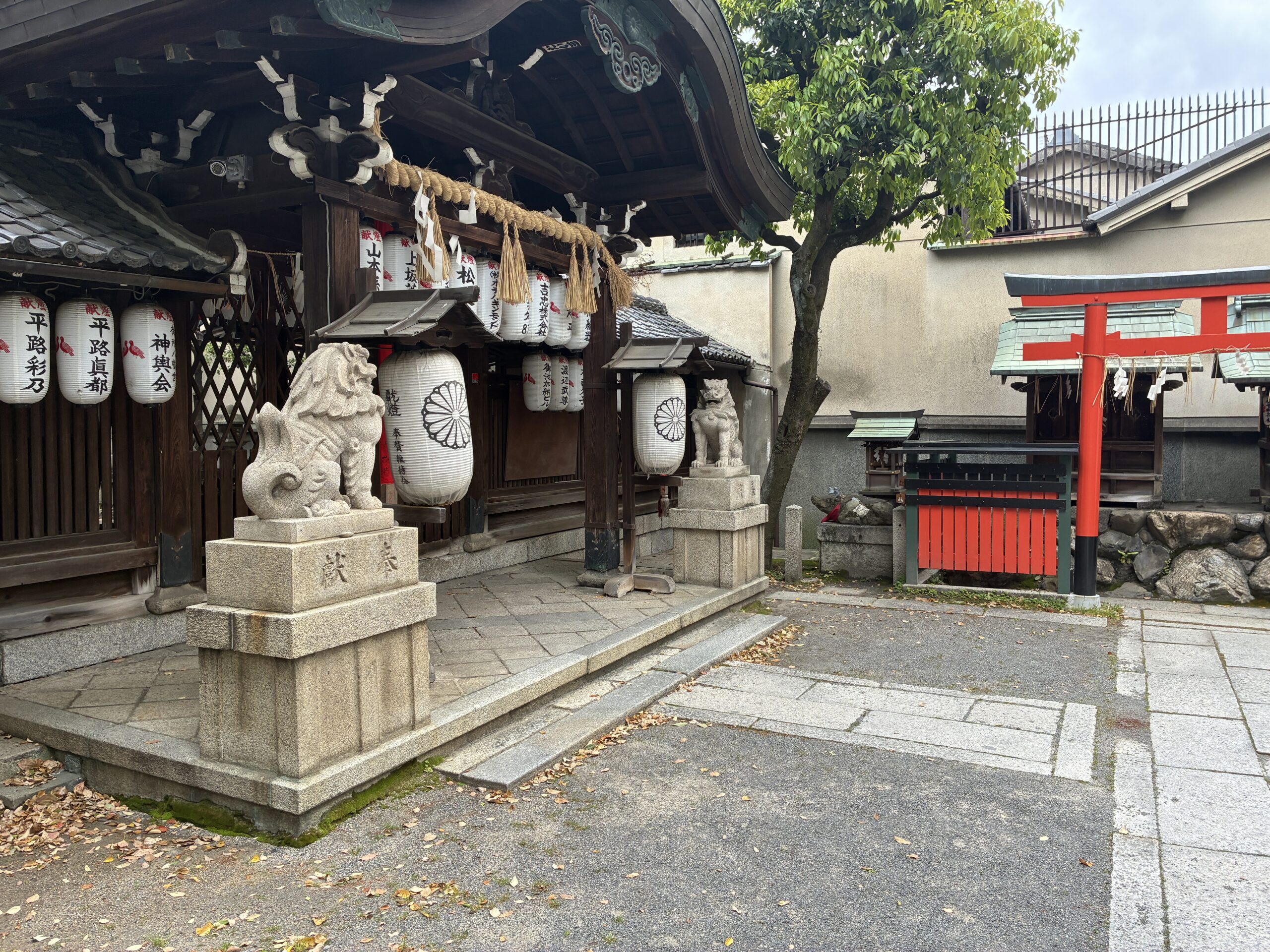
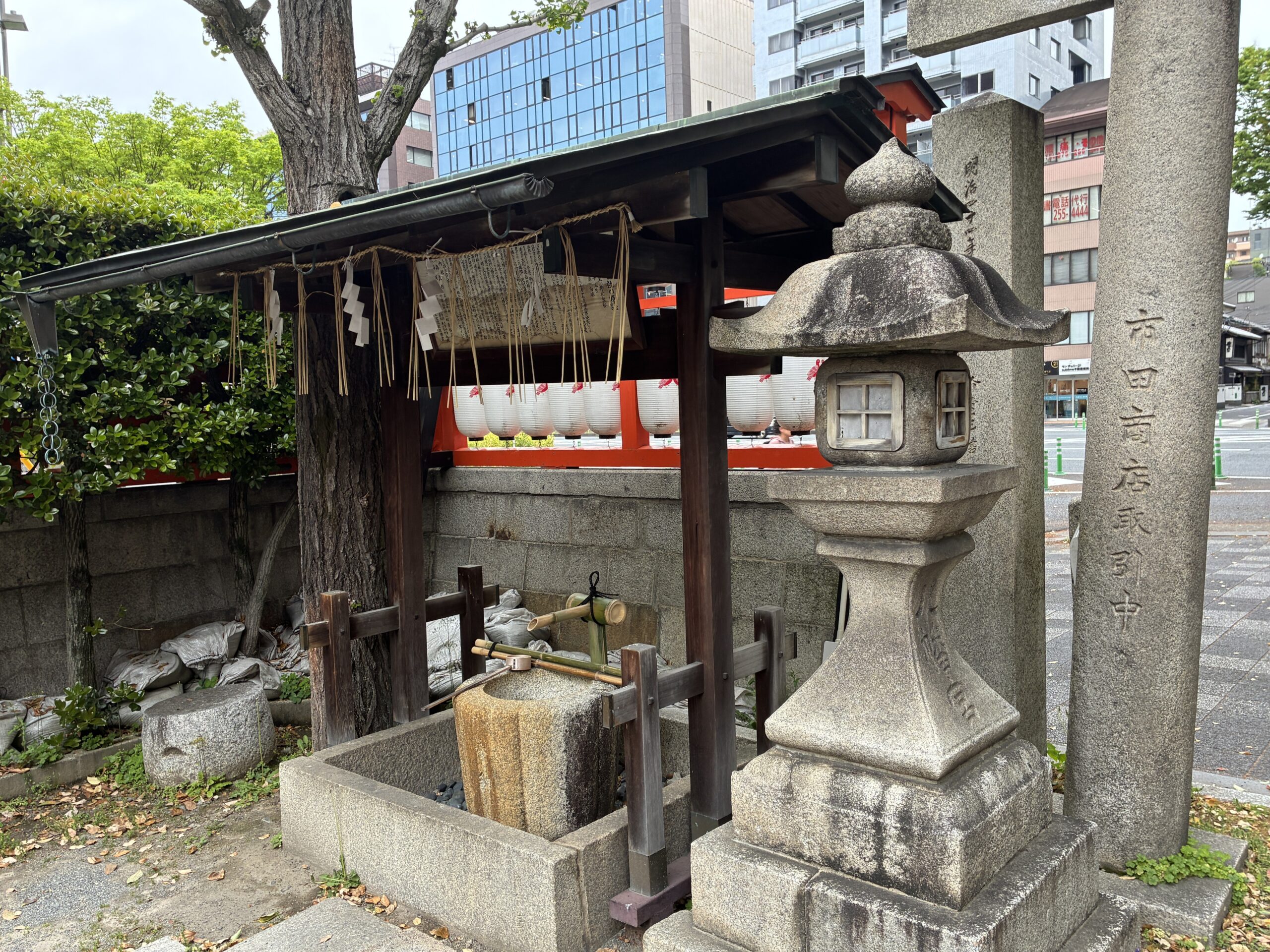
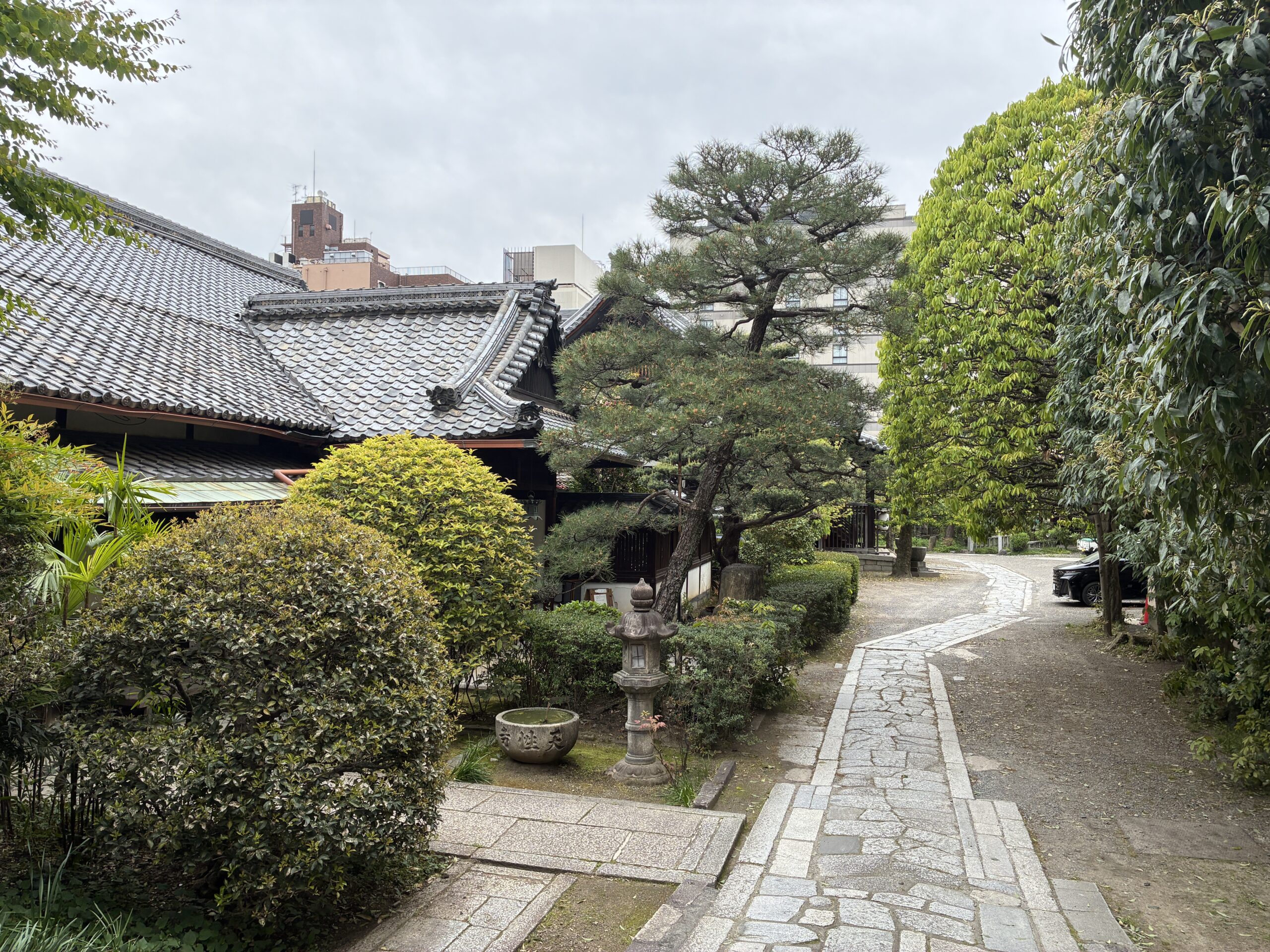
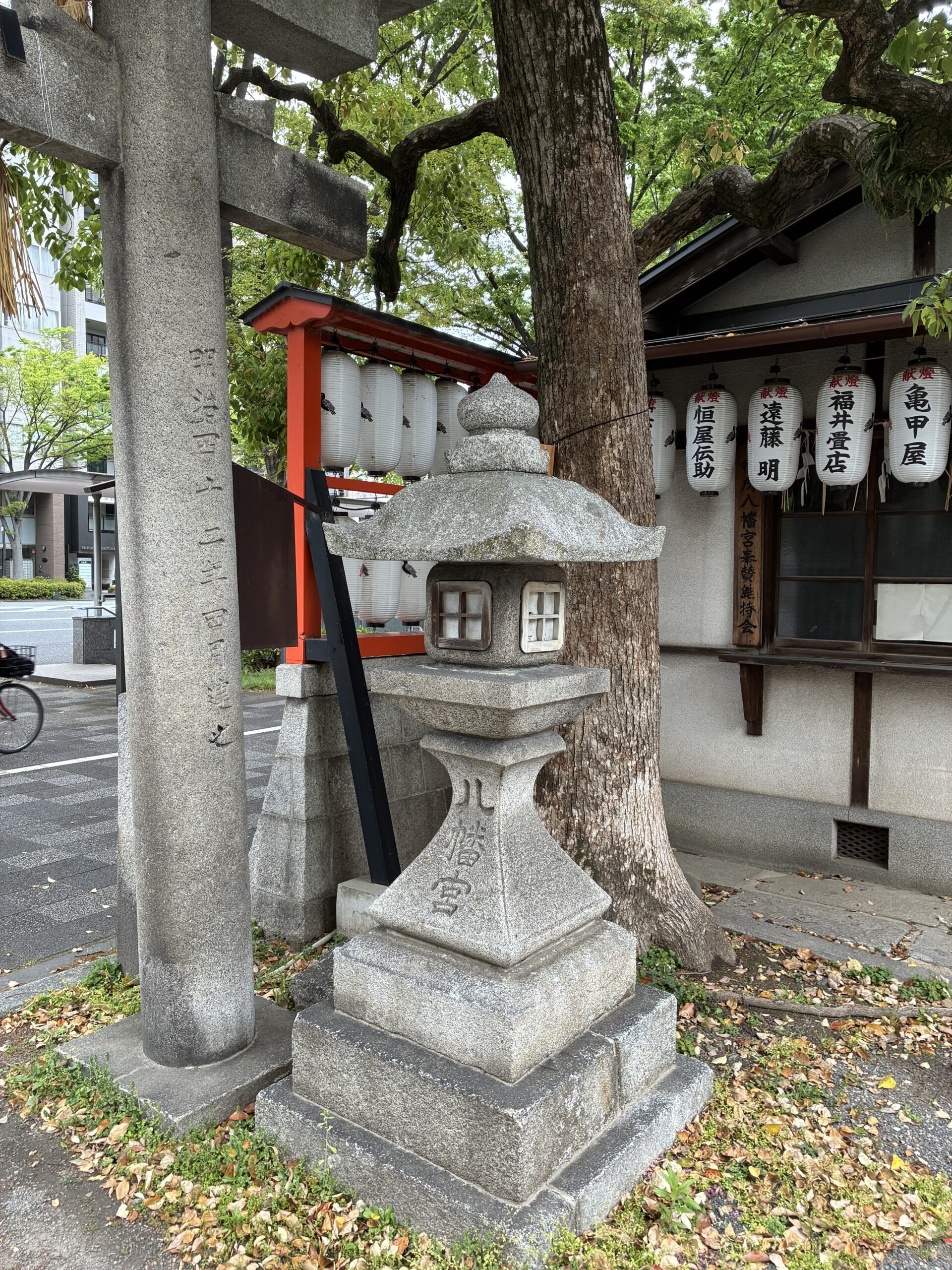
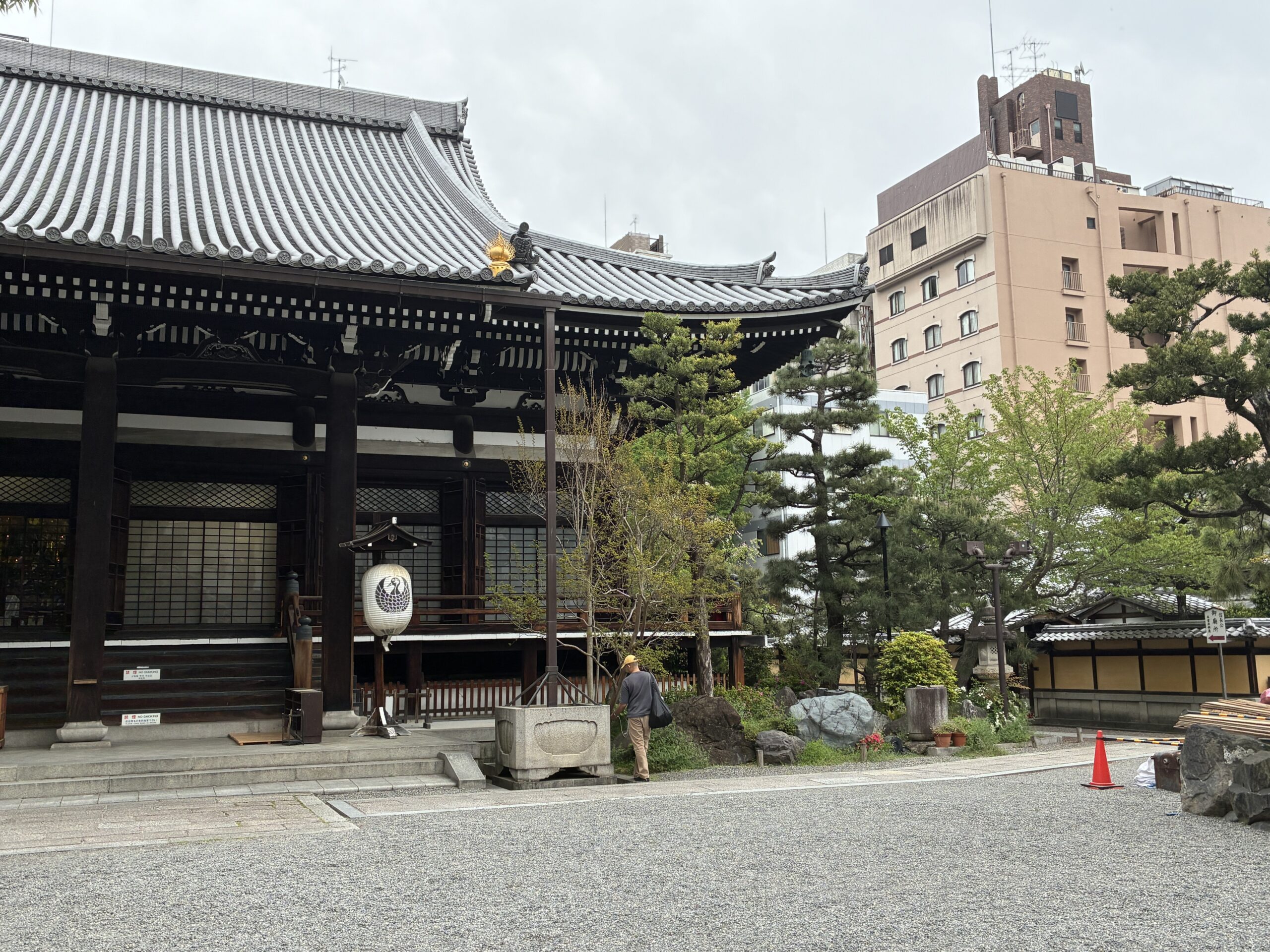
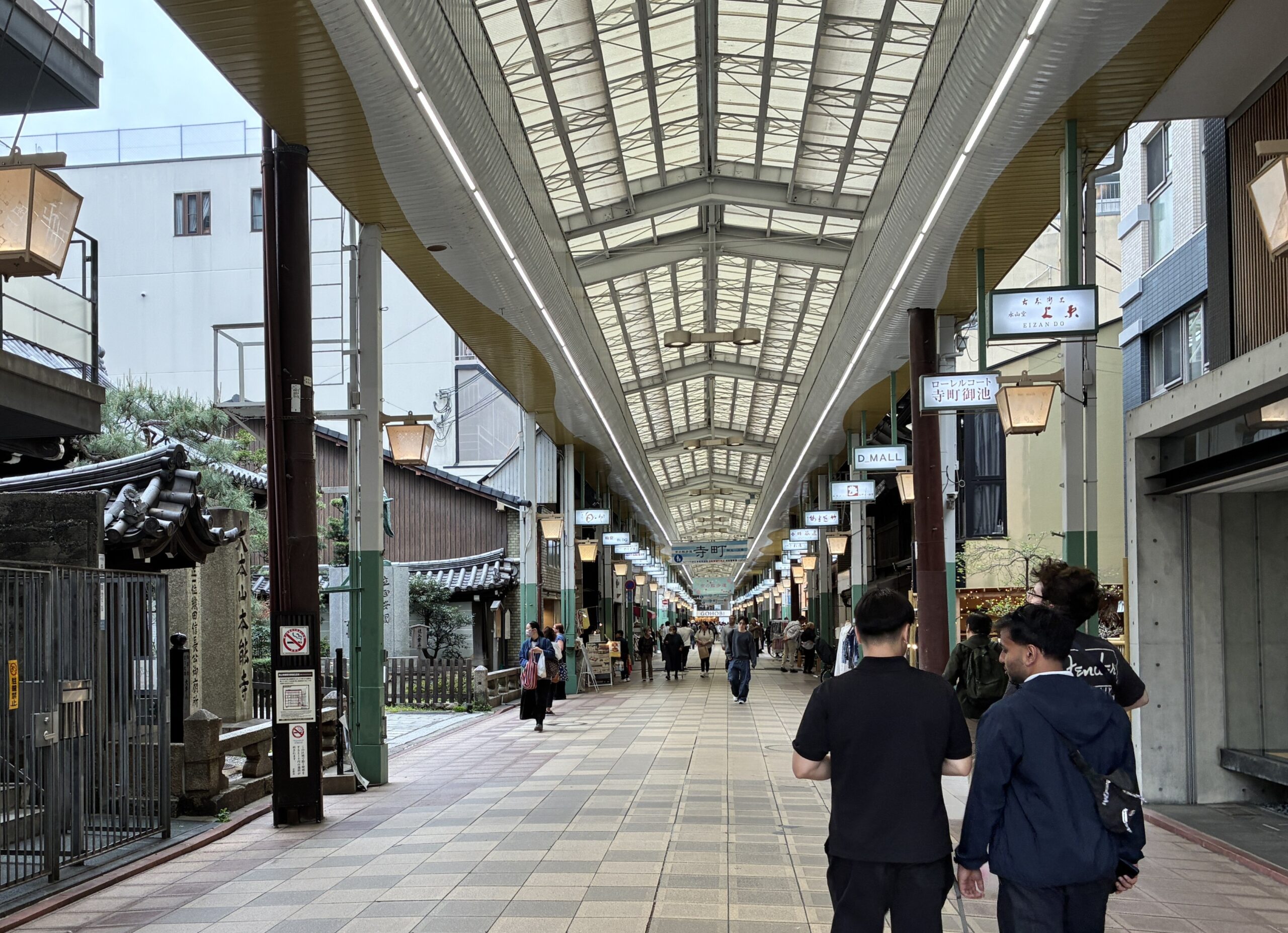
As we walked some more, we came upon the Teramachi Street covered shopping arcade, which is very similar to those we found in Asakusa in Tokyo. These are covered long pedestrian shopping areas known as shōtengai, lined with shops and restaurants of every kind , and this one seemed particularly large. These are vibrant and lively spaces, packed with shoppers and restuarant goers.
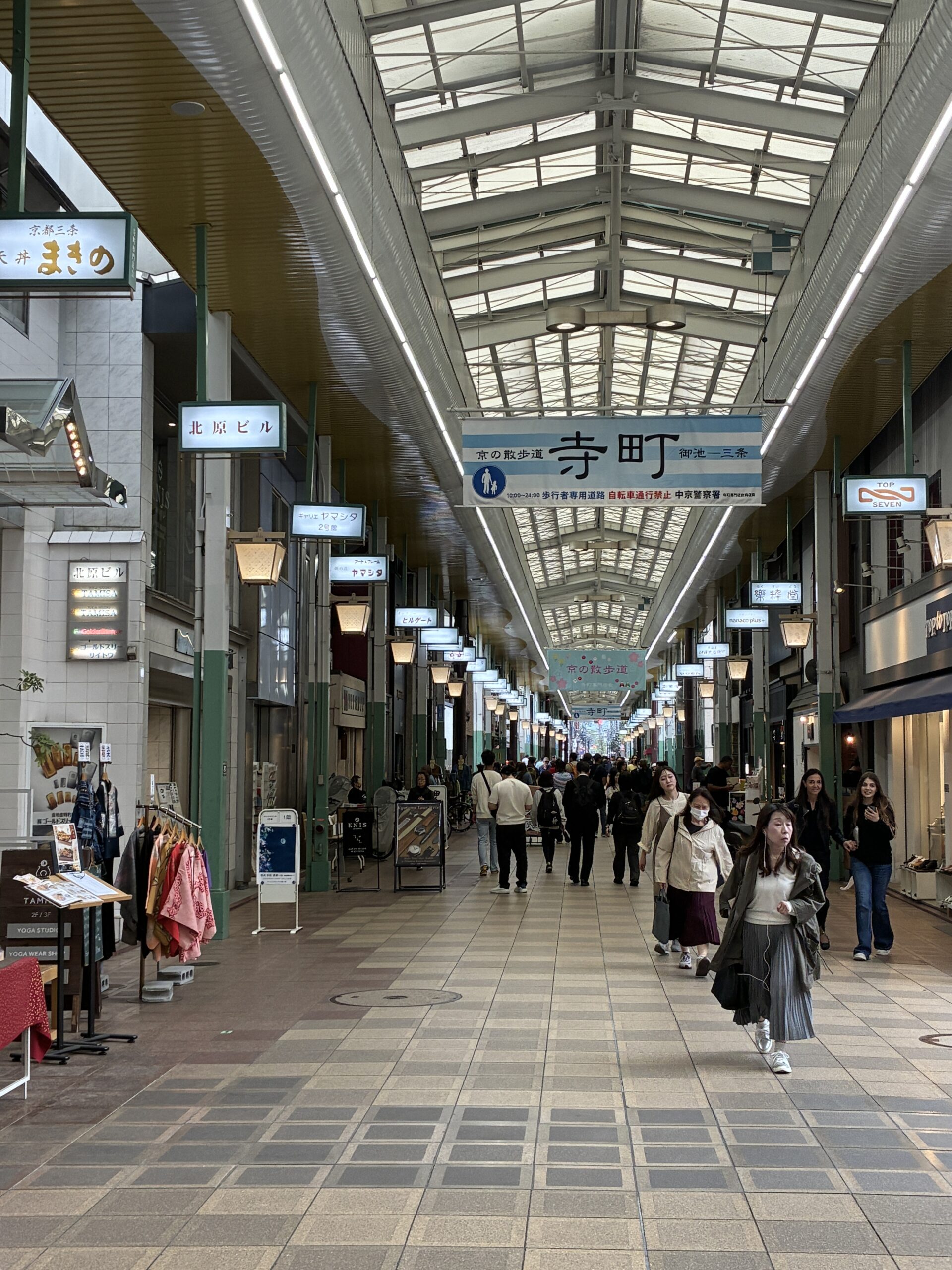
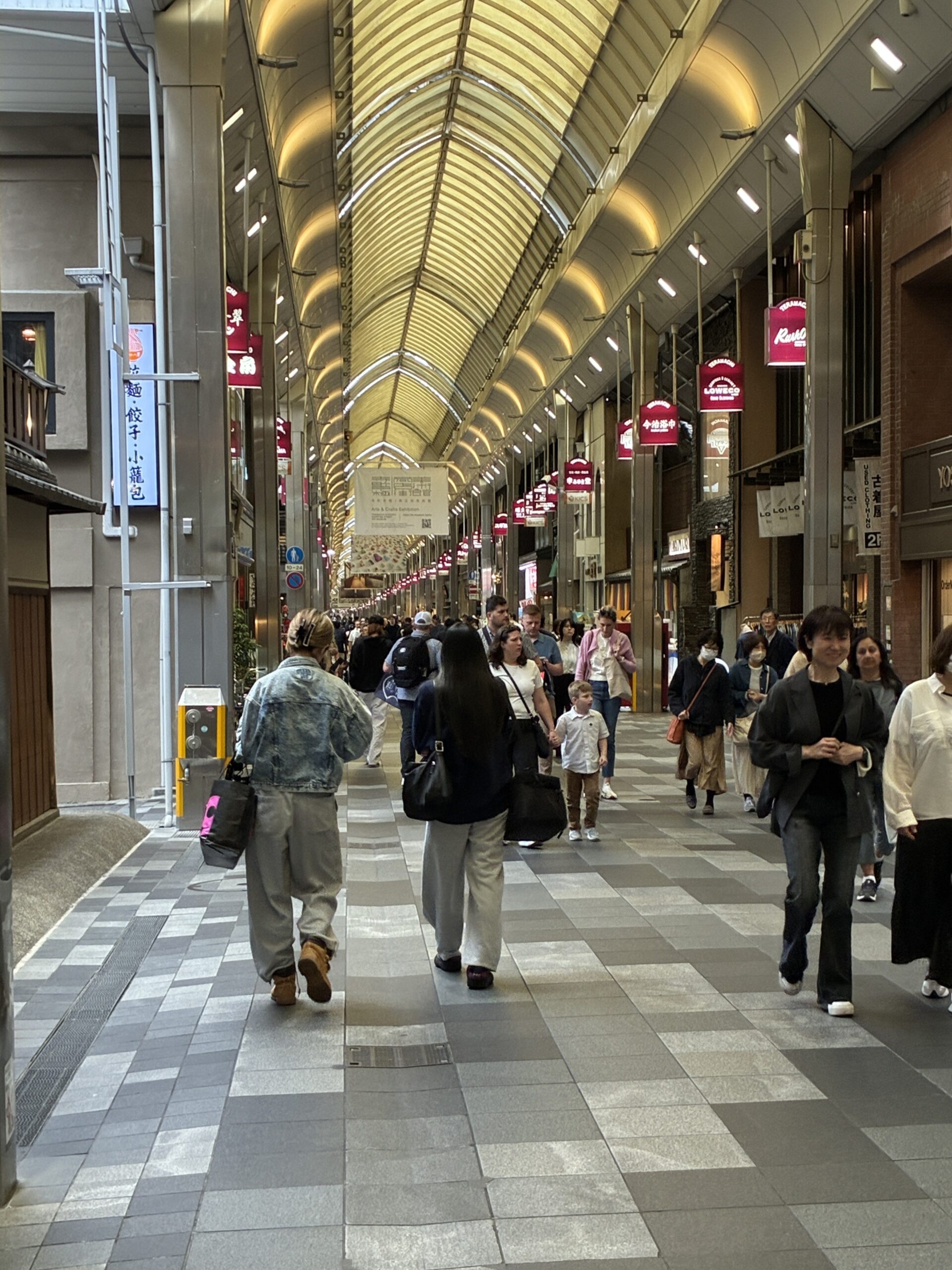
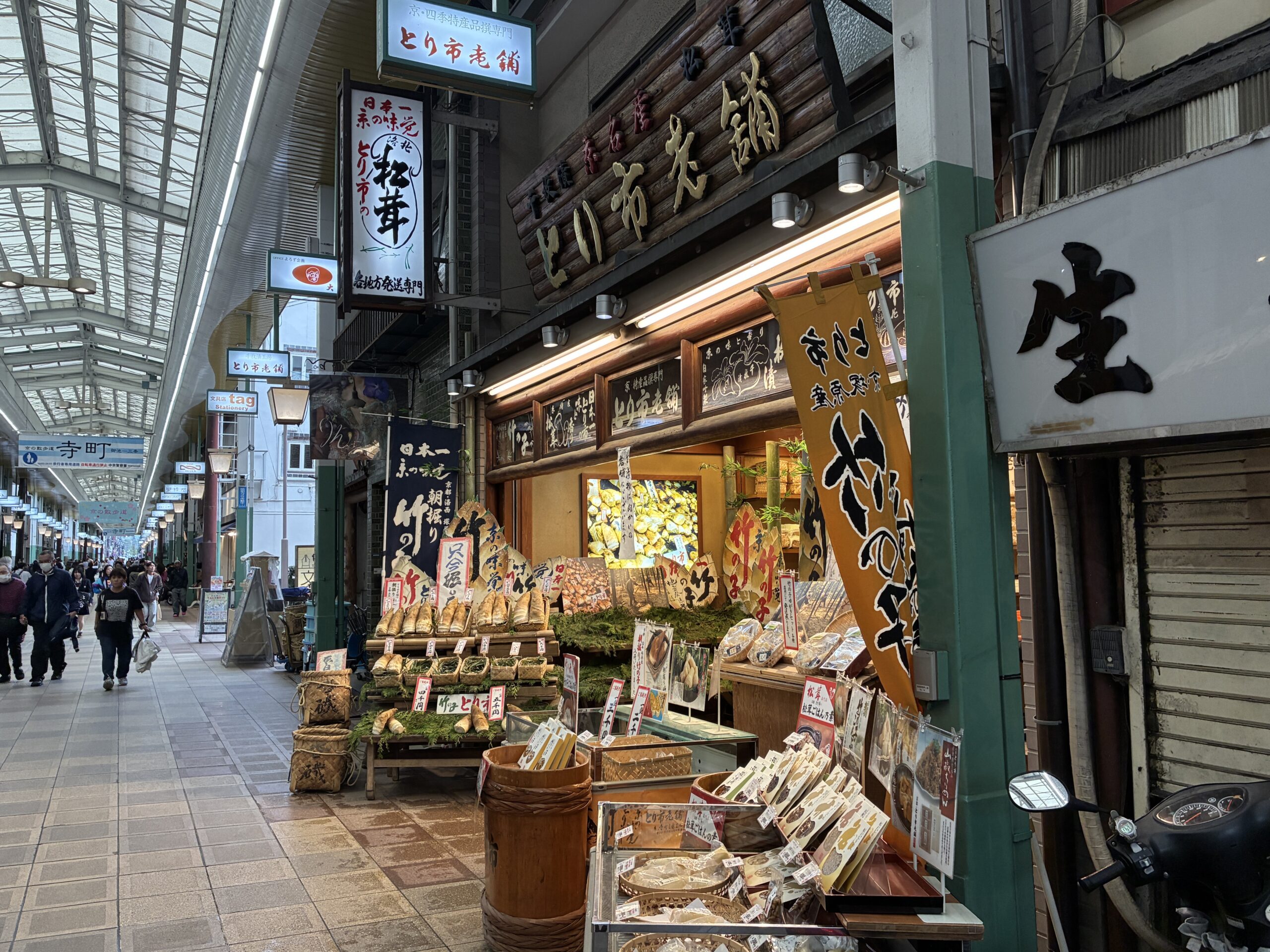
And taking of shrines being everywhere in the city, there, adjacent to the shopping arcade, and virtually in it, was the Honnō-ji Temple.
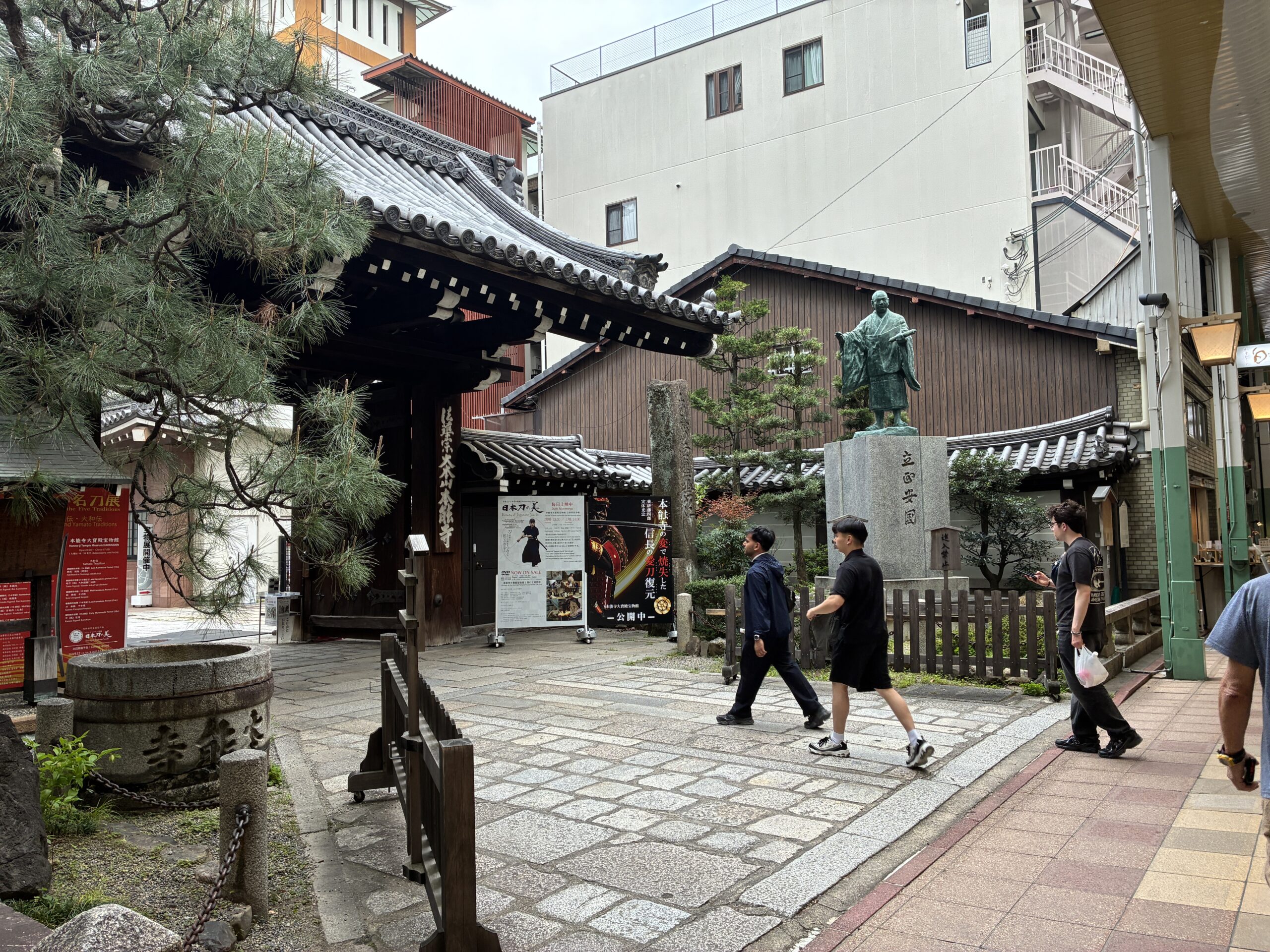
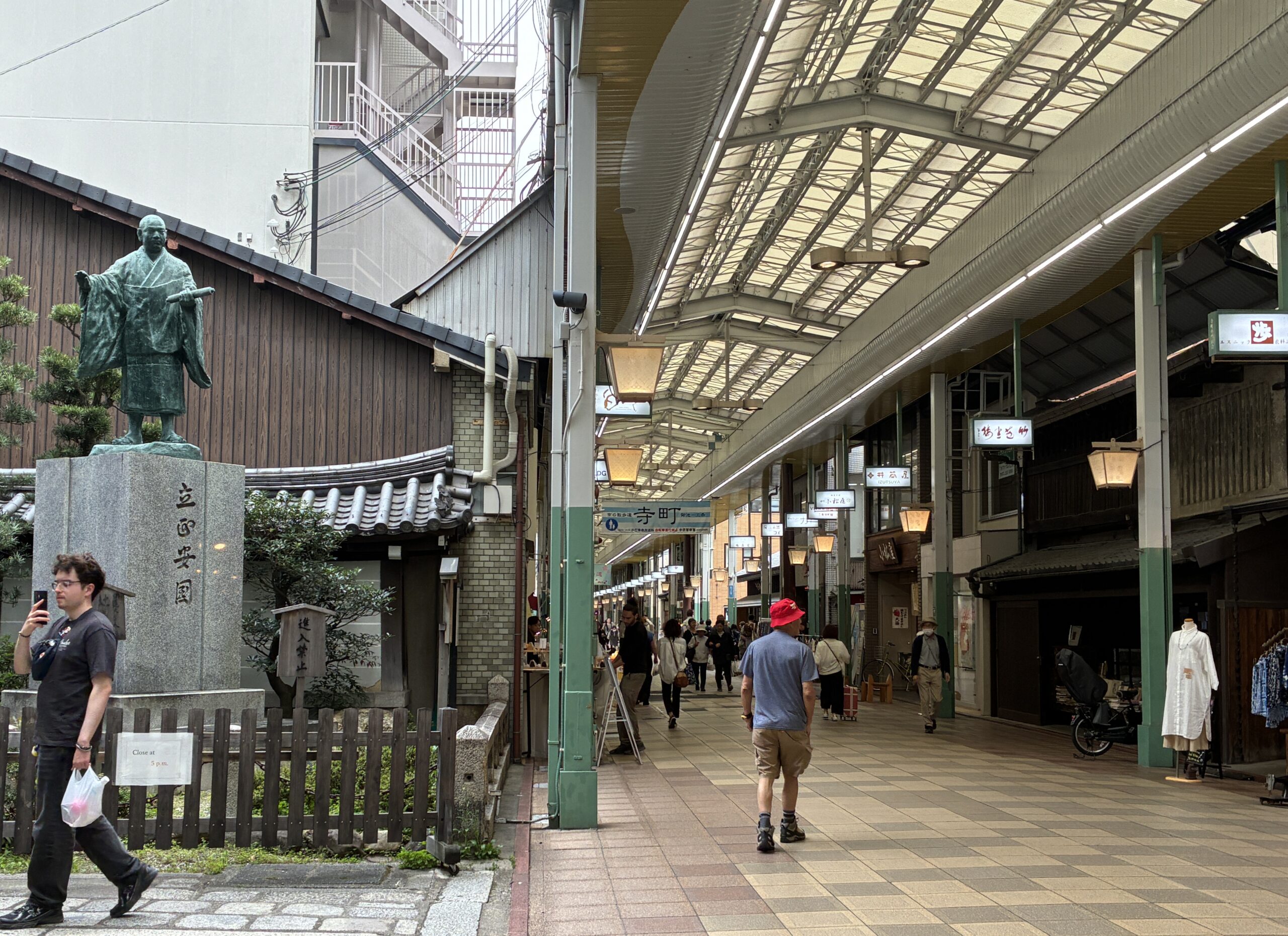
We’d been walking for quite a while and Laurence was starting to fade a little, so we headed back, stopping to get some dinner on the way. By the time we arrived back at the hotel, he was ready for sleep. I wrote my blog a little, and then headed back out for a short while to take a look at the local area by night, and walked down to and around Nijō Castle, where there were zillions of joggers of all ages running around the huge perimeter of the castle. I knew it would lovely at night, and it did.
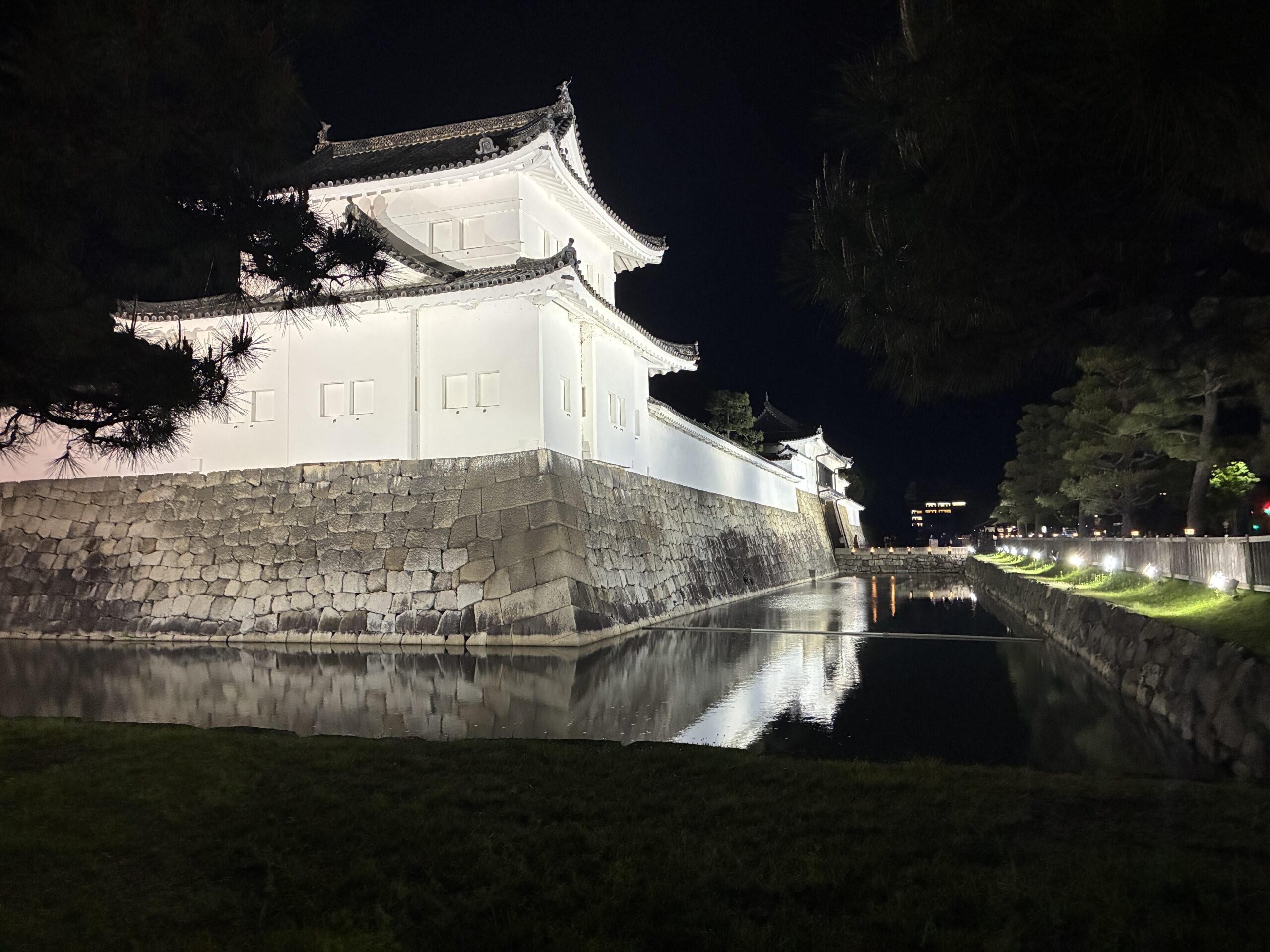
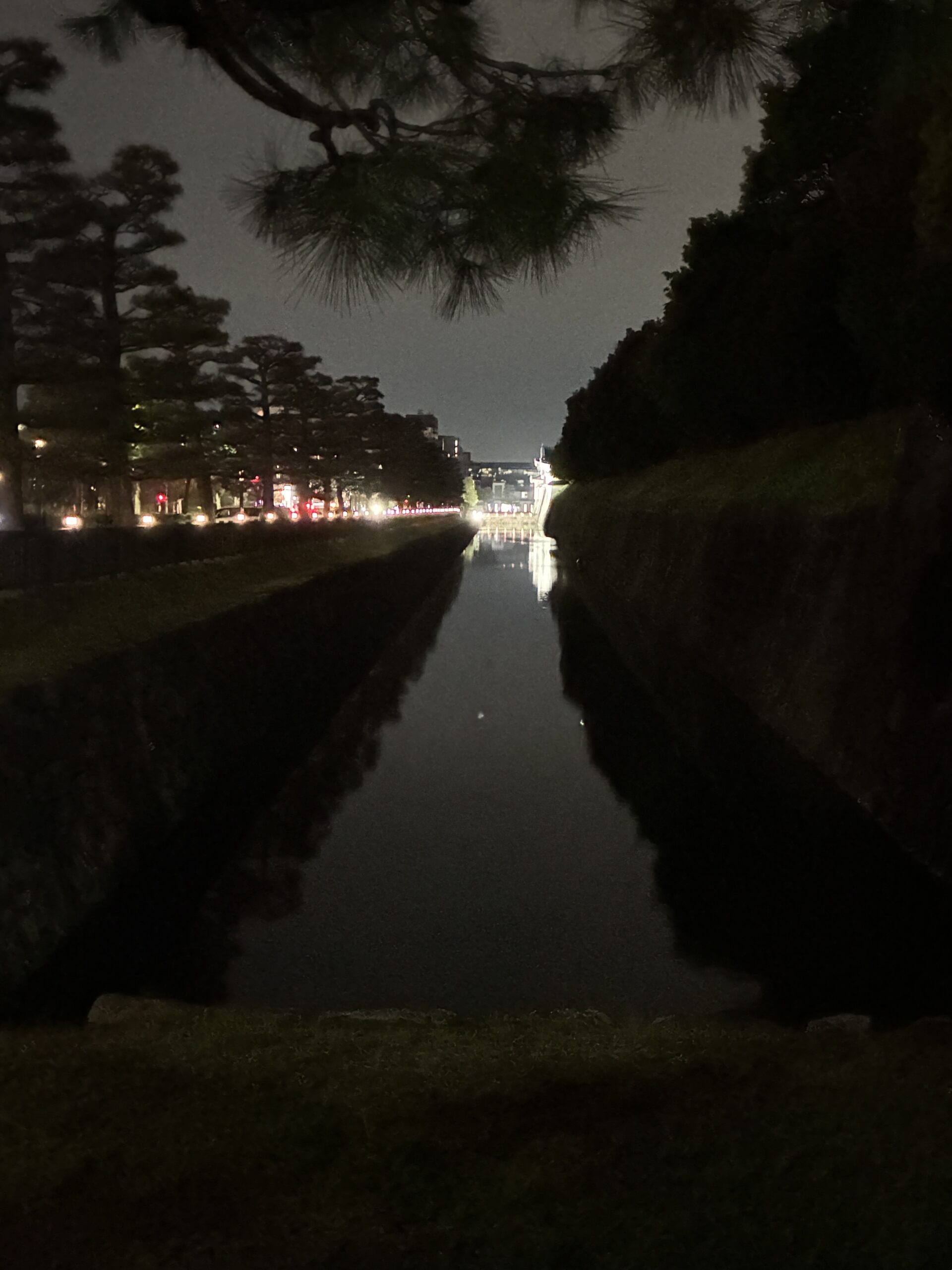
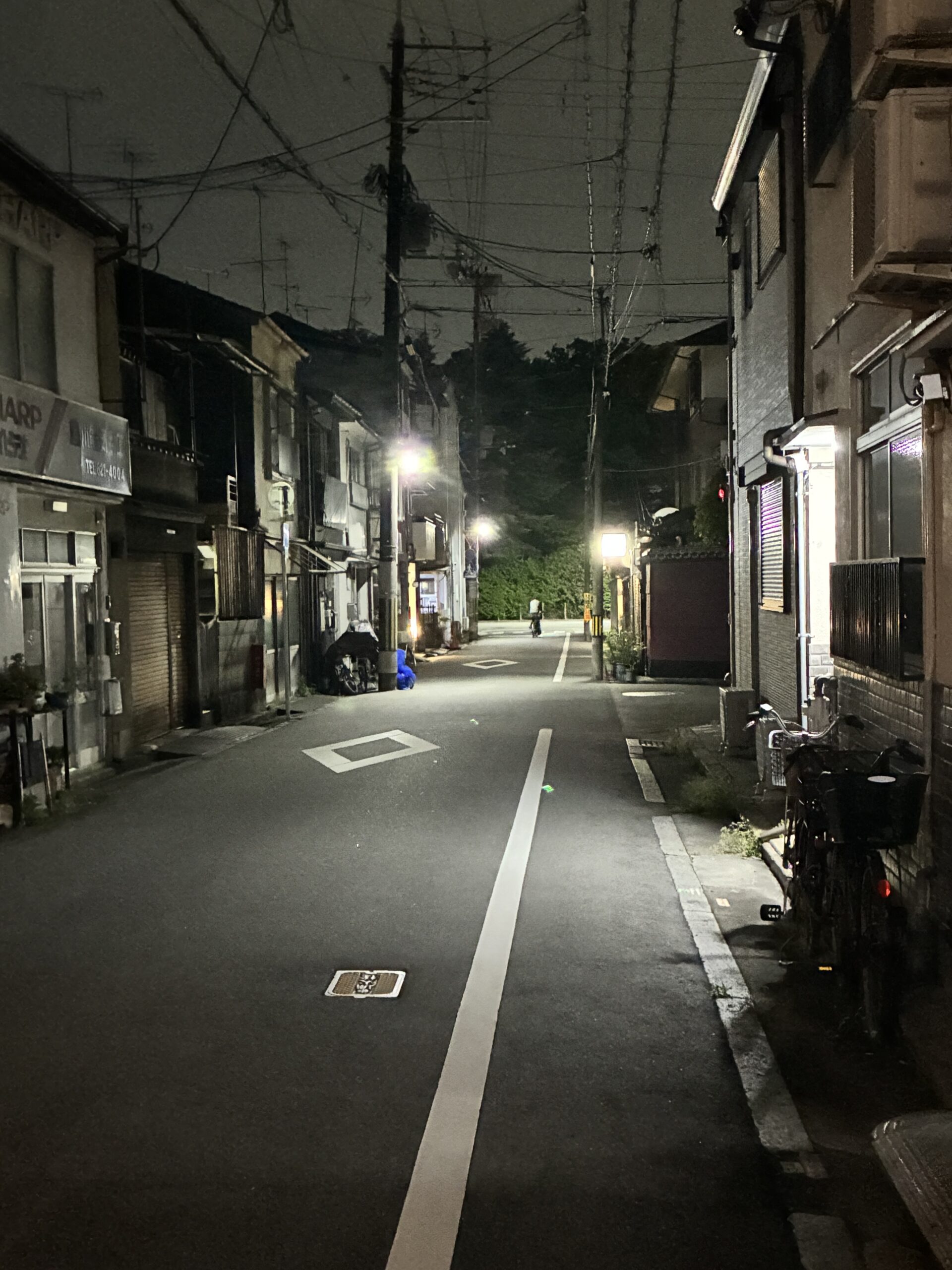
Pretty tired myself, after what had been a long day, traveling from Hakone to Odawara, followed by the bullet train to Kyoto, and then several hours of walking the city, I soon fell asleep. It felt good.