A day in Kyoto, and the Gion District.
Laurence may have overdone it yesterday, because he started out today somewhat fatigued, but was still game to head out on a guided street tour of the Gion district we had booked. The walk was excellent and lasted about two hours, but by the middle of the tour Laurence felt and looked really worn and by the end was really beat!
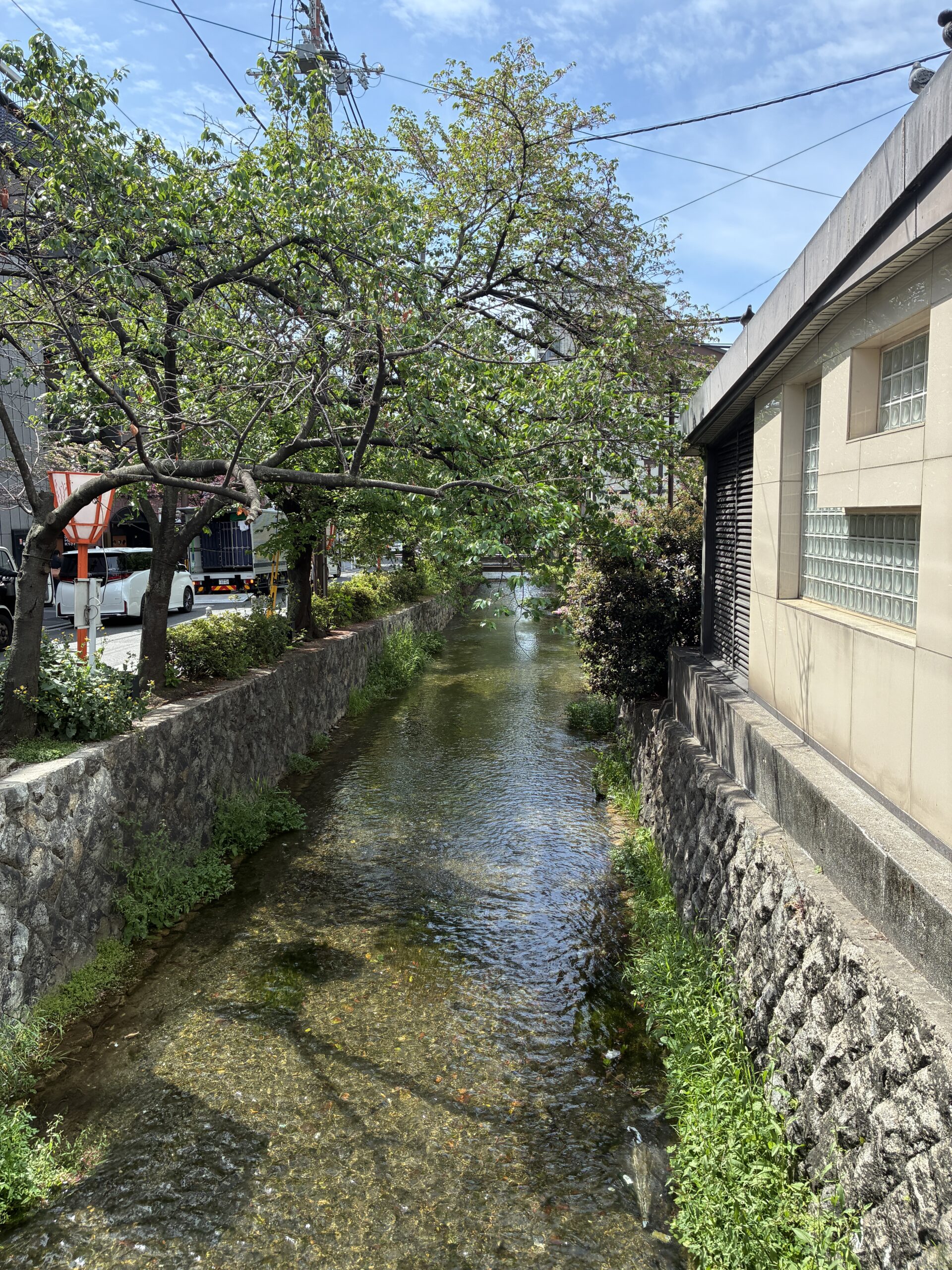
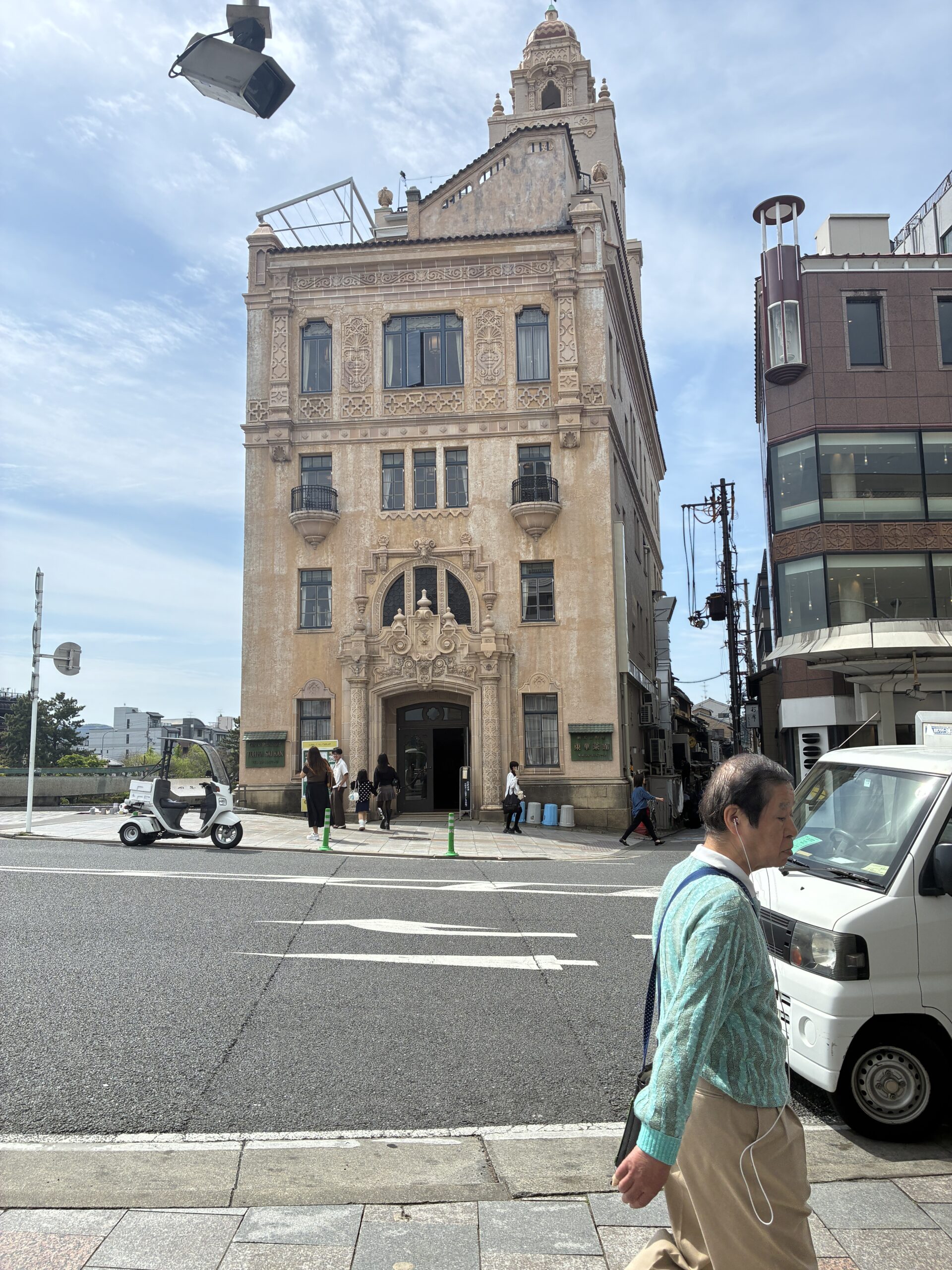
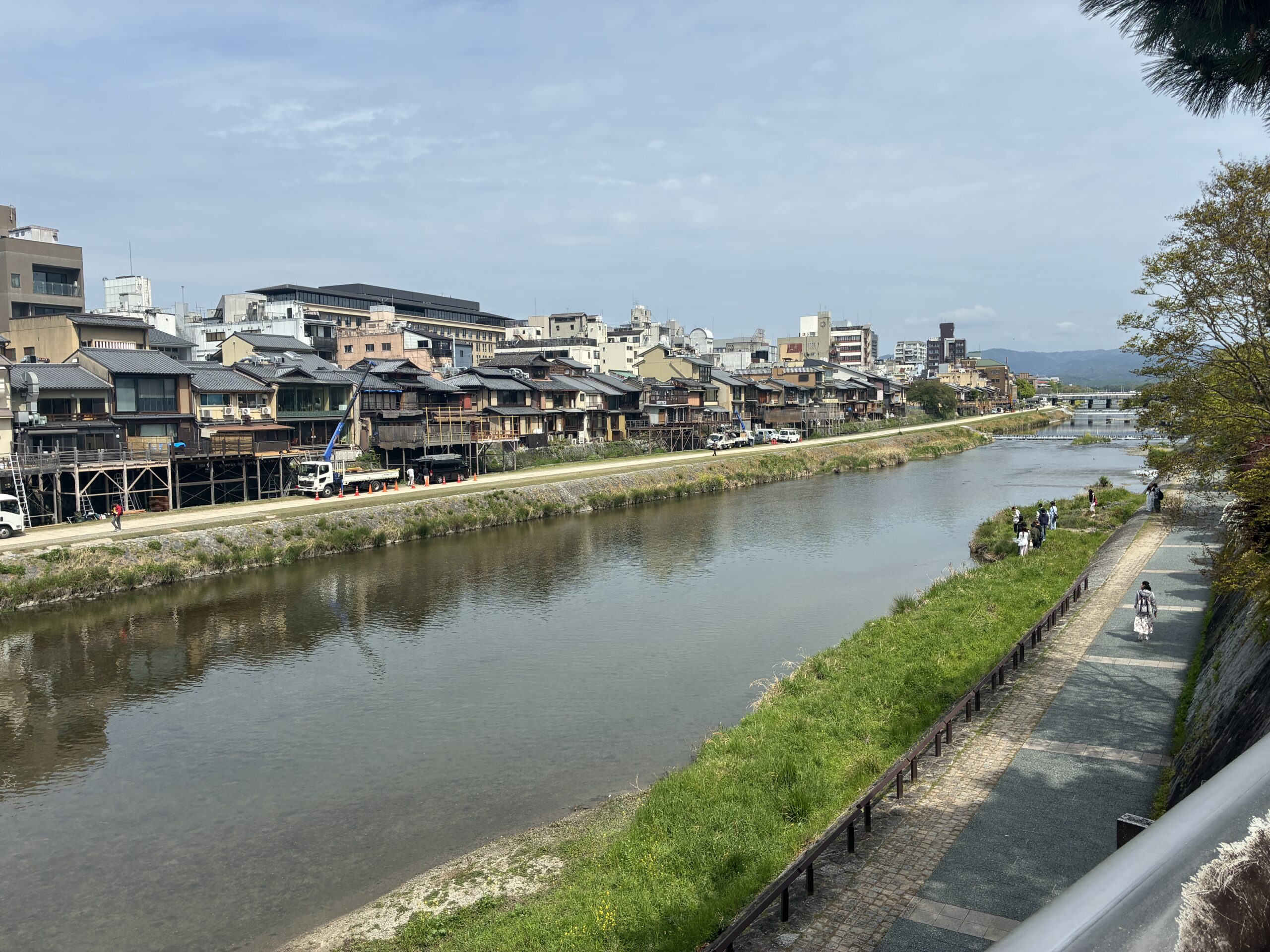
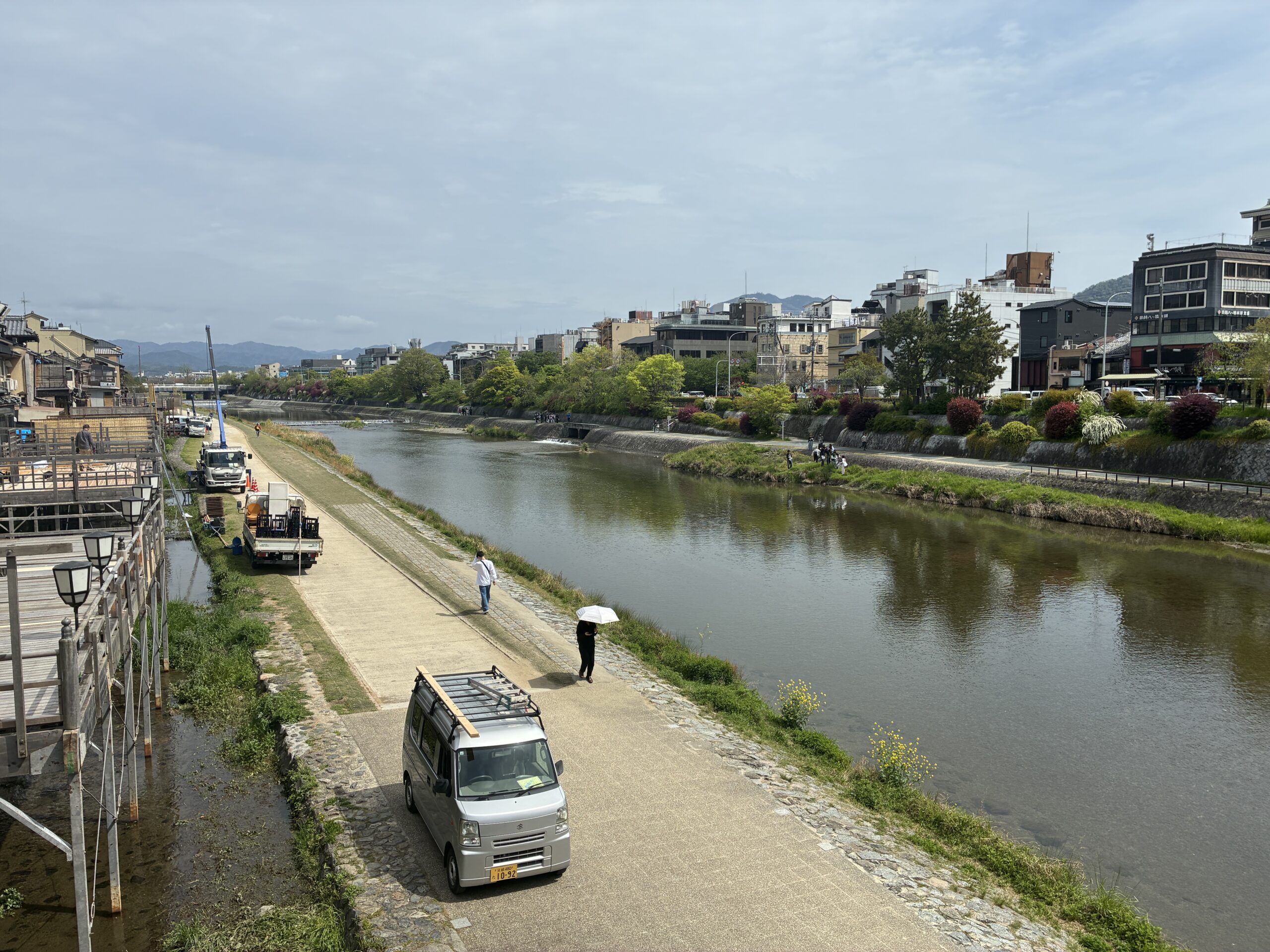
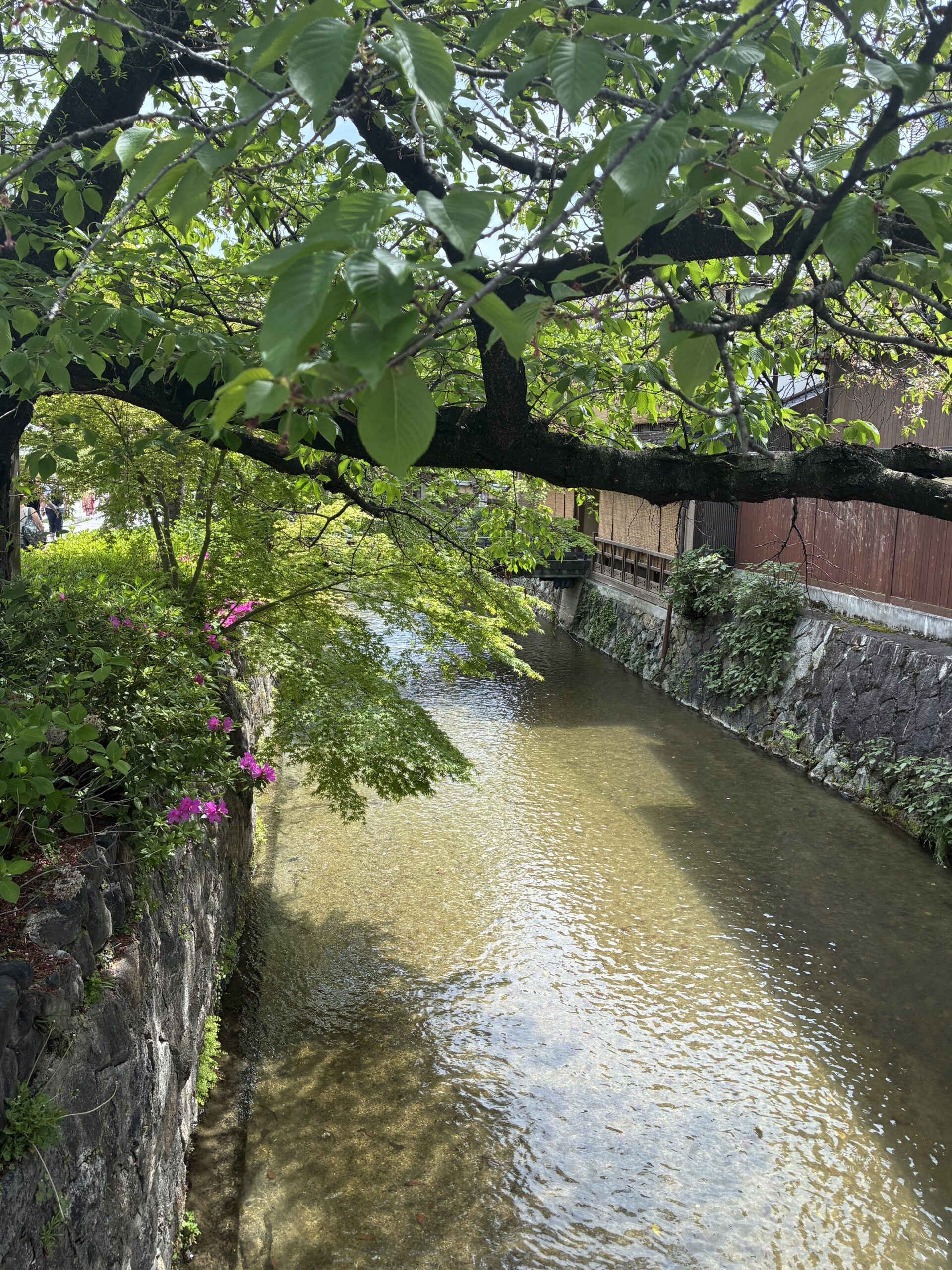
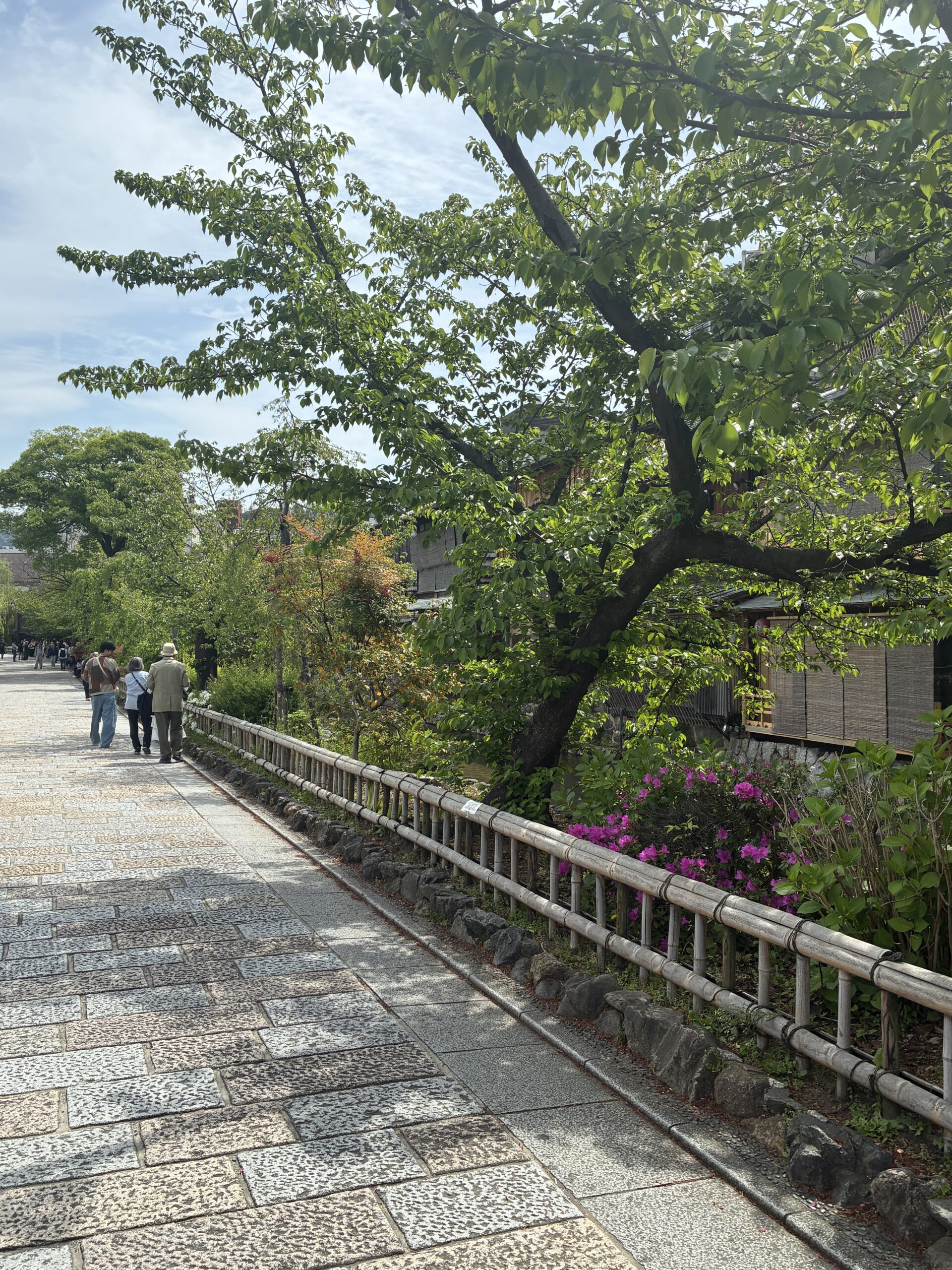
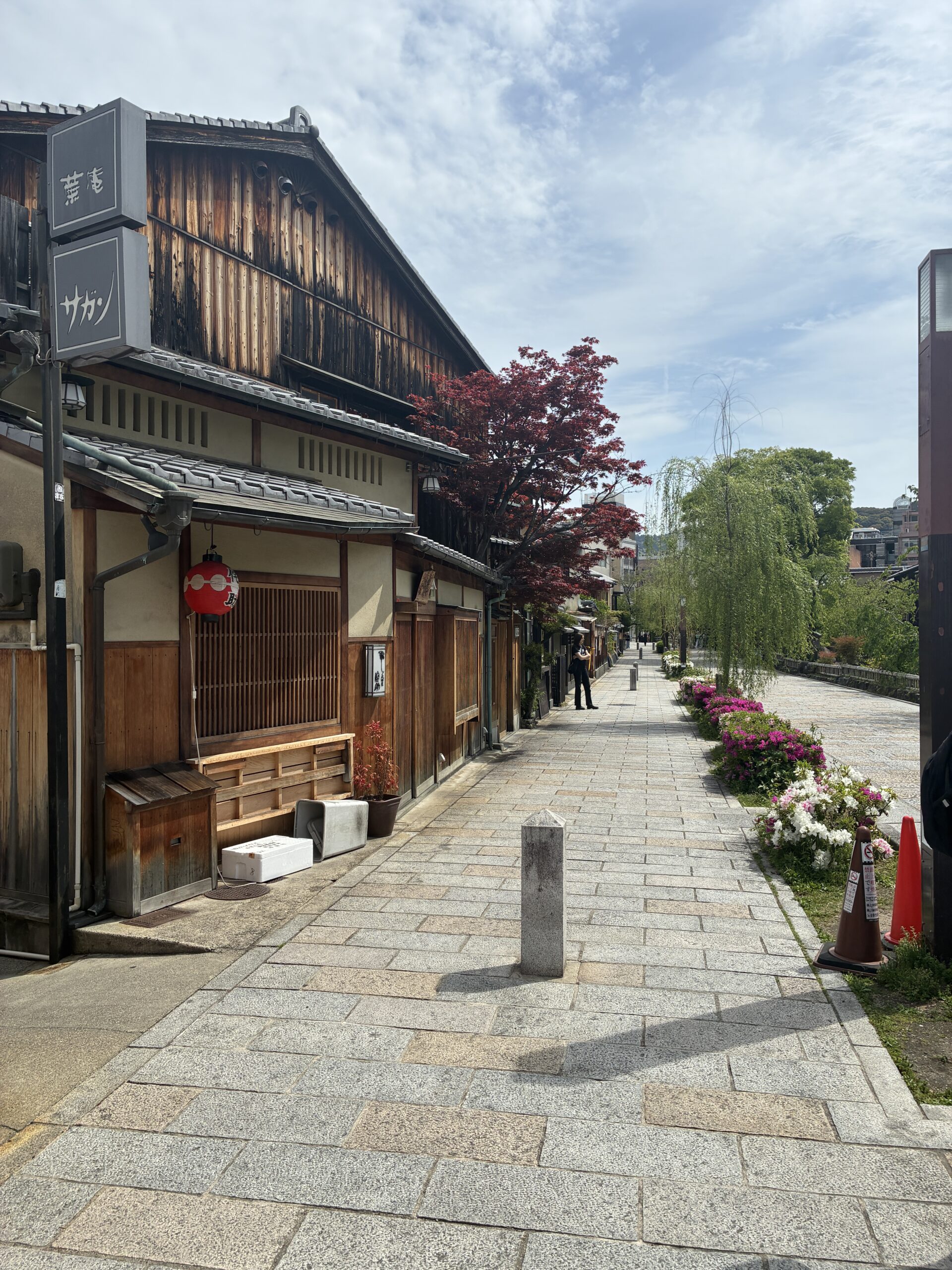
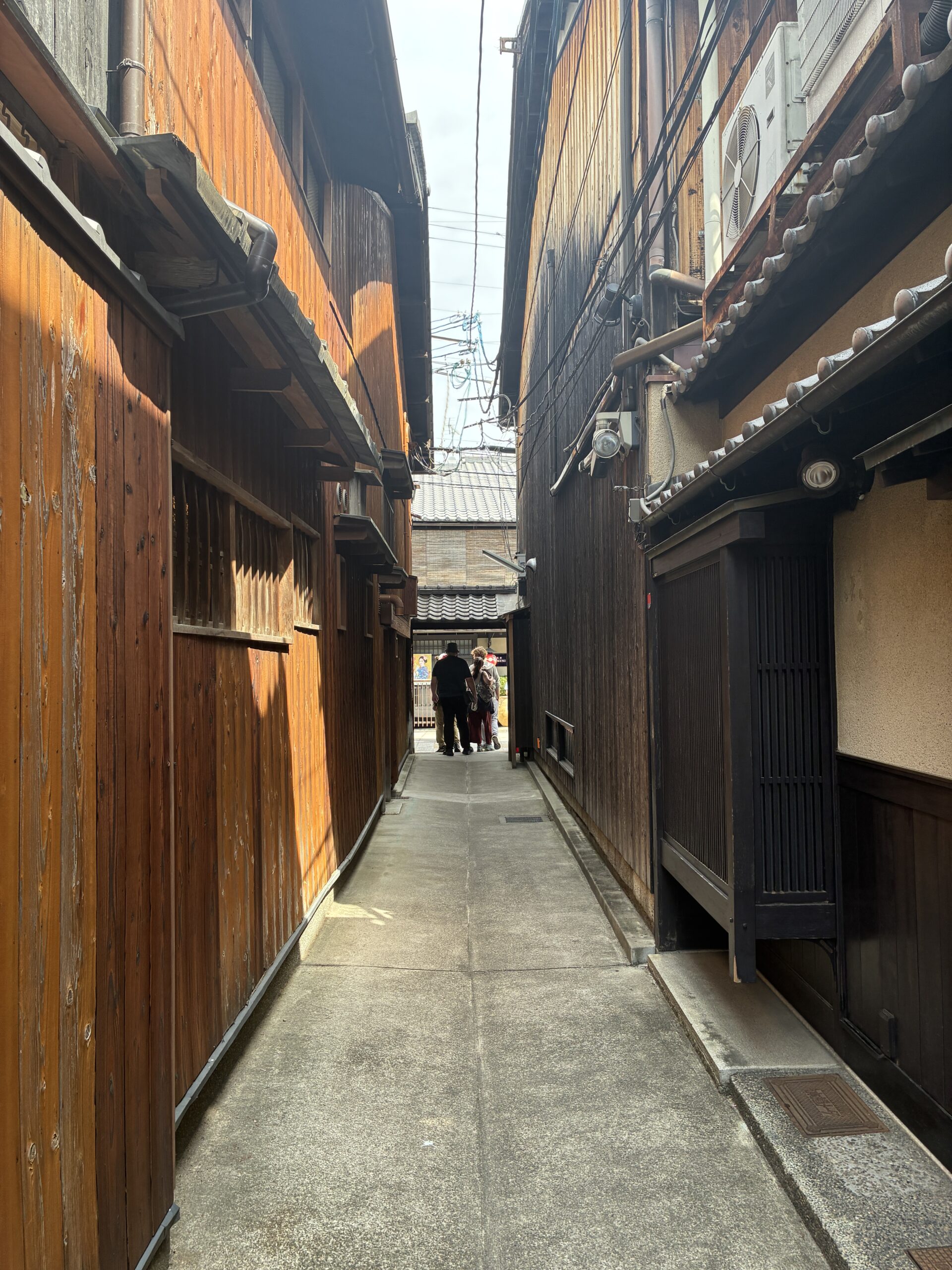
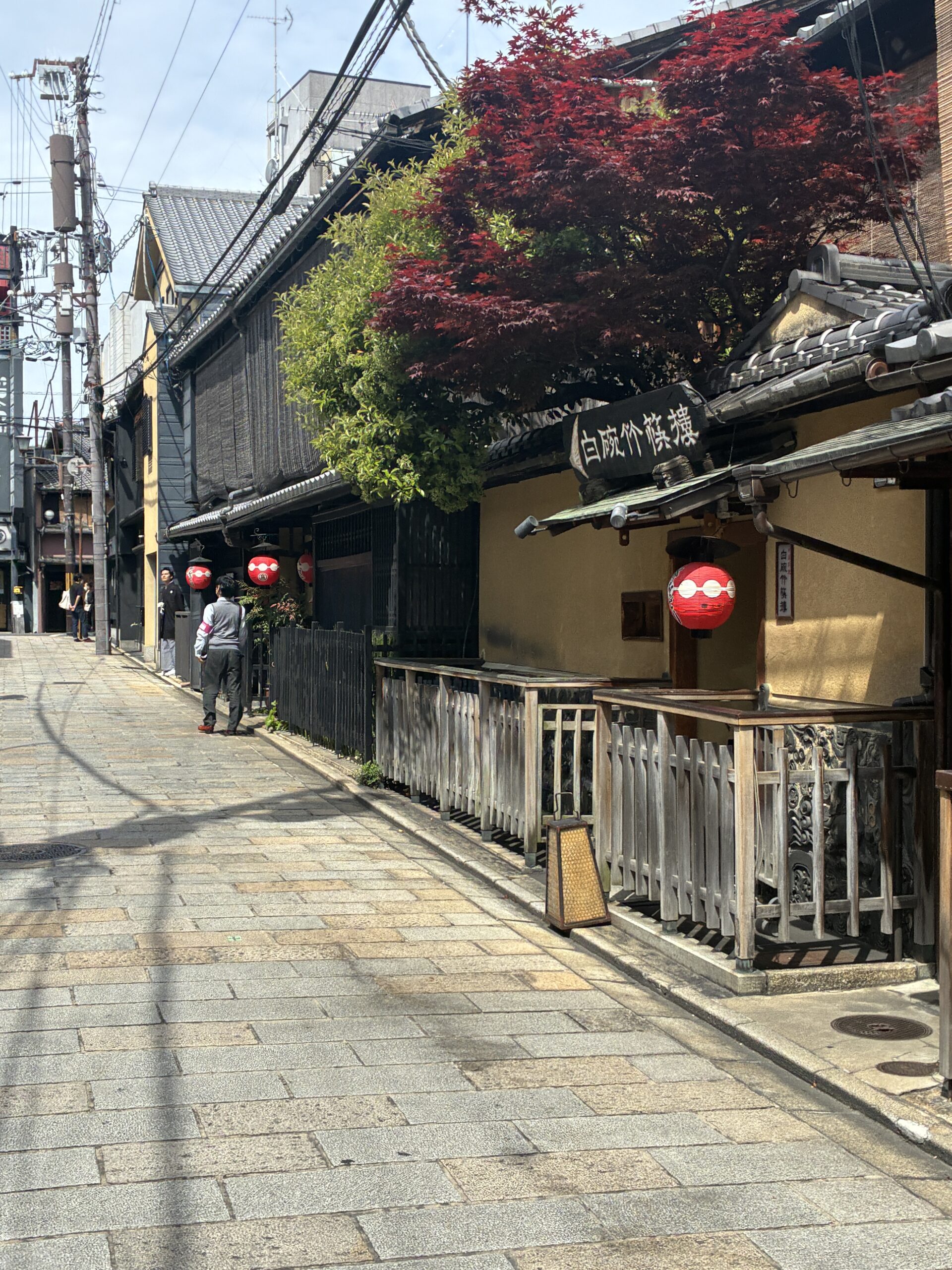
The Gion district is Kyoto’s most famous historic area, at the heart of traditional Japanese culture and the center of the Geisha culture in Kyoto, sitting along the Kamo River and at the end of the larger and bordering Higashiyama District. It’s famous for its preserved wooden architecture,tea houses, and temples, and includes the Kamo and Shirakawa rivers, and Hanami-koji Street, lined with traditional machiya (wooden merchant houses) that have been converted into high-end restaurants and ochaya (teahouses). It is also a center for Sakura, or Cherry Blossom season, the heart of which was about two weeks ago (damn, we missed it!), although there are still white and pink cherry blossoms everywhere. It is a beautiful and self-contained area.
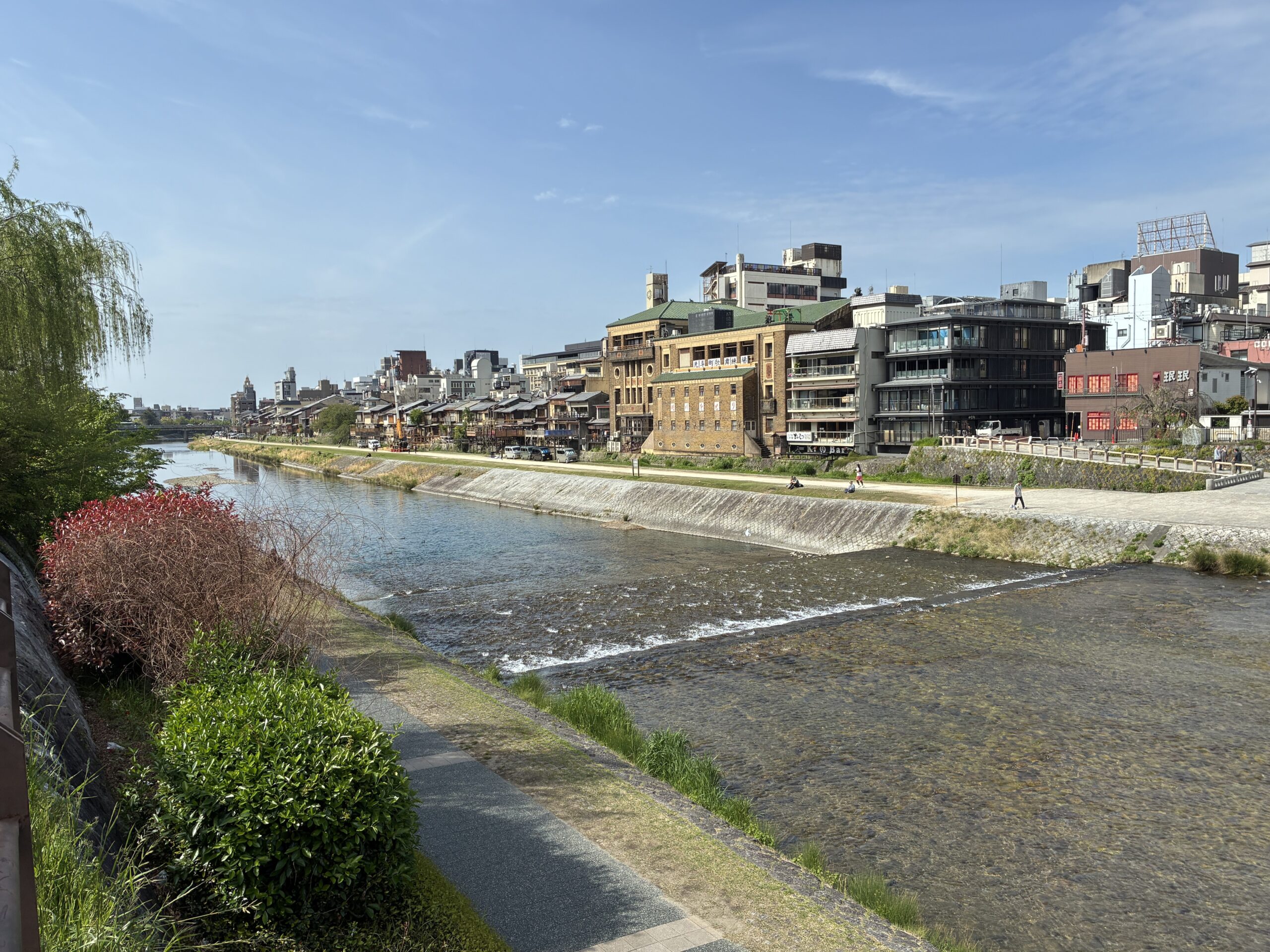
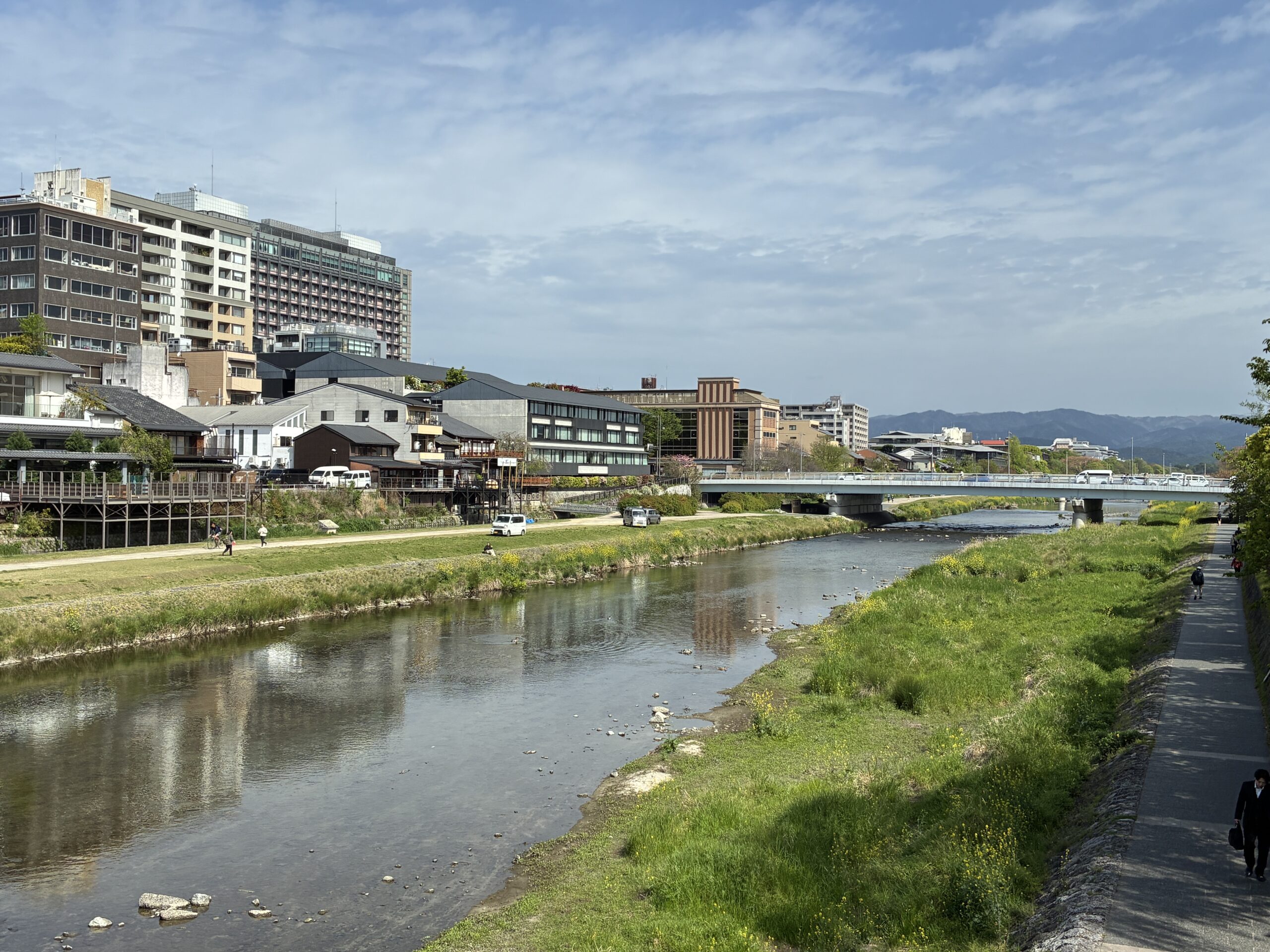
We met our guide for the start our walk at Pontocho Alley, a narrow lantern lined path that has served as an entertainment and geisha district since the 1670s. Our guide was an interesting guy from Pakistan, who came here in 2017 to study, and now seems to make his living as a full-time guide in and around Kyoto and surrounding areas. He certainly knew his stuff and was thorough, and took us to many famous and picturesque streets and temples, and gave detailed descriptions.
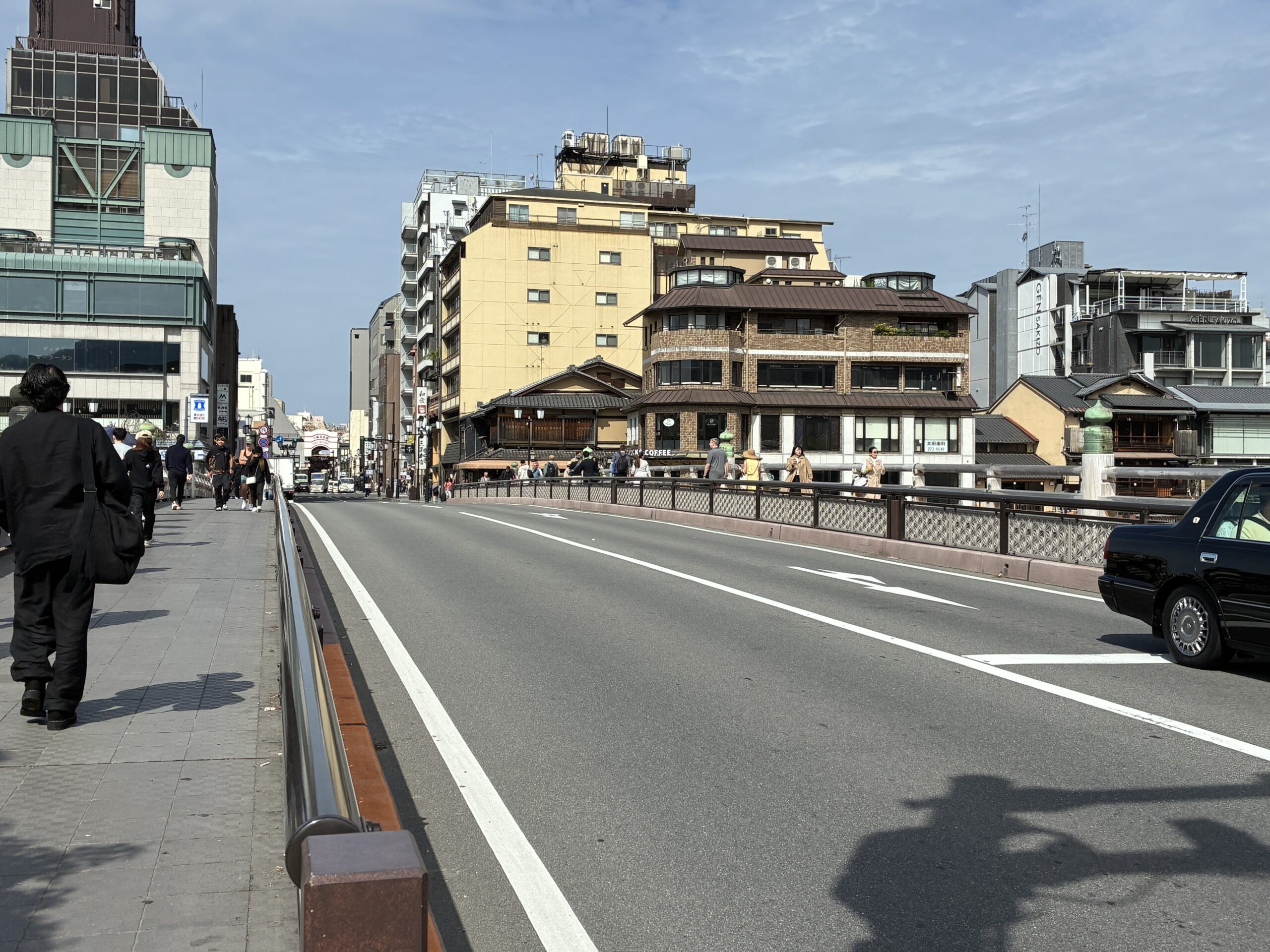
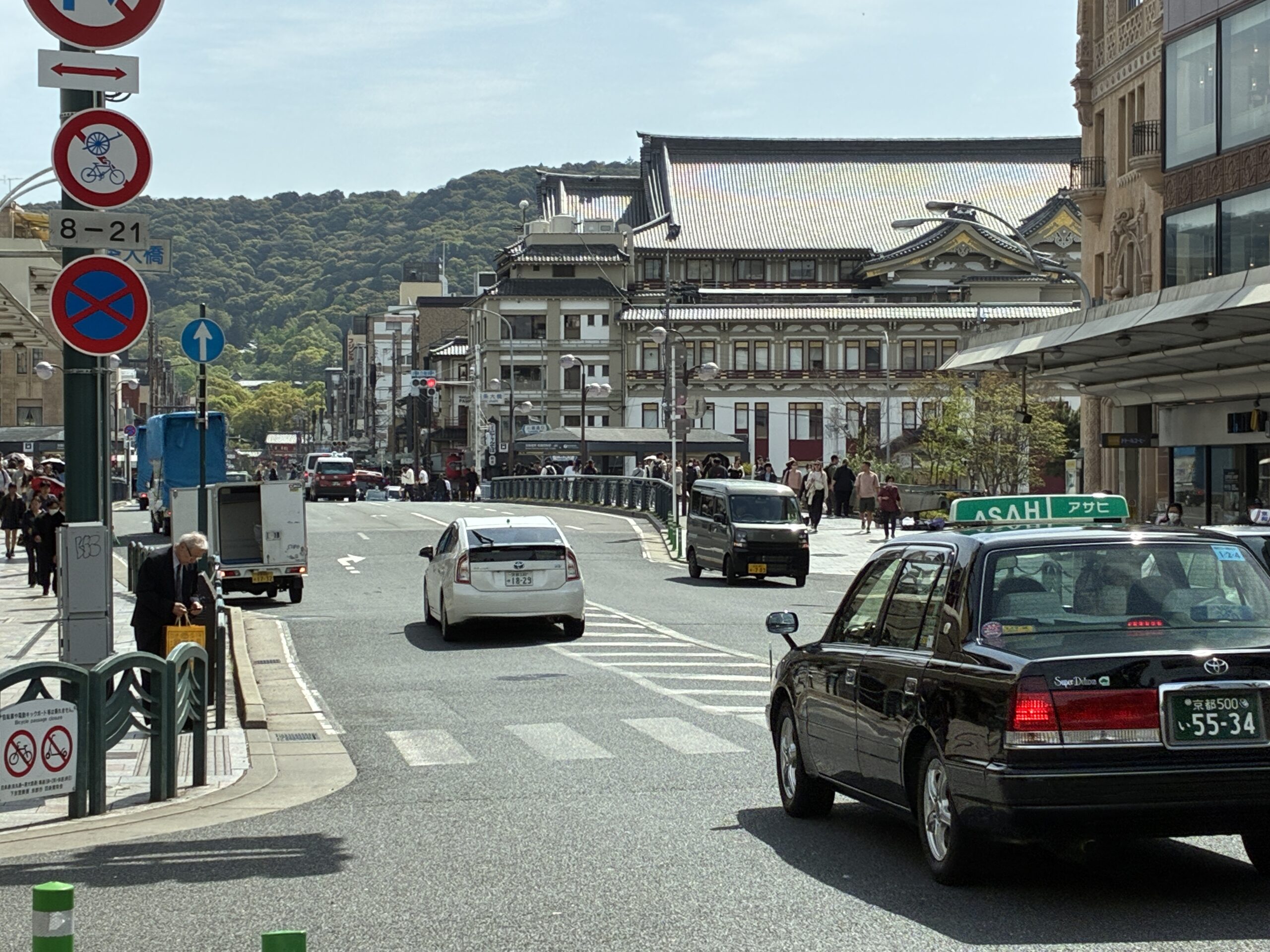

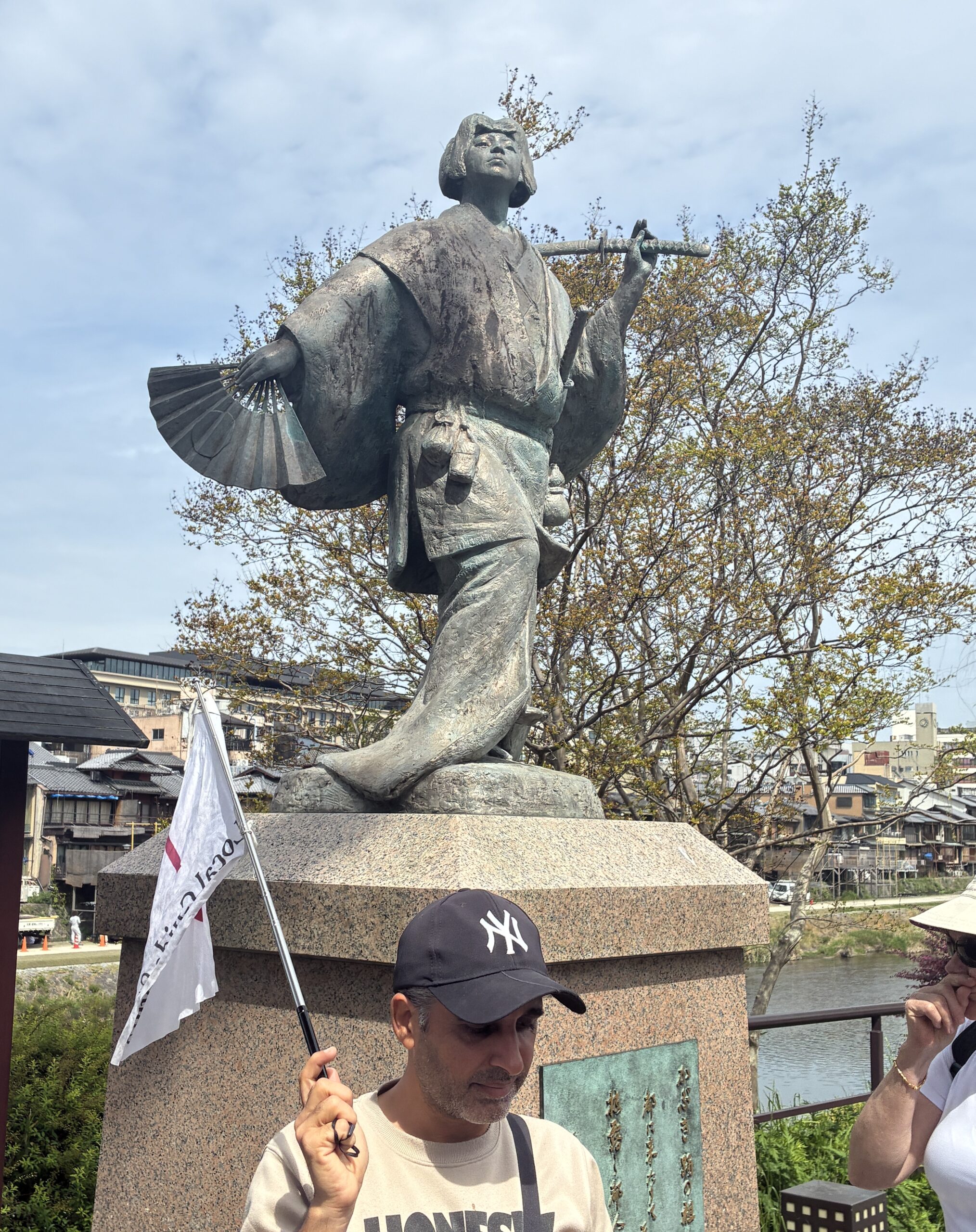
That’s our guide in front of the statue.
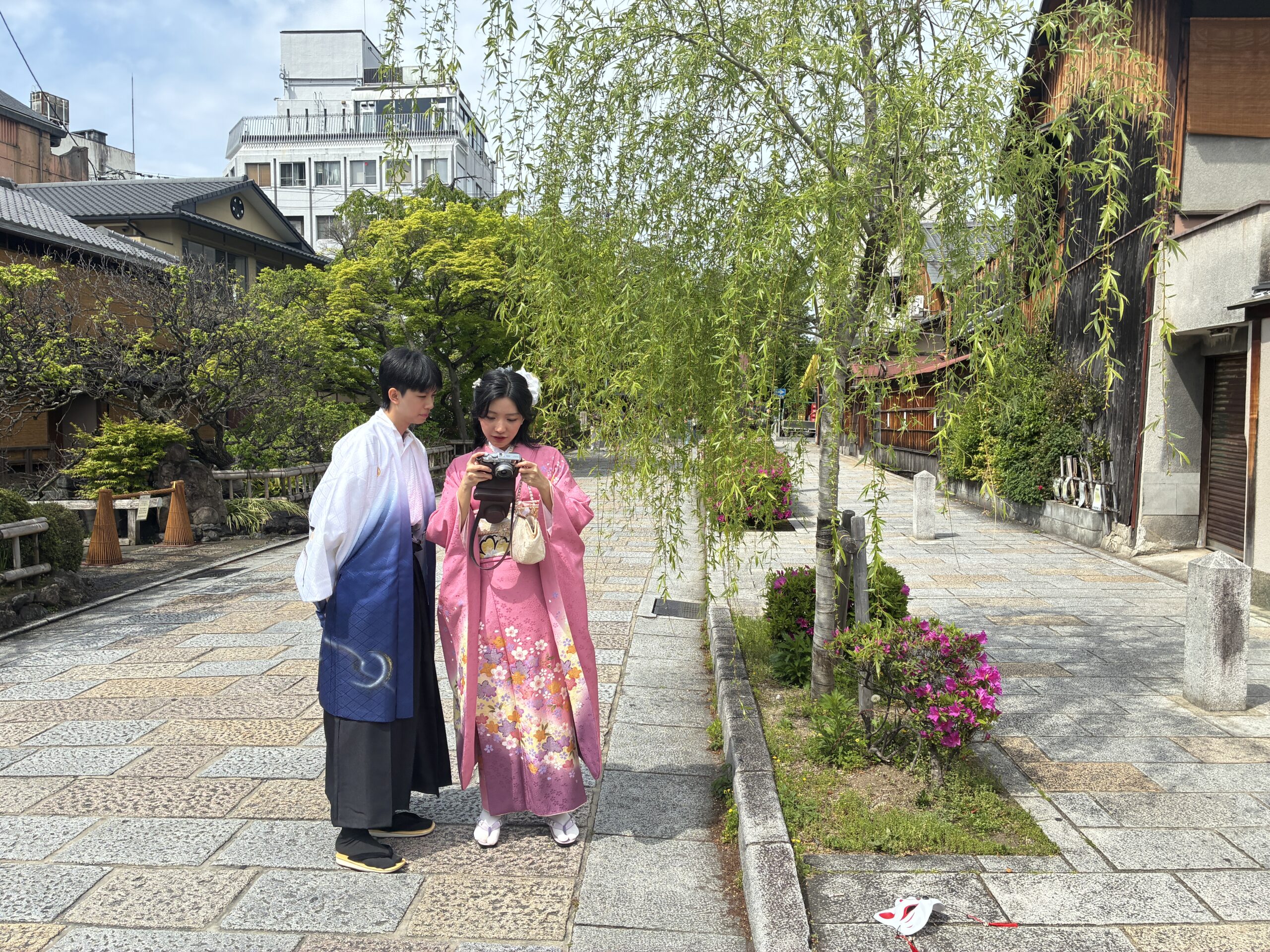
The area is central to the Geisha culture, and there are two geisha schools, which start training teenage girls at around age 15. During their 5-year training/apprenticeships, these young women are called Maiko (dancing child), and upon graduation become Geiko (woman of art). Whereas the Maiko wear colorful and ornate kimonos, the Geiko wear more subtle and less elaborate robes, and although both wear white face makeup, the apprentice Maikos paint only their lower lips and show their natural hair, whereas the Geiko wear lipstick on both lips and wear wigs.
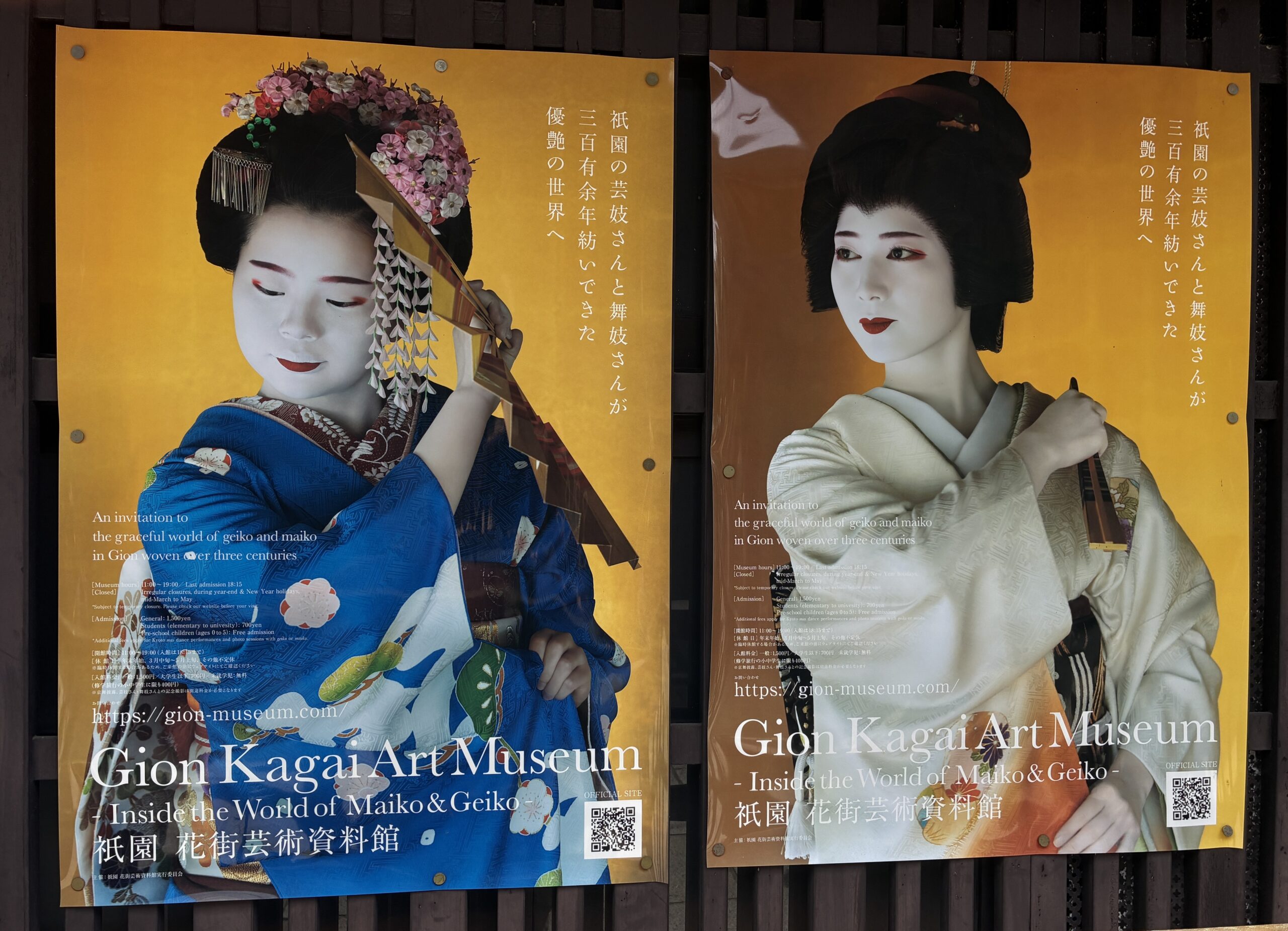
After what is an arduous apprenticeship as a Maiko, once graduated to Geiko, Geishas are able to earn significant money, and that may be a substantial pull for essentially giving up adolescence and almost completely giving up any independence during the five years of training.
The history of geishas goes back to the early 1600s, when the first geishas (person of the arts) were men who entertained guests in the pleasure districts, while the guests waited for high-ranking courtesans . The first female geishas appeared around 1751, and soon established the geisha role as an exclusively female profession (although our guide said there are male geishas today). Its golden age was from the 1800s to the early 1900s, and there were around 80,000 geisha in the 1920s. compared to only around 1100 today. Once becoming a Geiko, a geisha may remain in the profession as long as she wishes, or until married, which can be a highly lucrative occupation, and the oldest geisha in Kyoto is in her 90s, and financially very supportive of the geisha schools and culture.
A geisha dinner for two at select tea houses, hosted by both a Maiko and Geiko, costs anywhere from $500 and up. and for a small group can easily exceed $1000.
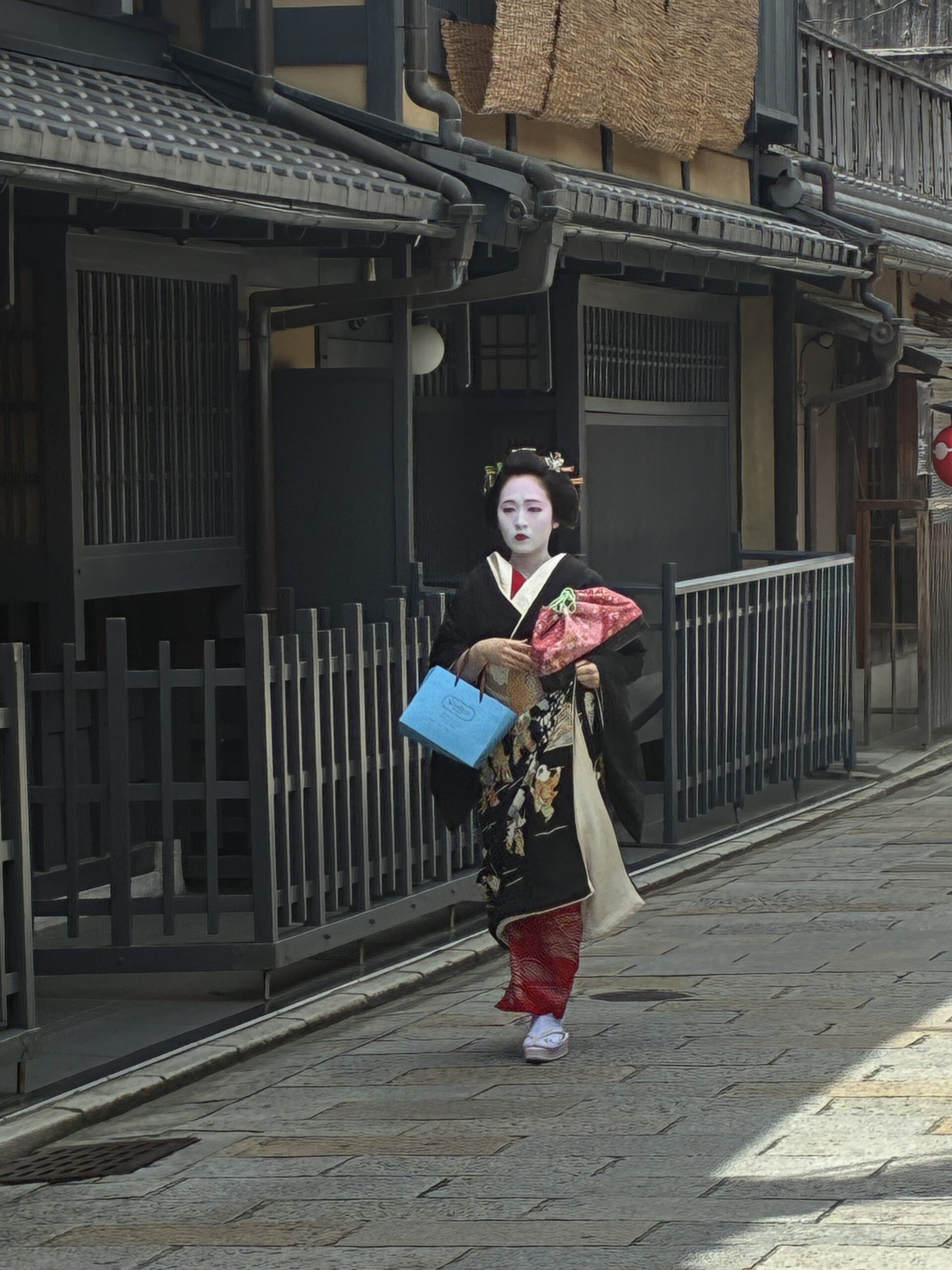

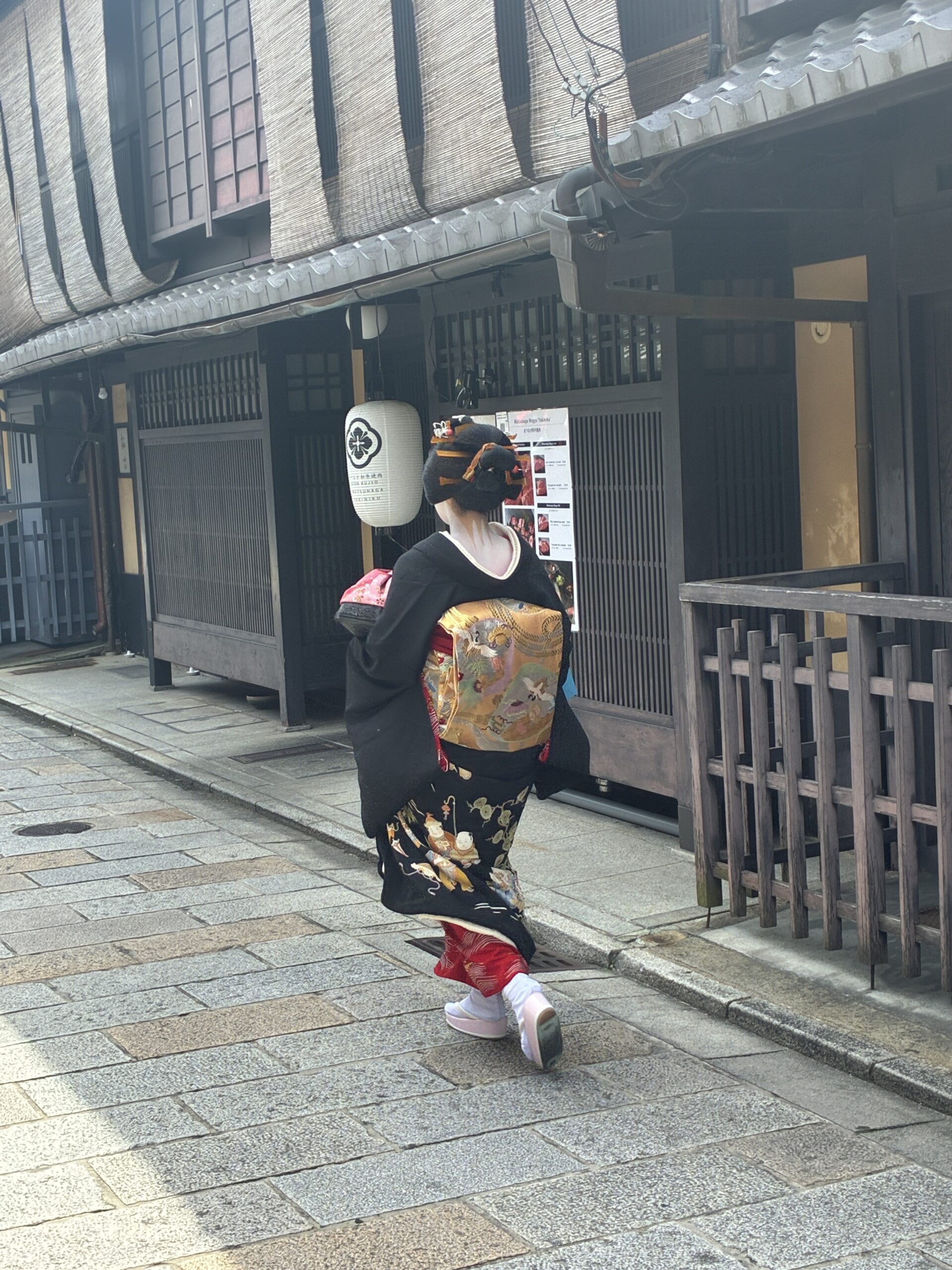
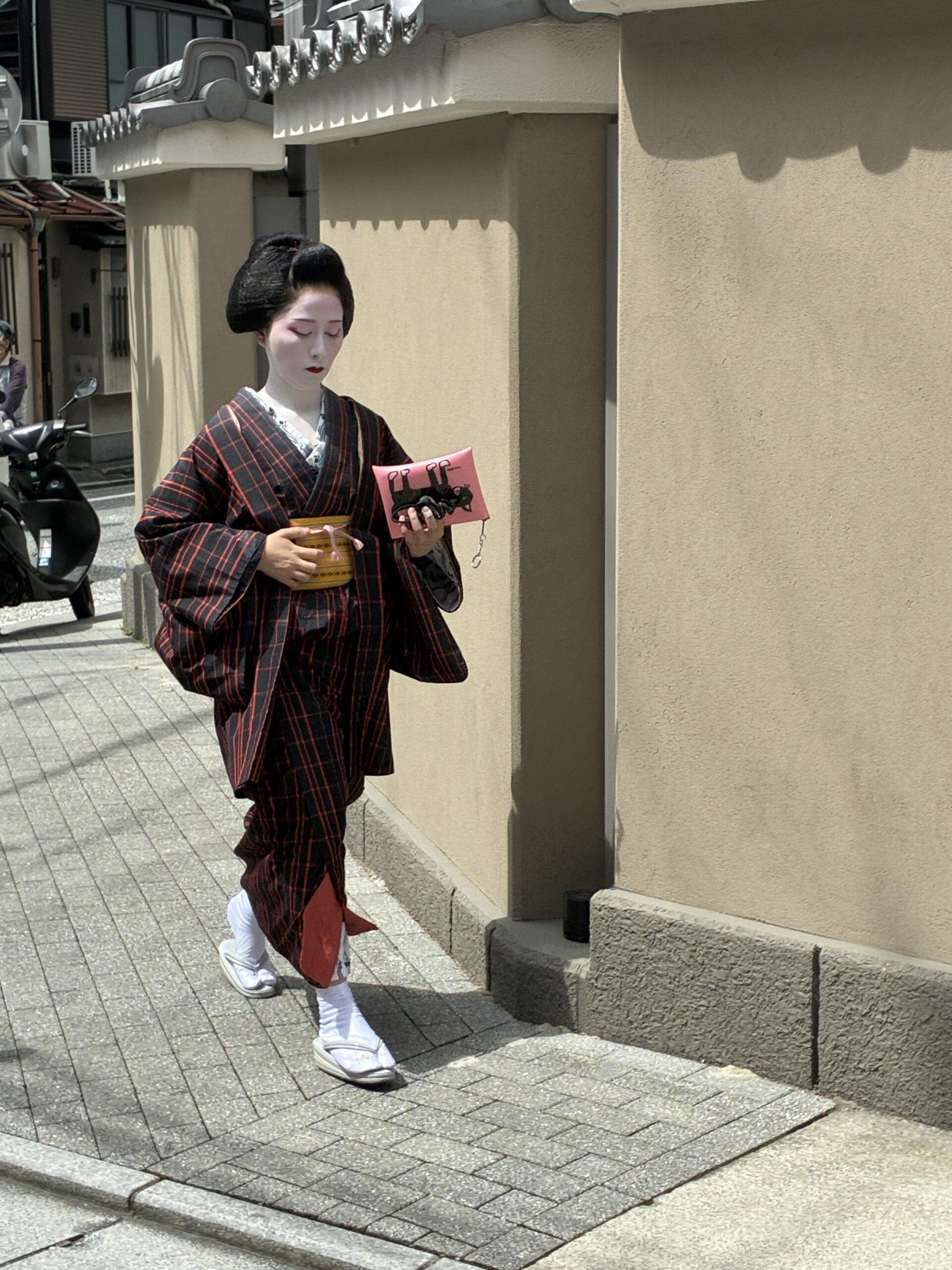
We continued to walk around the district, learning about the culture and community and its history, and of course visited several of the best known shrines in and around the district.
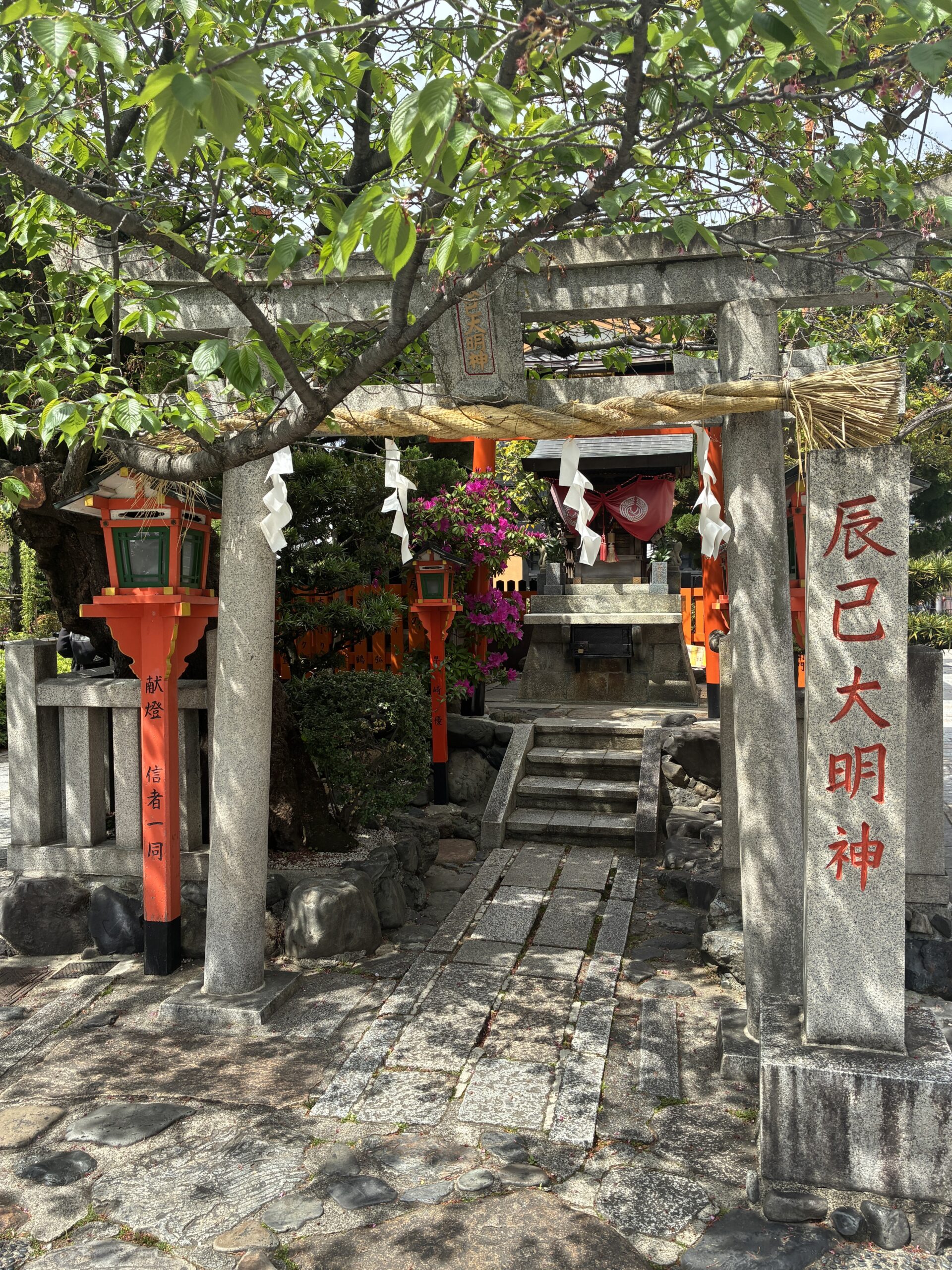

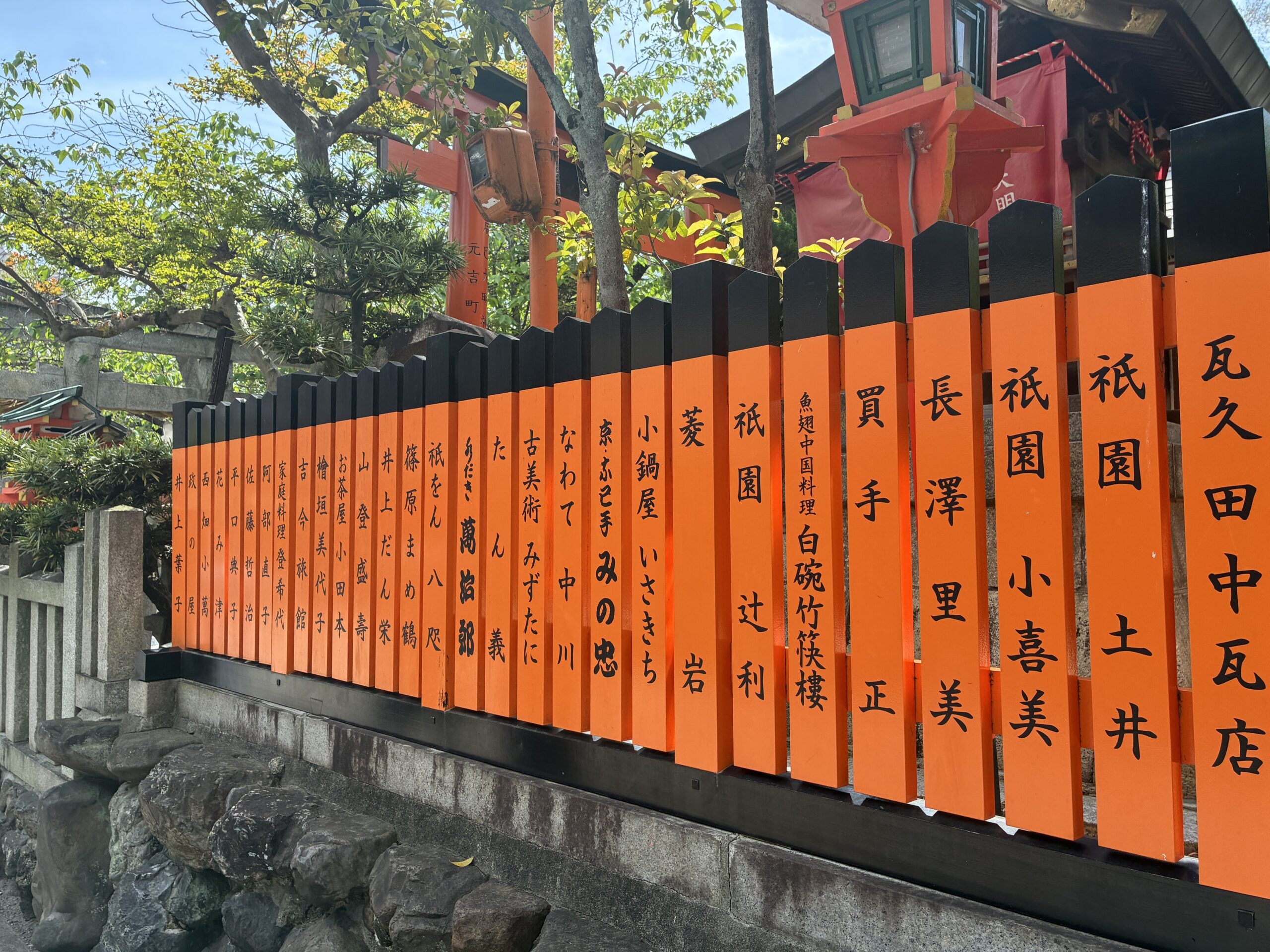
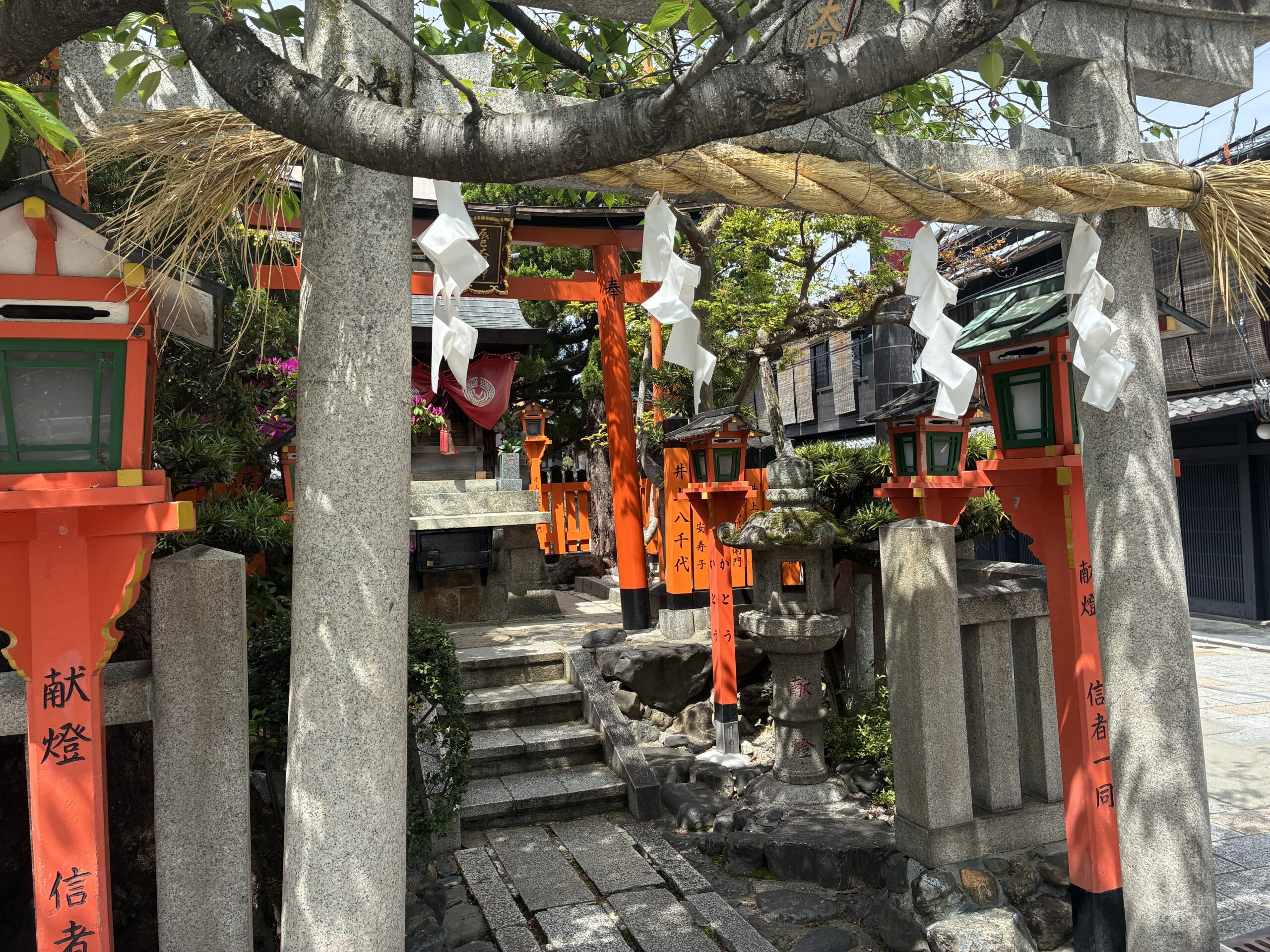
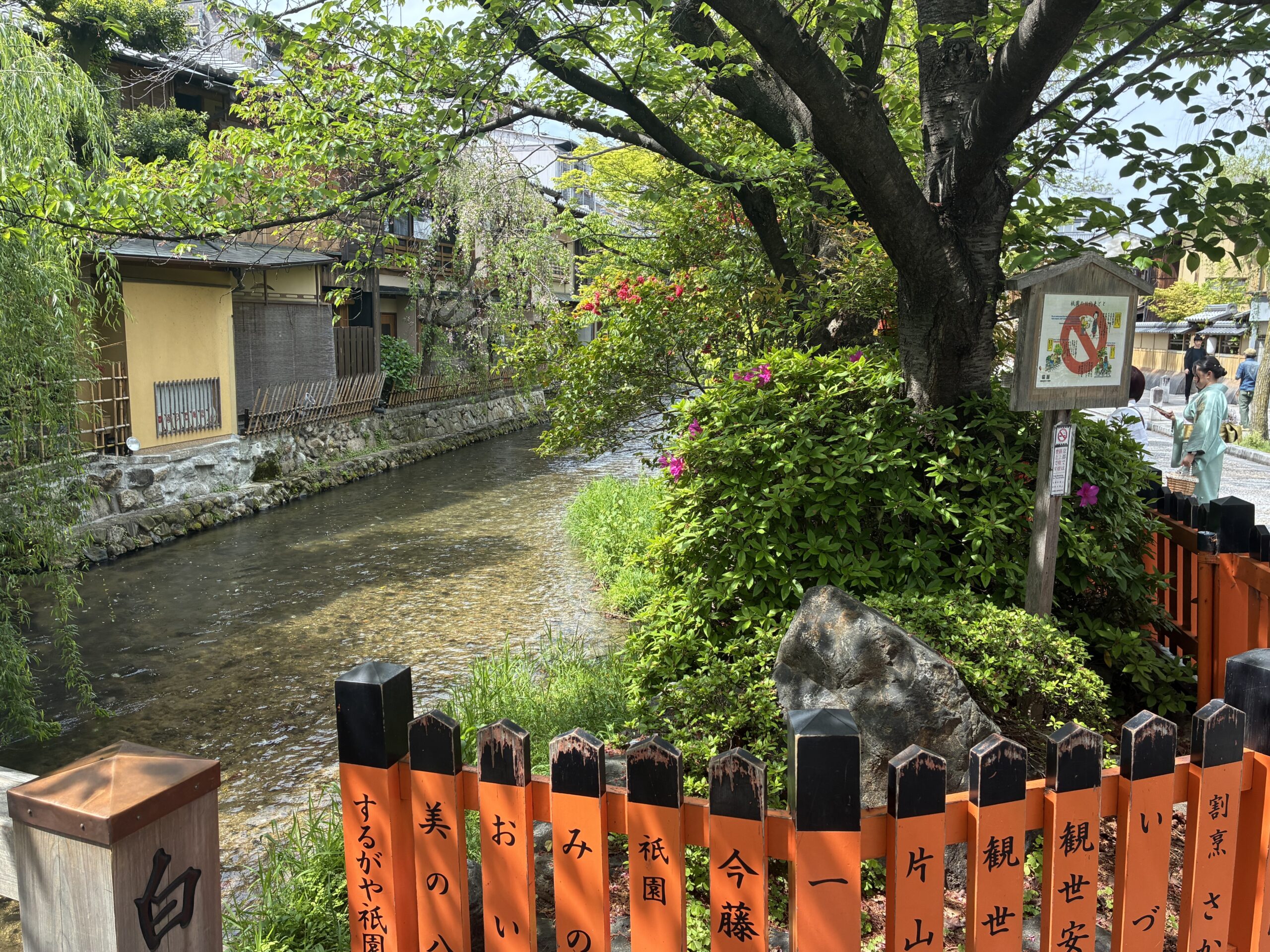
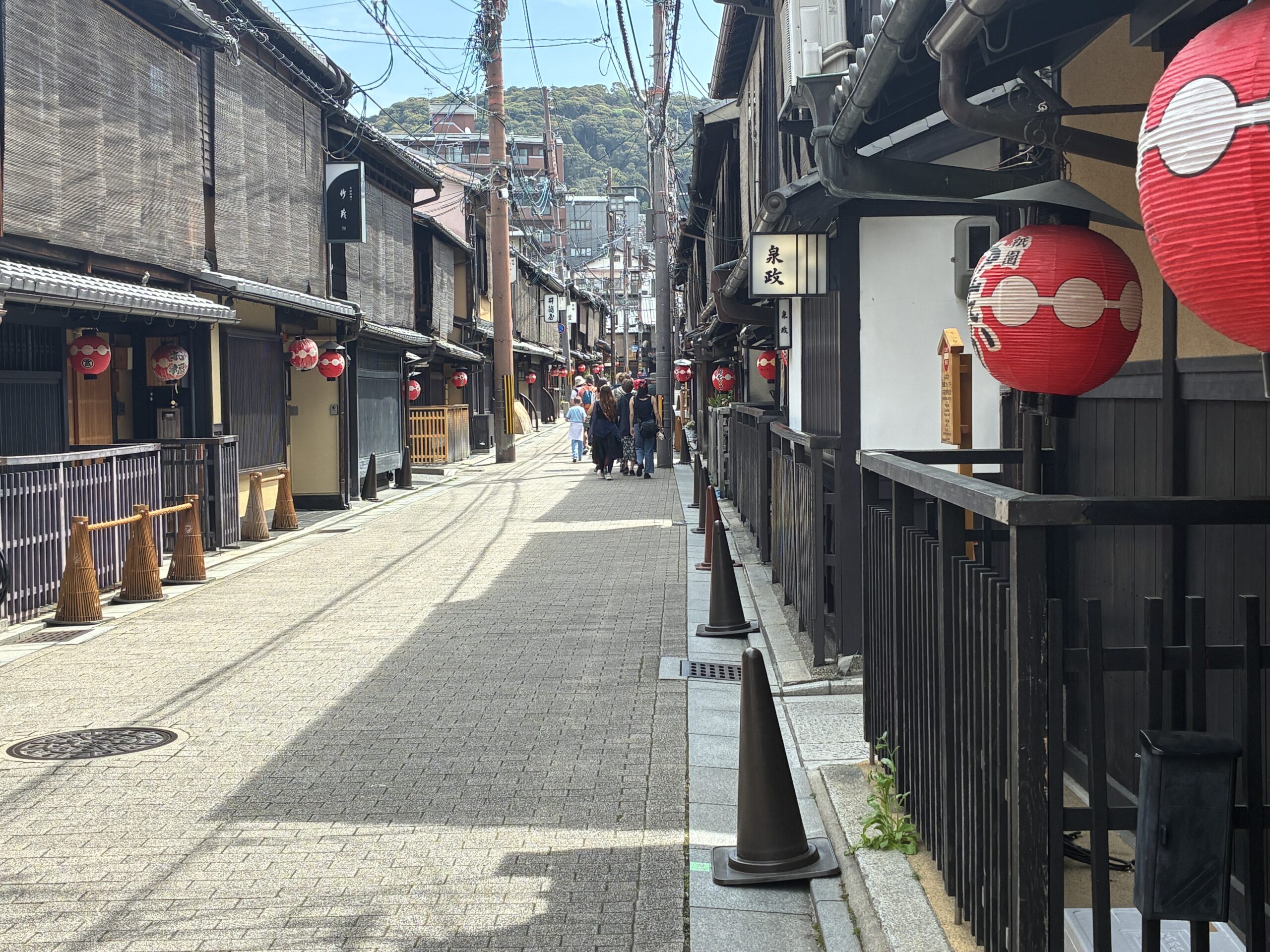
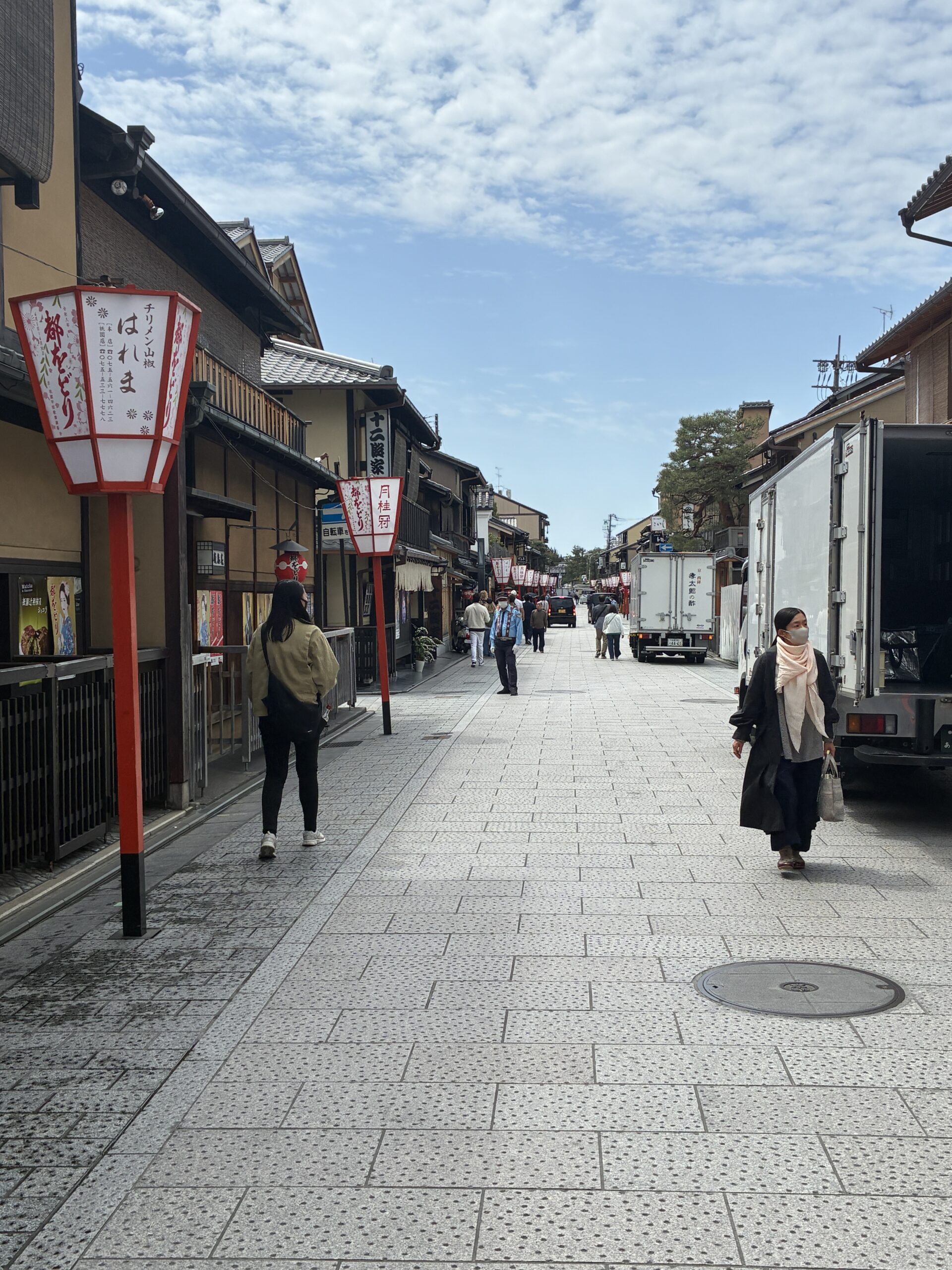
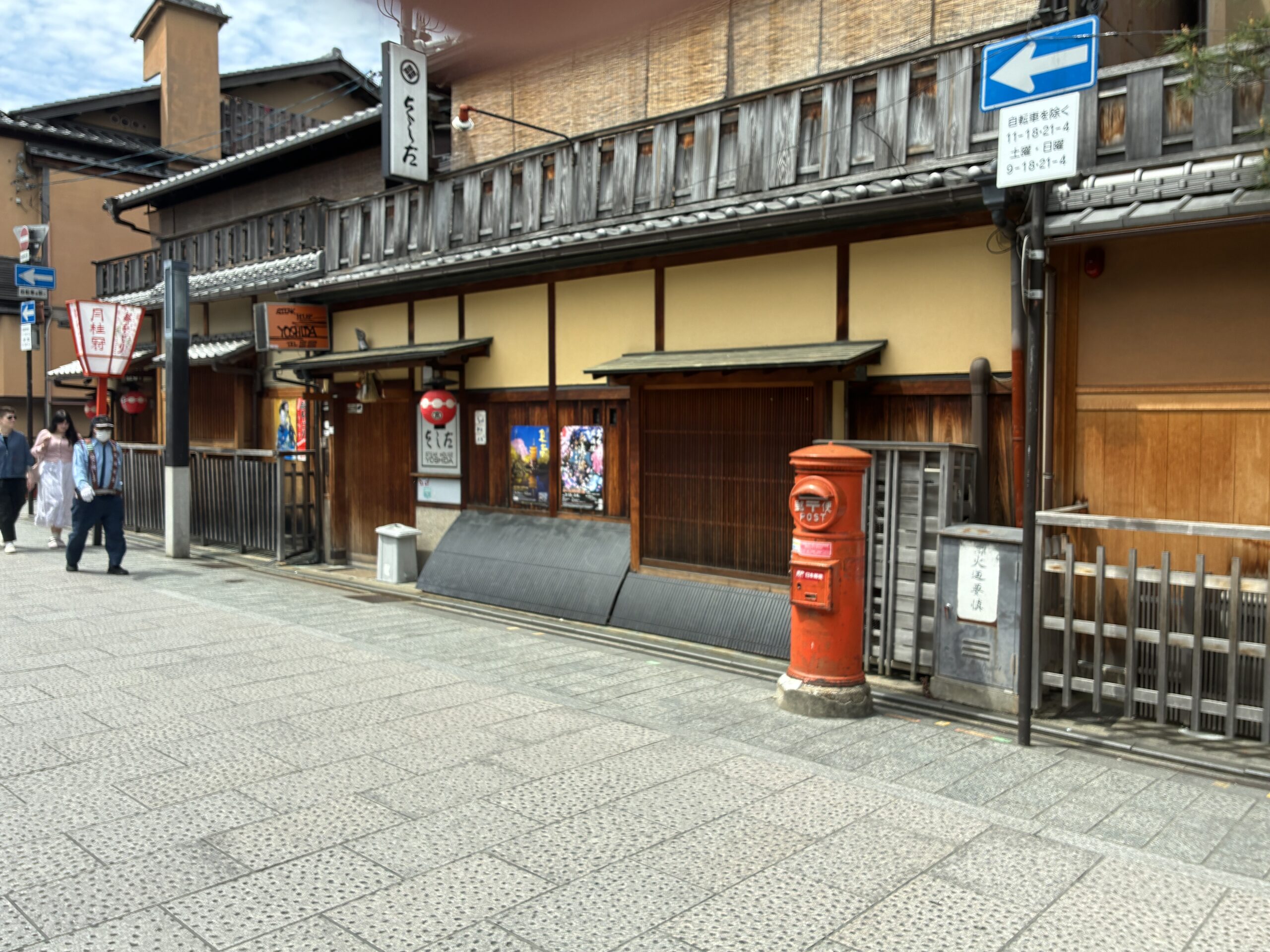

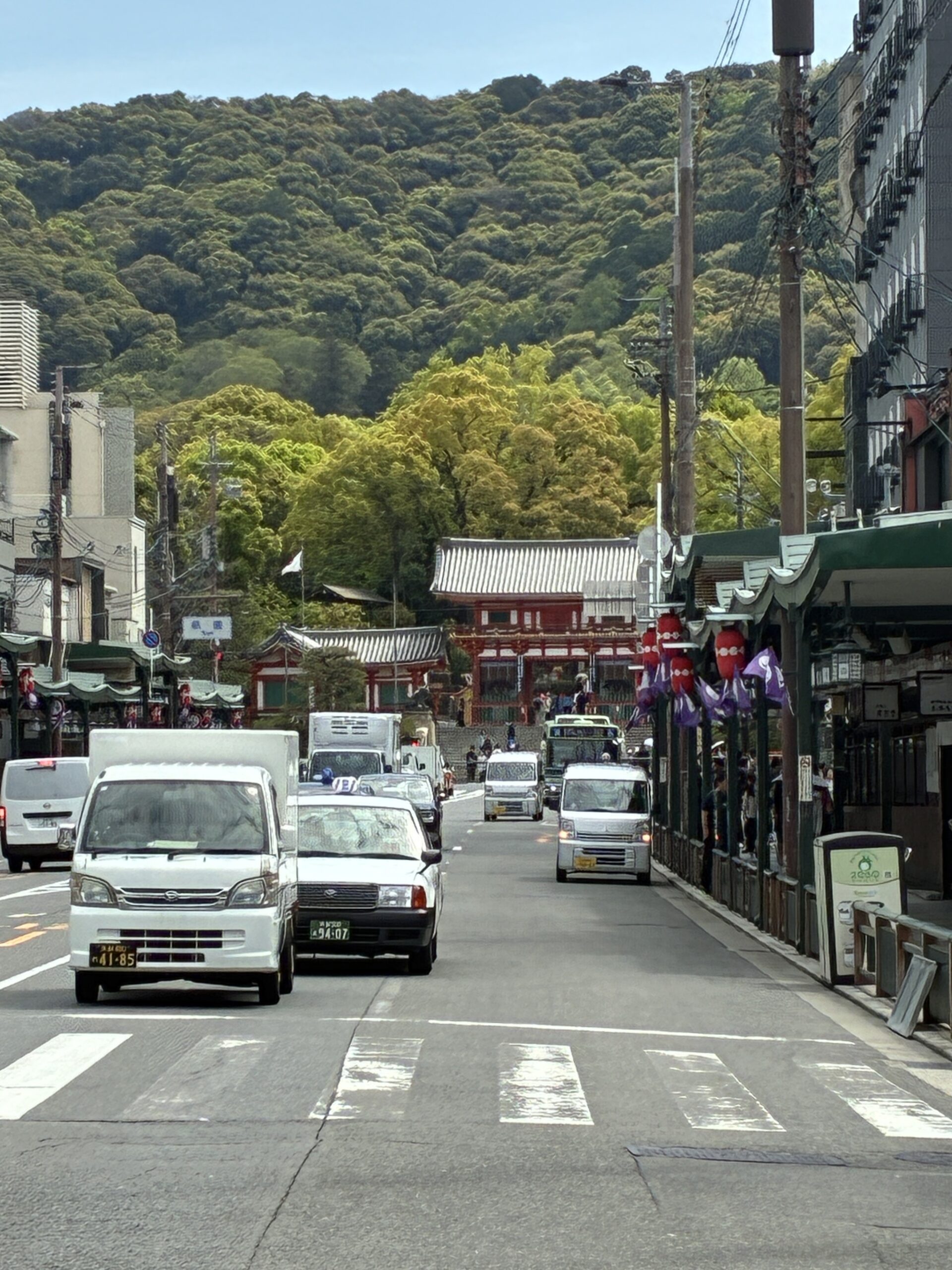
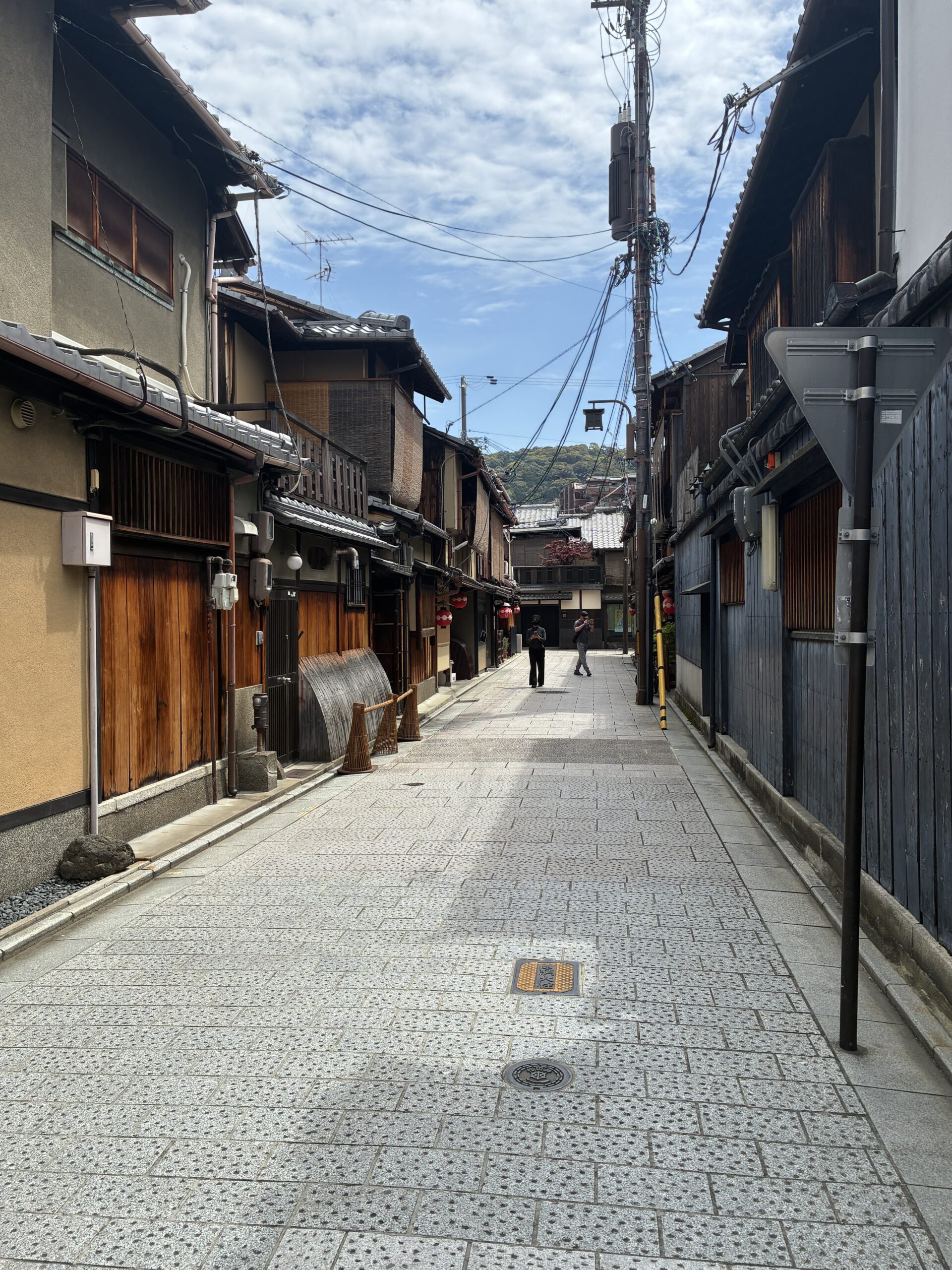
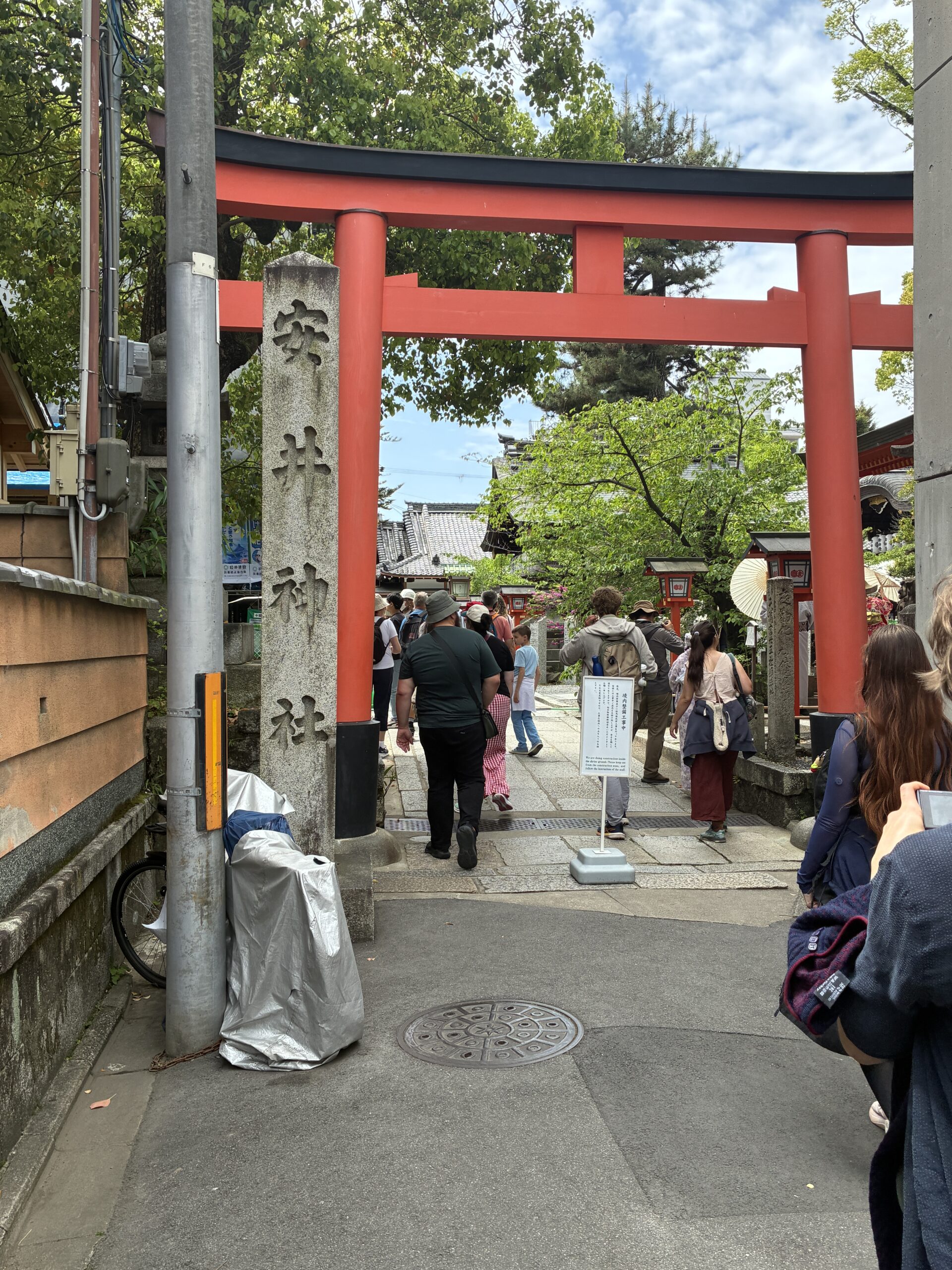
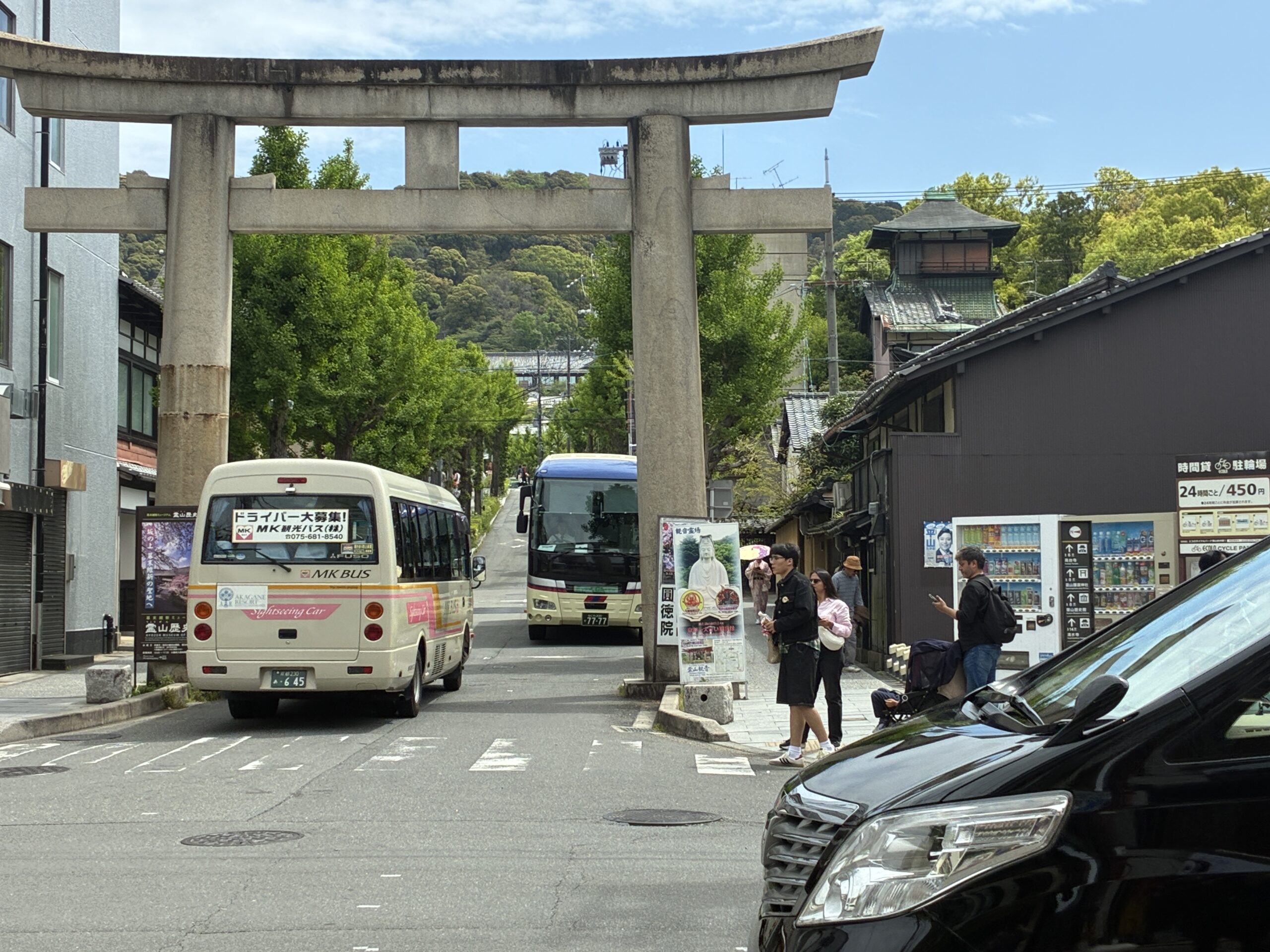
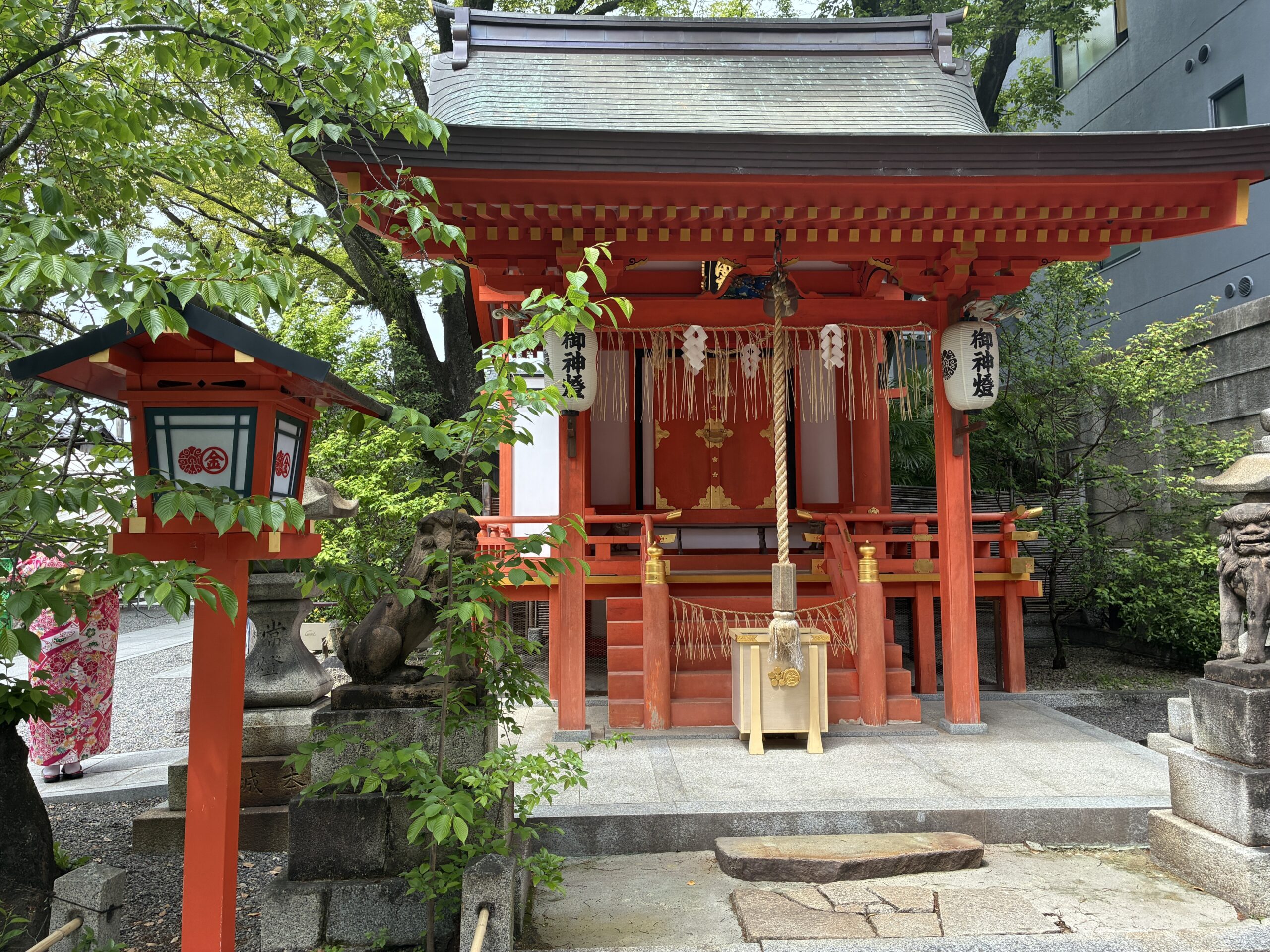
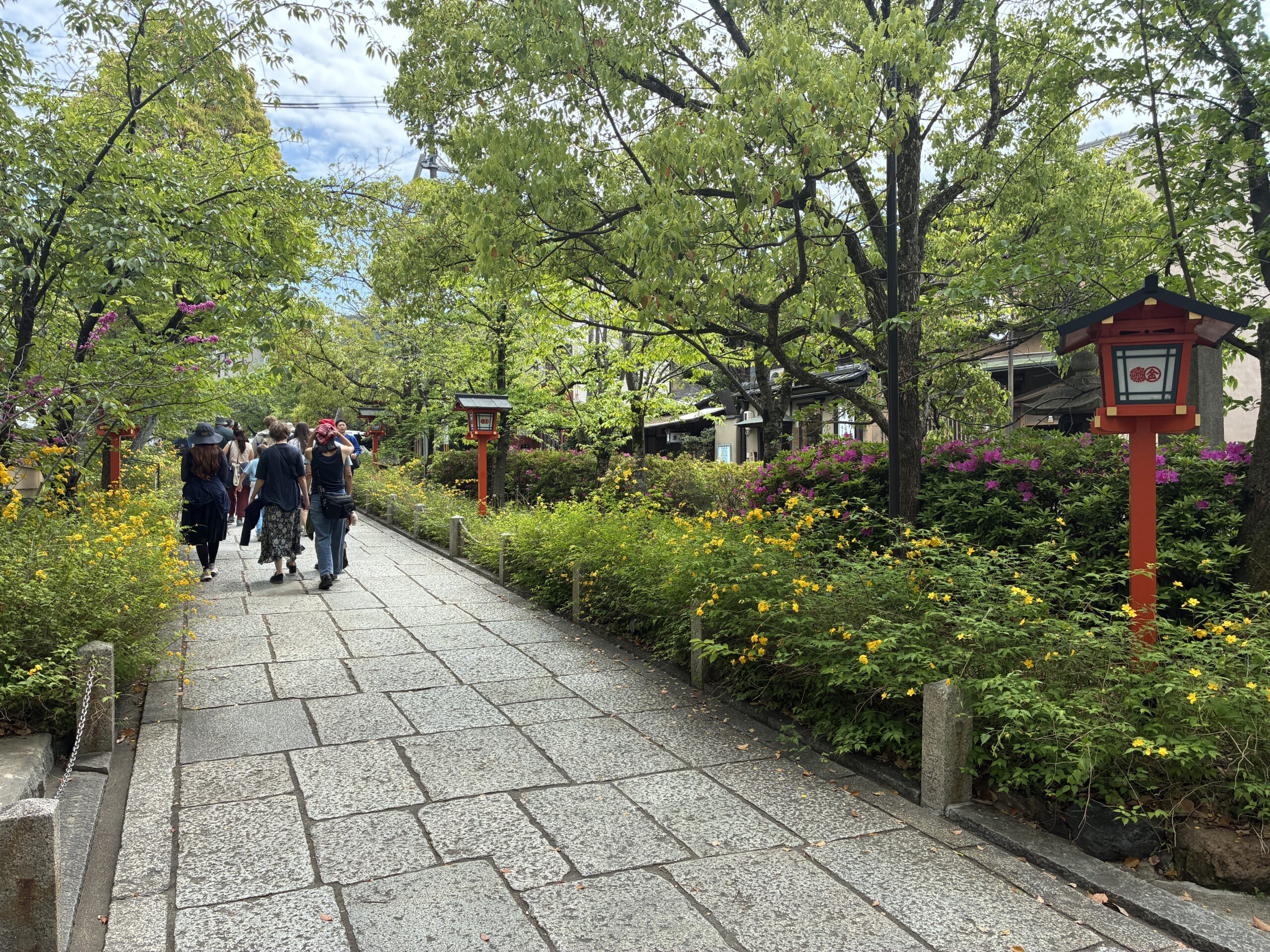
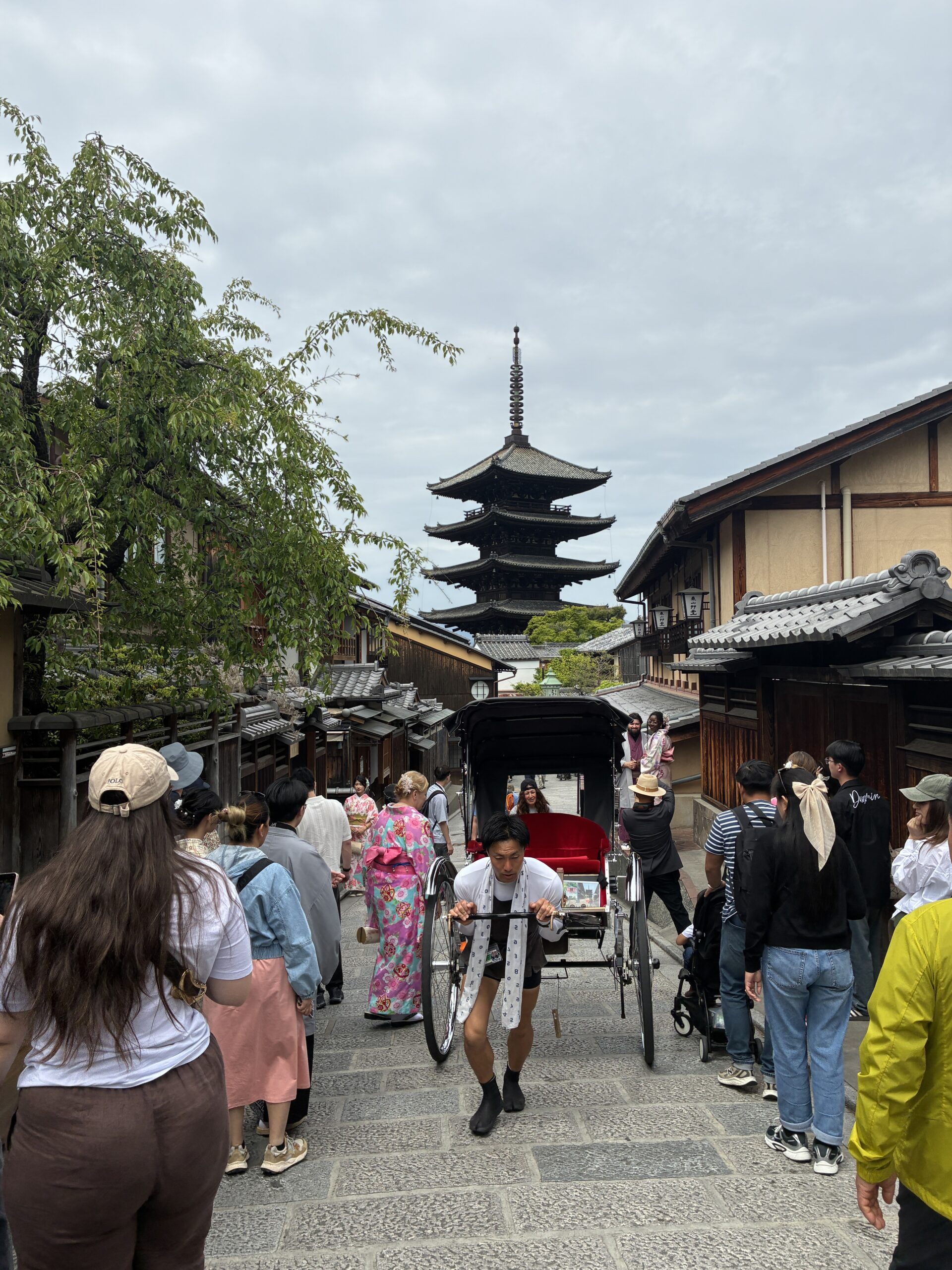
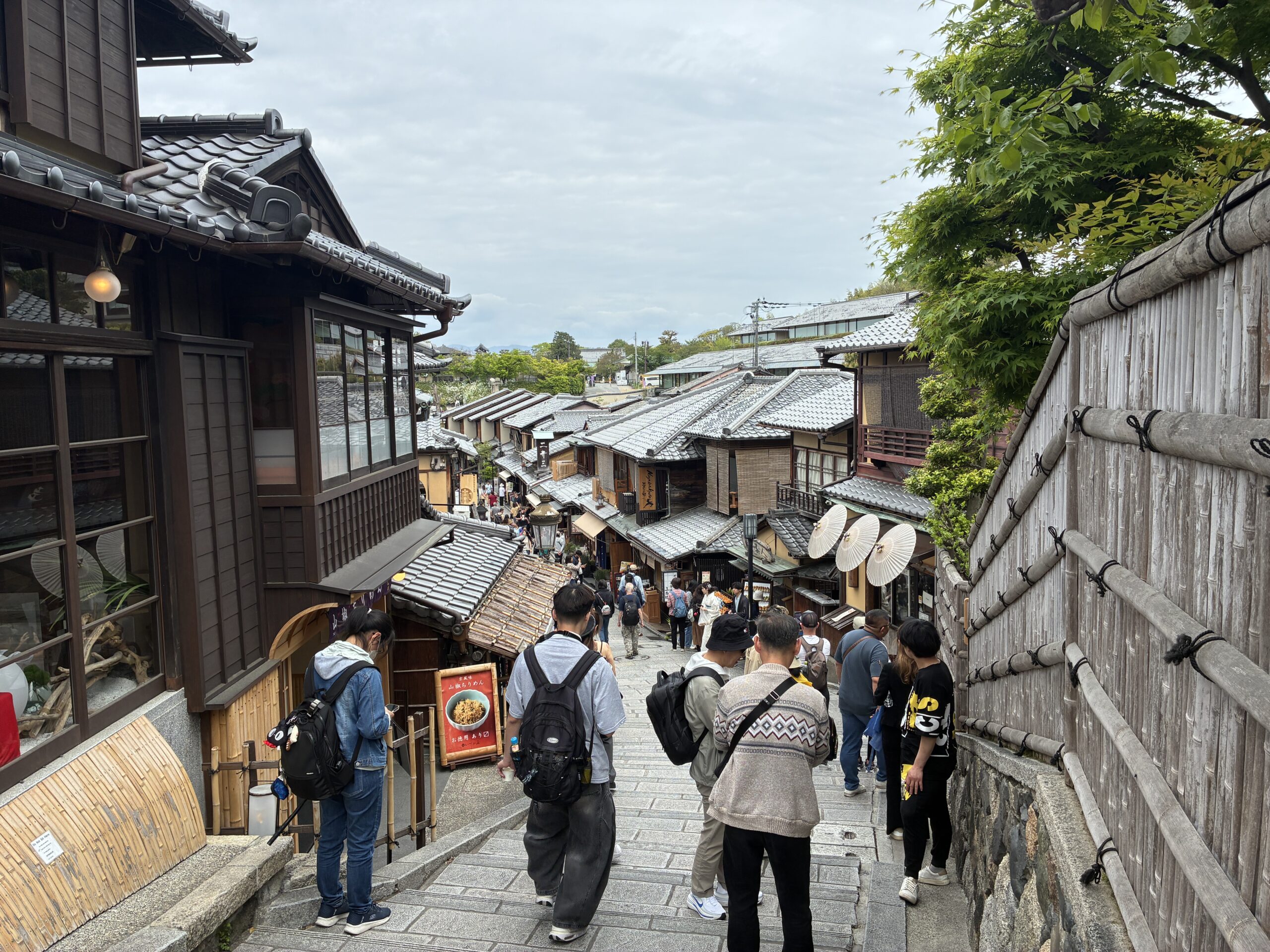
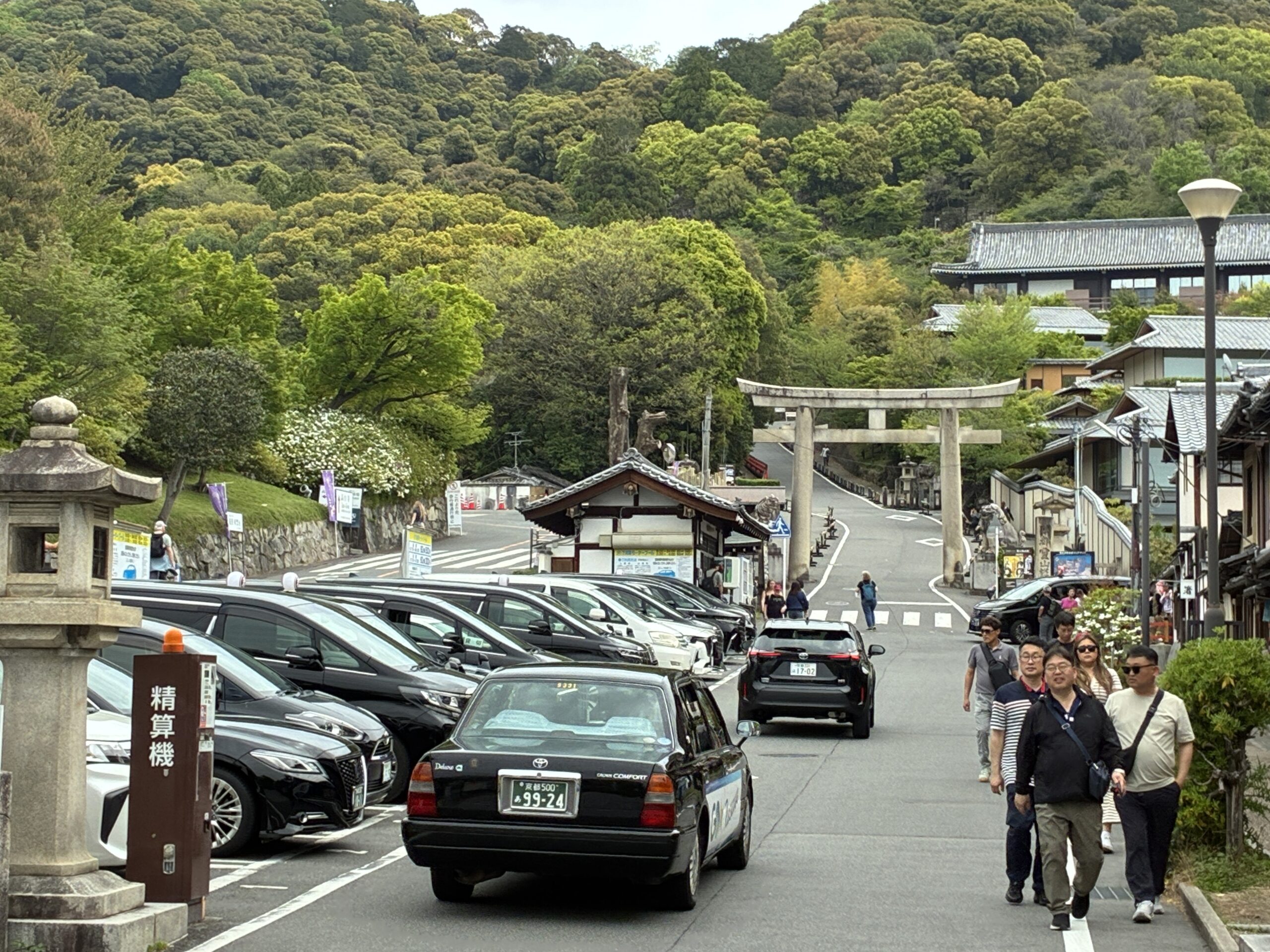
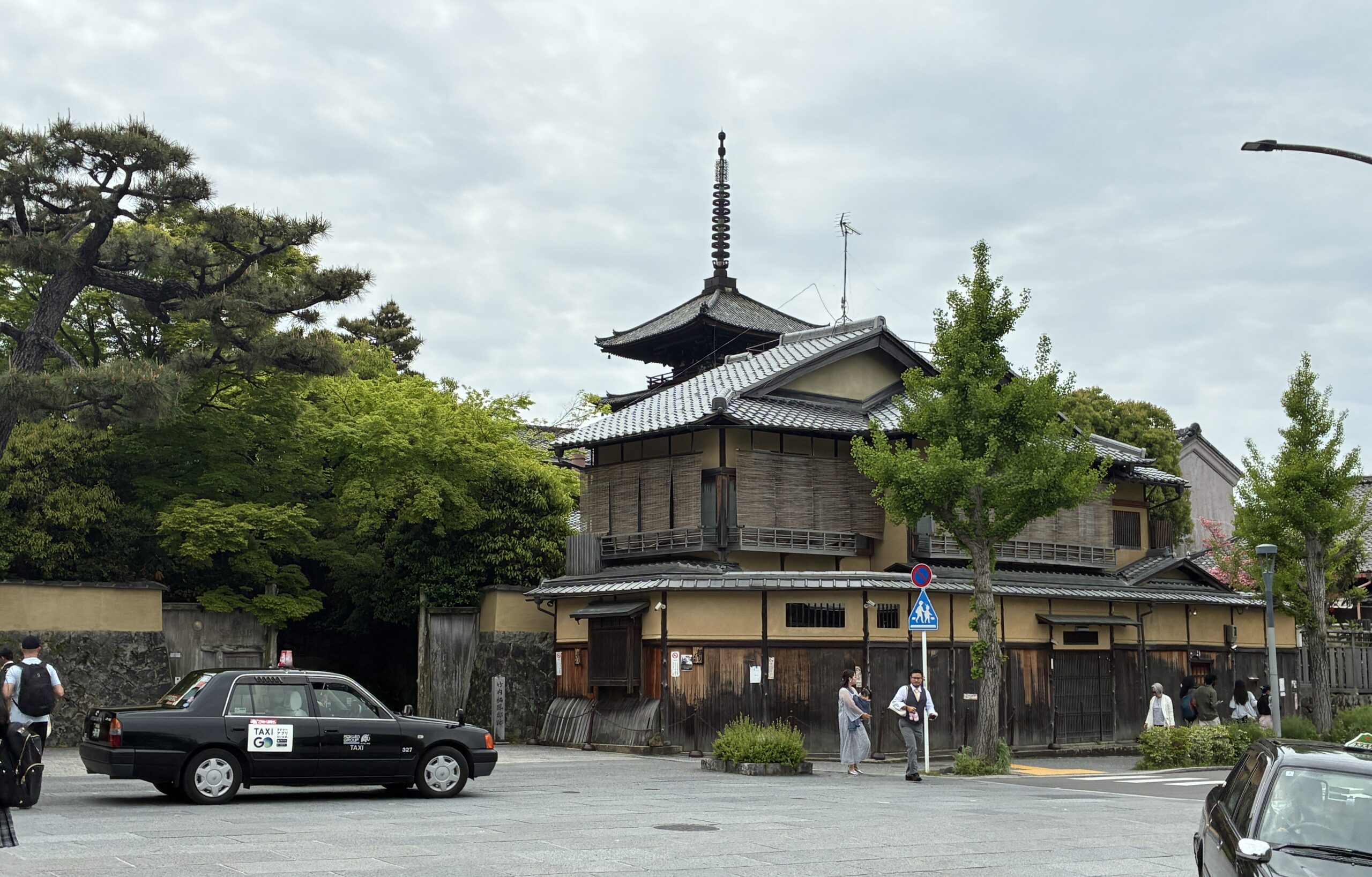
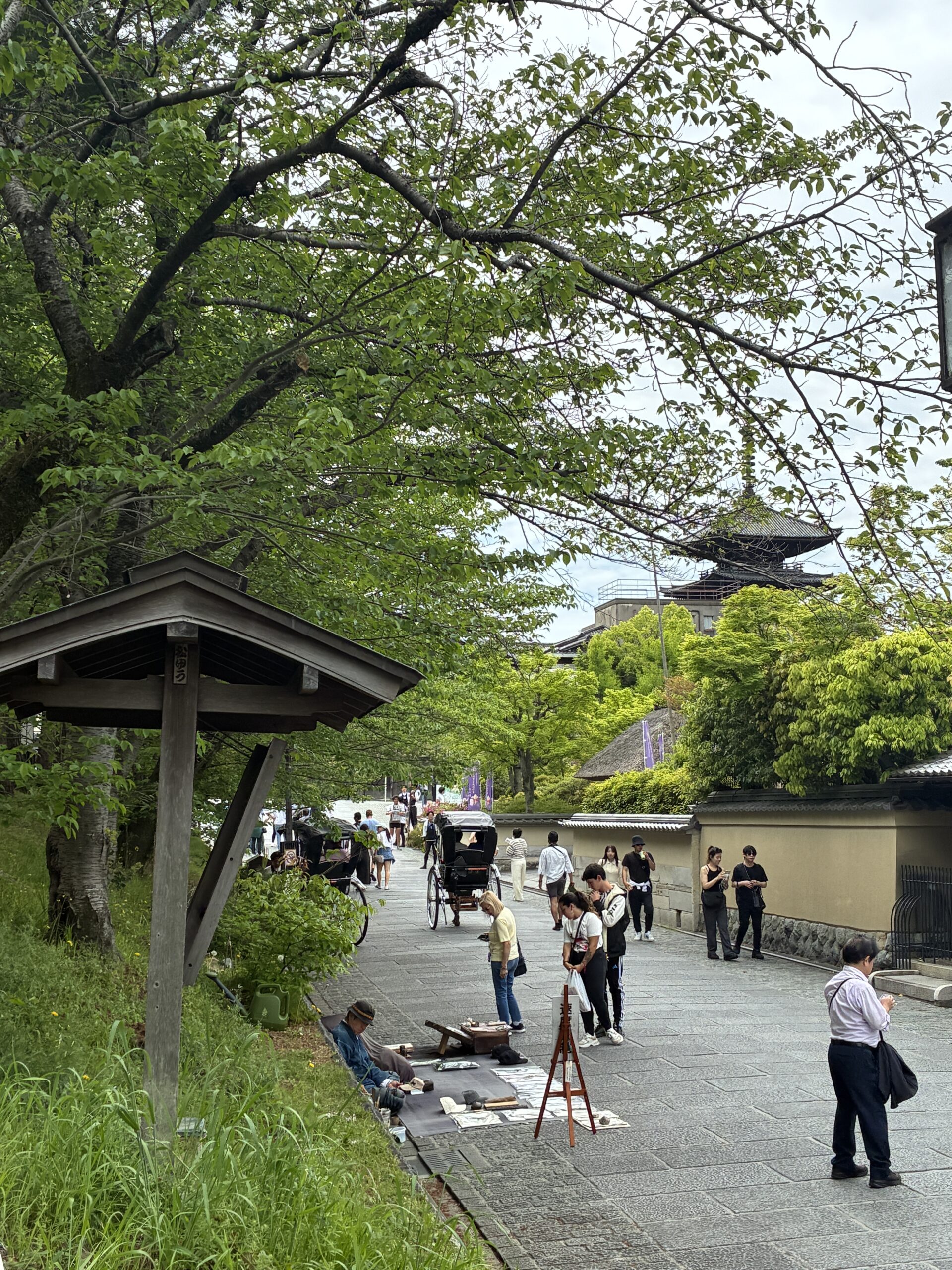
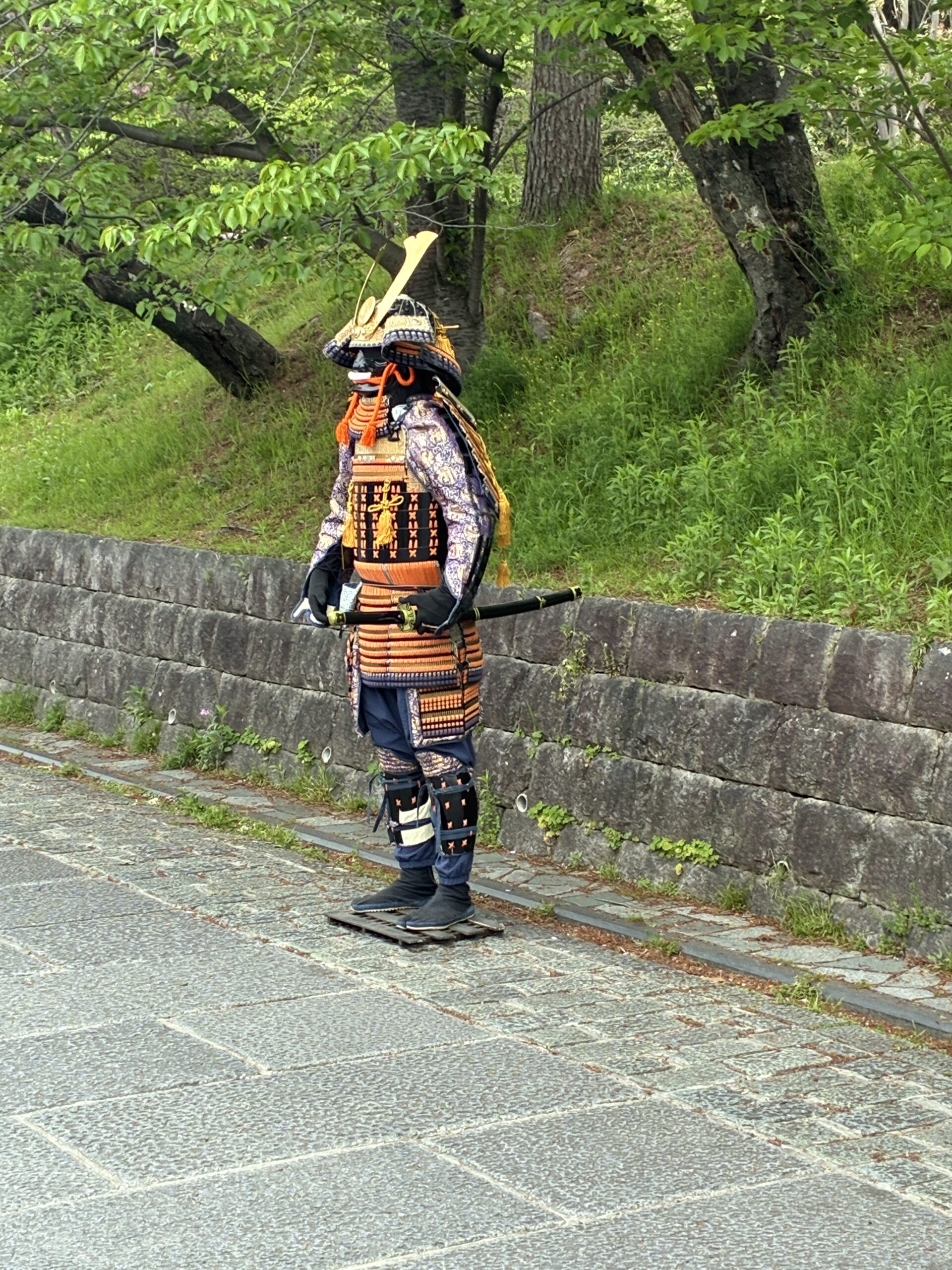
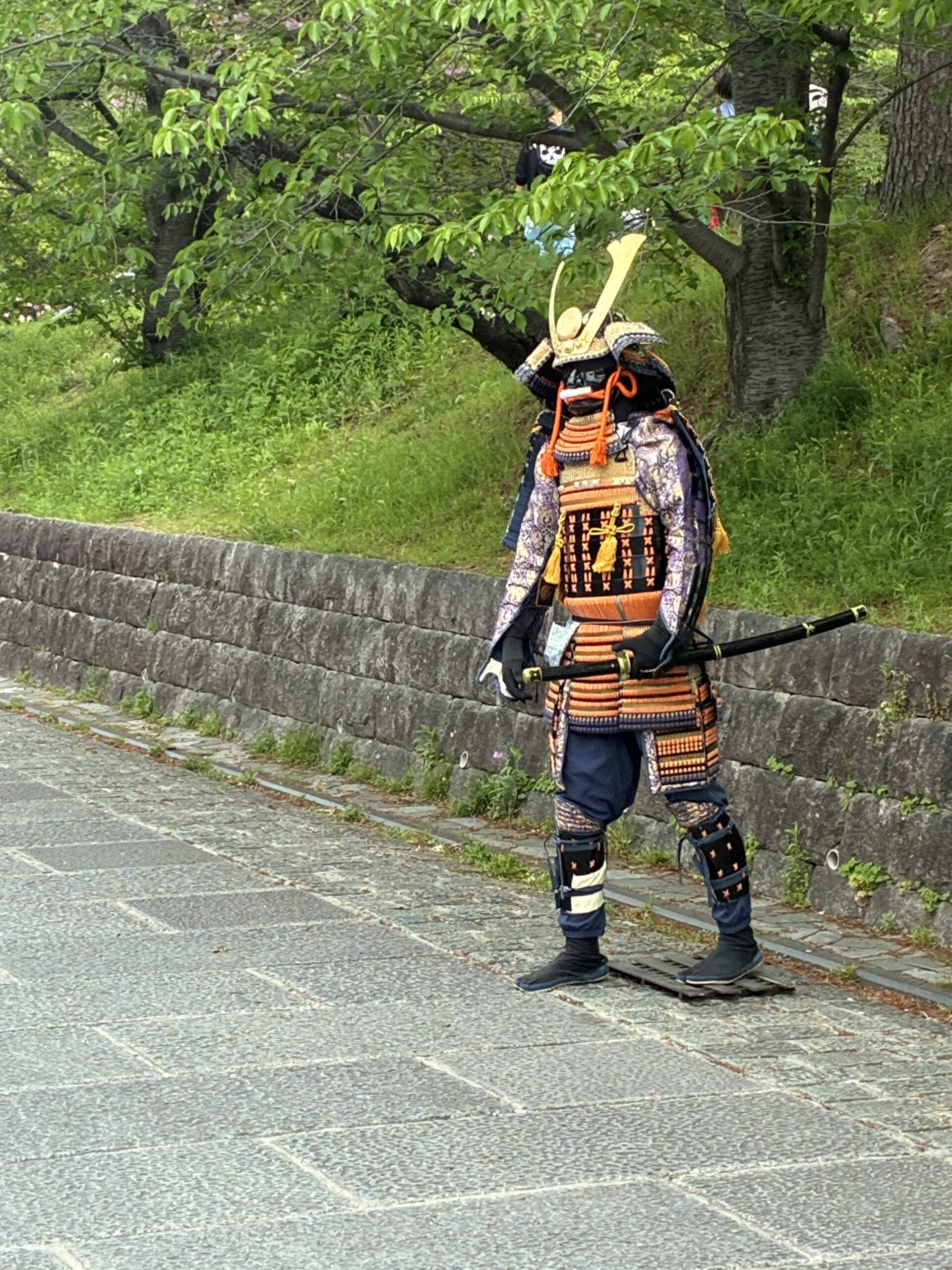
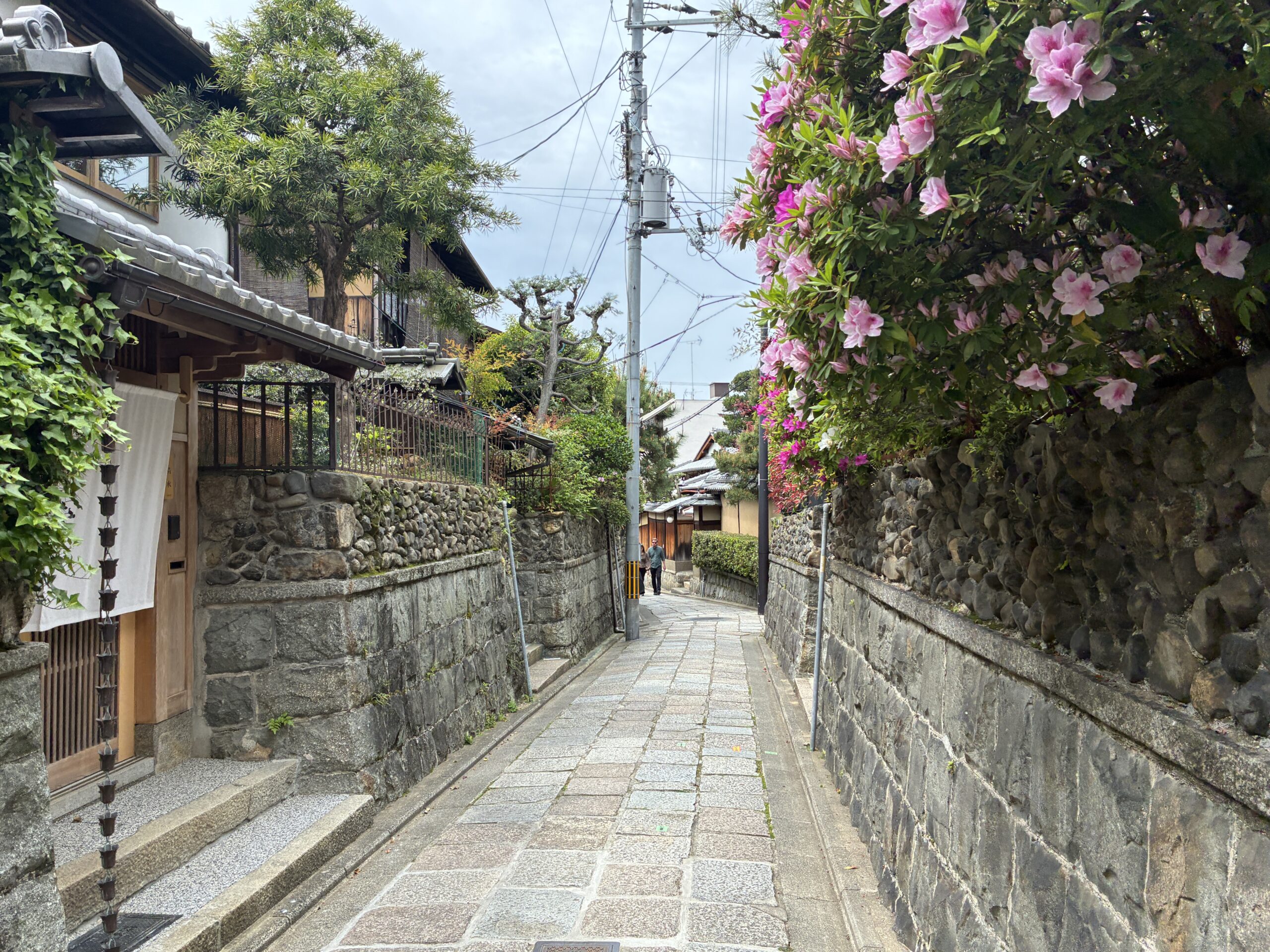
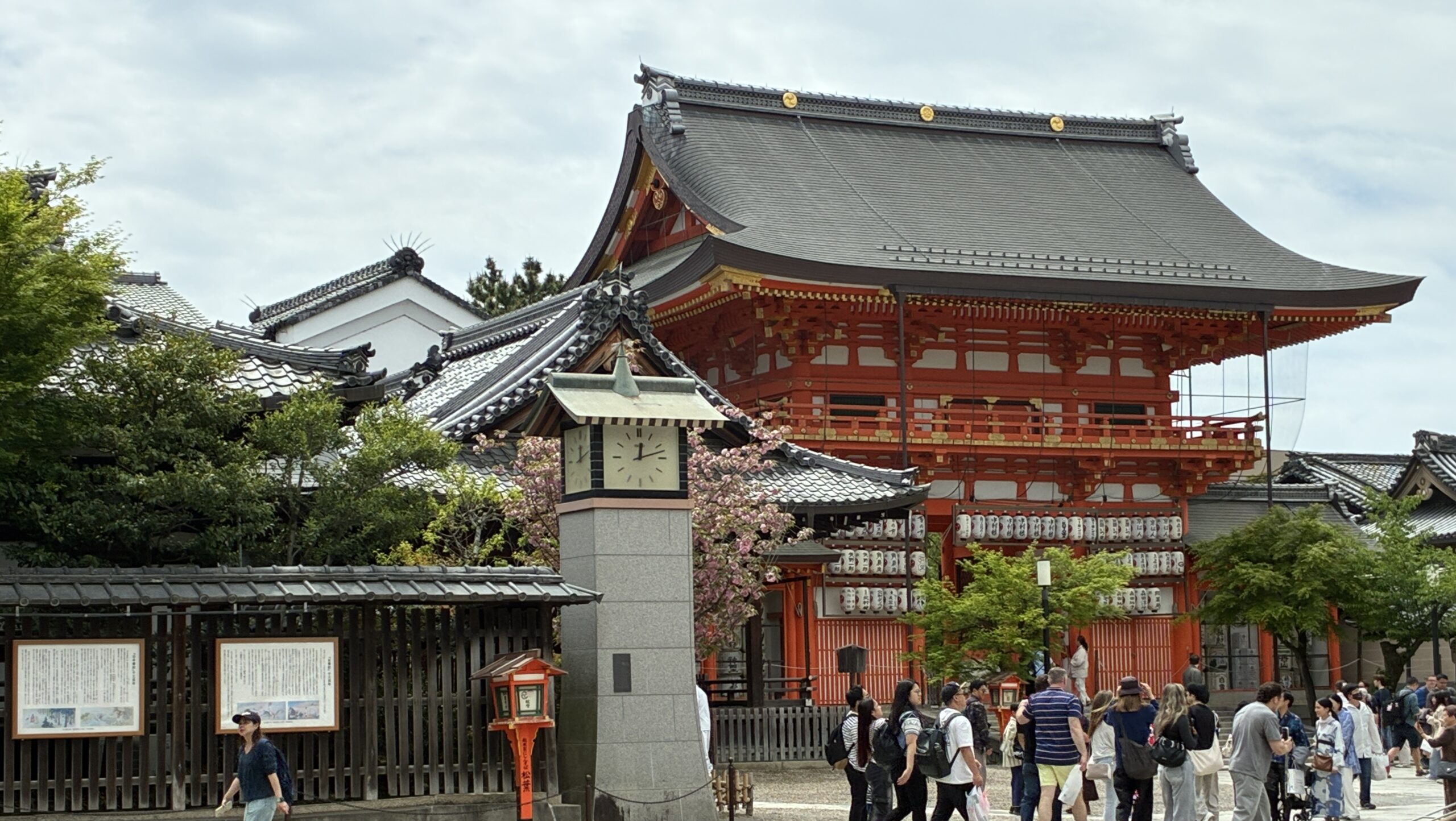
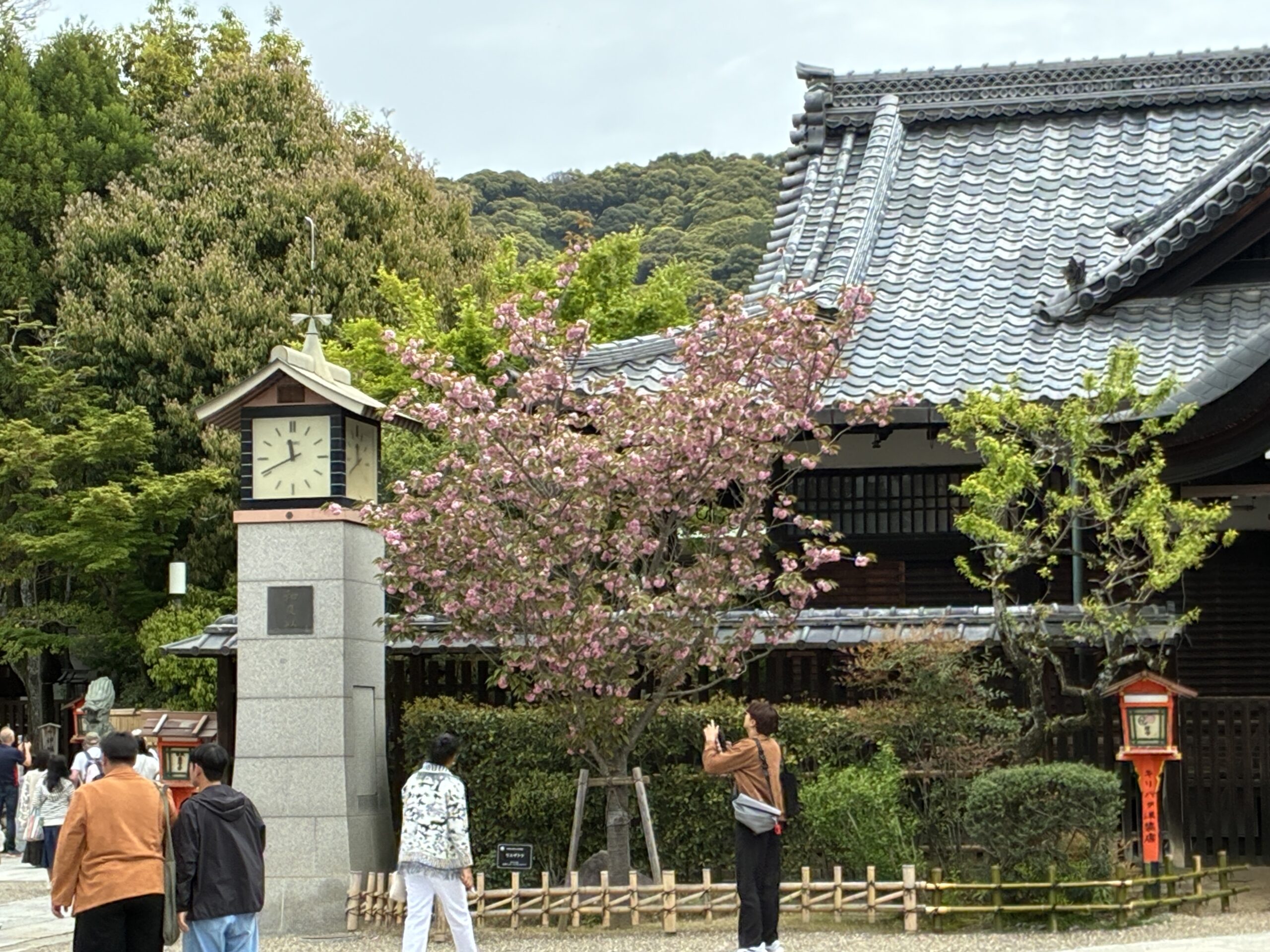
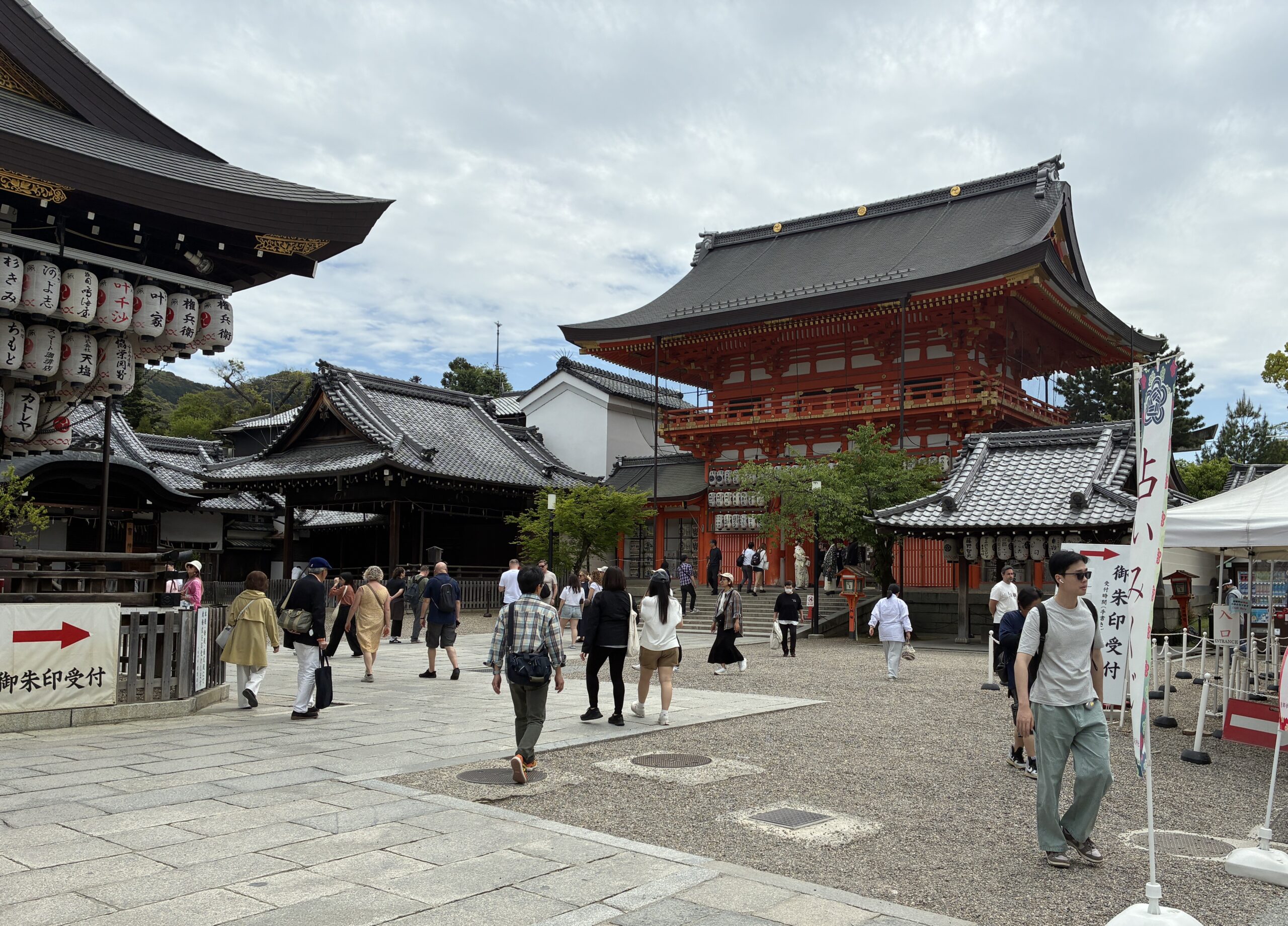
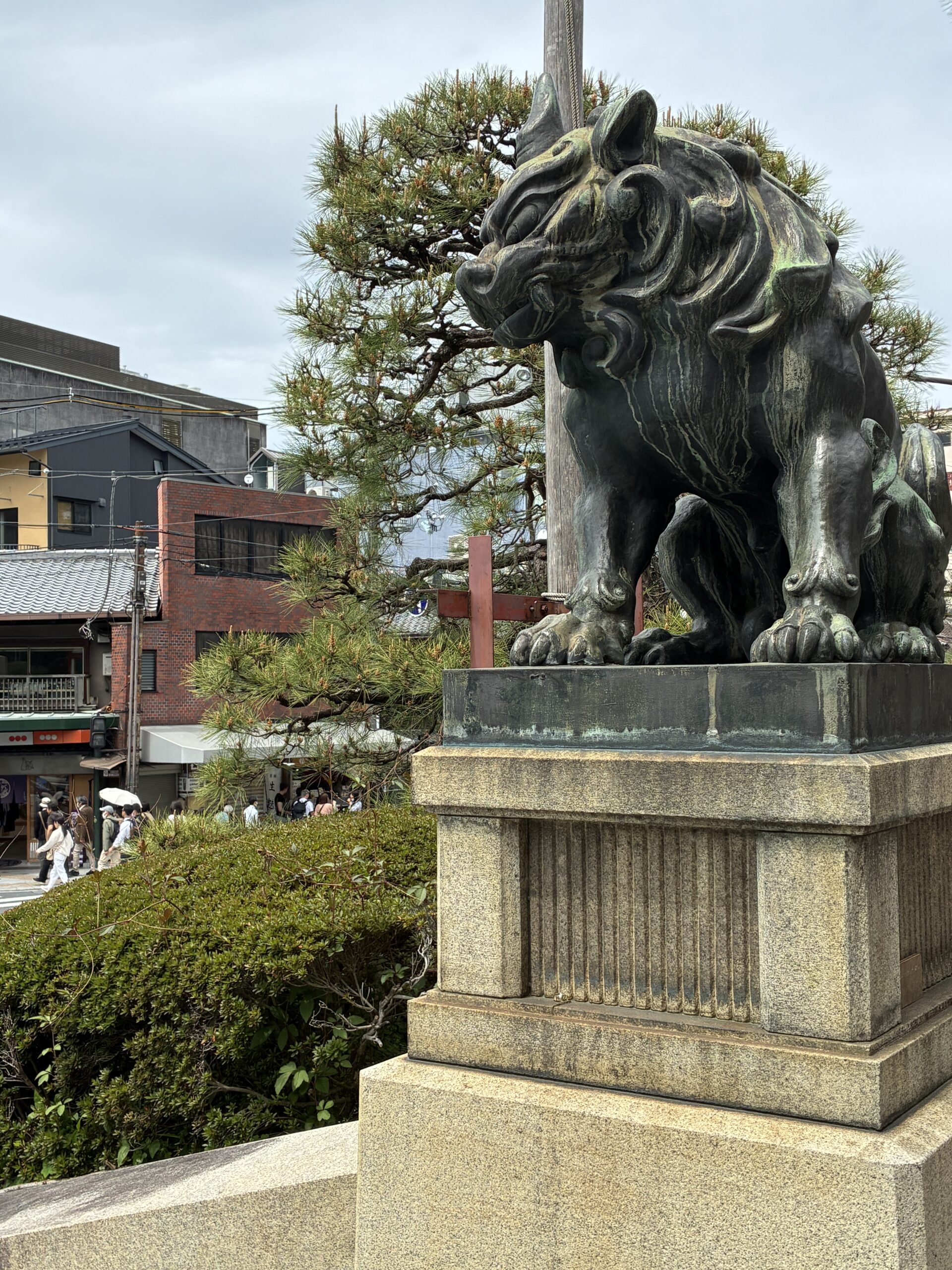
We wound up our walk in the large grounds of the Yasaka Shrine. By now, Laurence was really, really fatigued. We had eaten some breakfast on the way to Gion district earlier, as the rest stop and food really helps recharge him, but today not so much. Maybe just overdid it yesterday. We even ate a little more before the walk started, which again helped, but he was really worn through. Getting up the gentle hills, but hills nevertheless, along the walk was very hard going.
So, back to the hotel, but this was still a bit of journey so we took it slow, ate along the way, and upon reaching the hotel around 2:30 that was it. Laurence spent the rest of the day and night in our room, sleeping and resting, and by the next day was much refreshed and recharged.
Me, I blogged a little and then headed back out around 3:30, heading for the Imperial Palace, which sits in the Kyoto Gyoen National Garden. It’s not too far of a walk, maybe a mile, but I rambled and kept changing my mind about where I wanted to go, and eventually got to the Palace a little too late, just after it was closed to visitors, but I will hopefully visit it again before we leave, as well as the grounds of Nijō Castle.
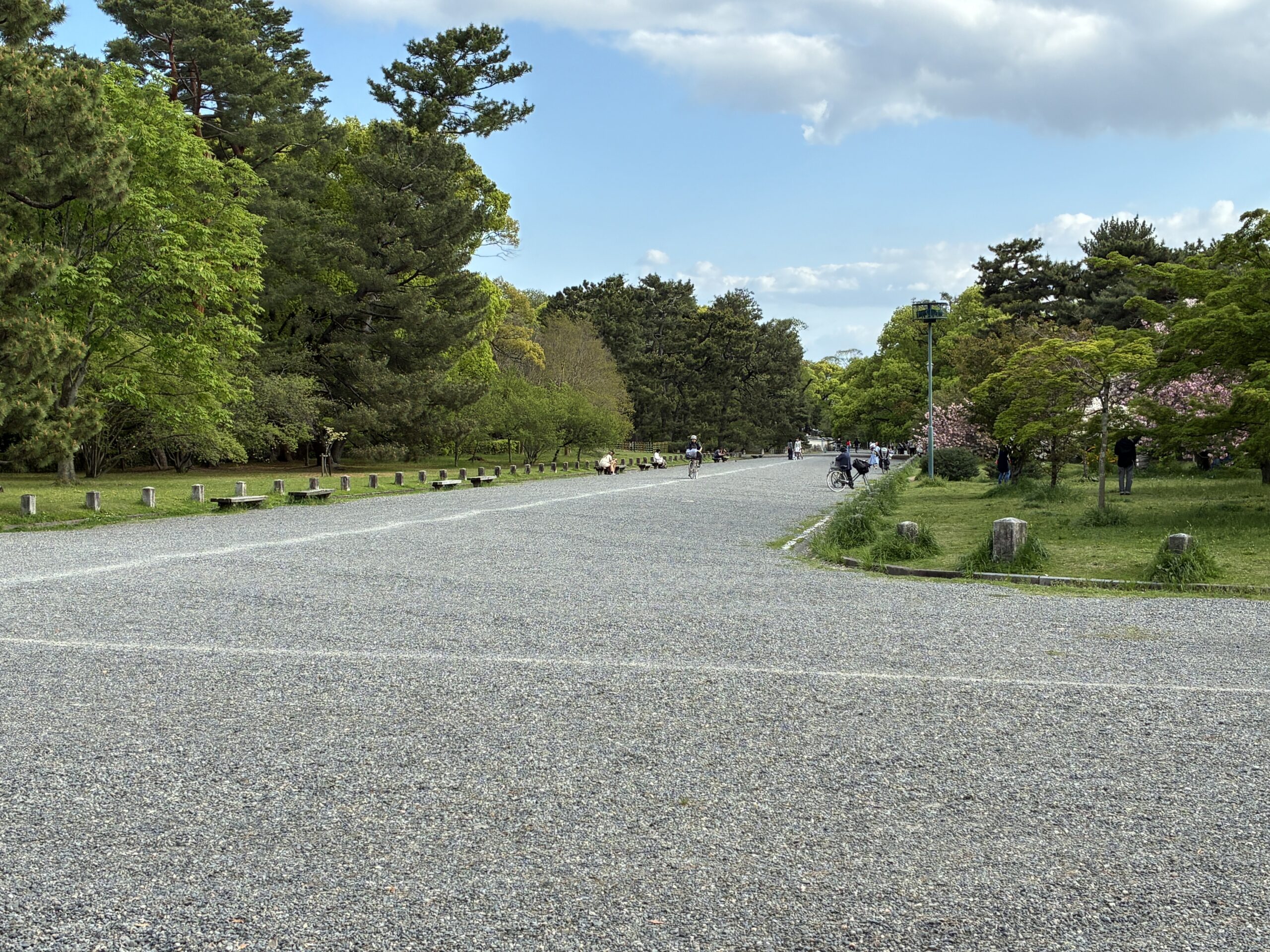

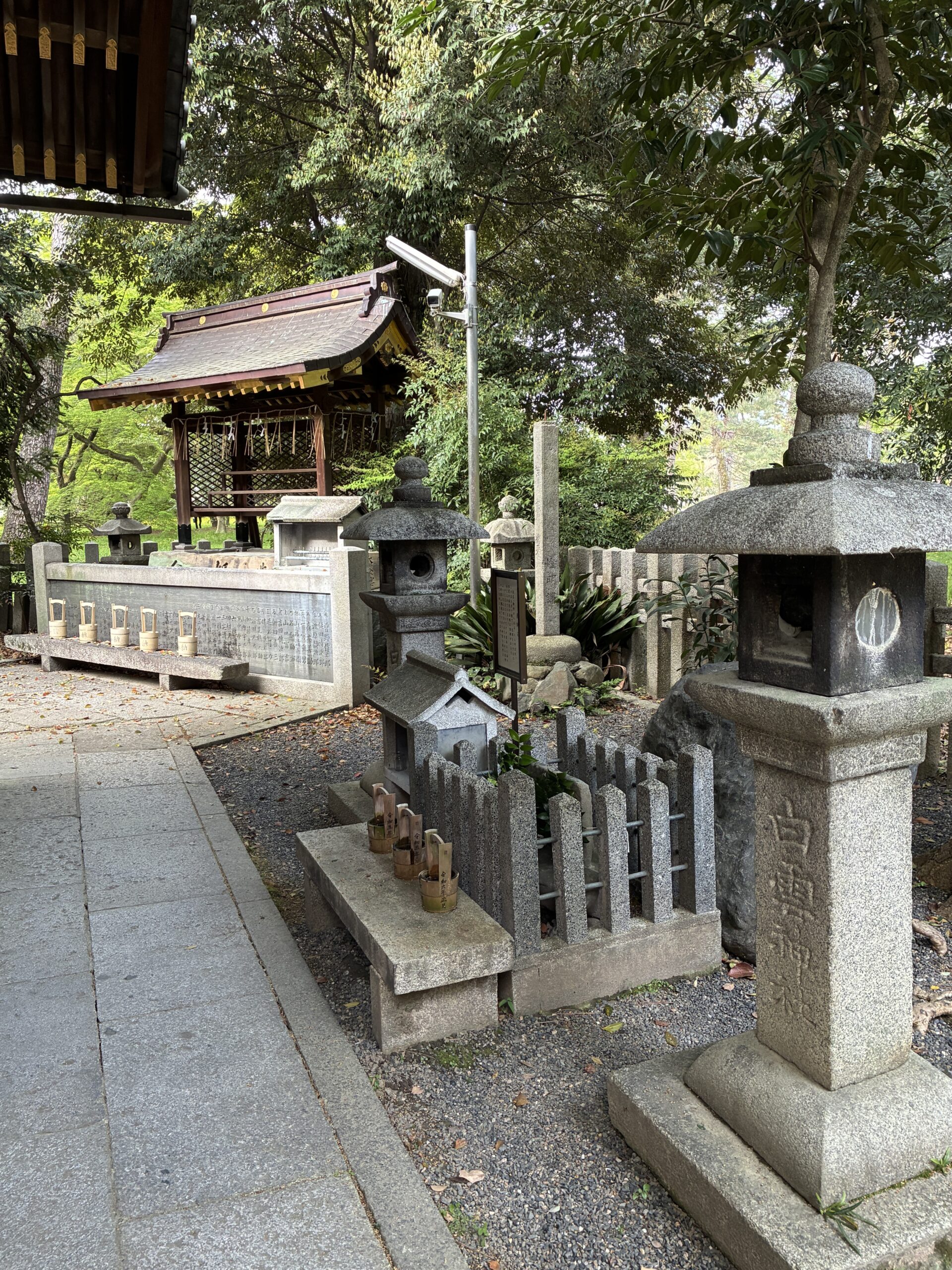
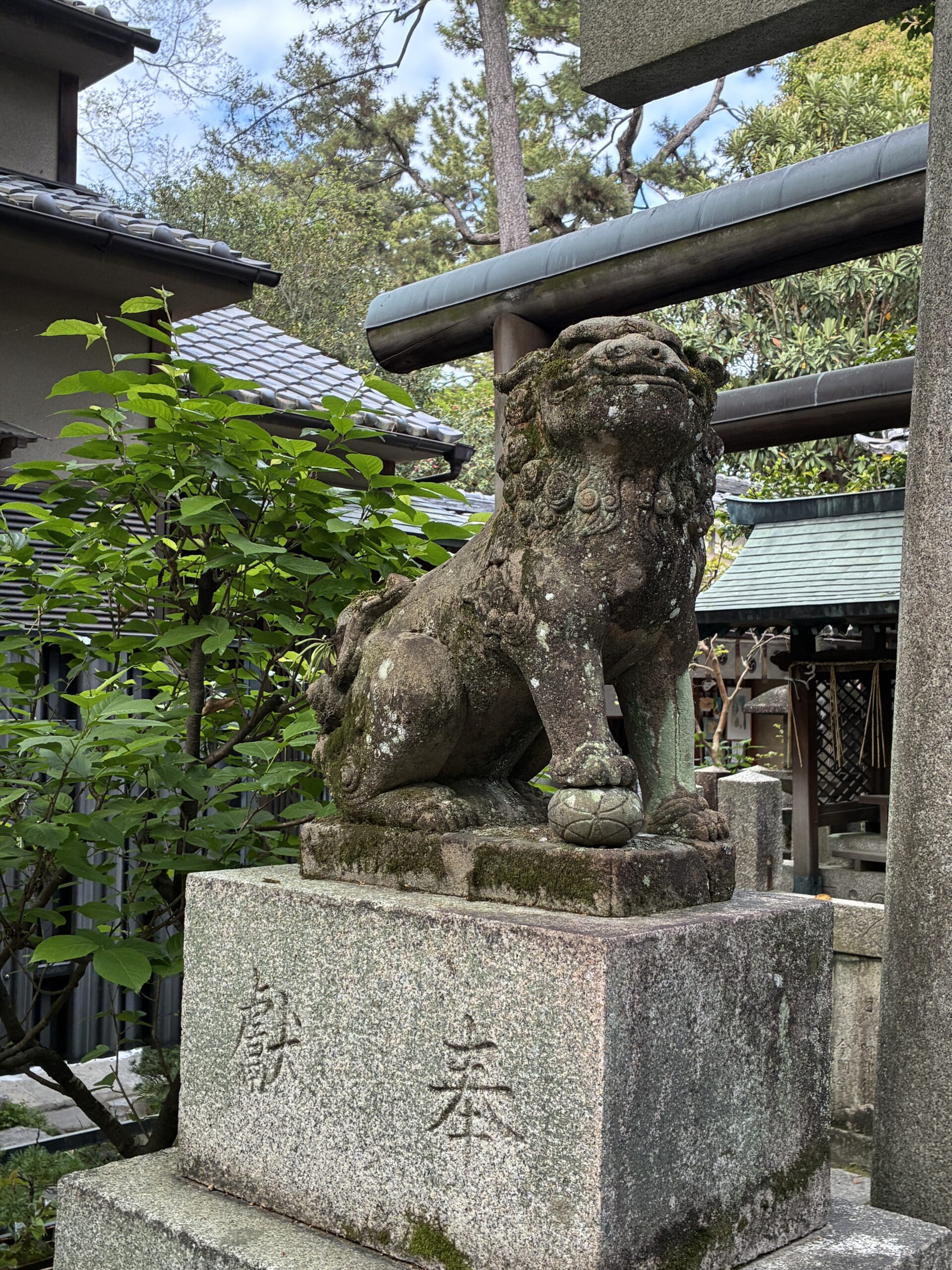
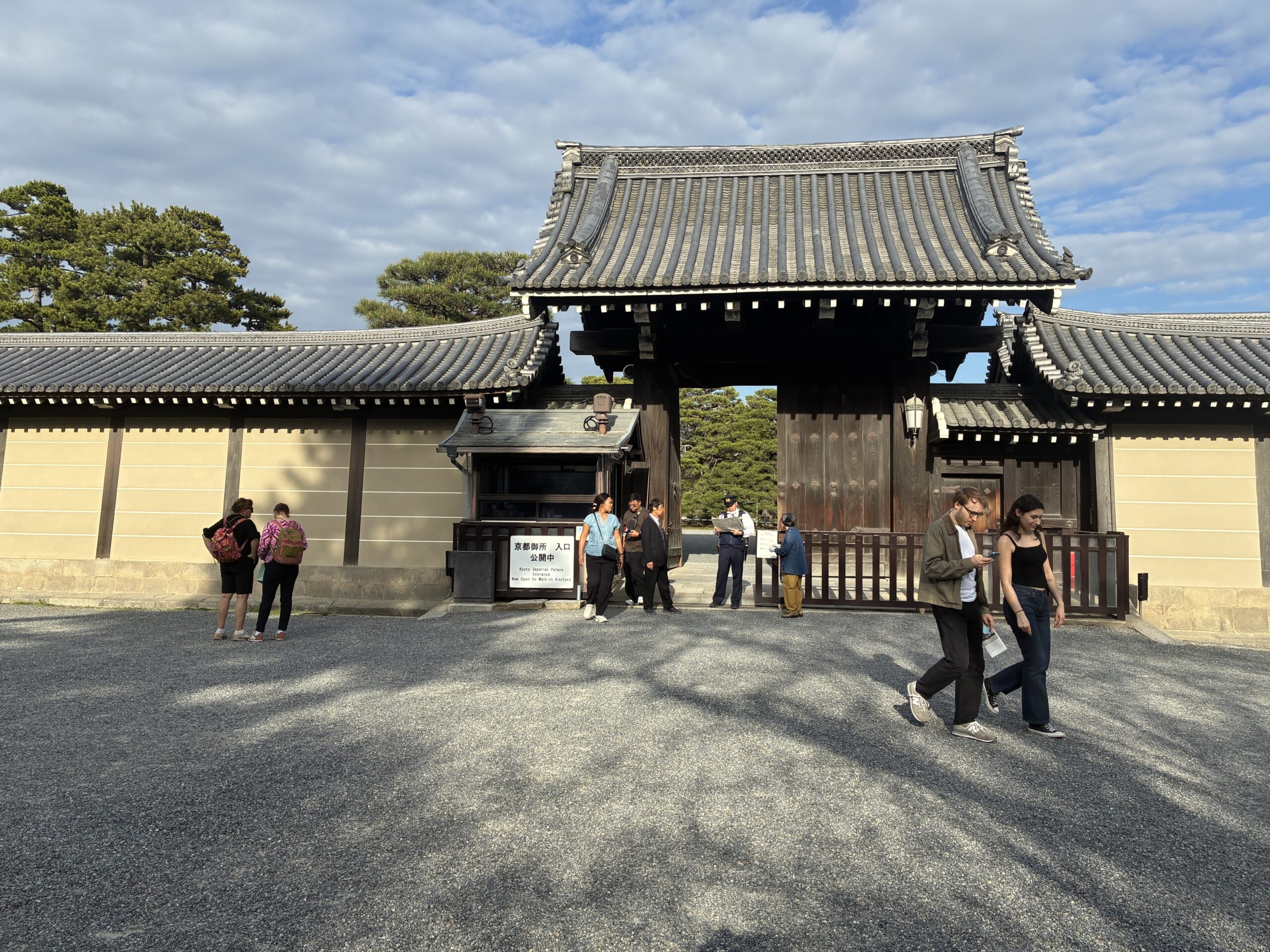

After I left the National Garden (I shall return), I decided to head back to the Gion and Higashiyama districts, mostly to walk along the rivers. It is a beautiful area, for sure.
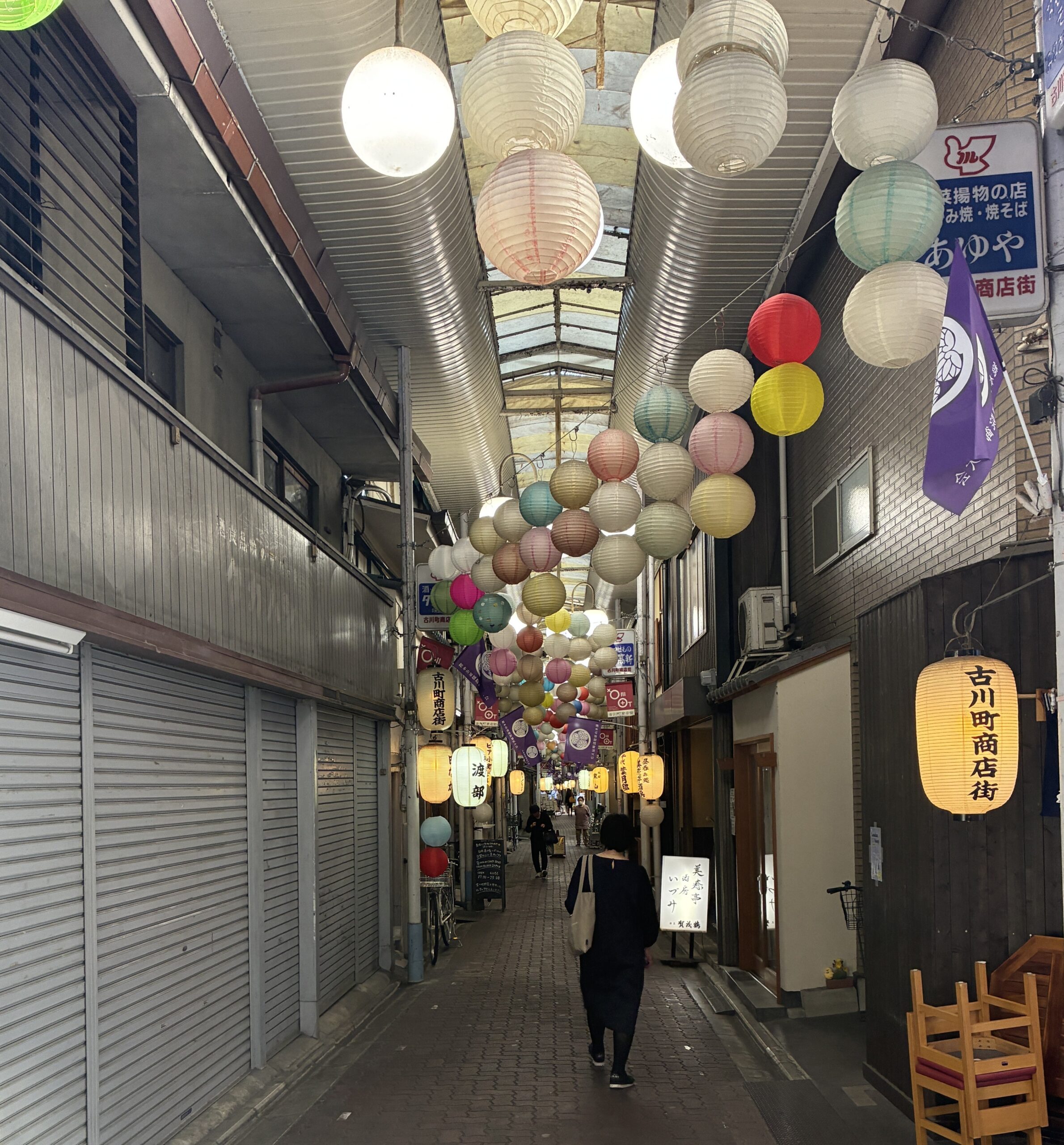


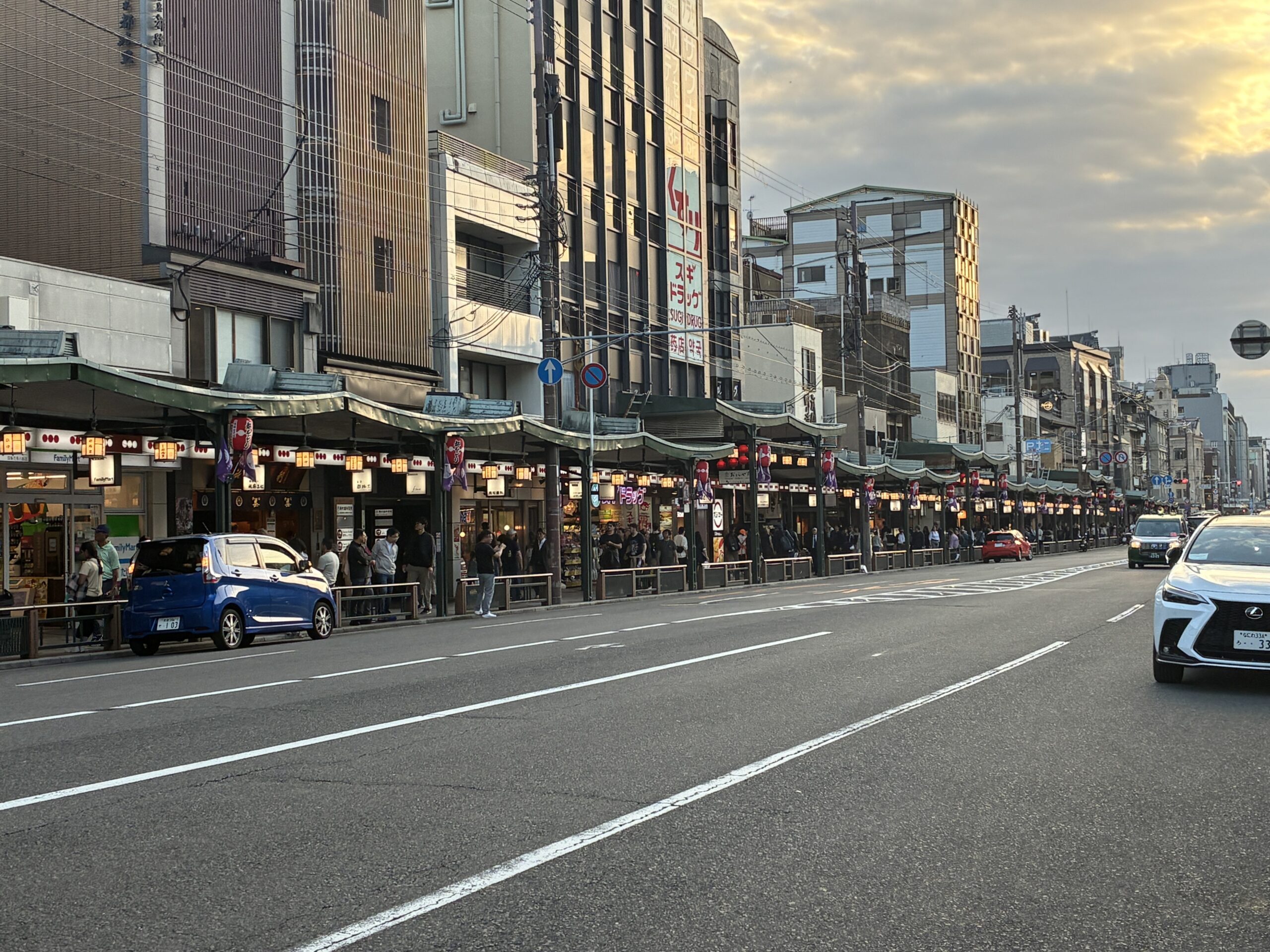
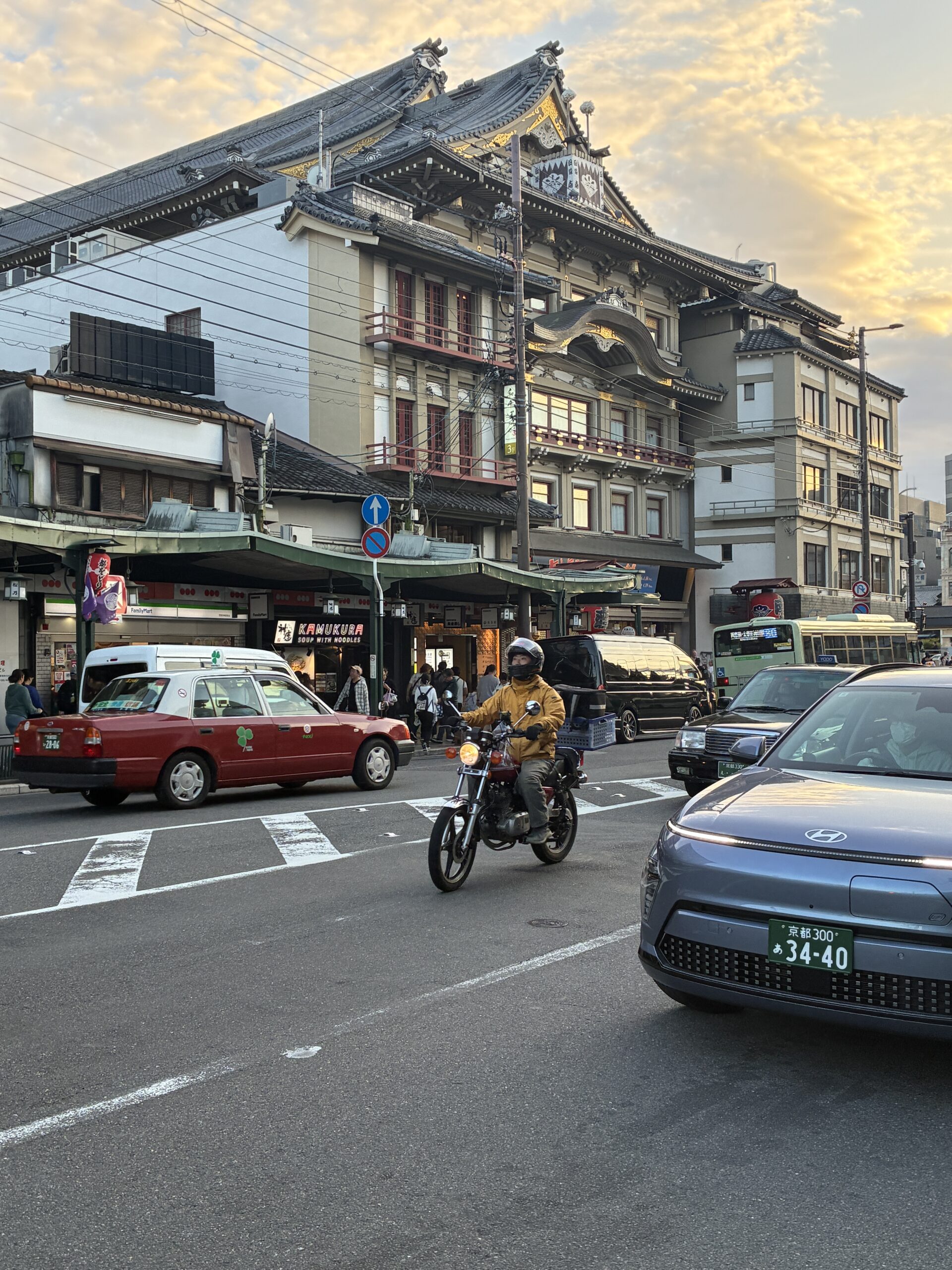
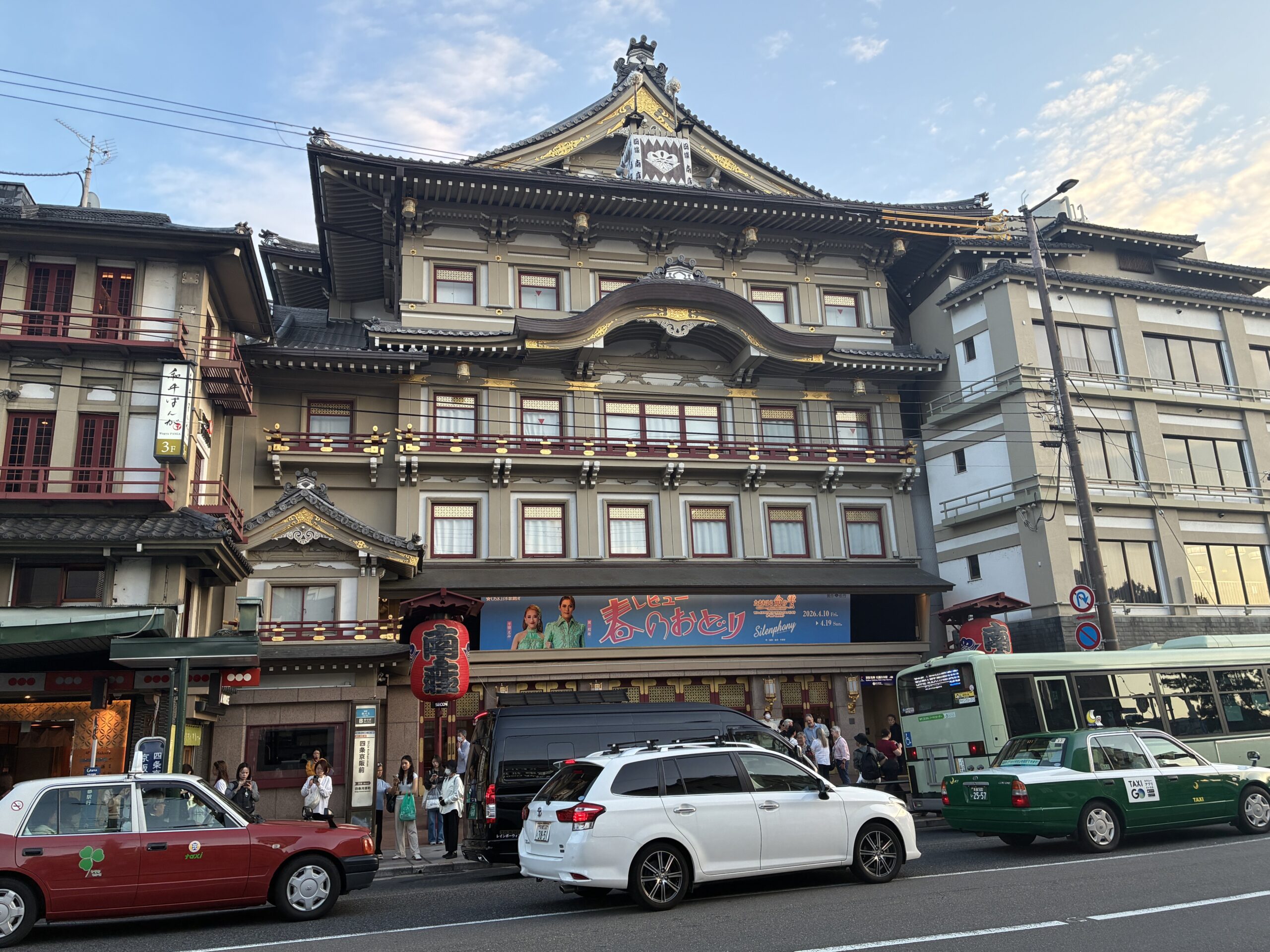
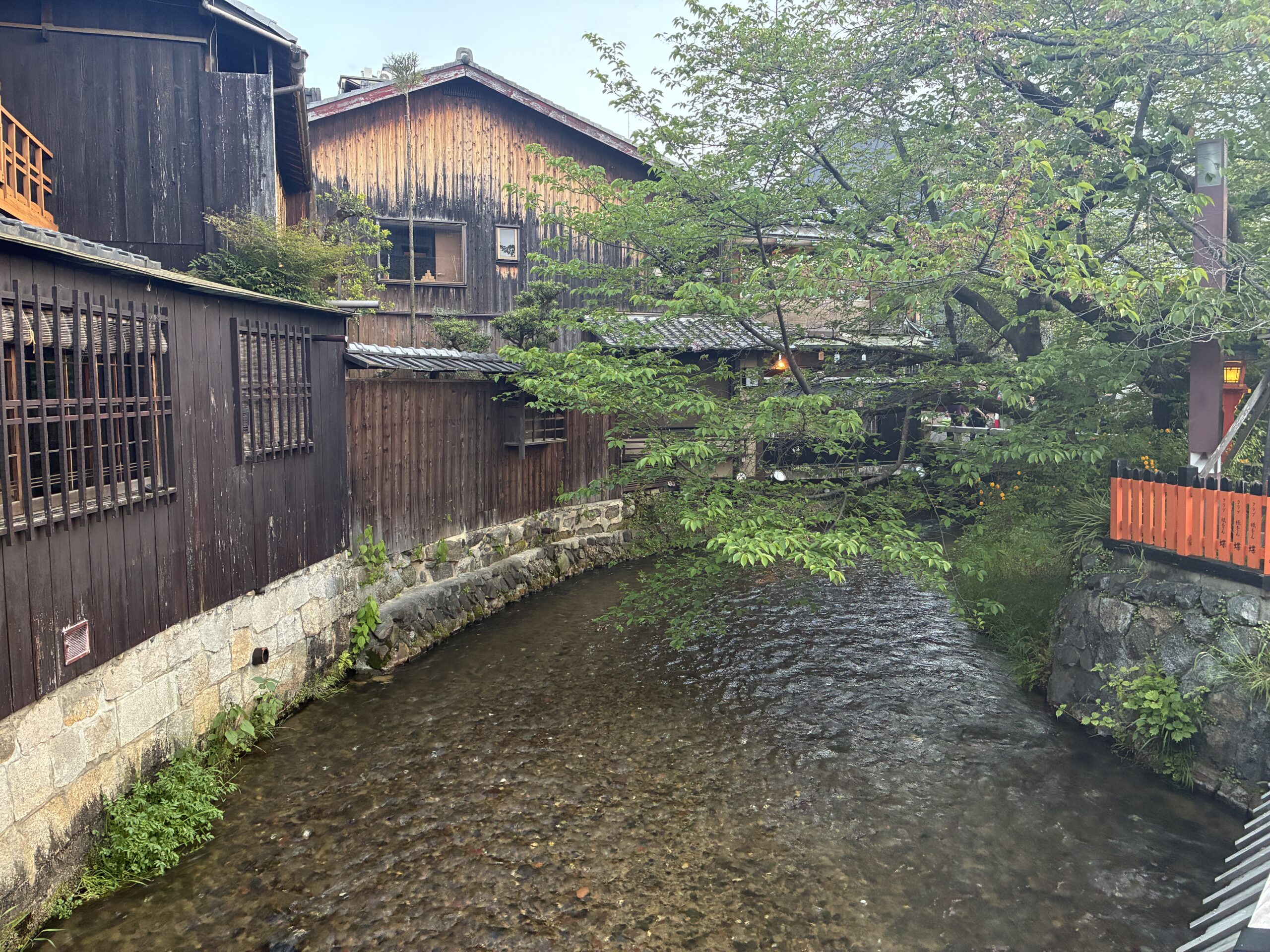
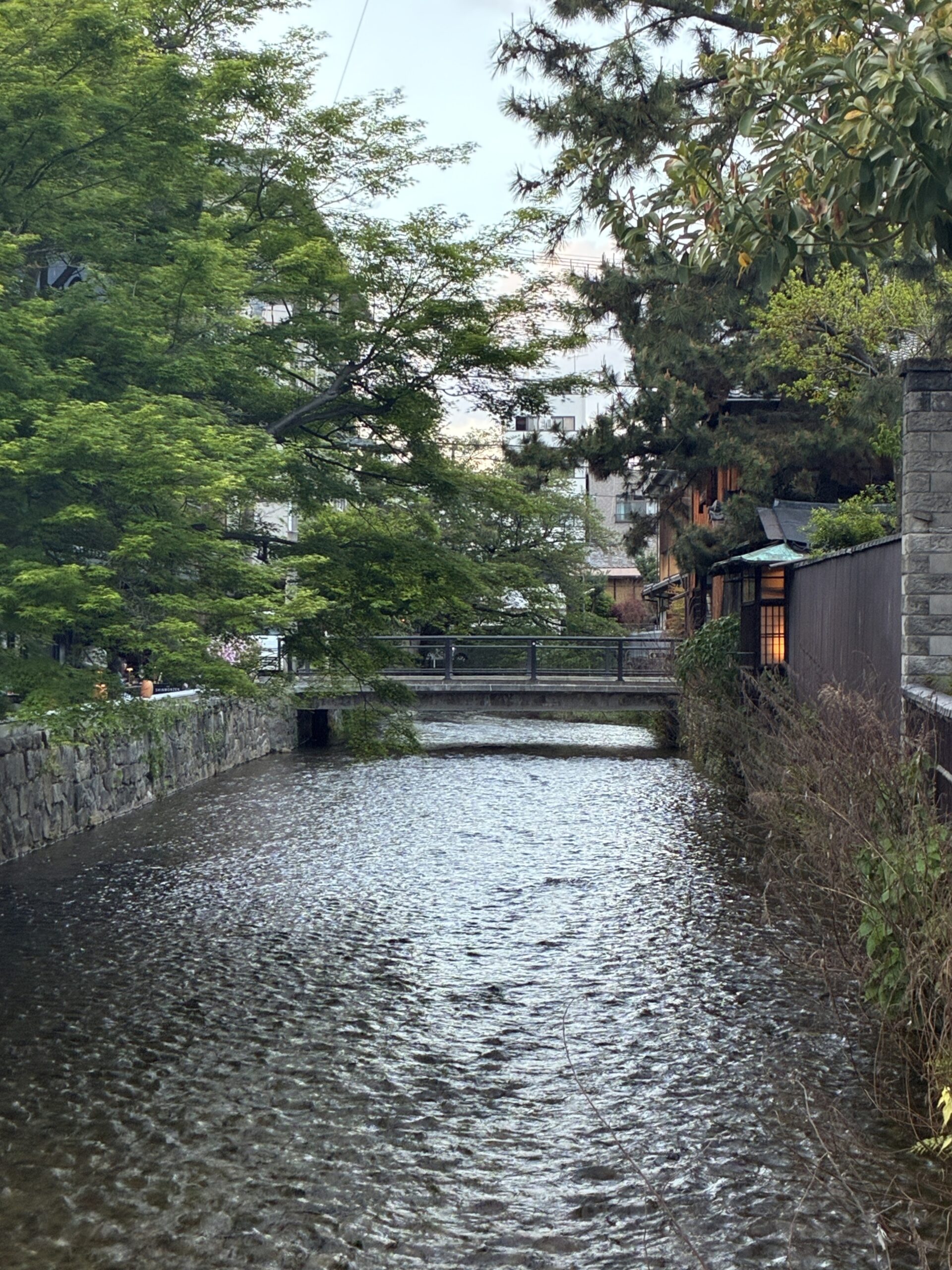
And that was it for the night. After a long day of walking, covering perhaps or 9 miles in total, maybe a little more, I headed back to the hotel, arriving around 8, and Laurence was just waking up after some restful and hopefully healing sleep. Rather than going out to eat, I picked up some prepared foods and we ate in the room, talked, and watched Japanese television. Laurence went to sleep again for the night, and hopefully will feel well and rested in the morning.