Ho Chi Minh City and the end of the trip.
Today was a good day here in Ho Chi Minh city, and a long one, and I’m glad I decided to come down here after all (although that was the original plan), rather than returning to Hanoi. As I write this, I’m sitting at Saigon airport, waiting for my 1:50 am departure, and it’s only 9:30 pm now so I have some time on my hands. I could have come to the airport later, and actually had a couple more things I would like to have done, like the nightscape bus tour around the city and visiting the observation deck at one of the commercial high rise buildings, and I also didn’t get to the Saigon River, but on the other hand I’m pretty pooped after a long day of mostly walking, with no hotel to go back to during the day to recoup.
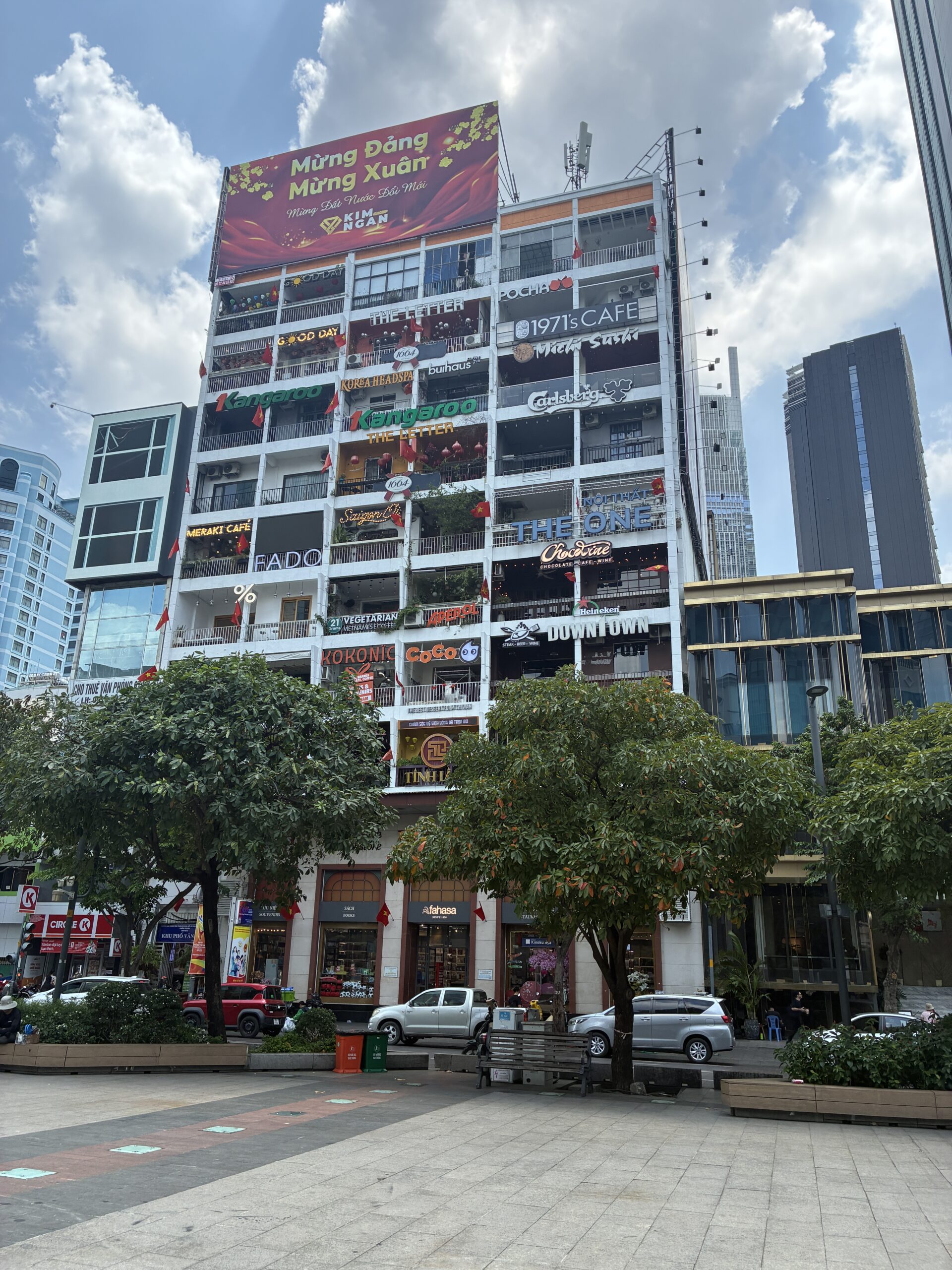
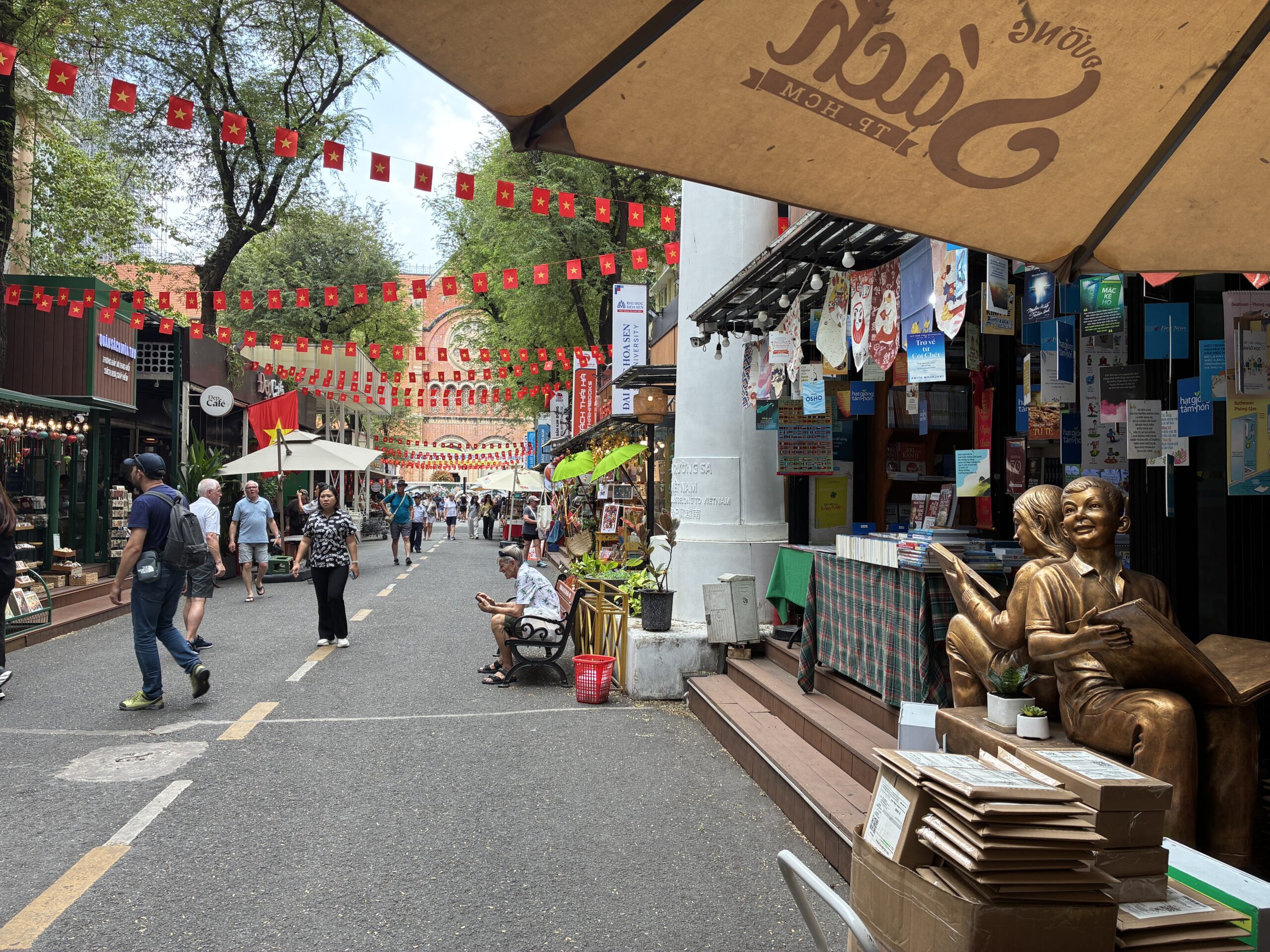
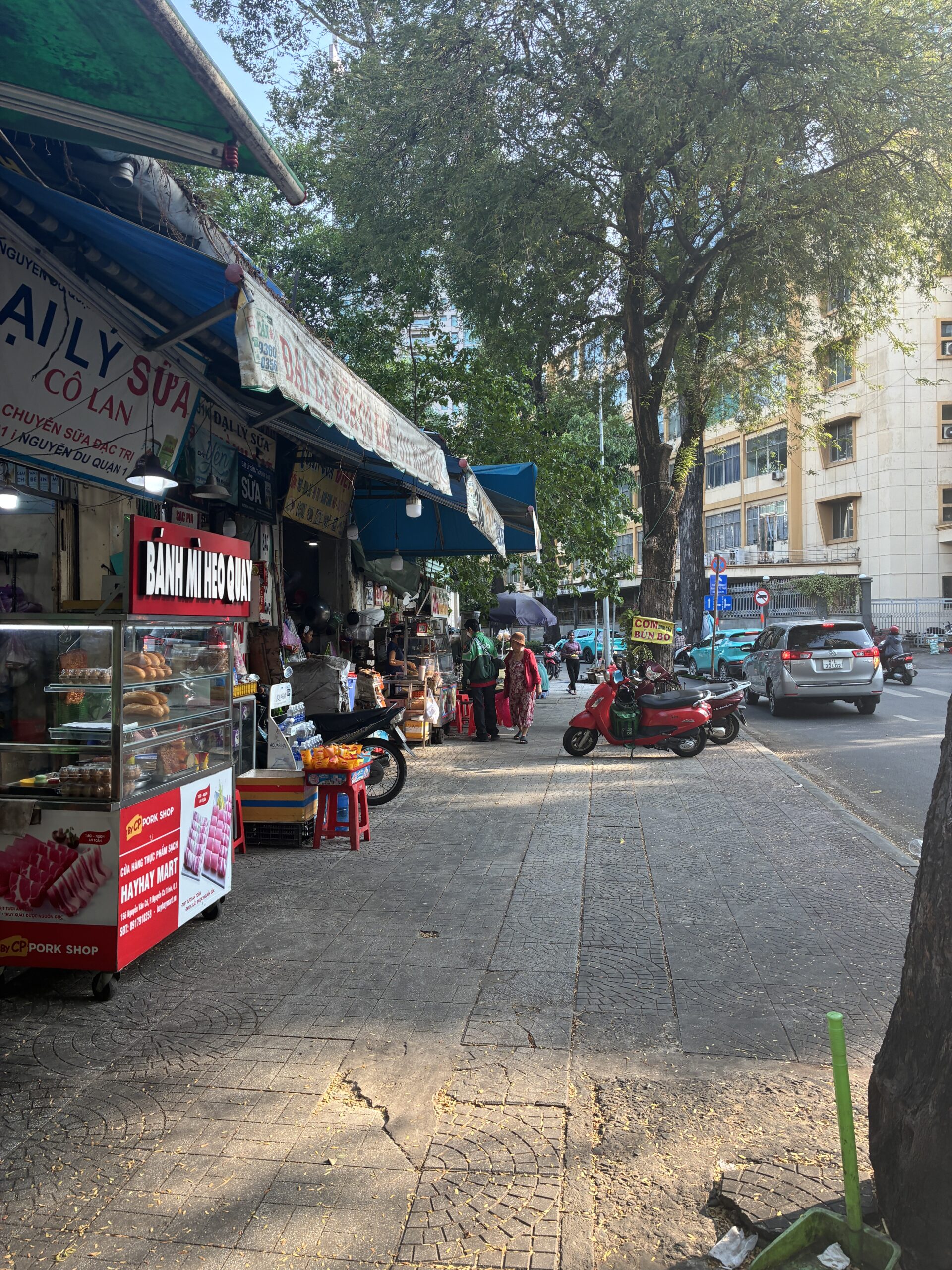
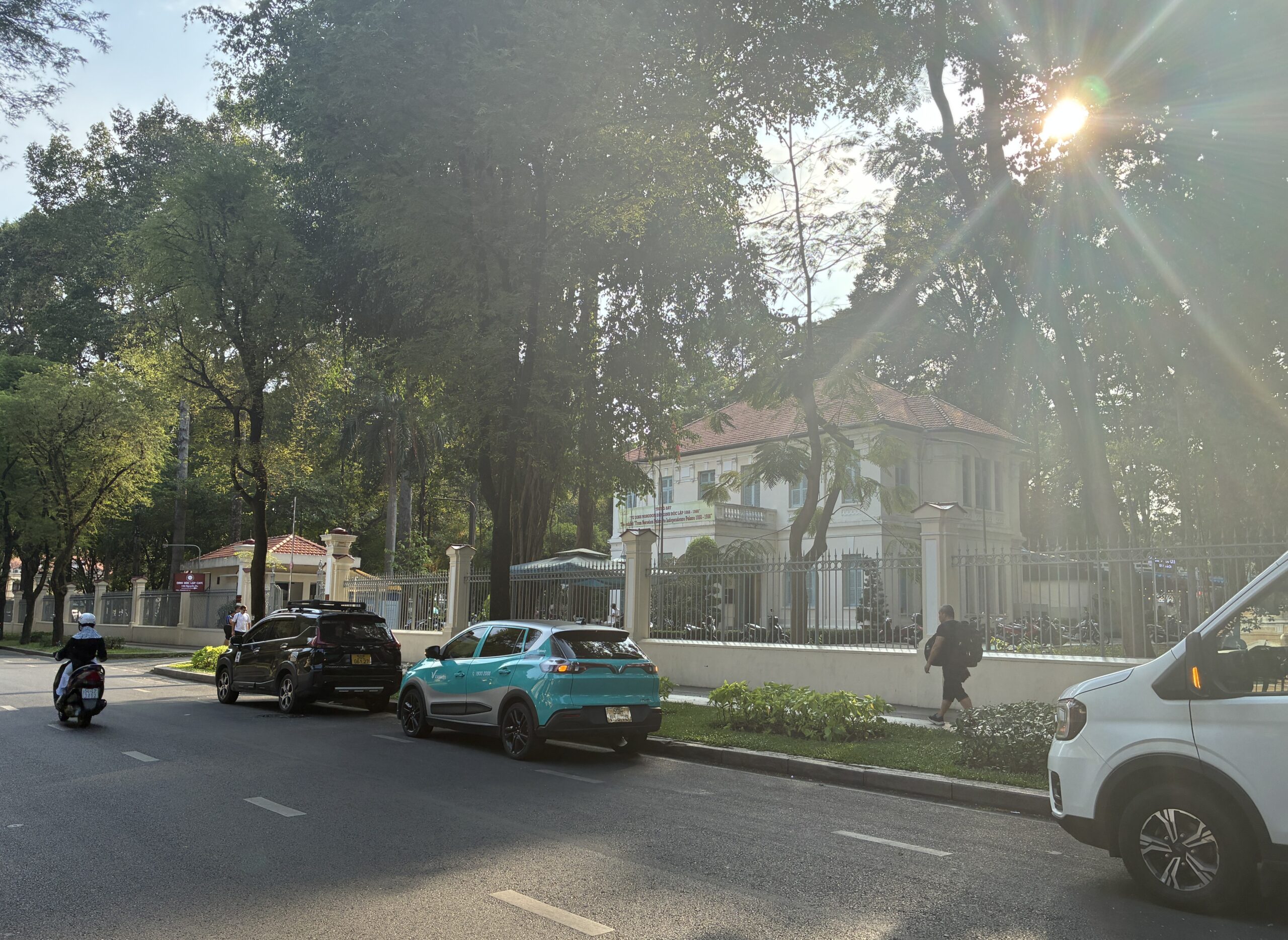
I left my backpack with the hotel this morning after checking out, and went off to meet my tour guide for 10:30,taking some shots along the way of the broad and tree-lined main avenues and boulevards, lined also with buildings from French colonial times and modern high rise buildings, and the narrower side streets. and in both cases often with stores or street vendors selling their products on the street. It’s a colorful city, with a European look.
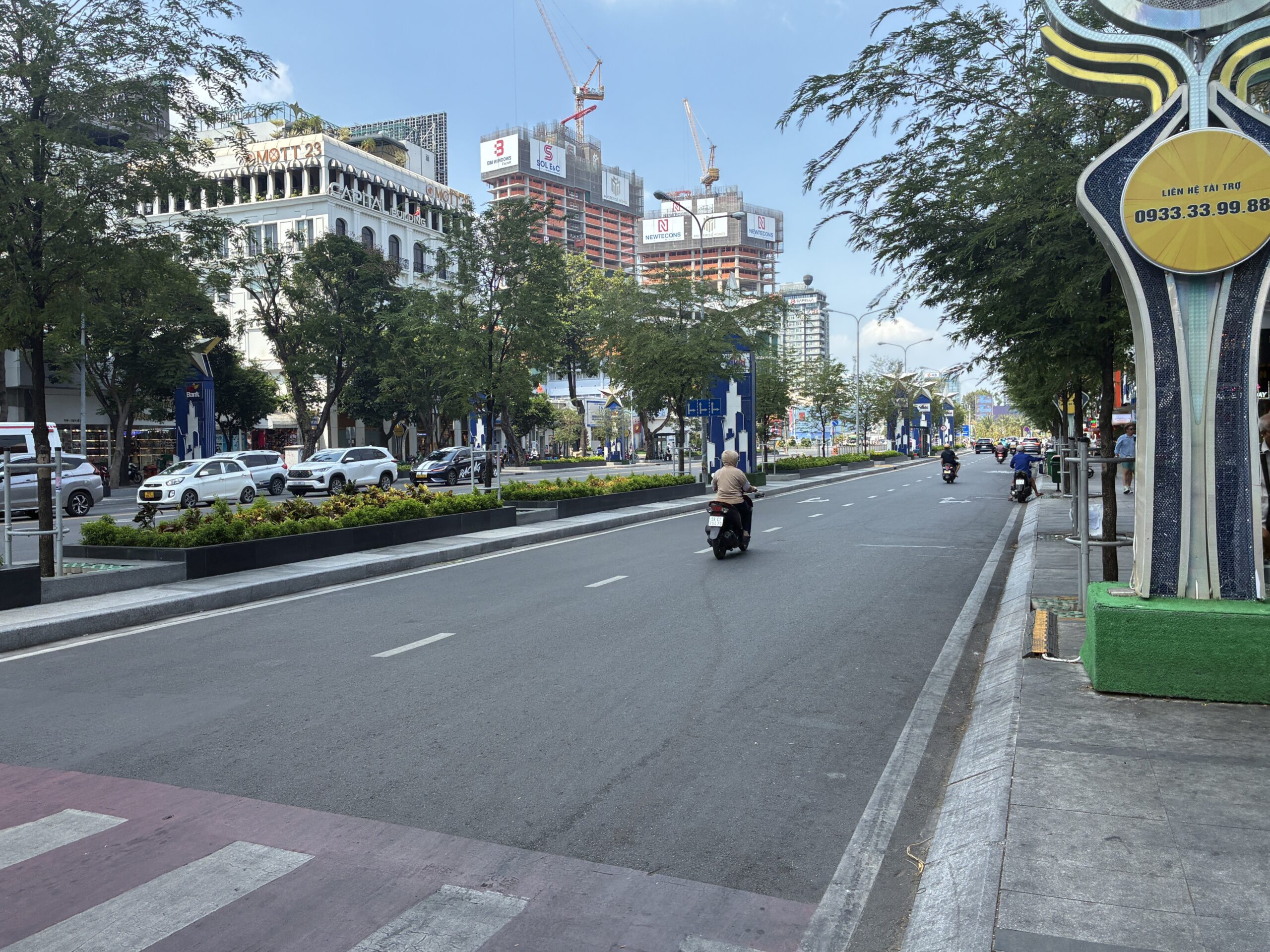


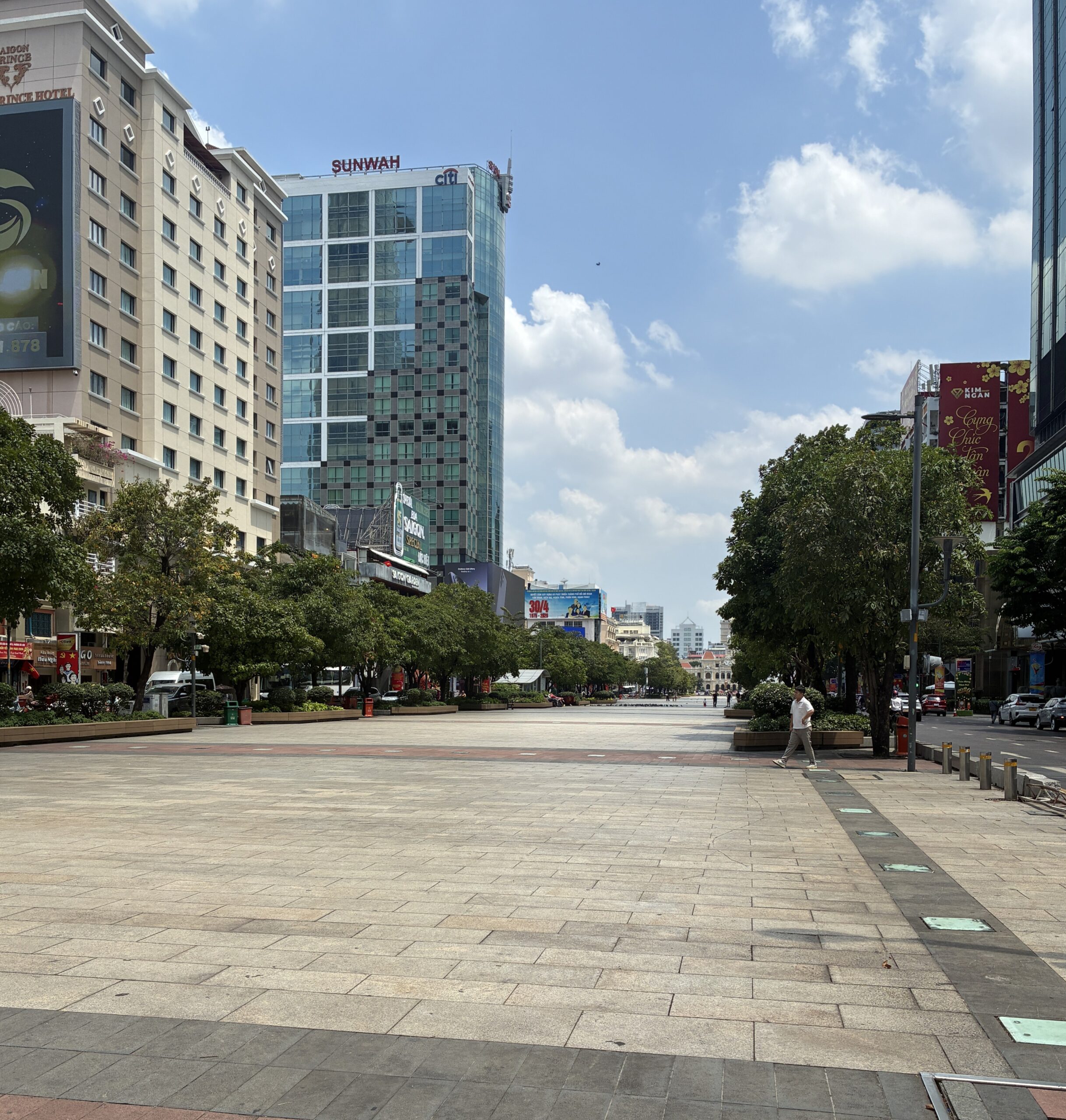


The free tour actually got cancelled as I was the only customer, and they asked whether I wanted to pay $30 for a private tour instead, which I did, and I’m glad I did. Quan was my guide, and a very nice guy, as well as being a very professional and competent guide.

We covered quite few a places, and spent the usual 2½ hours or so walking around in increasingly hot weather, and it got to around 97 degrees with plenty of humidity by noon, and stayed that way into the afternoon and the rest of day and evening, although did cool off by a few degrees in the evening. It was still hot and wet, though.
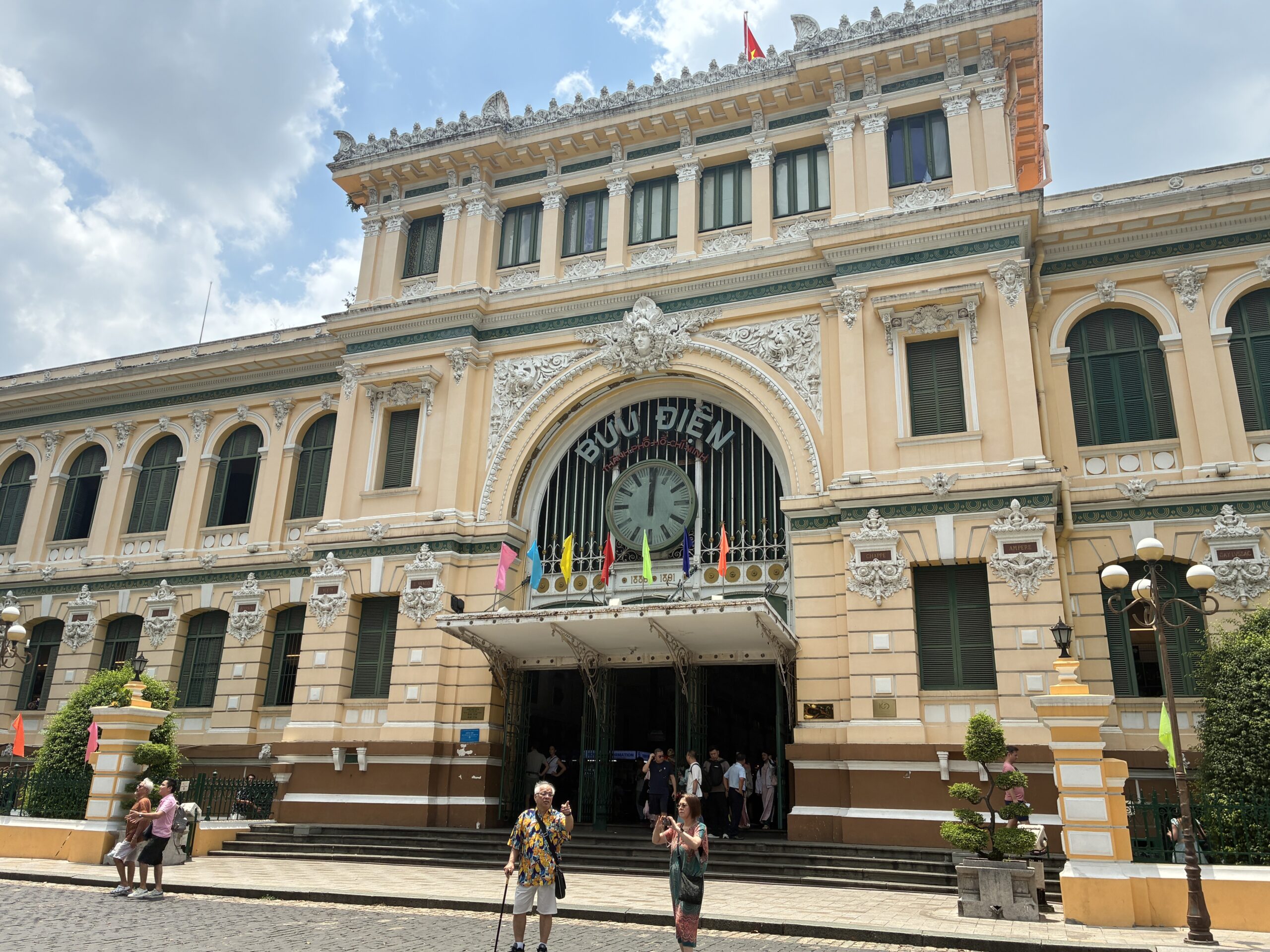
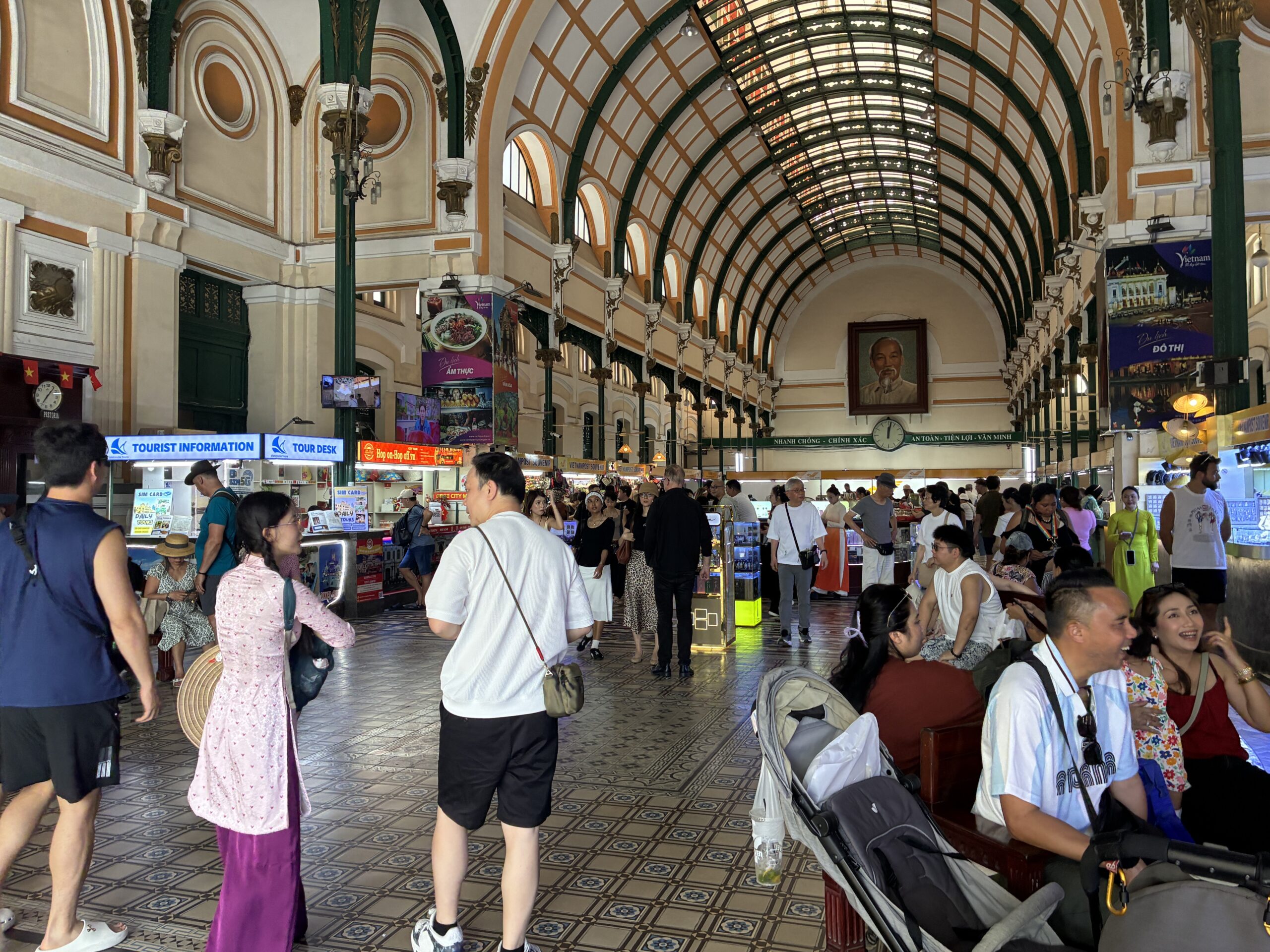
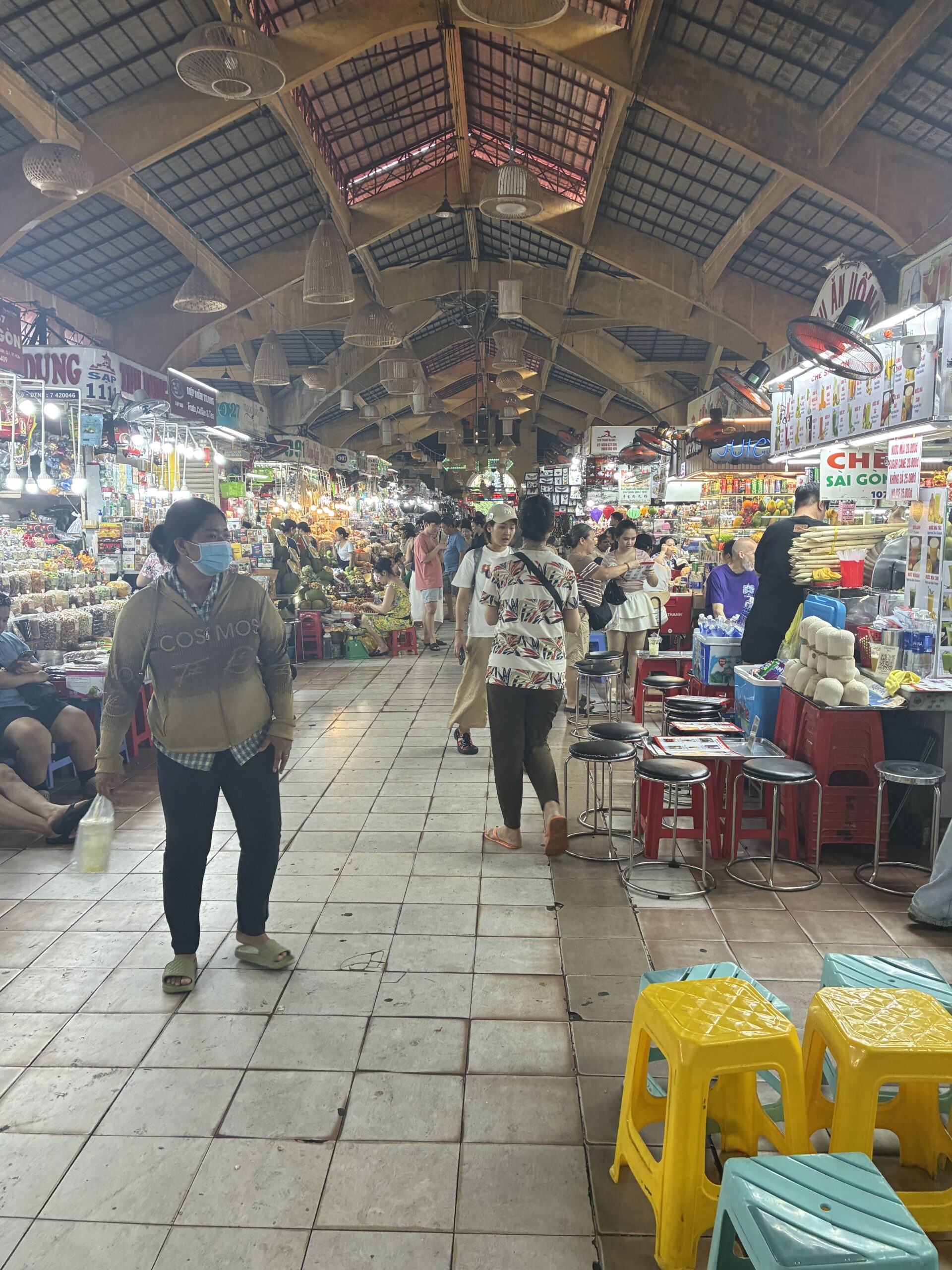
This wasn’t an off the map type walk, and instead covered many of the visitor sights, including the Ben Thanh Market, the market most associated with the town, and the old but still working Saigon Central Post office, built between 1886 and 1891 during French colonial rule, again by the company founded by Gustave Eiffel. They apparently did a lot of business in French Vietnam. From the outside, and the inside too, the post office looks like an old European style railway station.
We stopped at the Saigon Opera House, or the Municipal Theatre of Ho Chi Minh City, another French colonial building, in this case built between 1898 and 1900, and very much influenced by Parisian theatres and opera houses, with carvings, statues, arches, and decorative reliefs. The building was damaged during the war, and in the 1950s used as a government building, stripped of its damaged facade, but after reunification in 1975, the theatre gradually returned to cultural use, and was restored to its original appearance, with French decorative features. for Saigon’s 300th anniversary in 1998. While there, I bought a ticket for this evening’s ÀỐ show, which feature Vietnamese acrobats and dancing, looked pretty interesting, and is highly rated. Given how incredibly inexpensive most things are here, these tickets were pretty expensive, at $48 apiece.
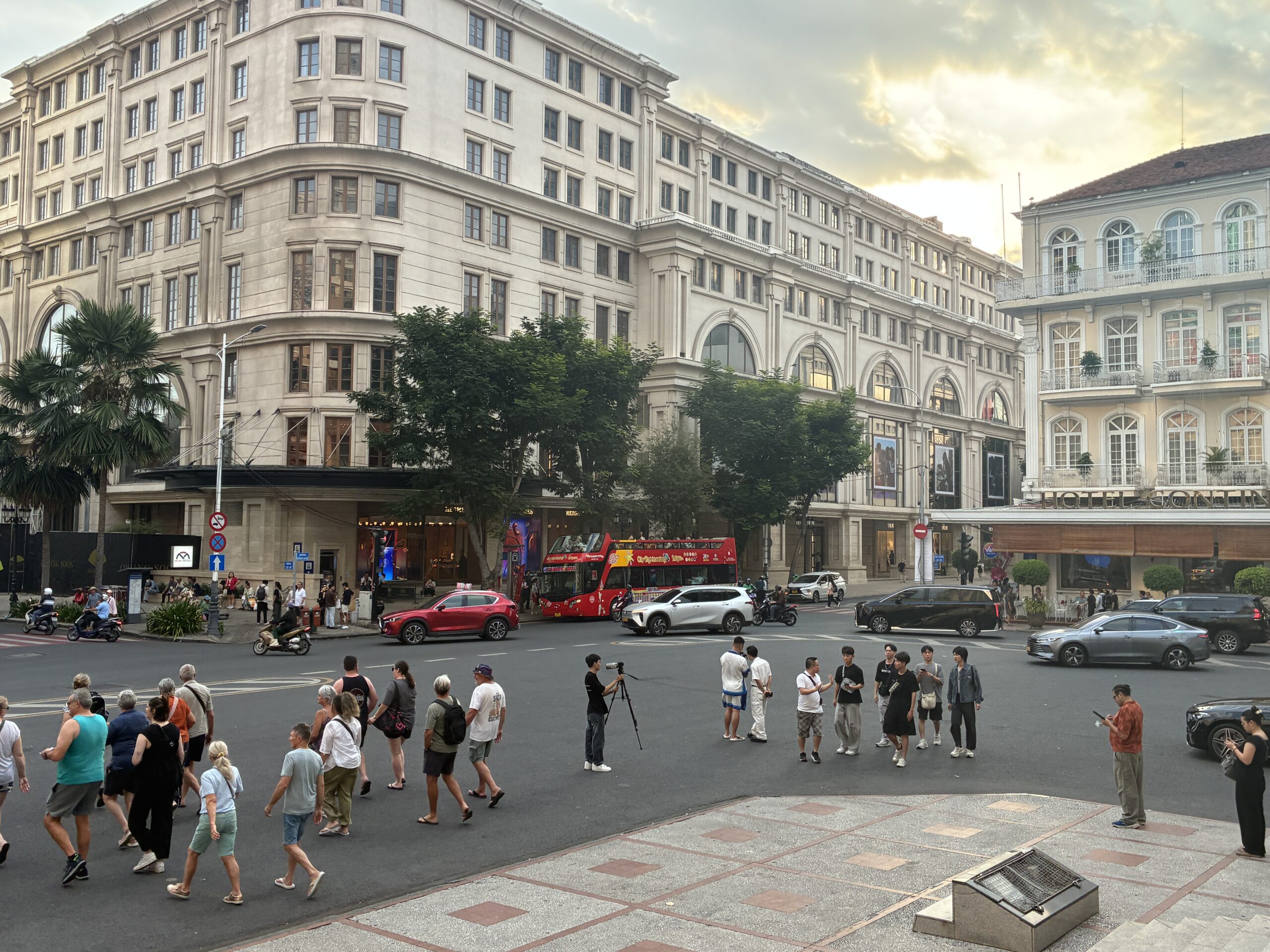
We walked along Nguyen Hue Walking Street, where the statue of Ho Chi Minh is located, and ending at Ho Chi Minh City People’s Committee Headquarters (City Hall), built between 1898 and 1909 in a style inspired by town halls in northern France. I actually covered some of this same territory last night so had some sense of the area, but of course not only was I seeing it in the light of day now, but I had a knowledgeable and interesting guide filling in the details and history, including a concise but pretty good history of Ho Chi Minh himself.


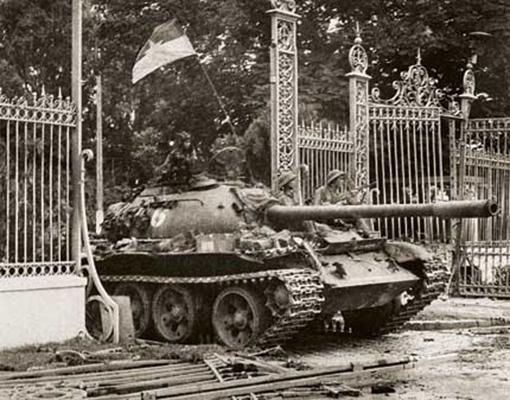
Quan’s parents and grandparents were actually aligned with the South Vietnamese during the war, and his grandfather, who was a fairly wealthy farmer and land owner, was stripped of everything but his home after the North Vietnamese took Saigon and unified the country under a communist government, and Quan’s father spent two years in jail, subject to communist rehabilitation while there. His parents and their siblings (his father is the youngest of 15 children) and grandparents are still opposed to the government, and Quan joked they would arrested if they were overheard. Except he really wasn’t joking. Although Vietnam is a fairly liberal country, anti-government sentiment is not allowed. In fact, at one point, when we were at the former Presidential Palace, as Quan was discussing its history and collapse when the North Vietnamese Army crashed through its gates in April 1975, he showed me the flag of the former South Vietnam, which he had on his tablet as part of the tour, but it had to have a large red X through it as showing or displaying that flag is illegal.
The Presidential Palace, now known as Independence Palace and open to the public as a museum and sometimes used for state events, was the former home and offices of the South Vietnamese Presidents, and Quan gave another concise history of the four Presidents from 1967 until the fall of Saigon in 1975, and at the same time gave an interesting history of the rise and fall of South Vietnam during that time. Inside the fence is a replica of Tank 390, the North Vietnamese tank that crashed through those gates on April 30, 1975, signifying the fall of Saigon and South Vietnam to the North and the end of the civil war, while the actual tank is on display at a military museum.


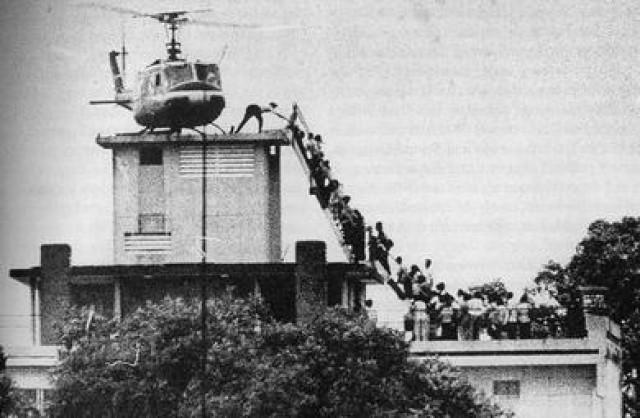
A little earlier along our walk, Quan had shown me the building on Lý Tự Trọng Street, then a CIA building, upon which U.S. helicopters were desperately evacuating military personnel and some South Vietnamese in the days immediately before the fall of Saigon.

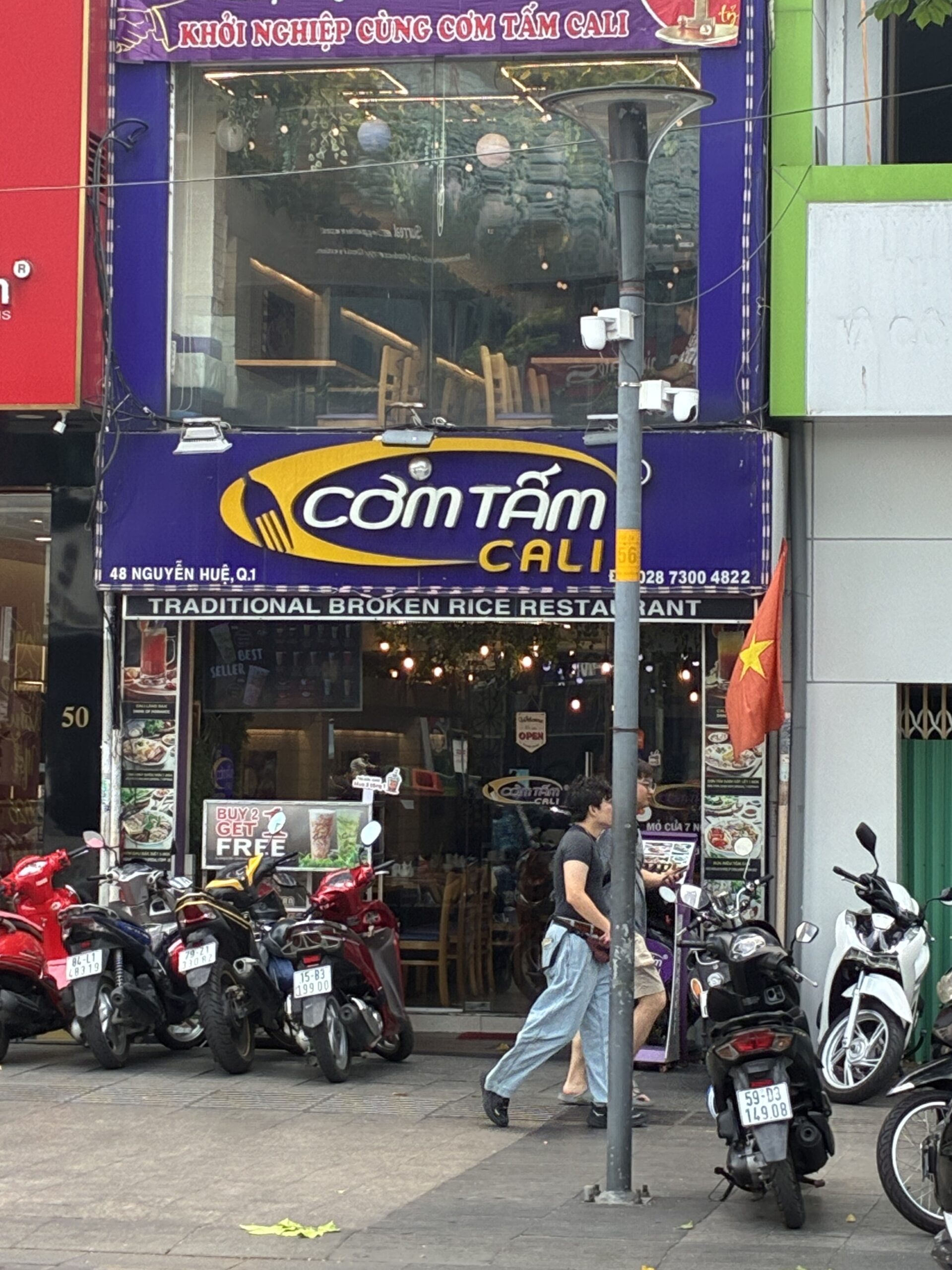
During our walk, Quan pointed out many things, and gave some background on what we seeing, as well as food suggestions, and thoughts about other places to visit today. I decided to cancel the second walking tour I had booked, and instead do some of these other things, and that included attending the ÀỐ show at the Opera House, from 6 to 7, and I also decided I was going to take a hop on bus tour and see and learn more about the city. Quan also recommended Cơm Tấm, one of the city’s signature dishes, and this I decided I would later have for dinner. Cơm Tấm is broken rice, a form of damaged rice that was sold to poorer people who could not afford whole rice, which eventually became a well-known dish here, served with pork, egg, and cucumbers and tomatoes, with a side of fish sauce and chile to be poured over the rice.


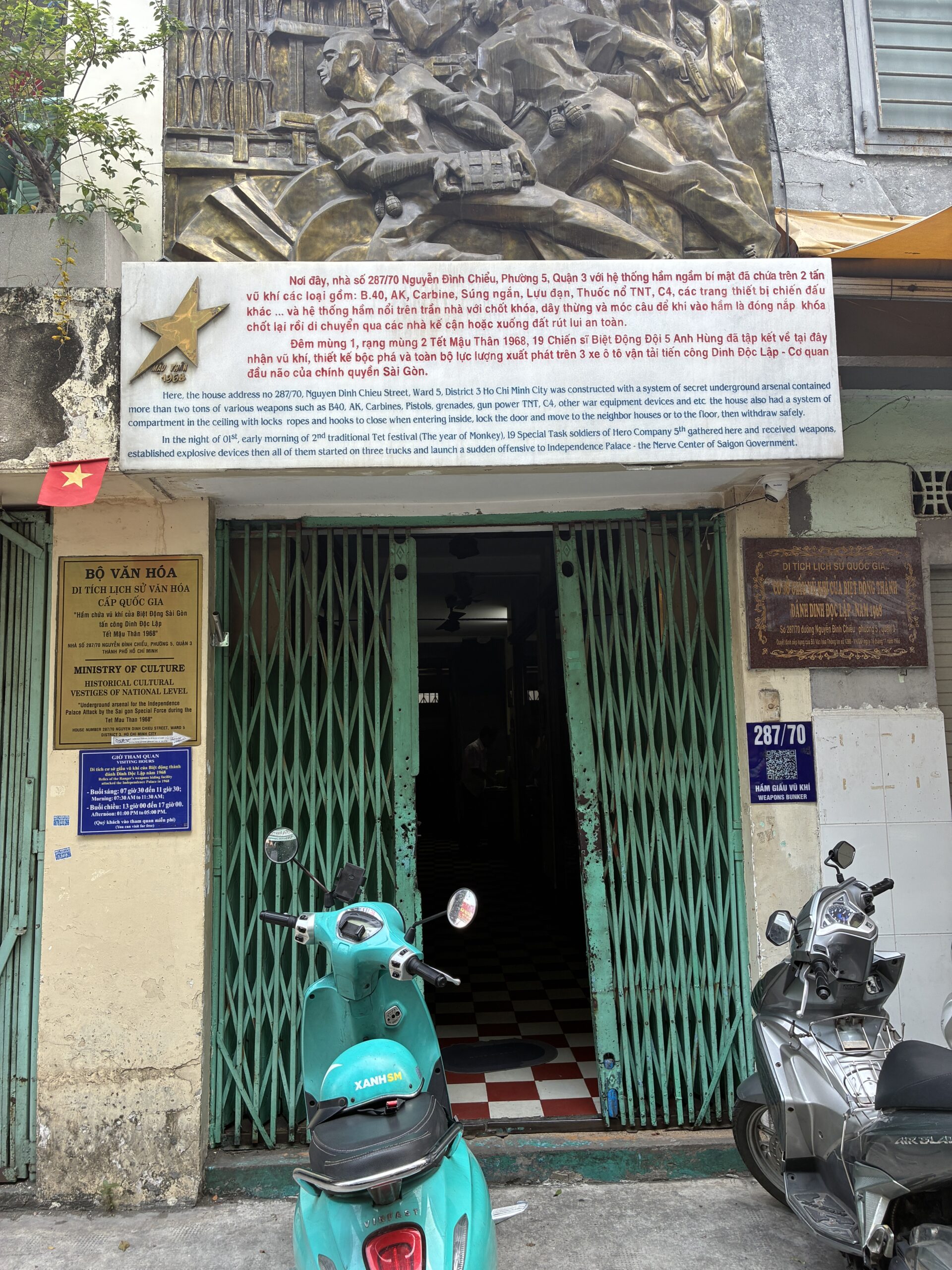
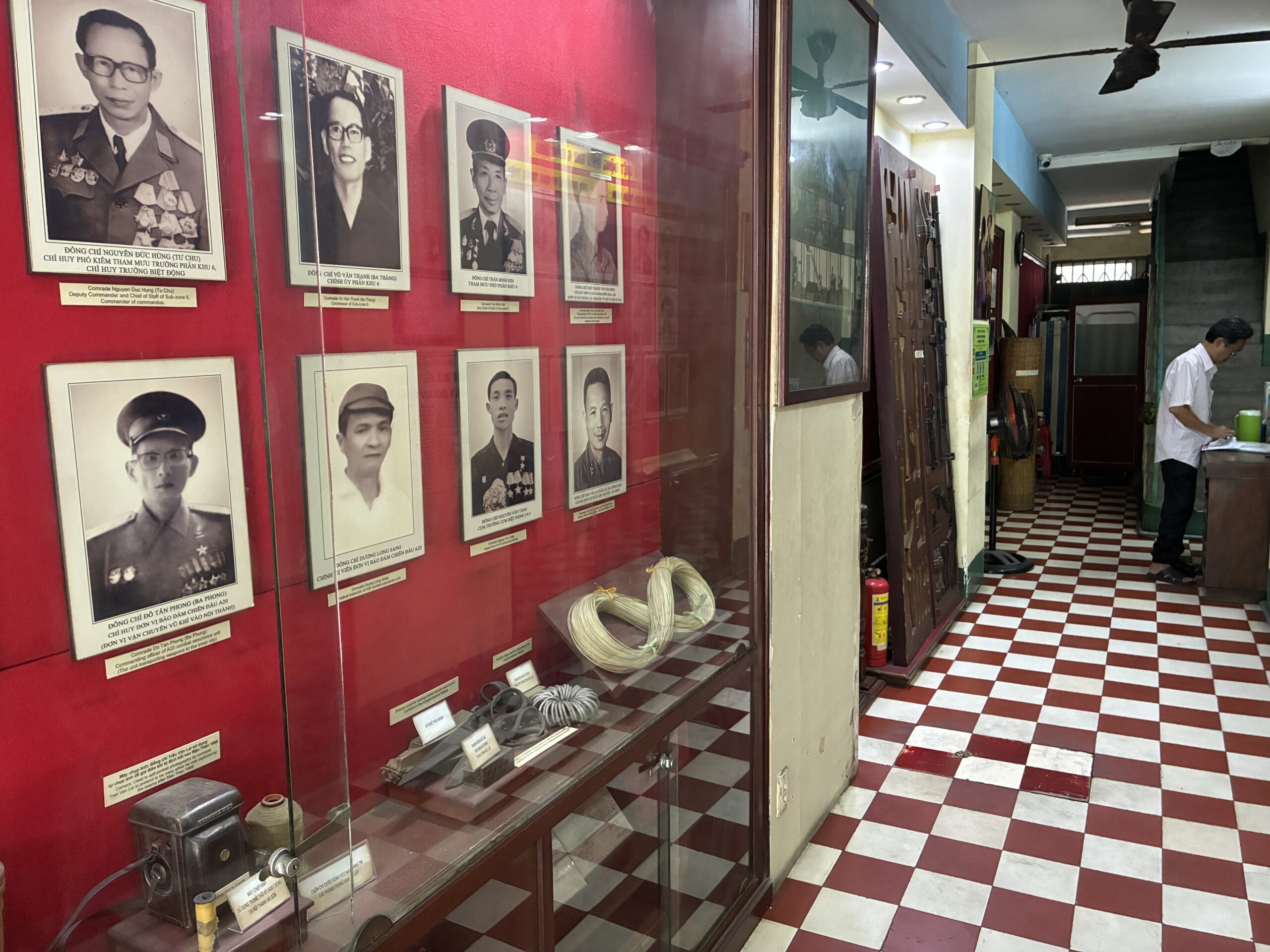
Our last stop was the secret weapons bunker (which was a secret then, but obviously not now), a hidden storehouse for weapons used by the Viet Cong in the Tet Offensive of January 30 and 31, 1968, and in this case weapons used to storm and take the Presidential Palace, although in this case the plan failed. Too far to walk, and in District 3 (we were in District 1) we each took Grab motorcycle taxis, and I was again treated to being on the back of one of the small motorcycles careening through the streets. Over two tons of weapons were hidden in everyday objects that would not be noticed (and apparently were not) by a variety of different people, young and old, male and female, and smuggled into a home at 287/70 Nguyễn Đình Chiểu Street, where they were hidden in a bunker that had been built below the main floor for which access was cleverly disguised, and even after the failed assault and the house was raided – multiple bullet holes from the raid are clearly evident in the front metal doors – the bunker was not found, and was revealed only after the North won the civil war.



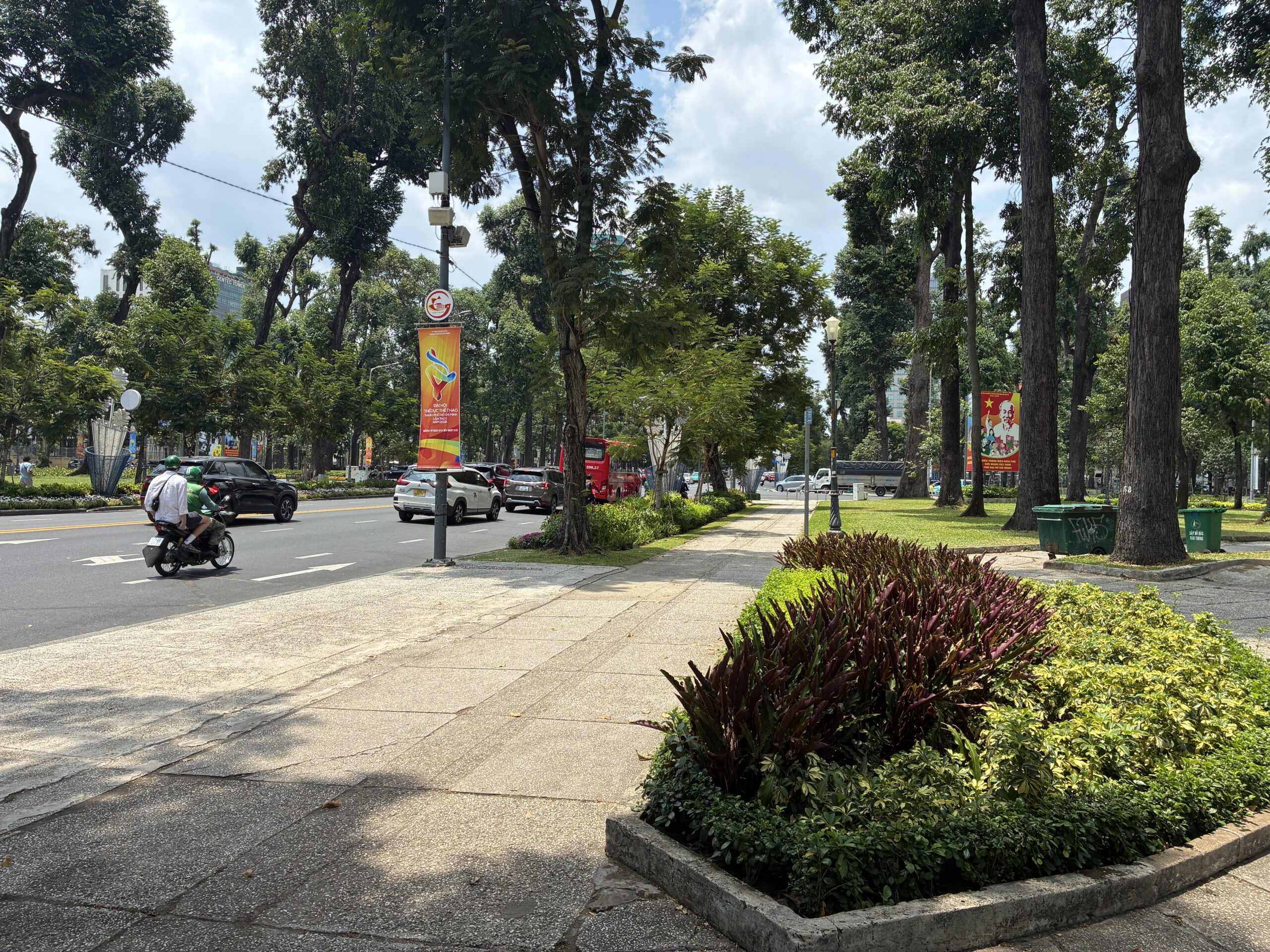
Then we were said goodbye, and I took another Grab motorbike taxi back to Le Duan Boulevard, a long and scenic road, with Independence Palace at one end and the Sagon Botanical gardens and Zoo at the other. It was really hot by now, and I was definitely feeling it, but I went into the gardens to walk anyway, paid my $2.28 entrance fee, and stayed about 45 minutes to an hour.

It was nice enough place, but far from being a special or noteworthy botanical gardens, and as a small zoo, including having a children’s zoo and amusement park, it was disappointing, and many of the animals there were living in small and uninteresting spaces that did not seem to adequately meet their needs, and as result I didn’t take too many photos of them.


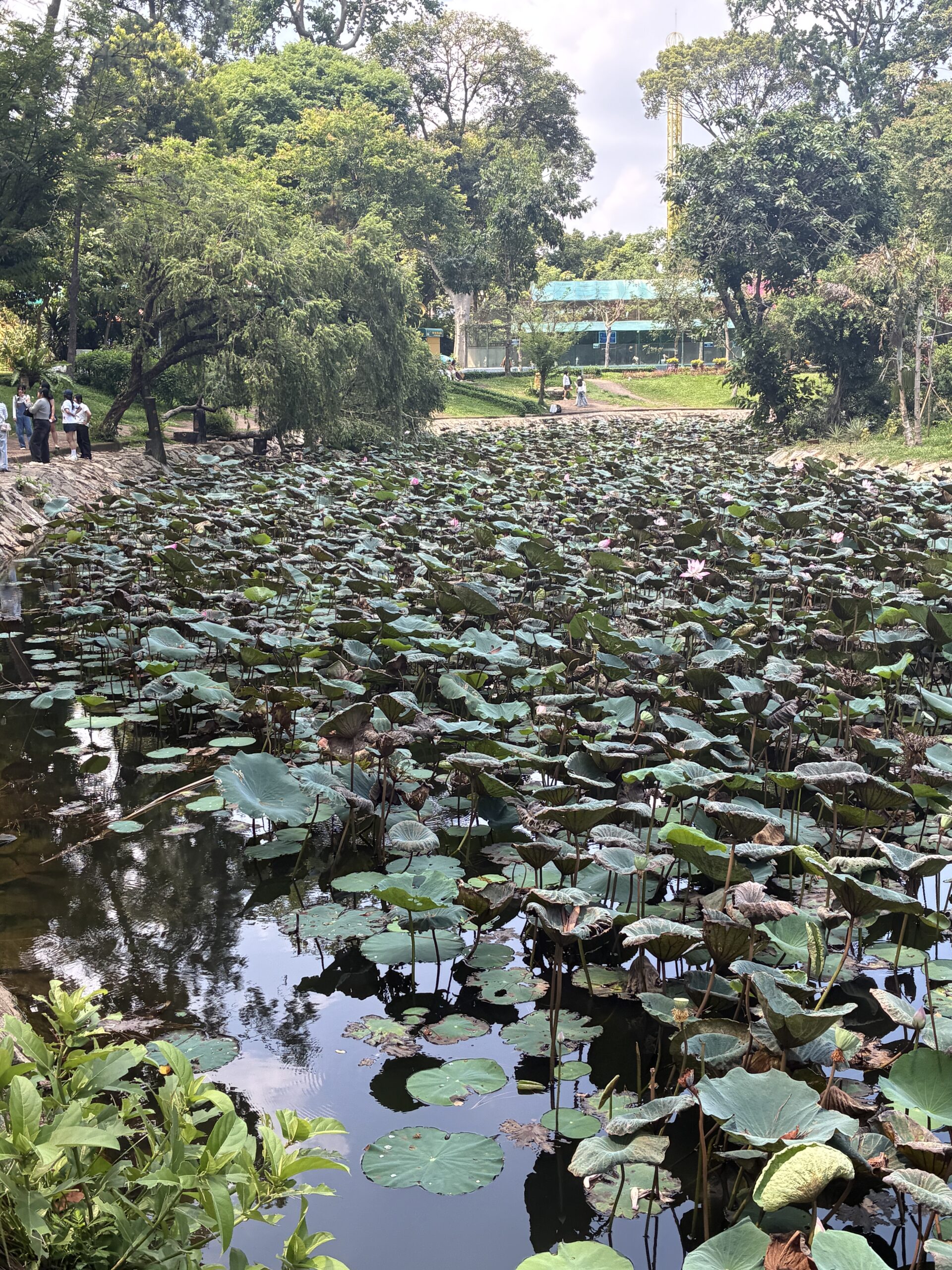


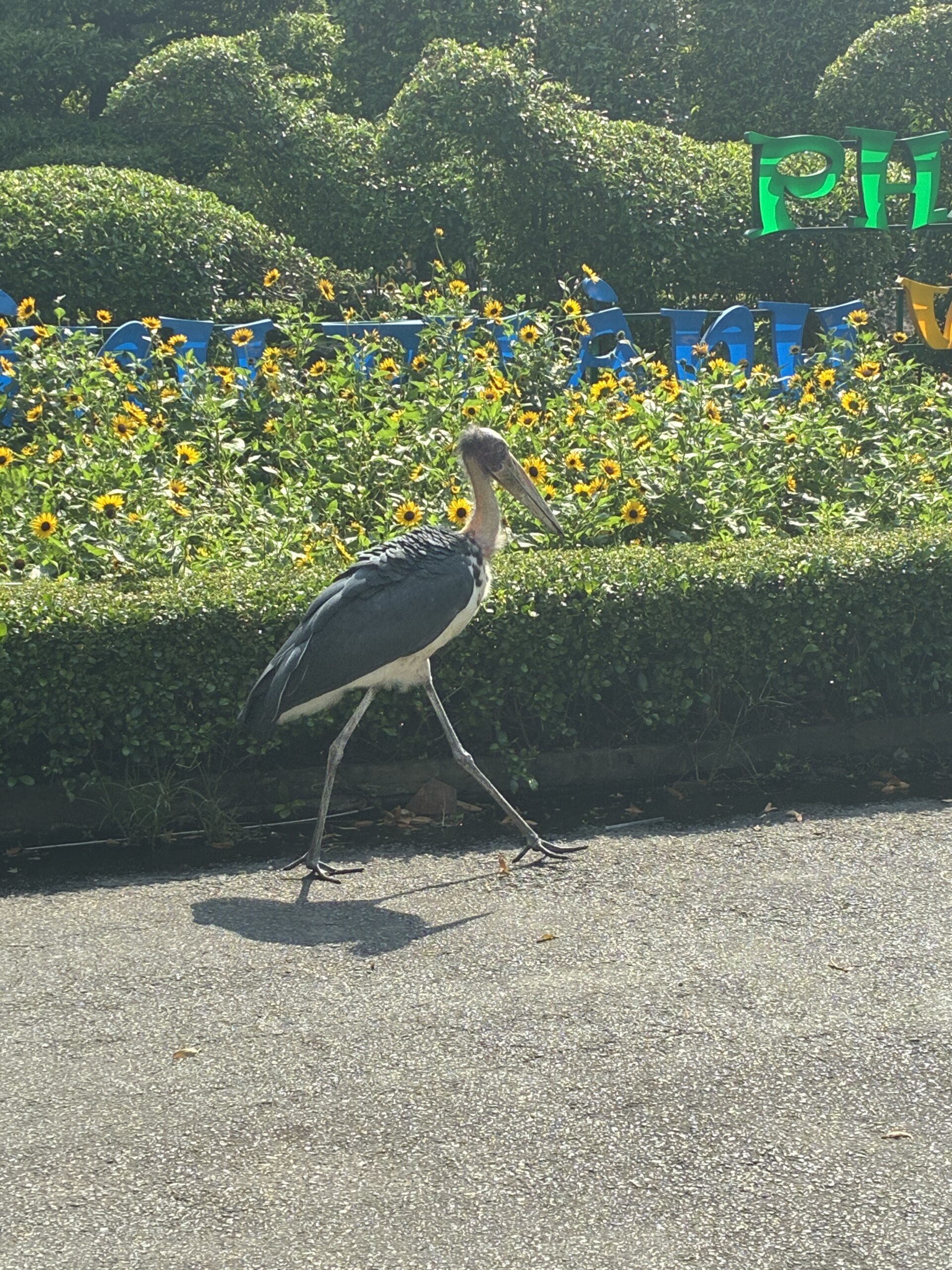


In one section of the gardens, the sound of cicadas was incredible, and the gardens are known for this “wall of noise,” because they contain some of the oldest and tallest tropical trees in the city, which not only serve as hosts for the insects, but also as a natural amplifier for them, and they are already loud with their synchronized chirping.
I wearily found the exit to the gardens and left, looking for the closet hop on bus stop. I was so hot and tired (and wet) by that time, and was so grateful to see the bus stop was right there, maybe a five minute walk from the entrance to the gardens.
A bus came along within a few minutes, and I bought a round trip circuit, rather than hop on/hop off, as I was in no mood to walk more and was also interested in just seeing the city overall. It was an interesting tour, taking maybe an hour or a little over an hour, but the recorded audio guide was always off, telling you about something that was on your right, or on your left, or right ahead, when, in fact, that thing didn’t appear for another few minutes or more, and by then the audio guide was telling you about another sight that wasn’t actually there yet. Still, I enjoyed the ride, and it gave me a bit of time off my feet, which was needed by then.
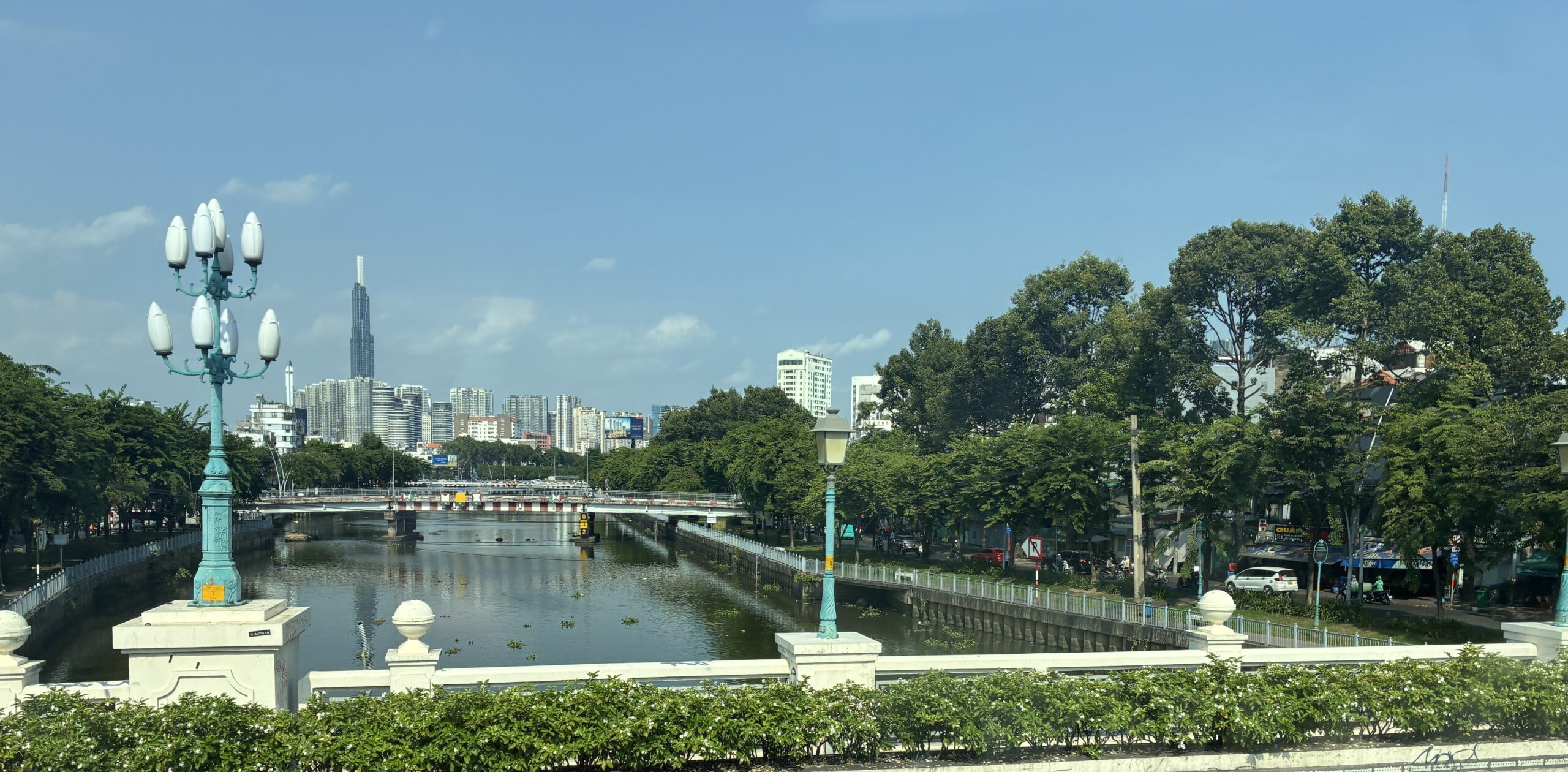


We crossed the Ba Son Bridge over the Saigon River, which was another area I hadn’t seen and wanted to. The cityscape of high rise commercial buildings and towers lines either side of the river, in both directions.


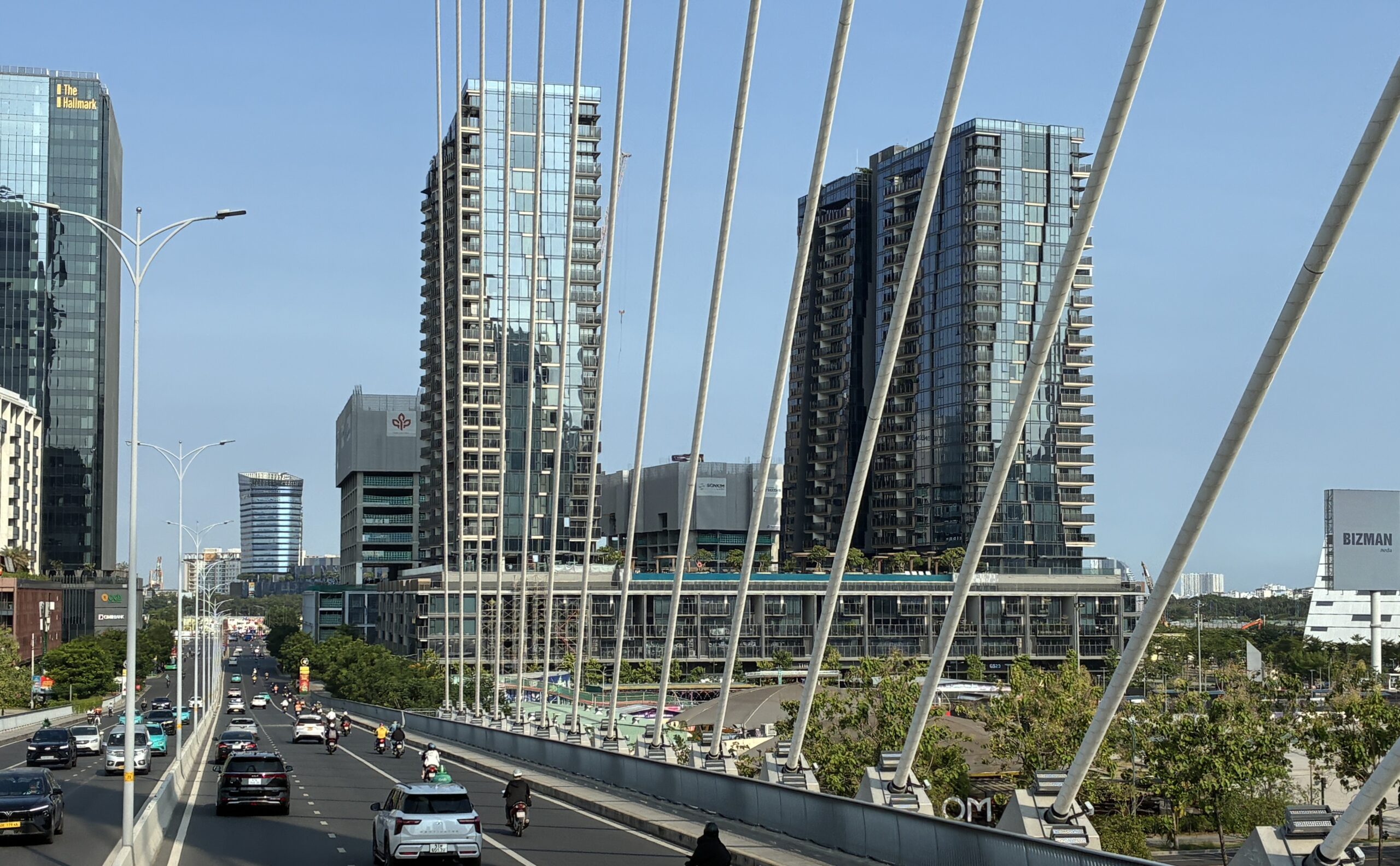

Between my walk last night and my walk this morning, and now the bus tour, I certainly got a feel for this part of the city and its surrounding areas, and had covered a lot ground.
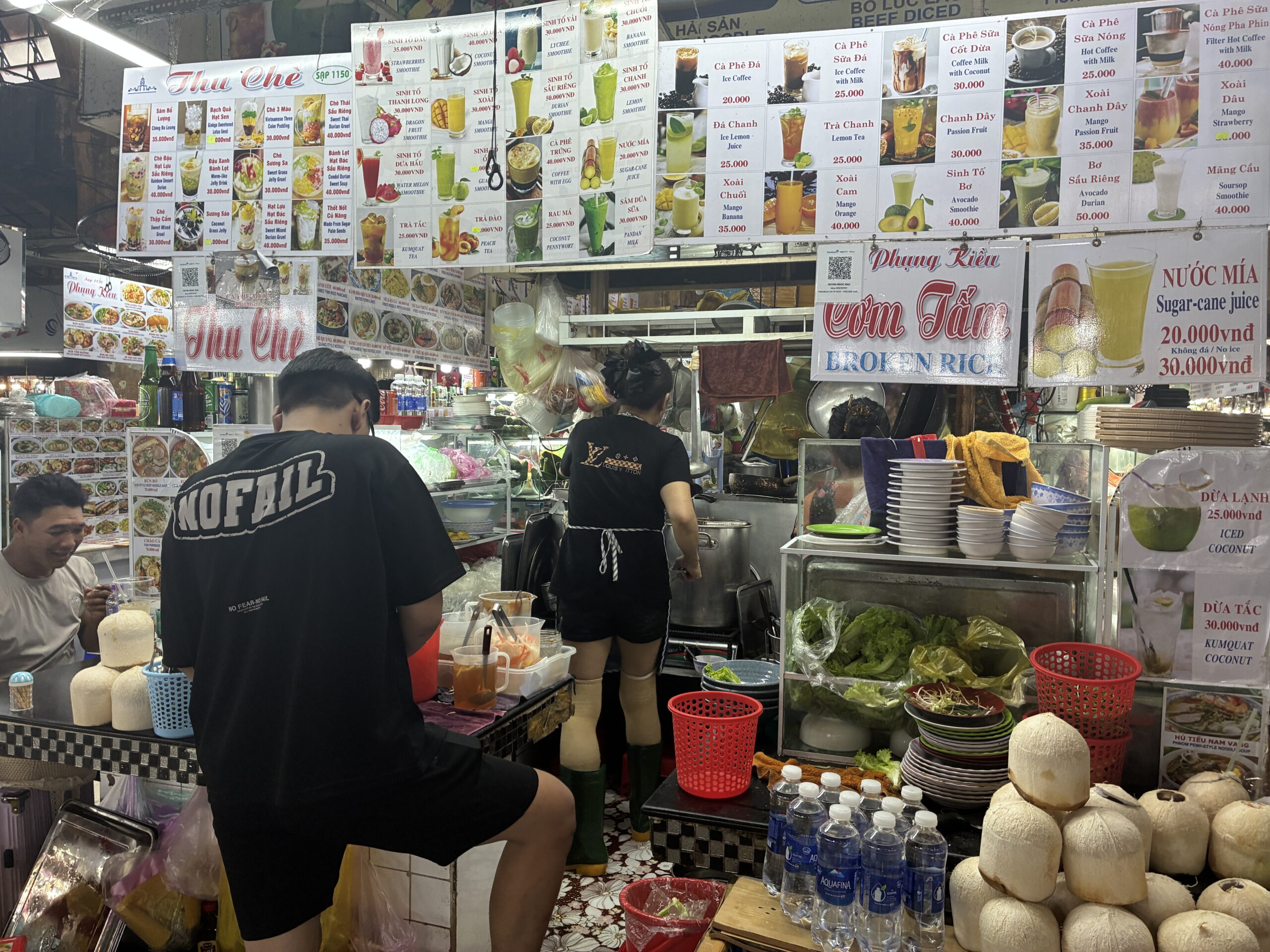
By the time the bus ride was done, and I was back where I started by the botanical gardens and zoo, and I walked the 30 minutes or so back to the Ben Thanh Market, which I visited. It’s much like the Da Nang market actually, although not on two floors, in that it’s very crowded, but also quite orderly and well-arranged, and not especially chaotic despite the number of people there. It is a bartering game there, at least with the vendors who are selling to tourists rather than locals, and those not selling foods. I overpaid for something I bought at one of the markets in a previous city, and that’s because I just accepted the price I was given, which I realized later when I saw the item in a regular store, for less than I’d paid. To be be clear, by over pay we’re talking about $X, given how inexpensive things are here. Today, I picked up a stuffed animal, and once burned, twice shy, so this time I said it was too expensive, and we bargained down to 220,000 dong, but I held firm at 200,000 and she conceded. It’s a game. She still made money on the “deal” I bargained her down to – at the airport later, at a gift store, where you’d expect prices to be higher than even regular street shops, let alone market vendors, the very same toy was 185,000. She got me!




From the the market, I headed to the Opera House, which wasn’t too far. Even though the show wasn’t starting for another hour, at 6 pm, they had some pre-event at 5, which I decided to attend, as much to get out of the heat and sit down as to actually attend the mini event, which turned out to be a small tour and history of the opera house.
Along the way, I passed a couple of the stations on the fledgling city metro line that was opened last year. The single line is not very long, and geared for local commuters rather than tourists, although it does stop at several tourist attractions, like the opera house and the Ben Thanh market, with a second line being built, which will go to the airport once complete. I would like to have taken a ride, even one stop, to see the system, but didn’t really have time at that moment. Next time.


Interestingly, there was a set of daunting looking steps going down into each of the stations I passed, and, of course, that also meant coming up. Not good for those who have difficulty with stairs for one reason or another, and I would have thought a brand new subway would be more geared to those with needs. Throughout this visit I’ve noticed few accommodations for the disabled, in either Japan or Vietnam. However, unlike Japan where we were very aware of the lack of benches or spots to sit, even in popular walking areas, as Laurence was sometimes struggling to find places to rest, that hasn’t been true in Vietnam, where there are frequent benches in walking areas, and in that sense much friendlier for those who need or want to sit or rest. There are also far more trash receptacles on the streets in Vietnamese cities, even though these are sometimes overflowing, whereas there were few to none in Japanese cities, which struck me as odd as those cities are so clean. On the other hand, even though there are frequent trash receptacles in Saigon, and there are many street cleaners at work, Saigon, at least, is a far dirtier city, often with many small piles of trash on the streets, or just plan litter. And whereas, smoking is not allowed or is impolite in Japanese cities, that is not the case here, where it is common to see much smoking on the streets and parks, even when around children, although rarely by women.
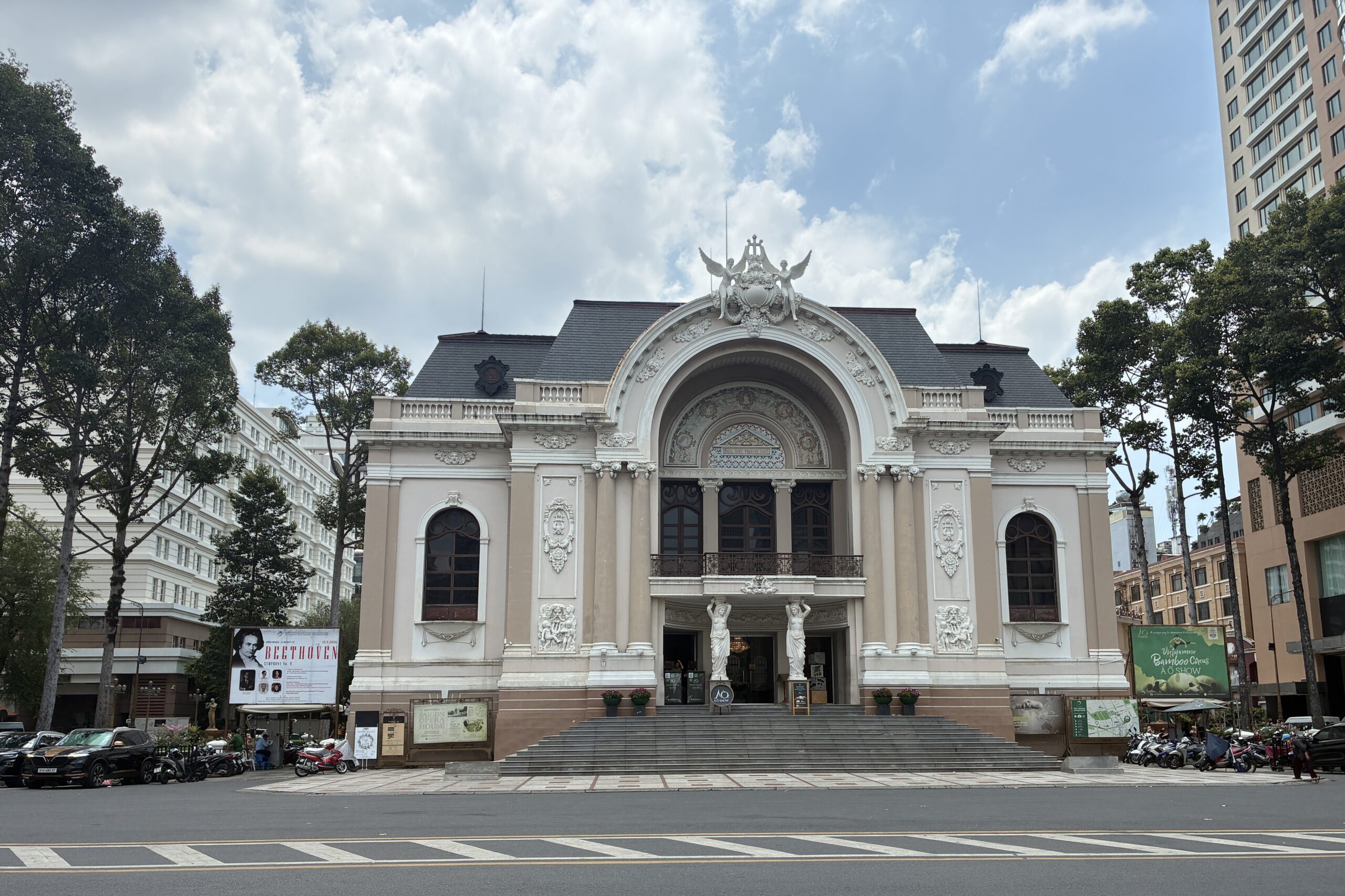

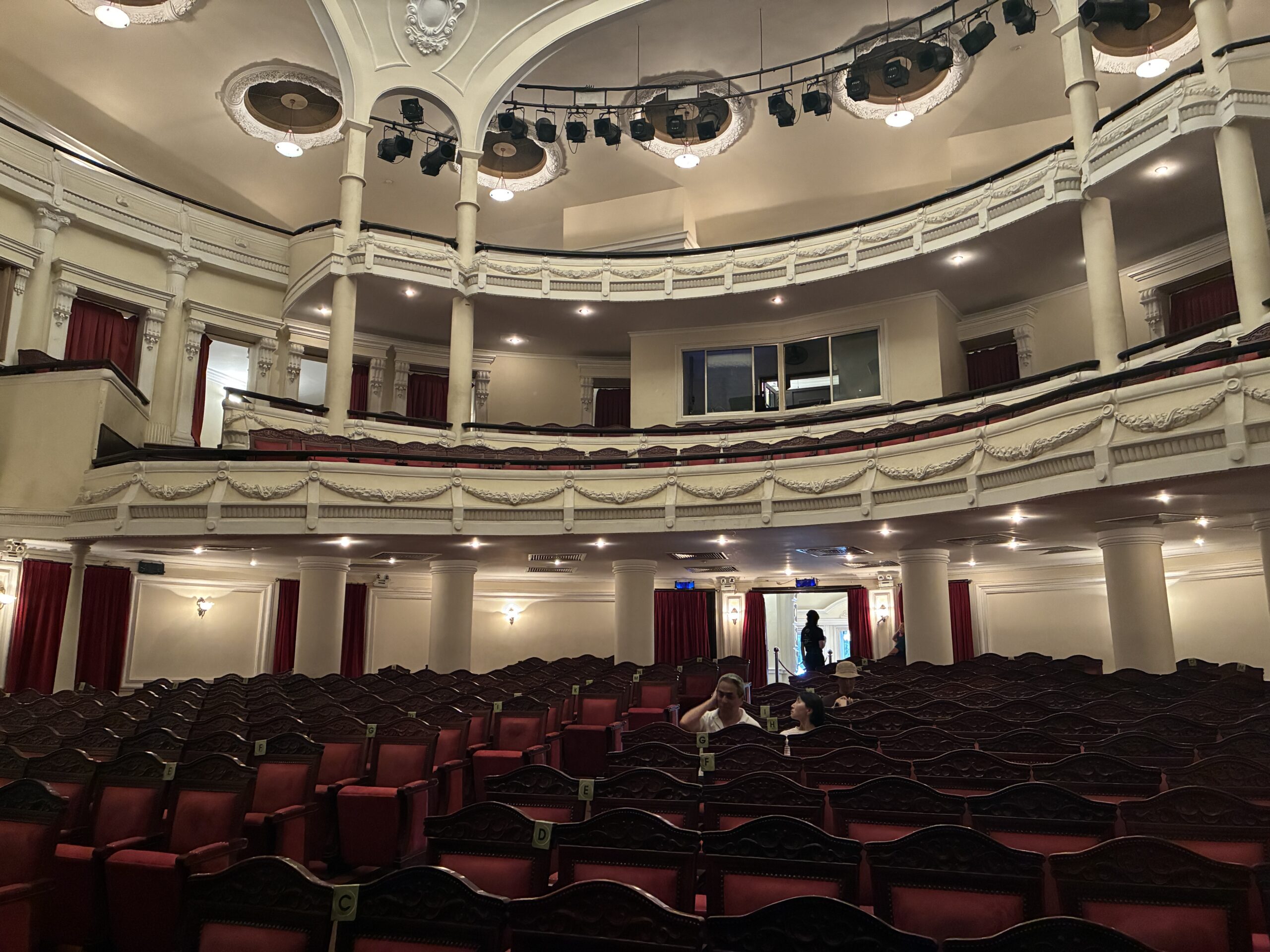
After the brief tour of the opera house, we took our seats and waited for the show to begin. The Opera House is a small theater, with less than 500 seats, so you get a good view from any seat, but I had a seat in the center of the very front row, so had an especially good view.

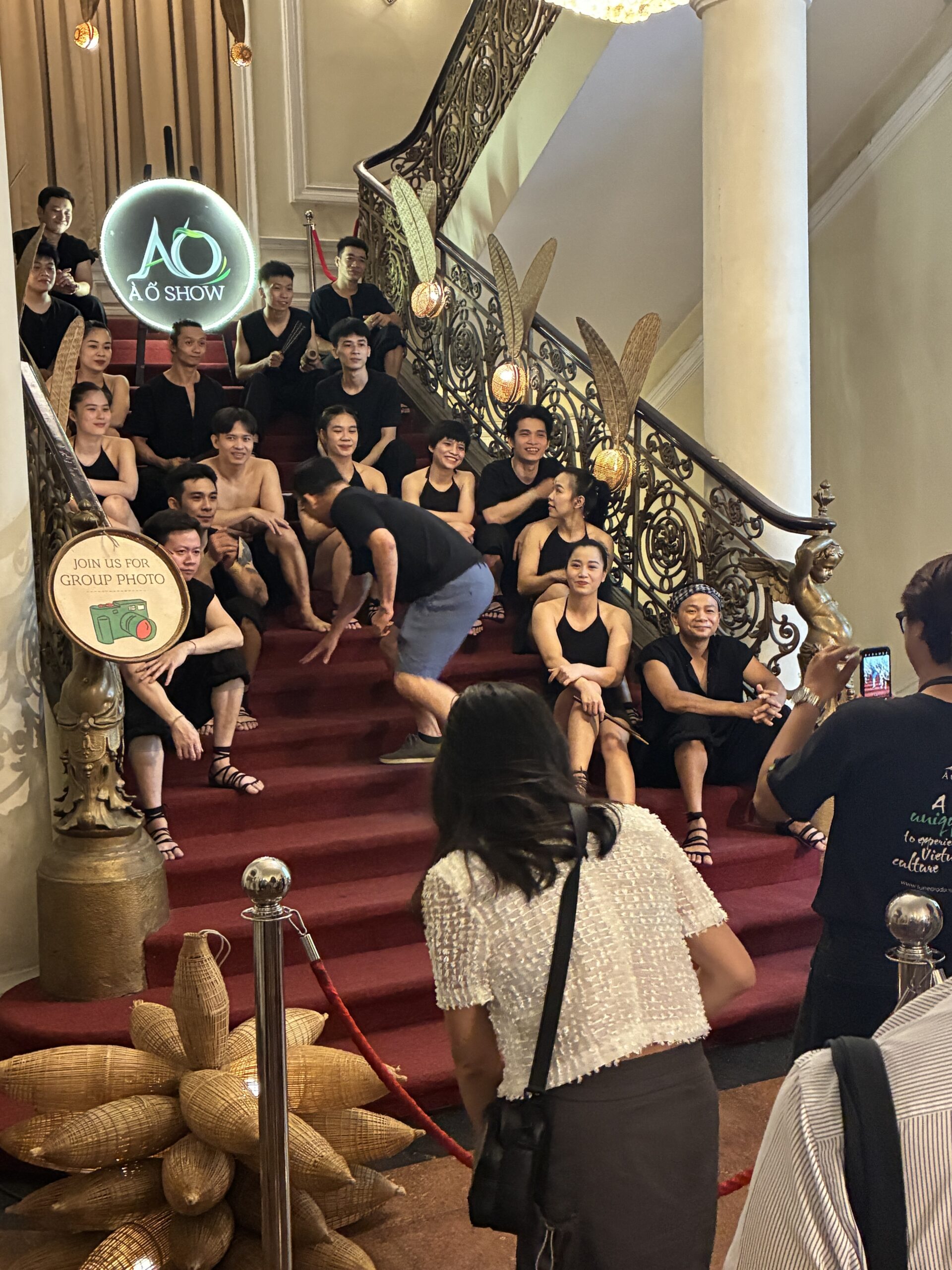
The ÀỐ show is described as one of the signature cultural performances at the Opera House, a modern Vietnamese “bamboo circus.” The show was, indeed, amazing, an incredible and highly skilled display of precise and highly skilled circus-like acrobatics, gymnastic dance, contemporary dance, and juggling, using bamboo baskets of all sizes and large bamboo sticks as a central part of the show, and used as props, performed by a troupe of about twenty or so young people, male and female. The show uses subdued lighting effects to create the scenes on an otherwise bare stage, and pantomimes Vietnamese life moving from simple village to contemporary city life, with À representing traditional village life (from “làng,” which means village), and Ố for modern city living (from “phố, which means city). The music was performed live, on stage, by 3 or 4 musicians, with a mix of mostly traditional Vietnamese instruments and drums, and was also excellent. No photography allowed though.
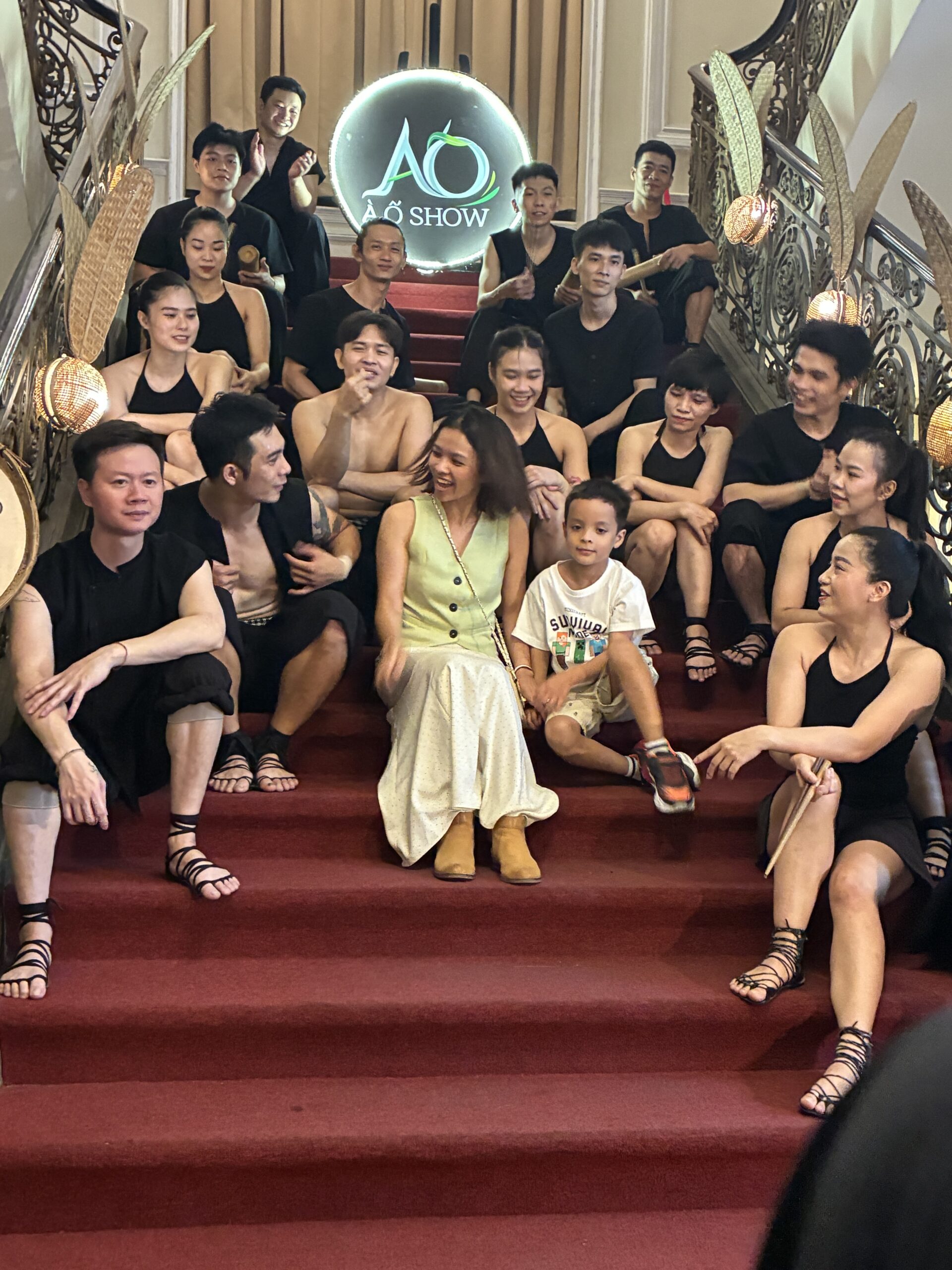
On the way out, the troupe was in the lobby area, taking photos with anyone who would like to a photograph with them, and they were a lively and welcoming bunch. What a lovely and highly skilled troupe of performers. It was a wonderful show.

Then off to eat Cơm Tấm at one of the restaurants Quan recommended, which was yet another tasty meal (and I’m getting pretty decent with chopsticks), and then a short walk to the hotel where I picked up my backpack a little after 8.

The night was vibrant at this point, with a festive and partying scene in and around this central district 1 area, and I thought about staying in town a little longer, but also wanted to err on the side of not-screwing-up-at-the-airport, so grabbed a Grab and headed to the airport, arriving about 9. And that was my day. A very good final day in Vietnam and this trip. I’m sorry to be leaving, of course.
Goodbye Vietnam.