Tehuacán-Cuicatlán Biosphere Reserve.
I picked Tehuacán to visit because the biosphere is a must see natural wonder, and Tehuacán is literally in the thick of it. For that reason alone, I’m glad to be here as it’s absolutely worth seeing. In fact, I paid far more for this tour, than any of the others I’ve taken or will be taking in Mexico City. But, aside from this wonder, there’s not much else in and around Tehuacán of great interest. The town is an average Mexican small city (although it’s not that small, and is the second largest city in the state of Puebla) with some lovely Spanish architecture, much of which I saw yesterday, but mostly a working city.
Because of the change in schedule for my biosphere tour, now happening at 4 pm instead of the reserved 8 am (more on that later), I had plenty of time to spare, the whole day, in fact, and in a town where there really doesn’t seem to be anything special to do or see (no complaints; it’s just a regular town, unlike Oaxaca, for instance). So I took a morning walk into town to see it in the light and take a few shots, and the rest of the day I stayed in my room and caught up on this blog.


It was an easy day, mostly spent blogging, and along the way I sort of figured out with the tour guide that there would be an English translator at the biosphere botanical gardens, and that the tour company, Vagabundos, would be coming to pick me up at Sensity House. However, it took multiple text messages, both today and yesterday, using a lot of Google Translate, to get this confirmed (including sending my address to them four times), until I felt relatively assured that they would be here at four. And they were. Nevertheless, they were clearly not expecting or had planned for the tour, and had I not contacted them yesterday I’m pretty sure there would have been no tour.
Fabian and Lala (but who introduced himself as Eduardo)came to pick me up, although I have no idea why two were needed. Fabian did speak a few words of English, which helped, but nonetheless had to rely on Google Translate. The tour was meant to be available with English translation, perhaps through electronic translation, but it was not. In practice, Fabian and Lala essentially acted as my driver (although only Fabian drove, and again, I have no idea why Lala came along, although perhaps he is in training), rather than as tour guide, instead using guides where we were going to give me an tour in English. We drove south from Tehuacán for about 15 miles along fabulous mountain roads that wound through the biosphere on each side of us, until reaching the Helia Bravo Hollis Botanical Gardens of the Tehuacán-Cuicatlán Biosphere.
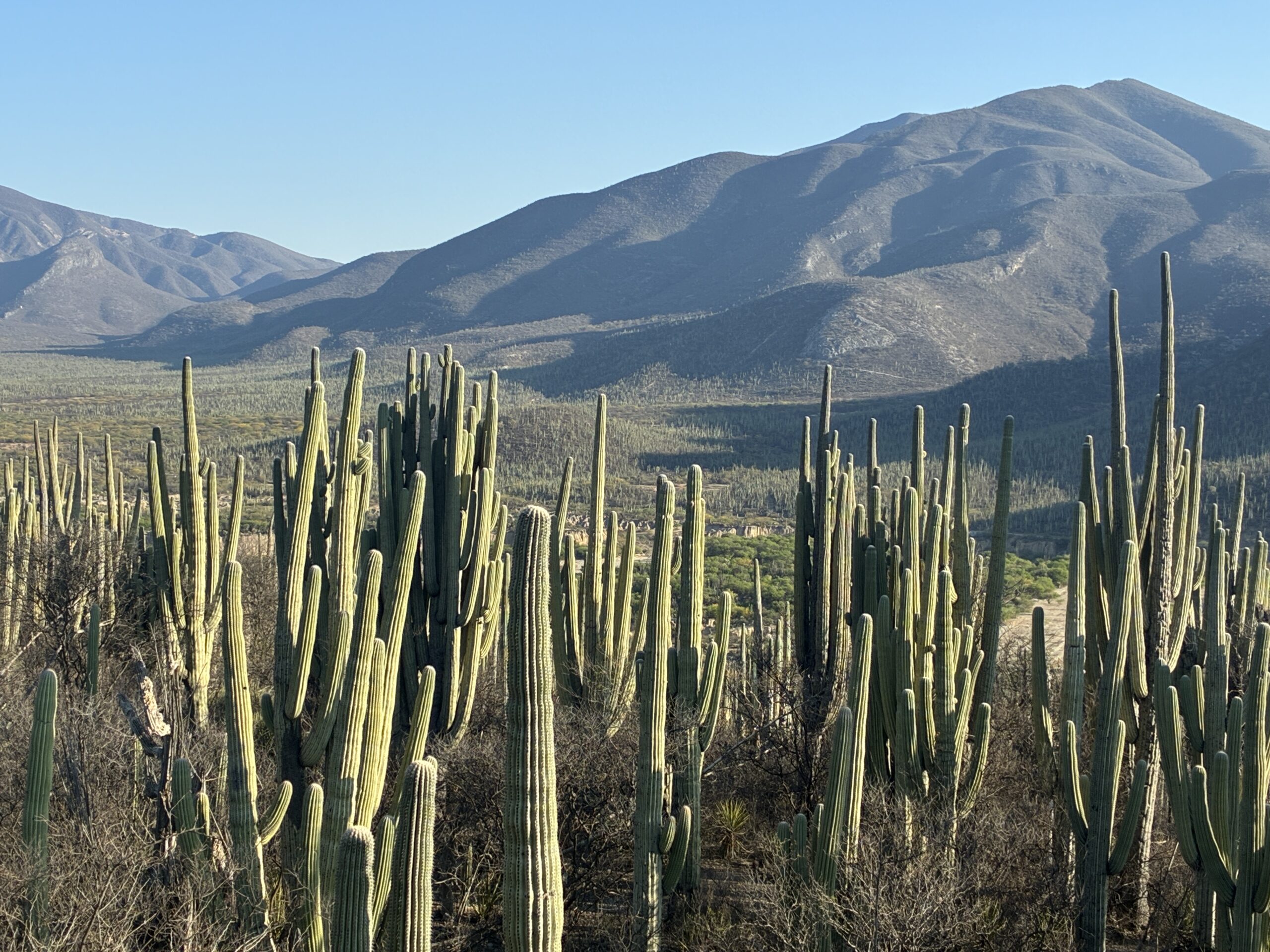
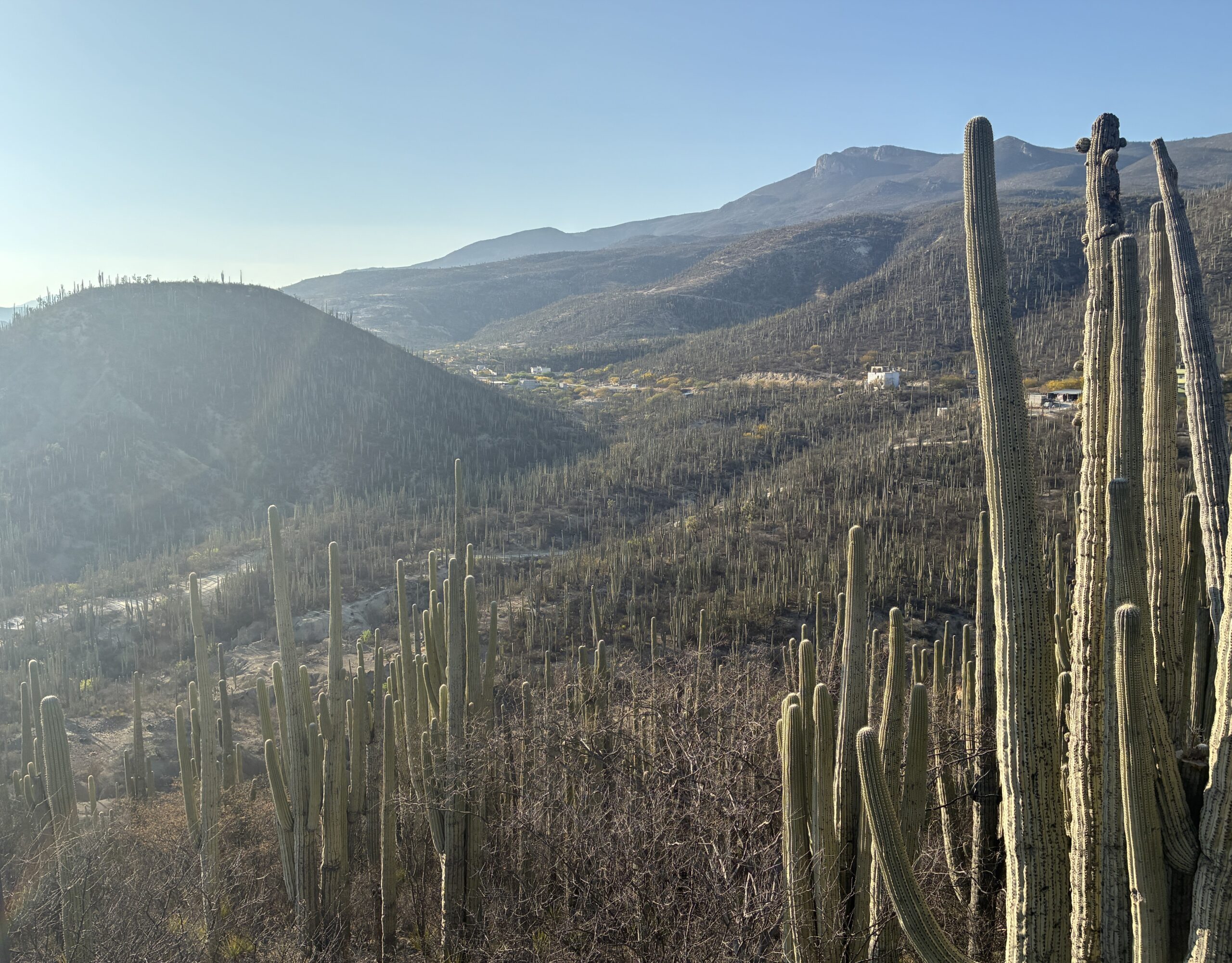
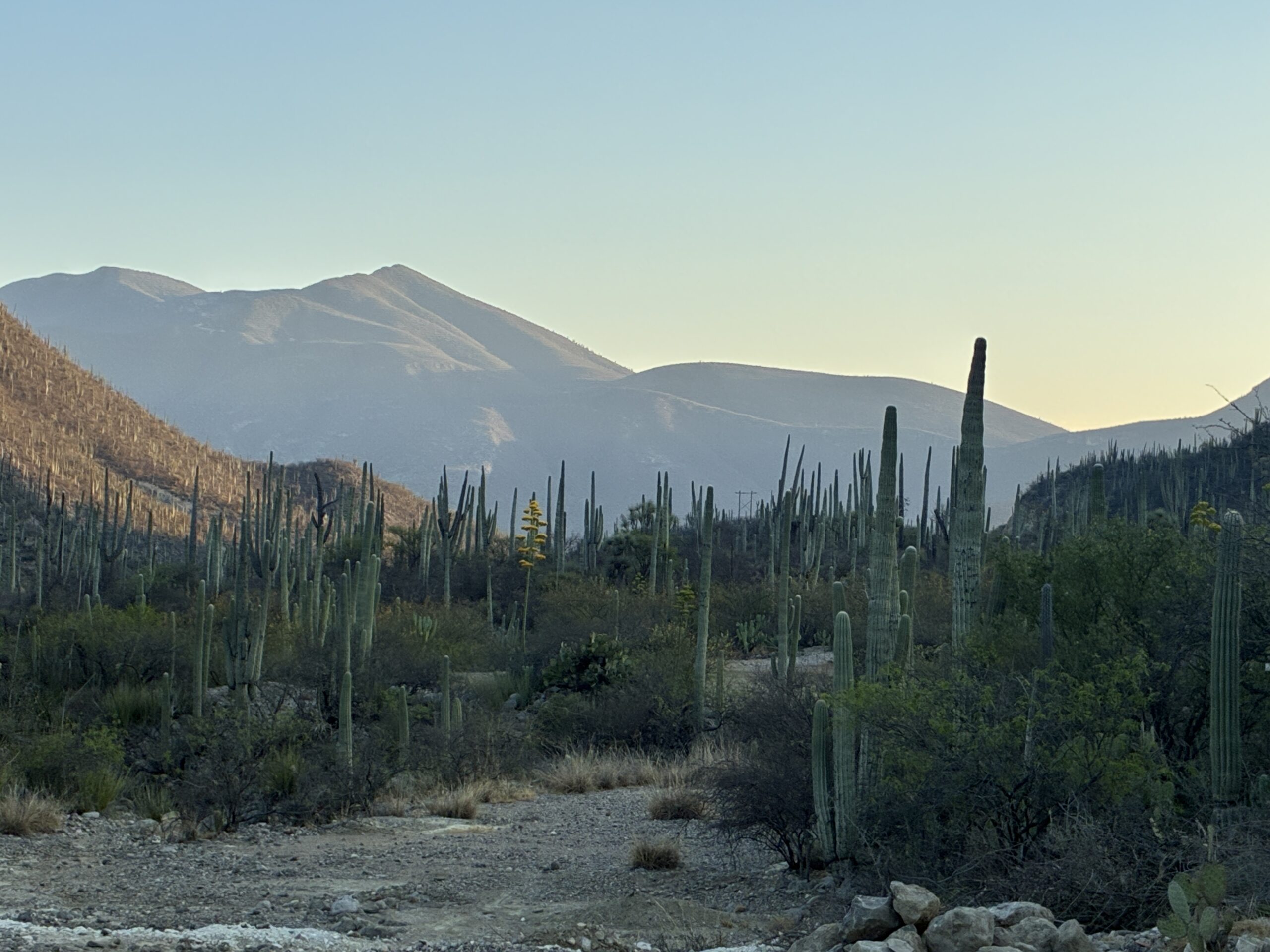
We couldn’t easily communicate as we were driving these wonderful roads, with incredible views of mountains and valleys, and passing through small villages, and I would love to have stopped to get out and take photos, but never did, largely because I couldn’t ask Fabian to periodically stop, There were some classic photos that were missed, unfortunately. The Biosphere was all around us, giant cactus forests everywhere, covering the mountains and valleys, for miles and miles. In fact, the biosphere reserve is 1,890 square miles, about the same size as Yosemite National Park and larger than Rhode Island. It’s big. And beautiful.
At the gardens, Fabian and Lala waited for me after they hired an indigenous guide at the gardens, again really just serving as my driver while the actual tour, which lasted maybe 45 minutes, was conducted by the garden’s guide. They actually stayed back, while my guide and I were walking. Unfortunately, I never caught my guide’s name, an indigenous man from a nearby town, but he was wonderful, and spoke decent English, although was far from being fluent. He was very informative, although again we were limited by the language barrier, and he talked not only about the cactus, agave, and other plants and vegetation in and surrounding the gardens, but also about the indigenous local cultures and their distribution throughout Oaxaca and Puebla states, both highly multicultural states with many indigenous peoples and languages. He also talked about the ecosystem and climate, and the geological development of this semi-arid desert. He was great.

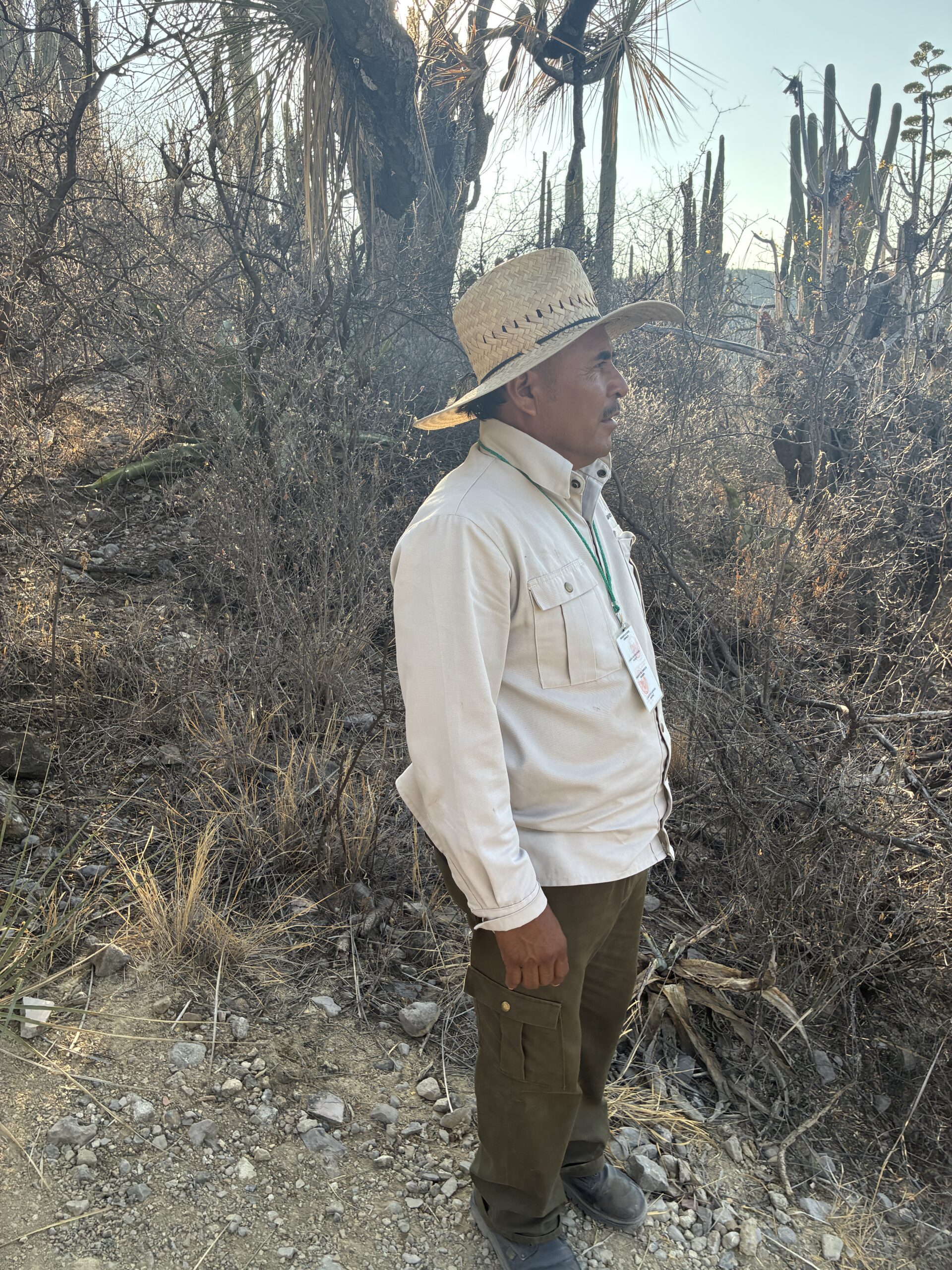

The Tehuacán-Cuicatlán Biosphere Reserve is one of the most diverse and unique ecological areas in Mexico, and surrounds Tehuacán, and is a desert valley ringed by the Sierras. It is that ring of mountains that creates a rain shadow that strips the air of its moisture as it descends into the valley, resulting in the semi-arid climate. It has been a UNESCO World Heritage Site since 2018 because of its vast biodiversity, as well as its role in the early domestication of agricultural plants, such as maize, squash, chili peppers, and beans, and human occupation goes back at least 10,000 years. Indigenous peoples have lived here for thousands of years, and still maintain traditional practices, including the use of hallucinogens from cacti, and other plant-based cures, as my guide told me.
There are about 70 species of columnar cacti in the region, one of the highest concentrations anywhere, and many cacti species here are unique, existing nowhere else on the planet. There are also more than 3,000 plant species, and hundreds of bird, reptiles, and mammal species, including Puma and Jaguar, which are rarely sighted, but live in the surrounding foothills and mountains, and he showed me a puma caught on a permanently stationed biocam in the reserve. He also described how many species of tarantulas, snakes, and scorpions are out here, and showed me scorpion holes in the soil, as they come out only at night (I saw one later), as well as 49 or 50 species of bats, and especially the fruit bat, which are responsible for much of the pollination in the desert. They eat the fruit on the plant or that’s dropped, and then crap it out, spreading the good word, so to speak.
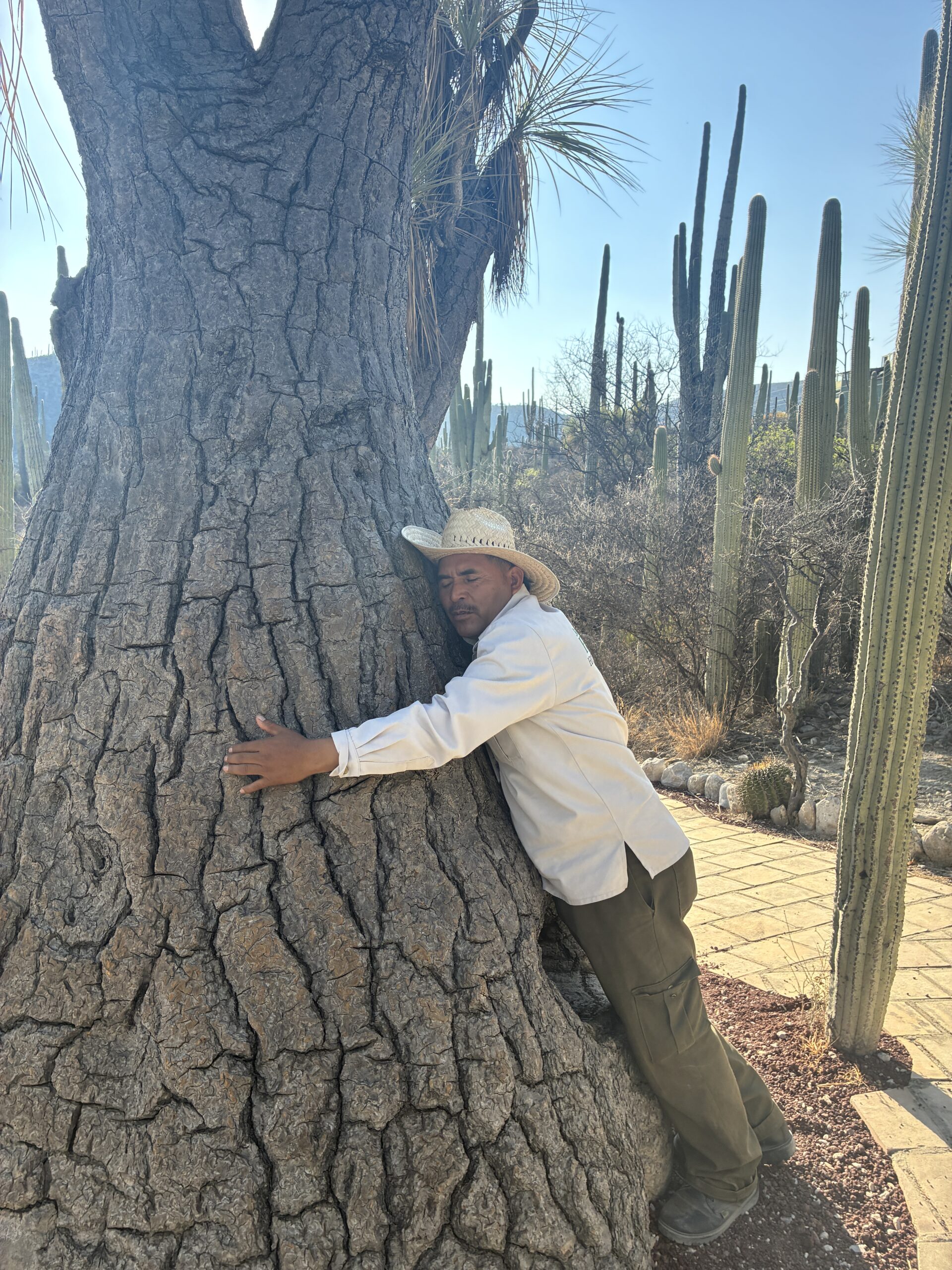
Most obvious, the landscape is famous for its gigantic (and I mean gigantic) forests of towering cacti that can reach 30–60 feet tall.
Various species of Agave, some more familiar looking than others, are also abundant in the desert, and an important product in the region, and in Mexico overall. Mescal and Pulque, both strong alcoholic drinks, famous in this part of the world, are distilled from agave, and agave is also used to produce a sweetening syrup, as well as textiles and materials made from the strong agave fibre (much like hemp, I suppose).







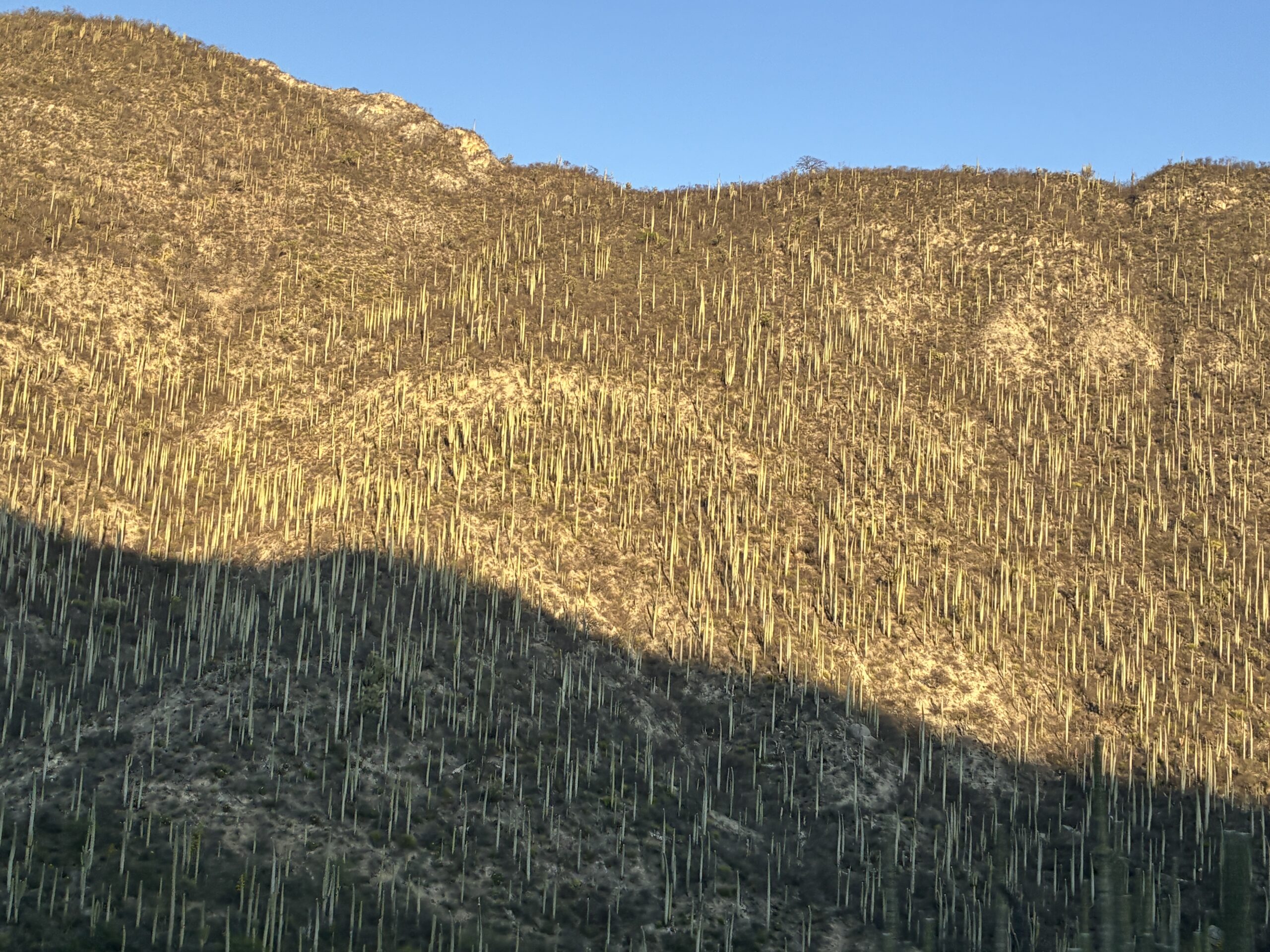


We left the gardens and headed a little further east to Zapotitlán to see the salt extraction flats, for which the small desert town, just a few miles further on, is formally named Zapotitlán Salinas.
Here, Fabian and Lala again left me with a local guide, also an indigenous man, who both works as a guide at the botanical gardens and also extracts salt from the ground water, a family business, for use and for sale. Again, another great guy. His English wasn’t great, but good enough, and turns out his daughter lives in the Bronx, and he lived and worked in New York city, at the Empire State Building and Penn Station for a few years. He’s also been to Boston. And now here is he living this traditional and hard life once again, mining for salt the ancient way. What a juxtaposition! He would like to return to NY and hopes his daughter can soon sponsor him as she’s a citizen.
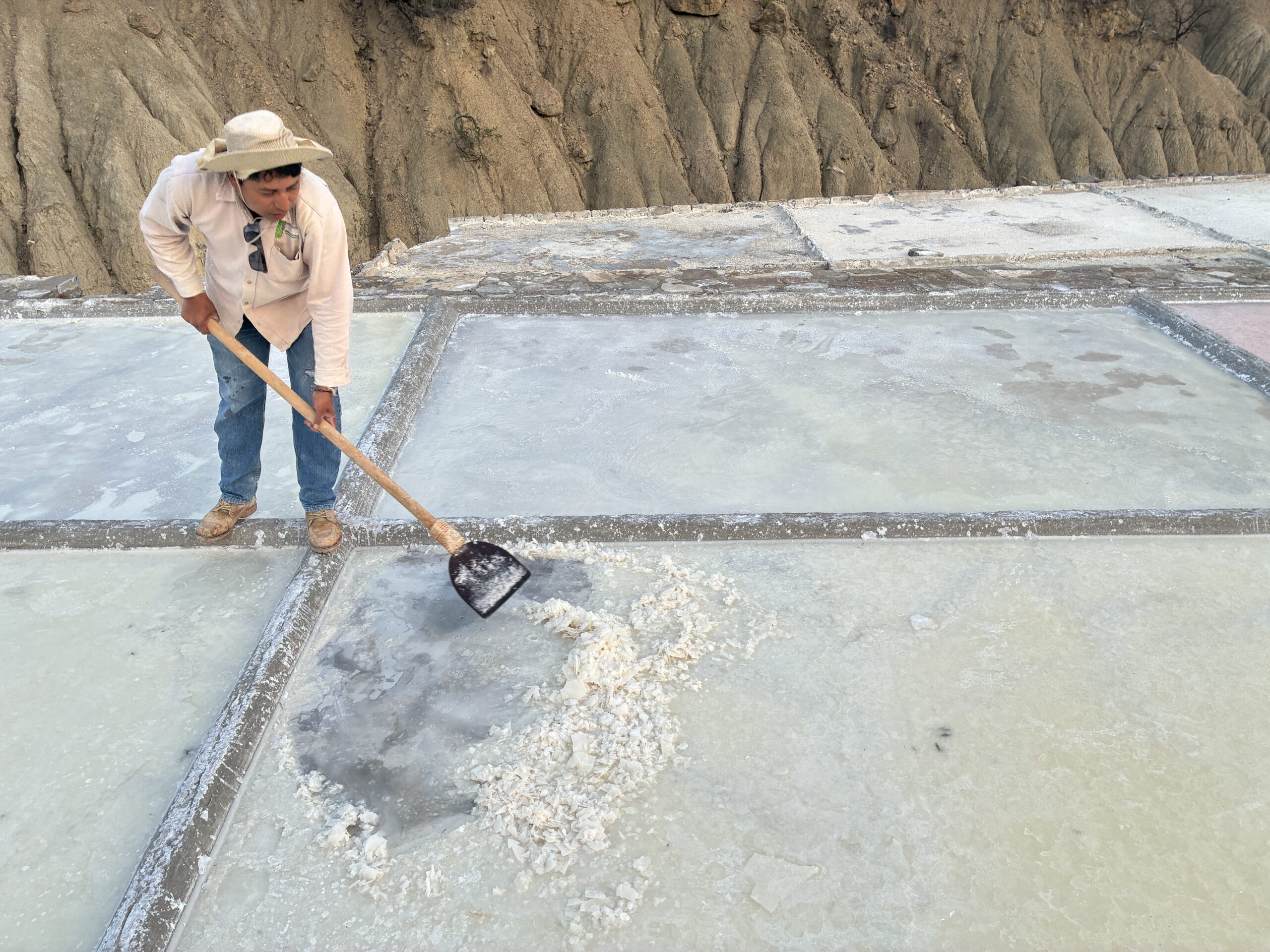
He walked me through the salt flats used to extract the salt from spring water run off from the surrounding hills, explaining that minerals naturally occurring in the soil mix with spring water to produce different color salts, such as white, green, yellow, pink, red, and almost black, with no additives. It’s an entirely natural process, and a lengthy one taking weeks to actually harvest the salt before it is then broken up from its hardened, rock-like form into coarse or fine, or extra fine salt of varying colors and taste. Salt has been produced here this way for thousands of years.


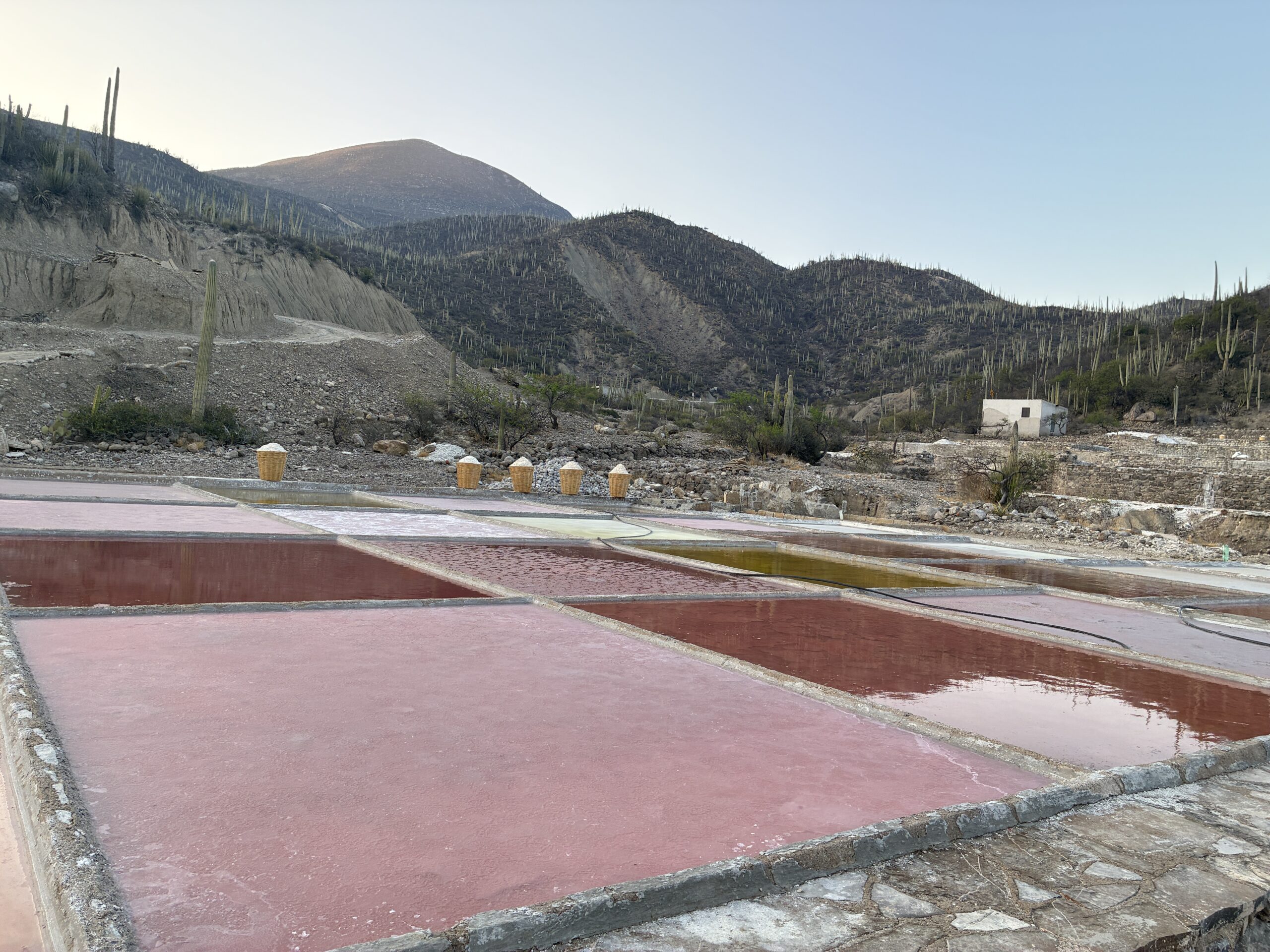


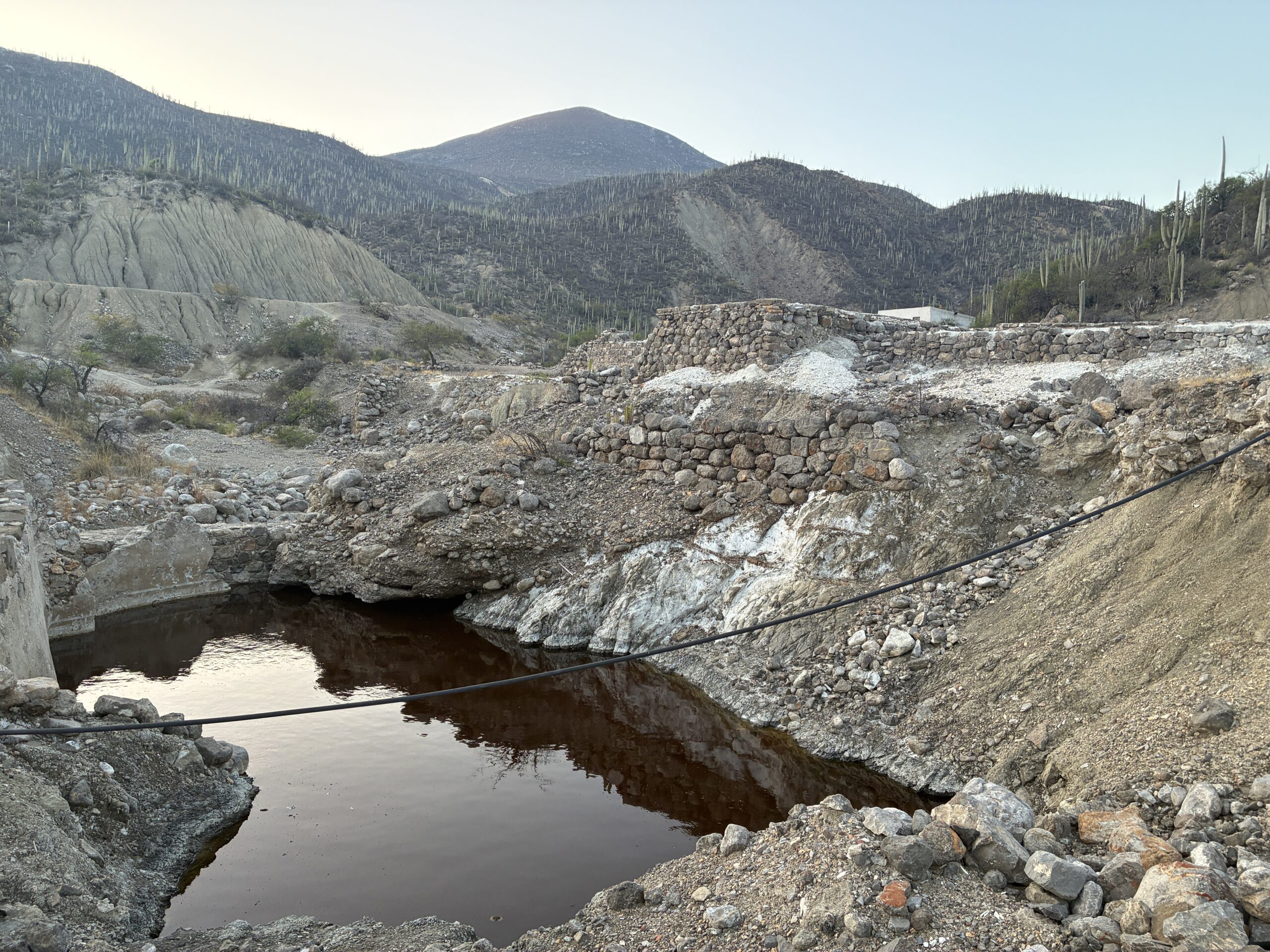
My guide (oh, damn, what was his name?) demonstrated for me how he actually extracts the salt, with much back breaking work, and many steps taken and repeated, and re-repeated, over days and weeks, before the salt is ready for harvesting.

We climbed up along the stacked bricked terraces that have still more salt flats, and happily I’m still pretty nimble and well balanced. You could easily get hurt. This was his grandfather’s place and then passed to his father, and now him. His father has a sad tale, though. After several head injuries due to falls on these rugged and rocky hillsides, his father began to develop dementia. Although cognitively struggling and declining, he was still capable to some degree and took the bus into Tehuacán daily for work, returning at the end of the day. One day, seven years ago, he never returned. They have never heard from him since, and although they have looked for him many times, they have no idea where he is, or whether he is alive. His father, if still alive, is 75. My age.

We looked into the deep, very old artesian spring well used to access naturally salty groundwater, lined with hand made bricks probaby from the 19th century, although the well is much older. Water rises from the ground to fill the well, which is then carried to various salt extraction flats. Despite very little rainfall, but during the short lived rainy season, coming soon, the well fills to near the top of the stairs, but which used to fill all the way to the top, which my guide notes is an outcome of climate change.



Our guide showed me the salt they bottle and package here, of many colors, strengths, flavor, and coarseness, as well as some of the beverages, including Mescal and Pulque, they produce. Really interesting place to visit, and a really interesting and nice guy.
We said adios after perhaps 45 minutes here, and Fabian, Lalo, and I drove just a few more miles down the road to visit the town of Zapotitlán Salinas, which is well know for its salt production. It’s a desert town of 3,000 people or less, surrounded by giant cactus forests and salt flats. It was dark by now, though, so not too much to be seen (again, poor planning on the pat of Vagabundos Tours) and we didn’t stay long, but we did stop at the central plaza (the Zócalo), and made a quick visit into the local church off the Zócalo.


And in that church, which was by now darkened inside, we discovered a scorpion. Very small, but very toxic. I hate to say it, but they, with great caution, killed it with a broom.


Then a pitch black drive back to the city, along mountainous roads and through those small villages along the way, returning to Senisty House around 8 pm. We parted ways, and I took a small walk in the neighborhood, before going to my room, and doing some reading and writing.
Tomorrow, I catch a noon bus, this time not as fancy as the one I took from Oaxaca, to Puebla, and I’ll be interested to see the landscape and scenery along the way.