Faroe Islands: Vestmanna Sea Cliffs.
What a great trip we took to see the Vestmanna Sea Cliffs, heading out of Vestmanna harbor into Vestmannasund, the narrow sound between the islands of Streymoy and Vágar, and from there sailing into the North Atlantic. Another wow!
Today was the first of our three days here (four, if you count our arrival day) that was wet and foggy, and although not raining too heavily, the fog was dense at times, and especially as we drove higher into the hills and mountains outside of town. We hoped it wouldn’t be quite like that for our boat trip this afternoon (and it wasn’t), but we certainly got to experience a little of the changeable Faroese weather, although I imagine it gets worse than this. Still, even though the fog was pretty thick, with seriously reduced visibility higher up, it never came down to sea level, and had largely cleared by the time we reached Vestmanna, about 40 minutes and 25 miles northwest of Torshavn. Vestmanna , on the northwestern coast of Streymoy, faces west toward Vágar, and sits on the Vestmanna sound (Vestmannasund), the narrow sound between the two islands, which flows into the North Atlantic. The name is drawn from the Old Norse Westmen’s harbor or Harbor of the Men from the West.
Our boat trip wasn’t until 2:30, largely because when we booked last night that was the only available boat, but it probably worked out well, as by the we got there, not only was there no fog at all at sea level (and there was was earlier in the day, as we heard ship fog horns) but the rain had also stopped completely, starting again only as our boat trip came back into harbor, and even then, only lightly. In fact, we had great weather during our time in the town and on the boat. Although not warm, it was also not cold, and we were dressed just right for the weather on the boat, which did get cooler as we headed into the North Atlantic, and a little windier, but was nevertheless great.
We’ve been starting out for our day’s adventures late in the morning each day we’ve been here, and could have seen more of the island and places that Nate (and other sources, but Nate was our main guy; thanks, Nate!) recommended had we left earlier each morning. Still, heading out between 10 and 11 each morning has worked out well, and allowed a relaxed and unhurried atmosphere to our trip, and it doesn’t get dark until after 9 pm. The same was true for today, and in fact even more true, as we didn’t leave until noon.
Our drive to Vestmanna took us along winding mountainous roads, which under clear conditions are not particularly difficult to drive, but in the rain and fog, which got pretty thick, it was tricky, with very poor visibility at times, and definitely required driving slowly and cautiously. However, we arrived in Vestmanna in good time, and by now the fog had lifted completely, although still hovering over the hills and mountains around us and covering some the higher terrain.
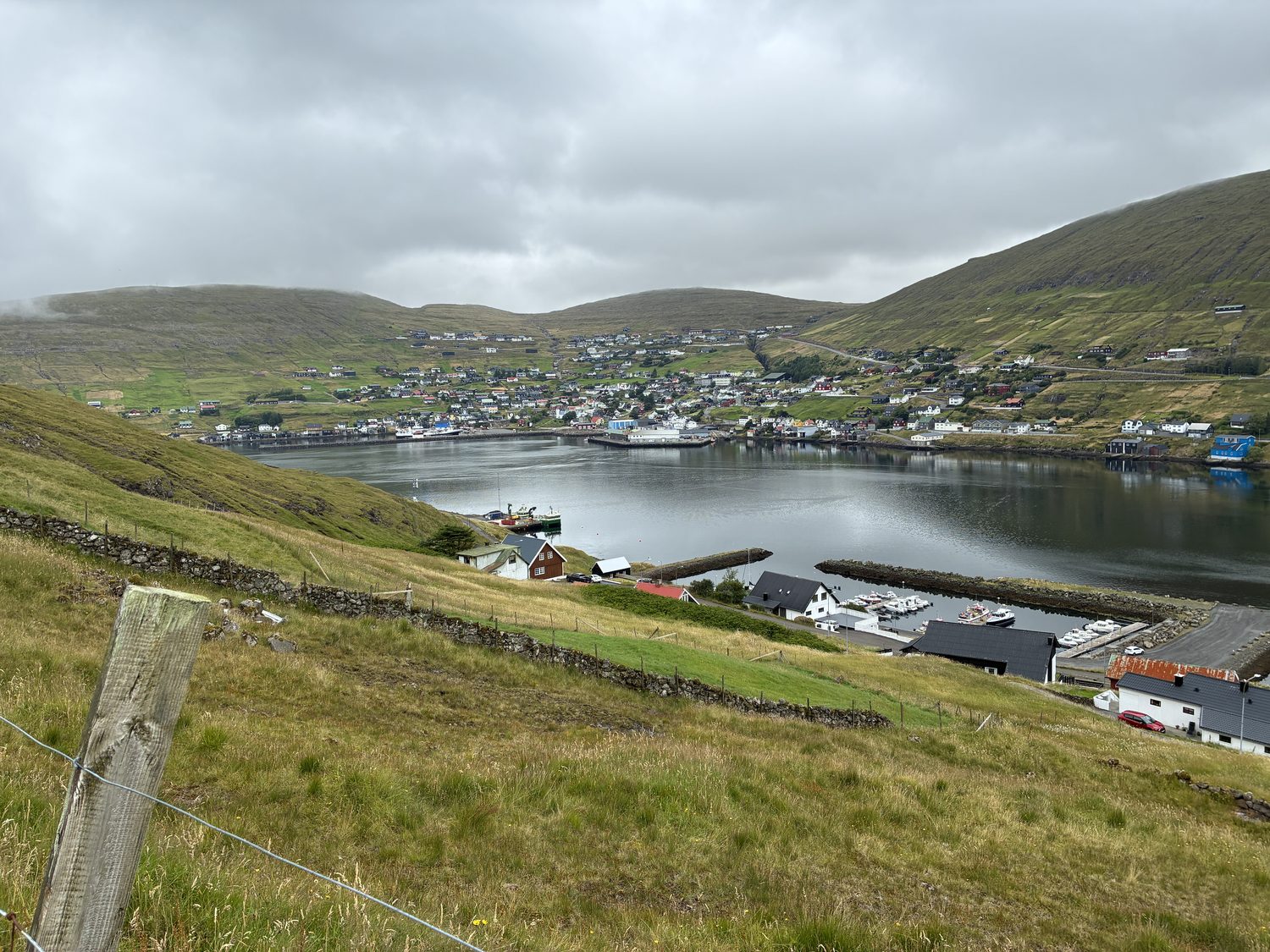
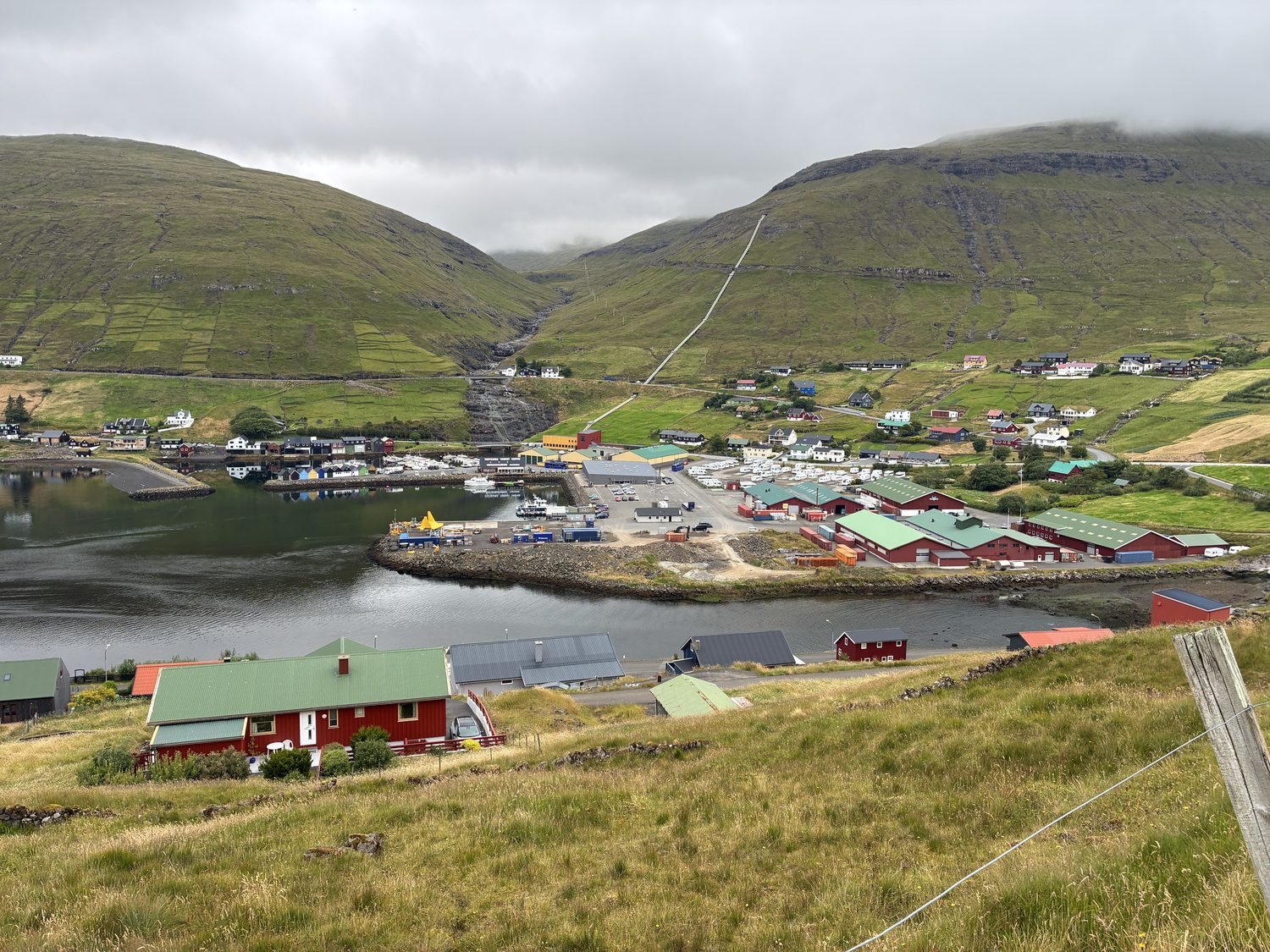
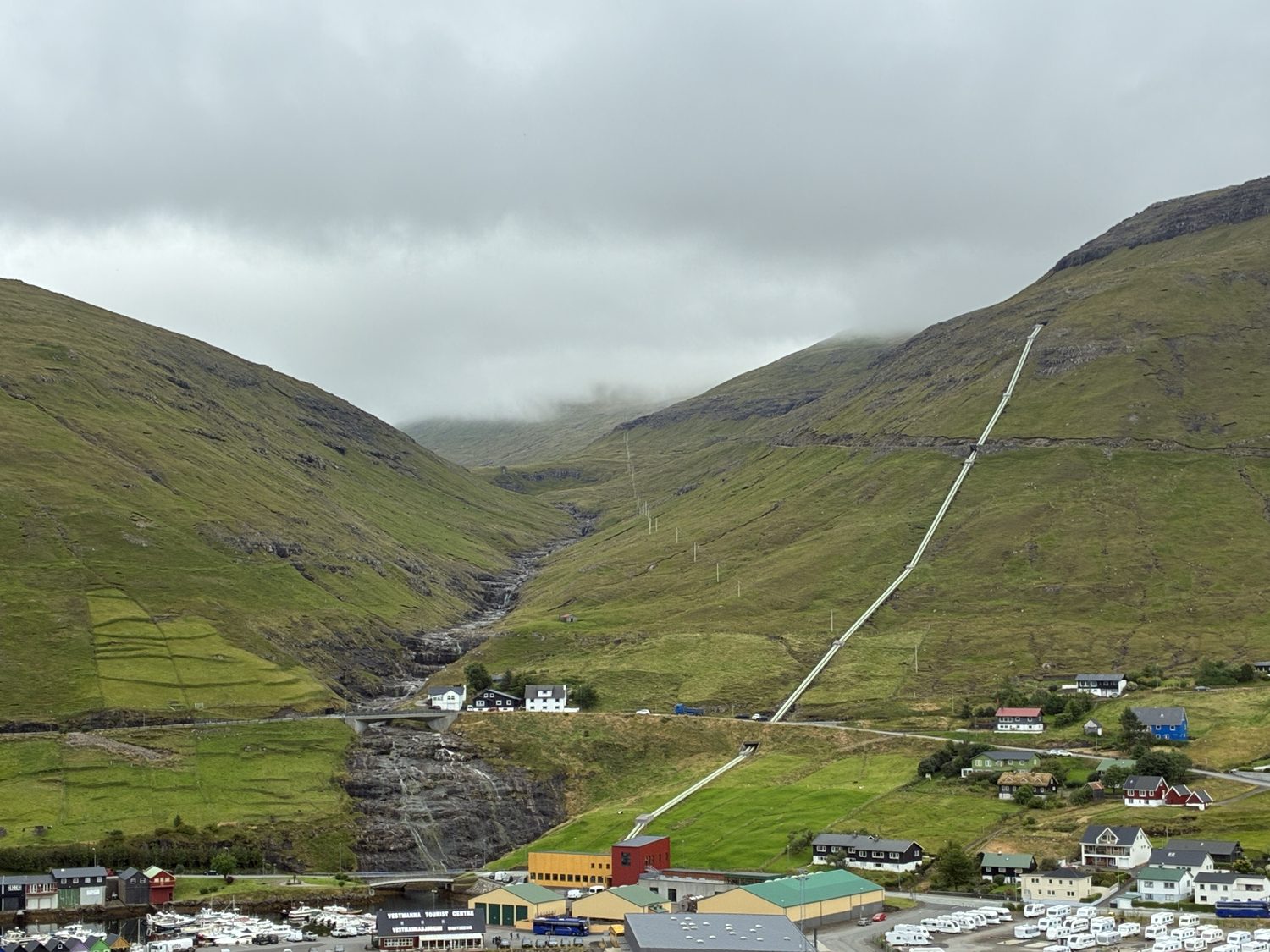
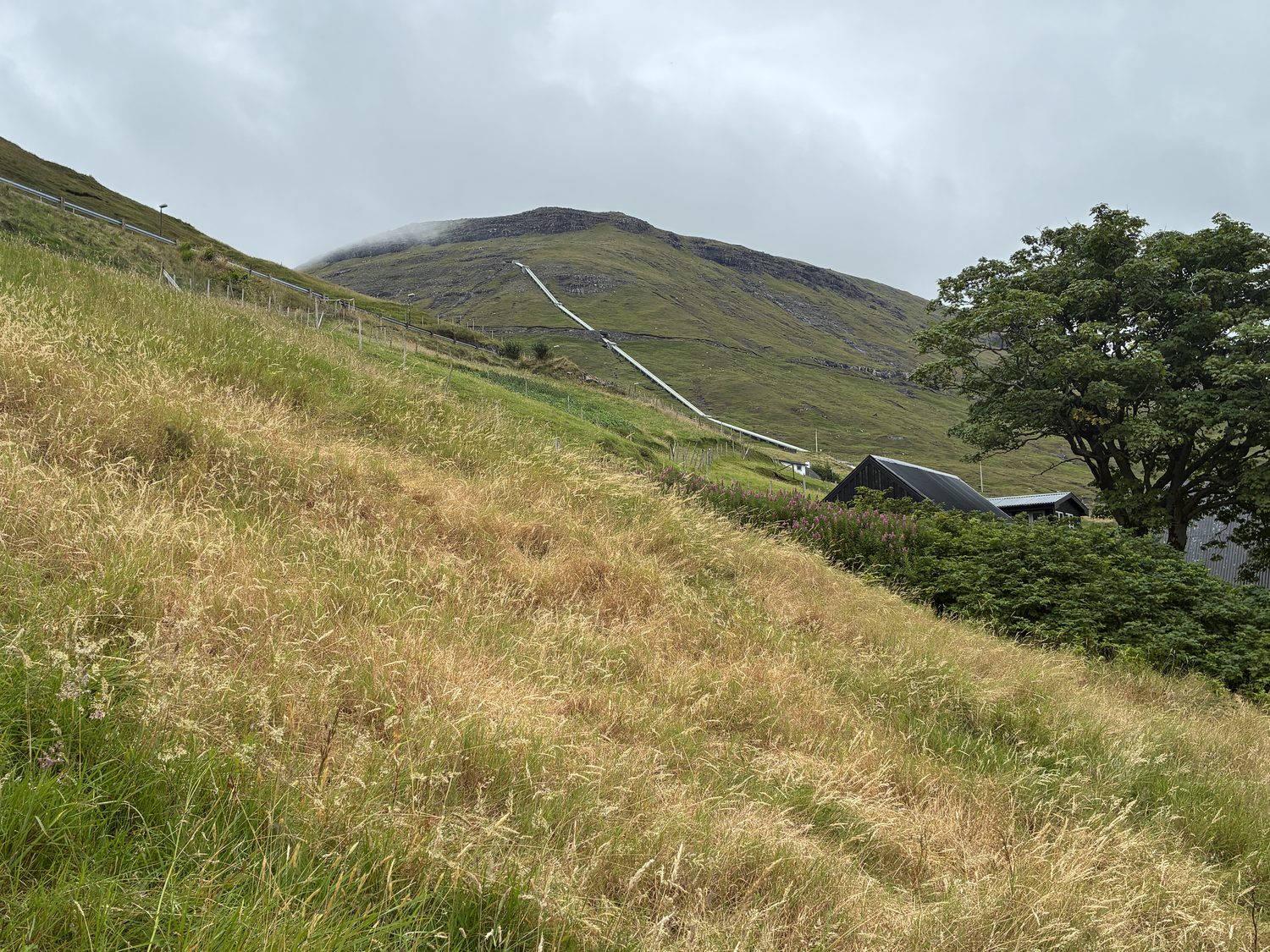
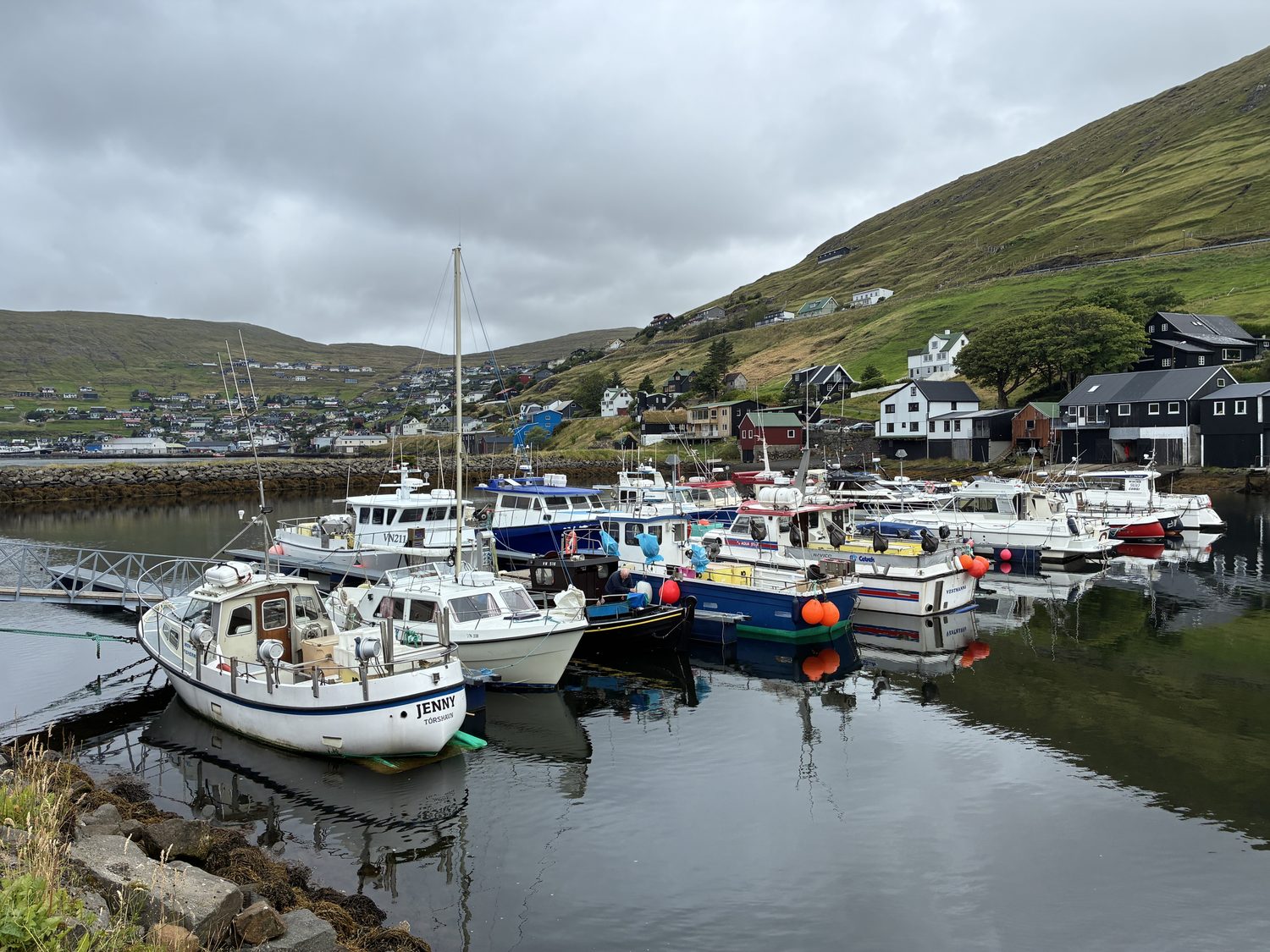
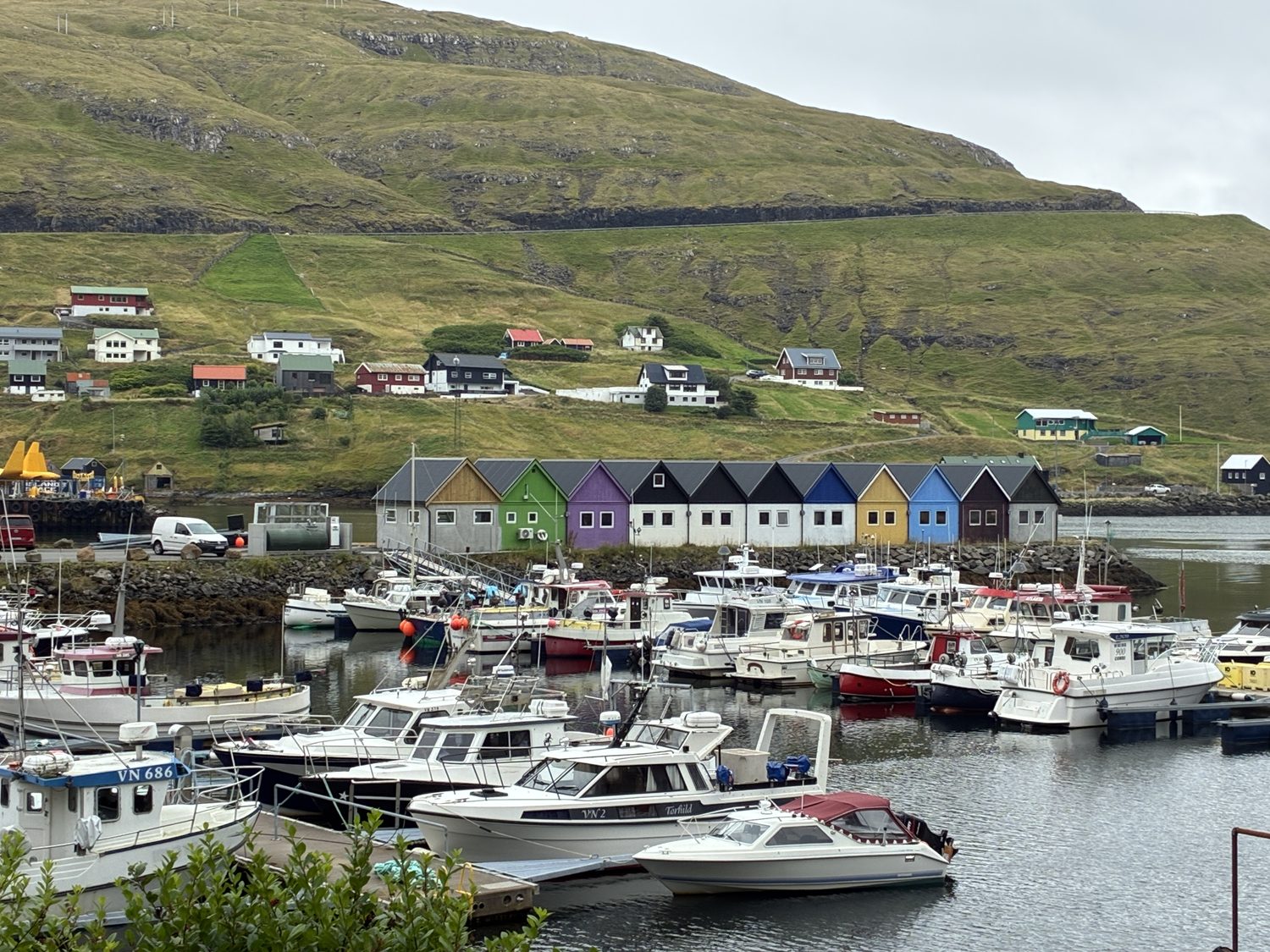
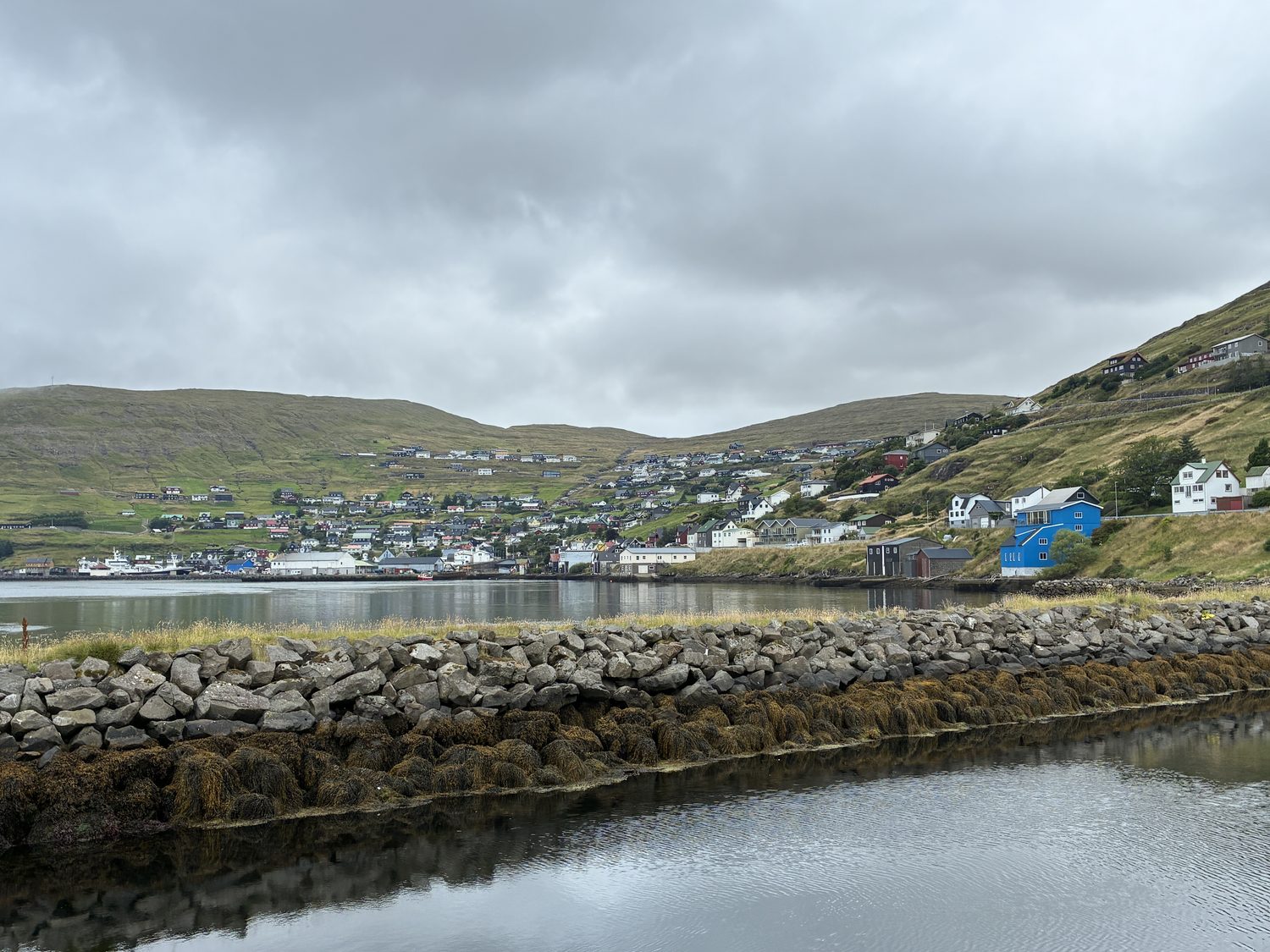
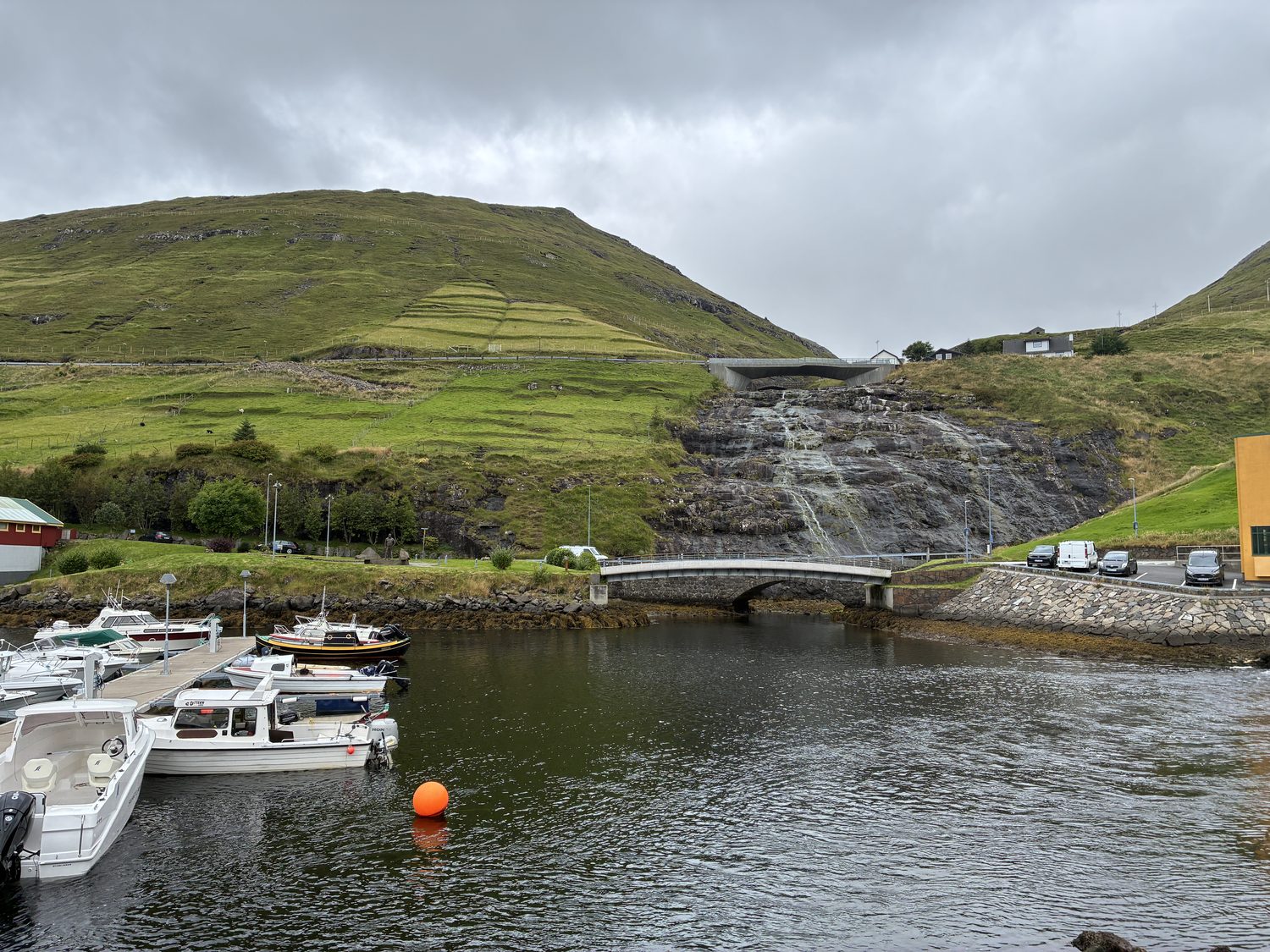
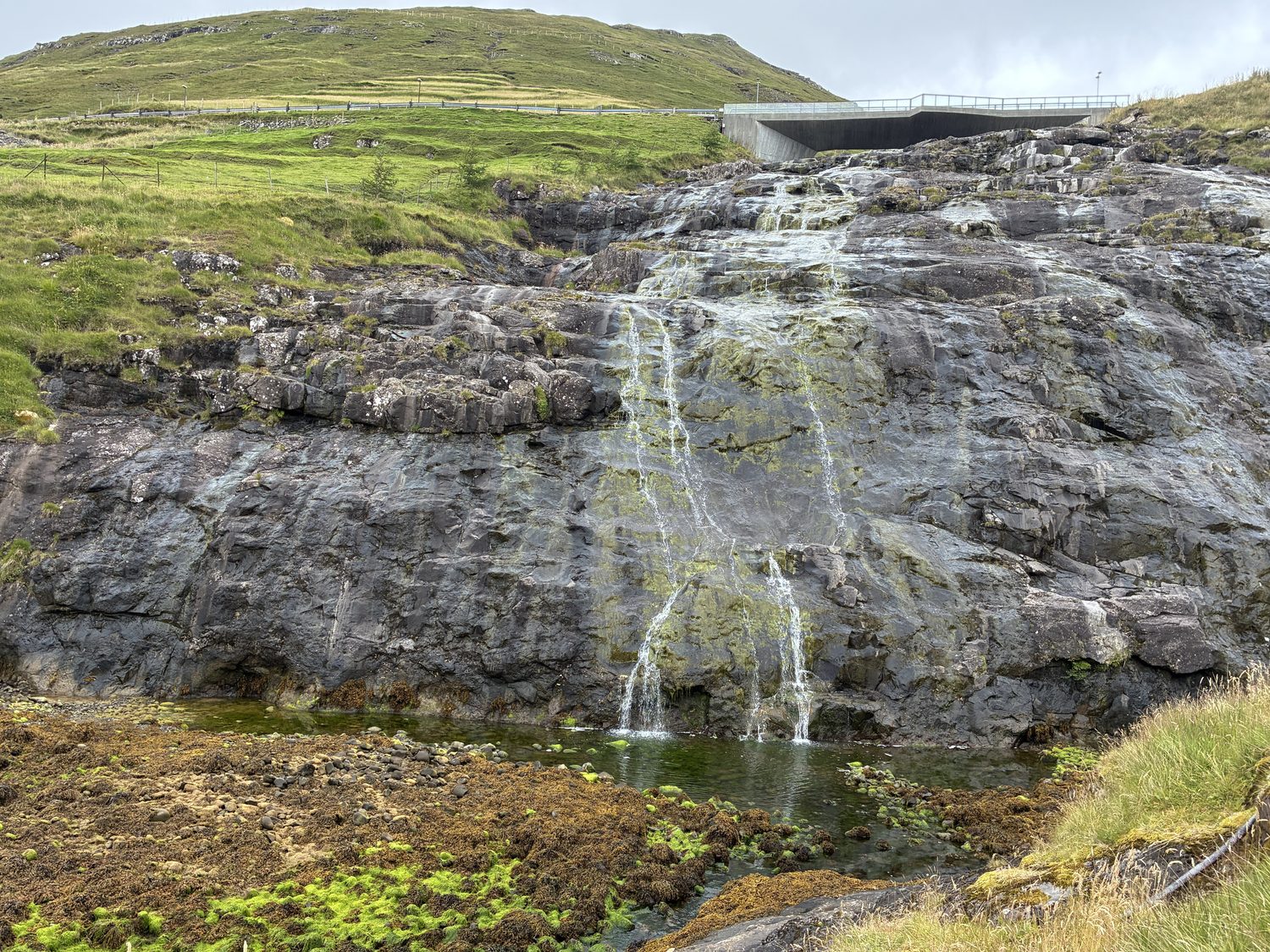
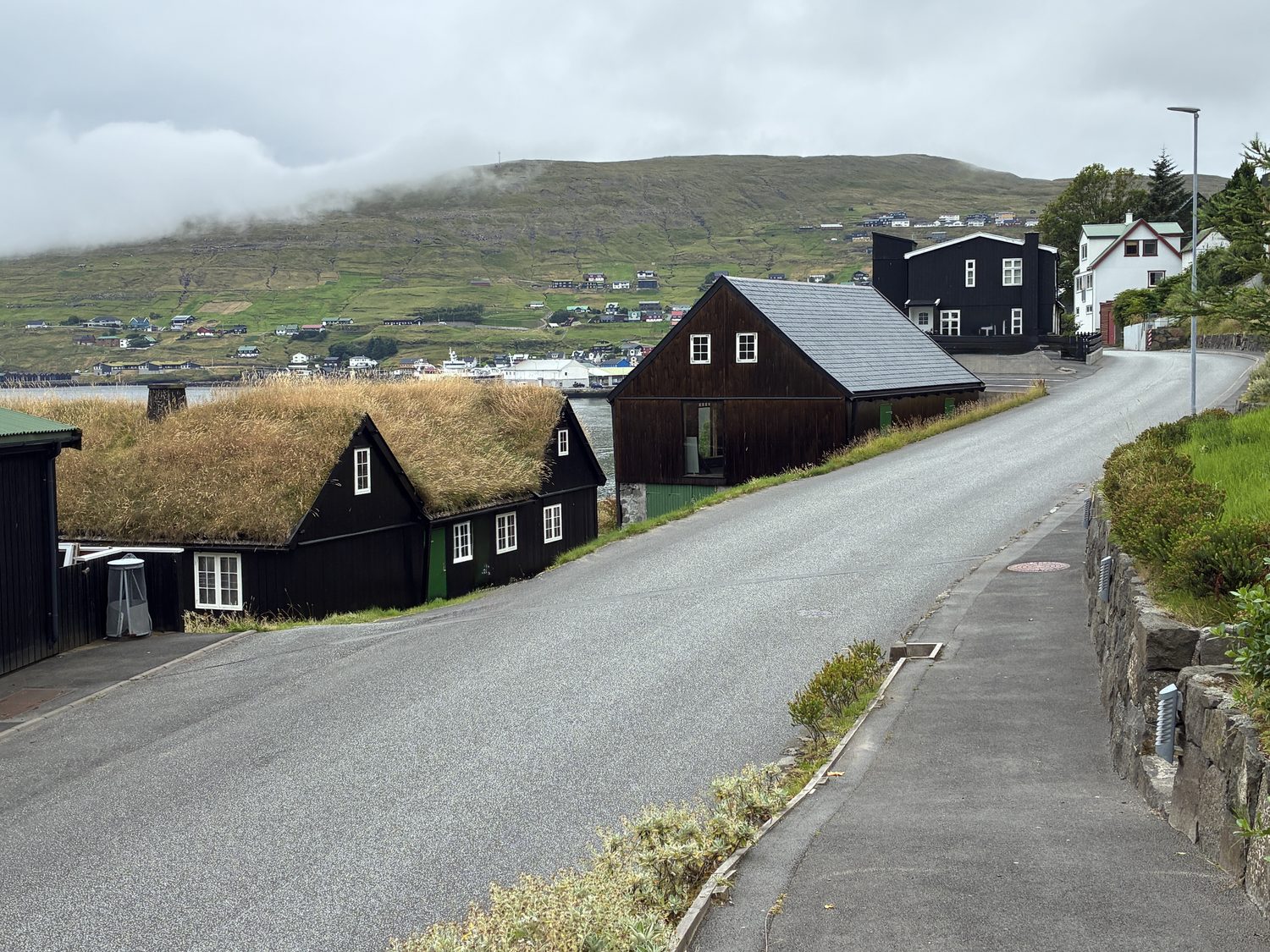
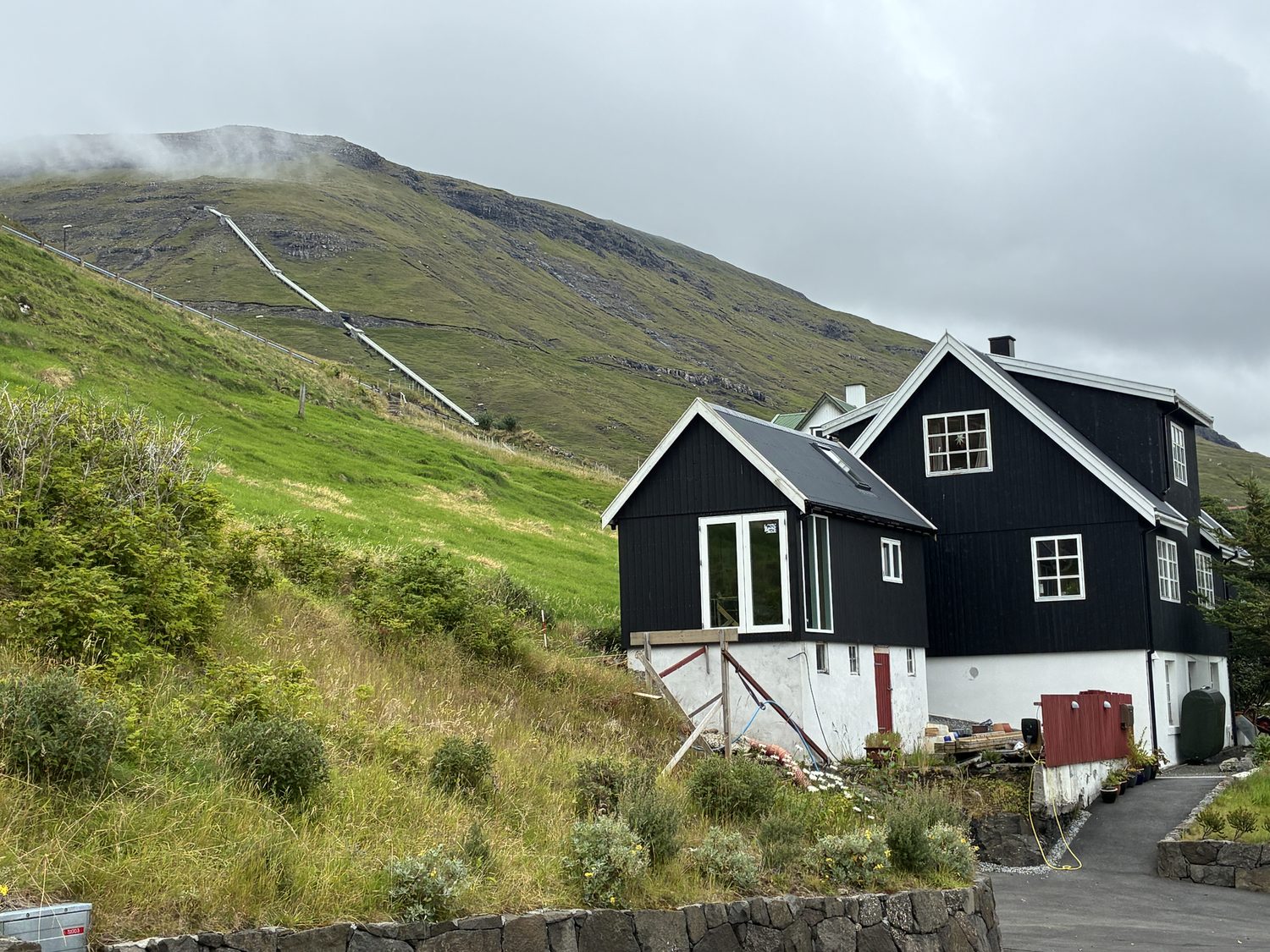
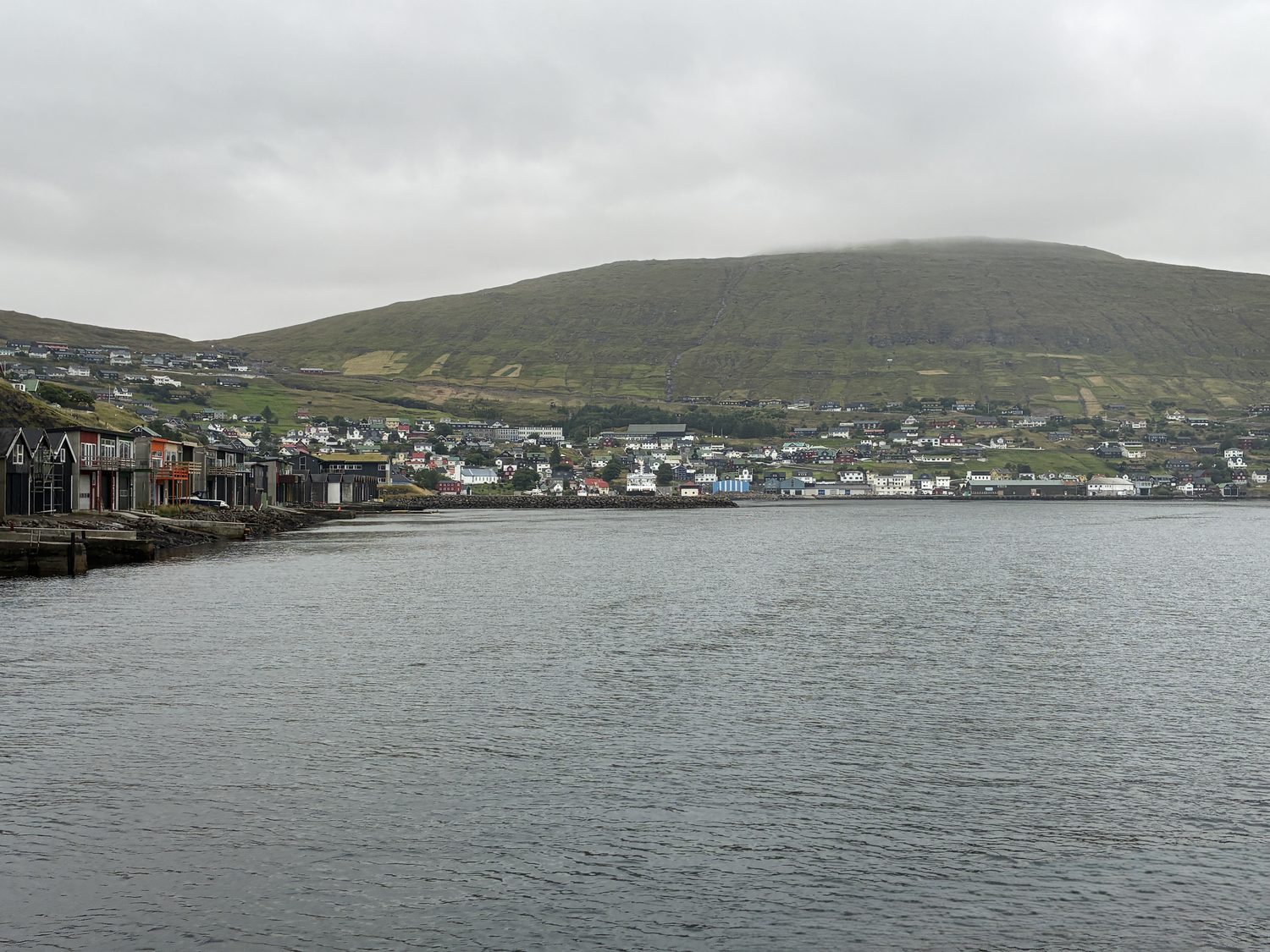
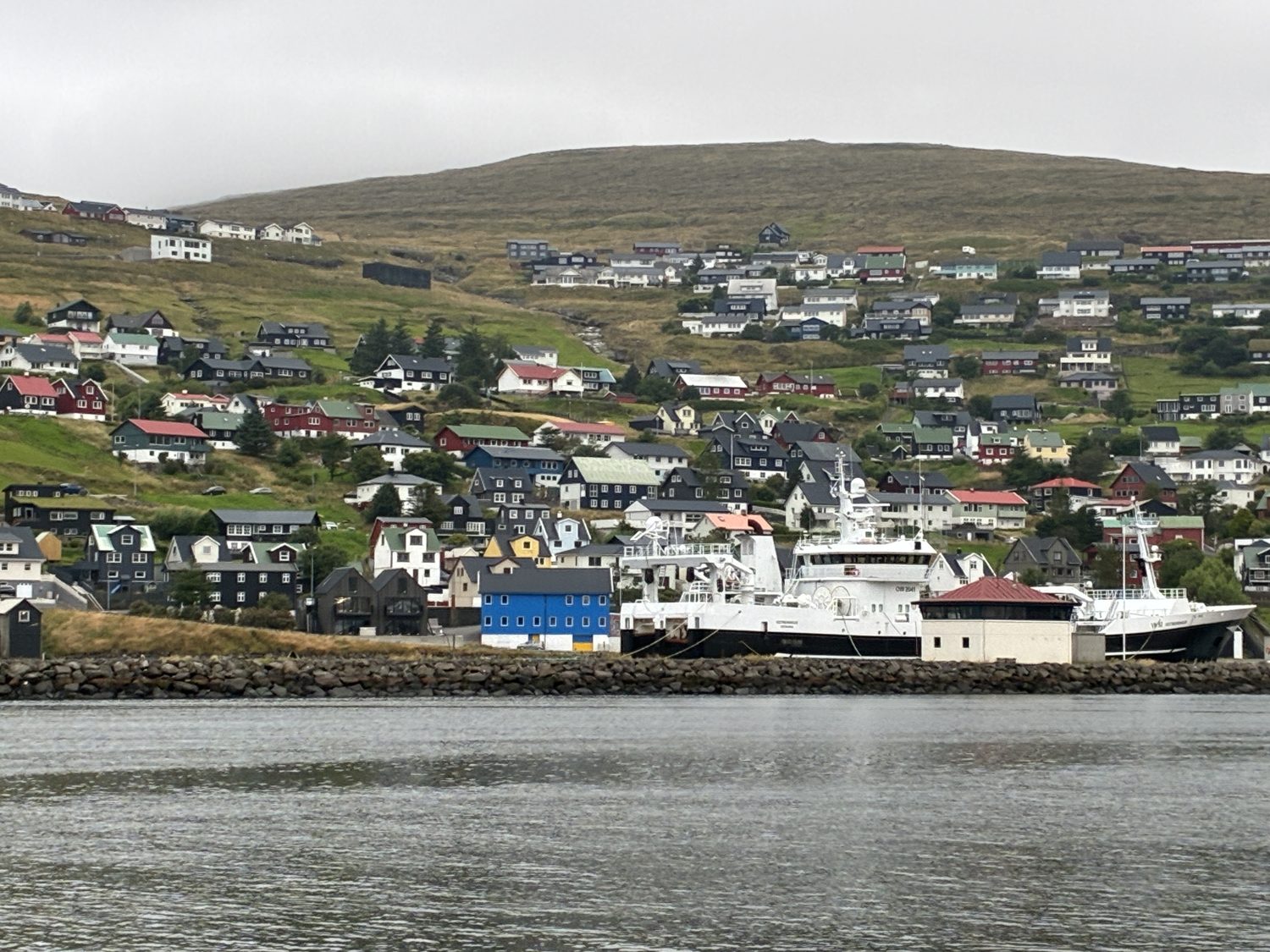
Vestmanna is a nice looking small fishing village of about 1,200, surrounded by steep hills and mountains, and known for the majestic sea cliffs, the Vestmannabjørgini, that lie just outside the town and along the North Atlantic coastline. There are several huge pipelines flowing down from rain reservoirs high in the surrounding mountains that feed a hydroelectric plant in town, and there are several similar plants in this part of the islands. The town has a small waterfall just outside of the harbor area, and also that traditional Faroese look, with black buildings framed in white, some with turf roofs.
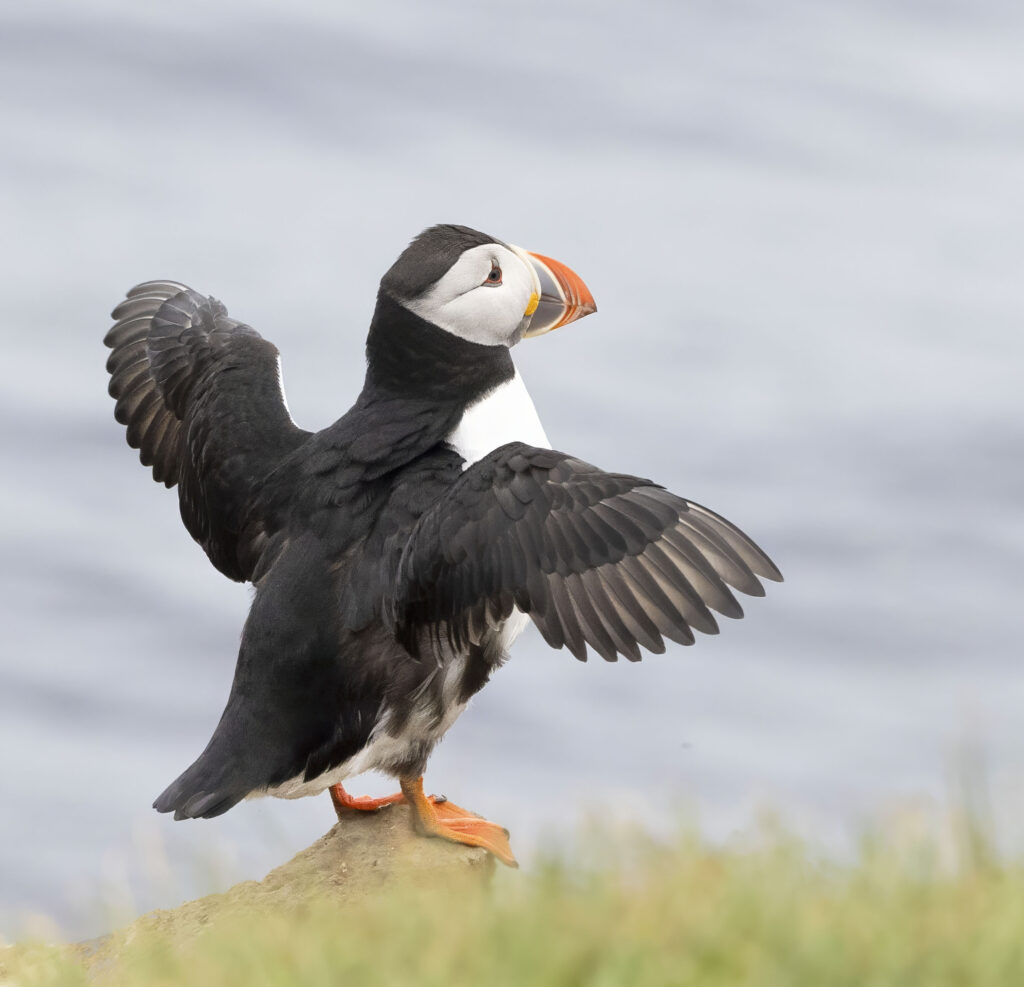
The town is also known as a haven for puffins, birds that spend most of their lives at sea , coming ashore only to mate, lay eggs, and hatch them, doing so in the Vestmanna sea cliffs, an important nesting area for the birds, so Vestmanna is also a central spot for bird watchers. By now though, late August, the puffin season is pretty much over, with just the stray puffin here and there. We did see a few while out on the boat, but pretty high up, small birds furiously flapping their small wings.
The town is clean, well maintained, and orderly (and small), and there is what seems to be a youth or cultural center right by the harbor, as well as a very nice tourist office, which has a nice , but expensive, gift shop, and a nice, but also expensive, cafeteria looking out over the harbor. A cup of hot chocolate after out boat tour cost $10 – and it wasn’t even particularly tasty hot chocolate. In fact, the Faroes are ranked as one of the more expensive destinations in the Northern Atlantic and Europe… but we already knew that, just based upon the cost of getting here, car rental, and accommodation.
I walked around town some, while waiting for our tour to start, and we clambered on board around 2:15, heading upstairs to the outside viewing deck, which was already quite full on our small boat, although it also had an inside viewing area below .
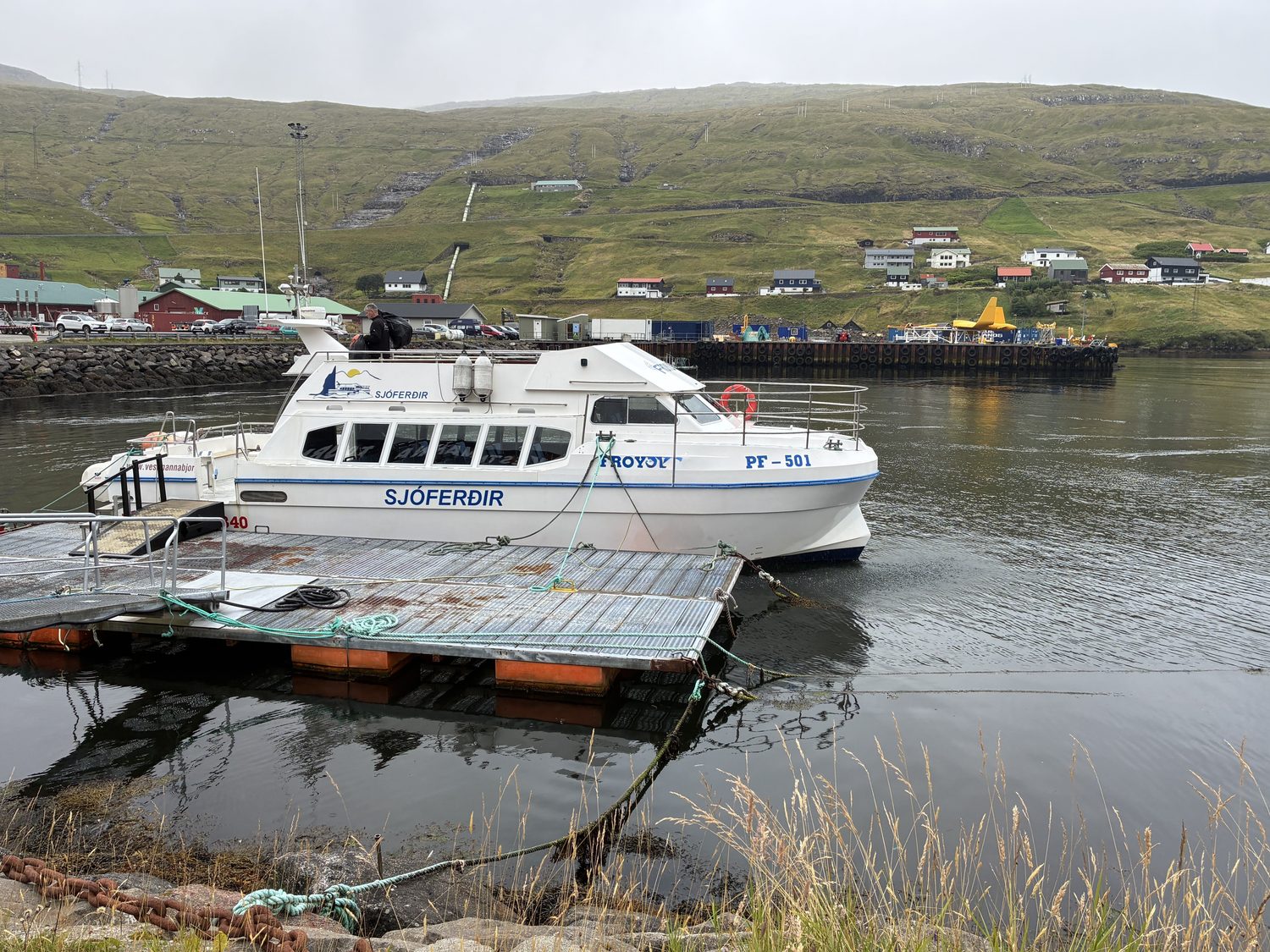
The tour, also expensive at $70, was excellent, and we were very glad to have booked it, with excellent narration throughout the over 90-minute tour. We headed out of the harbor and into the Vestmanna Sound (Vestmannasund), and from there into wide open and cold North Atlantic. Wonderful and exhilarating.
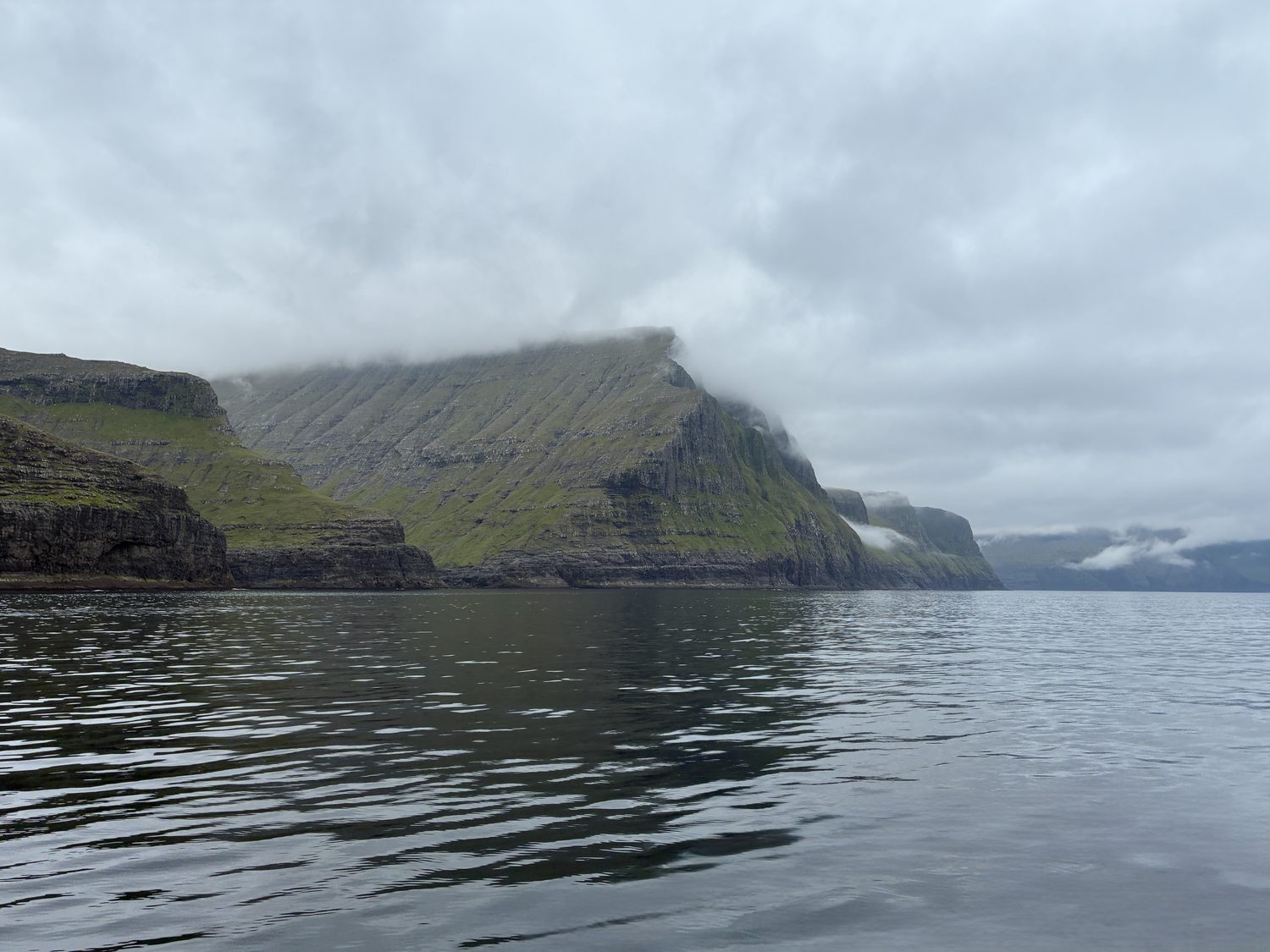
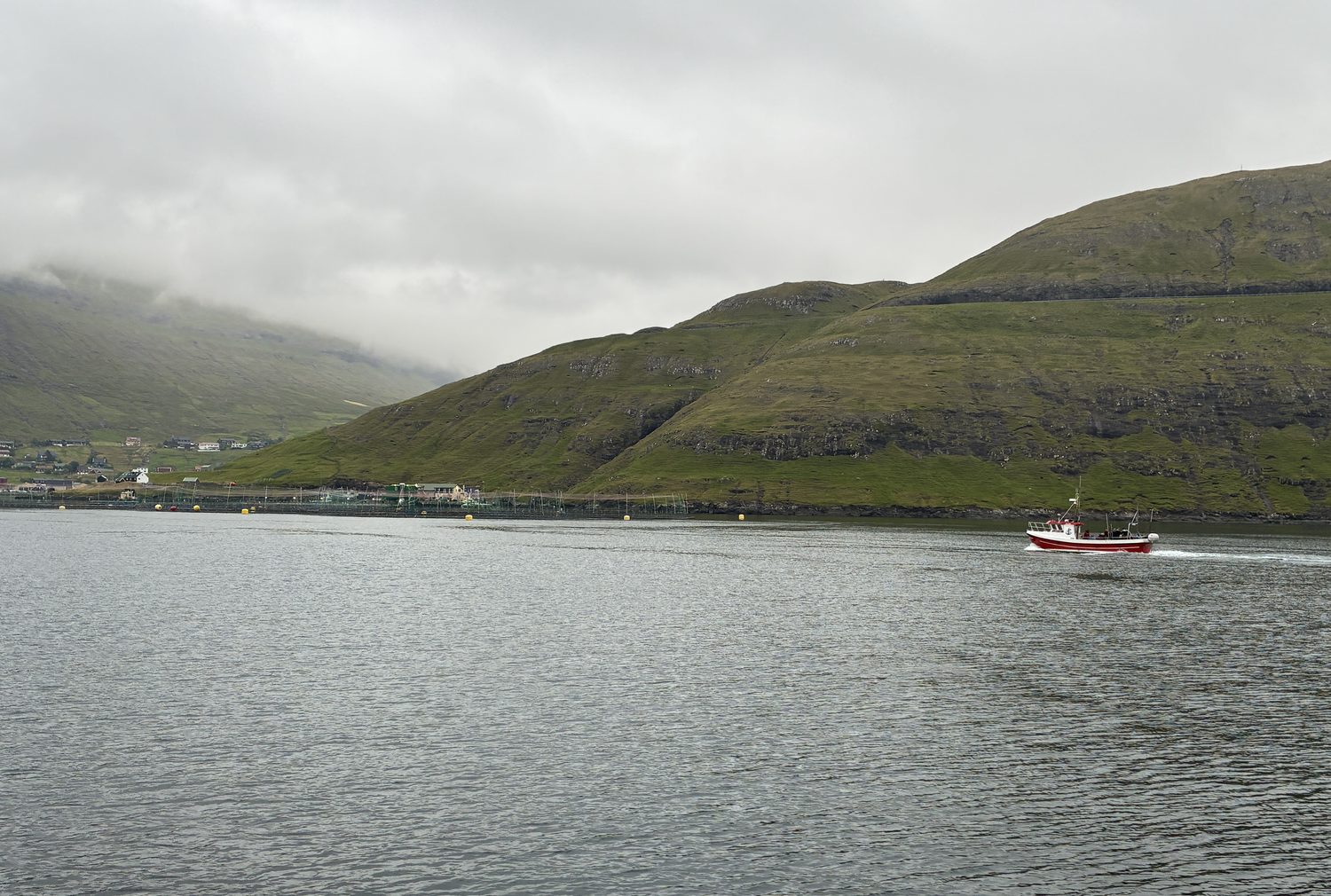
As we sailed out of the sound and into the Atlantic, we passed the lovely, but comparatively tame hills and mountains, around the village, clouds hanging over the peaks, with some lovely views of the Vestmanna Sound. The real action didn’t come until we passed out of the sound though, heading further north into the Atlantic.
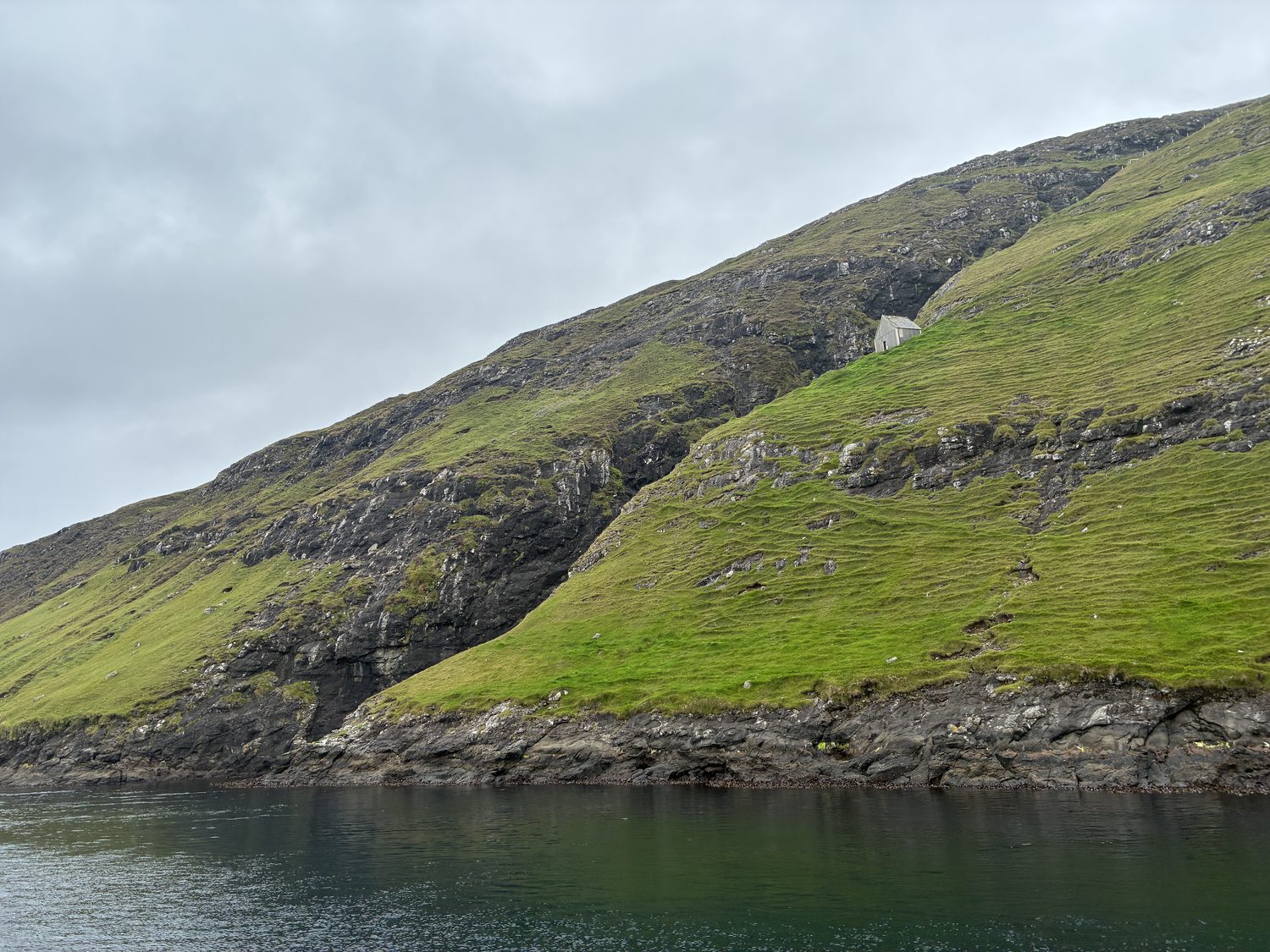
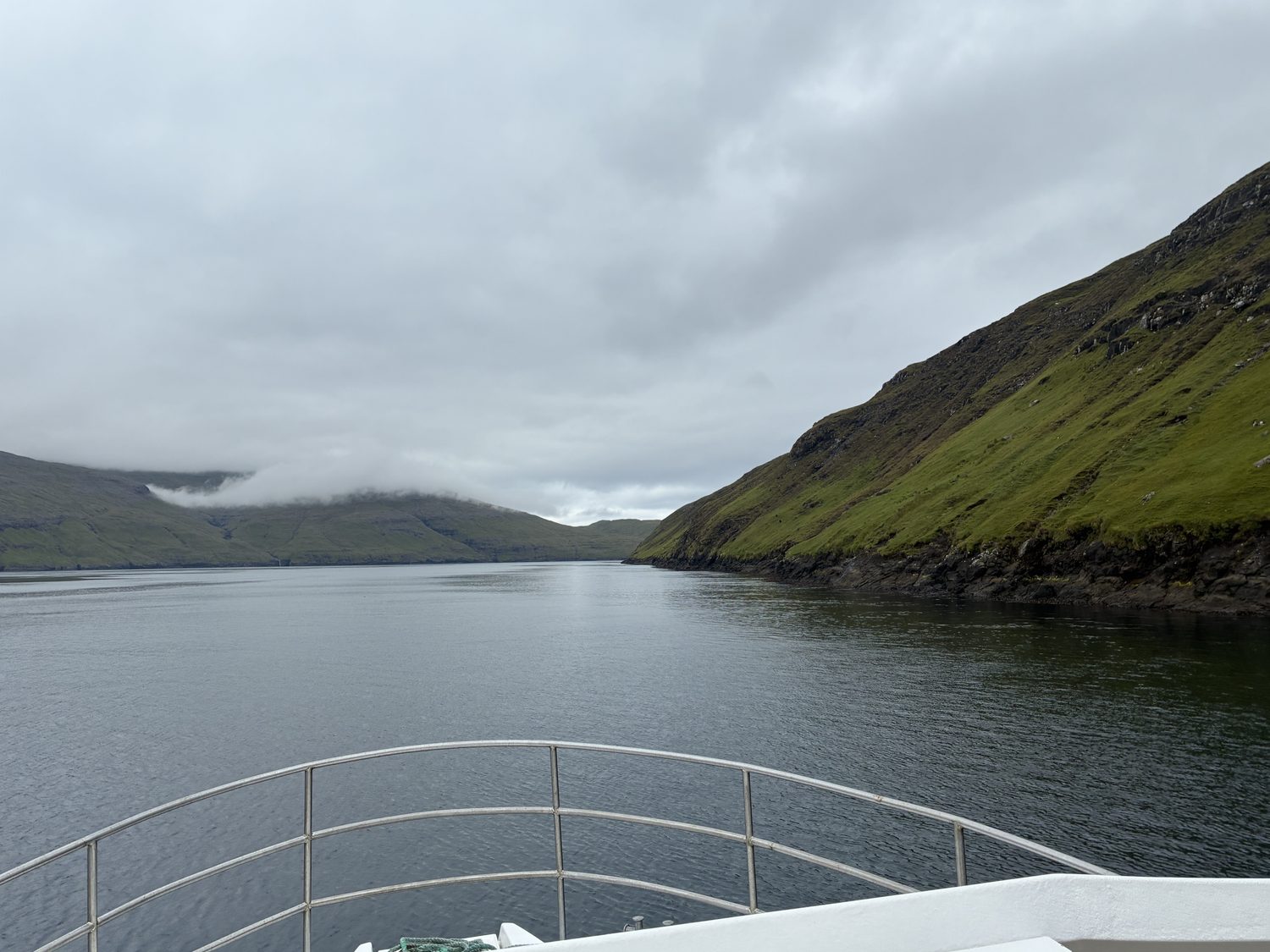
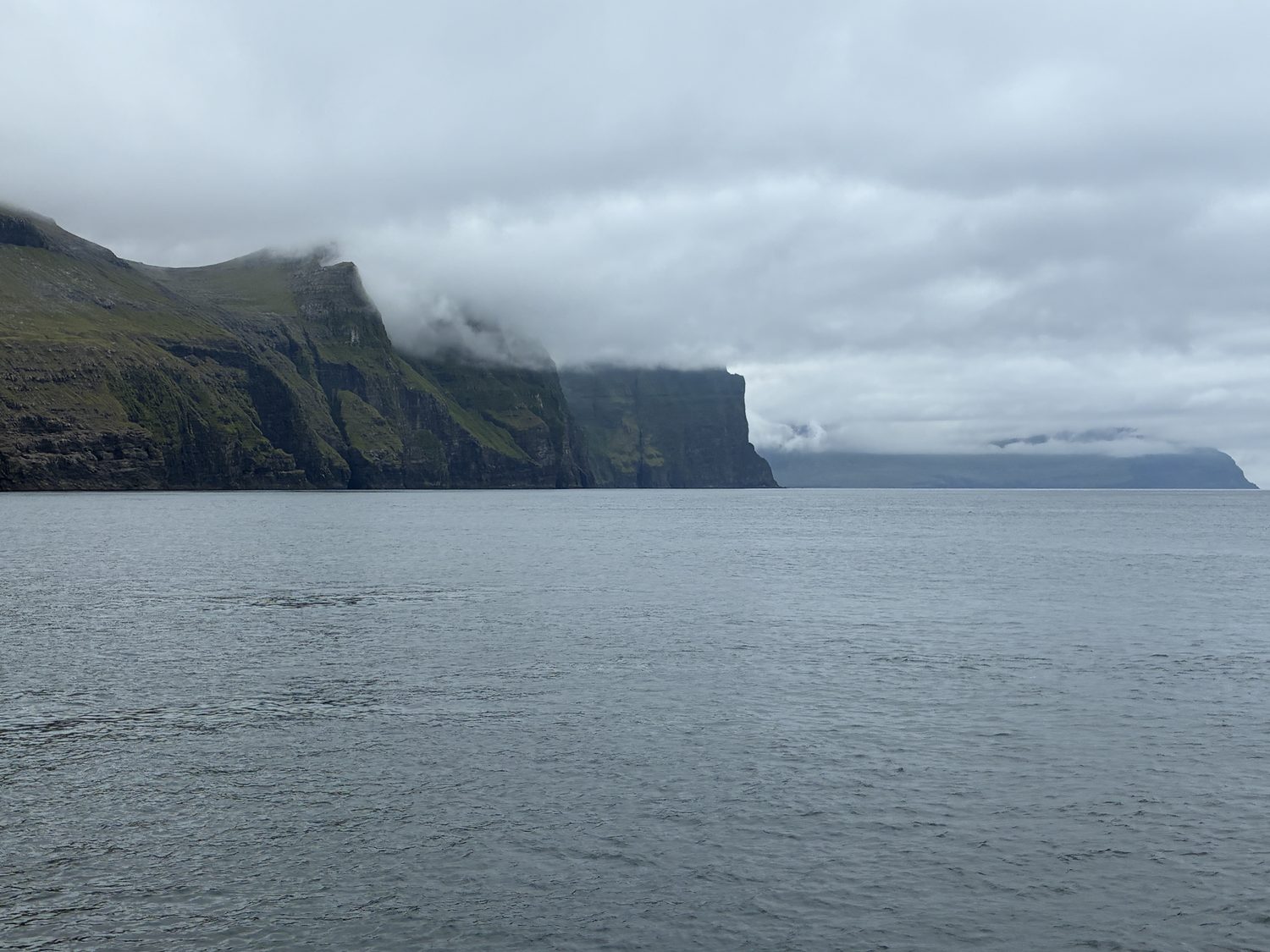
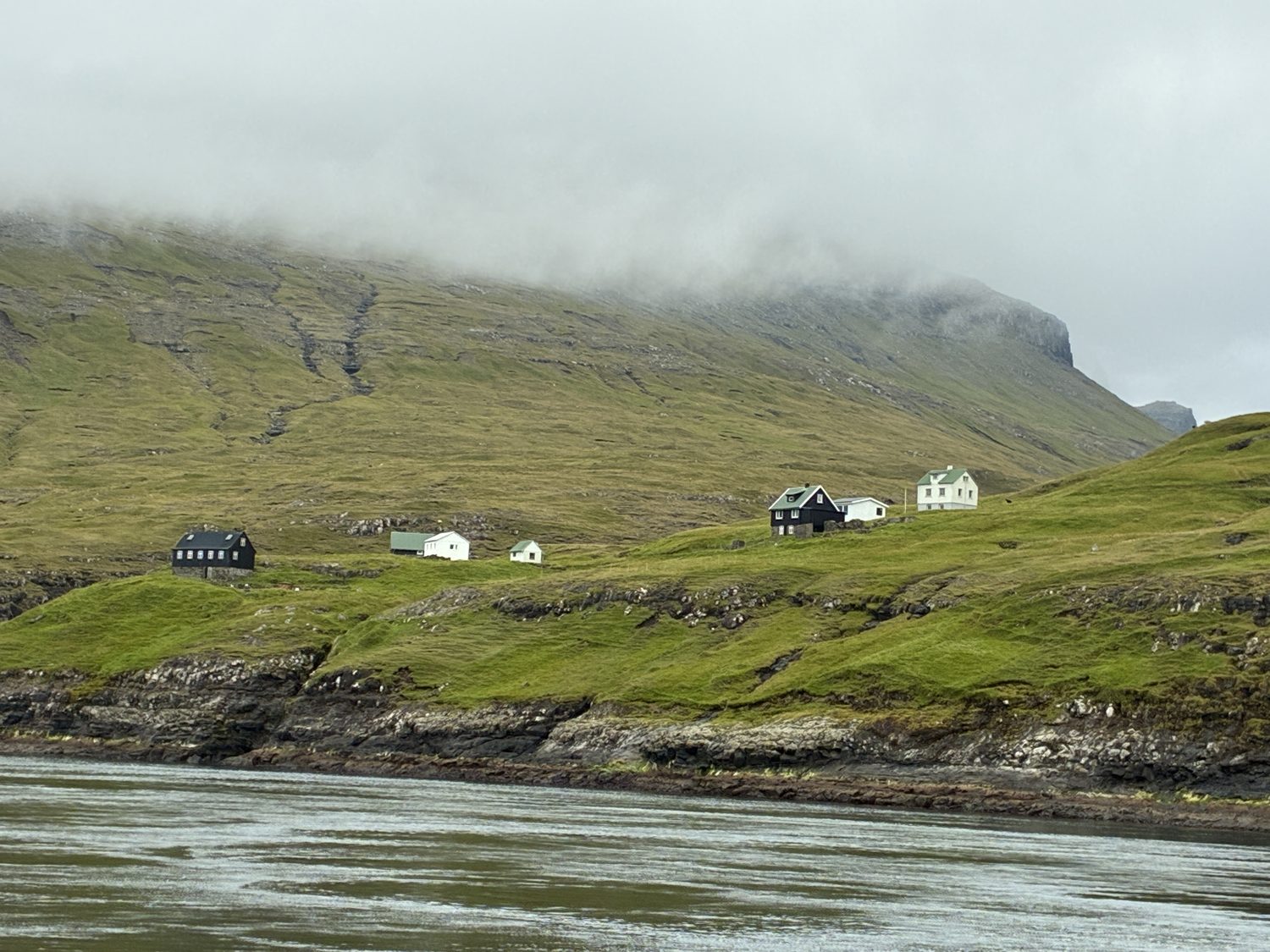
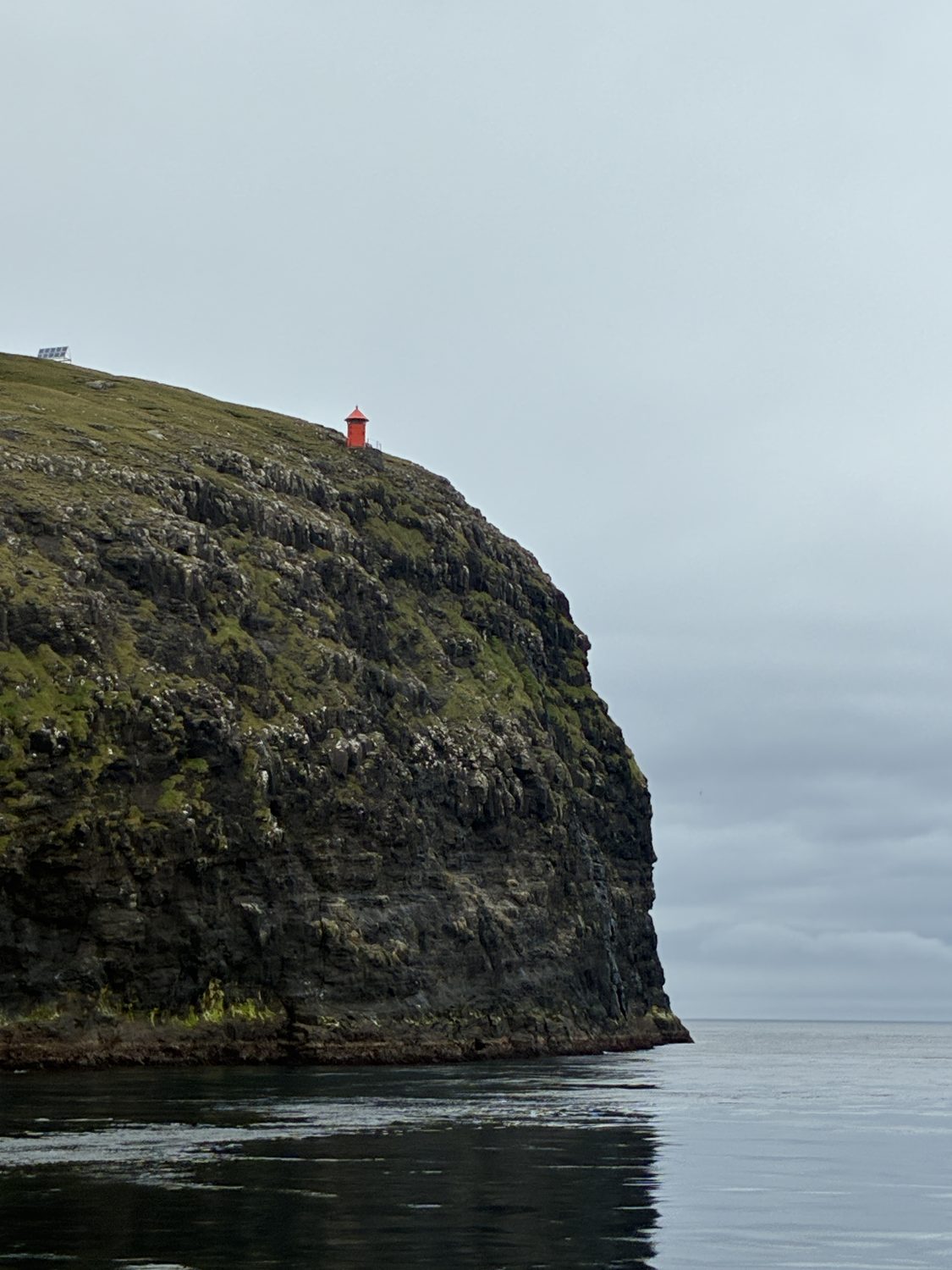
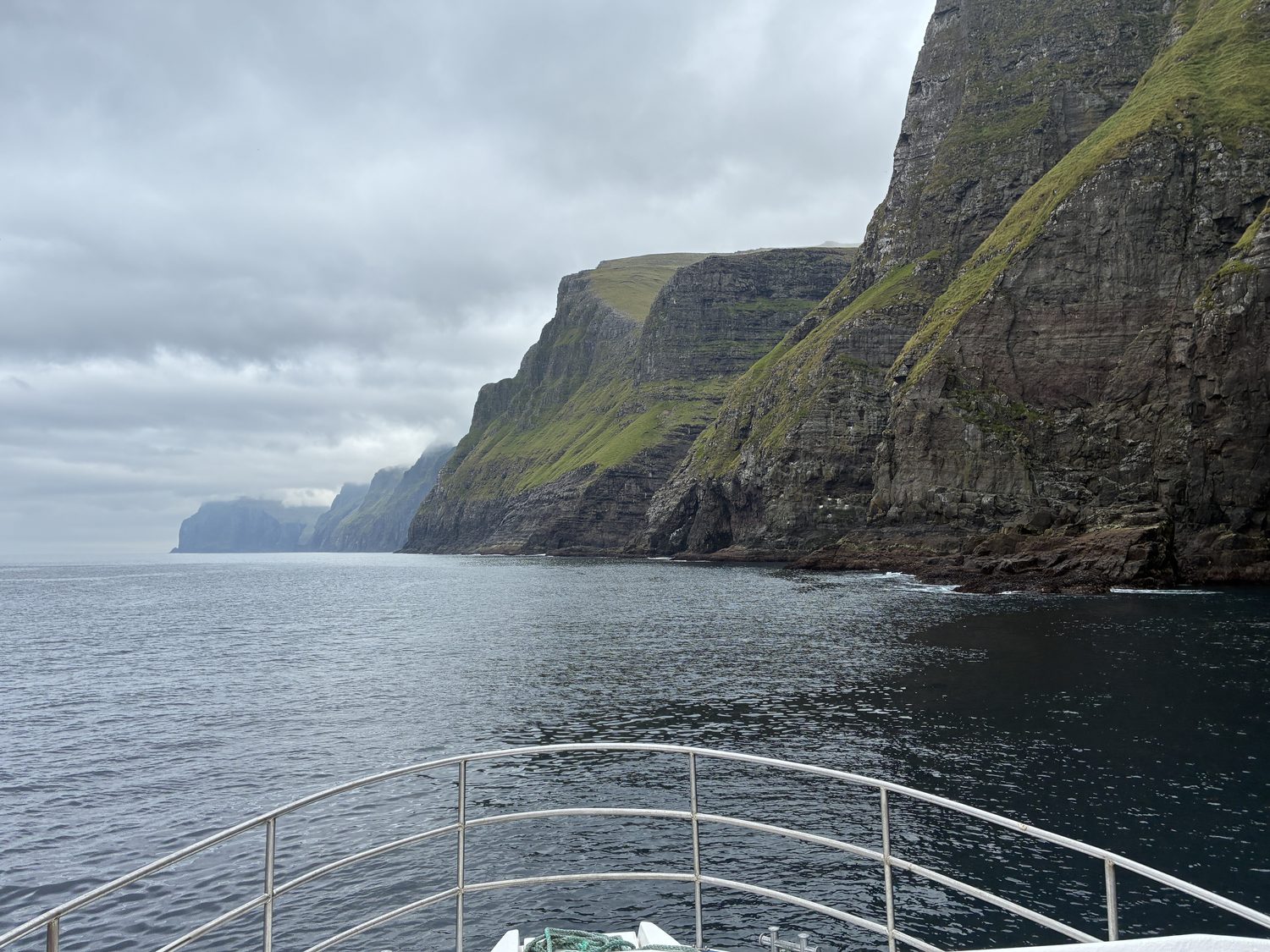
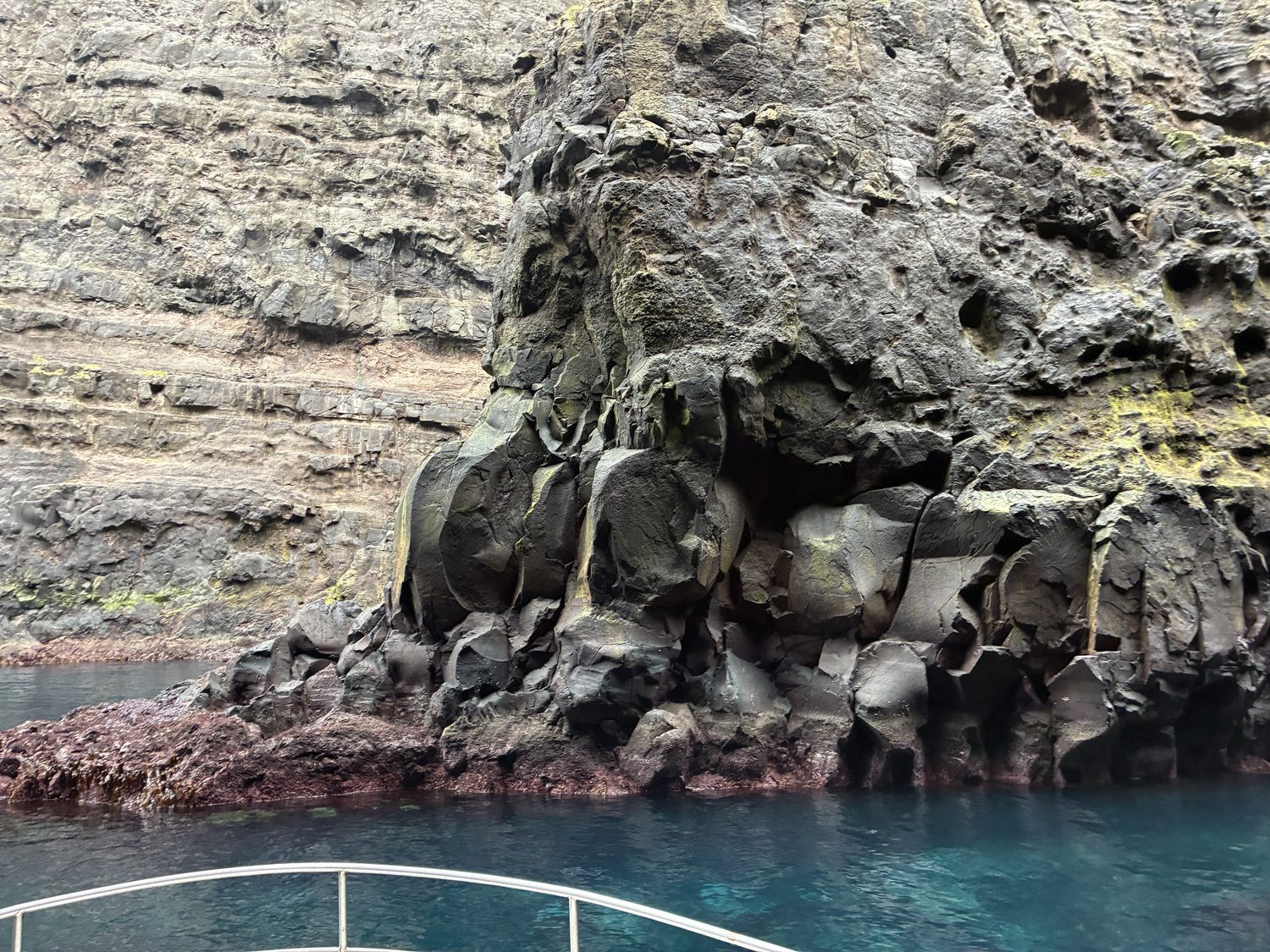
The ride through the sound was lovely, but things got far more interesting and dramatic as we turned into the North Atlantic, with the amazing sea cliffs coming clearly into view. Formed by volcanic activity some 55–60 million years ago, the cliffs are made of basalt, at times creating a stepped appearance on the mountains, the remains of a volcanic plateau that once covered this part of the North Atlantic.
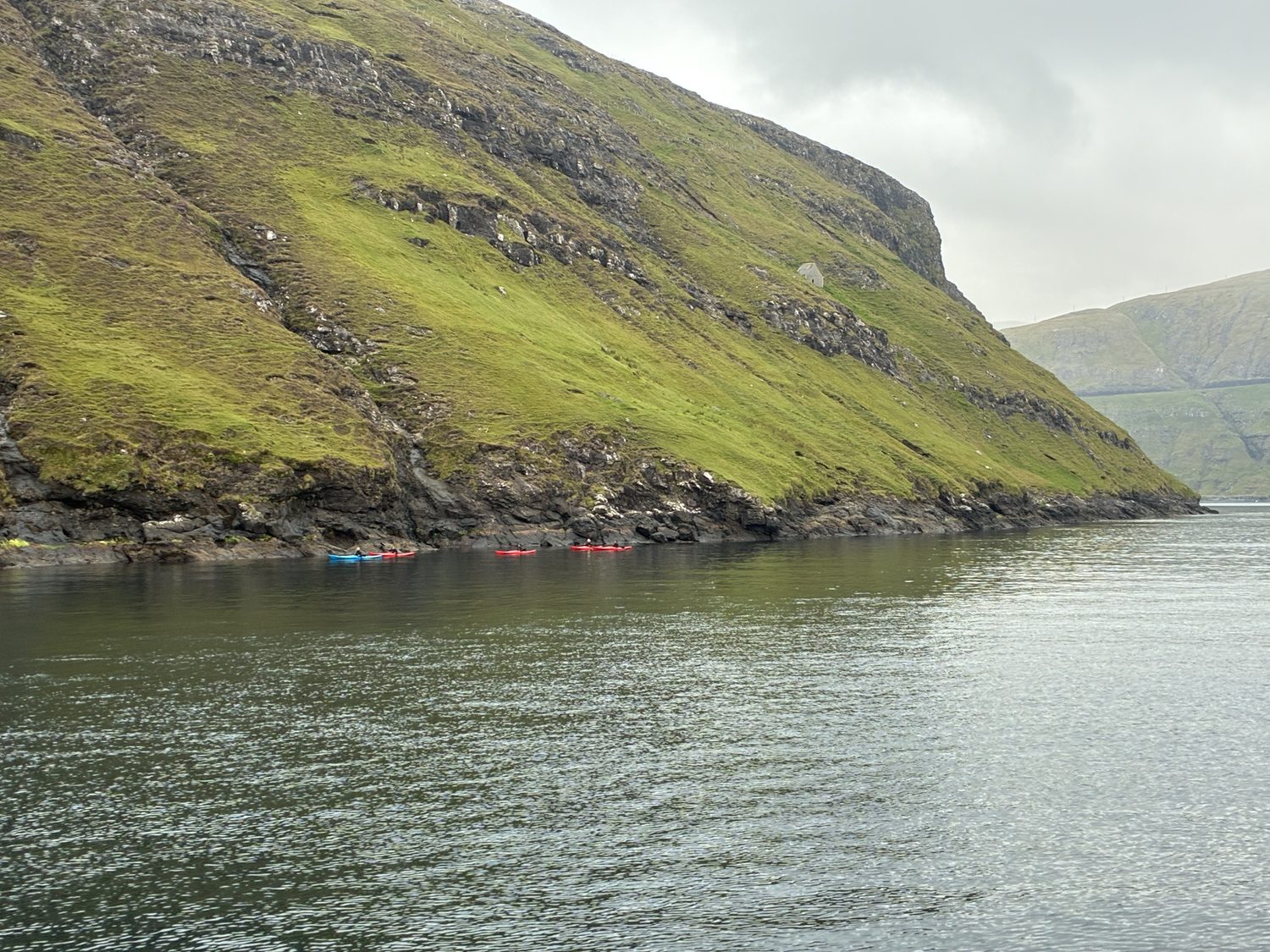
The cliffs are covered in moss and grass, with small shrubs, and dotted with sheep. In a previous post, I said they were everywhere. In some cases, local farmers carry sheep down the mountain slopes under their arms while using a rope to climb down and back up the cliffs, leaving them here to graze until at the end of the grazing season, at which point they carry them back up, again using climbing ropes. Whoa!
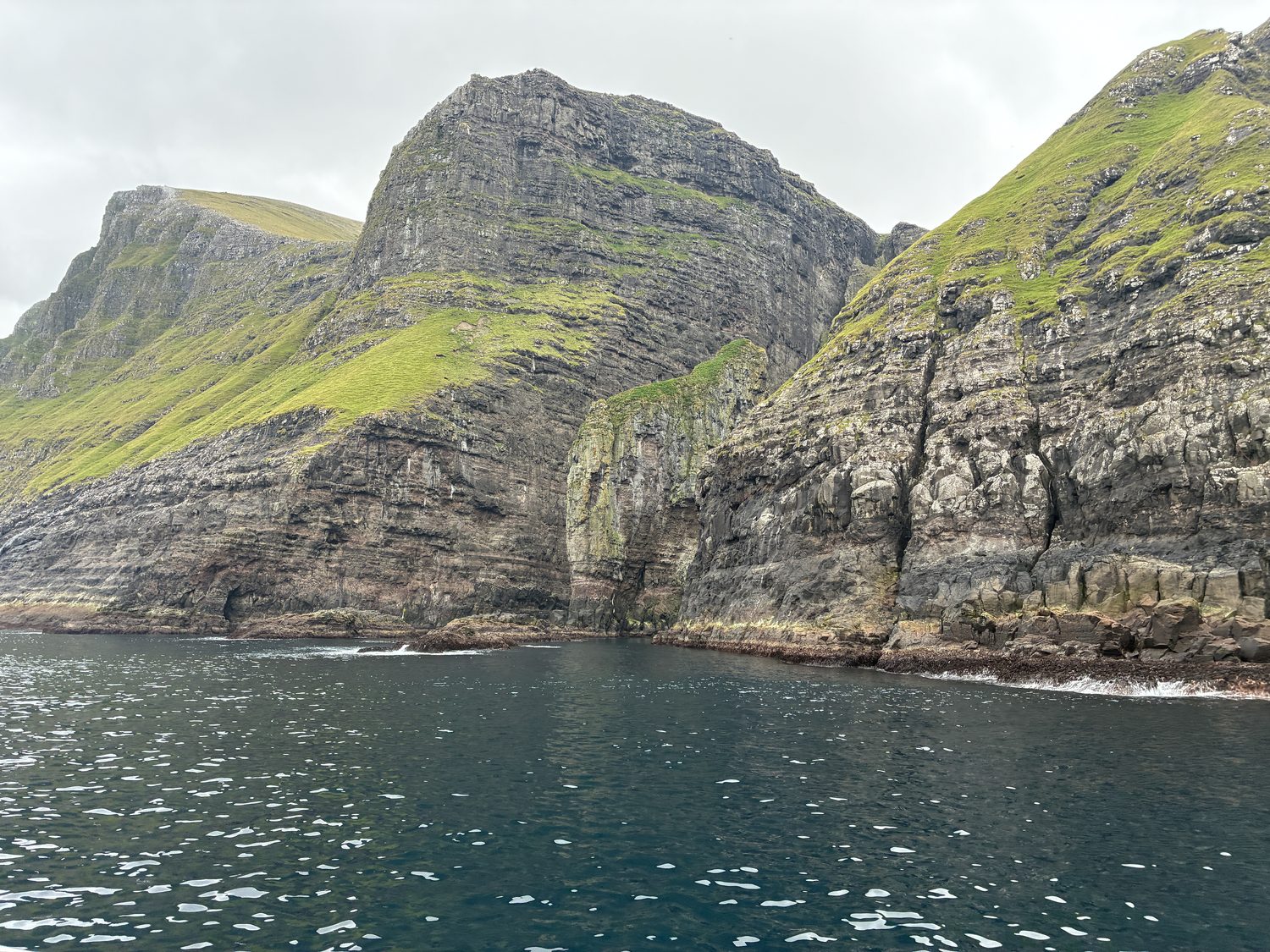
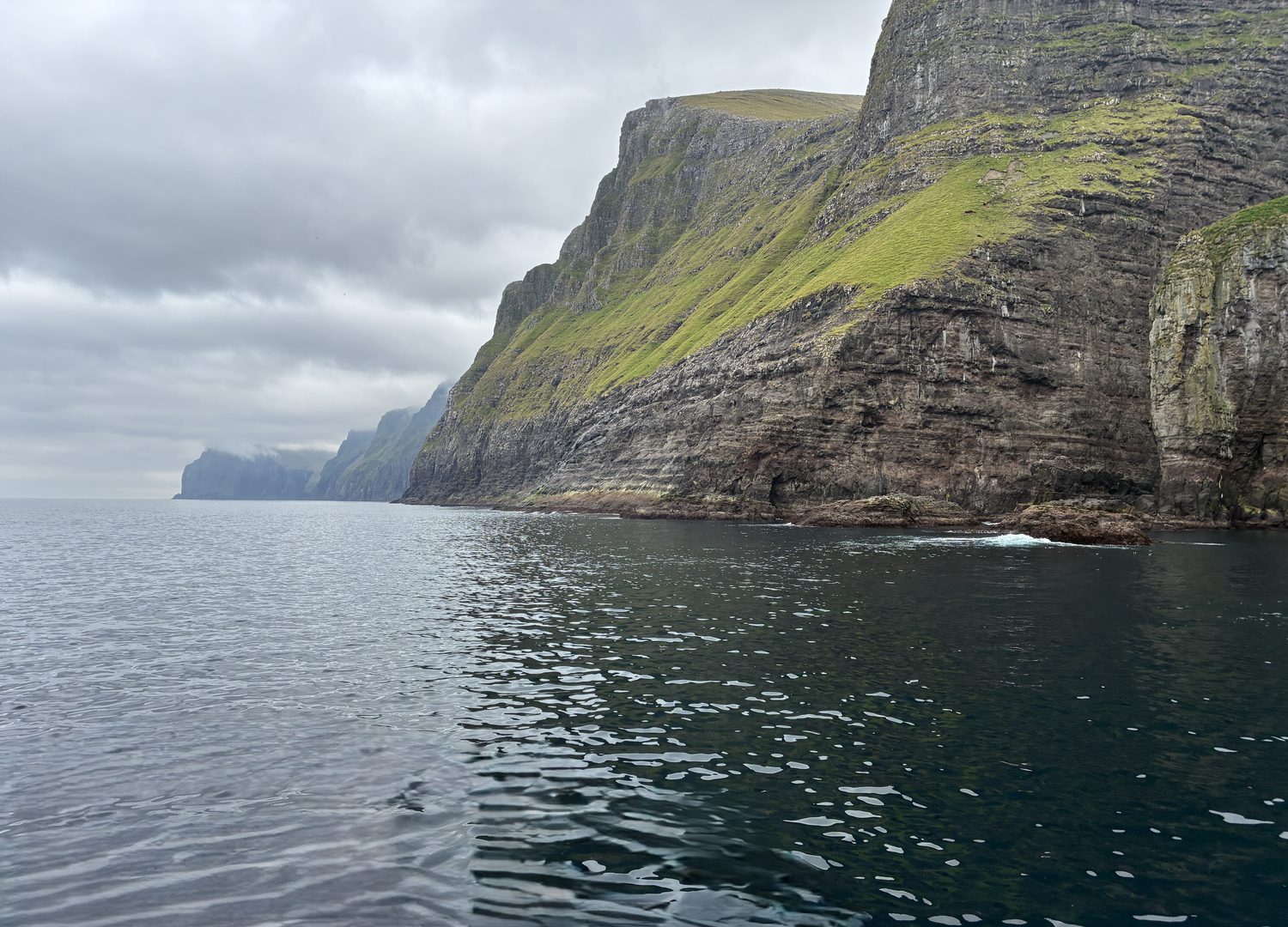
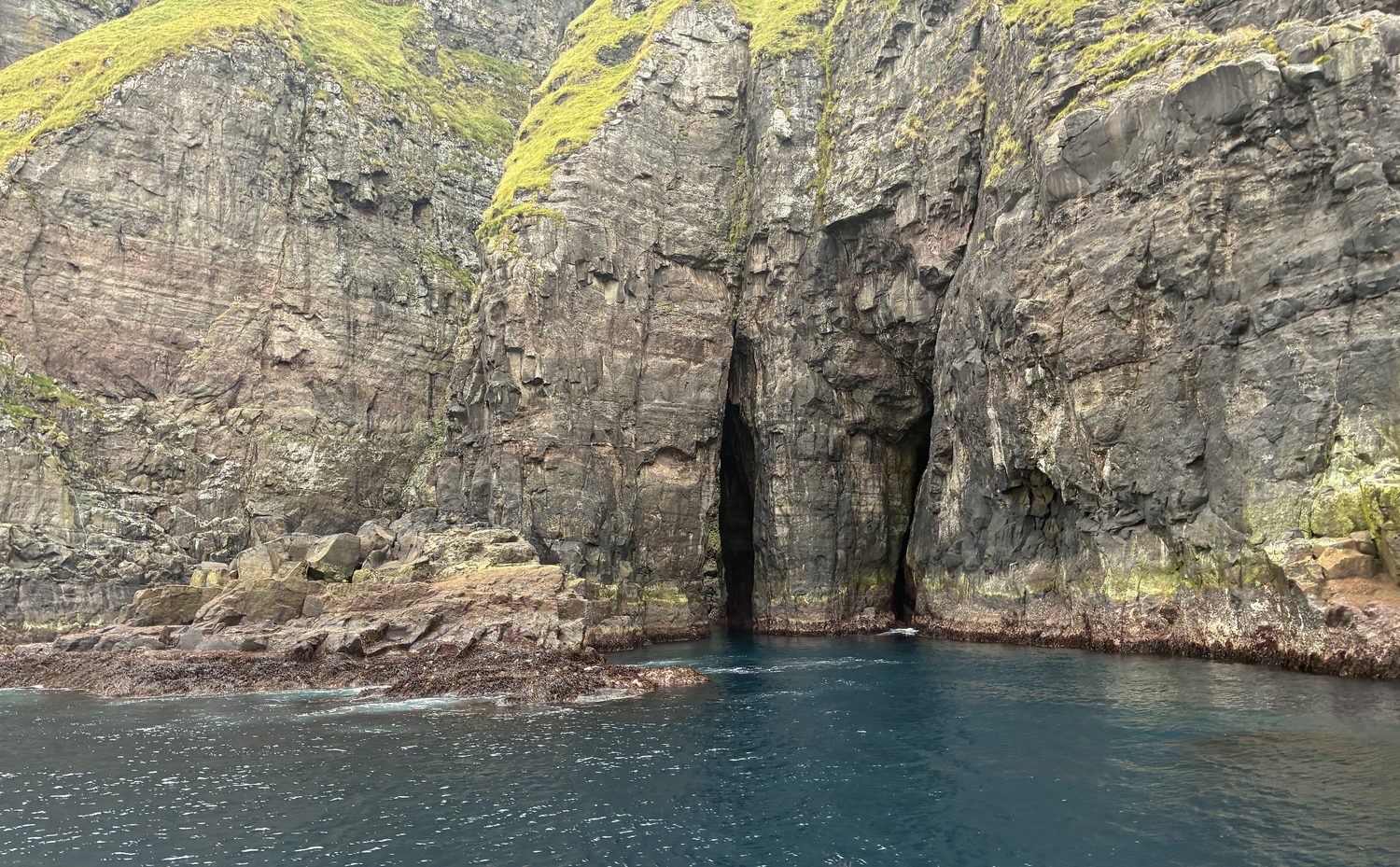
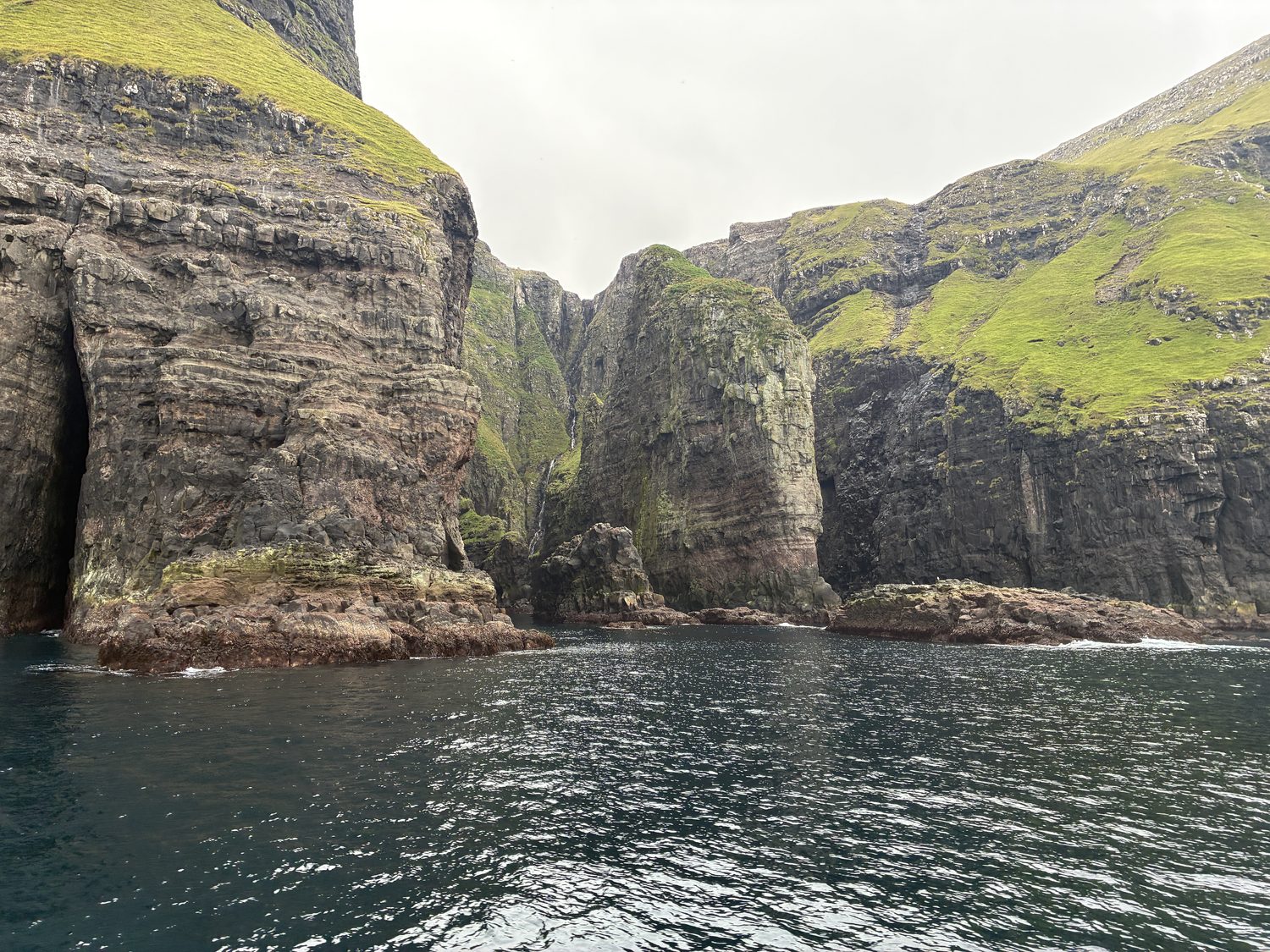
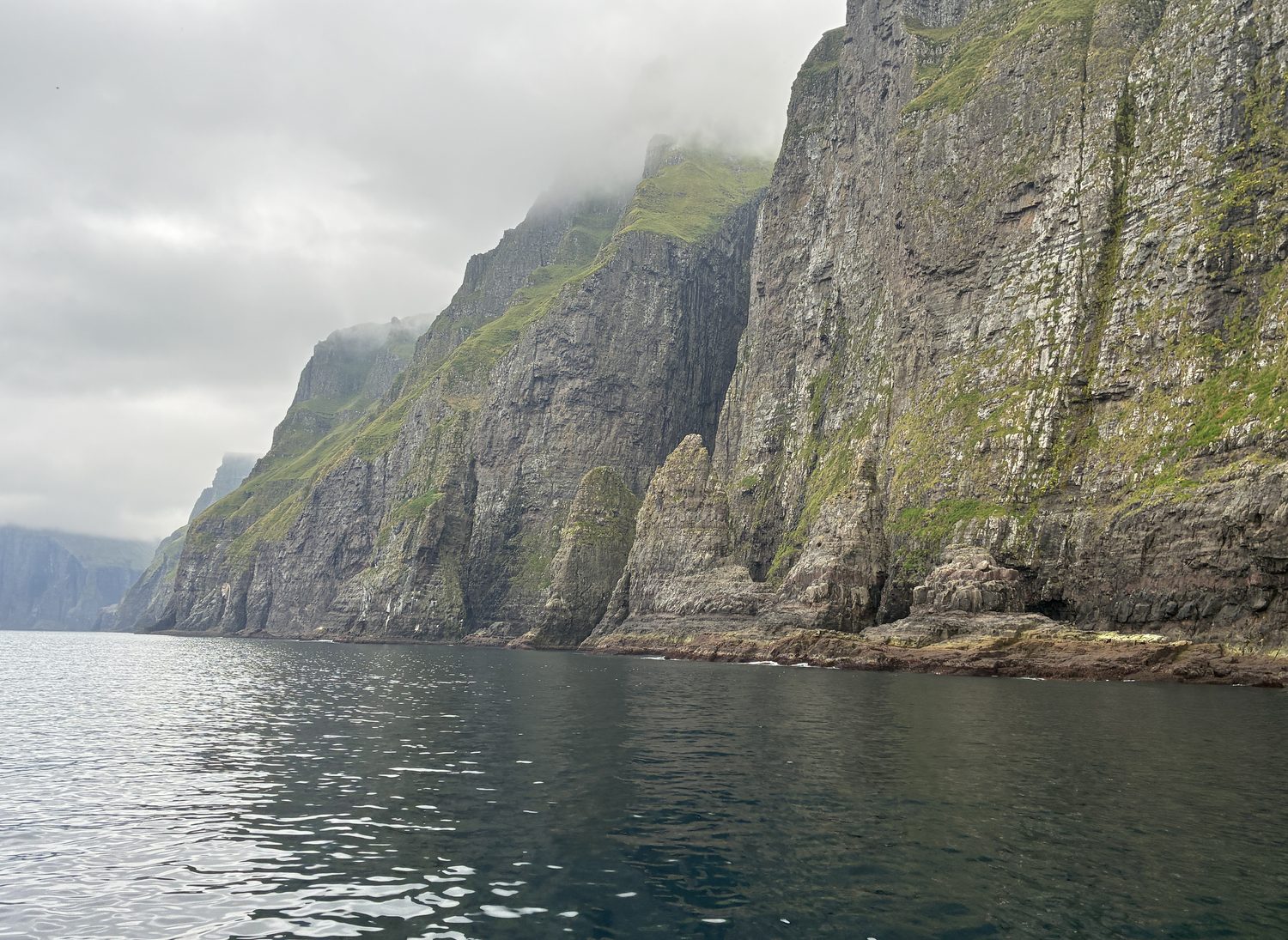
We sailed around the cliffs, and in an out of small areas where cliffs, stacks, and arches jutted up out of the sea, weaving in, out, and around. The mist above us was quite welcome, and although it obscured the views of the highest cliffs it provided dramatic views.
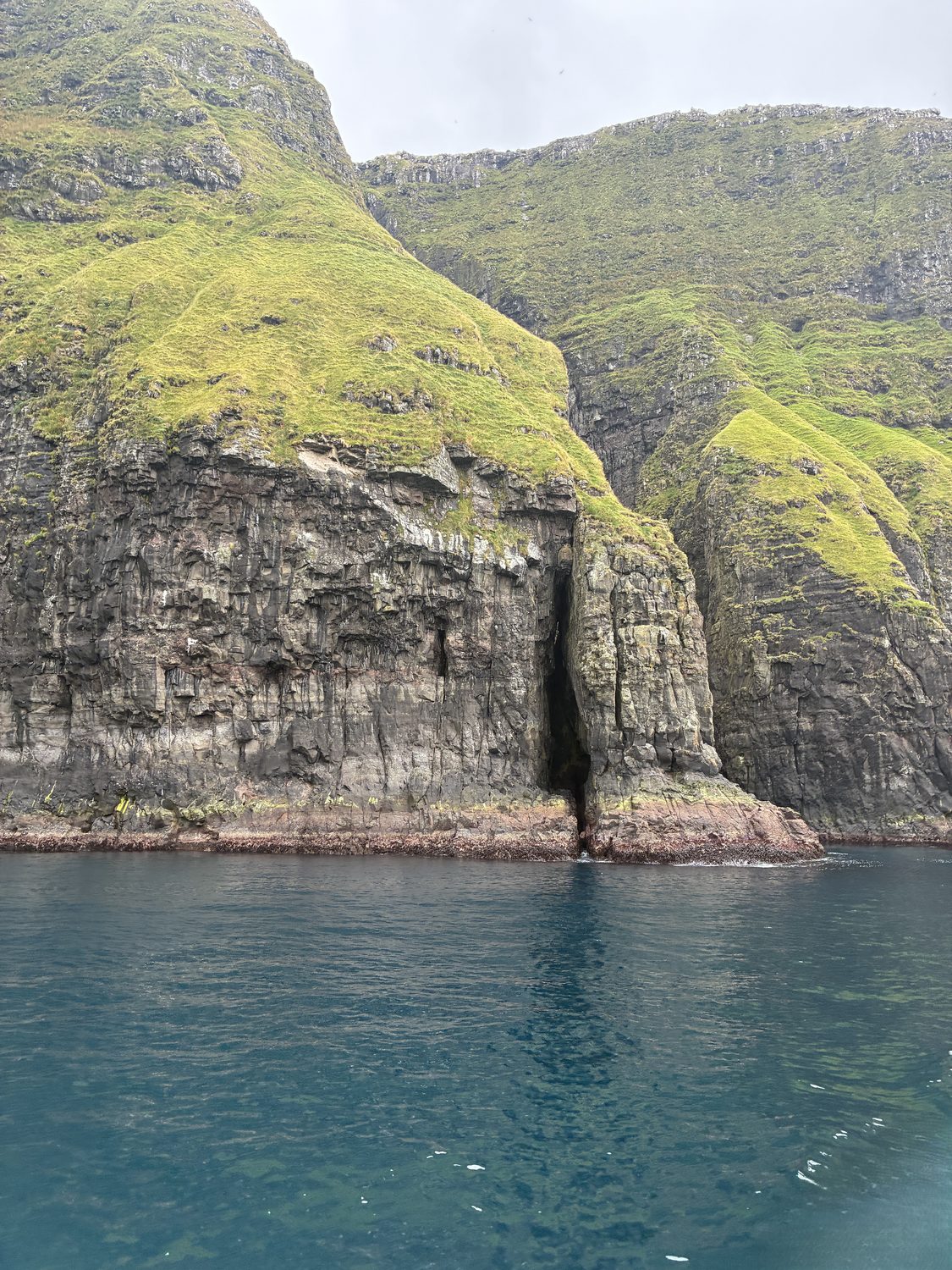
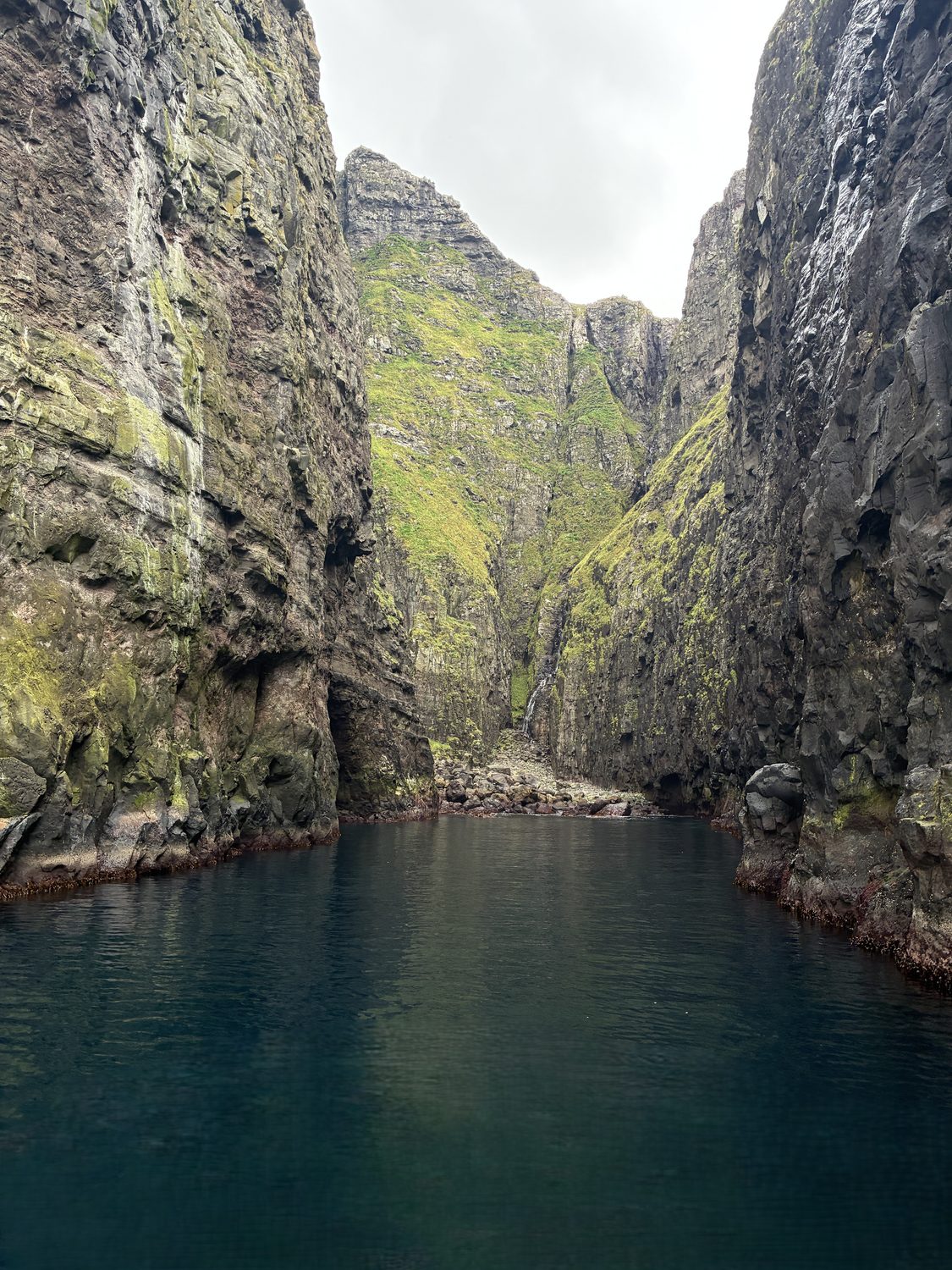
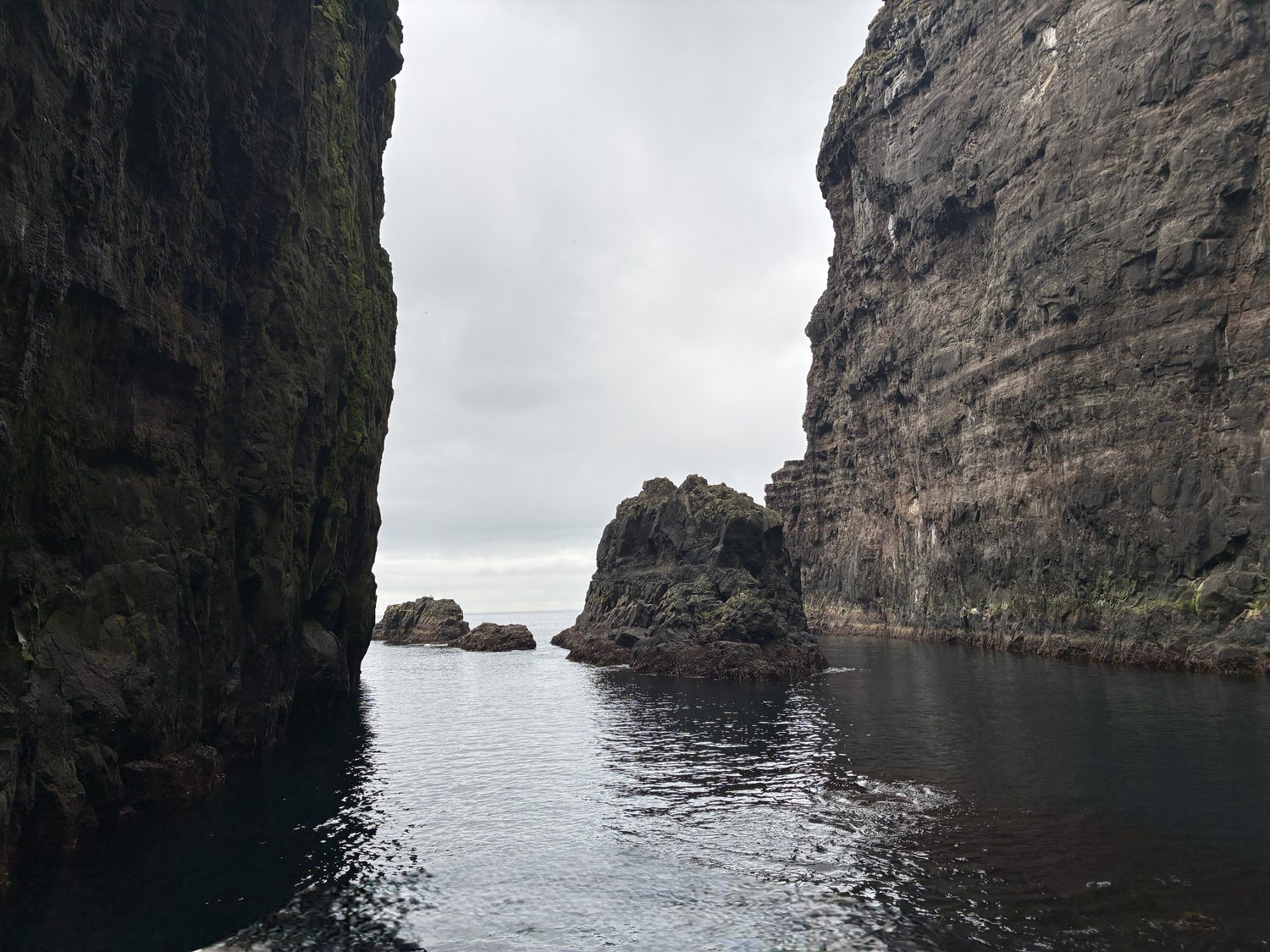
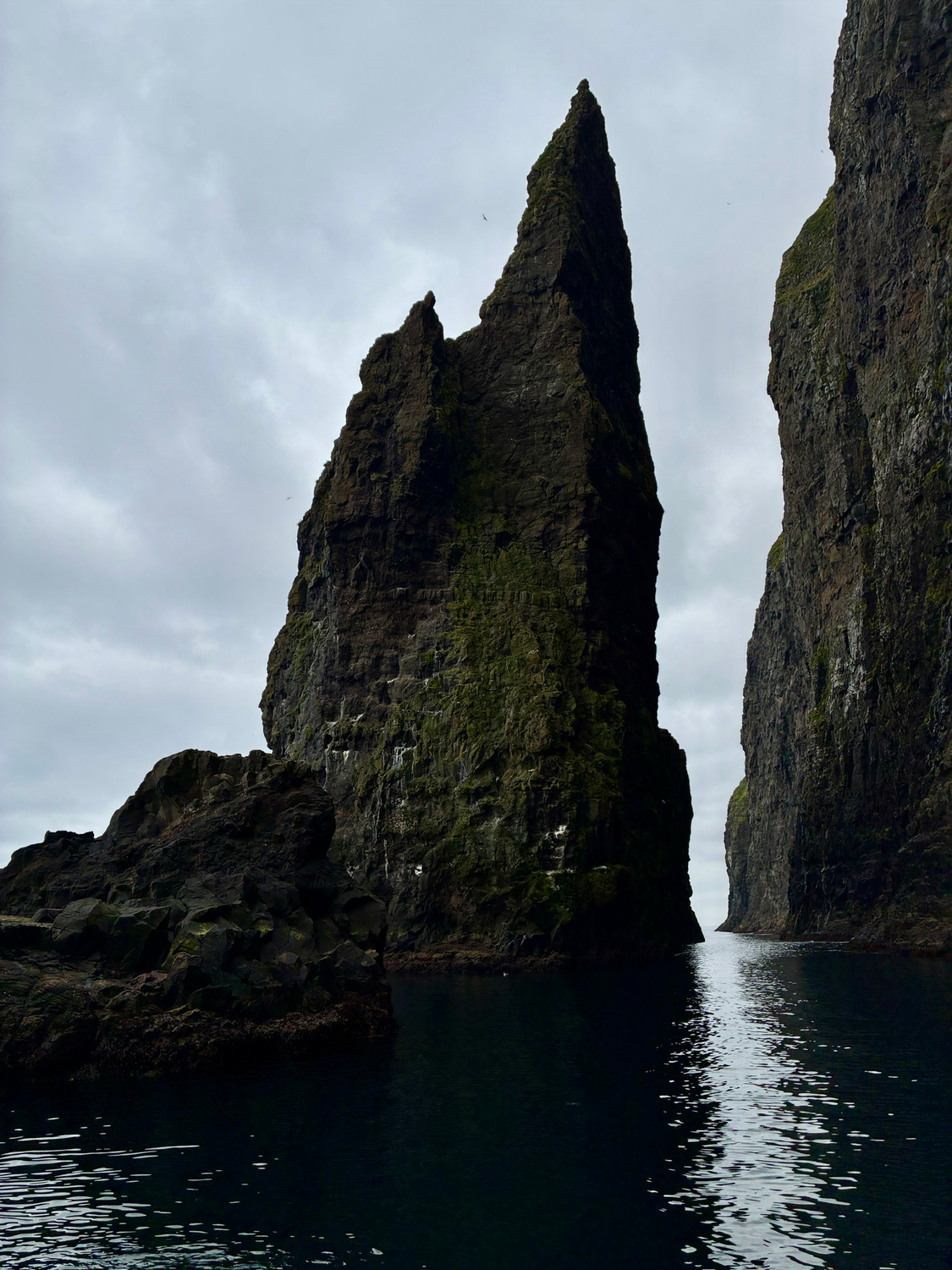
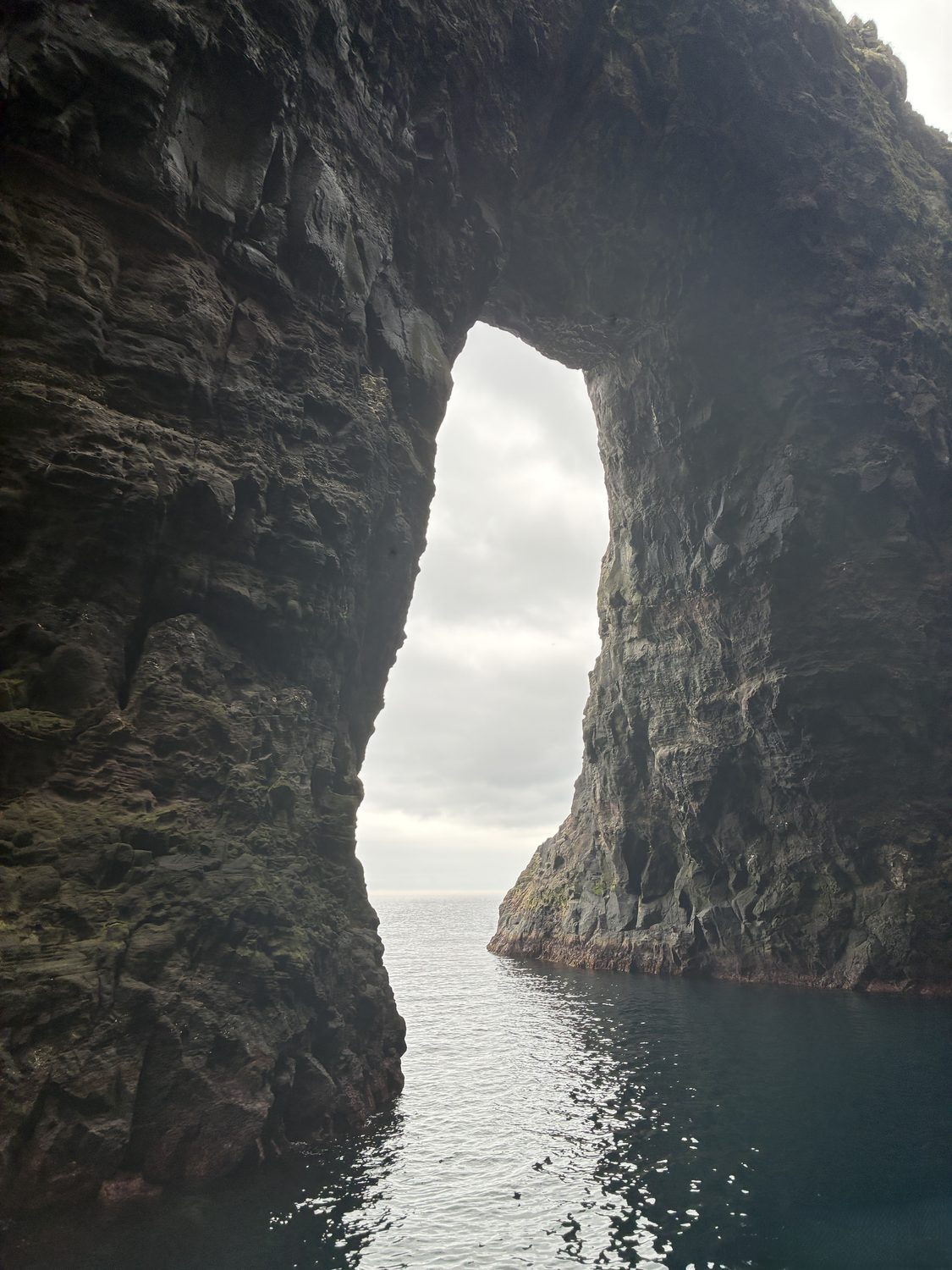
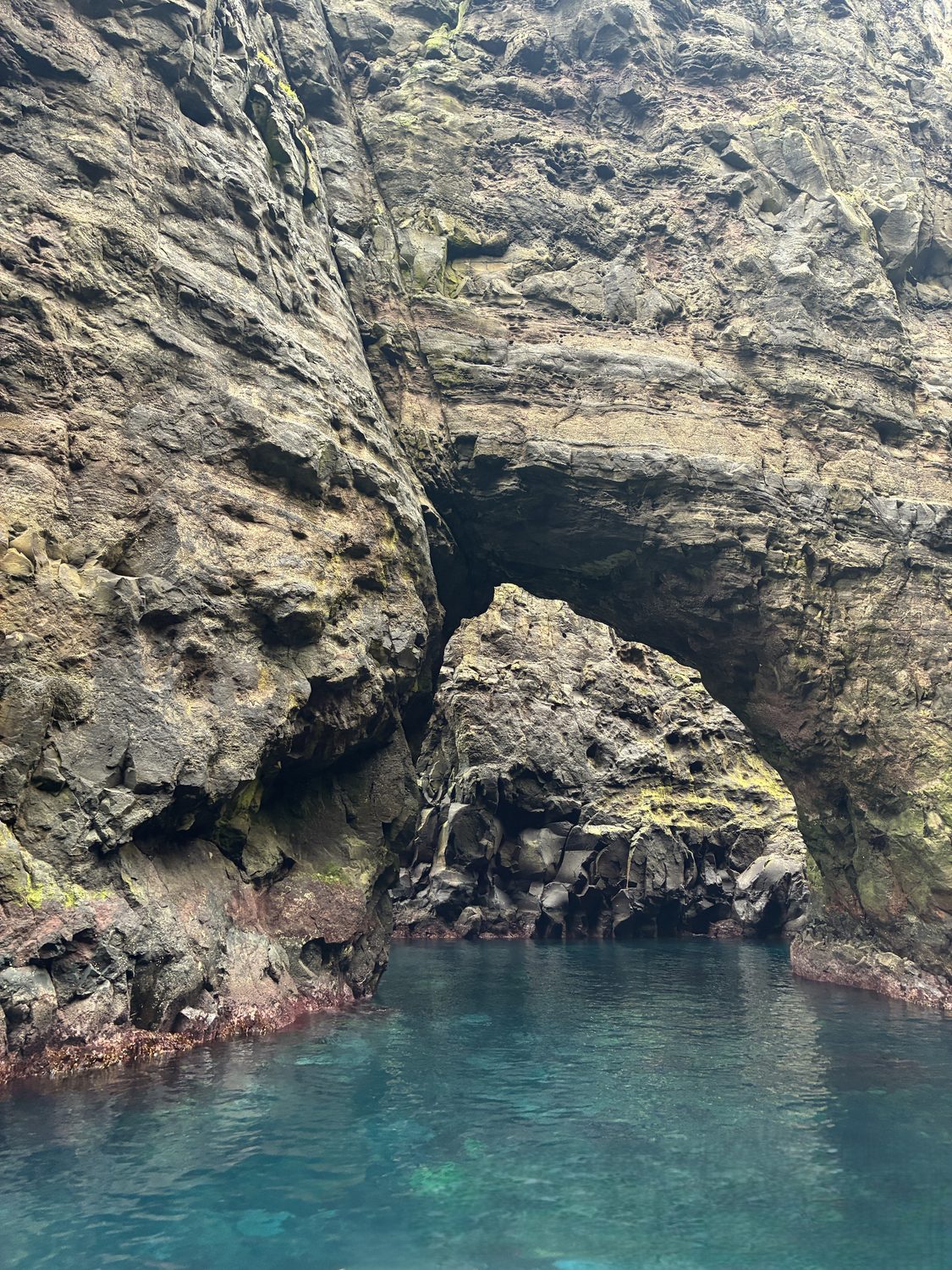
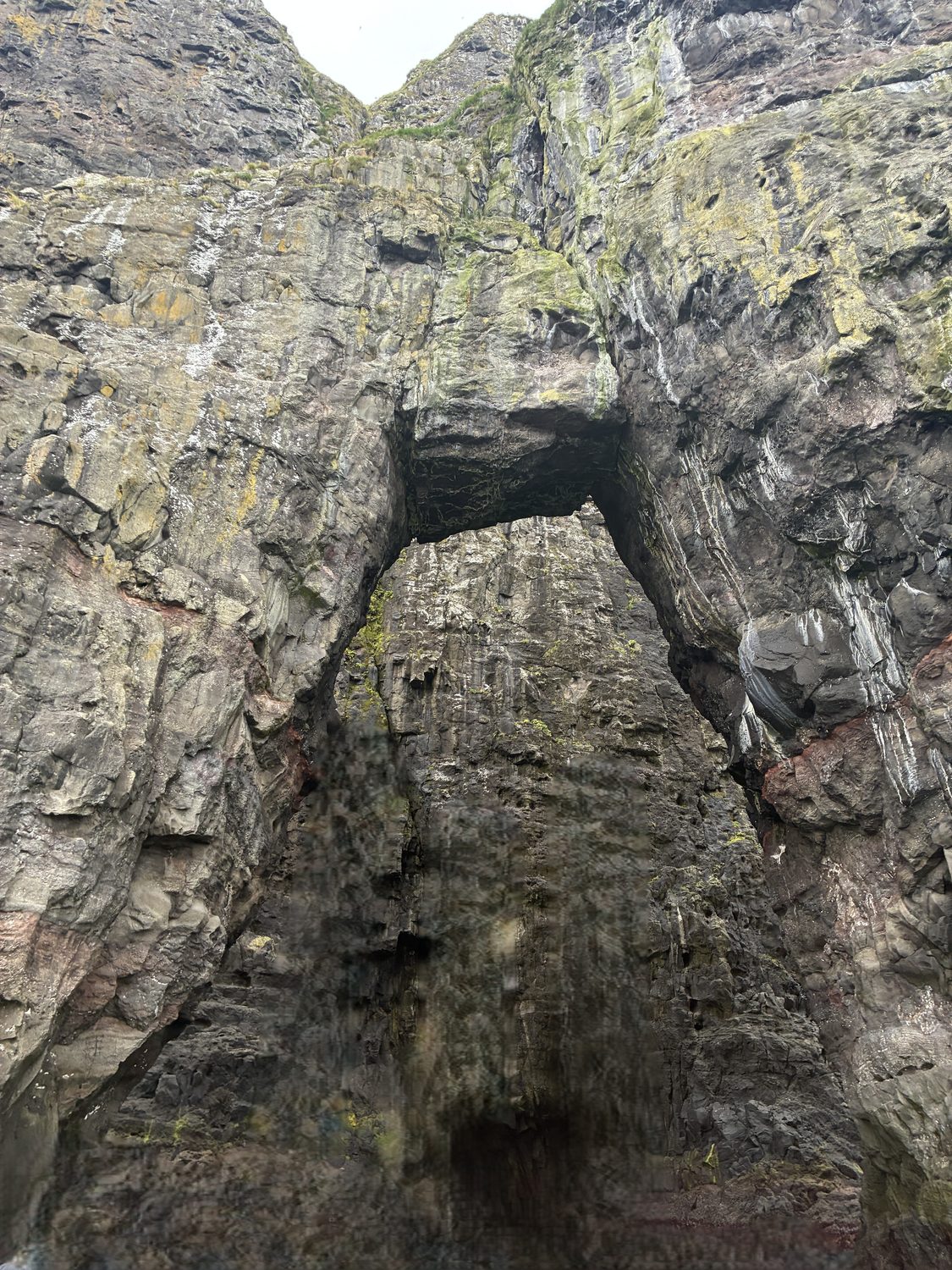
In addition to endless sheep doting the green carpeted cliffs, there were birds everywhere, soaring across the seas and around the cliffs. Although the puffin population is seasonal, the cliffs attract many other seabirds, including fulmars, black guillemots, razorbills, and of course gulls, many of which are year round and have colonies here. Wonderful trip.

We headed back into the harbor, very much appreciated of everything about the trip, and even the weather, and headed back to Torshavn. It was lightly raining again as we left, but good timing for us.
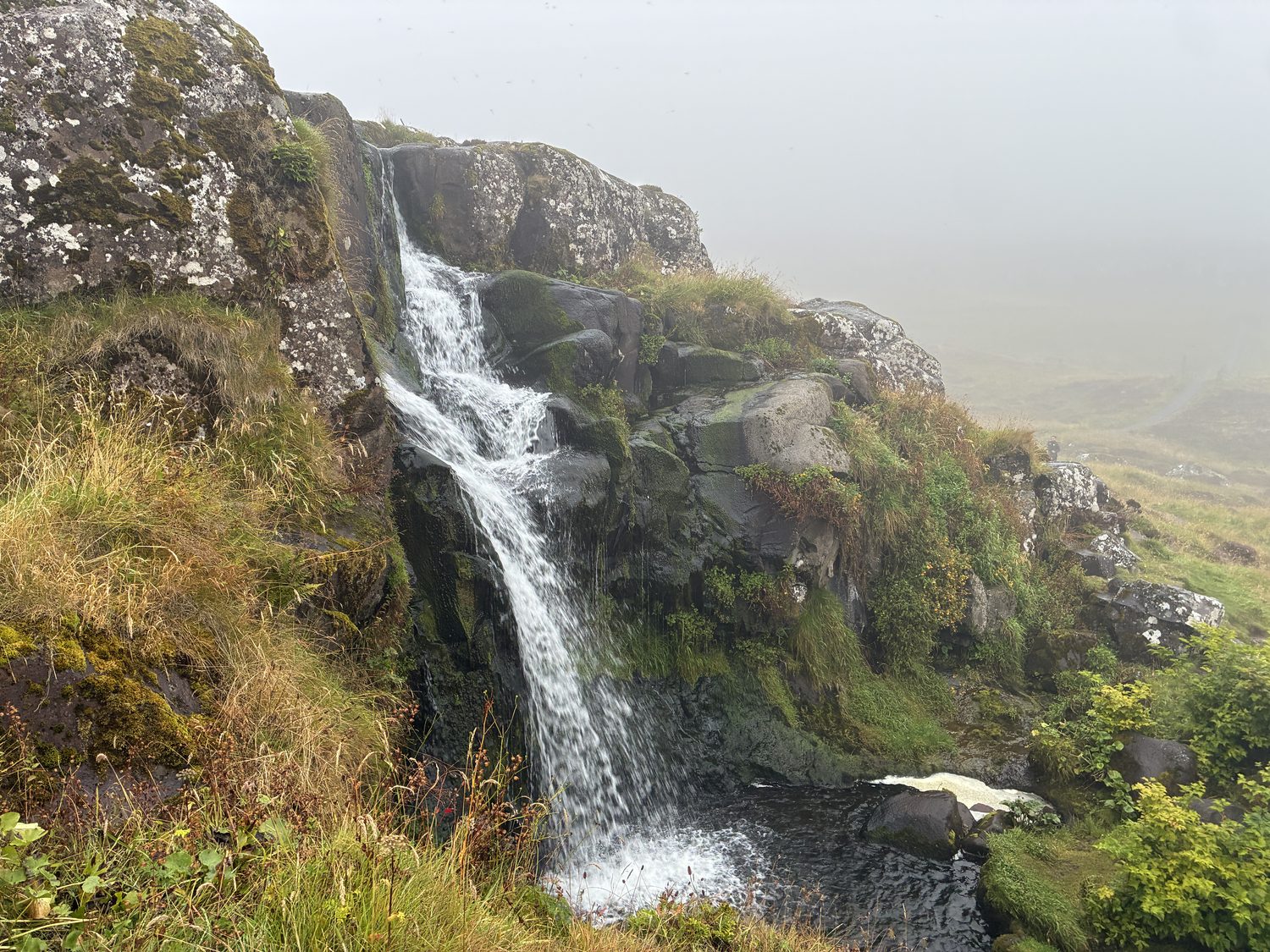
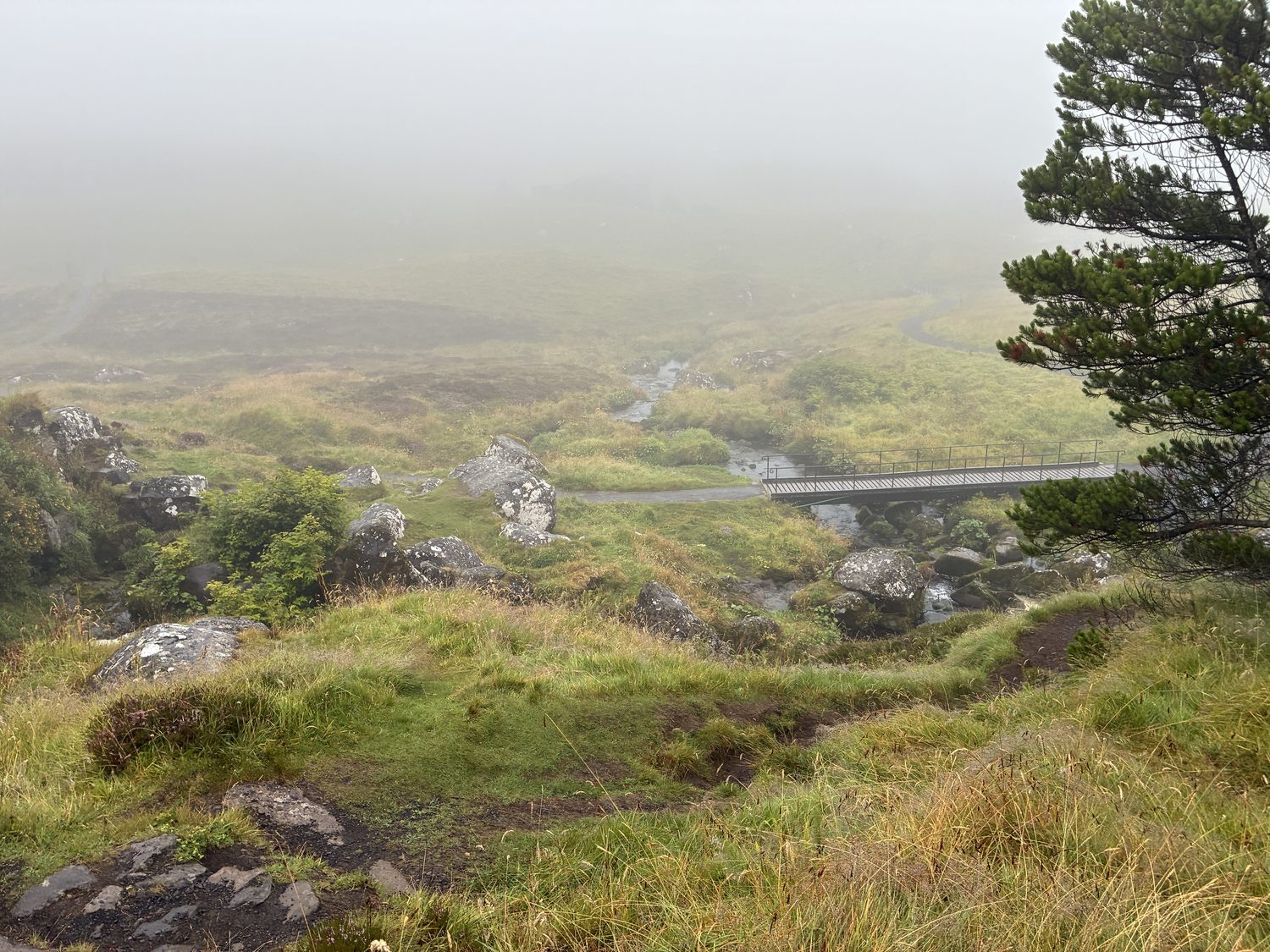
As we arrived back in Torshavn, we made a quick stop at the nearby Svartafoss Waterfall, just a few minutes from where went back to our airbnb. Small, but quite lovely. surrounded by small trails and footpaths.
After relaxing a bit at our place, we headed into town for our first meal out in the Faroes, in a restaurant opposite the harbor. Eating out here is pretty pricey also, although this place was far less so than some of the other restaurants in town. It was nice place and we enjoyed our meals, lamb for me, salmon for Elana. Pretty tasty.
Then home for our final night in the Faroes, and tomorrow we checkout by 10, and back to the airport.