Huế: The Imperial Capital.
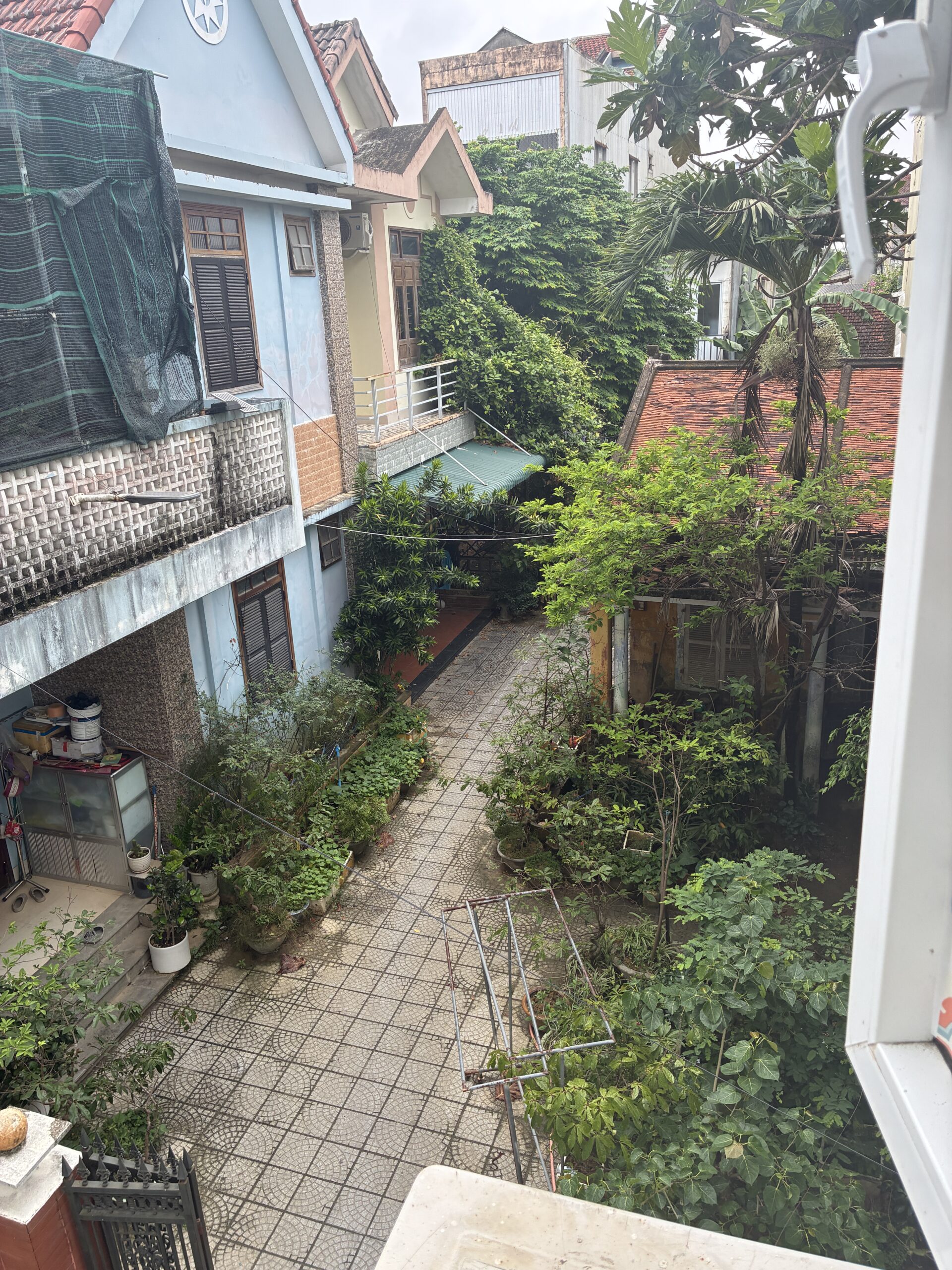
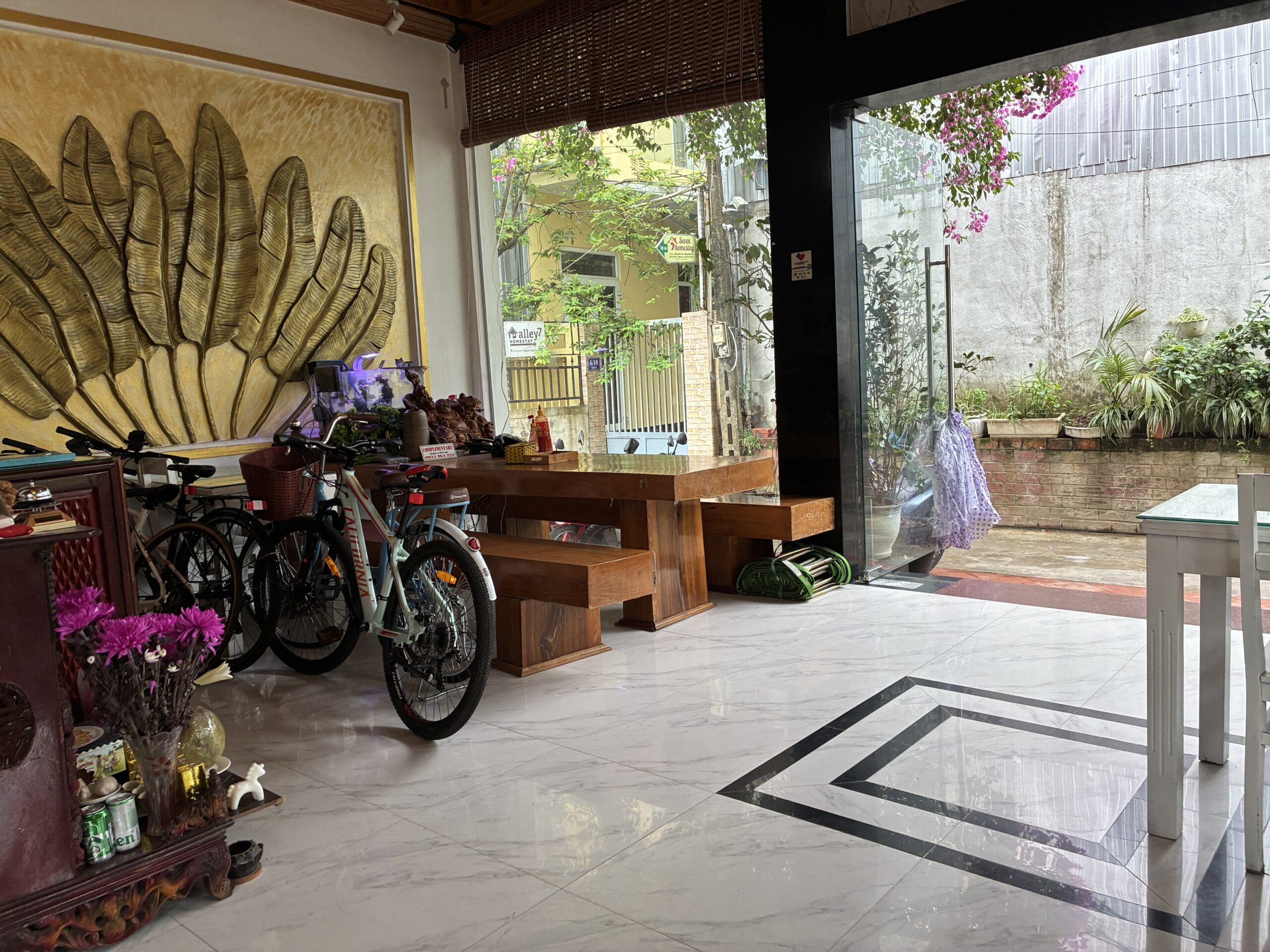
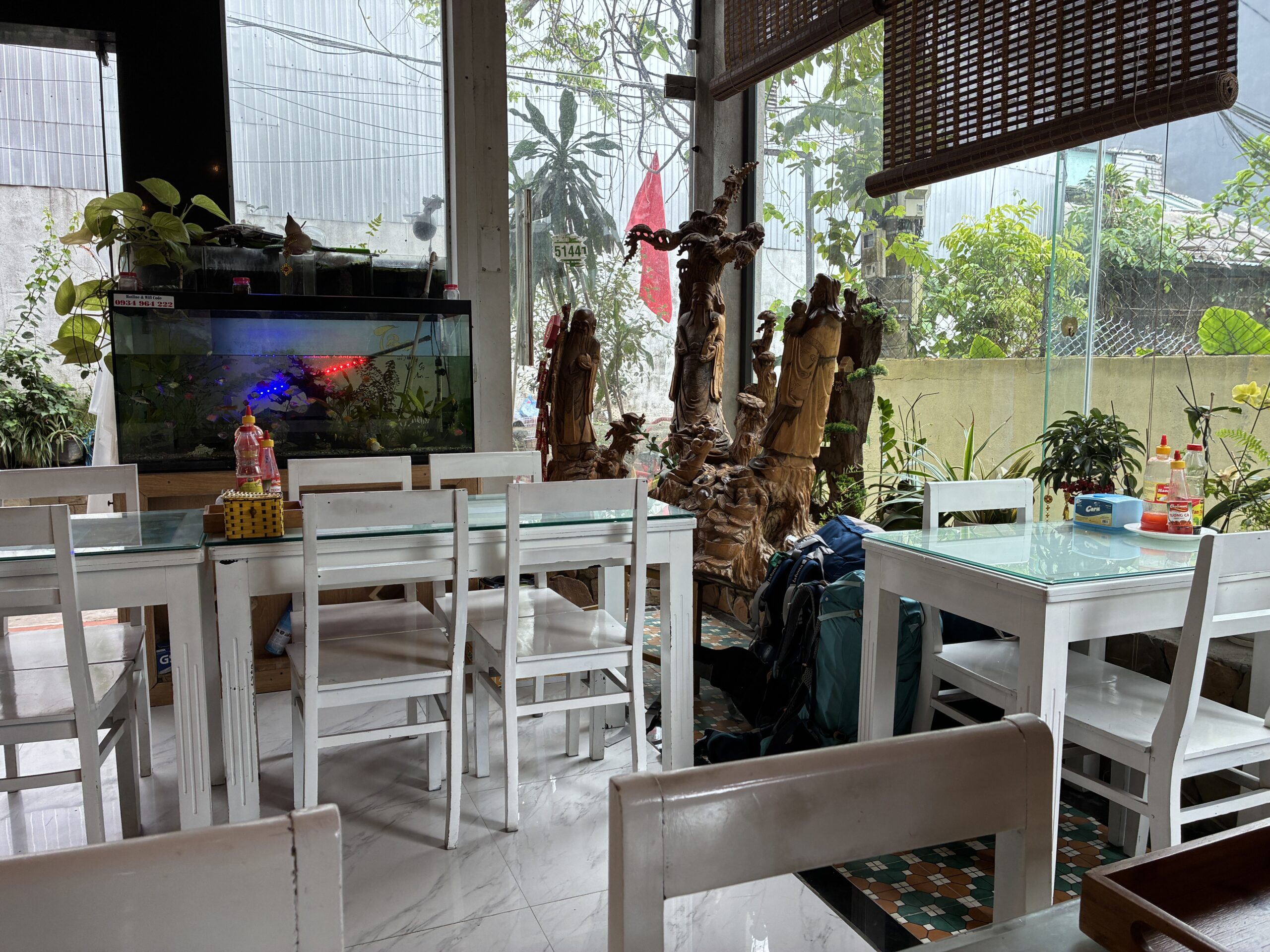
I slept very well, no bug problems despite my fear, and was up and at ’em around 6 or 6:30. My clothes from last night’s rain storm were drying, and maybe half done, but my sandals have a long way to go. I went downstairs to the lobby to see if they, by any chance, have a clothes dryer, but they don’t and I’d have to go to one of the many self-laundries on the street (I noticed loads of them last night, meaning there’s a lot of travelers in the area), but that was was too much. I’ll just let let them dry out today, and wear sneakers. And when I go out today, I’ll be taking that raincoat and a small umbrella!
While I was downstairs, I grabbed breakfast, which I normally would have skipped, and a new map of the area, went back up to my room, and started to plan my day.
I started by booking a walking tour for 2, which promptly got postponed until tomorrow, so I booked another, also for 2, which also promptly got delayed, but only by an hour, starting now at 3 pm, which actually worked out better for me. Surprisingly, there are basically just two kind of walking tours in the city, Imperial City/Palace tours, one of which I signed up for, and food tours. There are guided bicycle and motorcycle tours, but no other walking tours. I would have thought the city was plenty interesting enough for a tour of its history, streets, buildings, and sites, and not just the the Imperial City and palace. Surprising, and disappointing.
I left the hotel mid-morning, and started walking kind of haphazardly in the direction of Trường Tiền Bridge, sort of aiming for the Citadel, within which is the Imperial City, and within that the Forbidden Purple City, or the Imperial Palace proper. This is where my walking tour would later be, but I thought I’d visit there first, and walk around on my own, and learn more about this historic site on the guided tour.


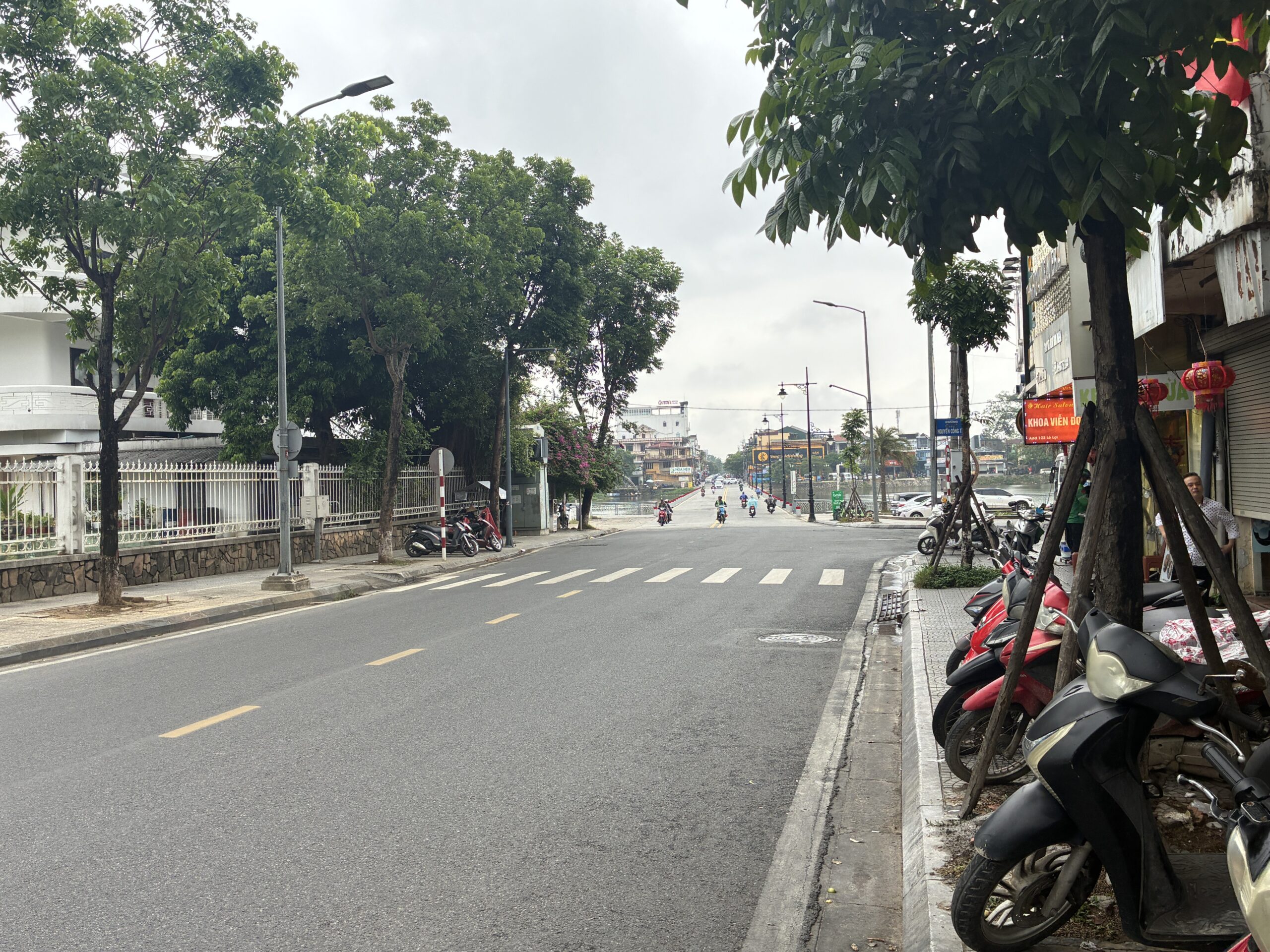

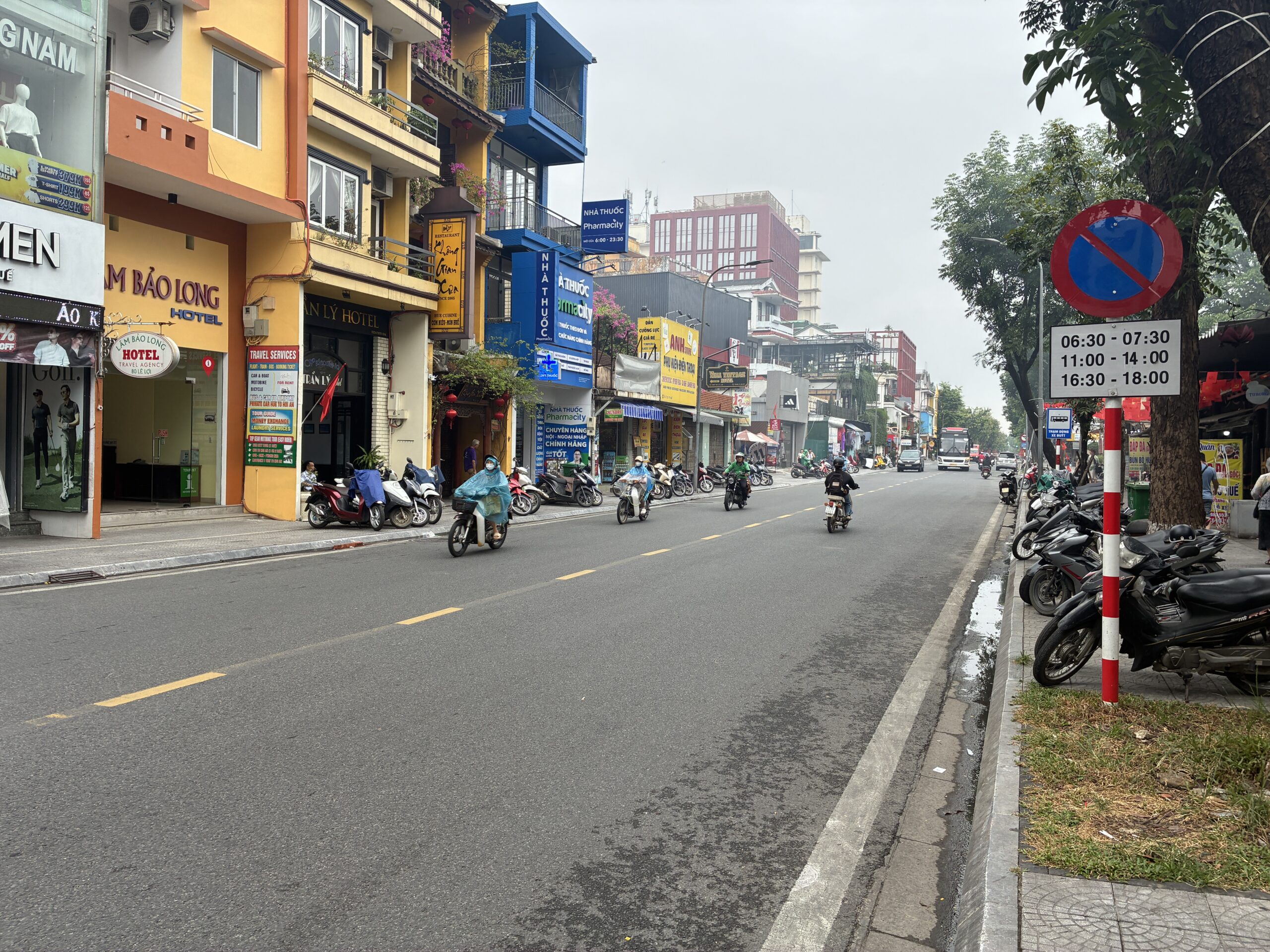

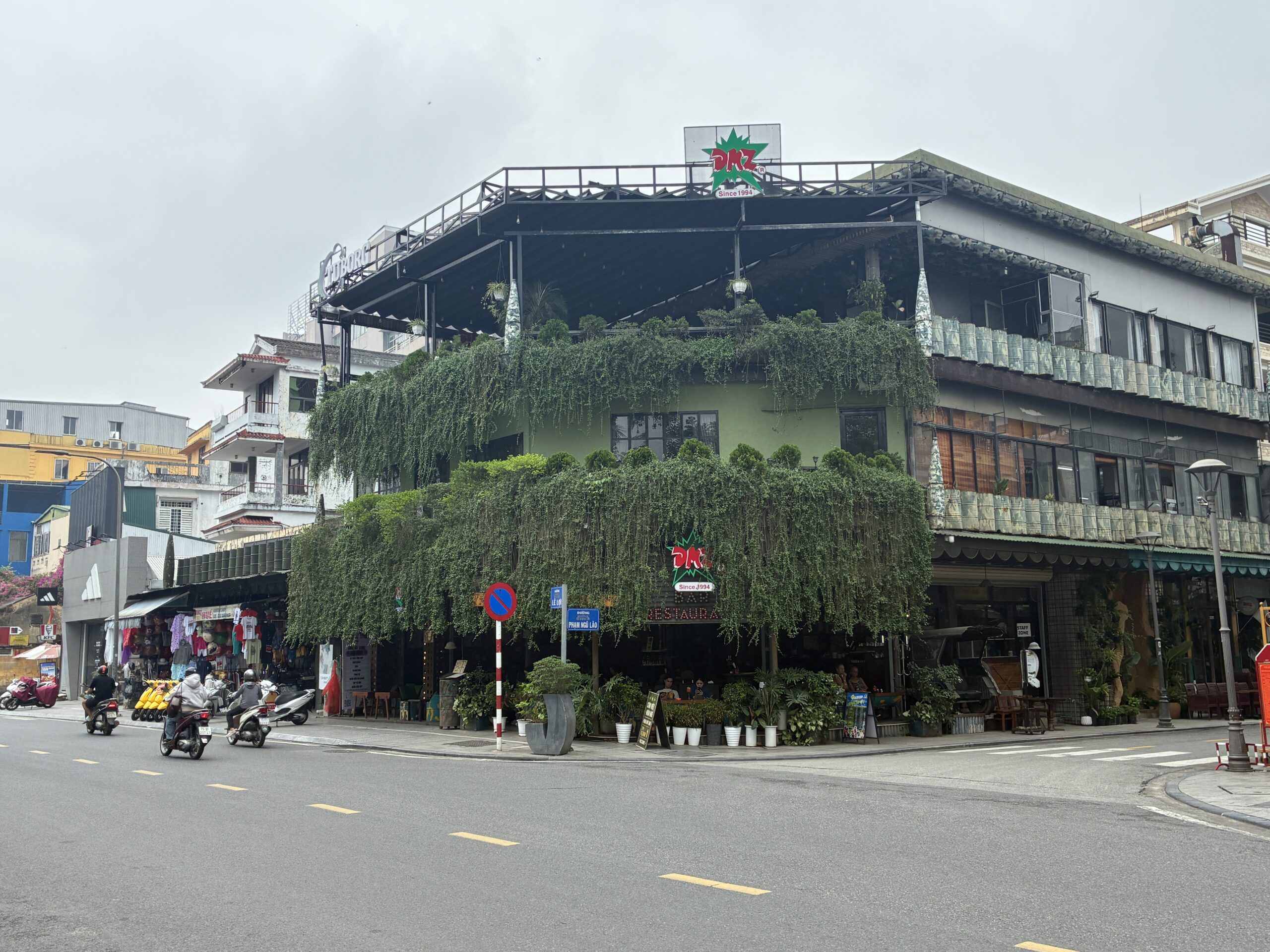

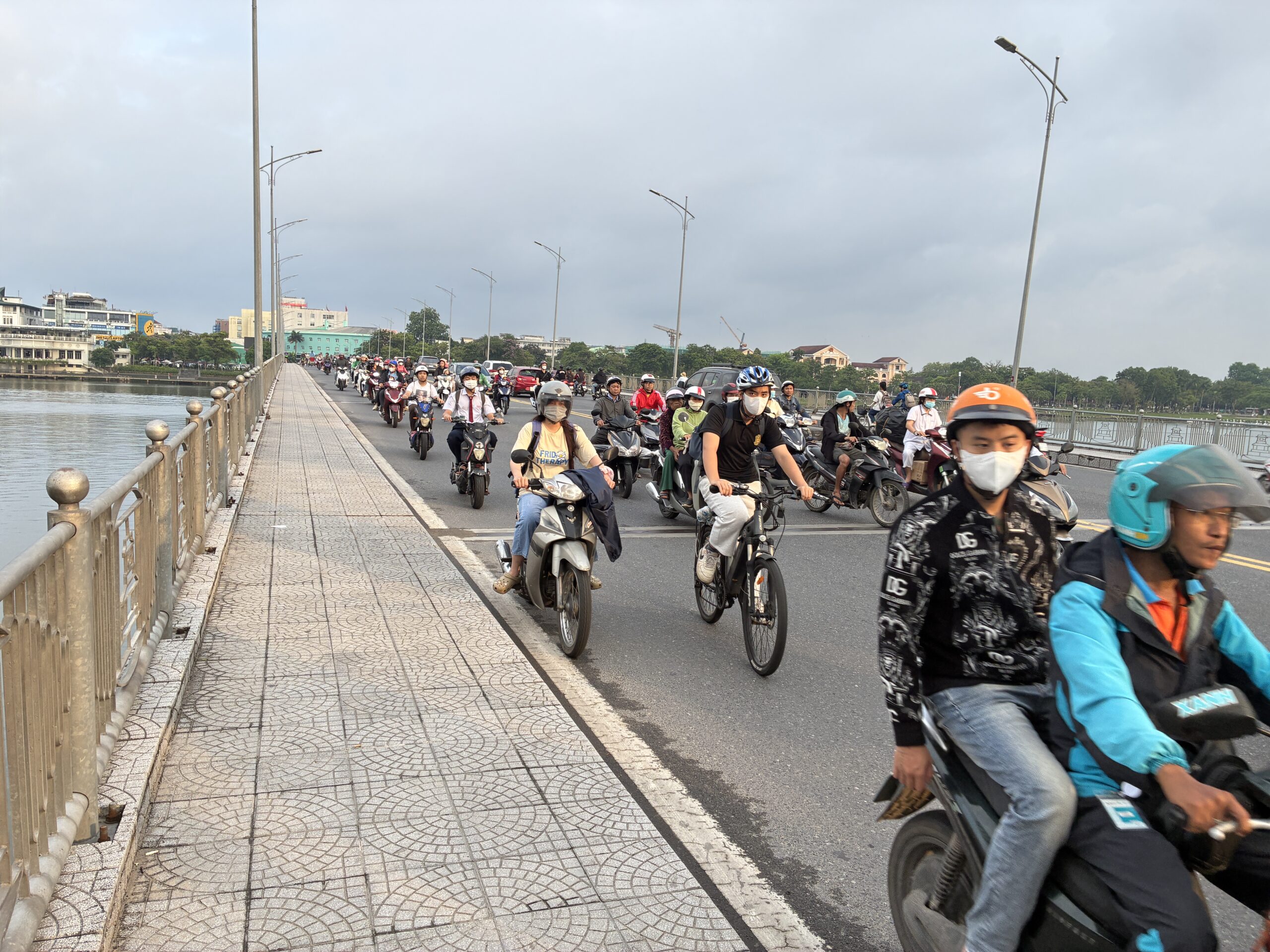

Not on any hurry, I kind of roamed the streets in the general direction of the bridge, and I enjoyed seeing this part of the city, in the light and without any rain, although I did have my rain jacket and umbrella with me just in case. It did start to shower, but that didn’t last long, and the day turned out to be cooler than it usually is at this time of year, but still humid and plenty hot.
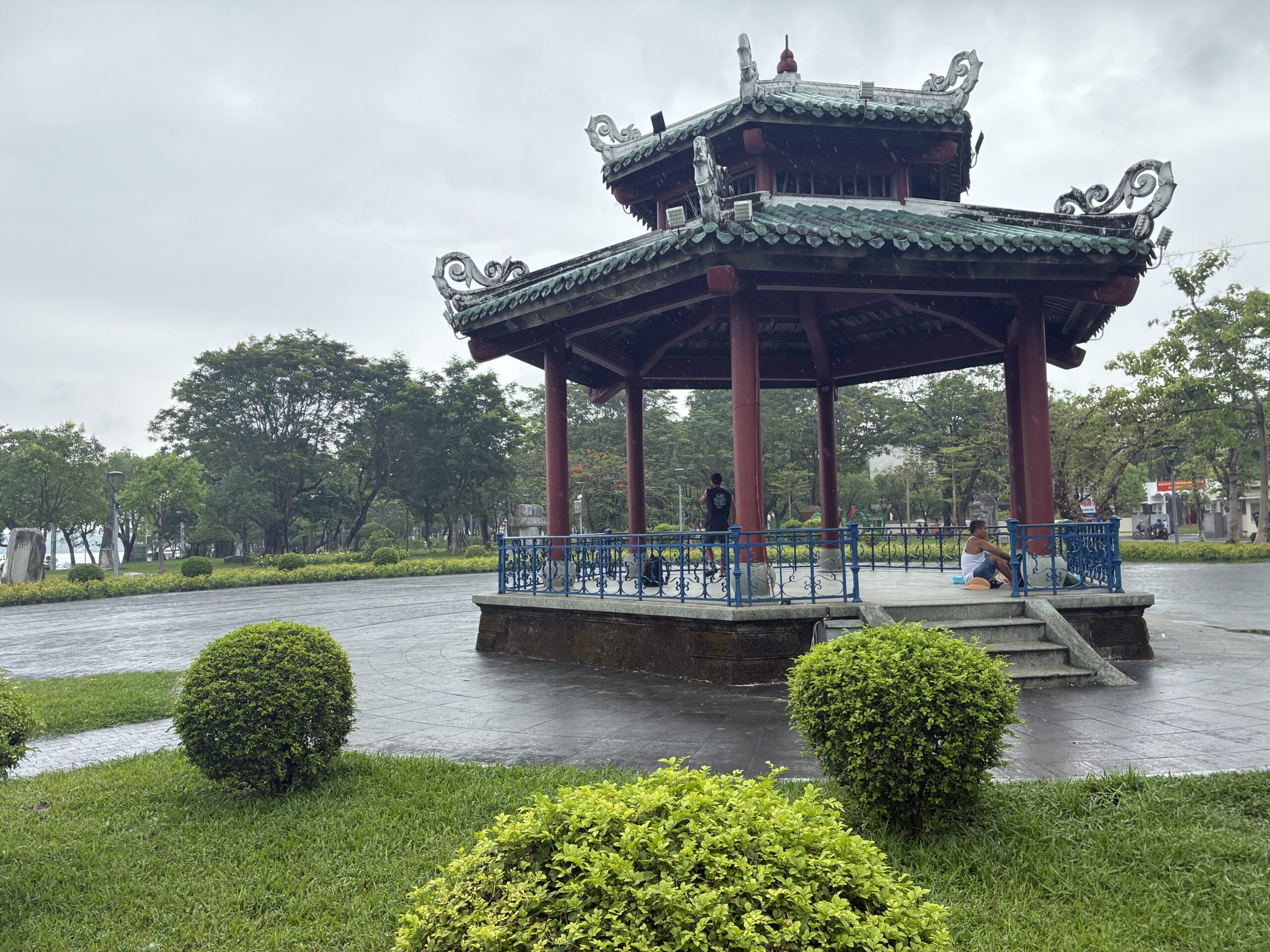
I wasn’t in any kind of hurry (actually, just the opposite), and I just ambled around, sort of weaving around the streets and keeping the bridge in sight, and fending off the many street vendors who were very insistent that I ride their rickshaw, take their taxi, rent a motorcycle, take a one hour boat ride, or buy something they were selling. It’s sort of relentless. And they are insistent. For the dragon boat rides, for instance, when I asked the cost and said maybe later, he was very insistent telling me no, that it had to be now. He also gave me a very inflated price of $400,000 dong, about $15. When I later did take a river ride on a dragon boat, it cost me 150,000 dong, and even that was probably more than I need to have paid. But, after all, that was less than $6.
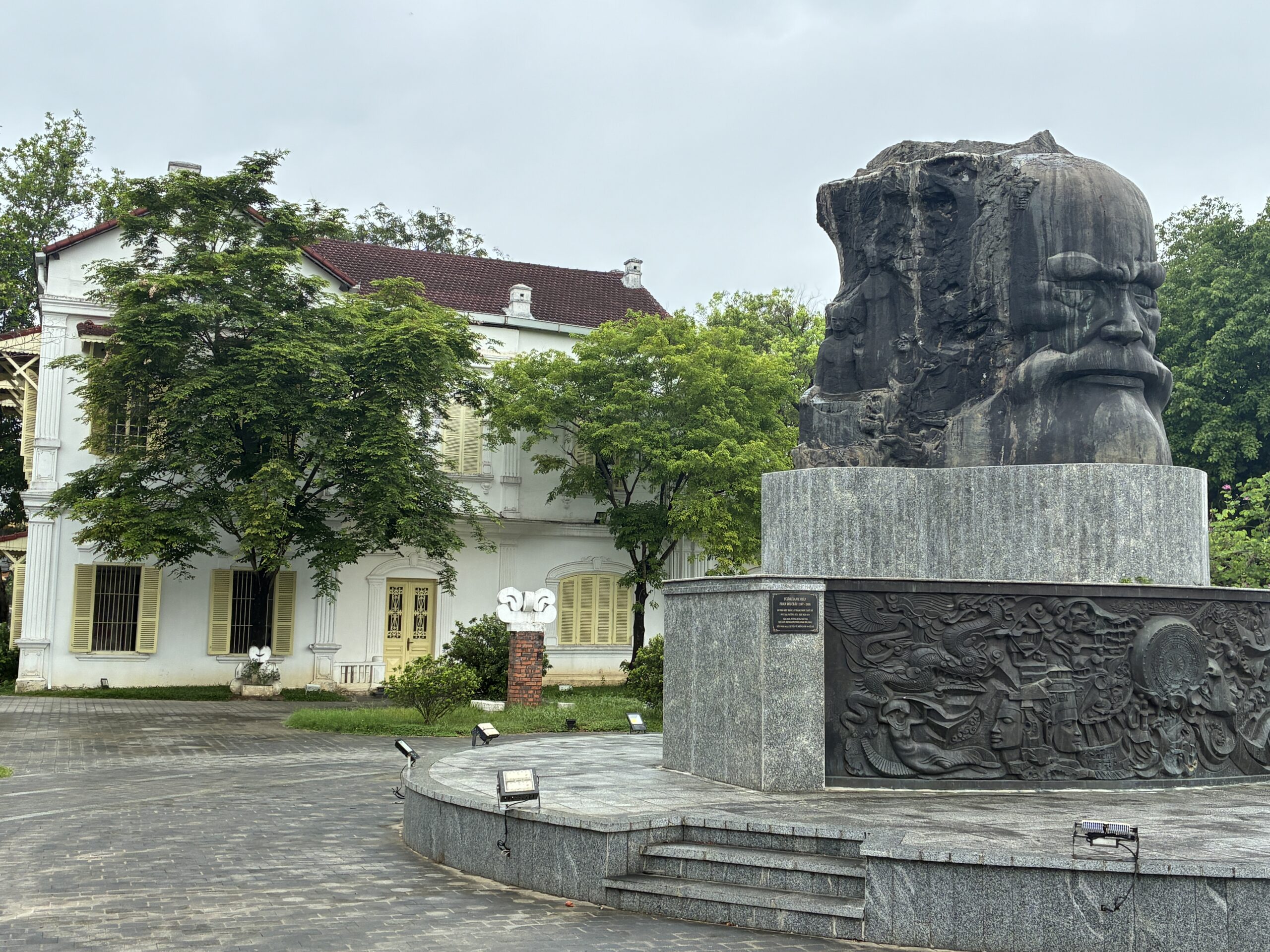
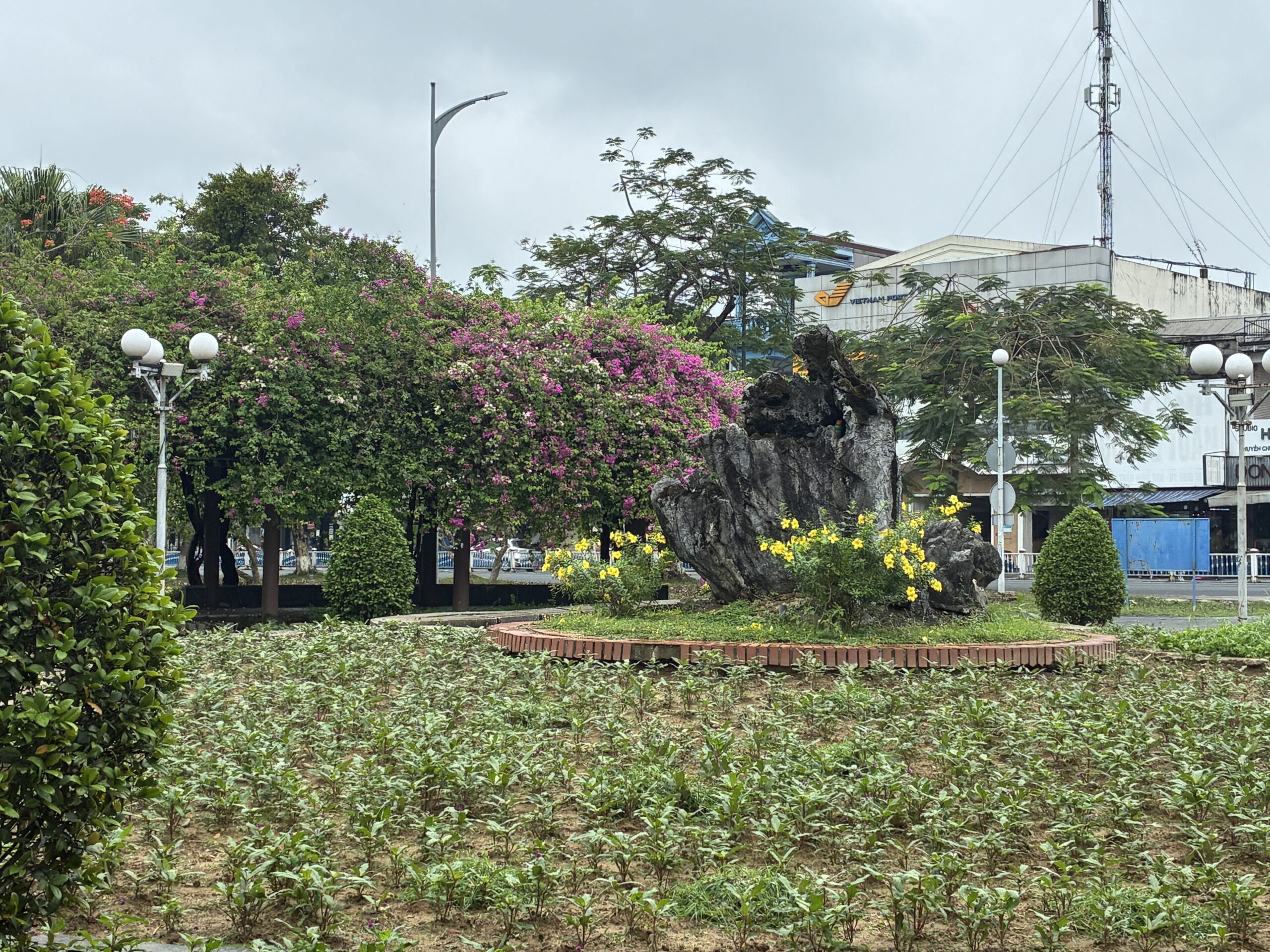
But back to my walk. I walked through February 3 Park, which runs along the south bank of the Hương River, or Sông Hương, which translates into river of fragrance, or the Perfume River, the name by which the river is most typically known. There is a long and very nice walking path running along the south bank of the river (and along the north bank, as well), and runs alongside the park, which is named for the founding of the Communist Party of Vietnam on February 3, 1930. The park is lovely, with loads of interesting sculptures throughout, in the International Sculpture Garden, as well as several museums, running along the south bank of the river.
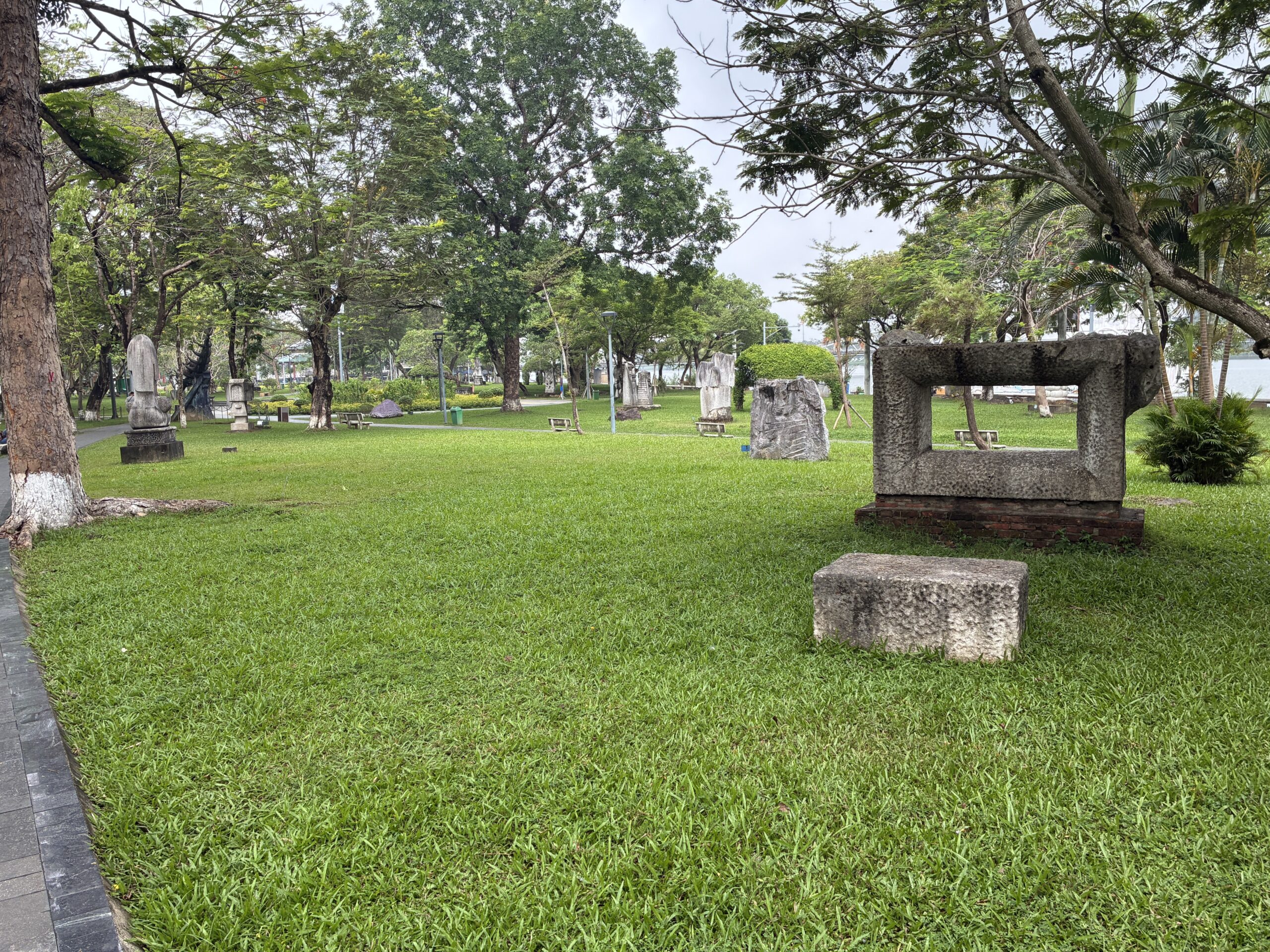
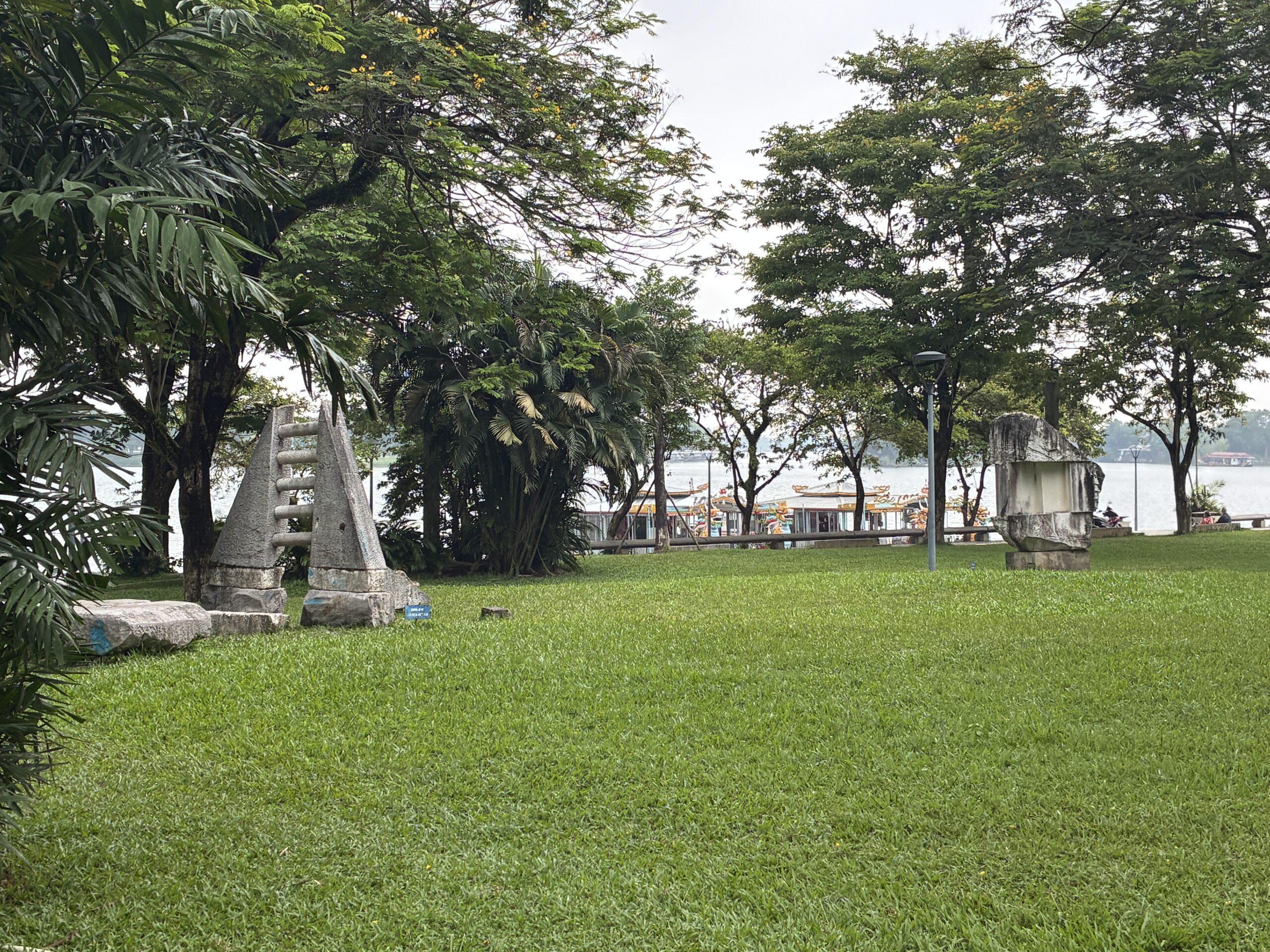
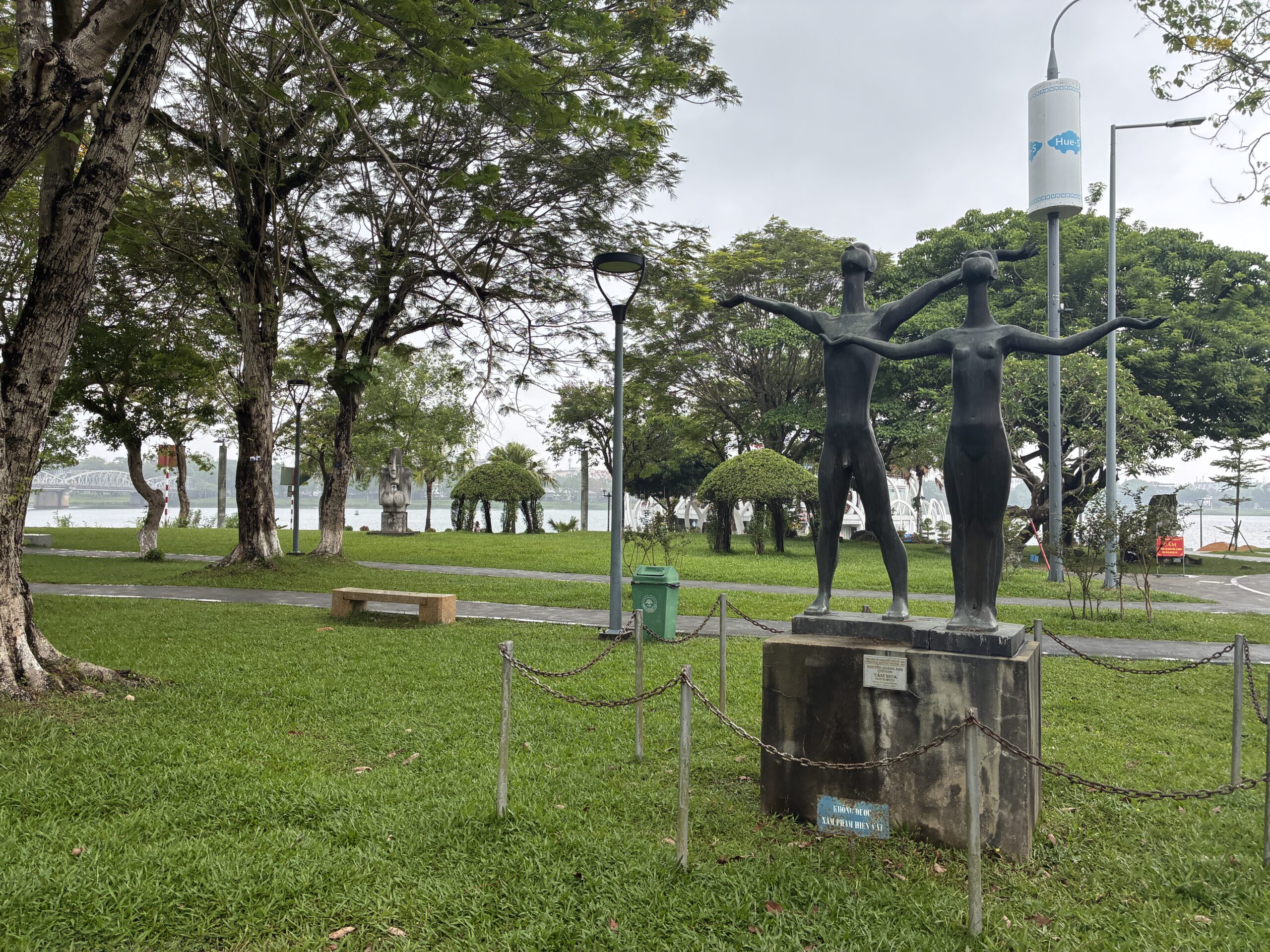
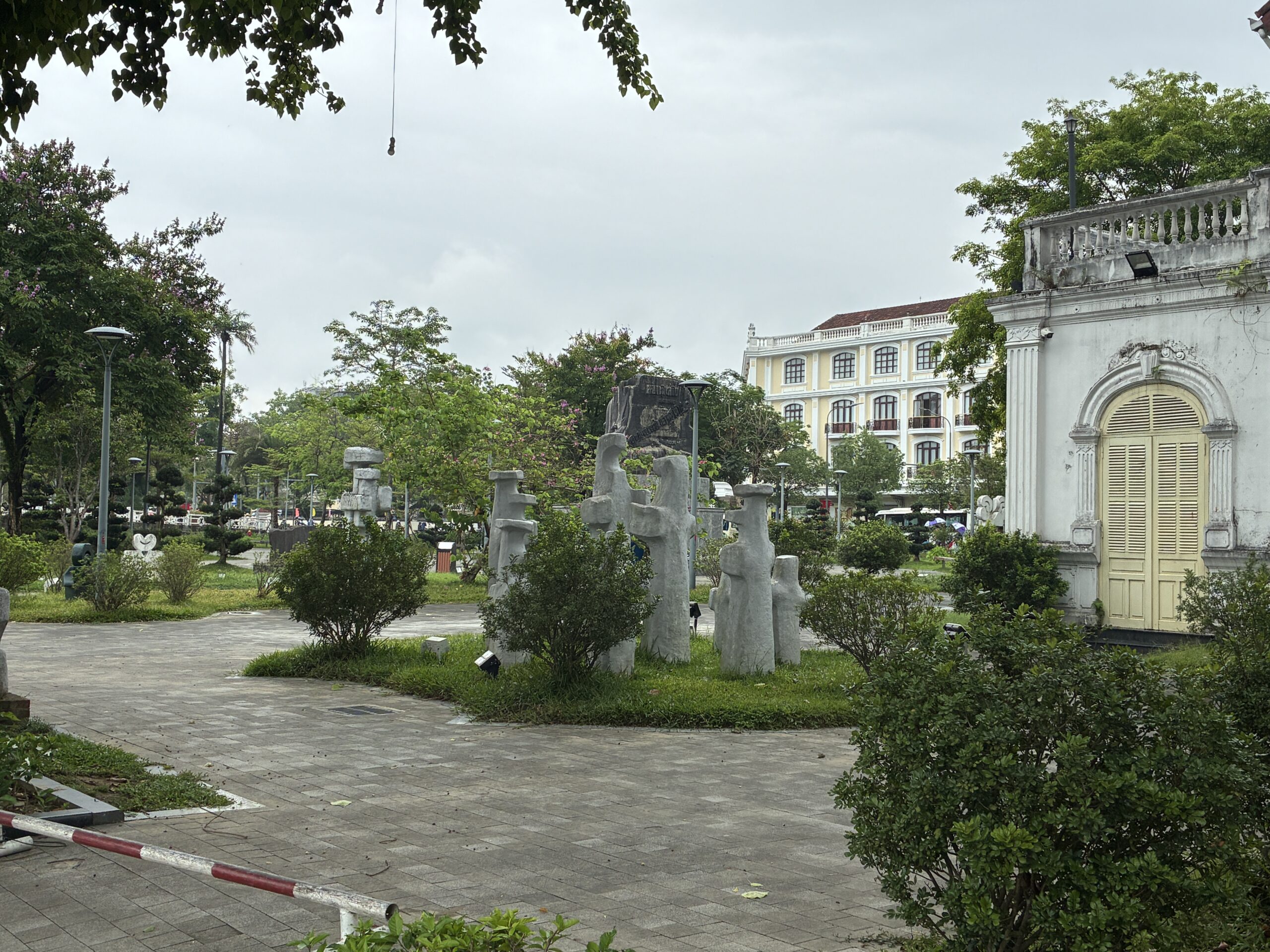

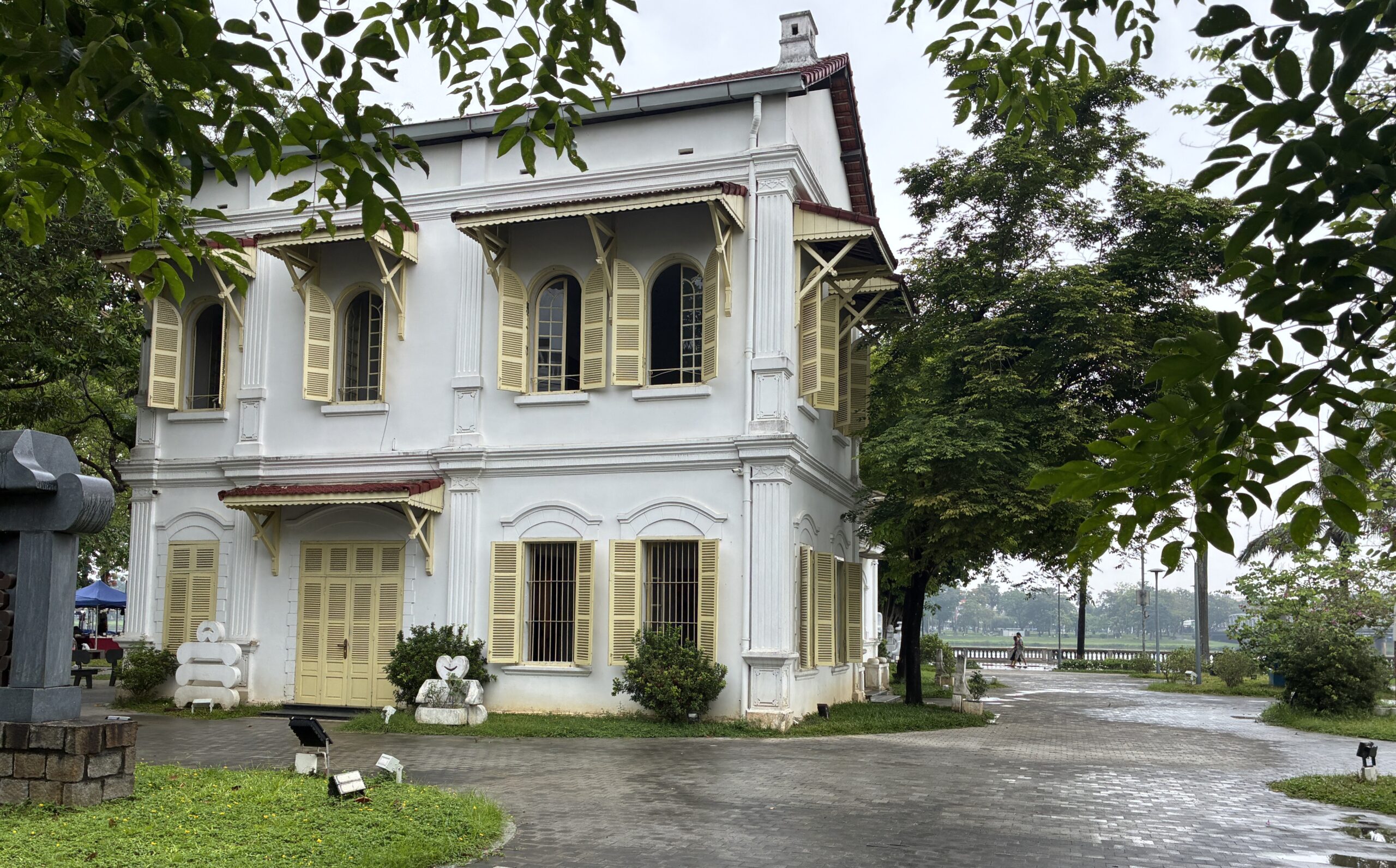

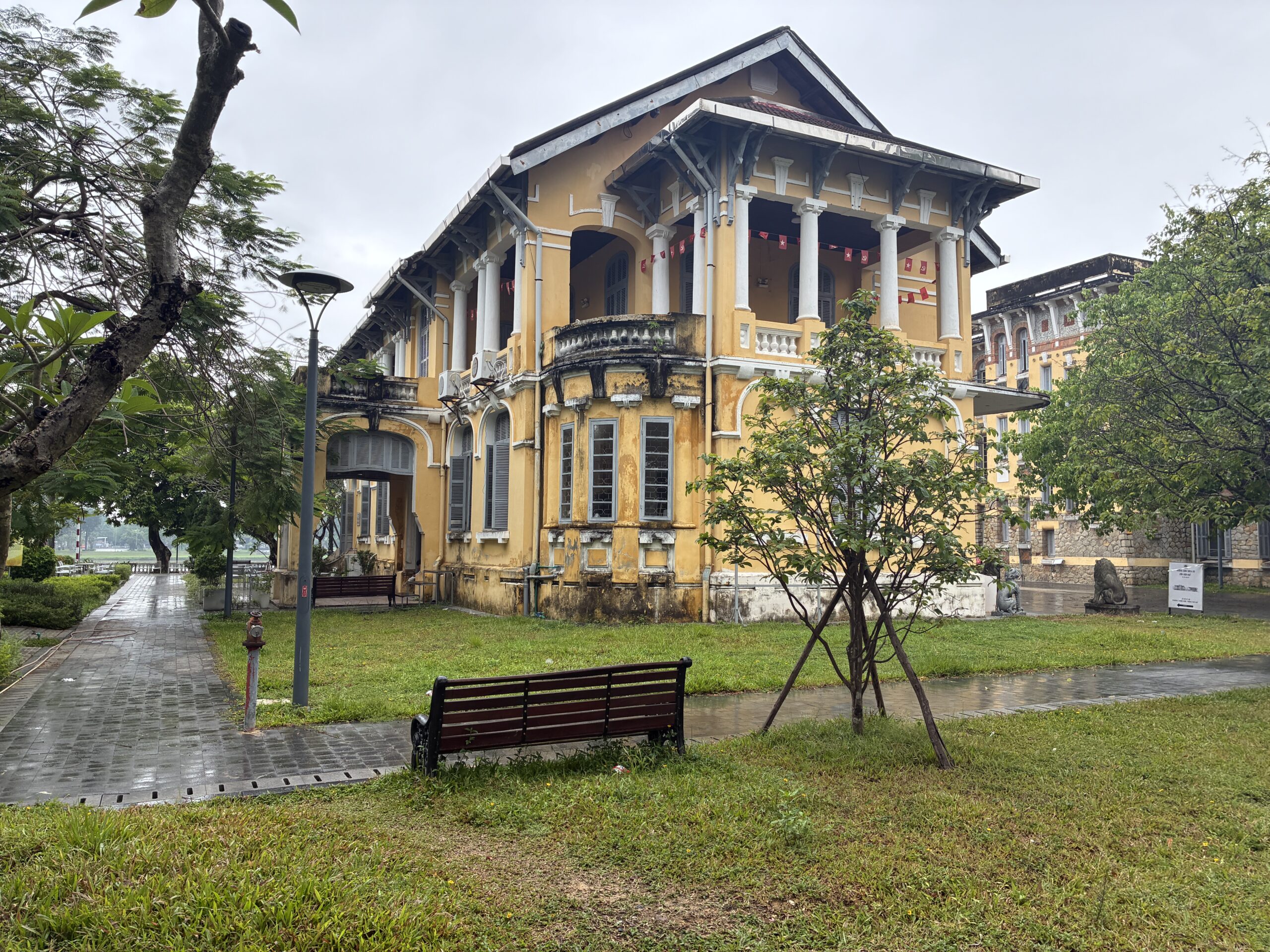
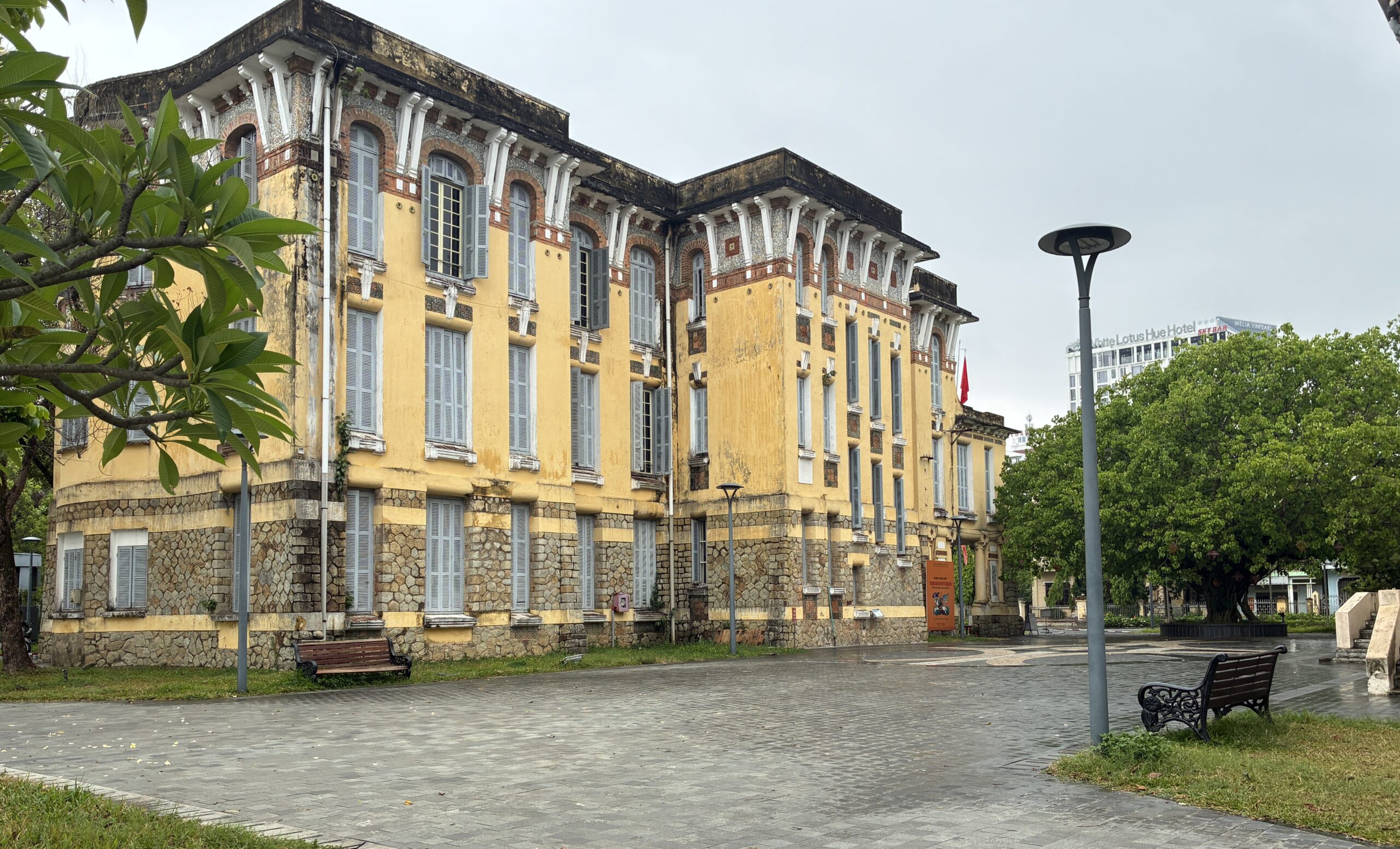
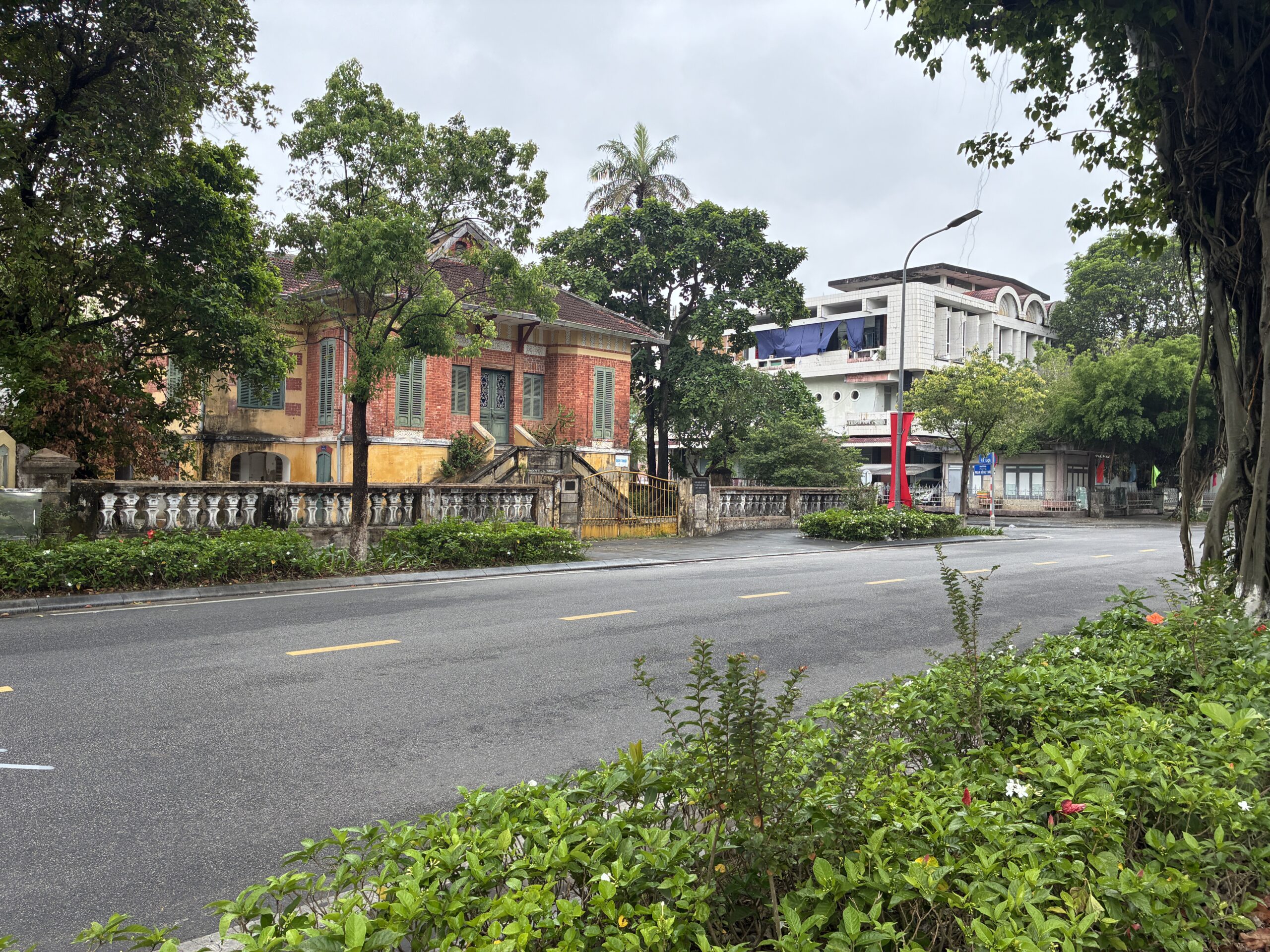
The park also runs along Le Loi Street, the “Grand Boulevard” of Hue, which is lined with lots of old and interesting buildings, some pretty large, in the French Colonial style.


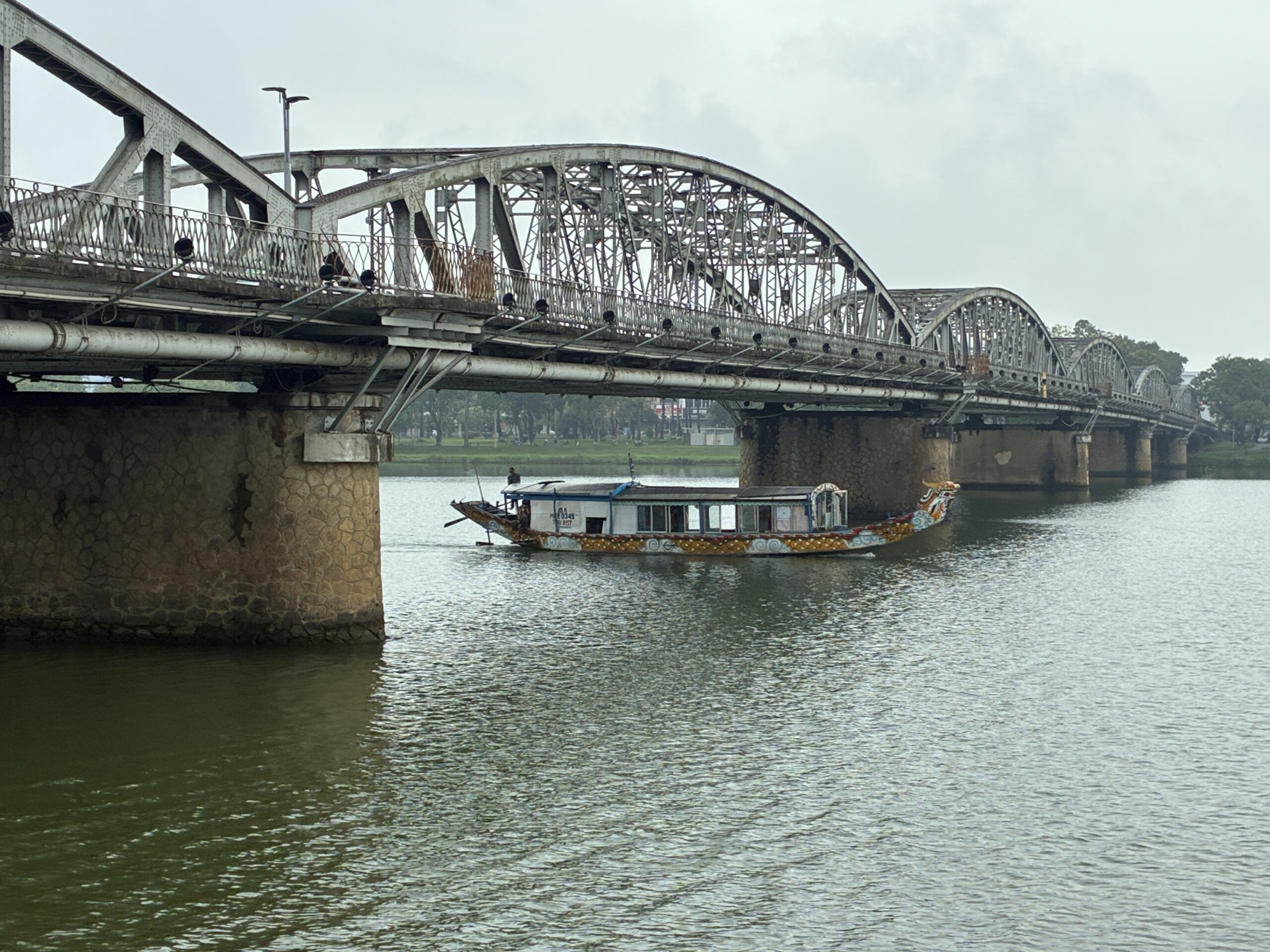
Trường Tiền Bridge, which I eventually walked over to get to the north bank and the Imperial City, has six arched steel spans, and is another bridge designed by the firm that designed the Eiffel Tower (like the Long Biên Bridge in Hanoi, although there seems to be some confusion about whether this is actually so, or it was two different companies).

Hue, with a population of about 1.3 million, is often known as the Imperial Capital, because it served as the capital of Vietnam for 143 years under imperial rule, from 1802 when the Imperial Palace was built, until 1945 when North Vietnam became a communist country, and Hue became the capital. Prior to that, Hanoi was capital, although then known as Thăng Long, and Hanoi became the capital once again in 1945. Before Hue was the capital, it was a stronghold for war lords, but in 1802, Emperor Gia Long unified Vietnam and moved the capital to Hue, because of its central location, the protection of the surrounding mountains, and the Perfume River.


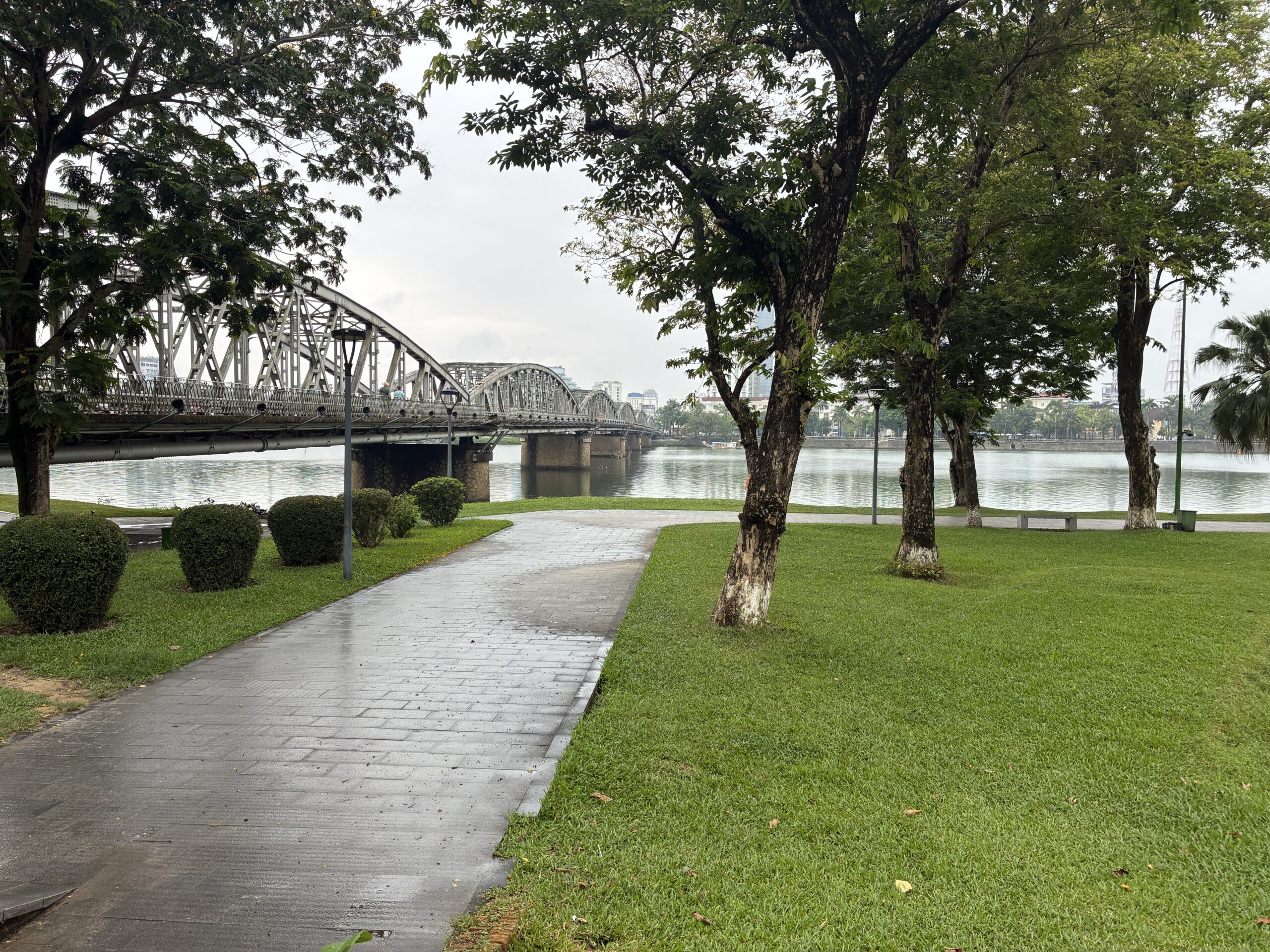
There is another walking path and lovely park, Thuong Bac Park, running along the north bank of the river. I thoroughly enjoyed walking through the park and the surrounding streets, and walking to and around the Citadel and Imperial Palace.

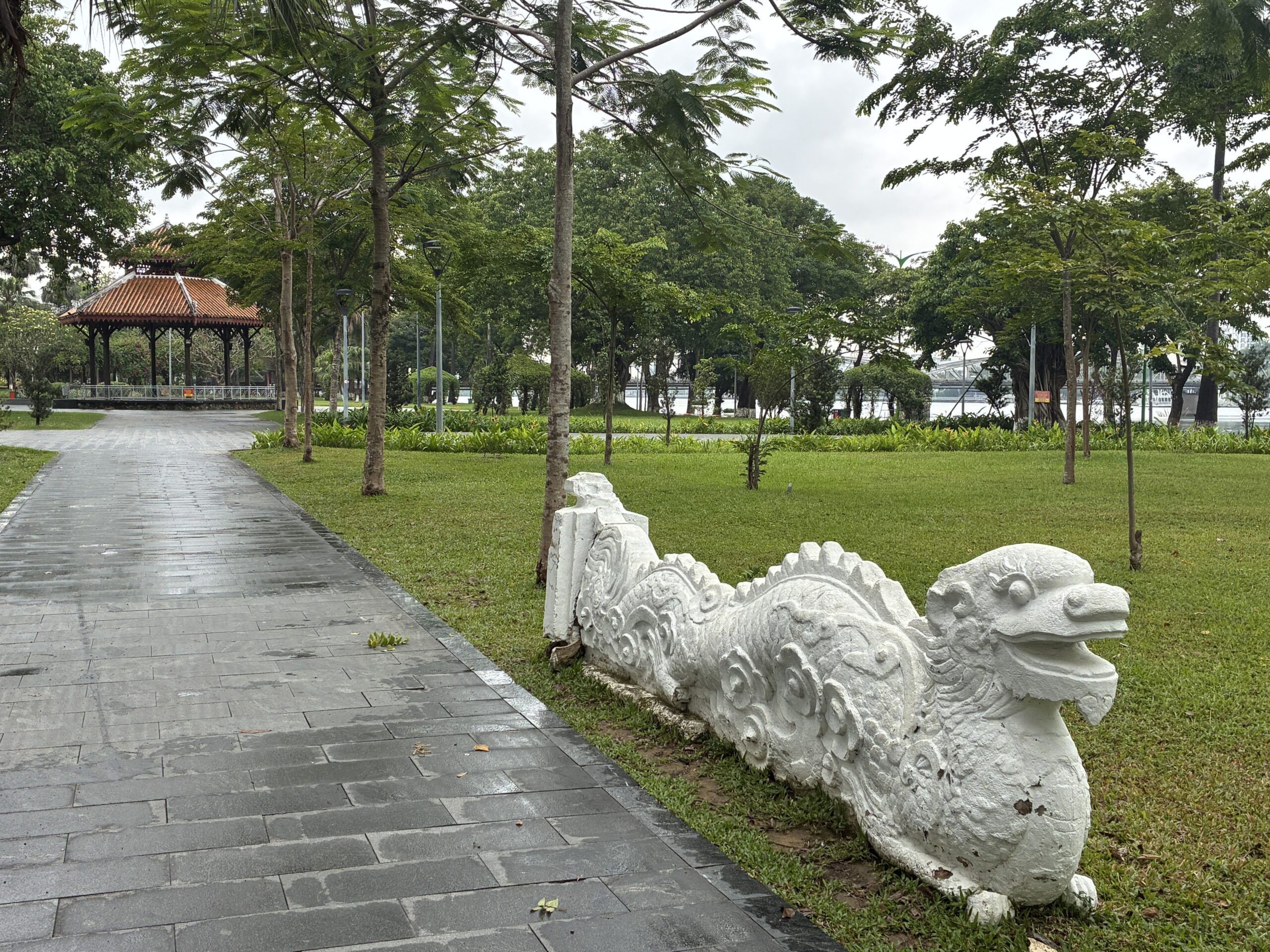
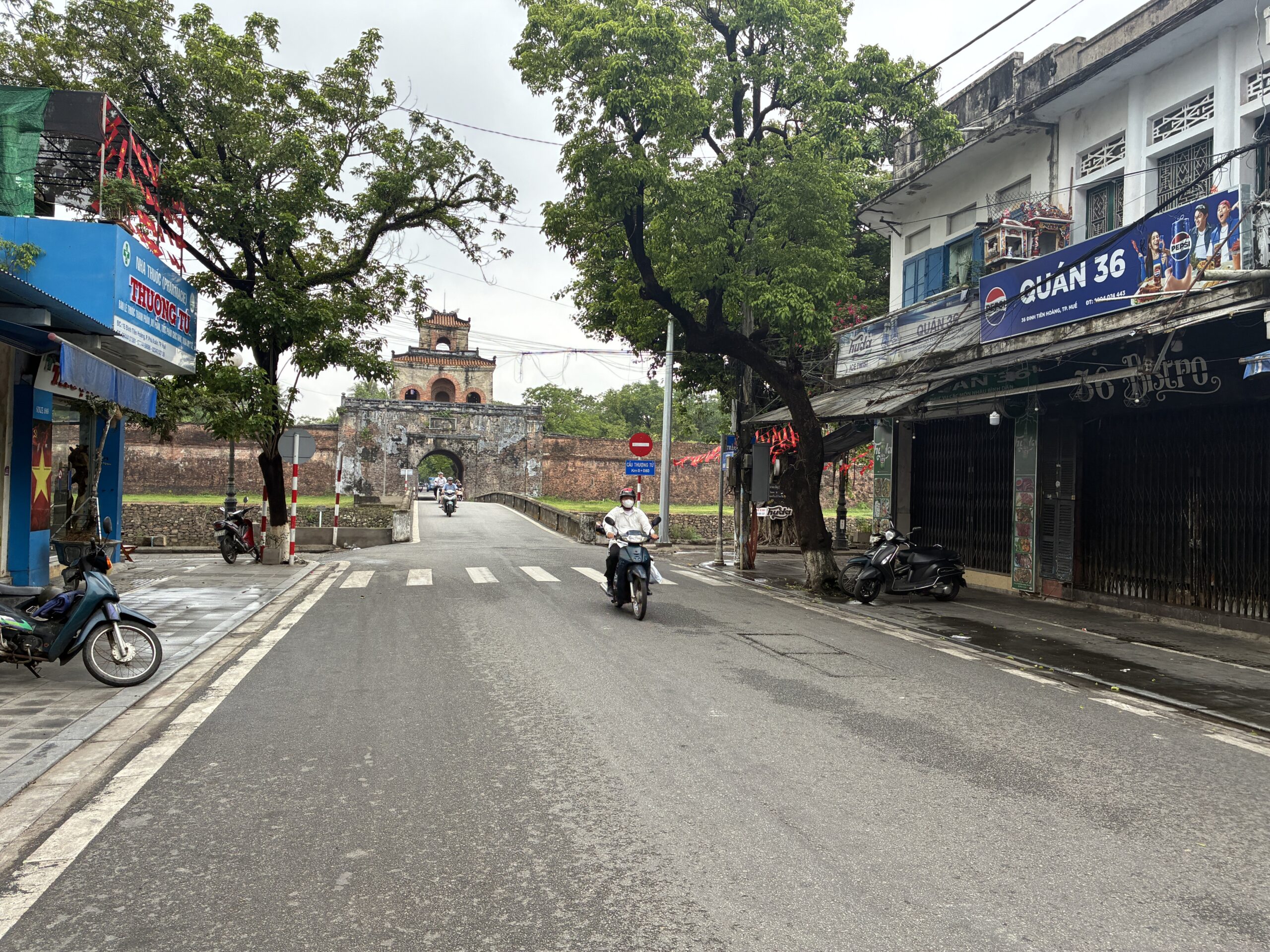


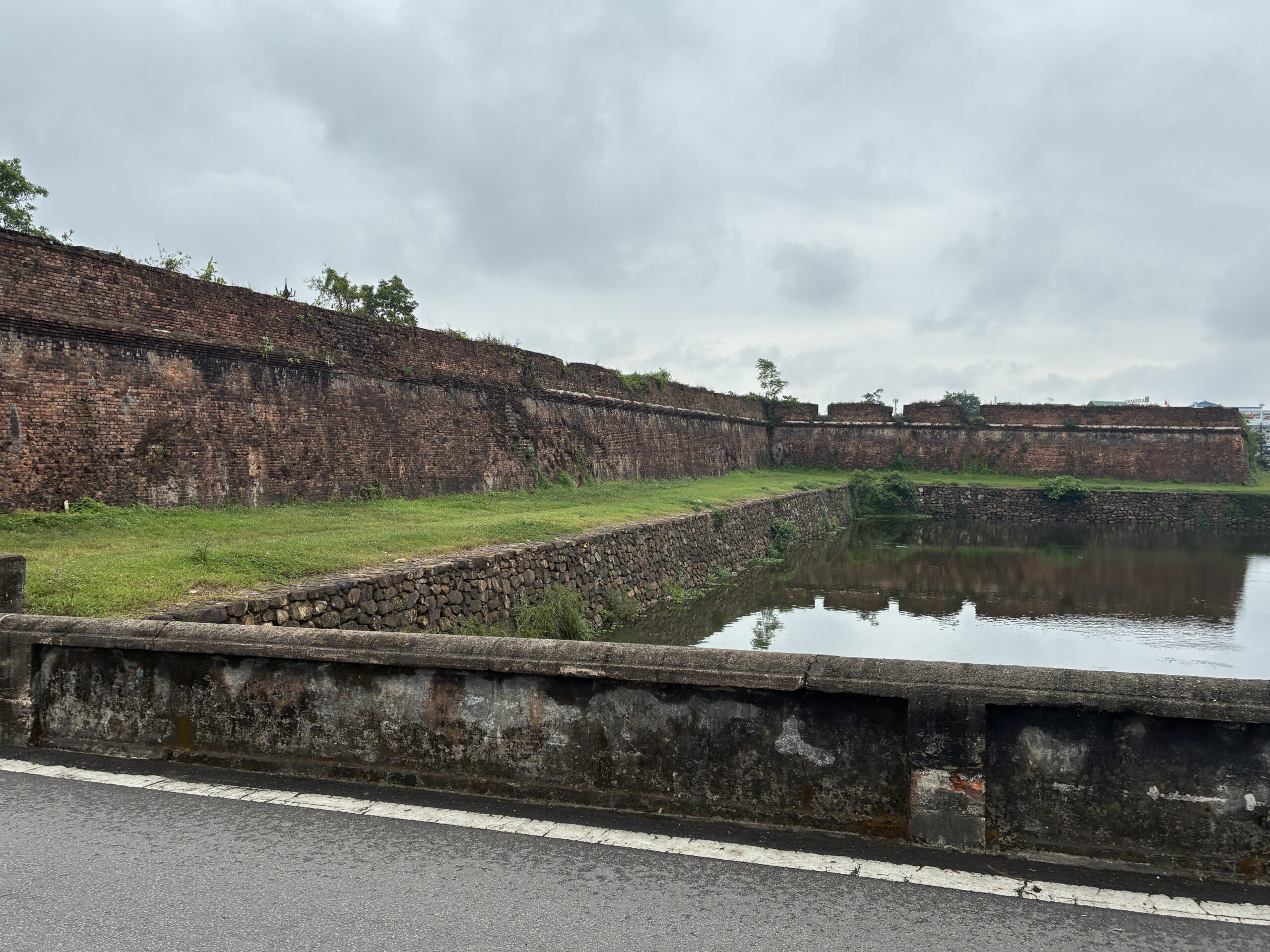
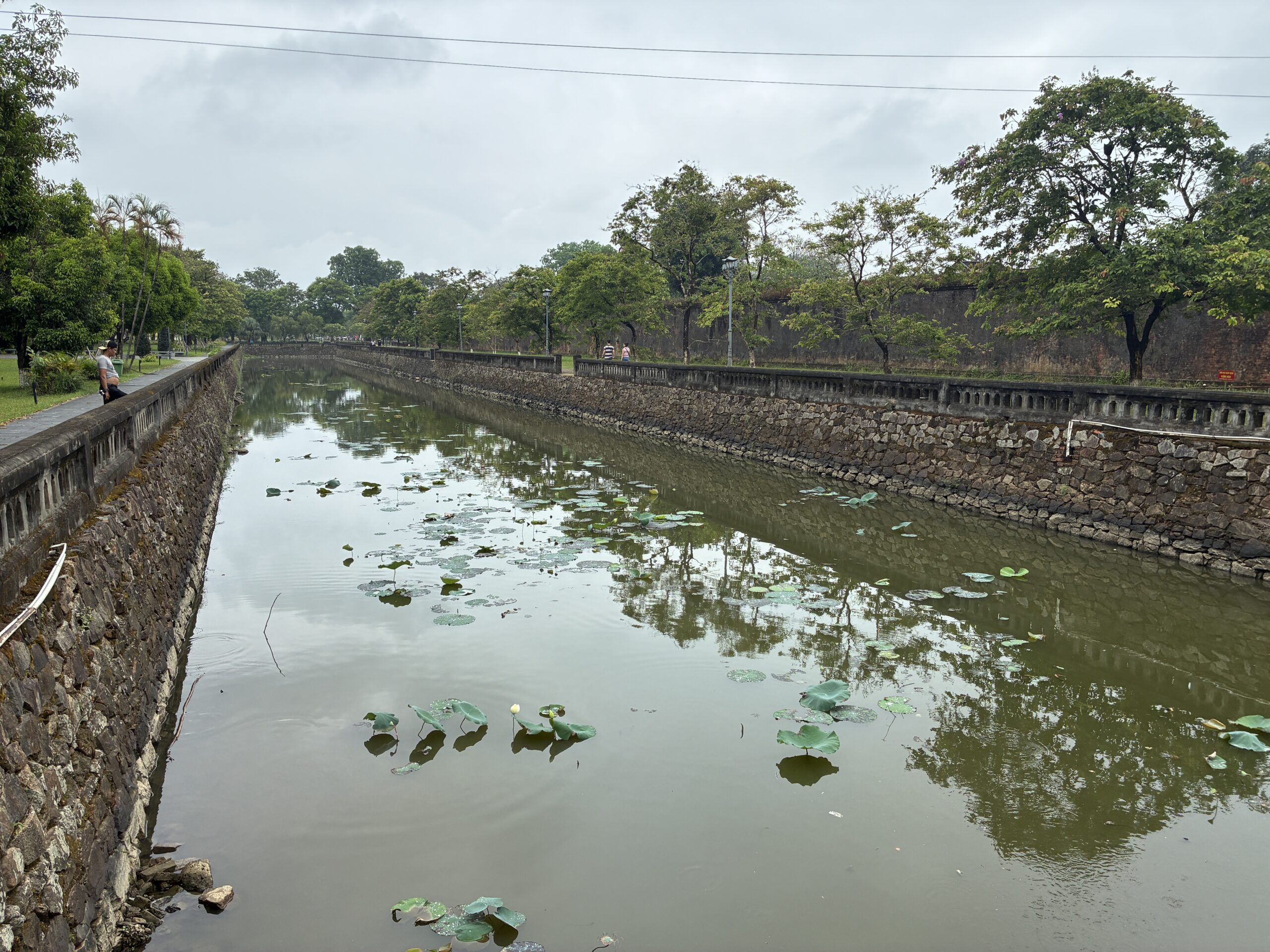
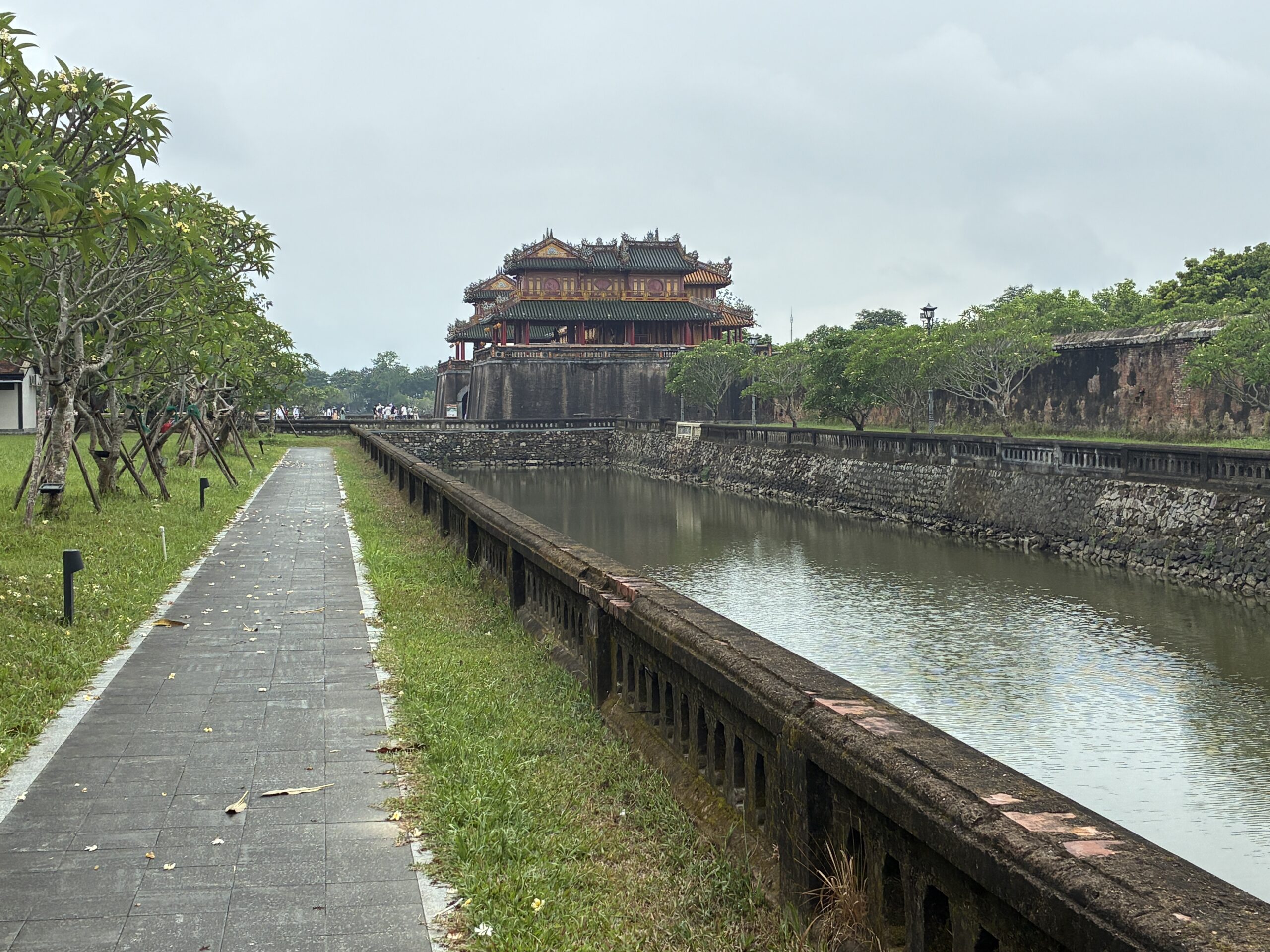


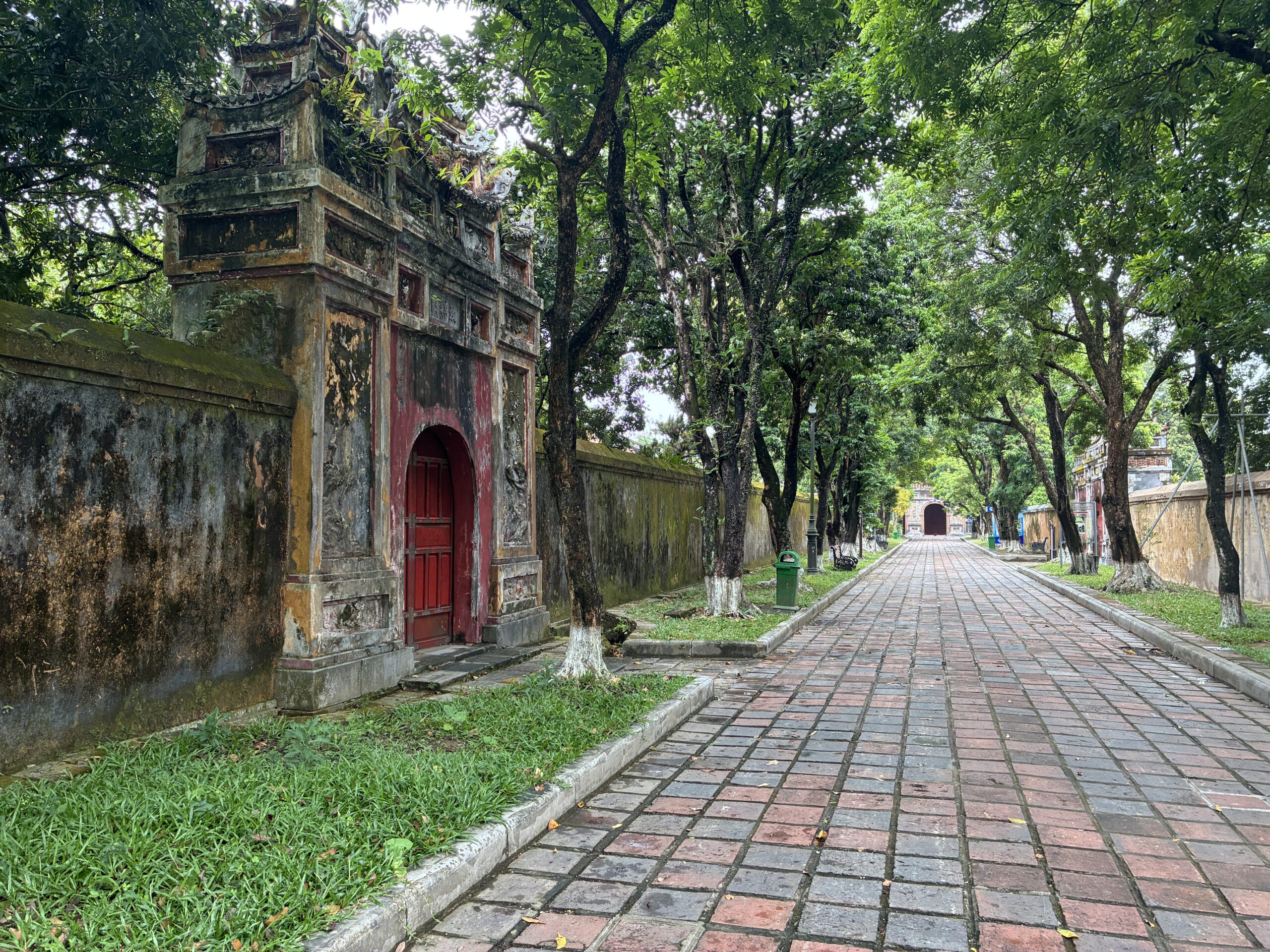


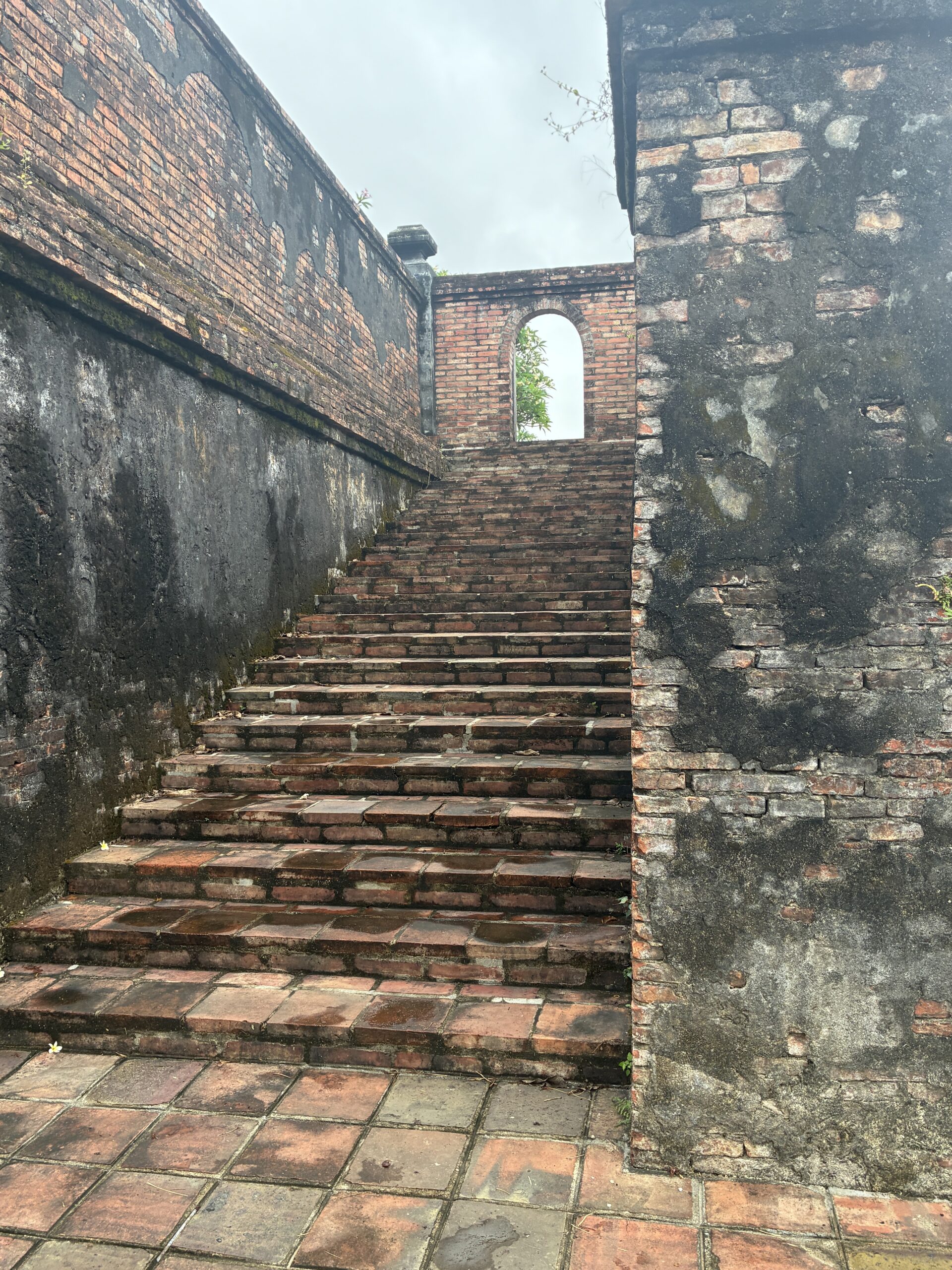
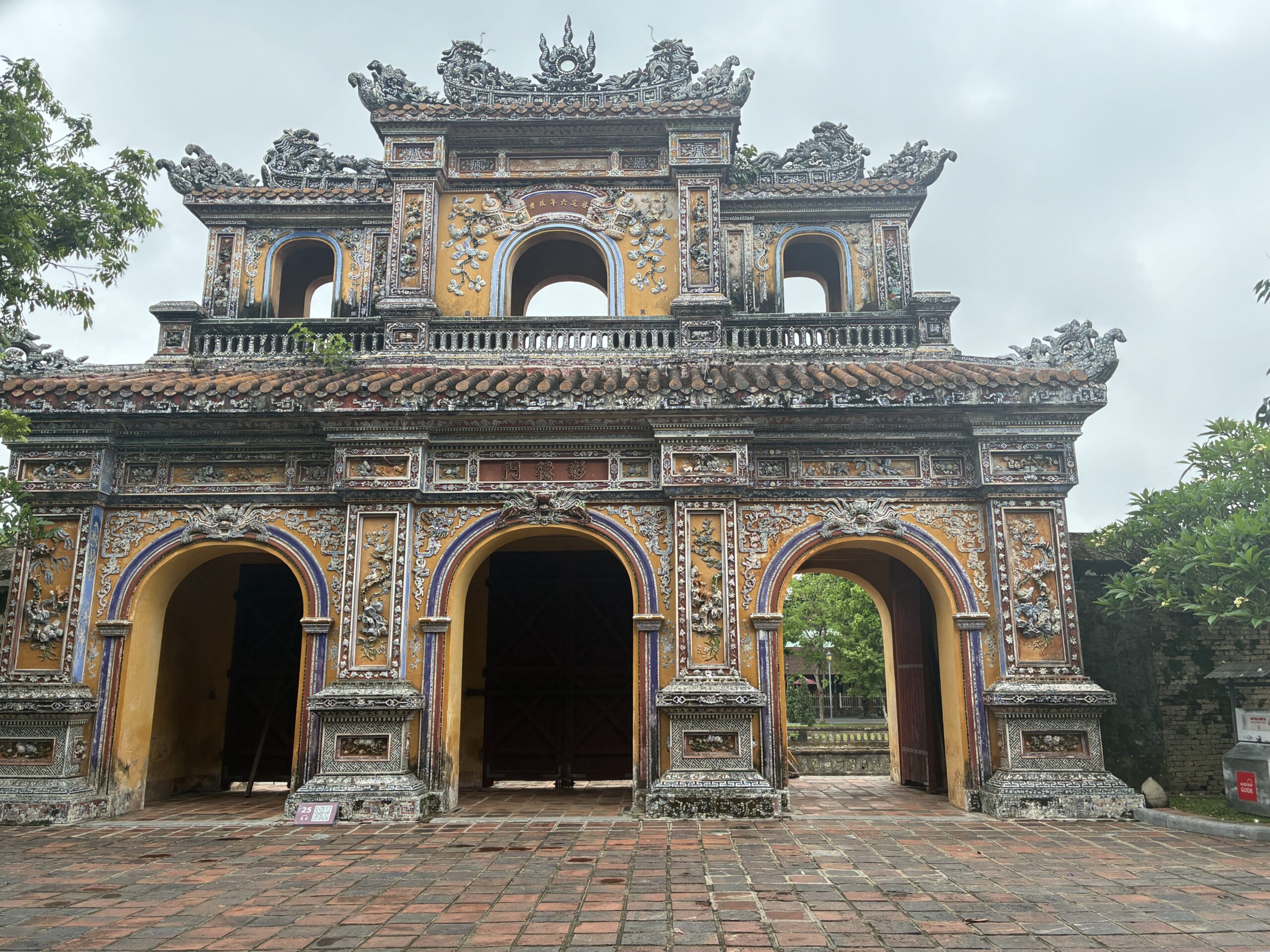
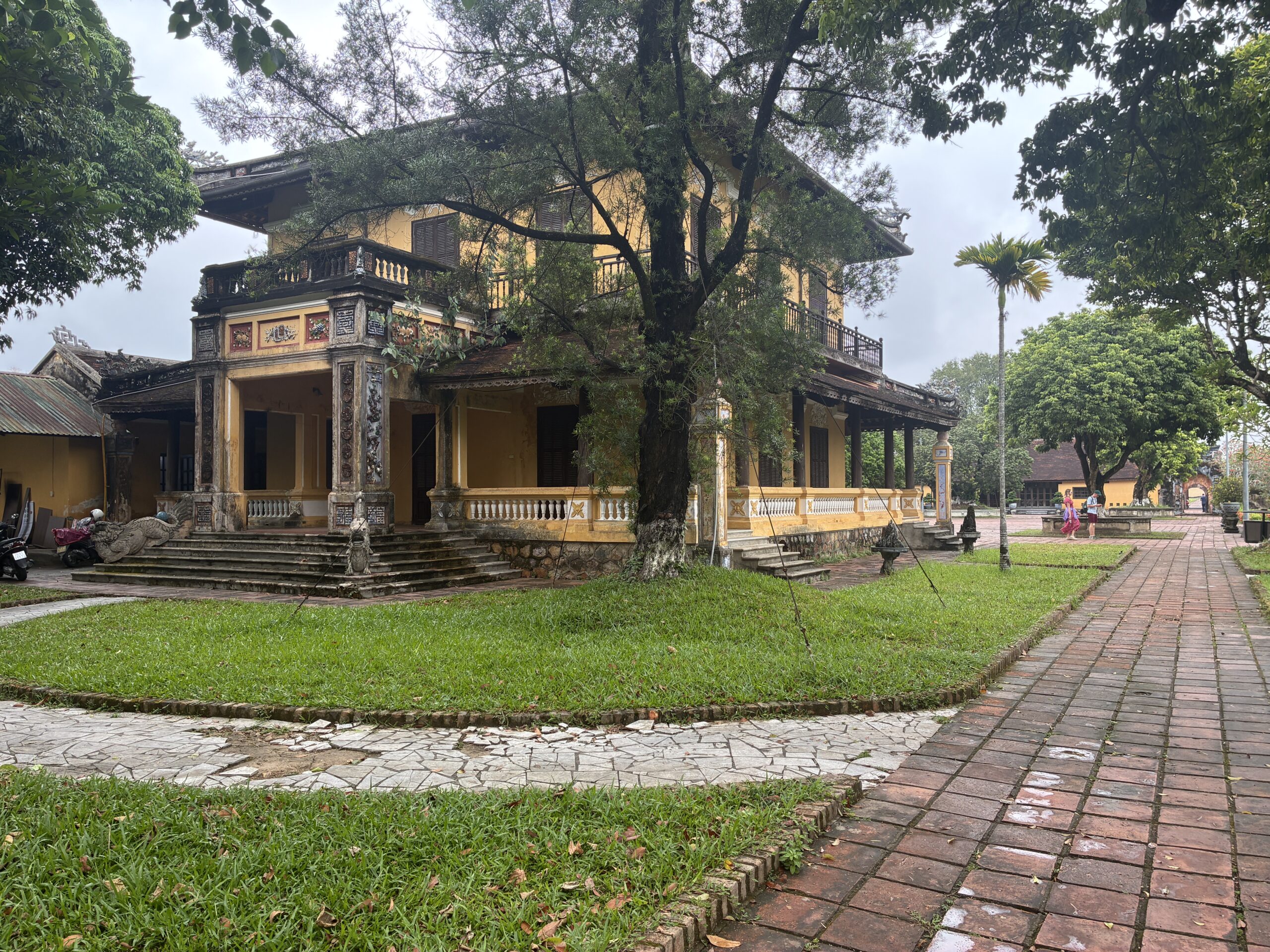
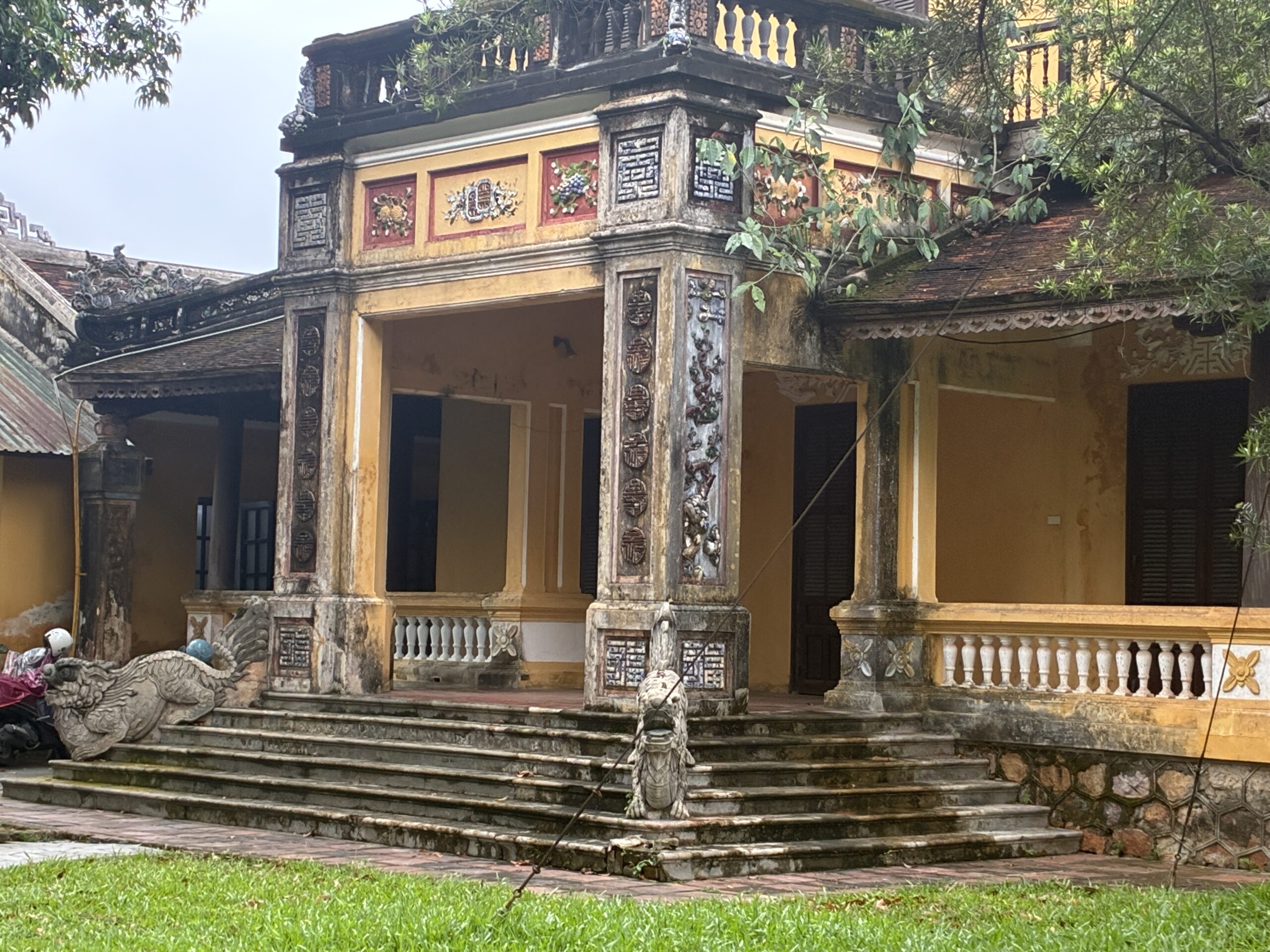
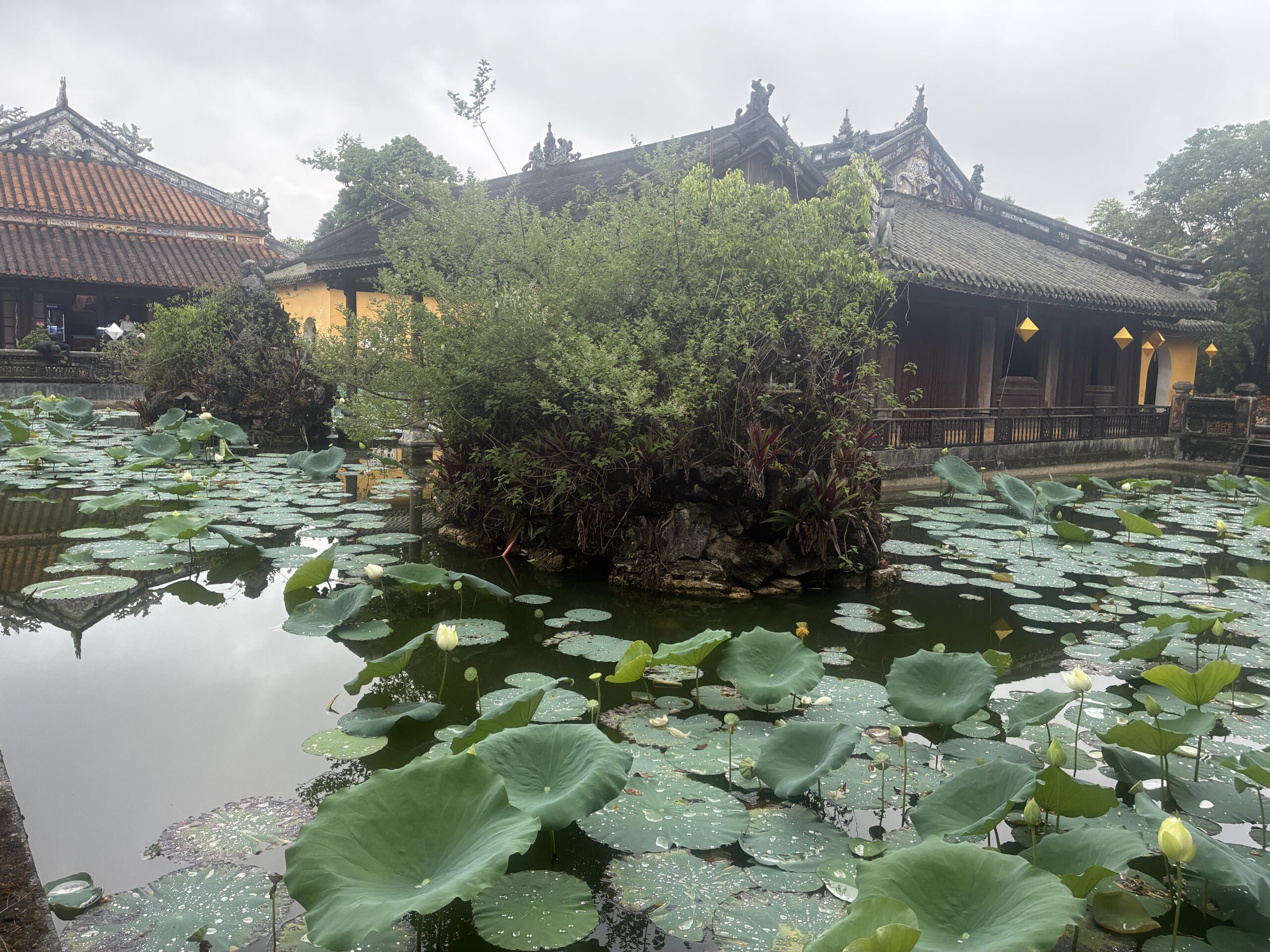
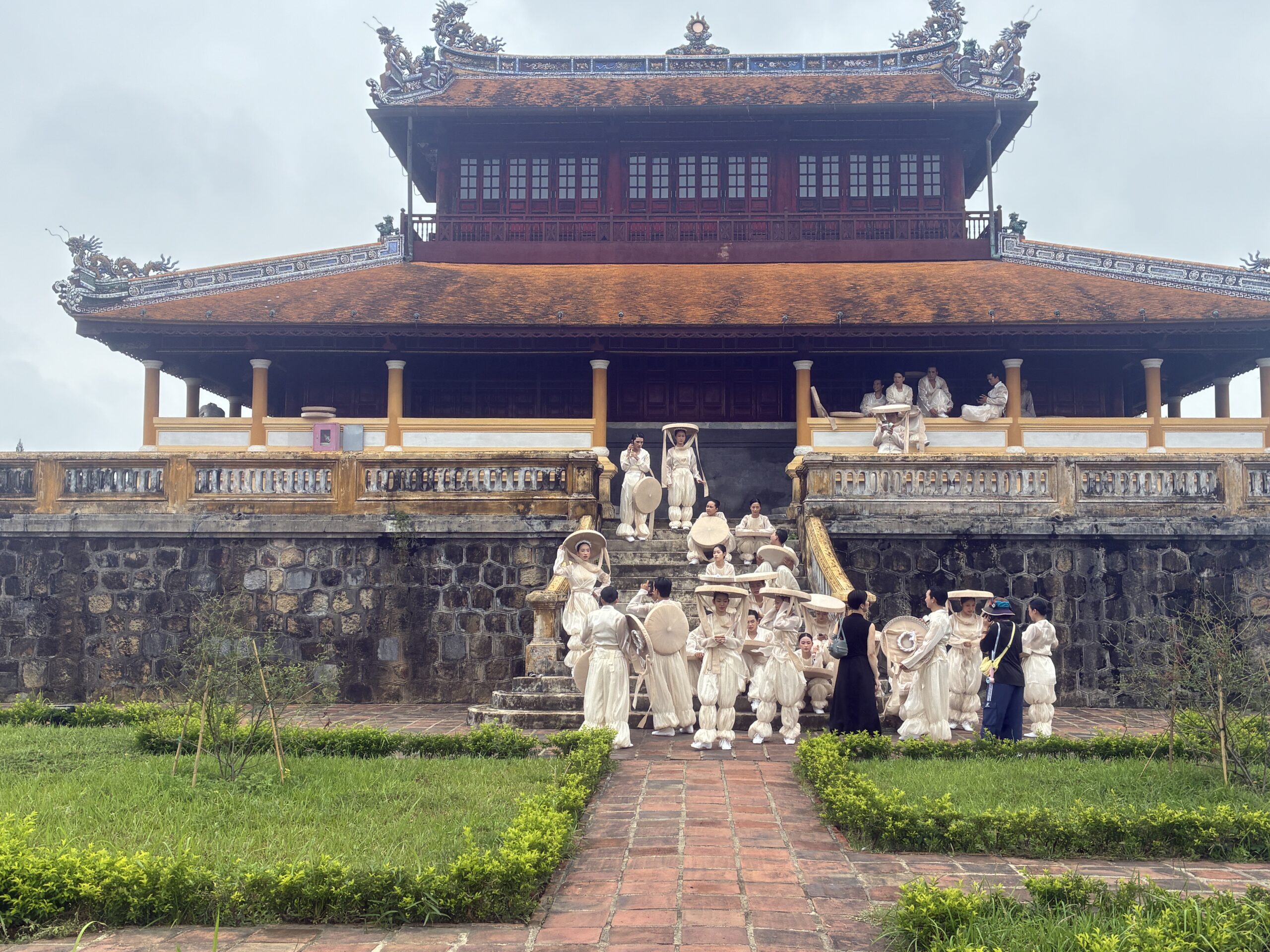
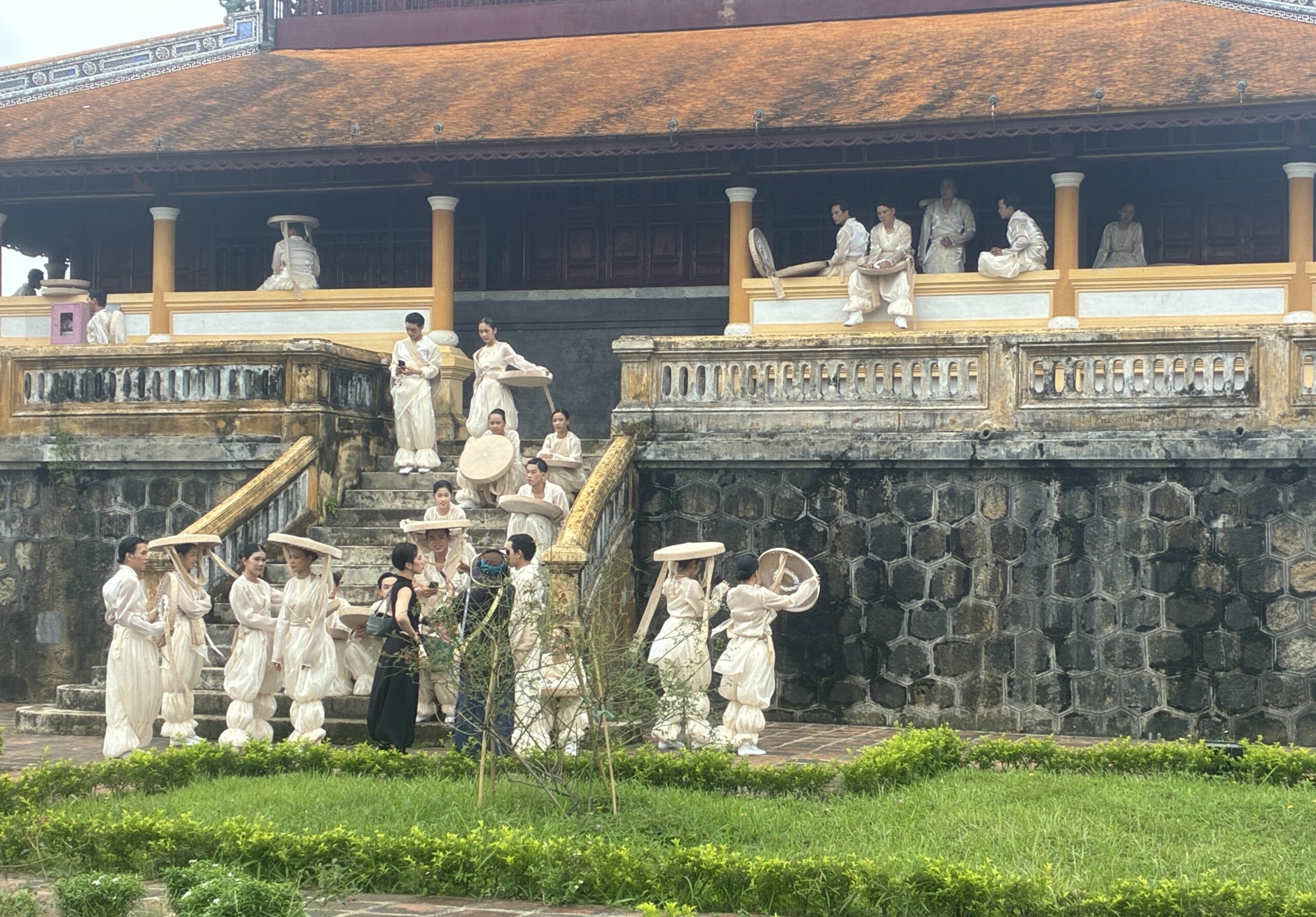
The Palace was so serene and quiet despite many visitors, and is really gigantic. In totality, the Citadel covers almost 1,300 acres (almost 1½ times the size of Central Park in NYC, surrounded by an outer square wall of over 6 miles, with each wall in square about 1½ miles. The Imperial City, or the Middle Square, inside the Citadel, is about 90 acres , the part most tourists visit, which contains the major gates and temples, and deep inside, the Forbidden Purple City, or the Innermost Square, which was the private royal residence, covering about 28 acres. The entire complex was heavily shelled during the Vietnam War, and much of it destroyed, including the Forbidden City, but much has since been rebuilt or restored, and restoration and rebuilding continues today. Some of the buildings I visited were only reopened recently or within the past year or two. Originally, there were as many as 160 buildings, but only 20 or so survived the war. Today, after reconstruction, the current number of buildings is around 95.
It is a really beautiful place, with so many areas and gardens to walk. The guided tour, which followed my own walk in the Imperial City, was not so good. I really liked Nguyen, our guide, who unlike my many other guides, is not a professional guide, but part of a university student guide club. She knew a lot about the Imperial City and Vietnamese history, but lacked the flair of a professional guide and didn’t really organize our walk well. It was still very good, and I gave the tour a good rating (as Nguyen was so nice and I wanted to offer support and not criticism), but it wasn’t as coherent as it should.could have been, tying the entire site, outer, middle, and innermost, together. The other guy on the tour, from California, knew quite a bit about South-East Asia, and has been traveling the region for months, including Laos, Thailand, and Cambodia, and after Vietnam onto Japan. Nice!

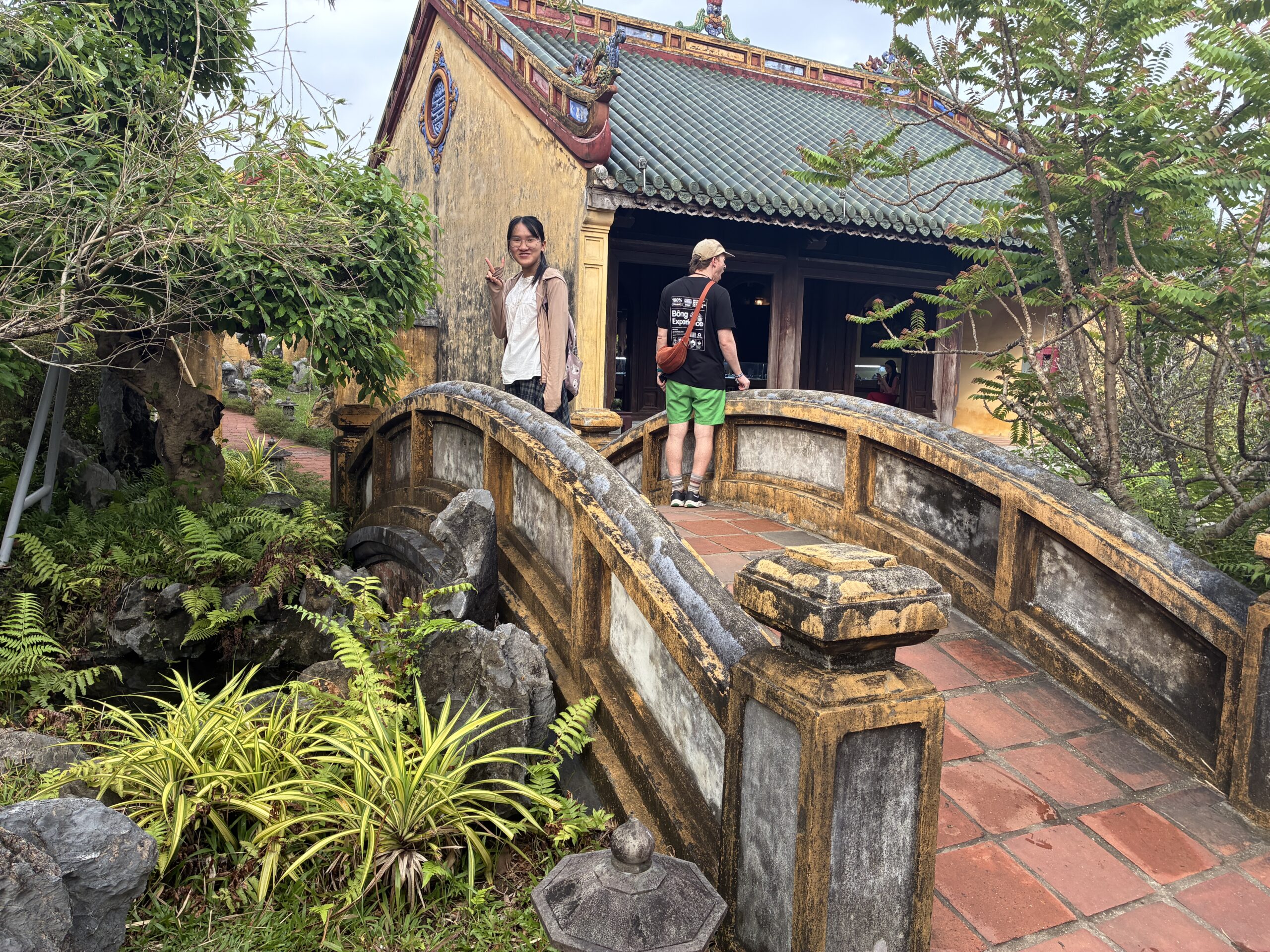
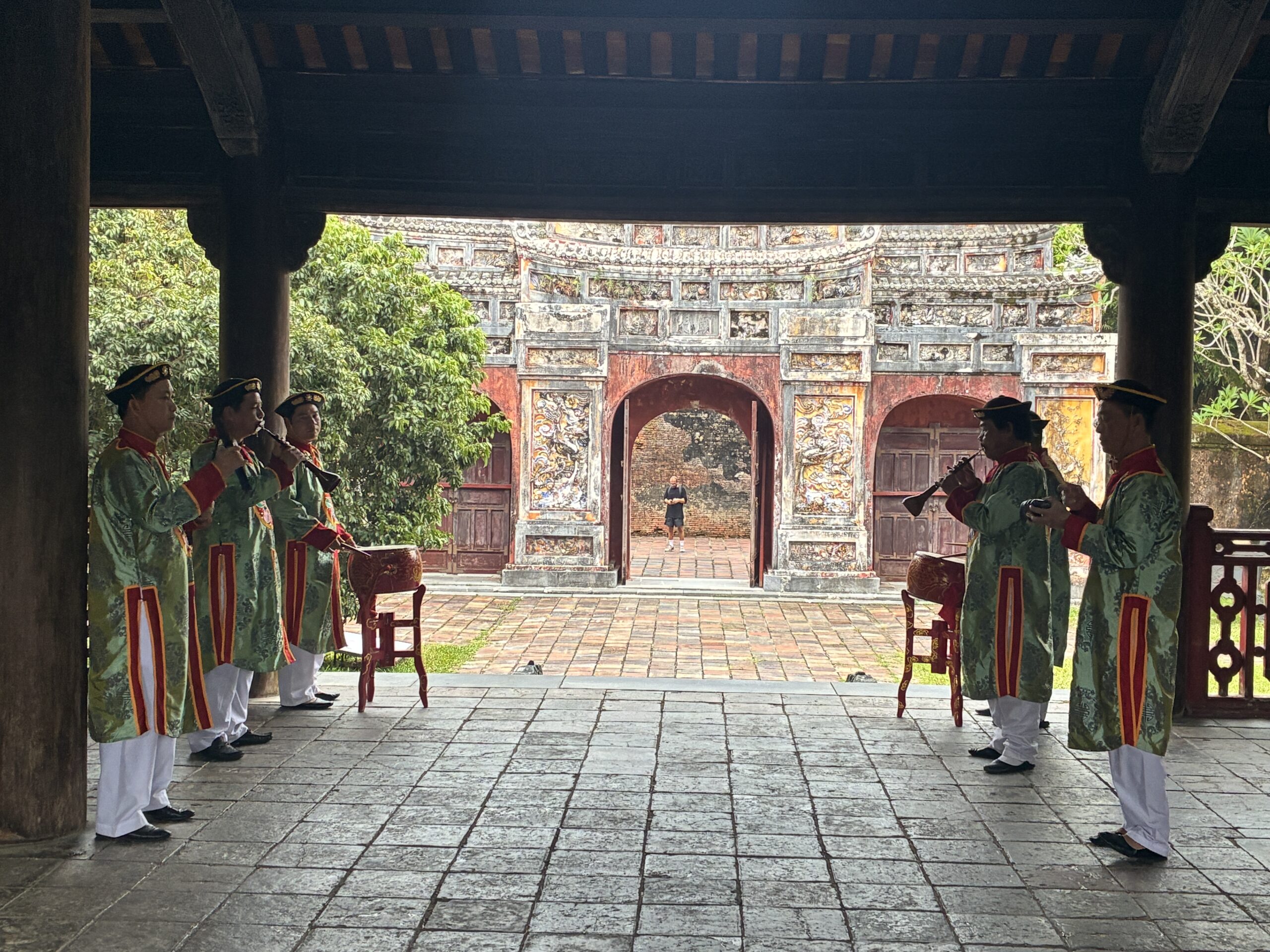
There is a great deal of Chinese influence throughout Vietnam, given the thousand years of Chinese rule and domination in Vietnam in its very early years, when for a while it actually annexed and made Vietnam part of southern China. Although the French, and the Vietnamese themselves, made moves to eliminate the Chinese influence, changing the language, including moving to a western style alphabet, Chinese influence is is everywhere in Vietnamese history and culture, especially prominent in the Imperial City.
The architecture and styles within the Imperial City are a blend of Chinese, French, some Italian, and Vietnamese, reflections of various influences on the palace and in Hue itself, and even Vietnam as a whole.
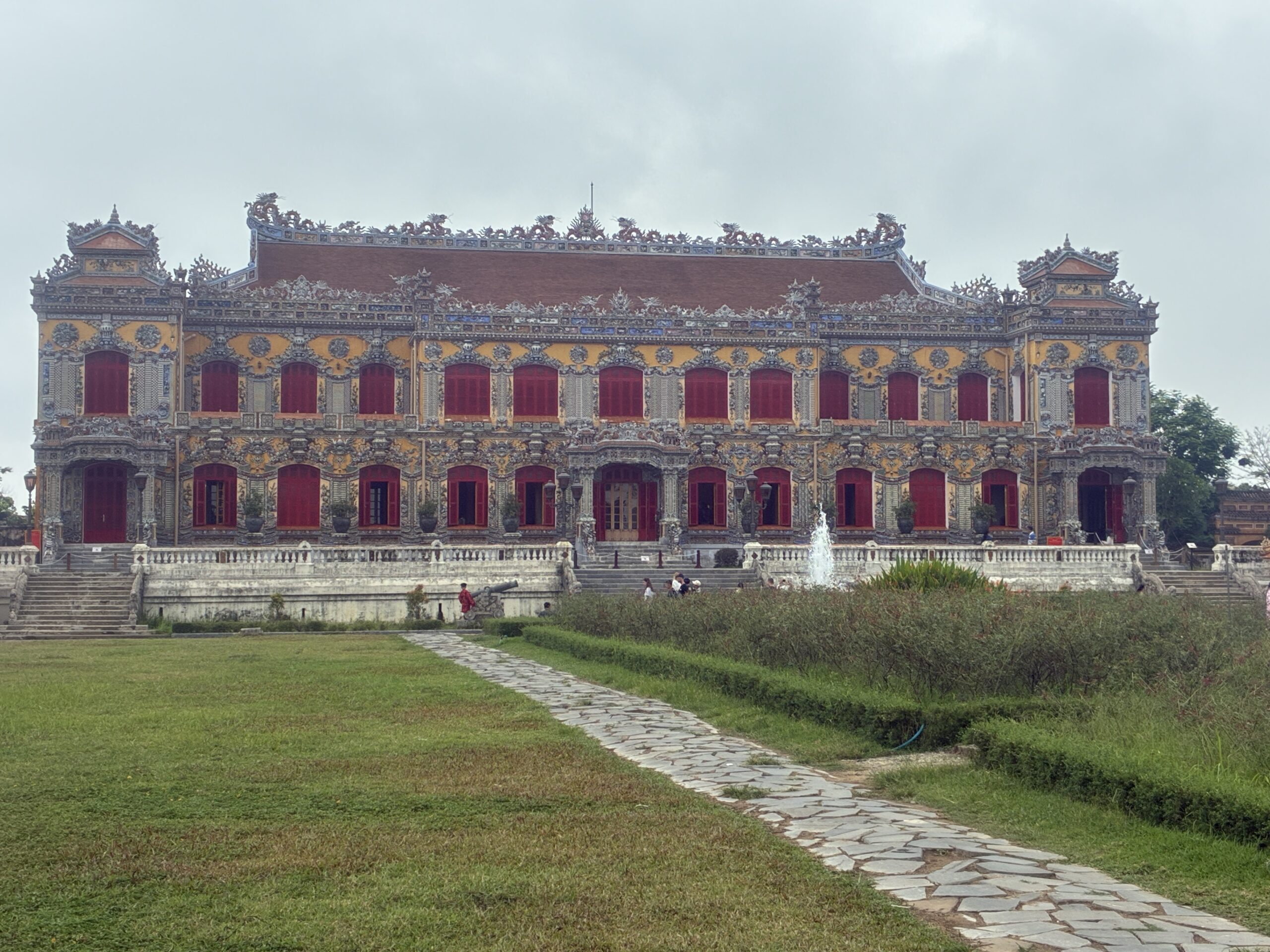


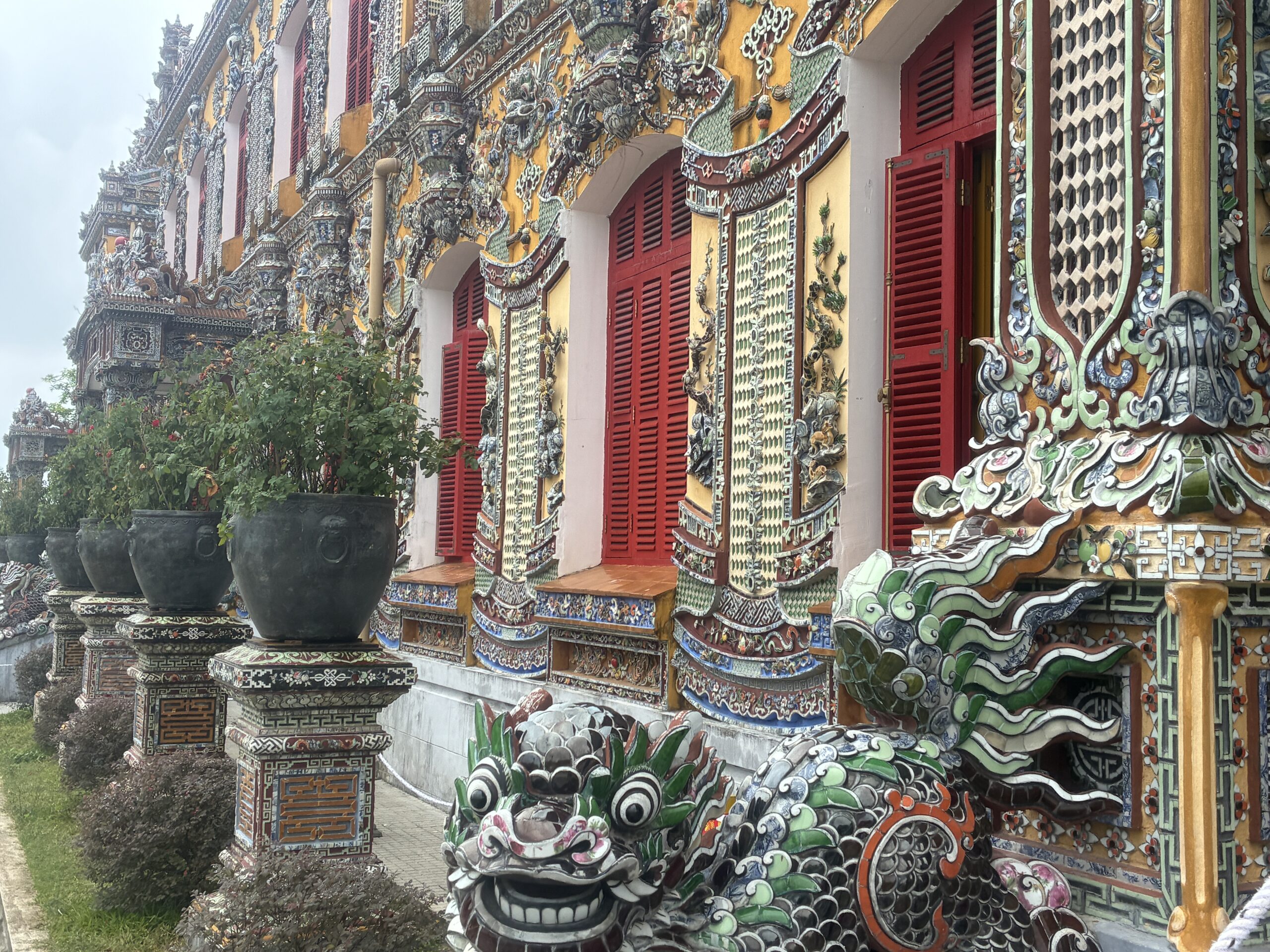
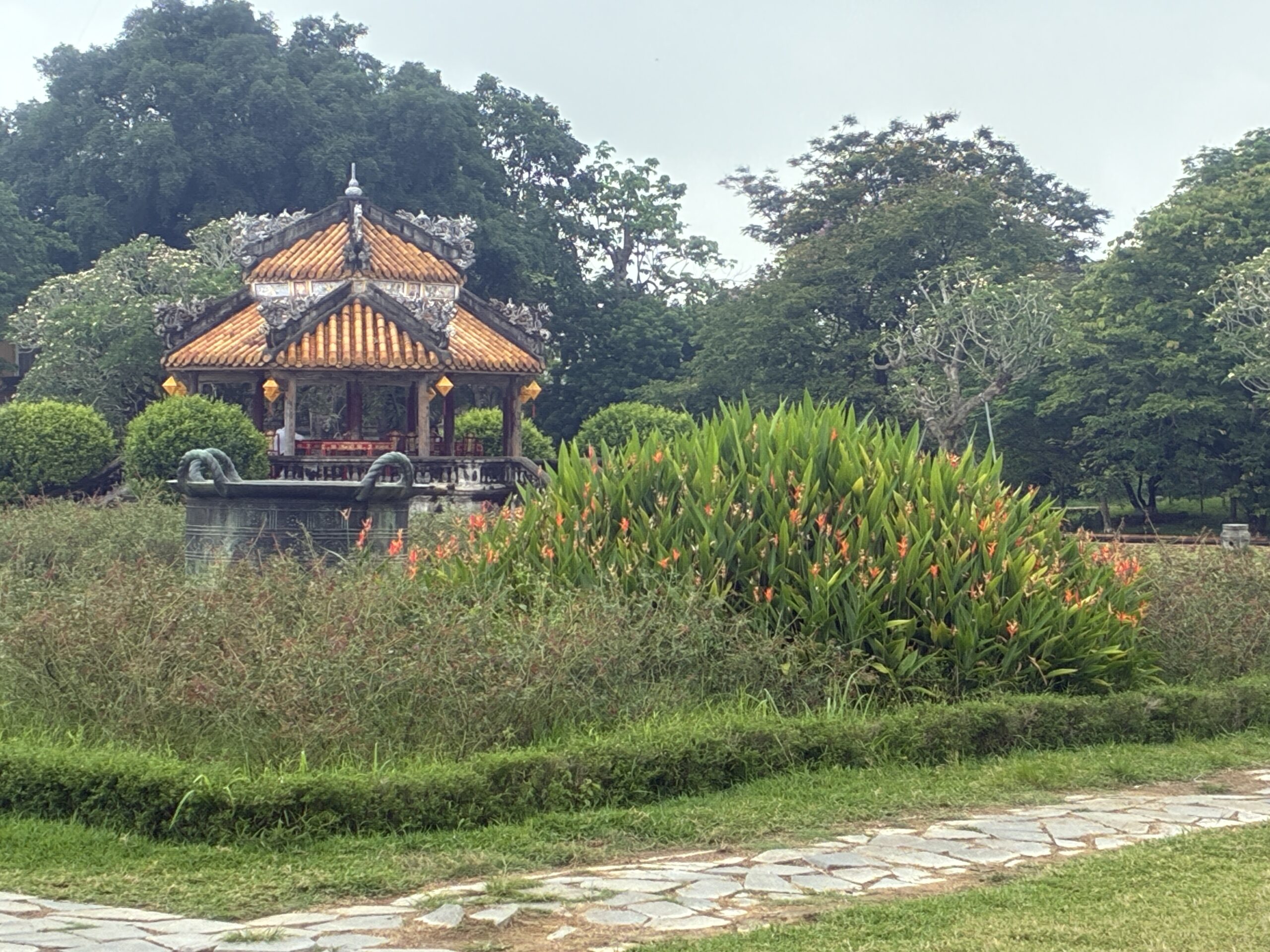
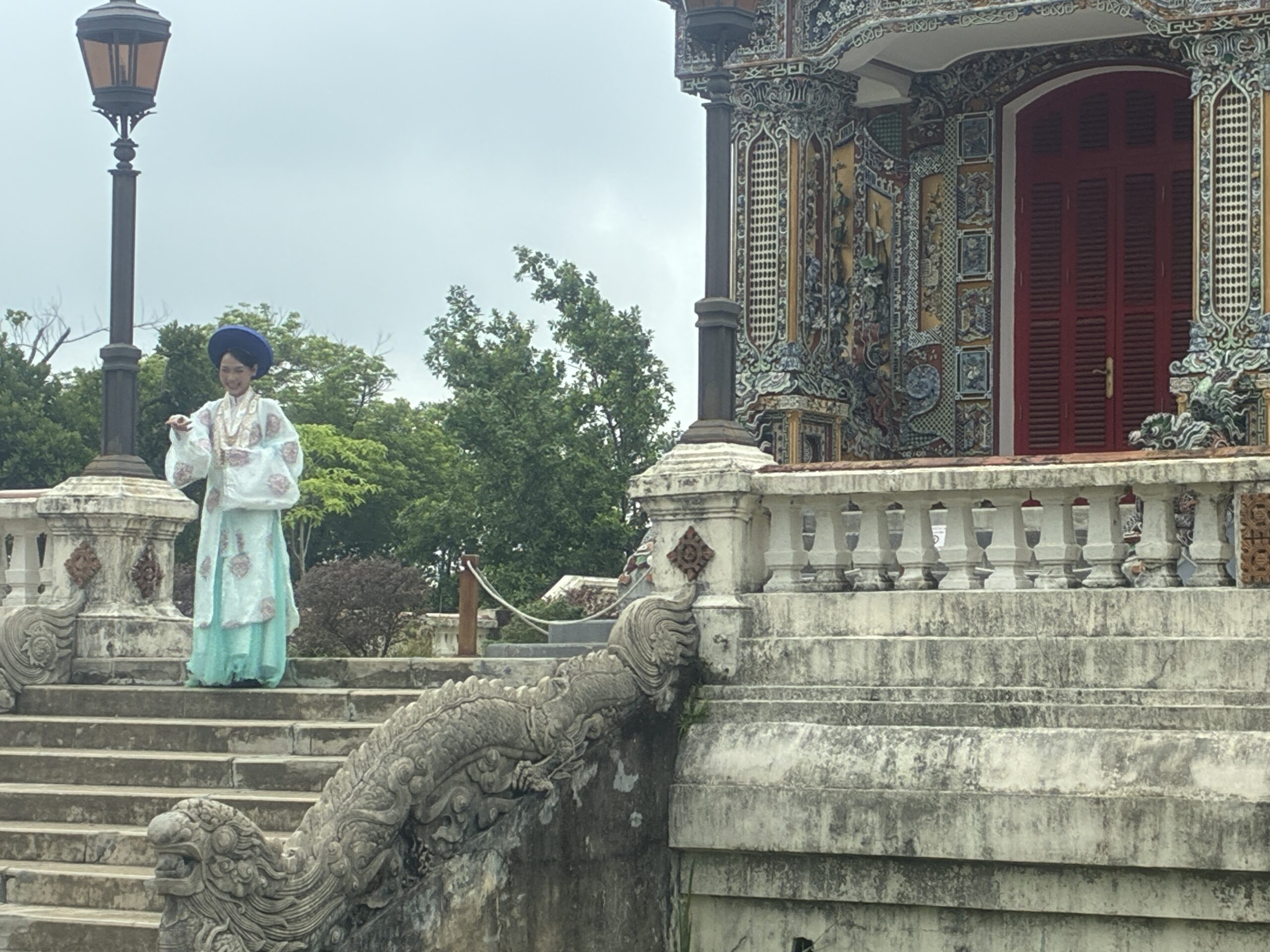
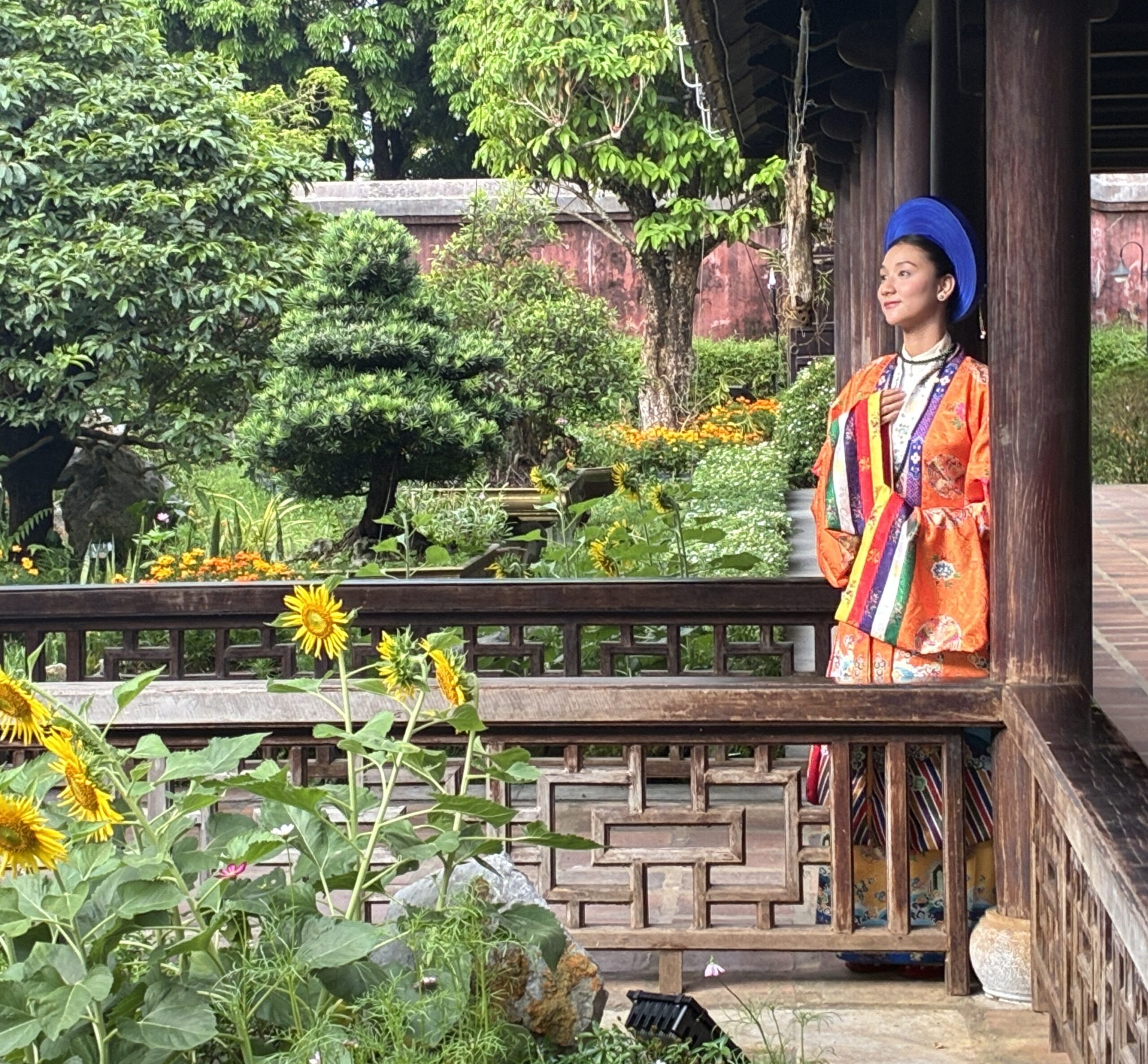
As I saw in Japan and elsewhere in Hanoi, it is common for people, local and foreign, to rent traditional clothing and outfits, and especially at historical or scenic sites. In fact, Nguyen told us that in high schools, girls (but not boys) are required two to three times a week to wear traditional Vietnamese women’s gowns, to help keep the traditions alive. When I asked her why not the boys, she just screwed up her nose in disgust, and made a face. It’s only in relatively recent years that women have been granted more rights and independence in Vietnam.
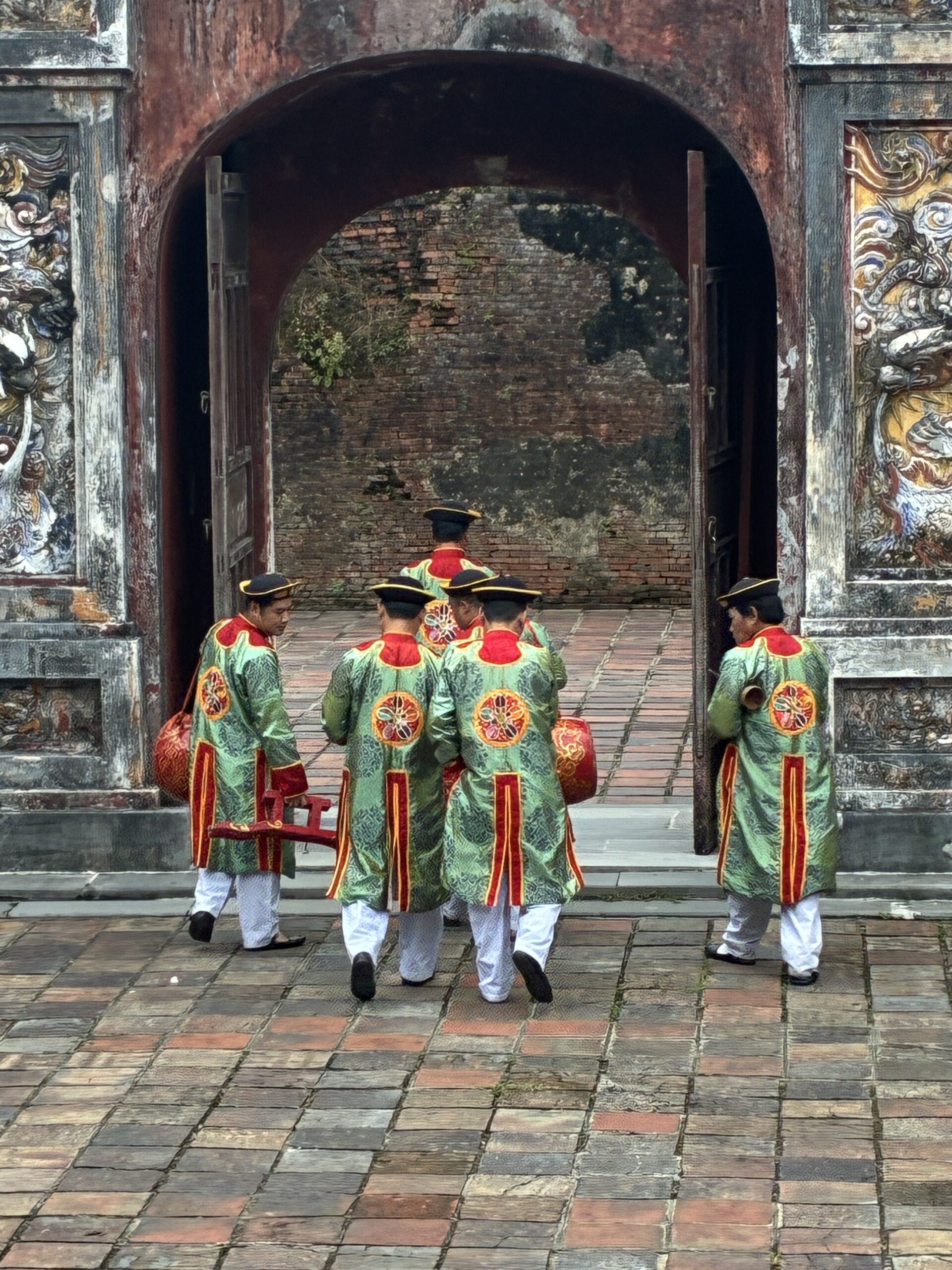

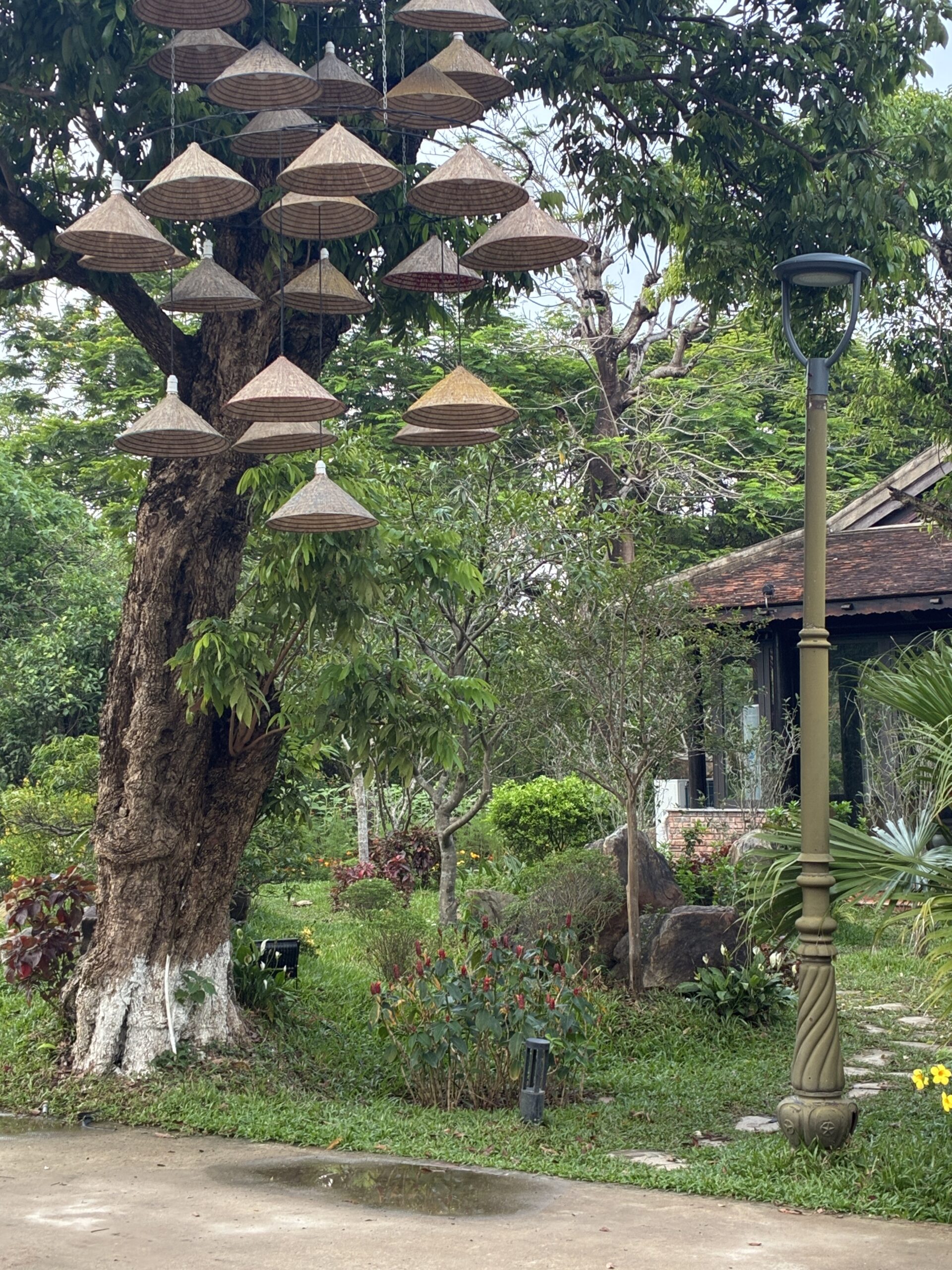
By the time the guided tour was over, I’d walked many miles today, but kept on going. I was running out of cash – so much is cash only here, including the admission to the Imperial City (which I paid twice, as I visited twice), which seems odd given it’s such a major visitor attraction. I headed back to the hotel, mostly to get more cash, but also to recharge my watch and phone, again enjoying the walk in this lovely city, but first walked to the Dong Ba Market on the north bank, near the north side of the Trường Tiền Bridge, and east of the Citadel. It’s the oldest and most significant market here, first established in the early 1800s, and moved to its current location in 1899.

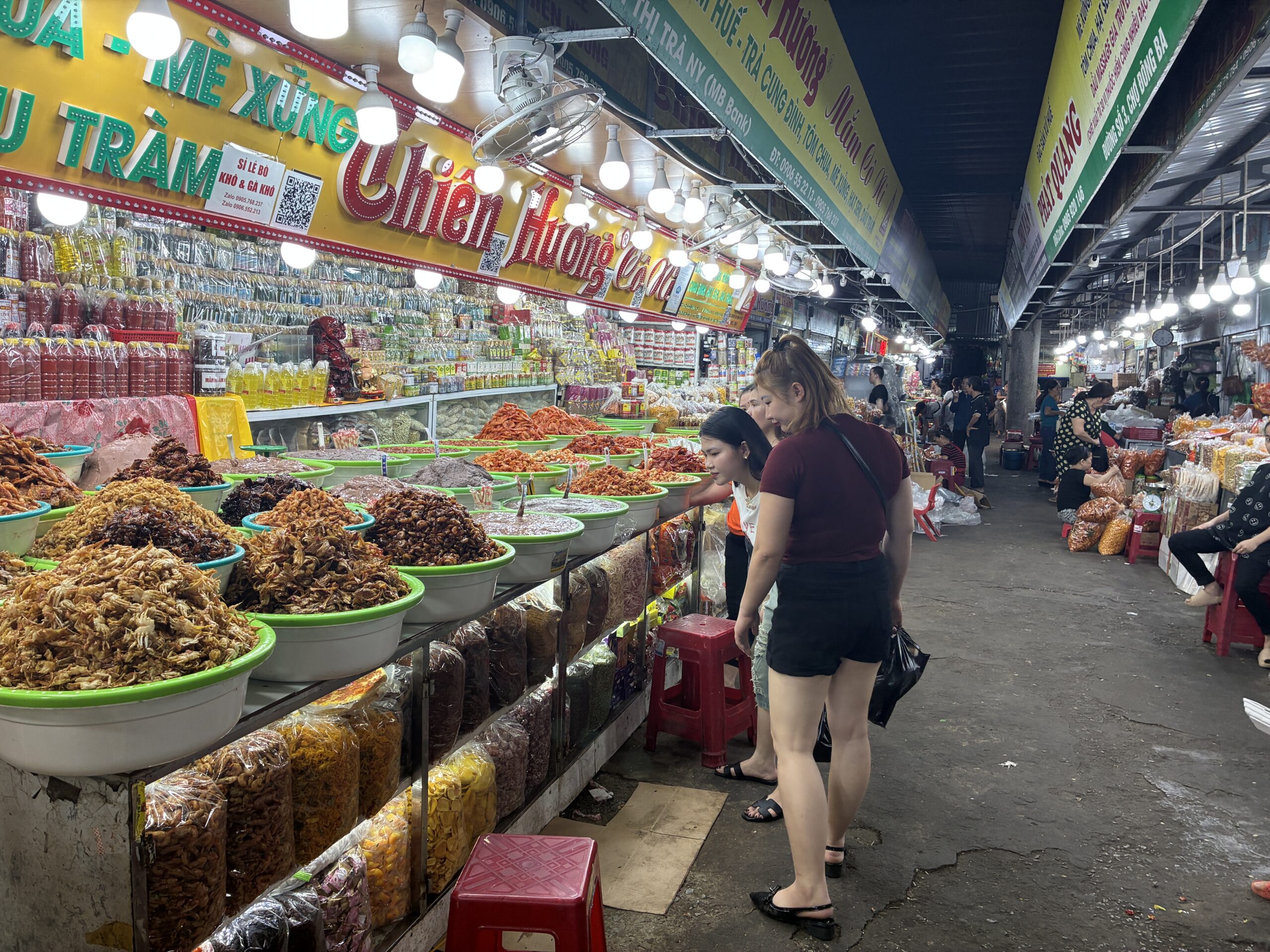


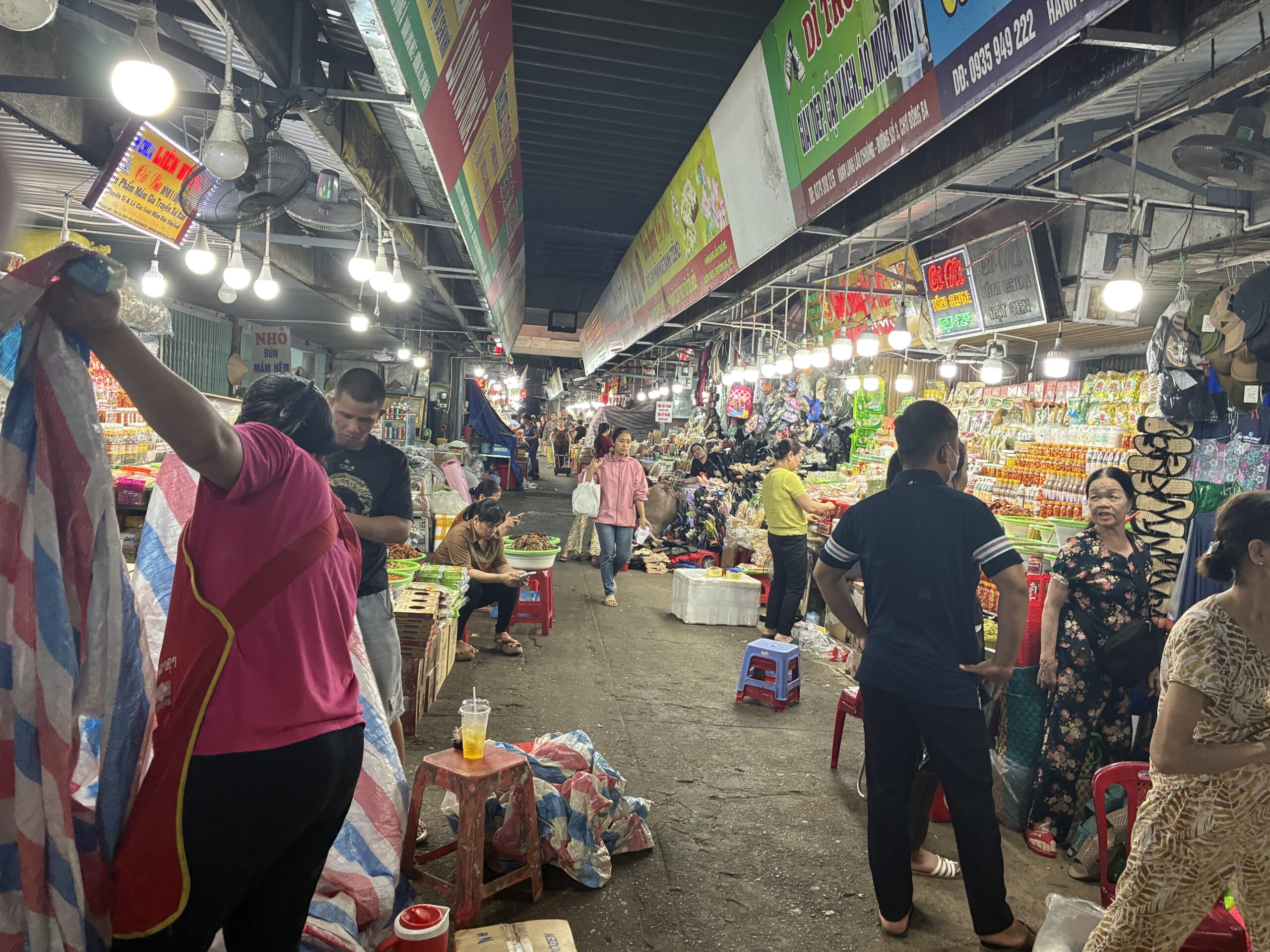
Like all these markets, it is a fabulous place, and I love visiting them, but it seems, no matter which country or city you’re in, they are all very much the same. As a visitor, it’s hard to tell one from another. The smells, the sounds, the overwhelming number of vendors, the variety of what’s being sold, from foods to goods, and everything in between. This market is mostly indoors, with large outside sections as well, and like many similar markets is organized into sections, with vendor after vendor selling shoes, or hats, or meats, or fish, or luggage, or nuts, or peppers, or toys, or clothes, etc. Overwhelming, and how you decide to buy meat, or fish, or toys, or a hat, from one vendor over another beats me.

From the market, I headed back across the bridge, about ten, maybe fifteen, minutes from my hotel. But before I got there, I was again approached by a Dragon boat vendor – as I knew I would be – with a ride costing 200,000 dong (not 400,000, like the guy from this morning), but I told her I was out of cash. She asked what I had, and accepted 150,000 ($5.70), but if I’d have had only a 100,000 I bet she would have accepted that. This was a great time for a ride, as the sun was starting to go down, and the lights would soon be coming on in the city and along the river, and the weather was cooling nicely. This was just a single small prow Dragon boat, named for the dragon heads at the front of the boats, and there are larger, double prowed dragon boats that are more party going boats, with food and drink. This one was definitely my preference. There were two other passengers, a couple from New Zealand, and we talked a bit as we rode the Perfume River for about 45 minutes, first heading west along the river and then doing a u-turn to return to where we started. I enjoyed the ride, and the lights were looking good just as we were nearing our starting point, just east of the Trường Tiền Bridge. The bridge looked great, lit up with changing colors, as did the Perfume River, with reflections of city lights along its length.


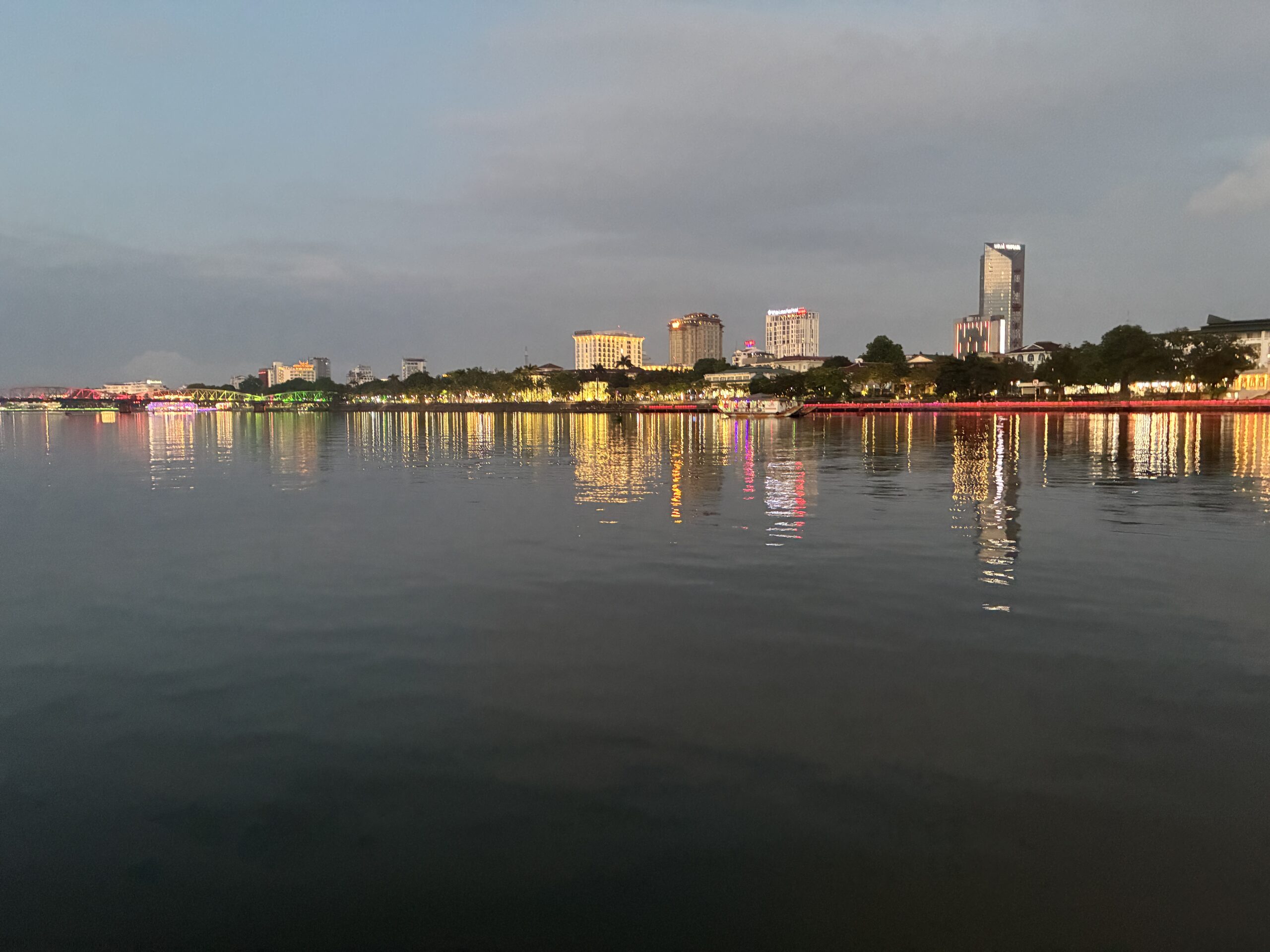

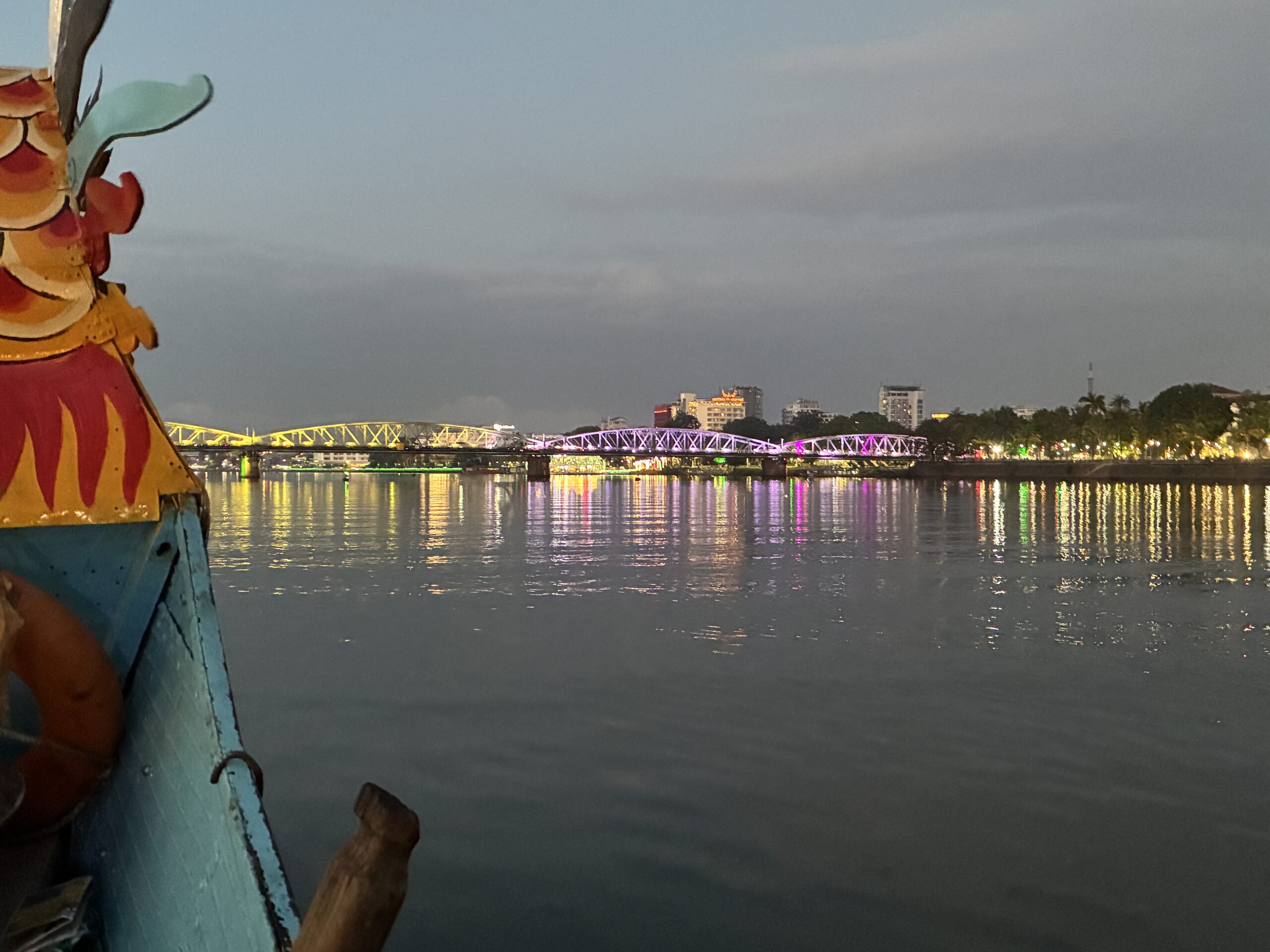
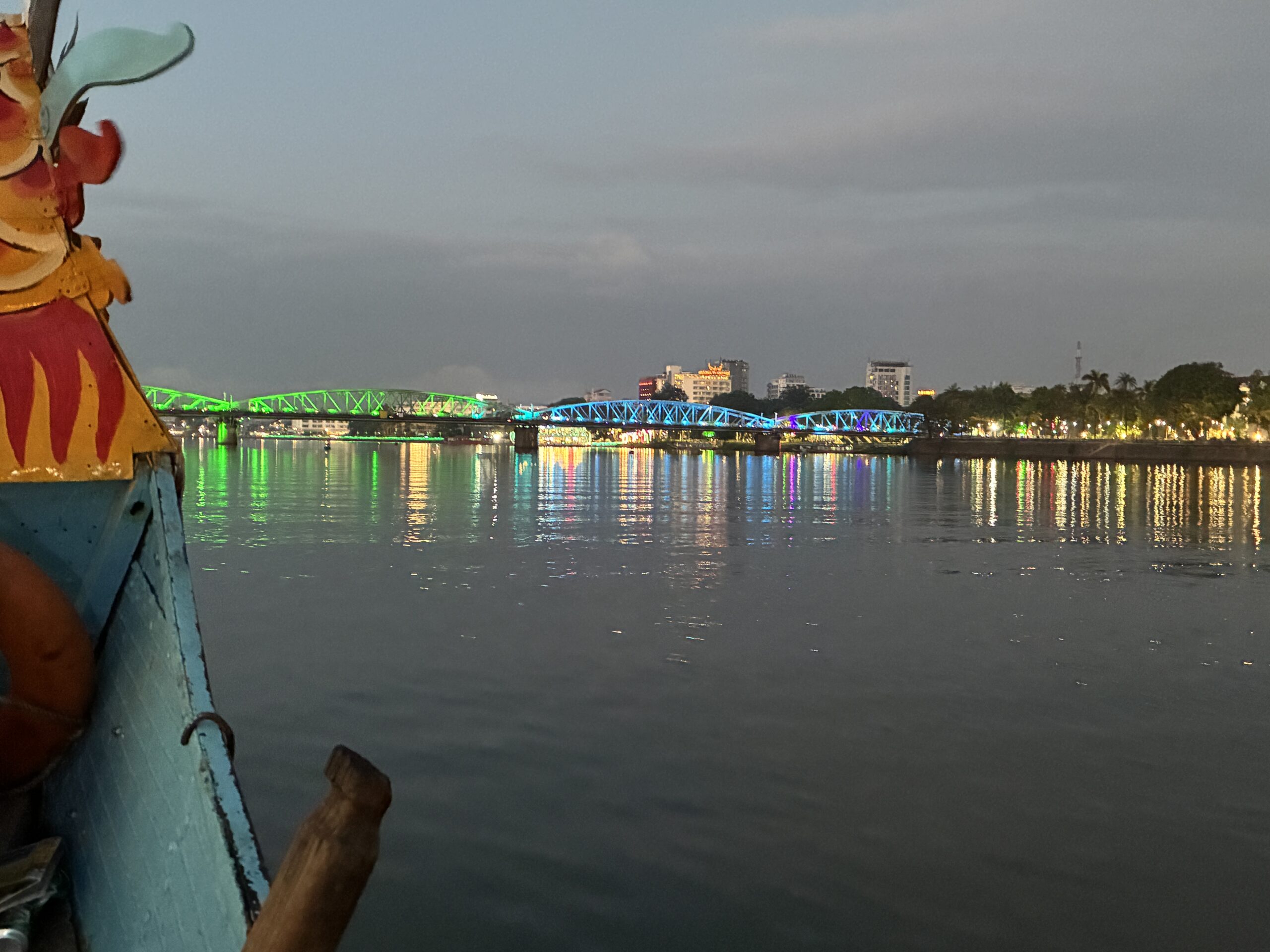


The boatwoman, who was very nice, first dropped off the couple on the north shore by the Dong Ba Market, and then ferried me back across to the south bank where we said goodbye.
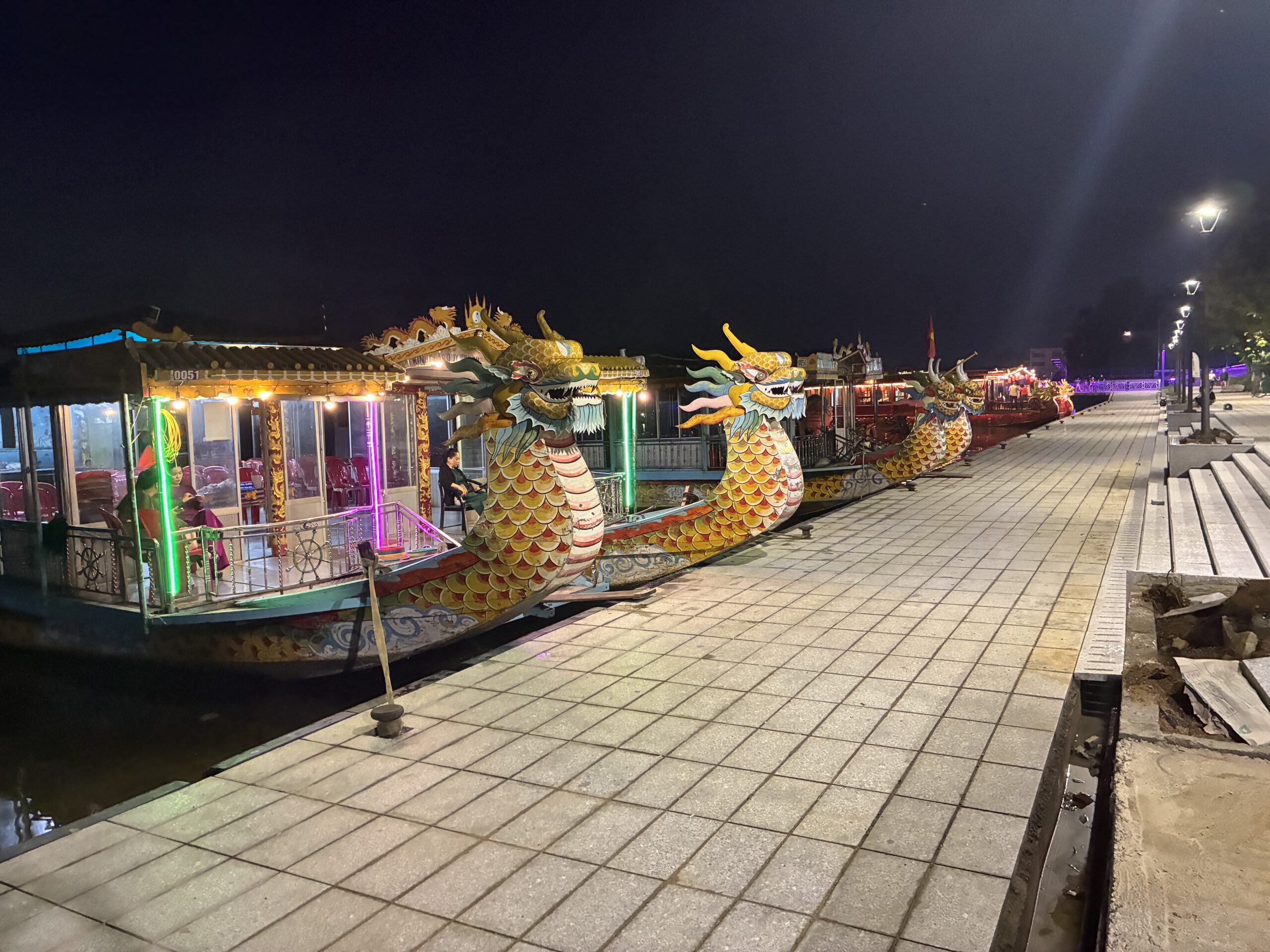
Back to the hotel I walked, heading east, enjoying the city lights, and walking along the river promenade walk, now lit with changing colors. I realize once again how lucky I was to have picked such a good location for my hotel, which is right in the thick of the Phu Hoi district, the Western Quarter of the city, an energetic and tourist-friendly neighborhood with restaurants and known for its nightlife, with some streets closed to traffic on the weekends. It’s also within close walking distance, today being an example, of many other visitor-friendly parts of the city and attractions.
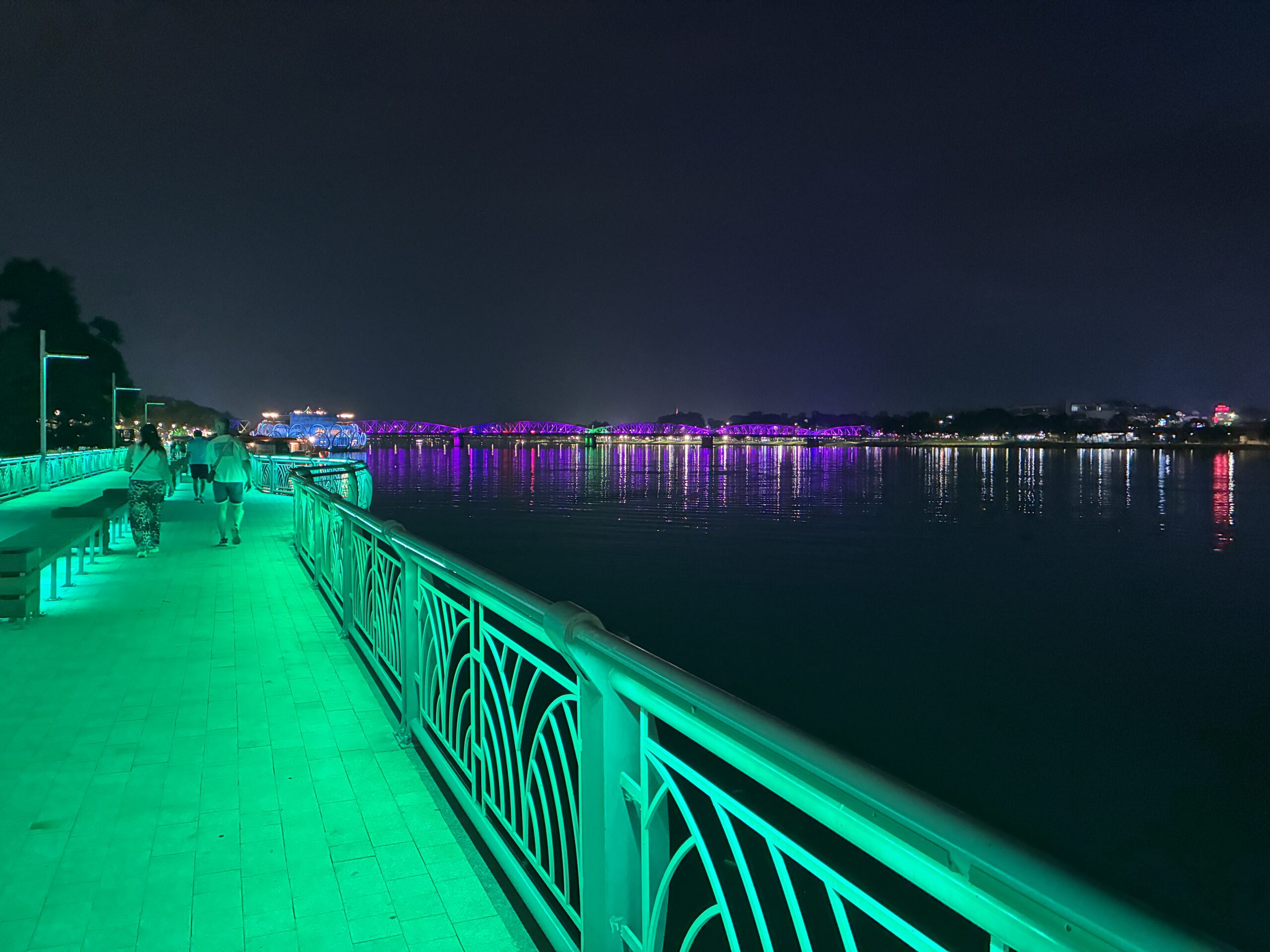
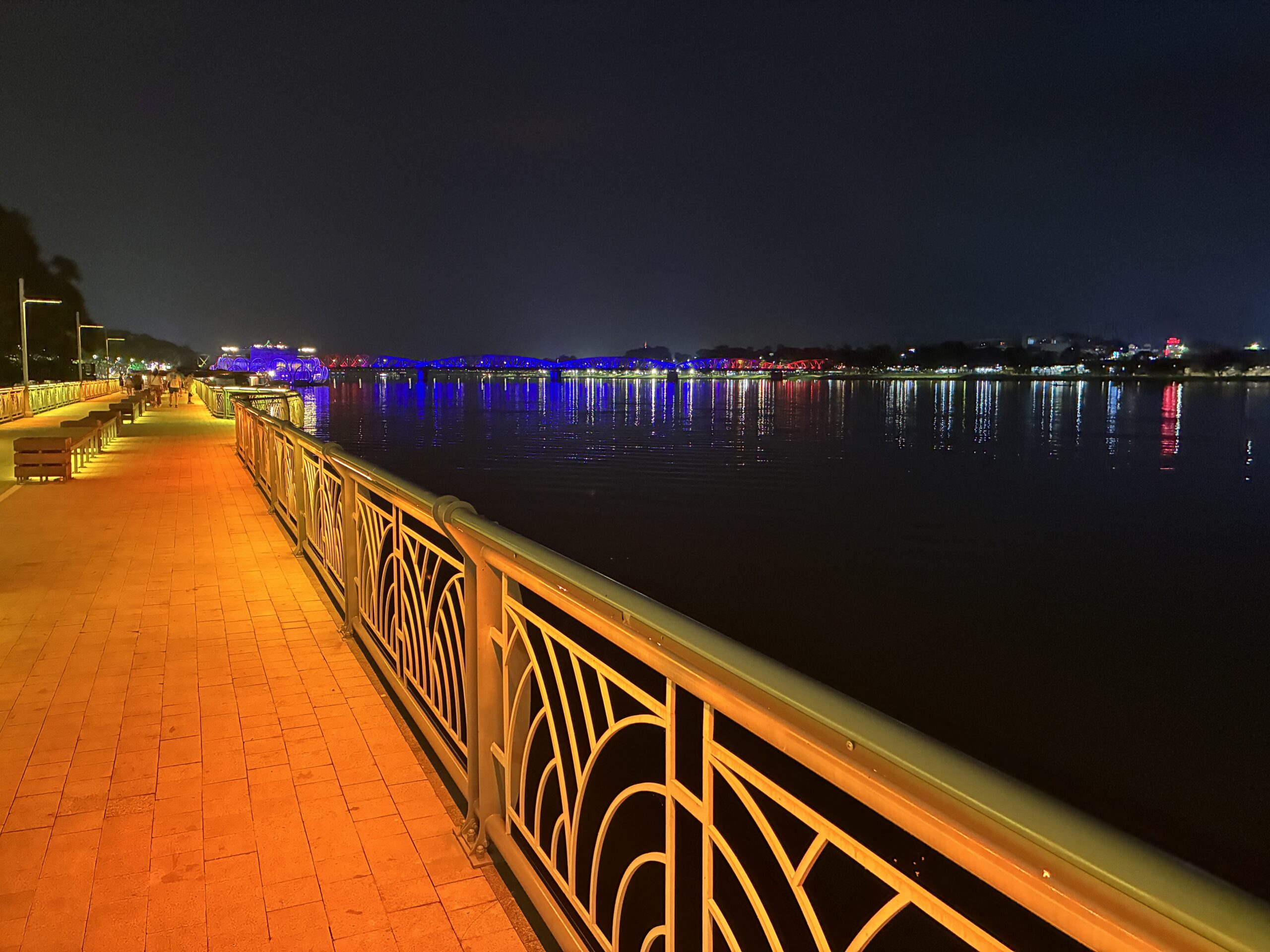
Back in the hotel for a short while, where my rain drenched clothes and sandals from last night were still not fully dry, and then out to get something to eat. I’m minutes from lots of eateries, so knew I’d have no trouble, but did want to be a bit more discerning about what I ate tonight. I decided I would try another Hue specialty, Bánh, which is a steamed rice cake, and comes in three varieties.
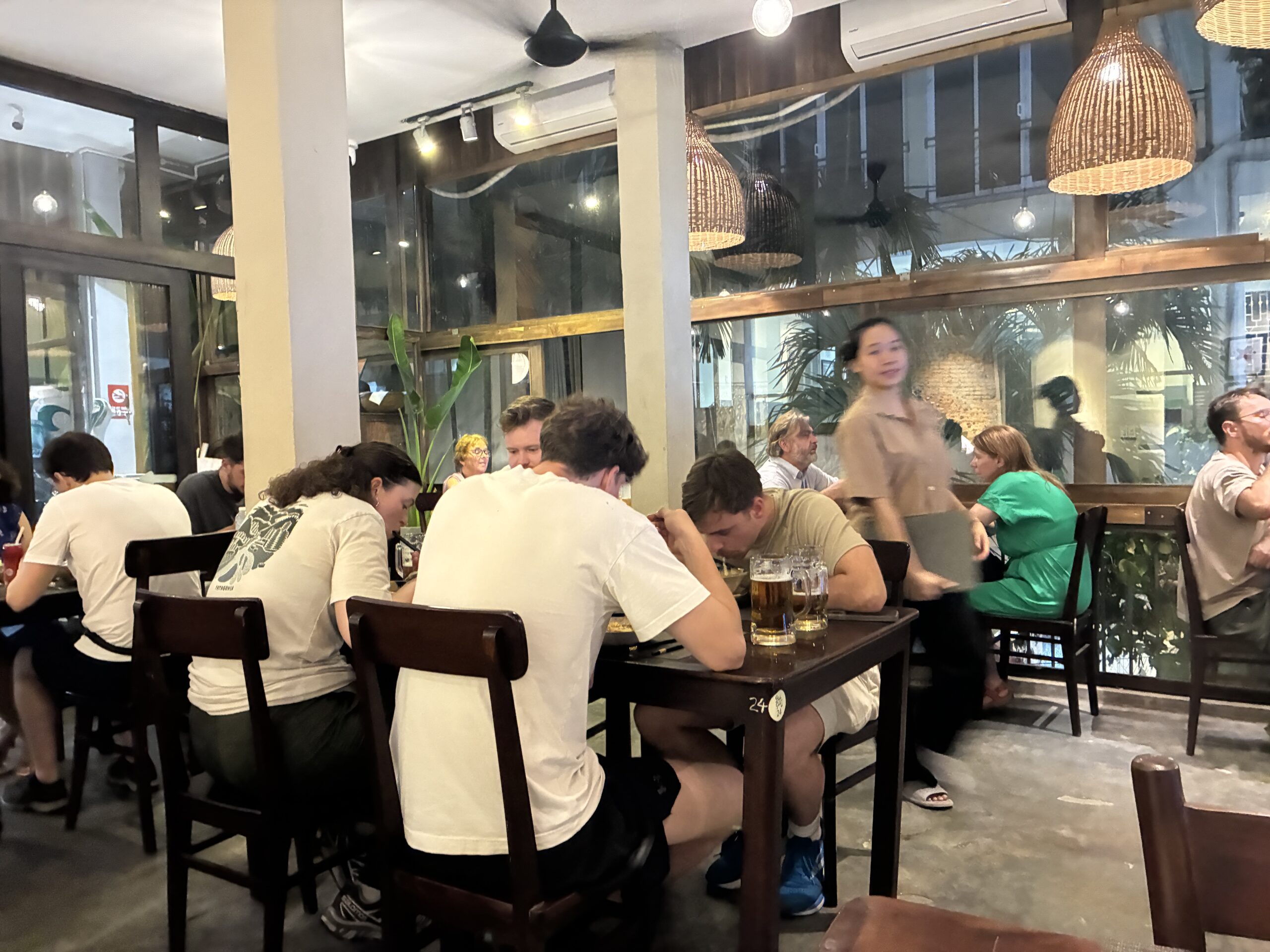
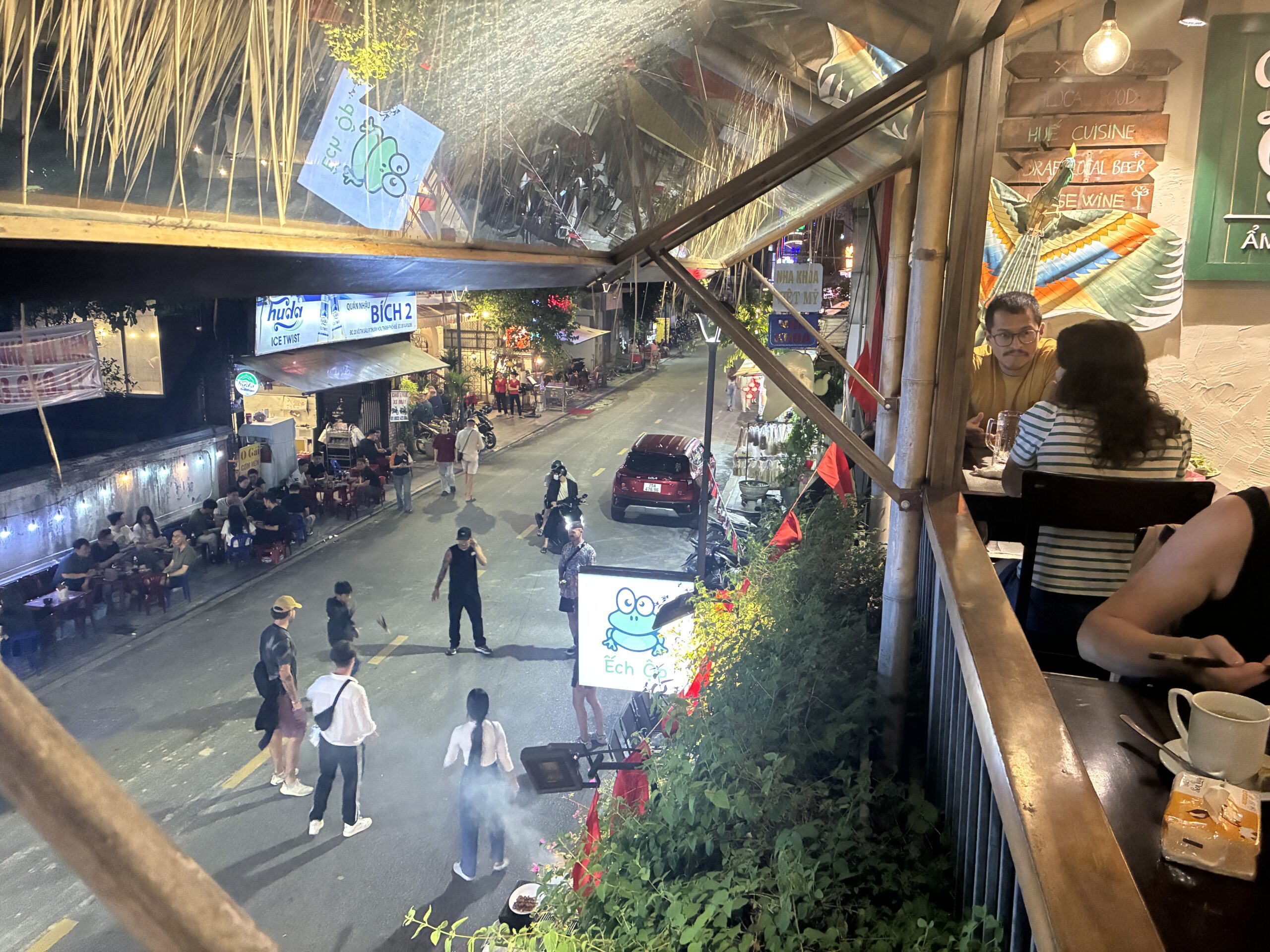
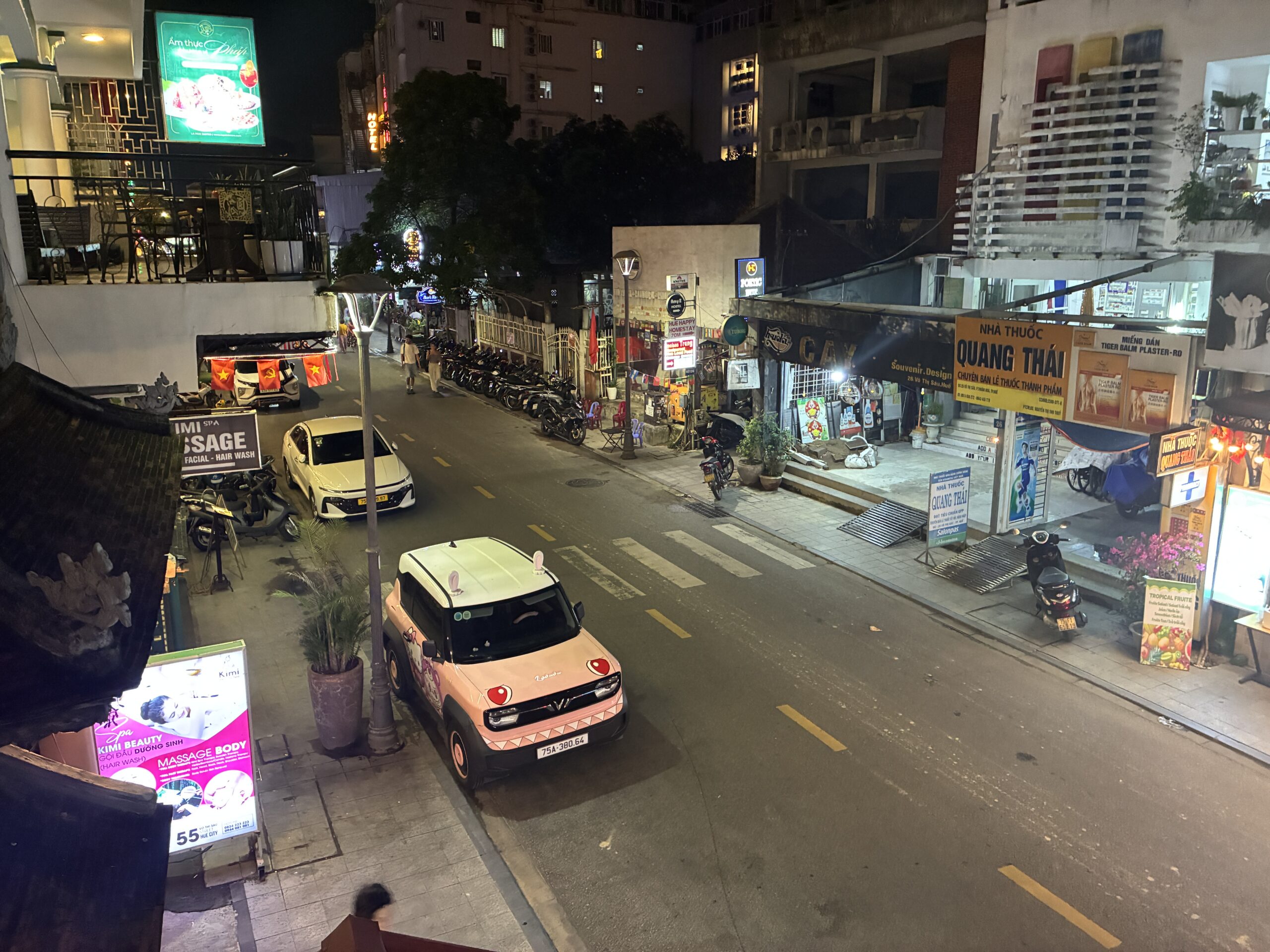
I found a very nice place to eat, sitting upstairs and overlooking the street, and had Bánh Lọc, a chewy tapioca dumpling filled with shrimp and pork belly, and wrapped and steamed in banana leaf. It took me a minute to figure out you remove the leaf (and don’t eat it). to get to the dumpling inside, which was pretty tasty, and I also had fried shrimp egg rolls, which were also very tasty ( but not as tasty as those made by Cuing at the Vista Tam Coc). A good meal, and enough food, and it unbelievably cost just $5.43 – and that included a three percent surcharge as I used a credit card (an additional charge of 23 cents, which I figured I could afford).

Back to the hotel, some writing, some TV, and then sleep. But, before I go for the night… a short and concise history of Vietnam.
Vietnam was under Chinese rule for approximately a thousand years, broken up into four periods between 111 BC and 1427 AC. It was first conquered by China in 111 BC, and treated as a southern province called Giao Chi or Annam, until 938 AC, beginning Vietnam’s period of independence and independent emperors. After almost 500 years, China again invaded and ruled for 20 years, until 1427, when Vietnam again regained its independence, which lasted until the beginning of French colonization in 1885.
The French first invaded in 1855, and in 1862 what is more or less South Vietnam became a French colony, called Cochinchina, and France took over completely in 1883, and under the Treaty of Hue established a French protectorate over the whole country, which became French Indochina in 1887. During WW2, Japan moved in to co-govern the country between 1940 and 1945, and took over completely in 1945, removing the French, although that lasted just five months, at which point, with a power vacuum, Ho Chi Minh moved in during the August Revolution, forming the Democratic Republic of Vietnam (DRV). That led to the First Indochina War, starting in 1946, lasting eight years, with France trying to reclaim its colony, until French occupation finally ended in 1954, after the Battle of Dien Bien Phu, where French forces were defeated. The 1954 Geneva Accords forced France to withdraw its troops, and officially ended almost 100 years of French rule and domination.
The second Indochina War – known as the Vietnam War in the U.S., and known in Vietnam as the Resistance War Against America, started in 1955 and lasted until the American defeat in April 1975. After 1956, the country was split into two, along the 17th parallel, called the DMZ, for Demilitarized Zone, which was about 100 miles north of Hue, with two separate governments. In 1960, the Viet Cong (the National Liberation Front) attempted to overthrow the South Vietnamese government and reunify the country, and in came the American “advisors,” fearful that communism would take the whole country, and then the whole of South-East Asia. The 1964 Gulf of Tonkin Incident, when U.S. war ships were attacked by the North, led to America’s full-scale war with North Vietnam. In 1968, the Tet Offensive became a major turning point, in which the north launched a massive offensive across the country and in which Hue was devastated by intense fighting. Although the Viet Cong, who were southern guerilla fighters, were almost wiped out during this phase, with the regular North Vietnamese Army (NVA) doing most of the fighting from 1969 on, after Tet support for the war in the U.S. diminished, eventually leading to U.S. withdrawal in 1973, and the Fall of Saigon to the North in April 1975, leading to reunification of the country, now known as the Socialist Republic of Vietnam, its current name.
And that’s a concise history of this incredible and ravished country, and those who would acquire it but lost.