Tokyo, Day One.
An excellent day – although it got off to an uncertain start, given my cold/thing, which is persisting, and Laurence’s ails, which slowed him down some but were under control.
I was up almost all night, because of the cough and congestion, and everything that went with it. I mean literally, as I gave up around 1:30 am, sat up, back propped against the wall behind me, which felt somewhat better, and read and did NY Times puzzles for a few hours. There was periodically a lot of street noise throughout the entire night, which didn’t help, but I survived the night, and may even have gotten an hour or more of on/off sleep after maybe 3:30, but we were both up and discussing our options by 5. Laurence slept well after 2 (I could hear his deep breathing, plus he talked in his sleep at one point), despite my coughing throughout the night, and the rest really helped his body. Me – I didn’t feel so good, and was (and still am) concerned that this cold/infection might worsen and deepen, but we decided to see how the day went before making further decisions about whether we can survive this trip.
And we had a good day. My symptoms, once up and about, seemed more like a regular cold than anything too much more ominous, and aside from cold symptoms I felt fine, and as long as we didn’t overdo it Laurence’s shoulder and thighs were okay. and he wasn’t feeling too much pain and soreness, as he had the day before.
We headed out early, probably around 7, on this very quiet Sunday morning in the Asakusa district where we’re staying, and it is indeed a great location, and one of the busy tourist areas, with many sights in the area. I was surprised to find we were minutes from the Sensō-ji Buddhist temple, one of the most iconic temples in Japan, and certainly in Tokyo, and the Shinto Asakusa shrine, literally next door to it, as well as one of the well known and much visited downtown areas in the city. But, because it was so early, we were on very uncrowded, almost empty, streets with most stores not even close to being open yet, and enjoyed many of the sights we saw again later that morning, except later the temple and streets were filled with crowds of tourists, with bustling stores all over.


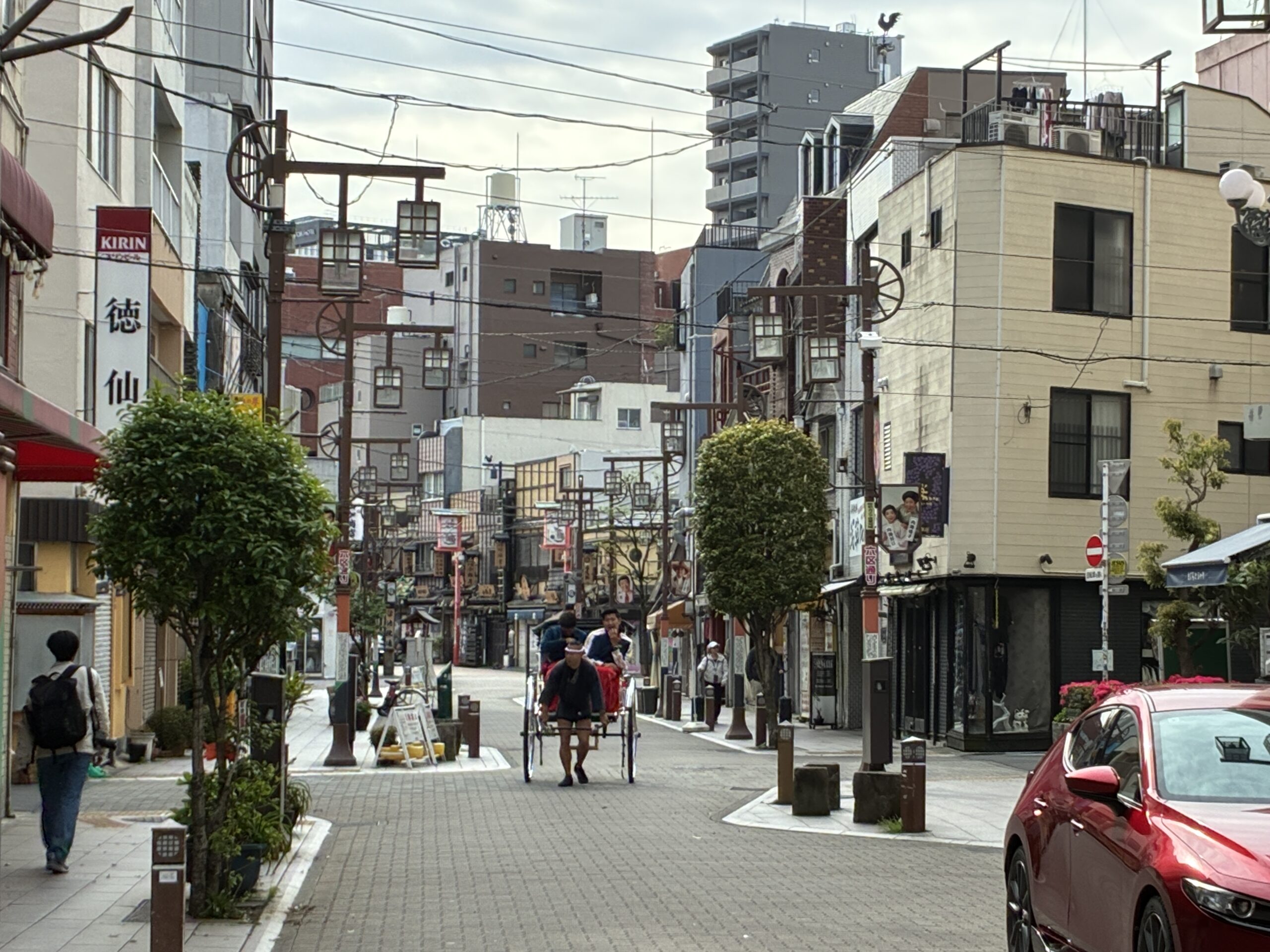
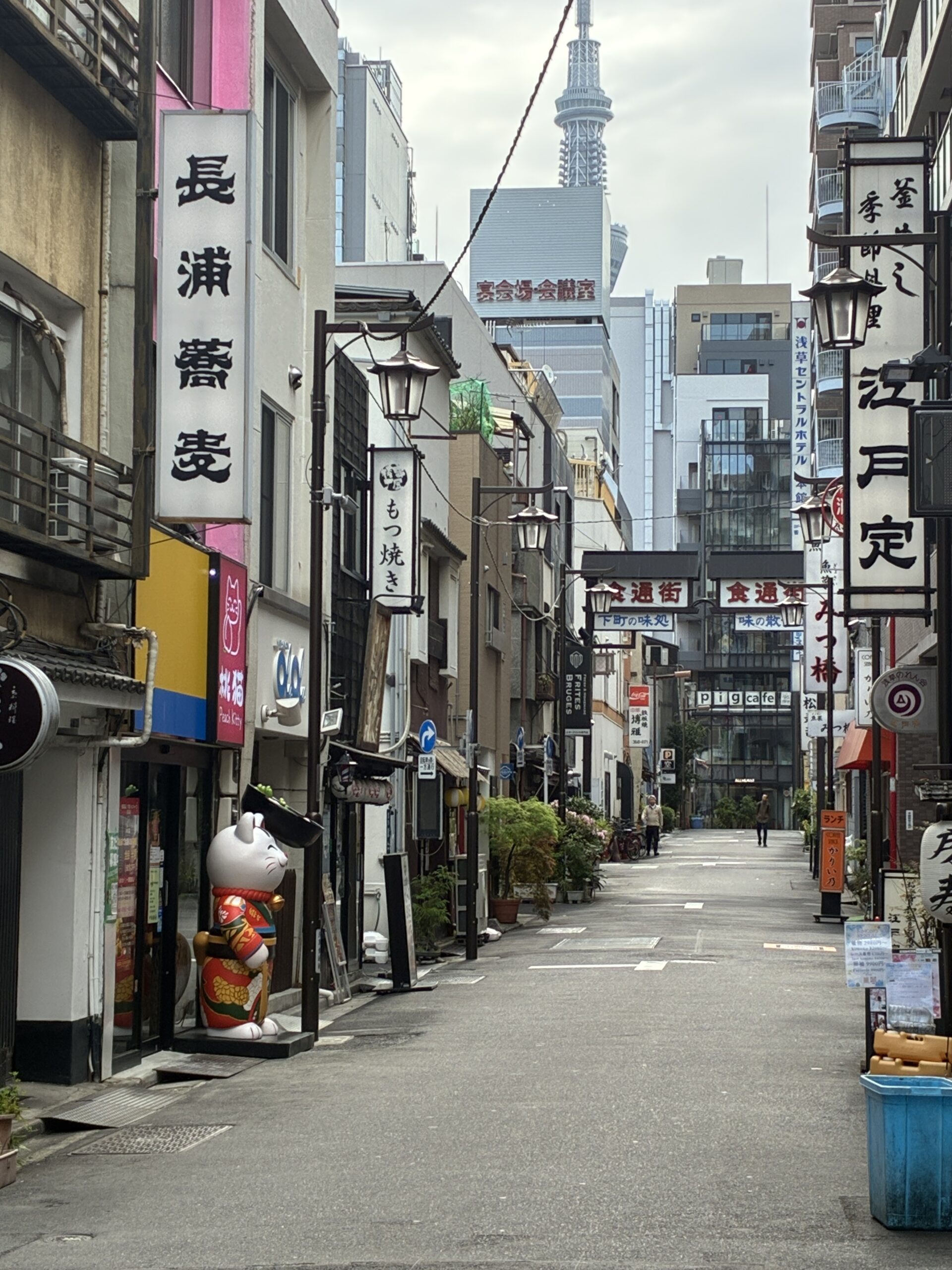

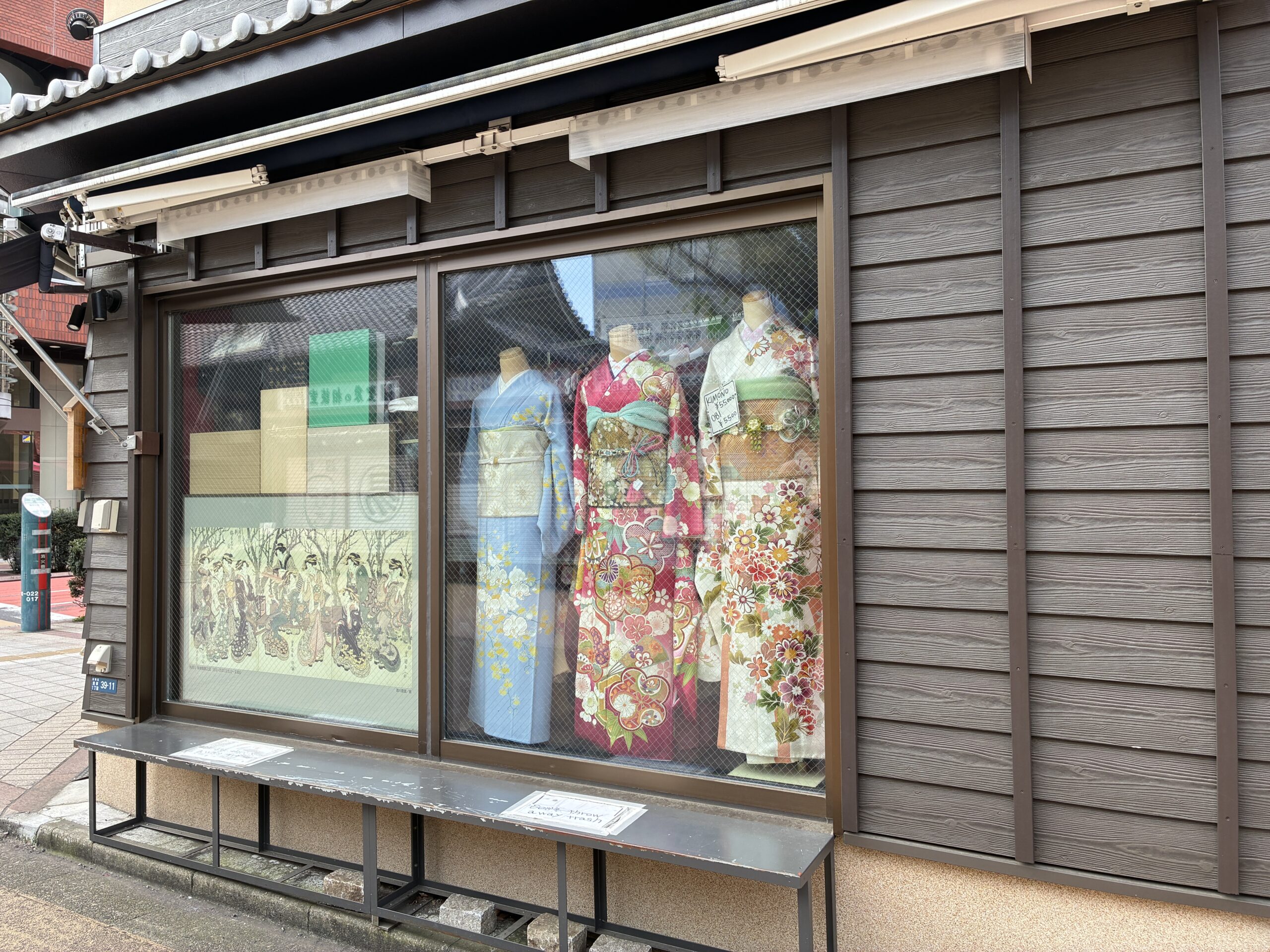

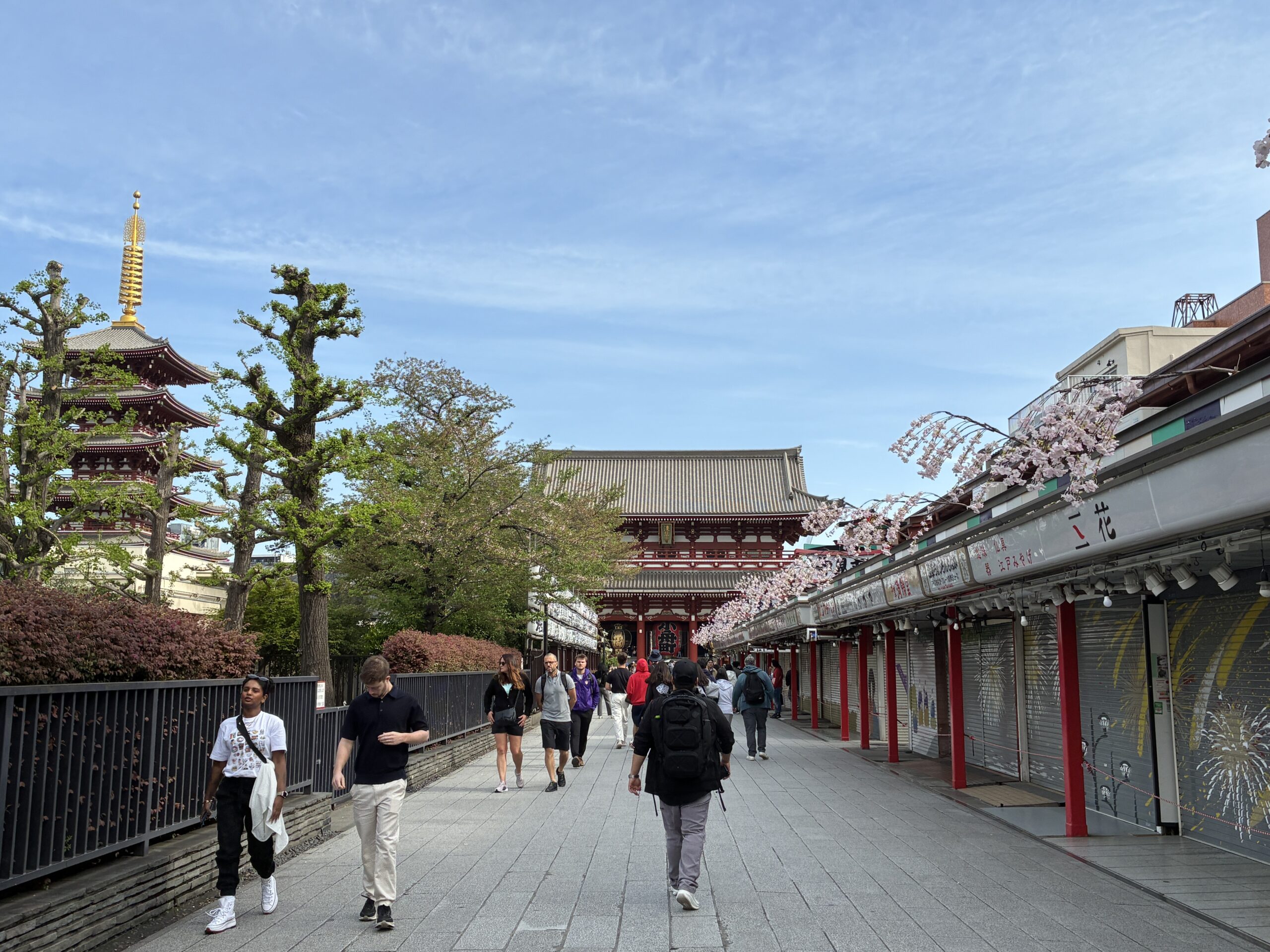


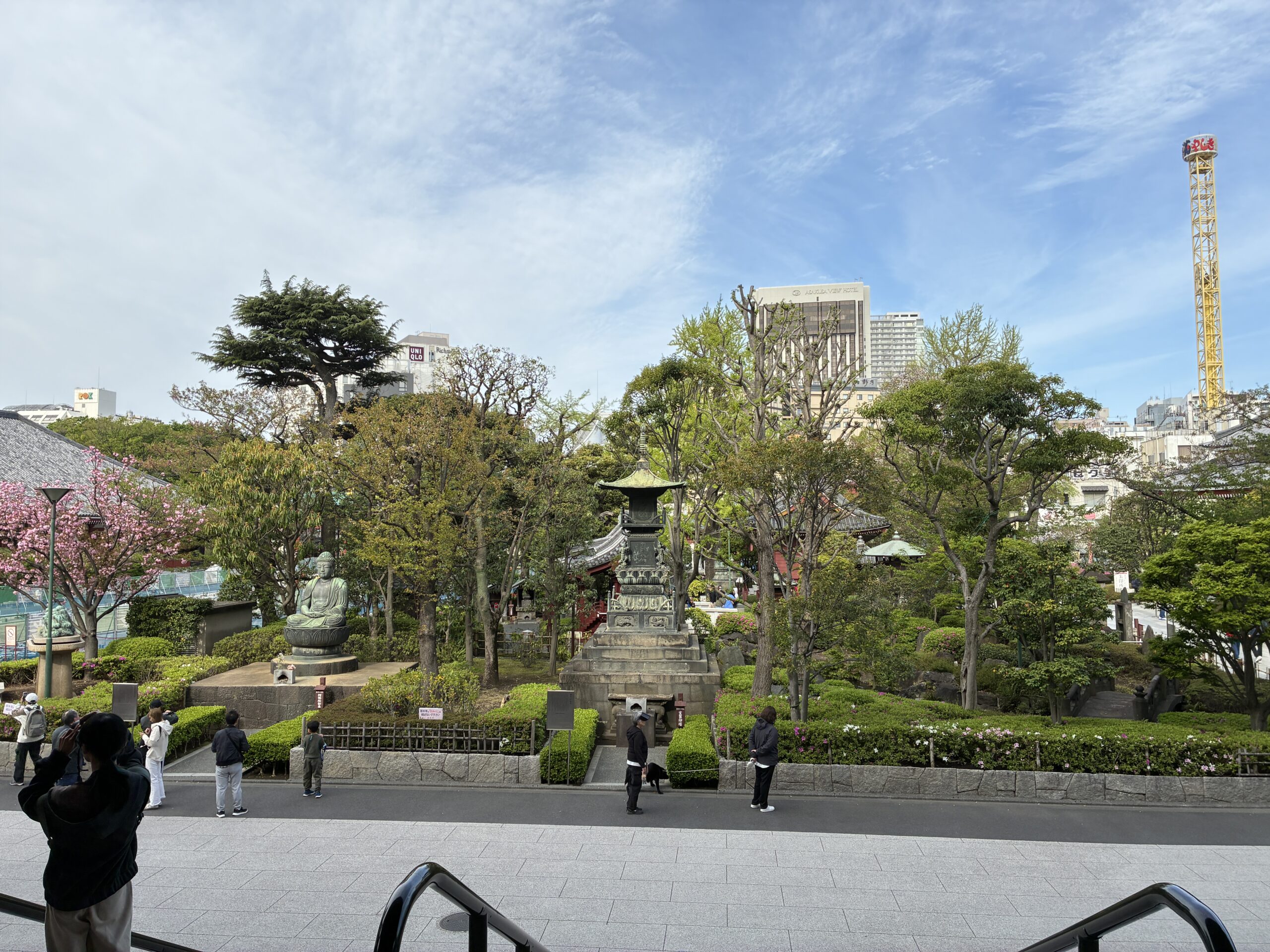


We enjoyed our walk, and sat down for some breakfast in a small cafe,with accommodating and friendly staff, which seems to be the norm here. I’m not normally a breakfast person, but thought I should get some food into me. It was a lovely small place, and I think typical of many of the small eateries that are everywhere in the area. In fact, it’s hard to pick one place to eat over another, but this certainly was a good place to stop for a while. Very nice little meal, as well as very inexpensive. It cost us around $8 for the two of us. Overall, prices are significantly less expensive than either the U.S. or Canada.
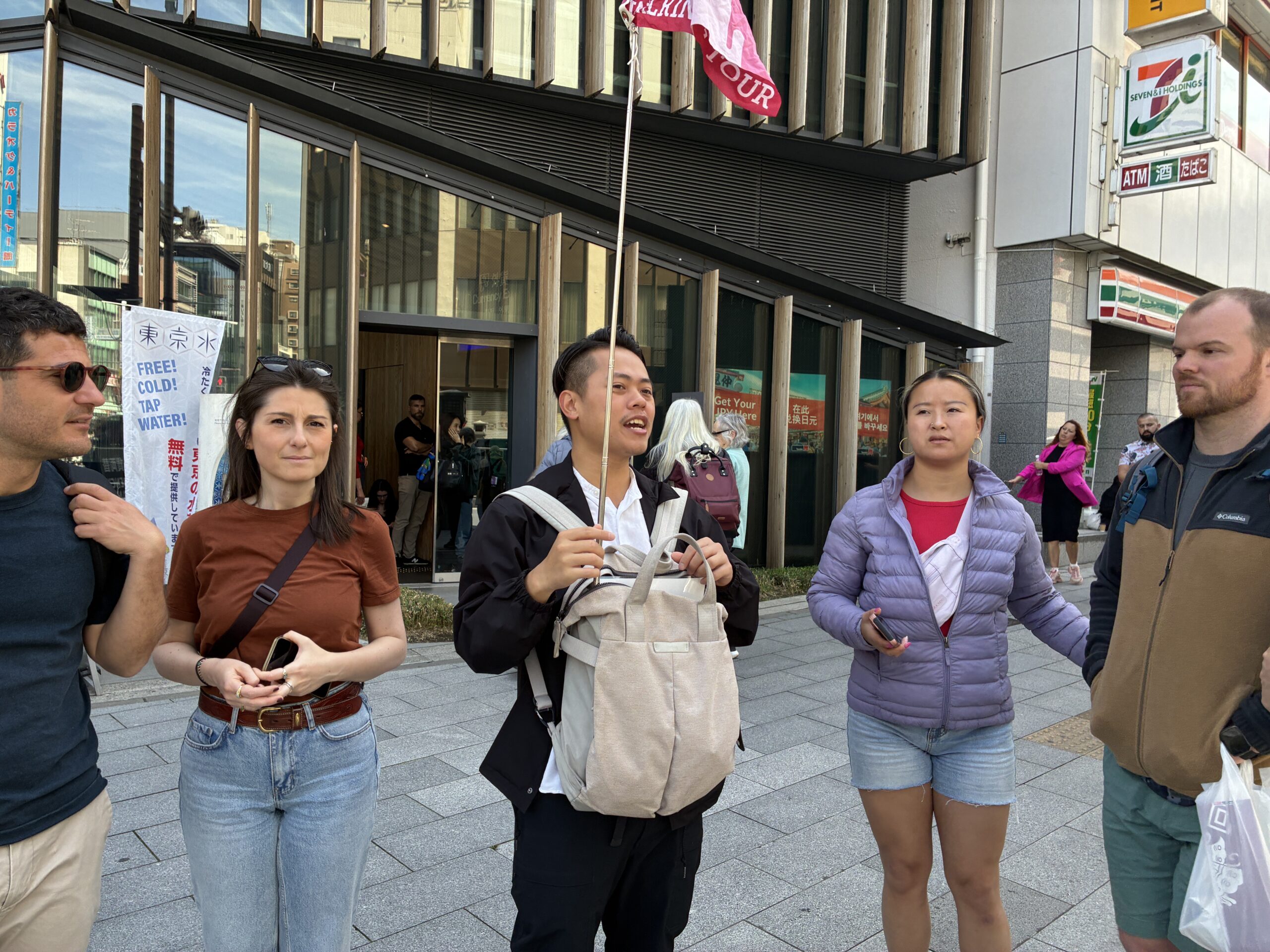
The streets are very clean in the area, with lots of interesting looking side streets and pedestrian covered shopping malls throughout, and we enjoyed walking. It was cool but nice temperature-wise, and starting to warm up by 10 am, and got into the 70s as the day proceeded. Definitely shorts weather, despite a cool start to the day. Before we left Taito Ryokan, our hotel, we booked a guided street walk for 10:30, which was to meet in front of the Asakusa Cultural Center, maybe a 7-minute walk from the hotel, and that was the very area we’d been walking for several hours already by the time we met up.
By then, the empty streets and temple areas we had enjoyed without many people was pretty crowded, and getting more crowded as the morning went on. We quickly realized how lucky we had been to have already visited the areas we were about to revisit, except this time working our way through literally throngs of people, and especially as we entered the temple area, which was jam packed and getting more jammed every minute it seemed.
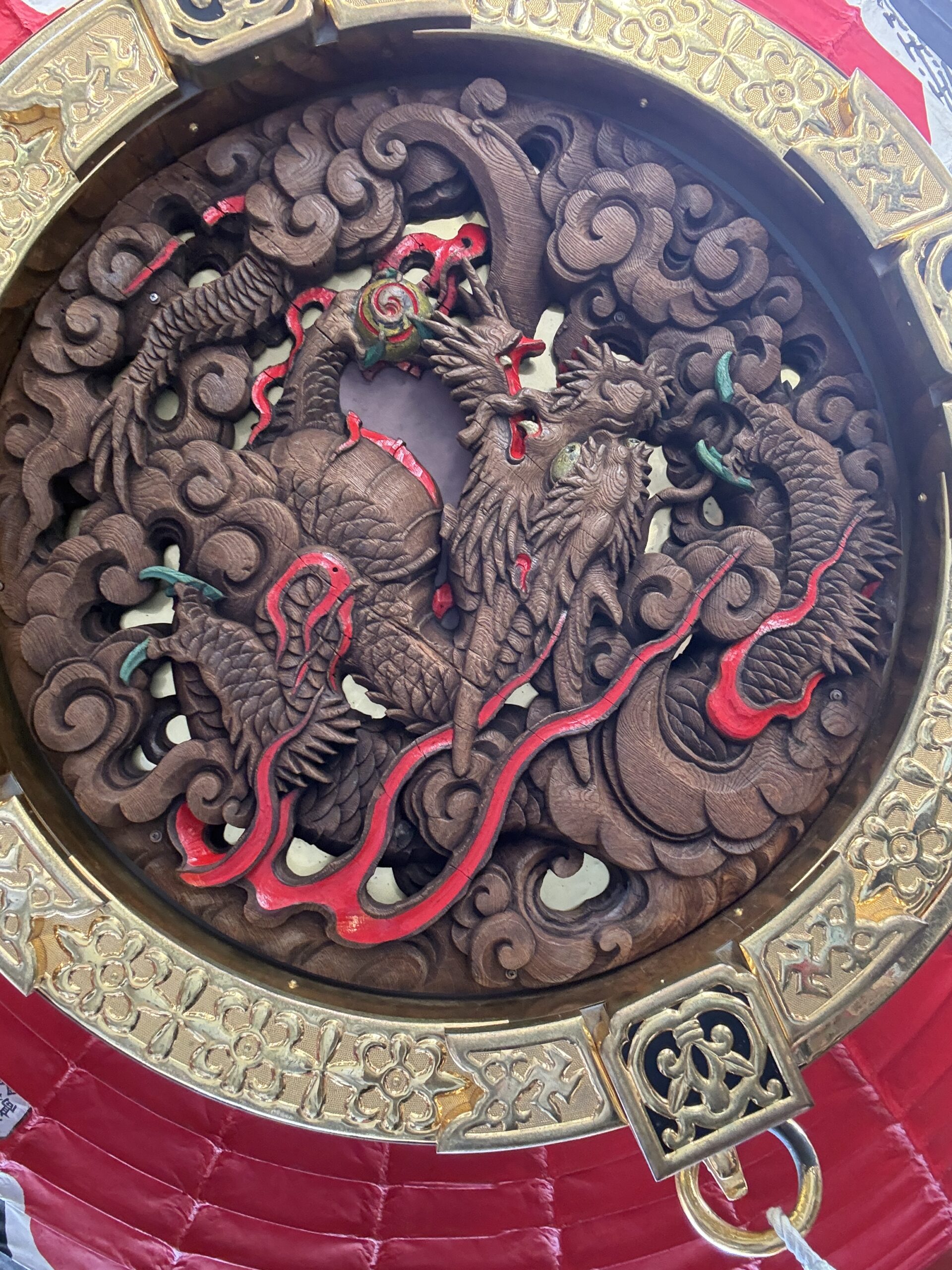
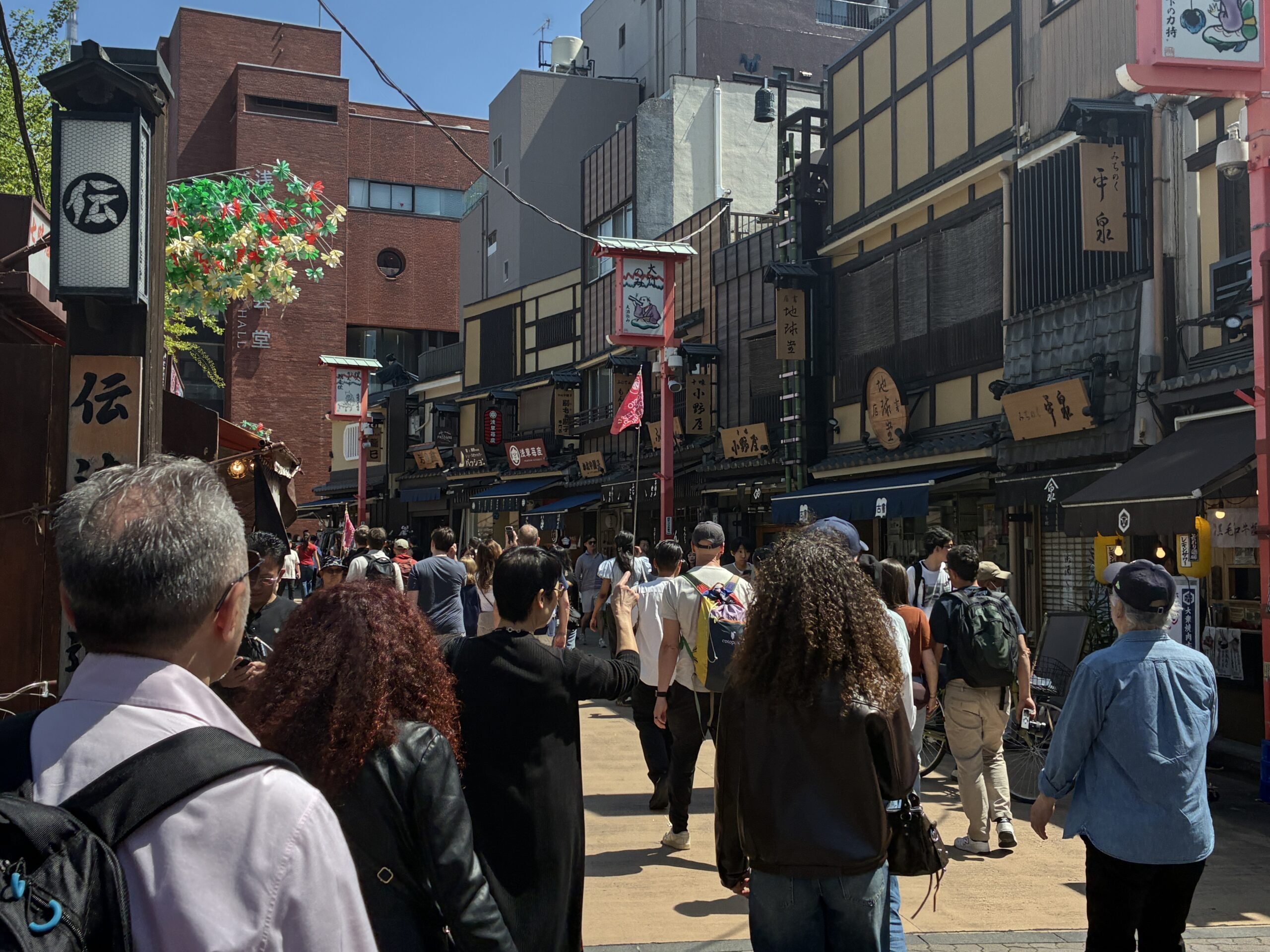
Our guide was Loc, a young Vietnamese guy who spoke very good English, which he told me he’d learned from watching American movies and TV, and by taking classes in English while in University. Like every guide I’ve met on various walks, he was friendly and engaging, and did a nice job on a 2 hour walk, which mostly covered the areas we’d already (happily) walked, but now filled in with interesting history and facts. We passed again through the cherry blossomed area leading to the Sensō-ji temple, after first passing through the Kaminarimon gate, which means “Thunder Gate,” the main outer entrance to the temple complex, and well known for its huge red lantern, with statues of the gods of thunder and wind, Raijinand Fūjin, standing on either side. It also marks the start of Nakamise Street, a by now very bustling and crowded street leading up to the temple, lined on both sides with small stores and overhanging cherry blossom.


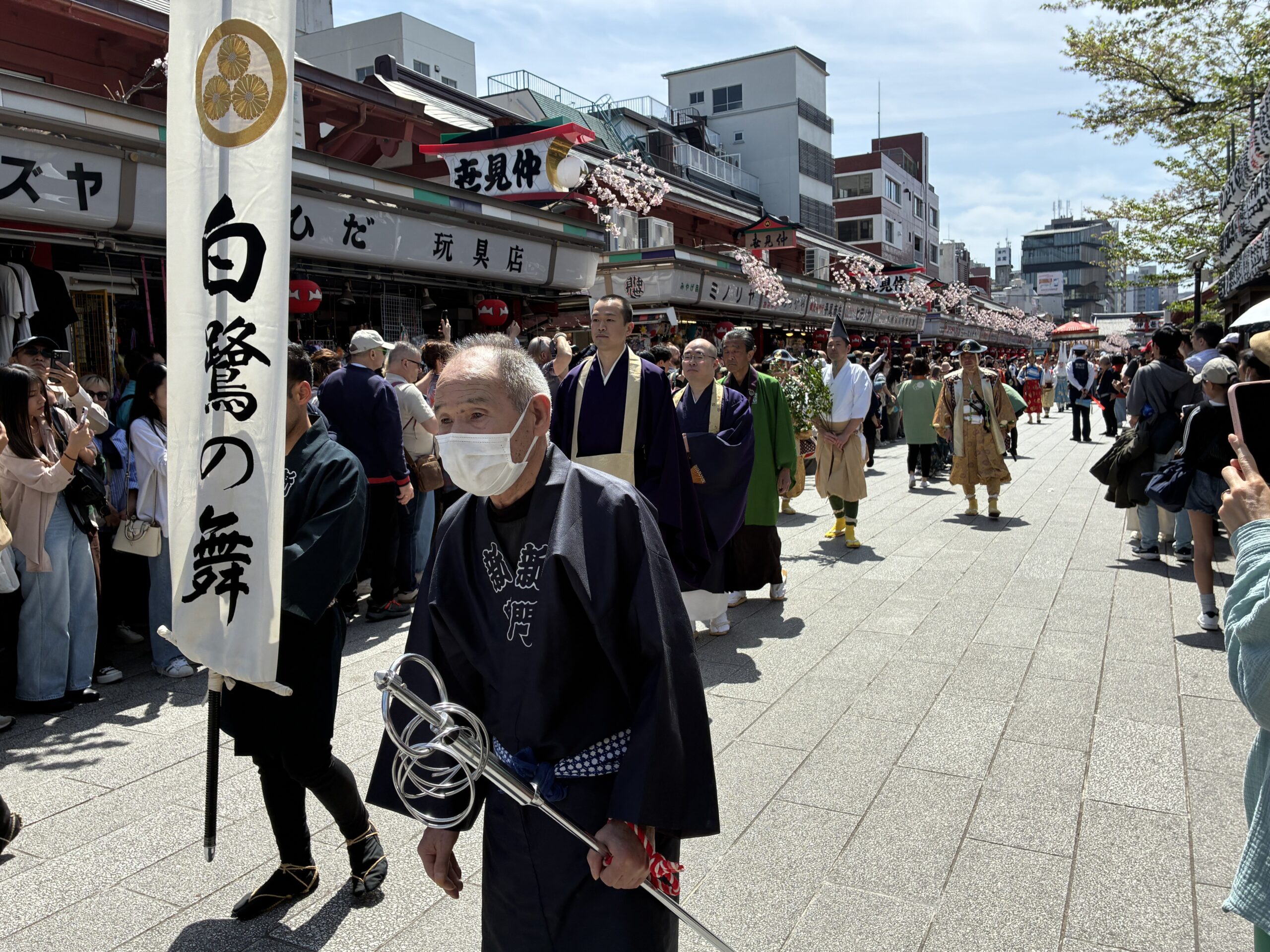
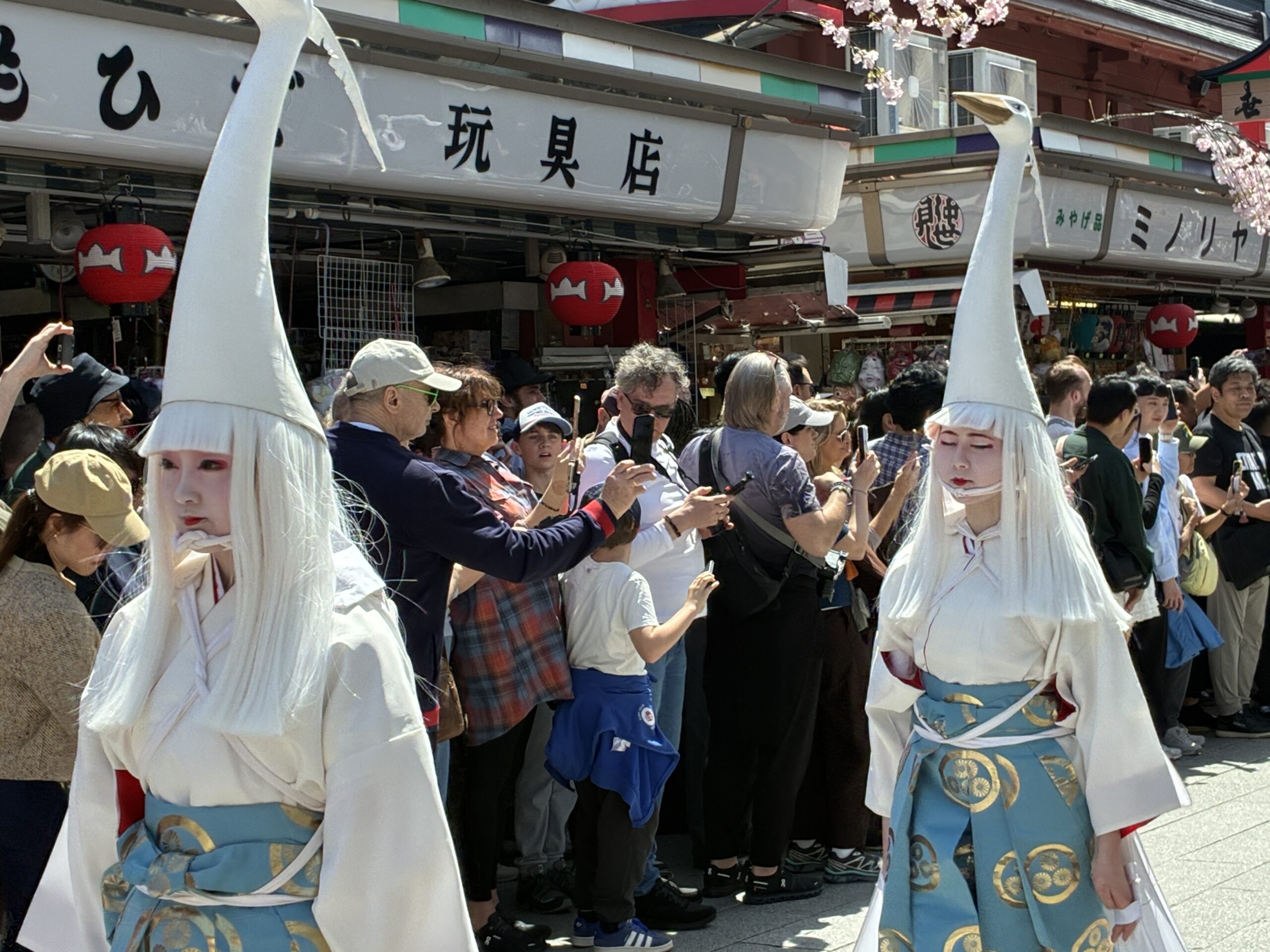
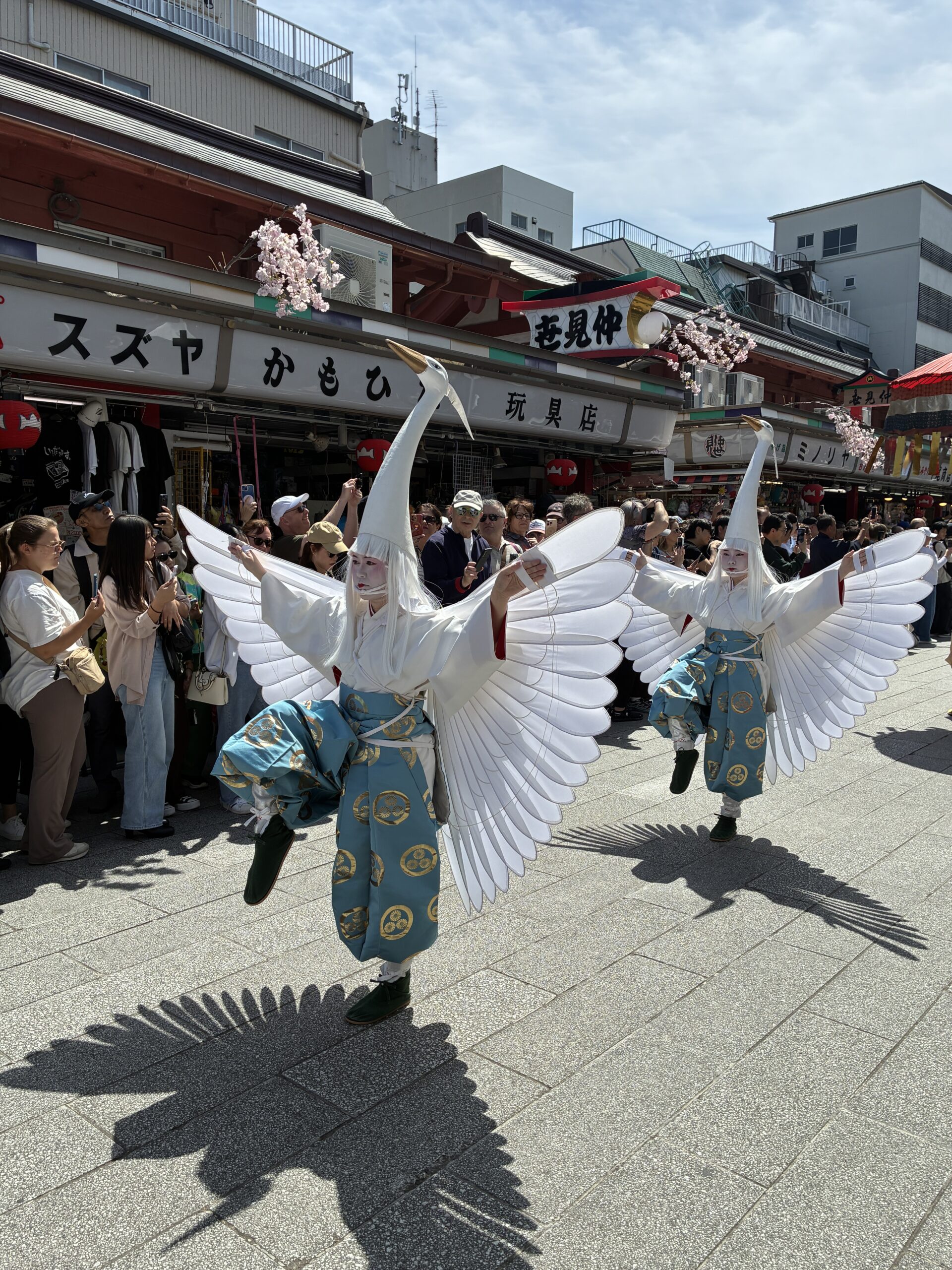
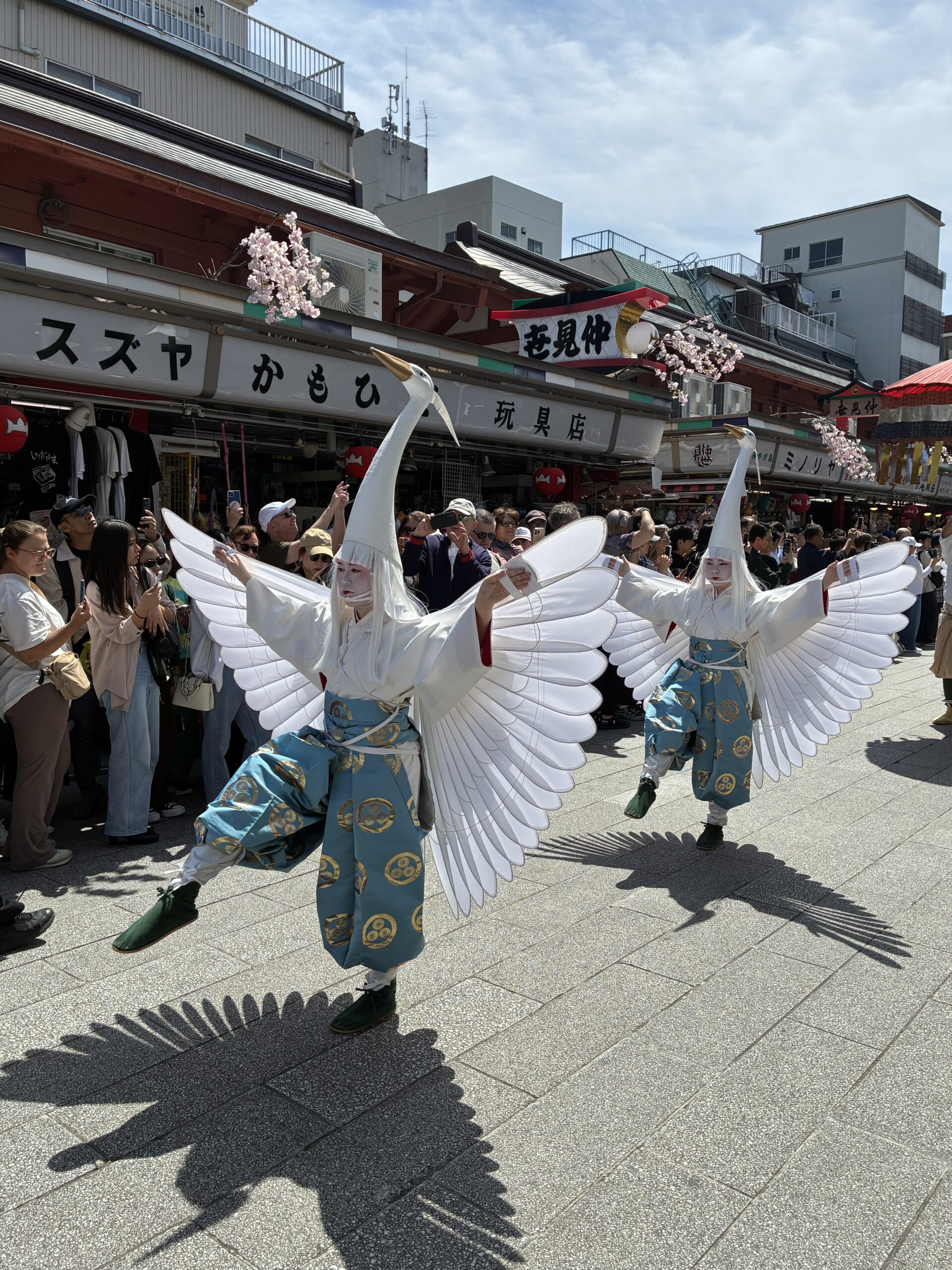
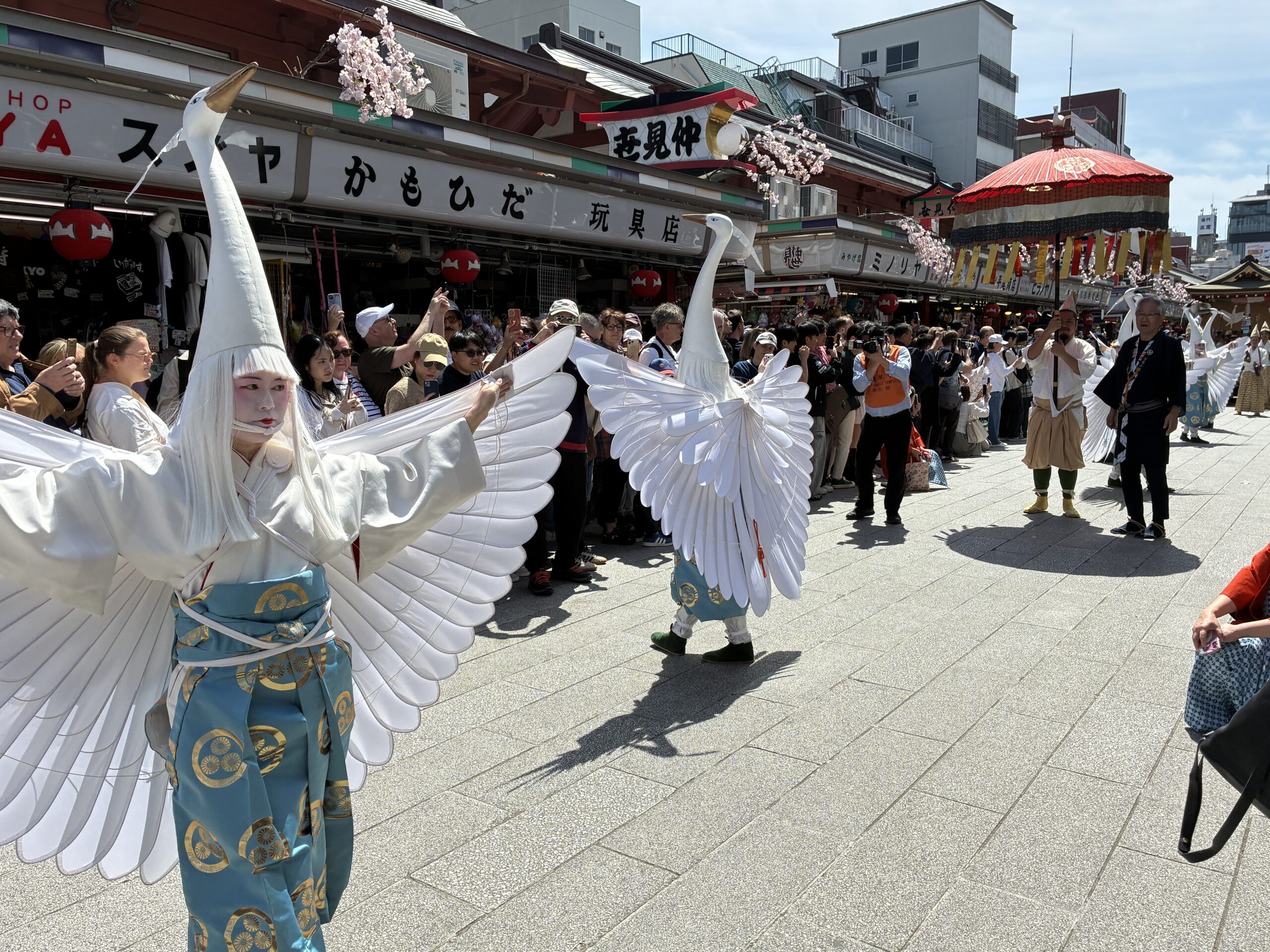
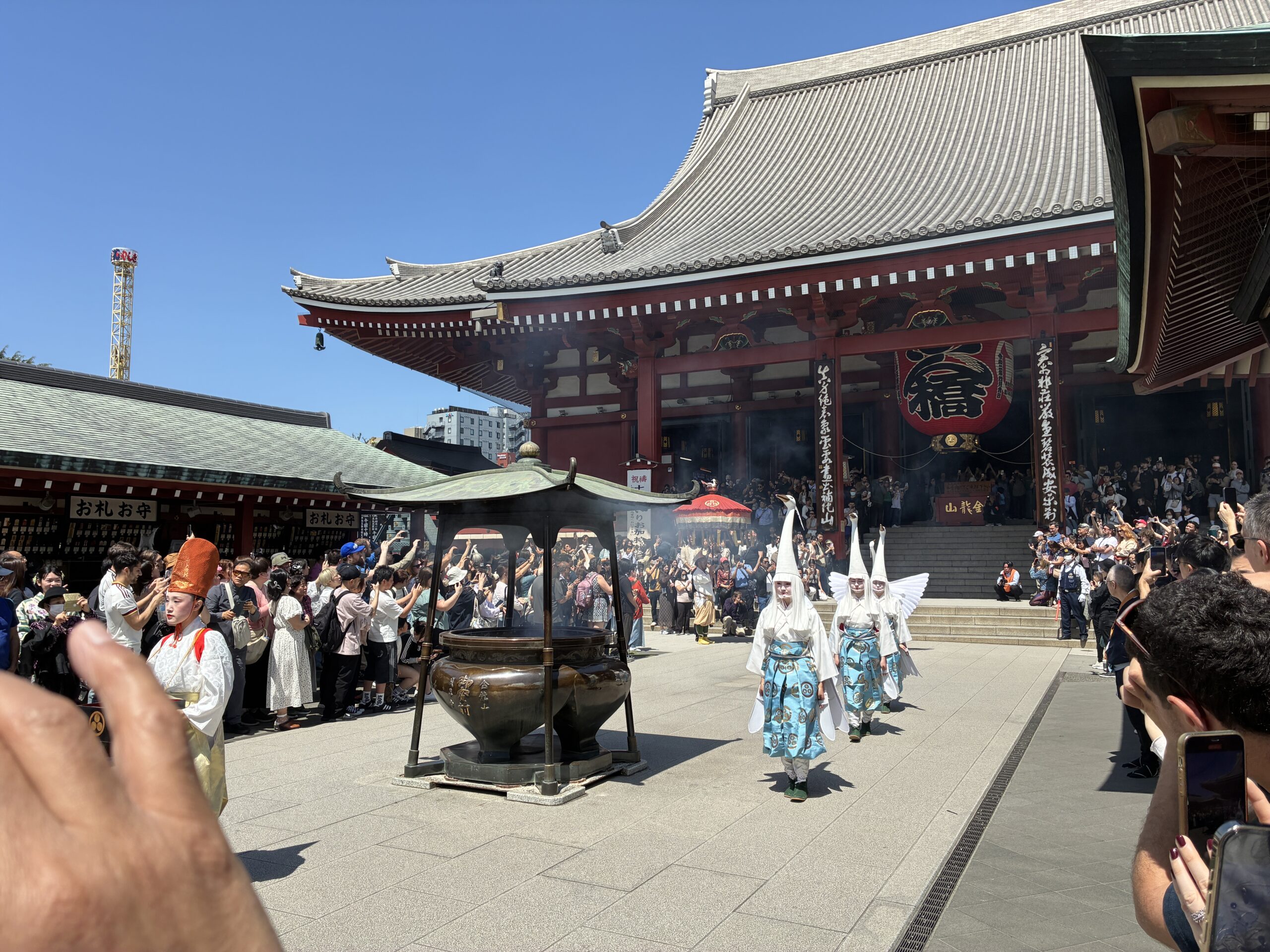
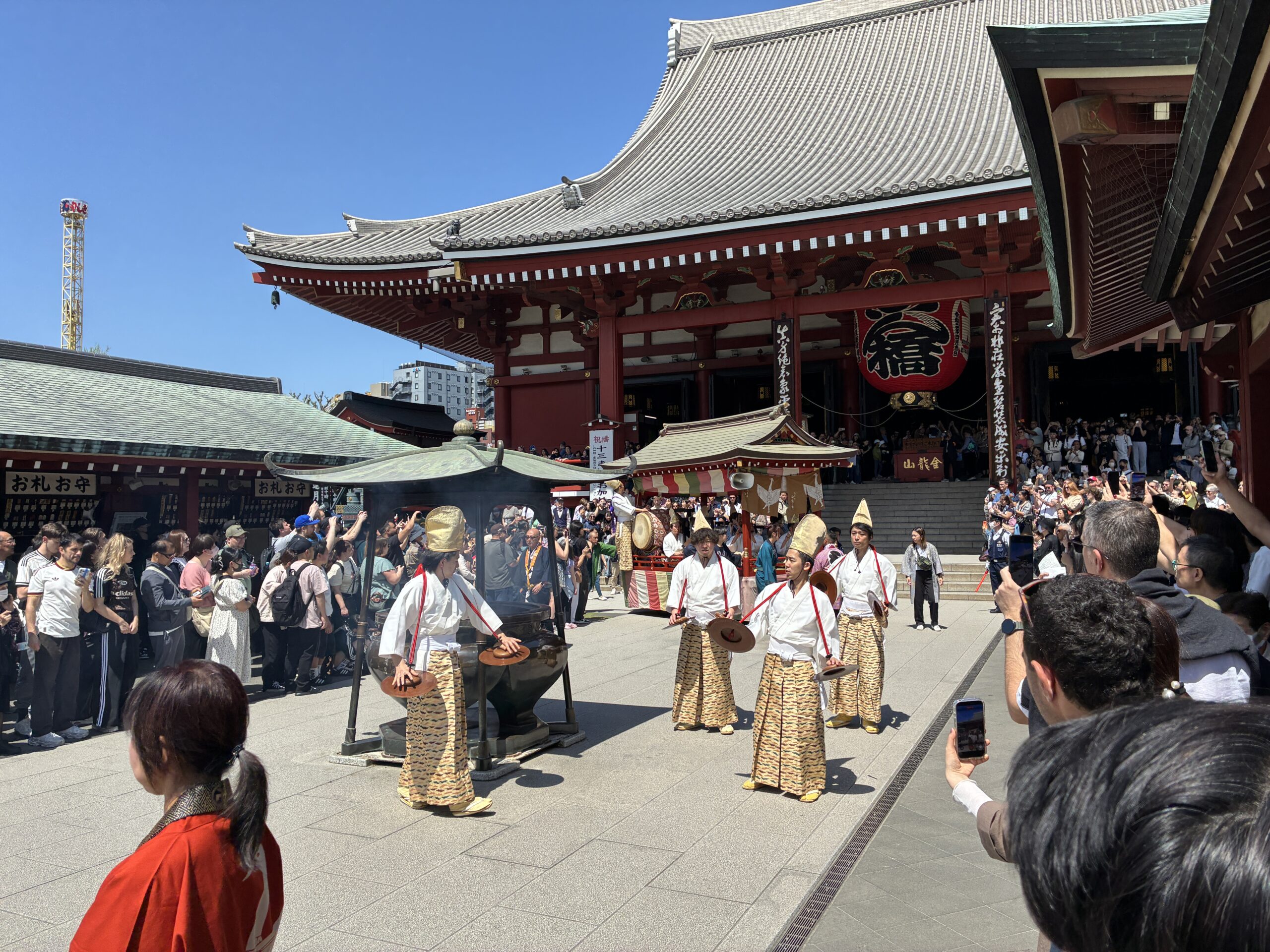
We were very lucky, not only to be staying in such an iconic district and to have earlier walked these now bustling streets when they were empty, but also because this is one of the few days each year when the White Heron dance (Shirasagi-no-Mai) is performed and the White Heron procession moves along Nakamise Street, moving slowly toward the temple. Police and officials pushed back the crowds to form an avenue along Nakamise Street for the procession to pass, and we had front row seats (so to speak). The dance is a recreation of a 17th-century temple ceremony, and the style and costumes are based on Heian-period Japan, over 1,000 years ago. It was lovely.







We moved on to pass through Hōzōmon gate, the inner gate closest to the temple with its statues, and its own history, and with Loc and our group of maybe eight people, stopped frequently to discuss and learn about what we were seeing. Different time and different culture, with a very different history, but much of what we saw was another version of what I’d just seen a few weeks before in Mexico, with religious and spiritual practices that are parallel and similar in many respects. Ancient customs.
There’s a section in the temple complex where people can draw their fortune, which can range from very good to bad, but, not to worry, if bad. Bad fortunes can be tied to a frame where Buddhist monks later bless them. Whew! It’s a no-lose proposition.


There were also many people, mostly women but also some men, wearing kimonos and other traditional Japanese clothing. We had earlier seen many street vendors advertising kimono rentals, and the result are what we were seeing now. Many visitors, Japanese and international, as well as locals, rent these, and it’s basically dress up in traditional Japanese clothing for the day, which was elegant and lovely to see.


After the Buddhist Sensō-ji temple, we walked into the literally adjacent Shinto shrine, the Asakusa Shrine, which was much less crowded, and learned something about the interplay between the two religions/spiritual practices. Separate religions, both Shinto and Buddhism are practiced and have deeply blended in Japan over the past thousand years. Shinto, native to Japan, focuses on spirits and gods of nature, with no founder or single holy book, and concerned with purity and harmony with nature and the present, whereas Buddhism arrived from China and Korea in the sixth century, and focused on suffering, impermanence, enlightenment, and the afterlife. But rather than competing, over the centuries these have sort of merged in actual practice, known as Shinbutsu-shūgō, so that Shinto shrines and Buddhist temples were built together, as is the case here, and both were seen as manifestations of the Buddha, with people following both spiritual practices without conflict.
The temple, founded in 628 CE when Tokyo was then Edo, a small fishing village on the Sumida River, has been developed, destroyed by fires, rebuilt and expanded, and became one of the most important temples in Japan between the 1600s–1800s. Perhaps most most notably, it was destroyed once again during the second world war, and rebuilt once more during the 1950s as the temple we see today, with a history dating back 1,400 years. The adjacent Shinto shrine was built in 1649, also honoring the same legend from 628 CE upon which the Sensō-ji temple was founded, but instead of enshrining a Buddhist figure, the Kannon statue, which is enshrined in the Sensō-ji temple, the Shinto shrine instead enshrines the two fisherman people who legend tells found the statue and the village chief who recognized its importance, now treated as spirits. Beautiful and gentle legends.

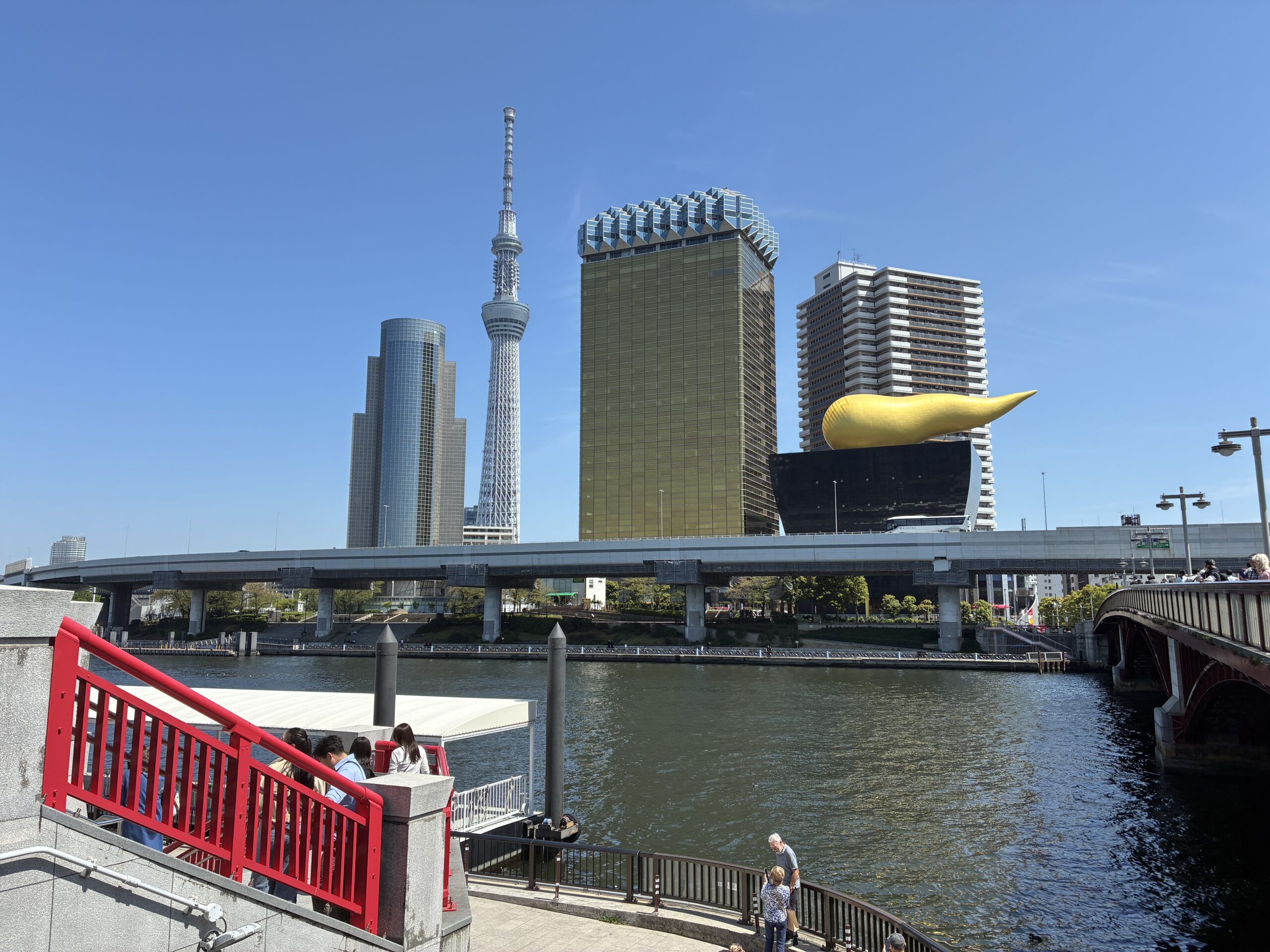
We continued our walk around some of the adjacent streets, with Loc talking about local drink and foods, and making some recommendations for both, and we wound up by the Sumida River, learning a little about surrounding buildings and their history, where we wound up our tour. Very nice!

It had been an excellent morning, but by now Laurence was feeling the pain and soreness, and was pretty fatigued, so we headed back to Taito Ryokan where he rested for a couple of hours. I took a shot at it as well, although I wasn’t feeling tired despite being up most of the night. But instead, I actually slept for a couple of hours while Laurence rested up and was feeling re-charged, as was I. I actually hadn’t been feeling tired at all. I guess I was.
We headed back out, first going to the viewing deck atop the Asakusa Cultural Center, for a few aerial views of the area.


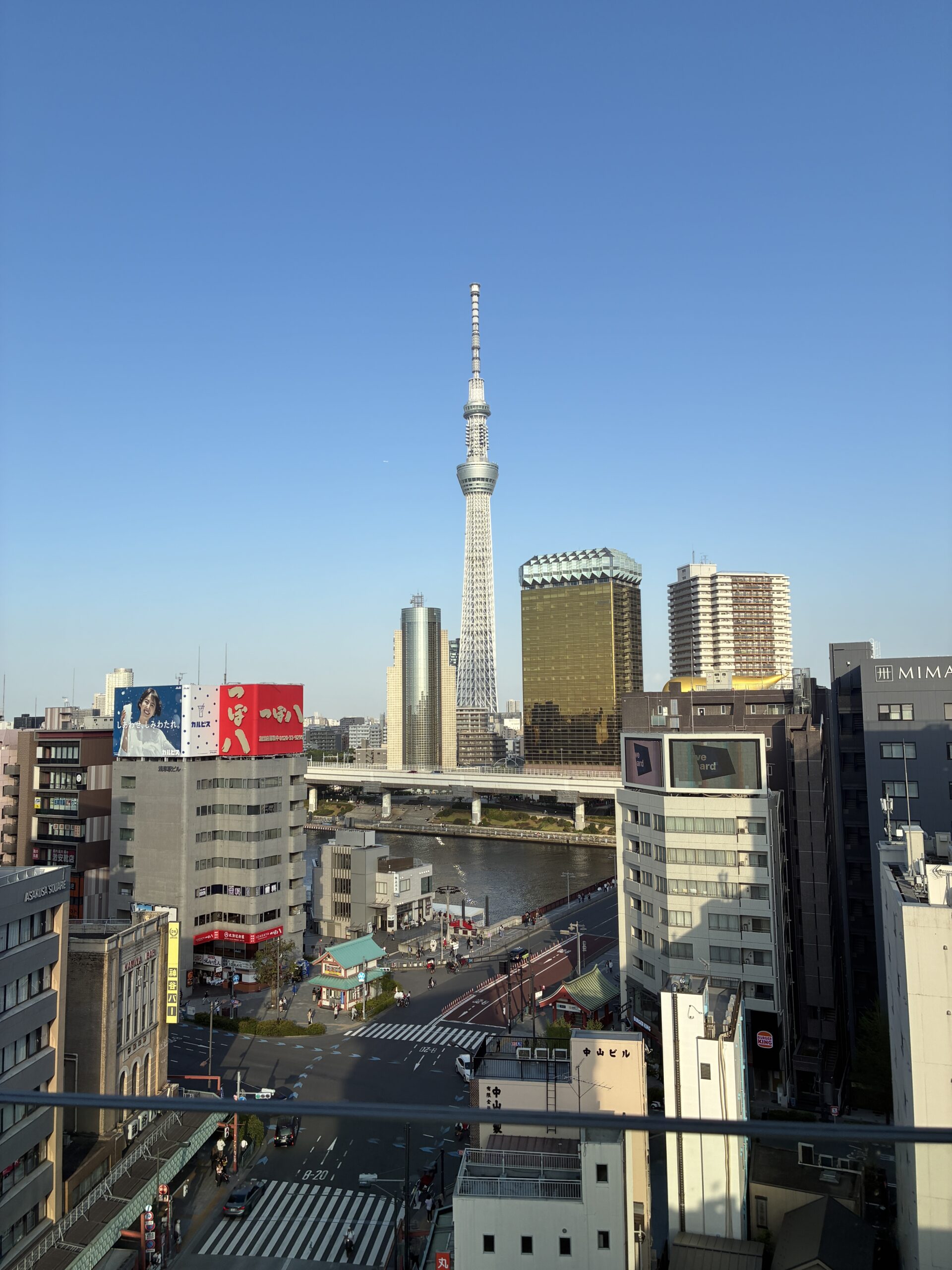
Then we took the subway from Asakusa station to Shibuya Crossing. his part of town is completely different from the Asakusa district, and very uptown and slick. Shibuya Crossing is a “scramble” crossing, surrounded by giant video screens and neon ads on the adjacent buildings, where traffic stops in all directions and pedestrians cross from every side at once, including diagonally, and hundreds of people crowd across the large intersections in multiple directions, and is sometimes known as called the busiest pedestrian crossing in the world. it’s an icon of Tokyo’s fast-paced and high-energy vibe, in this part of the city, at least.


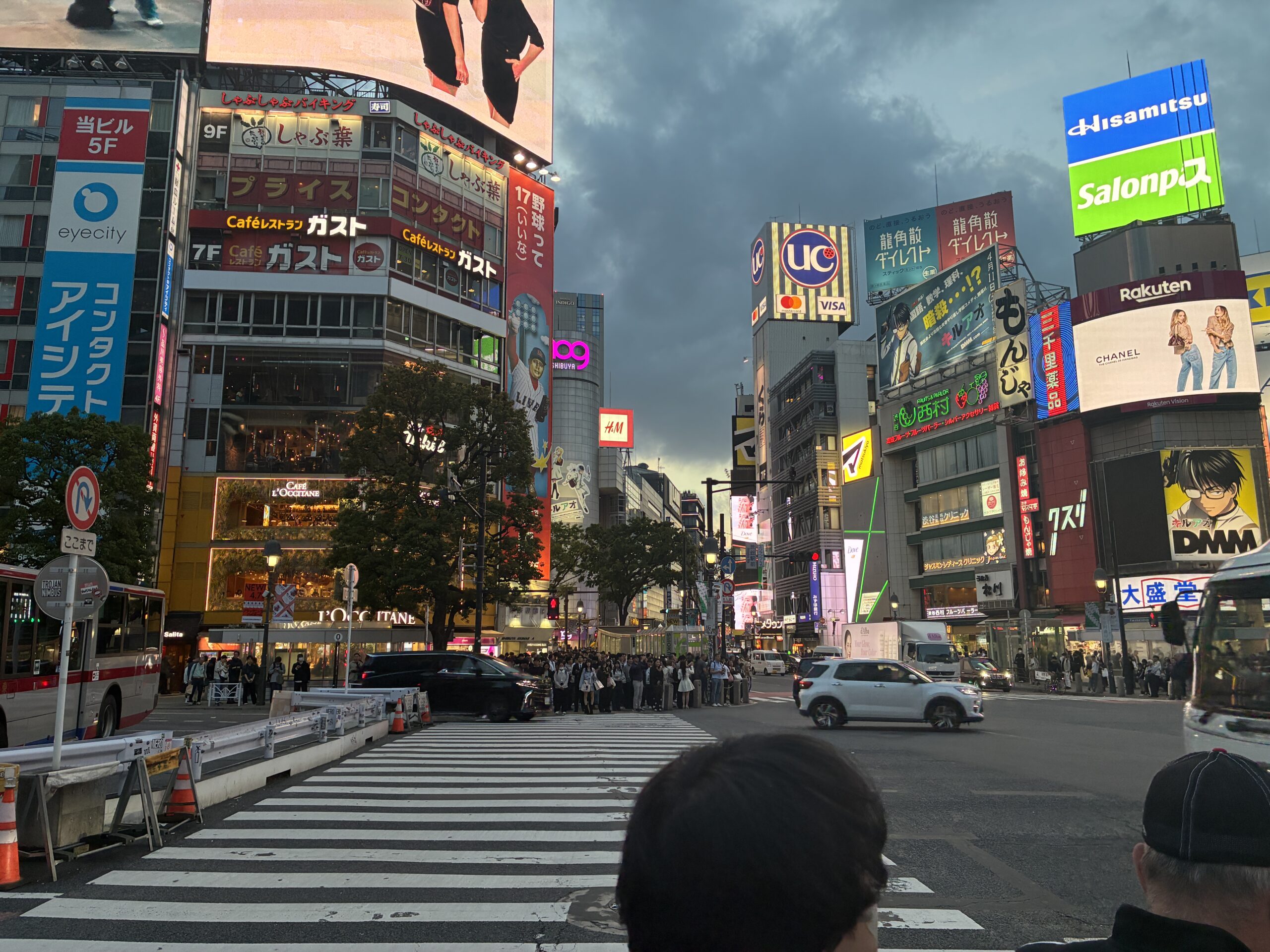
It was busy, that’s for sure, but it didn’t seem that much different than some of the crossings in Mexico City, for instance, or even Oxford Street in London. It was the multi-directional nature of the crossing that made it so intense, plus, as a tourist attraction (which is why we went), loads of people were stopping in the crosswalk and taking photos. It is iconic.
By now, it was getting dark, and the place was lighting up, giving it that extra pizzazz. It also made me remember I don’t particularly care for the crowds, noise, and buzz of fast-paced, big city life.


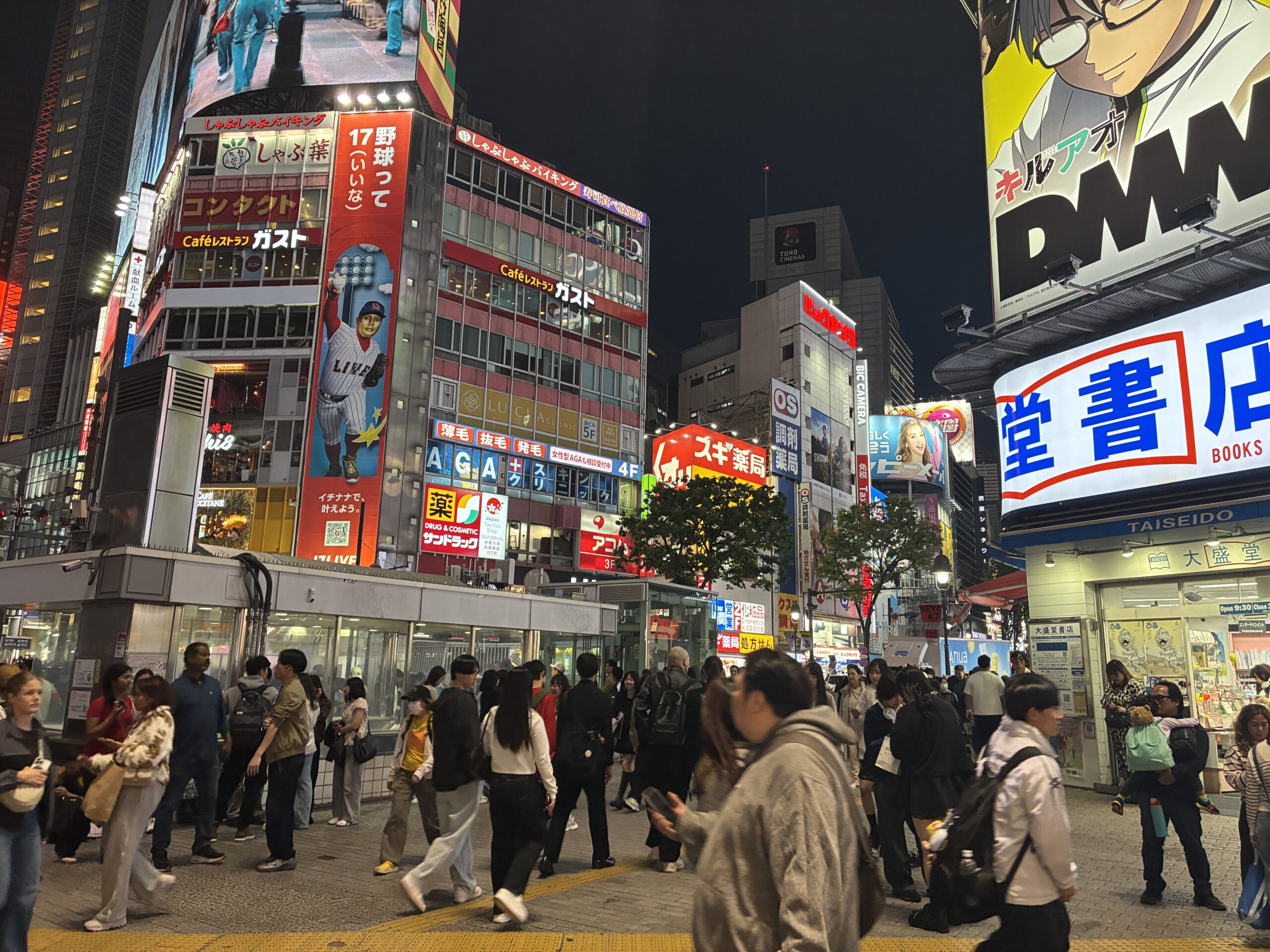


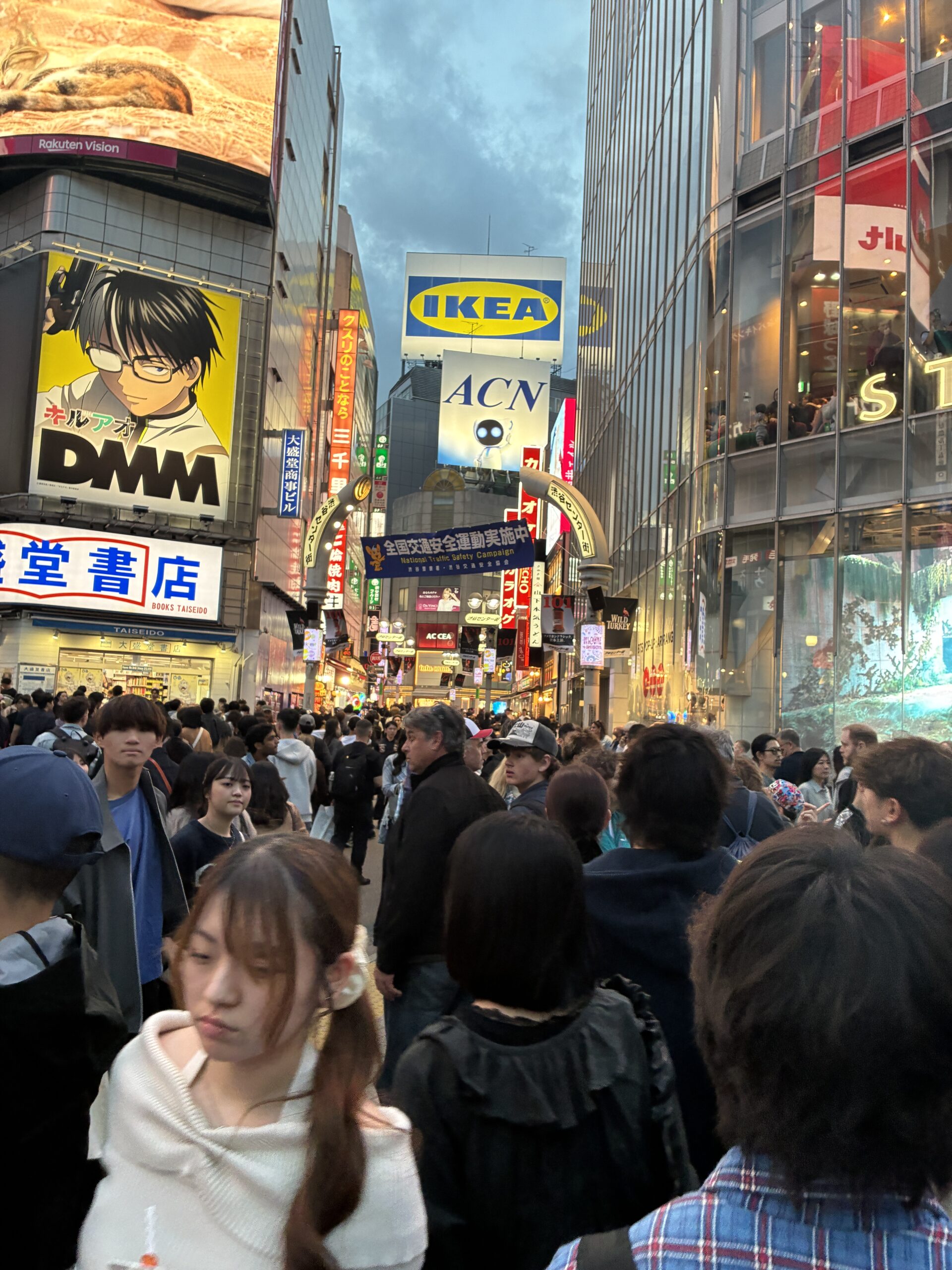
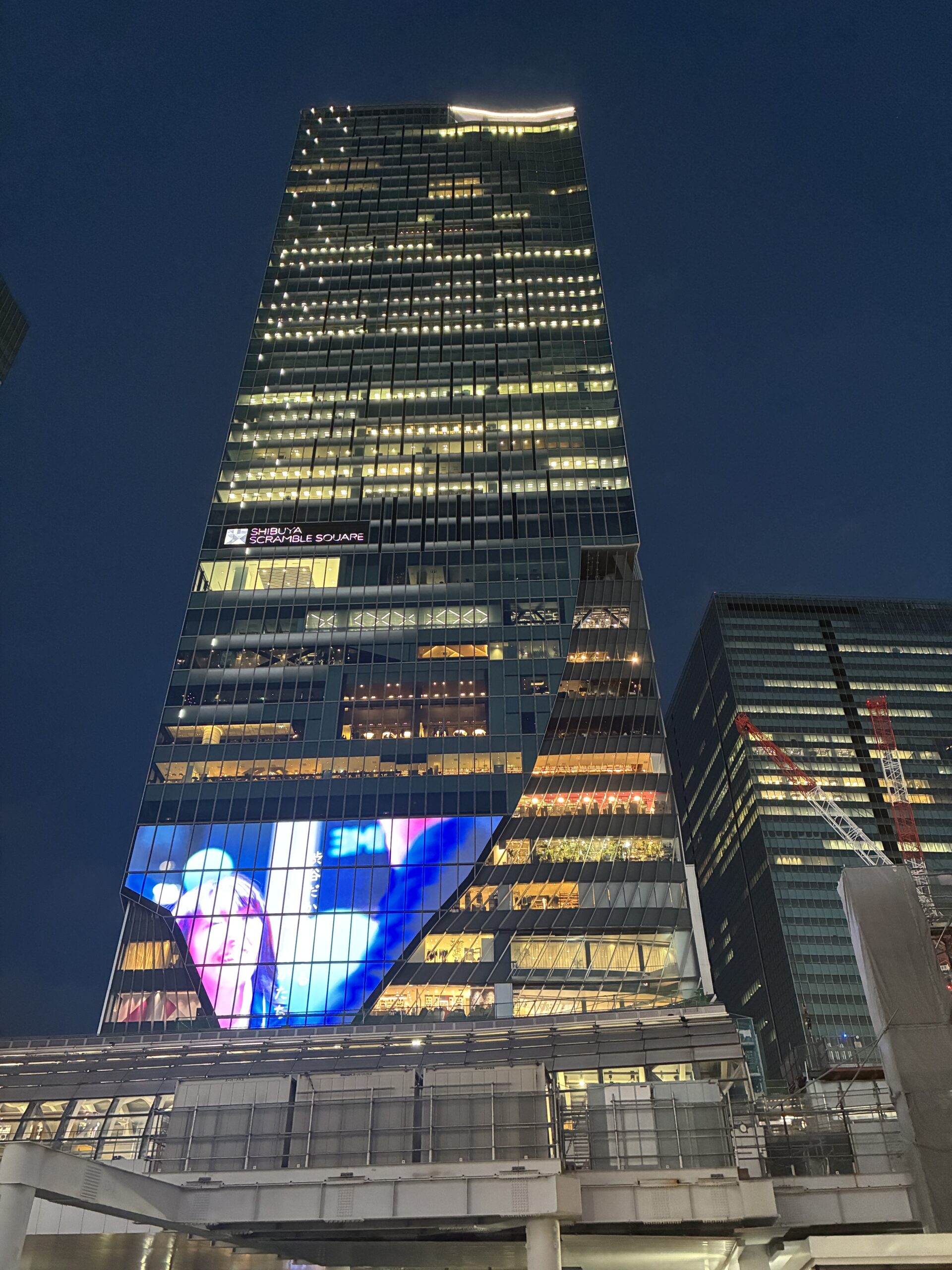
While Laurence sat in a starbucks and grabbed a cup of coffee, I headed over (and crossed Shibuya Crossing a couple of times) to visit the Shibuya Sky observation deck atop the Shibuya Scramble Square building, for panoramic views of the city. Alas, sold out for the day, and no more available tickets for a coupleof days. Oh well.
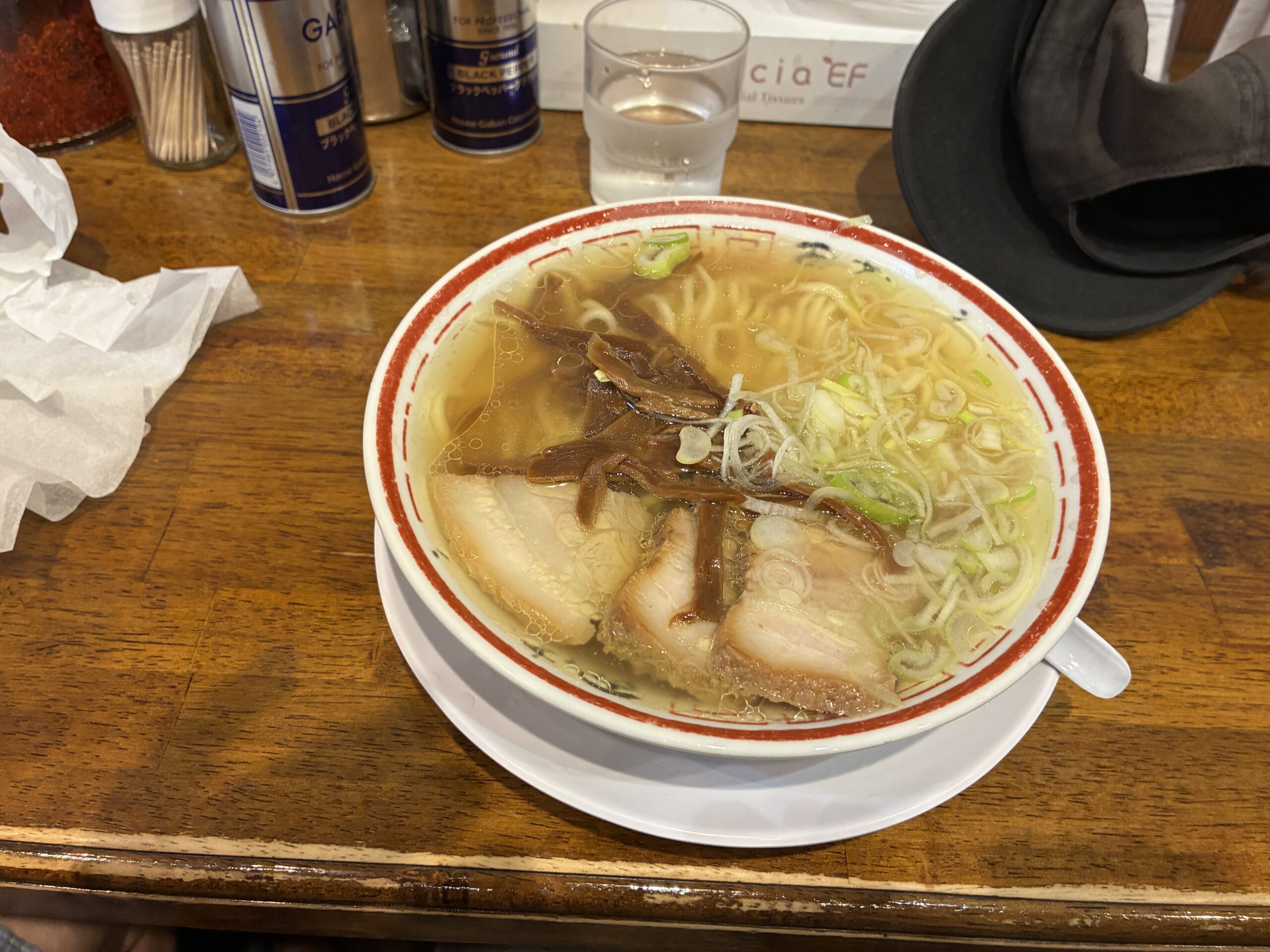
We headed back to Asakusa, where we had a delicious and traditional ramen meal and talked, before heading back to our hotel for the night.
Laurence was pretty pooped after a really nice and full day, and slept well. I wrote my blog, and soon started to feel drowsy, even by 10, and so packed it up and went to sleep for the night on my futon on out mat covered floor. Good night Tokyo.