Hanoi, Day Two.
Well, it’s official. Laurence is heading home tomorrow night – actually, Wednesday morning, taking the 2 am flight out of Hanoi back to Toronto, but arriving at the airport late tomorrow evening. The heat – it is hot here, and humid, and only going to get hotter as we head south – is too much for him, and when combined with continued feelings of heavy fatigue and intermittent pain, although that has improved considerably, it becomes too difficult for him, and unbearably uncomfortable. As Laurence puts it, it’s like running an endurance race every day, and he has reached his limit. I’m very sorry, both because I’ll miss him and the companionship, and because we started out on this trip together, not to mention two minds are better than one, and especially in a strange land, and also for what he’ll be missing. However, he’s at peace with the decision, and so be it!

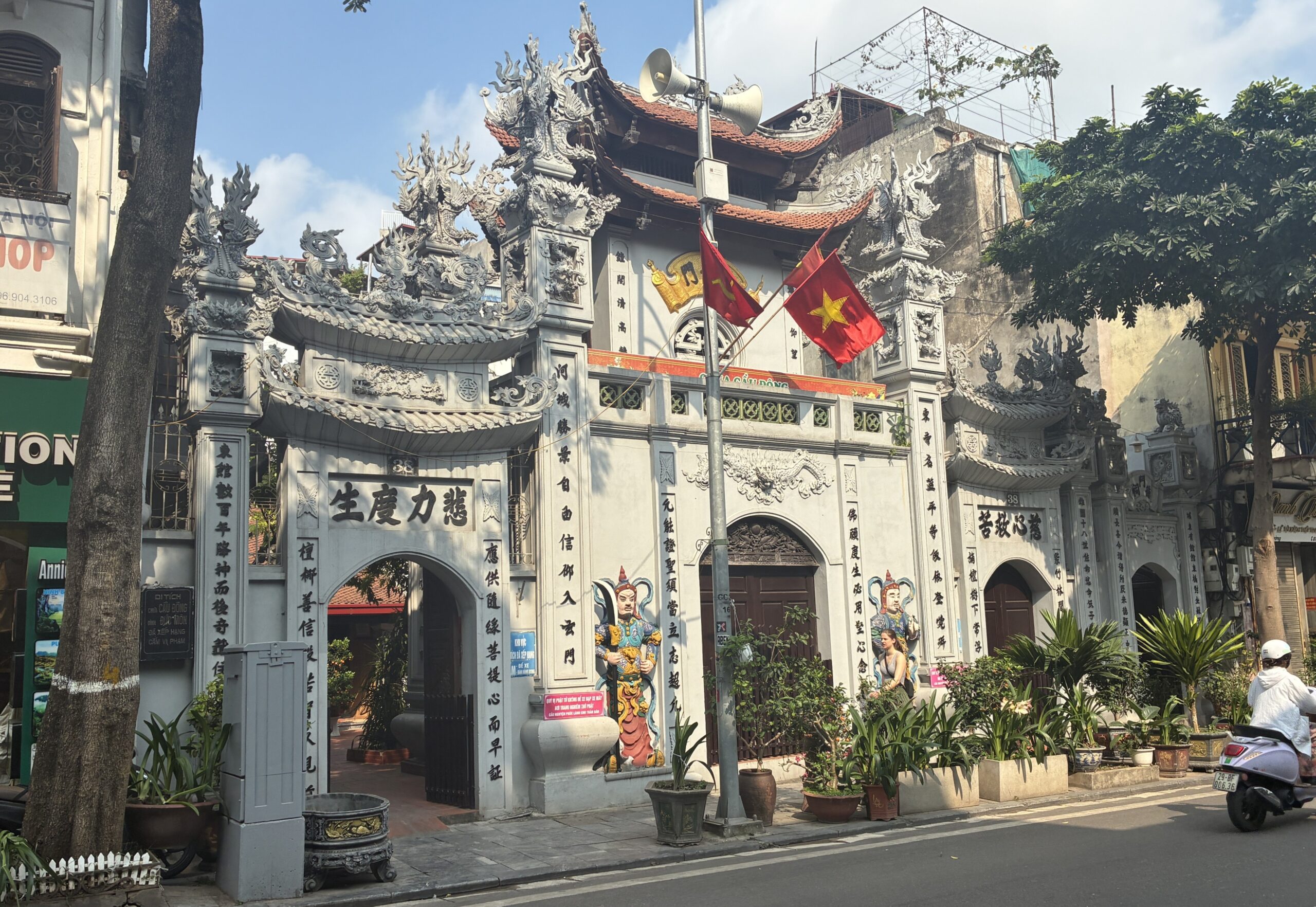
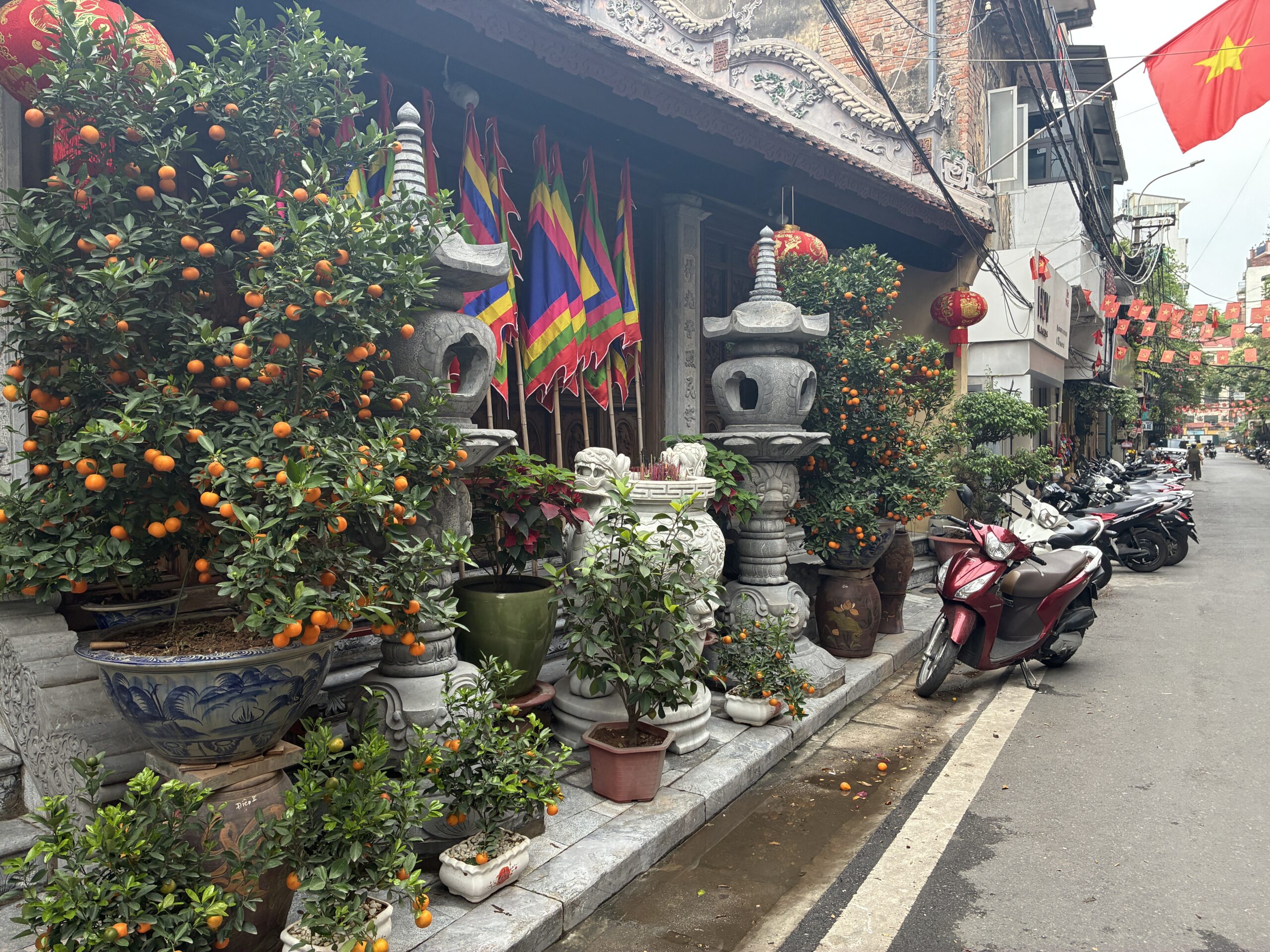
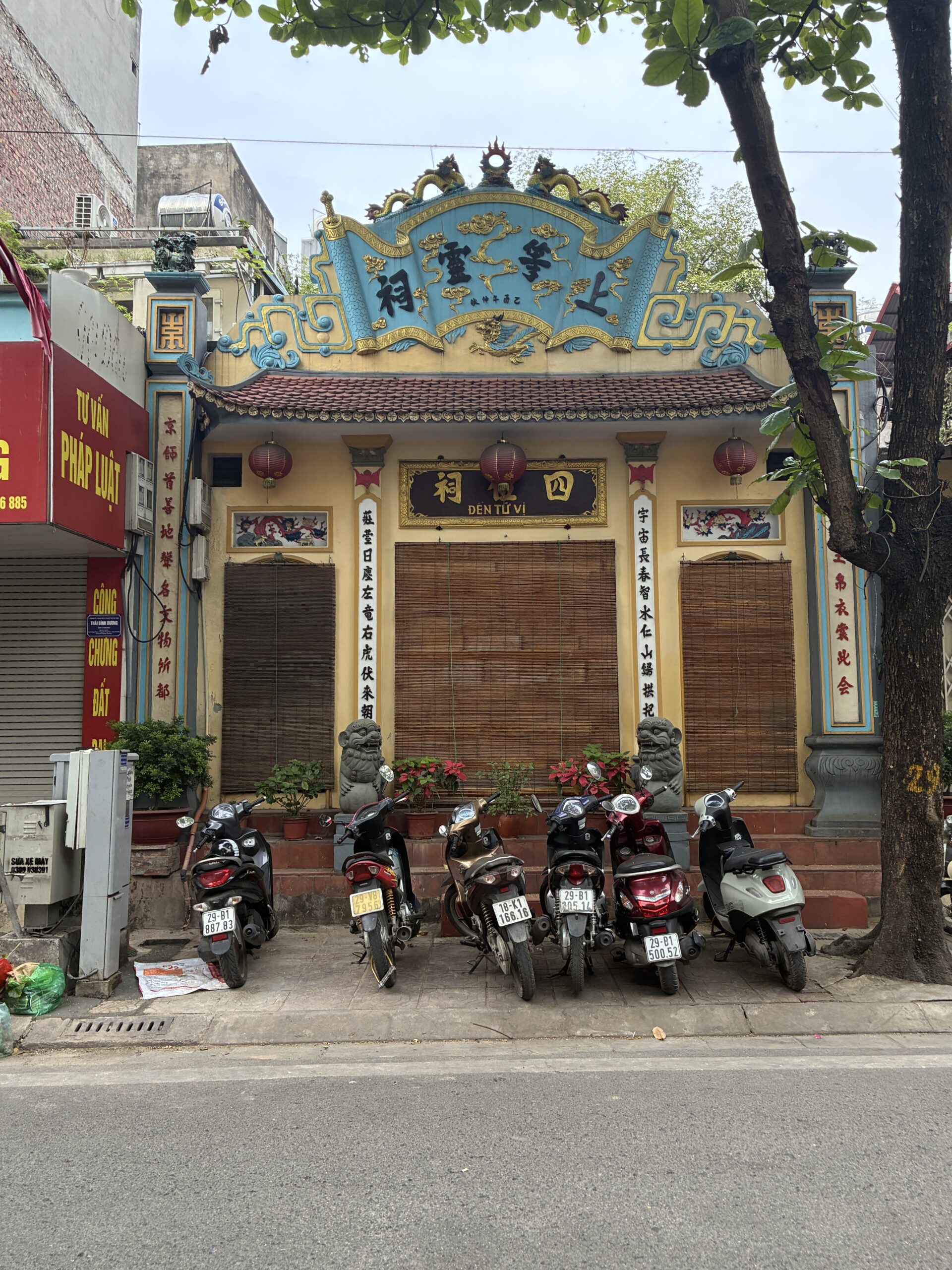
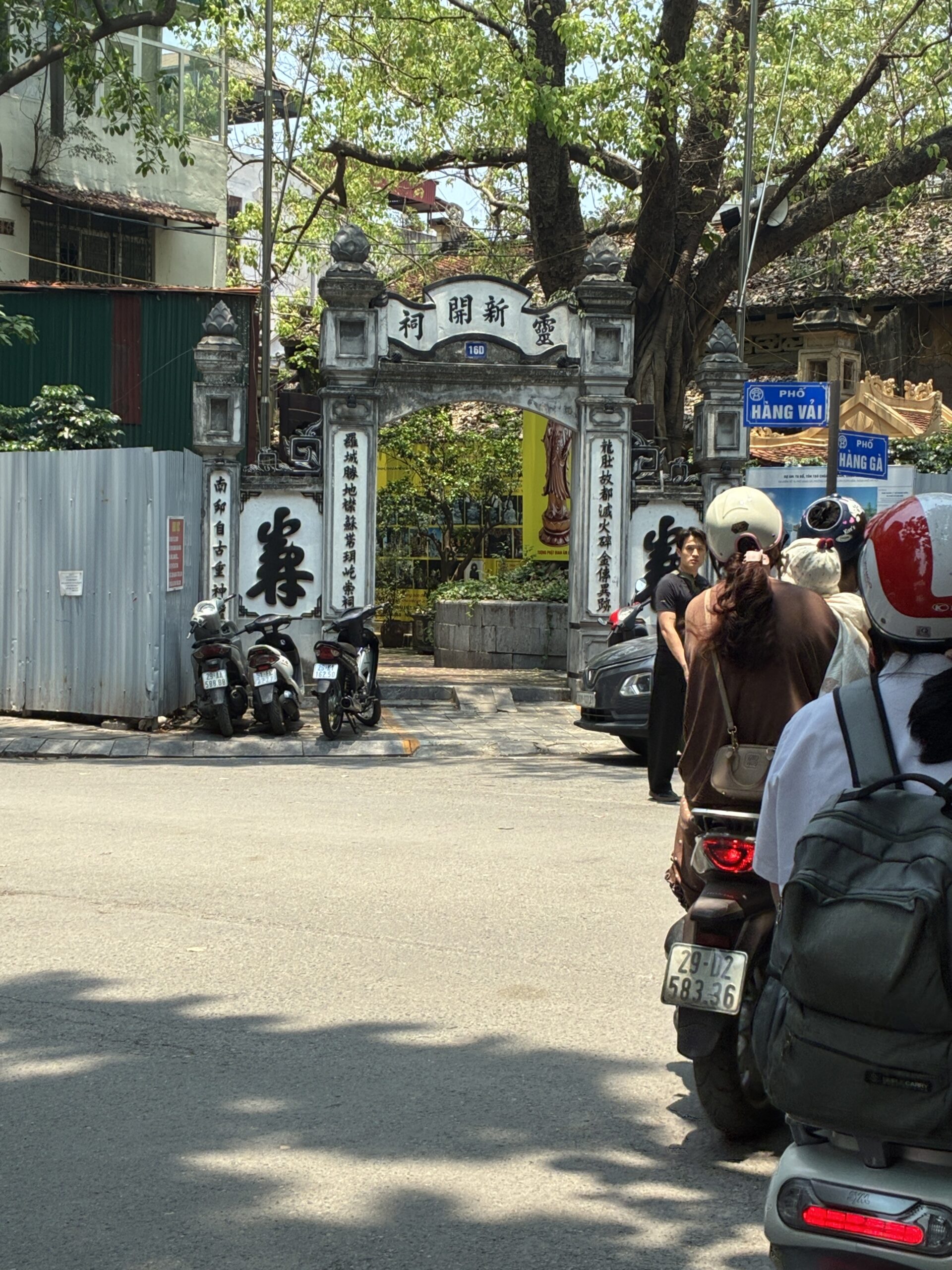
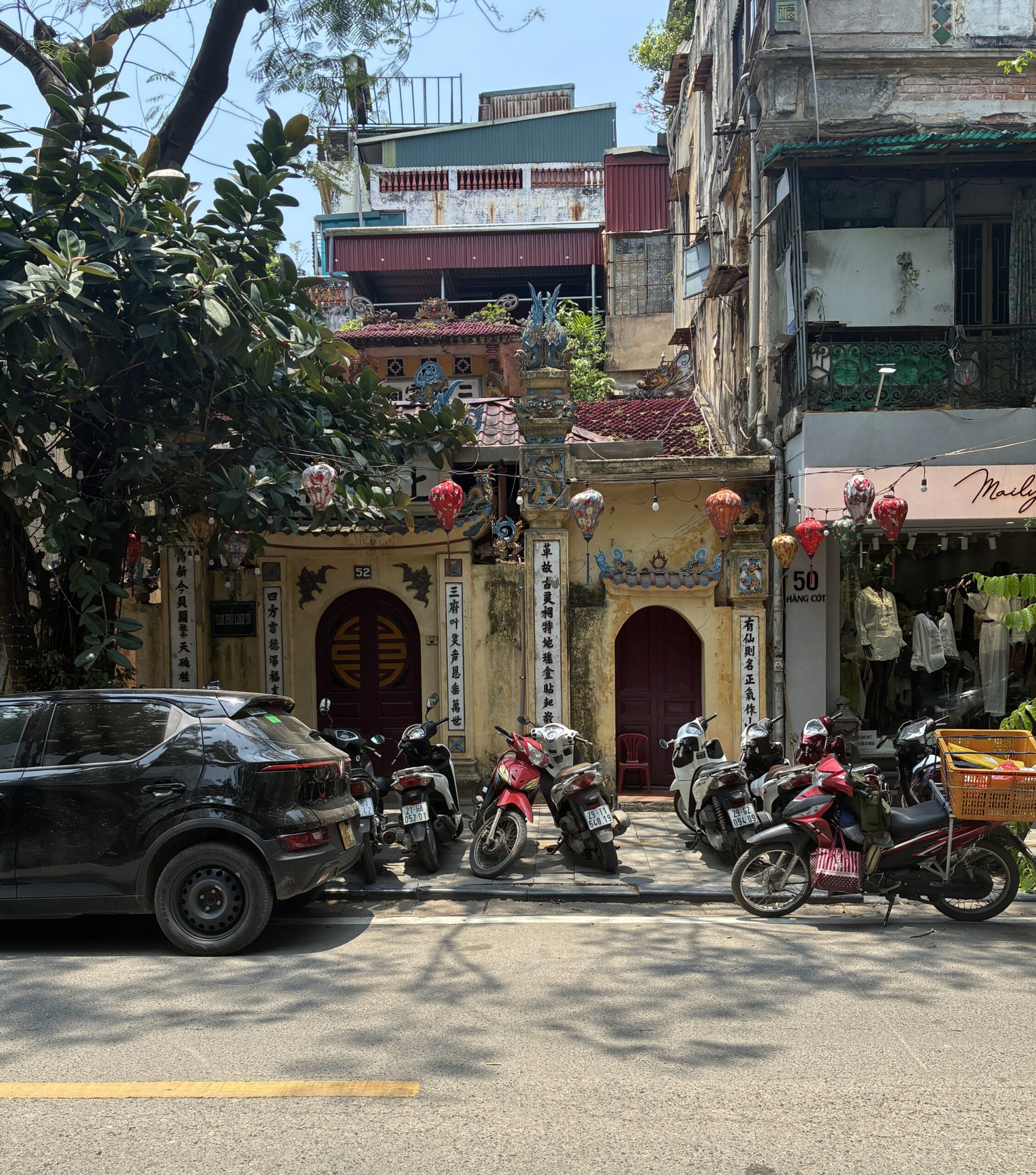
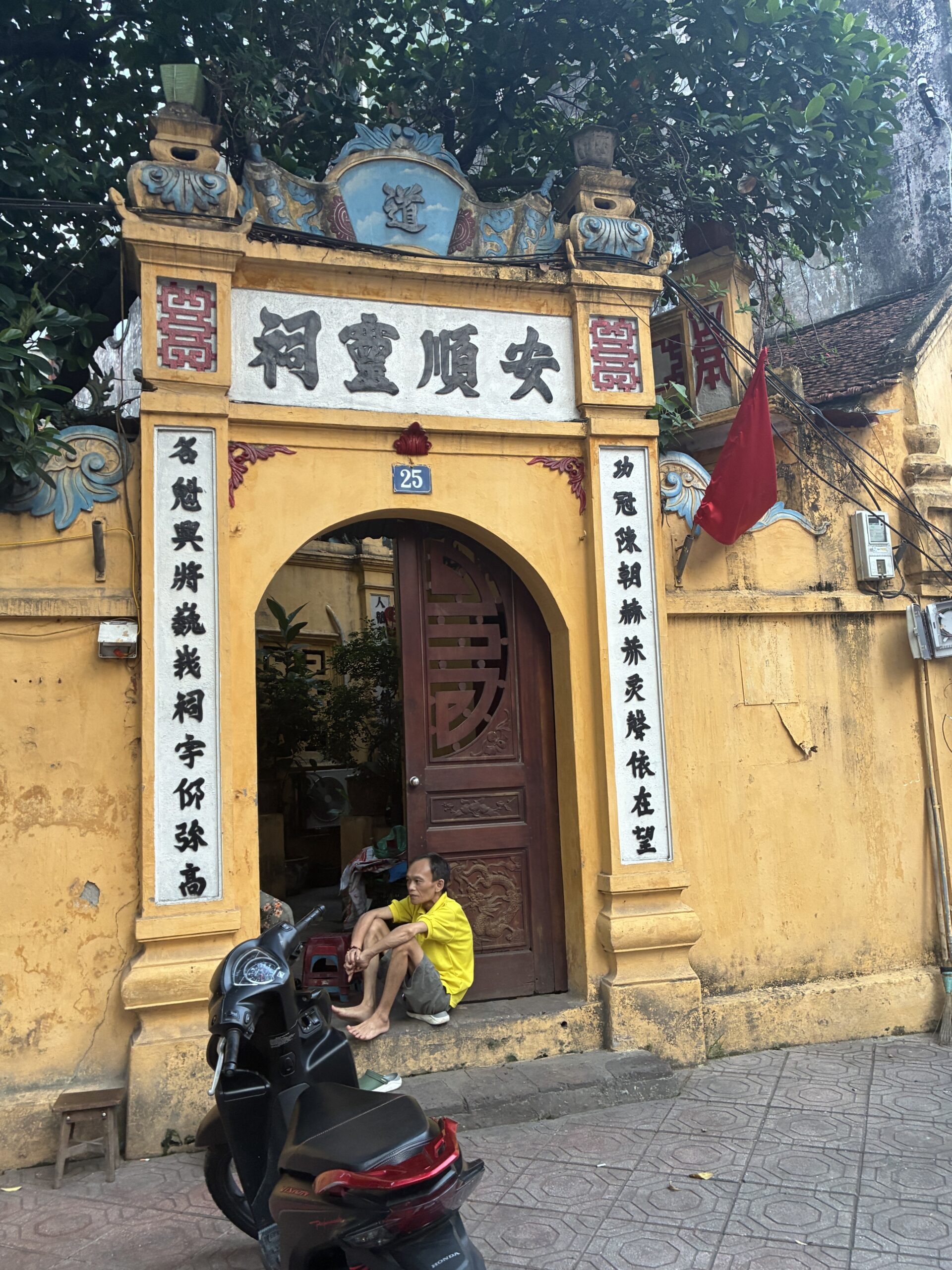
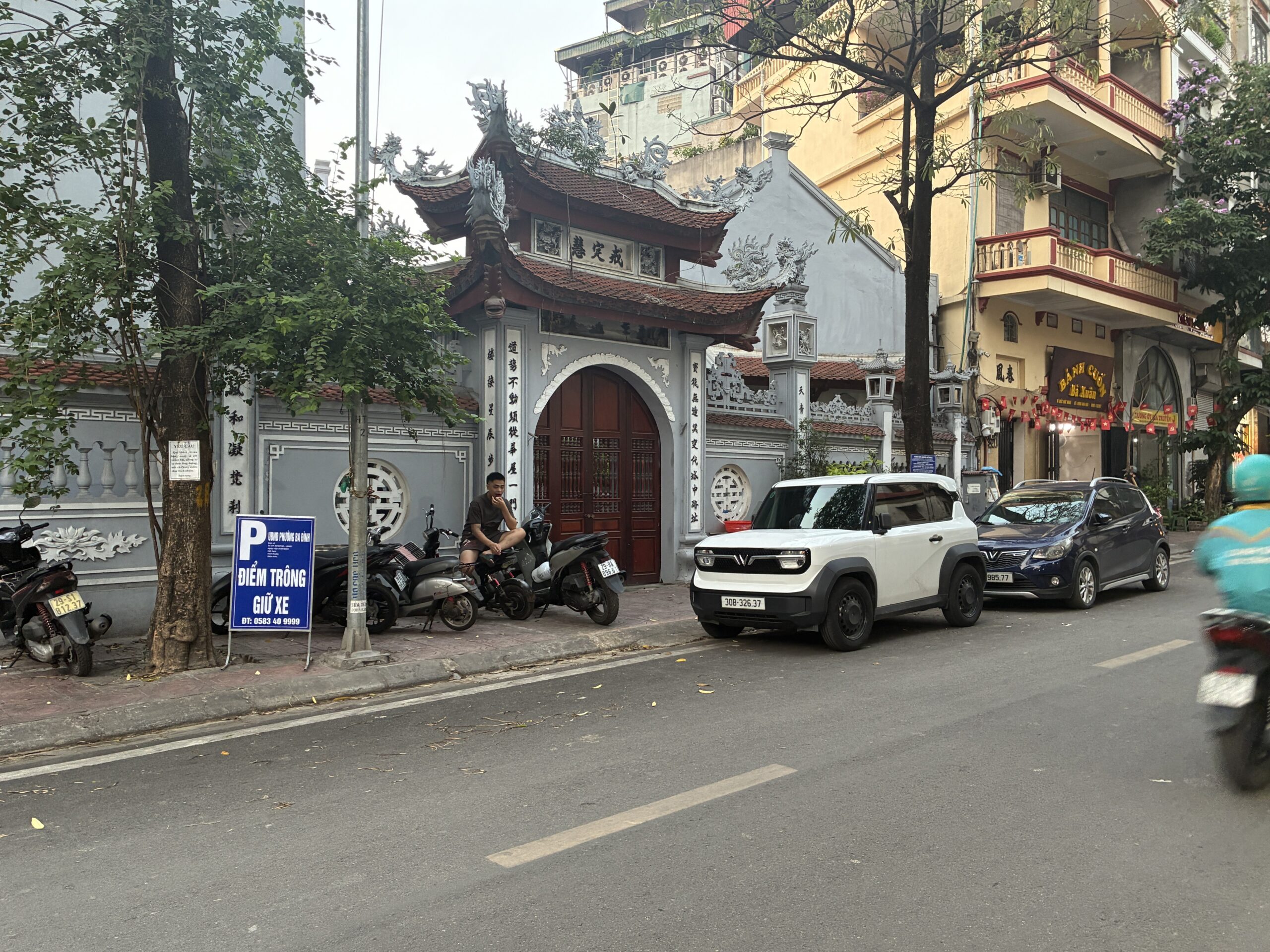
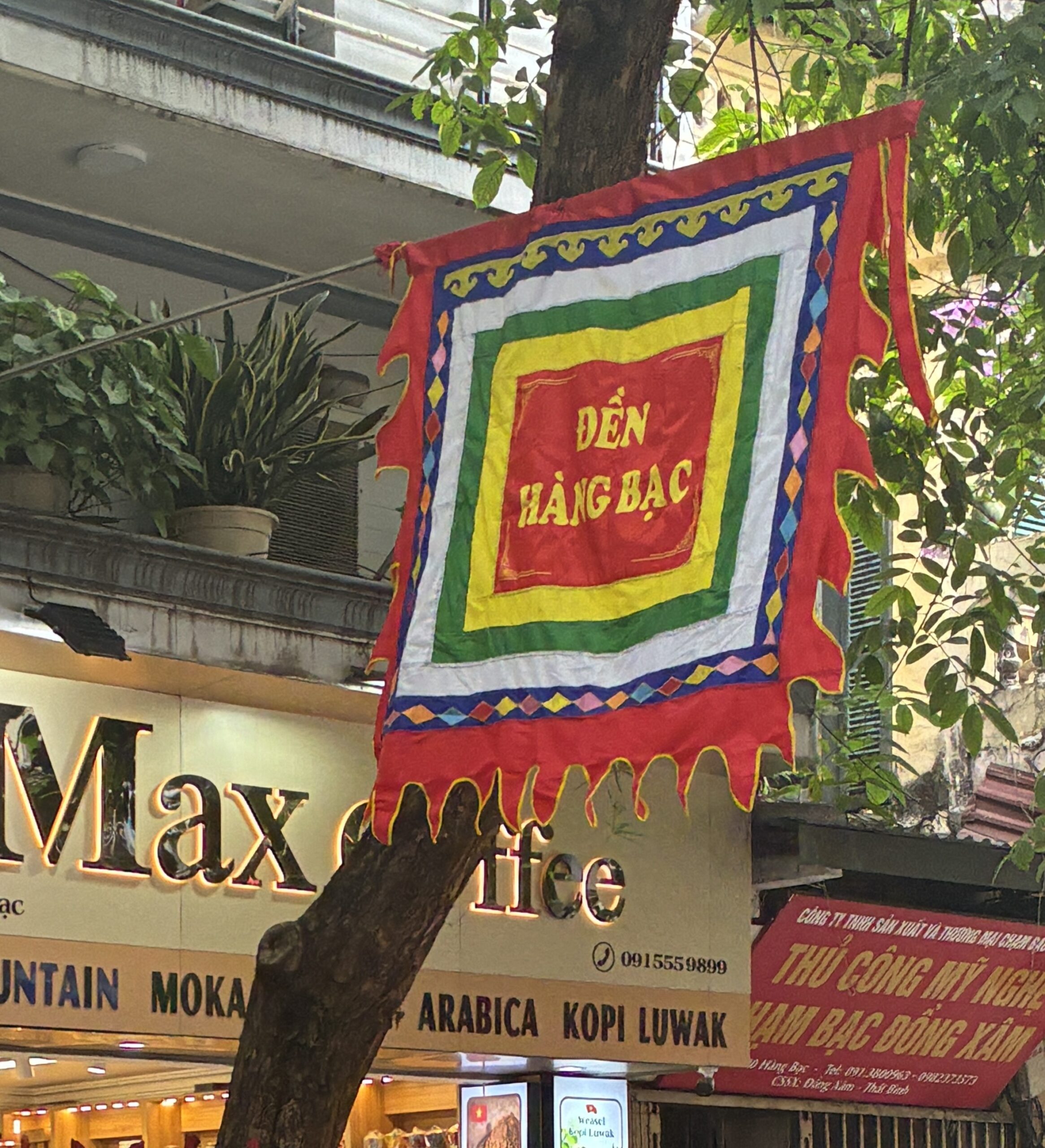
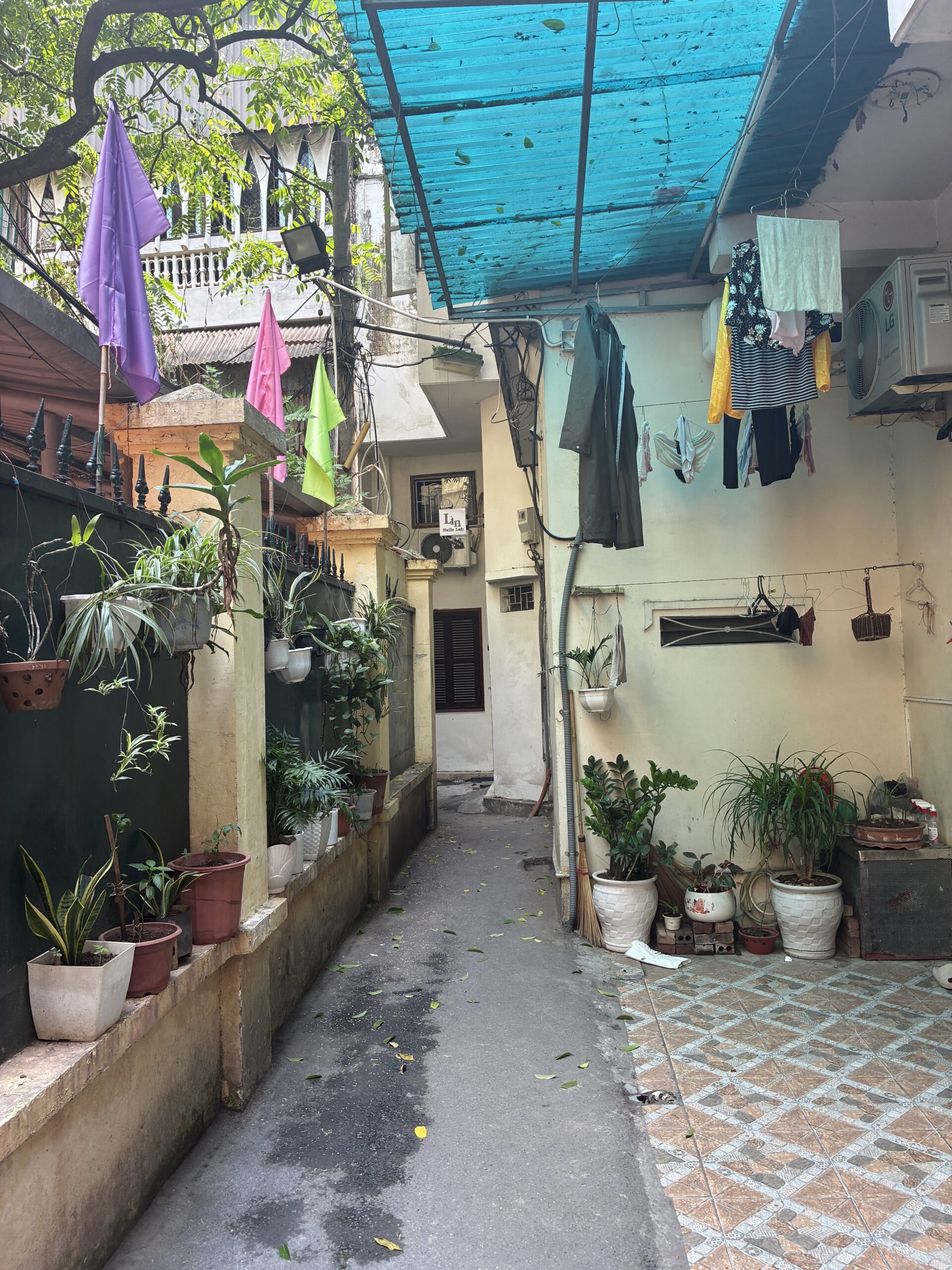
On our various walks today, I noticed far more temples and pagodas throughout the city, often tucked away, and later learned that these are usually noted by a particular five-color flag that lets you know as a temple or pagoda is nearby.
Pagodas are Buddhist places of worship, and often active monasteries or residences for monks and nuns, whereas temples are not Buddhist, but instead built to worship historical figures, deities, or spirits, including national heroes, legendary figures, ancestors, or gods from Taoism and local folk religion. Vietnam does not have a national religion, and is secular, in part because this is a communist country, but it does have a highly spiritual and folk religion culture that combines practices like Buddhism, Confucianism, and Taoism, and venerates ancestors and historical figures. Interestingly, the city also has one of the largest catholic communities in Asia, and later in the day I walked past a large Catholic church.
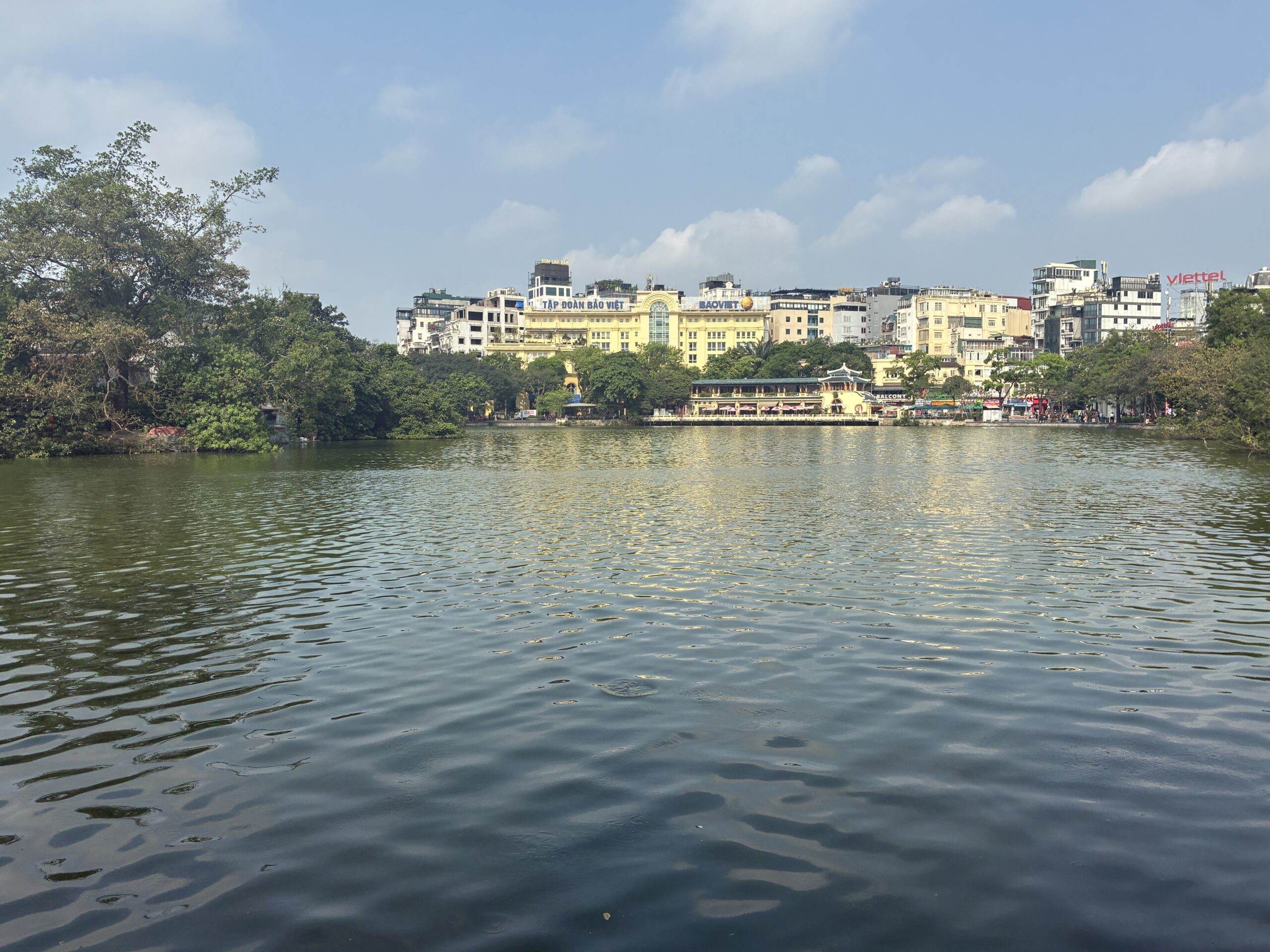
We started our day early by booking and walking to the meeting point for a three hour guided walk, arriving at 9 am. It took us about 30 minutes or so to get to the pick up spot, and that walk alone was very nice, taking us along and around Hoàn Kiếm Lake, which is at the cultural heart of the city. Although on its southern edge, this area is far more open and spacious than the bustling and chaotic streets of the Old Quarter we’ve so far seen and walked.
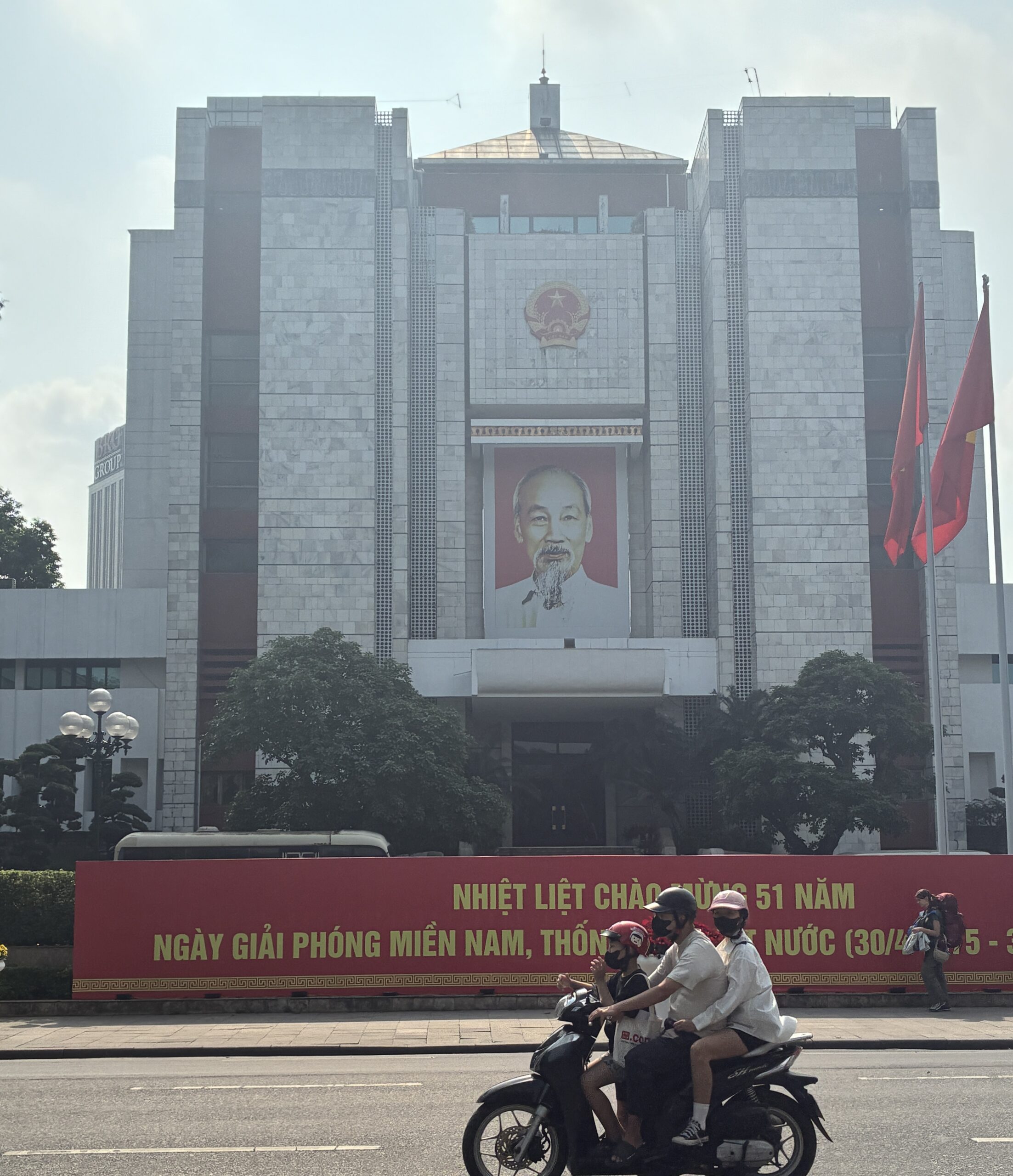
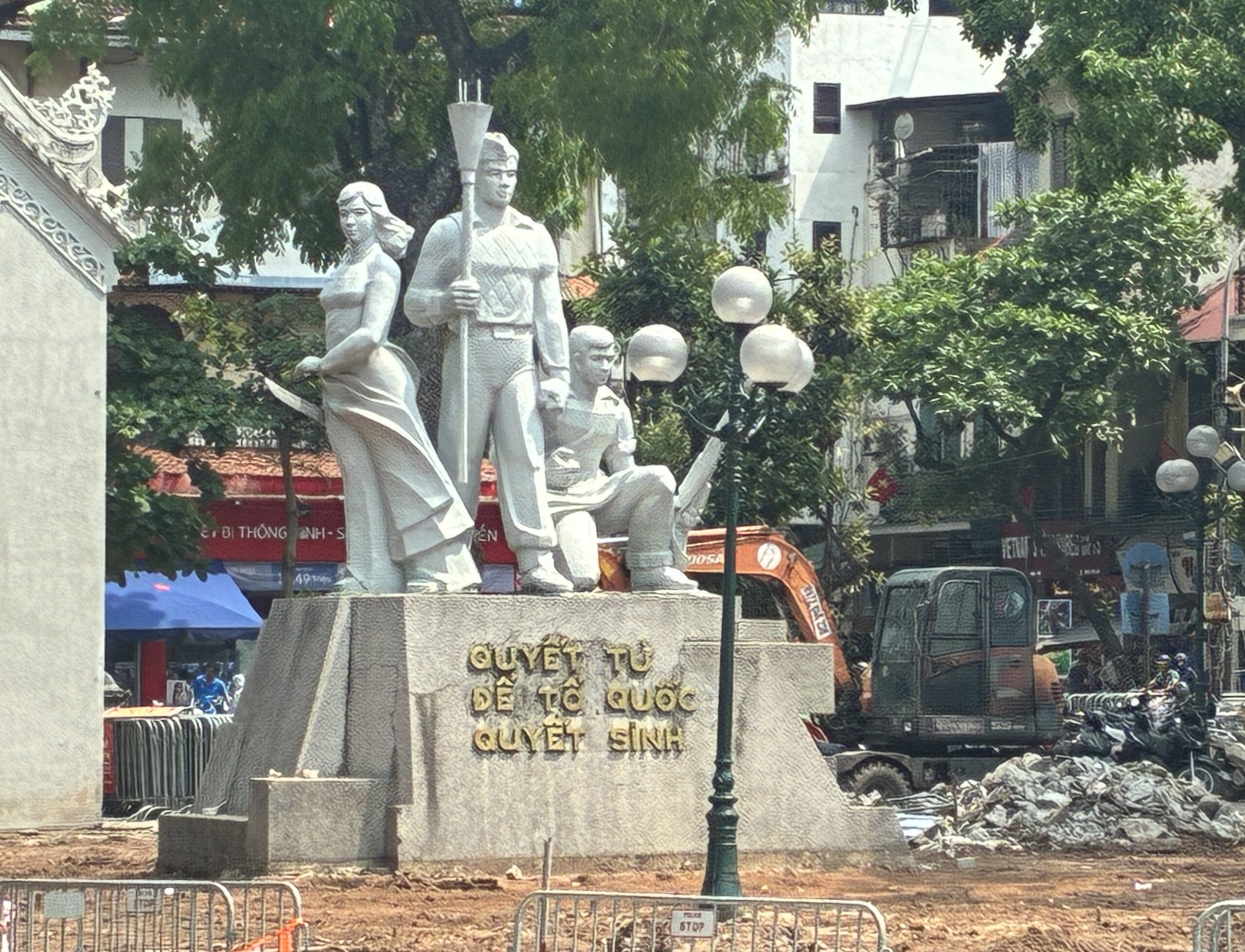
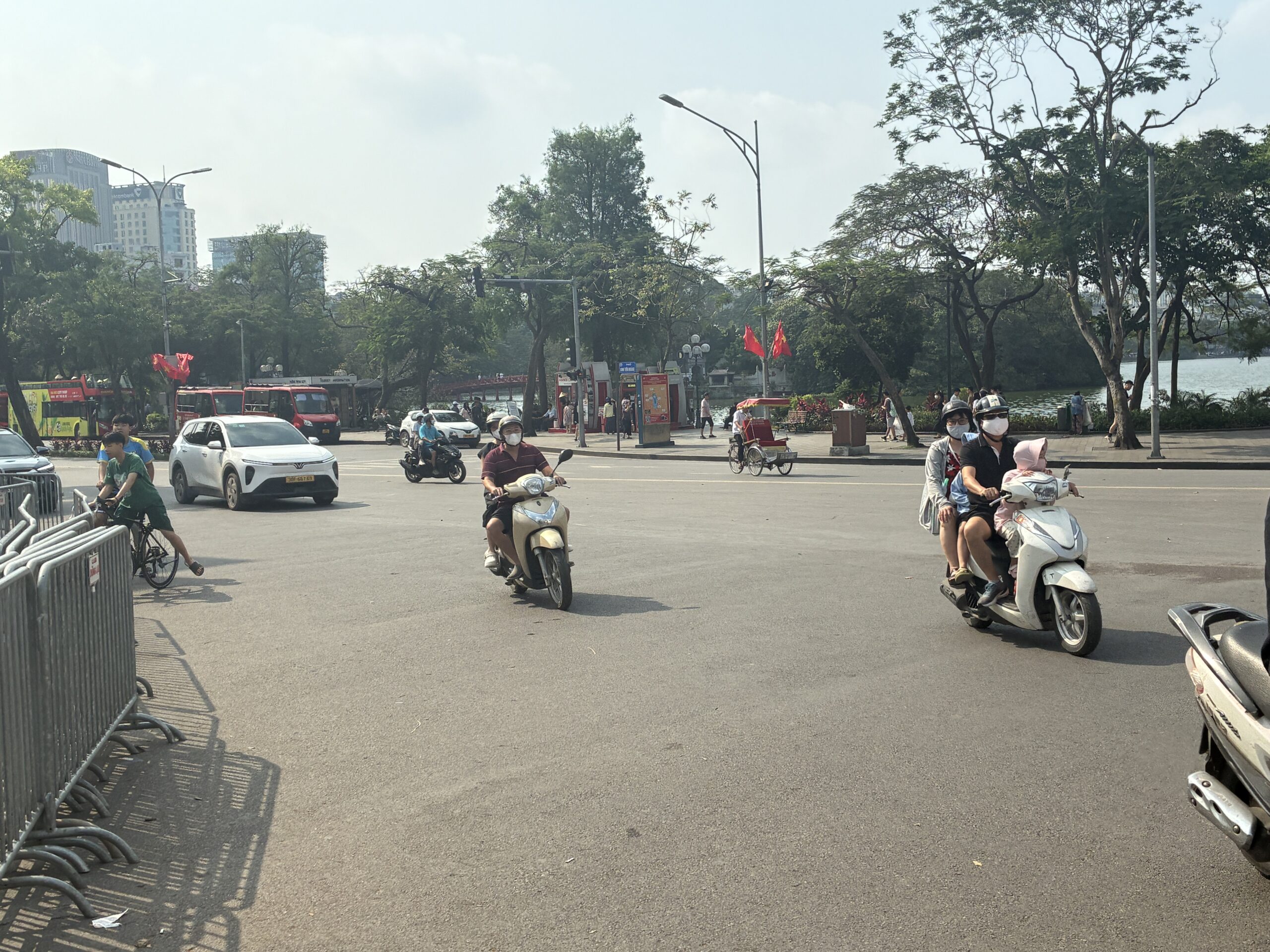
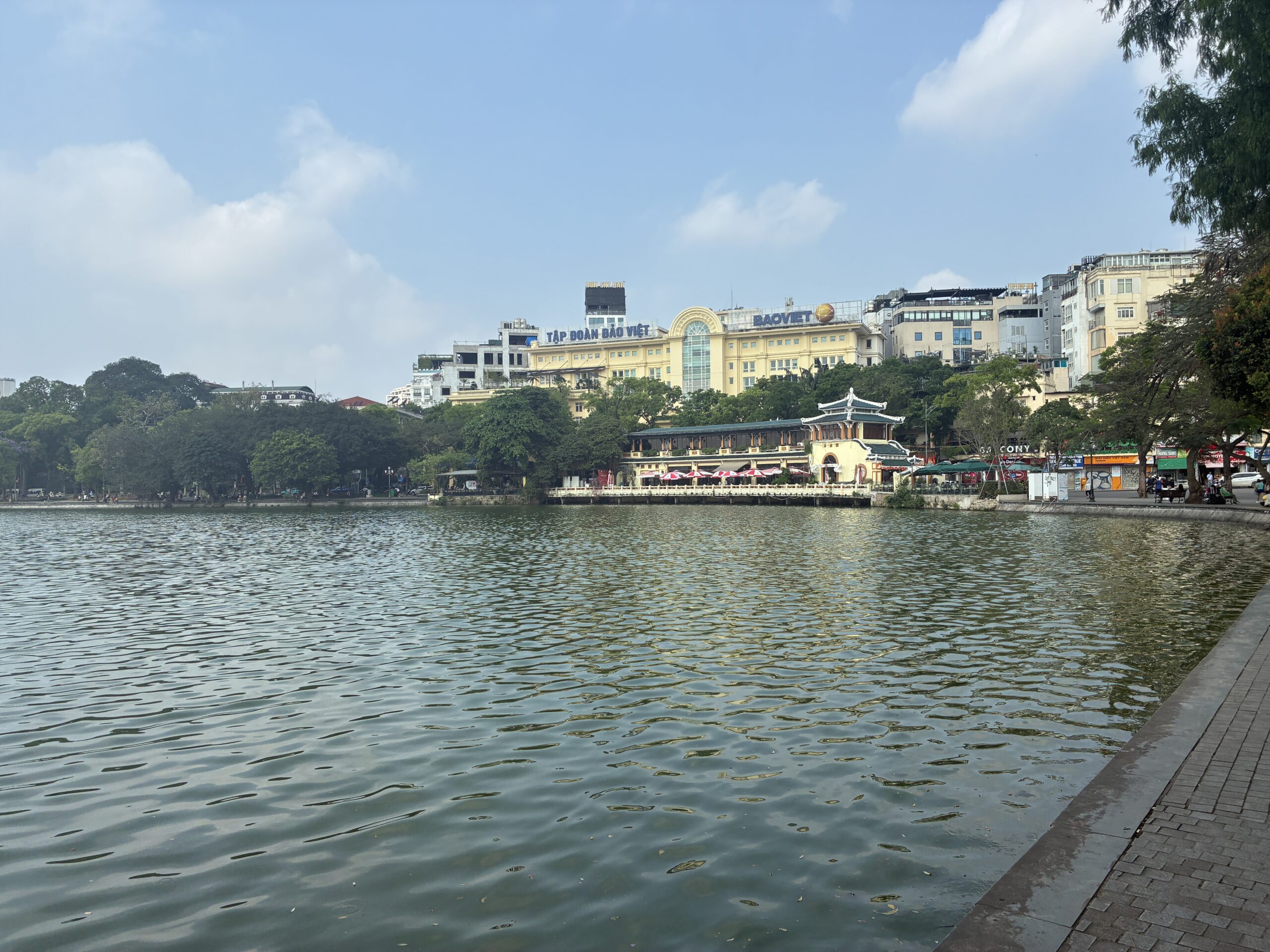
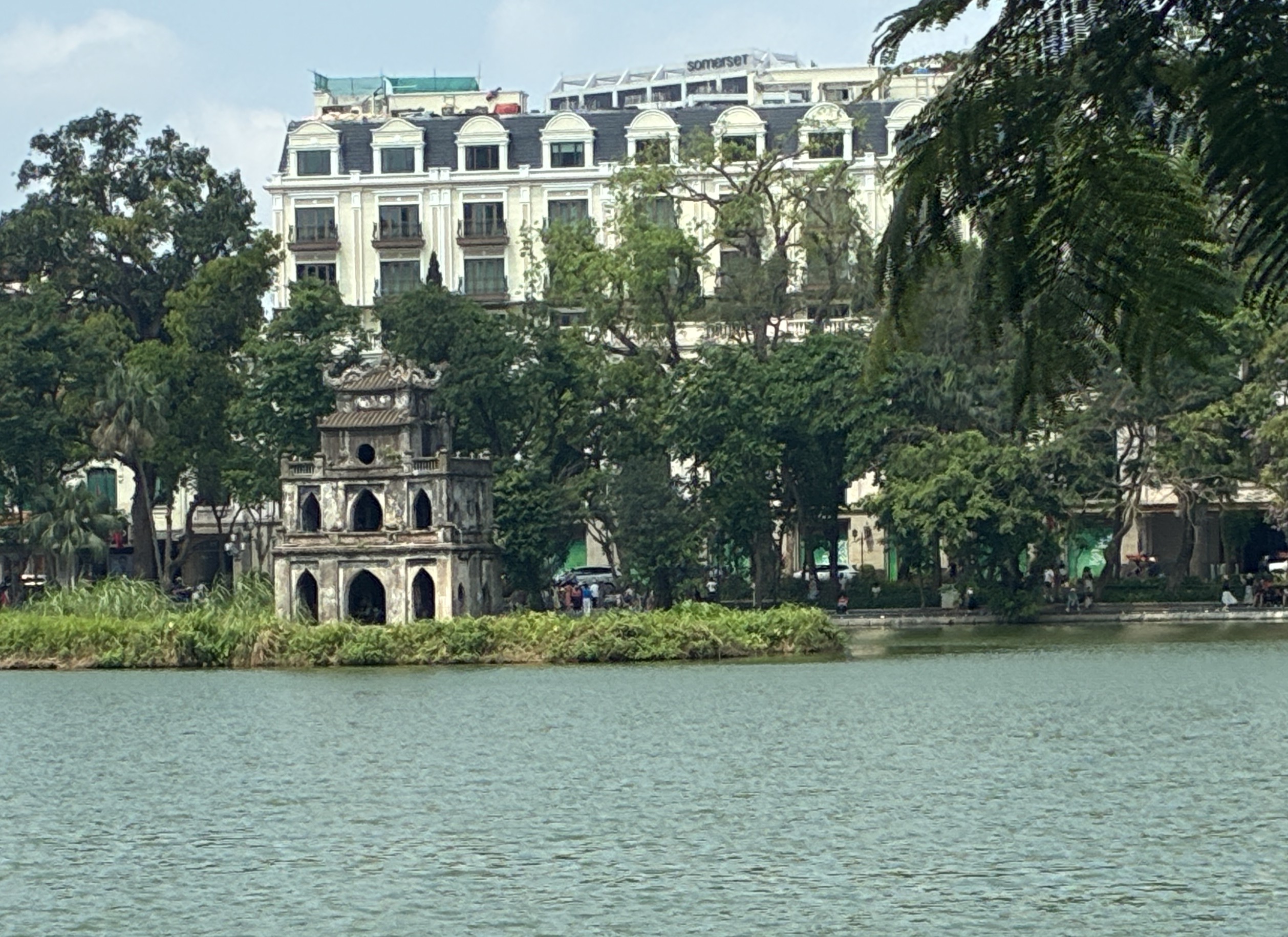
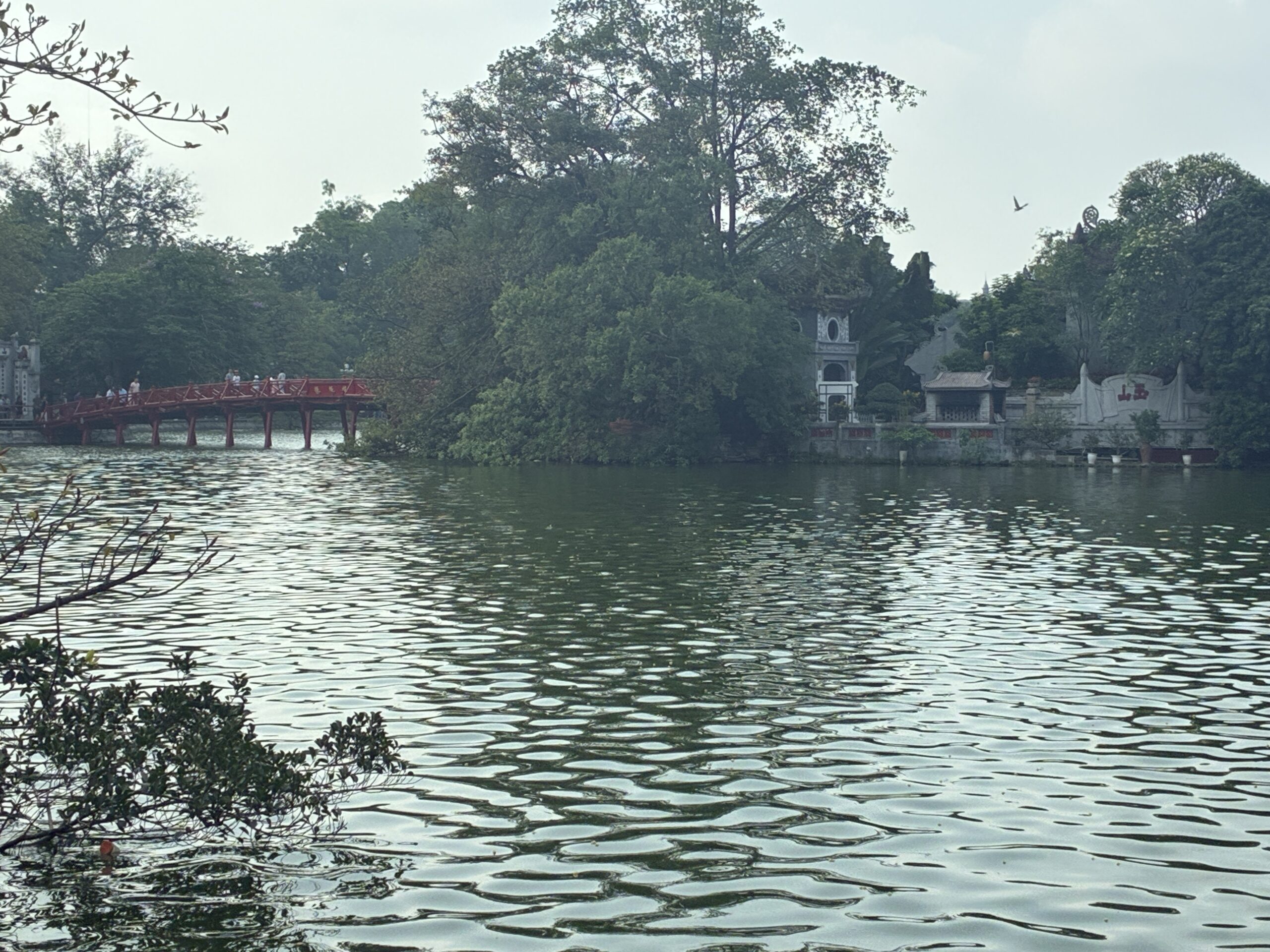
Hoàn Kiếm means Lake of the Returned Sword, commemorating a mythological tale (much like the British King Arthur legend of the Lady of the Lake, and the return of the sword Excalibur).
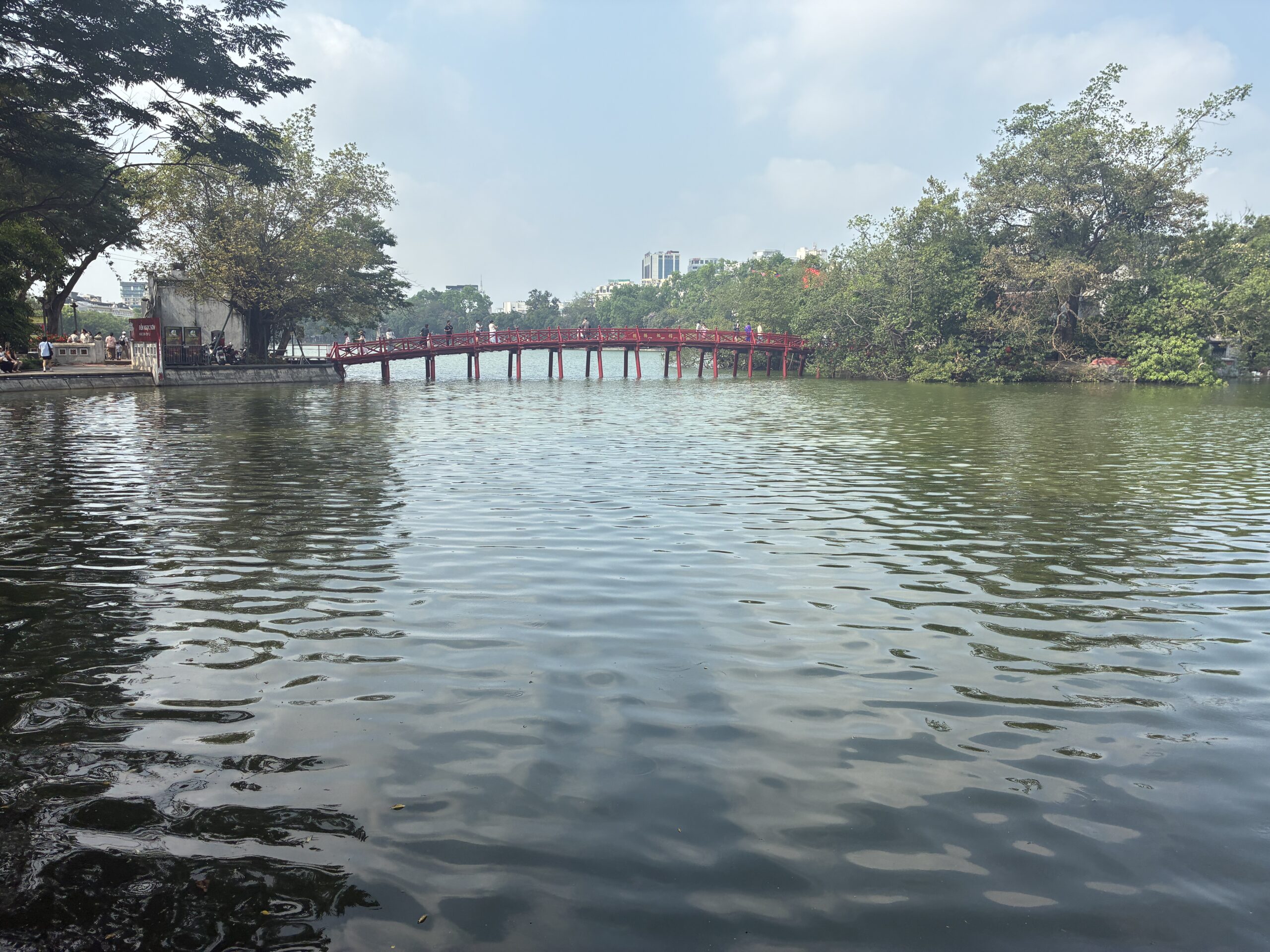
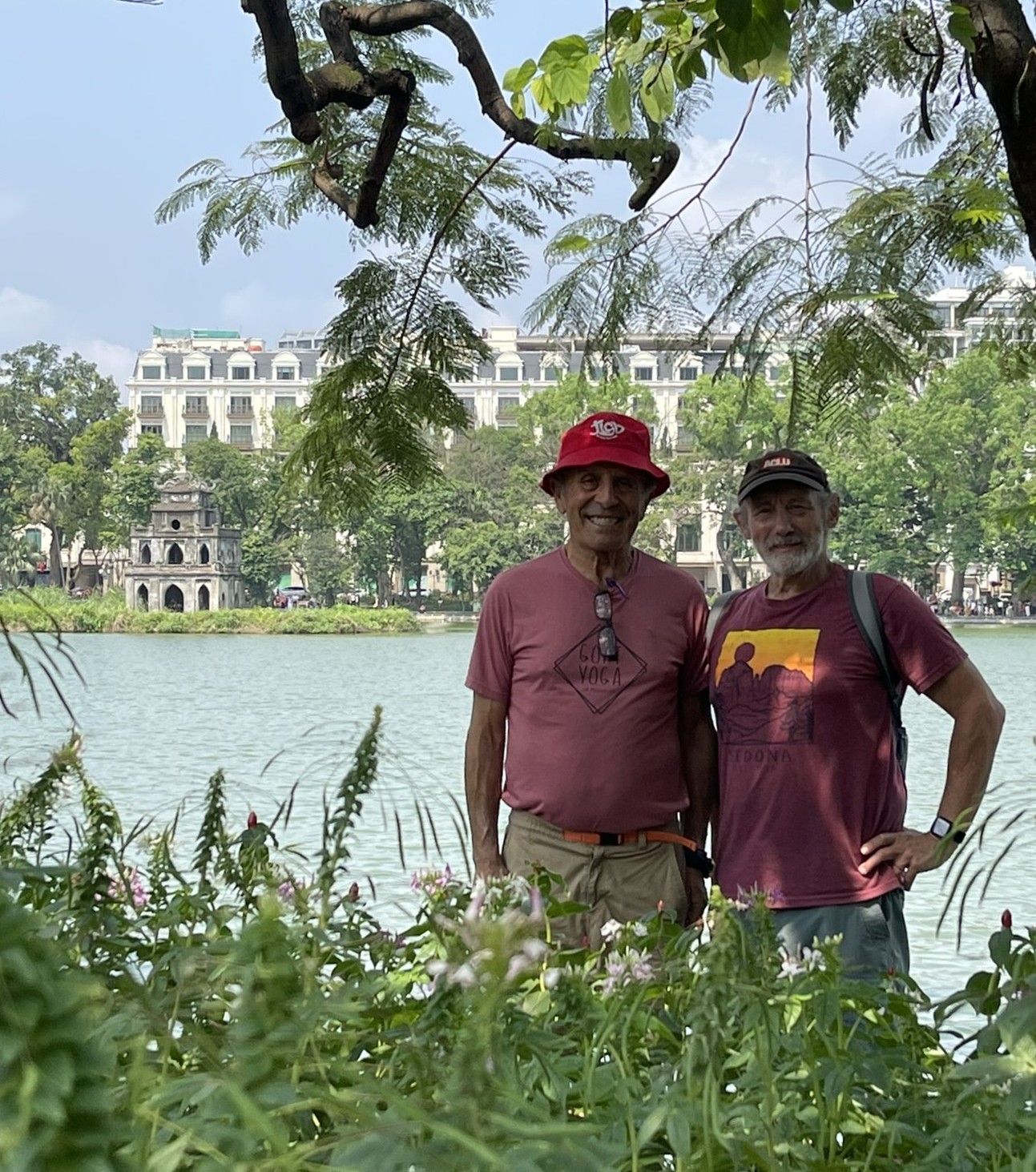
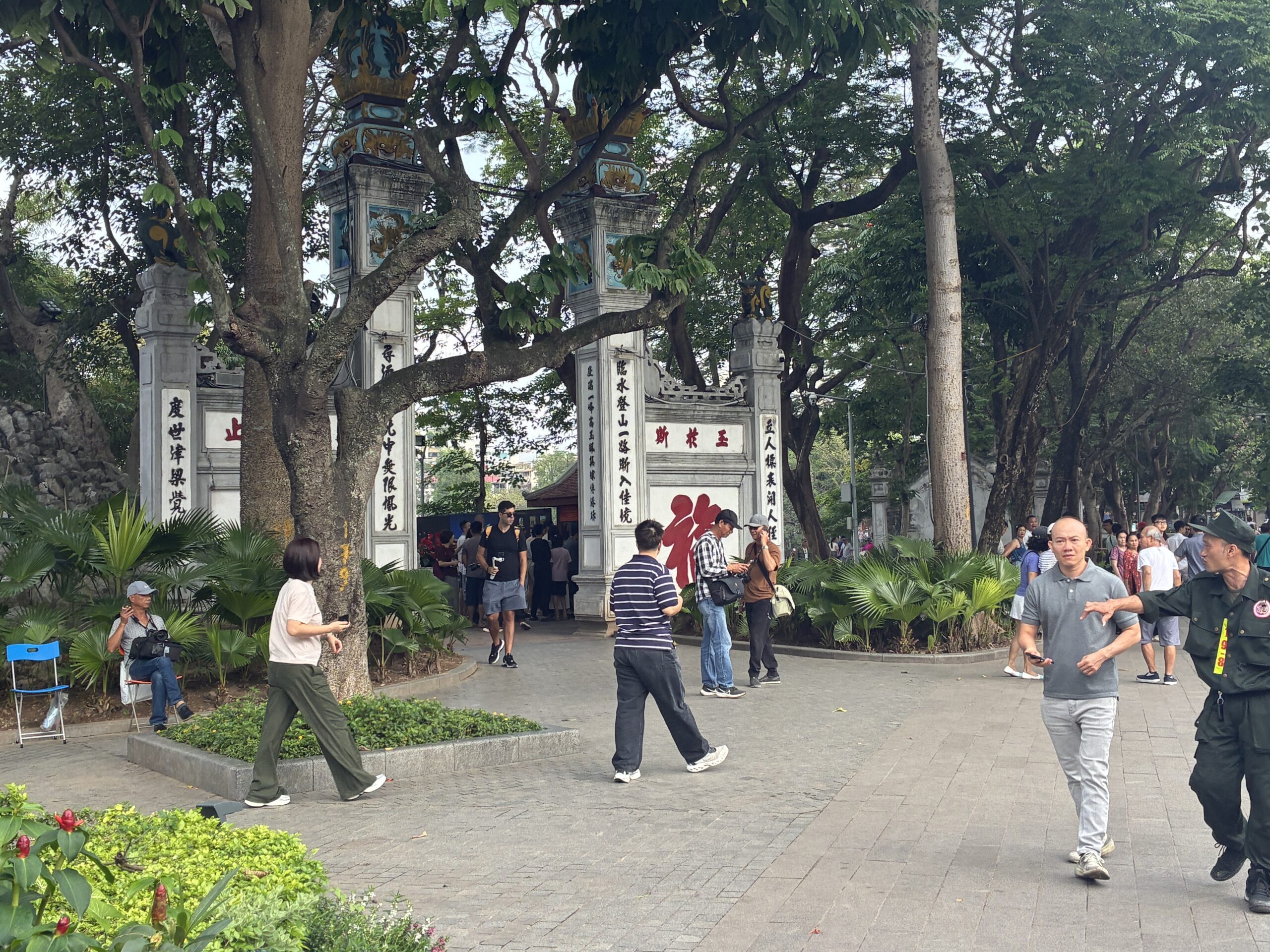
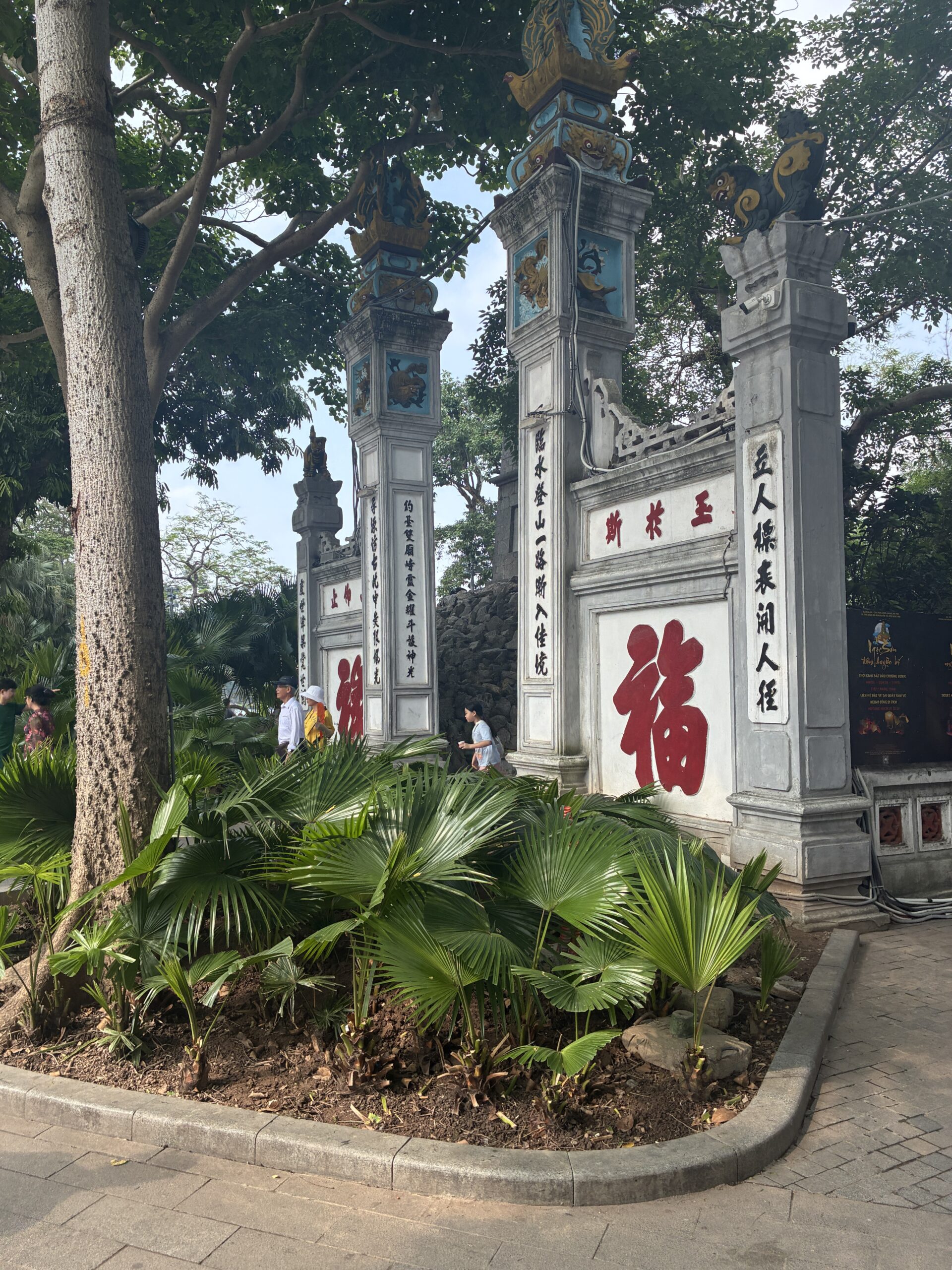
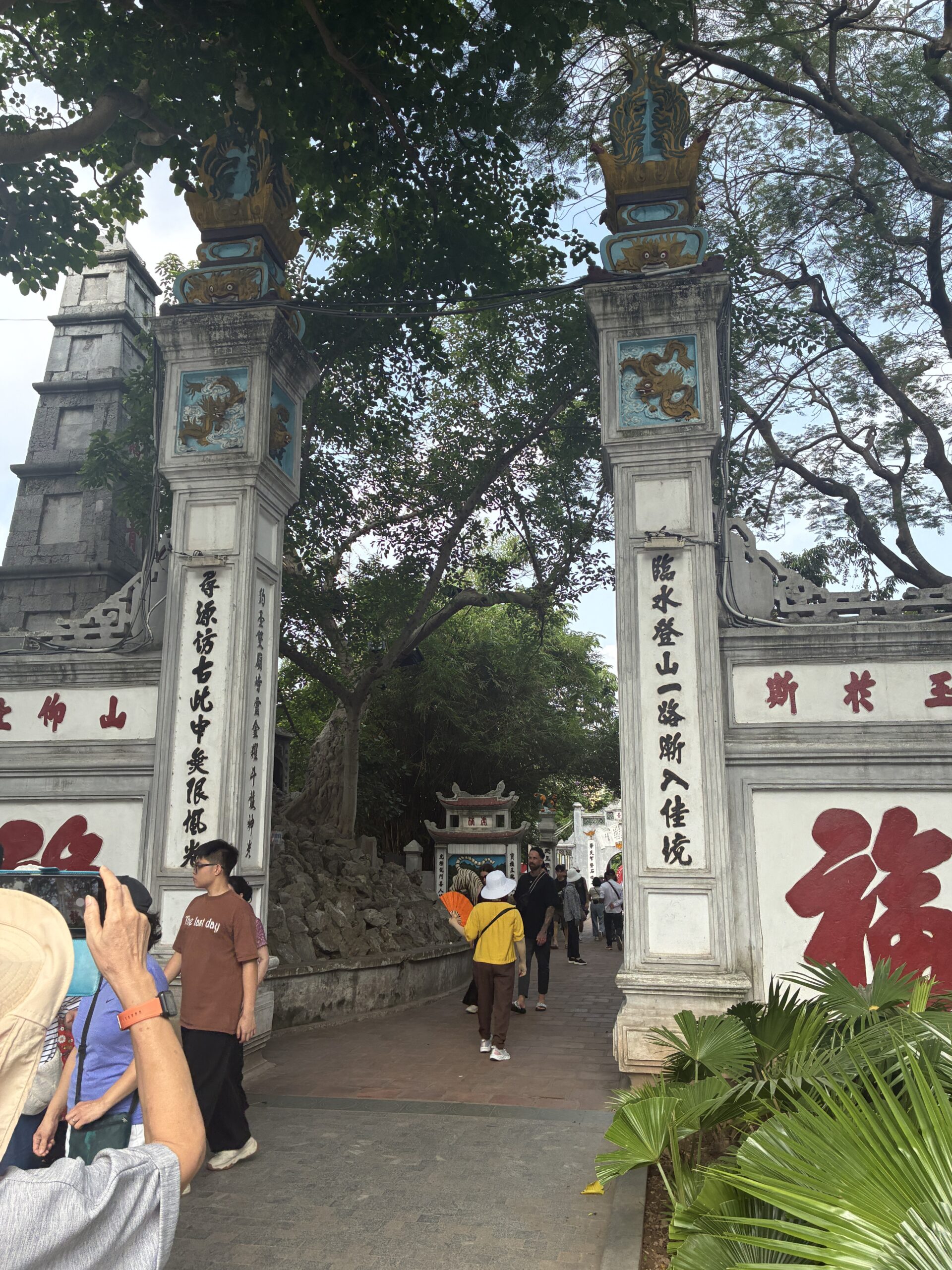
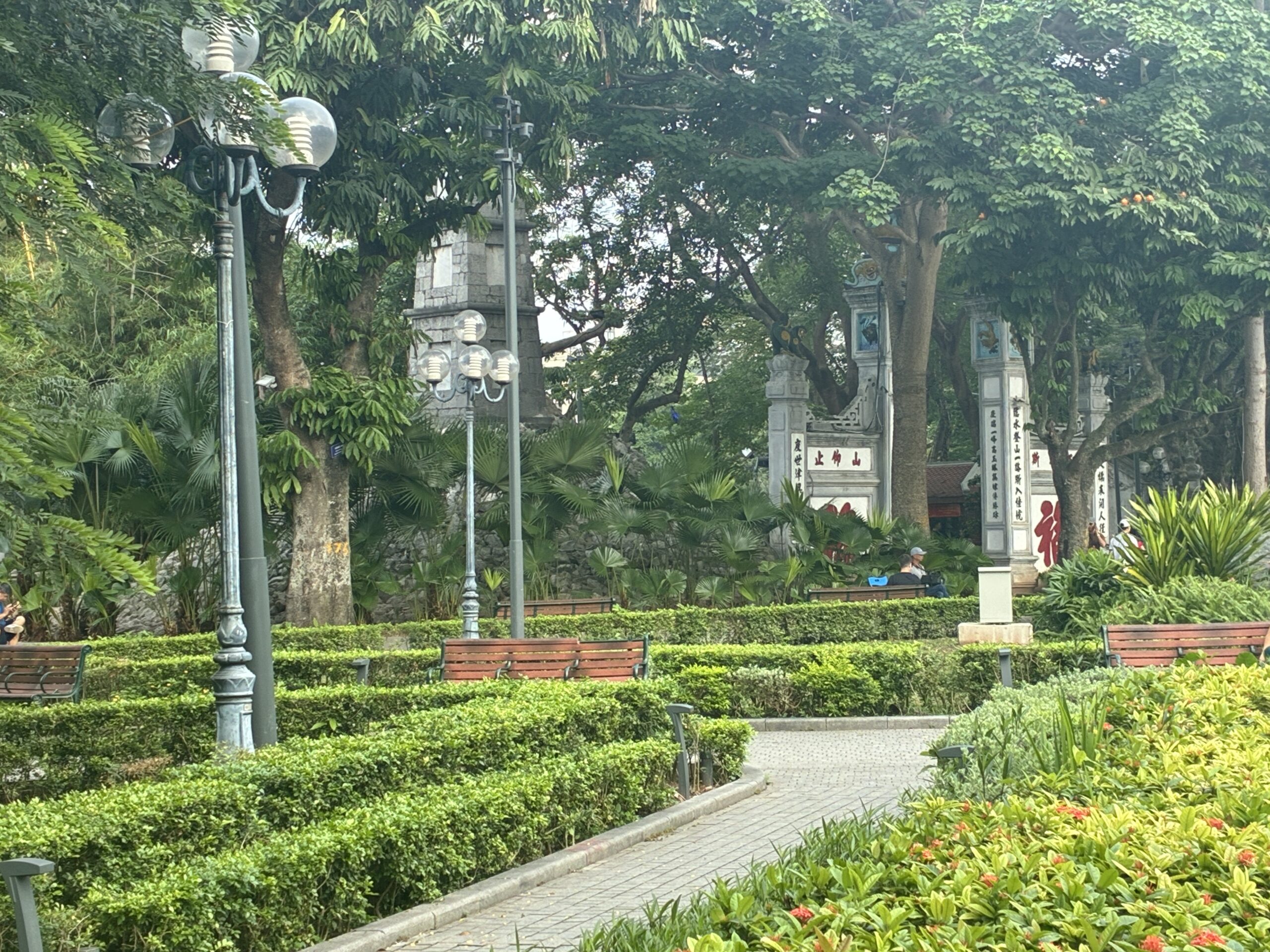
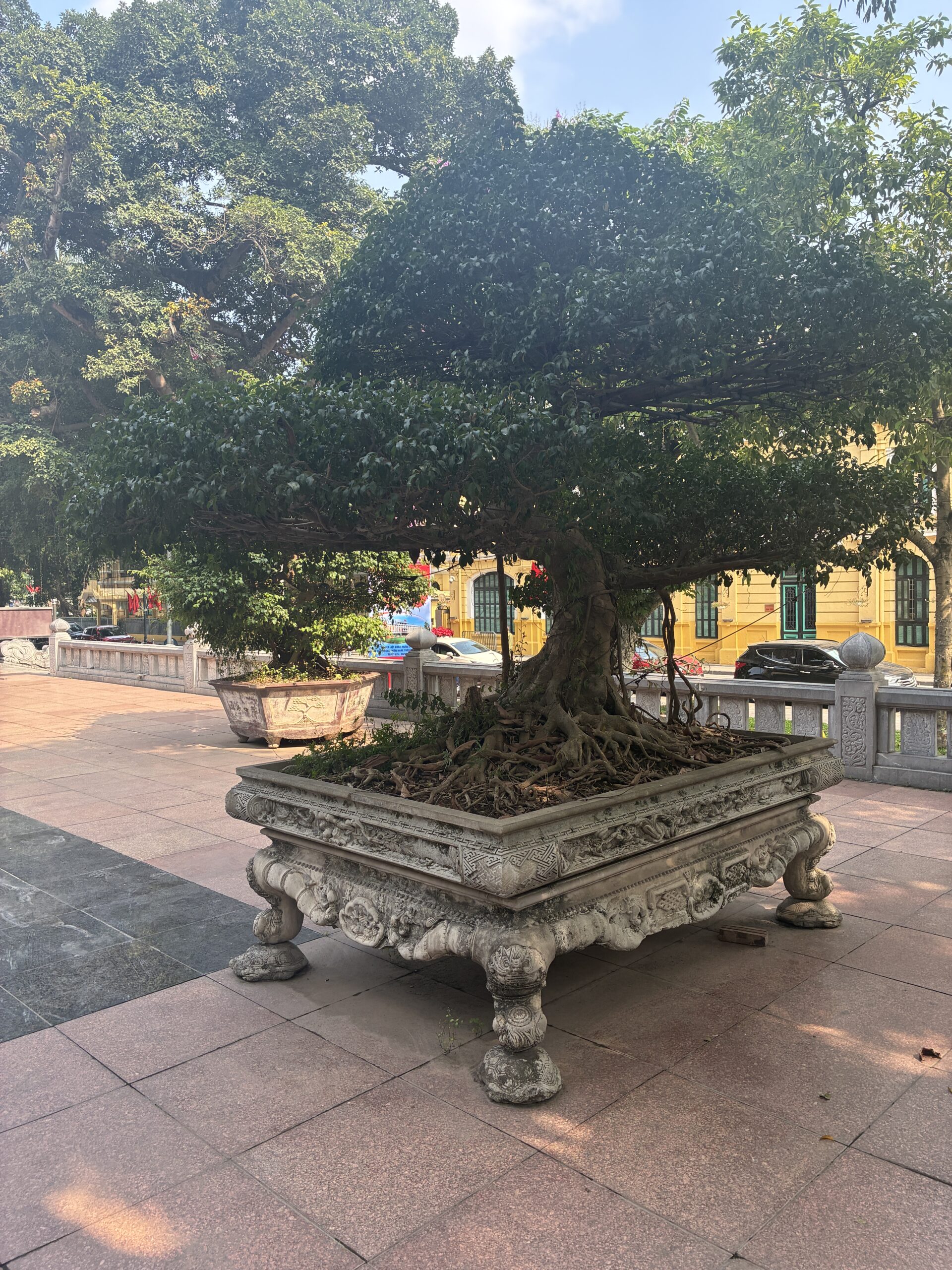
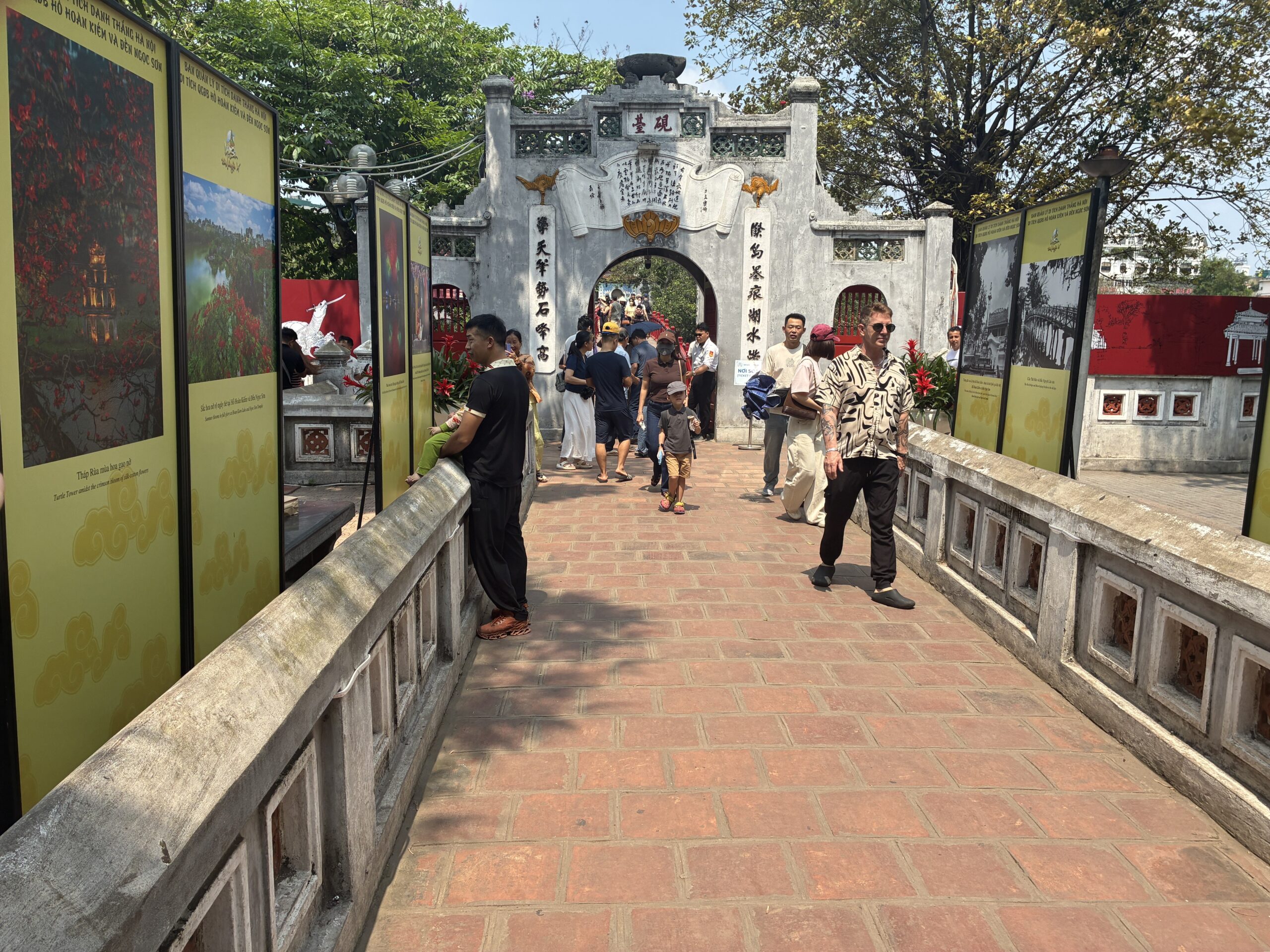
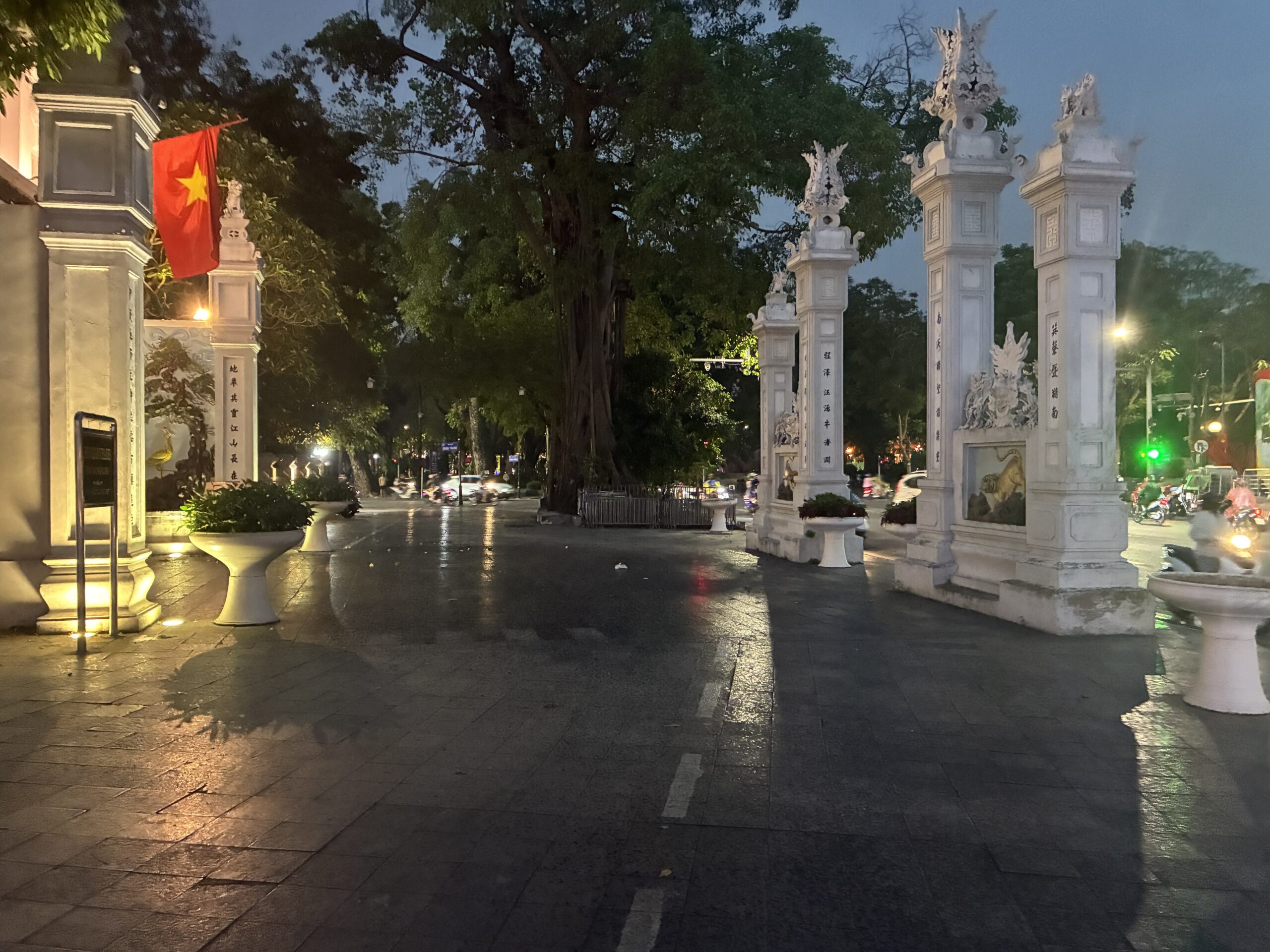
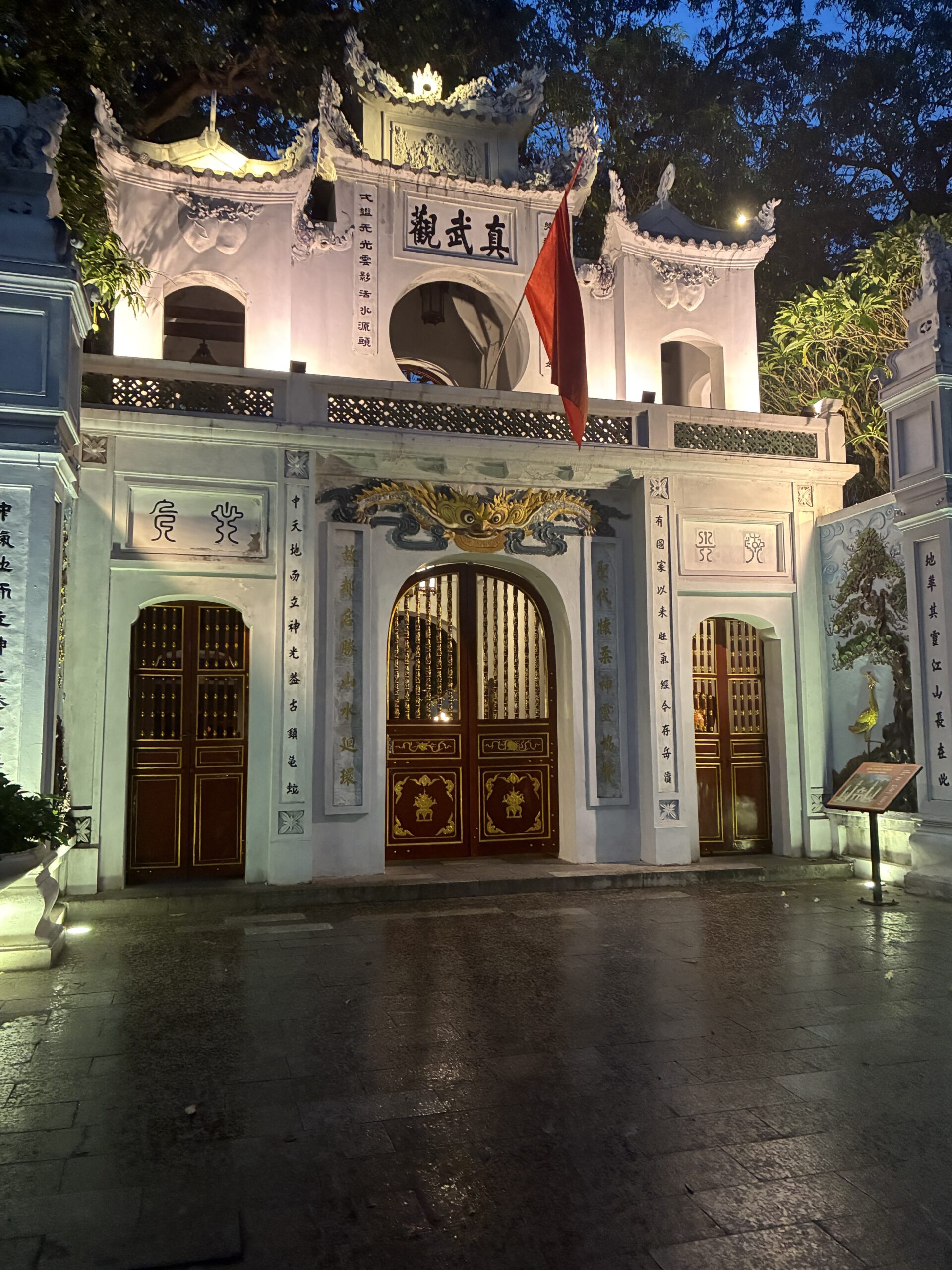
The Ngoc Son Temple sits on the lake, and is both iconic and beautiful (of course). Here, though, even right on the edge of the Old Quarter, although filled with visitors, the areas lacks the same dense and high energy feel of the Old Quarter streets, and is instead far more open and has the feel and look of a tourist attraction, not at all like the crowded and jammed streets we just walked through to get here. Today is actually a major national holiday, celebrating the kings and emperors who founded Vietnam, which no doubt added to the crowds by the lake, which is a major historical site.
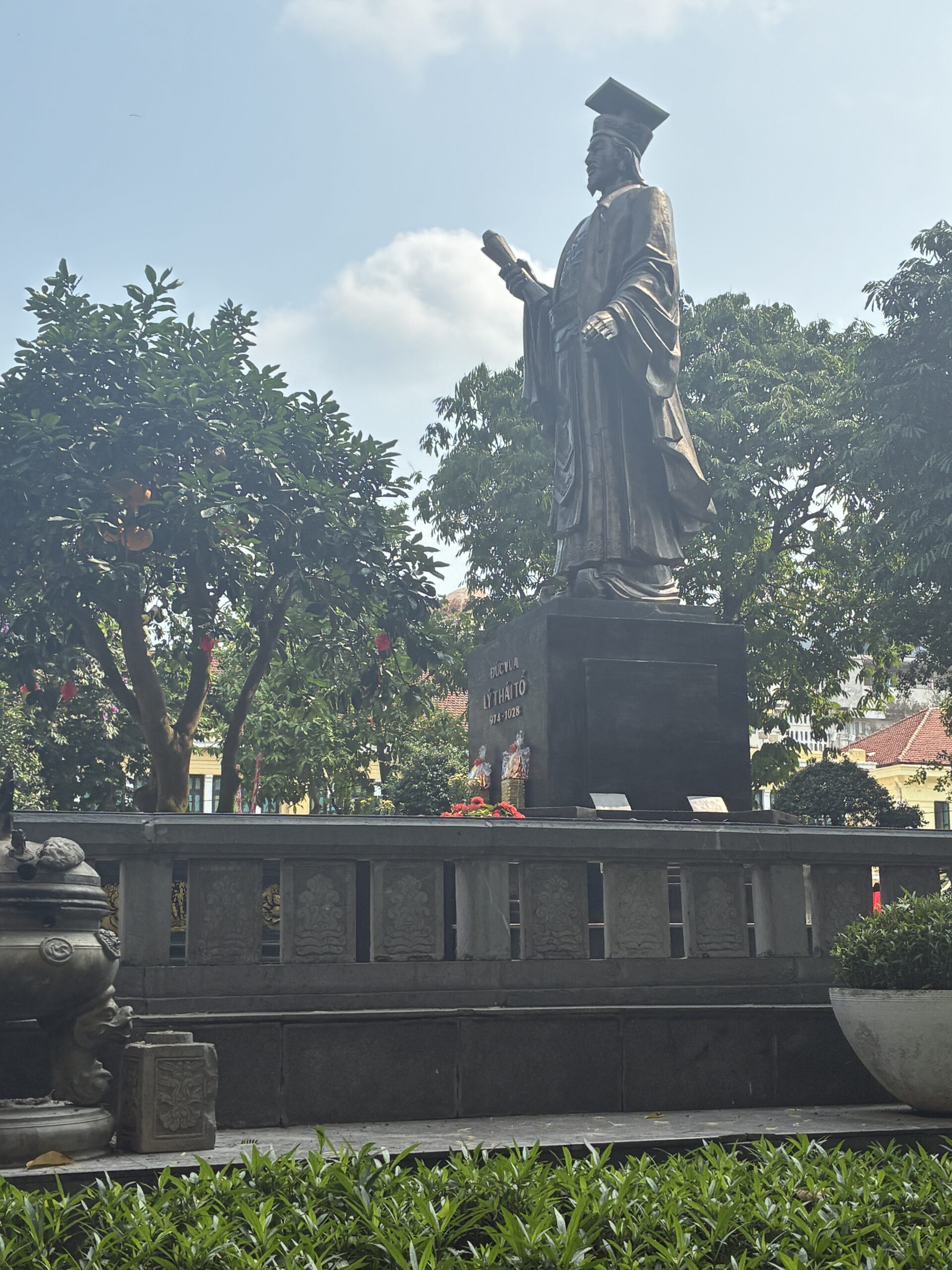
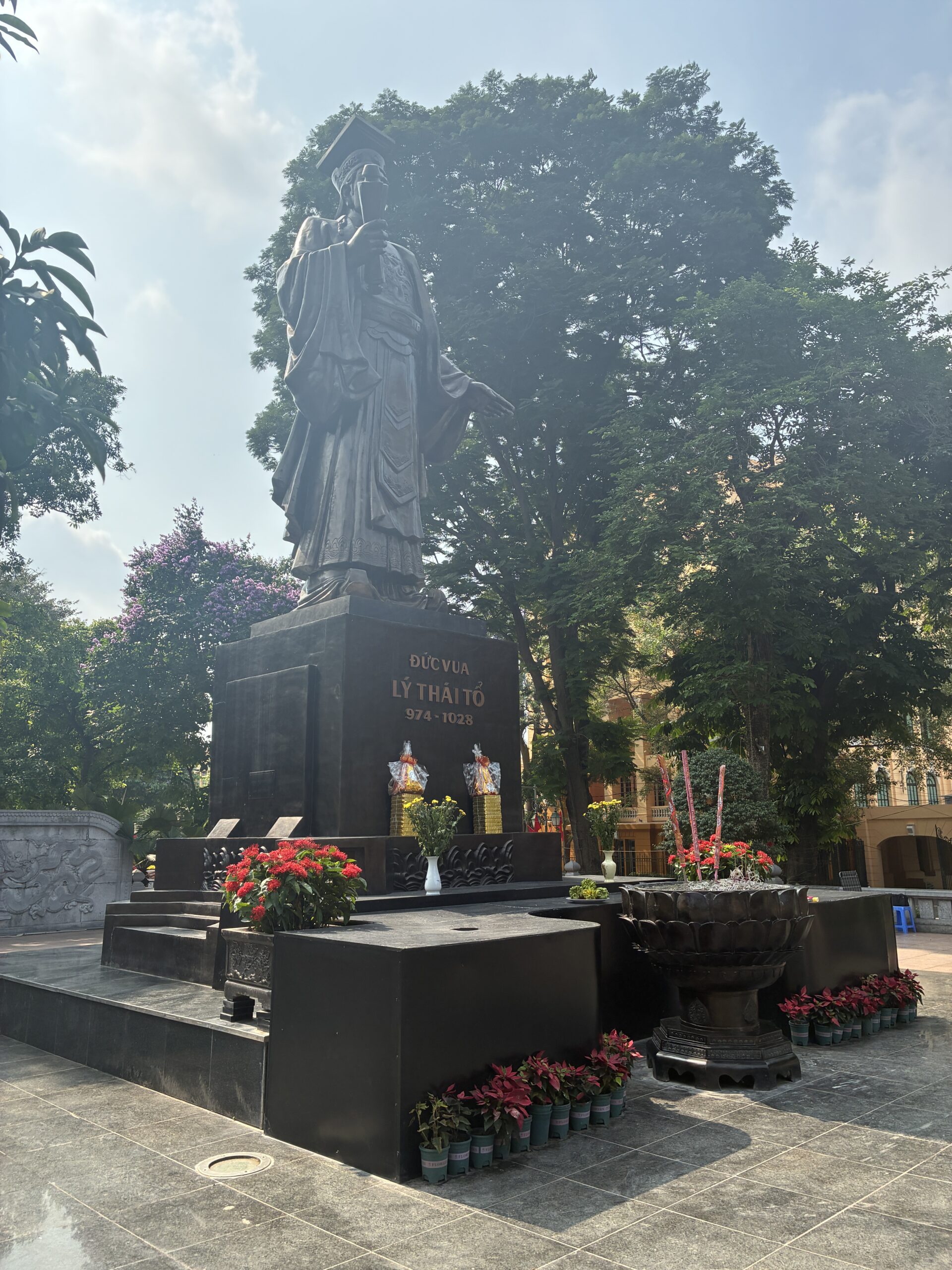
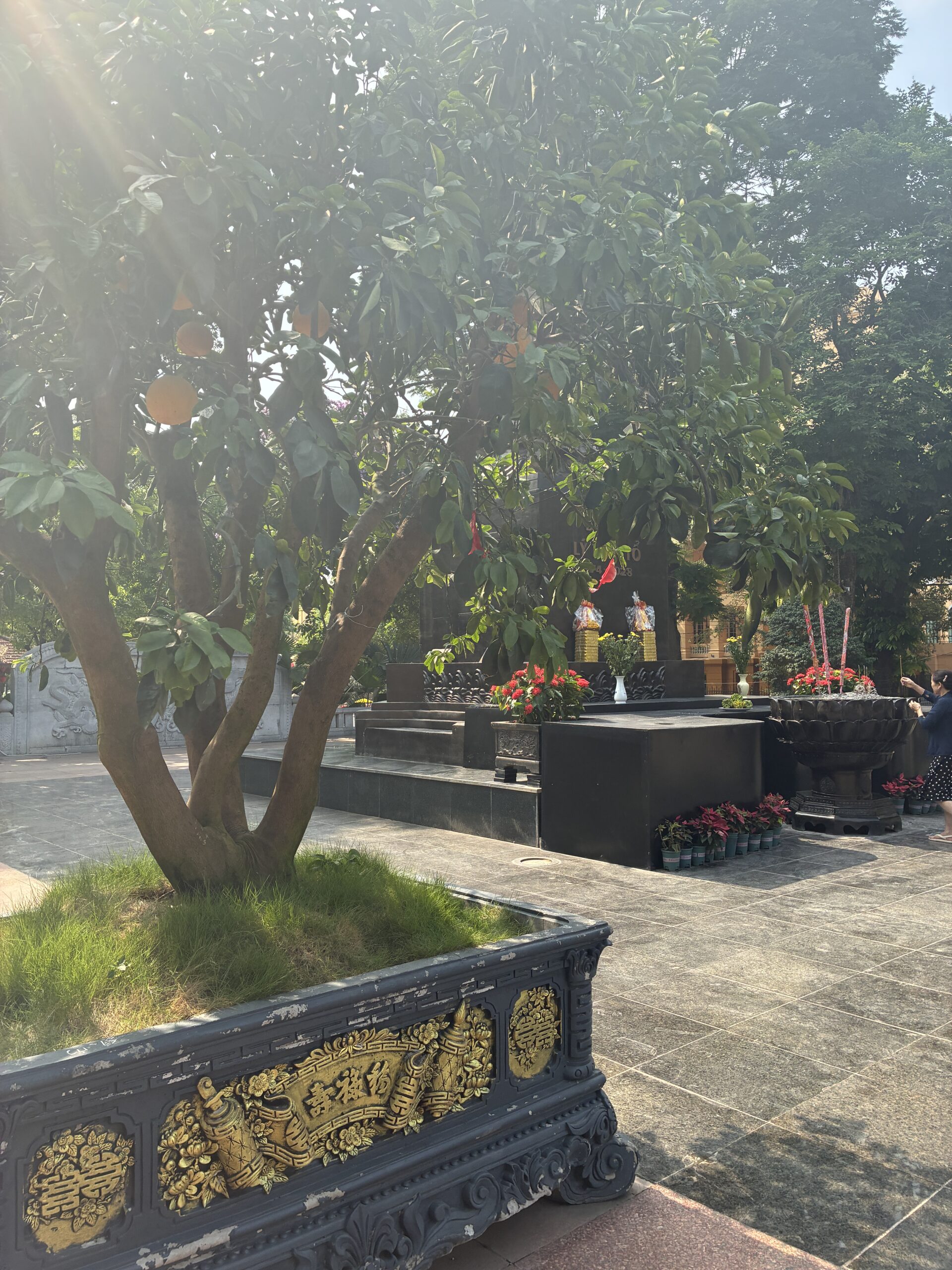
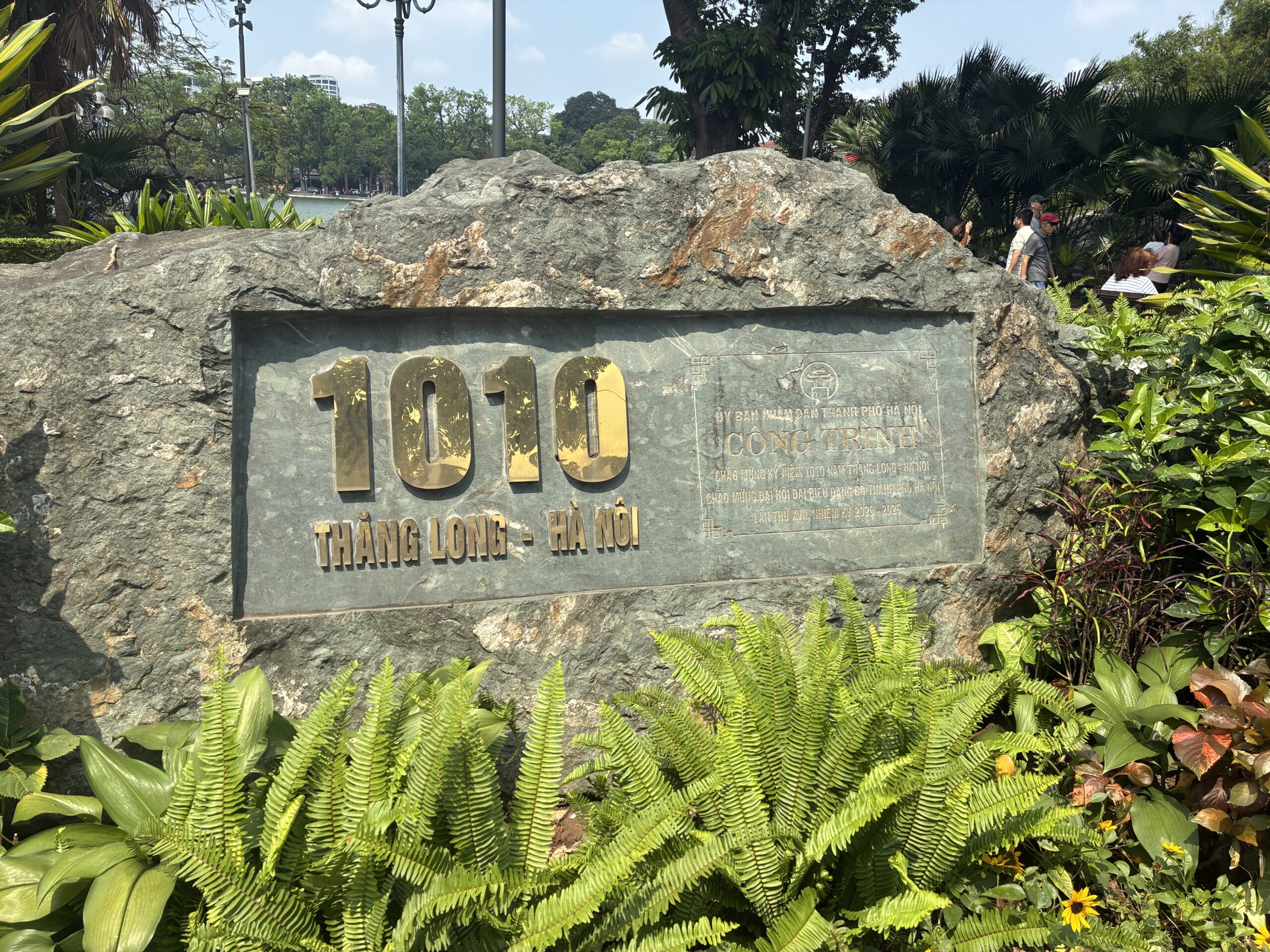
We arrived at Lý Thái Tổ Park and the statue of Lý Thái Tổ, the 11th century emperor who gained independence for Vietnam, and moved its capital to Hanoi in 1010 (for perspective, all this well before King William of France invaded and conquered England in 1066). He named the city Thăng Long, for Ascending (or Rising) Dragon, because, as legend tells it, he saw a golden dragon ascending from the Red River as he arrived, which he took as an omen. In 1831, the name of the city was changed to Hà Nội, meaning city within the rivers, or inside the rivers, as Hanoi lies within a series of surrounding rivers, adding to its strategic importance.
Modern Hanoi, still the capital city, has about 6 million people in the city proper, packed with over 76,000 people per square mile in the Old Quarter, one of the highest densities in the world, and the larger city municipality has a population of almost 9 million. As of this year, there are a staggering seven million motorcycles and scooters registered in the city. I’m not surprised, just walking the streets. Everyone, men and women, young and old (and sometimes very old, and sometimes whole families, with young children and infants sitting between the driver and passenger, or in front of the driver), ride these, in dry and hot weather and in the rain (as I saw later in the evening, when we got caught in a significant thunder storm).
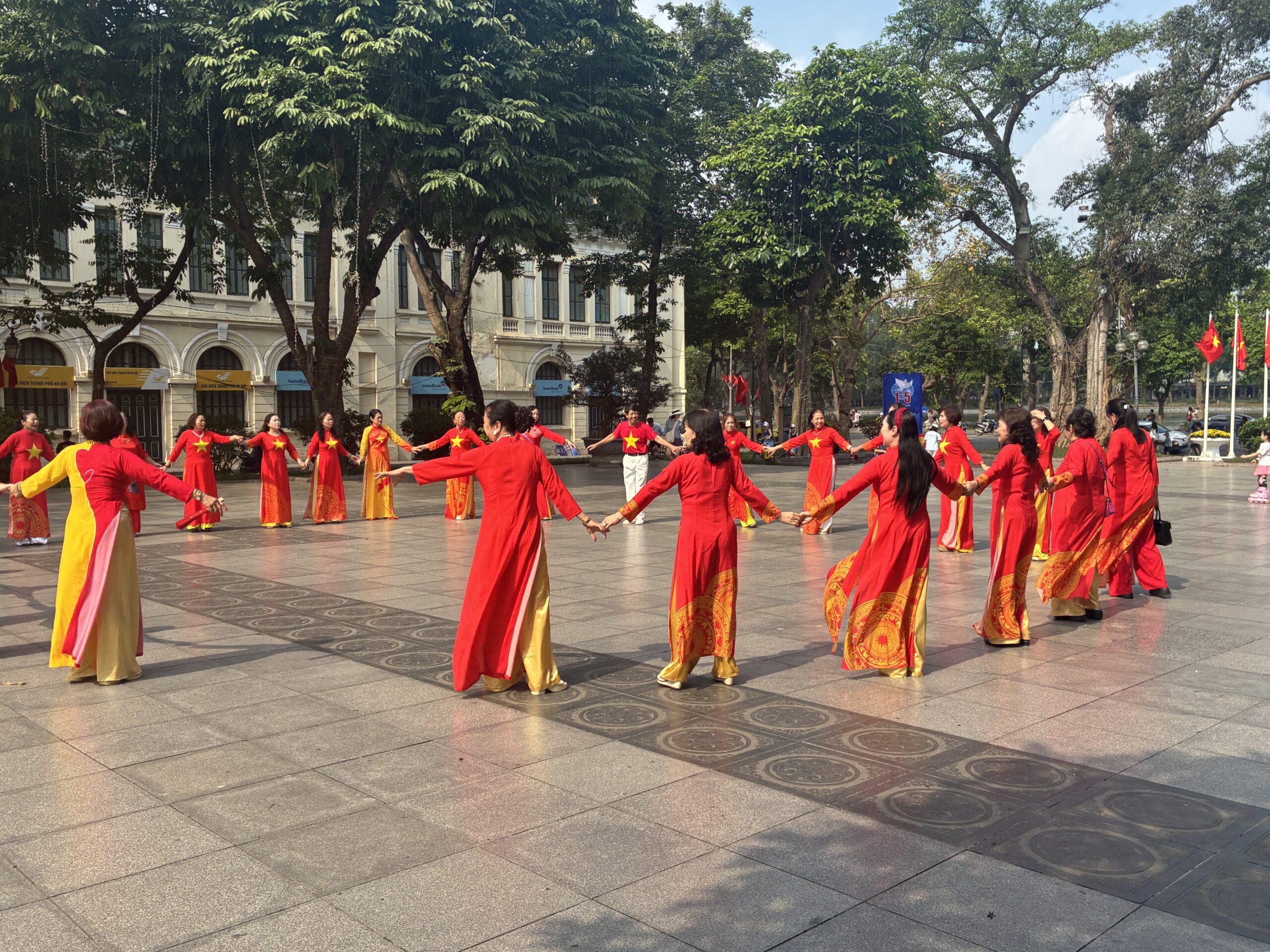
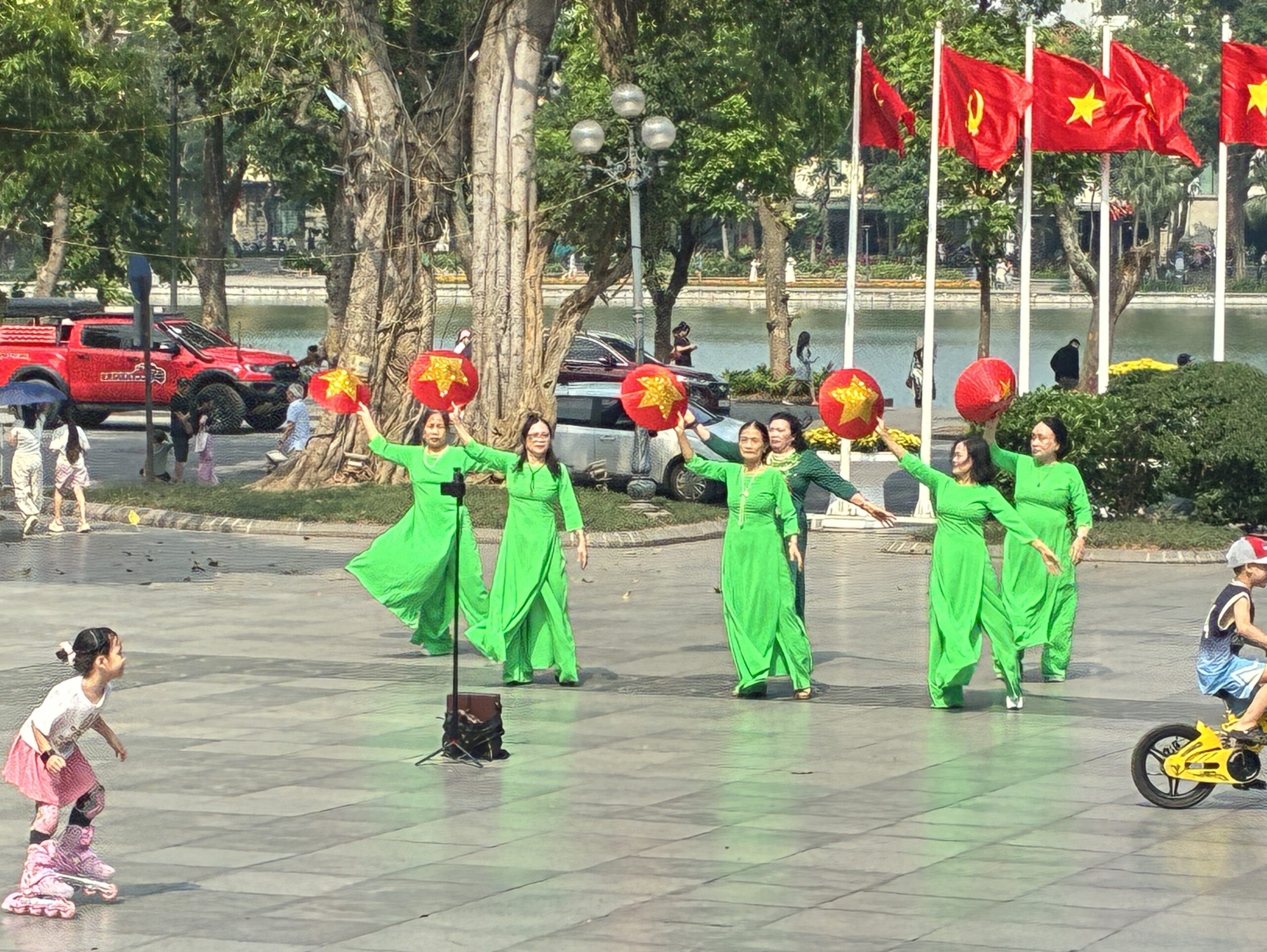
When we arrived at Lý Thái Tổ Park, we saw a group of women wearing in traditional clothing (although decorated with the more contemporary Vietnamese star) in the large plaza in front of the statue, performing dances, perhaps in commemoration of the public holiday. Lovely to see.
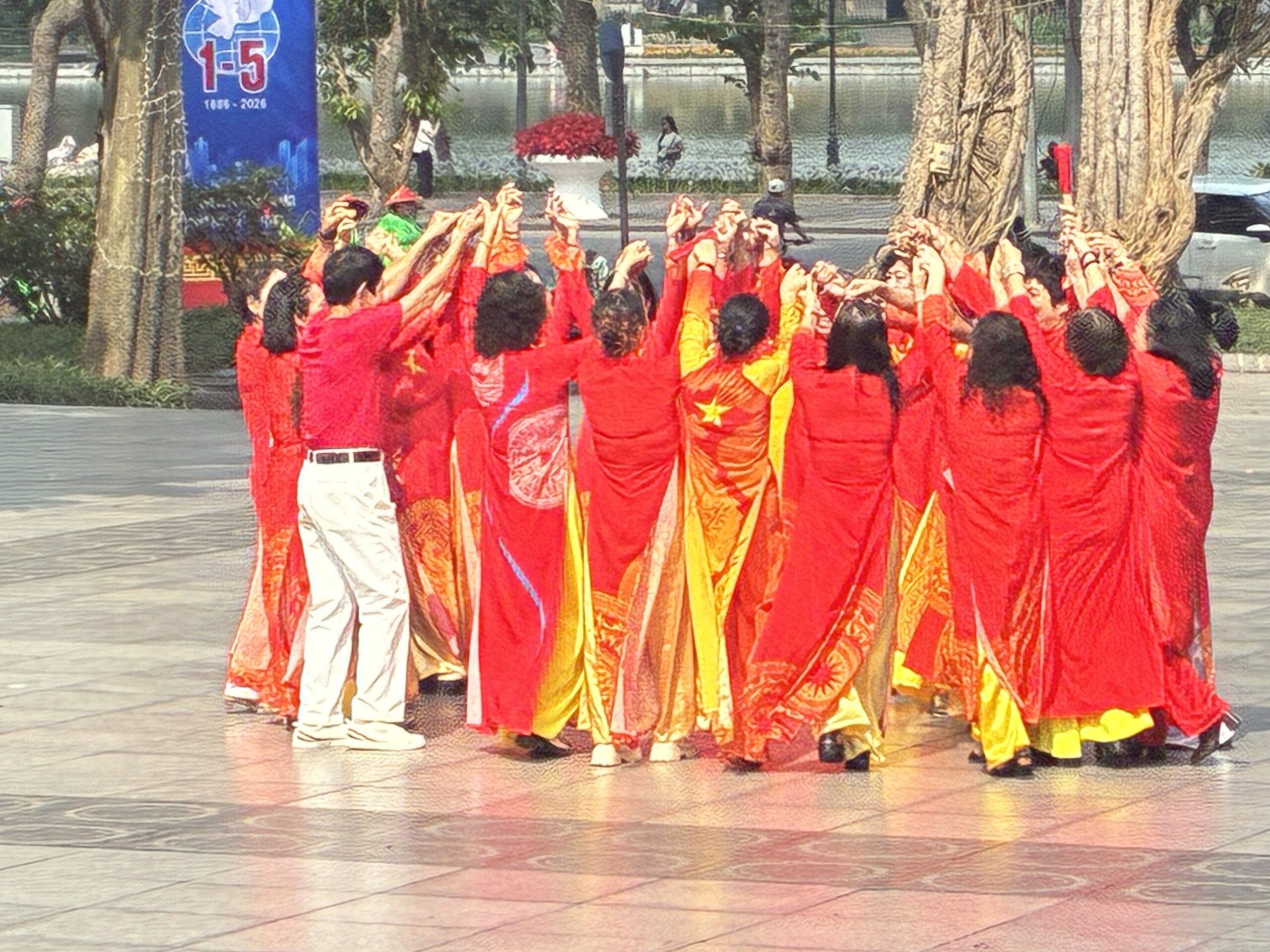
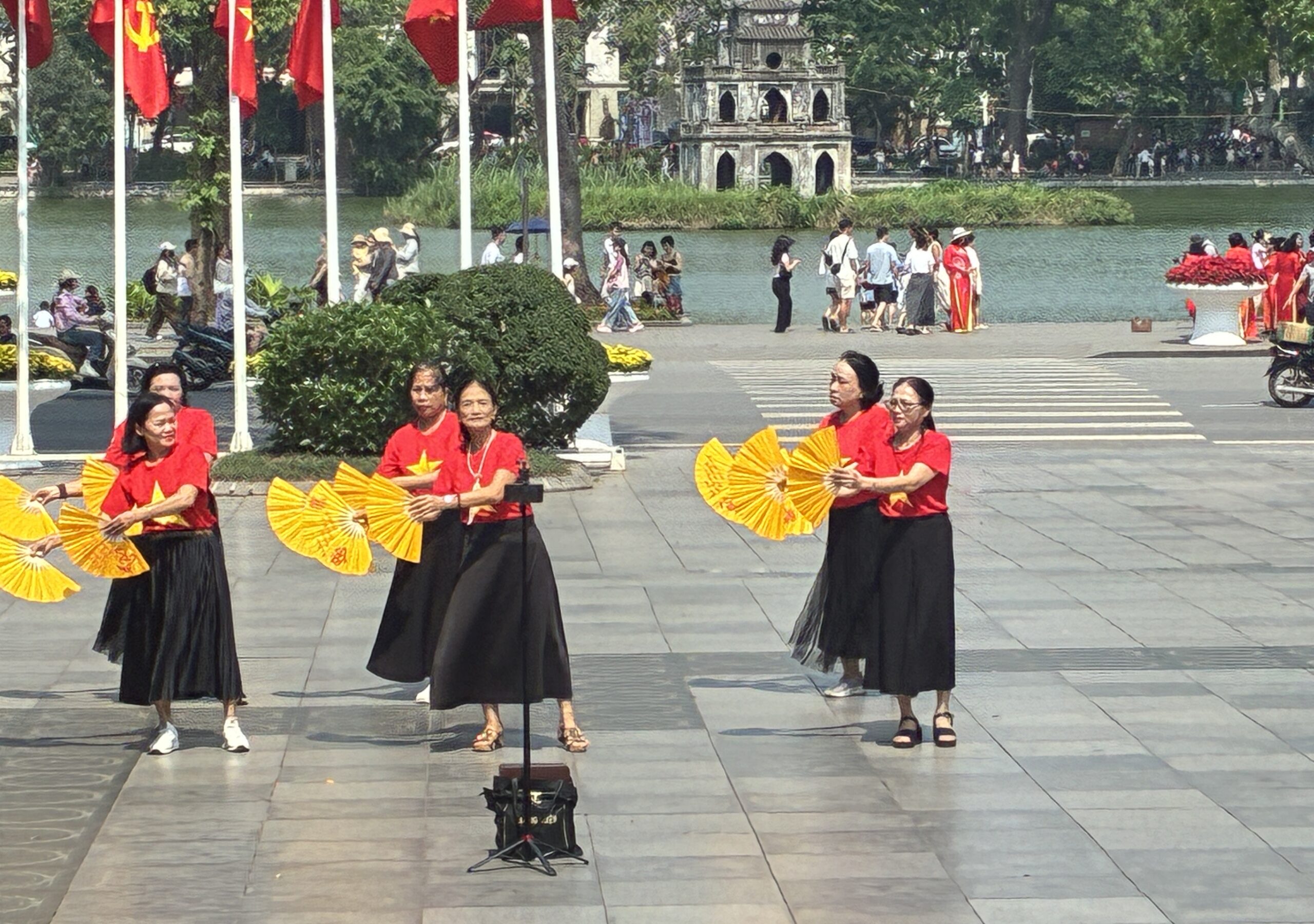
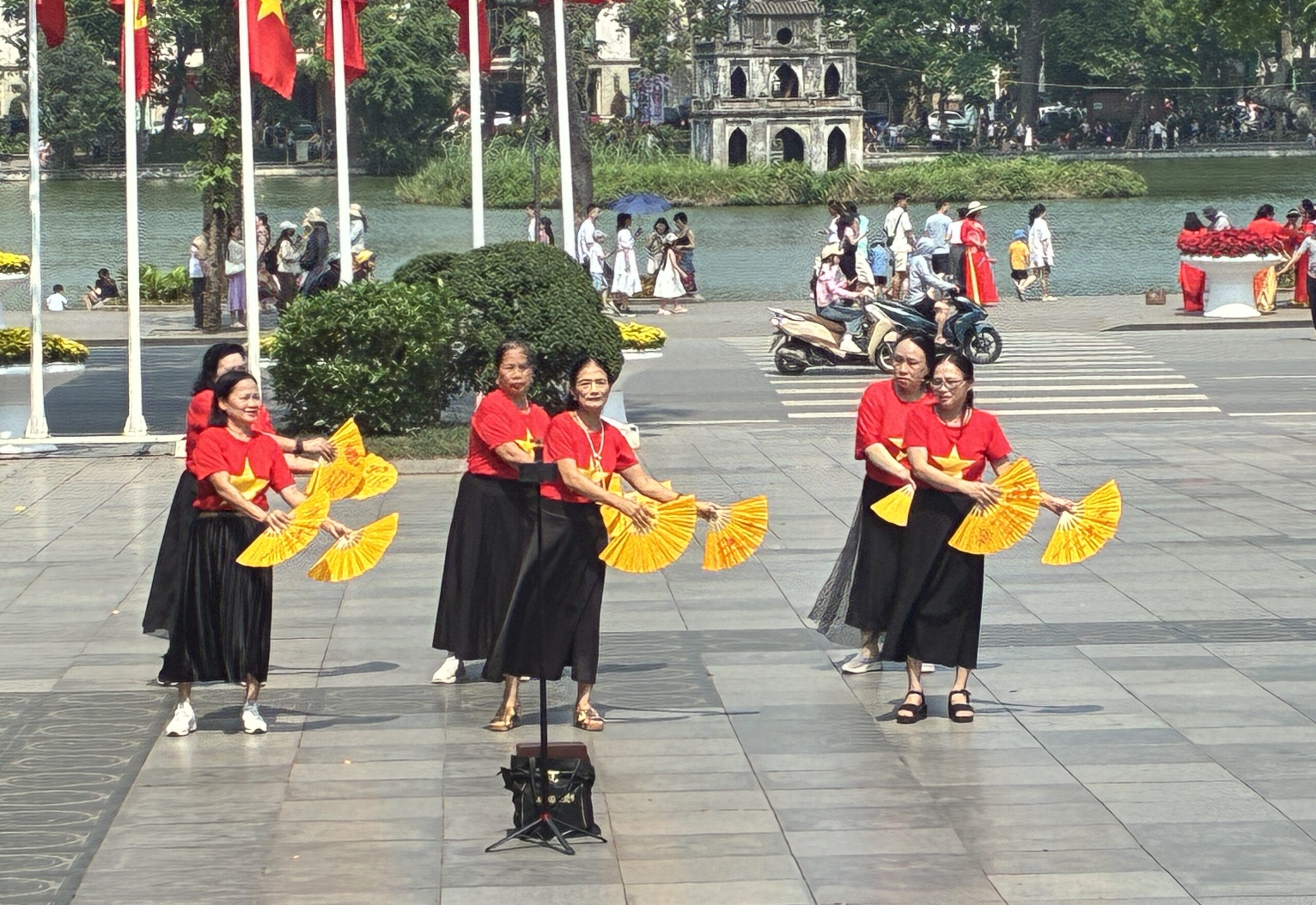
Meantime, our guide was a no show, perhaps because we booked the street tour at the last minute (although we did get a confirmation email), but GuruWalks came through and sent along a new guide, for what, happily for us, turned out to be a private tour for just the two of us. Plus, we very lucky with our replacement guide, Van, who was a delightful, friendly, bubbly and effervescent, and very personable young woman, and herself a local, with a great way about her, and like all our street guides have been, a fountain of knowledge about the history, cultural, and spiritual traditions of the city and the country. She was great, and a full-time guide, and we really enjoyed spending a few hours with her, walking through the temples, pagodas, and streets of the Old Quarter.
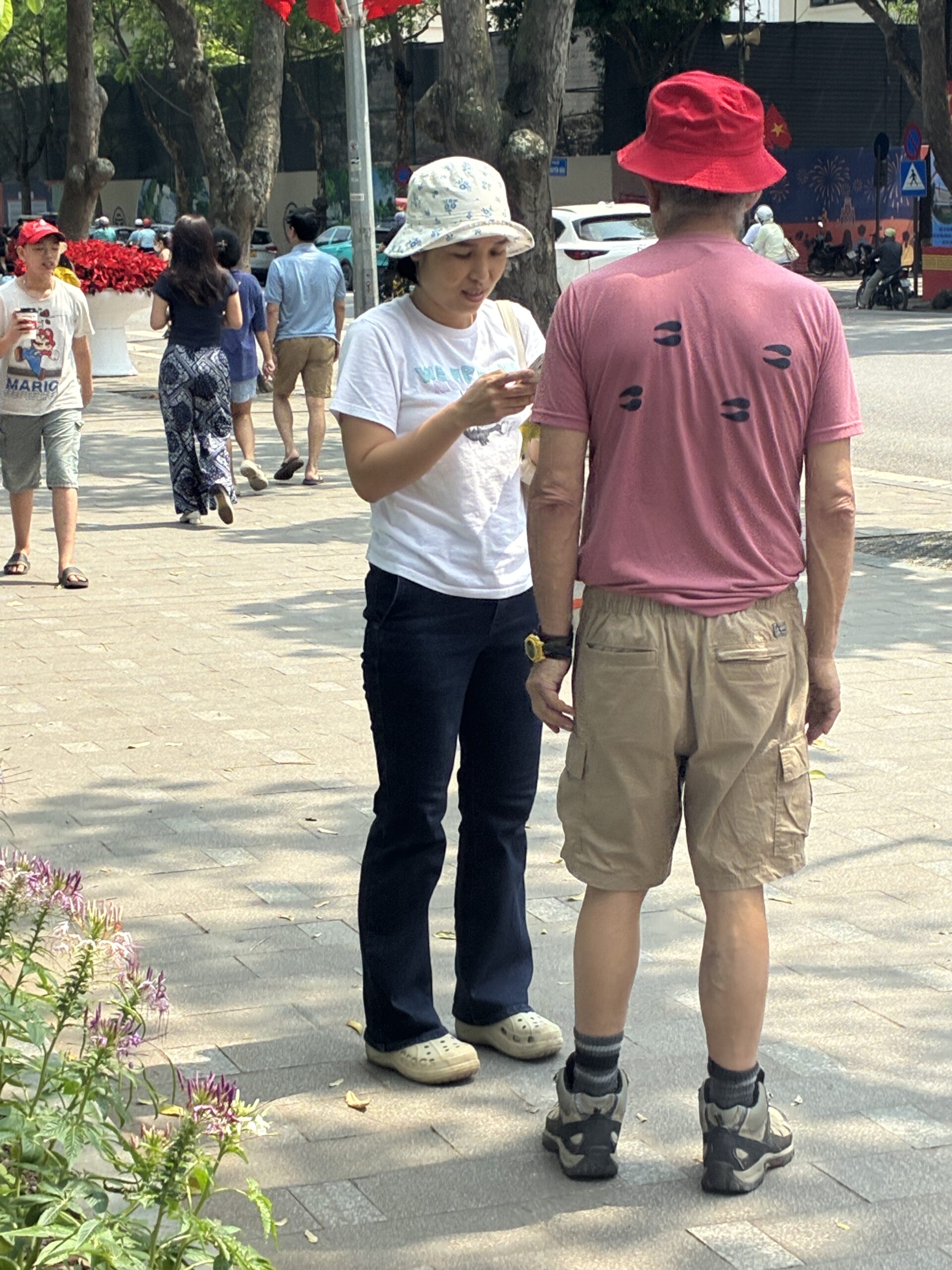
Despite Laurence’s decision to head home, he was determined to make that best of the day, which we did, and we also have all day tomorrow, but the heat and humidity was definitely getting to him, so we rested whenever we could, which we wouldn’t have been able to do on a tour with more people. Van was not only understanding and considerate, but also concerned that Laurence was doing okay.
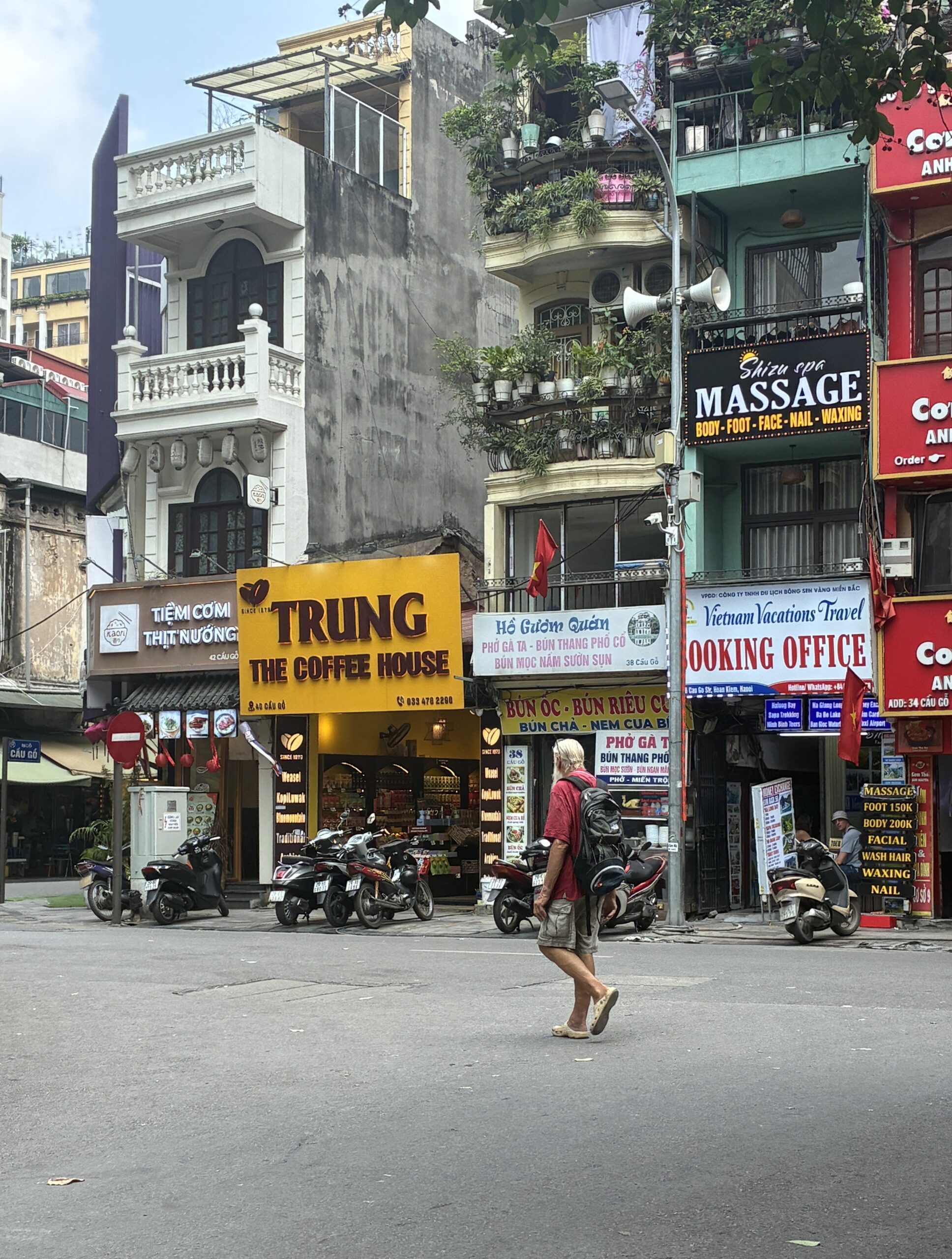
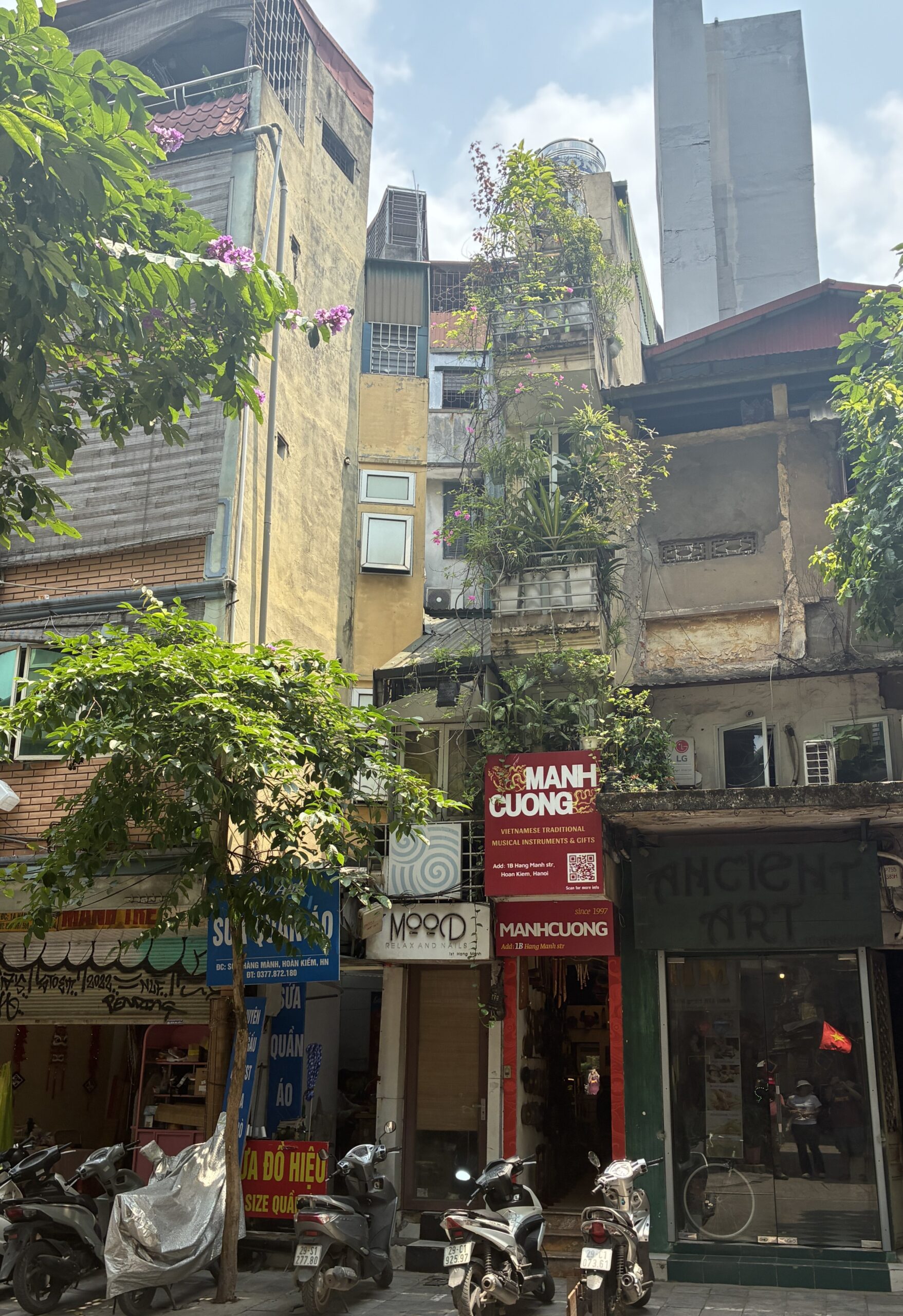
A local herself, who loves Hanoi, Van gave us lots of interesting information, both about the temples and pagodas and the spirituality of the culture, and the historical sites and history of the city, including its French domination, and the nature and architecture of local housing. She pointed out that the Vietnamese homes in the Old Quarter were narrower than those that were French, for the same reason the Machiya shops and businesses in Kyoto were narrow and long, like elongated tubes. Taxes! The wider the property, the higher the taxes.
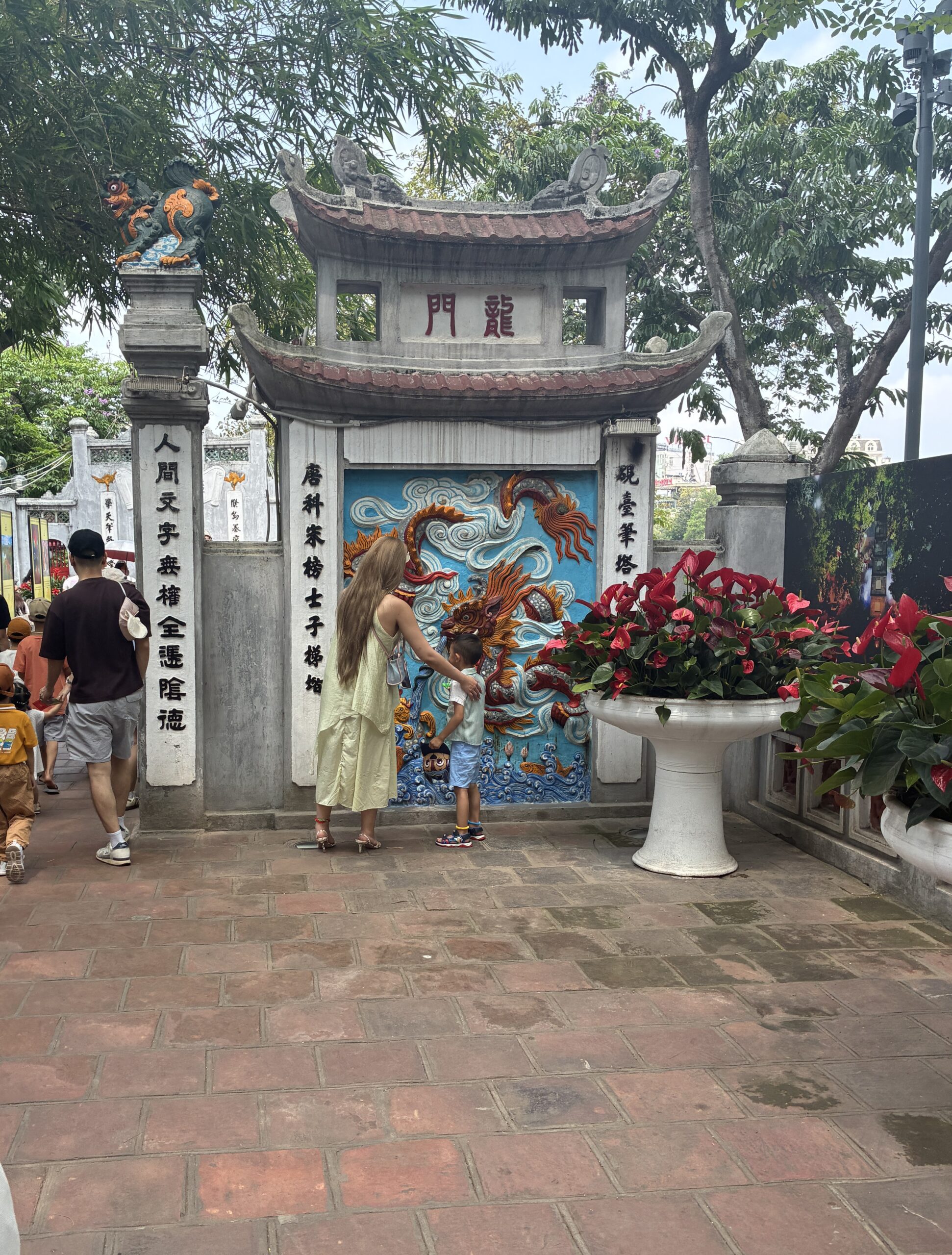
We also visited a couple of temples and pagodas, including returning to Ngoc Son Temple on Hoàn Kiếm Lake, and Van described the symbology and iconography, including deities and animal spirits, emphasizing Yin and Yang, and harmony and cooperation. The crane bird, for instance, standing on the back of the turtle, emphasizes harmony and cooperation between sky, land, and water, and cooperation and comradeship between the long legged crane and the turtle, mutually and harmoniously helping one another.
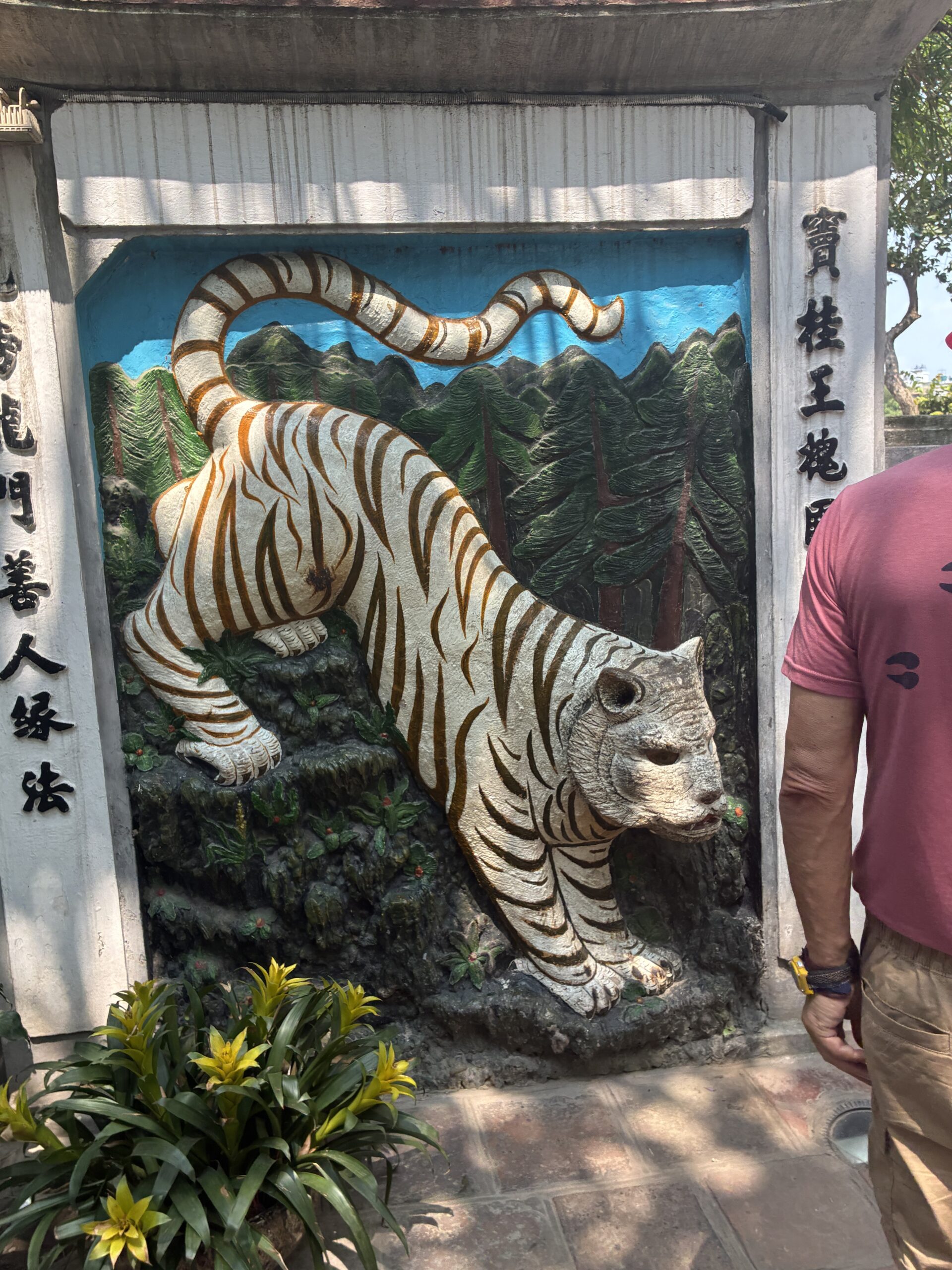
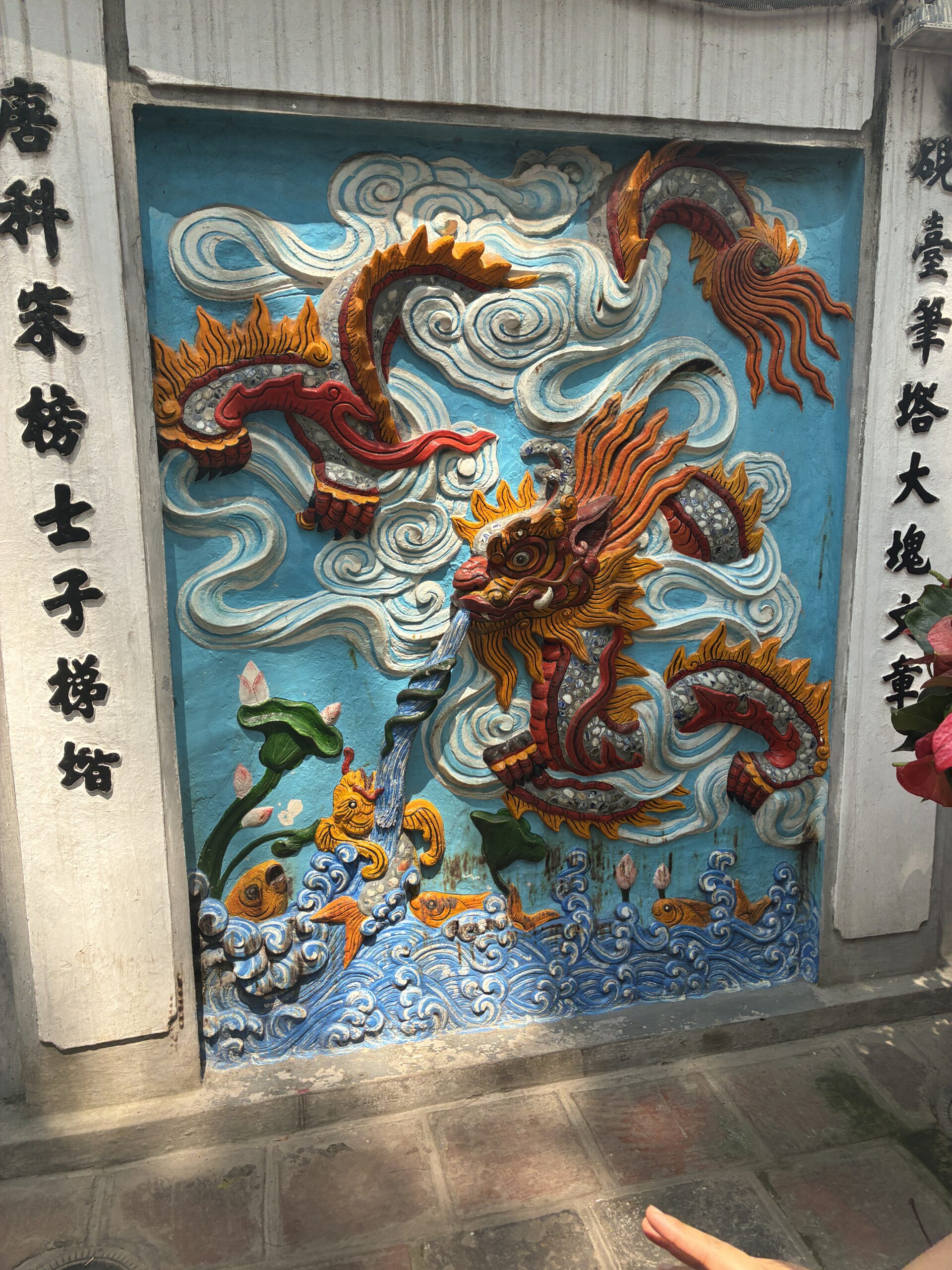
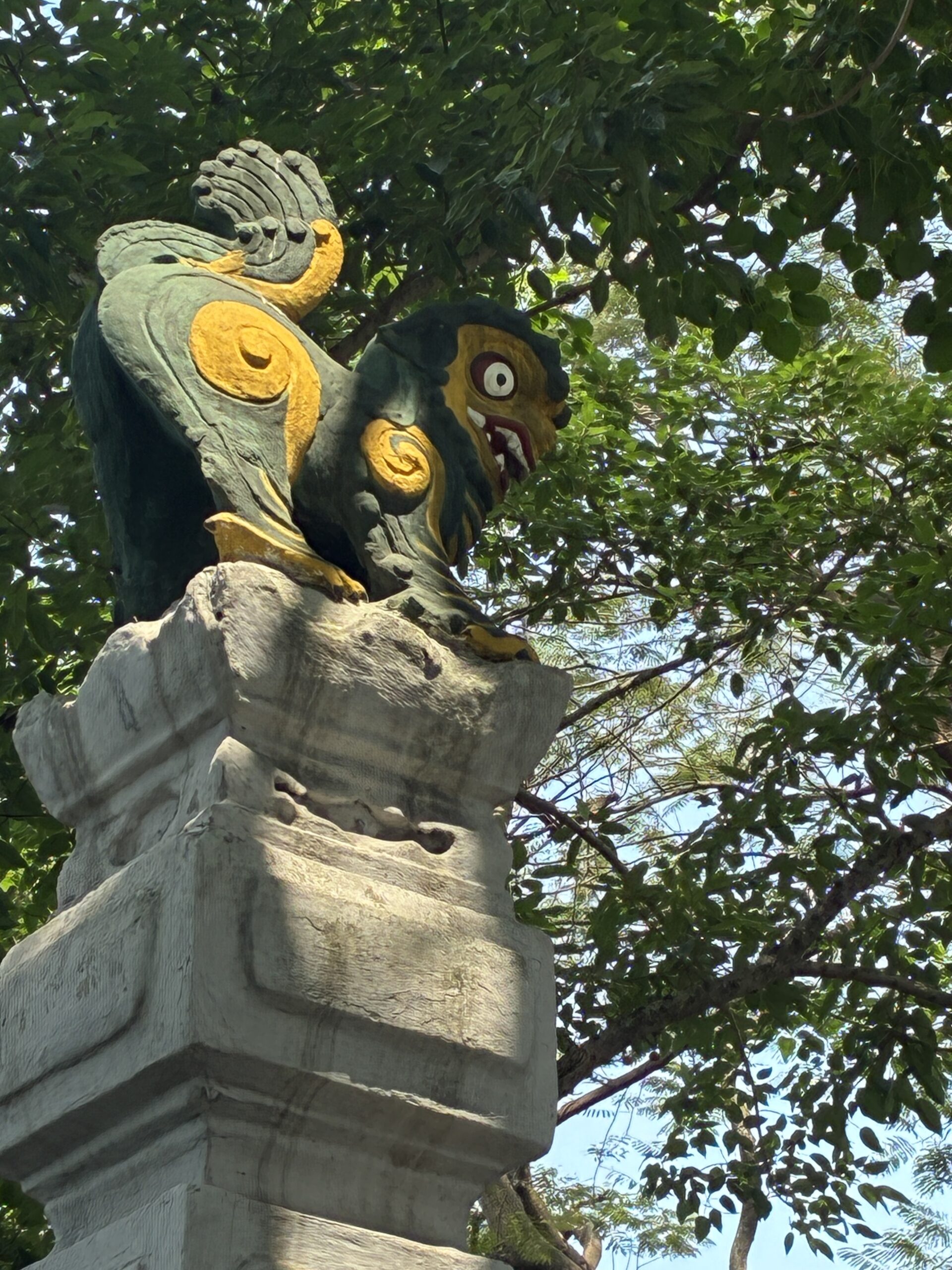
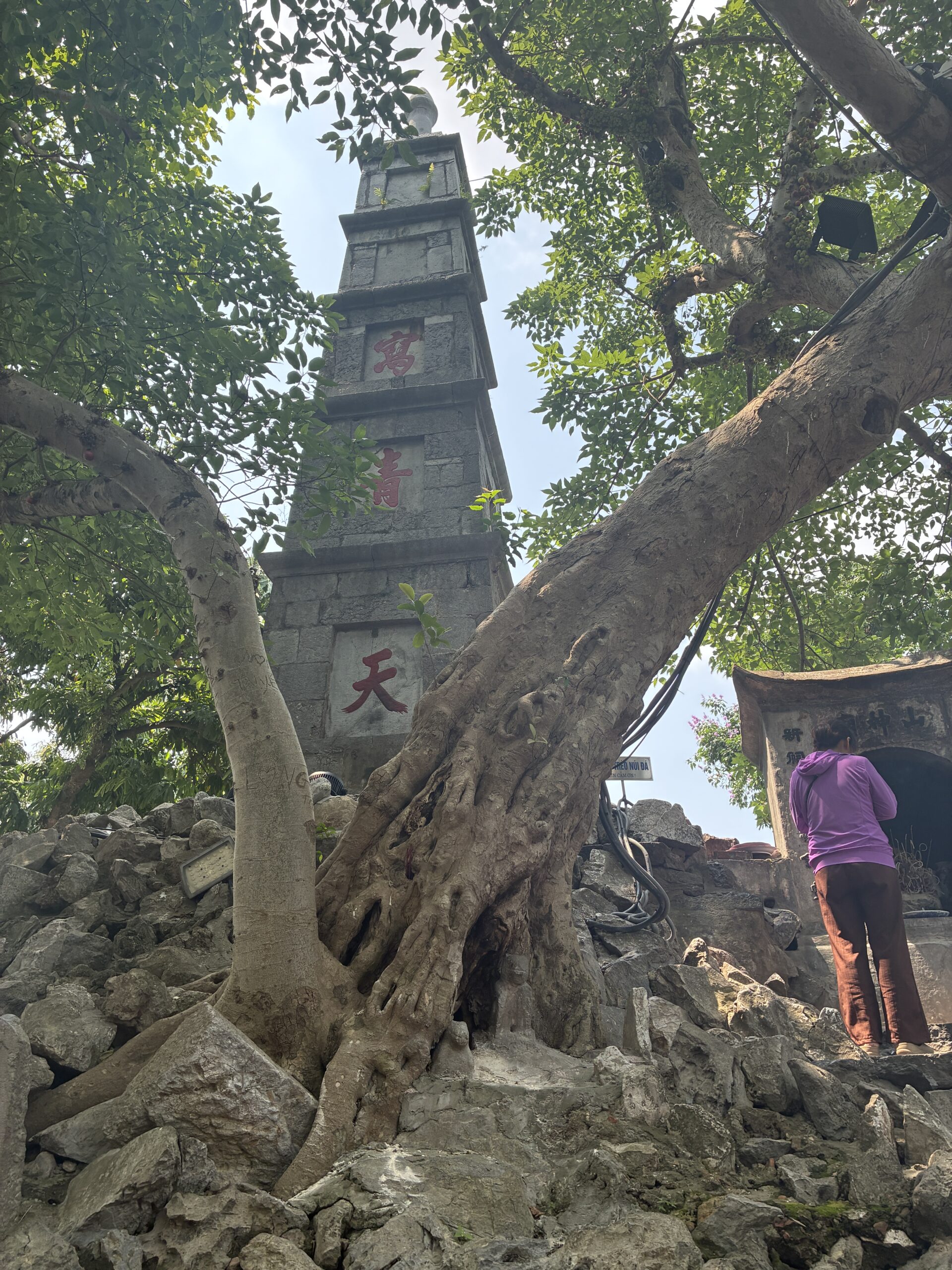
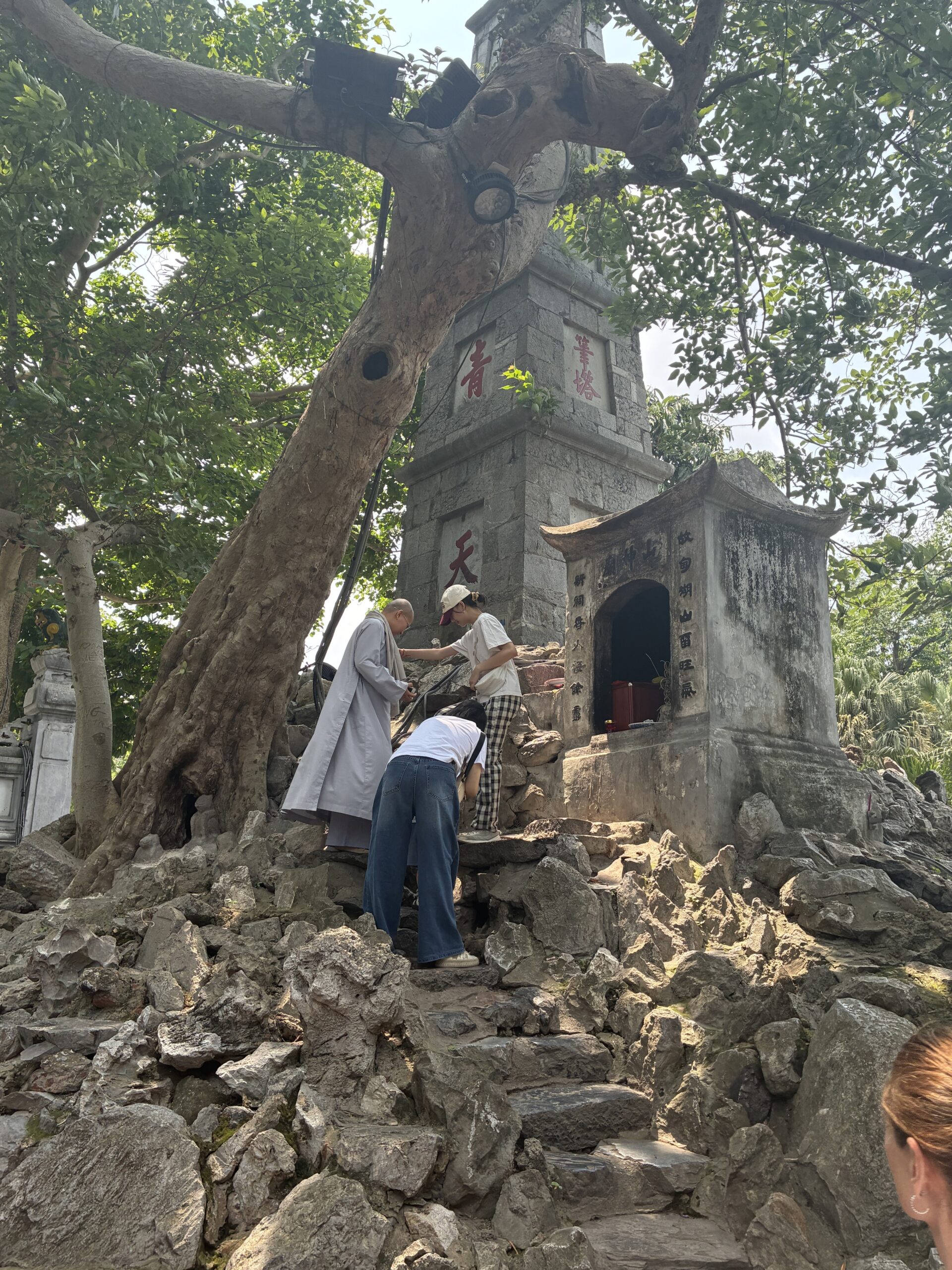
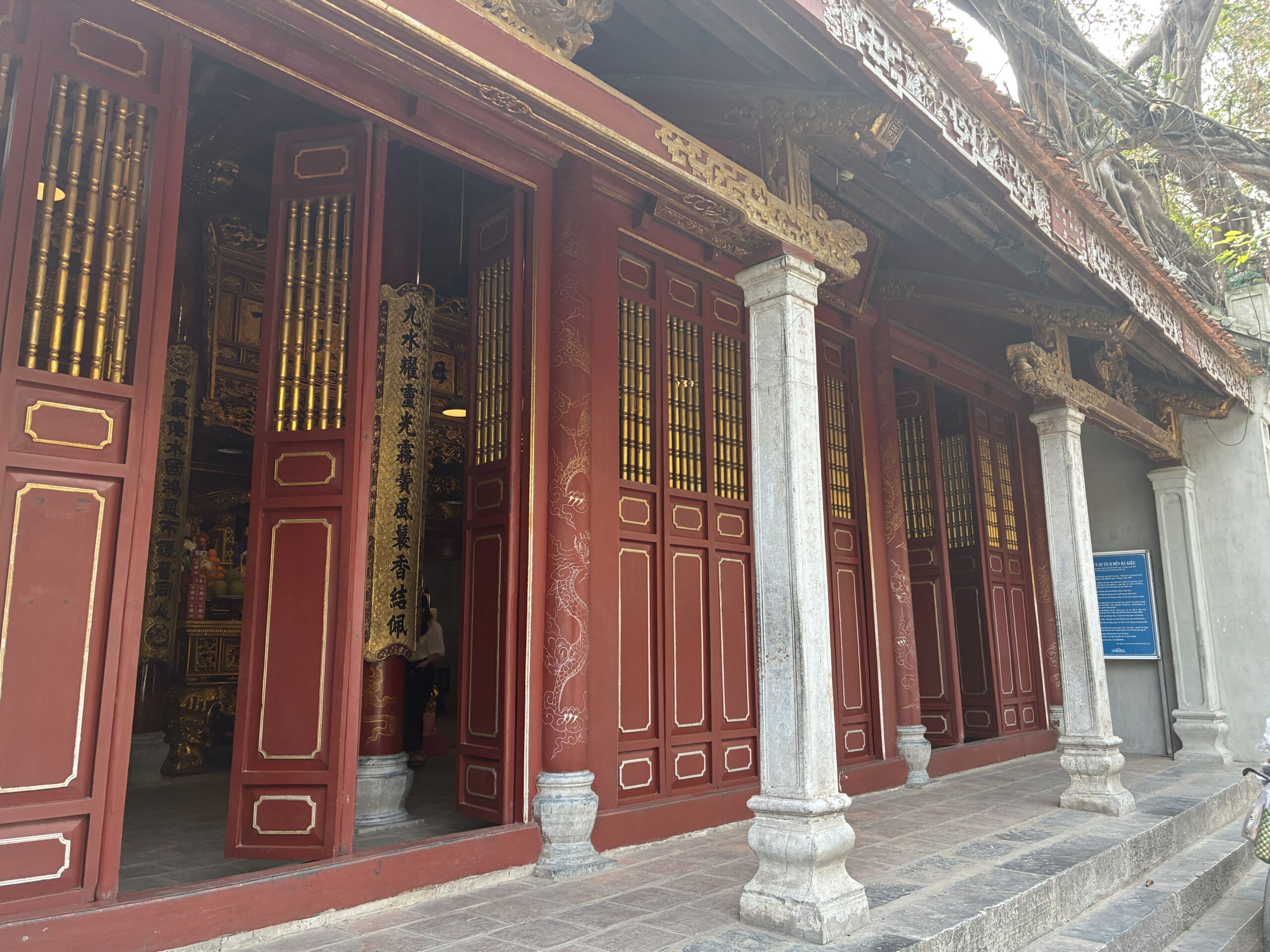
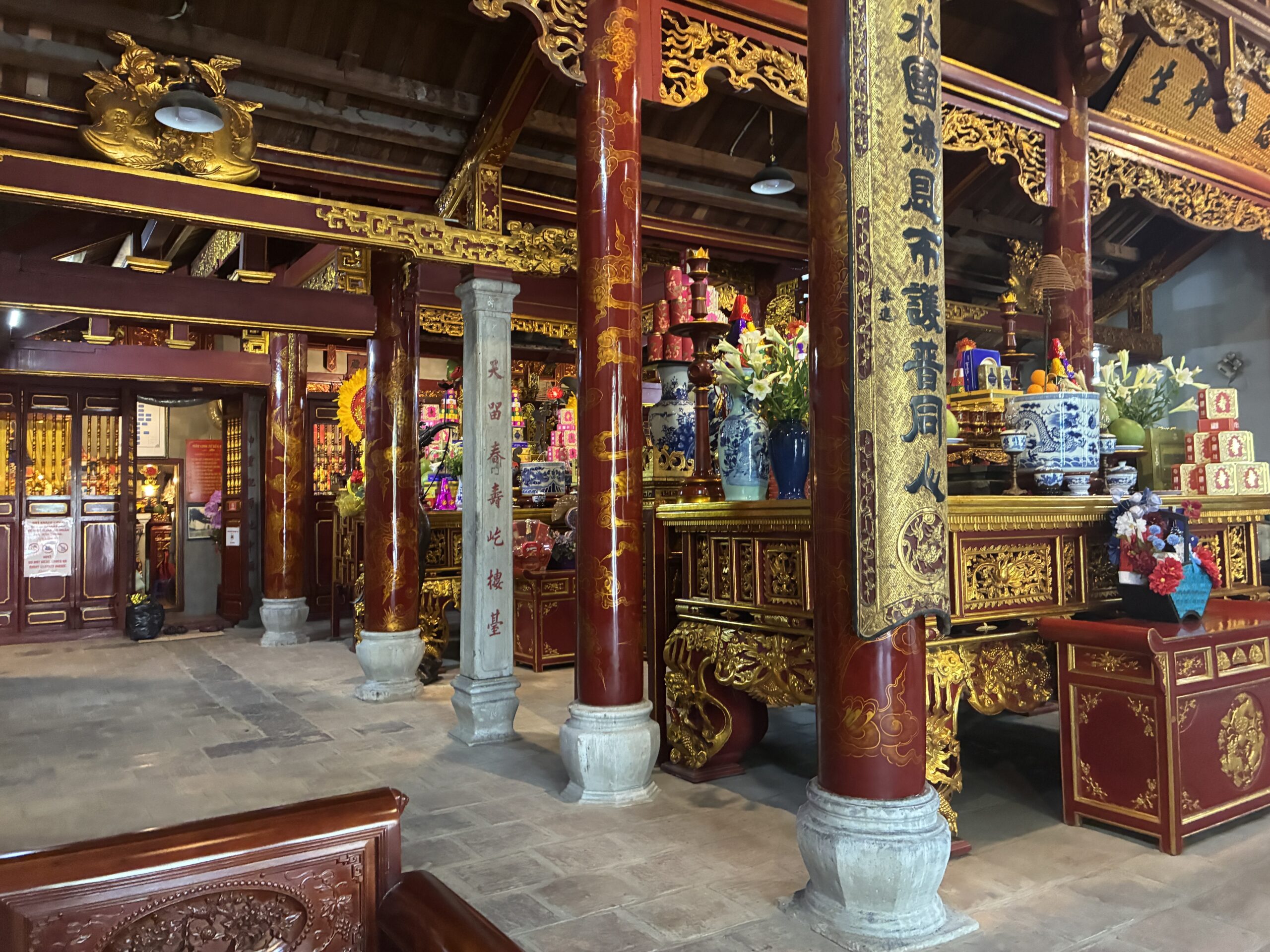
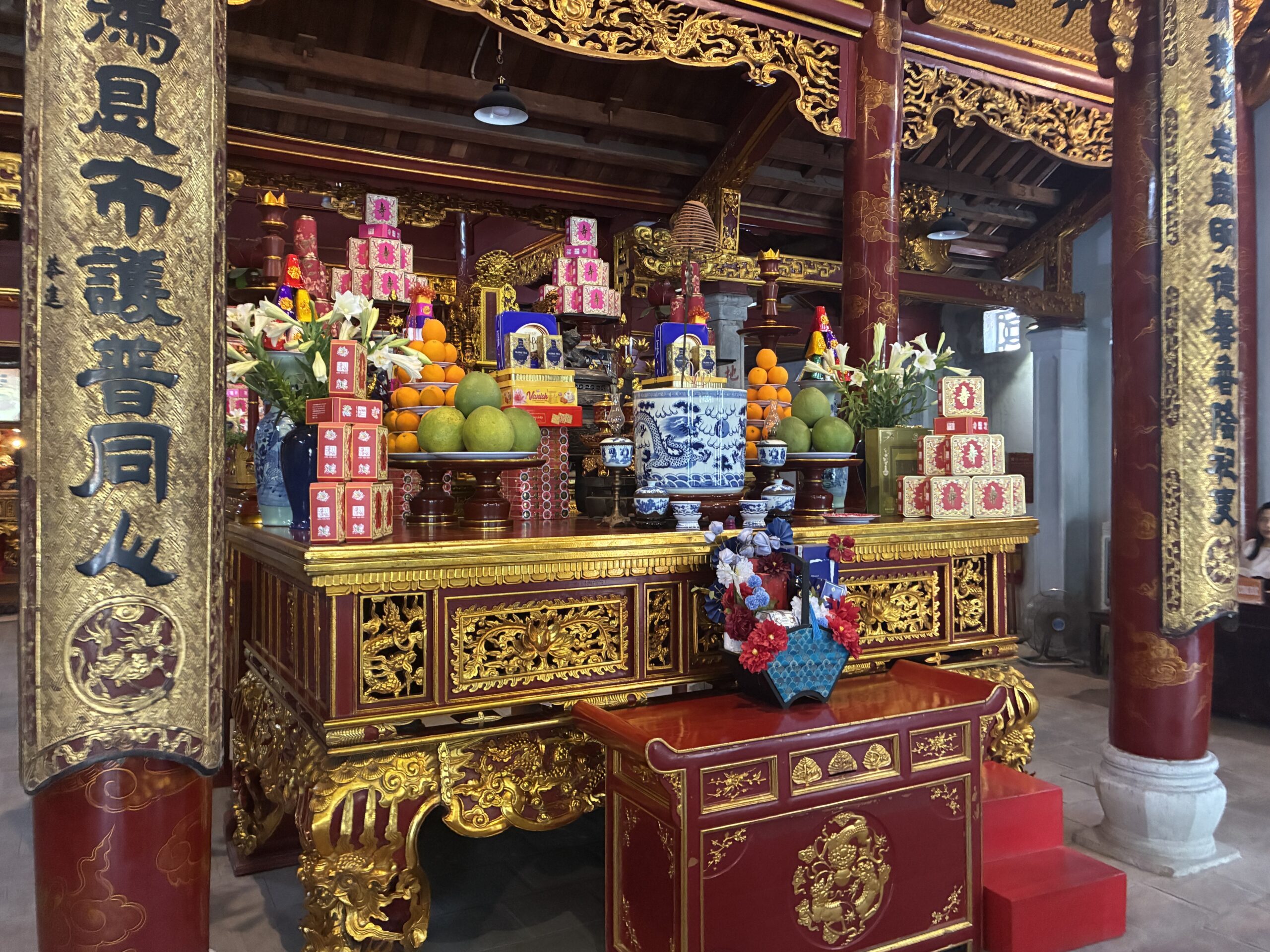
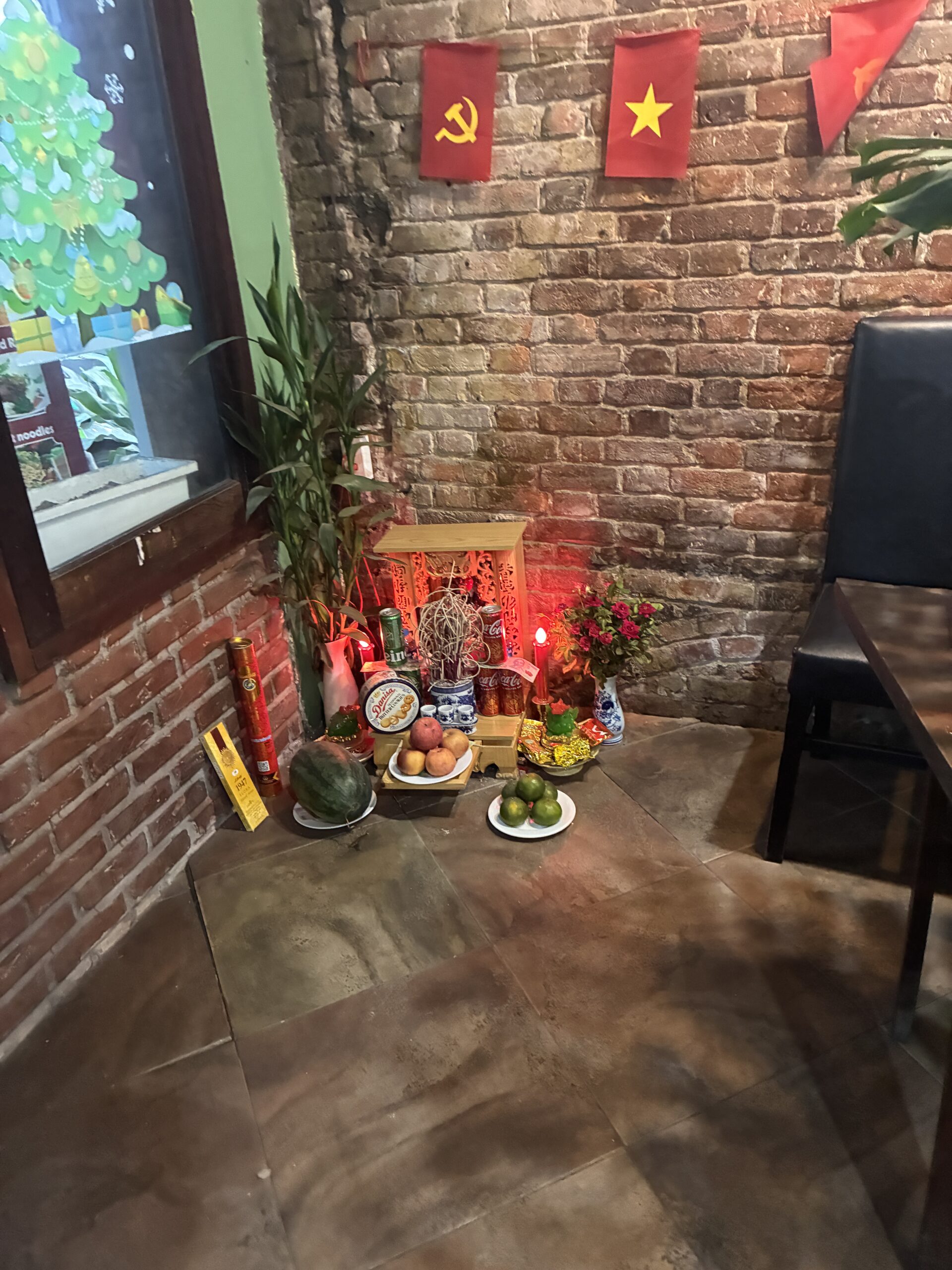
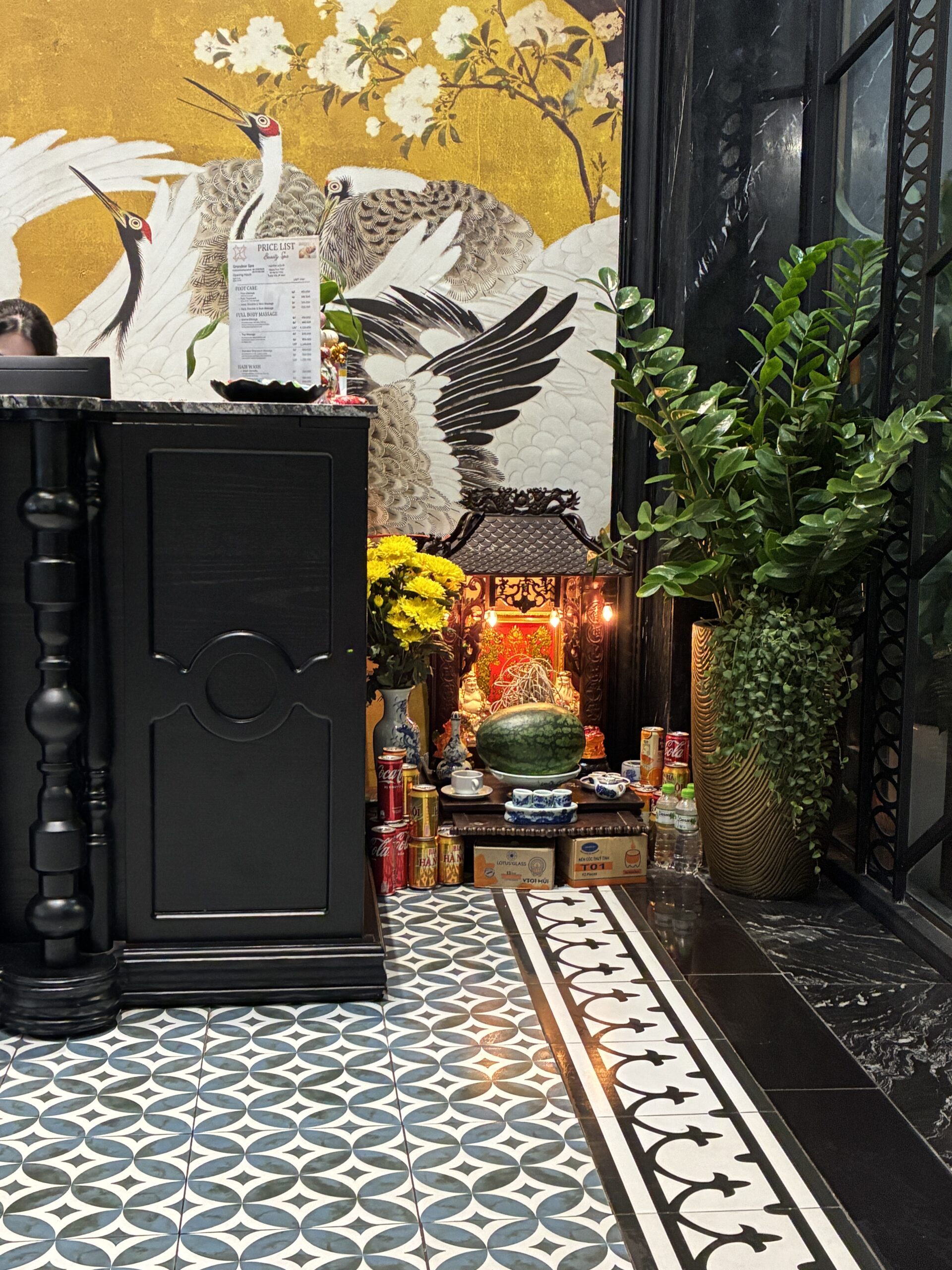
At the Ba Kieu Temple, we learned about the Án Gian shrine, with offerings used to worship ancestors or ancient deities. Smaller, and far less ornate versions of Án Gian tables are everywhere, which I’d been regularly noticing.
We walked further into the teeming streets of the Old Quarter (this was, after all, an Old Quarter tour), soon passing into and through really tight, narrow, and very busy back streets and working marketplaces, where all sorts of fruits, vegetables, fish. and meats were being prepared and sold, with many small street food vendors. Van explained what we were seeing, and a couple of times stopped to buy fruits for the three of us to sample. Fruits I’d never heard of (although Laurence, well traveled and with a good memory, had), let alone tasted. Sweet and delicious. I was also surprised to see green oranges (a contradiction in terms), the color of limes, but orange colored on the inside.
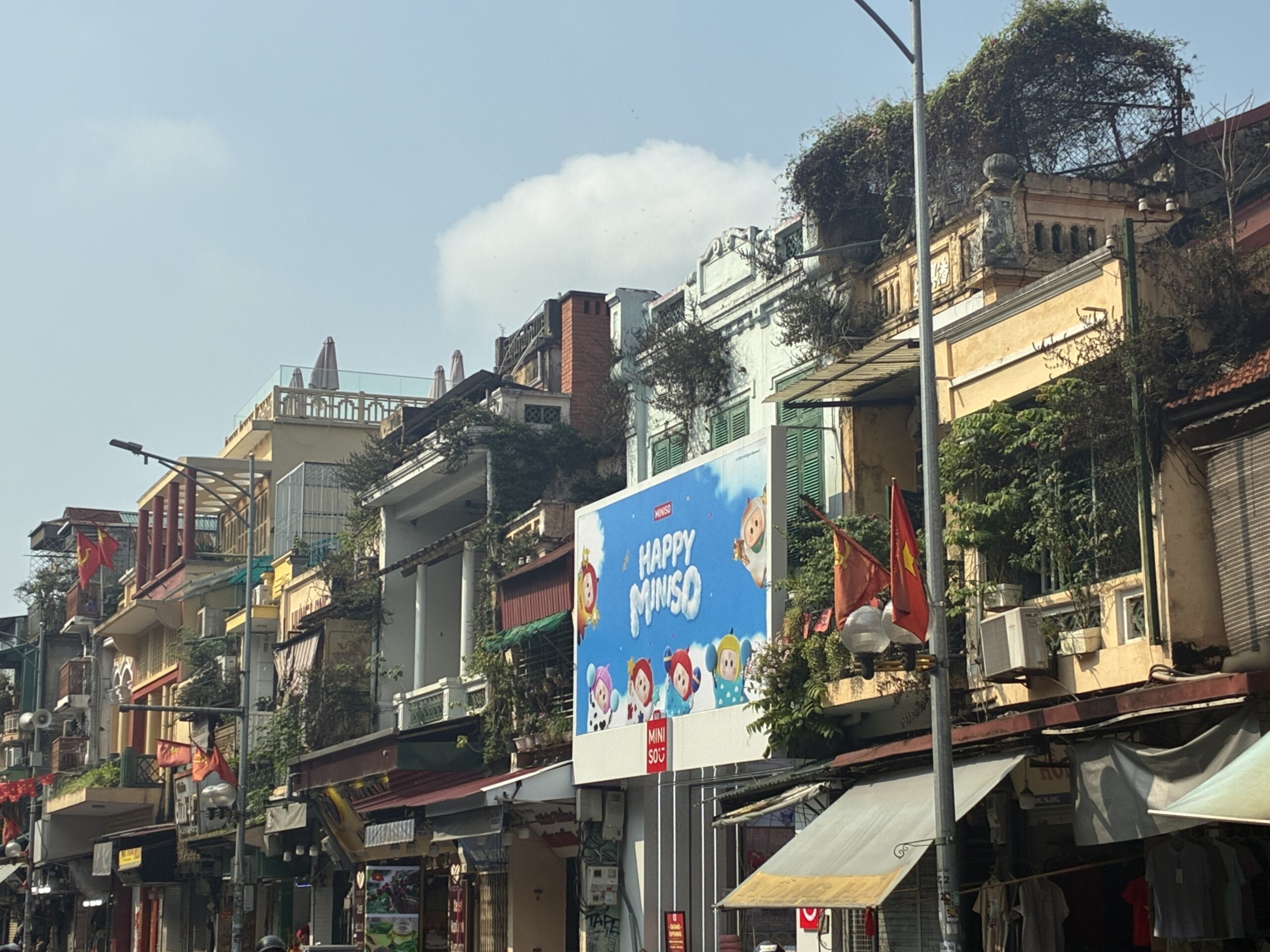
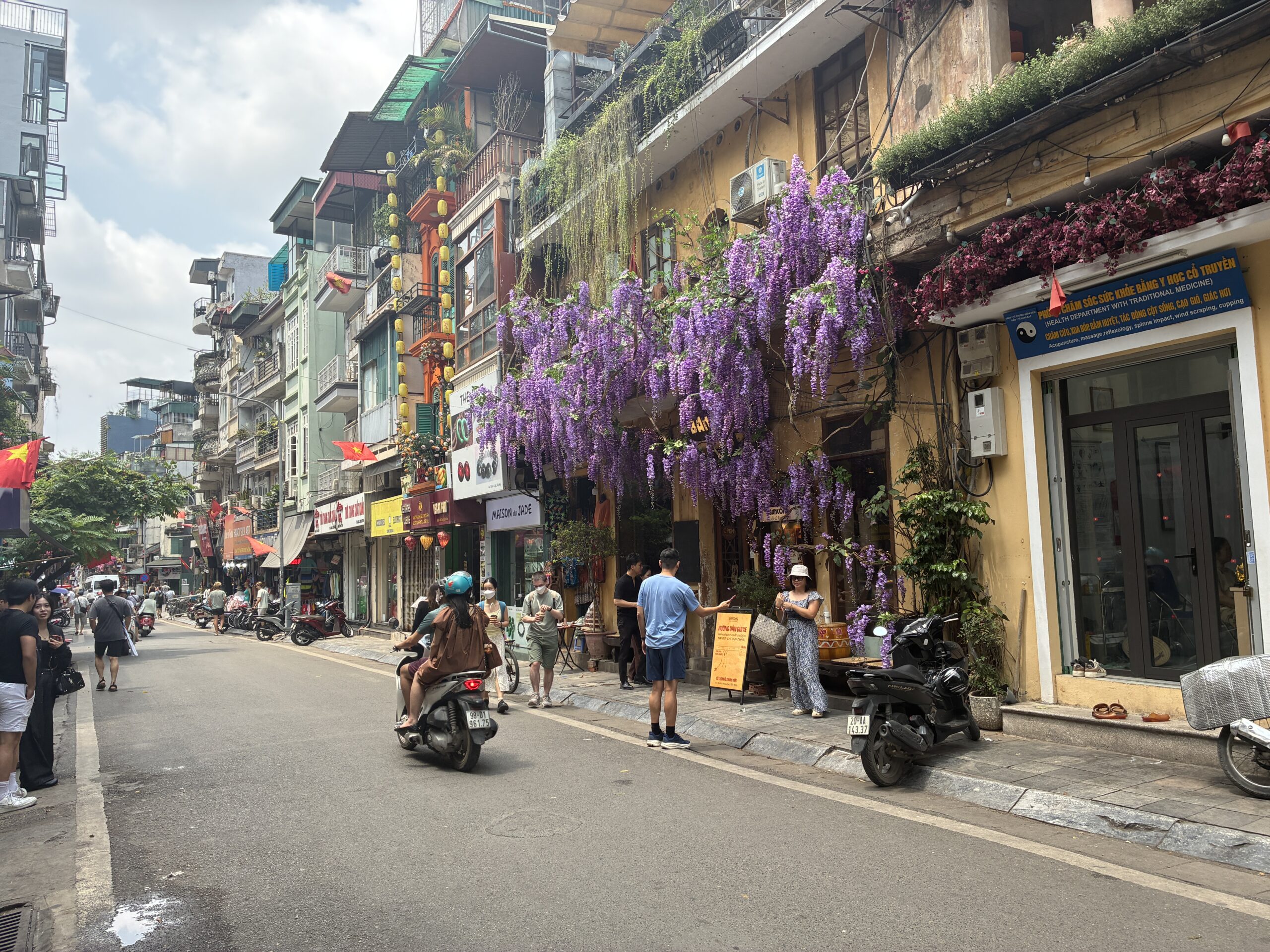
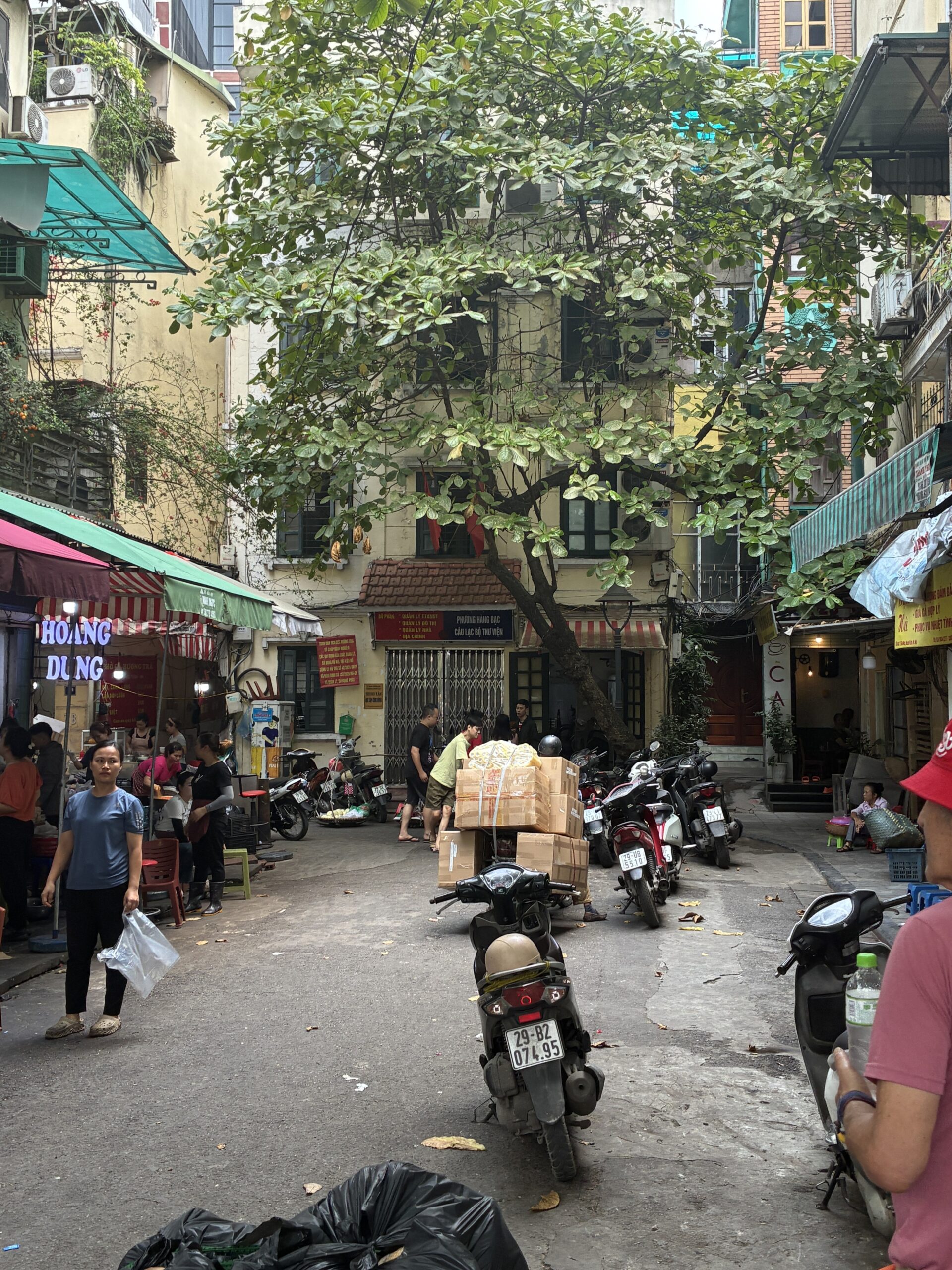
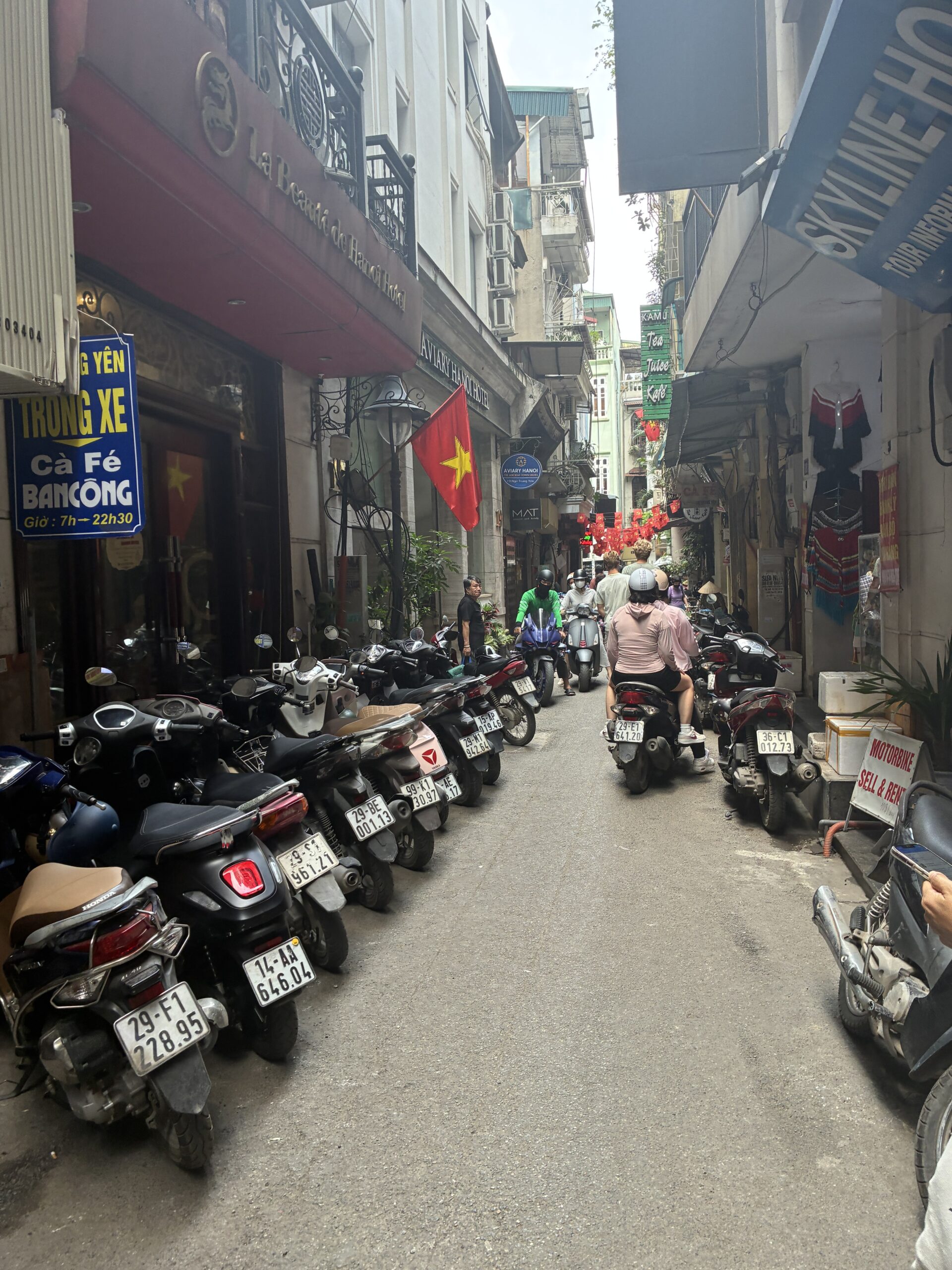
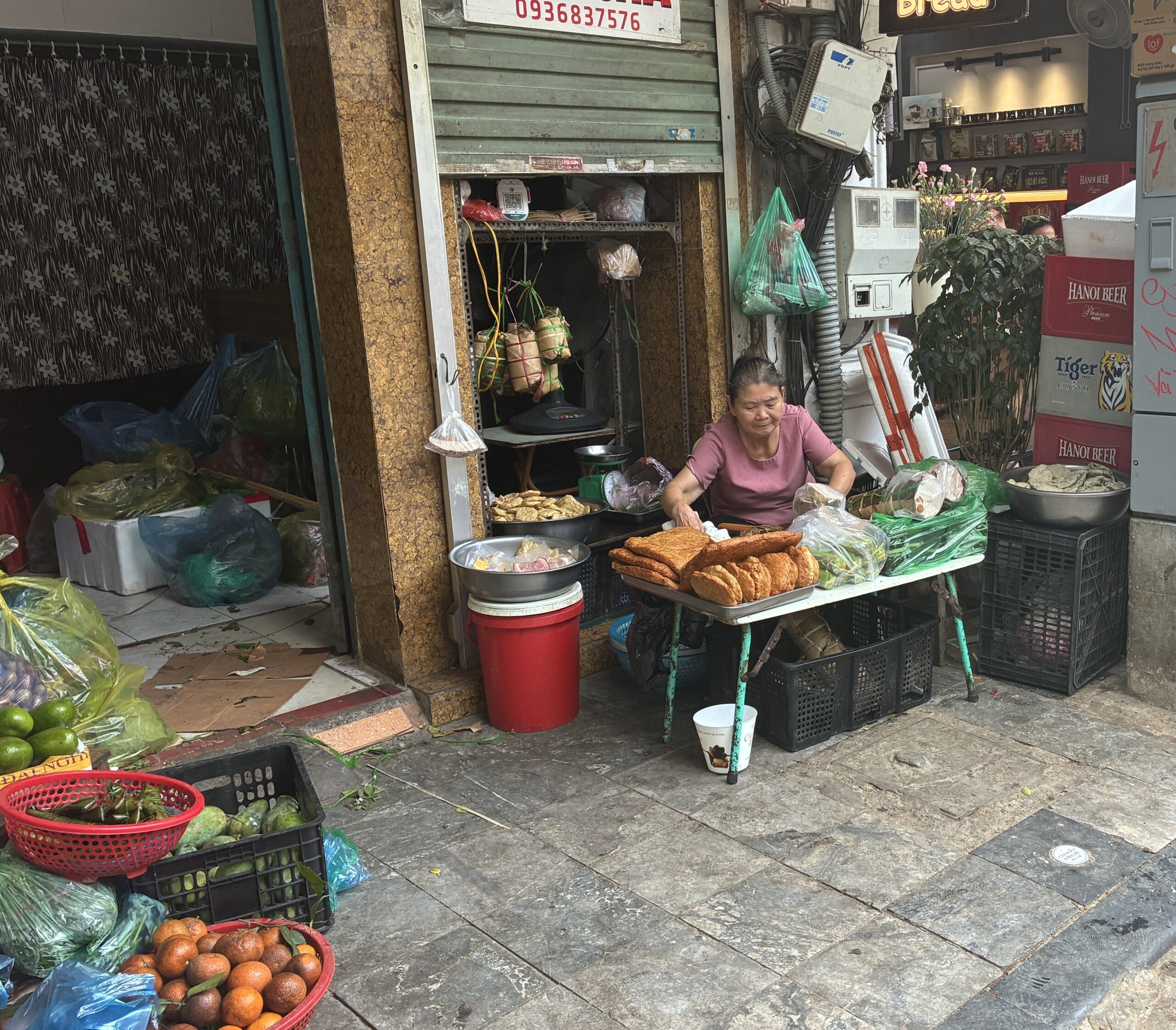
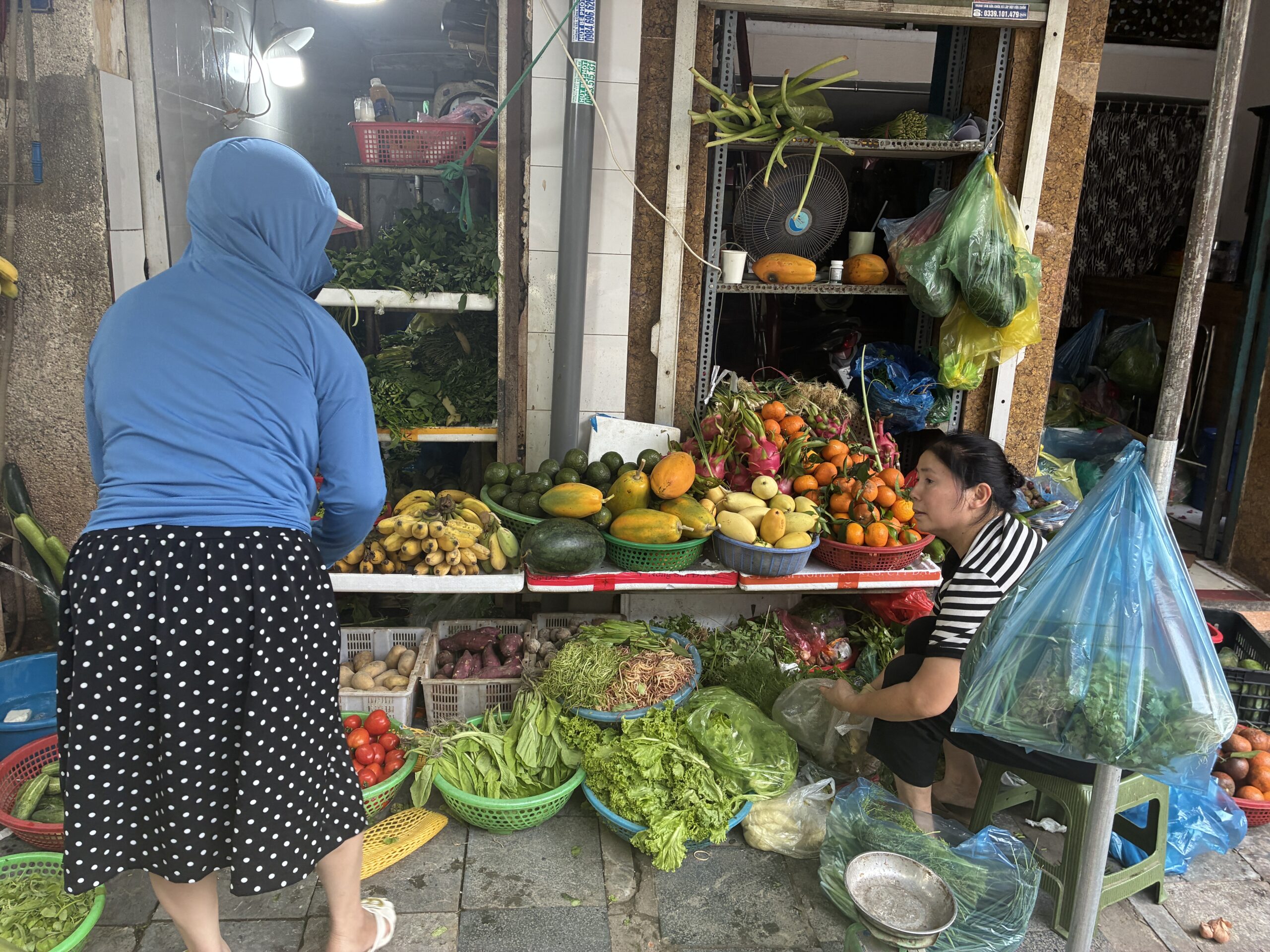
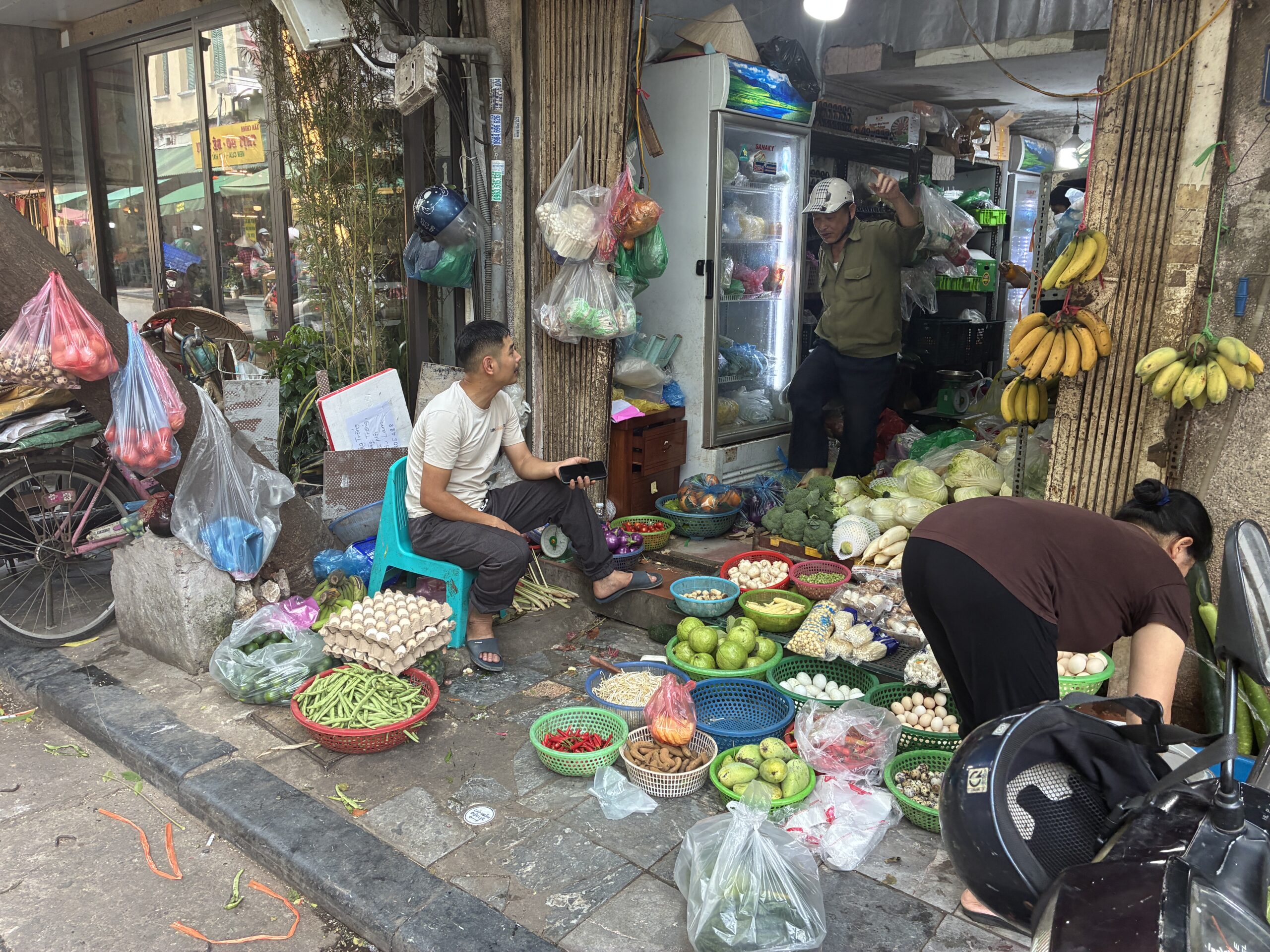
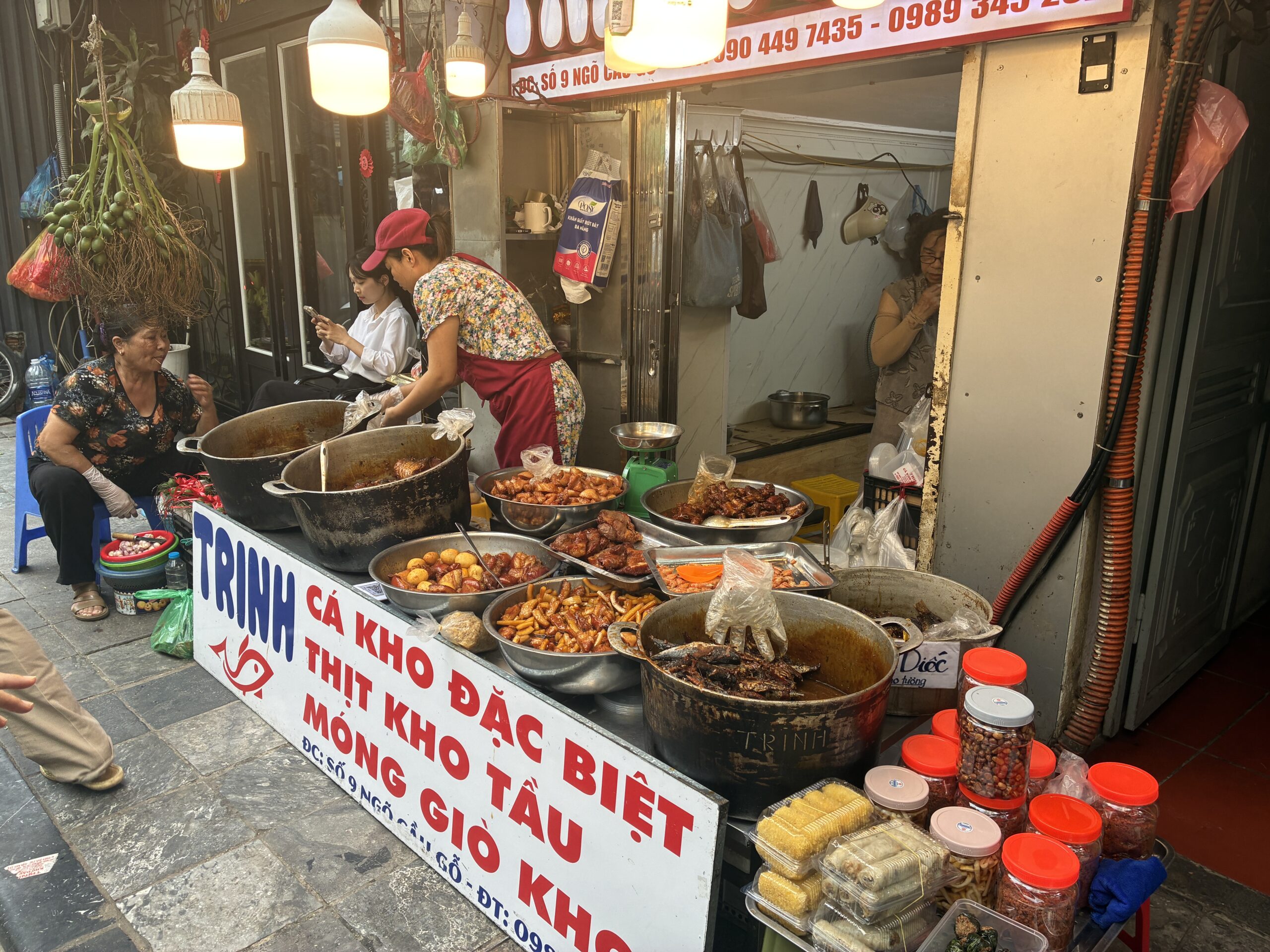
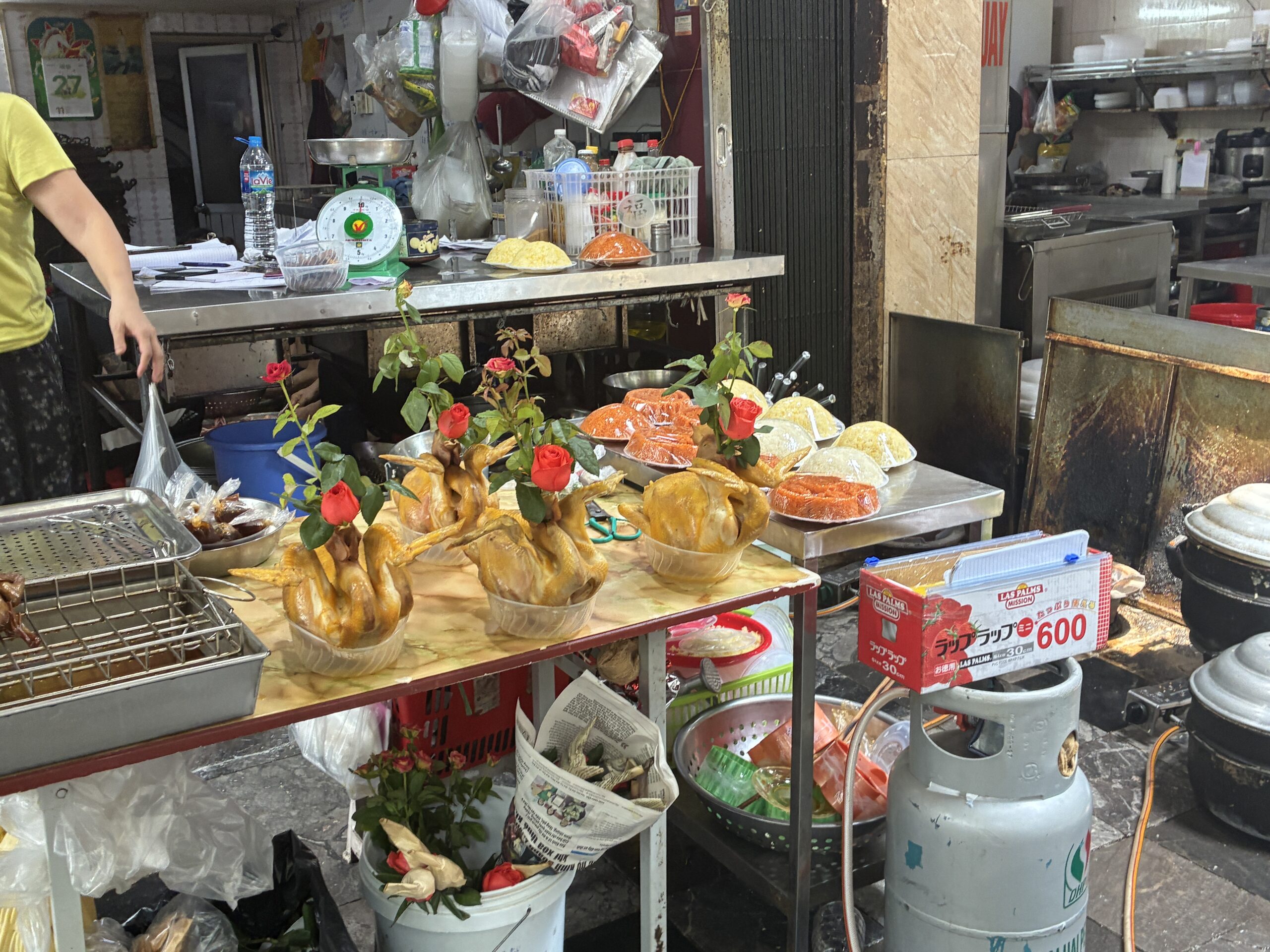
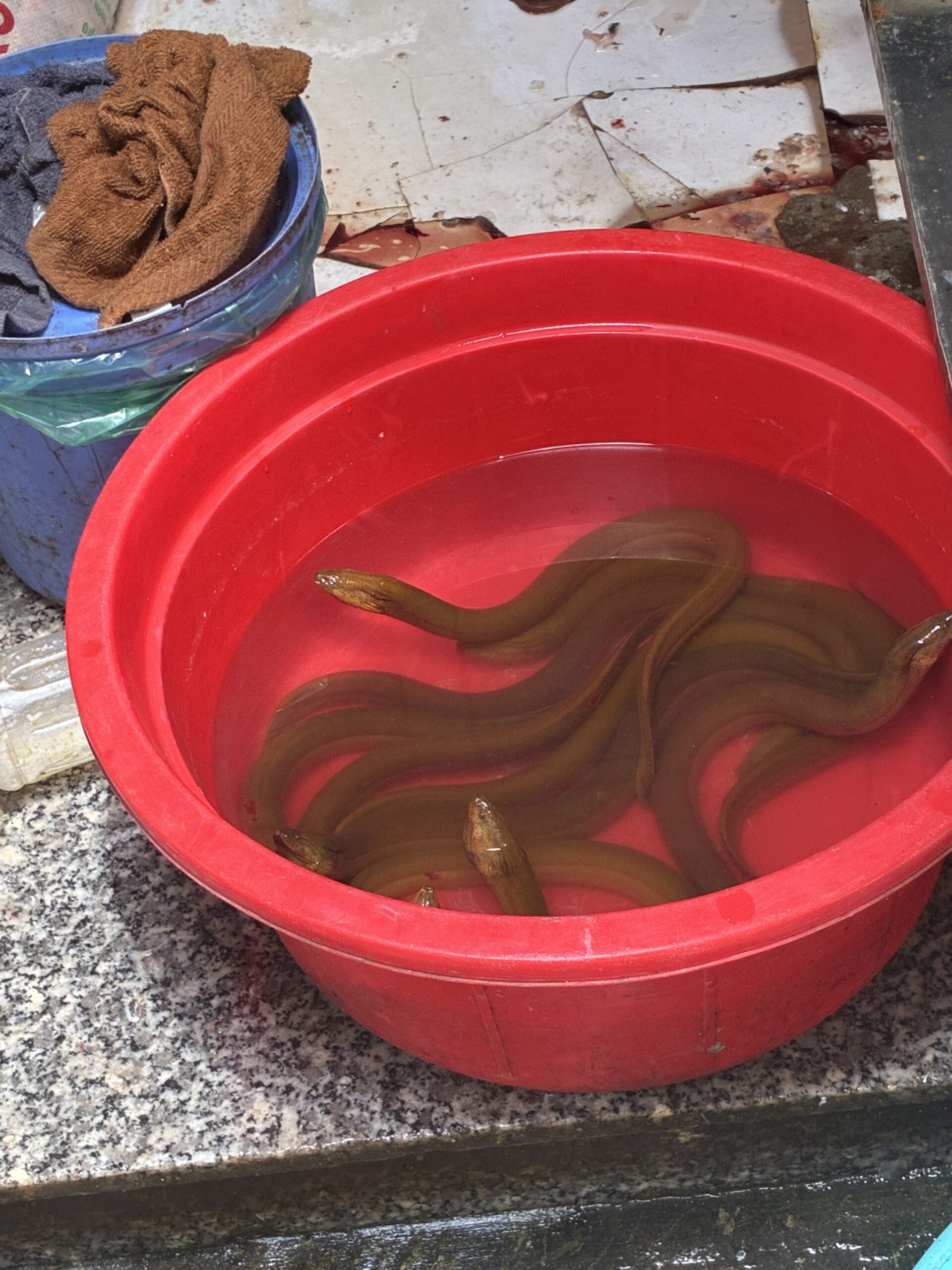
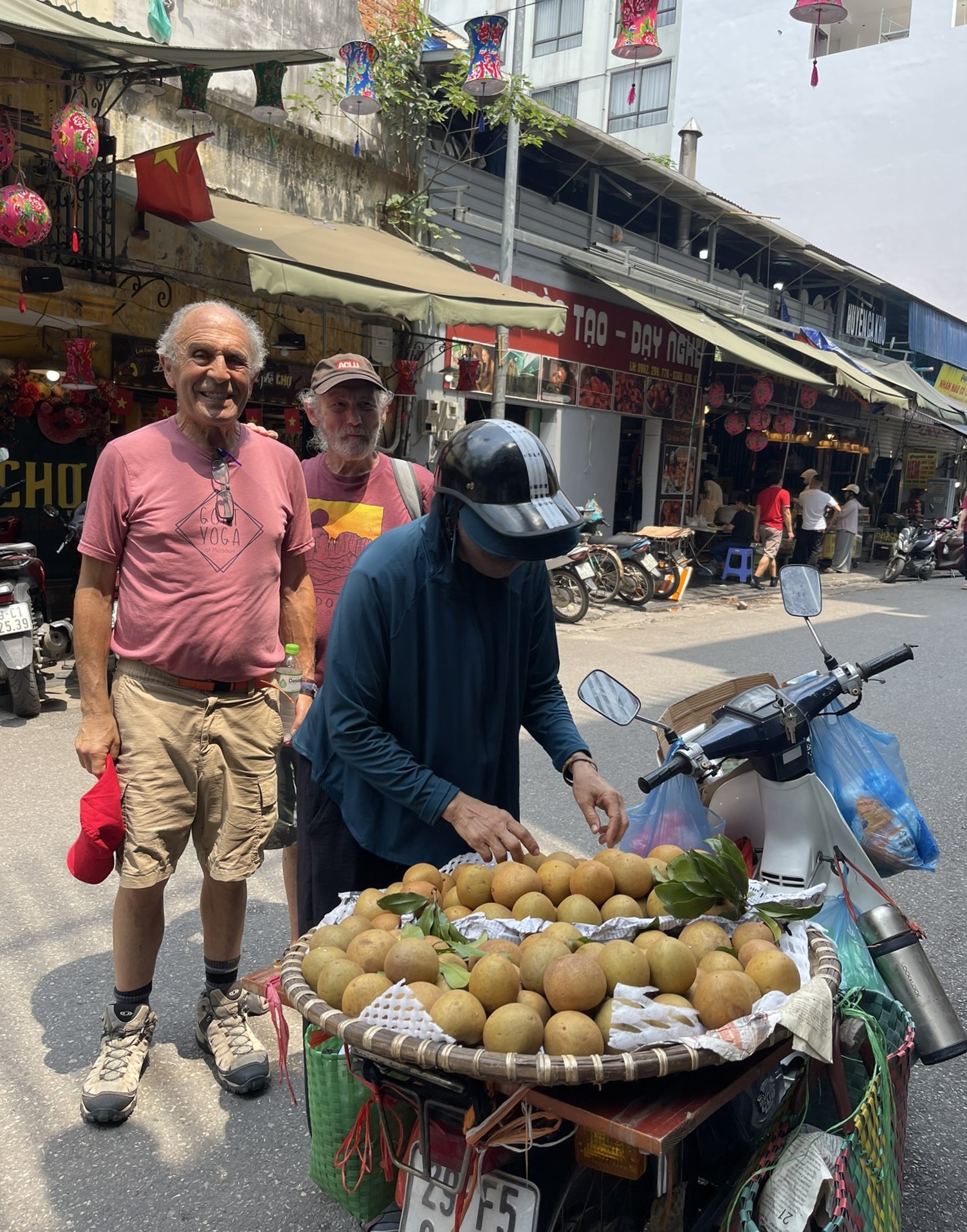
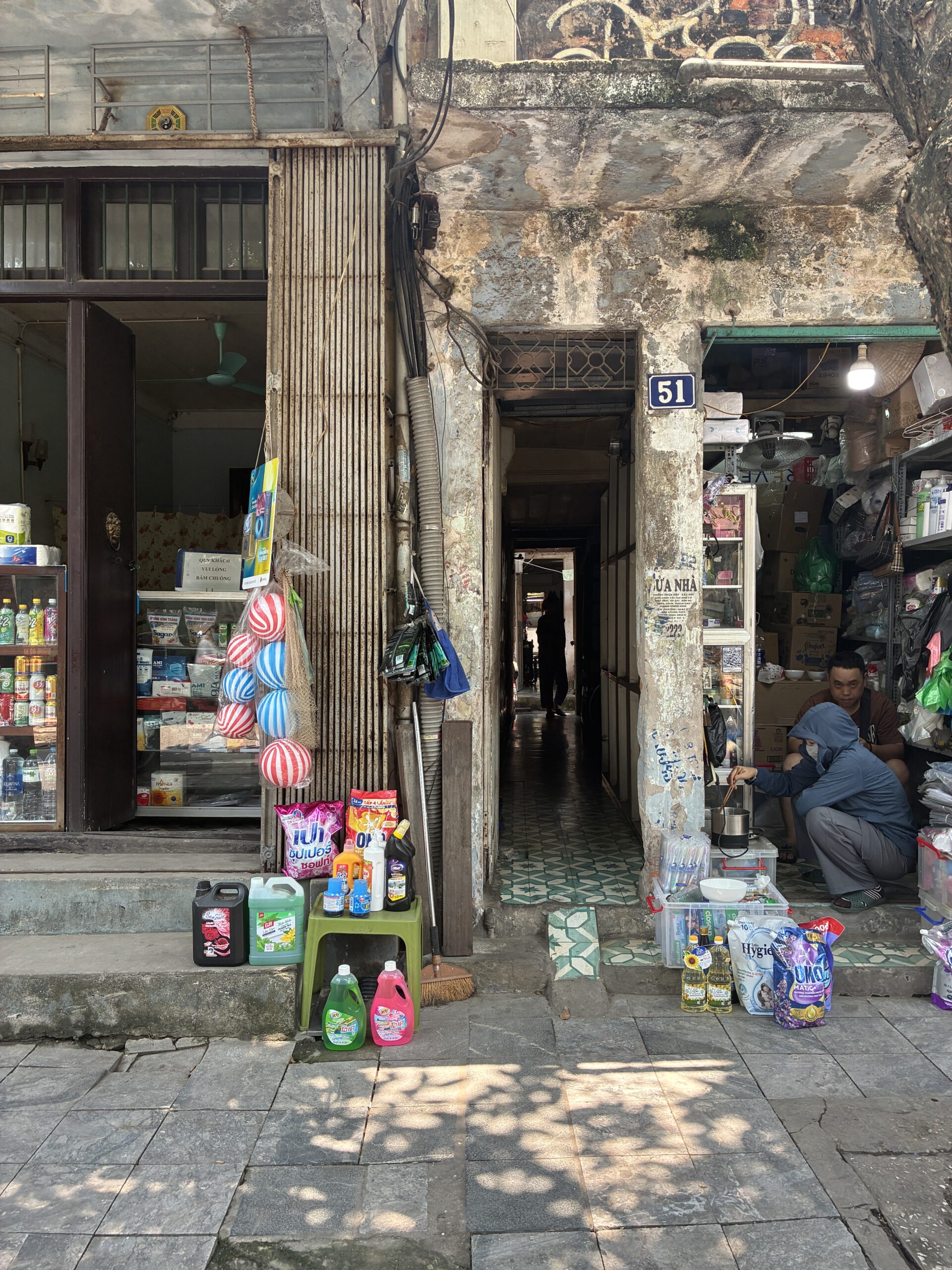
Van also pointed out the extremely narrow alleyways between the crowded together shops, and told us that these were the entry points to the homes behind and above the shops, where many of the shopkeepers themselves live. She took us through one of these, and showed us the packed, cramped, and very small living spaces in which locals live. She herself lives in a smaller and less crowded part of the city. Like everyone else, she drives a motor scooter, which she first started driving at age 18.
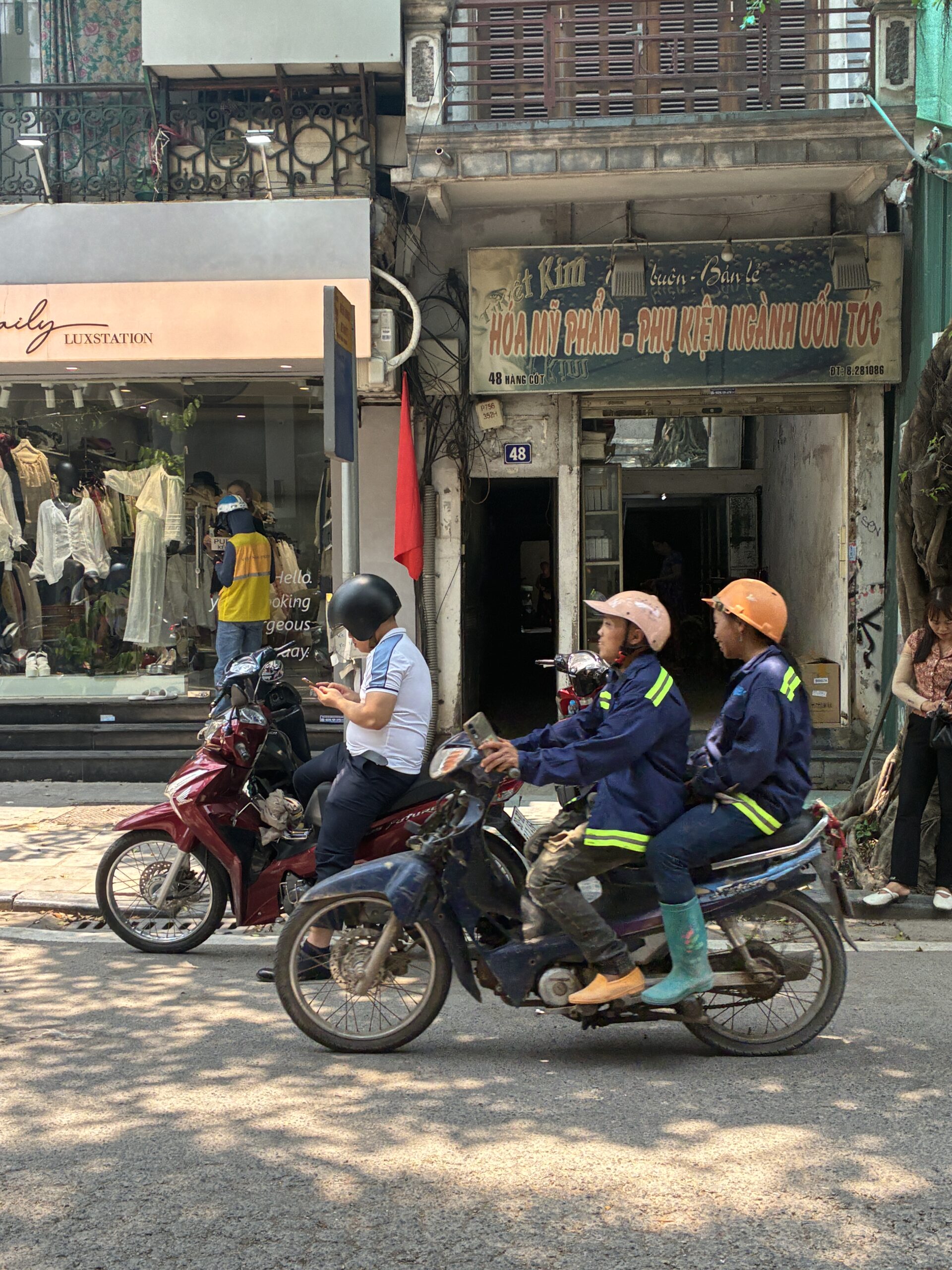
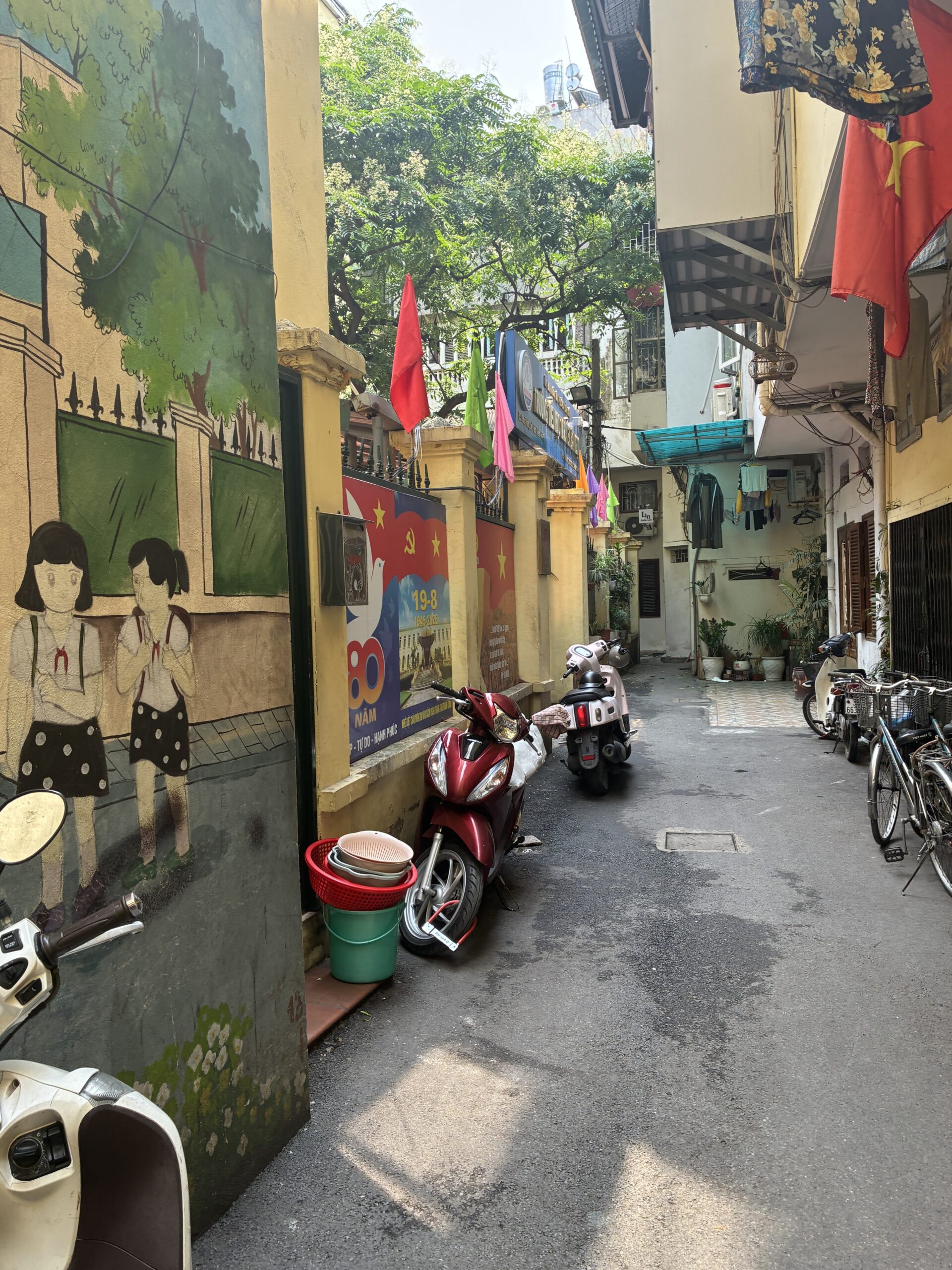
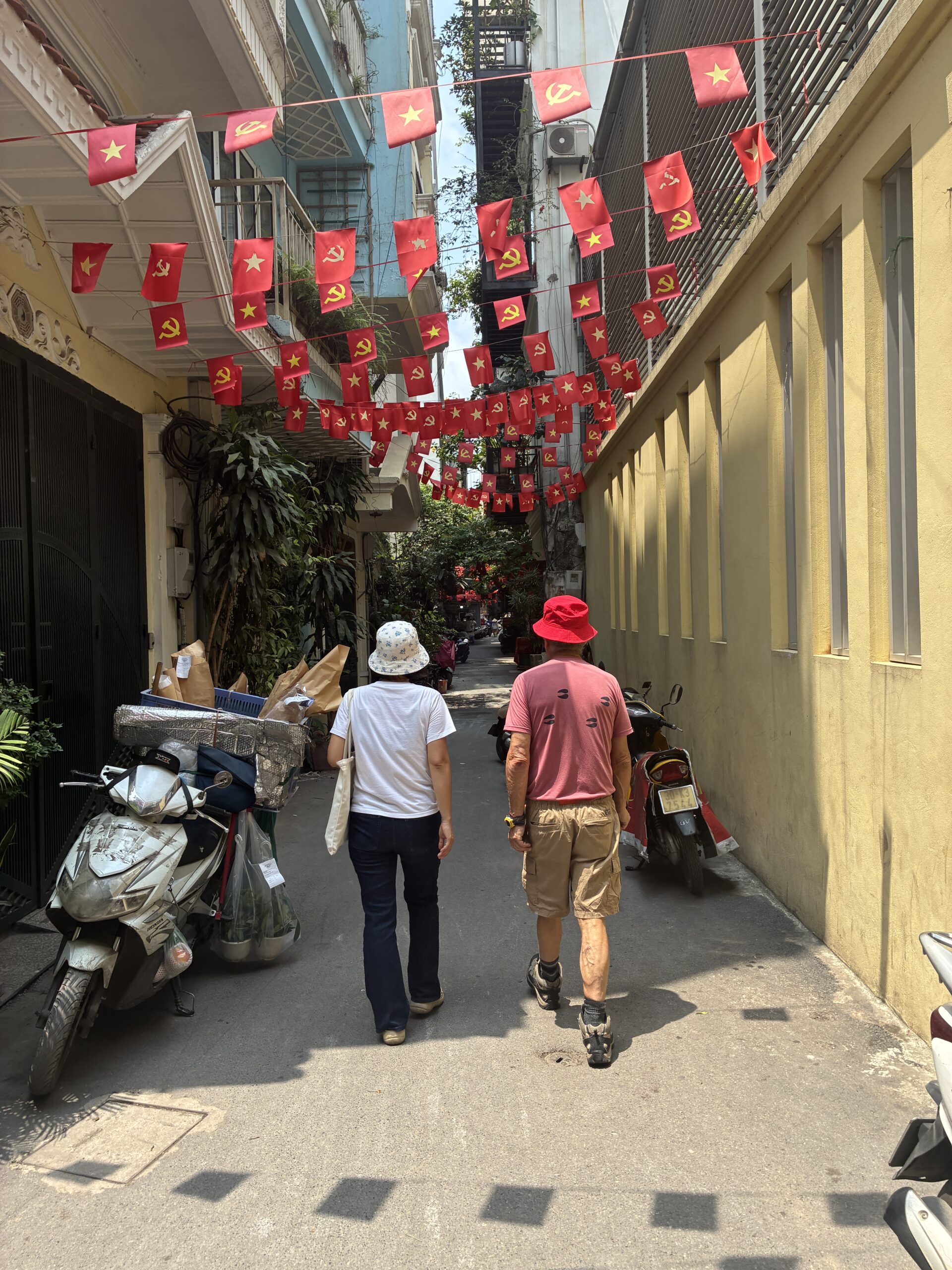
Van also showed us how to cross these streets. Basically, you cross the roads the way people drive their cars, motorcycles, and scooters… that is, you just cross at will, and fearlessly, but carefully, criss cross and work your way through the traffic, looking for openings or just making them as you go. Works like a charm.
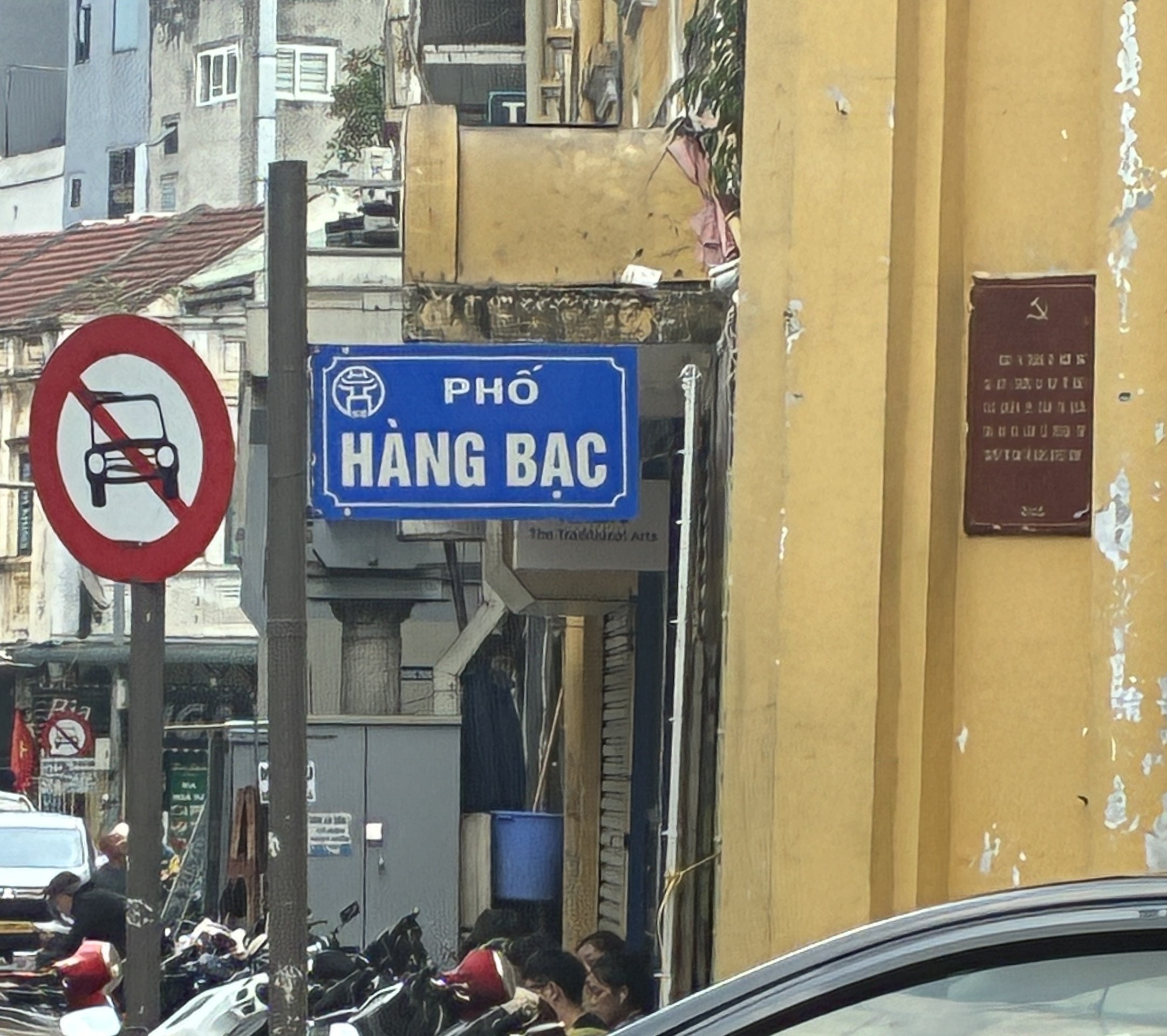
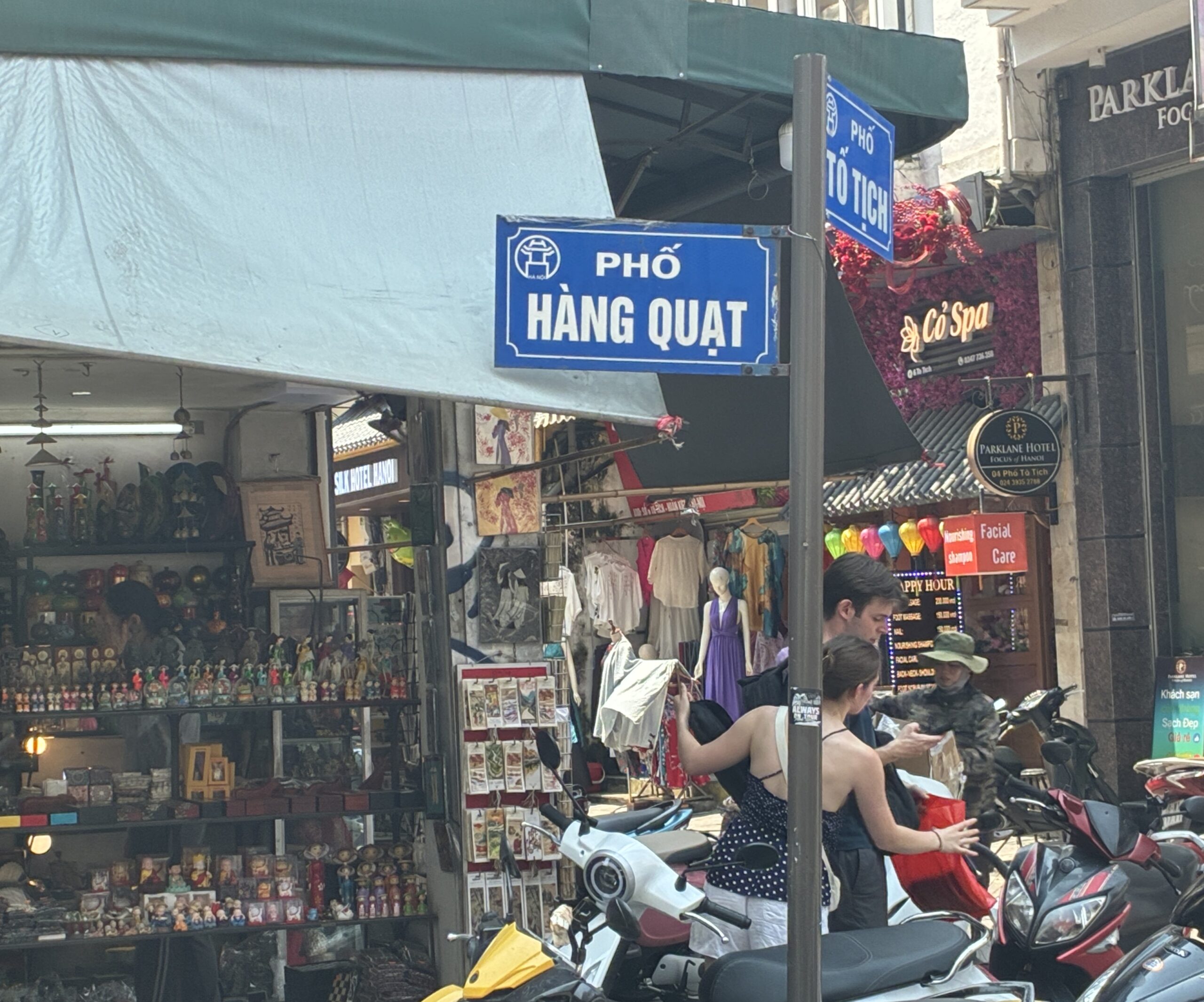
We also learned that Phố means street (pronounced pho, and not to be confused with Phở, pronounced pha, the Vietnamese food), and street names often begin with Phố for street and Hàng for commercial or merchandise, followed by the name of the type of shop or business the street is most known for, such as silver, toys, paper, fans, and tin, for instance.
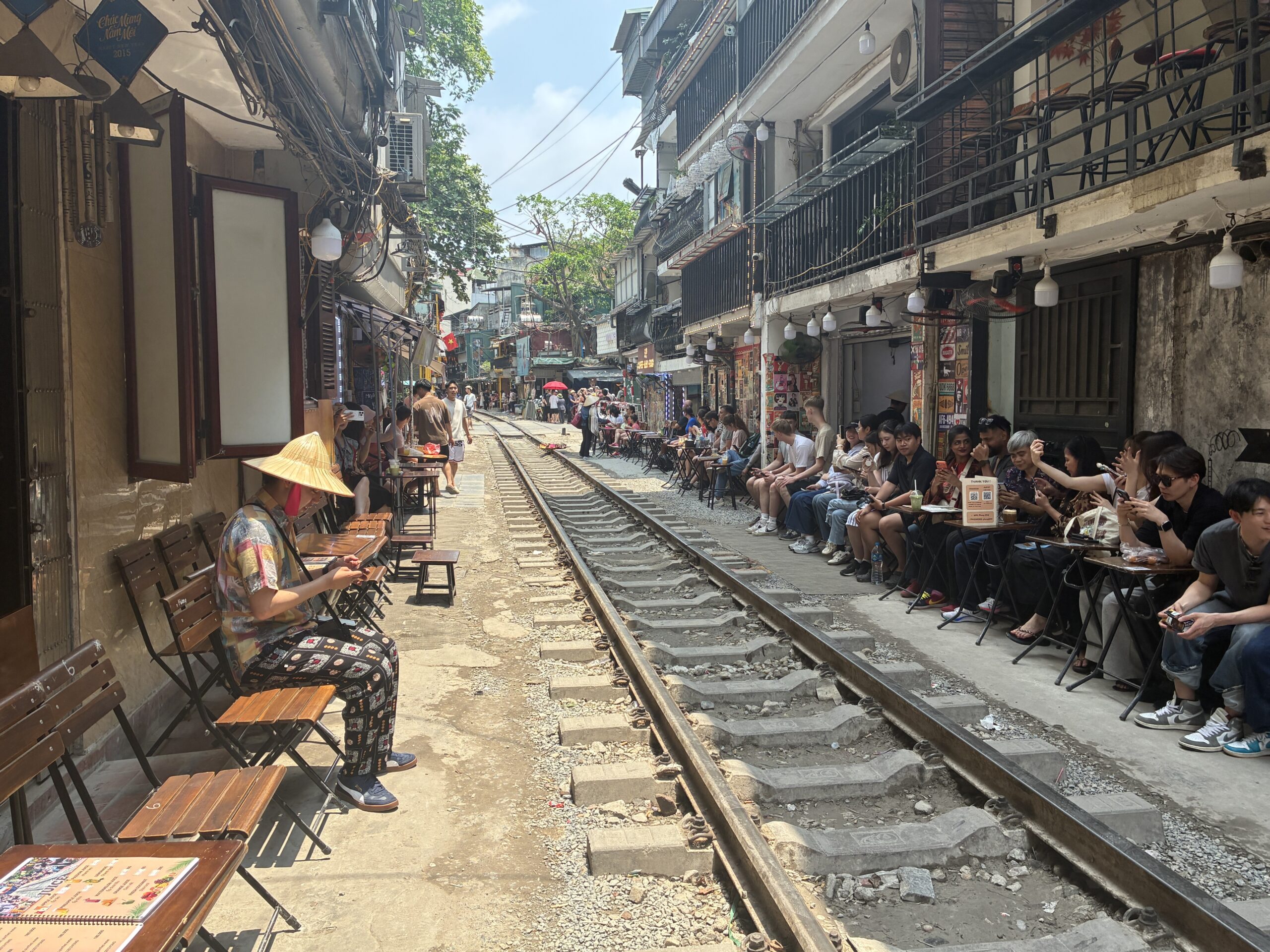
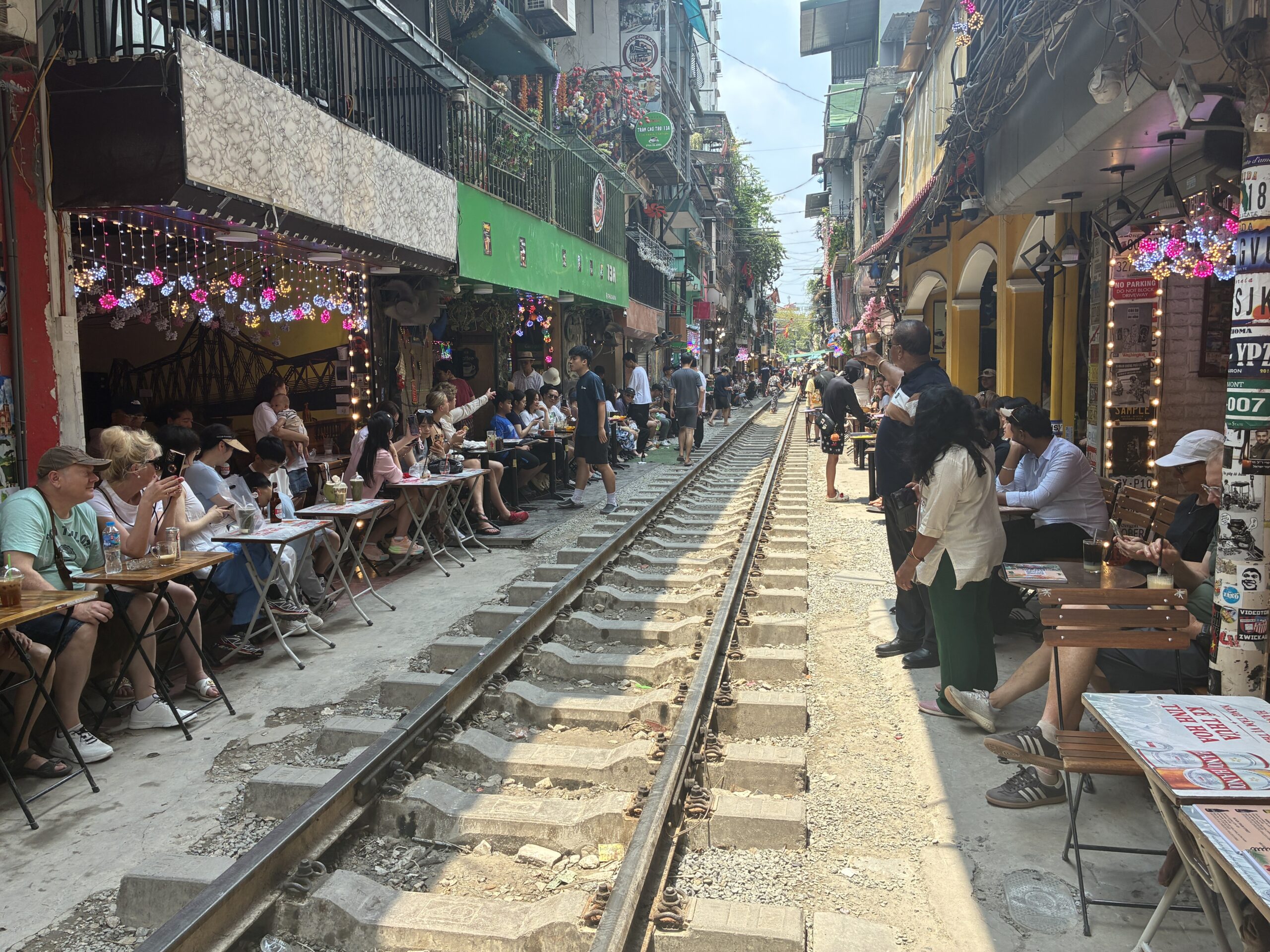
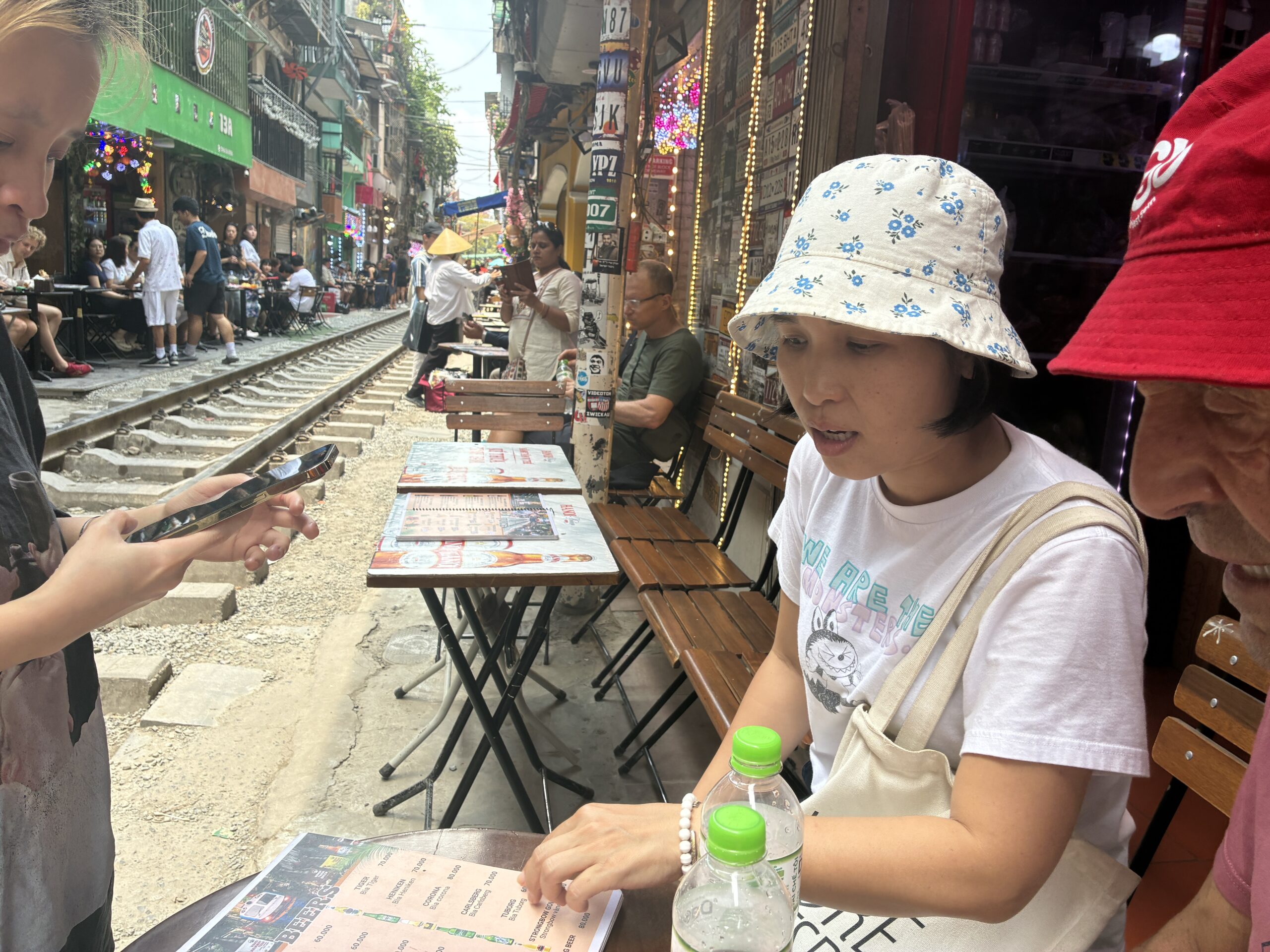
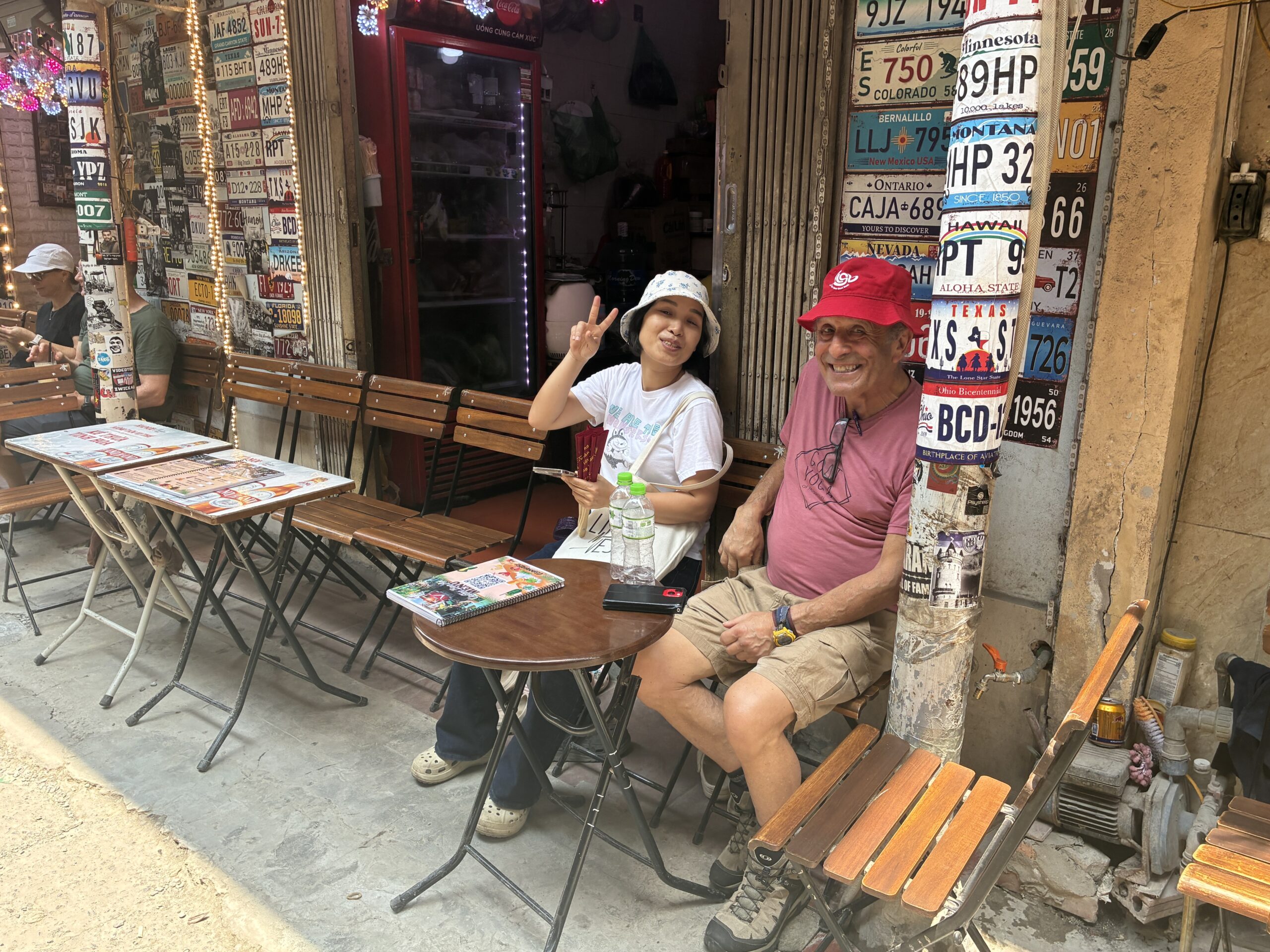
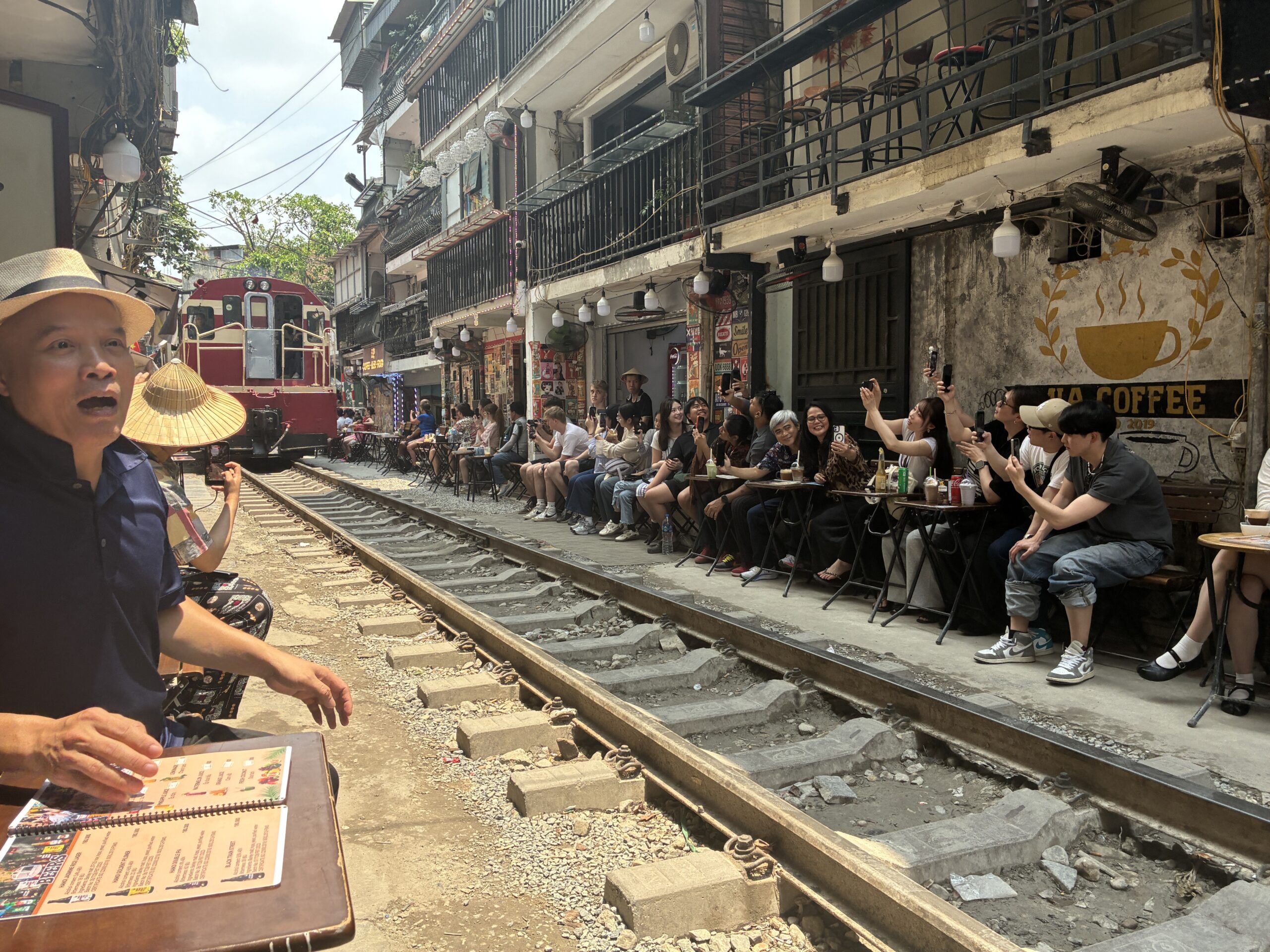
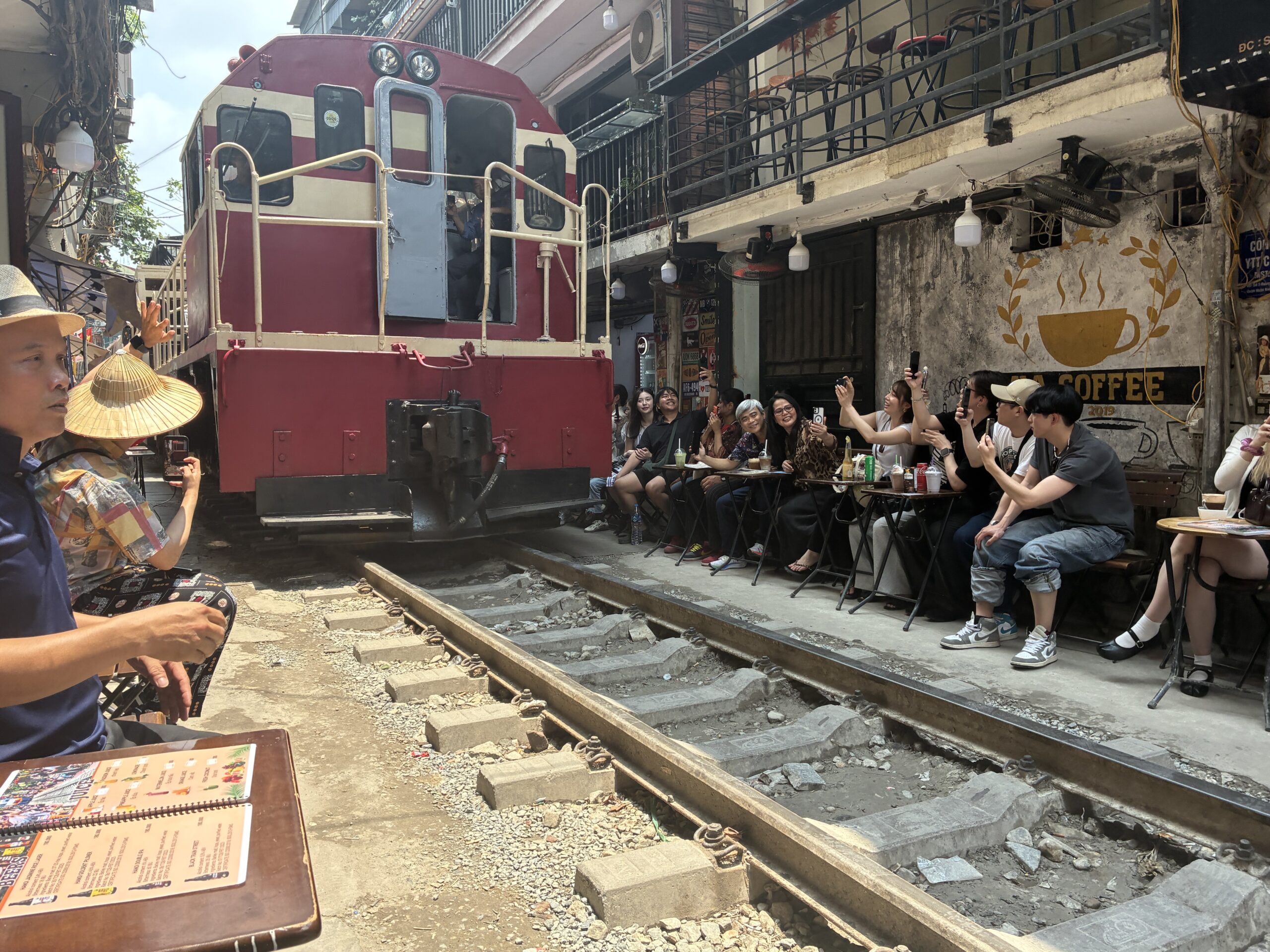
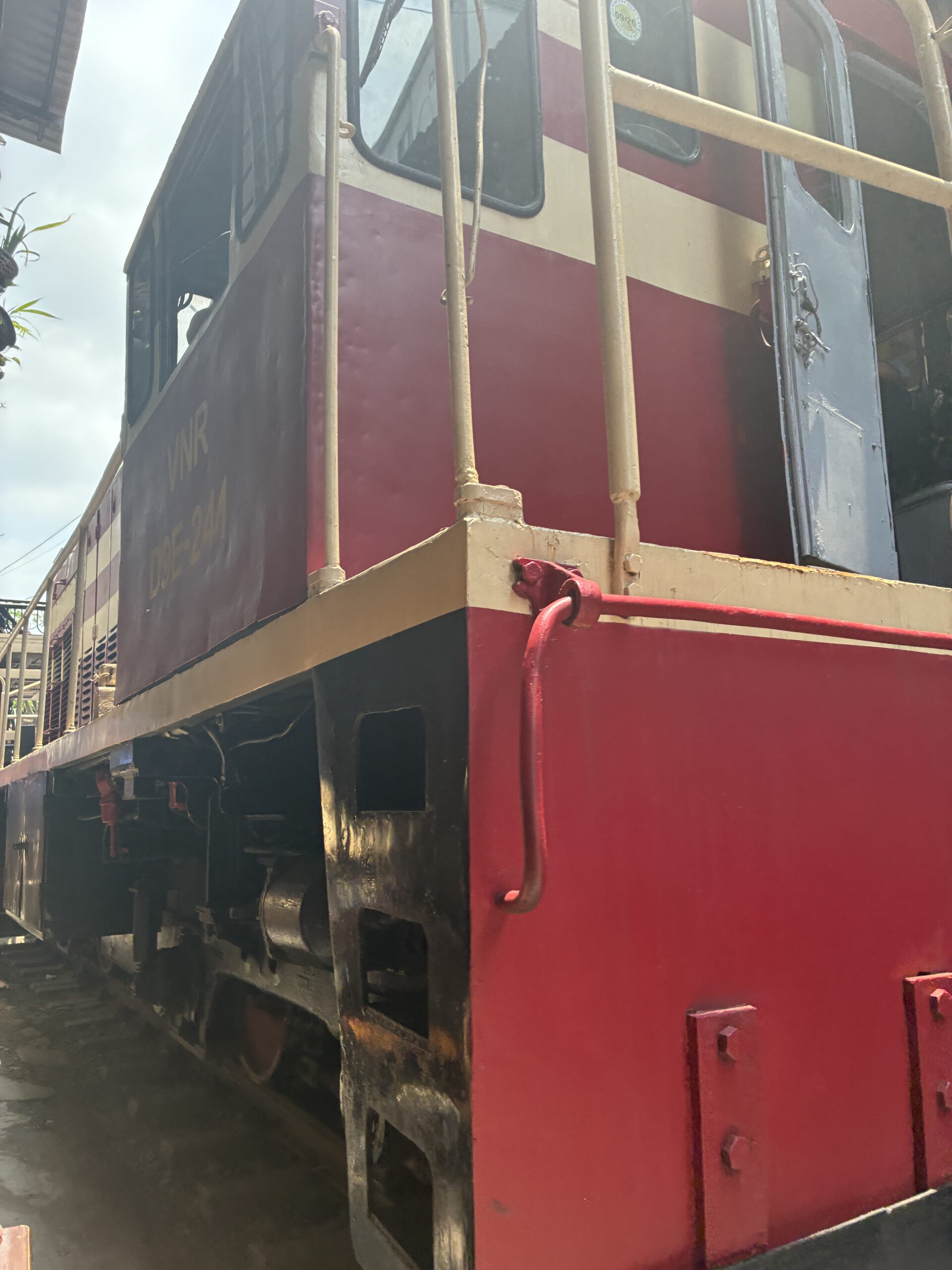
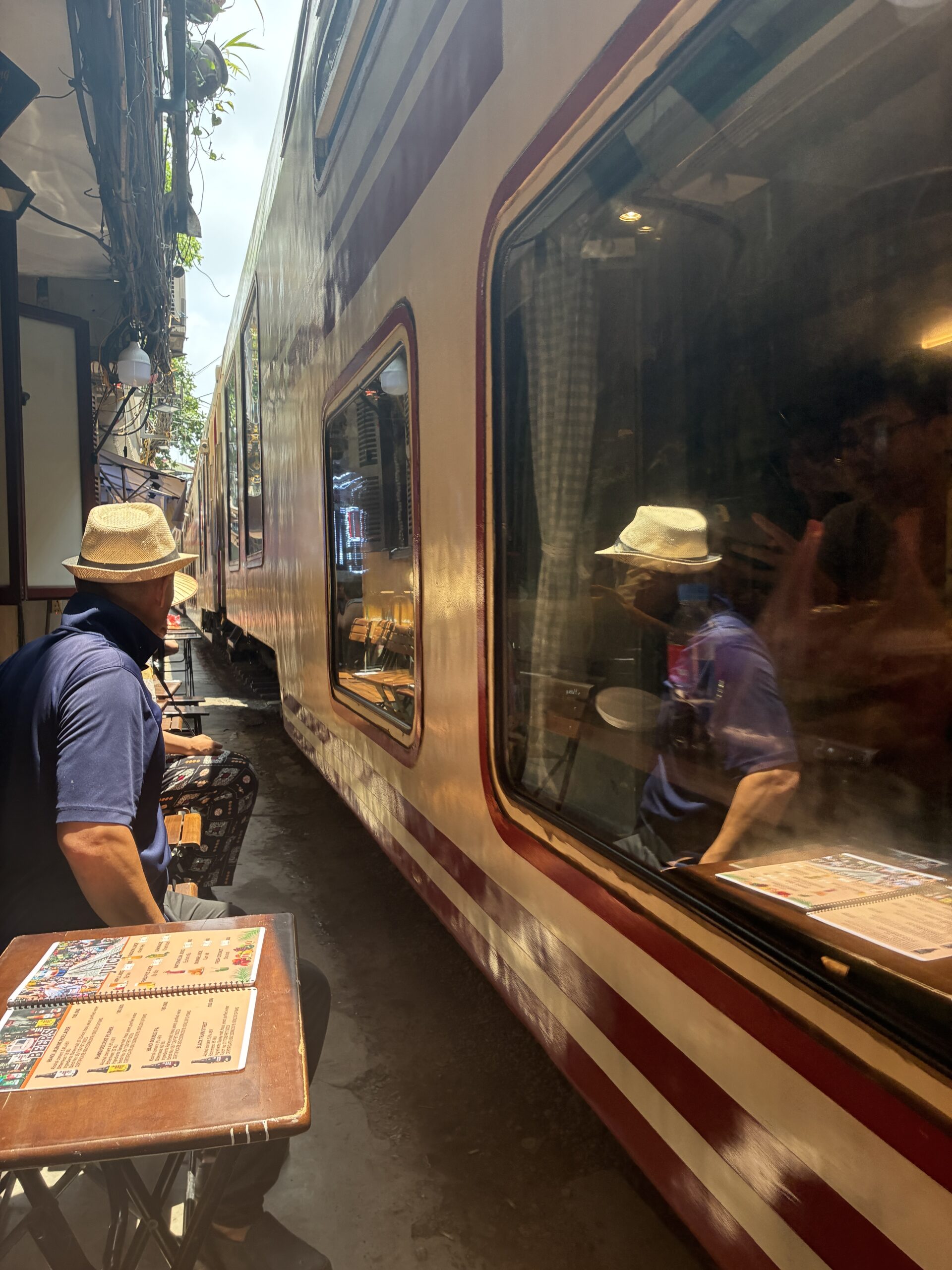
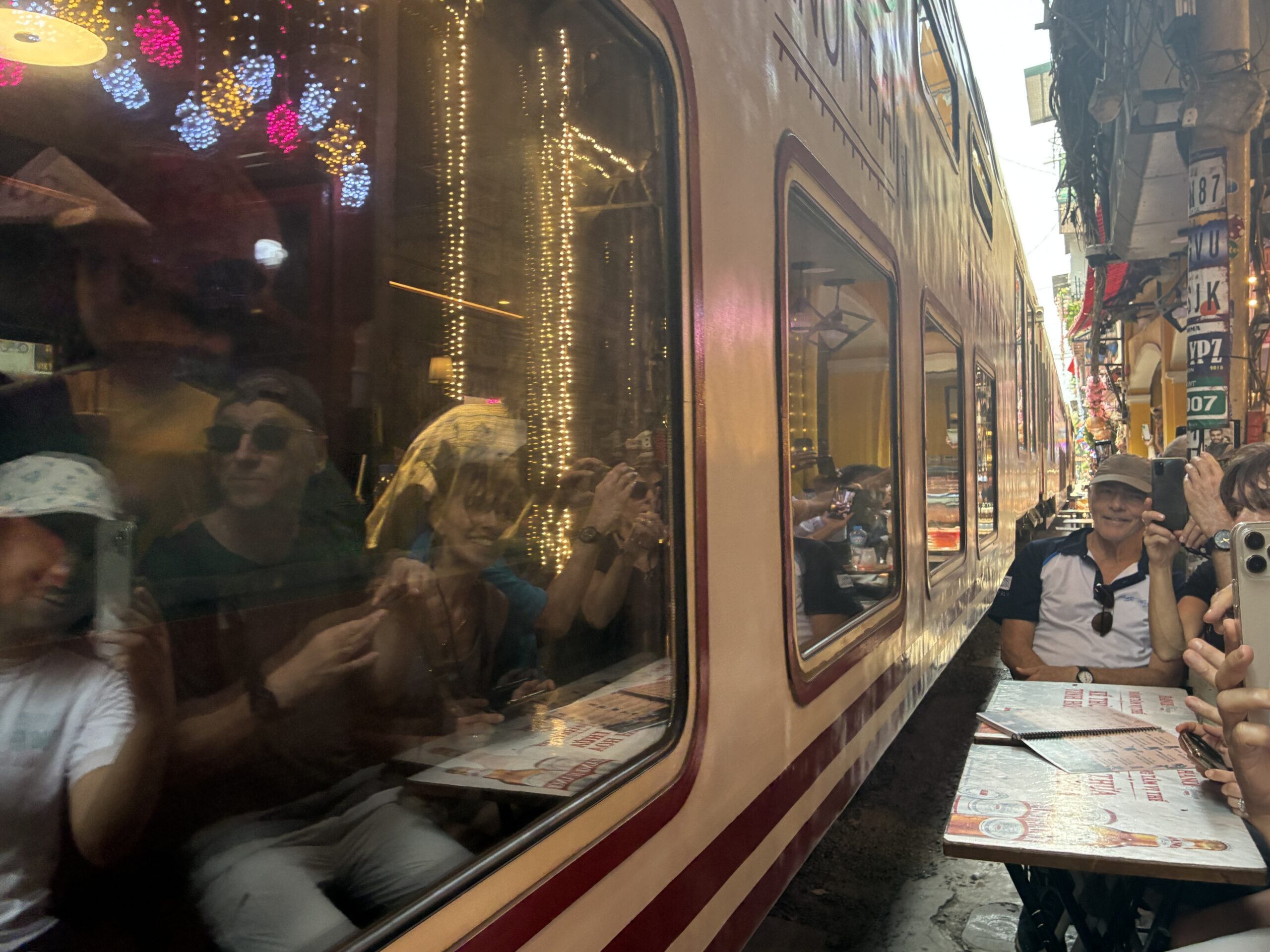
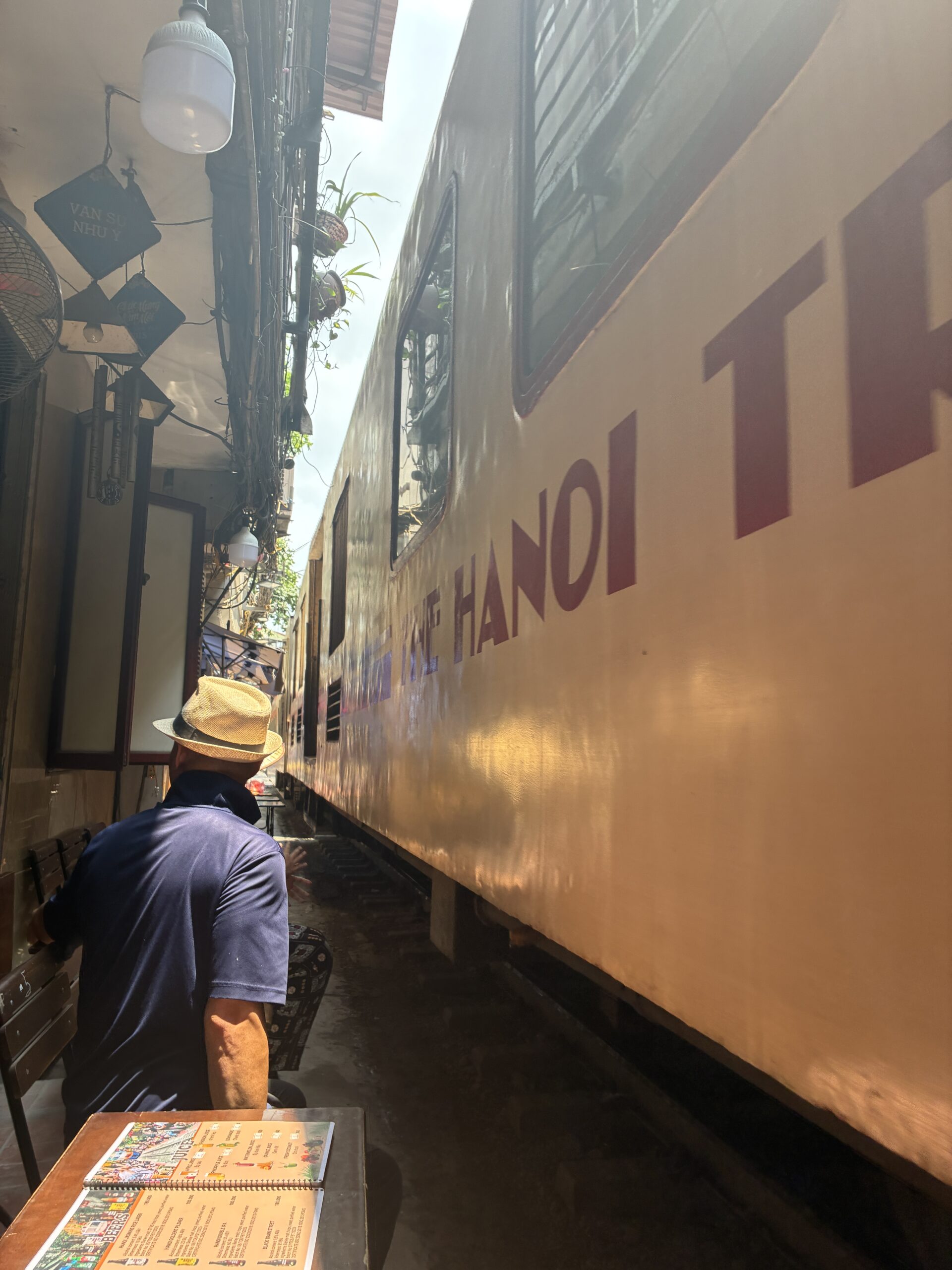
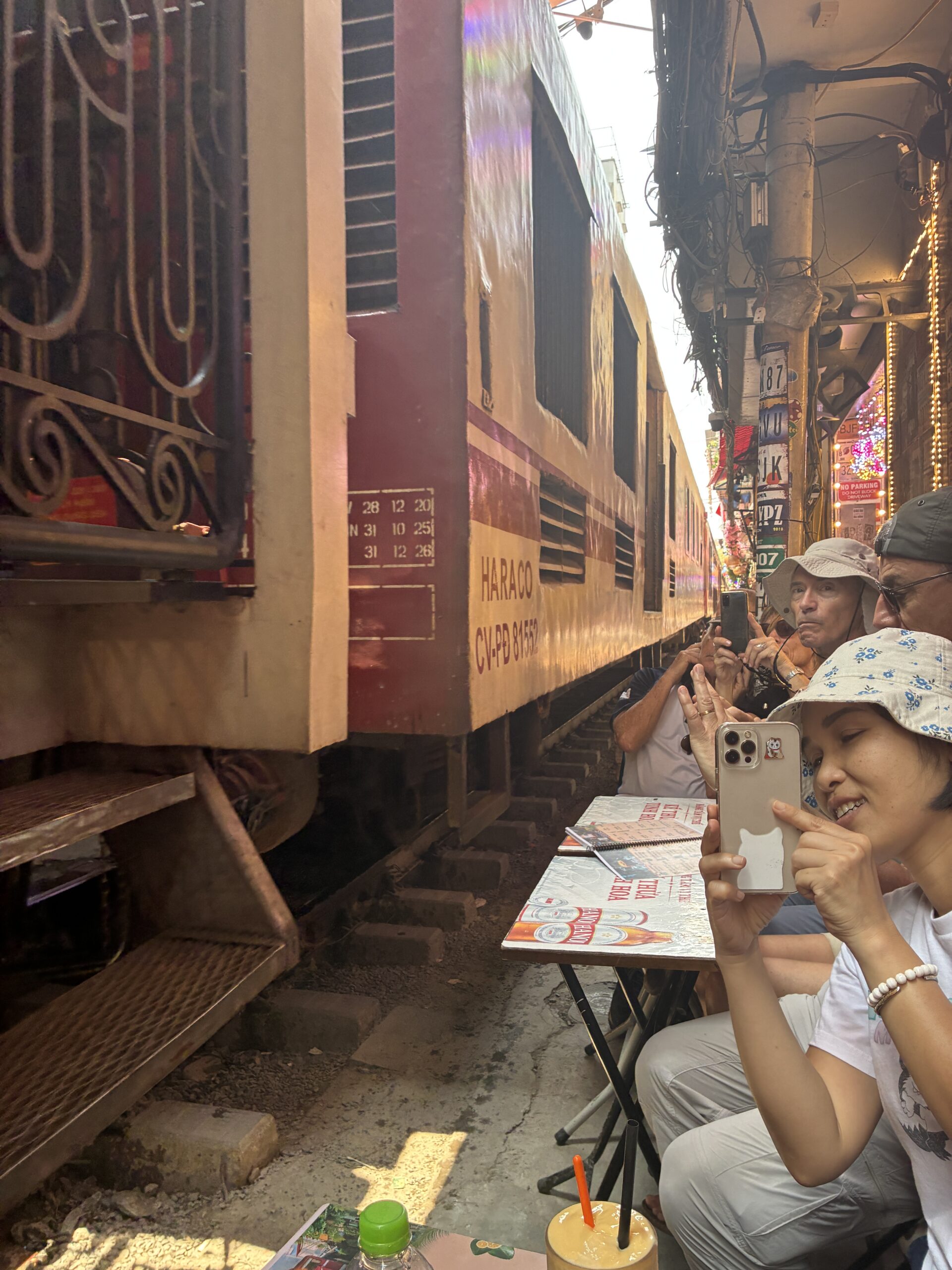
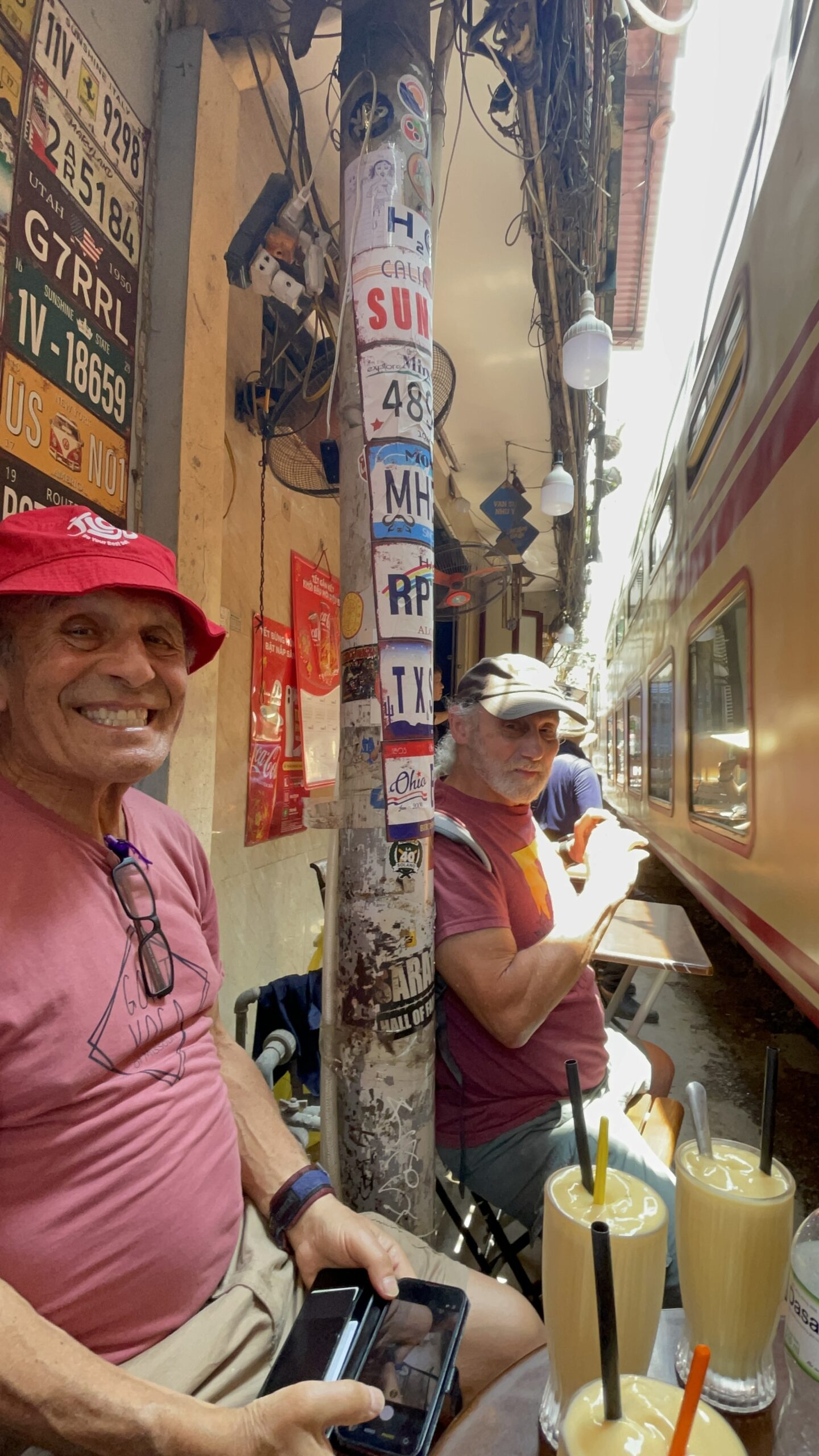
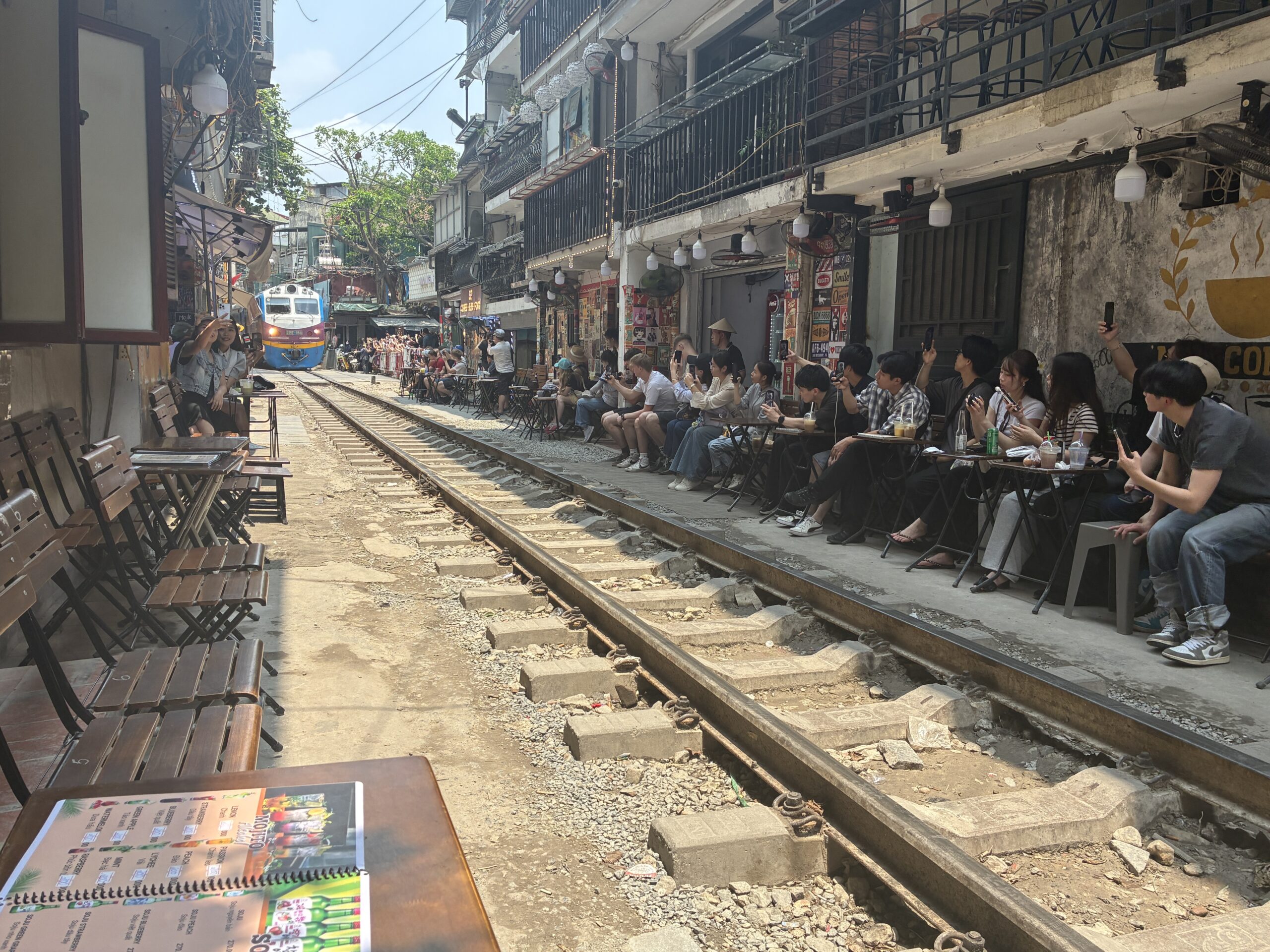
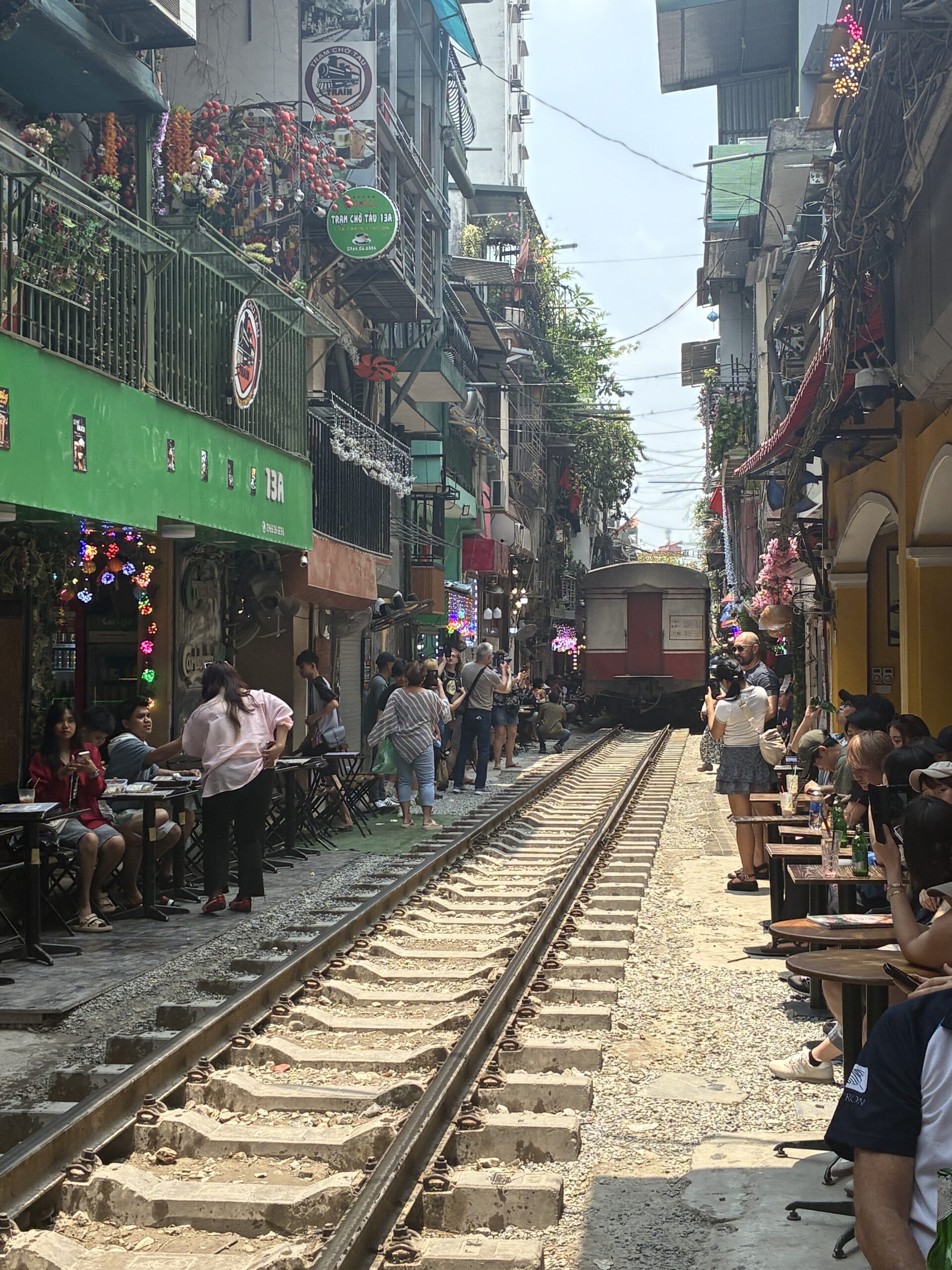
The. onto the famous Phố Đường Tàu, or Train Street. Train street is a pretty narrow road/corridor, lined with cafés and stores that are just a couple of feet away from the central railway track that runs right through the street. Visitors sit on seats outside of the cafés, and, in our case, drinking very delicious mango smoothies, waiting for the train to pass through, which it does very slowly, and literally just inches away from our knees. In fact, there was a near fatality here last year when a tourist, who became distracted while filming the train, was actually hit by the train and almost crushed, but saved by people who pulled him back. As a result, the street was closed for several months. Happily, that wasn’t the case for us, and we were fortunate enough to see two trains pass through. Quite the experience. Not to be missed.
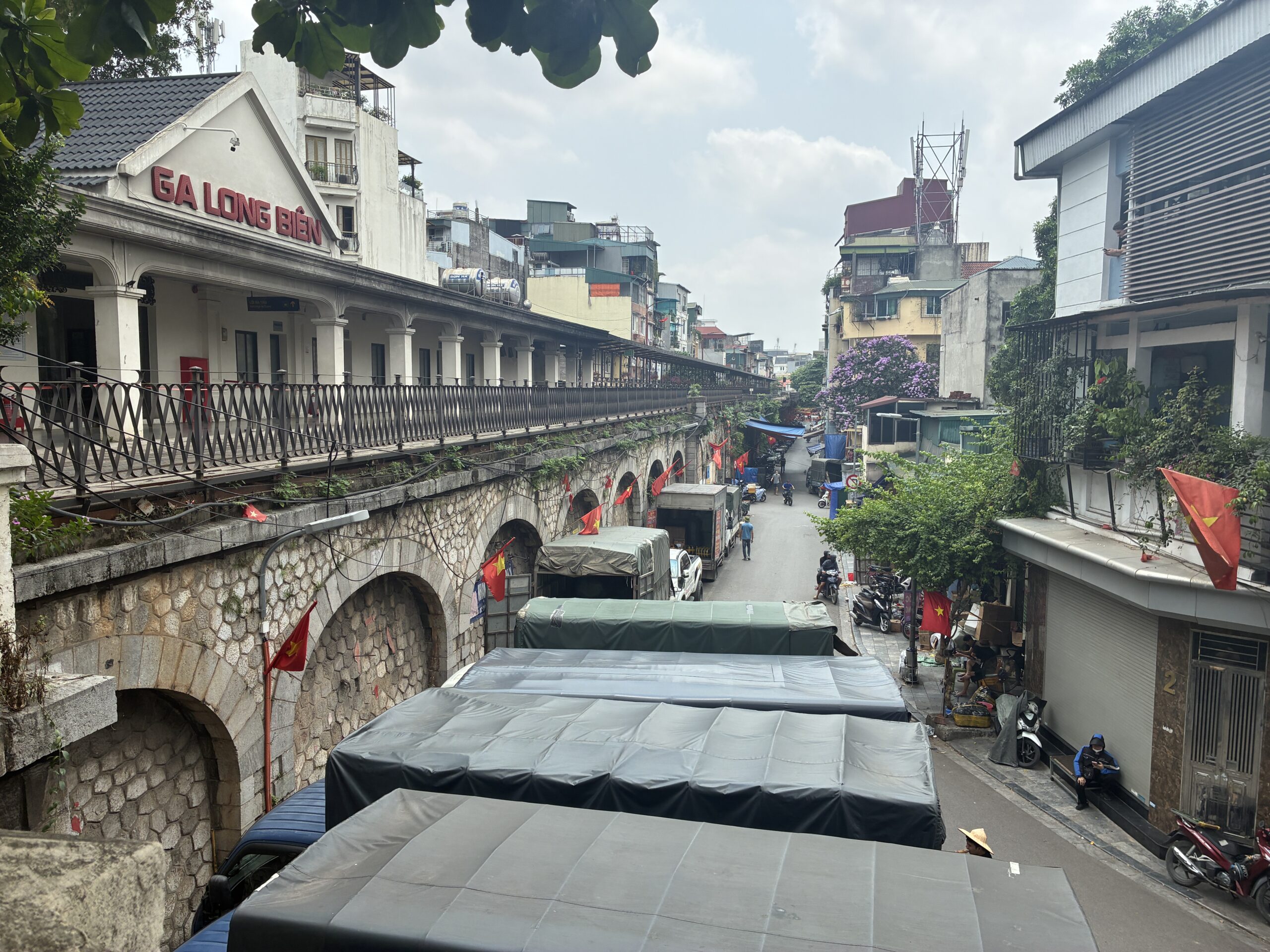
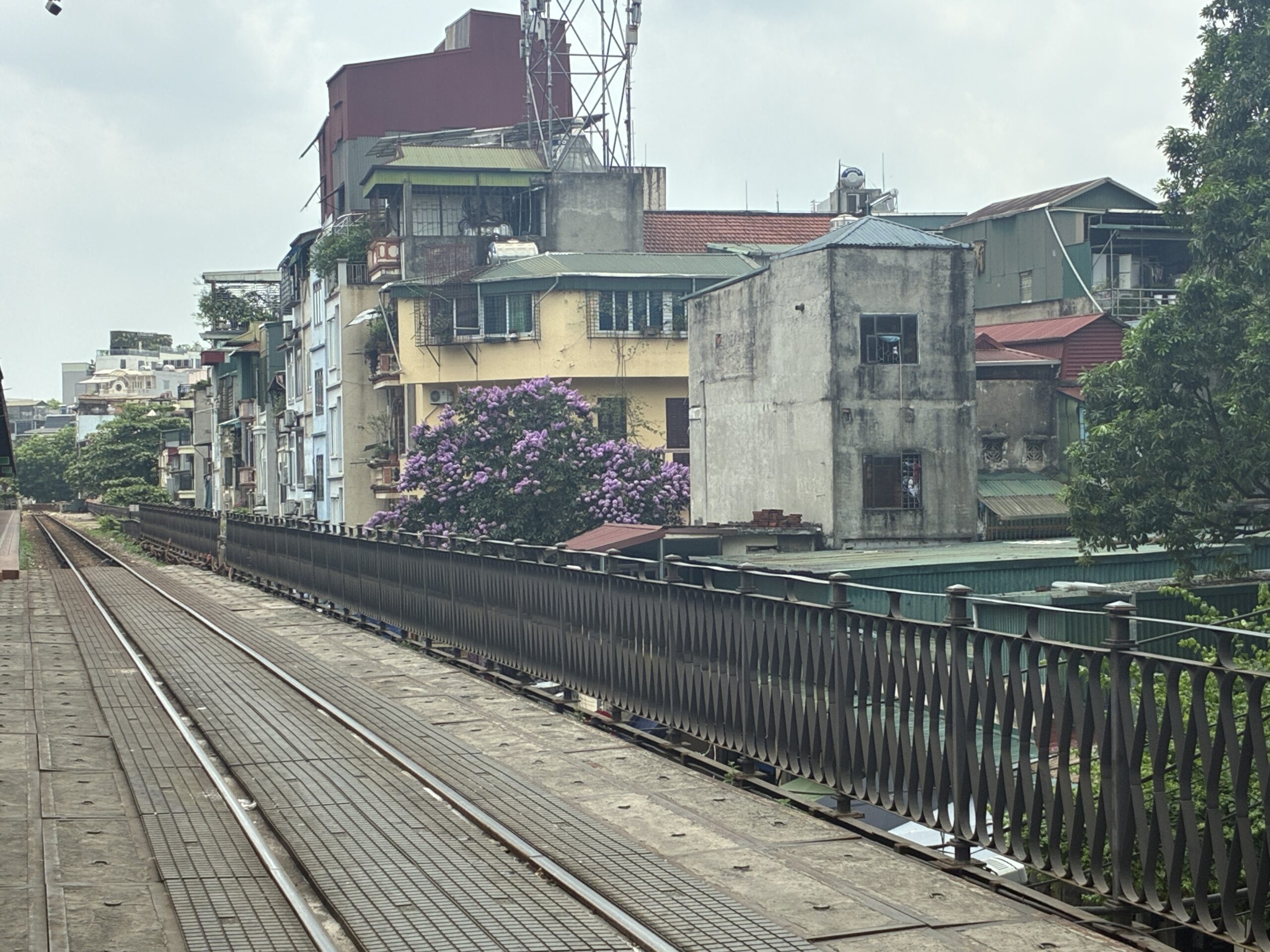
Laurence was really fatigued by now, so we skipped a couple more sights, and instead of walking took a cab (unbelievably, just $1.33) to the well-known Long Biên railway bridge (Cầu Long Biên), not far from our hotel. It is actually one of the city’s important historical locations, and sometimes called the Horizontal Eiffel Tower because it was defined and built between 1899 and 1902 by the same company that designed the Eiffel Tower. At the time, it was one of the longest bridges in Asia, running about 1½ miles from the station and across the Red River.
During the Vietnam War, the bridge was a primary target for U.S. bombing because it was the only link across the Red River, and was hit and repaired 14 times, but not destroyed, and so is seen as a symbol of Vietnamese resilience (although it should be French architectural skills, as they designed it). I think I’ll go back and revisit it tomorrow, and try to make it to where it crosses the Red River.
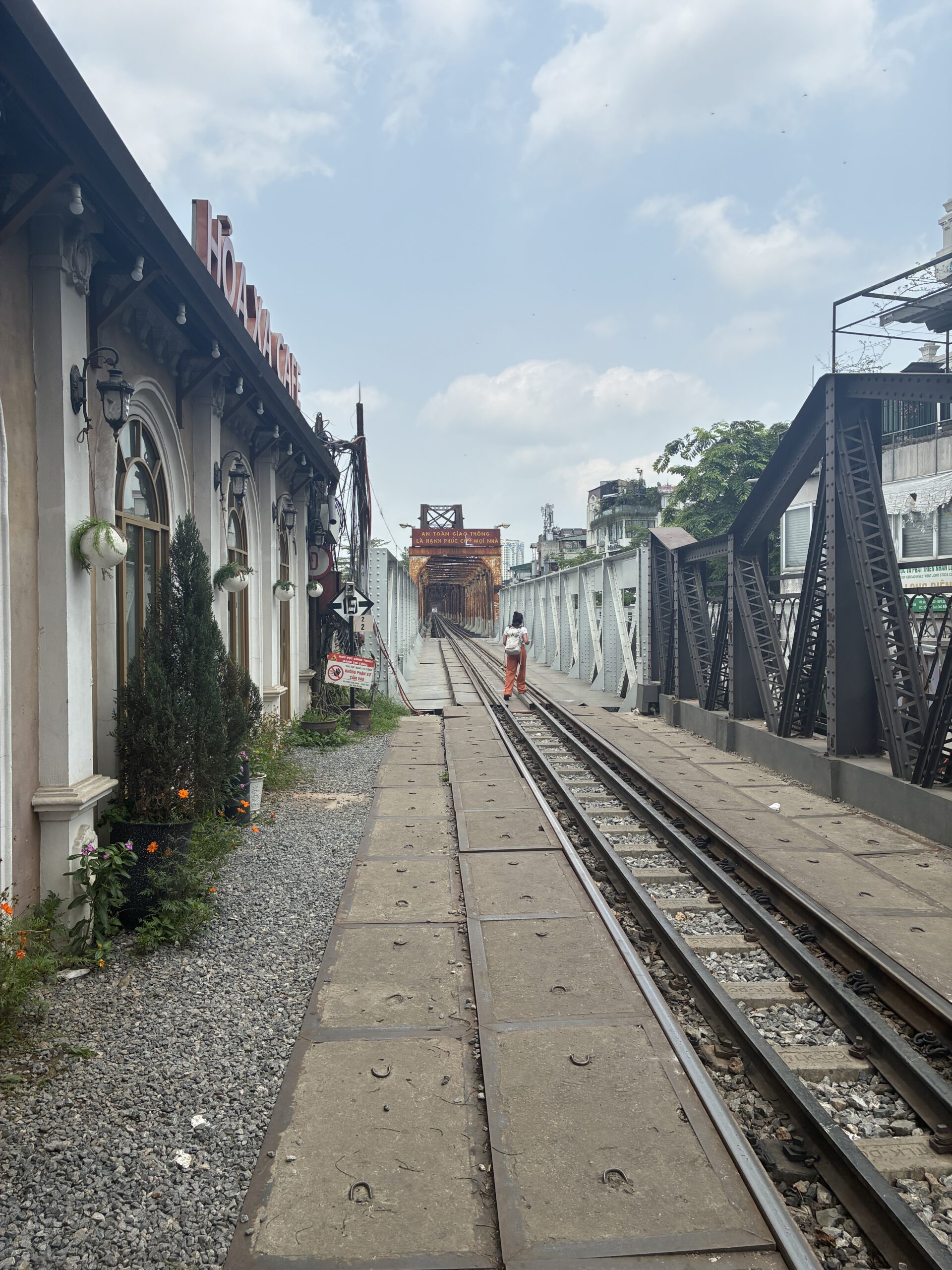
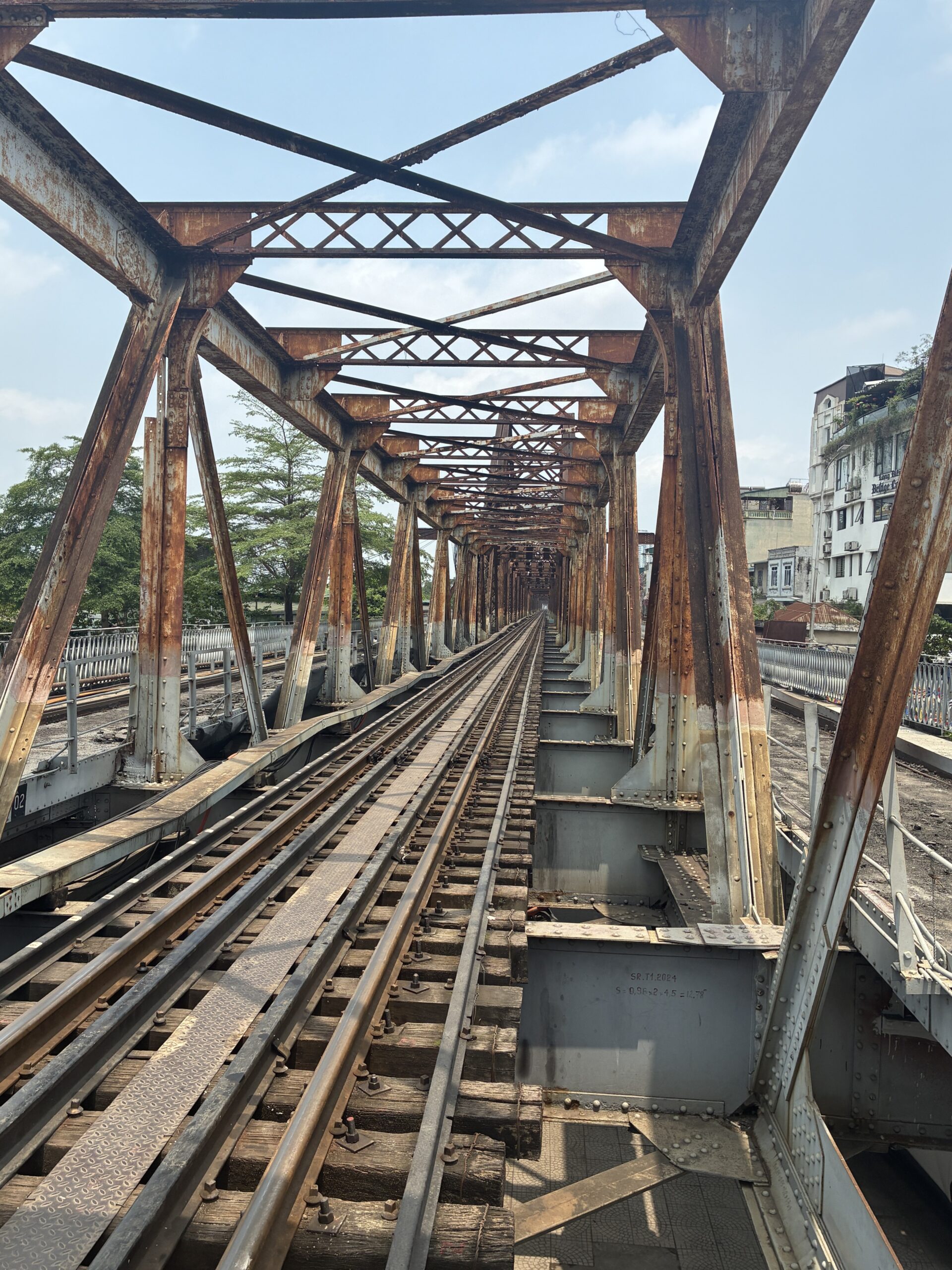
By then, Laurence was almost fully cooked. We said tạm biệt (goodbye) to the delightful Van, who herself was a highlight of our visit to Hanoi, and, despite Laurence feeling wiped out, walked the five or six minutes back to our hotel. I booked an additional night at the hotel for Wednesday night (just for me, sadly) and a day trip to Ha Long Bay for the same day (which I should have booked with the tour operator we visited yesterday, as through the hotel it cost me about $30 more).
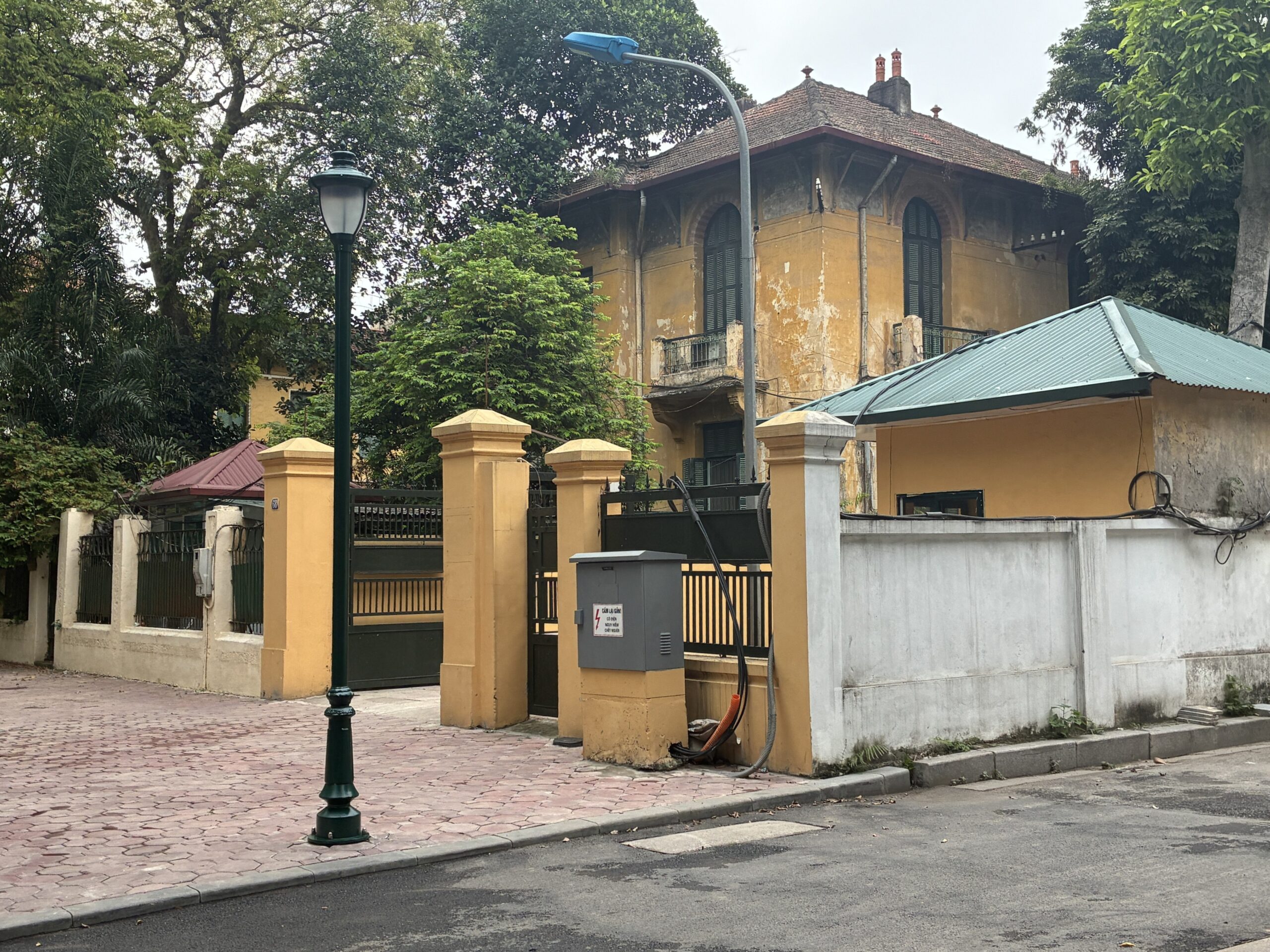
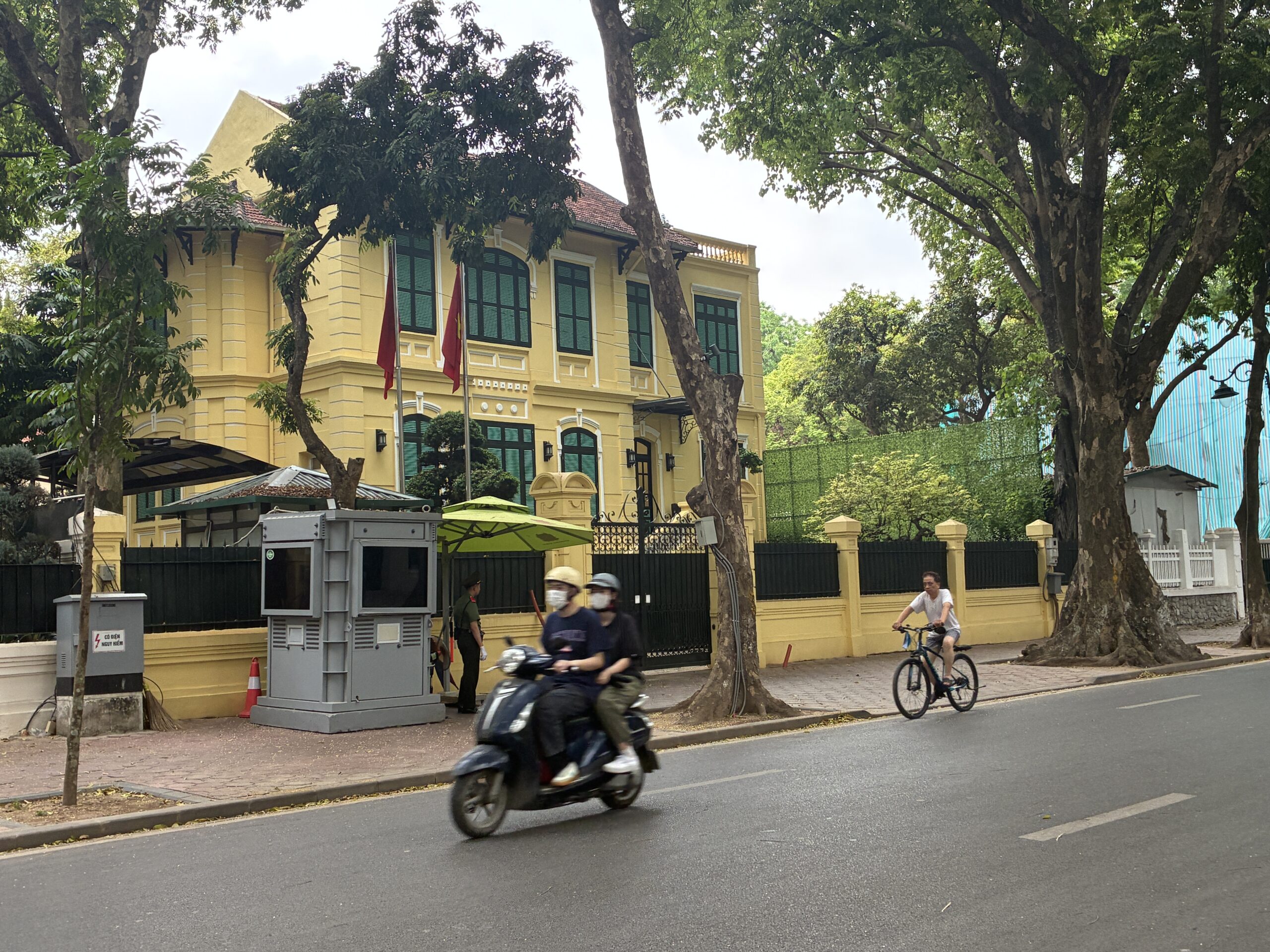
We languished in our room for a couple of hours, and then I took a rambling walk for maybe 45 minutes, to nowhere in particular, and wound up on Phan Đình Phùng Street, a broad and tree-lined avenue, with beautiful mostly colonial era buildings behind walls, some or many of which are government and military buildings, or foreign embassies or residence. and guarded by the police or military. This, it turns out, is political heart of the city, bordering on the Ba Dinh District, the administrative center of Vietnam. At one point, I was told not to take photographs, at least in that area.
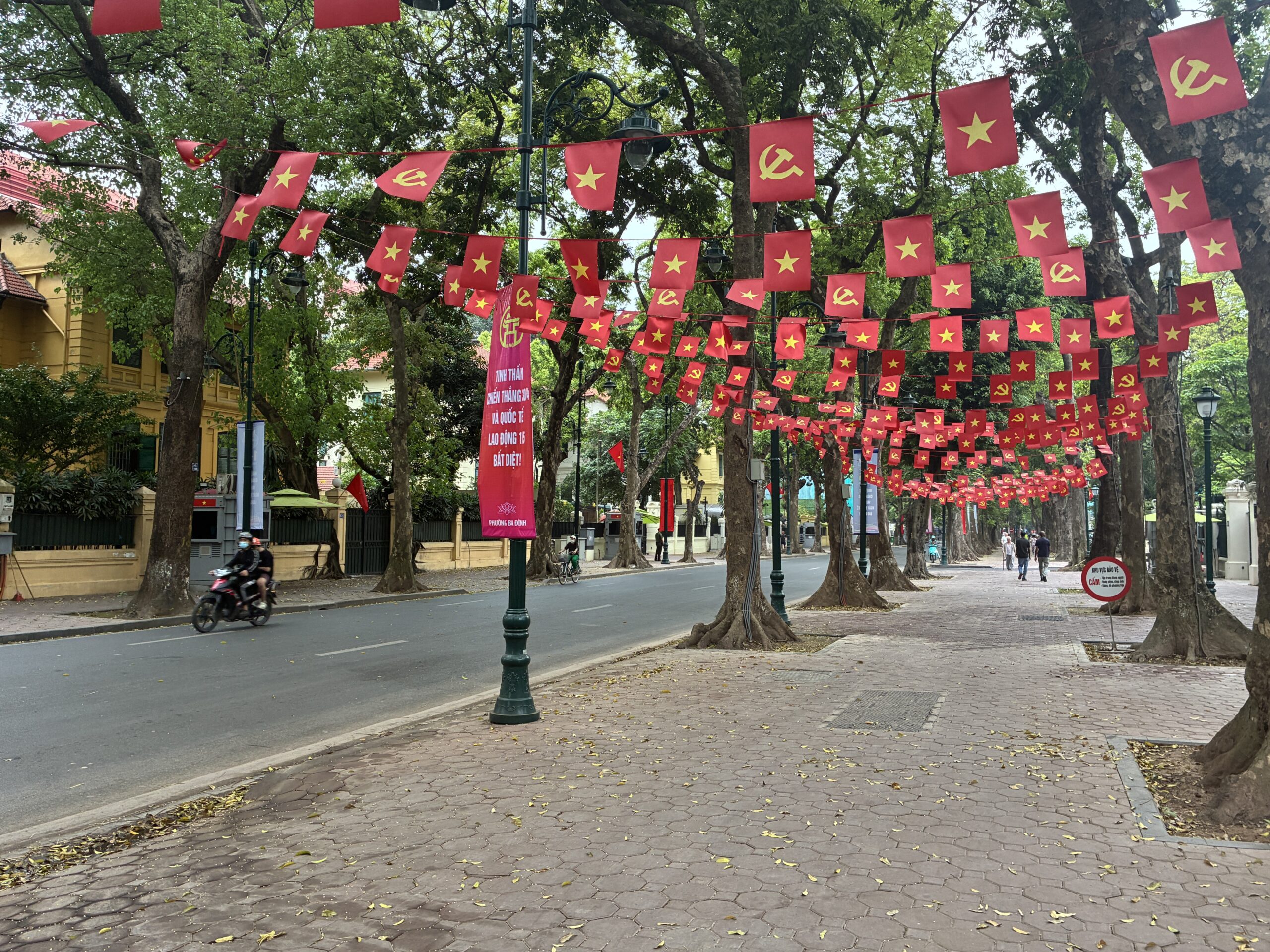
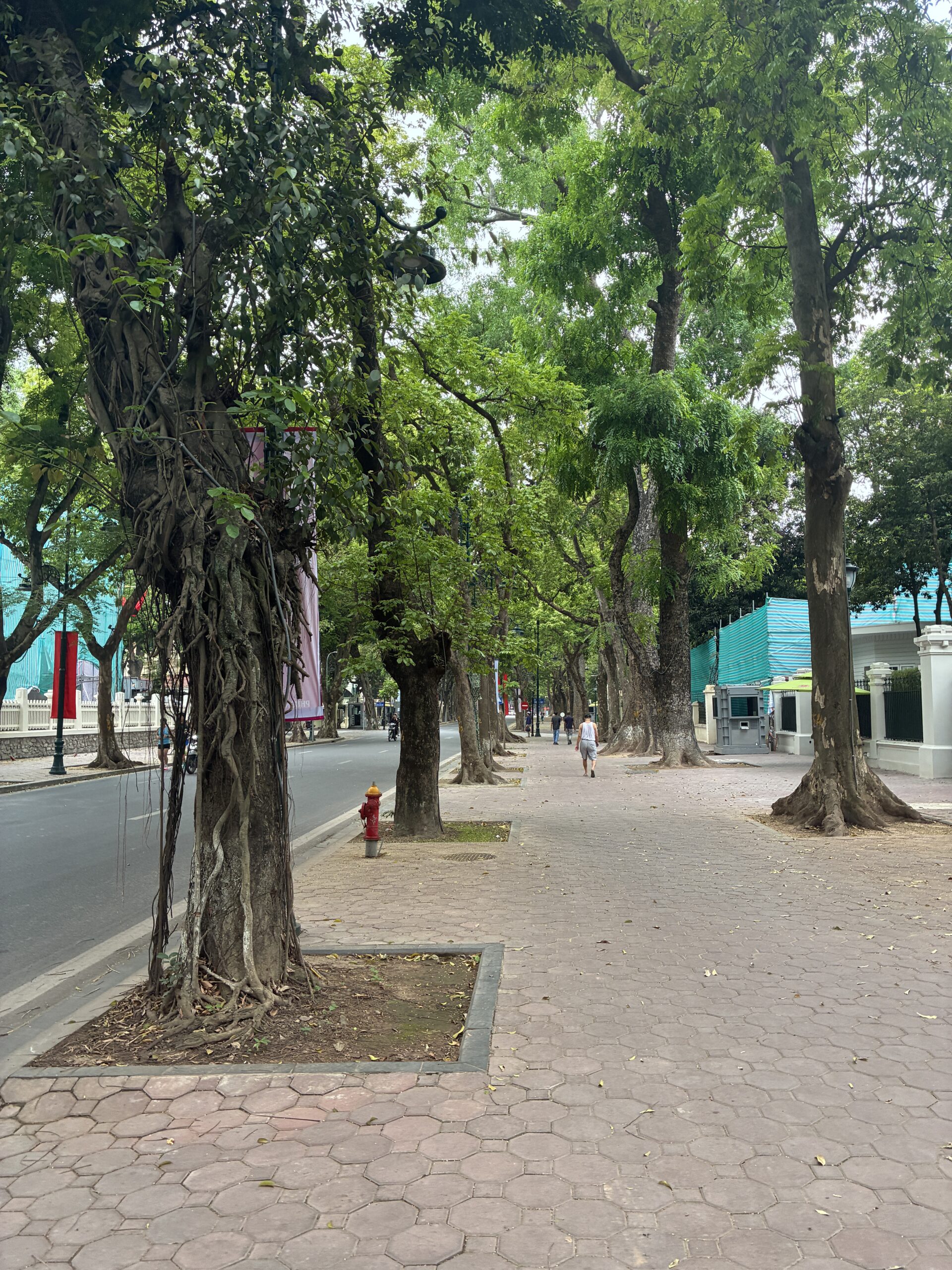
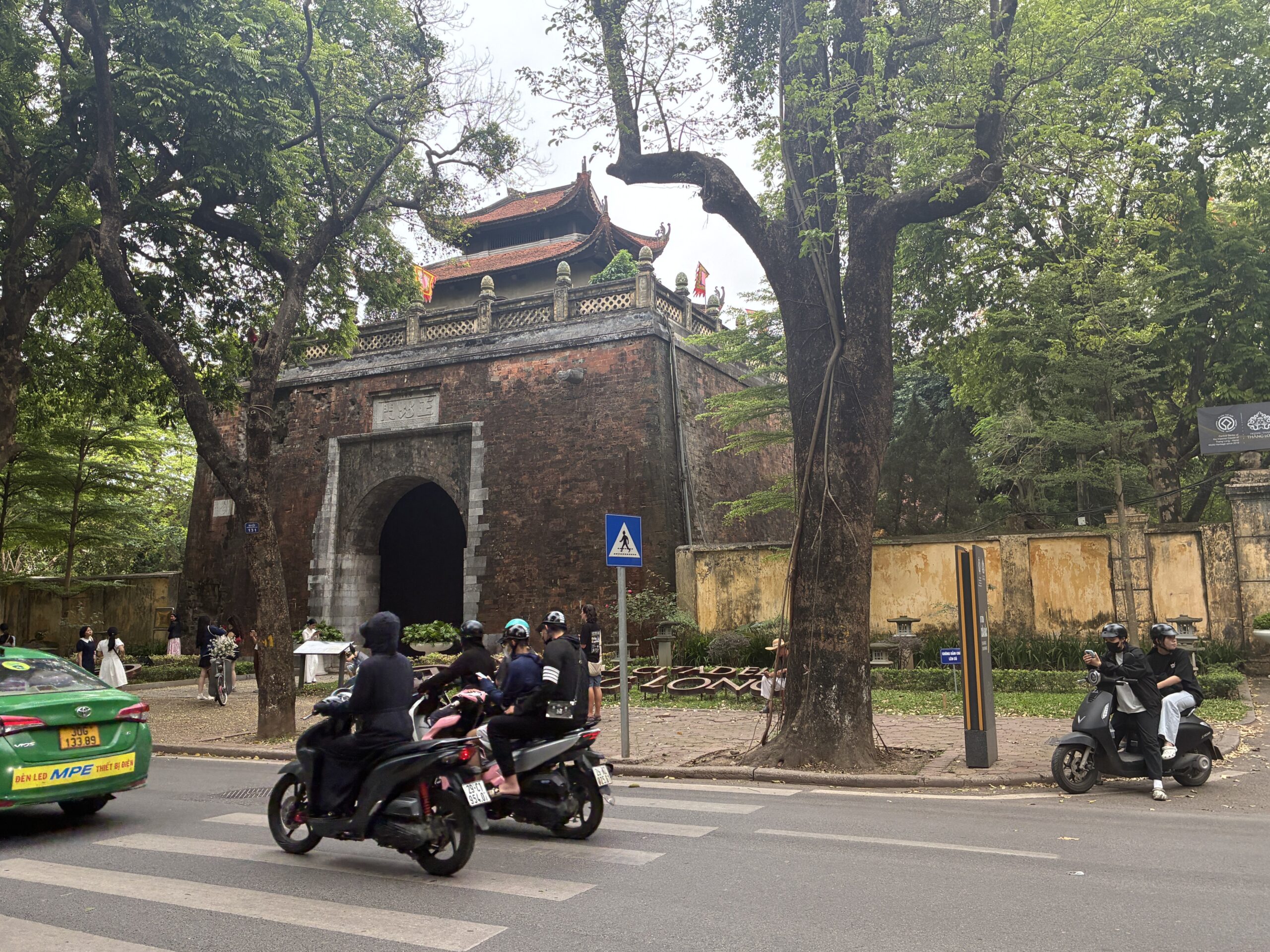
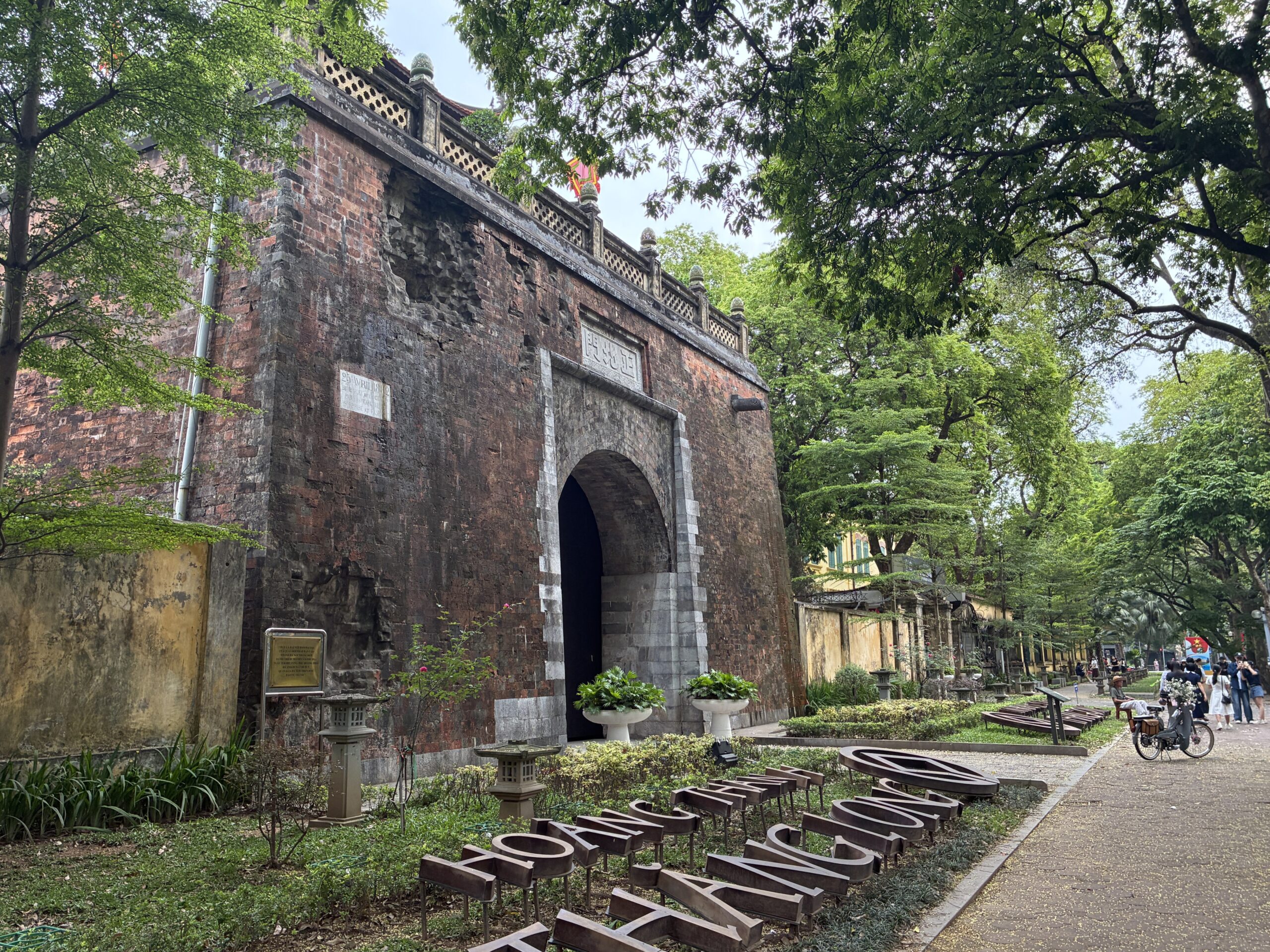
Cửa Bắc, the old North Gate, is also on Phan Đình Phùng Street, one of the only two remaining original gates of the the ancient Imperial Citadel of Thăng Long, and now a museum. The gate and citadel was built in 1805, but built on the foundations of the Le Dynasty citadel and gate from the 15th century, and beneath that atop a building from the the city’s founding in 1010. Almost opposite the gate is the catholic Cửa Bắc Church, the Church of Our Lady of Hanoi, built in 1832 and designed to blend traditional European church elements with Vietnamese architecture, such as yellow walls and green-tiled roofs.
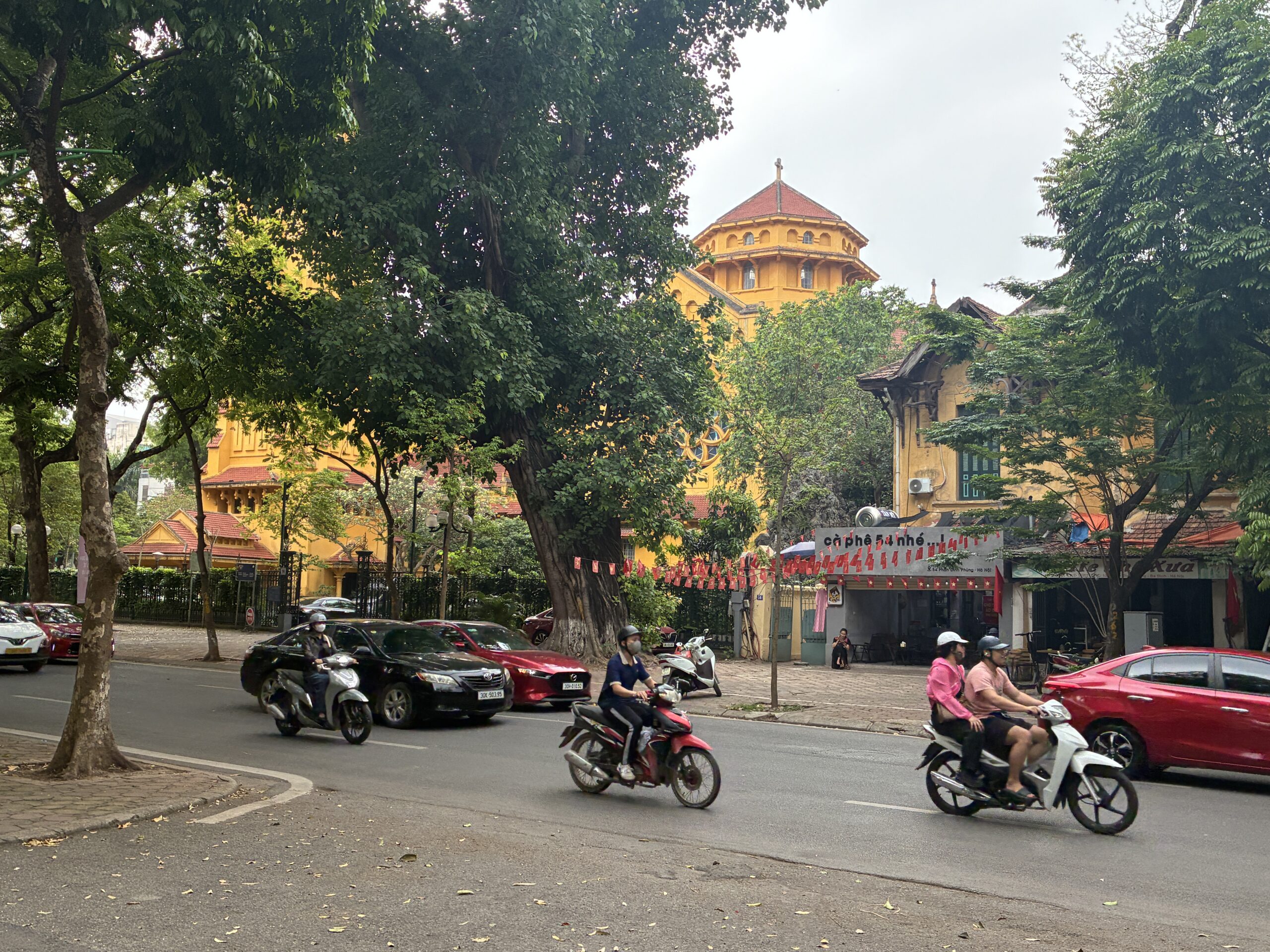
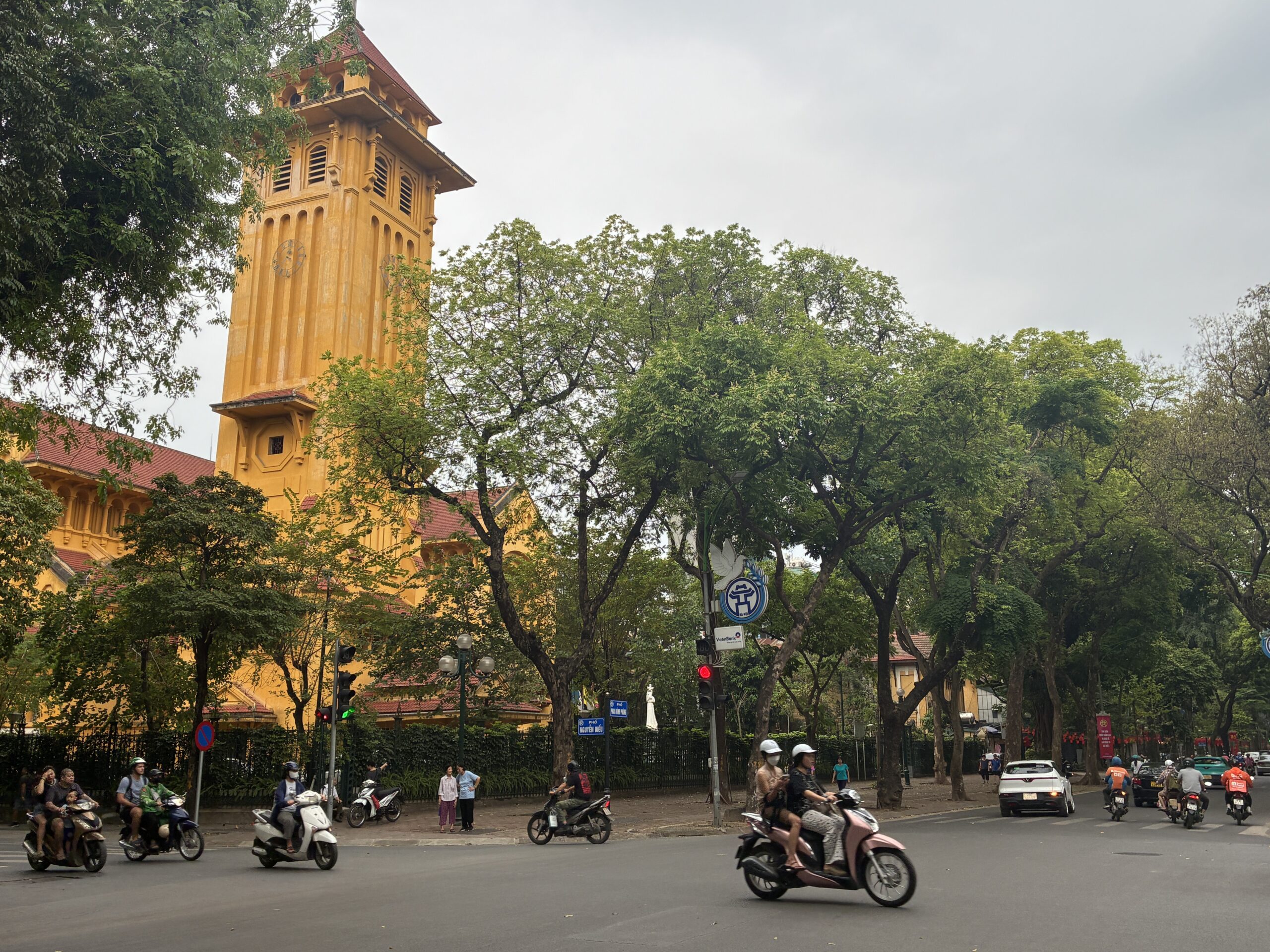

I headed back to the hotel, and despite taking a long and rambling route to get there, it turned out I wasn’t too far from the hotel. where I rejoined Laurence, who was rested up and revived, and ready to take a walk and look for some dinner. We decided to head north to Trúc Bạch Lake, the other city lake, about a 20 minute or less walk.
Along the way, we decided to try some pizza, sold by the slice, to see how it stacked up against against American pizza. Not bad, with a thin crust, and pretty tasty. People along the street were excited to see us eating the pizza as we walked, several smiling and saying “pizza,” and clapping us on the back. Laurence decided to stop and get a quick a haircut (which I didn’t think he needed), and although he thought it would take minutes, while I waited on the street outside, it actually took at least 30 minutes. I think the guy wanted to an extra good job.
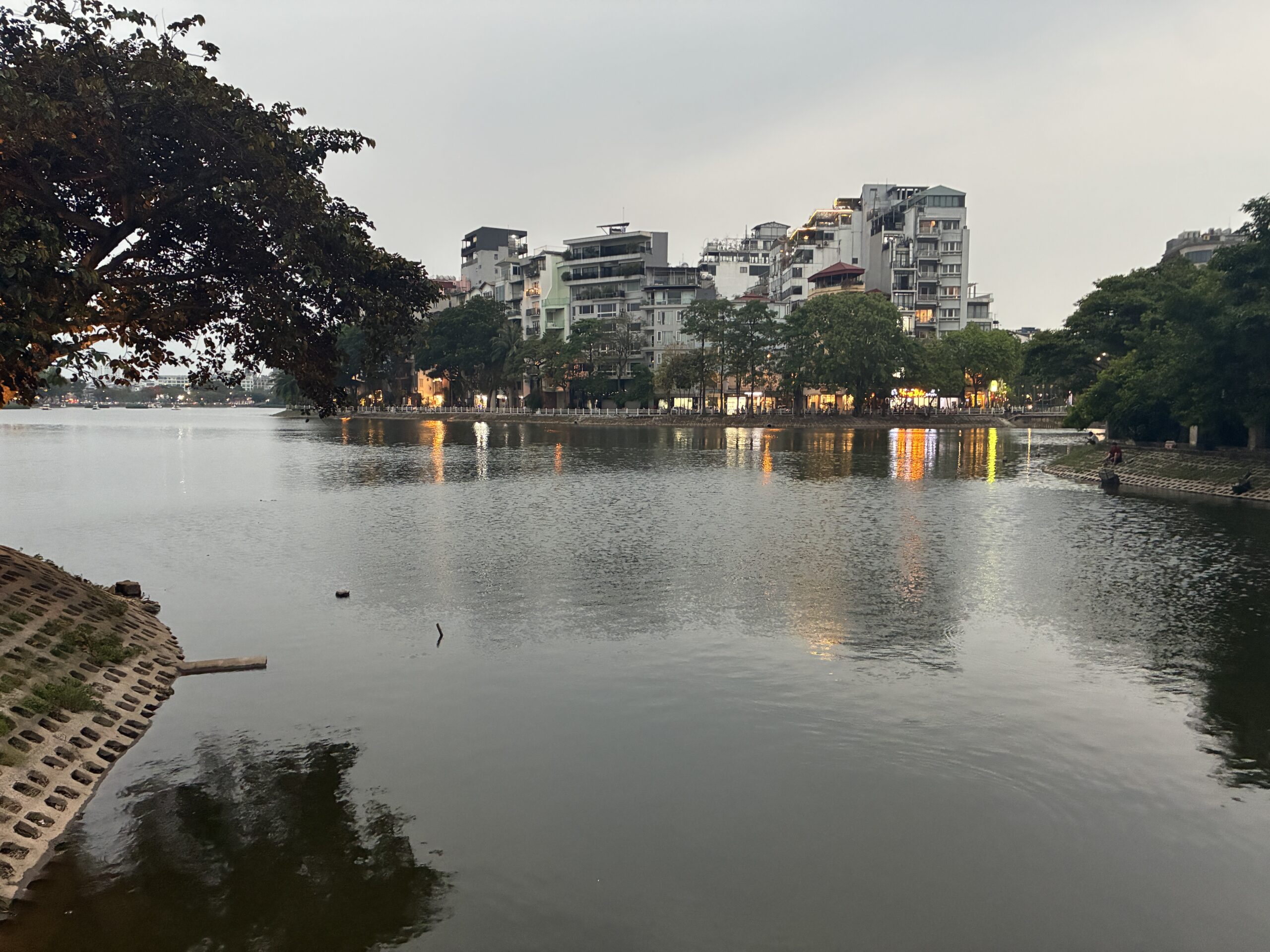
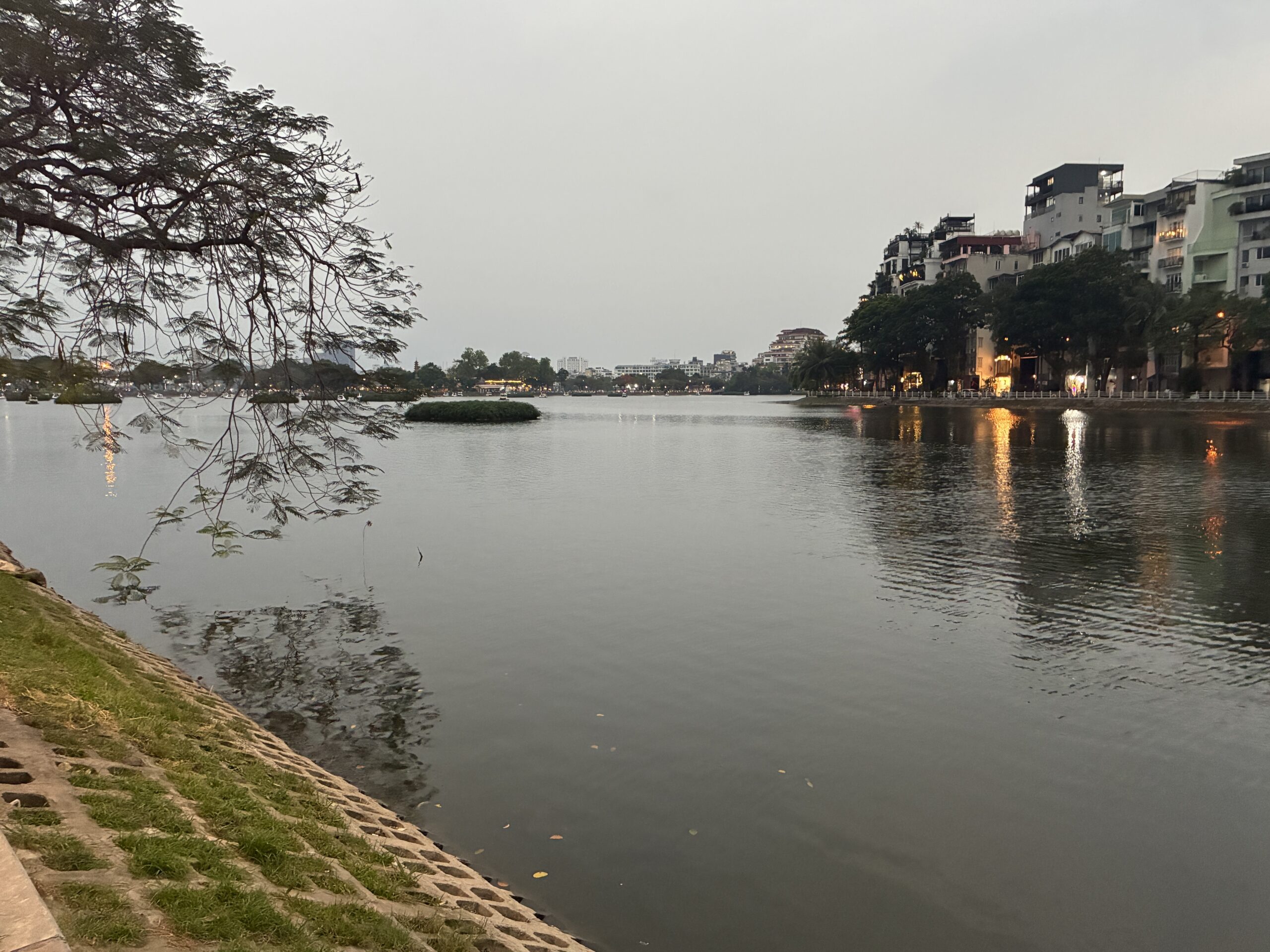
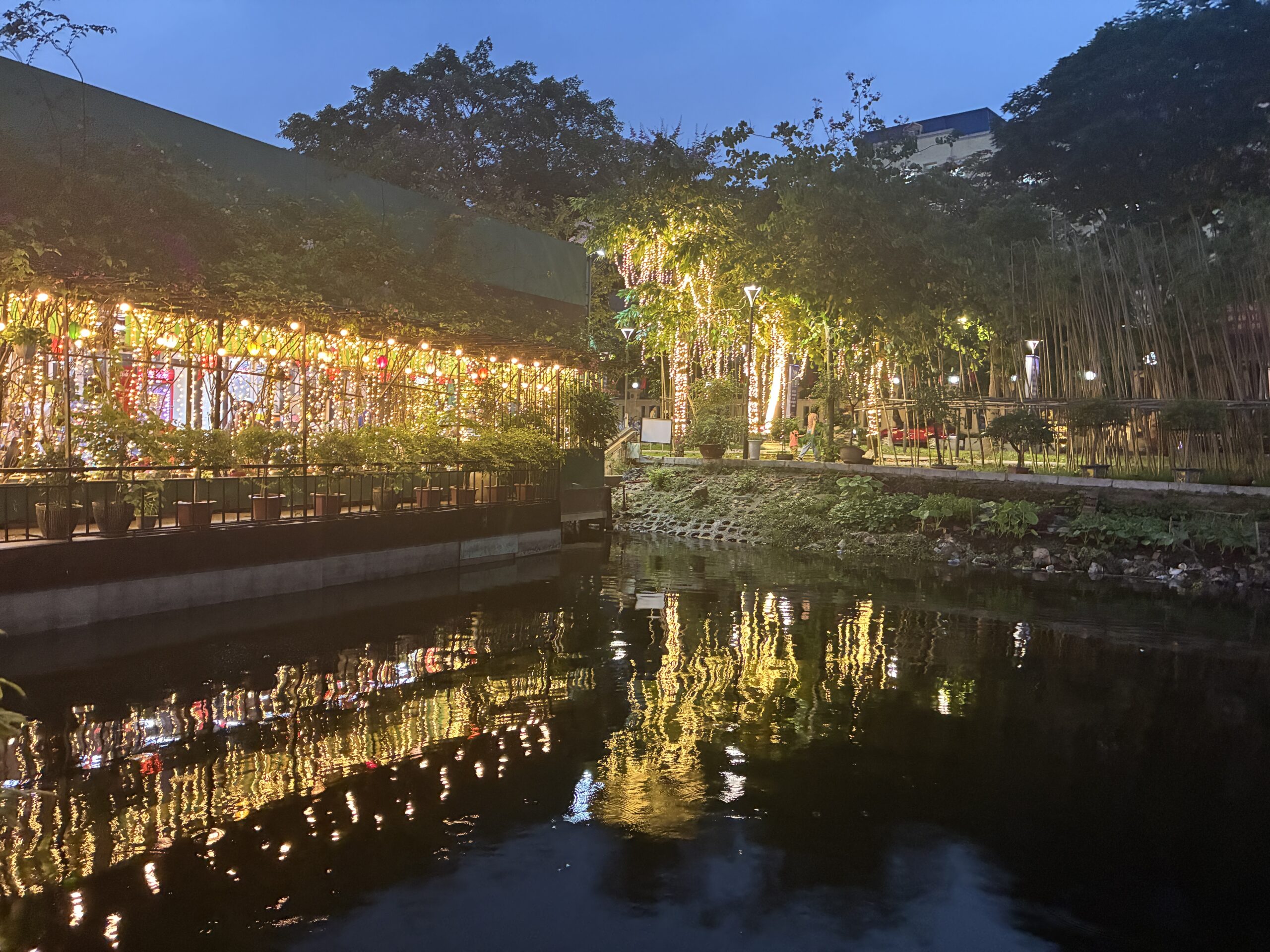
Then onto Trúc Bạch Lake, which is a large lake, with recreational swan boats, and quite a lovely night life, as it was getting dark by the time we arrived. It borders the much larger West Lake, which we didn’t visit. This where John McCain was shot down in 1967, parachuting with two broken arms into Trúc Bạch Lake, and subsequently imprisoned at the he Hanoi Hilton (Hỏa Lò prison) for over 5 years. Today, there is a monument there dedicated to the “citizens and military of the capital” who captured him, bt today also commemorates McCain and his later work normalizing relations between the U. S. and Vietnam.
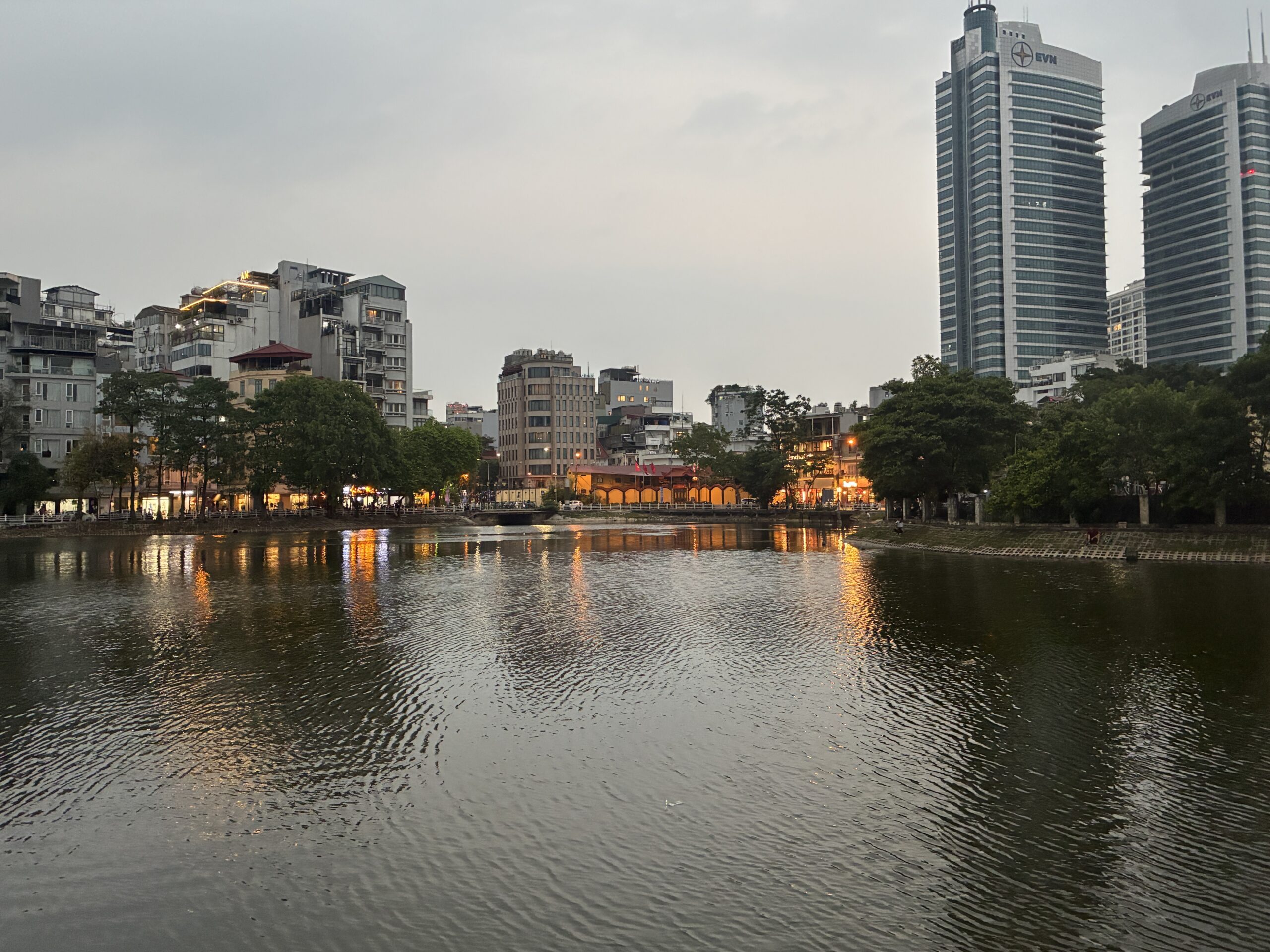
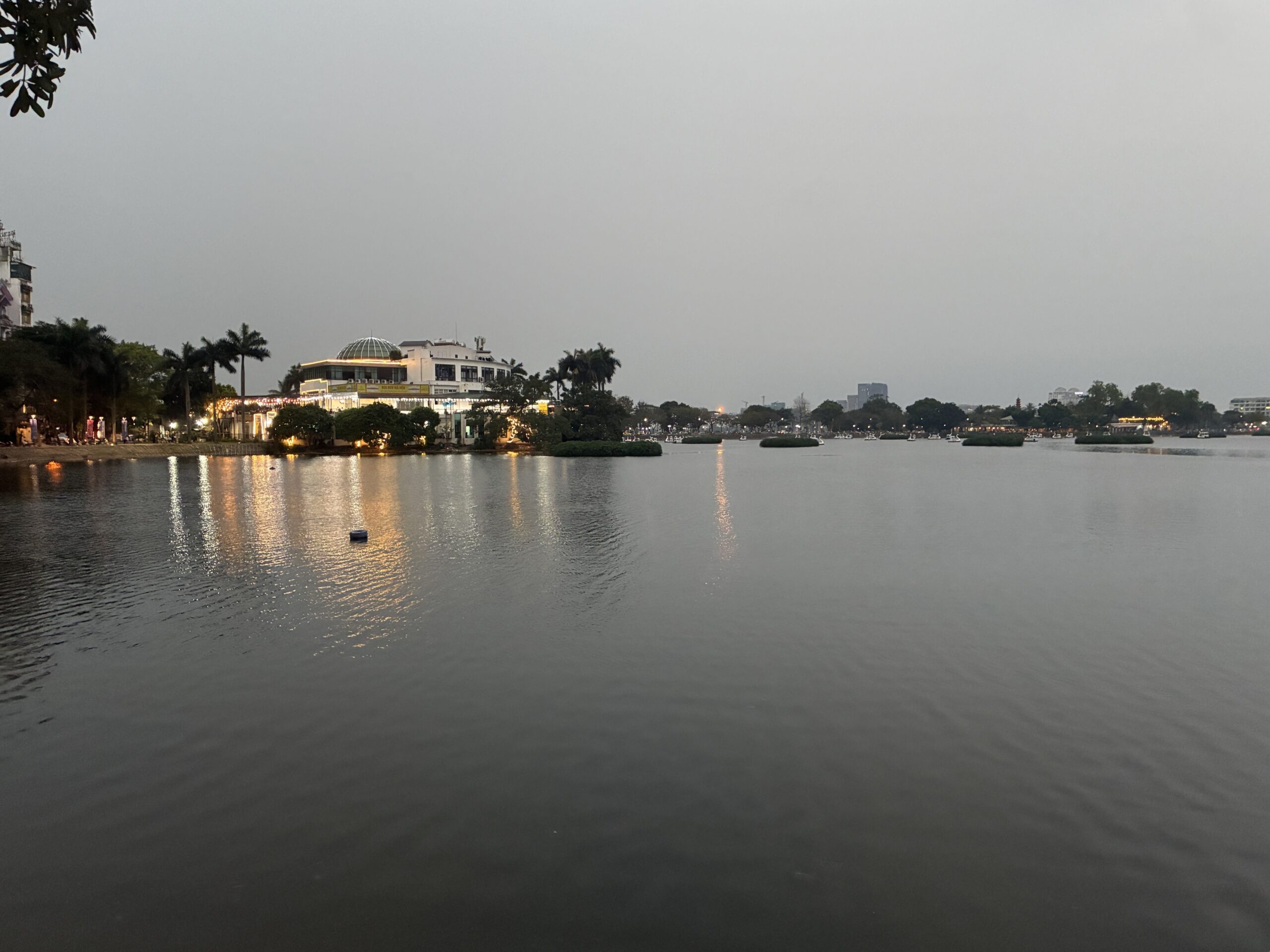
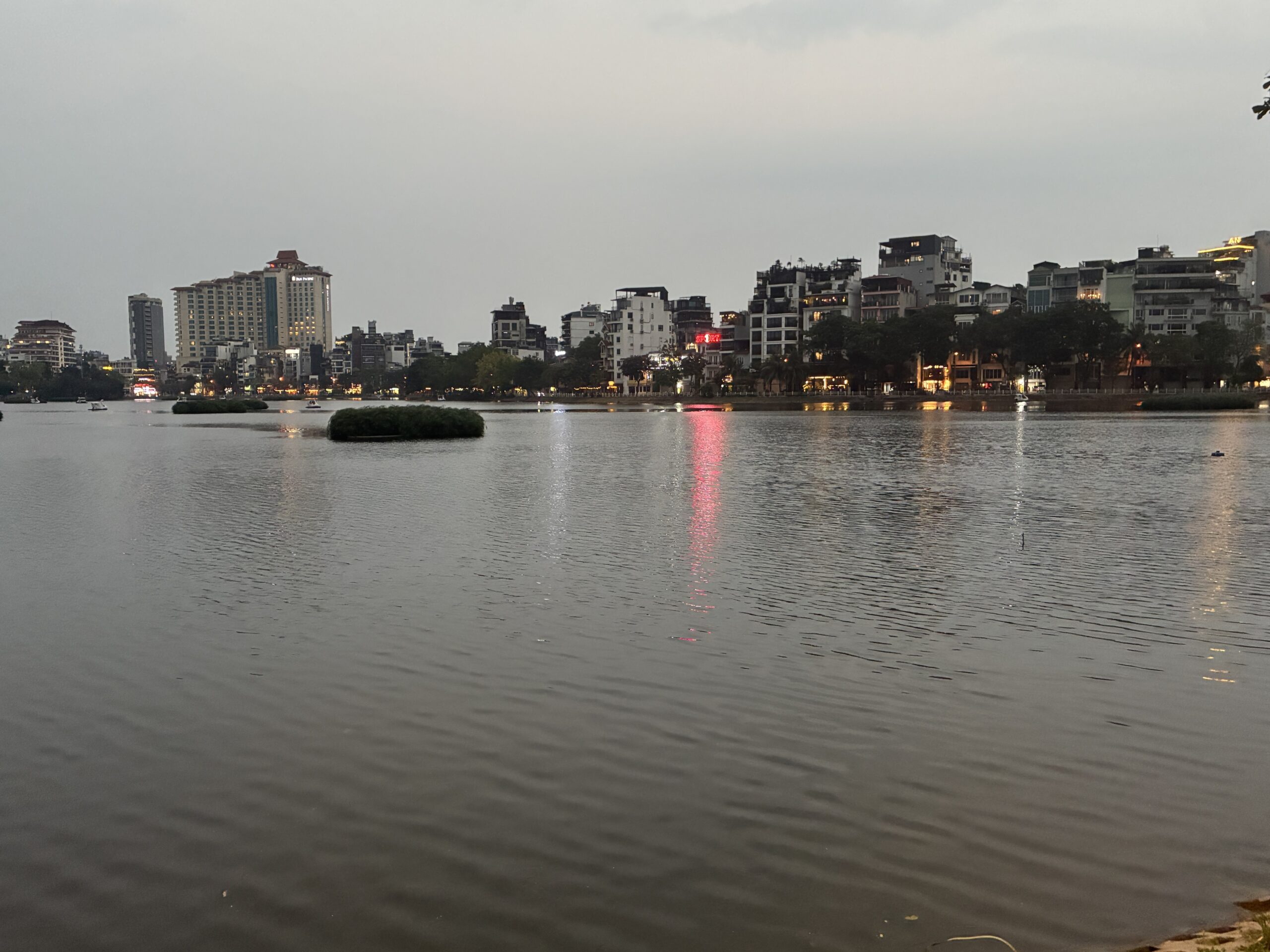
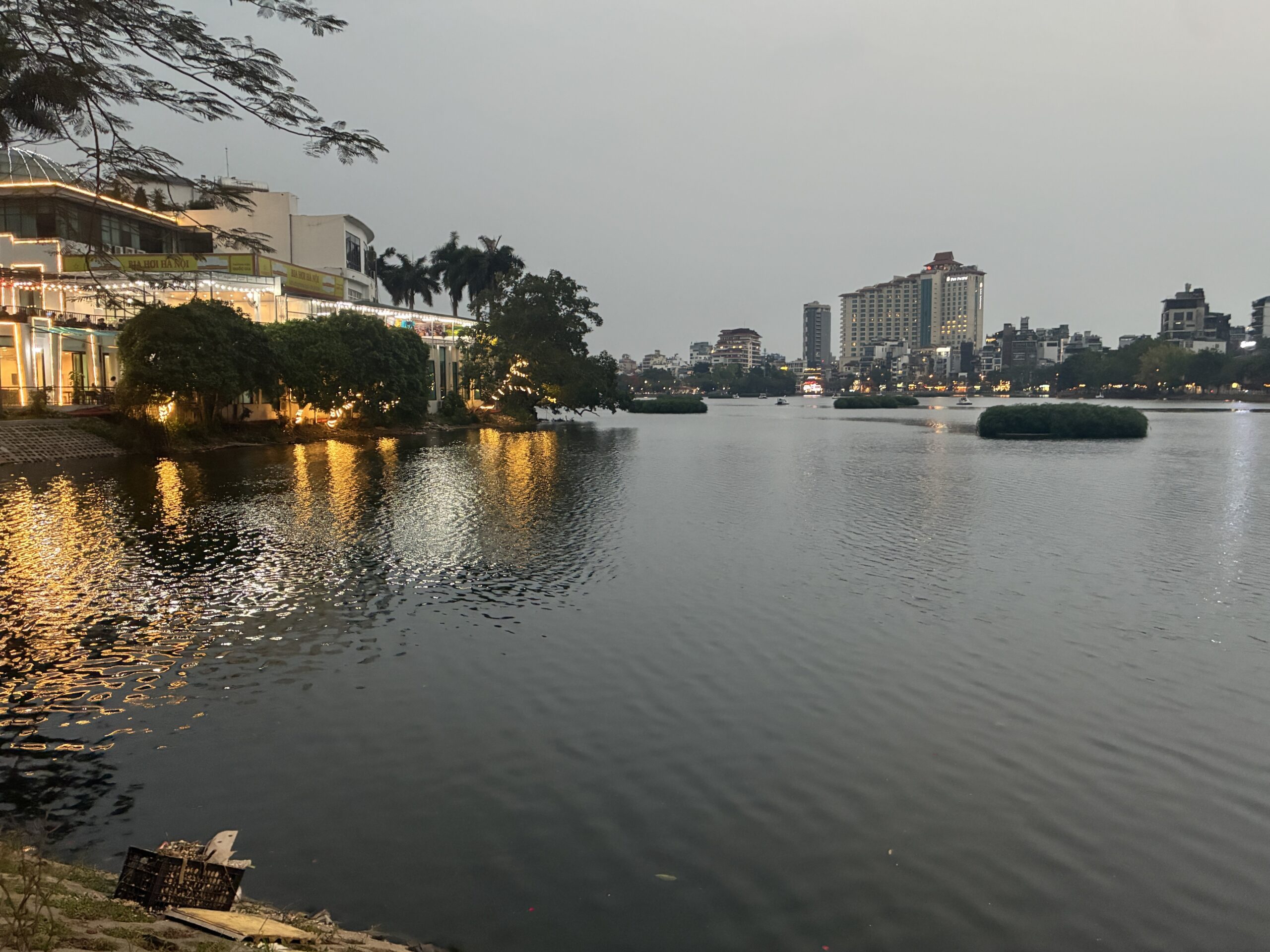
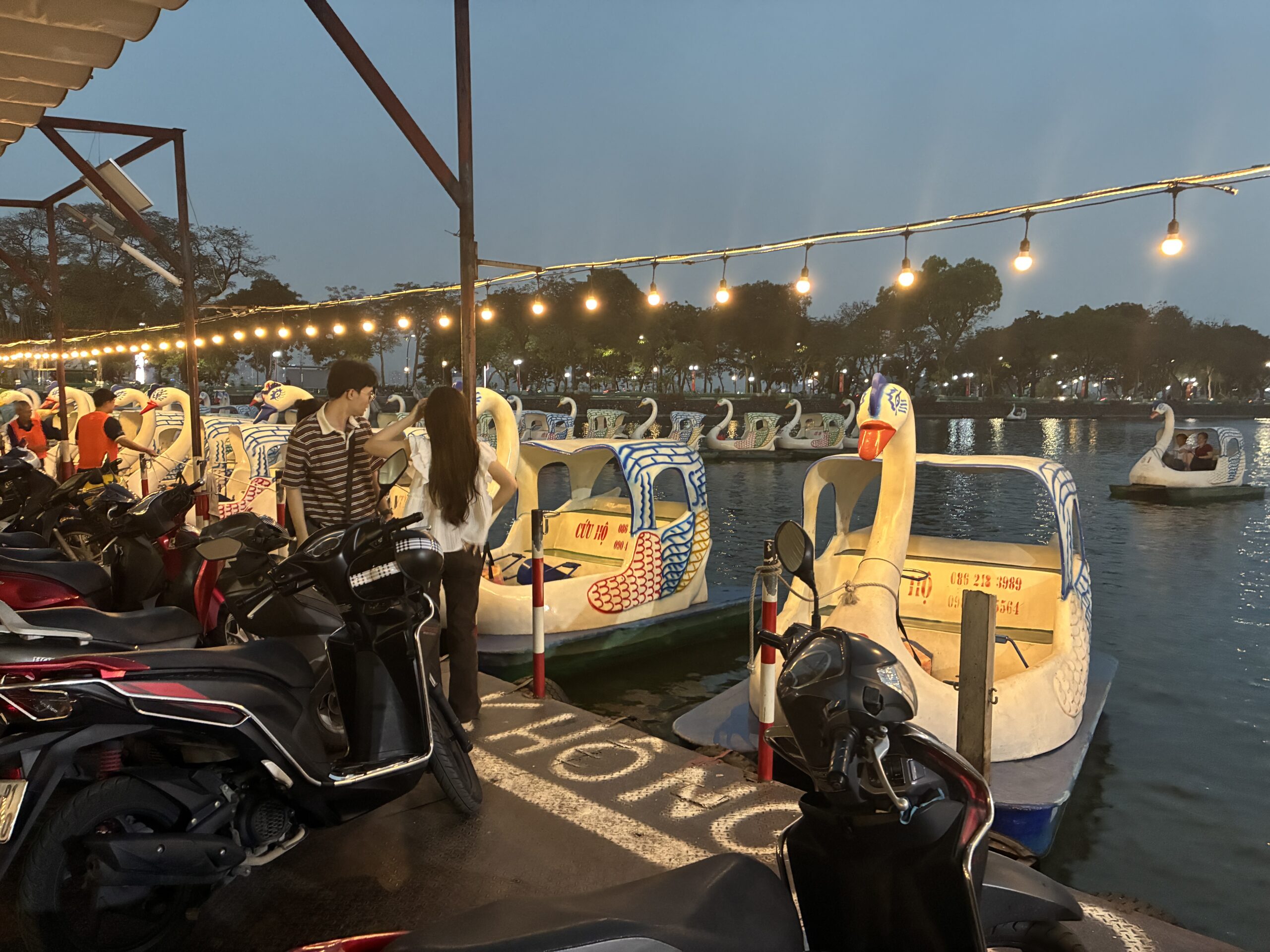
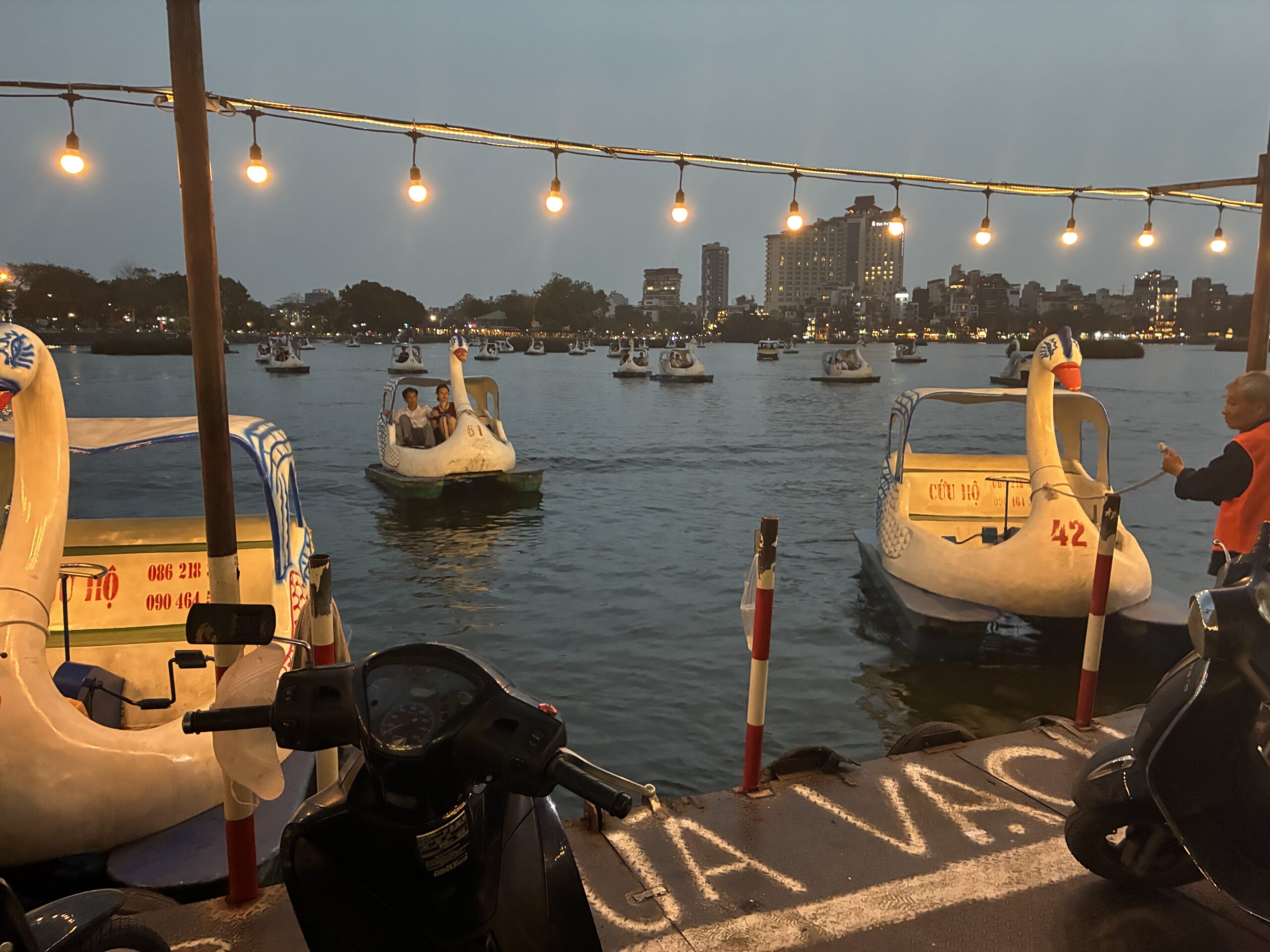
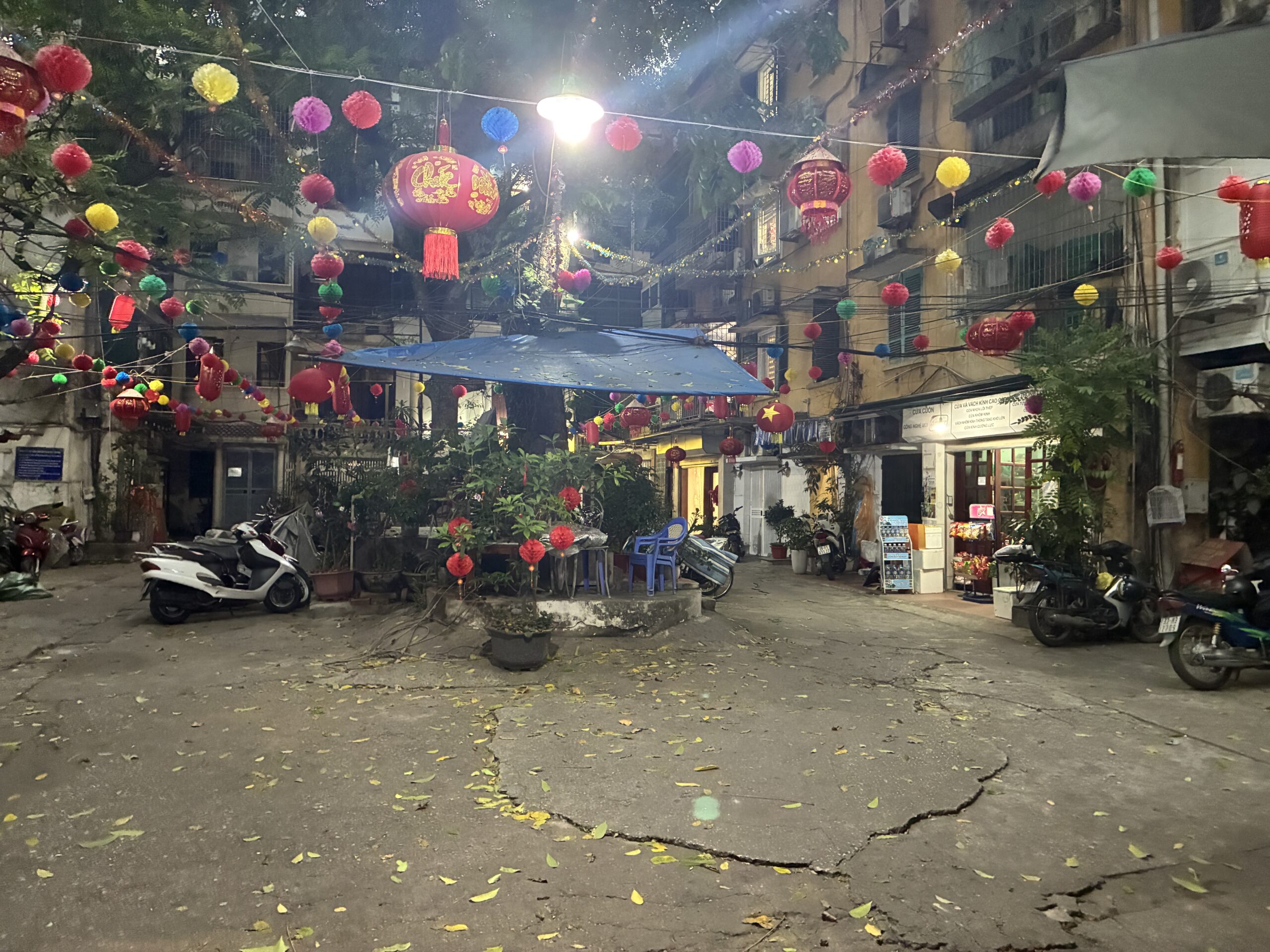
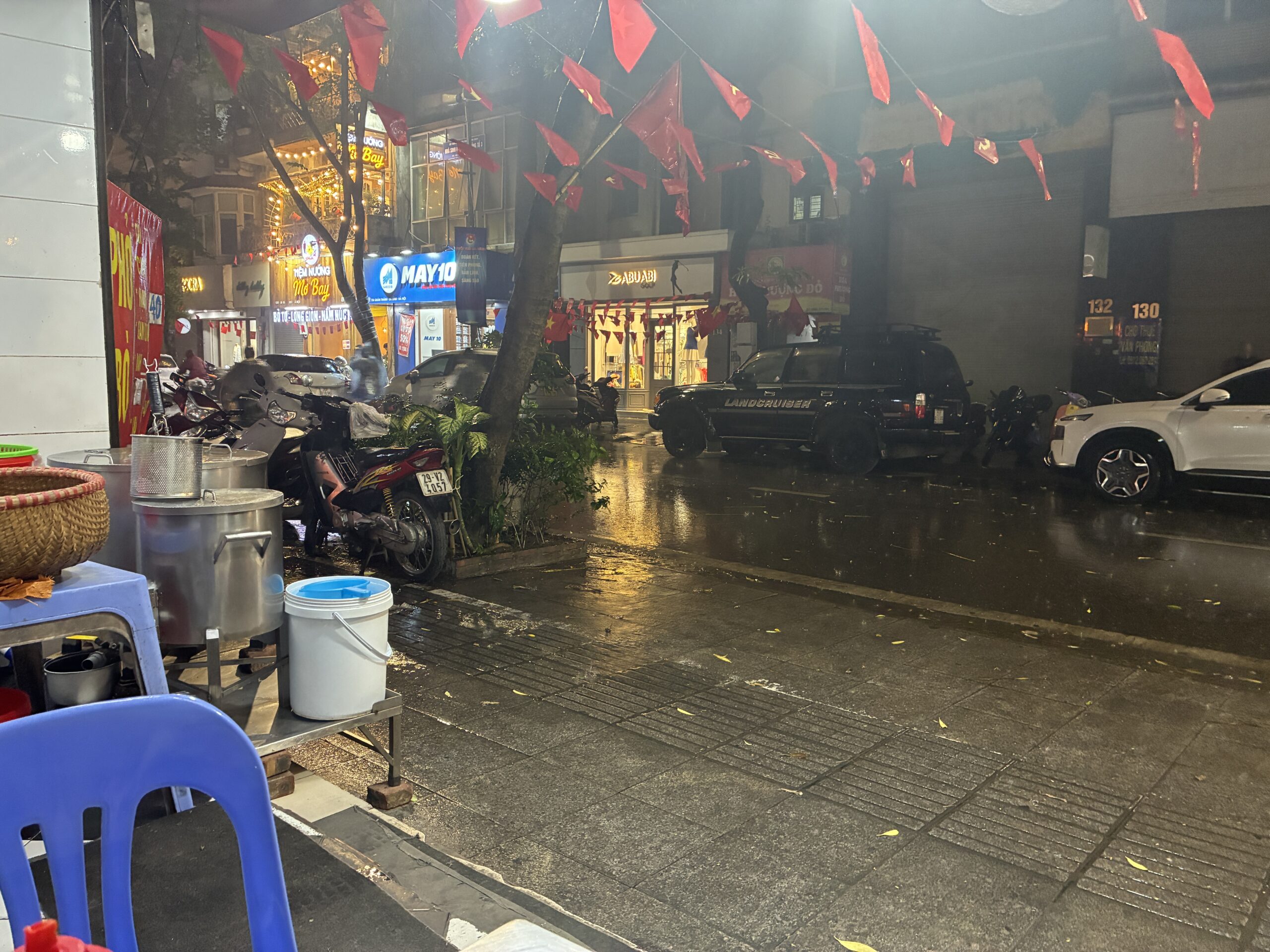
Then came the rain. Slow and light at first and for a while, and then with thunder and lighting and very heavy rain, lasting maybe 30 minutes or more. We hit it just right by going into a local small Phở (pha) eatery moments before the by now steady shower turned into a deluge of rain. The Phở was very tasty, although it would be hard for me to distinguish the taste from that of ramen, despite different noodles. We stayed a while, as it was really pouring, and I mean pouring, and we were dismayed at one point to see a small elderly lady selling strawberries and plums on the street, soaking wet, buckets of fruit hanging off each shoulder, virtually pleading with us to buy some, and when we didn’t continuing on in the pouring rain, walking through large puddles in her sandaled and socked feet. Really sad, and we went after her to give her some money. She insisted on giving me two packages of strawberries, although none were needed.
Then back to the hotel, maybe just ten minutes away, still in the rain, but by now much lighter, but not before stopping for Laurence to try an egg coffee in a small place opposite our hotel. Egg coffee is Hanoi’s own caffeine creation, first made in 1946 when milk was rare, and basically Vietnamese espresso topped with a thick, meringue-like foam made from egg yolks, and whipped with condensed sugar. Laurence liked it okay, but not enough to get it again, but I, who hates the taste of coffee, tried some, and thought it was pretty tasty, with just a little coffee flavor in the background.
Back to the hotel, literally opposite the coffee shop. We looked for more street walks for tomorrow, but even though there are many, they essentially fall into just four types, and we’ve done most already in terms of locations and sights, and today’s walk couldn’t really be topped. We tried watching some television, as we could get Apple TV and Netflix on the television in our room (but not Amazon Prime, which is apparently not available in Vietnam), but couldn’t find anything of any great interest, and by 9 or 9:30 were both nodding off.
We’ll figure out tomorrow tomorrow, Laurence’s last day, and a day I’ll have to in part use to plan where to from here, finding a place to stay in Ninh Binh and for how long, and booking a way to get there. But, that’ll be tomorrow.
For now, good night, Hanoi.