Florida City to the Florida Keys and Key West.
It was a good day, but again not enough time, or even close to it. This trip is just 15 days from start to finish, but really needs to have been at least another 5-7 days (minimum), which would have given me time to spend in Charleston, Savannah, and St. Augustine, and now the Florida Keys, and Key West in particular, where I was today, and tomorrow the Everglades. And that’s not including New Orleans, which is less than 5 hours from Panama City Beach in Florida, where I’ll be in a couple of days. Oh well – the reality is I just don’t have the time as I have to be back for November 19, and that’s that. Consider this trip a taste of all these things I’ve been interested in seeing, but just a taste.
I started out by heading back to Key Largo, about 30 miles from Florida City, where I stayed for two nights, and from Key Largo down to Key West, which is the southernmost point in the U.S., and a hundred miles south of Key Largo (so, a 260-plus mile round trip today). I bought a self-guided tour app for $17, which essentially gave me a blow-by-blow tour of the Keys, all the way down from Key Largo, which used to known as Rock Harbor, but changed its name in 1952 after the movie “Key Largo,” although the Spanish name had been Cayo Largo, which means Long Island because, at 33 miles in length, Key Largo is the longest of the Keys, which are a series of about 800 islands (keys), some smaller than others, and some even smaller, starting above Key Largo and stretching down to Key West. Until the railroad came to the Keys in 1912, the only way to get between Keys was by boat.

The Overseas Railroad, constructed between 1905-1912, operated until 1935, when it was damaged by a hurricane, and was developed and funded by Henry Flagler – the same Flagler for whom Flagler College in St. Augustine is named for. Flagler was an industrialist and a founder of standard Oil, and played a major role in all sorts of things, including railroad construction in the U.S., and much development in Florida.
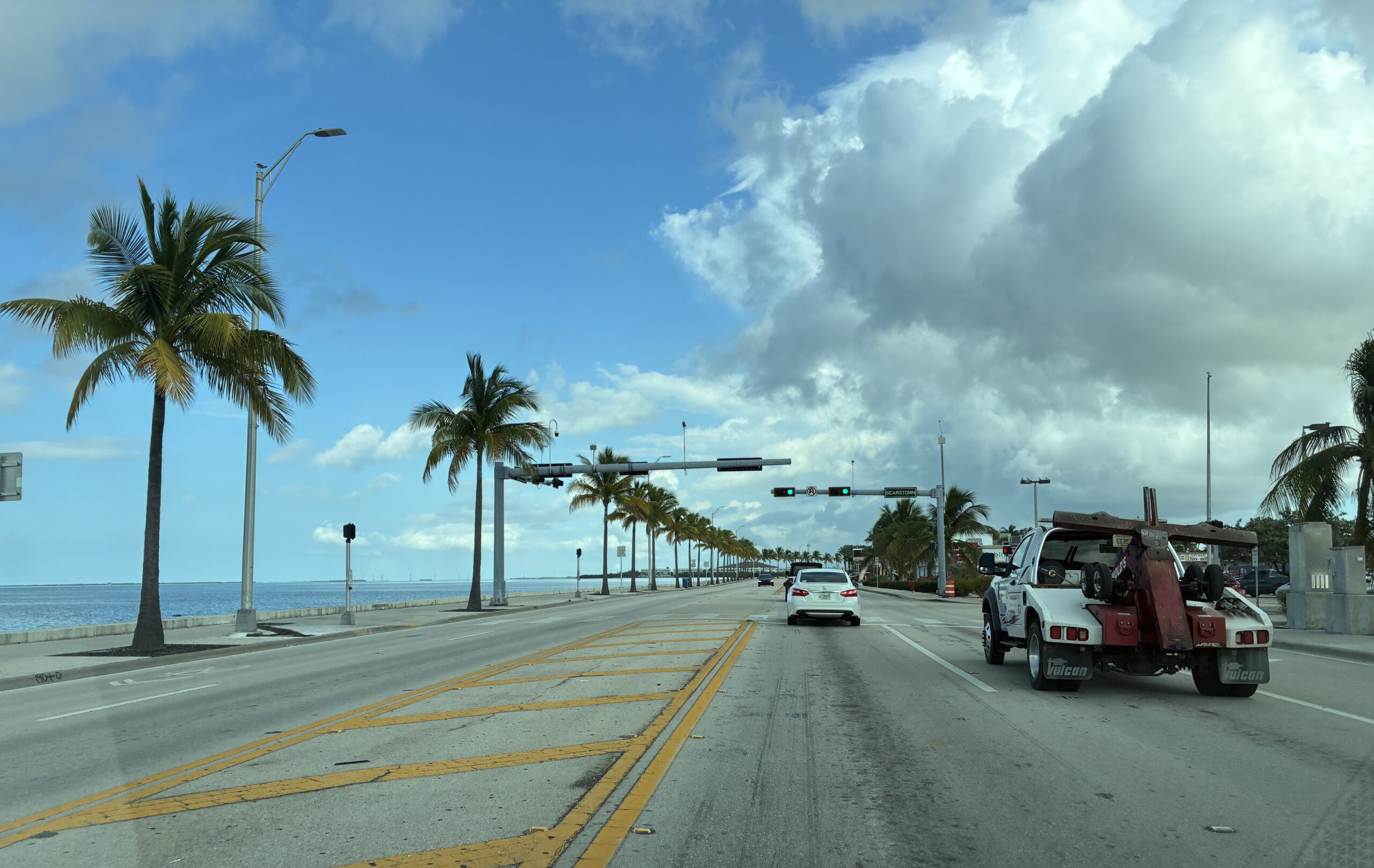
The Overseas Highway, with the Atlantic on the east side of the highway and the Gulf of Mexico on the west, took the place of the railroad and was opened in 1938, and was replaced by the current highway in 1982. It connects 43 of the Keys, passing over 42 bridges, and that’s the road I traveled today, which is the only choice, unless you fly into Key West international airport. It was lovely, and the guide was very useful. As I had booked a sunset boat tour out of Key Largo I had to be back for 4:30, so once again was limited by time. As a result, I got that “taste” of the islands, including Key West, but just a taste.
The weather was great, between 82 degrees by about 10:30 and 88 by mid-day, with 85 percent humidity. It rained pretty heavily around 2:30, lasting maybe 30 minutes, and it had rained around the same time yesterday, although not as heavily. That reminded me of when Bev and I took Kaye to Disney World for her 6th birthday, and every day, right around 3 pm, it rained heavily for about 30 minutes. All that humidity has to go somewhere.
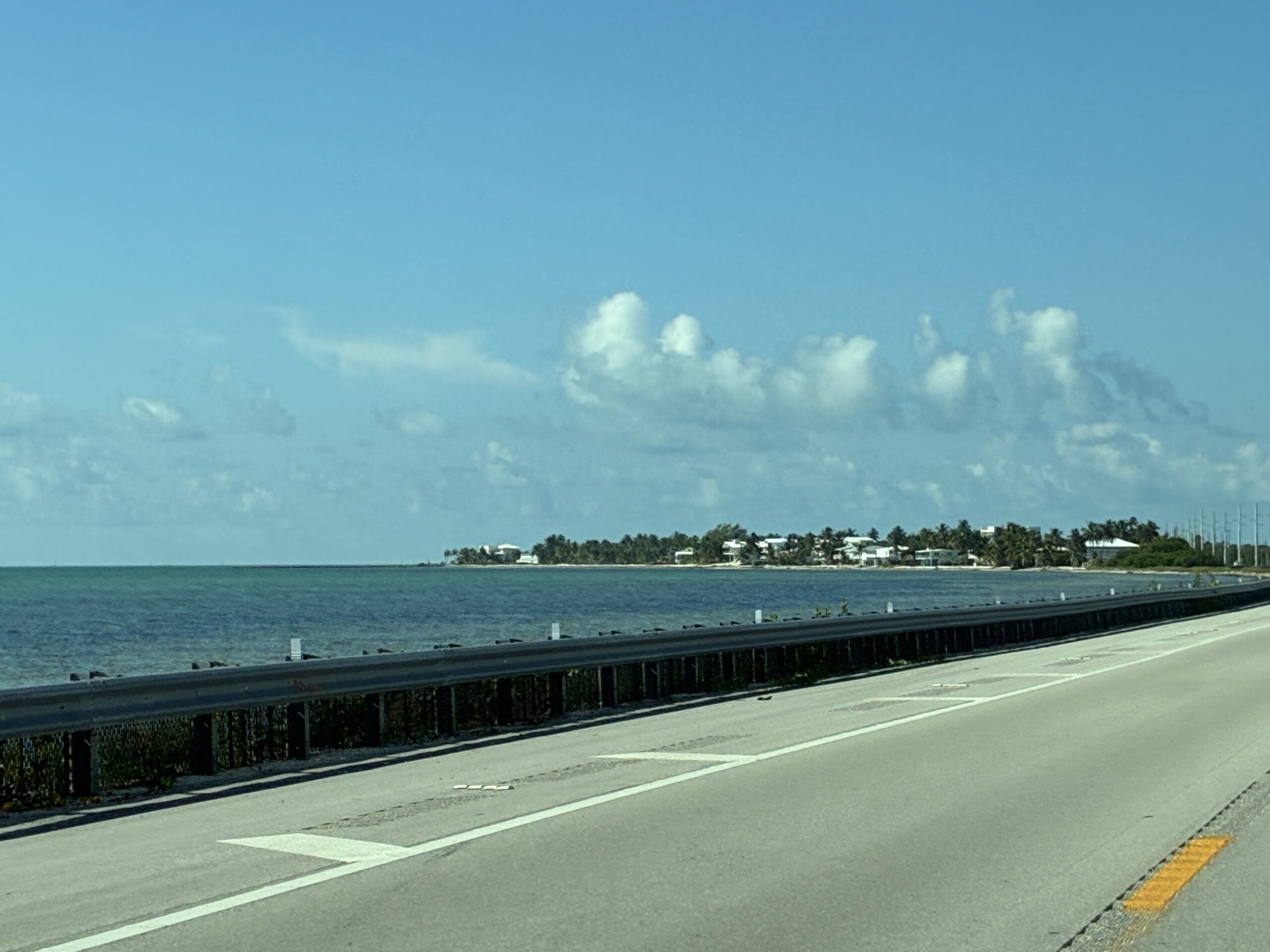
At any rate, down the Overseas Highway, which is U.S. Route 1 of course, with the self-guided tour telling me about that I was seeing and interesting facts, etc., as I followed along on Apple Maps (better for this sort of thing that Google Maps), stopping whenever I could to take photos, or snapping shots as I drove. There are several state parks, which I thought I’d stop at on the way back, but, alas, I ran out of the time, and barely made it back for the 4:30 boat trip as it was. Still, it was a lovely day.


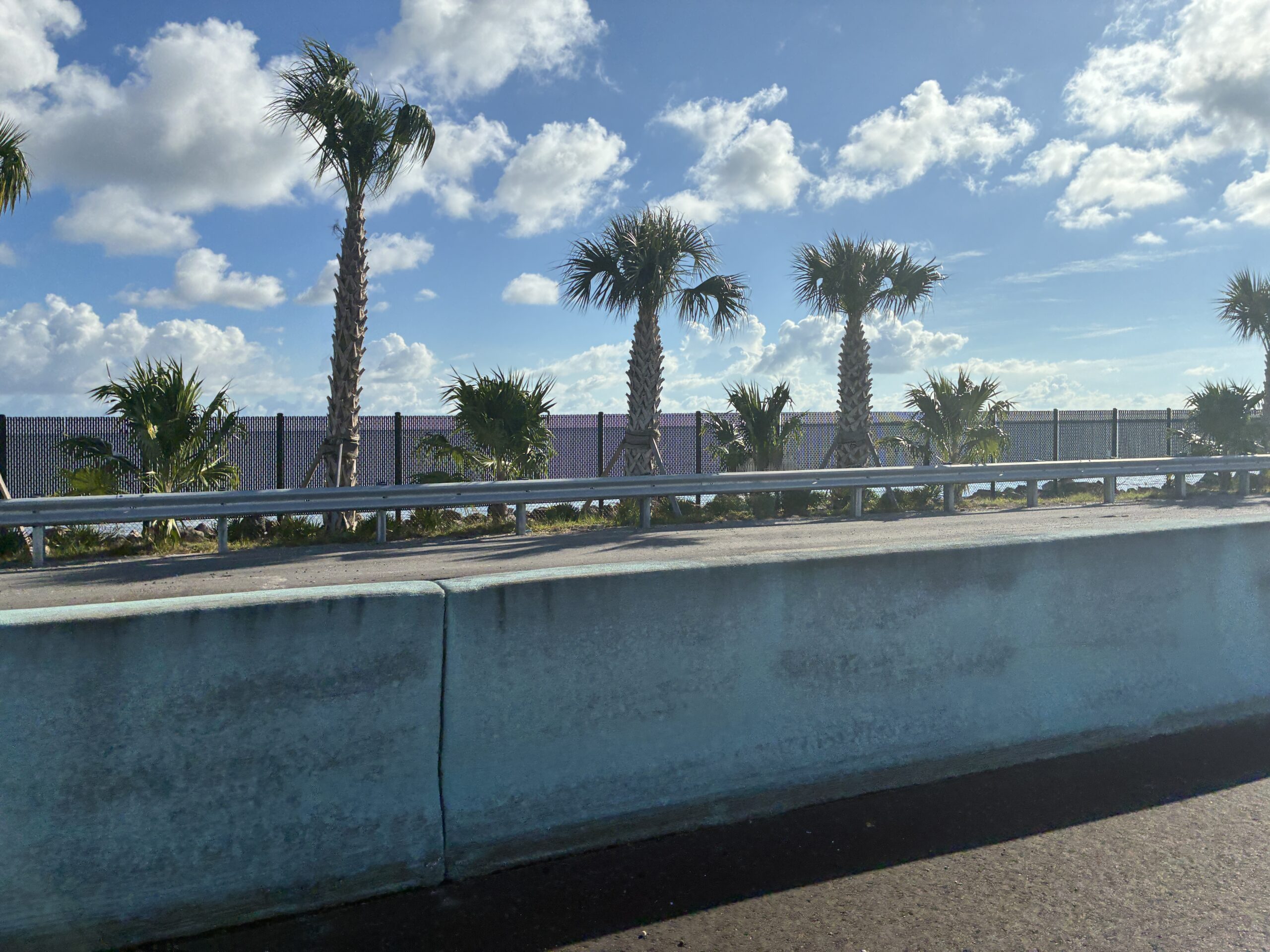


And talking of interesting facts, did you know that Key Lime Pie is (or should be) made from Key limes, grown here in the Keys? Makes sense!
Even though my journey back from Key West heading north was non-stop, as I had make that 4:30 boat tour, my drive down was leisurely. I stopped many times along the way, although missed visiting and exploring many things along the way, thinking I’d catch them on the way back (but didn’t). For instance, there are several state parks, beaches, and attractions (like the Turtle Hospital and Deer Reserve) I would like to have least seen. At any rate, it’s a beautiful road, which I really enjoyed driving, and enjoyed many sights and views along the way.


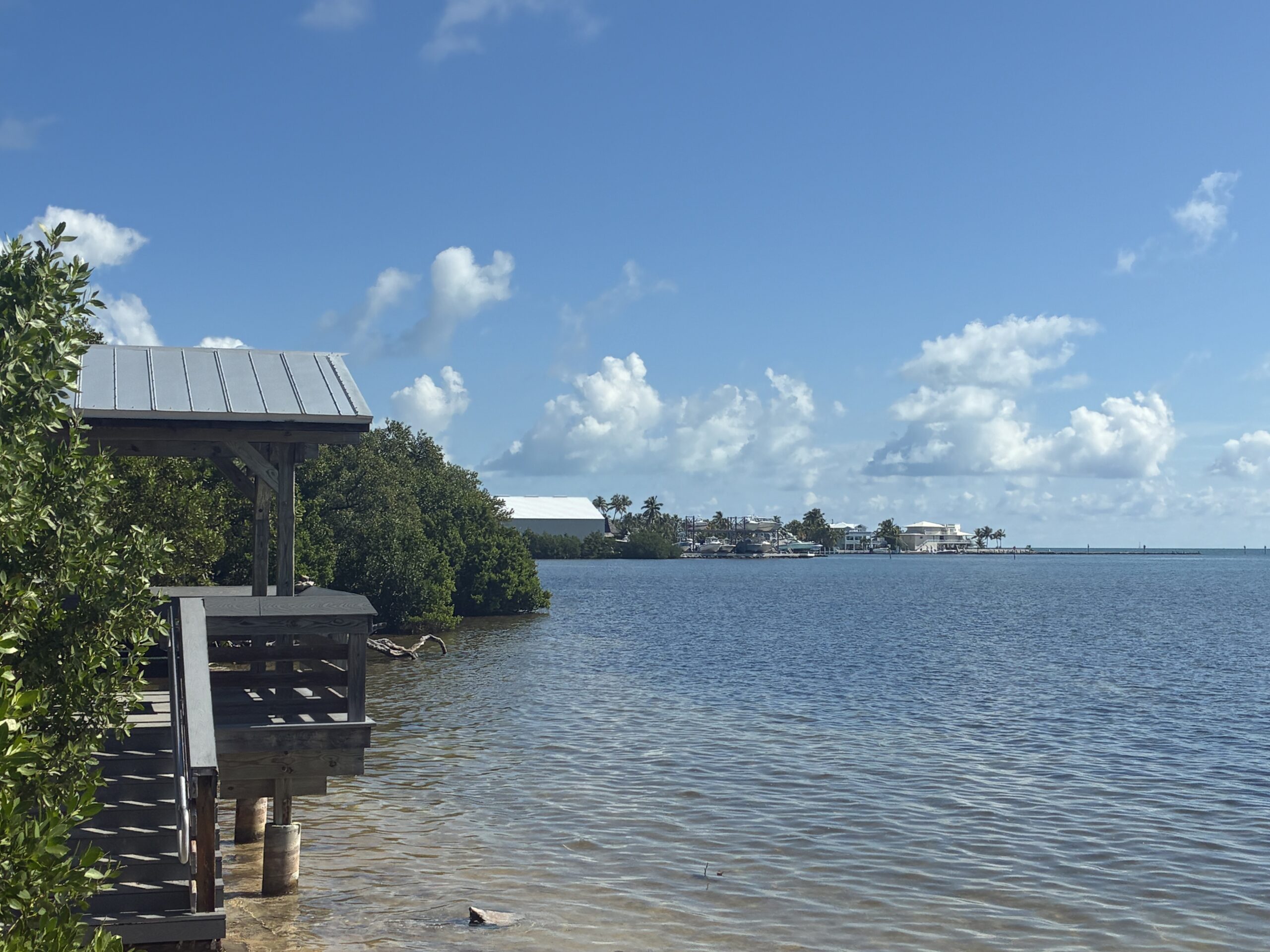
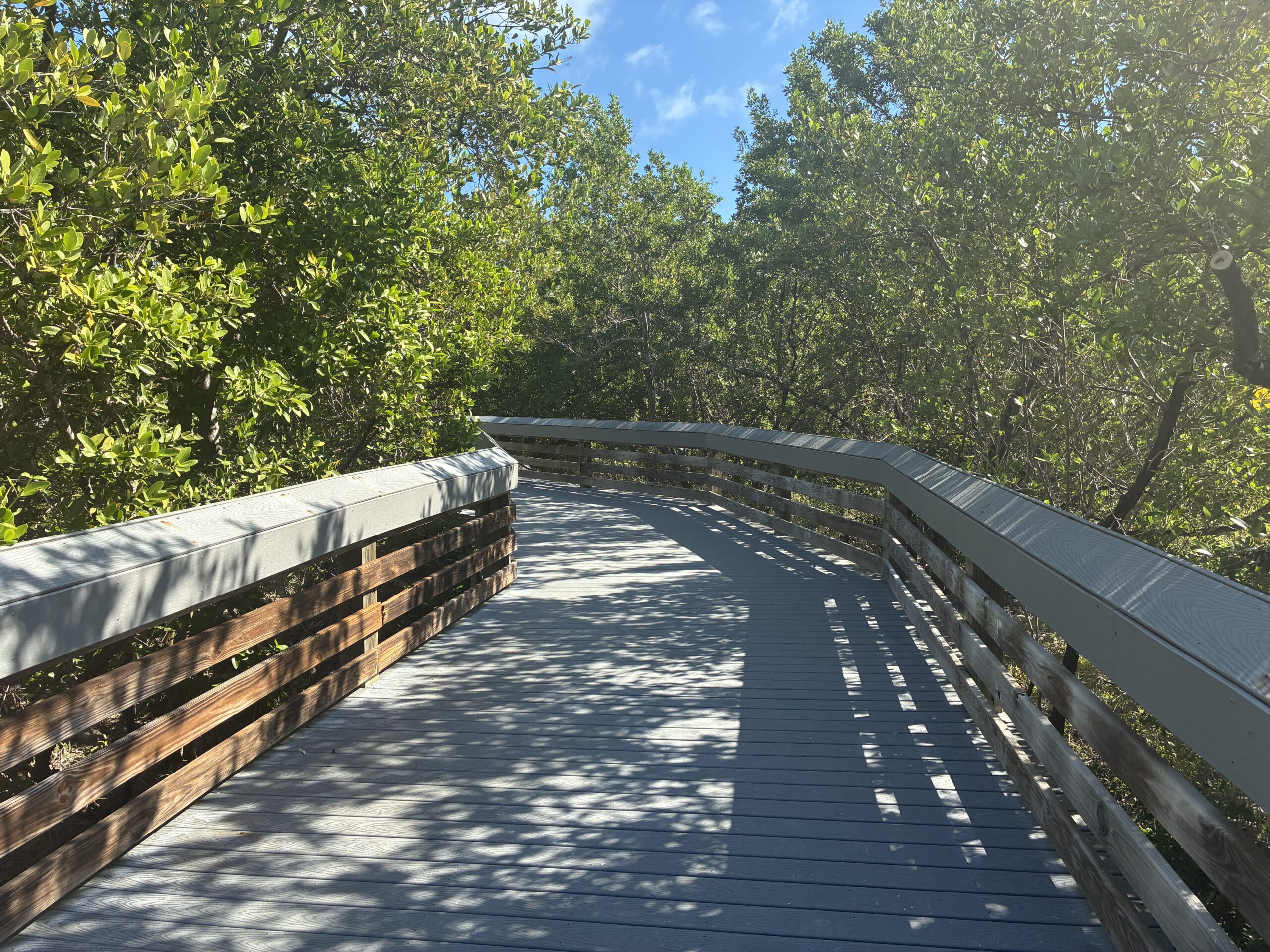
I would likes to have stopped in Islamorada, a village made up of six of the keys, and known for sports fishing, but thought I’d catch it on the way back, and simply passed through. I did stop at Anne’s Beach Park, also in Islamorada, which was a lovely small beachfront park on the Atlantic, with a boardwalk through the brush and along the beach.




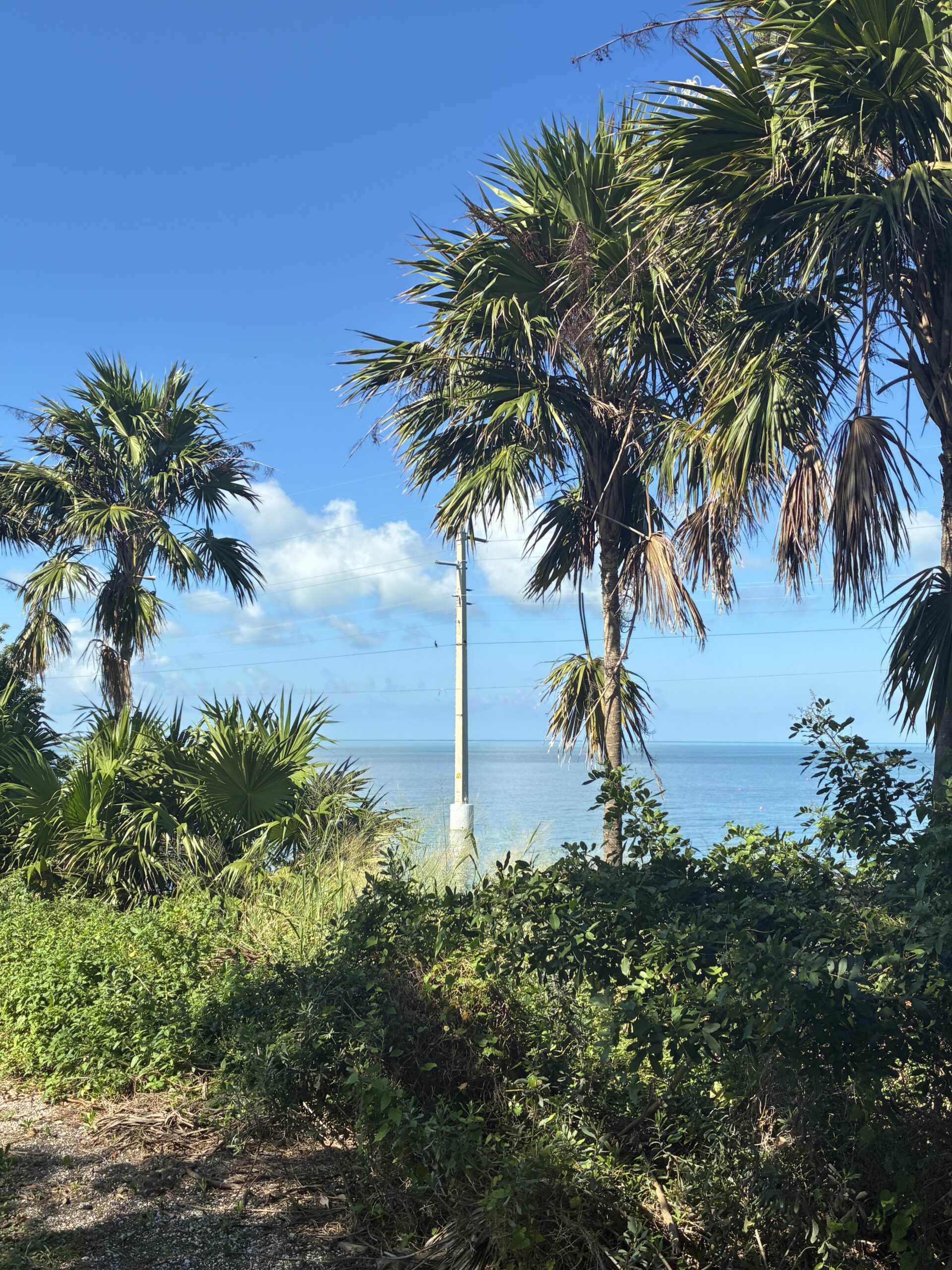
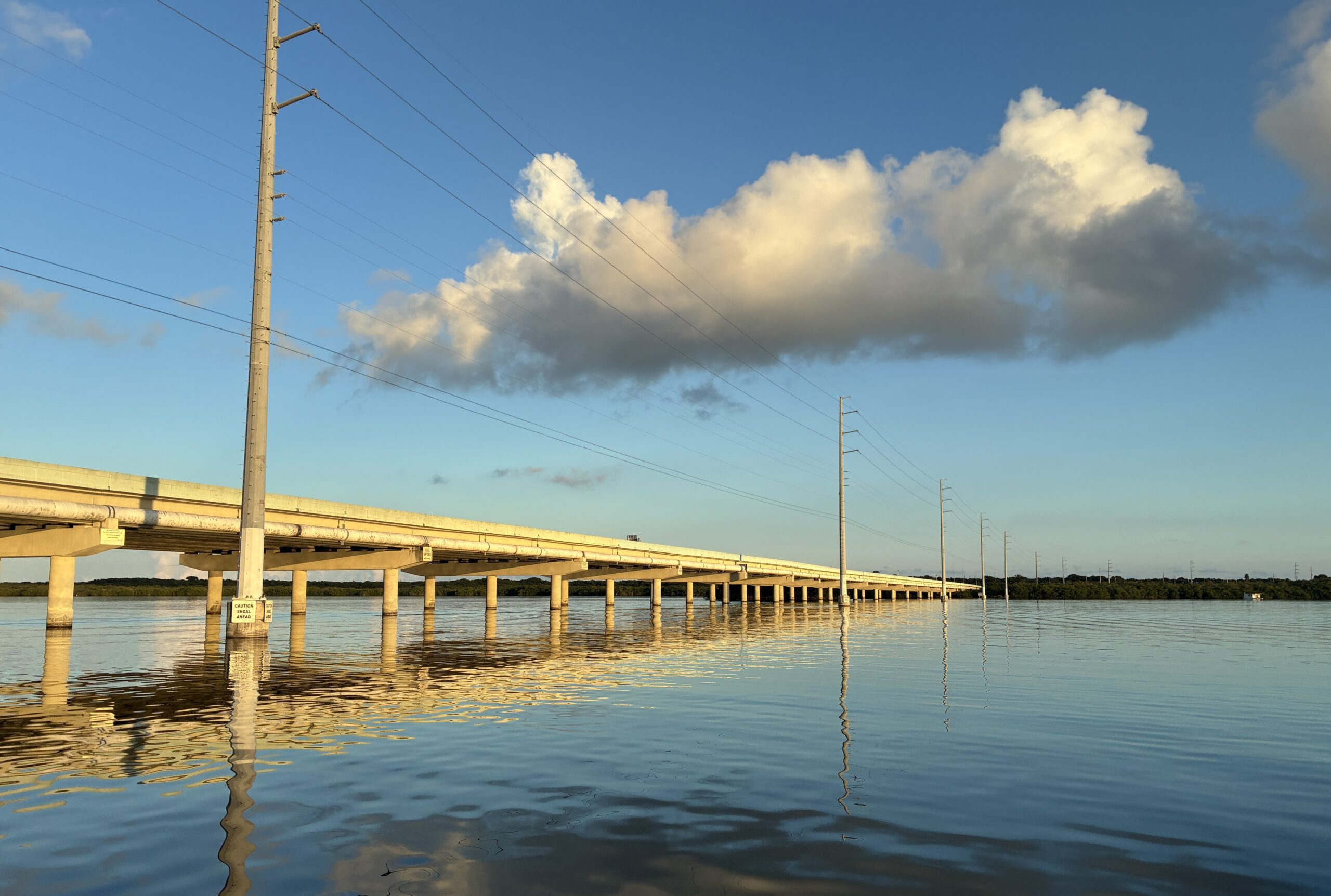
Back on the highway, I continued heading south to Key West, enjoying the views along the way, of which there were many, listening to my self-guided tour and learning about the Keys and its history. The electrical transmission wires on high poles in the Gulf or the Atlantic carry power throughout the island, and of course are subject to damage in bad weather… or hurricanes.

Then it was time to go over the Seven Mile Bridge, the longest bridge in the Keys. Running alongside of it, on the Gulf side, is the Old Seven Mile Bridge, opened in 1912 and replaced by the current highway and new Seven Mile Bridge in 1982.
Part of the old bridge carries the Florida Keys bike path, which is 90 miles long and expected to eventually connect all the way to Key West, and also has a walking trail over part of it.


Fred the Tree (I didn’t make up that name) is a tree that has somehow taken route in the old bridge, with a couple of other bushes that have also sprung up. I wonder whether more trees and bushes will grow on the old bridge over time.

On I went, getting closer to Key West, and continued to enjoy the day and the views and sights.

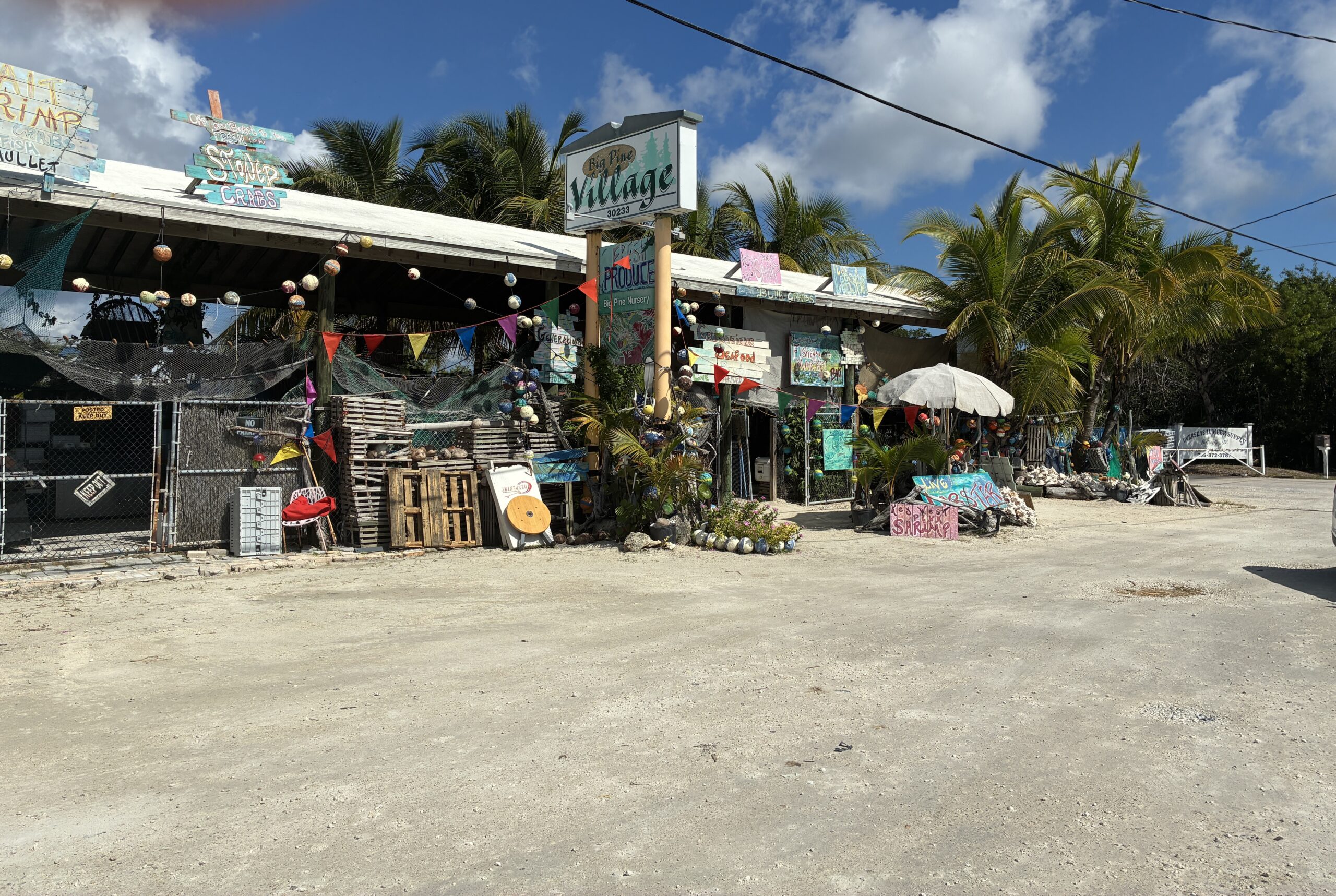
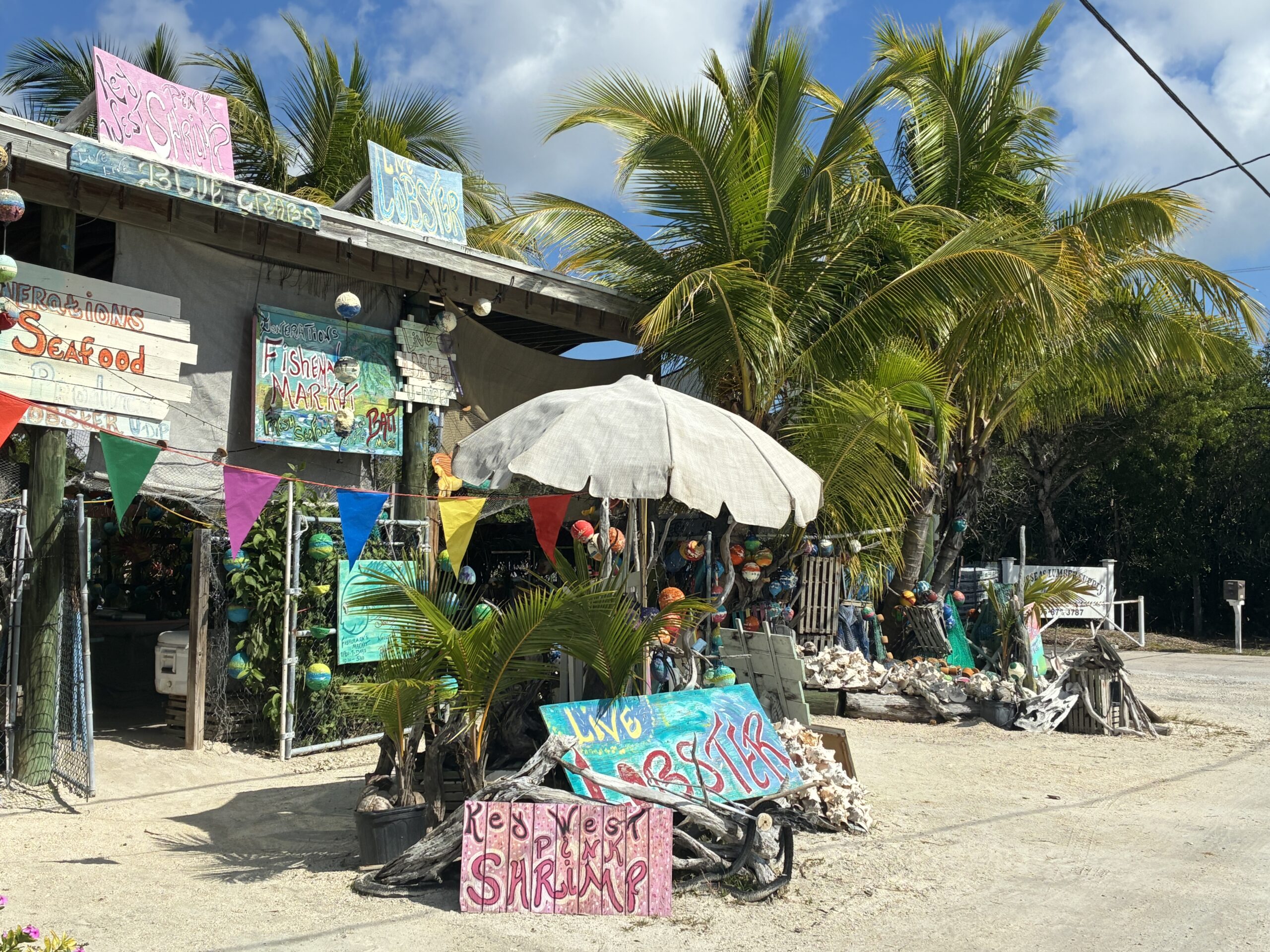
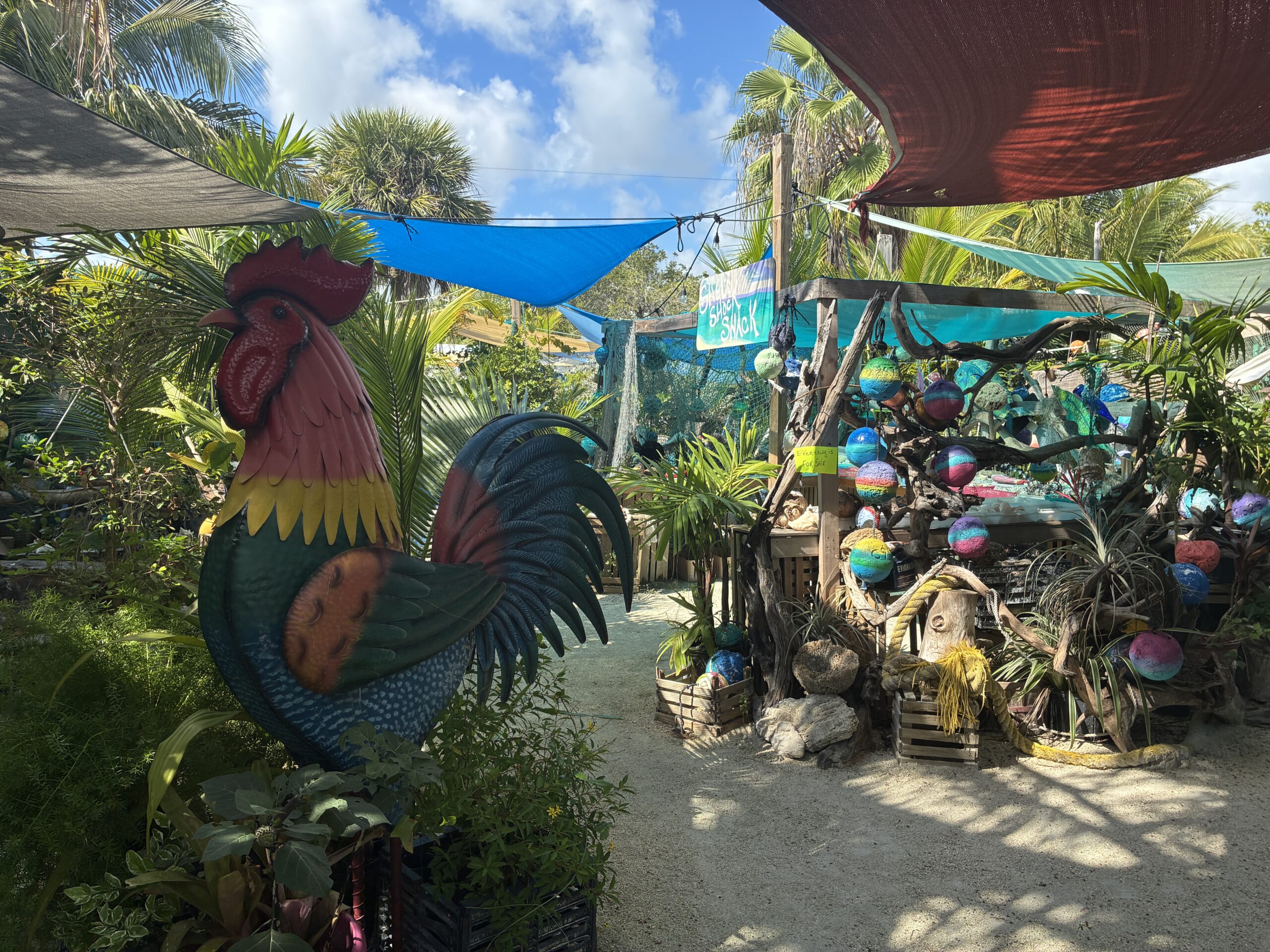
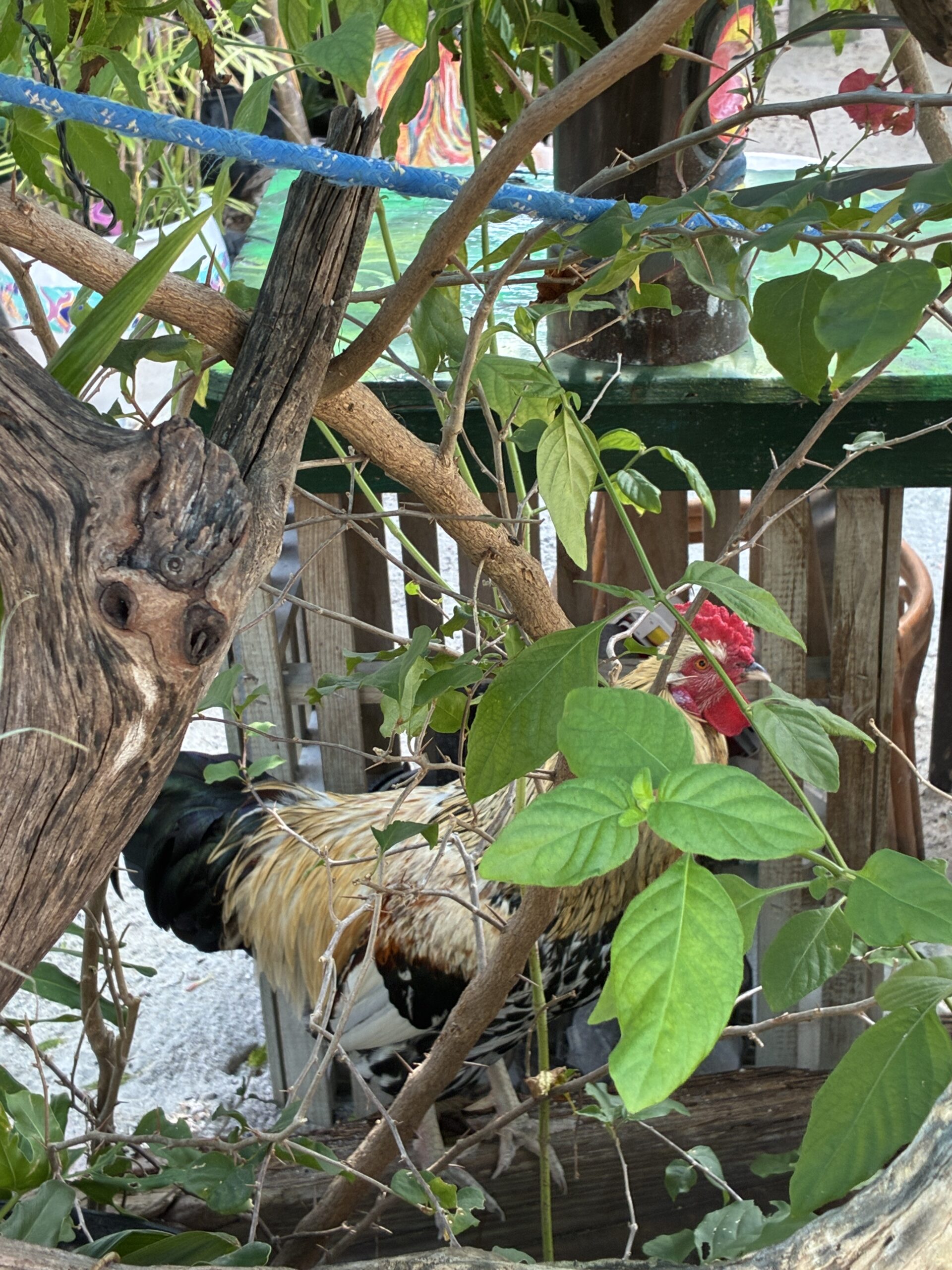
I stopped at a funky store on the way, the kind that Bev and I, and especially I, used to enjoy, full of this, that, and everything.




And then I arrived in Key West. Just like the Keys in general, I really didn’t have a sense of what I’d be seeing. I imagined the Keys and their villages and towns, including Key West, to be remote, sleepy, sandy, and very laid back s a laid-back, tropical paradises. Well, they are sandy, as they have beaches of course, and they are remote, and they may be laid back, and they certainly are tropical paradises, but, nevertheless, on the larger keys you wouldn’t even realize you were on an island, and they seemed very mainland, and this was really true of Key West. Despite Jimmy Buffett and Margaritaville, a song that really helped to revitalize Key West, which was financially struggling at that time, and attracted a new wave of tourists (and he made a fortune), this image is not quite right.
Key West is a bustling town, with a population of around 25,000, and quite large… and beautiful. Sleepy it is not. The downtown area was really bustling, with visitors everywhere, many on rented motor scooters or bicycle or driving rented golf carts, and they were all over the place today. It made for driving downtown quite risky, as many of people riding scooters and driving golf carts were all over the road, and seemingly without much driving skill, and cars were everywhere and stopping anywhere they pleased. It’s as though down here the rules of the road don’t apply. Hey, this is a laid back tropical paradise and you can do what you want.
The downtown streets were really full, and parking was a nightmare, unless I wanted to pay $25 or more for parking in one of the many private parking lots. Parking on the streets was impossible, and I drove around for quite a while before finally finding a spot on the street, which turned out to be about a 20 minute walk from the downtown area. I actually didn’t realize how far I was from the center, and in hindsight, to make life simple, I should have just dished out the money to park closer to downtown, especially because by the time I parked, and because I had a 4:30 boat trip a 100 miles away in Key Largo, I only had maybe two hours in town.
It’s lovely, with great weather today(although too humid for me), and the downtown area and the waterfront were really interesting and filled with people. The streets and homes are lovely, but primitive it is not. The average cost of a home in the Keys is around a million dollars, and on Key West around 1.5 million. Many celebrities have lived in Key West or owned homes here, including Ernest Hemingway, Tennessee Williams, Harry Truman, John Audubon (of the National Audubon Society), Truman Capote, Jimmy Buffett (of course), and Robert Frost, which means I’m not the first person from Amherst to have visited here. I can see why. It’s gorgeous. I would like to have spent the night (which would be the way to fgo, considering how remote Key West is), but the cost of a hotel ranges between $150 and $750 a night, with most falling in the $200-400 per night range. Sheesh!
I spent a while walking around the residential and main streets with businesses and stores before heading downtown. Every street is lovely, with lovely homes and tree- and tropical vegetation-lined streets (and homes) everywhere I walked.

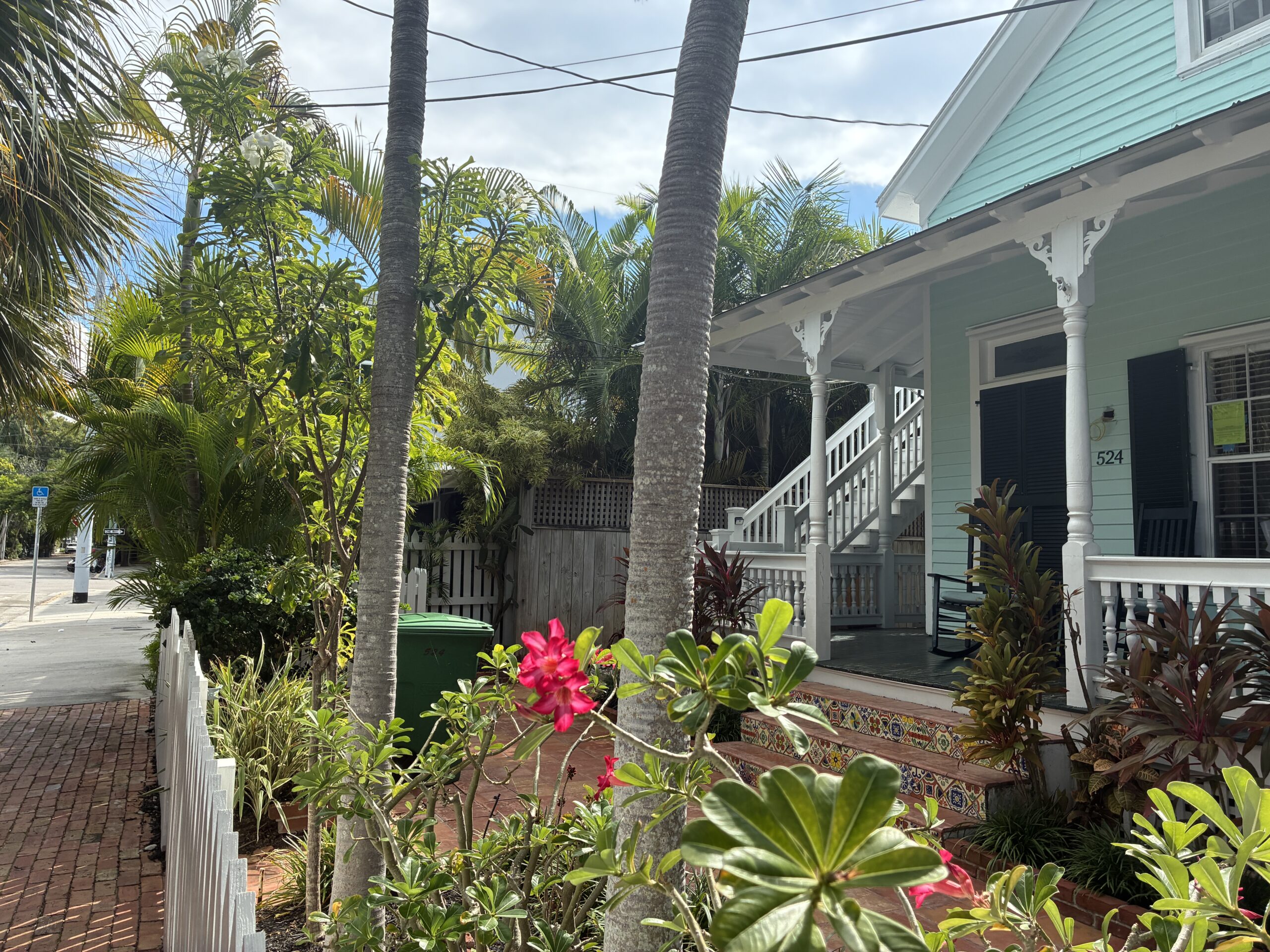


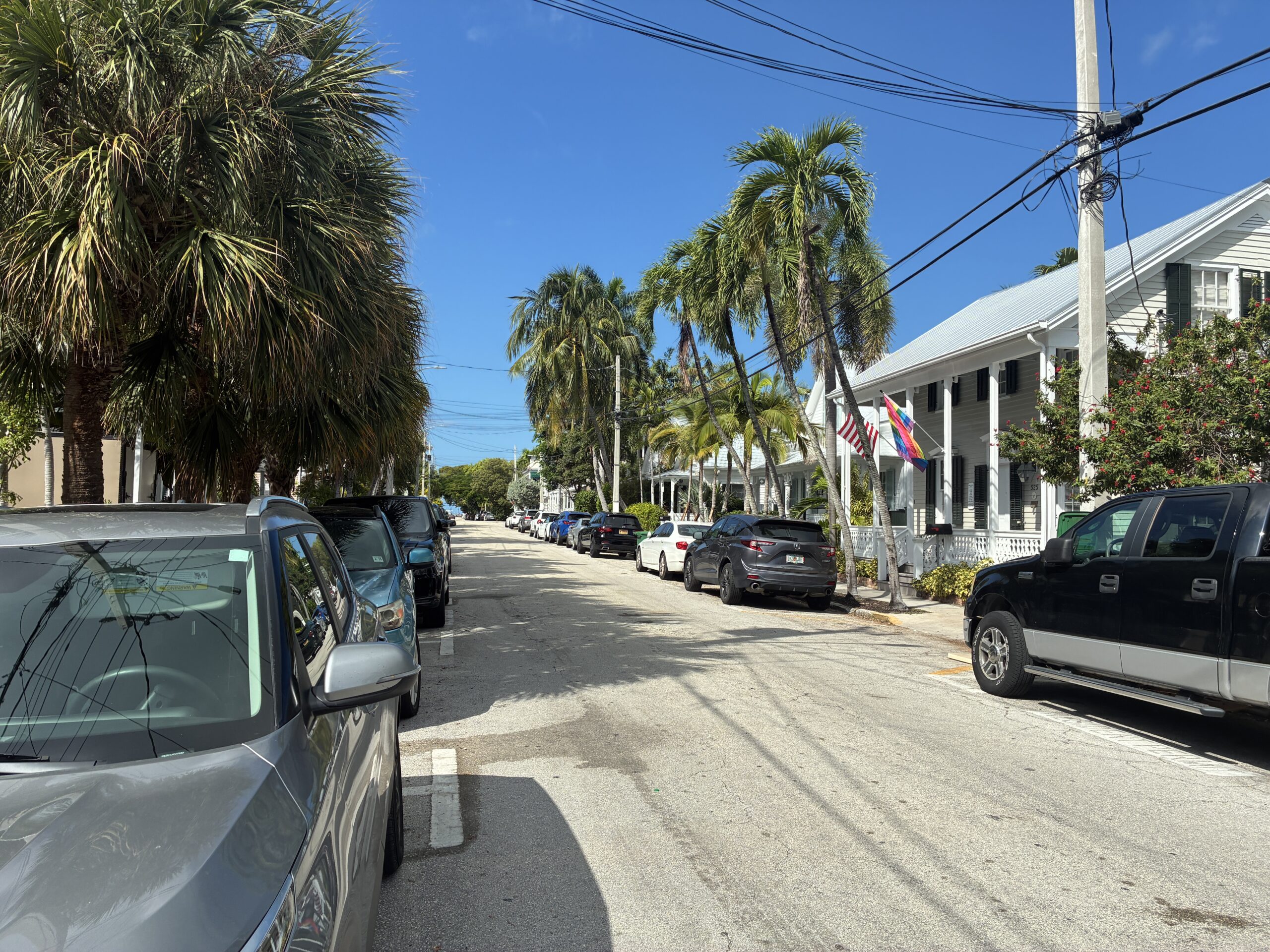

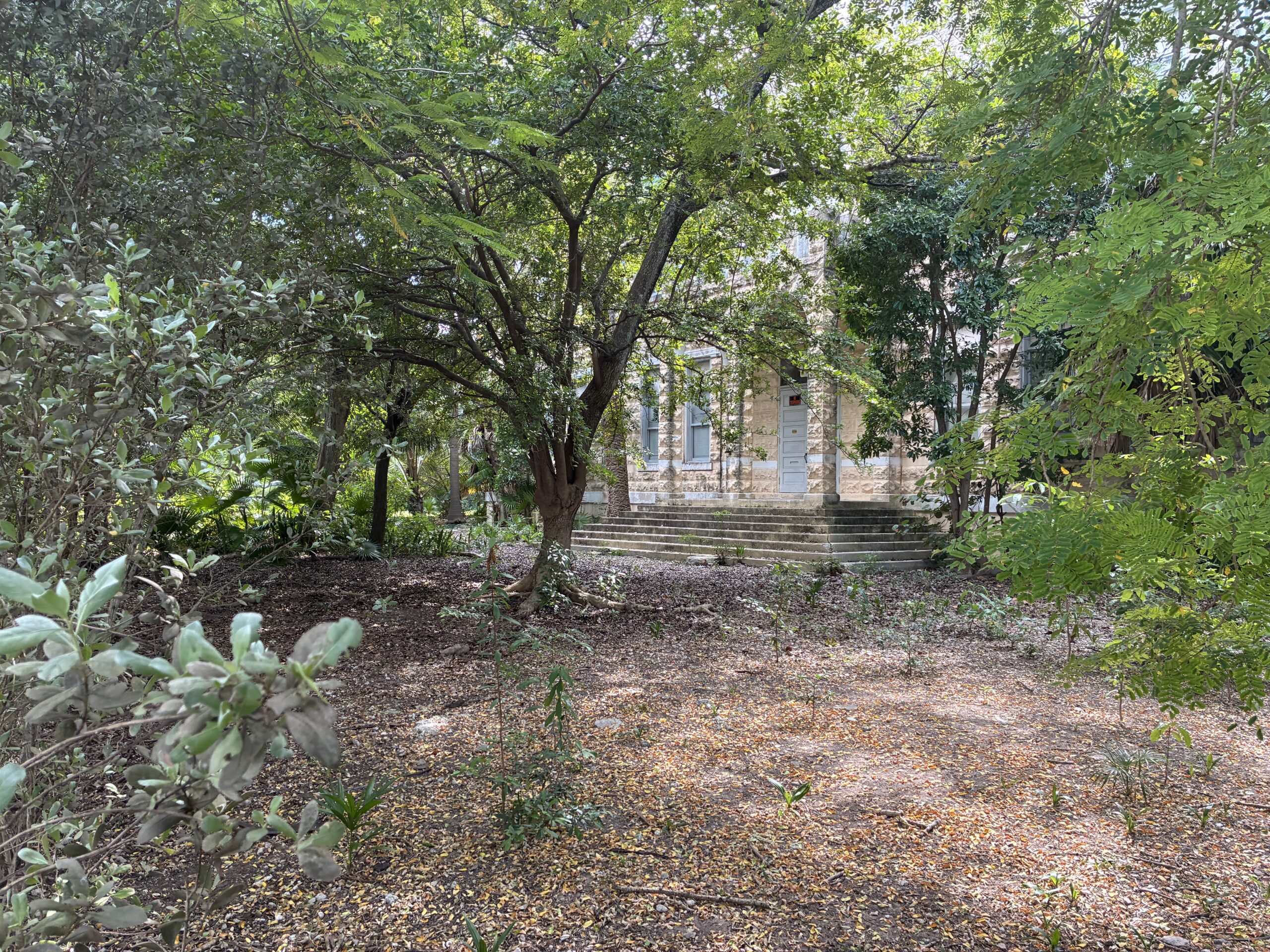


The downtown area was really jumping, with a few different downtown areas, each close to the other, which are the commercial areas serving visitors and tourists, rather than townies, with restaurants, bars, hip and funky stores of every kind, fast foods, and many attractions, aside from just being a very lively and great looking area, not to mention the waterfront and water and beach activities. You can easily stay here for a few days or more, and I would have liked to have two days with one overnight (but too expensive). Maybe next time. I’d definitely like to come back again sometime.
The streets don’t look so bustling in these photos, but they were.


And then it was time to leave, and rather than stopping anywhere on my back north to Key Largo, as I’d planned, I headed straight back to catch that 4: 30 boat tour (which I did).


Well, I made it back in time, with five minutes to spare before the sunset cruise. Our captain was Captain Joe, who immediately called me “dude” and gave me a high five. A classic beach bum type of guy who makes his living on the water. He also runs the scuba dives for the company that runs the cruise. Nice guy, and reminded me at once of Owen Wilson, jsu older (turns out he’s 65).


Joe was easy going (as you’d expect), and a good fit for the Keys. He was a good guide for our tour, which had just five people, including me, in a comfortable boat, and was chatty, funny, entertaining, and knowledgeable. Nice guy.
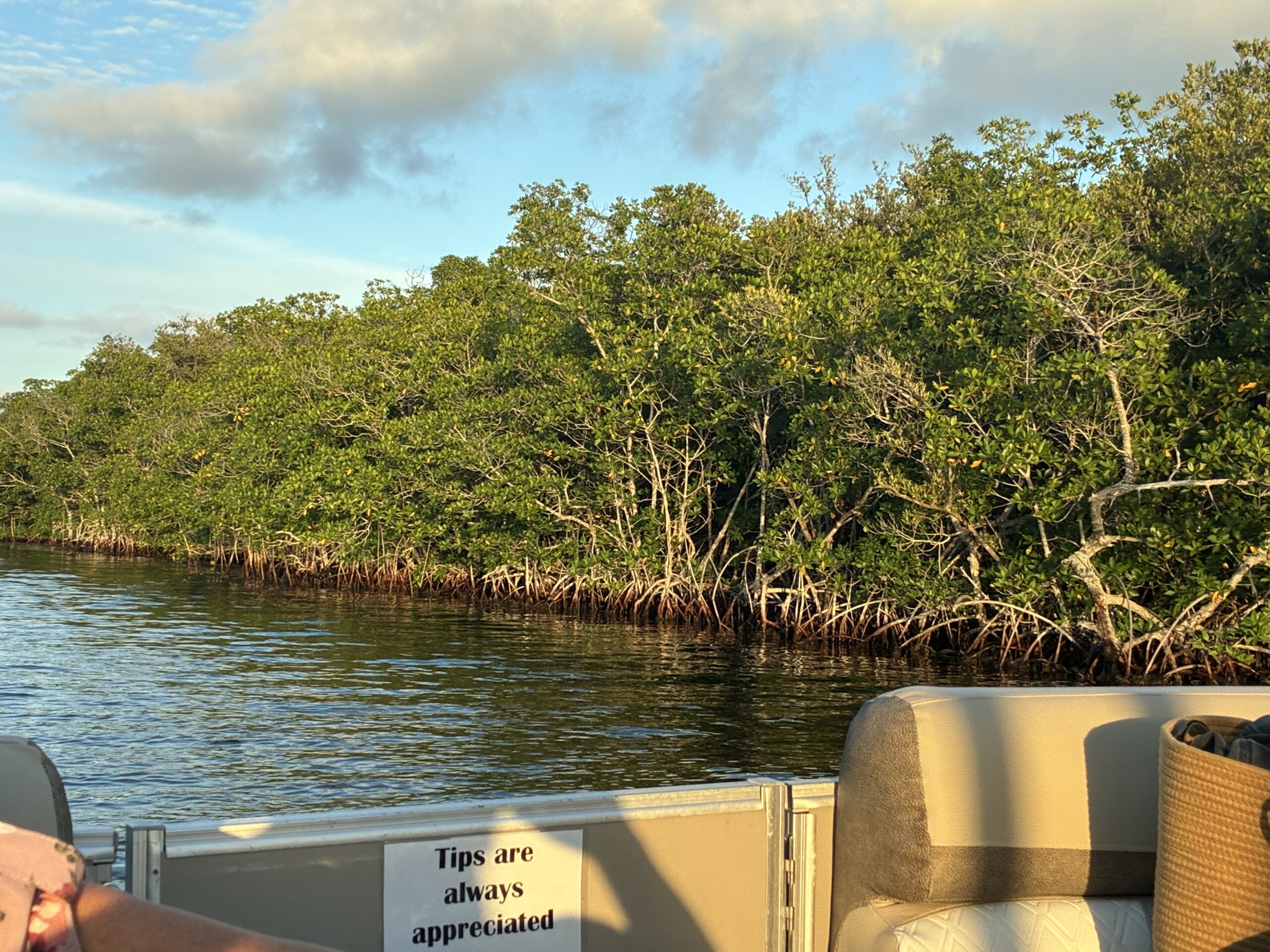
We pulled out of the harbor and into Blackwater Sound, so named because the water really appears to be a black, or at least a very dark color. That’s because of the nutrients in the water, and largely due to the Mangroves that grow in large clumps in the water and along parts of the shoreline.


Mangroves can live in both saltwater or freshwater, but those that live in saltwater convert the water to freshwater by filtering the salt through their roots and excrete excess salt through glands in their leaves. There are three types of mangroves, but most of those we saw, sort of tiptoeing on their roots, are red mangroves, and you can that in their roots as they protrude out of the water. They have proliferated many fold in the Keys and in the Everglades, partly due to climate change and their ability to survive and even thrive under those conditions.



We drove to the Overseas Highway, the very road I travelled 200 miles today (round trip), and went under and around it.
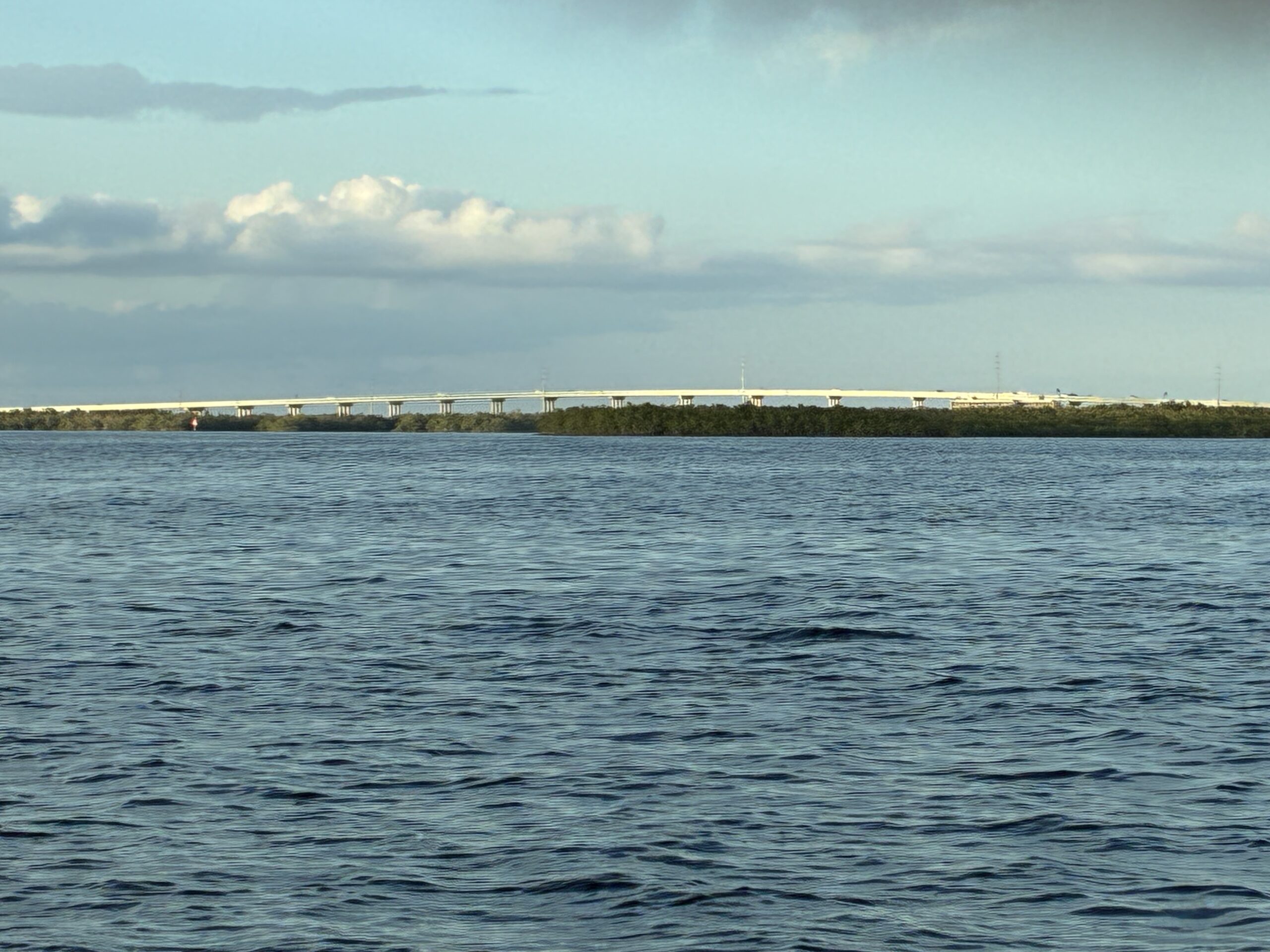


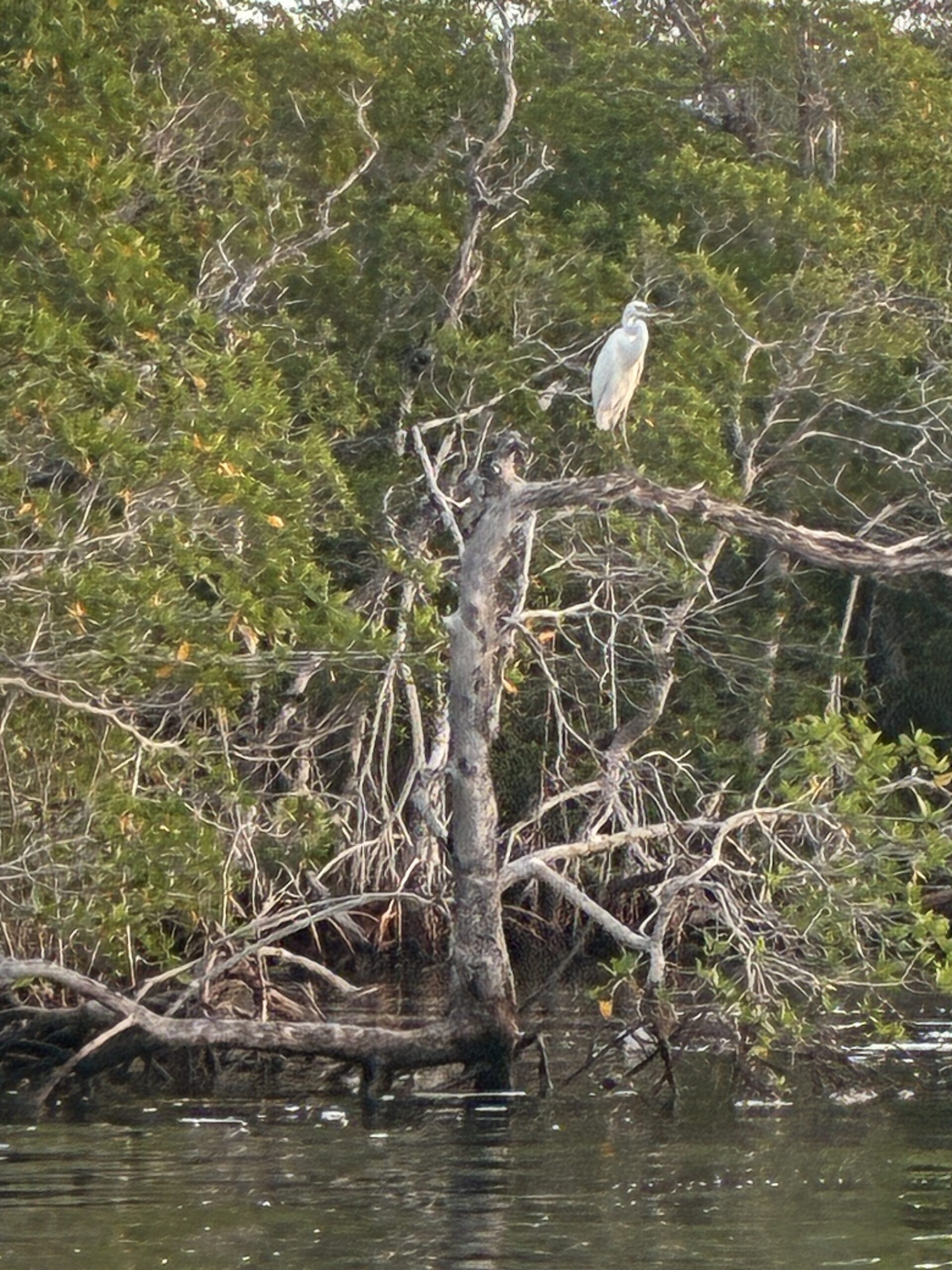


And now the sun was starting to set on the horizon. But before it did, we followed a faster boat that could really kick up some waves, which the boat captain was doing as dolphins, which live in these waters, love. And sure enough, they do. We must seen four or five dolphins in the wake of the boat, leaping out of the water in the waves. Photos were almost impossible, which was also the case when I was in Mexico earlier this year on a whale and dolphin watch,because they’re just too fast. I managed to get one blurry photo, but too blurry to include here. Oh well. Beautiful sight, though.
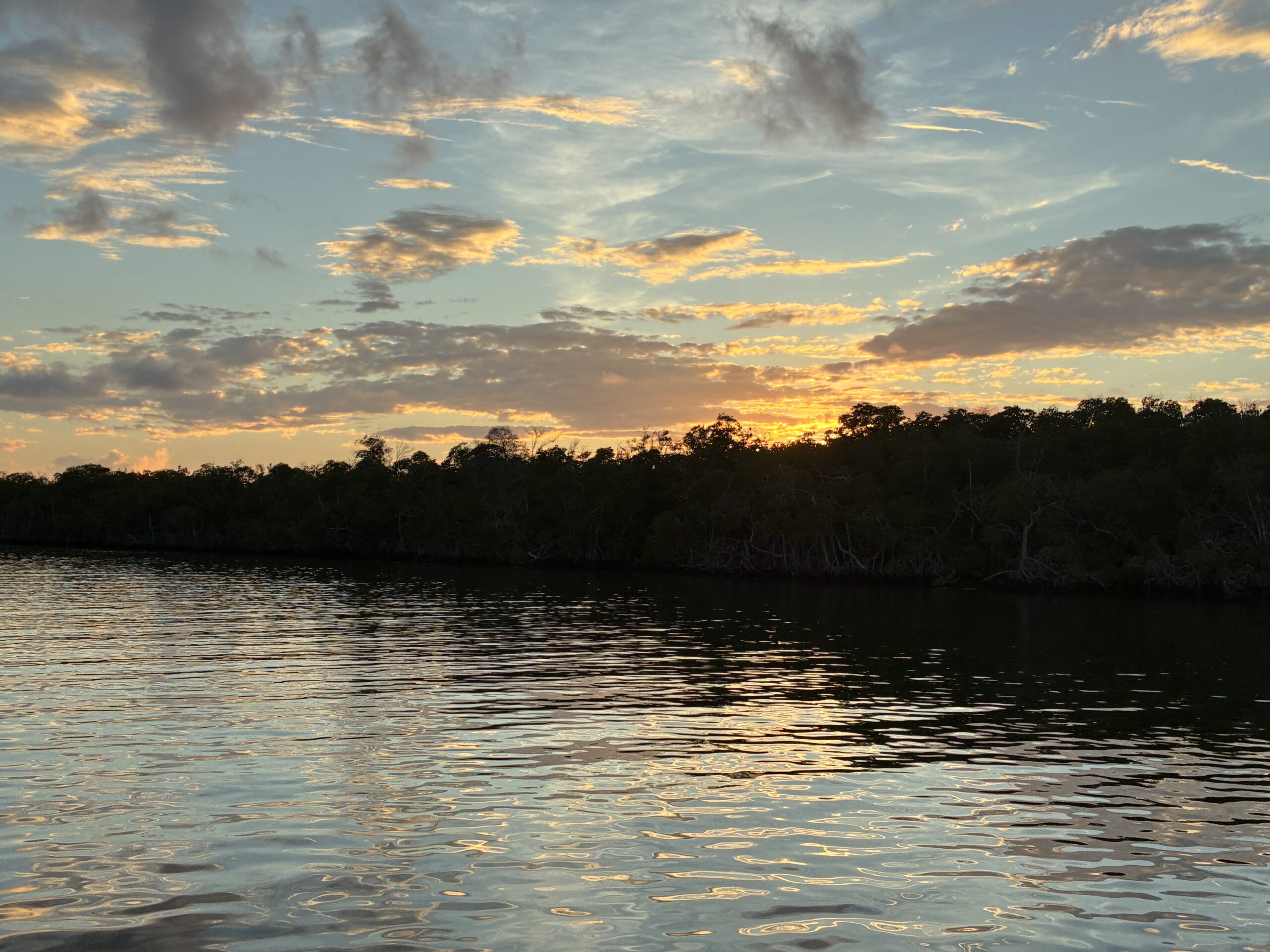


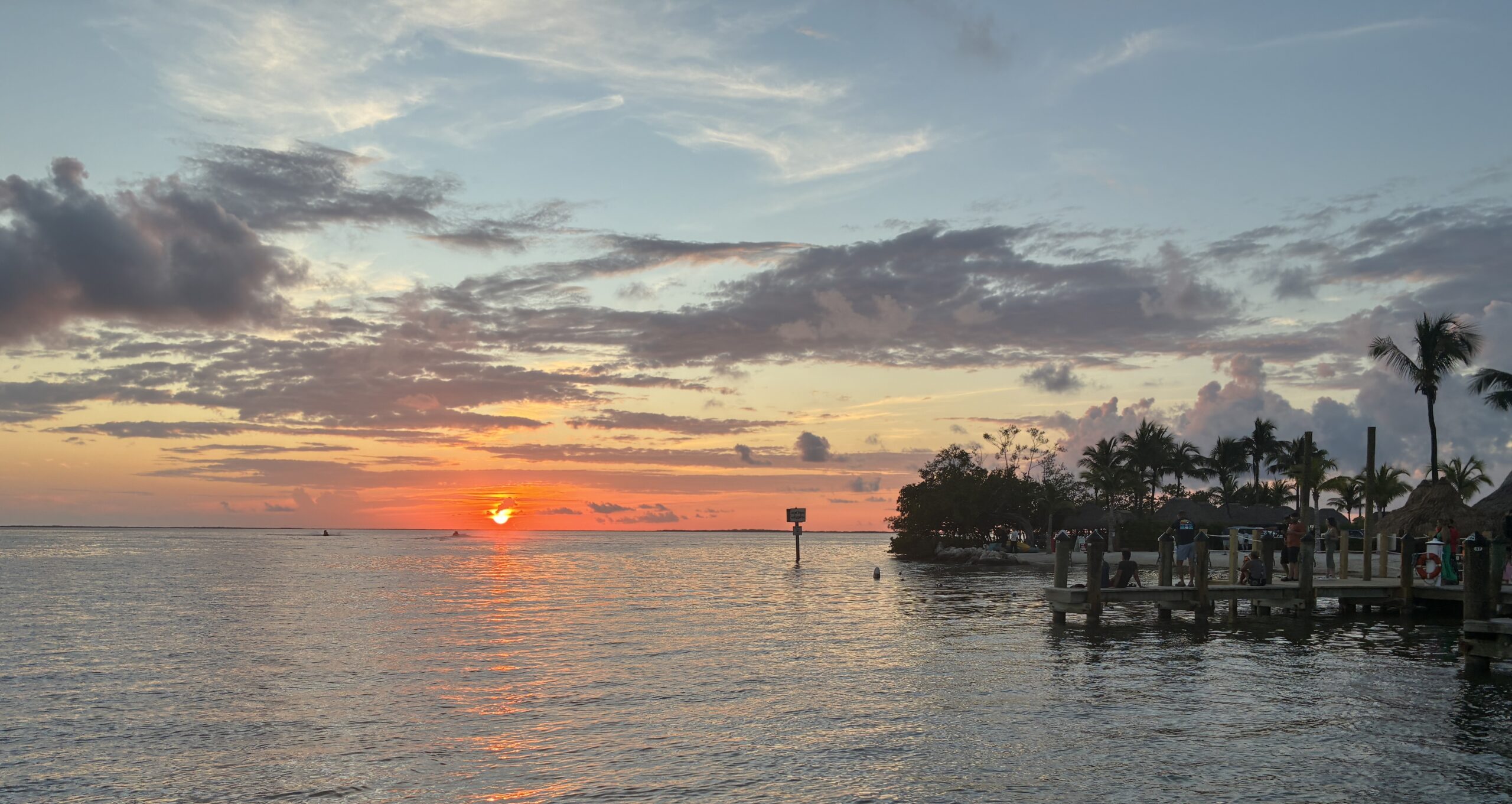

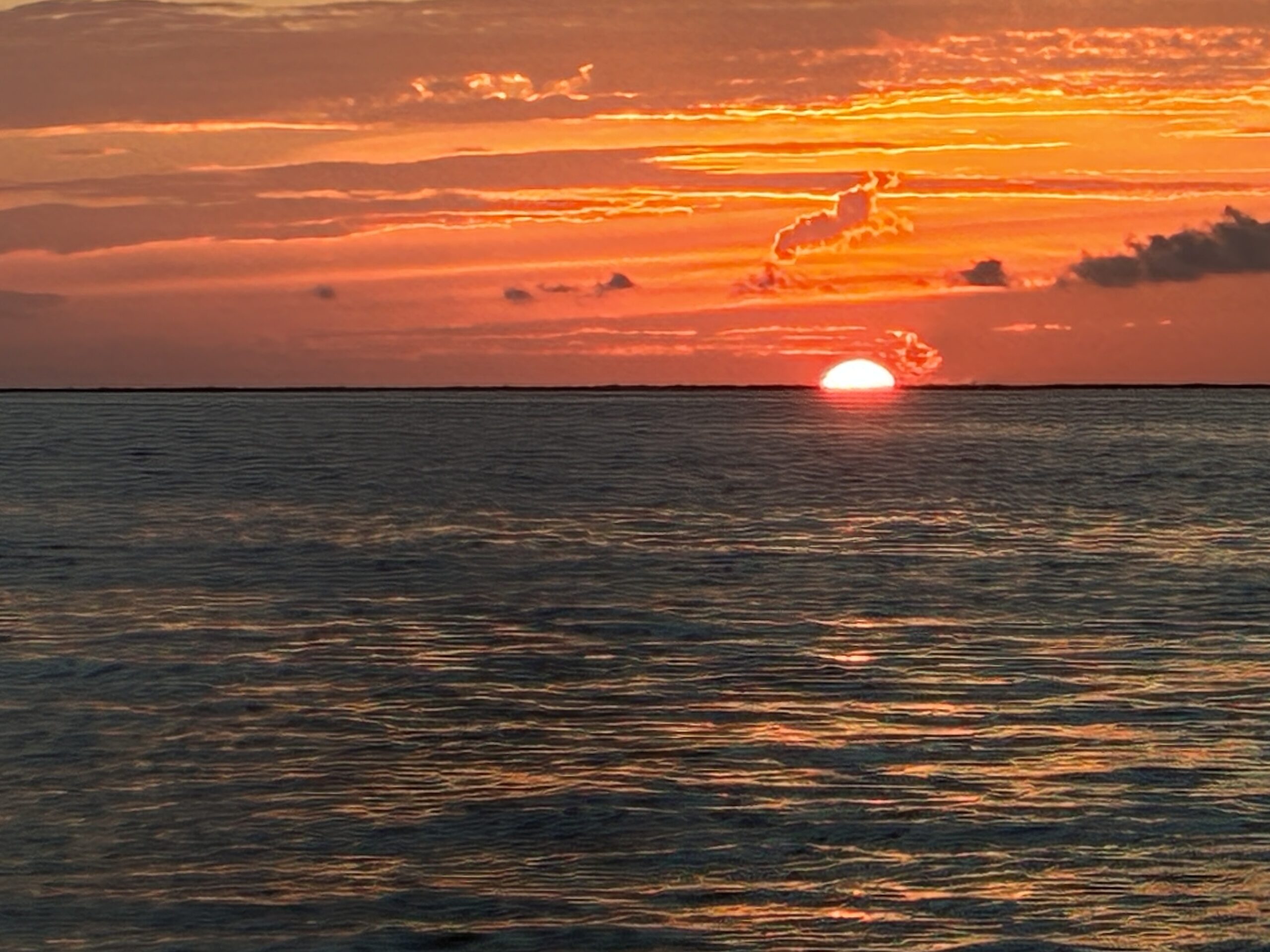

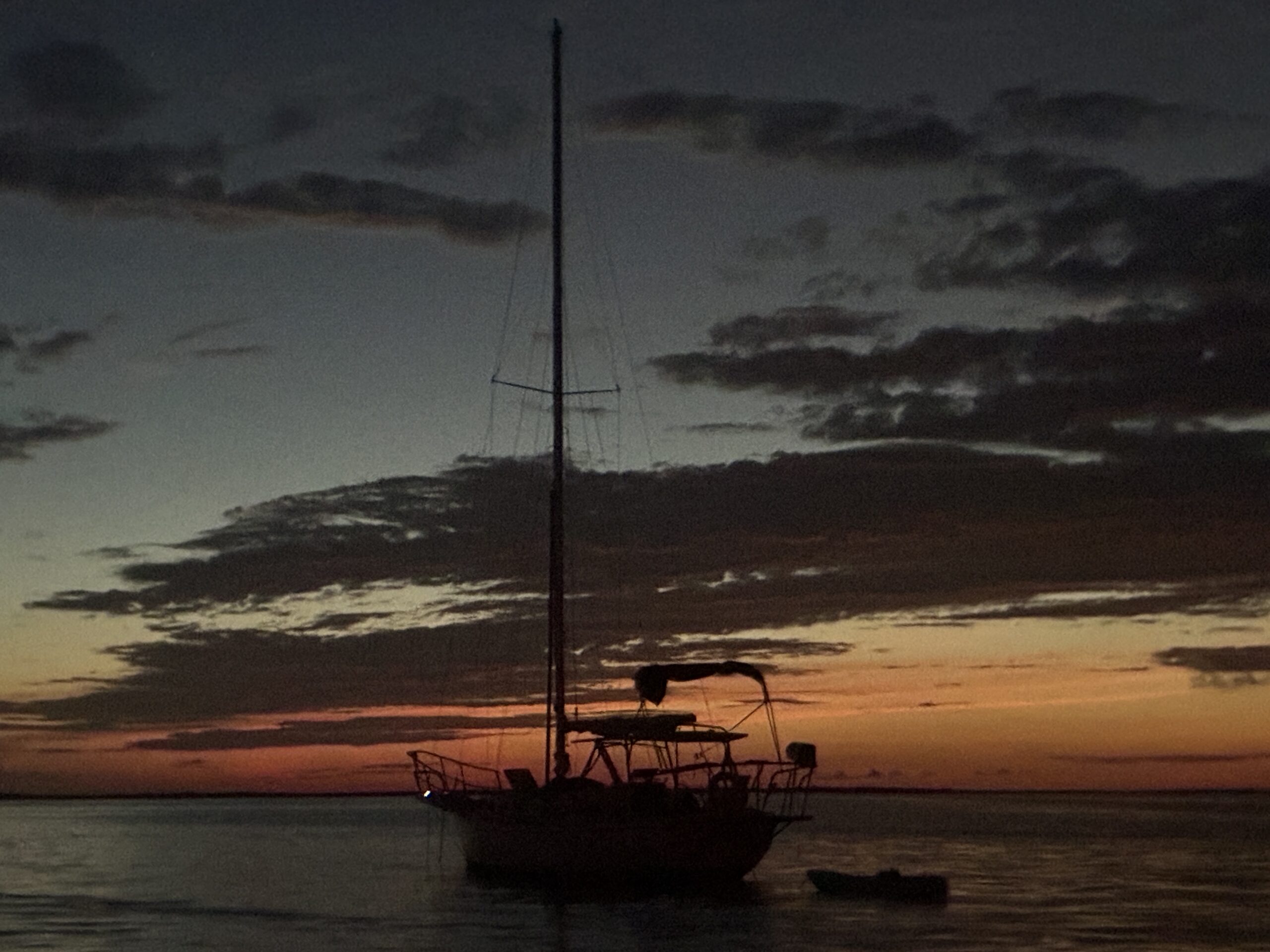
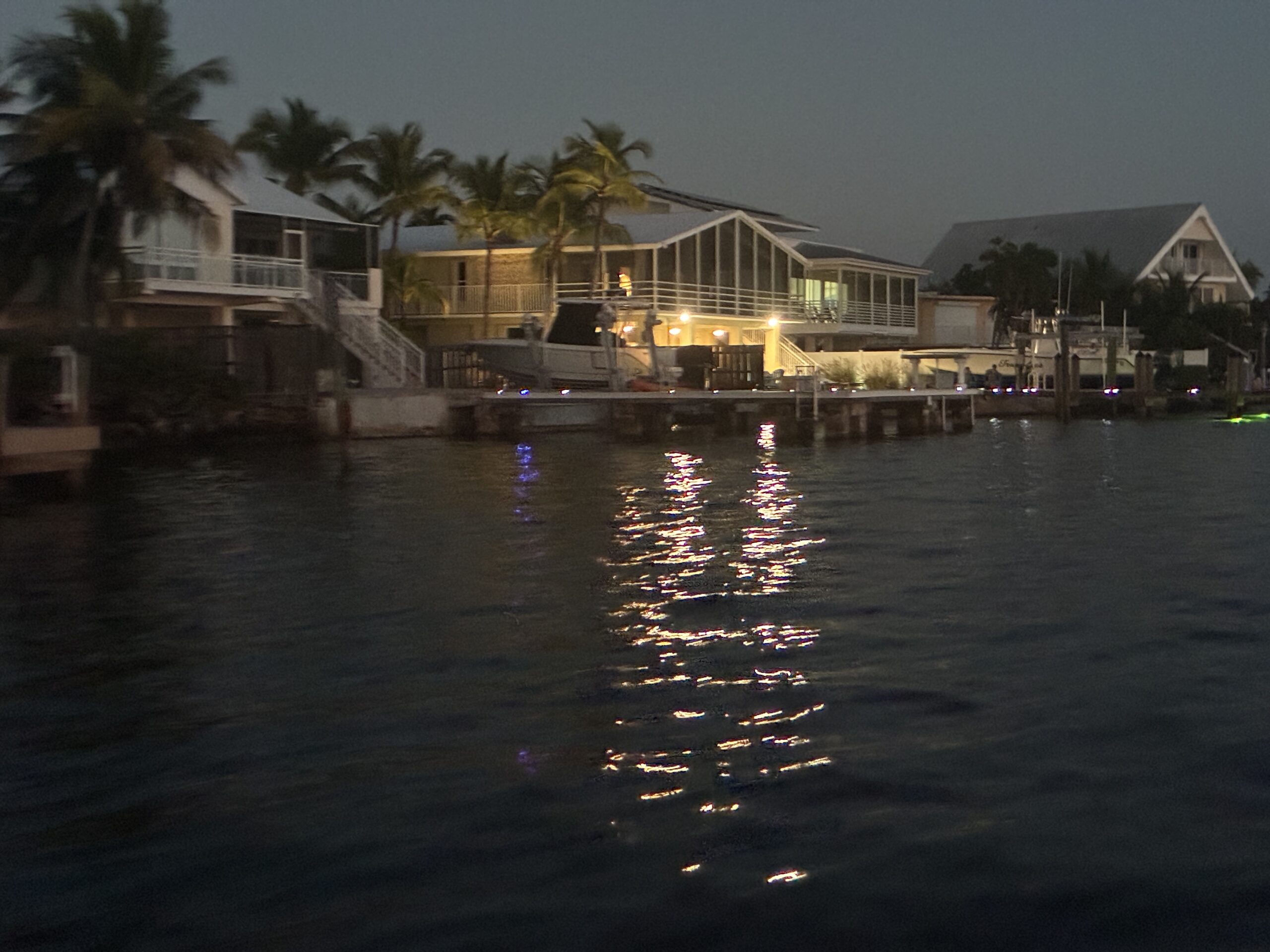
Joe was a good guy. The cruise was meant to be 90 minutes, but we stayed out for well over two hours, with Joe taking us around the Sound and up against the shoreline for views of the shore, the water now twinkling with the reflections of homes, restaurants, and bars lighting up for the evening ahead.




Now around 7, it was time to head back to my hotel in Florida City, about 30 minutes inland. And then it was time for bed. Goodnight.